Global Hydrogen Review môn Kinh tế năng lượng | Trường Đại học Sư phạm Kỹ thuật Thành phố Hồ Chí Minh
Global Hydrogen Review môn Kinh tế năng lượng | Trường Đại học Sư phạm Kỹ thuật Thành phố Hồ Chí Minh. Tài liệu được sưu tầm giúp bạn tham khảo, ôn tập và đạt kết quả cao. Mời bạn đọc đón xem.
Môn: Kinh tế năng lượng (ENEC320832) 13 tài liệu
Trường: Trường Đại học Sư phạm Kỹ thuật Thành phố Hồ Chí Minh 4.4 K tài liệu
Tác giả:


















Preview text:
Global Hydrogen Review 2025 INTERNATIONAL ENERGY AGENCY The IEA examines the full IEA Member IEA Association spectrum countries: countries: of energy issues including oil, gas and Australia Argentina coal supply and Austria Brazil demand, renewable energy technologies, Belgium China electricity markets, Canada Egypt energy efficiency, Czech Republic India access to energy, Denmark Indonesia demand side Estonia Kenya management and much Finland Morocco more. Through its work, France Senegal the IEA advocates Germany Singapore policies that will enhance Greece South Africa the reliability, Hungary Thailand affordability and Ireland Ukraine sustainability of energy in its Italy 32 Member countries, Japan 13 Association countries Korea and beyond. Latvia Lithuania Luxembourg Mexico Netherlands New Zealand Norway Poland Portugal Slovak Republic Spain Sweden Switzerland Republic of Türkiye United Kingdom United States This publication and any map included herein are without prejudice to the status of or
sovereignty over any territory, The European to the delimitation of Commission also international frontiers and boundaries and to the name participates in the
of any territory, city or area. work of the IEA Source: IEA. International Energy Agency Website: www.iea.org Global Hydrogen Review 2025 Abstract Abstract
The Global Hydrogen Review is an annual publication by the International Energy
Agency that tracks hydrogen production and demand worldwide, shedding light on
the latest developments on policy, infrastructure, trade, investments and innovation.
The report is an output of the Clean Energy Ministerial Hydrogen Initiative and is
intended to provide an update to energy sector stakeholders on the status and
future prospects of hydrogen, and to inform discussions at the Hydrogen Energy
Ministerial Meeting organised by Japan.
The sector has progressed significantly since the first publication of the Global
Hydrogen Review in 2021. Low-emissions hydrogen production projects have
gone from just a handful of demonstrations to more than 200 commit ed
investments for projects that are increasing in number and in scale, reflecting the
importance of hydrogen for climate goals, energy security and industrial
competitiveness. Nevertheless, growth has not met all of the expectations raised
at the start of the decade and remains uneven. Uncertainties about costs,
infrastructure readiness and evolving regulatory frameworks all present barriers to faster deployment.
This fifth edition of the Global Hydrogen Review takes stock of the progress to
date and explores the challenges ahead, in order to provide a thorough
assessment of the level of hydrogen adoption that could be achieved by 2030.
This report includes a special chapter on Southeast Asia, exploring the region’s
potential for the production and use of low-emissions hydrogen and hydrogen-
based fuels and products in the near term.
The report is complemented by updates to the Hydrogen Production and
Infrastructure Projects Database, and a new online Hydrogen Tracker that allows
users to further explore announced projects for low-emissions hydrogen
production and infrastructure deployment, hydrogen production costs by region
and technology, and more than 1 000 hydrogen policy measures worldwide
announced or implemented since 2020. 0. BY 4. A. CC PAGE | 1 I E Global Hydrogen Review 2025 Acknowledgements
Acknowledgements, contributors and credits
The Global Hydrogen Review was prepared by the Energy Technology Policy
(ETP) Division of the Directorate of Sustainability, Technology and Outlooks
(STO) of the International Energy Agency (IEA). The study was designed and
directed by Timur Gül, Chief Energy Technology Of icer.
Uwe Remme (Head of the Hydrogen and Alternative Fuels Unit) and Jose Miguel
Bermudez Menendez co-ordinated the analysis and production of the report.
Herib Blanco led the analysis for the chapters on policies and Southeast Asia, and
Amalia Pizarro for the chapters on trade and infrastructure, and investment and innovation.
The principal IEA authors and contributors were (in alphabetical order): Simon
Bennett (investment), Jan Cipar (infrastructure), Laurence Cret (shipping),
Elizabeth Connelly (transport), Mathilde Fajardy (CCUS), Hannes Gauch
(aviation), Alexandre Gouy (industry), Rafael Martinez Gordon (buildings),
Carolina Ladero Cama (demand, production, infrastructure), Shane McDonagh
(road transport), Laura Restrepo (production), Jules Sery (road transport),
Gandharva Shelar (production), Richard Simon (industry), Josephine Tweneboah
Koduah (CCUS) and Deniz Ugur (innovation). Marthe Fruytier, Mathilde
Huismans, Quentin Minier and Mayuko Morikawa provided targeted support to the project.
Valuable comments and feedback were provided by senior management and
other colleagues within the IEA, in particular Laura Cozzi, Keisuke Sadamori, Tim
Gould, Amos Bromhead, Sue-Ern Tan, Paolo Frankl and Dennis Hesseling.
The development of this report benefit ed from contributions provided by the
following IEA colleagues: Yasmina Abdelilah, Vasilios Anatolis, Yasmine
Arsalane, Ilkka Hannula, Philippe Rose, Cecilia Tam, Vrinda Tiwari and Ranya Oualid.
Lizzie Sayer edited the manuscript and Per-Anders Widell, Charlotte Bracke and
Mao Takeuchi provided essential support throughout the process.
Special thanks go to Prof. Jochen Linßen and his team at Jülich Systems Analysis,
Forschungszentrum Jülich (Prof. Heidi Heinrichs, Maximilian Stargardt, Henrik
Wenzel, Christoph Winkler) for their model analysis on renewable hydrogen
production costs and potentials. 0. BY 4. A. CC PAGE | 2 I E Global Hydrogen Review 2025 Acknowledgements
Thanks also to the IEA Communications and Digital Of ice for their help in
producing the report, particularly to Jethro Mullen, Lee Bailey, Isabella Batten,
Poeli Bojorquez, Curtis Brainard, Gaelle Bruneau, Jon Custer, Astrid Dumond,
Merve Erdil, Liv Gaunt, Grace Gordon, Julia Horowitz, Anthony Pietromartire,
Andrea Pronzati, Pau Requena Rubau, Robert Stone, Sam Tarling, Lucile Wall, Wonjik Yang.
The work benefited from the financial support provided by the Governments of
Canada, Japan, the Netherlands and Germany, and by the European Commission.
Special thanks go to the following organisations and initiatives for their valuable
contributions: Hydrogen Technology Collaboration Programme (TCP), Hydrogen
Council, Advanced Fuel Cells TCP, Accelera by Cummins, Acciona Plug, Chiyoda
Corporation, Electric Hydrogen, KBR, Nel Hydrogen, Rely, thyssenkrupp nucera, Siemens Energy.
Peer reviewers provided essential feedback to improve the quality of the report. They include:
Abdullah Al Abri (Port of Sohar); Abdalla Talal Alhammadi, Nawal Yousif Alhanaee
and Maryam Mohammed Alshamsi (Ministry of Energy and Infrastructure, United
Arab Emirates); Abdul'Aziz Aliyu (IEA TCP on Greenhouse Gases); Laurent
Antoni (IPHE); Chiara Aruffo (Di Desert Energy); Mehrnaz Ashrafi (Vancouver
Fraser Port Authority); Florian Ausfelder (Dechema); Fabian Barrera (Agora
Energiewende); Elena Burri (Swiss Federal Of ice of Energy); Jose Luis Cabo
(Ministry for Ecological Transition and Demographic Challenge, Spain); Angel
Caviedes (Ministry of Energy, Chile); Leah Charpentier (Electric Hydrogen); Emir
Colak (Agora Energiewende); Tudor Constantinescu (European Commission);
Anne-Sophie Corbeau (Center on Global Energy Policy, Columbia University);
Linda Dempsey (CF Industries); Matthias Deutsch (Agora Energiewende); Alberto
Di Lullo (Eni); Francisco Dolci (European Commission); Johannes Eng
(Duisburger Hafen AG); Tudor Florea (Ministry of Ecological Transition, France);
Alexandru Floristean (Hy24); Daniel Fraile (Hydrogen Europe); Angel Galindo
(Tecnicas Reunidas); Marta Gandiglio (H2site); Dolf Gielen (World Bank); Celine
Le Goazigo (World Business Council on Sustainable Development); Jeffrey
Goldmeer (GE Vernova); Jürgen Guldner (BMW); Taku Hasegawa (Kawasaki
Heavy Industries); Bernd Haveresch (KBR); Emile Herben (Yara); Stephan Herbst
(Toyota); Yoshinari Hiki (ENEOS); Noe van Hulst (Gasunie); Olivia Infantes
(Moeve); Kenji Ishizawa (IHI); Alloysius Joko Purwanto (ERIA); Rohit Khurana
(KBR); Ilhan Kim (Ministry of Trade, Industry and Energy, Korea); Stef Knibbeler
(Netherlands Enterprise Agency); Yoshikazu Kobayashi (IEEJ); Leif Christian
Kröger (Thyssenkrupp Nucera); Mirthe Kuenen (Ministry of Economic Af airs and
Climate, the Netherlands); Thomas Kwan (Schneider Electric); Pierre Laboué 0. BY 4. A. CC PAGE | 3 I E Global Hydrogen Review 2025 Acknowledgements
(France Hydrogène); Souad Lalami (Hydrojeel); Martin Lambert (Oxford Institute
for Energy Studies); Wilco van der Lans (Port of Rotterdam Authority); Wei Jie
Lau (Global Centre for Maritime Decarbonisation); Ho-Mu Lee (Korea Energy
Economics Institute); Nikita Levine (Atome); Constantine Levoyannis (Nel
Hydrogen); Minerva Lim (Maritime and Port Authority, Singapore); Federico
Lurlaro (Eni); Marc W. Melaina (Boston Government Services l c); Matteo Micheli
(German Energy Agency); Suchi Misra (Department of Climate Change, Energy,
the Environment and Water, Australia); Nelson Mojarro (International Chamber of
Shipping); Julie Mougin (CEA); Susana Moreira (H2Global Foundation); Masashi
Nagai (Chiyoda); Daria Nochevnik (Hydrogen Council); Maria Teresa Nonay
Domingo (Enagás); Torben Norgaard (Mærsk Mc-Kinney Møller Center for Zero
Carbon Shipping); Eiji Ohira (Kawasaki Heavy Industries); Shirley Oliveira (BP);
Jules Pijnenborg (Shell); Andrew Purvis (worldsteel); Henar Rabadan (Repsol);
Carla Robledo (Ministry of Economic Af airs and Climate, the Netherlands); Timo
Ritonummi (Ministry of Economic Affairs and Employment, Finland); Frederique
Rigal (Airbus); Agustín Rodríguez Riccio (Topsoe); Douwe Roest (Ministry of
Economic Affairs and Climate, the Netherlands); Justin Rosing (Ministry of
Economic Affairs and Climate, the Netherlands); Xavier Rousseau (Snam);
Gregory Saccà (Eni); Tatsuya Saga (Ministry of Economy, Trade and Industry,
Japan); Alessandro Sales (Department of Energy, Philippines); Juan Sánchez-
Peñuela (Tecnicas Reunidas); Sophie Sauerteig (Department for Energy Security
and Net Zero, United Kingdom); Roland Schulze (European Investment Bank);
Petra Schwager (UNIDO); Trishia Shah (Natural Resources Canada); Cassie
Shang (Natural Resources Canada); Magnus Skoglundh (Chalmers University of
Technology); Matthijs Soede (European Commission); Oleksiy Tatarenko (Rocky
Mountain Institute); Denis Thomas (Accelera by Cummins); Kohei Toyoda (JBIC);
Rocío Valero (Hydrogen TCP); Tatiana Vilarinho Franco (Fortescue Future
Industries); Libing Want (China Huadian); Joe Wil iams (Green Hydrogen
Organisation); Liane Wong (Maritime and Port Authority of Singapore); Jia Yong
Leong (EMA); and Juan Camilo Zapata (Ministry of Mines and Energy of Colombia). 0. BY 4. A. CC PAGE | 4 I E Global Hydrogen Review 2025 Table of contents Table of contents
Executive Summary ................................................................................................................. 7
Recommendations ................................................................................................................ 12
Five key questions about hydrogen ..................................................................................... 15
Chapter 1. Introduction .......................................................................................................... 28
Introducing the fifth edition of the Global Hydrogen Review ................................................ 28
The CEM Hydrogen Initiative ................................................................................................ 30
Chapter 2. Hydrogen demand ............................................................................................... 31
Highlights............................................................................................................................... 31
Overview and outlook ........................................................................................................... 32
Demand in oil refining ........................................................................................................... 41
Demand in industry ............................................................................................................... 48
Demand in transport ............................................................................................................. 55
Demand in buildings ............................................................................................................. 72
Demand in power generation ................................................................................................ 74
Chapter 3. Hydrogen production .......................................................................................... 79
Highlights............................................................................................................................... 79
Overview and outlook ........................................................................................................... 80
Cost comparison of dif erent production routes .................................................................... 92
Electrolysis ............................................................................................................................ 99
Fossil fuels with CCUS ....................................................................................................... 112
Production of hydrogen-based fuels and feedstock ........................................................... 116
Chapter 4. Hydrogen trade and infrastructure .................................................................. 119
Highlights............................................................................................................................. 119
Overview and outlook for hydrogen trade ........................................................................... 120
Status and perspectives for hydrogen infrastructure .......................................................... 129
Chapter 5. Investment and innovation ............................................................................... 165
Highlights............................................................................................................................. 165
Investment in the hydrogen sector ...................................................................................... 166
Innovation on hydrogen technologies ................................................................................. 186
Chapter 6. Policies ............................................................................................................... 203
Highlights............................................................................................................................. 203
Overview of funding ............................................................................................................ 204
Strategies and targets ......................................................................................................... 205
Demand creation ................................................................................................................. 208 0. BY 4. A. CC PAGE | 5 I E Global Hydrogen Review 2025 Table of contents
Mitigation of investment risks .............................................................................................. 213
Promotion of RD&D, innovation and knowledge-sharing ................................................... 221
Certification, standards and regulations ............................................................................. 225
Chapter 7. Southeast Asia in focus .................................................................................... 231
Highlights............................................................................................................................. 231
Overview of the regional energy system ............................................................................ 232
Hydrogen status today ........................................................................................................ 235
Hydrogen policy landscape ................................................................................................. 236
Opportunities in hydrogen production ................................................................................. 242
Opportunities in hydrogen demand sectors ........................................................................ 251
Near-term actions ................................................................................................................ 268
Annex ..................................................................................................................................... 273
Explanatory notes ............................................................................................................... 273
Abbreviations and acronyms............................................................................................... 280 0. BY 4. A. CC PAGE | 6 I E Global Hydrogen Review 2025 Executive summary Executive Summary
The hydrogen sector continues to grow despite
persistent barriers and project cancellations
Global hydrogen demand increased to almost 100 mil ion tonnes (Mt) in
2024, up 2% from 2023 and in line with overall energy demand growth. This
rise was driven by greater use in sectors that have traditionally consumed
hydrogen, like oil refining and industry. Demand from new applications accounted
for less than 1% of the total and was almost entirely concentrated in biofuels
production. The supply of hydrogen continued to be dominated by fossil fuels,
using 290 bil ion cubic metres (bcm) of natural gas and 90 mil ion tonnes of coal
equivalent (Mtce) in 2024. Low-emissions hydrogen production grew by 10% in
2024 and is on track to reach 1 Mt in 2025, but it stil accounts for less than 1% of global production.
While the uptake of low-emissions hydrogen is not yet meeting the
ambitions set in recent years – held back by high costs, uncertain demand
and regulatory environments, and slow infrastructure development – there
are stil notable signs of growth. A recent wave of project delays and
cancellations has reduced expectations for the deployment of low-emissions
hydrogen this decade. However, in the early stages of adopting new technologies,
there are often moments of strong progress as well as periods of sluggish
development, and several indicators suggest that the sector continues to mature.
For example, although final investments decisions (FIDs) continue to trail well
behind announcements, more than 200 low-emissions hydrogen production
projects have received them since 2020, when there was only a handful of
demonstration projects in operation. Innovation is also moving at an impressive
pace, with a record number of technologies across the hydrogen value chain
showing significant progress over the past year.
The pipeline of low-emissions production projects has
shrunk, but a strong expansion by 2030 is still in sight
For the first time, potential low-emissions hydrogen production by 2030
based on announced projects has declined. Cancellations and delays mean
that production that could be achieved based on industry announcements by 2030
stands now at 37 mil ion tonnes per year (Mtpa), compared with 49 Mtpa by 2030
when the Global Hydrogen Review 2024 was published a year ago. Potential
production fell for both projects using electrolysis and those using fossil fuels with
carbon capture utilisation and storage (CCUS), although electrolysis projects were 0. BY 4. A. CC PAGE | 7 I E Global Hydrogen Review 2025 Executive summary
responsible for more than 80% of the total drop. These delays and cancel ations
included early-stage projects across Africa, the Americas, Europe and Australia.
At the same time, the number of projects that have received a final investment
decision grew by almost 20% since the publication of the Global Hydrogen Review
2024 and now represent 9% of the total project pipeline to 2030.
Despite the recalibration of industry plans, low-emissions hydrogen
production is expected to grow strongly by 2030. Low-emissions hydrogen
production from projects that are today operational or have reached FID is set to
reach 4.2 Mtpa by 2030, a fivefold increase compared with 2024 production. While
this is much lower than government and industry ambitions at the start of this
decade, it represents growth from less than 1% of total hydrogen production today
to around 4% in 2030. This low-emissions hydrogen growth to 2030 would
resemble the fast expansions of other clean energy technologies seen in recent
years, such as solar PV. Moreover, a new, comprehensive assessment of the
prospects of announced projects for this year’s Review finds that an additional
6 Mt of low-emissions hydrogen production projects has strong potential to be
operational by 2030 if effective policies to create demand and facilitate offtake are implemented.
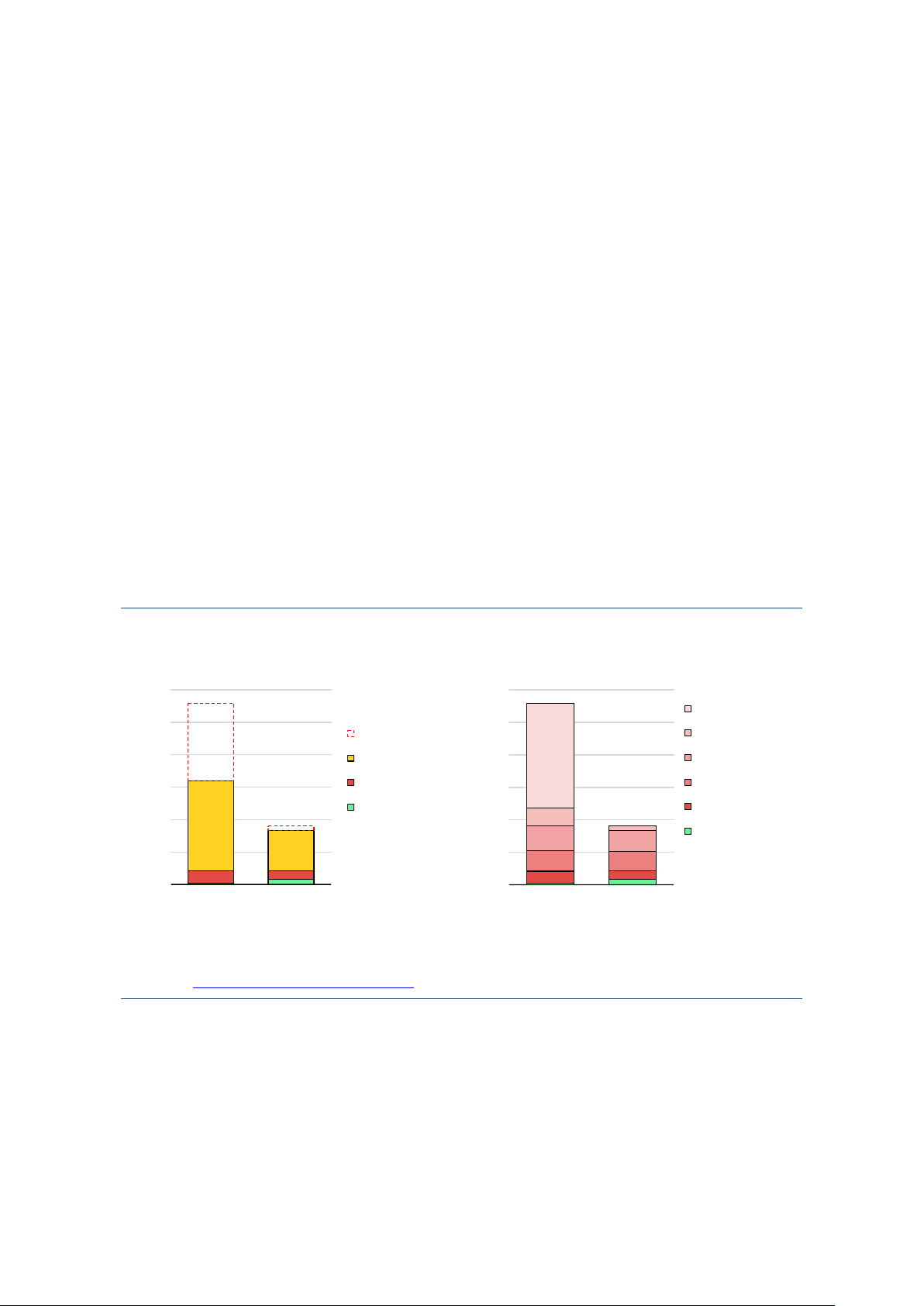
Low-emissions hydrogen production by technology, status and likelihood of being
available by 2030, based on announced projects
Status of announced projects
Likelihood of production being available by 2030 ₂ 30 30 ₂ tpa H Uncertain 25 M tpa H 25 Early Stage M Low potential 20 Feasibility 20 Moderate potential 15 FID 15 Strong potential Operational Almost certain 10 10 Operational 5 5 0 0 Electrolysis Fossil Electrolysis Fossil with CCUS with CCUS IEA. CC BY 4.0.
Notes: FID = final investment decision; CCUS = carbon capture, utilisation and storage.
Source: IEA Hydrogen Production Projects Database (September 2025).
The cost gap between low-emissions hydrogen and unabated fossil-based
production remains a key barrier for project development, but it is expected
to narrow. The sharp decline in natural gas prices from levels observed in 2022-
23 – and the increase in the cost of electrolysers due to inflation and slower-than-
expected deployment of the technology – has led to a larger cost gap with
production from unabated fossil fuels, meaning that support schemes remain 0. BY 4. A. CC PAGE | 8 I E Global Hydrogen Review 2025 Executive summary
necessary for longer. However, the gap is expected to narrow by 2030. Renewable
hydrogen in China could become cost-competitive by the end of this decade due
to low technology costs and cost of capital. In Europe, the gap is also set to shrink
from carbon dioxide (CO2) prices and in areas with high renewable potential, and
because natural gas prices for industrial users in the region are set to be more
elevated than elsewhere. In regions where natural gas is cheaper, such as the
United States and Middle East, the cost gap is set to remain larger, and CCUS is
likely to be more competitive for producing low-emissions hydrogen in the near term.
China leads on electrolyser deployment and
manufacturing capacity, but overseas sales face barriers
China is the driving force in electrolyser deployment and manufacturing
today. Global installed capacity of water electrolysis reached 2 gigawatts (GW) in
2024, and more than 1 GW of capacity has been added on top of that through July
of this year. China now accounts for 65% of global installed capacity and capacity
that has reached a final investment decision. China is also home to nearly 60% of
global electrolyser manufacturing capacity, with a growing offer from traditional
manufacturers as well as new market entrants.
Electrolyser manufacturers outside China face headwinds, raising concerns
about the health of the industry. Strong momentum in the Chinese market
contrasts with prospects for manufacturers elsewhere, which are experiencing
sharp reductions in revenue and increased financial losses. For some, this has led
to bankruptcies or acquisitions in what may signal a coming wave of consolidation.
In China, the industry is not immune to such developments; its existing
manufacturing capacity of 20 GW per year is significantly above current demand,
which was around 2 GW in 2024. This may also lead to consolidation in due course.
Outside of China, the cost of instal ing Chinese electrolysers is not
significantly lower than instal ing those made by other producers when all
factors are taken into account. The cost of making and installing an electrolyser
outside of China in 2024 was USD 2 000 to USD 2 600 per kilowatt (kW),
compared with USD 600 to 1 200 per kW for electrolysers manufactured and
installed in China. However, the cost of equipment is just part of the total
investment needed to install an electrolyser. More than half of the total
corresponds to engineering, procurement, construction and contingency costs,
which depend on the project location. When transport costs and tarif s are also
considered, the cost of installing a Chinese electrolyser outside China is to
USD 1 500 to USD 2 400 per kW – narrowing the gap with non-Chinese competitors. 0. BY 4. A. CC PAGE | 9 I E Global Hydrogen Review 2025 Executive summary
Barriers preventing the use of Chinese electrolysers outside of China
remain, but this may change soon. While installing electrolysers made in China
can reduce upfront investment, they face efficiency and underperformance issues
and need to be adapted to local standards. This can drive up operational costs,
which can in turn make the overall production of hydrogen more expensive and
diminish any investment cost advantages. This is currently limiting the global
uptake of Chinese electrolysers, along with uncertainties related to maintenance
and repairs over the lifetime of the plant. However, Chinese manufacturers are
now addressing many of these barriers through innovation and exploring the
expansion of manufacturing operations overseas.
Policies to create demand for low-emissions hydrogen
are advancing, though enactment wil be important
Momentum for hydrogen offtake agreements slowed in 2024, with new deals
concentrated in refining, chemicals and shipping. New offtake agreements
signed in 2024 reached 1.7 Mtpa, compared with 2.4 Mtpa in 2023. However,
some preliminary agreements signed in previous years were firmed, leading to
investment in production projects. Existing uses of hydrogen in the refining and
chemical sectors – and the use of hydrogen-based fuels in shipping and, to a
smaller extent, aviation and power generation – account for almost all firm offtake
agreements announced by the private sector to date and 80% of investment in
committed production projects. Tenders to procure low-emissions hydrogen
yielded mixed results in 2024; tenders in the steel sector in Europe were delayed
or put on hold while tenders for refining and fertilisers led to final investment
decisions for production plants in Europe and India.
Policies to create demand are now being implemented, but at a slow pace.
Europe leads the way on the adoption of sectoral quotas for hydrogen use in
transport and industry within the EU Renewable Energy Directive (RED) and
mandates for the aviation sector. India (with a focus on refining and fertilisers) and
Japan and Korea (with a focus on power generation) have also started ambitious
programmes. The new International Maritime Organization (IMO) Net-Zero
Framework could boost the uptake of hydrogen-based fuels in the maritime sector.
However, the full impact of these efforts remains to be seen and, in the short term,
the IMO regulations may actually stimulate demand for liquefied natural gas or
biofuels instead. The EU's RED quotas need to be transposed into national
legislation by EU member states, and there wil be no clear demand signal to the
hydrogen sector until this has been completed, since approaches can vary. 0. BY 4. A. CC PAGE | 10 I E Global Hydrogen Review 2025 Executive summary
Leading ports could be first movers on low‑emissions
hydrogen-based fuels for shipping
Suitable bunkering infrastructure at ports wil be needed soon if ships are
to adopt hydrogen-based fuels. These fuels can be a vital part of meeting the
IMO decarbonisation goals, along with other fuels and energy efficiency. Their
uptake in shipping wil depend on strong regulatory signals, the deployment of
compatible ship technologies, and expanding supply and infrastructure. As of June
2025, more than 60 methanol-powered vessels were on the water and nearly 300
more were on order books. Furthering the development of bunkering infrastructure
is the next step to avoid bottlenecks in the near future.
Infrastructure upgrades to strategically located bunkering ports could cover
most major trade routes. Marine fuel bunkering is highly geographically
concentrated: Singapore alone supplies around one-fifth of global demand, and
just 17 ports cover over 60% of the sector's refuelling needs. In addition, a large
share of existing production and demand for unabated fossil-based hydrogen
(refineries and chemical plants) tends to be located near ports, making them
optimal places to kickstart the large-scale adoption of low-emissions hydrogen.
Analysis of existing infrastructure and its proximity to low-emissions
hydrogen production reveals early opportunities. Nearly 80 ports have well-
developed expertise in managing chemical products, indicating a strong readiness
to also handle hydrogen-based fuels. These ports, which are widely distributed
across the globe, include some of the largest in the world, such as Rotterdam,
Singapore and Ain Sokhna (Egypt). More than 30 of these ports could each access
at least 100 ktpa of low-emissions hydrogen supply from announced projects within 400 kilometres.
Southeast Asia is emerging as a significant and growing hydrogen market
Hydrogen demand in Southeast Asia is dominated by the chemical sector,
with supply largely based on natural gas. Southeast Asia’s hydrogen demand
in 2024 reached 4 Mtpa, led by Indonesia, which accounted for 35%, Malaysia,
Viet Nam and Singapore. Hydrogen use in ammonia production accounted for
nearly half of demand, fol owed by refining and methanol production. Nearly 80%
of demand was met with hydrogen produced from unabated natural gas, and the
rest was from industrial by-product. Hydrogen production consumes around 8% of
the region's gas supply and accounts for a little over 1% of energy-related CO2 emissions.
The pipeline for low-emissions hydrogen production in Southeast Asia
shows considerable promise but needs to mature. Based on announced 0. BY 4. A. CC PAGE | 11 I E Global Hydrogen Review 2025 Executive summary
projects, low-emissions hydrogen production could reach 480 ktpa by 2030, highly
concentrated in Indonesia and Malaysia. However, only 6% of announced
production has reached a final investment decision, and 60% remains at very early
stages of development. One notable exception is a 240 MW electrolyser project
under construction in Viet Nam – one of few projects at this scale outside of China
to reach FID. Around 40% of the projects are geared for exports – mostly of
ammonia, which is the target product of the large majority of the pipeline.
Existing industrial applications and shipping provide key opportunities for
early adoption. The greatest opportunities to adopt low-emissions hydrogen in
the region include ammonia production in Indonesia, Malaysia and Viet Nam and
methanol production in Malaysia, to improve trade balances by reducing imports
of natural gas and natural gas-based products; steel production in Indonesia and
Viet Nam to meet growing regional demand; and maritime bunkering in Singapore
to supply emerging demands in international shipping. The geographical
concentration of existing applications, particularly in countries with large state-
owned enterprises, provides a strong foundation for scaling up the sector. Near-
term success wil depend on accelerating the deployment of renewables to reduce
production costs, implementing targeted policies for fuel-switching, and
developing pilot projects that enable gradual progress towards commercialisation. Recommendations
Based on progress achieved to date and the evolving challenges the sector faces,
the IEA has updated its policy recommendations to help governments that want to
leverage low-emissions hydrogen to meet their energy goals:
Maintain support schemes for low-emissions hydrogen production, with a
focus on shovel-ready projects that target existing applications. A large pool
of projects targeting existing applications are ready to take investment decisions
if timely support is provided to reduce the cost gap between unabated fossil-based
hydrogen and low-emissions technologies. These projects could drive a rapid
scaling up of low-emissions hydrogen production and enable cost reductions.
Accelerate demand creation for low-emissions hydrogen and hydrogen-
based fuels through regulations and support schemes in key sectors.
Speeding up policy implementation to stimulate demand can facilitate offtake and
underpin investment in supply. Ef ective measures target existing hydrogen users
and high-value applications in emerging sectors, while pooling demand in
industrial hubs to create scale and reduce risk. Governments and industry can
cooperate to create lead markets for sustainable end-use products, unlocking early-stage adoption.
Expedite deployment of hydrogen infrastructure by removing barriers and
leveraging early opportunities. Comprehensive yet manageable regulatory
frameworks and the introduction of financial mechanisms can help mitigate early 0. BY 4. A. CC PAGE | 12 I E Global Hydrogen Review 2025 Executive summary
investment risks, while ef icient permit ing processes and improved coordination
among authorities can help to reduce lead times. A focus on industrial and port
clusters that co-locate production projects with pools of potential users can facilitate early deployment.
Enhance public support to reduce technology risk and facilitate project
financing. Governments can strengthen public finance mechanisms to reduce
risks associated with early-stage technologies, which struggle with project
bankability due to their lack of a proven performance record. Export credit
agencies and public finance institutions can expand guarantee programmes for
first-of-a-kind projects that seek to demonstrate and scale up novel technologies.
Support emerging and developing economies in moving up the value chain
for low-emissions hydrogen-based products. These economies hold
significant potential for low-cost, low-emissions hydrogen production, but face key
challenges such as limited enabling infrastructure and access to finance, as well
as their reliance on exports to a global market which is developing slowly.
Advanced economies can partner with emerging and developing economies to
encourage new domestic use cases (such as fertiliser production) and open export
opportunities for hydrogen-based products. This could enable emerging and
developing economies to move up the value chain; enhance their energy and food
security by reducing import dependencies; and boost economic growth. 0. BY 4. A. CC PAGE | 13 I E
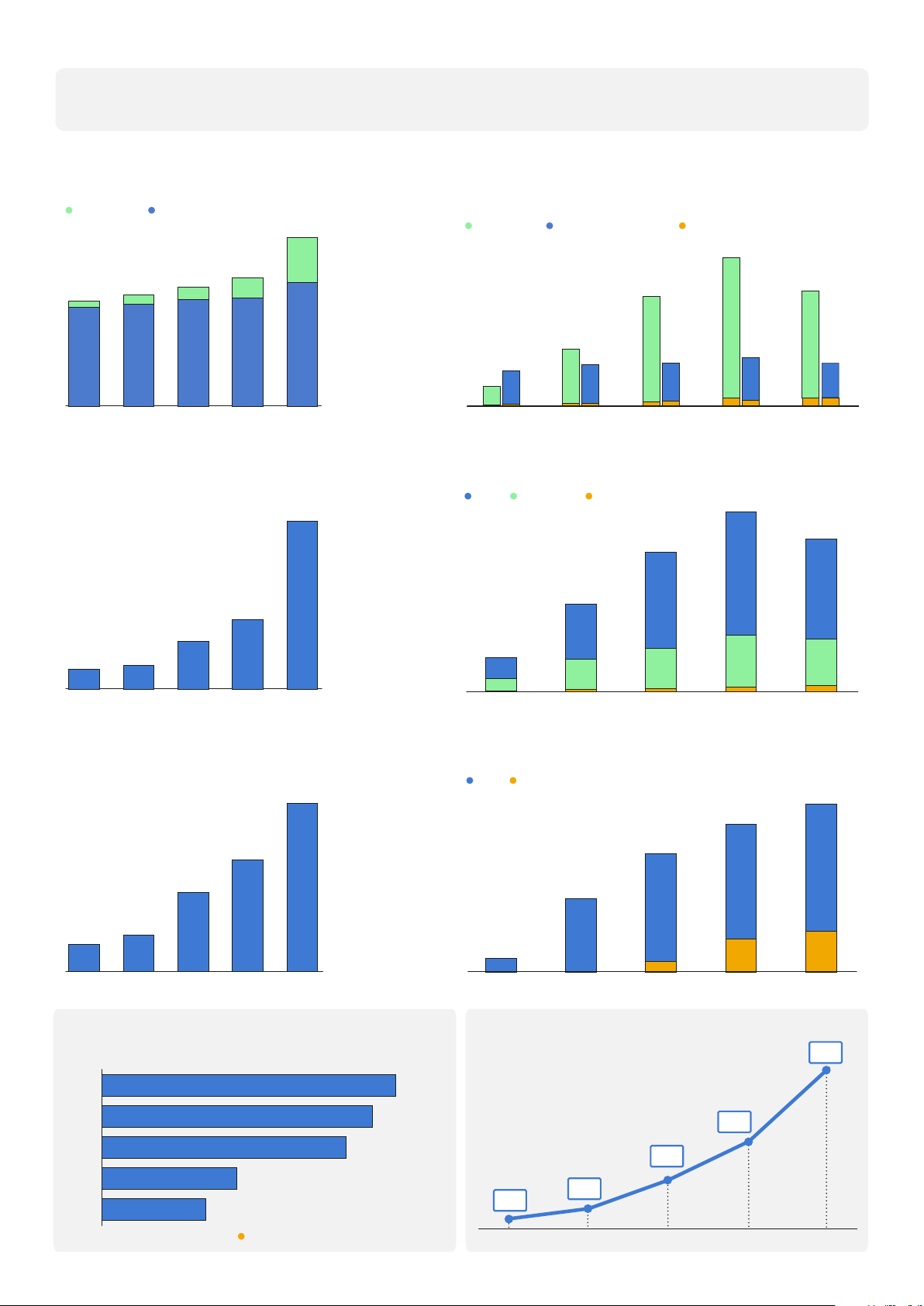
Global Hydrogen Review Summary Progress Production Low-emissions hydrogen
Low-emissions hydrogen production Mtpa
from announced projects by 2030 Renewables Fossil fuels with CCUS Mtpa 1.0 Renewables Fossil fuels with CCUS FID 37 0.8 0.7 28 0.6 0.7 28 14 11 10 60% 9 10 9 5 growth since 2021 2021 2022 2023 2024 2025e GHR 21 GHR 22 GHR 23 GHR 24 GHR 25
Electrolyser installed capacity
Announced electrolyser projects by 2030 GW GW Total Early stage FID 538 4.9 439 420 240 2.0 1.4 9x 90 0.6 0.7 growth since 2021 2021 2022 2023 2024 2025e GHR 21 GHR 22 GHR 23 GHR 24 GHR 25
Electrolyser manufacturing capacity
Announced electrolyser manufacturing capacity by 2030 GW/yr GW/yr Total FID 57 186 166 38 155 27 106 13 6x 9 growth 20 since 2021 2021 2022 2023 2024 2025e GHR 21 GHR 22 GHR 23 GHR 24 GHR 25 Policies Investment Number of hydrogen strategies Electrolyser and CCUS projects 7.9 Billion USD 2025 65 85% 2024 60 84% 4.3 2023 54 82% 2.4 2022 30 54% 1.0 23 0.5 2021 22%
Share of energy-related CO2 emissions 2021 2022 2023 2024 2025
Note: 2025e = Estimated based on announced projects. FID = Final Investment Decision. Global Hydrogen Review 2025
Five key questions about hydrogen
Five key questions about hydrogen
Is the slow progress of projects derailing the hydrogen sector?
The hydrogen sector has seen impressive momentum in recent years, particularly
in early 2020, when a wave of ambitious government commitments was met with
a similarly vigorous response from the private sector, with hundreds of
announcements of projects for the production of low-emissions hydrogen.
However, more recently, negative news from the sector has repeatedly made
headlines, including project delays, cancellations, downward revisions of
ambitions for the adoption of low-emissions hydrogen, company bankruptcies and
backsteps on policy-making. As a result, a gloomier outlook has taken hold among
government and industry, with fears that that the sector has stalled, and that the
efforts of the past few years have been fruitless. There are concerns that hydrogen
has simply gone through another “hype” cycle, just like in the 1970s, 1990s and early 2000s.
The very high short-term expectations from a few years ago have not been met.
For example, at the time of the Global Hydrogen Review 2022, governments had
adopted targets that cumulatively accounted for 190 GW of installed electrolysis
capacity and 1.2 mil ion fuel cell electric vehicles (FCEVs) by 2030. However,
installed electrolysis capacity was at almost 700 MW at the end of 2022; the FCEV
stock had barely surpassed 70 000 vehicles.
These ambitions set the bar very high for a nascent sector that needs to construct
new value chains almost from scratch. New products entering the market often
face barriers such as high costs for first movers and a lack of adequate regulation
and infrastructure. The process of adopting innovative technologies can be
lengthy and uneven, typically combining rapid breakthroughs with periods of
sluggish development. This applies even in recent success stories in clean energy
technology development, such as for solar PV, which took 25 years from market
introduction to reach a 1% share of a national electricity supply market for the first
time. While the challenges facing the hydrogen sector have led to slower-than-
targeted deployment, a closer look at the evidence shows that – rather than
stalling or faltering – the sector is progressing and reaching important milestones:
The size of projects under development is significantly scaling up: When we
published the Global Hydrogen Review 2021, the largest electrolyser in operation
in the world was the first phase (30 MW) of a project developed by Ningxia
Baofeng Energy Group in People’s Republic of China(hereafter, “China”). In July 0. BY 4. A. CC PAGE | 15 I E Global Hydrogen Review 2025
Five key questions about hydrogen
2025, Envision Energy commissioned the world’s largest electrolysis project
(500 MW) in China, using off-grid renewable electricity. The world’s largest project
under construction, the NEOM Green Hydrogen Project in Saudi Arabia, is
expected to scale the technology beyond 2 GW by its targeted operation in 2027
– representing scale-up by 75 times in just 6 years.
Back in 2020, adoption of low-emissions hydrogen was uncertain and there were
no offtakes. In contrast, a number of offtakes have been signed in the past few
years, some of which are firm, long-term offtakes. These have enabled projects to
move past final investment decision (FID) to supply traditional sectors (refining,
ammonia production) as wel as novel applications such as shipping.
Technology development is progressing at an impressive speed. This year, the
number of technologies advancing by at least one technology readiness level
(TRL) is the highest it has ever been since we began publication of the Global
Hydrogen Review. This is particularly important on the end-use side, where
several technologies in steel, shipping and aviation are being demonstrated and
can reach commercialisation before 2030, unlocking large demands for low- emissions hydrogen.
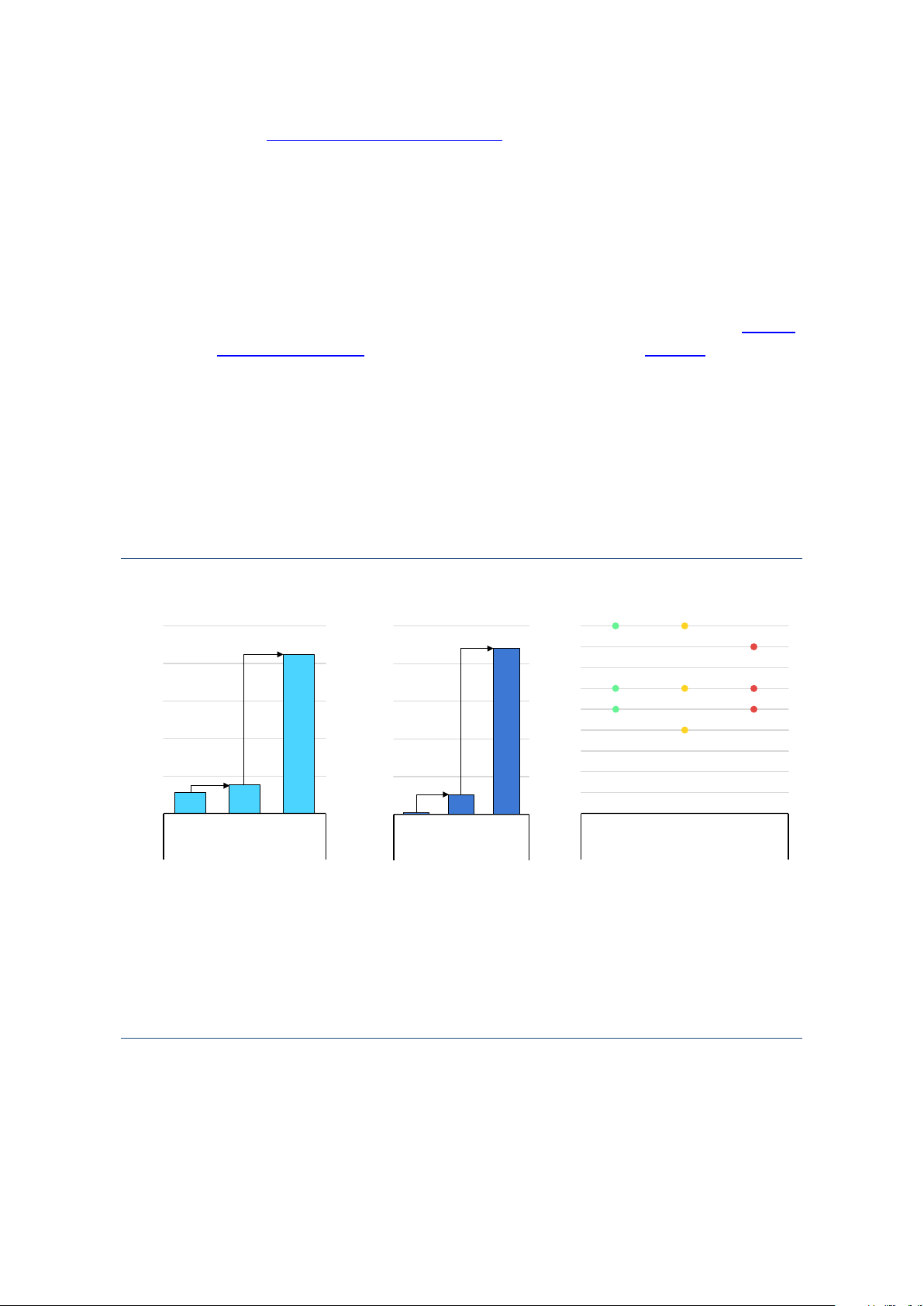
Progress in low-emissions hydrogen production, size of electrolyser projects, and
technology development and expected status, 2020-2030 5 2 500 9 en 2030 2030 2030 og x5 MW x9 TRL 8 dr 4 2 000 7 tpa hy 6 2024 2024 2024 M 3 1 500 5 2020 2020 4 2 1 000 2020 3 1 x1.3 500 2 x10 1 0 0 0 2020 2024 2030 2020 2024 2030 100% NH3-fuelled CO2 FT Low-emissions hydrogen Largest electrolyser in H2 DRI ship engine synthesis production operation TRL of key demand technologies IEA. CC BY 4.0.
Notes: FT = Fischer-Tropsch; H2 DRI = direct reduced iron using 100% hydrogen; TRL = technology readiness level. Low-
emissions hydrogen production includes historical values for 2020 and 2024 and an estimate of the potential production in
2030 from projects that have at least reached final investment decision (FID) and target operation before 2030. Largest
electrolyser in operation for 2020 and 2024 considers projects already in operation at the end of those years and the
largest project under construction today that aims to start operation before 2030. TRL of key technologies for 2020 and
2024 includes the real status of the technologies at the end of the year, and for 2030 the expected TRL of each technology
based on innovation milestones announced by companies developing each technology.
The hydrogen sector is moving forward and achieving milestones across the value chain.
The short-term prospects for the sector are positive: based only on projects that
are operational, have reached FID or are under construction, production of low-
emissions hydrogen is expected to grow fivefold in just 6 years (from 0.8 Mtpa in 0. BY 4. A. CC PAGE | 16 I E Global Hydrogen Review 2025
Five key questions about hydrogen
2024 to 4.2 Mtpa by 2030). While this falls far short of the ambitions announced
in the early 2020s, it demonstrates impressive growth for a nascent sector.
Nevertheless, this growth is not equally distributed across the world. Some
countries and regions are moving at a faster pace, like China, Europe, India,
Japan, Korea and North America, whereas in others, progress is lagging, and
adoption at scale wil probably take place only after 2030. In addition, even among
the frontrunners, there remain unresolved challenges. These include the high
production cost of low-emissions hydrogen and hydrogen-based fuels when
compared with unabated fossil-based incumbents, uncertainty around demand,
unclear and complex regulation, and limited available infrastructure for delivery to
end-users. However, on balance, the signs of progress stil outweigh the negative
news. This is an encouraging sign for a sector that can play an important role in
meeting government commitments to address climate change and boost energy
security, at a moment when geopolitical tensions are rising.
How can low-emissions hydrogen demand take off?
Stable, predictable demand is a key lever for investment in low-emissions
hydrogen production, along with other enabling factors like solid project partners,
reliable technology providers, access to low-emissions energy, a clear and
supportive regulatory framework and available infrastructure. Without robust
demand, producers of low-emissions hydrogen wil not secure sufficient off-takers
to underpin large-scale investments.
In spite of this, demand for low-emissions hydrogen currently remains low and
uncertain. Of take agreements are mostly preliminary, with only a limited number
of firm agreements that include binding conditions for both suppliers and off-
takers. Such agreements account for less than 2 Mtpa, equivalent to around 5%
of the potential production that announced projects could achieve by 2030. This
lack of dependable demand could jeopardise the viability of the entire low- emission hydrogen industry.
Governments have started announcing and implementing measures to stimulate
demand for low-emissions hydrogen, and industry is responding with a number of
initiatives to accelerate adoption. However, the results of these efforts have been
mixed. Some positive outcomes have come from tenders in the refining sector.
For example, TotalEnergies has contracted more than 200 ktpa of renewable
hydrogen to be used in its European refineries and plans to finalise agreements
for another 300 ktpa by the end of 2026. In India, several state-owned companies
launched tenders to procure renewable hydrogen last year, with three of them
already awarded and one leading to an FID in a production project. However, a
number of tenders launched in the steel sector have either not yet been awarded,
or have been put on hold due to bids being significantly higher than expected and 0. BY 4. A. CC PAGE | 17 I E Global Hydrogen Review 2025
Five key questions about hydrogen
problems resulting from a lack of available infrastructure. In addition, several
initiatives for international co-operation to aggregate demand have been launched
in recent years, but they are progressing slowly, and there are no noteworthy
results that can send a strong demand signal to producers.
The cost gap between low-emissions hydrogen and unabated fossil-based
hydrogen in traditional applications (such as refining and chemical products), and
between the use of low-emissions hydrogen-based fuels and unabated fossil fuels
in new applications (such as steel, shipping or aviation) remains a barrier to
switching to low-emissions hydrogen. Overcoming this requires policy action, but
so far this has been largely insufficient, geographically limited and, on many
occasions, stil uncertain. However, some carefully targeted policy interventions
could be a game-changer in unlocking large demand in the short term:
Focus on existing hydrogen uses. These are ready to take up low-emissions
hydrogen at scale, as technology barriers are lower, and represent more than half
of the commit ed investment in low-emissions hydrogen production. Replacing
existing dedicated hydrogen production using unabated fossil fuels1 with
production using water electrolysis would require about 880-1130 GW of
electrolysis capacity, while retrofit ing existing production assets with carbon
capture, utilisation and storage (CCUS) would require a capacity for CO2 capture
and storage of 720-820 Mt per year.
Unlock new opportunities through public procurement and support the
creation of lead markets. Public procurement is a powerful policy tool to
stimulate demand. For example, the public sector accounts for 25% of steel
demand globally, but governments are not yet using this opportunity to its full
potential. Putting this buying power behind end-use products that require low-
emissions hydrogen in their production (such as fertilisers, steel or shipping and
aviation fuels) can unlock significant demand in the near term. More than three-
quarters of today’s firm offtake agreements that can trigger demand are targeting
industrial end products (fertilisers, steel, or other chemicals) or hydrogen-based
fuels (ammonia, synthetic methanol and synthetic kerosene).
Take a holistic approach in policy design. Incorporating offtake as an eligibility
criterion in support schemes for low-emissions hydrogen production projects can
act as a filter to ensure that only robust projects with bankable offtake reach the
final stages of the selection process. This would maximise the chances of
selecting projects with a strong likelihood of coming to fruition.
Leverage international transport regulations. International transport offers
important opportunities to accelerate the adoption of low-emissions hydrogen-
based fuels through co-ordinated global standards. International regulations help
create level playing fields, ensuring market participants face consistent rules
1 This accounts for more than 80 Mtpa, excluding by product-hydrogen and the production of hydrogen for co-production of
ammonia and urea, which requires CO2 for the urea synthesis. 0. BY 4. A. CC PAGE | 18 I E
Tài liệu liên quan:
-
Green Hydrogen Cost Reduction: Scaling up Electrolysers to Meet the 1.5°C Climate Goal | Trường Đại học Sư phạm Kỹ thuật Thành phố Hồ Chí Minh
55 28 -
Nghiên cứu hiệu suất nhà máy điện nhiệt mặt trời | Môn Kinh tế năng lượng - Đại học Sư phạm Kỹ thuật Thành phố Hồ Chí Minh
125 63 -

Subcooling methods for CO2 refrigeration cycles-a review | Môn Kinh tế năng lượng - Đại học Sư phạm Kỹ thuật Thành phố Hồ Chí Minh
96 48 -
Tóm tắt quản lý năng lượng | Môn Kinh tế năng lượng - Đại học Sư phạm Kỹ thuật Thành phố Hồ Chí Minh
137 69