Innovative Financial Approach for AgriculturalSustainability: A Case Study of Alibaba - Tài liệu tham khảo | Đại học Hoa Sen
Innovative Financial Approach for AgriculturalSustainability: A Case Study of Alibaba - Tài liệu tham khảo | Đại học Hoa Sen và thông tin bổ ích giúp sinh viên tham khảo, ôn luyện và phục vụ nhu cầu học tập của mình cụ thể là có định hướng, ôn tập, nắm vững kiến thức môn học và làm bài tốt trong những bài kiểm tra, bài tiểu luận, bài tập kết thúc học phần, từ đó học tập tốt và có kết quả
Môn: Marketing (MK191P1) 310 tài liệu
Trường: Trường Đại học Hoa Sen 5.3 K tài liệu
Tác giả:


















Preview text:
sustainability Article
Innovative Financial Approach for Agricultural
Sustainability: A Case Study of Alibaba
Qi Zhou, Xiangfeng Chen and Shuting Li *
School of Management, Fudan University, Shanghai 200433, China; zhouq17@fudan.edu.cn (Q.Z.); chenxf@fudan.edu.cn (X.C.)
* Correspondence: lishuting@fudan.edu.cn
Received: 23 February 2018; Accepted: 19 March 2018; Published: 20 March 2018
Abstract: Sustainability and agricultural finance are two important issues attracting attention from
industry and academia. This research adopts an in-depth case study methodology to investigate the
agricultural finance initiatives of Alibaba Group, and explores how the agricultural finance practices
of an e-commerce platform facilitate its sustainability goal. A reference framework is proposed to
prove the adoption of agricultural finance. The influence of three moderating variables, namely,
IT support, financial attractiveness, and cooperation with other entities, is analyzed. We find that
advanced IT support and financial attractiveness are two indispensable enablers for agricultural
finance initiatives, and collaboration with other entities is necessary in adopting agricultural supply chain finance.
Keywords: agricultural finance; sustainability; supply chain finance; China; case study 1. Introduction
Recently, concern about sustainability has risen in academia and industry. Faced with
increasing pressures from global competition, community pressure, government regulations, and
non-governmental organizations (NGOs), enterprises have recognized the importance of considering
factors like social welfare and environmental influence when making operational decisions in this
era of economic globalization [1–5]. Moreover, companies are searching for competitive advantage
through environmental sustainability and social responsibility [6,7]. Up to 90% of the world’s 250
largest companies report on their social performance, and 67% of them commit to cut their carbon emissions in 2017 [8].
Despite increasing attention and efforts to address social and environmental issues in operations,
two aspects of sustainability research have been ignored. Relatively few studies explore sustainability
in the agricultural section, notwithstanding the considerable diverse research on sustainability in
non-agricultural sections, like manufacturing, electronic, logistics, retailing, and energy industries [9].
As a basic industry, agriculture is essential to society, especially in developing countries where
agriculture accounts for a relatively large share of total economic output [10] and is closely related
to poverty alleviation [11]. In terms of financial means, only a small amount of effort has been
exerted to promote sustainable development; methods applied by enterprises mainly focus on
technology, products, and production [12–14]. Poor access to capital for farmers can be an obstacle
to the implementation of sustainable agricultural technologies and practices in underprivileged regions [15,16].
Moreover, financial means, such as microcredit, are effective in reducing poverty by raising raises
per capita household consumption for borrowers [17,18]. Therefore, finance is an important driving
force for the sustainable development of agriculture in underdeveloped regions. However, few studies
explore and analyze the relationship between corporate effort in finance and sustainability. Researchers
Sustainability 2018, 10, 891; doi:10.3390/su10030891
www.mdpi.com/journal/sustainability
Sustainability 2018, 10, 891 2 of 20
often study firm sustainability in the context of supply chain operations, such as transportation,
warehousing, packaging, and distribution. We notice that certain e-commerce platforms in China,
such as Alibaba Group (Ali), have been carrying out agricultural finance business to promote
sustainable development. Ali is an influential e-commerce platform in China. Concerned with China’s
sustainable development and agricultural issues, Ali started to conduct agricultural finance through
its affiliated company—Ant Financial Services Group (AF)—in 2014, hoping to solve rural financial
problems. The latest data of rural finance released by AF show that its agricultural finance services
cover all provinces and cities nationwide (Hong Kong, Macao, and Taiwan), including 231 cities and 557 counties.
Inspired by Ali’s agricultural finance practices and their achievements, this study aims to
investigate how agricultural finance solutions can promote agricultural sustainability. To illustrate the
complex perspectives associated with implementing agricultural finance and examine the causality,
we apply an explorative single case study to answer the following questions: •
RQ1. What are Ali’s motivations to adopt agricultural finance and what specific agricultural
finance solutions does Ali provide? •
RQ2. What are the main factors affecting the adoption of agricultural finance, and how do they
affect the implementation of agricultural finance solutions? •
RQ3. How do these agricultural finance solutions perform? 2. Literature Review
2.1. Agricultural Finance
Agricultural finance focuses on the acquisition and use of financial capital by agricultural
sectors [19]. The agricultural finance market is subject to highly asymmetric information, which
triggers different rations from lenders that leads to credit constraints on farmers and small agricultural
farms [20,21]. Asymmetric information forces lenders to exert extra effort in evaluating and monitoring
the financial performance of rural borrowers, consequently increasing financial cost [19]. Lenders
impose high interest rates to farmers, blocking them from affordable financing, and this lack of
access contributes to financial exclusion in the agricultural financial market [22]. Researchers call for
the specialization of agricultural financial lenders [19,23] to reduce the adverse influence of credit
constraints on resource allocation and productivity and realize the positive effect of credit availability
on productivity growth [21,24].
The problem of credit constraint is severe in the rural areas of developing countries for two reasons.
On the one hand, the agricultural finance market is not a completely free market in that financial
resources cannot freely flow [25]. Government regulation and policy implementation with low
efficiency have considerable adverse influence on rural finance in developing countries, increasing
financial risks despite motivating financial innovation [26]. On the other hand, formal financial
institutions are relatively large, and they lack flexibility to offer effective agricultural finance; thus,
providing loans to farmers and agricultural small and medium-sized enterprises (SMEs) is more costly
for these financial institutions than for informal ones [27]. To relieve severe financial exclusion in
the rural markets in developing countries, informal lenders are recommended to complement formal
financial institutions to monitor individual borrowers and provide them with low collateral financial
services [28,29]. Informal lenders can be moneylenders, traders and agro-processing firms. They
adopt different monitoring mechanisms which would be expensive, or even impossible for banks.
Besides, informal lenders can interlink the terms of the transactions in the credit market with those
of transactions in the product markets [30]. For instance, a trader-lender may offer lower prices on
fertilizers and pesticides to farmers who borrow from him because the use of these inputs reduces the
probability of default. Moreover, informal lenders offer attractive loan contract terms with respect to
collateral requirement compared to the formal institutions [29].
Sustainability 2018, 10, 891 3 of 20
To cope with the shortage of collateral from the poor and the difficulty in finding credit records,
microfinance employs technological innovations, such as peer insurance and peer assessment of
lender creditworthiness and accompanying liability for breach of contract [31]. Microloans are flexible
in supporting the seasonal production of farmers at the micro level [23], whereas microcredit can
reduce rural poverty at the macro level [17,18,31]. Utilizing the financial technology innovation of
microfinance is a new means to broaden credit access in rural sections, increasing inclusiveness of agricultural finance.
The stream of research on agricultural finance has grown in recent years, especially in developing
countries. Although agricultural finance has been studied for decades, the focus is mostly on the
factors related only to its implementation and importance to economic development or social welfare.
Few studies cover the technical, economic, and social aspects of agricultural finance. Thus, agricultural
finance should be investigated under a complex lens.
2.2. Sustainability and Agricultural Sustainability
In 1987, the report of the World Commission on Environment and Development Our Common
Future, known as Brundtland Report, was published. The report clearly defines the concept of
sustainable development as “development that meets the needs of the present without compromising
the ability of future generations to meet their own needs”, calling for the active participation of all
sectors of society in promoting sustainable development [32]. The goal of sustainable development is
to realize the harmonious operation of three subsystems, namely, economy, society, and ecology [33 ],
which is later captured in the triple bottom line (TBL) perspective [34]. Many researchers contribute to
the interpretation and measurement of sustainability. The five principles of sustainable development
are comprehensiveness, connectivity, equity, prudence, and security [35]. A three-circle metric is
developed to show the different sub-subjects of sustainability, and multiple performance indicators of
sustainability are introduced [36].
However, the three aspects of sustainability do not receive equal research attention from
the limited literature on how to integrate environmental and social impacts in practice [37,38 ].
Although an increasing number of organizations take sustainability as a crucial part of their business
strategy [1,37,39], the analysis of sustainable operations focuses mainly on individual dimension
sustainability, whereas complex sustainability perspective is insufficient [38,40].
In the specific case of agriculture, researchers explore technologies and practices to reduce adverse
effects on the environment [41] and mechanisms to incentivize sustainable agricultural practice [15 ].
In practice, means to increase agricultural sustainability focus on environmentally friendly agricultural
technology and production [12,41]. Although these technologies are effective in reducing waste
emission and resource consumption, they may not be adopted by farmers in underprivileged regions
because of their poor access to capital markets [15,16]. On the contrary, inclusive credit access positively
influences technological efficiency in poor countries [42 ]. In addition, extant literature shows that
financial means is effective in reducing poverty, thereby improving the social aspect of sustainability in rural regions [17,18].
Studies on agricultural sustainability emerge, but few address the relationship between finance
and agricultural sustainability. Meyer [43] addresses sustainability and rural financial service
simultaneously, and shows that introducing microfinance to rural areas to meet the financial demand
of rural population can contribute to sustainable credit supply. However, the sustainability of
microfinance is limited in terms of the inclusiveness and efficiency of financial service, omitting
the environmental effect. Hence, the influence of agricultural finance on sustainability is an interesting research direction. 3. Research Methodology
A case study is a useful research method for preliminary investigation [44 ]. Considering the
focus of case study and its irreplaceable features, case-based research questions of “why” and “how”
Sustainability 2018, 10, 891 4 of 20
are required [44,45]. Given the exploratory nature of this method, in-depth case study is adopted to
investigate the agricultural finance practice of a company and its relationship with sustainability goals.
Specifically, this study discusses the current agricultural finance business of AF, which is affiliated
with Ali from a sustainability perspective. This study probes into “why” Ali applies and “how” Ali
implements agricultural financial service. As we seek to provide a newfangled story and a detailed
exploration of a particular case, Ali, this study thus follows the advice of Dyer and Wilkins [46], that
a single case study is more suitable in providing a rich description of context and deep insight into
social dynamics and generating a new theory, than multiple case studies. 3.1. Research Framework
A case study initially considers the research questions and framework [47], so we design a research
framework (see Figure 1) to answer our research questions. The adoption of a certain agricultural
financial solution is the dependent variable, and the objective to adopt different agricultural finance
solutions is the independent variable. We first analyze the causal relationship, and then investigate
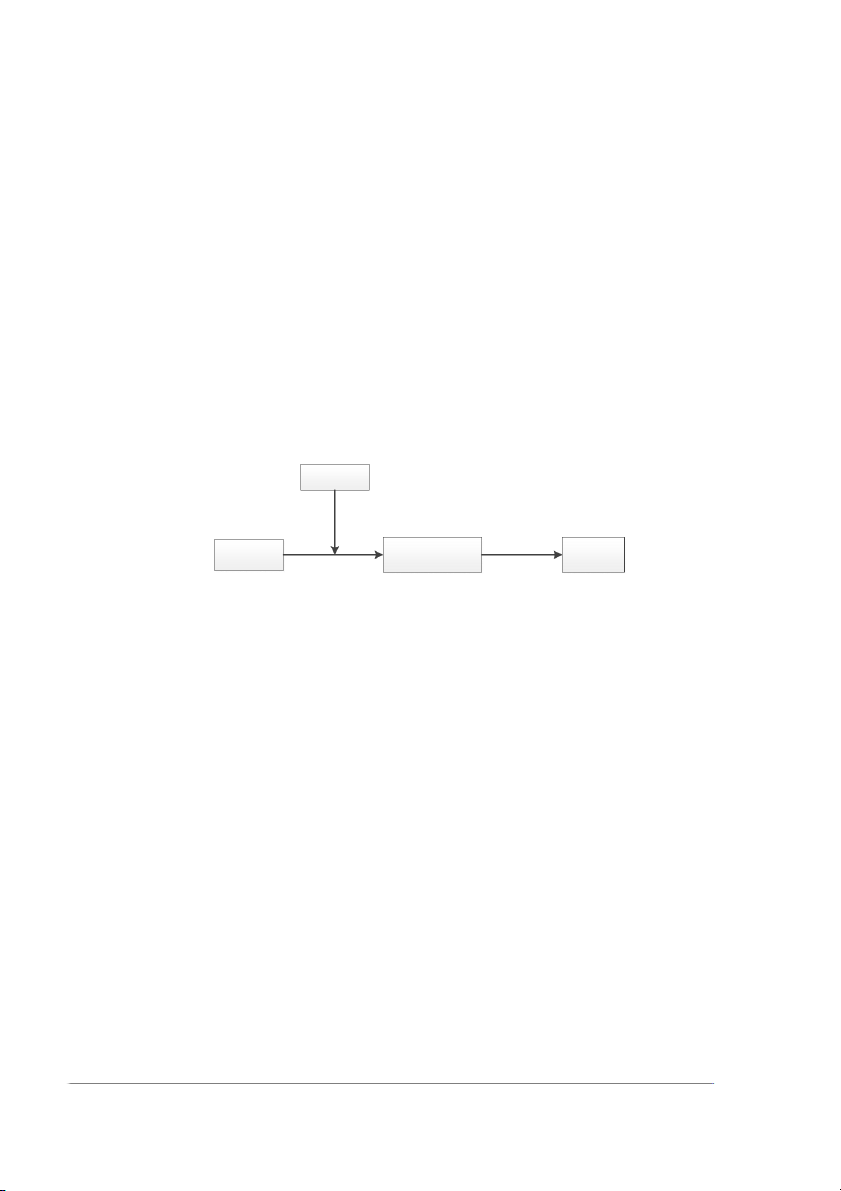
the influence of four moderating variables on the causal relationship between the motivation and
practice of different solutions. The outcomes of agricultural finance solutions are also evaluated from a sustainability perspective. Moderating variable: Adoption of Sustainability Agricultural finance Performance objective solution
Figure 1. Research framework.
3.2. Case Selection and Data Collection 3.2.1. Case Selection
Ali is the largest business platform enterprise in China that was released as an online marketplace
in December 1999 by Jack Ma and 17 other founders.
Taobao was founded as a consumer
e-commerce platform in May 2003. In 2004, Alibaba started to provide third-party payment (TPP)
service—Alipay—as a separate business, allowing money to be wired from bank accounts to Alibaba.
In April 2008, Taobao established Taobao Mall (Tmall.com) as its B2C portal, complementing its
consumer-to-consumer portal (Taobao). After 10 years of development, Ali established Alibaba Cloud
Computing in September 2009. Ali announced a plan to earmark 0.3% of its annual revenues to fund
environmental protection initiatives in May 2010. Two years later, Ali decided to take its publicly
traded Alibaba.com private, delisting from the Hong Kong stock exchange. In 2014, Ali was valued at
25 billion dollars in its Initial Public Offerings in United States, becoming the largest IPO in the history
of listed companies. As the largest e-commerce retail platform in China, Ali’s total transaction amount
was 3.77 trillion dollars in 2017, surpassing the gross domestic product (GDP) of Sweden. In July 2017,
Ali became the first Asian company to break value mark of 400 billion USD with 507 million active
buyers. All these facts make Ali the world’s largest mobile economy entity, and second only to the
world’s top 20 economy entities.
Alipay was rebranded as AF on 16 October 2014. Now, AF is valued at roughly 70 billion dollars
or more. In April 2016, AF had around 450 million annual active users, with Credit Suisse estimating
that 58% of China’s online payment transactions went through AF. The latest data of rural finance
released by AF report that by the end of February 2017, the number of AF users in payment, insurance,
and credit service reached 167 million, 142 million, and 38.24 million, respectively.
Sustainability 2018, 10, 891 5 of 20
In China, many e-business platforms have emerged in recent years, and leading business platforms
have started agricultural finance business. Among these platforms, Ali is especially worth studying
for several reasons that contribute to its representativeness [48]. First, Ali’s corporate culture and
vision is consistent with the research background of this article because Ali is committed to promoting
the sustainable development of society. Ali has started to make an effort to protect the environment
since 2010 and has set agricultural business as one of its strategies for the next decade. Since 2014,
its agricultural finance business has been implemented by a professional department in its affiliated
company—AF—to offer a wide range of financial services. On 19 January 2017, AF and the United
Nations Environment Programme (UNEP) initiated the Green Digital Finance Alliance at the World
Economic Forum in Davos, which is the first international alliance set up by UNEP in cooperation with
a Chinese enterprise. Second, the strong economic capability of Ali guarantees that AF can provide
inclusive agricultural finance, which requires great front capital investment. Besides, Alibaba operates
comprehensive e-commerce businesses, including customer-to-customer retailing platform (Taobao),
business-to-customer (B2C) retailing platform (T-Mall), online rural marketplace (Rural Taobao), and
third-party payment (TPP) service (Alipay), thereby providing AF with a strong business setting
for agricultural financial business. As one of the largest e-commerce platforms in the world, Ali’s
market capitalization exceeded 470 billion USD in 2017, surpassing that of Amazon. Third, AF is
an IT company with a strong technical team, enabling the provision of innovative online financial
solutions. On 11 November 2017, T-Mall created a one-day trading record of 168.2 billion yuan, and
the maximum number of payments reached 256,000 times/second. Behind this record is AF’s powerful data processing capability. 3.2.2. Data Collection
A complete case analysis includes data collection, coding, memos, and the script [45]. Following
Corbin and Strauss [45] and Yin [48], this case study starts with data collection. Supportive information
on critical application models in the agricultural finance business of AF is collected from multiple
sources with guidance from Corbin and Strauss [45]. In-depth interviews are conducted with top
managers who exert critical influence on the development of agricultural business in AF. Guided
by a semi-structured protocol, face-to-face interviews last approximately 120 min. Guidelines
included questions aiming to investigate the context and development of AF’s agricultural finance
and the problems in operations. Company internal information, such as annual reports, is collected.
Information about the agricultural business of AF is also searched in social media, such as Weibo,
WeChat, and other information channels.
The credibility of a case study can be increased by prolonged engagement, persistent observation,
triangulation, referential adequacy materials, peer debriefing, and member checks (Lincoln & Guba,
1985). To increase construct validity, an interview of two experts together with information from
other sources is used to triangulate the information provided by the interviewees [49]. Our prolonged
engagement in the case allows us to verify the details in the operations of Ali’s agricultural finance.
In addition, the descriptive precision of the case is validated by the material sent by the interviewer during interview.
3.3. Coding and Data Analysis
Interview tape recordings are transcribed into textual material to facilitate coding. We follow
the procedure proposed by Corbin and Strauss [45] to conduct coding and data analysis. Each
researcher first codes the data independently. We then compare all the codes with coding in relevant
literature to ensure reliability. Finally, the coding leads to the final explanation needed to construct the research framework.
An open method is adopted for coding to generate concepts and build a research framework. The
original textual interview materials are labeled with different colors according to meanings. All tagged
quotations are then translated into codes to derive concepts. Finally, similar concepts are classified
Sustainability 2018, 10, 891 6 of 20
into categories with reference to the TBL perspective. Resulting concepts are constantly compared
with corresponding descriptions to prevent bias and achieve great precision and consistency. Table 1
demonstrates the coding results.
Table 1. Examples of codes. Category Codes Original Quotes
“We want to provide inclusive finance to serve all Objective Society Social equality promotion customers and SMEs equally”
“We hope to bring convenience to rural life by Peoples’ wellbeing promotion
helping farmers buy and sell products”
“We find that traditional banks have missed a big
Occupying rural and agricultural
market—rural financial market. It is our chance Objective Economy markets
to grant consuming loans and business loans to
ordinary peasantries to seize this market”
“Profit is not our short-term goal for rural market.
Creating long-term agricultural
We care about industrial ecology value more than industrial ecology value mere value of financing”
“We hope to guide farmers to use Promote green agricultural Objective Environment
environmentally friendly products to control raw production
materials used from the very start”
“We plan to cooperate with more other big Accelerate agricultural
retailers and manufacturers to integrate scattered Performance Society development
farmers to achieve agricultural intensive production”
“Wang Nong Bao is a comprehensive insurance
solution that includes all kinds of insurances for Benefit farmers’ production
agricultural production such as agricultural and life
product quality insurance and agricultural price
index insurance. It has served 130 million farmers till now.”
“Cooperating with us, traditional financial
institutions can enlarge their business” Improve business of partners
“We help to relieve the cash pressure for our supplier companies”
“We are working with Wal-mart on food safety Food safety
problems related to hundreds of thousands of urban consumers” Business expansion and
“Our agricultural finance business grows out Performance Economy innovation
from our business in rural places”
“We have done a lot that banks have not done” New profit growth
“Only this platform is built up, can it (agricultural
finance) be won from the national level”
“Ali is known as a company of great feelings that Company image
is dedicated to the sustainable development of society”
“Farmers can only use the purchase quota to buy Performance Environment Green production
specified products. Thus, production can be
controlled from source material”
4. Case Analysis and Results 4.1. Case Description
In practice, AF designs four financial models to serve individual farmers and agri-businesses and
promote agricultural sustainability.
Sustainability 2018, 10, 891 7 of 20
4.1.1. Model 1: Supply Chain and Industry Model (to Business)
This model is essentially a supply chain finance (SCF) solution, which accounts for the most
important one among all the finance models in AF’s agricultural business because of its ability to
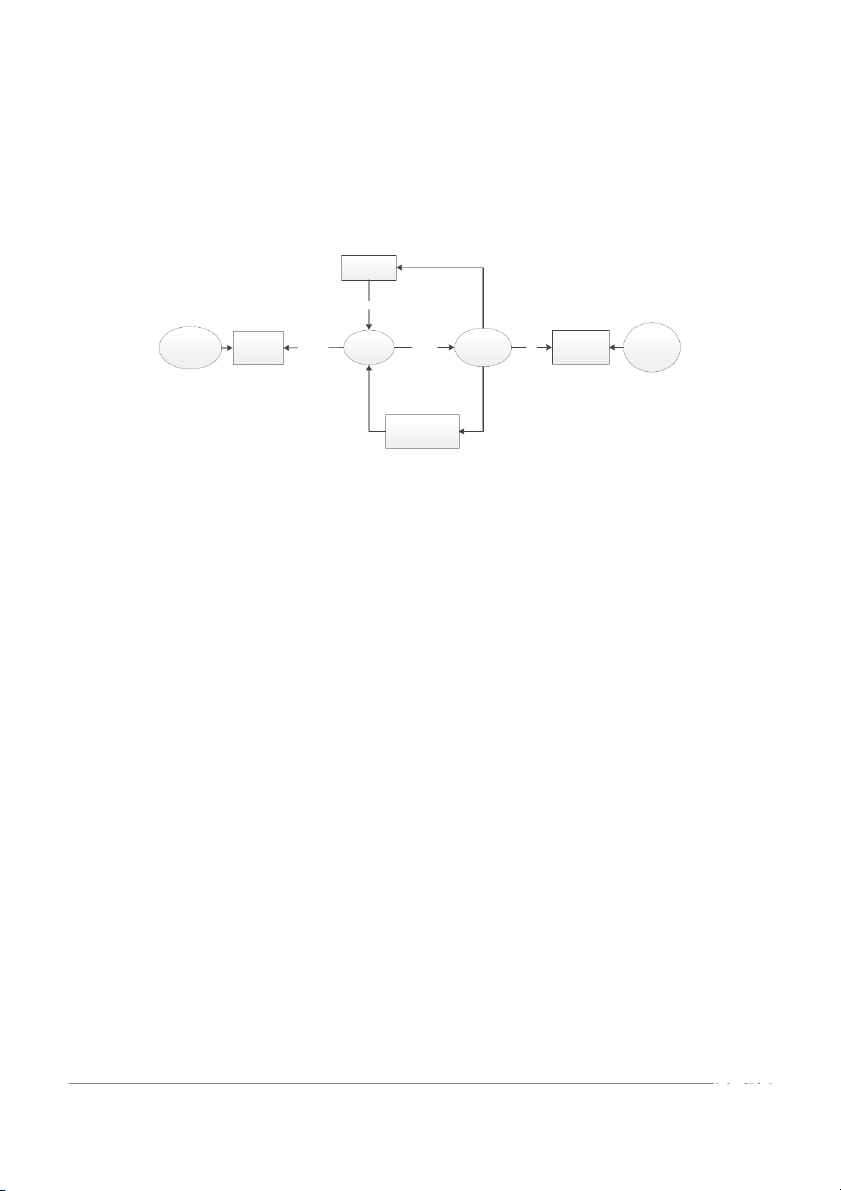
promote sustainability from all three aspects. Figure 2 reveals the implementation of this model. AF Credit Far m Agri-material Directional Leading Rural Taobao Far mer product Sell Tmall.com Customer firm purchase firm purchase China Insurance
Figure 2. Supply chain and industry model.
Farmers usually face poor access to markets, and many of them sell their products on the local
free market [50]. To help farmers sell products and accelerate reproduction, Ali applies agricultural
SCF (ASCF) by cooperating with large agricultural processors. These agricultural enterprises purchase
farm products from farmer suppliers. They either sell processed products directly at their online
stores at T-Mall or sell final products to the supermarket owned by T-Mall. Ali functions as the
bond among all entities: AF acts as the payment and settlement agent, and T-Mall functions as the
intermediate retailing platform. A three-tier agricultural supply chain is formed when these enterprises
sell their products to T-Mall supermarket, and then T-Mall supermarket sells products to consumers.
In this supply chain, Ali is the retailer, and agricultural processors and farmers are Ali’s first-tier and
second-tier suppliers, respectively.
Farmer suppliers’ capital needs are being met through AF with Designated Purchase Credit quota.
AF deducts the procurement cost from the firms’ sales revenue. When the procurement cost has been
paid off, the rest of the sales revenue remains in the Alipay account of the firms. Farmers can only use
designated purchase credit to purchase specific production materials and tools that are typically green
brands from Rural Taobao, Ali’s online rural marketplace. Cooperative agricultural firms provide
technical support and guidance to farmer suppliers. Thus, there is additional information flowing
from leading firms and AF to farmer suppliers to update and educate them about environmentally
sound production processes and product requirements as recommended in the study of Ragatz,
Handfield [51]. To secure the supply chain, the production of farmer suppliers and payment from
the leading firm is insured by China Insurance (CI), which is the second oldest insurance company in
China. As a state-owned enterprise, CI has greatly contributed to China’s public welfare by offering a
wide range of supportive insurance for agricultural production and farmer benefit.
The sales of products and acceleration of payment is enabled by two closed loops in the “supply
chain and industry” model. One is the loop of payment. Farmers obtain designated purchase credit
quota from AF, then purchase from Rural Taobao with the credit. During sale season, urban consumers
buy finished products from T-Mall and pay with Alipay. When sales are realized, firms receive profit
after procurement cost is deducted. A closed loop of capital flow is formed among the Alipay accounts
of all parties in this supply chain. The other closed loop is the loop of products. Finished agricultural
products and raw materials for production are all sold on two retailing platforms of Ali, namely, T-Mall
and Rural Taobao, constructing a closed loop.
Sustainability 2018, 10, 891 8 of 20
4.1.2. Model 2: Online and Offline Lending Model (to Business)
Agricultural SMEs usually experience difficulties obtaining loans from banks when they do not
have credit records and their business sizes are small. Many of them have never cooperated with
Ali before. How can AF reach them with insufficient information at the lowest cost? Without close
cooperation at the supply chain level, reducing risk posted by insufficient information is a challenge.
The need to share lending risk with other entities gives rise to the second model named as the “online
and offline” model, which is demonstrated in Figure 3. AF cooperates with China Foundation for
Poverty Alleviation (CFPA) and CI to provide loans to small agri-businesses. As one of the largest
and most influential public organizations in poverty alleviation and public welfare in China, CFPA
works closely with households in poverty. Owners of small agri-businesses report their financial
needs to CFPA, and CFPA recommends real needs of owners with integrity to AF after checking and
confirming their information in offline databases and field surveys. After further credit assessment, AF
then includes these agri-businesses in the client database and lends money that is raised from urban
individual investors to small business owners with certain interest rate, insured by CI. In this scenario,
AF functions as the credit data evaluator and the bridge between capital demand and supply. With
loans from AF, a small agri-business can purchase vehicles and production equipment to extend their
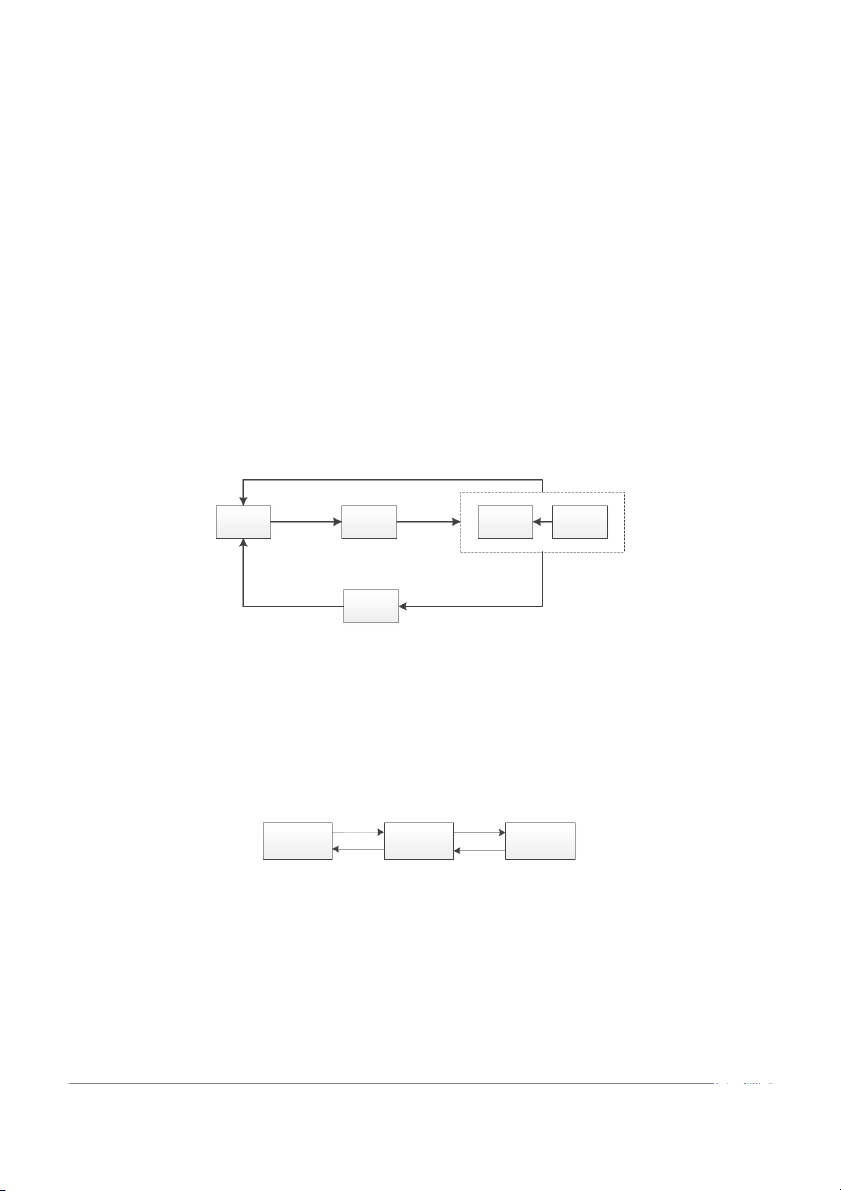
scope of business. Urban individual investors can invest their spare fund in rural businesses. Loan Individual Business CFPA AF urban owner Lending Info investor China Insurance
Figure 3. Online and offline lending model.
4.1.3. Model 3: Platform Data and Credit Model 1—Microcredit (to Individual)
Farmers have inadequate purchasing power because of liquidity constraints from seasonal
payment [52] and absence of credit cards from limited bank access [53]. To improve the consumption
level of ordinary farmers and growers, AF offers Microcredit product “Ant Check Later” to satisfy
their everyday financial needs, as illustrated in Figure 4. The consumption level, repayment ability,
and credit level of customers are evaluated based on their purchase and payment records from the
platform. On the basis of personal evaluation, AF grants a monthly credit quota to each customer for
consumption on T-Mall and other cooperative business entities. Farmer AF T-Mall Credit
Figure 4. Microcredit to individual.
With Microcredit quota, farmers can shop on T-Mall this month and pay the bill next month
without interest. Credit is interest-free for up to 41 days. Payments can be made in installments at
three-, six-, nine-, or 12-month intervals with interest rates varying from 2.5 percent to 8.8 percent.
In this sense, Ant Check Later functions like credit cards. When shopping on T-Mall and Taobao,
consumers can “buy first pay later” even without credit cards.
Sustainability 2018, 10, 891 9 of 20
4.1.4. Model 4: Platform Data and Credit Model 2—Microloan (to Individual)
Farmers need cash to pay offline bills, such as education fees, which cannot be satisfied by
Microcredit. In addition to Ant Check Later, AF provides a personal loan product to individuals,
which is called Jiebei, which means “just borrow the money”. Jiebei allows each user a certain lending
quota according to their credit level and repayment record. As shown in Figure 5, Jiebei is a Microloan
that enables borrowers to withdraw cash after successful application. Jiebei is available to farmers
as long as they have Alipay accounts and no bad records. The repayment condition is flexible, as the
repayment starts immediately after loan disbursement. The risk of lending to farmers is controlled
from two aspects. First, the credit level and loan quota are calculated based on the transaction and
repayment records of users. Second, farmer users are suppliers of Ali. The sales revenue of the farmer’s
products and his loan bills are in the same Alipay account, which is monitored by AF. If the farmer fails
to pay the loan off by repayment due date, then Ali will charge an overdue fee each day. Once overdue
repayment occurs, the loan quota of the user is reduced and even service permission becomes limited. Farmer AF T-Mall Cash
Figure 5. Microloan to individual. 4.2. Case Analysis
Analysis is conducted according to the research framework. A typology matrix is first applied
to describe the four agricultural finance solutions that AF practices. Ali’s objectives to conduct
agricultural finance are then elaborated. Afterward, the TBL framework is applied to analyze the
performance of the practices. Finally, the influence of the moderating variables on the relationship
between objectives and practices is analyzed.
4.2.1. Typology of Agricultural Finance Solutions
To further make sense of the four models, we classify Ali’s agricultural finance business solutions
(Table 2). Contingency theory suggests that there is no single optimal answer to all complex decisions.
They should be made contingent on various external factors [54]. AF classifies its rural customers
into two groups (individual and business). This classification is based on the difference in the type of
financial need and volume of financial demand. Individual farmers need financial services mainly
for their daily expenses, whereas agri-businesses need financial support for business maintenance
and expansion. The capital demands of businesses far exceed that of individuals. In addition, capital
flows differ in operations. Financial products can also be categorized into two types: credit and cash.
Two client groups and two product types constitute a two-dimensional matrix, which can describe the
four agricultural finance solutions: Microcredit, Microloan, supply chain and industrial model, and online and offline lending.
Table 2. Typology of agricultural finance solutions.
Type of financial product Credit Cash Business
Supply chain and industry model Online and offline lending Customer type Individual Microcredit Microloan
The top-left quadrant of Figure 6 encompasses SCF solutions in the form of credit, which functions
as advanced payment to farmer suppliers of corporate clients in the supply chain [55 ,56]. The “supply
chain and industry” model employs SCF to eliminate delay payment to suppliers and involves large
Sustainability 2018, 10, 891 10 of 20
manufacturers to buy farm products by batch and provide technical support to farmers. Designated
purchase credit to farmer suppliers is an example solution, showing a complex application of online
SCF by an e-commerce platform in agriculture, which is worth emphasizing. Cooperation with IT Support other entities
Adoption of Agricultural Finance Sustainable objective solutions: Performance -Social objective -Microcredit -Social outcome -Environmental objective -Microloan -Environmental outcome -Economic objective -Agricultural SCF -Economic outcome -Online & offline lending Financing Attractiveness
Figure 6. Reference framework.
The top-right quadrant illustrates loan solutions for small agri-businesses to broaden their
credit access [27]. The matching of online capital supply and offline demand is realized through
the cooperation between online financial and offline information providers like NGOs.
The bottom-left quadrant features short-term, interest-free Microcredit products for individual
consumption. Microcredit improves the purchase power of individual consumers [28] and increases
their willingness to pay and brings sales [57 ]. Individual farmers (those who have opened accounts on
T-Mall and Alipay) shop on T-Mall or Taobao, and pay with Alipay. All historical behavior information
is recorded and used for personal evaluation by Zhima Credit, an independent third-party credit
agency of AF. Zhima Credit exploits cloud computing and machine learning technologies to analyze
the credit level of consumers and calculate their credit scores, called Zhima Credit Score. Based on
these scores, AF decides, updates, and grants monthly Microcredit quota to each user.
Finally, the bottom-right quadrant includes Microloan products to alleviate fund shortage of
individual farmers [23 ]. These products aim to provide farmers with easy access to loans. Online
personal loan service differs from personal loan from banks in terms of application process, mortgage
requirement, and repayment condition. On the one hand, applying for Jiebei service is simpler than
that of personal bank loan because Microloan credit assessment is also based on Zhima Credit. Zhima
Credit can objectively show the credit status of individuals because it collects both platform and
government data. On the other hand, Jiebei users can obtain loans without any mortgage, which is
enabled by powerful credit agents and the risk control system of AF.
4.2.2. Motivation for Agricultural Finance Solutions
The objectives to practice agricultural finance from the interview records are summarized using
the TBL framework and sustainability metrics [34,36]. Each objective does not result in the independent
implementation of a certain agricultural financial solution. Instead, all solutions work together as the
driving force that leads to the adoption of agricultural finance business. Social Objective
Corporate social responsibility is an important motivation for companies to exert efforts for social
benefit [58]. To support the development of small agri-businesses, AF adopts the “online and offline
model” to provide them with business loans. To improve the daily consumption level of individual
farmers, AF grants them with Microcredit, allowing late payment. Individual farmers can also avail
of convenient Microloan to relieve temporary fund shortage. In an attempt to increase agricultural
Tài liệu liên quan:
-
Phân tích kỹ thuật Phân tích kỹ thuật không giống với phân tích cơ bản - Tài liệu tham khảo | Đại học Hoa Sen
270 135 -
Article 1 - Impact of social media in India - Tài liệu tham khảo | Đại học Hoa Sen
401 201 -
Nhượng quyền kinh doanh - báo cáo cuối kì - Tài liệu tham khảo | Đại học Hoa Sen
309 155 -
Article 1 - Impact of social media in India - Tài liệu tham khảo | Đại học Hoa Sen
348 174 -
On Lê Vũ for skylines - Exhibition introduction writing sample - Tài liệu tham khảo | Đại học Hoa Sen
297 149