Introduction to IoT
Introduction to IoT
Môn: Tài liệu Tổng hợp 3.6 K tài liệu
Trường: Tài liệu khác 3.9 K tài liệu
Tác giả:






Preview text:
Internet of Things Introduction to IoT
Definitions, Characteristics, Applications
“I have no special talent. I am only passionately curious.” – Albert Einstein What is IoT?
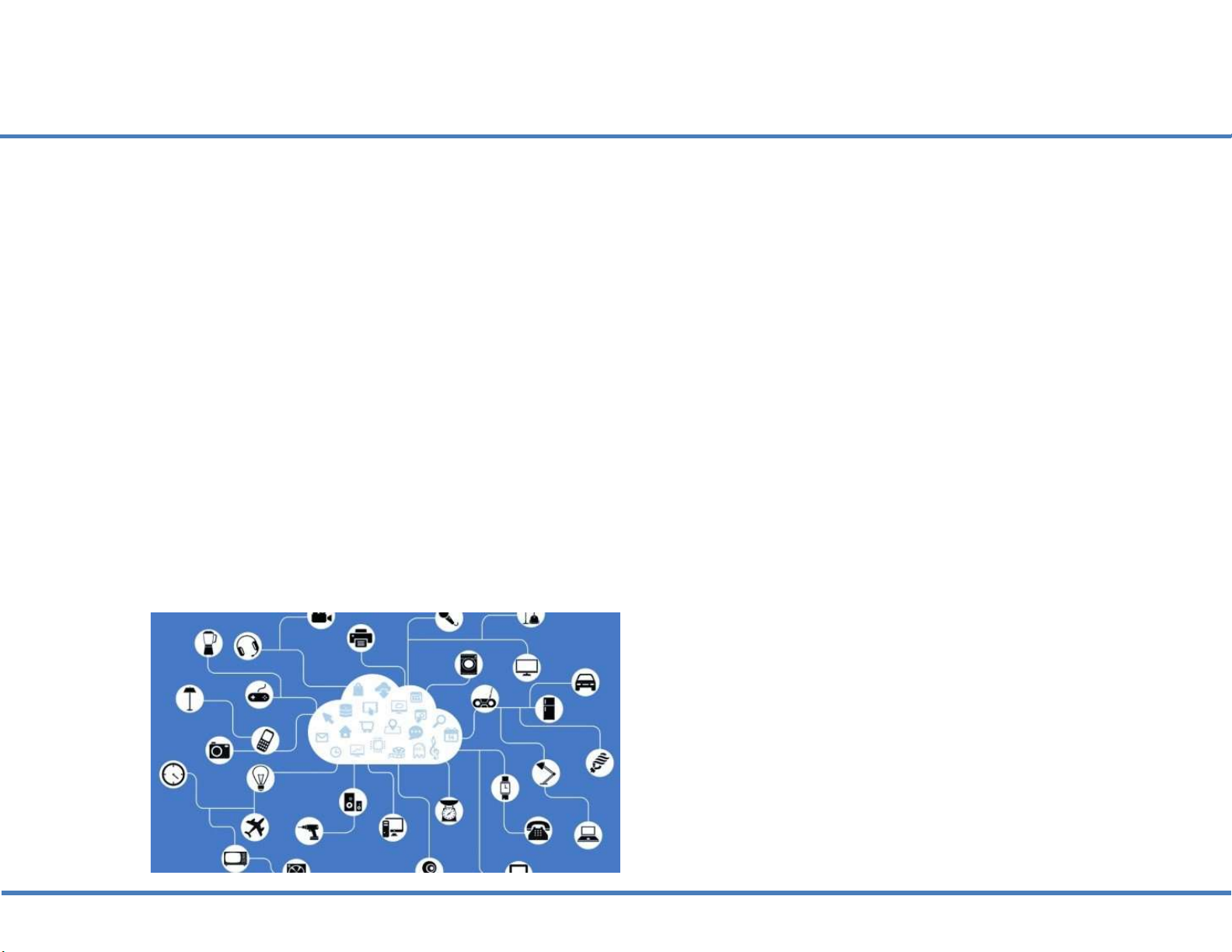
Internet of Things (IoT) is the network of smart physical objects
physical objects (e.g. devices, vehicles, buildings, etc.) embedded with sensors/actuators,
computation unit, memory unit, power source, and network connectivity,
which enables the physical object to collect and exchange data,
analyze the collected data to extract new insight and respond accordingly.
Goal of IoT is to “connect the unconnected”
“Things” or “objects” that were not supposed to be connected to the Internet
IoT did the technology transition
in traditional computer networks 2 Cont…
• Unifications of technologies: • Embedded systems, •
Low power and low rate network, • Internet, • Big data, • Data analytics, • Cloud computing, • Edge Intelligence • Software defined networks, • Network and data security • Etc. • Alternate Definition:
“The Internet of Things (IoT) is the network of physical objects that contain embedded
technology to communicate and sense or interact with their internal states or the external
environment.” – Gartner Research*
* https://www.gartner.com/en/information-technology/glossary/internet-of-things 3 Brief History of IoT
The term "Internet of things" was likely coined by Kevin Ashton of Procter & Gamble,
later MIT's Auto-ID Center, in 1999.
“In the 20th century, computers were brains without senses —they only knew what we told them.” Now in the
21st century, computers are sensing things for themselves! – Kevin Ashton
Early 1980s at the Carnegie Melon University, a group of students created a way to get
their campus Coca-Cola vending machine to report on its contents through a network in
order to save them the trek if the machine was out of Coke.
In 1990, John Romkey, developer of the first TCP/IP stack for IBM PC in 1983,
connected a toaster to the internet for the first time.
In 1991, a group of students at the University of Cambridge used a web camera to report
on coffee available in their computer labs coffee pot.
At the beginning of the 21st Century, LG Electronics introduced the world’s first
refrigerator connected to the internet 4 Cont…
The popularity of the term IoT did not accelerate until 2010/2011 and reached mass market in 2013-14.
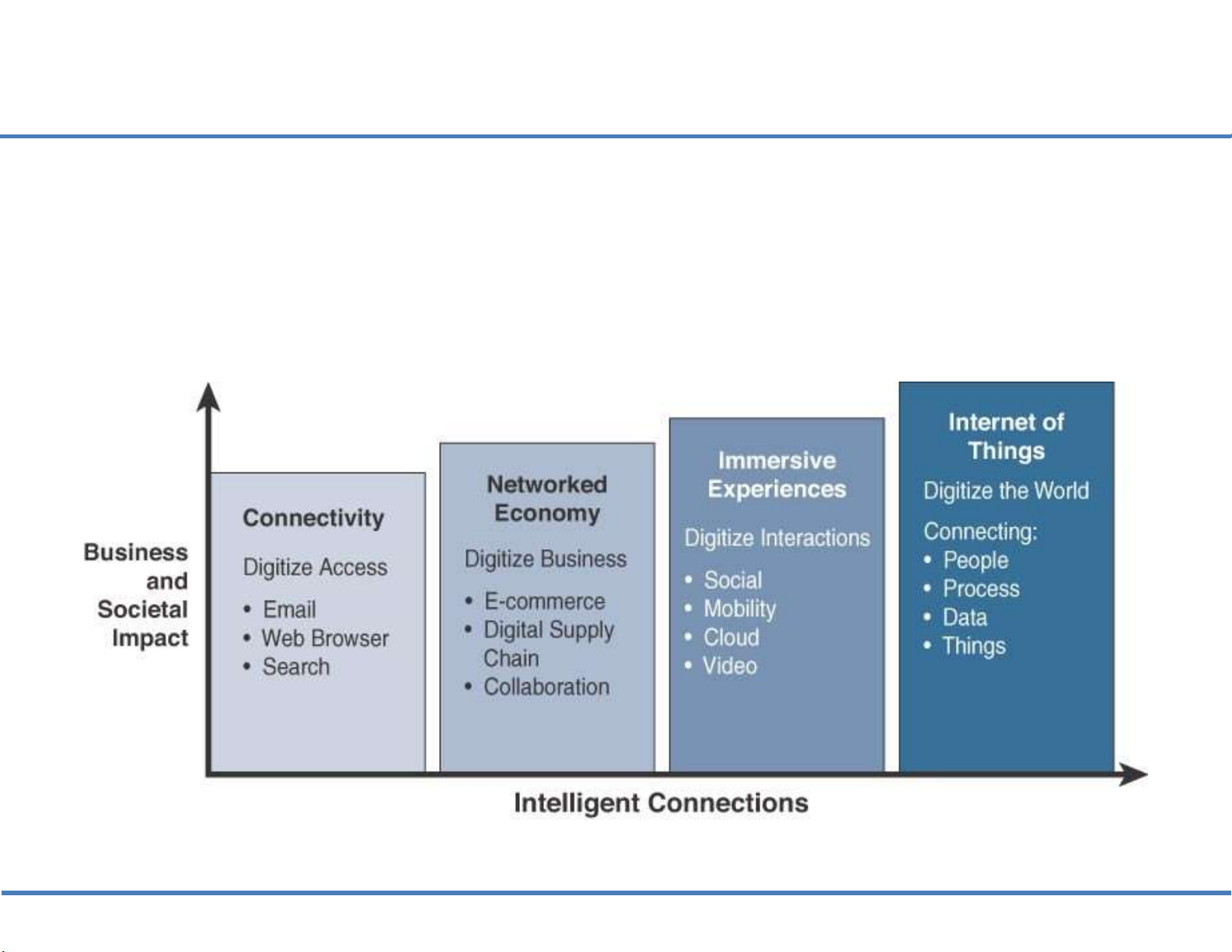
Definition of the IoT has evolved over time. 2010 onwards Early 2000 Post 1993 1990
Evolutionary Phases of the Internet 5 Benefits of IoT • Automation
o Machines can assemble parts with more precision and speed, resulting in fewer errors during assembly
o Robots can very rapidly detect faults that may not be detected by the human eye • Predictive Maintenance
o Continuous monitoring of systems and processes to identify key indicators of problems before they
result in downtime or system failure •
Process / Efficiency Improvement
o Process improvement affects every aspect of an operation’s bottom line • Cost Reduction
o When an organization can improve system uptime, automate processes, reduce the risk of failure and
gain insights that support better decision making, and reduce resource usage, the result is efficiency and cost savings • Improved/ New Insights
o IoT systems often act as the eyes and ears on remote, hard-to-reach, or widely distributed equipment and processes. • Adaptability
o The ability to adapt to new business requirements, customer needs, and changing conditions, or scale
the deployment in response to business growth or customer requirements 6 IoT vs. WSN
• Wireless Sensor Network (WSN):
– WSN refers to a group of specialized dedicated sensors with a communications infrastructure.
– WSN is primarily used for monitoring and recording the physical environment
conditions like temperature, sound, pol ution levels, humidity, wind, and so on.
– It is designed to acquire, process, transfer, and provide data/information extracted from the physical world.
– In a WSN, there is no direct connection to the internet. Instead, the various sensors
connect to some kind of router or central node.
• WSN: Resource constraint sensor nodes + wireless network to connect the
nodes + gather some data by sensing the environment.
• IoT: WSN + Internet + App + Cloud computing + Data Analytics + etc… 7 IoT vs. M2M
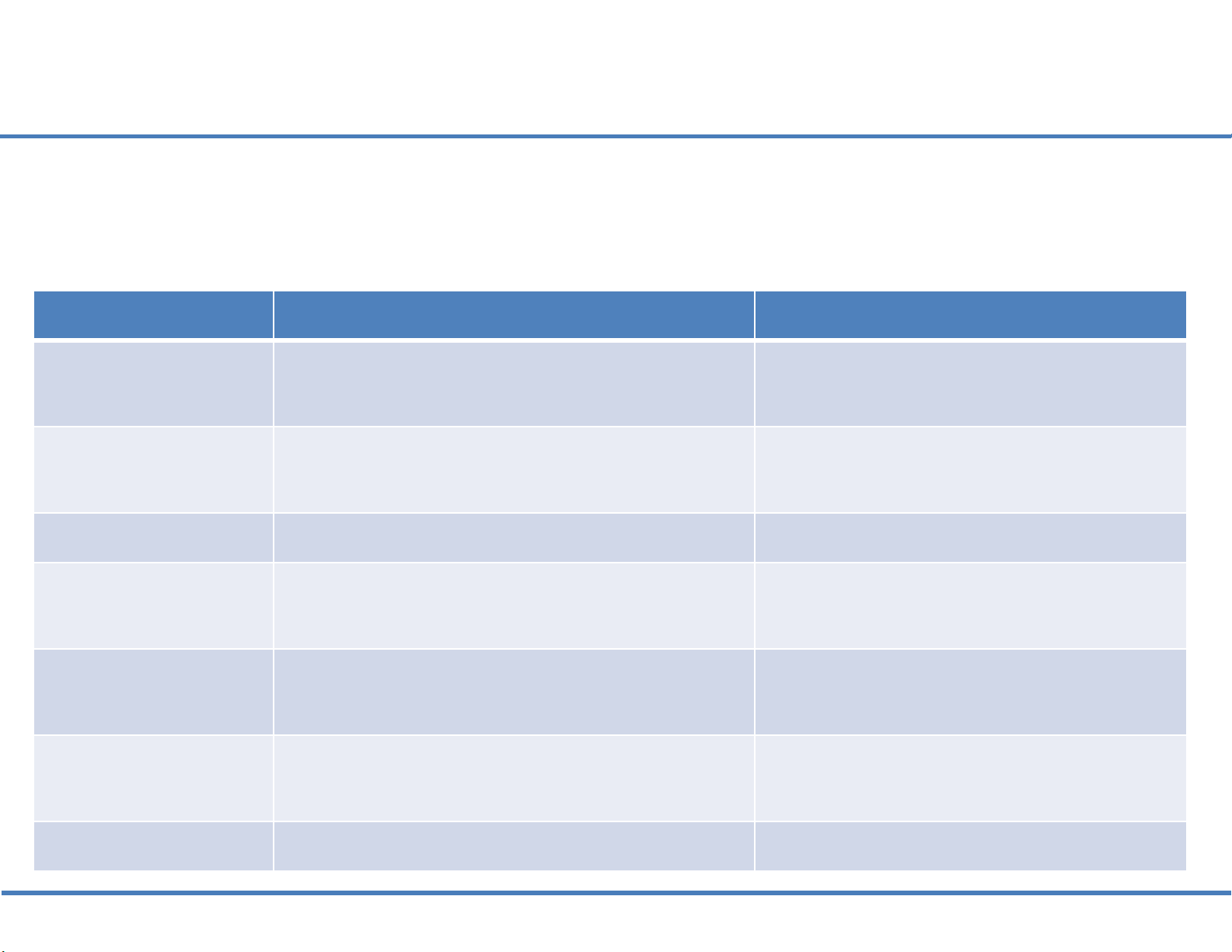
• Machine-to-Machine (M2M): It is a concept where two or more than two
machines communicate with each other without human interaction using a wired or wireless mechanism. Basis of IoT M2M
Connection type via (IP) Network and using various Mainly point-to-point communication types.
Communication IP based protocol Proprietary protocols protocol Internet
Internet connection is required not dependent on the Internet Data Sharing Data is shared with other Data is shared with only the applications (if required) communicating parties. Open API
Supports Open API integrations. There is no support for Open API’s Scalability
More devices, more scalable due to Limited devices, less scalable cloud based architecture than IoT App. Example
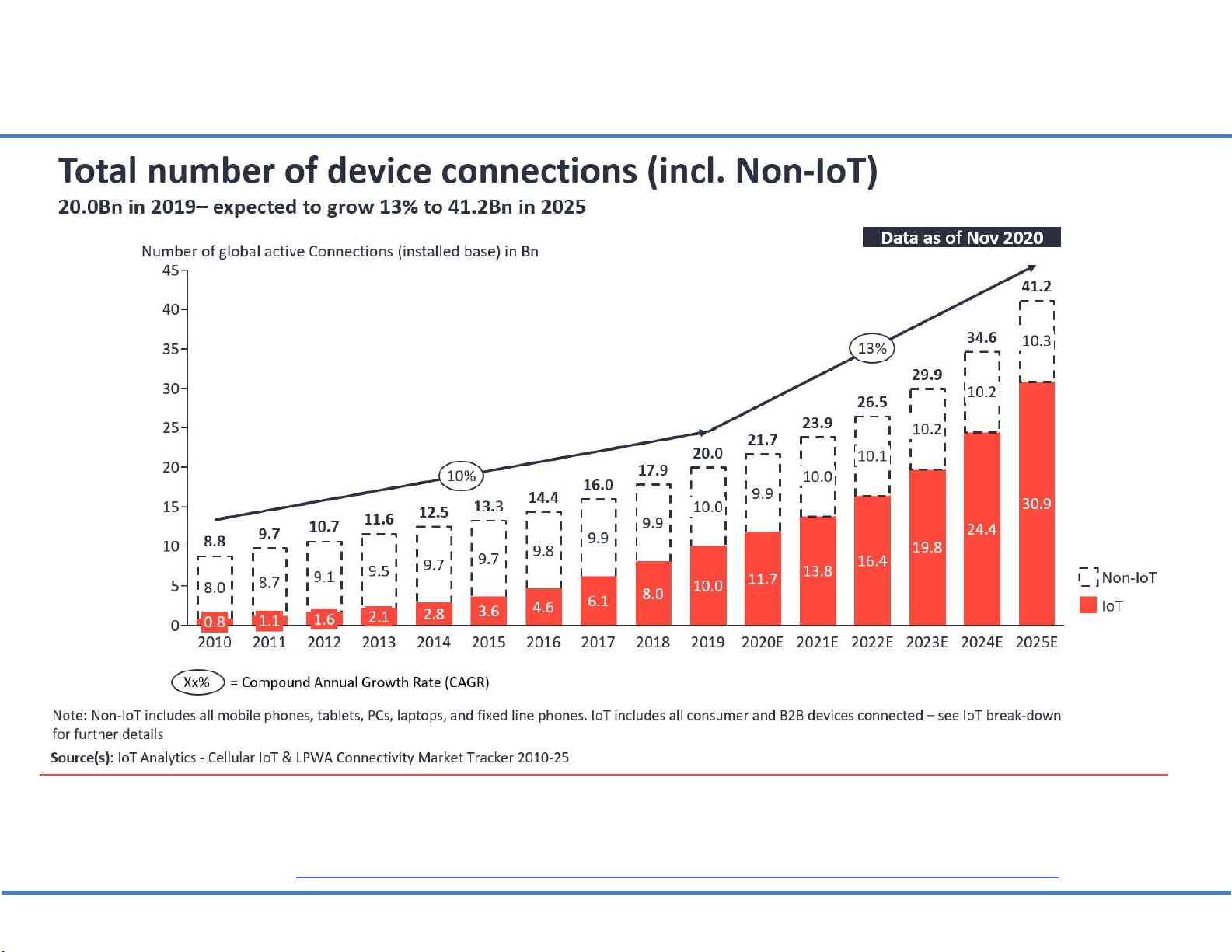
Smart home, Smart wearables, etc. Sensor telemetry, ATMs in Bank 8 Growth of IoT Devices IoT Analytics’prediction
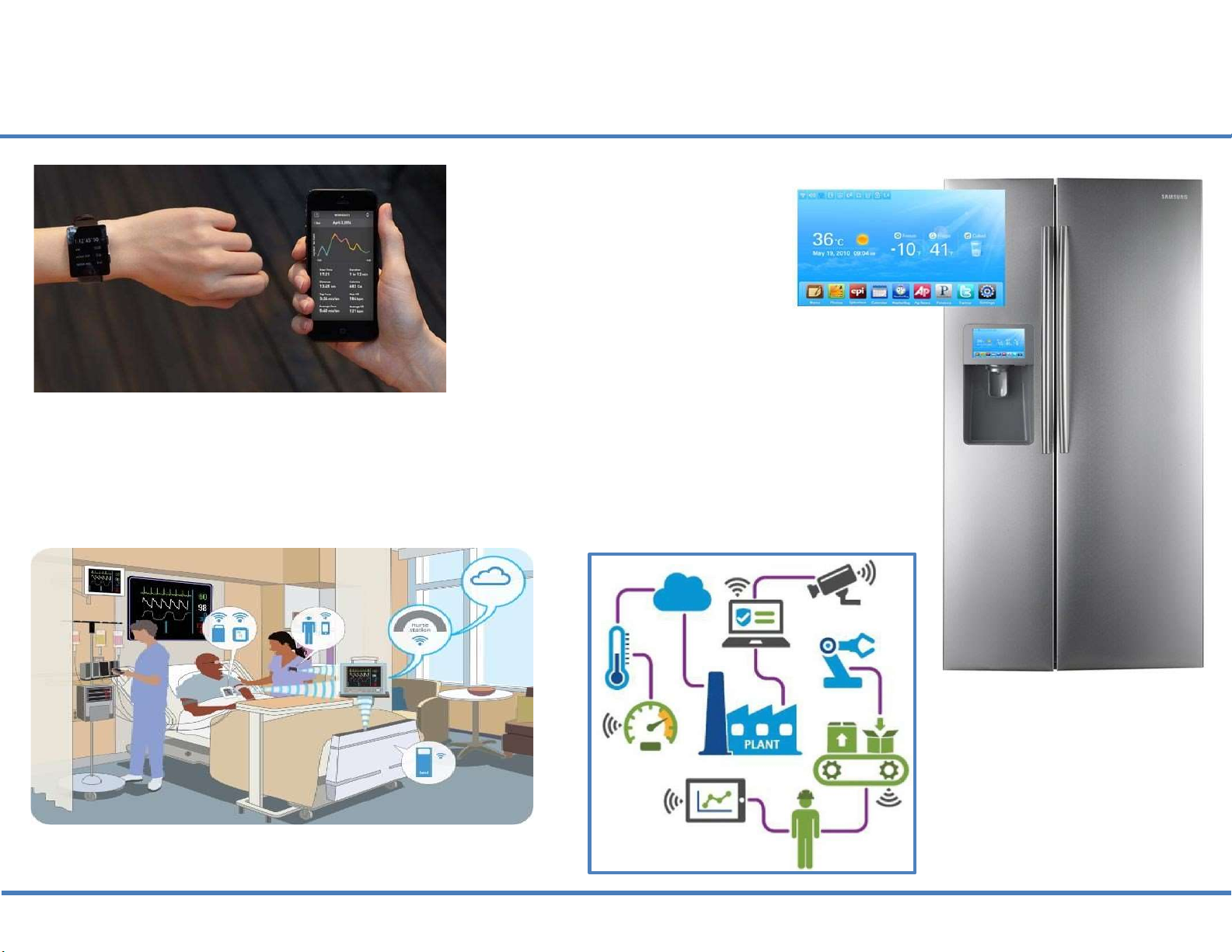
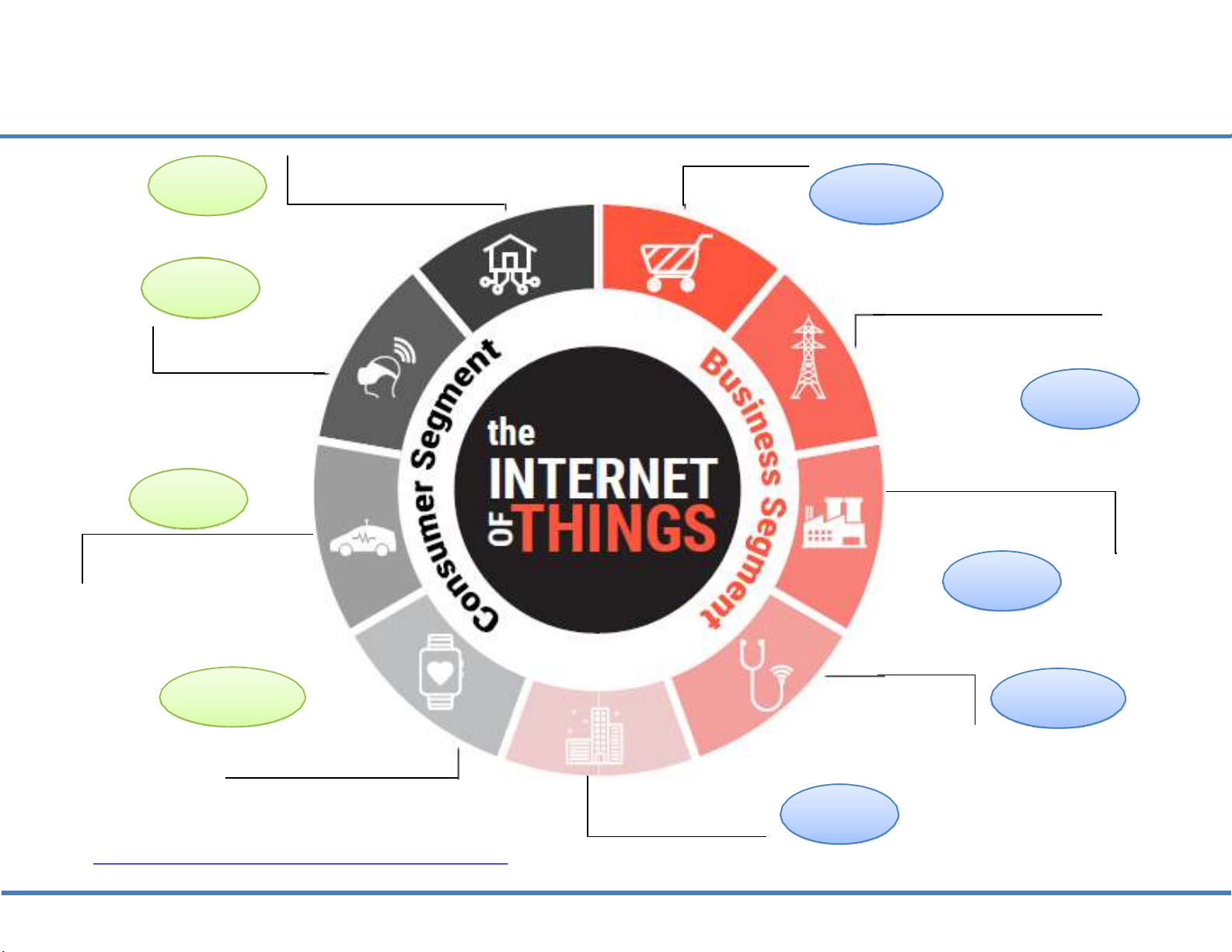
Source: https://iot-analytics.com/state-of-the-iot-2020-12-bil ion-iot-connections-surpassing-non-iot-for-the-first-time/ 9 Where is IoT? Wearable Tech Devices Smart Appliances It’s everywhere! Industry Automation and Monitoring Healthcare 10 Global IoT Market Share 14% Smart Homes Retail < 2% 3% Wearables Smart Utilities & Energy 4% 7% Industrial IoT Connected Cars 24% 20%* Healthcare 20%* Personal Health Smart Cities 26%
Source: https://growthenabler.com/flipbook/pdf/IOT%20Report.pdf 11 Global Spending on IoT
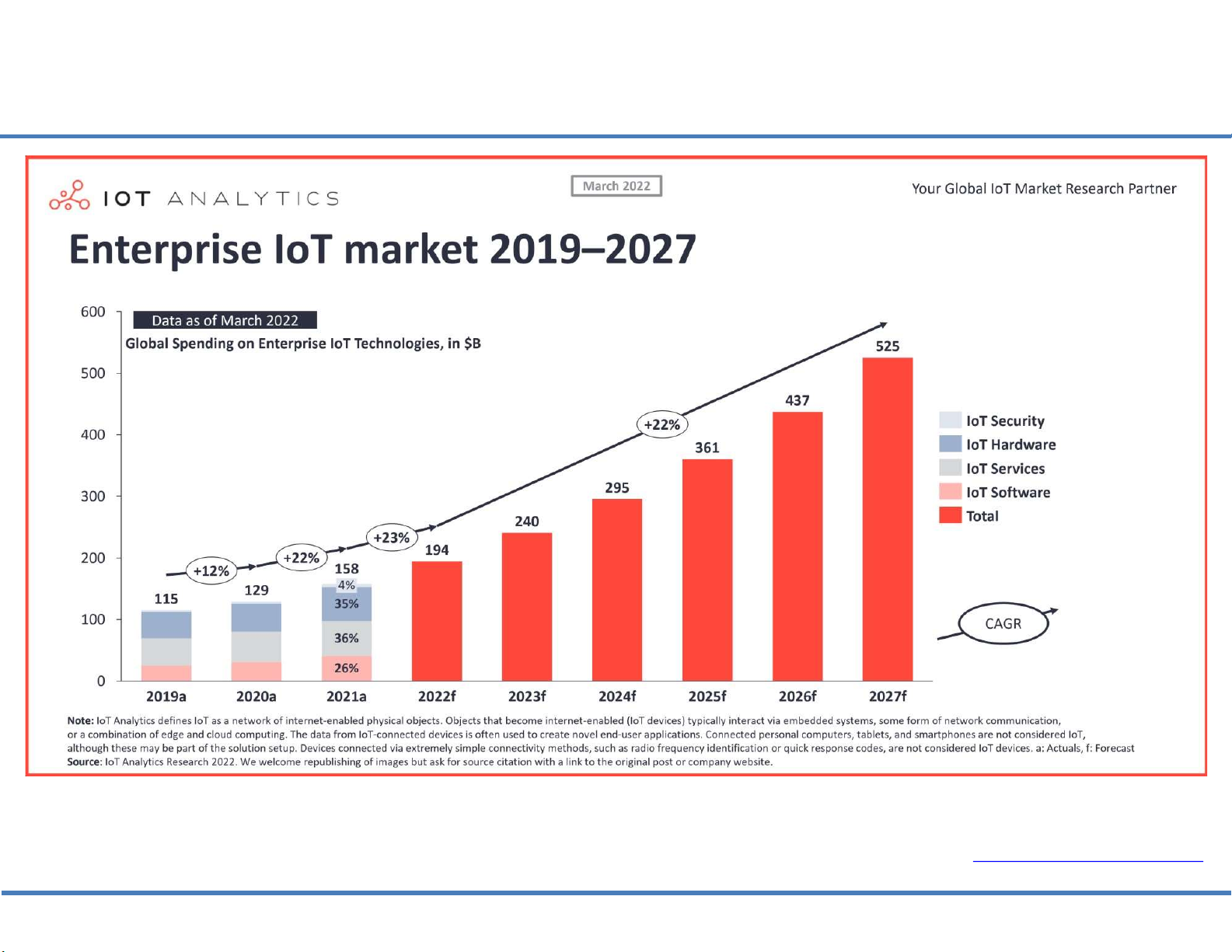
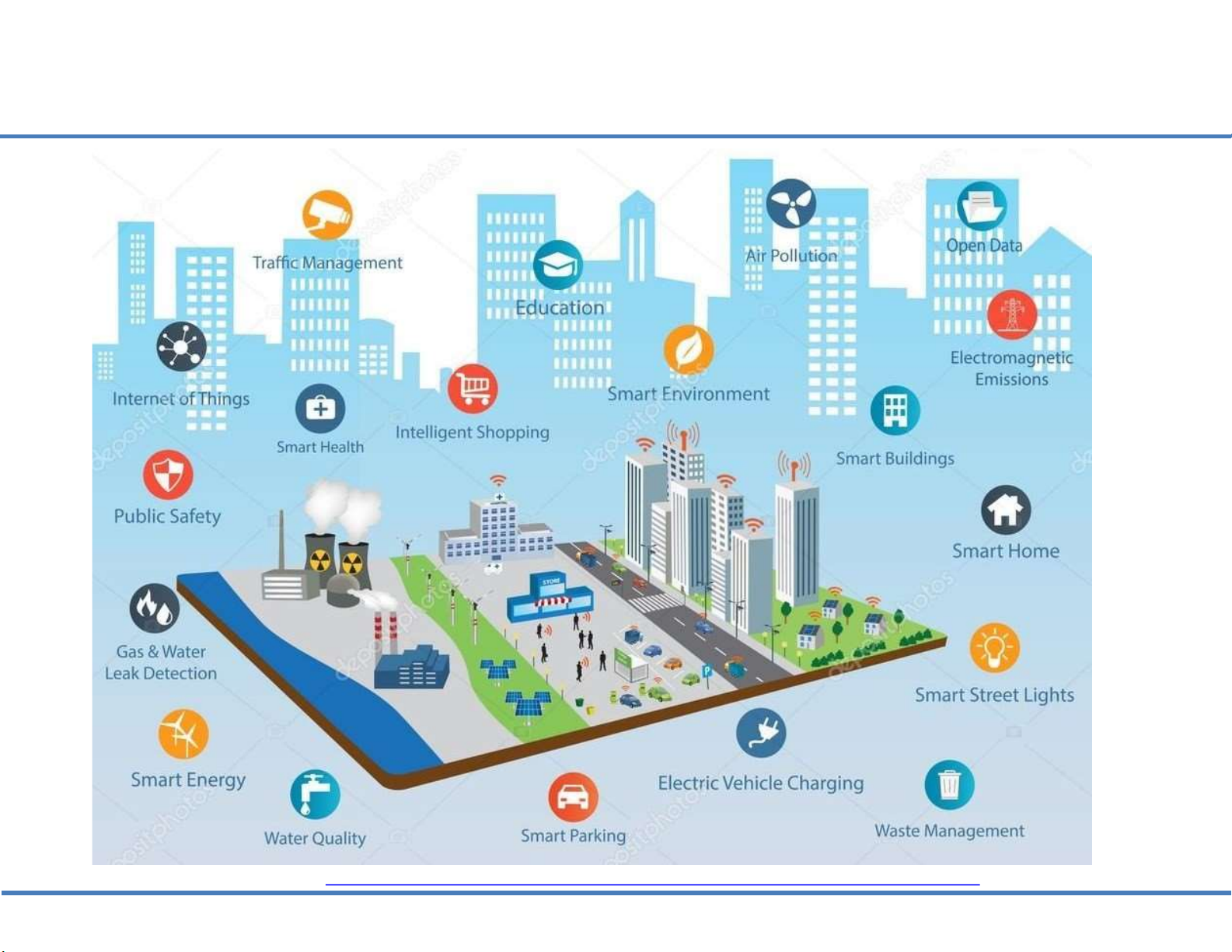
Source: https://iot-analytics.com/iot-market-size/ 12 Smart City
Source: https://depositphotos.com/126025652/stock-il ustration-smart-city-concept-and-internet.html 13 Smart Home
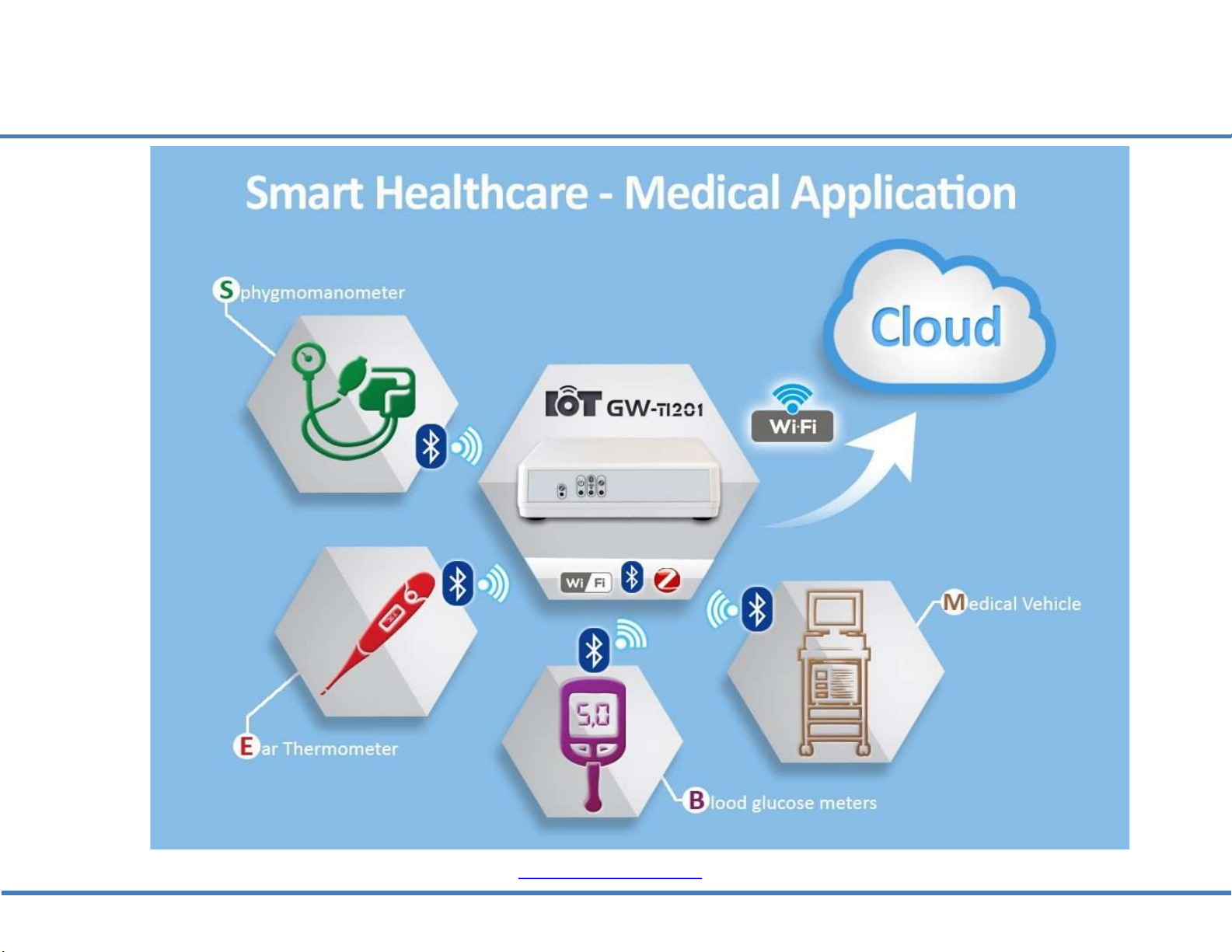
Source: https://medium.com/@globalindnews/north-america-accounted-for-major-share-in-the-global-smart-home-healthcare-market-in-2015-cc9cc1974ac5 14 Smart Healthcare
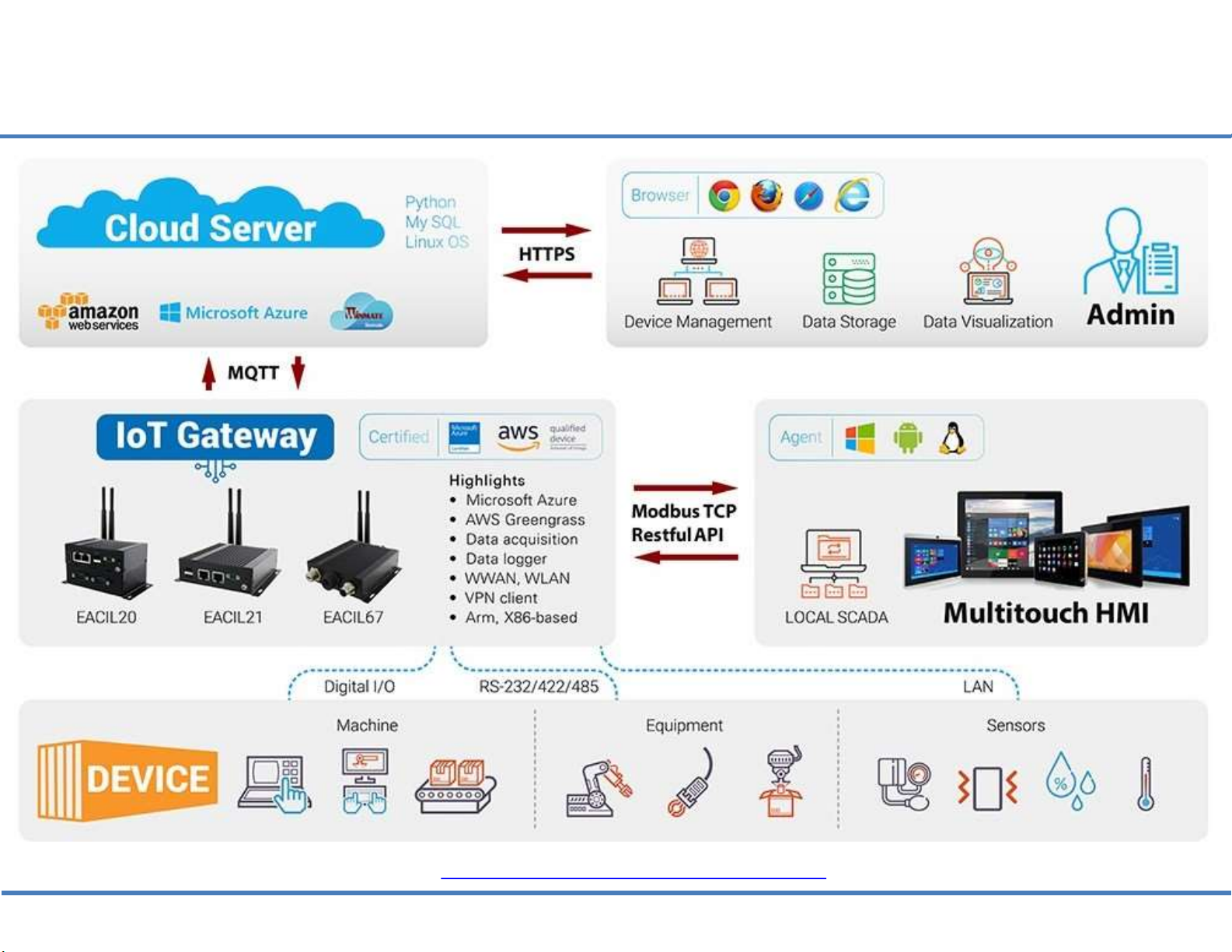
Source: http://iot.fit-foxconn.com/ 15 Industrial IoT
Source: https://www.winmate.com/Solutions/Solutions_IoT.asp 16 Connected Cars
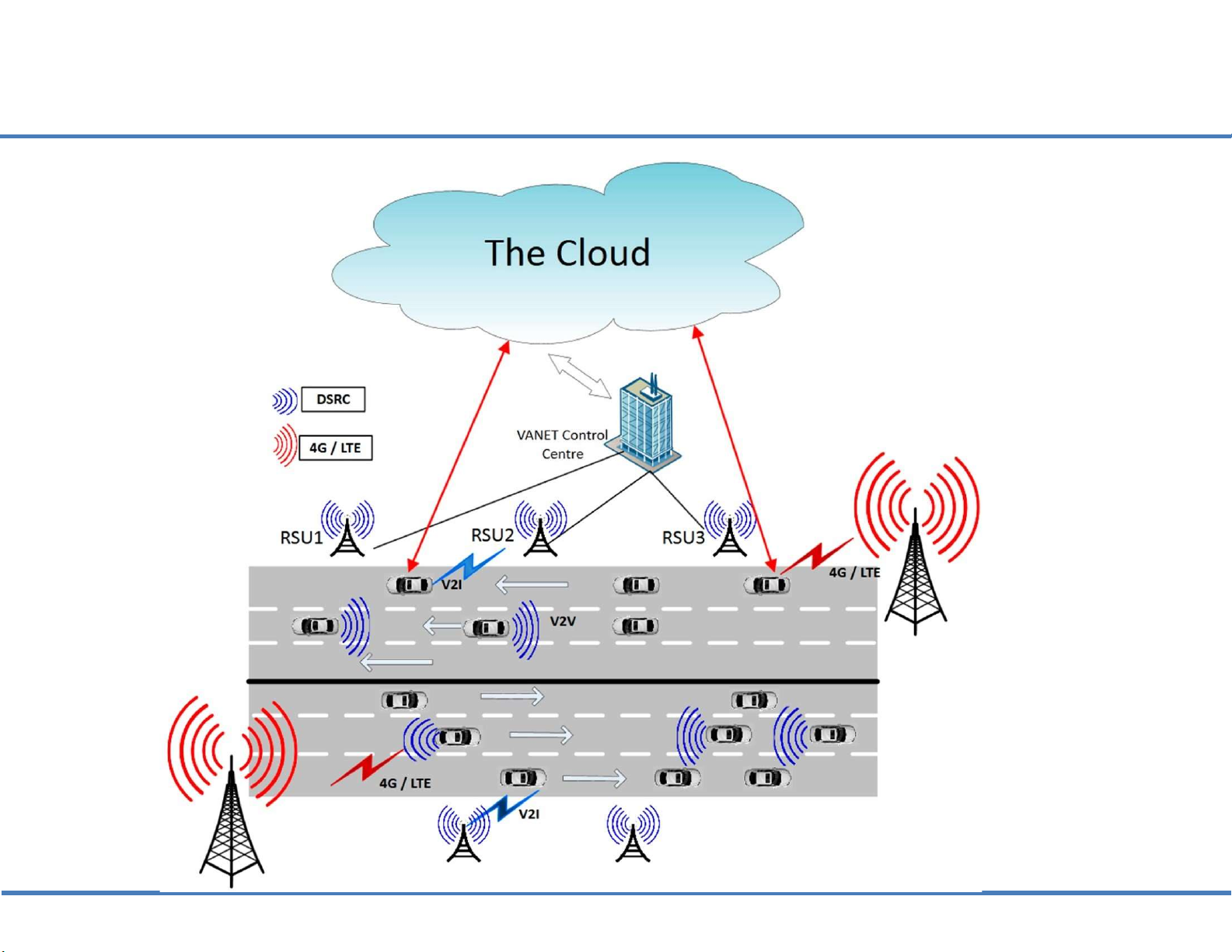
Source: Vehicular K. Ziadi, M. Rajarajan, “Internet:
Security & Privacy Chal enges and Opportunities”,
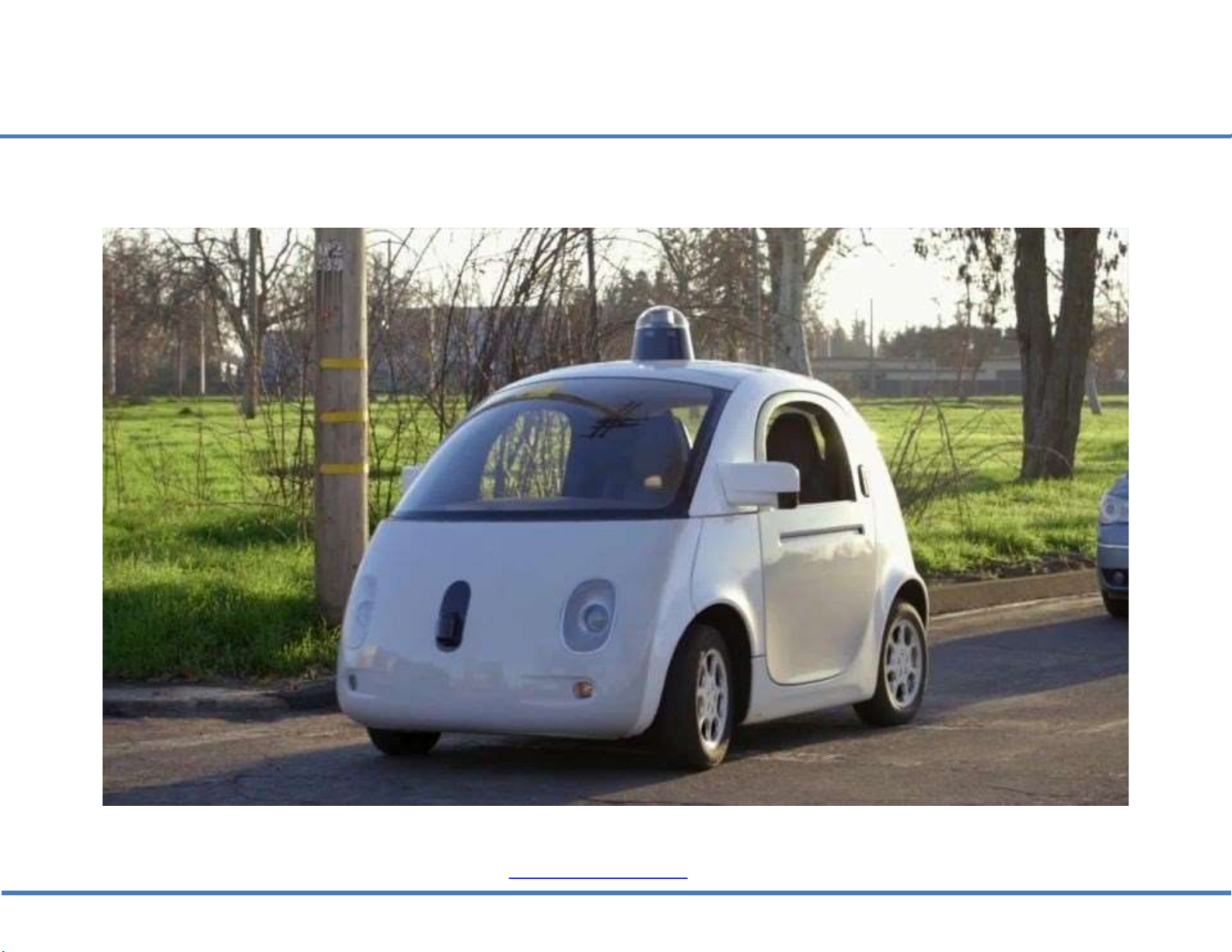
Future Internet 2015, 7(3), 257-275. 17 Google’s Self-Driving Car
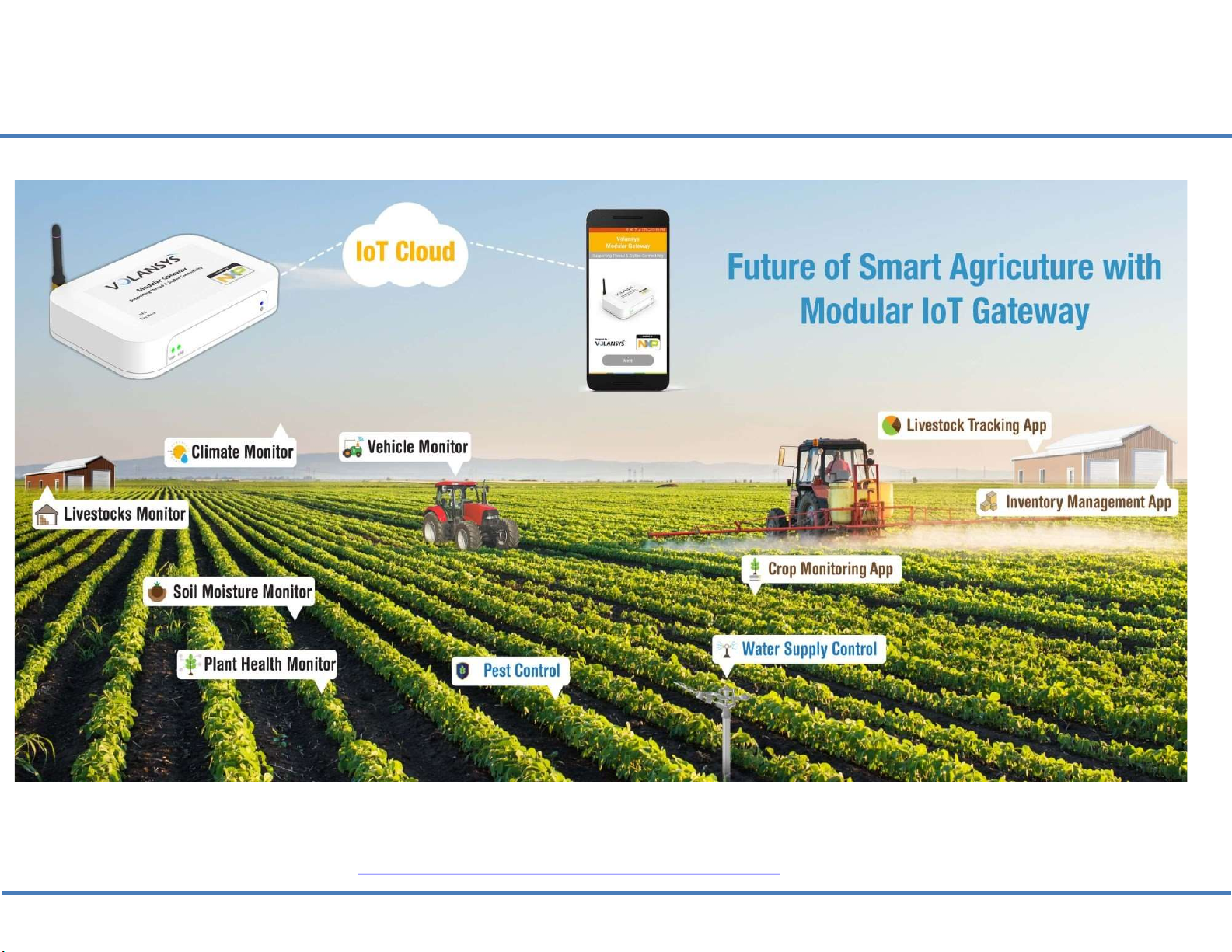
Source: https://www.google.com/ 18 Smart Agriculture
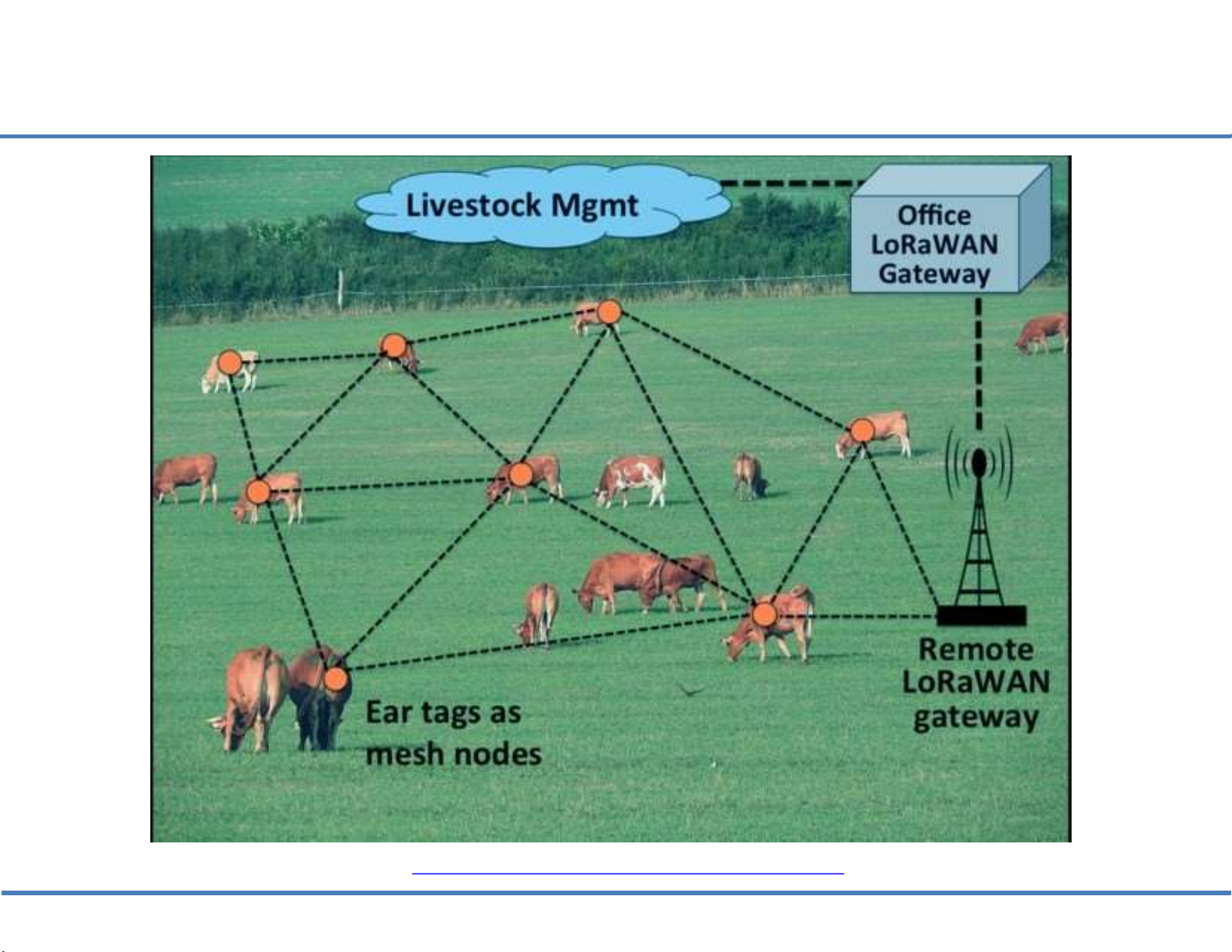
Source: https://in.pinterest.com/pin/515380751093603767/?lp=true 19 Livestock Management
Source: https://data-flair.training/blogs/iot-applications-in-agriculture/ 20
Tài liệu liên quan:
-
Ung dung game hoa trong cac chien dich MKT
23 12 -
Bao cao Chi so TMDT Viet Nam 2025
26 13 -
Thông tư quy định về việc phân quyền, phân cấp và phân định thẩm quyền quản lý nhà nước về giáo dục cho chính quyền địa phương
30 15 -
Nghị quyết về phát huy các giá trị di sản văn hóa gắn với phát triên du lịch bền vững tỉnh Khánh Hòa đến năm 2025, định hướng đến năm 2030
28 14 -
Quyết định phê duyệt Chiến lược phát triển du lịch Việt Nam đến năm 2030
17 9