Kết Cấu Hàng Không 1
Kết Cấu Hàng Không 1. Tài liệu sưu tầm được tổng hợp. Mời các bạn tham khảo
Môn: Kết cấu hàng không 1 8 tài liệu
Trường: Học viện Hàng Không Việt Nam 639 tài liệu
Tác giả:








Preview text:
Aircraft Structures 1 Kết Cấu Hàng Không 1
Lecture 1 - Basic Theory of Elasticity 2023
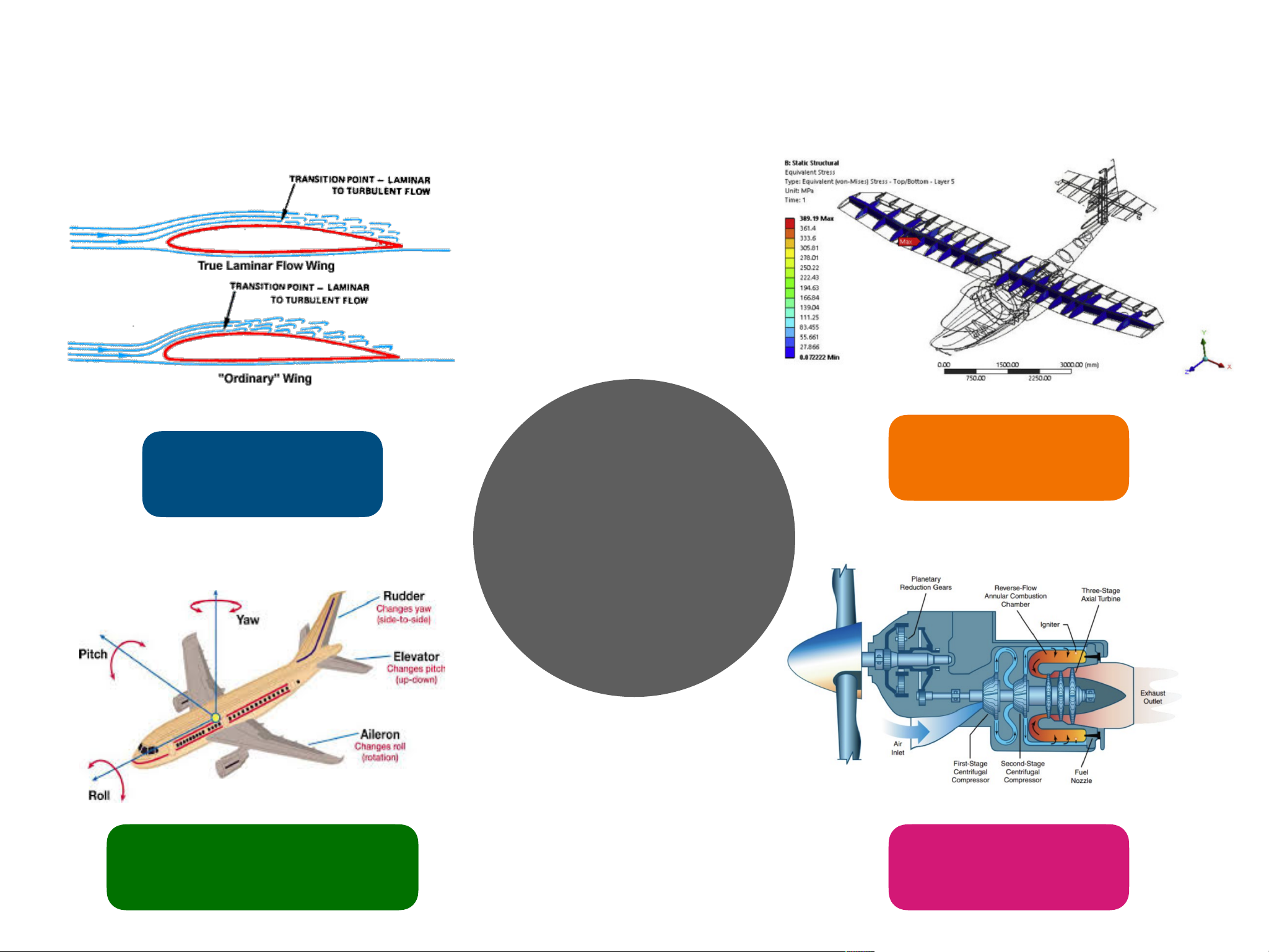
Aircraft Structures: Introduction Aerodynamics Structures Aeronautical Engineering Flight Mechanics Propulsion Objectives of this course
Mục tiêu của môn học
• It’s all about safety awareness in structural analysis and design,
specifically aircraft structures.
• 2D theory of elasticity: stresses, strains, deformations, deflections
• Structural analysis: bending, torsion, complex deformation • Theory of plates
• Simple numerical modeling, in particular Finite Element Method Learning Outcomes
• You will be able to analyze different components of a 2D or 3D
structure: loads, deformations, stresses, strains
• You will be able to predict the failures and the instabilities of a structure
• You will be able to design some aircraft structures to work safely
• You will be able to build simple numerical structural models Course Outline
• Week 1: Introduction. Stresses, strains, theory of elasticity
• Week 2: Theories of failure
• Week 3: Beams analysis: symmetrical and unsymmetrical bending
• Week 4: Beams analysis: shear, combined loading
• Week 5: Deflection of beams
• Week 6: Shear of thin-walled beam: open section and torsion of thin-walled beam
• Week 7: Shear of thin-walled beam: closed section; torsion • Week 8: Energy method • Week 9: Buckling
• Week 10: Theory of thin plates: pure bending
• Week 11: Theory of thin plates: combined bending and torsion Books
• T.H.G Megson, Aircraft Structures for Engineering Students, 4th edition, Elsevier, 2007
• Robert L. Mott, Joseph A. Untener, Applied Strength of Materials, 6th Edition, CRC Press, 2017
• R.C. Hibbeler, Mechanics of Materials, 8th Edition, Pearson Prentice Hall, 2011
Functions of Aircraft Structures
Chức năng của Kết cấu Máy bay • Resists applied loads (aerodynamic loads acting on the wing structure) • Provides the aerodynamic shape
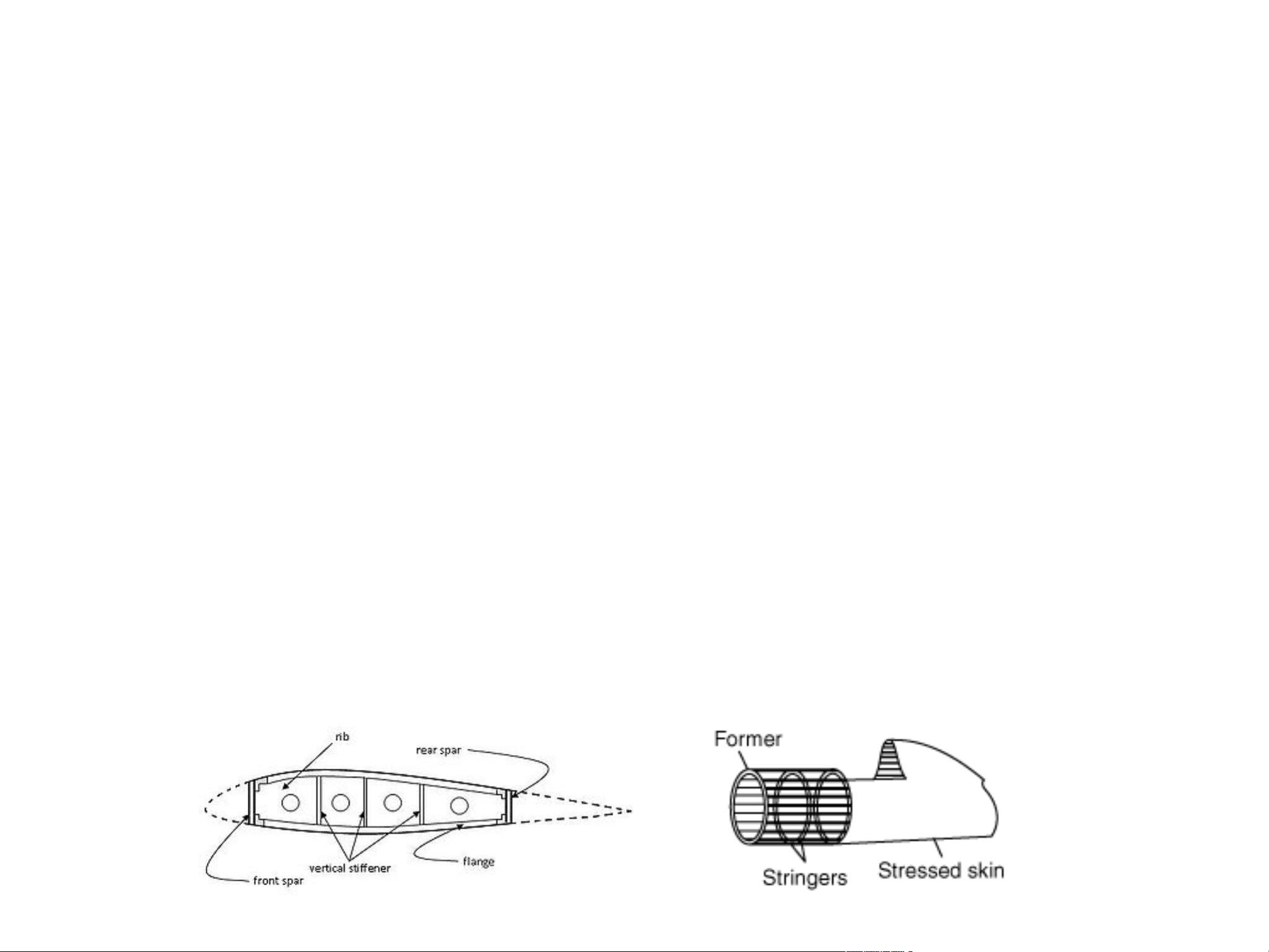
• Protects the contents from the environment Thin walled structures (plates and shells) Semi-monocoque Structures
Cấu trúc vỏ mỏng được gia cố Skin
• Forms an impermeable surface for supporting the
aerodynamic pressure distribution
• Transmits aerodynamic forces to the ribs and stringers
• Develops shear stress to react the applied torsional moments together with sparweb
• Resists axial loads and applied bending together with stringers Semi-monocoque Structures
Cấu trúc vỏ mỏng được gia cố Wing Ribs
• Maintain the shape of the wing section
• Transmit the concentrated load into the structure
• Increase buckling strength to skin and longitudinal stiffeners
• Light at the outer wing, rugged at the root wing Semi-monocoque Structures
Cấu trúc vỏ mỏng được gia cố Spars
• Develops shear stress to react the applied torsional moments Longitudinal Stringers
• Divide the skin into small panels to avoid buckling
• Resist axial and bending loads Frames/formers
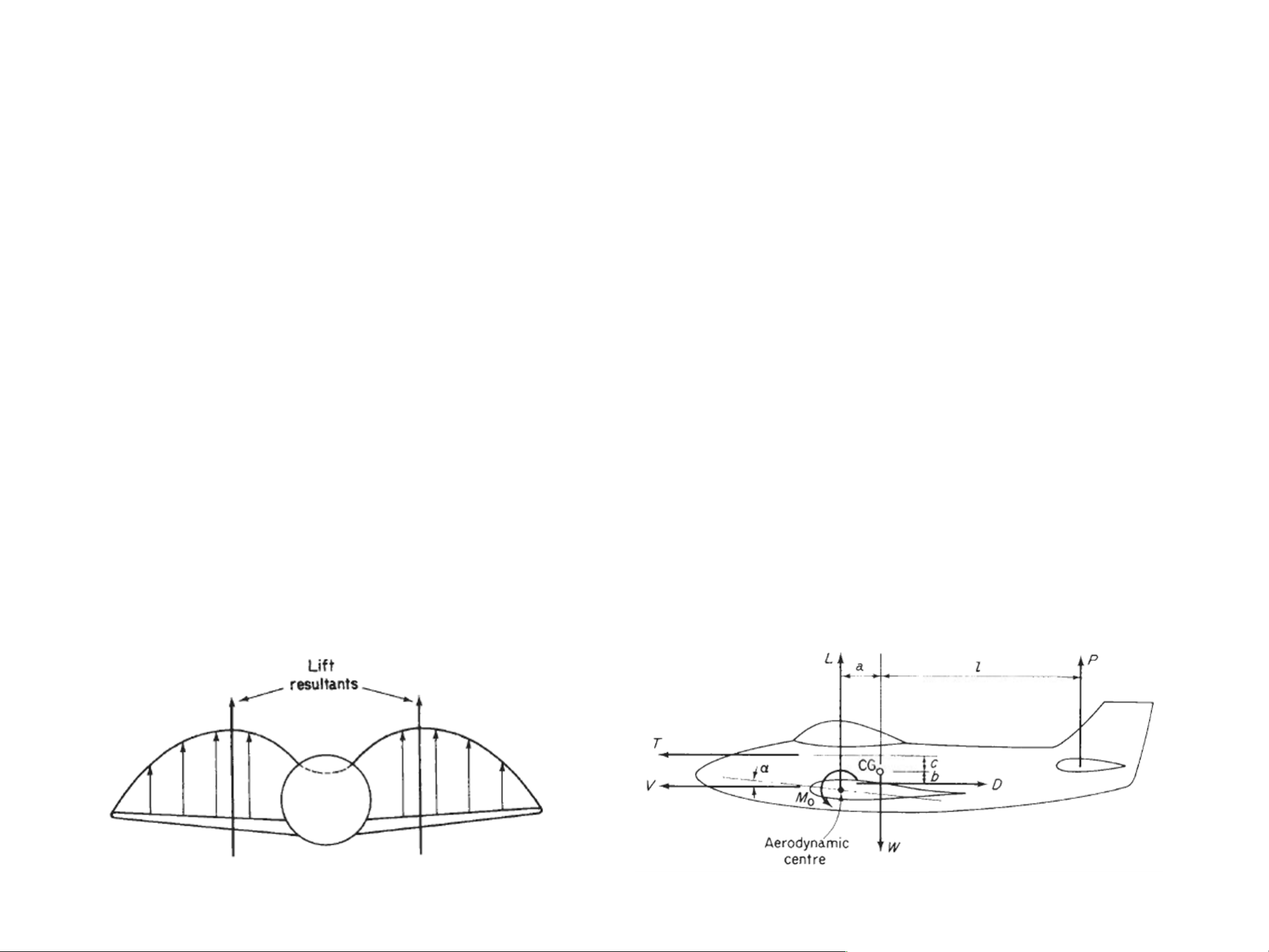
• Maintain cross sectional shape • Similar to wing ribs Loads on Aircraft
Các loại lực tác động lên máy bay
• Ground loads: Encountered by the aircraft during movement on
the ground, i.e. taxiing, landing, towing, etc.
• Air Loads: Loads exerted onto the structure during flight by the
manoeuvres carried out by the aircraft or by wind gusts
• Others: pressurized cabin load, loads exerted while landing on
water, fly at high speed at low altitude, withstand extremely turbulent air Surface forces Body forces Basic Unit Systems
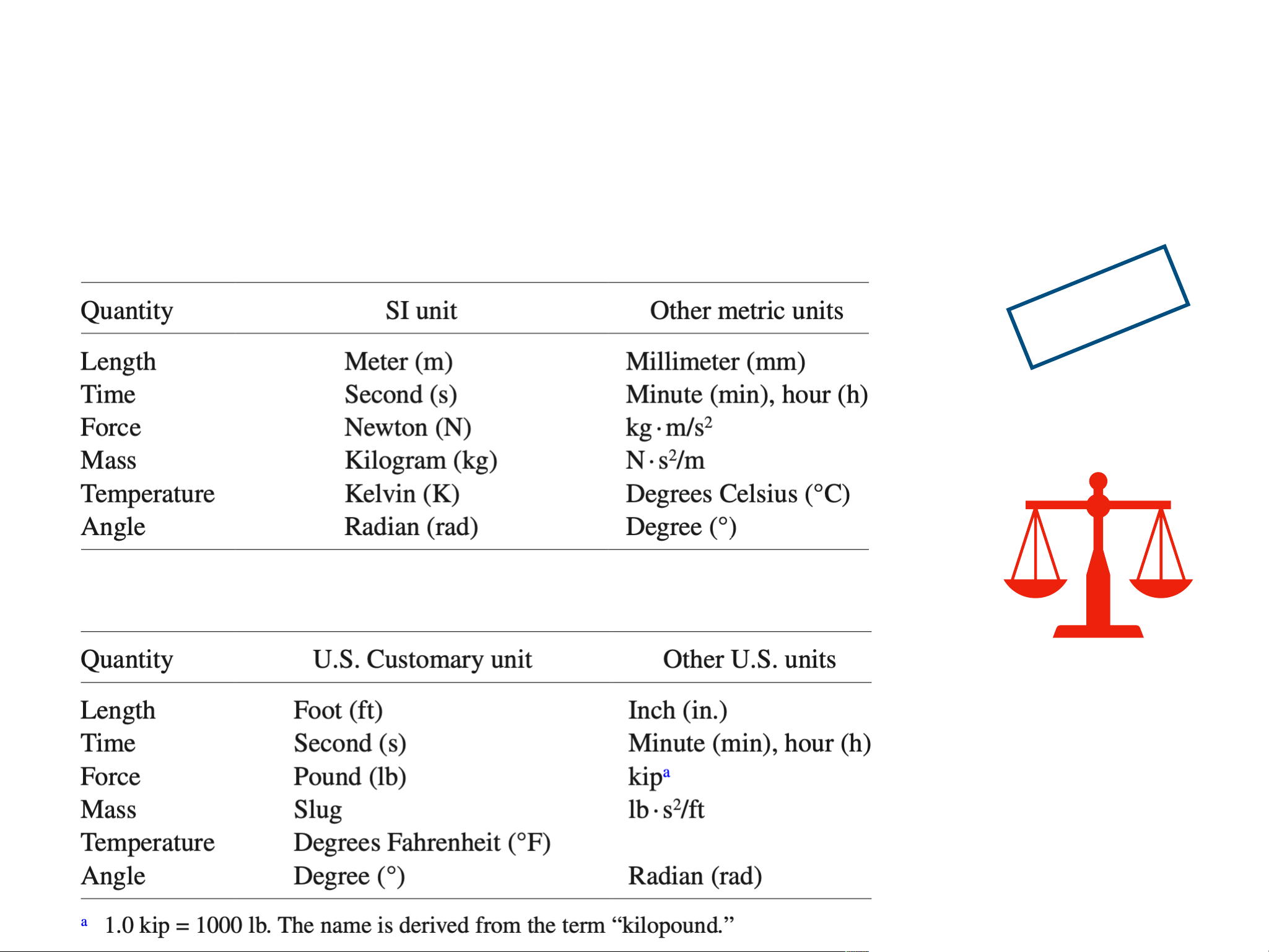
SI metric unit system and U.S. Customary unit system
Basic quantities in the SI metric unit system Reminder
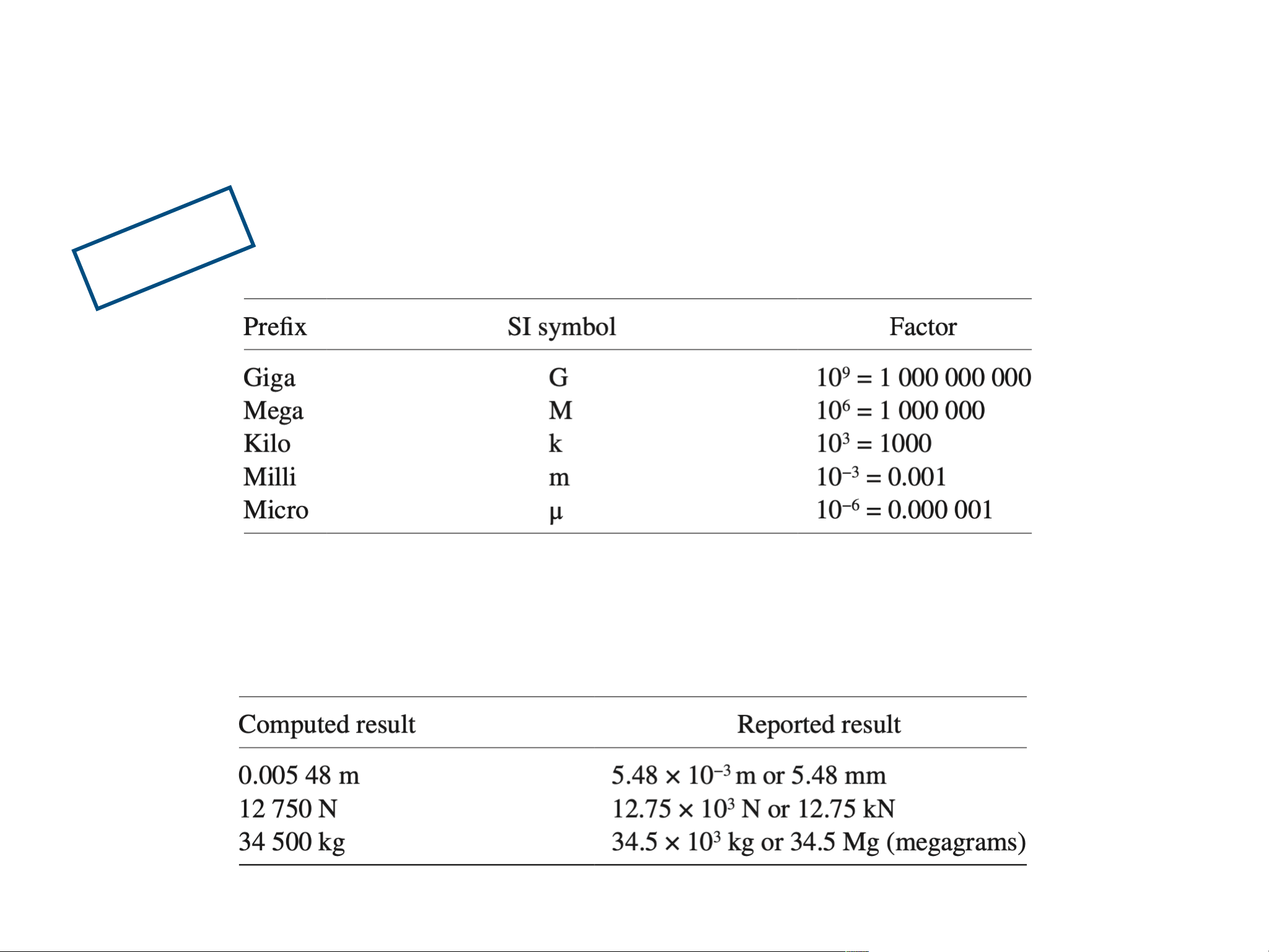
Basic quantities in the US Customary unit system Conversion factors? Basic Unit Systems Prefixes for SI units Reminder
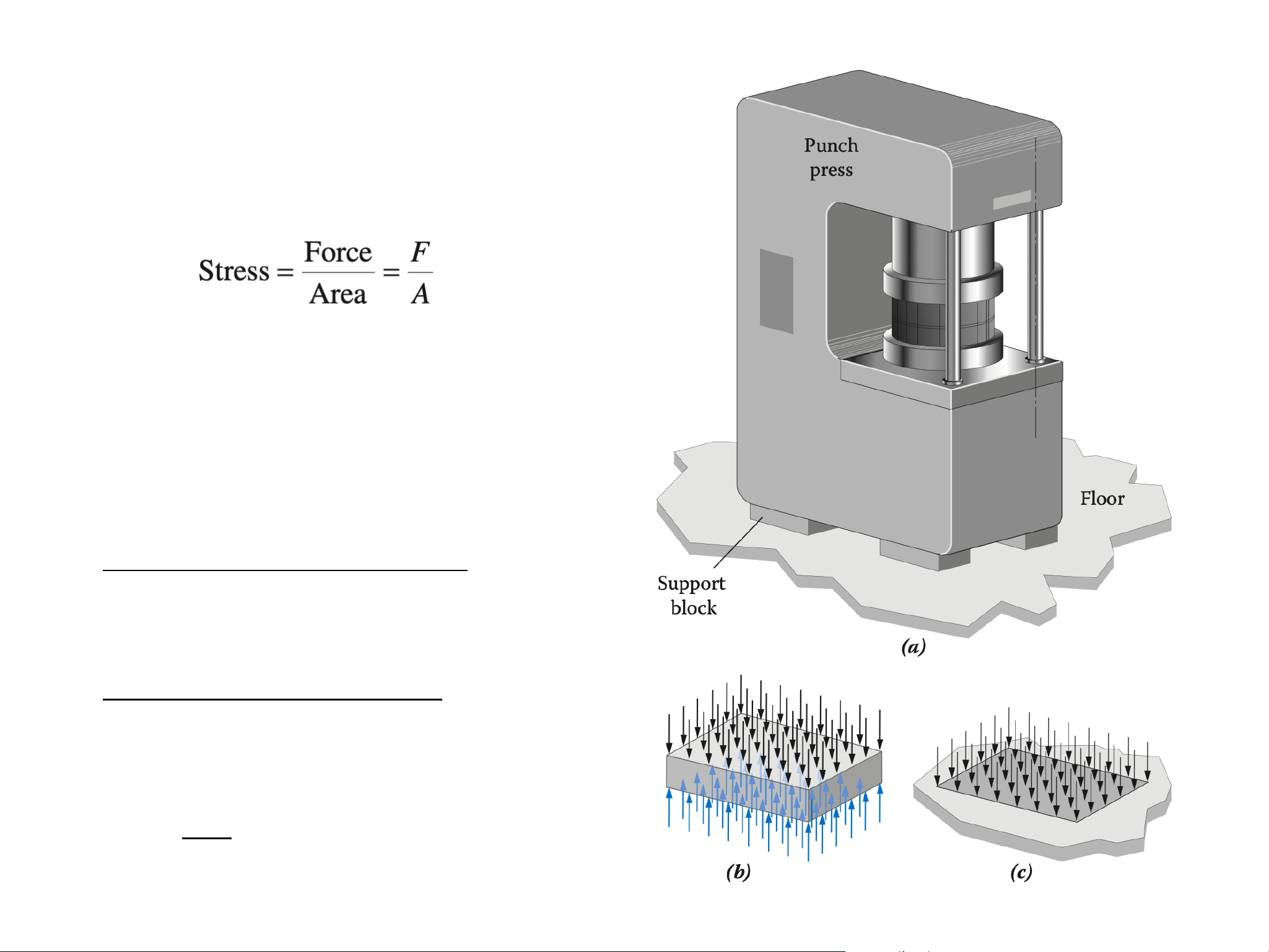
Proper method of reporting computed quantities Stress (Ứng suất) Definition
• Stress is the internal resistance
offered by a unit area of the
material from which a member is made to an externally applied load
• Uniformly distributed stress: the
same magnitude at any point in the cross section
• Uneven distributed stress:
different magnitudes at different
points in the cross section σ = dF dA
Strain (Độ Biến dạng) Definition Reminder
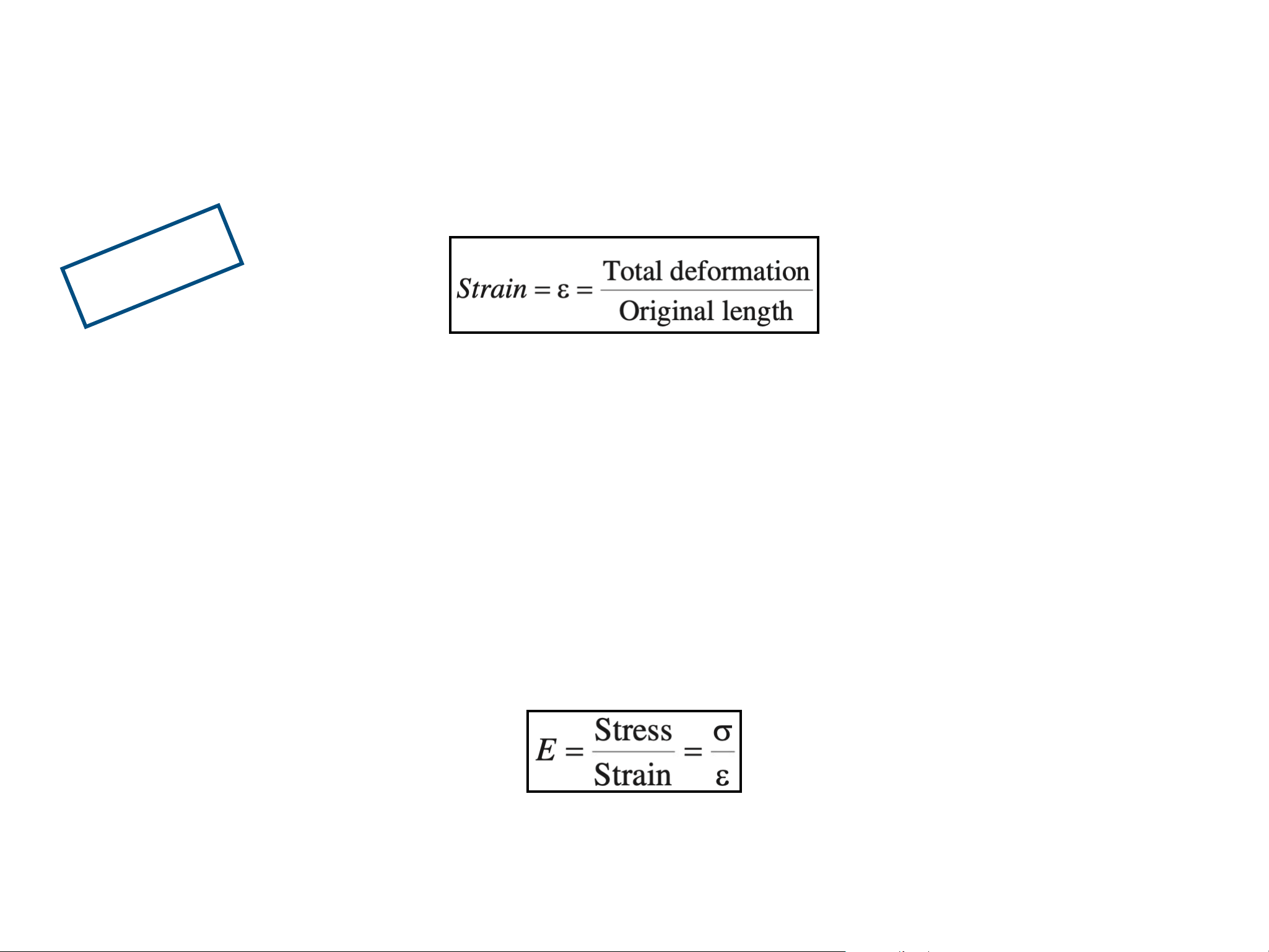
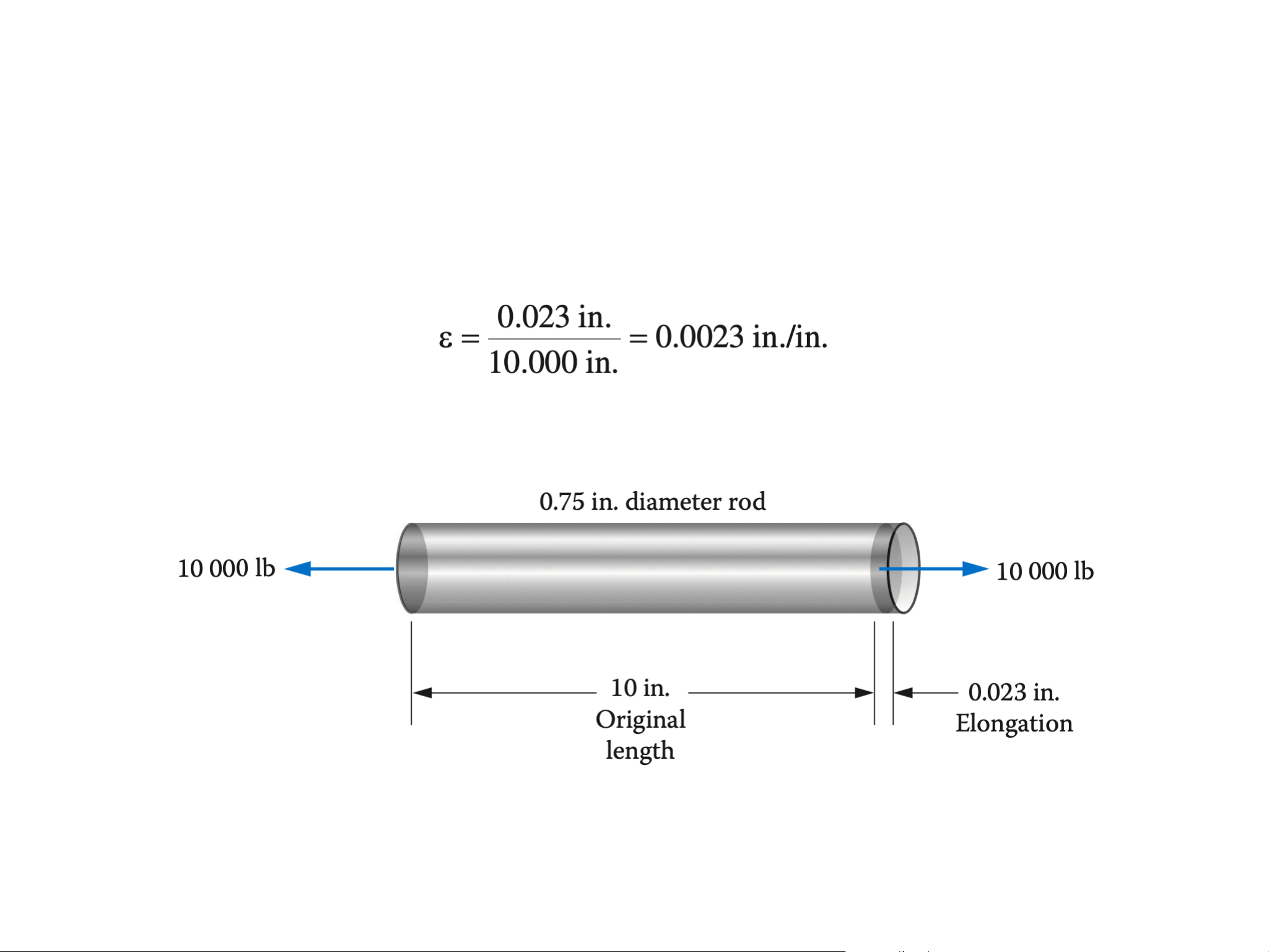
• Strain is the deformation per unit length of the member, also known as “unit deformation”
• Deformation can be a result of applied loads or temperature changes
• Strain is dimensionless, but it can be reported as in/in or mm/mm to reflect
deformation per unit length
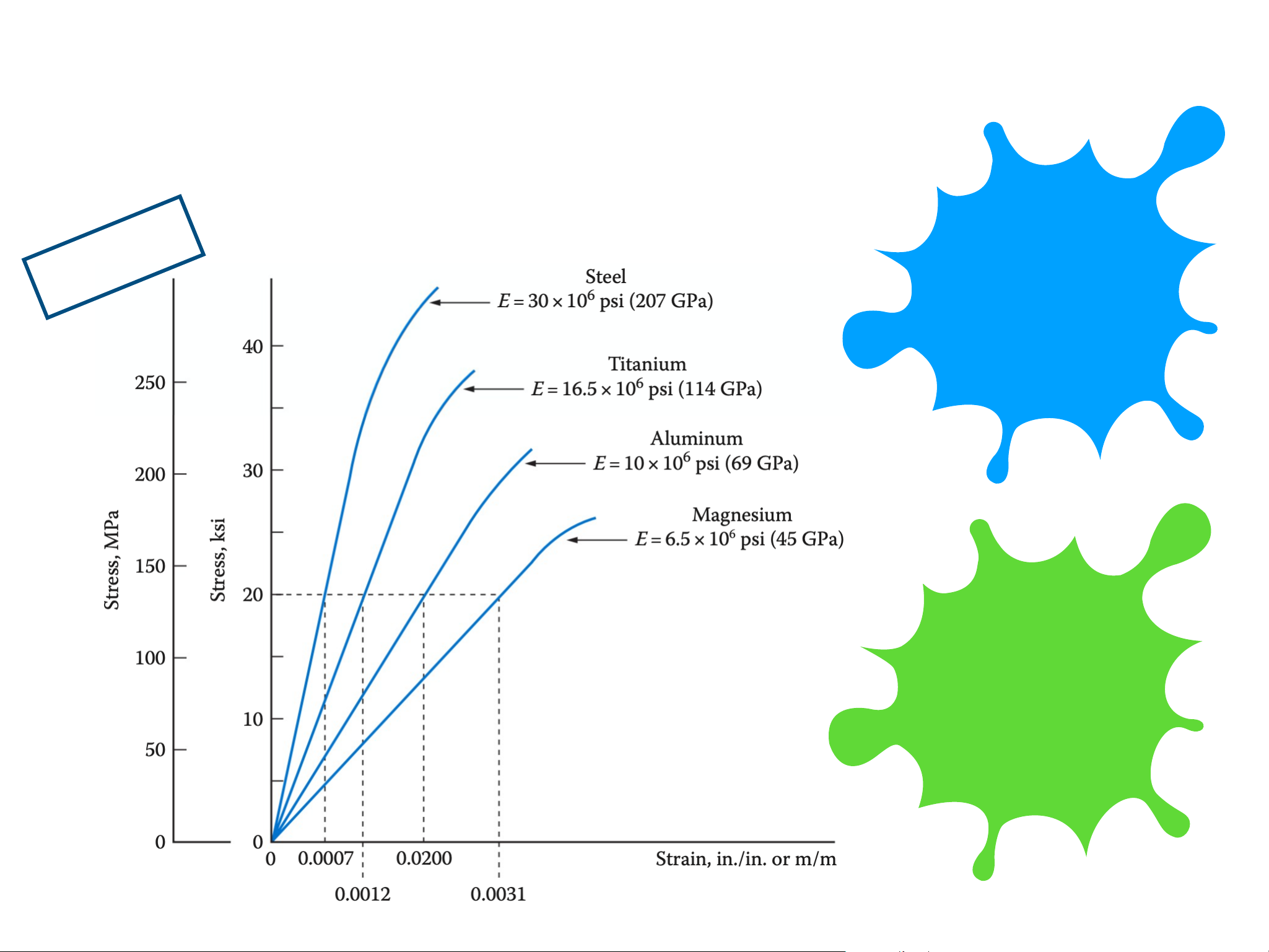
• Stress - strain relationship follows Hooke’s law in elastic material
• E is the stiffness of material or modulus of elasticity or Young’s modulus Strain Example
Stress - strain relationship Example of Hooke’s law Reminder How to get these charts? Why?
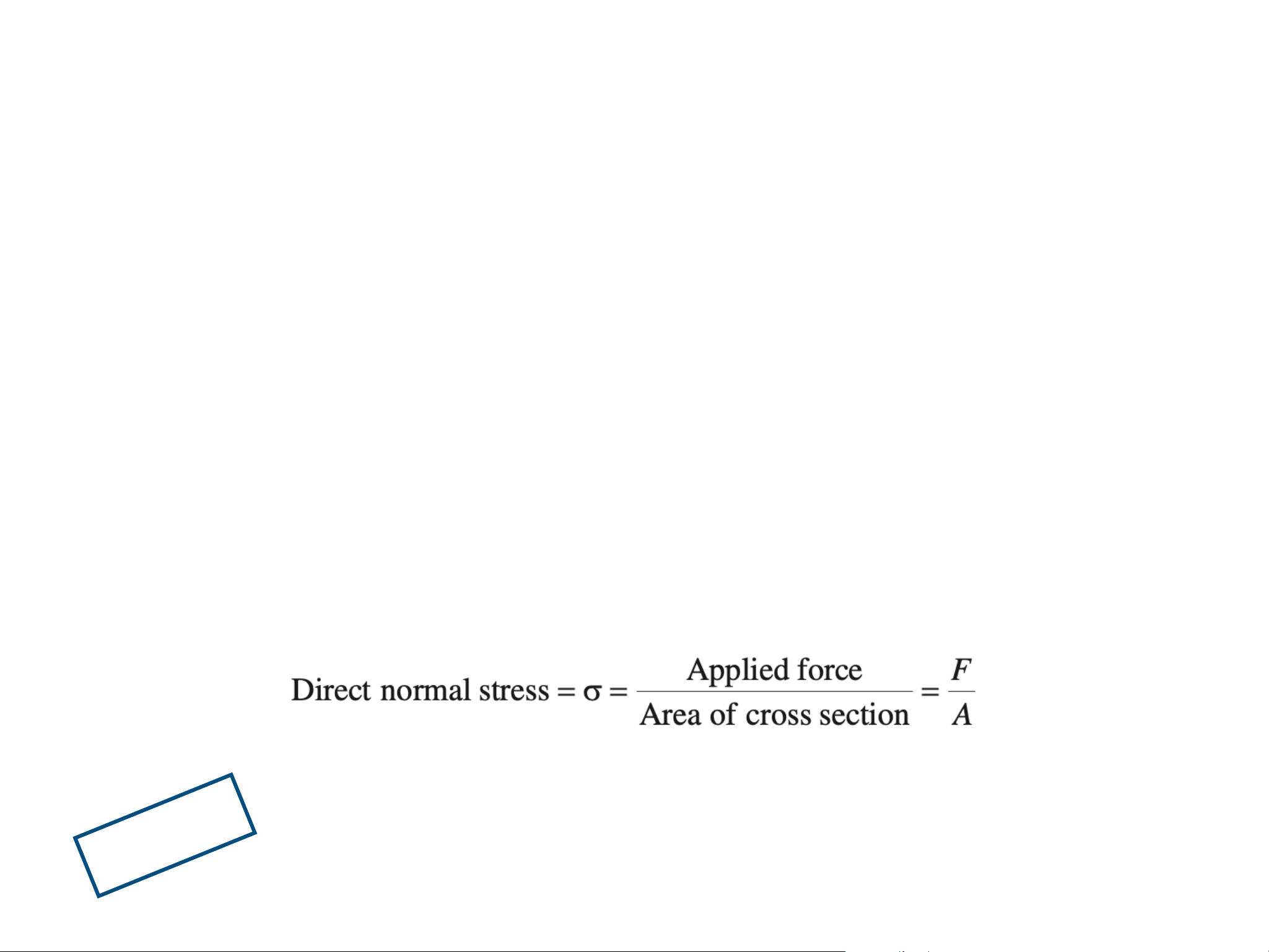
Direct Normal Stress - Ứng suất pháp trực tiếp Definition
• Normal stress (σ): perpendicular, or normal, to the cross
section of the load-carrying member.
• One of the most fundamental types of stress
• If the stress is uniform across the resisting area, the stress is
called a “direct normal stress”. Reminder Direct Normal Stress
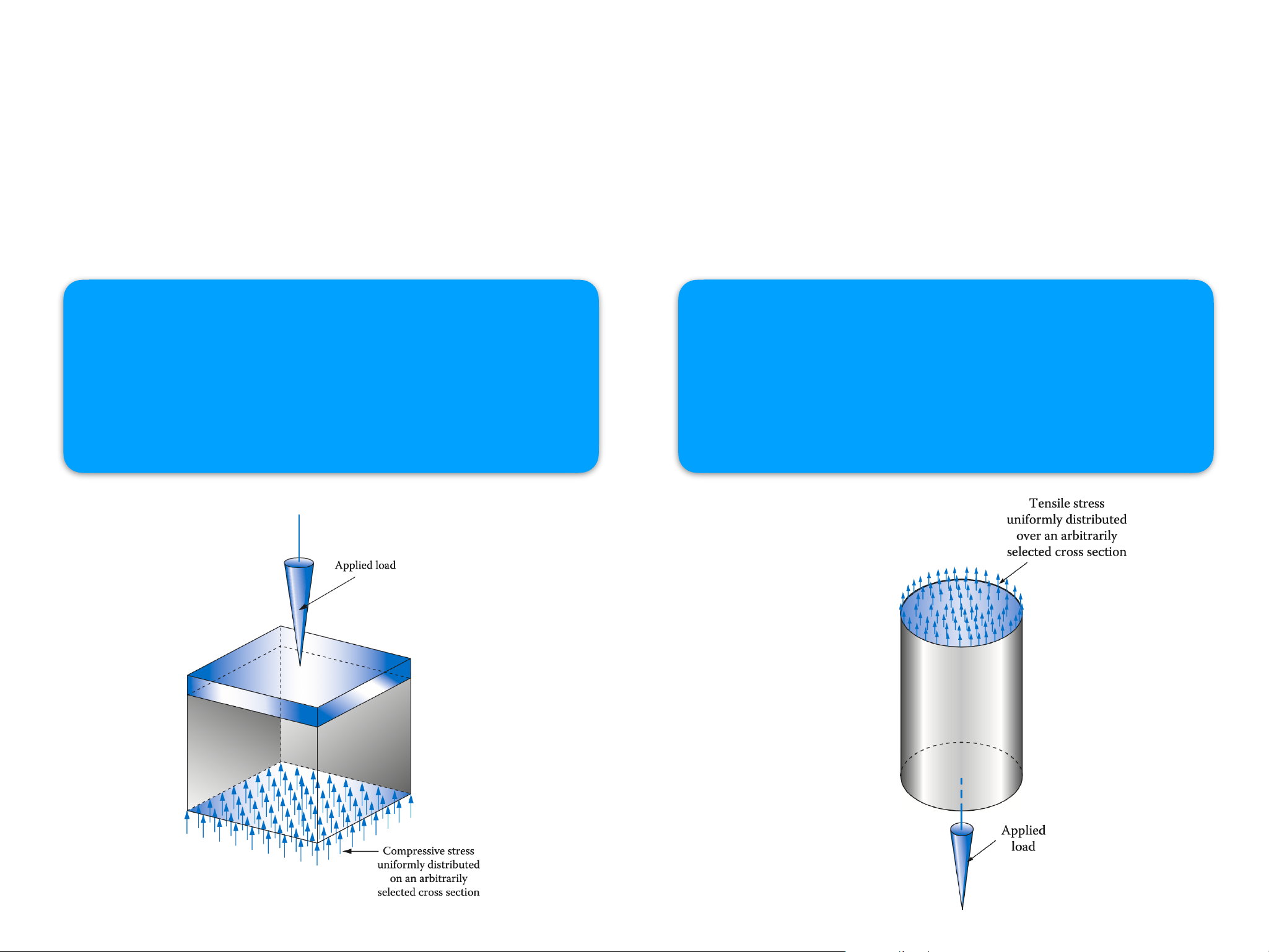
Compressive (Nén) and Tensile (Kéo) Stress Compressive stress: tends to
Tensile stress: tends to pull crush the material and
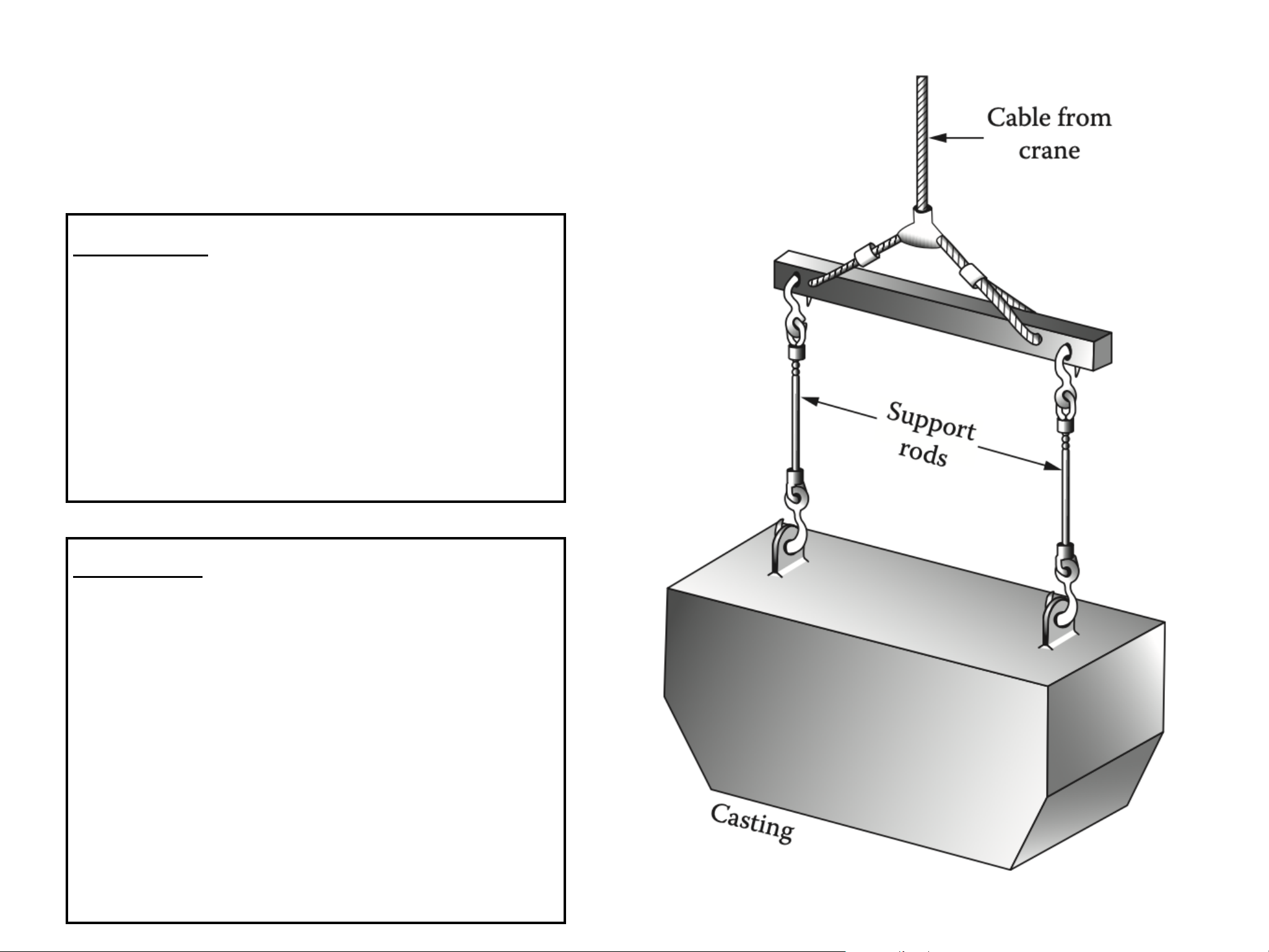
the material apart and stretch shorten the member the member Direct Normal Stress Example Problem Problem: Two circular rods carrying a
casting weighing 11.2 kN. If each
rod is 12.0 mm in diameter and the two rods share the load
equally, compute the stress in the rods Solution:
Objective: Compute the stress in the support rods
Given: Casting weighs 11.2 kN.
Each rod carries half the load. Rod diameter = D = 12.0 mm
Analysis: Direct tensile stress is produced in each rod
Tài liệu liên quan:
-

Tài liệu về AIRBUS môn Kỹ thuật hàng không | Học viện Hàng Không Việt Nam
62 31 -

Tài liệu tiếng anh sưu tầm. Fundamentals_of_Aerodynamics_5e_Anderson
54 27 -
Bài tập thường kỳ số 1 môn Kết cấu hàng không | Học viện Hàng Không Việt Nam
120 60 -
Bài tập Bending moments & beam deflections môn Kết cấu hàng không | Học viện Hàng Không Việt Nam
109 55