Mental Health Literacy and Help Seeking | Tài liệu tâm thần
Mental Health Literacy and Help Seeking | Tài liệu tâm thần. Tài liệu giúp bạn tham khảo, ôn tập và đạt kết quả cao. Mời đọc đón xem!
Môn: Tâm thần 13 tài liệu
Trường: Đại học Y Dược Thành phố Hồ Chí Minh 379 tài liệu
Tác giả:

Preview text:
School Mental Health
https://doi.org/10.1007/s12310-019-09358-6 ORIGINAL PAPER
Mental Health Literacy and Help‑Seeking Preferences in High School
Students in Ho Chi Minh City, Vietnam
Truc Thanh Thai1,2 · Ngoc Ly Ly Thi Vu1 · Han Hy Thi Bui3
© Springer Science+Business Media, LLC, part of Springer Nature 2020 Abstract
A high prevalence of mental disorders in adolescents has been reported worldwide, but little is known about mental health
literacy in this population, particularly in developing countries. The goal of this study was to evaluate mental health literacy
level and help-seeking preferences in high school students in Ho Chi Minh City, Vietnam. These two variables were also
compared between students who had stress, anxiety and depression with students who did not. A cross-sectional study was
conducted with 1094 students across 27 classes at three high schools. Students completed a self-report questionnaire that
included validated scales such as the Depression Anxiety Stress Scale (DASS-21), the Mental Health Literacy Scale (MHLS)
and the General Help-Seeking Questionnaire. Based on the DASS-21, the prevalence of students reporting symptoms of
stress, depression and anxiety was 36.1%, 39.8% and 59.8%, respectively. The mean MHLS score was 104.12 (SD = 10.09)
and was significantly lower in students who had symptoms of depression. The most common help-seeking preferences for
mental illness were friends, classmates and relatives or family members. Help-seeking preferences were almost identical
among students with stress, anxiety or depression. While Vietnamese high school students had high levels of symptoms of
stress, depression and anxiety and moderate levels of mental health literacy, non-professionals were preferred as their first
help-seeking choice. Our findings revealed the need for routine school-based mental health screening and referral activities
as well as mental health education programs for high school students in Vietnam.
Keywords Adolescent · Help-seeking preference · High school · Mental health literacy · Vietnam Introduction
According to the World Health Organization, the prevalence
of mental disorders among children and adolescents is up to
20% worldwide (World Health Organization, 2017). Mental
health issues among adolescents are more pronounced in * Truc Thanh Thai
resource-limited countries where psychiatric and psycho- thaithanhtruc@ump.edu.vn
logical services are not always available. In Vietnam, up Ngoc Ly Ly Thi Vu
to 36% of secondary and high school students in Ho Chi vulylyngoc@gmail.com
Minh City were reported to have symptoms of depression, Han Hy Thi Bui
anxiety and stress (Thai, 2010). A longitudinal study from buithihyhan@gmail.com
2006 to 2013 in the north of Vietnam revealed a trajectory 1
of depression among adolescents and young adults aged 10
Faculty of Public Health, University of Medicine
and Pharmacy at Ho Chi Minh City, 217 Hong Bang, District
to 24 years (Bui, Vu, & Tran, 2018). Further, the prevalence 5, Ho Chi Minh City, Vietnam
of having suicidal thoughts and plans was quite high in this
2 Department of Training and Scientific Research, University
vulnerable population at 14.1% and 5.7%, respectively (Le,
Medical Center, Ho Chi Minh City, 215 Hong Bang Street,
Holton, Nguyen, Wolfe, & Fisher, 2016). However, adoles-
District 5, Ho Chi Minh City, Vietnam
cent mental health has received little attention in Vietnam
3 The South Center for Education and Training of Health
possibly due to the lack of assessment, treatment and preven-
Managers, Ho Chi Minh City Institute of Public Health, 159
tion resources (Niemi, Thanh, Tuan, & Falkenberg, 2010;
Hung Phu Street, District 8, Ho Chi Minh City, Vietnam Vol.:(0123456789) 1 3 School Mental Health
Weiss et al., 2012). To date, national survey assessments of
young people often ask for help from non-professionals
Vietnamese youth aged 14–25 years were conducted in 2003
such as friends, family and relatives (Burns & Rapee, 2006;
and 2010 in almost all provinces and cities but no infor-
Yap, Reavley, & Jorm, 2013). A 2006 study of 202 Austral-
mation about mental health screening was included in the
ian adolescents revealed that more than 40% of adolescents surveys.
asked friends and family for help when they had depression
One possible reason for the consistently high prevalence
and only a few sought help from psychologists (6.2%), psy-
of mental disorders in Vietnamese adolescents is the lack
chiatrists (4.2%) or doctors (1.5%) (Burns & Rapee, 2006).
of mental health literacy, as this has been considered to be
This help-seeking preference was similar to an Australian
‘half the battle’ against mental disorders (Tomczyk et al.,
national survey in 2011 where mental health professionals
2018). The influence of mental health literacy on mental
were the last option for seeking help when adolescents had
disorders has been highlighted in several studies (Bjørnsen,
depression, depression with suicidal thoughts, depression
Espnes, Eilertsen, Ringdal, & Moksnes, 2019; Salerno,
with alcohol abuse, post-traumatic stress disorder, social
2016). A school-based study among 1888 adolescents
phobia and psychosis (Yap et al., 2013). Interestingly, in
aged 15–21 years in Norway revealed that higher levels of
recent years young people tend to look up information and
mental health literacy were associated with greater mental
help from the Internet and social networks (Mitchell, McMil-
well-being and physical health (Bjørnsen et al., 2019). A
lan, & Hagan, 2017). Although support from peer and family
population-based survey of 1678 students aged 15–19 years
as well as support based on social media and the Internet has
in China identified that while only 16.4% of respondents
been shown to be helpful for students with certain types and
had good mental health literacy, higher levels of depres-
levels of mental disorders, those with moderate and severe
sion were found among those with lower levels of mental
mental disorders should seek help from professional health
health literacy (Lam, 2014). Loo, Wong, & Furnham (2012)
providers (Bohleber, Crameri, Eich-Stierli, Telesko, & von
found that British participants were better able to correctly Wyl, 2016; Roach, 2018).
identify cases of mental disorders in the vignettes presented
Given the importance of help-seeking preferences in
and were also more likely to endorse professional help as
guiding adolescents to access appropriate care to improve
being useful compared to Hong Kong or Malaysian partici-
their mental health, evidence-based interventions have been
pants. In Vietnam, there is a lack of knowledge on mental
implemented to increase help-seeking behavior from profes-
health even in relatively well-educated people (van der Ham,
sionals in this population (Divin et al., 2018). These inter-
Wright, Van, Doan, & Broerse, 2011). Vietnamese attitudes
ventions have been demonstrated to have significant, posi-
and beliefs toward mental health problems are derived from
tive short-term and long-term effects on formal help-seeking
a mix of traditional and modern views. For many Vietnam-
behaviors (Xu et al., 2018). However, a meta-analysis using
ese, mental disorders are seen to be a consequence of pre-
data from 98 published research articles with 69,208 par-
vious life behaviors, and thus attitudes toward those with
ticipants included revealed that such interventions enhanced
mental disorders can be discriminatory (van der Ham et al.,
formal help-seeking behaviors when delivered to those who
2011). Due to the differences in culture-related beliefs and
were already living with mental health problems or at risk
perceptions of mental health in Vietnam, findings from stud-
of having mental disorders but were not effective among
ies conducted in other countries might not be relevant to
children, adolescents or the general public (Xu et al., 2018).
the Vietnamese context. To the best of our knowledge, no
Also, there are several barriers that limit adolescents from
research to date has investigated mental health literacy in
seeking help including embarrassment or shyness, stigma, Vietnamese adolescents.
self-reliance and independence (Mitchell et al., 2017; Yap
Low levels of mental health literacy coupled with ineffec-
et al., 2013). For example, up to 40% of Australian ado-
tive help-seeking preferences might contribute to the high
lescents reported that embarrassment prevented them from
level of poor mental well-being in adolescents. Although
seeking help for their mental health issues from both profes-
help-seeking preference is important for reducing and
sionals and non-professionals (Yap et al., 2013). In Vietnam,
preventing future risk behaviors, adolescents often ignore
mental-health-related stigma prevents people with mental
seeking help for mental health problems from professionals
disorders from seeking professional help (van der Ham et al.,
(Divin, Harper, Curran, Corry, & Leavey, 2018). In fact,
2011) and psychiatry is often considered as the last resort
regardless of the type and severity of mental disorders,
when traditional healers, friends or family fail to treat mental 1 3 School Mental Health
disorders (Nguyen, 2003). However, to date, information
approximately 40–45 students in each class, and all students
regarding help-seeking preferences for mental health issues
from the selected classes were invited to participate in this
in Vietnamese adolescents is lacking. study.
Mental health literacy can be acquired, and help-seeking
behaviors can be adjusted during one’s life span. However, Study Procedure
these attitudes and behaviors develop in early childhood.
Because adolescents’ mental health literacy and help-seek-
The researchers visited the classes and provided students
ing behaviors can affect their health-related decision-making
with the study information. Those who agreed to participate
abilities and health outcomes (Bröder et al., 2017), men-
in the study signed a consent form. Because a passive con-
tal health literacy interventions targeting young people are
sent technique was employed, parents or guardians were not
crucial in promoting healthy behaviors and reducing future
required to also sign the consent form. However, the teachers
health risks (Bröder et al., 2017; Kelly, Jorm, & Wright,
who were present in these classes also signed the consent
2007). The goal of this study was to evaluate the level of
form to confirm they had witnessed the student voluntar-
mental health literacy and help-seeking preferences in high
ily agree to participate. No incentive was provided to the
school students in Ho Chi Minh City, Vietnam. As people
participants. Students completed a self-report questionnaire
living with symptoms of mental disorders might have differ-
that took approximately 30 min. The researchers were in
ent levels of mental health literacy and help-seeking prefer-
classes to answer any questions the students had. All proce-
ences compared to the general population (Lam, 2014; Xu
dures, including providing informed consent and question-
et al., 2018), in this study mental health literacy and help-
naire completion, were conducted in Vietnamese and were
seeking preferences were also compared between students
approved by the Ethics Committee in biomedical research at
with symptoms of stress, anxiety and depression to those
the University of Medicine and Pharmacy, HCMC, Vietnam without these symptoms.
(Approval Number: 167/DHYD-HDDD). Measurement Methods
The questionnaire contained questions about demographic Study Design
characteristics, mental health status, mental health literacy
and help-seeking preferences. Questions about demographic
Ho Chi Minh City (HCMC) is the center of social, cultural
characteristic included sex (male, female), grade (10, 11,
and economic activities in Vietnam. In 2018, HCMC had the
12), ethnicity (Kinh people, Chinese and other), religious
highest population in the country with more than 10 million
affiliation (yes, no), living with whom (both father and
people. There were 74,000 students at 118 high schools in 24
mother, either father or mother, others), grade point aver-
districts in HCMC. A cross-sectional study was conducted
age [low (< 7/10), average (7/10–< 8/10) and good/excel-
from April to May at three randomly selected high schools
lent (≥ 8/10)], member of school’s club (yes, no), perceived
in District 10, District 11, and Tan Binh District.
economic status (rich, average, poor) and family members
having any mental disorder (yes, no). Participants
The Depression Anxiety Stress Scales Questionnaire
with 21 items (DASS-21) (Lovibond & Lovibond, 1995)
Sample size calculation (Patrick, 2008) indicated that a
was employed to assess the students’ mental health status.
sample of at least 1094 students was needed to estimate
The DASS-21 measures symptoms of depression (7 items),
a standard deviation of 8.60 (Trang, 2014), when consid-
anxiety (7 items) and stress (7 items) that the student had
ering a type 1 error rate of 0.05, a marginal error of 0.74
experienced over the past week using a 4-point Likert-type
and a design effect of 2. The design effect was to take into
rating scale from 0 (did not apply to me at all—NEVER) to
account the precision of the cluster sampling technique
3 (applied to me very much, or most of the time—ALMOST
used in this study. At each school, 3 classes from each grade
ALWAYS). The total score is multiplied by 2 to get the over-
(i.e., grades 10, 11, 12) were randomly selected, and thus a
all score for each domain, and the cutoff scores of 14, 10
total of 27 classes were selected for this study. There were
and 19 are used to identify symptoms of depression, anxiety 1 3 School Mental Health
and stress, respectively (Lovibond & Lovibond, 1995). The
such as demographic characteristics were originally devel-
reliability of the DASS-21 was high with Cronbach’s alpha oped in Vietnamese.
ranging from 0.76 to 0.91, and the construct validity of the
DASS-21 was confirmed in a previous study among high Analysis Data
school students in Vietnam (Le et al., 2017).
Mental health literacy was measured using the Mental
Frequency and percentages were used to describe categorical
Health Literacy Scale (MHLS) (O’Connor & Casey, 2015).
data. Means and standard deviations were used to describe
The MHLS contains 35 questions measuring the ability
quantitative data. Chi-square tests were used to compare
to identify mental disorders (item 1 to 8), knowledge of
characteristics between students with symptoms of mental
risk factors and causes (9 and 10), knowledge of profes-
disorders and students without symptoms of mental disor-
sional help (11 and 12), knowledge of self-treatment (13,
ders. Student’s t tests were employed to examine the differ-
14 and 15), knowledge of sources of information seeking
ence in the score of MHLS between students with symptoms
(16 to 19), negative attitudes toward mental illness (20 to
of mental disorders and students without symptoms of men-
28) and positive attitudes toward mental illness (29 to 35).
tal disorders. A p value of < 0.05 was considered statistically
The MHLS utilizes a Likert-type 4-point rating scale from
significant. All data analyses were carried out using Stata
1 (very unlikely) to 4 (very likely) and a 5-point scale from version 14.
1 (strongly disagree) to 5 (strongly agree). The total score
ranges from 35 to 160, with a higher score indicating a
higher level of mental health literacy (O’Connor & Casey, Results
2015). The MHLS has been shown to have a high level of
reliability with Cronbach’s alpha of 0.83 and concurrent
Of the 1114 questionnaires returned, 39 were excluded due
validity (Gorczynski, Sims-schouten, Hill, & Wilson, 2017;
to missing data. As such, 1075 (96.5%) were used in the O’Connor & Casey, 2015).
analysis. The majority of high school students were female
Help-seeking preference was evaluated using the General
(56.2%), Kinh ethnic (77.3%), had a religious affiliation
Help-Seeking Questionnaire (GHSQ) (Wilson, Deane, Ciar-
(69.0%), and lived with both father and mother (84.1%).
rochi, & Rickwood, 2005). Participants report to what extent
About one quarter of students reported a low grade point
they would seek help from a list of people for their emotional
average and were members of a school’s club. Nearly 10%
and mental health problems. To understand the frequency of
of students reported a family member had a mental disor-
help-seeking preferences and behaviors, a 5-point Likert-
der. The prevalence of students having symptoms of stress,
type scale from 1 (never) to 5 (always) was used instead of
depression and anxiety was 36.1%, 39.8% and 59.8%,
the 7-point Likert-type scale from 1 (extremely unlikely) to 7 respectively (Table 1).
(extremely likely). This modification was based on our pilot
Table 2 shows the distribution of mental health literacy.
study where respondents were unable to distinguish between
The lowest score on the MHLS was found for the ability
the scores of 1, 2 and 3 on the 7-point Likert-type scale, and
to recognize disorders (M = 2.49, SD = 0.43), followed by
no definition for the scores of 2, 4 and 6 is available.
knowledge of self-treatment (M = 2.63, SD = 0.55) and
The Vietnamese versions of the DASS-21 and the MHLS
knowledge of risk factors and causes (M = 2.67, SD = 0.55).
that were employed in this study were the same as those used
Students had a higher score for the positive attitudes toward
in previous studies in Vietnam, and both scales had been
mental illness compared to the score for negative attitudes
previously translated and evaluated (Le et al., 2017; Trang,
toward mental illness (M = 2.87, SD = 0.69 and M = 2.45,
2014). The GHSQ was translated independently by two
SD = 0.56). The overall score of MHLS was 104.12
investigators, and differences were discussed. As the GHSQ
(SD = 10.09) which was significantly lower in students who
contains simple questions about help-seeking choices such
had depression (p < 0.001). There was no significant differ-
as teacher, classmate or psychiatrist, there were no differ-
ence in mental health literacy level between students with
ences found in the two translated versions. Other questions
and without stress (p = 0.206) and anxiety (p = 0.689). There 1 3 School Mental Health
Table 1 Characteristics of Vietnamese high school students stratified by mental health symptoms Characteristics All Stress Anxiety Depression (N = 1075) DASS-S ≥ 19 DASS-A ≥ 10 DASS-D ≥ 14 (n = 388, 36.1%) (n = 643, 59.8%) (n = 428, 39.8%) Sex * ** Male 471 (43.8) 152 (39.2) 259 (40.3) 187 (43.7) Female 604 (56.2) 236 (60.8) 384 (59.7) 241 (56.3) Grade ** * ** 10 382 (35.6) 115 (29.6) 213 (33.1) 131 (30.6) 11 354 (32.9) 129 (33.2) 234 (36.4) 140 (32.7) 12 339 (31.5) 144 (37.1) 196 (30.5) 157 (36.7) Ethnicity Kinh 831 (77.3) 299 (77.1) 492 (76.5) 335 (78.3) Hoa 238 (22.1) 86 (22.2) 147 (22.9) 91 (21.3) Other 6 (0.6) 3 (0.8) 4 (0.6) 2 (0.5) Religious affiliation Yes 742 (69.0) 271 (69.8) 452 (70.3) 300 (70.1) No 333 (31.0) 117 (30.2) 191 (29.7) 128 (29.9) Living with whom Both father and mother 904 (84.1) 327 (84.3) 542 (84.3) 361 (84.3) Either father or mother 131 (12.2) 48 (12.4) 77 (12) 52 (12.1) Other 40 (3.7) 13 (3.4) 24 (3.7) 15 (3.5) Grade point average ** Good/excellent (≥ 8/10) 143 (13.3) 49 (12.6) 83 (12.9) 50 (11.7)
Average (≥ 7/10–< 8/10) 631 (58.8) 219 (56.4) 368 (57.3) 236 (55.1) Low (< 7/10) 300 (27.9) 120 (30.9) 191 (29.8) 142 (33.2)
Being member of any school’s club Yes 243 (22.6) 76 (19.6) 142 (22.1) 92 (21.5) No 832 (77.4) 312 (80.4) 501 (77.9) 336 (78.5) Perceived economic status * * Rich 296 (27.5) 93 (24.0) 163 (25.3) 107 (25.0) Average 709 (66.0) 261 (67.3) 436 (67.8) 282 (65.9) Poor 70 (6.5) 34 (8.8) 44 (6.8) 39 (9.1)
Family member having any mental disorder Yes 104 (9.7) 46 (11.9) 74 (11.5) 50 (11.7) No 971 (90.3) 342 (88.1) 569 (88.5) 378 (88.3)
p value ranges *** < 0.001 < ** < 0.01 < * < 0.05
was a high number of students who reported seeking infor-
friends (M = 3.12, SD = 0.95) with someone with a mental
mation about mental illness via the computer or telephone
illness. However, a considerable number of students thought
(M = 3.53, SD = 1.00). Many students reported a willingness
that people with a mental illness are dangerous (M = 2.94,
to spend time socializing (M = 3.10, SD = 0.97) or to make SD = 1.12). 1 3 1 3
Table 2 Distribution of mental health literacy in Vietnamese high school students stratified by mental health symptoms Mental health literacy scale All mean (SD) Stress mean (SD) Anxiety mean (SD) Depression mean (SD) Yes No p Yes No P Yes No p
Ability to recognize disordersa 2.49 2.53 2.46 0.009 2.50 2.47 0.204 2.51 2.47 0.110 (0.43) (0.43) (0.43) (0.43) (0.43) (0.44) (0.42)
Knowledge of risk factors and causesa 2.67 2.70 2.65 0.185 2.68 2.66 0.474 2.69 2.66 0.452 (0.55) (0.58) (0.53) (0.56) (0.53) (0.58) (0.53) Knowledge of self-treatmentb 2.63 2.64 2.62 0.640 2.63 2.64 0.798 2.62 2.64 0.710 (0.61) (0.63) (0.60) (0.61) (0.62) (0.62) (0.61)
Knowledge of professional help availablea 2.85 2.88 2.83 0.131 2.87 2.82 0.074 2.85 2.85 0.809 (0.48) (0.48) (0.48) (0.48) (0.49) (0.49) (0.48)
Knowledge of where to seek informationc 3.25 3.25 3.25 0.998 3.21 3.32 0.019 3.18 3.30 0.009 (0.72) (0.76) (0.70) (0.73) (0.70) (0.74) (0.70)
Negative attitudes that promote recognition 2.45 2.50 2.42 0.020 2.49 2.38 0.002 2.54 2.38 < 0.001
or appropriate help-seeking behaviorc (0.56) (0.59) (0.53) (0.56) (0.54) (0.60) (0.52)
Positive attitudes that promote recognition 2.87 2.94 2.83 0.016 2.91 2.81 0.020 2.89 2.86 0.433
or appropriate help-seeking behaviord (0.69) (0.70) (0.68) (0.67) (0.71) (0.67) (0.70)
Overall mental health literacye 104.12 (10.09) 104.64 (10.81) 103.83 (9.66) 0.206 104.02 (10.13) 104.27 (10.04) 0.689 103.34 (10.21) 104.64 (9.99) 0.039
a 1 = very unlikely; 2 = unlikely; 3 = likely; 4 = very likely
b 1 = very helpful; 2 = unhelpful; 3 = helpful; 4 = very unhelpful
c 1 = strongly disagree; 2 = disagree; 3 = neither agree or disagree; 4 = agree; 5 = strongly agree
d 1 = definitely unwilling; 2 = probably unwilling; 3 = neither unwilling or willing; 4 = probably willing 5 = definitely willing
e Scores of item 10, 12, 15, 20-28 were reversed School M en tal Health School Mental Health
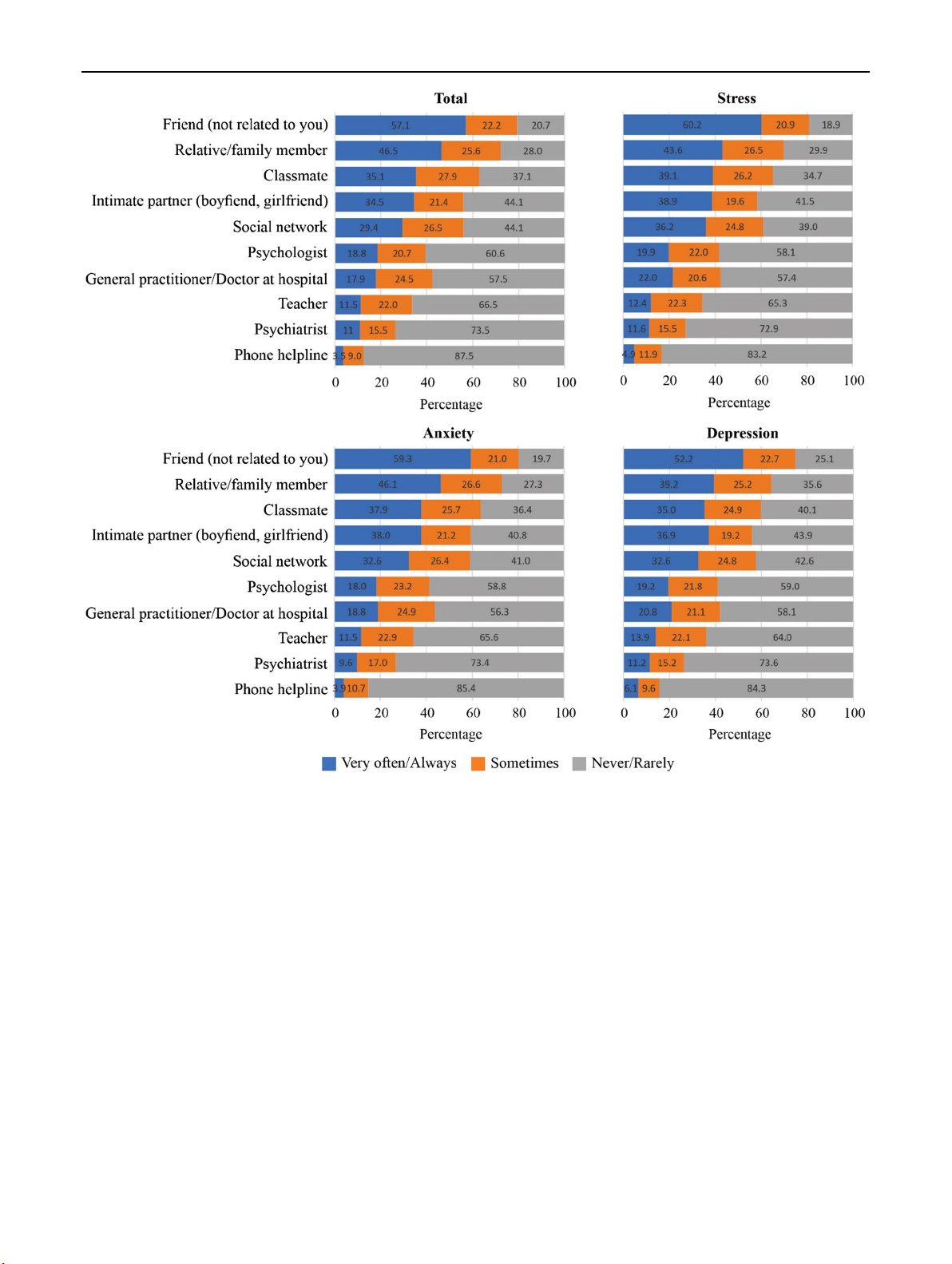
Fig. 1 General help-seeking strategies in Vietnamese high school students stratified by mental health symptoms
Figure 1 presents the help-seeking preferences for mental Discussion
illness stratified by mental health conditions. The most com-
mon sources students asked for help from in order to deal
Overall, the high school students who took part in this study
with a mental illness were friends, classmates and relative
had a moderate level of mental health literacy. While no
or family members. In contrast, less than one-fifth of stu-
study measuring mental health literacy among high school
dents sought health professionals to address their mental ill-
students using the MHLS has previously been conducted in
ness, including psychologists (18.8% very often or always),
Vietnam, the MHLS score in our study was lower compared
general practitioners at hospital (17.9%) and psychiatrists
to scores obtained in other studies, including university stu-
(11.0%). Very few students used a phone helpline when they
dents in England (M = 122.9, SD = 12.1) (Gorczynski et al.,
had mental illness (3.5%). Help-seeking preference patterns
2017) and in Australia (M = 127.4, SD = 12.6) (O’Connor
were almost identical among students with stress, anxiety
and Casey (2015). This difference is consistent with the cur- or depression.
rent literature, whereby mental health literacy level is higher 1 3 School Mental Health
in European and North American countries compared to
There are several important implications from our find-
Asian and African countries (Altweck, Marshall, Ferenczi,
ings. First, the relatively high prevalence of mental health
& Lefringhausen, 2015). A possible explanation for this
symptoms alongside moderate levels of mental health lit-
is the difference in educational level (i.e., high school stu-
eracy suggests that students might be unable to identify their
dents compared to university students) because students who
own mental health problems. This reveals a need for inter-
attend university are likely to have had more life experiences
ventions to increase mental health literacy because improv-
overall and more opportunities to learn about issues related
ing mental health literacy has been shown to be effective
to mental health. For example, Gorczynski et al. (2017)
in reducing mental disorders (Kelly et al., 2007). Several
noted that mental health literacy among male first-year
intervention approaches to improve mental health literacy
undergraduate students was lower compared to final-year
have been examined in previous studies and have been found
female, postgraduate students. Mental health literacy level
to be useful, including helping adolescents to support their
was also higher in the study conducted by O’Connor and
peers, web-based interventions or game-based school pro-
Casey (2015) perhaps because participants were recruited
grams (Brijnath, Protheroe, Mahtani, & Antoniades, 2016;
from those enrolled in a psychology course. As such, they
Hart et al., 2018; Tuijnman, Kleinjan, Hoogendoorn, Granic,
may have been provided with more information about men-
& Engels, 2019). It is suggested that future research investi-
tal health disorders during their studies. Given that health
gates the usefulness of these interventions in a Vietnamese
literacy in the early stages of one’s life has an important
student sample. Additionally, routine school-based mental
influence on a person’s subsequent health and behaviors dur-
health screening and referral where students who are identi-
ing their lifetime and given the high prevalence of mental
fied by health professionals as having symptoms of mental
health disorders reported worldwide, our findings indicate an
disorders can be referred to mental health professionals for
urgent need to improve adolescents’ mental health literacy.
further diagnosis and treatment are needed. Unfortunately,
Although students in the current study demonstrated a
such activities are lacking in Vietnam. The low level of help-
good ability to recognize some common mental disorders,
seeking from mental health professionals and high prefer-
their knowledge of sources of professional help appears to
ence for peer and family support should be considered in
be insufficient. Similar to findings from the general Viet-
the mental healthcare model for Vietnamese adolescents.
namese population, the Vietnamese students in our study
To respect and leverage this help-seeking pattern, non-
demonstrated preferences for non-professionals such as
professional ‘helpers’ should be provided with more mental
friends, relatives or family members over professionals
health information in order to increase their confidence in
such as psychologists, psychiatrists or general practition-
their ability to be of help (Xu et al., 2018). Friends, family
ers when seeking advice for their mental health issues. This
and relatives can then become a gatekeeper to help recog-
finding was consistent with previous studies where friends
nize students’ symptoms of mental disorders and to connect
and parents were the first choices from whom students asked
students who have mental disorders to professional services.
for help when they had health problems (Gorczynski et al.,
It is required by Vietnam law that every school must have
2017; Nguyen Thai & Nguyen, 2018). A possible explana-
at least one assistant doctor who is involved in the develop-
tion for not choosing professional support may be either the
ment of health education and promotion programs for stu-
students’ lack of knowledge of available resources, or their
dents. However, as most students in our study would seek
doubt about the reliability of these resources (Nguyen Thai
help from non-professionals it is likely that the majority of
& Nguyen, 2018). In countries like Vietnam, beliefs that
students with mental health issues would not currently seek
mental disorders are consequences of behaviors in a previ-
the help of the school-based assistant doctor. Given the lim-
ous life, which means that people living with a mental ill-
ited number of psychologists and psychiatrists in Vietnam
ness may experience discrimination and be hesitant to seek
(Niemi et al., 2010), we propose that assistant doctors should
help (Nguyen, 2003). This may also prevent students with
be trained to become mental health counselors who can then
mental health problems from seeking professional help (van
provide students with mental health education particularly
der Ham et al., 2011). Therefore, students may only access
for the most-at-risk students. Of course, to facilitate students
professionals as a final option when their symptoms become
to seek help from this person more education firstly needs
more severe and support from non-professionals failed to
to occur so that students will be confident that they will
help (Nguyen, 2003). This finding supports the need for an
not be discriminated against, as well as increasing students’
integrated, school-based mental health literacy education
confidence that the assistant doctor will be able to provide
program focusing on destigmatising mental health problems, reliable and effective help.
providing information about the nature and causes of mental
This study has several limitations. First, our study was
illness and information about available appropriate mental
conducted in Ho Chi Minh City, one of the biggest cities health resources.
and the center of social, cultural and economic activities 1 3 School Mental Health
in Vietnam. This may limit the generalizability of our find- References
ings. For other areas such as sub-urban or rural areas where
mental health information and mental health professionals
Altweck, L., Marshall, T. C., Ferenczi, N., & Lefringhausen, K. (2015).
are not always available and traditional views on mental dis-
Mental health literacy: A cross-cultural approach to knowledge
and beliefs about depression, schizophrenia and generalized anxi-
orders are more dominant, mental health symptoms may be
ety disorder. Front Psychol, 6, 1272. https ://doi.org/10.3389/fpsyg
more pronounced. It is anticipated that mental health literacy .2015.01272 .
in adolescents may be lower in these areas, and thus this may
Bjørnsen, H. N., Espnes, G. A., Eilertsen, M.-E. B., Ringdal, R., &
negatively affect their mental health. More studies and inter-
Moksnes, U. K. (2019). The relationship between positive mental
health literacy and mental well-being among adolescents: Implica-
ventions are needed for adolescents in these areas in Viet-
tions for school health services. The Journal of School Nursing,
nam. Second, our study was a preliminary cross-sectional
35(2), 107–116. https ://doi.org/10.1177/10598 40517 73212 5.
survey and thus was unable to identify risk factors contribut-
Bohleber, L., Crameri, A., Eich-Stierli, B., Telesko, R., & von Wyl, A.
ing to low mental health literacy. For example, we could not
(2016). Can we foster a culture of peer support and promote men-
tal health in adolescence using a web-based app? A control group
determine the casual relationship between having symptoms
study. JMIR Ment Health, 3(3), e45. https ://doi.org/10.2196/menta
of mental disorders and mental health literacy. Third, help- l.5597.
seeking preferences depend on the type and severity of men-
Brijnath, B., Protheroe, J., Mahtani, K. R., & Antoniades, J. (2016). Do
tal disorders. We were unable to examine whether seeking
web-based mental health literacy interventions improve the men-
tal health literacy of adult consumers? Results from a systematic
help and advice from friends and relatives was helpful for
review. Journal of Medical Internet Research, 18(6), e165. https
the students or not. Although in some situations, such advice ://doi.org/10.2196/jmir.5463.
may be sufficient for students to overcome mild symptoms
Bröder, J., Okan, O., Bauer, U., Bruland, D., Schlupp, S., Bollweg,
of mental disorders, professional help is considered optimal.
T. M., et al. (2017). Health literacy in childhood and youth: A
systematic review of definitions and models. BMC Public Health,
Further studies are needed to explore this.
17(1), 361. https ://doi.org/10.1186/s1288 9-017-4267-y.
Bui, Q. T., Vu, L. T., & Tran, D. M. (2018). Trajectories of depres-
sion in adolescents and young adults in Vietnam during rapid Conclusion
urbanisation: Evidence from a longitudinal study. Journal of
Child & Adolescent Mental Health, 30(1), 51–59. https ://doi.
org/10.2989/17280 583.2018.14782 99.
While Vietnamese high school students had high levels of
Burns, J. R., & Rapee, R. M. (2006). Adolescent mental health lit-
symptoms of mental disorders and moderate levels of men-
eracy: Young people’s knowledge of depression and help seeking.
Journal of Adolescence, 29(2), 225–239. https ://doi.org/10.1016/j.
tal health literacy, non-professionals were preferred as their adole scenc e.2005.05.004.
first help-seeking choice. Mental health literacy was lower
Divin, N., Harper, P., Curran, E., Corry, D., & Leavey, G. (2018).
in students with symptoms of depression, while help-seeking
Help-seeking measures and their use in adolescents: A systematic
preferences were almost identical among students with high
review. Adolescent Research Review, 3(1), 113–122. https ://doi.
org/10.1007/s4089 4-017-0078-8.
levels of symptoms of depression, anxiety and stress. Our
Gorczynski, P., Sims-schouten, W., Hill, D., & Wilson, J. C. (2017).
findings revealed the need for school-based mental health
Examining mental health literacy, help seeking behaviours, and
education programs in high schools in Vietnam.
mental health outcomes in UK university students. The Journal of
Mental Health Training, Education and Practice, 12(2), 111–120.
Acknowledgements The authors would like to thank the directors at
https ://doi.org/10.1108/jmhte p-05-2016-0027.
high schools for their support during this study.
Hart, L. M., Morgan, A. J., Rossetto, A., Kelly, C. M., Mackinnon,
A., & Jorm, A. F. (2018). Helping adolescents to better support
their peers with a mental health problem: A cluster-randomised
Compliance with Ethical Standards
crossover trial of teen Mental Health First Aid. The Australian and
New Zealand Journal of Psychiatry, 52(7), 638–651. https ://doi.
Conflict of interest The authors declare that they have no conflict of
org/10.1177/00048 67417 75355 2. interest.
Kelly, C. M., Jorm, A. F., & Wright, A. (2007). Improving mental
health literacy as a strategy to facilitate early intervention for
Ethical Approval All procedures performed in studies involving human
mental disorders. Medical Journal of Australia, 187(7 Suppl),
participants were conducted in accordance with the ethical standards S26–S30.
of the research committee at University of Medicine and Pharmacy
Lam, L. T. (2014). Mental health literacy and mental health status
at Ho Chi Minh City and with the 1964 Helsinki Declaration and its
in adolescents: A population-based survey. Child and Ado-
later amendments or comparable ethical standards. Informed consent
lescent Psychiatry and Mental Health, 8(1), 26. https ://doi.
was obtained individually from all participants included in the study. org/10.1186/1753-2000-8-26. 1 3 School Mental Health
Le, M. T. H., Holton, S., Nguyen, H. T., Wolfe, R., & Fisher, J. (2016).
Tomczyk, S., Muehlan, H., Freitag, S., Stolzenburg, S., Schomerus, G.,
Poly-victimisation and health risk behaviours, symptoms of men-
& Schmidt, S. (2018). Is knowledge “half the battle”? The role of
tal health problems and suicidal thoughts and plans among adoles-
depression literacy in help-seeking among a non-clinical sample
cents in Vietnam. International Journal of Mental Health Systems,
of adults with currently untreated mental health problems. Journal
10, 66. https ://doi.org/10.1186/s1303 3-016-0099-x.
of Affective Disorders, 238, 289–296. https ://doi.org/10.1016/j.
Le, M. T. H., Tran, T. D., Holton, S., Nguyen, H. T., Wolfe, R., & jad.2018.05.059.
Fisher, J. (2017). Reliability, convergent validity and factor
Trang, D. T. T. (2014). The relationship between awareness toward
structure of the DASS-21 in a sample of Vietnamese adolescents.
mental health and help seeking behaviors in high school students.
PLoS ONE, 12(7), e0180557. https ://doi.org/10.1371/journ
(Master of psychology), National University at Hanoi. al.pone.01805 57.
Tuijnman, A., Kleinjan, M., Hoogendoorn, E., Granic, I., & Engels,
Loo, P. W., Wong, S., & Furnham, A. (2012). Mental health literacy:
R. C. (2019). A game-based school program for mental health lit-
A cross-cultural study from Britain, Hong Kong and Malay-
eracy and stigma regarding depression (moving stories): Protocol
sia. Asia Pac Psychiatry, 4(2), 113–125. https ://doi.org/10.111
for a randomized controlled trial. JMIR Research Protocols, 8(3), 1/j.1758-5872.2012.00198 .x.
e11255. https ://doi.org/10.2196/11255 .
Lovibond, S. H., & Lovibond, P. F. (1995). Manual for the depres-
van der Ham, L., Wright, P., Van, T. V., Doan, V. D., & Broerse, J.
sion anxiety stress scales (2nd ed.). Sydney, NSW: Psychology
E. (2011). Perceptions of mental health and help-seeking behav- Foundation of Australia.
ior in an urban community in Vietnam: An explorative study.
Mitchell, C., McMillan, B., & Hagan, T. (2017). Mental health help-
Community Mental Health Journal, 47(5), 574–582. https ://doi.
seeking behaviours in young adults. The British Journal of Gen-
org/10.1007/s1059 7-011-9393-x.
eral Practice: The Journal of the Royal College of General Prac-
Weiss, B., Ngo, V. K., Dang, H.-M., Pollack, A., Trung, L. T., Tran,
titioners, 67(654), 8–9. https ://doi.org/10.3399/bjgp1 7X688 453.
C. V., et al. (2012). A model for sustainable development of child
Nguyen, A. (2003). Cultural and social attitudes towards mental illness
mental health infrastructure in the LMIC world: Vietnam as a case
in Ho Chi Minh city. Vietnam. Standford Undergraduate Research
example. International Perspectives in Psychology: Research,
Journal, 2, 27–31.
Practice, Consultation, 1(1), 63–77. https ://doi.org/10.1037/
Nguyen Thai, Q. C., & Nguyen, T. H. (2018). Mental health literacy: a0027 316.
Knowledge of depression among undergraduate students in Hanoi,
Wilson, C. J., Deane, F. P., Ciarrochi, J., & Rickwood, D. (2005).
Vietnam. International Journal of Mental Health Systems, 12, 19.
Measuring help-seeking intentions: Properties of the general
https ://doi.org/10.1186/s1303 3-018-0195-1.
help-seeking questionnaire. Canadian Journal of Counselling,
Niemi, M., Thanh, H. T., Tuan, T., & Falkenberg, T. (2010). Men- 39(1), 15–28.
tal health priorities in Vietnam: A mixed-methods analy-
World Health Organization. (2017). Adolescents and mental health.
sis. BMC Health Services Research, 10, 257. https ://doi.
Retrieved December 14, 2019, from https ://www.who.int/mater org/10.1186/1472-6963-10-257.
nal_child _adole scent /topic s/adole scenc e/menta l_healt h/en/.
O’Connor, M., & Casey, L. (2015). The Mental Health Literacy
Xu, Z., Huang, F., Kösters, M., Staiger, T., Becker, T., Thornicroft,
Scale (MHLS): A new scale-based measure of mental health
G., et al. (2018). Effectiveness of interventions to promote help-
literacy. Psychiatry Research, 229(1–2), 511–516. https ://doi.
seeking for mental health problems: Systematic review and meta-
org/10.1016/j.psych res.2015.05.064.
analysis. Psychological Medicine, 48(16), 2658–2667. https ://doi.
Patrick, D. (2008). Determining sample size: Balancing power, preci-
org/10.1017/S0033 29171 80012 65.
sion, and practicality. Oxford: Oxford University Press.
Yap, M. B., Reavley, N., & Jorm, A. F. (2013). Where would young
Roach, A. (2018). Supportive peer relationships and mental health
people seek help for mental disorders and what stops them?
in adolescence: An integrative review. Issues in Mental Health
Findings from an Australian national survey. Journal of Affec-
Nursing, 39(9), 723–737. https ://doi.org/10.1080/01612
tive Disorders, 147(1–3), 255–261. https ://doi.org/10.1016/j. 840.2018.14964 98. jad.2012.11.014.
Salerno, J. P. (2016). Effectiveness of universal school-based mental
health awareness programs among youth in the United States: A
Publisher’s Note Springer Nature remains neutral with regard to
systematic review. The Journal of School Health, 86(12), 922–
jurisdictional claims in published maps and institutional affiliations.
931. https ://doi.org/10.1111/josh.12461 .
Thai, T. T. (2010). Educational stress and mental health among sec-
ondary and high school students in Ho Chi Minh city, Vietnam.
(Master of Public Health Degree Final dissertation), Queensland
University of Technology, Brisbane, Australia. 1 3
Document Outline
- Mental Health Literacy and Help-Seeking Preferences in High School Students in Ho Chi Minh City, Vietnam
- Abstract
- Introduction
- Methods
- Study Design
- Participants
- Study Procedure
- Measurement
- Analysis Data
- Results
- Discussion
- Conclusion
- Acknowledgements
- References
Tài liệu liên quan:
-
ĐỀ CƯƠNG TÂM THẦN | Đại học Y Dược Thành phố Hồ Chí Minh
38 19 -
Báo cáo Bệnh án Tâm thần môn Tâm thần | Đại học Y Dược Thành phố Hồ Chí Minh
62 31 -
Bệnh án Tâm Thần: Quy Trình Điều Dưỡng Cấp Tính Nam | Đại học Y Dược Thành phố Hồ Chí Minh
61 31 -
Các Triệu Chứng Tâm Thần và Phân Loại trong Chẩn Đoán Tâm Lý | Đại học Y Dược Thành phố Hồ Chí Minh
50 25