NLKT CHƯƠNG 2 NLKT CHƯƠNG 2 NLK
NLKT
Môn: Nguyên lý kế toán(1111) 179 tài liệu
Trường: Trường Đại học Kinh Tế Quốc Dân 8.8 K tài liệu
Tác giả:









Preview text:
The Recording Process Learning Objectives
Describe how accounts, debits, and credits are used to record business 1 transactions. 2
Indicate how a journal is used in the recording process. 3
Explain how a ledger and posting help in the recording process. 4 Prepare a trial balance. 2-1 LEARNING
Describe how accounts, debits, and credits are used to 1 OBJECTIVE record business transactions.
Record of increases and decreases in a The
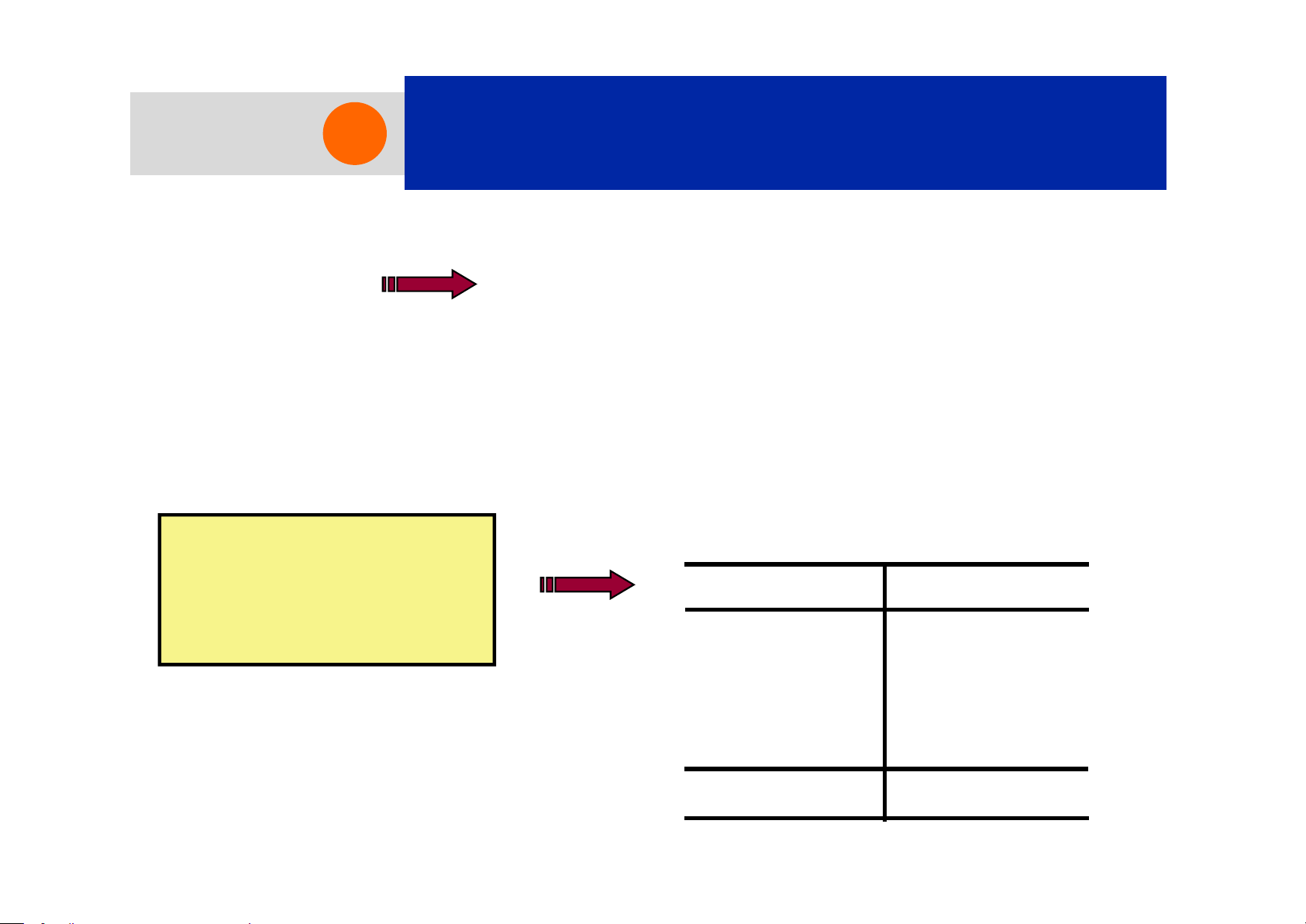
specific asset, liability, owners’ equity, Account revenue, or expense item. Debit = “Left” Credit = “Right” An account can be Account Name illustrated in a T- Debit / Dr. Credit / Cr. account form. 2-2 LO 1 The Account DEBIT AND CREDIT PROCEDURES Double-entry system
Each transaction must affect two or more accounts to keep
the basic accounting equation in balance.
Recording done by debiting at least one account and
crediting at least one other account. DEBITS must equal CREDITS. 2-3 LO 1 Debits and Credits
If the sum of Debit entries are greater than the sum of Credit
entries, the account will have a debit balance. Account Name Debit / Dr. Credit / Cr. Transaction #1 $10,000 $3,000 Transaction #2 Transaction #3 8,000 Balance $15,000 2-4 LO 1 Debits and Credits
If the sum of Credit entries are greater than the sum of Debit
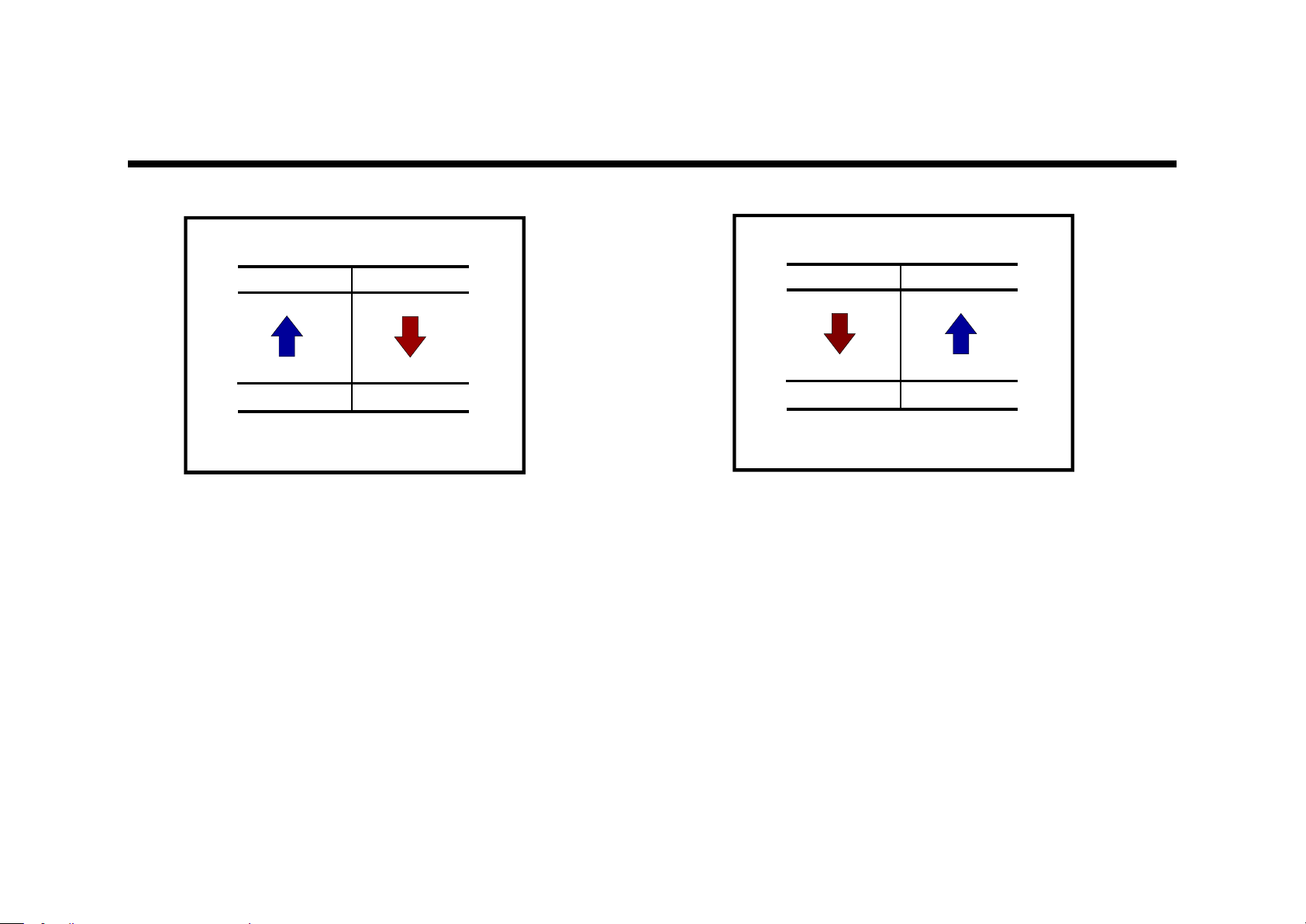
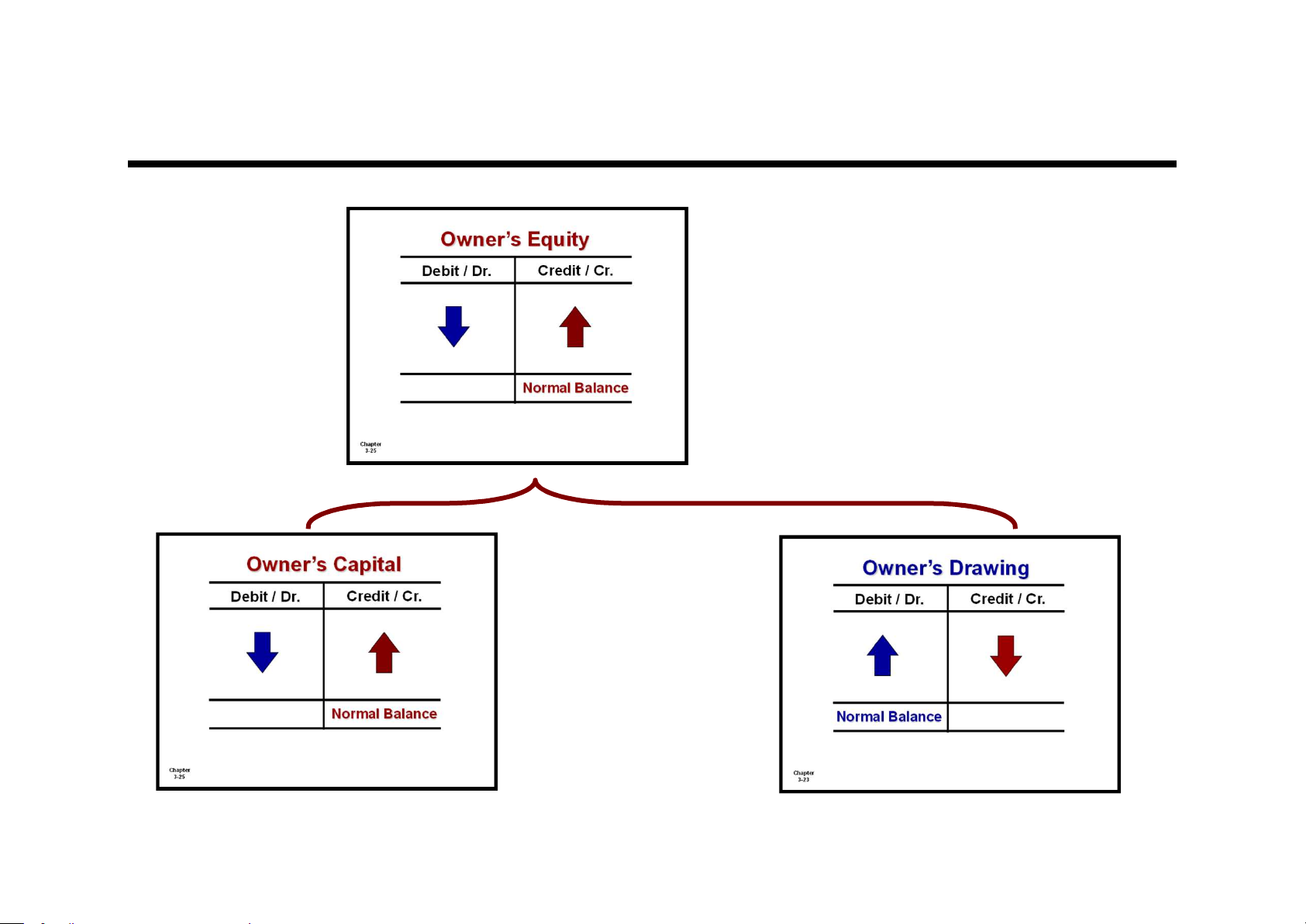
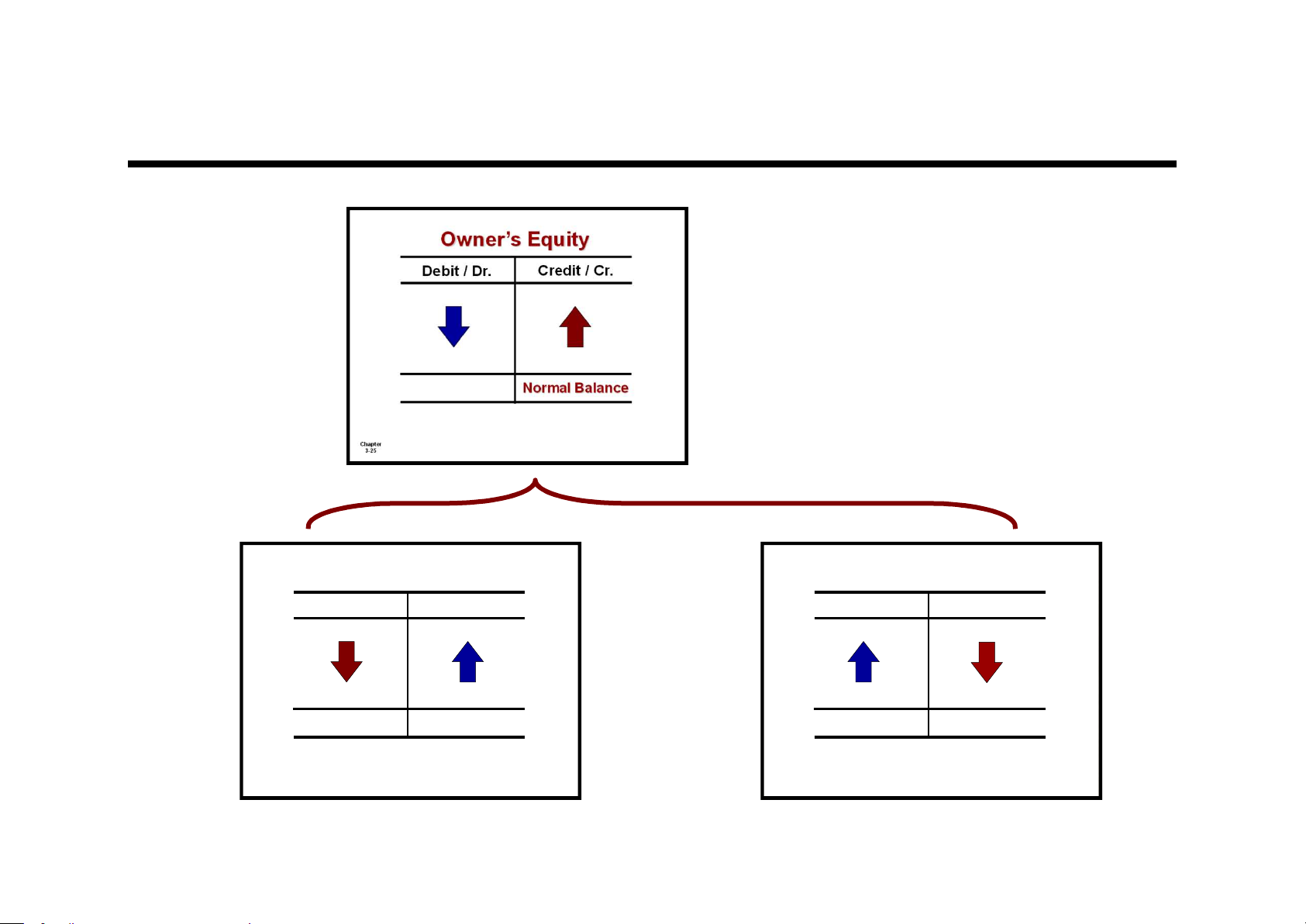
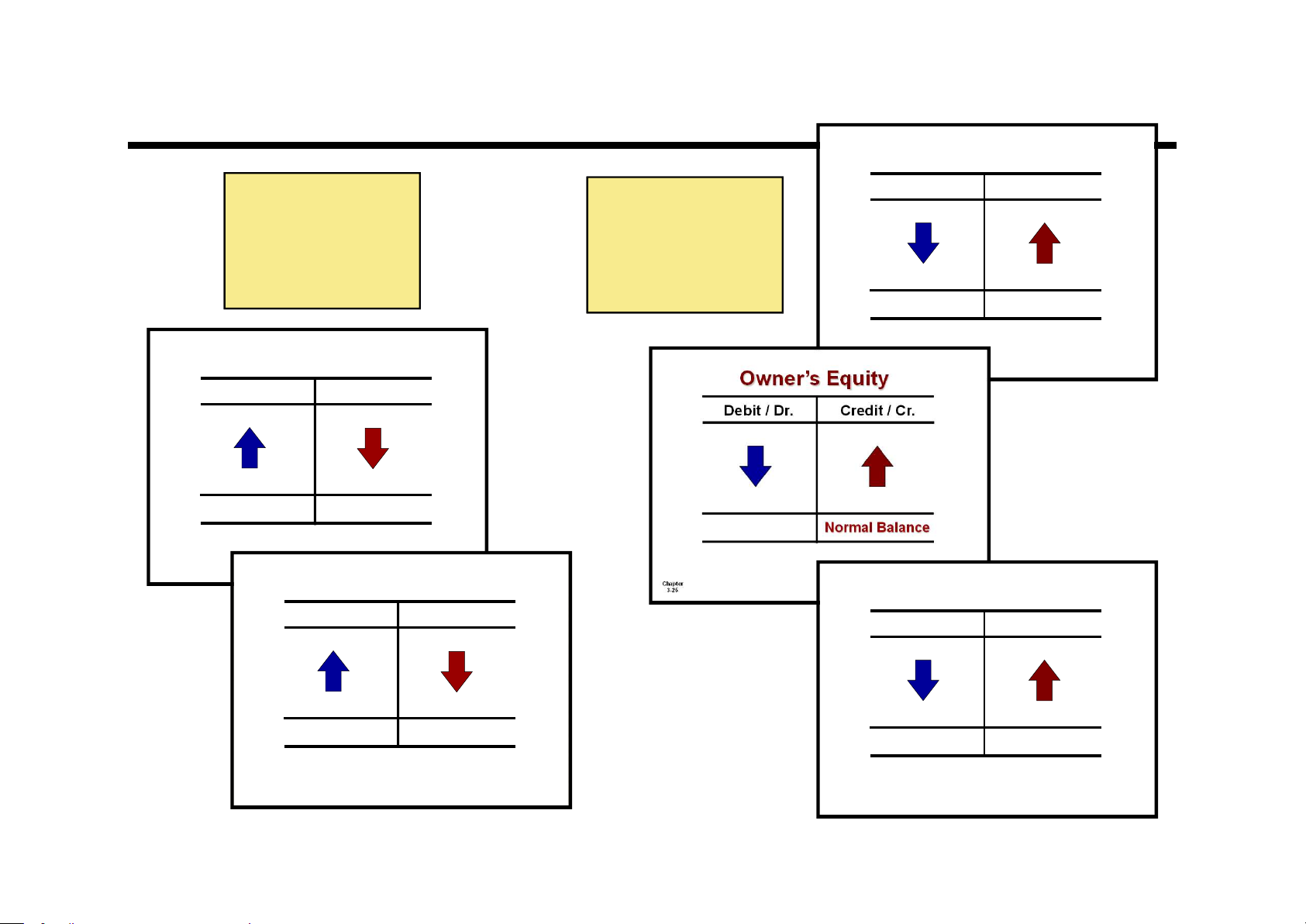
entries, the account will have a credit balance. Account Name Debit / Dr. Credit / Cr. Transaction #1 $10,000 $3,000 Transaction #2 8,000 Transaction #3 Balance $1,000 2-5 LO 1 Debits and Credits Assets Liabilities Debit / Dr. Credit / Cr. Debit / Dr. Credit / Cr. Normal Balance Normal Balance Chapter Chapter 3-23 3-24
Assets - Debits should exceed credits.
Liabilities – Credits should exceed debits.
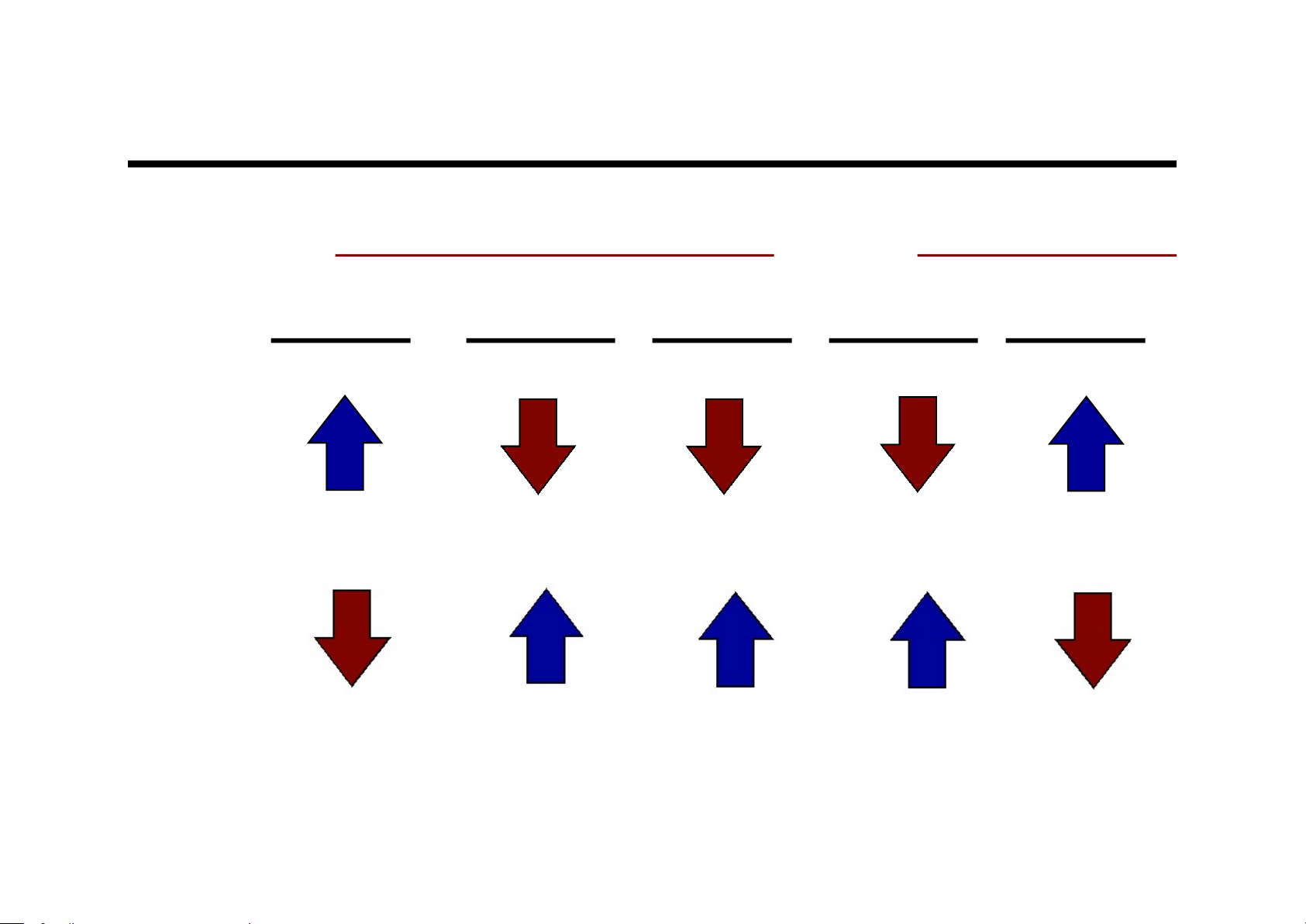
Normal balance is on the increase side. 2-6 LO 1 Debits and Credits 2-7 LO 1 Debits and Credits Revenue Expense Debit / Dr. Credit / Cr. Debit / Dr. Credit / Cr. Normal Balance Normal Balance Chapter Chapter 3-26 3-27 2-8 LO 1 Debits/Credits Rules Liabilities Normal Normal Debit / Dr. Credit / Cr. Balance Balance Debit Credit Normal Balance Assets Chapter 3-24 Debit / Dr. Credit / Cr. Normal Balance Chapter 3-23 Expense Revenue Debit / Dr. Credit / Cr. Debit / Dr. Credit / Cr. Normal Balance Normal Balance Chapter 3-27 Chapter 3-26 2-9 LO 1 Debits/Credits Rules Balance Sheet Income Statement Asset = Liability + Equity Revenue - Expense Debit Credit 2-10 LO 1 Summary of Debit/Credit Rules
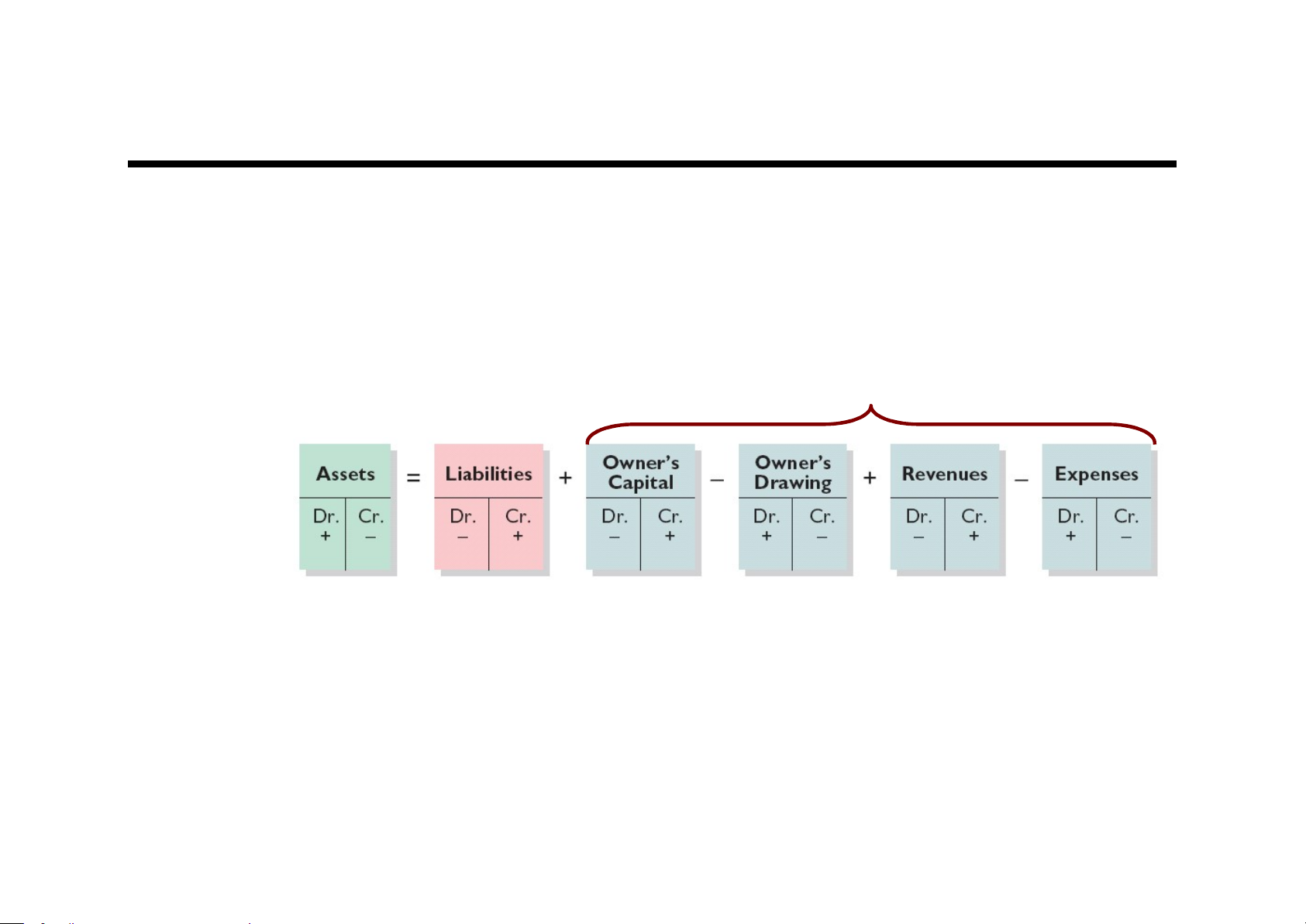
Relationship among the assets, liabilities and owner’s equity of a business: Illustration 2-11 Basic Assets = Liabilities + Equation Owner’s Equity Expanded Equation Debit/Credit Effects
The equation must be in balance after every transaction. Total
Debits must equal total Credits. 2-11 LO 1 Debits/Credits Rules Question Debits:
a. increase both assets and liabilities.
b. decrease both assets and liabilities.
c. increase assets and decrease liabilities.
d. decrease assets and increase liabilities. 2-12 LO 1 Debits/Credits Rules Question
Accounts that normally have debit balances are:
a. assets, expenses, and revenues.
b. assets, expenses, and equity.
c. assets, liabilities, and owner’s drawing.
d. assets, owner’s drawing, and expenses. 2-13 LO 1 LEARNING
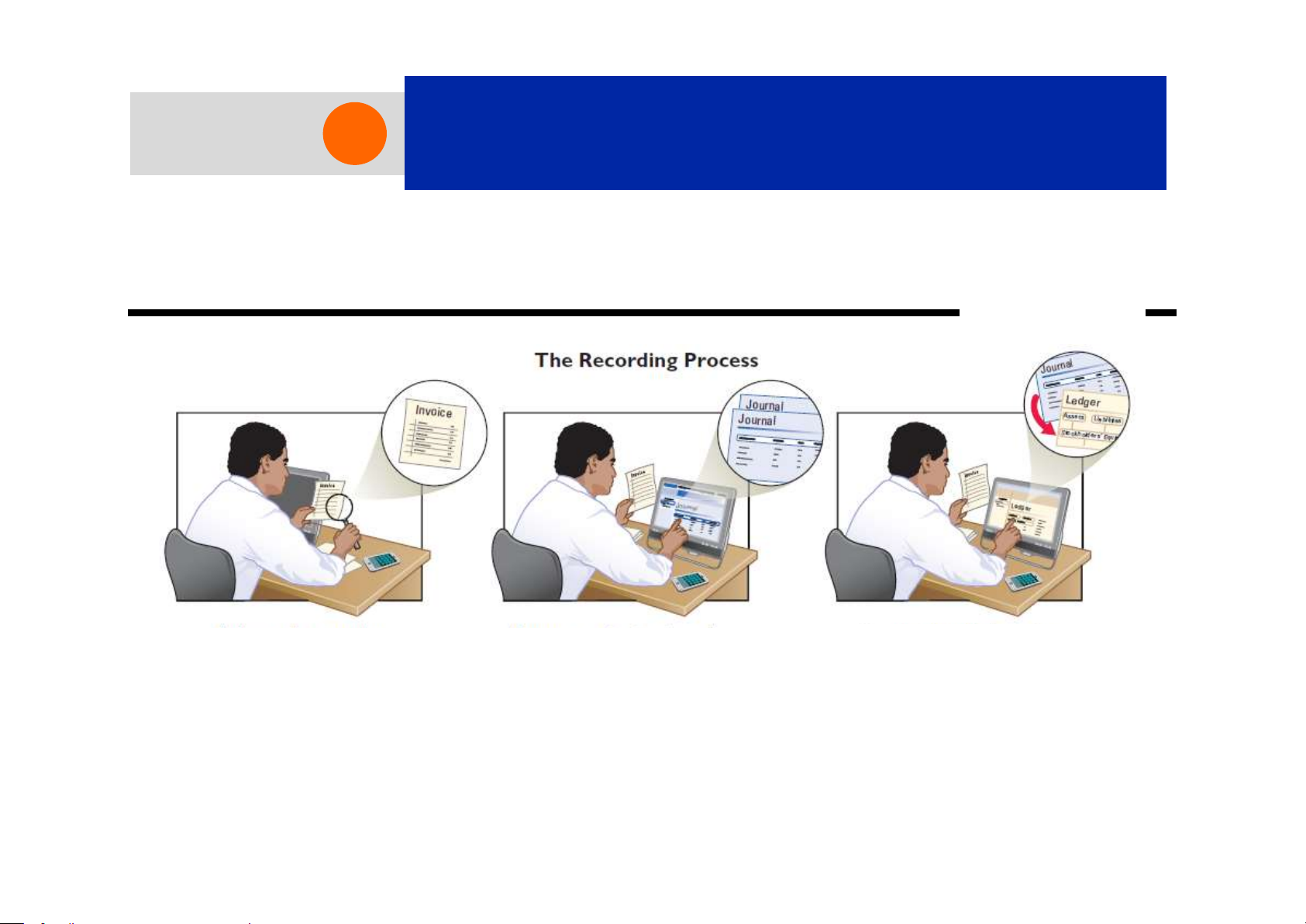
Indicate how a journal is used in the 2 OBJECTIVE recording process. Steps in the Recording Process Illustration 2-12 Analyze each transaction Enter transaction in a journal
Transfer journal information to ledger accounts
Business documents, such as a sales slip, a check, or a bill, provide evidence of the transaction. 2-14 LO 2 Steps in the Recording Process The Journal Book of original entry.
Transactions recorded in chronological order.
Contributions to the recording process:
1. Discloses the complete effects of a transaction.
2. Provides a chronological record of transactions.
3. Helps to prevent or locate errors because the debit and
credit amounts can be easily compared. 2-15 LO 2 Steps in the Recording Process
JOURNALIZING - Entering transaction data in the journal.
Illustration: On September 1, Ray Neal invested $15,000 cash in the
business, and Softbyte purchased computer equipment for $7,000 cash. Illustration 2-13 GENERAL JOURNAL Date Account Title Ref. Debit Credit Sept. 1 Cash 15,000 Owner’s Capital 15,000 Equipment 7,000 Cash 7,000 2-16 LO 2 Steps in the Recording Process SIMPLE AND COMPOUND ENTRIES
Illustration: On July 1, Butler Company purchases a delivery truck costing
$14,000. It pays $8,000 cash now and agrees to pay the remaining $6,000 on account. Illustration 2-14 Compound journal entry GENERAL JOURNAL Date Account Title Ref. Debit Credit July 1 Equipment 14,000 Cash 8,000 Accounts payable 6,000 2-17 LO 2 DO IT! 2 Recording Business Activities
Kate Browne engaged in the following activities in establishing her salon, Hair It Is:
1. Opened a bank account in the name of Hair It Is and deposited
$20,000 of her own money in this account as her initial investment.
2. Purchased equipment on account (to be paid in 30 days) for a total cost of $4,800.
3. Interviewed three persons for the position of hair stylist.
Prepare the entries to record the transactions. 2-18 LO 2 DO IT! 2 Recording Business Activities
Prepare the entries to record the transactions.
1. Opened a bank account and deposited $20,000.
2. Purchased equipment on account (to be paid in 30 days) for a total cost of $4,800.
3. Interviewed three persons for the position of hair stylist. 2-19 LO 2 LEARNING
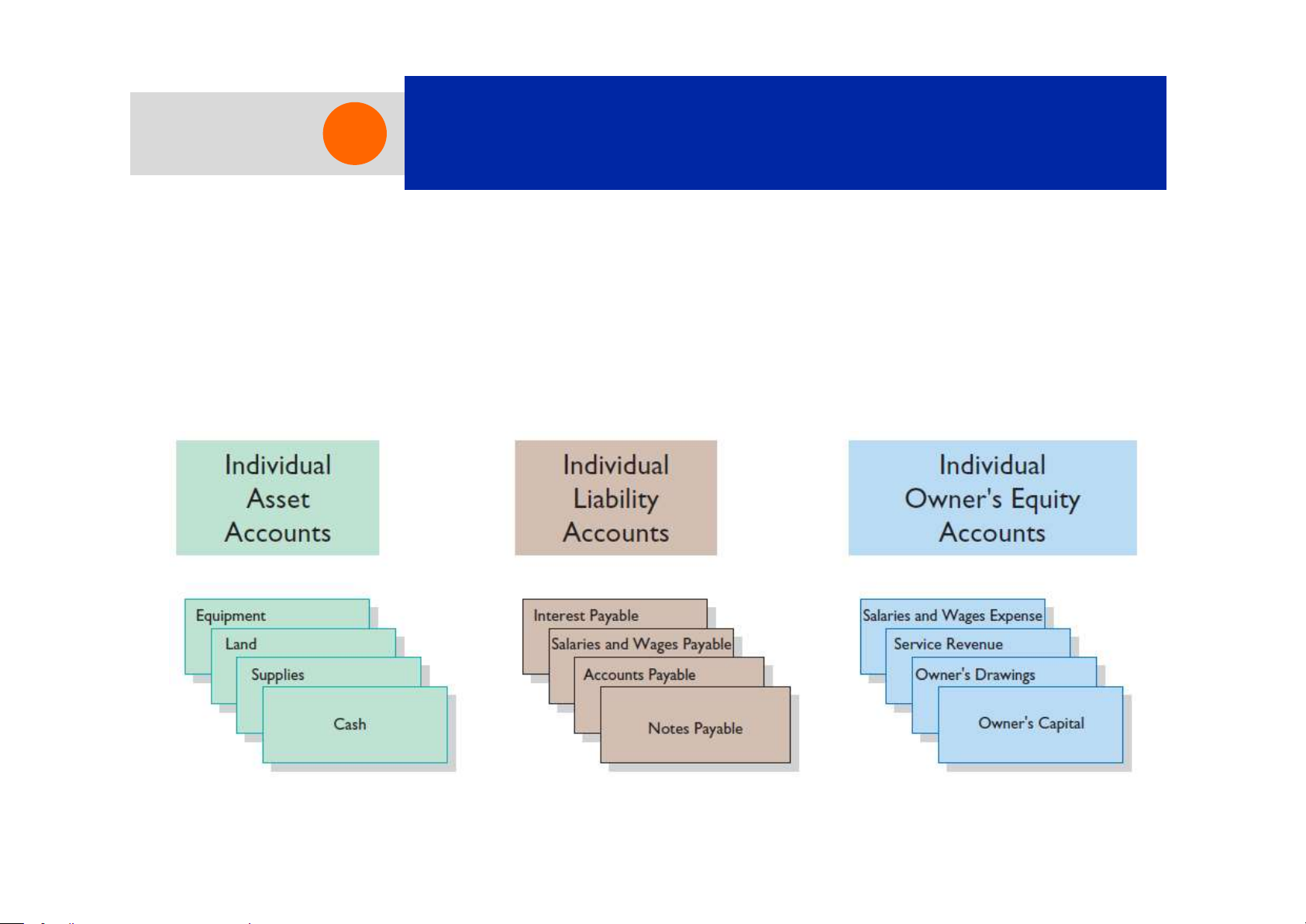
Explain how a ledger and posting help in the recording 3 OBJECTIVE process. The Ledger
General Ledger contains all the asset, liability, and owner’s equity accounts. Illustration 2-15 2-20 LO 3