Nội dung thi IoT Semi - Giải pháp Bảo trì Thông minh dựa trên AIoT | Iot và ứng dụng | Học viện Công nghệ Bưu chính Viễn thông
Tài liệu được sưu tầm và soạn thảo dưới dạng file PDF với mục đích hỗ trợ học tập và tham khảo. Nội dung tài liệu được trình bày rõ ràng, dễ tiếp cận, phù hợp cho việc ôn tập và củng cố kiến thức trong quá trình học đại học. Đây sẽ là nguồn tư liệu hữu ích giúp các bạn sinh viên chuẩn bị tốt hơn cho các buổi học, đồng thời mở rộng thêm hiểu biết về môn học. Hy vọng tài liệu này sẽ mang lại nhiều giá trị và hỗ trợ các bạn trong hành trình học tập. Mời bạn đọc cùng tham khảo!
Môn: IoT và ứng dụng 143 tài liệu
Trường: Học viện Công Nghệ Bưu Chính Viễn Thông 1.8 K tài liệu
Tác giả:




Preview text:
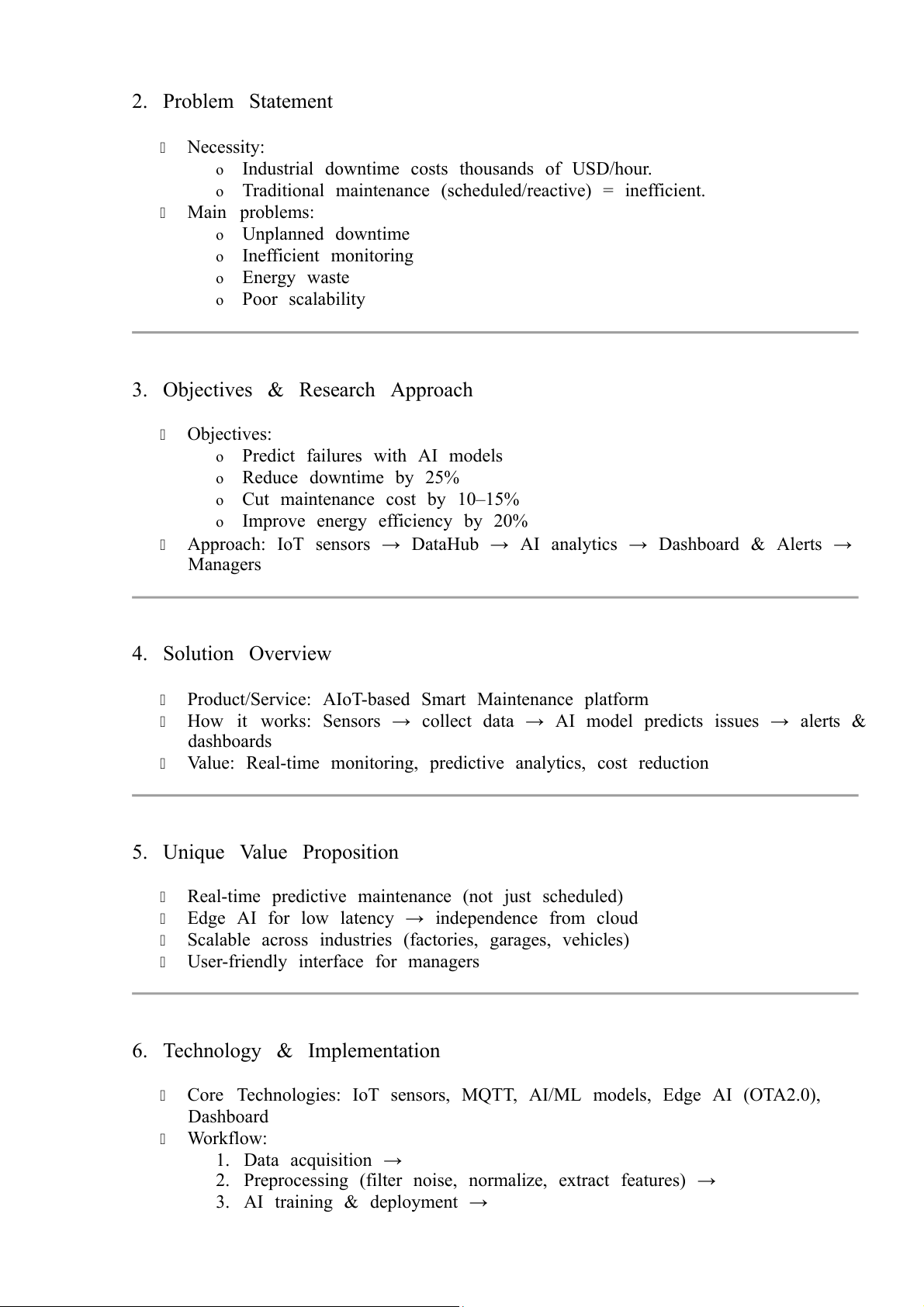
2. Problem Statement Necessity: o
Industrial downtime costs thousands of USD/hour. o
Traditional maintenance (scheduled/reactive) = inefficient. Main problems: o Unplanned downtime o Inefficient monitoring o Energy waste o Poor scalability
3. Objectives & Research Approach Objectives: o
Predict failures with AI models o Reduce downtime by 25% o
Cut maintenance cost by 10–15% o
Improve energy efficiency by 20%
Approach: IoT sensors → DataHub → AI analytics → Dashboard & Alerts → Managers
4. Solution Overview
Product/Service: AIoT-based Smart Maintenance platform
How it works: Sensors → collect data → AI model predicts issues → alerts & dashboards
Value: Real-time monitoring, predictive analytics, cost reduction
5. Unique Value Proposition
Real-time predictive maintenance (not just scheduled)
Edge AI for low latency → independence from cloud
Scalable across industries (factories, garages, vehicles)
User-friendly interface for managers
6. Technology & Implementation
Core Technologies: IoT sensors, MQTT, AI/ML models, Edge AI (OTA2.0), Dashboard Workflow: 1. Data acquisition →
2. Preprocessing (filter noise, normalize, extract features) →
3. AI training & deployment → 4. Visualization & alerts 7. Architecture Diagram:
Sensors → DataHub → AI models (AIFS) → Edge devices → Dashboard + Notification
WISE-IoT modules: DataHub, Dashboard, Notification, SaaS Composer, AIFS, OTA2.0
8. Business Model
Market: Manufacturing, automotive, machinery maintenance
Trend: Industry 4.0, predictive maintenance demand ↑
Business Model (Canvas): o
Value Proposition: Reduce downtime, lower costs, improve efficiency o
Customers: Factories, garages, service providers o
Channels: Direct B2B, partnerships, distributors o
Revenue: Subscription (SaaS), licensing, customized solutions
Pricing: SaaS model (monthly/annual plans, based on scale)
9. Customer Acquisition & Channels
Pilot projects with factories & garages
Partnerships with IoT/AI providers (Advantech, AWS, Azure)
Trade shows, industry conferences, direct sales
10. Results (Demo / Prototype)
Prototype dashboard (demo screenshots)
Early simulation results: predictive accuracy, downtime reduction potential
11. Development & Expansion Plan
0–3 months: Build prototype, lab testing
3–6 months: Pilot deployment at workshop/factory
6–12 months: Expand pilot, advanced features, beta release
Funding/Partnership: Partners in factories/garages
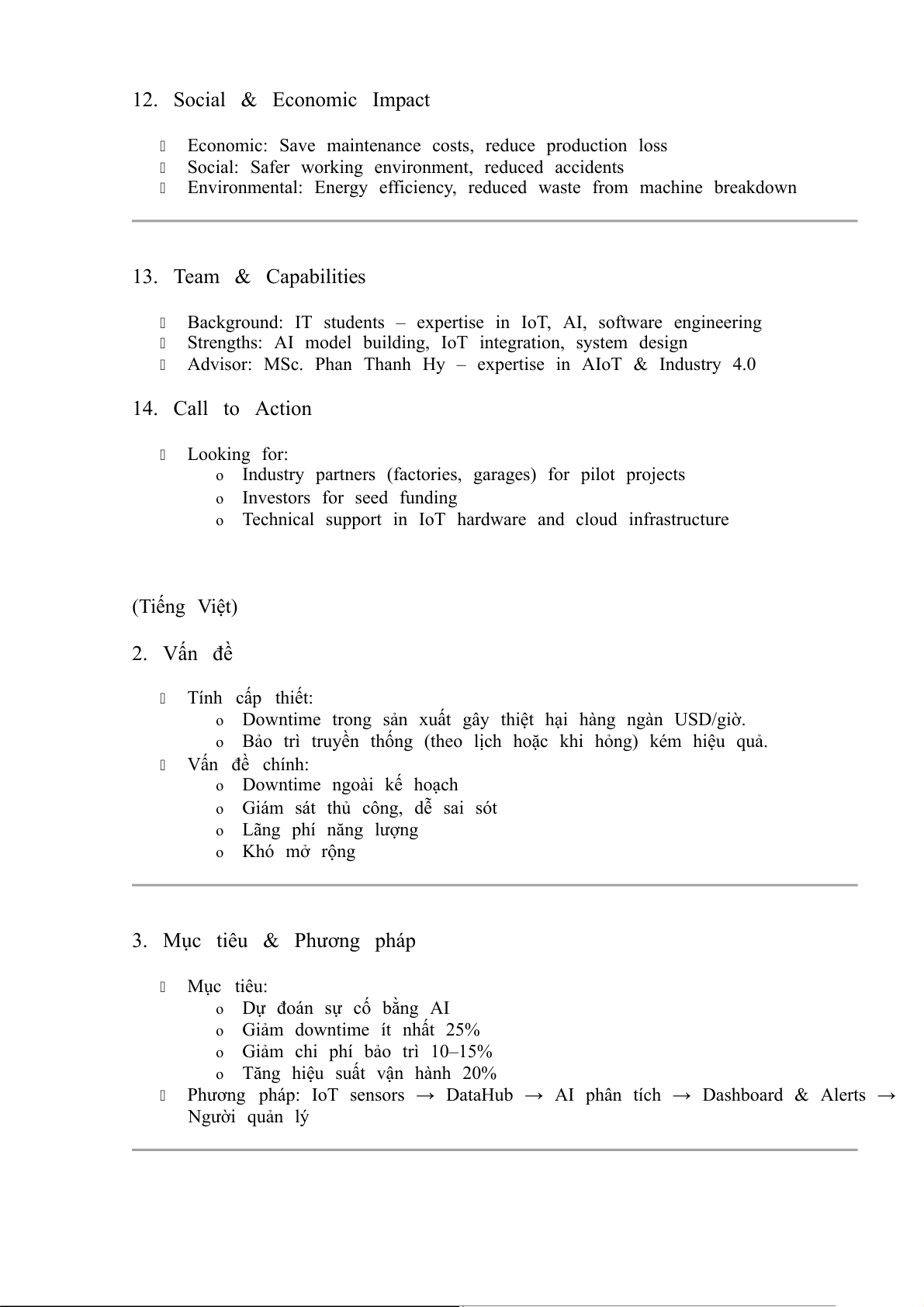
12. Social & Economic Impact
Economic: Save maintenance costs, reduce production loss
Social: Safer working environment, reduced accidents
Environmental: Energy efficiency, reduced waste from machine breakdown
13. Team & Capabilities
Background: IT students – expertise in IoT, AI, software engineering
Strengths: AI model building, IoT integration, system design
Advisor: MSc. Phan Thanh Hy – expertise in AIoT & Industry 4.0
14. Call to Action Looking for: o
Industry partners (factories, garages) for pilot projects o Investors for seed funding o
Technical support in IoT hardware and cloud infrastructure (Tiếng Việt) 2. Vấn đề
Tính cấp thiết: o
Downtime trong sản xuất gây thiệt hại hàng ngàn USD/giờ. o
Bảo trì truyền thống (theo lịch hoặc khi hỏng) kém hiệu quả.
Vấn đề chính: o Downtime ngoài kế hoạch o
Giám sát thủ công, dễ sai sót o Lãng phí năng lượng o Khó mở rộng
3. Mục tiêu & Phương pháp Mục tiêu: o
Dự đoán sự cố bằng AI o Giảm downtime ít nhất 25% o
Giảm chi phí bảo trì 10–15% o
Tăng hiệu suất vận hành 20%
Phương pháp: IoT sensors → DataHub → AI phân tích → Dashboard & Alerts → Người quản lý 4. Giải pháp
Sản phẩm/Dịch vụ: Nền tảng Bảo trì Thông minh dựa trên AIoT
Cách hoạt động: o
Cảm biến thu thập dữ liệu → AI dự đoán sự cố → cảnh báo & hiển thị dashboard Giá trị: o Giám sát thời gian thực o Phân tích dự đoán o Giảm chi phí & rủi ro
5. Điểm khác biệt (Unique Value Proposition)
Bảo trì dự đoán thời gian thực (thay vì định kỳ)
Edge AI → phân tích ngay tại thiết bị, độ trễ thấp
Hệ thống có thể mở rộng cho nhiều ngành: nhà máy, garage, xe cộ
Giao diện trực quan, thân thiện với người dùng
6. Công nghệ & Quy trình thực hiện
Công nghệ cốt lõi: IoT sensors, giao thức MQTT, AI/ML, Edge AI (OTA2.0), Dashboard Quy trình: 1. Thu thập dữ liệu
2. Tiền xử lý (lọc nhiễu, chuẩn hóa, trích xuất đặc trưng)
3. Huấn luyện & triển khai mô hình AI
4. Hiển thị kết quả & cảnh báo
7. Kiến trúc hệ thống
Luồng hoạt động:
Cảm biến → DataHub → AI models (AIFS) → Edge devices → Dashboard & Notification
WISE-IoT modules: DataHub, Dashboard, Notification, SaaS Composer, AIFS, OTA2.0
8. Mô hình kinh doanh
Thị trường mục tiêu: Sản xuất, ô tô, bảo trì máy móc
Xu hướng: Industry 4.0 → nhu cầu predictive maintenance tăng
Business Model Canvas: o
Giá trị: Giảm downtime, giảm chi phí, tăng hiệu quả o
Khách hàng: Nhà máy, garage, dịch vụ bảo trì o
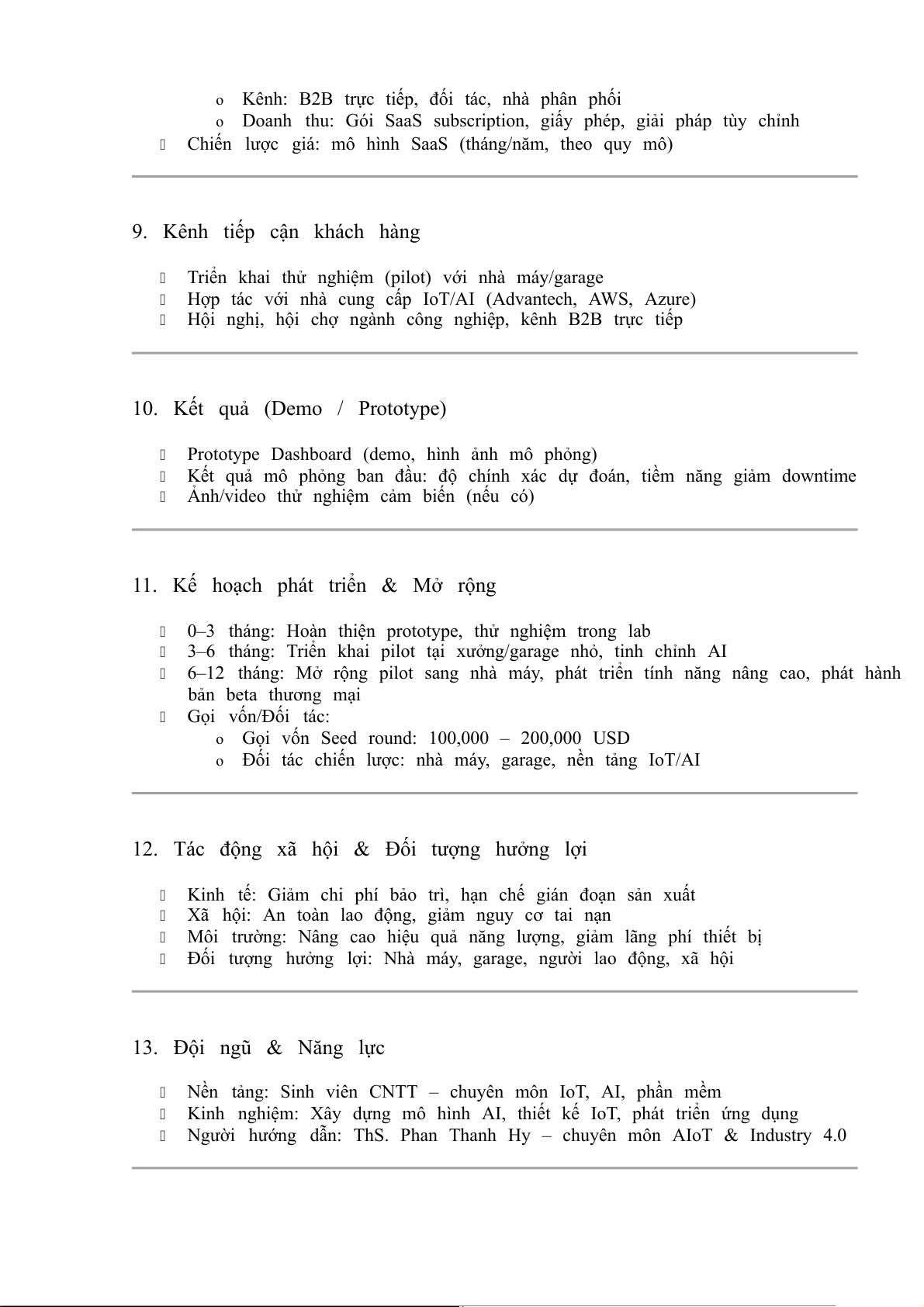
Kênh: B2B trực tiếp, đối tác, nhà phân phối o
Doanh thu: Gói SaaS subscription, giấy phép, giải pháp tùy chỉnh
Chiến lược giá: mô hình SaaS (tháng/năm, theo quy mô)
9. Kênh tiếp cận khách hàng
Triển khai thử nghiệm (pilot) với nhà máy/garage
Hợp tác với nhà cung cấp IoT/AI (Advantech, AWS, Azure)
Hội nghị, hội chợ ngành công nghiệp, kênh B2B trực tiếp
10. Kết quả (Demo / Prototype)
Prototype Dashboard (demo, hình ảnh mô phỏng)
Kết quả mô phỏng ban đầu: độ chính xác dự đoán, tiềm năng giảm downtime
Ảnh/video thử nghiệm cảm biến (nếu có)
11. Kế hoạch phát triển & Mở rộng
0–3 tháng: Hoàn thiện prototype, thử nghiệm trong lab
3–6 tháng: Triển khai pilot tại xưởng/garage nhỏ, tinh chỉnh AI
6–12 tháng: Mở rộng pilot sang nhà máy, phát triển tính năng nâng cao, phát hành bản beta thương mại
Gọi vốn/Đối tác: o
Gọi vốn Seed round: 100,000 – 200,000 USD o
Đối tác chiến lược: nhà máy, garage, nền tảng IoT/AI
12. Tác động xã hội & Đối tượng hưởng lợi
Kinh tế: Giảm chi phí bảo trì, hạn chế gián đoạn sản xuất
Xã hội: An toàn lao động, giảm nguy cơ tai nạn
Môi trường: Nâng cao hiệu quả năng lượng, giảm lãng phí thiết bị
Đối tượng hưởng lợi: Nhà máy, garage, người lao động, xã hội
13. Đội ngũ & Năng lực
Nền tảng: Sinh viên CNTT – chuyên môn IoT, AI, phần mềm
Kinh nghiệm: Xây dựng mô hình AI, thiết kế IoT, phát triển ứng dụng
Người hướng dẫn: ThS. Phan Thanh Hy – chuyên môn AIoT & Industry 4.0
14. Kêu gọi hành động
Hợp tác thử nghiệm với nhà máy, garage
Tìm kiếm nhà đầu tư Seed funding
Hỗ trợ kỹ thuật: IoT hardware, hạ tầng cloud
Tài liệu liên quan:
-
Tóm tắt lý thuyết môn IoT và ứng dụng | Học viện Công Nghệ Bưu Chính Viễn Thông
23 12 -

Accelerated Corner-Detector Algorithms: GPU Implementations and Results | Iot và ứng dụng | Học viện Công nghệ Bưu chính Viễn thông
46 23 -
Đề xuất Dự án IoT: Thiết bị phát hiện chạm cho xe máy | Iot và ứng dụng | Học viện Công nghệ Bưu chính Viễn thông
35 18 -
Phân Tích và Giải Pháp FastAPI | Iot và ứng dụng | Học viện Công nghệ Bưu chính Viễn thông
30 15 -
Tăng cường pháp chế xã hội chủ nghĩa trong quản lý nhà nước | Iot và ứng dụng | Học viện Công nghệ Bưu chính Viễn thông
25 13