ỐI QUANỆ ƯƠNG ẠI ỆT NAM ÀN QUỐC
mối quan hệ thương mại giữa VN - HQ
Môn: Trí tuệ nhân tạo 35 tài liệu
Trường: Trường Đại học Sư Phạm Hà Nội 3.9 K tài liệu
Tác giả:














Preview text:
저작자표시-비영리-변경금지 2.0 대한민국
이용자는 아래의 조건을 따르는 경우에 한하여 자유롭게
l 이 저작물을 복제, 배포, 전송, 전시, 공연 및 방송할 수 있습니다.
다음과 같은 조건을 따라야 합니다:
저작자표시. 귀하는 원저작자를 표시하여야 합니다.
비영리. 귀하는 이 저작물을 영리 목적으로 이용할 수 없습니다.
변경금지. 귀하는 이 저작물을 개작, 변형 또는 가공할 수 없습니다.
l 귀하는, 이 저작물의 재이용이나 배포의 경우, 이 저작물에 적용된 이용허락조건
을 명확하게 나타내어야 합니다.
l 저작권자로부터 별도의 허가를 받으면 이러한 조건들은 적용되지 않습니다.
저작권법에 따른 이용자의 권리는 위의 내용에 의하여 영향을 받지 않습니다.
이것은 이용허락규약(Legal Code)을 이해하기 쉽게 요약한 것입니다. Disclaimer
[UCI]I804:48009-000002281606 석사학위논문
베트남의경제에 베트남-한국 FTA 의효과
The Effects of Vietnam–Korea FTA on Vietnam Economy 2016 년 4 월 울산대학교 대학원 경제학과 TON DIEU QUYNH
베트남의경제에 베트남-한국 FTA 의효과 지도교수 최병철
이 논문을 석사학위 논문으로 제출함 2016 년 4 월 울산대학교 대학원 경제학과 똔 지에우 꾸인
The Effects of Vietnam–Korea FTA on Vietnam Economy
Supervisor: Professor. CHOI BYONG CHEOL A Dissertation Submitted to
The Graduate School of the University of Ulsan
In partial Fulfillment of the Requirements for the Degree of Master in Economics by TON DIEU QUYNH At the DEPARTMENT OF ECONOMICS UNIVERSITY OF ULSAN APRIL, 2016 Acknowledgements
I would like to express my deep gratitude to my master thesis advisor, Professor
Byeong-Cheol Choi. He spent very much time to instructing me how to write a paper, how to
search literature and how to collect data. I am also grateful to Professor San-on Kim and
Professor Jae-ho Cho for spending time read my thesis and providing useful suggestions about this thesis.
In additions, I want to thank Professor Jae-Ho Cho, Professor Jae-Ki Lee, Professor
Byeong-Cheol Choi and Professor Eon-Woo Lee who gave academic lectures related to many
interesting aspects of economics such as Micro economics, Statistics…
I also would like to express my deep gratitude to my parents and my family members
for their financial supports and encouragement throughout my life. Without their supports, it is
impossible for me to finish my graduate education seamlessly.
Special thanks are given to Department of Economics, University of Ulsan, Korea.
Most of my theoretical foundations are built in the Department of Economics and I learned
many Korea’s history, politic, and economic situations at here.
Finally, during the period of two years, my friends are helpful to color my life. I want
to thank my friends, they are Tran Viet Hung, Tran Kim To Uyen, Dinh Kieu Anh , Shin Hye
Jeong, Lynn, Tran Thi Thanh Tam, Vu Thuy Duong. It is lucky for me to meet some friends
who inspirit my efforts to overcome difficulties. Ulsan, Korea, May 2016 Ton Dieu Quynh CONTENT
LIST OF TABLE...........................................................................................................................i
LIST OF FIGURE........................................................................................................................ii
ABSTRACT .................................................................................................................................iii
CHAPTER I INTRODUCTION................................................................................................1 1.1
Purposes ...........................................................................................................................1 1.2
Methodology ....................................................................................................................2 1.3
Research Structure .........................................................................................................3
CHAPTER II VIETNAM AND KOREA’S ECONOMIC RELATIONSHIP ...................4 2.1
Characteristics of Viet Nam – Korea trade relation .................................................4 2.1.1
Overview of trade relation.....................................................................................4 2.1.2
Import-Export between Korea and Vietnam......................................................6 2.1.3
Import-Export’s Goods........................................................................................12 2.2
Korea’s Foreign Direct Investment into Vietnam ...................................................15 2.2.1
Overall Korea’s Foreign Direct Investment into Vietnam .............................15 2.2.2
Investment sectors.................................................................................................19 2.2.3
Types of Korea’s FDI ...........................................................................................22
CHAPTER III VIETNAM AND KOREA’S FTA STATUS...............................................23 3.1
Vietnam ‘s FTAs status................................................................................................23 3.2
Korea’s FTA status.......................................................................................................31 3.3
Vietnam-Korea Free Trade Agreement ....................................................................39 3.3.1
Processing of establishment.................................................................................39 3.3.2
Concession of Vietnam-Korea FTA ...................................................................41 3.3.3
Tariff commitments in Vietnam-Korea FTA....................................................43
CHAPTER IV THE EFFECTS OF VIETNAM-KOREA FTA .........................................52 4.1
Review the literature about FTA................................................................................52 4.2
The effects of VKFTA on Vietnam Economy...........................................................54 4.3
Promising products of VKFTA ..................................................................................60
CHAPTER V CONCLUSION .................................................................................................62
REFERENCE .............................................................................................................................65 LIST OF TABLE
(Table 2.1.1) Vietnam-Korea relationship: Main indicator, 201 ..........................................6
(Table 2.1.2a) Viet Nam – Korea Bilateral Trade Volume : 1986-1999...............................7
(Table 2.1.2b) Viet Nam – Korea Bilateral Trade Volume : 2000-2014 ..............................8
(Table2.1.2c) Vietnam’s top trading partners 2014................................................................9
(Table 2.1.3a) Vietnam top export items to Korea................................................................14
(Table 2.1.3b) Vietnam top import items from Korea..........................................................15
(Table2.2.1a) Top 10 countries invest into Vietnam .............................................................17
(Table2.2.1b) Korea and Vietnam’s advantages....................................................................19
(Table 3.1a) Vietnam’s Economic Integration Status...........................................................24
(Table 3.2a) Korea’s FTA Status .............................................................................................32
(Table 3.3.1a) Vietnam-Korea FTA’s negotiation progress ................................................41
(Table 3.3.3a) Tariff commitments in VKFTA and AKFTA...............................................44
(Table 3.3.3b) Tariff reduction commitments of Korea in VKFTA...................................46
(Table 3.3.3c) Tariff reduction commitments of Vietnam in VKFTA ...............................47
(Table 3.3.3d) Level of Tariff Rate Quotas applied in VKFTA ..........................................49
(Table 4.2a) Vietnam’s Export and Import with Korea in the 4 months of 2016 ............56
(Table 4.2b) Vietnam’s top 10 exportto Korea in the first 4 months of 2016 ...................56
(Table 4.2c)Vietnam’s top 10 import from Korea in the first 4 months of 2016..............58 Page i LIST OF FIGURE
(Figure 2.1.2a) Korea’s trade share in Vietnam’s trade: 2000-2014....................................8
(Figure 2.1.2b) Korea’s import with World and Vietnam...................................................10
(Figure 2.1.2c) Vietnam’s import from Korea.......................................................................10
(Figure 2.1.2d) Vietnam’s trade balance with Korea ...........................................................12
(Figure 2.2.1a) FDI influx trend from Korea (1992-2000)...................................................16
(Figure 2.2.2a) List the 16 largest Korean companies that have made Vietnam a critical
investment partner .....................................................................................................................21
(Figure 2.2.2b) Korea’s direct investment by sector into Vietnam 2015 ...........................21 Page ii ABSTRACT
The aim of this thesis is to study the participation in Free trade agreements between
Korea and Vietnam, the establishment and main content of Vietnam-Korea free trade
agreement (VKFTA). Based on the theory of FTA, this thesis gives a comprehensive
assessment about the potential impact of Vietnam-Korea free trade agreement (VKFTA) on
Vietnam's economy. It also provides a comprehensive view of trade relation, specifically
export-import relation and foreign direct investment (FDI), between Vietnam and Korea
since the establishment of formal diplomatic relations in 1992 based on collecting and
analyzing data about export-import and FDI.
The results of bilateral trade analysis indicates that, the trade structure between Korea
and Vietnam still remains unchanged, even though bilateral trade between the two has
expanded significantly over the past two decades. Vietnam exports to South Korea are
mainly labor-intensive products which have low-values, while the imports from Korea are
mainly capital-intensive and technology-intensive products which have higher values.
The results from the evaluation based on theory of free trade agreement (FTA) show
that Vietnam-Korea free trade agreement (VKFTA) will bring out potential impacts on
Vietnam's economy such as growing of merchandise trade, attracting investment and
technology, increasing social benefits, giving more motivation to promote growth of Vietnam
economy in particular. It will also strengthen exchanges of bilateral economic, trade and
investment between Korea and Vietnam in general in the future. Page iii CHAPTER I INTRODUCTION 1.1 Purposes
In the current economic context, the Free trade agreements expanded the ability to
penetrate the market of the member countries, attract foreign investment, strengthen
diplomatic ties with partners and improve position of member countries on the international
arena. Along with this trend, especially as an official member of the WTO, Vietnam needs to
reform trade policy and macroeconomic policies to implement international integration and
meet needs of trade liberalization.
In recent years, Korea has become one of the most important trading partners of
Vietnam. Since Vietnam and Korea established formal diplomatic relations in 1992, the
relationship between the two countries is constantly developing and has been deepened
rapidly in all fields such as the fields of politics and economic, social and cultural, trade and
investment, education. In particular, in the short period of two decades, the bilateral trade
relations between the two countries have greatly advanced. Two-way trade has increased
from $ 500 million in 1992 to more than $ 26 billion in 2014. For many years, Korea still
maintains in the top 10 important trading partners of Vietnam (rank 3rd in 2014). Korea is
the fifth largest export market and second largest import market of Vietnam in 2014. In terms
of investment, Korea is the largest investor in Vietnam in the present. In 2014, Korea's
investment in Vietnam continues to lead with 505 new projects, 179 additional capital
projects, with total new registered capital and additional capital of 7.32 billion US dollars
accounted for 36.2% of total investment in Vietnam. Page 1
With the desire to strengthen and further expand trade relations and bilateral
investment; improve the efficiency of the legal framework, efficiency of implementation of
trade policy; and improve the process of restructuring the economy, particularly improve the
business environment and competitiveness of the two economies, the two countries have
jointly signed a free trade agreement Vietnam - South Korea on May 5, 2015. This is
important event which opens new level of economic relations between Vietnam and Korea.
The Vietnam - Korea Free trade agreement not only expands opportunities for trade and
investment between the two countries but also strengthens cooperation in various fields such
as technology, telecommunications, finance and intellectual property.
The objective of the thesis is to mainly conduct research on the content of Vietnam-
Korea free trade agreement (VKFTA), the potential impact of this agreement on Vietnam's
economy. It also provides a comprehensive view of trade relations between Vietnam and
Korea since the establishment of formal diplomatic relations and participation in Free trade
agreements of the two countries. 1.2 Methodology
This thesis uses the method of collection of data related to imports, exports, and
investment of Korea to Vietnam. An analysis of trade relations between the two countries
based on the collected data was performed. . Through the study of documents, books,
conference papers, theses, internet sources related to the free trade agreements, this thesis
expands more about the contents of the Vietnam-Korea free trade agreement, thereby offers
opinions about the potential impacts that it brings. Page 2 1.3 Research Structure
The thesis is organized as follows.
Chapter II provides general information on the background economic relationship
between Vietnam and Korea in the past twenty years, specifically trade relationship and Korea's FDI into Vietnam.
Chapter III provides an overview of economic integration status and the free trade
agreements related to two countries, process of establishment and commitments of Vietnam- Korea FTA.
Chapter IV presents theoretical framework and review of existing literature on FTA’s
impact assessment, and then analyzes the potential effect and potential goods of Vietnam-
Korea FTA on Vietnam’s economy as a whole.
Chapter V concludes the study and summarizes the result. Page 3
CHAPTER II VIETNAM AND KOREA’S ECONOMIC RELATIONSHIP
2.1 Characteristics of Viet Nam – Korea trade relation
2.1.1 Overview of trade relation
Vietnam-Korea relationship began in 1980 in the field of exchange of goods. Since
diplomatic relations between the two countries formally established in 1992, trade relations
between the two countries developed rapidly and expanded into many other areas such as
investment, labor exchange, tourism, scientific and technical cooperation. Nowadays, Korea
has become a Vietnam’s comprehensive strategic partner, especially in bilateral economic
cooperation. Vietnam is a developing country which has cultural similarities, has the
advantage of natural resources, cheap labor, political and social stability, and active
integration into the multilateral economic system, as acceded to the World Trade
Organization (WTO) and joined regional economic agreements (ASEAN, APEC…). All
these factors have made Vietnamese’s business environment more open and friendly to
Korean investors. While South Korea's economy ranks 13th in the world (World Bank data,
2014), the industry is highly developed and has the advantage of high technology and capital.
Through the increasingly flow of goods, services, capital and labor are transferred between
two countries, Vietnam has opportunity to access the Korea’s modern technology, and has
more new production facilities. Thereby, Vietnam can enrich source of export goods as well
as for domestic consumption, create more jobs and make extra foreign currency income. In
the context of globalization and international economic integration, the two countries have
enormous potential that can complement each other in the process of cooperation and development. Page 4
Bilateral economic cooperation is growing rapidly thanks to the efforts of the Korean
Government in establishing a solid foundation for mutually beneficial cooperation to
contribute to the improvement of the economic infrastructure and investment environment in
Vietnam through the Official Development Assistance (ODA). So far, Vietnam is the country
that received the largest ODA of Korea. And Korea is Vietnam’s second largest ODA donor country (after Japan).
Korean enterprises consider Vietnam as an attractive investment market. Investment
wave of Korean businesses in Vietnam are also rising. Based on report of the Trade
Promotion Agency of Korea (KOTRA), Korea continues to be the champion of Investment in
Vietnam with a total investment accumulated to the end of 2015 reached US$ 44.9 billion.
The increase of bilateral cooperation between the two countries have formed block the
Korean business community with 4,000 Korean businesses, and 140,000 Koreans in Vietnam.
Meanwhile, Vietnam has 130,000 people living, working and studying in Korea. (Table 2.1.1)
Vietnam successfully negotiated and concluded a Free Trade Agreement (VKFTA)
with Korea (5/5/2015) that opens up tremendous prospects for trade relations between the
two countries, towards bilateral trade balance cooperation and mutual benefit. That is an
important milestone in further promoting economic relations, trade and investment between the two countries Page 5
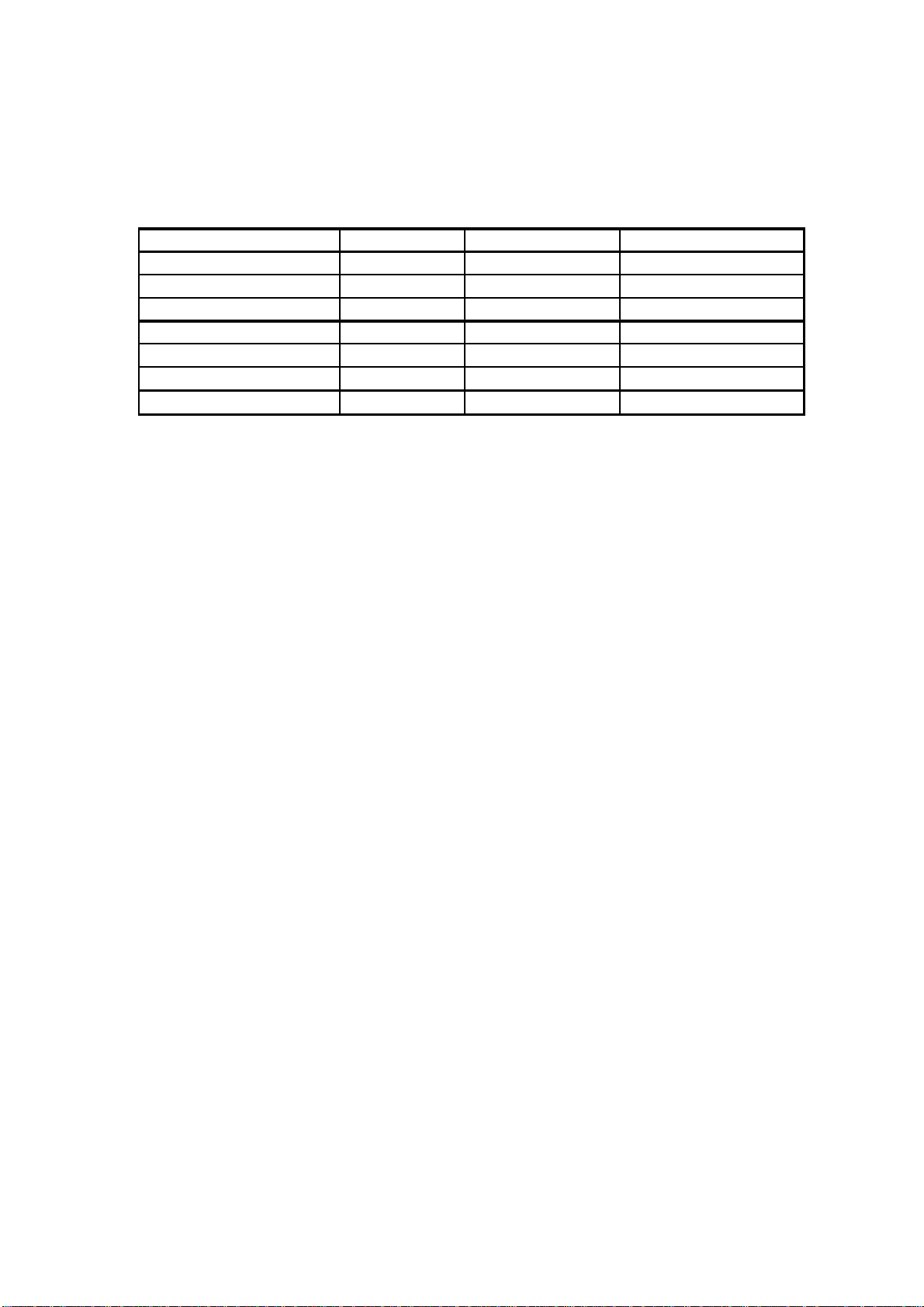
(Table 2.1.1) Vietnam-Korea relationship: Main indicator, 201
Vietnam_Korea relationship: Main indicator, 2014 Unit Korea to Vietnam Vietnam to Korea Total trade US$ billion 28.9 28.9 Export US$ billion 21.7 7.2 Trade share % 9.7 2.76 Investment
FDI (accumulated in 2014( US$ billion 36.7 0.01 ODA US$ billion 1.2 _ Residents Persons 1 44,000 130,000
Source: Ministry of Planning and Investment of Vietnam-FIA 2014
International Trade in Goods based on UN Comtrade data,2014
2.1.2 Import-Export between Korea and Vietnam
Before formal diplomatic relations between the Vietnam and Korea were established in
1992, trade relations between the two countries are at a very low level. In (Table 1.2a), we
can see the bilateral trade between two countries in 1986 (when Viet Nam began to reform its
economy) was USD 0.06 billion. The rapid growth period of bilateral trade opened in 1992,
when Korea and Vietnam established diplomatic relations official, trade volume increased
suddenly. Total trade got USD 0.49 billion in 1992 increased 105.54% compare with USD
0.24 billion in 1991. Korea became the one of Vietnam’s top trade partners since 1992. In the
following years the trade volume between two countries continued to increase at a high pace,
and reached USD 1.55 billion in 1995, increased 3.16 times compare with 1992. Second half
of the 90s, due to the Asian financial crisis affected both Vietnam and Korea, the two-way
trade after rising to the highest level in 1997 to USD 1.84 billion, fell 10.4 %, reaching only
USD 1.65 billion in 1998. Then total trade increased again by 6.5% in 1999 and reached
USD 1.76 billion, but still less than in 1997. Page 6
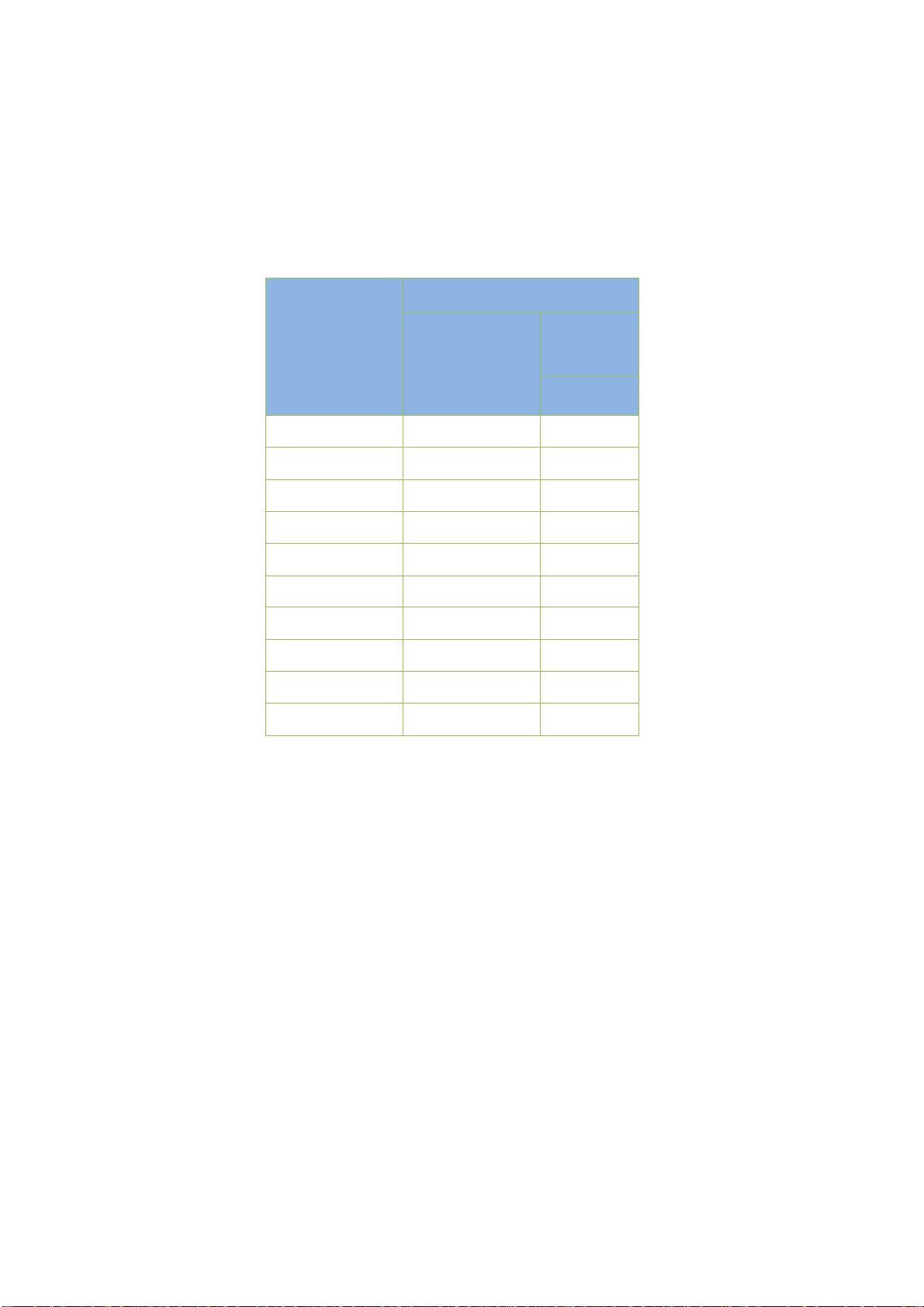
(Table 2.1.2a) Viet Nam – Korea Bilateral Trade Volume: 1986-1999 Total trade Up / Year USD Bil Down (%) 1986 0.06 - 1991 0.24 59.85 1992 0.49 105.54 1993 0.82 65.75 1994 1.14 39.49 1995 1.55 35.41 1996 1.67 7.83 1997 1.84 10.50 1998 1.65 -10.27 1999 1.76 6.48 Source: UN Comtrade database
From 2000s, the two-way trade between Vietnam and Korea rebounded at a faster rate,
and surpassed USD 2 billion in 2000 (Table 2.1.2b). The Korea-ASEAN Free Trade
Agreement (merchandise) went into effect in 2007. Thanks to the trade agreement, the
Vietnam-Korea bilateral trade has developed further and continued to increase rapidly. Until
2014, trade volume was USD 28.9 billion compared with year 2000. The growth rate of total
trade between two countries was about 20.3% annual on average. Korea‘s trade share
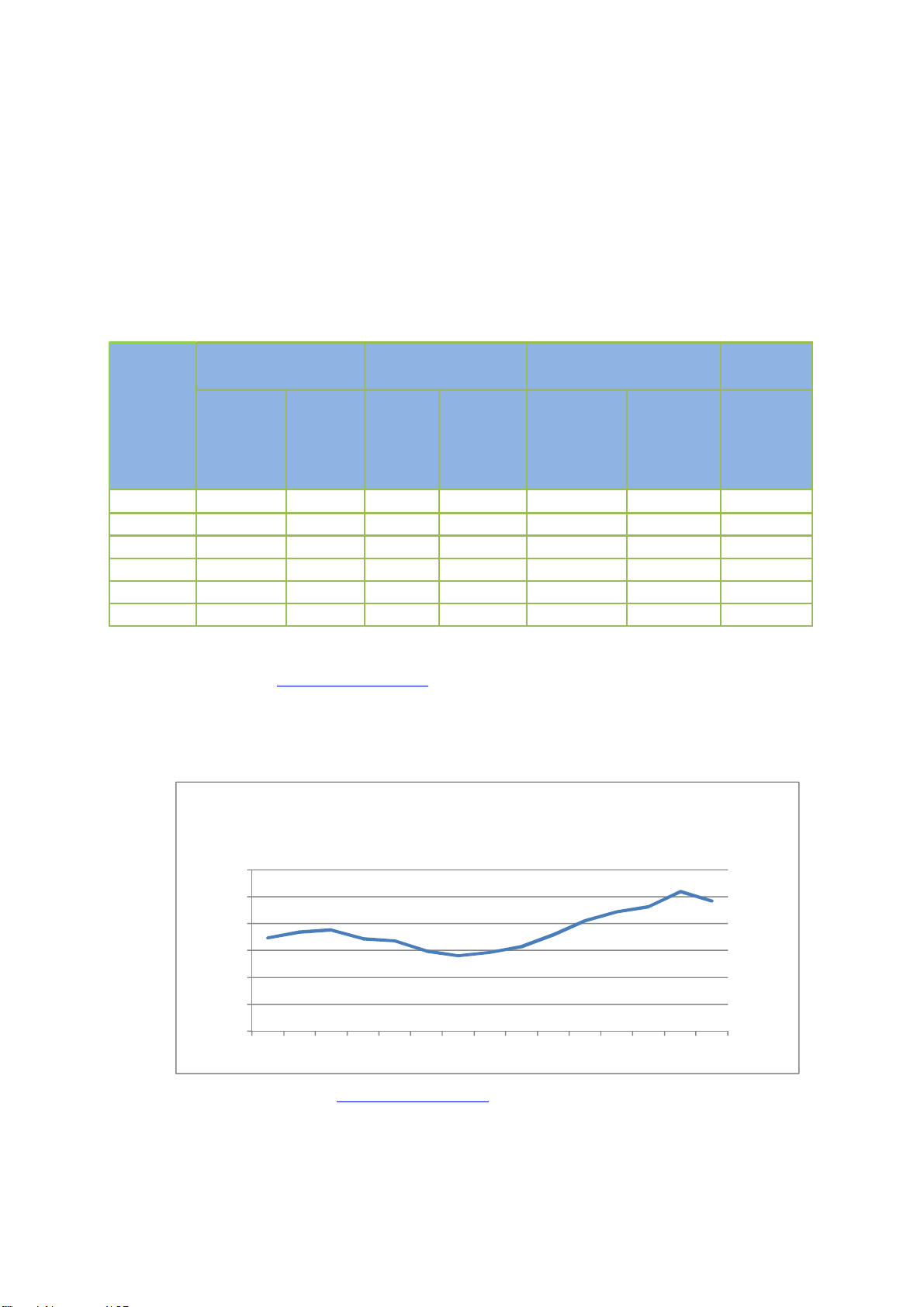
accounted for about 7.5% Vietnam’s total trade in the period 2000-2014 (Figure 2.1.2a). Page 7
Along with rapidly increasing bilateral trade, Korea has always maintained its position
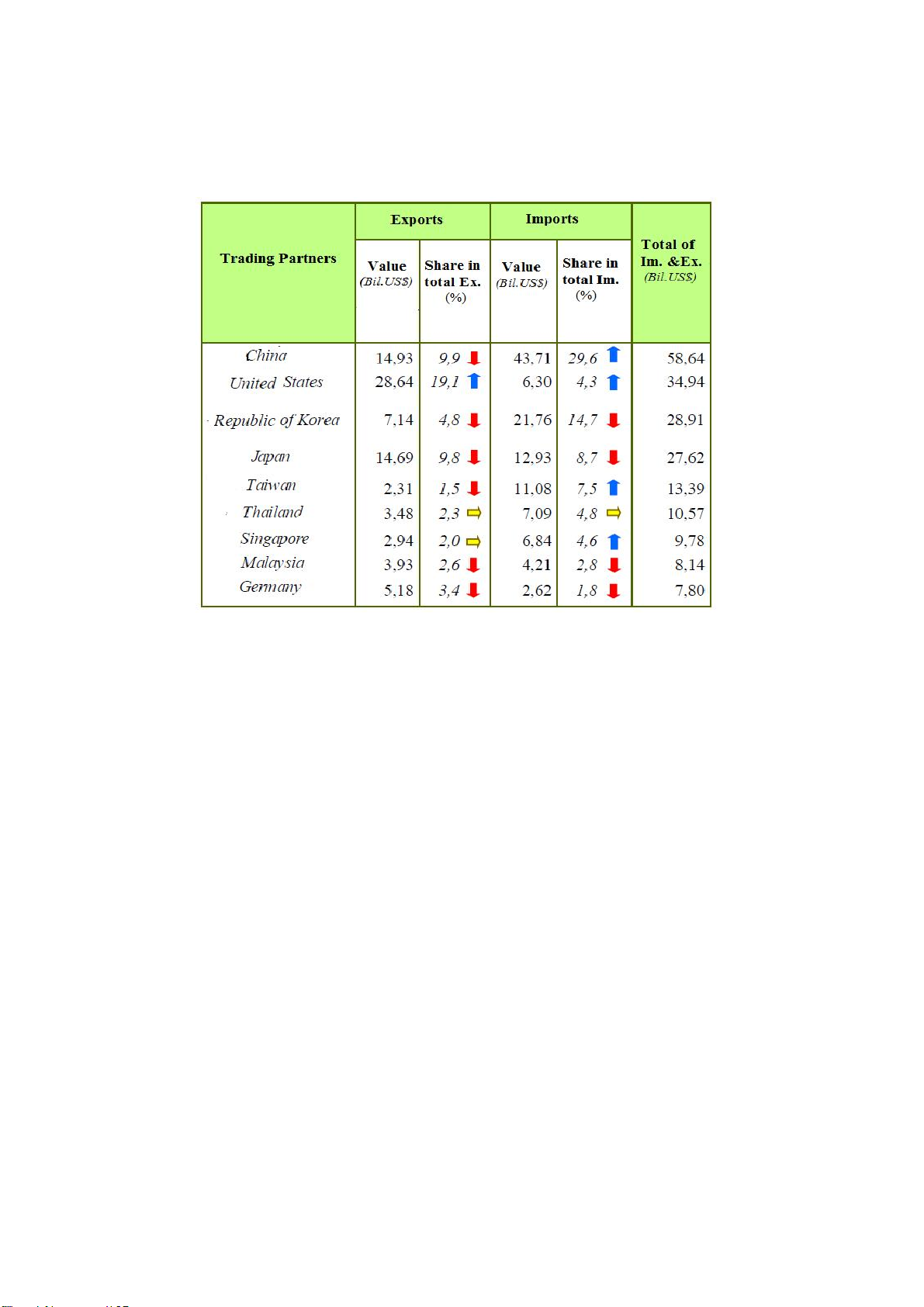
as one of Vietnam’s top trade. Until 2014, Korea is the 3rd largest trading partner of Vietnam
just after USA and China (Table 2.1.2c).
(Table 2.1.2b) Viet Nam – Korea Bilateral Trade Volume: 2000-2014 Total trade Import Export Trade Balance Year Up / Down Up / Down Up/ Down USD Bil (%) USD Bil (%) USD Bil (%) USD Bil 1992 0.49 105.54 0.44 119.24 0.06 39.31 -0.38 2000 2.08 18.36 1.73 20.14 0.35 10.34 -1.38 2005 4.13 4.96 3.43 3.13 0.69 15.09 -2.74 2010 12.90 41.76 9.80 40.00 3.10 47.62 -6.70 2014 28.90 5.47 21.70 4.83 7.20 7.46 -14.50 Average 10.40 20.30 19.34 25.00 Source: UN Comtrade database
Vietnam Customs (www.customs.gov.vn)
(Figure 2.1.2a) Korea’s trade share in Vietnam’s trade: 2000-2014
Korea's Trade share in Vietnam's trade (%) 12.00 10.00 8.00 6.00 4.00 2.00 0.00
200020012002200320042005200620072008200920102011201220132014
Source: Vietnam Customs (www.customs.gov.vn) Page 8
(Table2.1.2c) Vietnam’s top trading partners 2014.
Source: Customs Handbook on International Merchandise Trade Statistics of Vietnam 2014
In period 1991-1997, in terms of volume, Vietnam's exports to Korea increased rapidly,
from US$ 0.4 billion up to USD 0.24 billion, increased about 6 times. As showed in Figure
2.1.2b, we can see that from 1995 up until now, although Korea’s product imports from the
world fluctuated but Vietnam's product exports to Korea almost still achieve positive growth
every year. Except in 1998 because Korea’s economy were severely affected by the Asian
financial crisis, total imports fell 35.5% in Korea, from 144.6 billion (1997) to 93.2 billion in
1998. Thus, Korea’s imports from Vietnam decreased 3.7%, from USD 0.24 billion in 1997
to US$ 0.23 billion in 1998. But from 1999 to now, Vietnam’s export to Korea increased at
high speed and achieved USD 7.2 billion in 2014. For many years, Korea is one of the ten
largest export markets of Vietnam. Page 9