Physical Education for Students: Researching one University in Vietnam - Tạp chí Nghiên cứu khoa học
Physical Education for Students: Researching one University in Vietnam - Tạp chí Nghiên cứu khoa học. Tài liệu được sưu tầm giúp bạn tham khảo, ôn tập và đạt kết quả cao. Mời bạn đọc đón xem.
Môn: Tài liệu Tổng hợp 3.6 K tài liệu
Trường: Tài liệu khác 3.9 K tài liệu
Tác giả:





Preview text:
ISSN 2664-4002 (Print) & ISSN 2664-6714 (Online)
South Asian Research Journal of Humanities and Social Sciences
Abbreviated Key Title: South Asian Res J Human Soc Sci
| Volume-2 | Issue-3 | May-Jun -2020 | DOI: 10.36346/sarjhss.2020.v02i03.005
Original Research Article
Physical Education for Students: Researching one University in Vietnam
Le Van Dau*, Ha Ngoc Huy, Le Van Ninh, Nguyen Minh Tan, Nguyen Phi Yen
University of Transport and Communications, Vietnam *Corresponding Author Le Van Dau Article History Received: 09.06.2020 Accepted: 16.06.2020 Published: 25.06.2020
Abstract: Physical education and sports activities in schools have a very important role and position in the
development of education and training, in order to provide a comprehensive education for students, contributing to
source training high-quality human resources to meet the requirements of national industrialization and modernization
and national defense. However, the actual implementation of this work at universities in Vietnam is still difficult, due to
both objective and subjective reasons and the achieved results are not really as expected. This study focuses on analyzing
the state of physical education at Vietnamese universities, the difficulties, and barriers in the teaching process, and then
propose solutions to implement physical education for students in the universities getting better and better.
Keywords: Physical education, students, universities, UTC – HCMC, Vietnam. INTRODUCTION
Physical education contributes to the formation of key qualities and common competencies for students; besides,
through equipping health knowledge, health management, and training, physical education helps students form and
develop physical competencies and physical culture, sense of responsibility to the health of oneself, family and
community [1]; know how to choose a sport that suits your athletic ability to practice; know how to adapt to living
conditions, be optimistic and share with everyone; have a healthy life physically and mentally [2].
The main content of physical education is to train motor skills and develop physical fitness for students with
diverse exercises such as forging basic motor skills, team formation, exercises. Physical exercises, sports games, sports,
and methods of injury prevention [1]. In the tertiary physical education program, physical education content is divided into two stages:
Firstly, in the basic education stage, physical education is a compulsory subject, helping students know how to
take care of their health and body hygiene; forming a habit of improving health; through sports and exercise games,
forming basic motor skills, developing physical qualities, as a basis for comprehensive development [1, 2].
Secondly, during the career-oriented education period, physical education is done through the form of sports
clubs, students can choose sports content in accordance with their aspirations and ability university response. They
continue to develop health care and hygiene skills, cognitive development, and athletic skills, helping students with
sports aptitudes to guide their careers accordingly.
For many years, in the Vietnamese education system in general and higher education in particular, physical
education is a compulsory subject and has been put into mainstream teaching [3, 4]. However, there have been many
problems during the teaching process. This study focuses on analyzing the advantages and disadvantages of physical
education, thereby proposing solutions to better implement this activity in Vietnamese universities.
Copyright @ 2020: This is an open-access article distributed under the terms of the Creative Commons Attribution license which
permits unrestricted use, distribution, and reproduction in any medium for non commercial use (NonCommercial, or CC-BY-NC)
provided the original author and source are credited.
© South Asian Research Publication, Bangladesh Journal Homepage: www.sarpublication.com/sarjhss 205
Le Van Dau et al., South Asian Res J Human Soc Sci; Vol-2, Iss-3 (May-June, 2020): 205-209 RESEARCH METHODS Collecting secondary data
A number of relevant studies on physical education have been published since 201. Primary data: Academic
results of 35,388 students studying the physical education content of the Ho Chi Minh City University of Transport
(UTC-HCMC) in the two academic years of 2012- 2013, 2013-2014. Besides, exchanging and interviewing physical
education teachers and students is a method to find out the current situation, shortcomings, causes, and solutions to
improve the results of learning physical education for Academy students.
Analysis and data processing Descriptive statistical analysis
The reality of physical education program, facilities, teaching staff, activities of sports clubs, demand for
learning physical training of students. Solutions to improve the results of learning physical education for UTC - HCMC
students. Comparative statistical analysis: The results of learning physical education of students at UTC - HCMC, the
fitness level of students UTC - HCMC students compared with the standards of the Ministry of Education and Training
of Vietnam (2008) [4], the criteria for assessing the fitness of Vietnamese youth [2]. This study uses 6 criteria to evaluate
and classify students and students (Ministry of Education and Training, 2008), including [4]:
Content 1: The force of the dominant hand (kg;
Content 2: Lie on your back and stomach (times/30 seconds);
Content 3: Turn on the spot (cm);
Content 4: Run 30m high departure (seconds);
Content 5: Shuttle shuttle 4x10m (seconds);
Content 6: Run for 5 minutes (meters). LITERATURE REVIEW
Physical education is a subject that creates the basis for students' physical development, thereby helping them
improve their learning efficiency. With that importance, this subject is always interested in schools innovating content and teaching methods.
Resolution No. 08/NQ-TW of December 1, 2011, on strengthening the leadership of the Communist Party of
Vietnam, creating a strong development in physical training and sports till 2030, emphasized: physical education
according to the curricular program; strongly develop sports activities of pupils and students, ensuring the objective of
developing the comprehensive physical strength and basic motor skills of pupils and students and contributing to training
sports talents and talents”. Since then, many universities have implemented many activities to renovate the curriculum
and methods of physical education, contributing to encouraging the spirit of learning and physical training movement in universities.
Accordingly, physical education is divided into two relatively independent aspects: physical teaching and
physical education. The main content is to train motor skills and develop physical fitness for students with diverse
exercises such as forging basic motor skills, team formation, exercises, games movement, sports, and methods of injury prevention in activities [5].
The physical education program fully grasped the views, objectives, and requirements to meet the quality,
competence, educational plan, and orientation of educational contents stated in the general education program.
Originating from the course's characteristics, the Program emphasizes some of the following constructive views:
3.1. The program is built on the theoretical and practical basis, updating the achievements of modern sports
science and pedagogical science, namely: Research results of educational and psychological studies study, physiology,
method of physical education and sports training; Experience in developing programs of Vietnam and other countries
with advanced education; Practical education, socio-economic conditions, the diversity of students in terms of regions,
conditions and ability to learn in Vietnam.
3.2. The program is designed in a concentric and linear structure in accordance with the mind - physiology of
age and the law of physical development of students; through teaching methods and forms that promote the activeness
and potential of each student; apply testing and evaluation methods suitable to the subject's characteristics and support
the formation and development of motor skills and qualities in students.
3.3. The program is open and create conditions for students to choose activities appropriate to their physical
strength, aspirations and school conditions; at the same time, create favorable conditions for schools to build an
education plan in accordance with educational requirements, practical conditions, and specific characteristics of local students.
© South Asian Research Publication, Bangladesh Journal Homepage: www.sarpublication.com/sarjhss 206
Le Van Dau et al., South Asian Res J Human Soc Sci; Vol-2, Iss-3 (May-June, 2020): 205-209 RESEARCH CONTENT
Physical education program in UTC - HCMC
Based on the physical education subject curriculum of the Ministry of Education and Training (2008) [4], UTC -
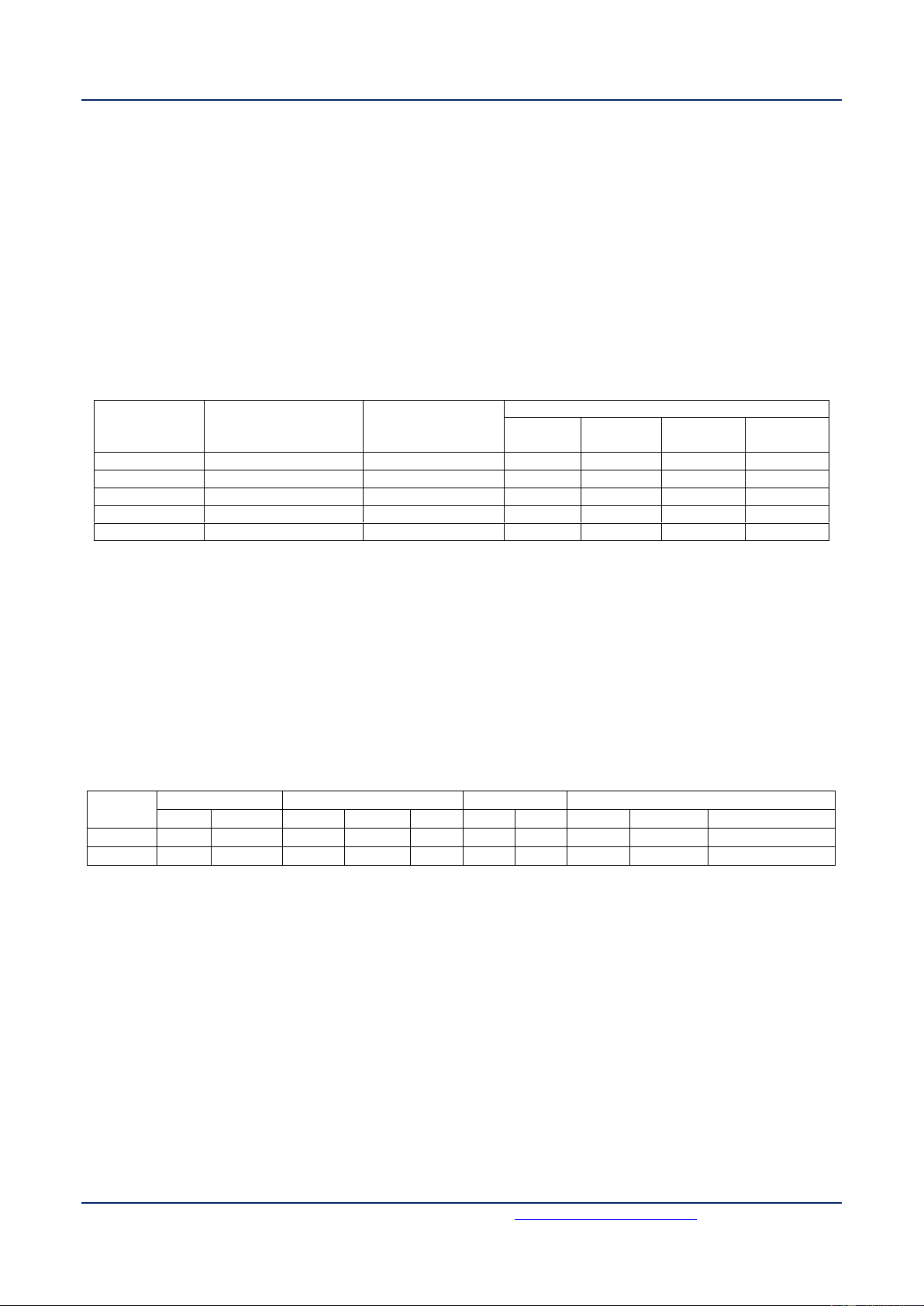
HCMC has concretized the curriculum and content of the subject of the physical education subject (Table 1). The
research results show that the duration of the teaching and learning of each semester ranges from 60-100 lessons, thus, on
average, there is one regular and one extra-curricular hour per week of classrooms, two hours of preparation. But in
reality, students spend a lot of time on foreign affairs and prepare very little, it is difficult to meet the requirements.
For example, with 30 athletics classes with groups/classes in the period I or II, III the students must study:
Running 100m, jump far, physical education Theory -Running average distance. The above duration and content only
satisfy the mastery of technical principles. Particularly, the curriculum is very large in duration, but this content is
voluntary, there is no examination and evaluation depending entirely on the self-awareness, needs, and interests of
students, so the effectiveness is not high, the content of physical education subject teaching at UTC - HCMC is in
accordance with the curriculum of the Ministry of Education and Training in the formal hours.
Table-1: Distribution of content and learning time in the physical education program for students of UTC - HCMC Numerical Teaching content Total number of
The study by subject credit order teaching periods Semester Semester Semester Semester I II III IV 1 Jogging 30 x 2 Jump far 30 x x 3 Volleyball 30 x x x 4 Advanced volleyball 15 x x 5 Swim 30 x
Situation of teachers teaching physical education subject
The teaching staff of Education and Training of the UTC - HCMC graduated from the University of Physical
Education and Training with a regular system. The lecturers are divided evenly by training majors such as athletics,
football, volleyball, swimming, gymnastics, basketball, badminton, tennis, etc. This is a great potential for teaching, train
Academy delegates, or develop the movement, conduct scientific research to contribute to the improvement of the quality
of education. However, with the current training scale, the number of lecturers is not enough to meet the teaching task.
The ratio of teachers of education/students for each semester is about 1/900, which is too high (Table 2) of 66%, the
remaining 83.33% lecturers <45 years old, 83.33% lecturers are male. This is a strong resource for education and
training, but none of the lecturers has a doctorate degree (there is only one graduate student), the main lecturer is 22.22%,
the university-level is 27, 7%. Thus, the number of lecturers is still inadequate and has not been regularly trained to
improve the level of research capacity.
Table-2: Actual situation of lecturers of the Institute's physical education (as of January 2020) Sex Academic level Year old Title Index Man Woman P.h.D Master MA >45 <45 Tutors lecturers Main lecturer Amount 15 3 0 12 6 15 3 1 13 4 Ratio 83.33 16.67 0 66/66 33.37 83.33 16.67 5,55 72.22 22.23 Methods of education
The basic requirements of educational methods are to promote students' activeness, self-awareness, creativity
and initiative, self-training, and self-training capacity for students, giving them opportunities to develop their skills
physical force [1]. Lecturers play the role of designing, organizing, advising, refining, guiding the practice activities for
students, creating a friendly learning environment to encourage students to actively participate in learning activities,
experiencing yourself, discovering yourself, and growing.
Using a variety of methods to actively optimize the activities of students in a rational way, combining the types
of tools and equipment suitable to the local practical conditions, focusing on the effective use of achievements of
information technology, audio-visual media through technical pictures, video clips, etc. to create lively and effective
school hours [7]. It is necessary to integrate and use knowledge of some other subjects so that the content of practice is
not monotonous. In the process of organizing practice, teachers should use some songs (rhymes) when organizing games,
or combine with appropriate music as a "background" for certain practice times during class time, create a joyful
atmosphere, excitement when practicing, making students like and passionate about sports practice. It is necessary to be
creative and flexible when developing a physical education subject teaching plan to ensure practicality, consistent with
regional characteristics and conditions.
© South Asian Research Publication, Bangladesh Journal Homepage: www.sarpublication.com/sarjhss 207
Le Van Dau et al., South Asian Res J Human Soc Sci; Vol-2, Iss-3 (May-June, 2020): 205-209
Teachers need to flexibly and effectively use specific methods in teaching-learning general education: modeling,
using words, practicing, and focusing on the use of game, competition, and performance methods [6, 7]. Attention should
be paid to the use of special treatment methods, which are suitable for students' health, to develop a special aptitude for students, etc.
Reasonable use of teaching and learning methods to promote students' self-awareness, activeness, initiative, and
creativity. Paying attention to fostering self-study methods, cooperation ability, skills to apply knowledge into practice,
to form and develop the capacity of students.
The teaching-learning organization needs to diversify the forms of teaching and learning activities inside and
outside the classroom, inside and outside the university; balance between teaching and educational activities, between
collective, small and individual group activities, between compulsory and elective teaching, to ensure both core and core
competencies are developed specialized force of physical education, improving the quality of education for students.
Strengthen and improve the effectiveness of teaching facilities, especially information and communication technology, to
support innovation in teaching methods [7]. Create conditions for students to access diverse learning resources, exploit
rich information through the Internet, etc. to build topics of interest, and develop self-study capacity according to their
ability skills and learning styles of individual students.
The feature of physical education is a type of education whose specific content is teaching movement
(movement) and the deliberate development of motor mankind qualities. The stages of teaching movement to form in
learner's motor skills, the ability to apply in practice [5]. The organization of activities, equipping knowledge and
forming motor skills (exercise skills, movements, and motor games, etc.) through teaching movement and organizing
activities, help students form and develop basic physical components such as: fast, strong, durable, skillful and flexible;
adaptive capacity of the body; motor memory; the reaction of the body; ability to care for and develop health; ability to
perform sports, etc. thereby helping students develop performance and competition.
Evaluate educational outcomes
The evaluation of the results of physical education must be based on the objectives and requirements to be met
in the physical education program, ensuring comprehensive, objective, and differentiated; must combine regular and
periodic assessments, the combination of teacher evaluation and student self-assessment to timely adjust teaching and learning activities [6, 7].
The evaluation of the results of physical education needs to promote and support students' development of
common qualities and competencies, focusing on the ability to use knowledge in solving advocacy tasks students' interest
and encouragement to practice the spirit of students, thereby encouraging them to participate in sports activities inside and outside the school.
Solutions to improve the quality of physical education in UTC - HCMC
The study has proposed five solutions for improving the results of the education subjects for students of UTC - HCMC as follows:
Group of propaganda and education solutions to raise awareness about the position, role and effects of physical
training and sports: Raise awareness of the role, position and effect of physical education in schools propagating deeply
and widely to raise the awareness of officials and students about their responsibility for the health of themselves and the
younger generation); Increasing the leadership's interest in physical training and sports (the leadership levels arrange an
extra time to participate in training at least one sport, thereby being a model to attract lecturers and students participate in
physical training and sports activities); publish the training objectives, output standards, requirements, content of
subjects, methods of assessment and examination (publicize training programs, contents, requirements and methods of
examination and examination; criteria for evaluating fitness ratings on the internal website system).
Group of solutions to improve the content, programs, methods of assessment and evaluation: Classification of
study subjects in groups (Department of Health Academy tests and groups health of students in Semester 1, conduct tests
in at the beginning of the second, third, fourth and fifth school year to have a basis for the next solutions); innovating
teaching methods and evaluating scores in the direction of "softening" (lecturers researching on innovating teaching
methods and exam examinations. On that basis, the subject organizes seminars each semester 1 time, use that as a
criterion to evaluate the evaluation comments); optimize the use of equipment, training tools, and visual aids (develop
regulations on the use of equipment, playground equipment, visual teaching system (during main and extra-curricular
time periods). Strengthening physical exercises (strengthening physical exercises help students develop their physical
strength, improve the results of learning physical education, train discipline, solidarity, and collectivism in daily life, in life).
© South Asian Research Publication, Bangladesh Journal Homepage: www.sarpublication.com/sarjhss 208
Le Van Dau et al., South Asian Res J Human Soc Sci; Vol-2, Iss-3 (May-June, 2020): 205-209
Group of solutions to enhance extracurricular activities, physical training clubs, and sports clubs: Establishing
and putting into practice sports clubs in the form of socialization (following the Association's plans) sports activities of
the University, clubs with specific regulations, and active programs). Improve the quality of sports teams (develop plans,
training programs, apply new training methods to ensure training efficiency). Sports competitions, tests, and friendships
(as planned, regularly organize traditional tournaments every year, thereby creating a healthy playground for lecturers
and students. Once a year/time, to organize traditional tournaments the whole Academy (alternating between periods of sports).
Group of solutions for upgrading physical and extra-curricular facilities: Increasing investment in material
facilities, renovating and upgrading technical and material facilities in service of physical training and sports (Priority to
construction building, renovating, repairing and upgrading training ground, gym, gymnasium, and gymnasium, making
the most of existing conditions for teaching and practicing key-curricular activities). Creating mechanisms and policies "
socialization ”to effectively exploit the facilities for physical training and sports (propose the school board to assign the
right to use the facilities for physical education in the school to the education center) physical education and sports, extra-
curricular activities with priority given to lecturers and students, assigning work, responsibilities, personal and collective benefits).
Group of solutions to improve professional qualifications for physical education teachers: Improve professional
qualifications for physical education teachers, assign responsibilities to each group, each teaching staff, and complete the
duties mission, develop the school's physical training and sports. Increasing funding for regular and extra-curricular
physical training activities (increasing the allocation of funding according to the percentage of students studying for
physical education centers to ensure funding for teaching-learning and practicing activities - Sports tournaments at all levels. CONCLUSION
The physical education of the University of Transport in Ho Chi Minh City (UTC - HCMC) has followed the
rules but the number of extra-curricular hours of students is small; Lecturers are still lacking, scientific research is
limited; physical foundations and equipment for physical education and sports are inadequate and degraded; sports clubs
have been formed but limited in the number of students participating in practice and competitions regularly; ranked the
fitness level of students UTC - HCMC at an average level - if compared with the standard; the results of physical
education of students are at an average level, most students are self-conscious, have a need and desire to study and practice physically.
The study proposes five groups of solutions to improve the results of physical education subjects at UTC -
HCMC focusing on propaganda and education to raise awareness about the position, role, and effects of physical training
and sports; improve the content, programs, methods of assessment and evaluation; strengthening extracurricular
activities, sports clubs; to increase investment in material foundations, renovate and upgrade material facilities in service
of physical training and sports activities and raise professional qualifications for officials and physical training and sports teachers. REFERENCE
1. Chi, D. N., & Thai, N. D. (2003). Physical status of Vietnamese people 6-20 years old. Hanoi: Sports.
2. Dung, C. H. (2012). Research to improve general endurance capacity for students of Hanoi University of
Agriculture. School-level scientific research projects.
3. Ministry of Education & Training. (1989). Decision No. 203/QD-TDTT of January 31, 1989 on the Physical
Education Program in universities. Hanoi: National Politics.
4. Ministry of Education and Training. (2008). Decision No. 53/2008/QD-BGDDT dated September 18, 2008 of the
Minister of Education and Training on the assessment and classification of students' and students' physical status
(attached to the Regulation on assessment criteria and grading of students' fitness , student). Hanoi: National Politics.
5. Hiep, L. Q., Thuy, V. C., Chuong, L. V., & Hung, L. H. (2000). Sports Medicine. Hanoi: Sports.
6. Long, L. Q. (2010). Solutions to improve the efficiency of physical education for students of the People's Police
Academy. Research collection of physical education, school health. Hanoi: Sports and Physical.
7. Tuan, N. A., & Vinh, N. Q. (2010). Physical state of 19-22-year-old students in Ho Chi Minh City. Research
collection of physical education, school health. Hanoi: Sports and Physical.
© South Asian Research Publication, Bangladesh Journal Homepage: www.sarpublication.com/sarjhss 209
Tài liệu liên quan:
-
Ung dung game hoa trong cac chien dich MKT
18 9 -
Bao cao Chi so TMDT Viet Nam 2025
15 8 -
Thông tư quy định về việc phân quyền, phân cấp và phân định thẩm quyền quản lý nhà nước về giáo dục cho chính quyền địa phương
24 12 -
Nghị quyết về phát huy các giá trị di sản văn hóa gắn với phát triên du lịch bền vững tỉnh Khánh Hòa đến năm 2025, định hướng đến năm 2030
14 7 -
Quyết định phê duyệt Chiến lược phát triển du lịch Việt Nam đến năm 2030
13 7