Sách bài học Chương 3: The Environment and Corporate Culture môn Quản trị học | Học viện Báo chí và Tuyên truyền
Sách bài học Chương 3: The Environment and Corporate Culture môn Quản trị học | Học viện Báo chí và Tuyên truyền. Tài liệu được sưu tầm giúp bạn tham khảo, ôn tập và đạt kết quả cao. Mời bạn đọc đón xem.
Môn: Quản trị học 11 tài liệu
Trường: Học viện Báo chí và Tuyên truyền 2.8 K tài liệu
Tác giả:









Preview text:
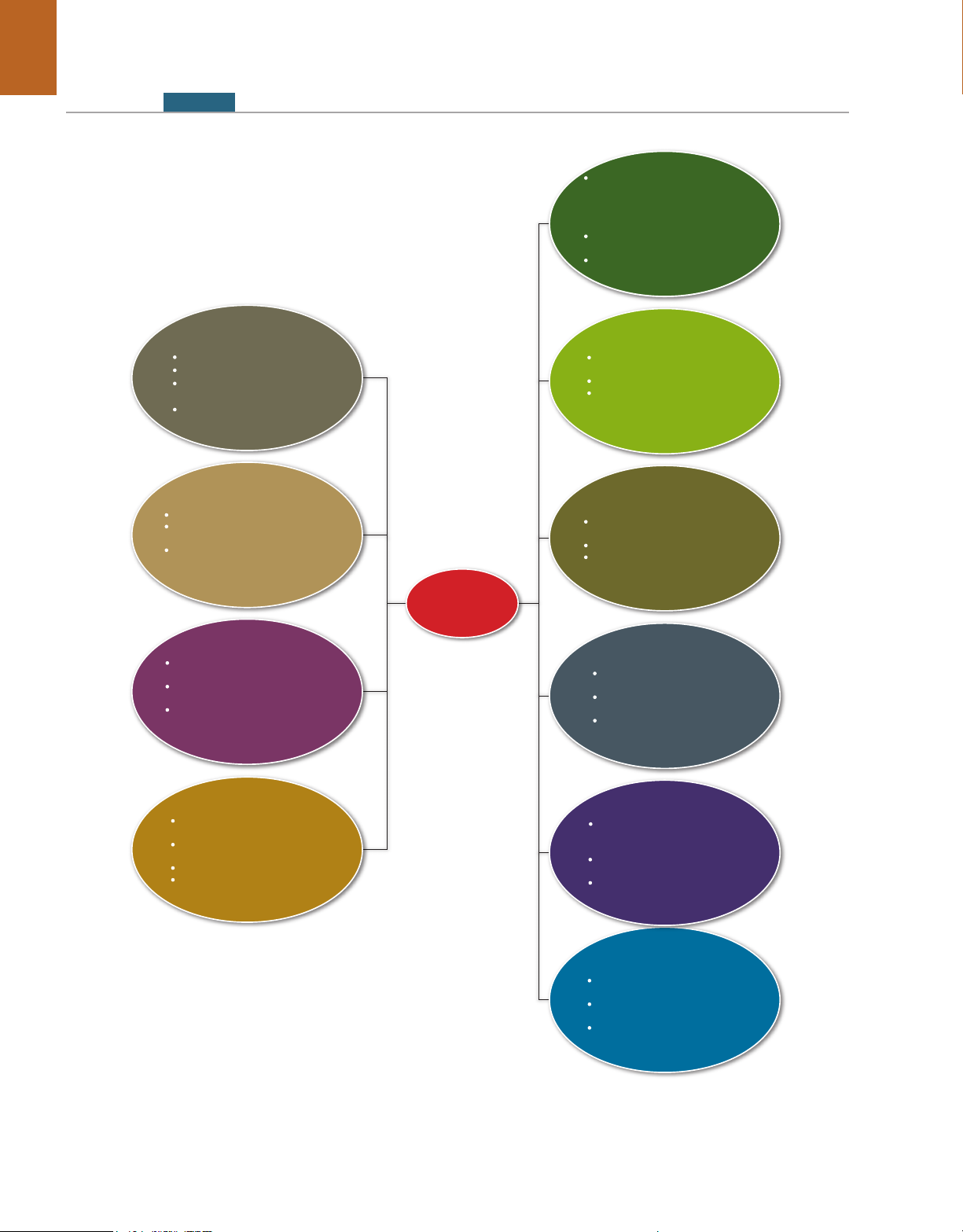
P A R T 2 CH 3 The Environment and Corporate Culture
E The External Environment
S After studying this chapter, you should be able to: E Task Environment
1. Define an organizational ecosystem and show how the IN General Environment IV
general and task environments affect an organization’s ability TL T to thrive.
The Organization–Environment U C Relationship
2. Explain the strategies managers can use to help organizations JE O
adapt to an uncertain or turbulent environment. Environmental Uncertainty B Adapting to the Environment
3. Define corporate culture as part of the organization’s internal O TER
environment, and identify when a culture becomes toxic for
The Internal Environment: P some or all employees. Corporate Culture A What Is Culture?
4. Explain how symbols, stories, heroes, slogans, and ceremonies H NING C Toxic Cultures
can be used to interpret and shape corporate culture. R
Interpreting/Shaping Culture
A 5. Provide examples of the four types of corporate culture. E Symbols
L 6. Explain the relationships among culture, corporate values, Stories
and business performance, and describe the tools a cultural Heroes
leader can use to create a high-performance culture. Slogans Ceremonies Types of Culture Adaptability Culture Achievement Culture Involvement Culture Consistency Culture
Shaping Corporate Culture for Innovative Response
Managing the High-Performance Culture Cultural Leadership
Copyright 2022 Cengage Learning. All Rights Reserved. May not be copied, scanned, or duplicated, in whole or in part. Due to electronic rights, some third party content may be suppressed from the eBook and/or eChapter(s).
Editorial review has deemed that any suppressed content does not materially affect the overall learning experience. Cengage Learning reserves the right to remove additional content at any time if subsequent rights restrictions require it. 1
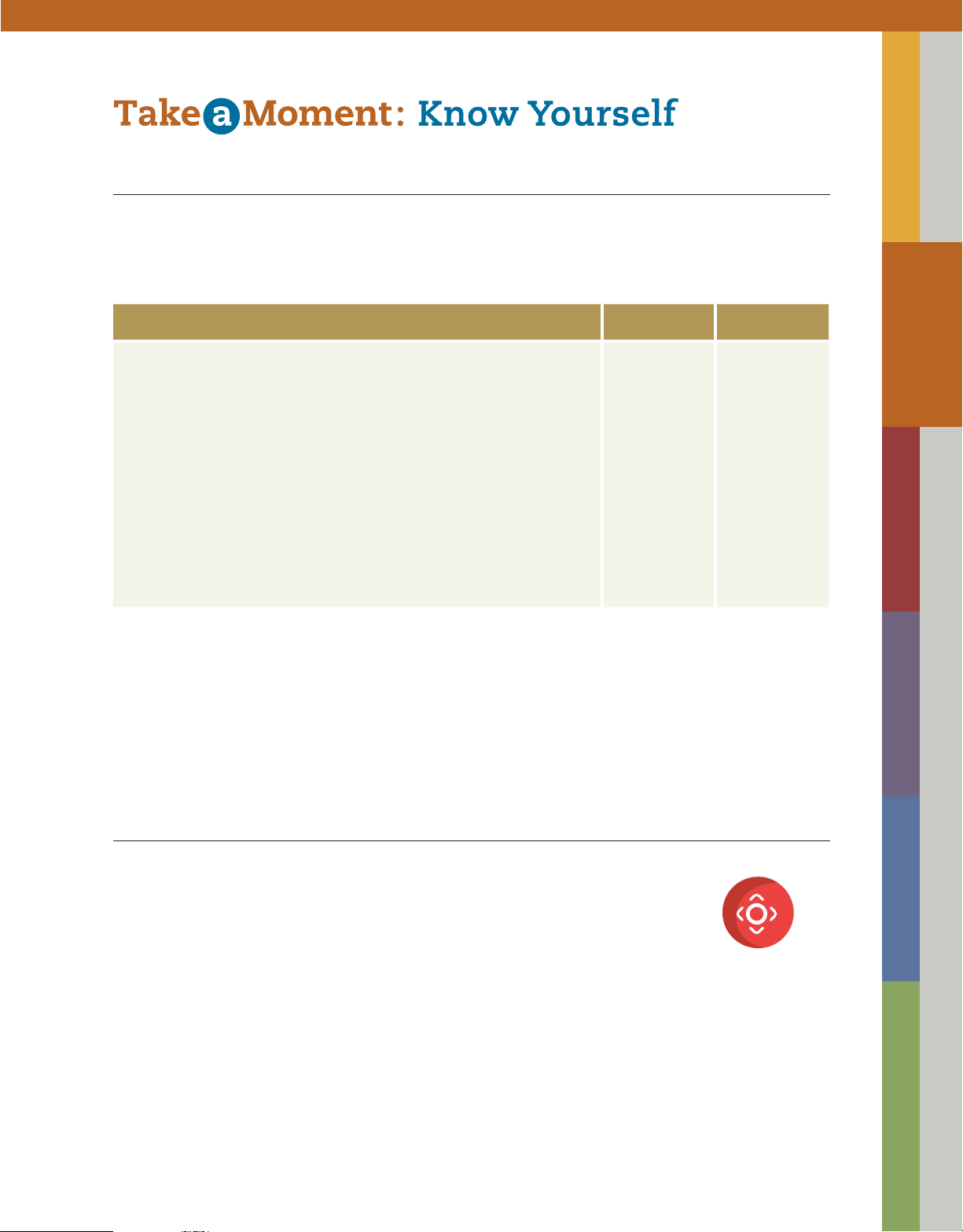
Are You Fit for Managerial Uncertainty?1
Do you approach uncertainty with an open mind? This questionnaire will give you an idea of how well you might adapt as INTRODUCTION
a manager in an uncertain environment. Think back to how you thought or behaved during a time of uncertainty when
you were in a formal or informal leadership position. Then identify whether each of the following items was Mostly True 2
or Mostly False in that circumstance. Mostly True Mostly False
1. I enjoyed hearing about new ideas even when trying to meet a deadline. __________ __________
2. I welcomed unusual viewpoints of others, even if we were working under pressure. __________ __________ ENVIRONMENT
3. I made it a point to attend industry trade shows and company events. __________ __________ 3
4. I specifically encouraged others to express opposing ideas and arguments. __________ __________
5. I asked “dumb” questions. __________ __________
6. I always offered comments on the meaning of data or issues. __________ __________ PLANNING
7. I expressed a controversial opinion to bosses and peers. __________ __________
8. I suggested ways of improving my and others’ ways of doing things. __________ __________
SCORING AND INTERPRETATION: Give yourself one point for each item that you marked as “Mostly True.” If 4
you scored less than 5, you might want to work as a manager in a stable—rather than an unstable—
environment. A score of 5 or higher suggests a higher level of mindfulness and a better fit as a man-
ager in an organization with an uncertain environment.
In an organization in a highly uncertain environment, everything seems to be changing. In that
case, an important quality for a manager is “mindfulness,” which includes the qualities of being ng
open-minded and an independent thinker. In a stable environment, a manager with a closed mind
may perform OK because much work can be done in the same old way. In an uncertain environment, ORGANIZING
however, managers need to facilitate new thinking, new ideas, and new ways of working. A high score rganizi
on the preceding items suggests higher mindfulness and a better fit with an uncertain environment. O 5
At a McDonald’s restaurant outside of Rochester, New York, demonstrators
shouted “Hold the burgers, hold the fries, we want our wages supersized!” It was SNAPSHOT LEADING
one of thousands of protests around the United States at McDonald’s, Burger
King, Wendy’s, and other fast-food restaurants organized by advocacy group “Fight for
$15” to argue for an increase in the minimum wage. The fast-food giant was listening.
Companies have been lobbying against minimum-wage increases for years, but McDon-
ald’s recently said it would no longer use company resources to oppose federal, state, or 6
local minimum-wage increases. The announcement puts McDonald’s in the middle of
the ongoing controversial debate about worker pay. “Having a player like McDonald’s say,
‘We’re not going to fight this anymore,’ is a big deal,” said a lawyer for the National Employ-
ment Law Project. “I think it shows that a $15 minimum wage has been normalized.” 2
A bill to raise the minimum wage to $15 from the current federal hourly rate of $7.25
has been introduced in the U.S. Congress, and several states have adopted plans to gradually CONTROLLING
Copyright 2022 Cengage Learning. All Rights Reserved. May not be copied, scanned, or duplicated, in whole or in part. Due to electronic rights, some third party content may be suppressed from the eBook and/or eChapter(s).
Editorial review has deemed that any suppressed content does not materially affect the overall learning experience. Cengage Learning reserves the right to remove additional content at any time if subsequent rights restrictions require it. 76
PART 2 THE ENVIRONMENT OF MANAGEMENT
move toward that goal. An increase in the federal minimum wage would affect managers
and organizations not only in fast-food enterprises but in numerous other industries, and
advocates have vowed to continue the fight.
Managers face many challenges like this one from both the external and internal envi-
ronments every day. This chapter explores in detail components of the external environment
and how they affect the organization. It also examines a major part of the organization’s
internal environment—corporate culture. Corporate culture both is shaped by the external
environment and shapes how managers respond to changes in the external environment. 3-1 The External Environment
The external organizational environment includes all elements existing outside the bound-
aries of the organization that have the potential to affect the organization.3 It encompasses
competitors, resources, technology, and economic conditions that influence the organization,
as well as advocacy groups such as those involved with the minimum-wage fight. It does not
include those events so far removed from the organization that their impact is not perceived.
The organization’s external environment can be conceptualized further as having
two components: task and general environments, as illustrated in Exhibit 3.1.4 The task
environment is closer to the organization and includes the sectors that conduct day-to- SNAPSHOT
day transactions with the organization and directly influence its basic operations and per-
formance. It is generally considered to include competitors, suppliers, customers, and the
labor market. The general environment affects the organization indirectly. It includes social,
economic, legal–political, international, natural, and technological factors that influence
all organizations about equally. For example, changes in federal regulations and economic
recessions are part of the organization’s general environment, as are
shifting social attitudes toward matters such as how and where the
products we use are made. These events do not directly change day-
to-day operations, but they do affect all organizations eventually. o
Sometimes a dramatic change in the general environment can k Phot oc
influence numerous parts of the task environment for an organiza- y St
tion. After the initial outbreak of the novel coronavirus in China
in late December 2019, companies operating in industries as y/Alam
diverse as entertainment, fashion, auto manufacturing, fast food, genc A ws
and technology experienced disruptions in their business. Dis-
ney theme parks in Shanghai and Hong Kong were shut down, SS Ne A
automakers such as Hyundai and Volkswagen were faced with a ITAR-T
shortage of supplies from Chinese auto parts firms, and airlines
E X H I B I T 3.1 Dimensions of the Organization’s General, Task, and Internal Environments General Environment Technological Task Environment Customers Natural Competitors Internal Environment Sociocultural Employees Culture Suppliers Economic Management Labor Market Legal/Political International
Copyright 2022 Cengage Learning. All Rights Reserved. May not be copied, scanned, or duplicated, in whole or in part. Due to electronic rights, some third party content may be suppressed from the eBook and/or eChapter(s).
Editorial review has deemed that any suppressed content does not materially affect the overall learning experience. Cengage Learning reserves the right to remove additional content at any time if subsequent rights restrictions require it.
CHAPTER 3 THE ENVIRONMENT AND CORpORATE CulTuRE 77
such as Delta and United canceled flights to China. As the virus continued to
spread, organizations around the world faced tremendous uncertainty about
“It is not the strongest
how the outbreak would alter their business operations.5
A new view of the environment argues that organizations are now evolving of the species that
into business ecosystems. An organizational ecosystem is a system formed by survives, nor the
the interactions among a community of organizations in the environment. It
includes organizations in all the sectors of the task and general environments most intelligent that
that provide the resource and information transactions, flows, and linkages nec-
essary for an organization to thrive. survives. It is the
6 For example, Apple’s ecosystem comprises 2
hundreds of suppliers and millions of customers for the products that it pro- one that is the most
duces across several industries, including smartphones, consumer electronics,
Internet services, personal computers, and entertainment.7 adaptable to change.”
The organization also has an internal environment, which includes the —Charles Darwin
elements within the organization’s boundaries. The internal environment is (1809–1882), NATURALIST
composed of current employees, management, and especially corporate culture,
which defines how employees behave in the internal environment and how well
the organization will adapt to the external environment. ENVIRONMENT
Exhibit 3.1 illustrates the relationships among the task, general, and internal environ-
ments. As an open system, the organization draws resources from the external environment
and releases goods and services back to it. We will first discuss the two components of the
external environment in more detail. Later in the chapter, we examine corporate culture, a
key element in the internal environment. Other aspects of the internal environment, such
as structure and technology, are covered in later chapters of this book. 3-1A TASK ENVIRONMENT
The task environment includes those sectors that have a direct working relationship with
the organization—among them, customers, competitors, suppliers, and the labor market. Customers
Those people and organizations in the environment that acquire goods or services from
the organization are called customers. As recipients of the organization’s output, custom-
ers are important because they determine the organization’s success. Organizations have to
be responsive to marketplace changes. For example, as Millennial and Gen Z customers
began making up a larger part of the customer base at retail chain Target, CEO Brian SNAPSHOT
Cornell started implementing changes to better serve that demographic. A big part of
the transformation involved making over Target’s grocery offerings to add more natural
and organic foods to the mix and provide fewer processed foods.8 Competitors
Organizations in the same industry or type of business that provide goods or services to the
same set of customers are referred to as competitors. Competitors are constantly battling
for loyalty from the same group of customers. PepsiCo and the Coca-Cola Company have
been rivals in the war for soft drink customers for more than a century. The companies SNAPSHOT
have diversified into other products, especially as sales of sugary sodas have declined in
recent years, but carbonated soft drinks still constitute a big market for both. Notably,
both have invested in new drink flavors and new marketing campaigns targeted at
Millennial and Gen Z consumers. “Millennials are now thirstier than ever for adven-
tures and new experiences, and we want to be right by their side,” Rafael Acevedo, the
group director for Diet Coke in North America, said in a statement about the new look
and flavors. At PepsiCo, former CEO Indra Nooyi initiated the new, nostalgia-focused
Pepsi Generations marketing plan that plays up successful ad campaigns of the past to
help boost sales of Pepsi’s new products.9
Copyright 2022 Cengage Learning. All Rights Reserved. May not be copied, scanned, or duplicated, in whole or in part. Due to electronic rights, some third party content may be suppressed from the eBook and/or eChapter(s).
Editorial review has deemed that any suppressed content does not materially affect the overall learning experience. Cengage Learning reserves the right to remove additional content at any time if subsequent rights restrictions require it. 78
PART 2 THE ENVIRONMENT OF MANAGEMENT Suppliers
Suppliers provide the raw materials that the organization uses to produce its output. A
candy manufacturer, for example, may use suppliers from around the globe for ingredients
such as cocoa beans, sugar, and cream. A supply chain is a network of multiple businesses
and individuals that are connected through the flow of products or services. For Toyota,
the supply chain includes more than 500 global parts suppliers organized by a production
strategy called just-in-time (JIT), which ensures that companies keep a minimum supply
of inventory on hand, receiving resources just as they are needed in the manufacturing
process.10 JIT improves an organization’s return on investment, quality, and efficiency
because much less money is invested in idle inventory. In the 1970s, the Japanese taught U.S.
companies how to boost profit by keeping inventories lean through JIT. “Instead of months’
worth of inventory, there are now days and even hours of inventory,” says Jim Lawton, head
of supply management solutions at consultant Dun & Bradstreet.11
But Lawton also points out that there is a downside to lean inventories. That downside SNAPSHOT
became dramatically clear after an earthquake in Japan triggered a massive tsunami and
caused the second-worst nuclear disaster in history at the Fukushima power plant.
Japanese parts suppliers for the global auto industry were shut down, disrupting pro-
duction at auto factories around the world. Because of this natural disaster, Toyota’s
production fell by 800,000 vehicles—10 percent of its annual output.12
Despite the potential for such disruptions to wreak havoc on their operations, most
companies aren’t willing to boost inventories to provide a cushion. Even a slight increase in
inventory can cost companies millions of dollars. Concept Connection
Finding employees with the skills needed to
apply new information technology is a top con-
cern for today’s managers. The labor market
is a key segment of every organization’s task environment ty Images
. All companies need a supply of
well-qualified people to accomplish goals and meet end61/Get customer needs. est W Labor Market
The labor market represents people in the environment who can be hired to work for the
organization. Every organization needs a supply of trained, qualified personnel. Unions,
employee associations, and the availability of certain classes of employees can influence the organization’s labor market.
The labor market is also influenced by broader environmental changes. Labor markets
around the world were rocked by the COVID-19 pandemic. The Walt Disney Company SNAPSHOT
furloughed employees across all divisions in the United States in April 2020 as it
struggled with fallout from the spread of the virus. The profitable theme parks around
the world were shut down amid calls for social distancing, and nearly every corner of
Disney—the world’s largest entertainment company—was affected. Likewise, GE fur-
loughed half of its U.S. aviation workers due to the air travel slump caused by the virus.13
Another labor market element currently affecting organizations is the entry of young
Gen Z employees into the workforce. Established managers are striving to find the best
approaches for managing this new generation of workers, who are typically more highly
educated, more achievement-oriented, and more racially and ethnically diverse than any
other generation.14 Broad labor market forces affecting today’s organizations include (1) the
Copyright 2022 Cengage Learning. All Rights Reserved. May not be copied, scanned, or duplicated, in whole or in part. Due to electronic rights, some third party content may be suppressed from the eBook and/or eChapter(s).
Editorial review has deemed that any suppressed content does not materially affect the overall learning experience. Cengage Learning reserves the right to remove additional content at any time if subsequent rights restrictions require it.
CHAPTER 3 THE ENVIRONMENT AND CORpORATE CulTuRE 79
growing need for computer-literate knowledge workers; (2) the necessity for continuous
investment in human resources through recruitment, education, and training to meet the
competitive demands of the borderless world; and (3) the effects of international trading
blocs, automation, outsourcing, and shifting facility locations on labor dislocations, all of
which create unused labor pools in some areas and labor shortages in others.
Changes in the various sectors of the general and task environments can create tre-
mendous challenges, especially for organizations operating in complex, rapidly changing
industries. Organizations in the retail industry, for example, have experienced numerous 2
changes and disruptions over the past couple of decades and are operating in a particularly
tough competitive environment. Once-successful retailers such as Sears, Blockbuster, Radio
Shack, Toys ‘R’ Us, and Sports Authority have gone out of business or reduced their foot-
prints so that they operate in a much-smaller capacity.15 Managers at other large retailers
are struggling to find ways to adapt. Costco Wholesale Corporation, with more than 785
warehouses throughout the world, provides an example of an organization operating in a
highly complex environment. Costco’s complex environment is illustrated in Exhibit 3.2.
Costco succeeds in this challenging environment by focusing on competitive prices. ENVIRONMENT
The company’s warehouse decor—high ceilings, metal roofs, exposed trusses—keeps SNAPSHOT
costs low and contributes to the perception that Costco is for serious shoppers seeking
serious bargains. Another strategy for keeping prices low is to offer only approximately
10,000 unique products at a time (by contrast, Walmart offers more than 100,000) and
negotiating low prices with suppliers. In the international sector, Costco has aggres-
sively sought to expand its reach. It recently opened stores in Spain and Iceland. When
it opened its first store in China in 2019, shoppers waited in lines that stretched around
the block. In the United States, the company has been testing one-hour prescription drug
delivery through a partnership with Instacart, to remain competitive with the pharmacy
delivery programs of such rivals as Walgreens, Amazon, and Walmart.
Costco’s biggest competitive advantage is its loyal workforce. The company pays its
employees two to three times more than the average retailer and provides health insur-
ance benefits even to part-time employees. As a result, Costco has one of the lowest
turnovers in the retail industry.16 Remember This
• The organizational environment, consisting of both
• The internal environment includes elements within
the task and general environments, includes all elements
the organization’s boundaries, such as employees,
existing outside the boundary of the organization that
management, and corporate culture.
have the potential to affect the organization.
• Customers are part of the task environment and include
• An organizational ecosystem includes organizations
people and organizations that acquire goods or services
in all the sectors of the task and general environments from the organization.
that provide the resource and information transactions,
• Competitors are organizations within the same industry
flows, and linkages necessary for an organization to
or type of business that vie for the same set of customers. thrive.
• PepsiCo and the Coca-Cola Company have been fierce
• The general environment indirectly influences all
competitors for more than 100 years.
organizations within an industry and includes five
• Suppliers provide the raw materials that the dimensions.
organization uses to produce its output.
• The task environment includes the sectors that
• The labor market represents the people available for
conduct day-to-day transactions with the organization hire by the organization.
and directly influence its basic operations and
• One trend currently affecting organizations is the entry performance.
of Gen Z employees into the labor market.
Copyright 2022 Cengage Learning. All Rights Reserved. May not be copied, scanned, or duplicated, in whole or in part. Due to electronic rights, some third party content may be suppressed from the eBook and/or eChapter(s).
Editorial review has deemed that any suppressed content does not materially affect the overall learning experience. Cengage Learning reserves the right to remove additional content at any time if subsequent rights restrictions require it. 80
PART 2 THE ENVIRONMENT OF MANAGEMENT
E X H I B I T 3.2 The External Environment of Costco Wholesale Corporation General Environment Technological
E-commerce business generated
$5.8 billion in 2018 sales, with
operations in the United States,
Canada, the United Kingdom, and
Mexico; added an online site in Korea
Uses technology to manage
store and corporate operations
Launched a digital membership card in 2019 Task Environment Customers Natural 100 million members
Greenhouse inventories to track
30% are small business owners emission trends
Appeals to customers seeking
Energy-efficient building design high volume and low price
Committed to aggressive 89% membership renewal
environmental protection in the gasoline business Competitors Sociocultural
Vigorous and widespread
Sam’s Club, BJ’s Wholesale Club,
Focuses on bulk needs of families
Walmart, The Home Depot, Lowe’s in suburban communities
Growing threat from online
Targets wide range of customers competition, including Average customer income is Amazon.com $57,000 Costco Wholesale Corporation Suppliers
Brand-name vendors, such as Economic P&G, Kraft, and Whirlpool Negatively affected by
Builds close supplier relationships economic slowdown to keep prices low
Susceptible to fluctuating
Supplier Diversity Program for currency exchange rates minority- and women-owned
Value pricing drives customer businesses traffic Labor Market Legal/Political 243,000 loyal,
Managers pushing for increase highly productive employees in government-mandated Considers employees a minimum wage competitive advantage
Offers government-required
Lean and stable executive ranks
health insurance for employees
Labor & benefits comprise
Supports privatization of liquor 70% of operating costs sales (license states) International Strong growth expected in Asian markets 28% of sales from countries outside the United States Opened five new international warehouse stores in FY 2019
SOuRCES: Costco Wholesale Corporation Investor Relations Web site, https://investor.costco.com/ (accessed February 7, 2020); Brad Stone, “Costco
CEO Craig Jelinek leads the Cheapest, Happiest Company in the World” (June 6, 2013), http://www.businessweek.com/articles/2013-06-06/costco-
ceo-craig-jelinek-leads-the-cheapest-happiest-company-in-the-world (accessed August 26, 2013); “Costco Wholesale Corporation,” Marketline (April
30, 2012): 3–9; Alaric DeArment, “Costco’s lobbying Changes WA’s liquor laws: Who Is Next?” Drug Store News (December 12, 2011): 12; and Sharon
Edelson, “Costco Keeps Formula as It Expands,” Women’s Wear Daily (January 30, 2012): 1.
Copyright 2022 Cengage Learning. All Rights Reserved. May not be copied, scanned, or duplicated, in whole or in part. Due to electronic rights, some third party content may be suppressed from the eBook and/or eChapter(s).
Editorial review has deemed that any suppressed content does not materially affect the overall learning experience. Cengage Learning reserves the right to remove additional content at any time if subsequent rights restrictions require it.
CHAPTER 3 THE ENVIRONMENT AND CORpORATE CulTuRE 81 3-1B GENERAL ENVIRONMENT
The dimensions of the general environment include international, technological, sociocul-
tural, economic, legal–political, and natural factors. International
In his book The World Is Flat, Thomas Friedman challenges managers to view global
markets as a level playing field where geographic divisions are irrelevant.17 A flat world,
Friedman argues, creates opportunities for companies to expand into global markets and 2
build a global supply chain. As managers work to extend their companies’ operations into
global markets, they have to consider the international dimension of the external environ-
ment, which includes events originating in foreign countries, as well as new opportunities for
U.S. companies in other countries. The international environment provides new competi-
tors, customers, and suppliers, as well as shapes social, technological, and economic trends.
Consider the European Union’s tough online privacy laws, which could have major
consequences for big technology companies. In Ireland, where companies such as Google, ENVIRONMENT
Microsoft, Facebook, and Twitter have international headquarters, data protection com- SNAPSHOT
missioner Helen Dixon has been investigating thousands of complaints from consumers
and privacy activists since the new strict General Data Protection Regulation (GDPR)
took effect. Facebook, for instance, has allegedly forced users to allow their data to be
used for ad-targeting if they want to use its social networking platform. Similarly, Google
has been accused of sharing sensitive personal information with advertisers through its
ad-bidding system. As the leader responsible for enforcing the GDPR in Ireland, Dixon
could order tech companies to pay millions of dollars in fines and face new limits on how
they acquire, share, and use personal data.18 The international environment is discussed
in more detail in the next chapter. Technological SNAPSHOT
The technological dimension of the general environment includes scientific and technologi-
cal advancements in a specific industry, as well as in society at large. Advances in technology
drive competition and help innovative companies gain market
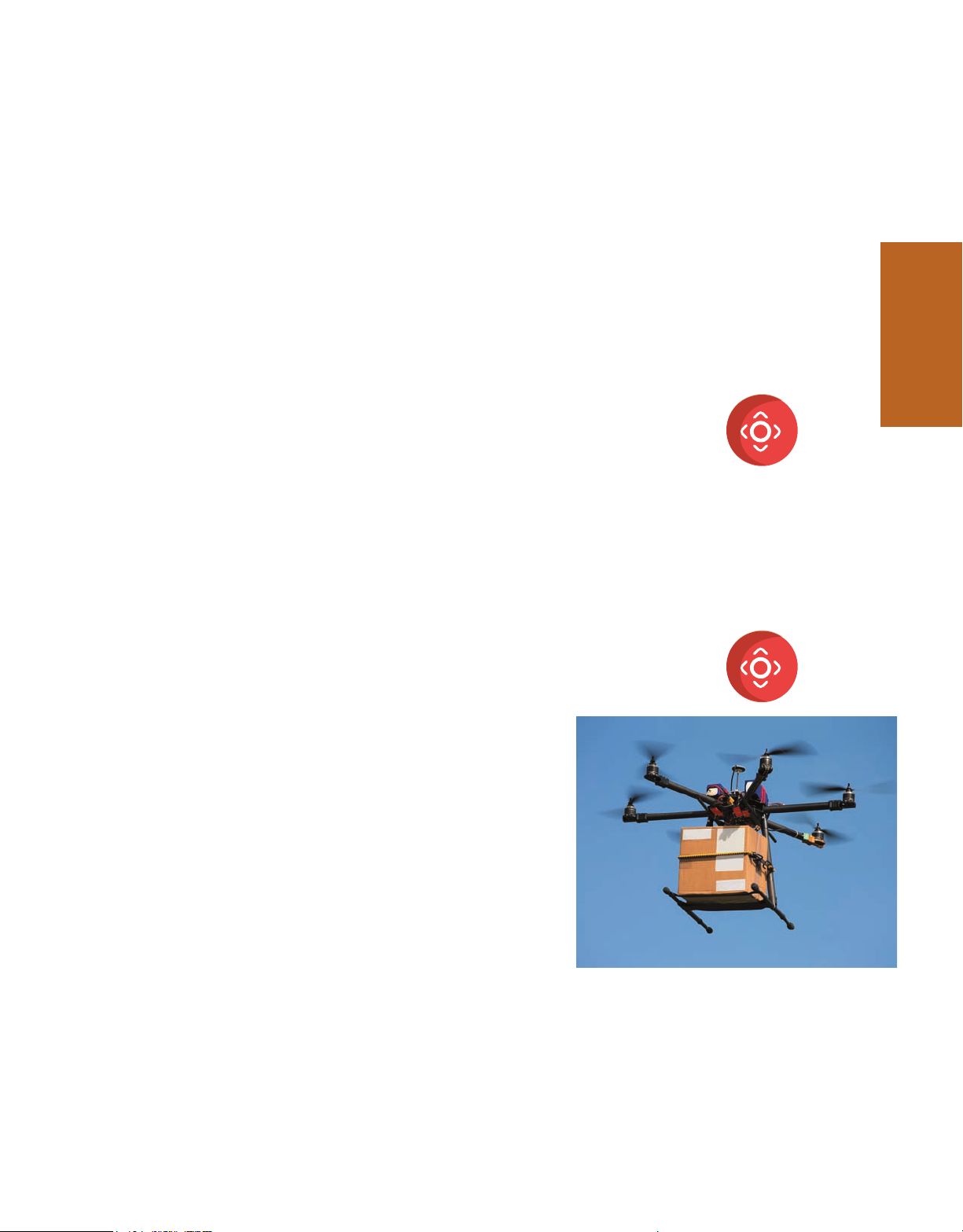
share. Amazon, Alphabet (the parent company of Google),
and Uber Technologies are all experimenting with commercial
drone-delivery technology. Even UPS recently got approval
from the Federal Aviation Administration to build a fleet of
unmanned aircraft to deliver health supplies and some consumer
packages in the United States. Industries that fail to adapt to tech-
nological shifts face the prospect of decline and obsolescence. For
example, digital camera makers were slow to add WiFi technol- ty Images
ogy for Internet connectivity. The number of photos being taken k/Get oc
is soaring, but today most people use their smartphones for this
activity. Christopher Chute, a digital imaging analyst at research
firm IDC, said of the decline of the compact digital camera market, roduction/iSt
“It’s the classic case of an industry that is unable to adapt.”19 MediaP Sociocultural
The sociocultural dimension of the general environment represents the demographic char-
acteristics, norms, customs, and values of the general population. Important sociocultural
characteristics are geographic distribution and population density, age, and education levels.
Today’s demographic profiles are the foundation of tomorrow’s workforce and consumers.
By understanding these profiles and addressing them in the organization’s business plans,
managers prepare their organizations for long-term success.
Copyright 2022 Cengage Learning. All Rights Reserved. May not be copied, scanned, or duplicated, in whole or in part. Due to electronic rights, some third party content may be suppressed from the eBook and/or eChapter(s).
Editorial review has deemed that any suppressed content does not materially affect the overall learning experience. Cengage Learning reserves the right to remove additional content at any time if subsequent rights restrictions require it. 82
PART 2 THE ENVIRONMENT OF MANAGEMENT
Managers may want to consider how the following sociocultural trends are changing
the consumer and business landscape:
1. A new generation of tech-savvy consumers has intimately woven technology into every
aspect of their lives. This generation, which constitutes the largest cohort of consumers
worldwide, values brands that are trustworthy and products and companies that show
a commitment to environmental, social, and fiscal responsibility.20
2. Young people are also leading the trend toward widespread social equality. Views about
social mores and lifestyles are shifting. The percentage of the population who assert
that society should encourage greater tolerance of people with different lifestyles and
backgrounds has increased significantly.21 However, it isn’t always easy for managers to
navigate the shifting social landscape. At the Hallmark Channel, a commercial from SNAPSHOT
wedding-planning firm Zola Inc. featuring a same-sex marriage led to a flood of
angry complaints from conservative viewers and advocacy groups, which convinced
management to pull the ads. Gay-rights advocacy groups quickly reacted, and talk-
show host Ellen DeGeneres tweeted: “Isn’t it almost 2020 @hallmarkchannel . . .
What are you thinking?” After days of discussion, top leaders responded with a
reversal of their decision to pull the ads and stated that the team had “been agoniz-
ing over this decision as we’ve seen the hurt it has unintentionally caused.”22 Economic
The economic dimension represents the general economic health of the country or region
in which the organization operates. Consumer purchasing power, the unemployment rate,
and interest rates are part of an organization’s economic environment. Because organiza-
tions today are operating in a global environment, the economic dimension has become
exceedingly complex and creates enormous uncertainty for managers.
Beginning in early 2020, the impact of the COVID-19 pandemic had a crushing impact
on the economies of the United States and most other countries. Busy downtowns and
malls became ghost towns. Millions of people were thrown out of work. Stock markets
shed trillions of dollars in value. In the United States, most states asked residents to stay
home to prevent spread of the virus. U.S. jobless claims hit a new record, jumping by more
than 6.5 million, ten times more than the previous high number of claims. Global airline
flights fell to almost one-quarter the number of previous daily flights. Governments, in an
effort to save their economies, intervened with grants and loans to help unemployed people,
struggling small businesses, and battered large corporations. Most businesses were hurt by
this natural disaster, and the economic repercussions will affect organizations for years.23 Legal–Political
The legal–political dimension includes government regulations at the local, state, and fed-
eral levels, as well as political activities designed to influence company behavior. The U.S.
political system encourages capitalism, and the government tries not to overregulate busi-
ness. However, government laws do specify rules of the game. The federal government influ-
ences organizations through the Occupational Safety and Health Administration (OSHA),
Environmental Protection Agency (EPA), fair trade practices, libel statutes allowing lawsuits
against business, consumer protection and privacy legislation, product safety requirements,
import and export restrictions, and information and labeling requirements.
Johnson & Johnson ( J&J) has recently encountered serious challenges from the SNAPSHOT
legal-political dimension of the environment after allegations that top managers knew
for decades that J&J baby powder sometimes tested positive for small amounts of asbes-
tos, but failed to warn consumers. The company is facing thousands of lawsuits and
juries have already returned some multi-million-dollar verdicts against the company.24
Copyright 2022 Cengage Learning. All Rights Reserved. May not be copied, scanned, or duplicated, in whole or in part. Due to electronic rights, some third party content may be suppressed from the eBook and/or eChapter(s).
Editorial review has deemed that any suppressed content does not materially affect the overall learning experience. Cengage Learning reserves the right to remove additional content at any time if subsequent rights restrictions require it.
CHAPTER 3 THE ENVIRONMENT AND CORpORATE CulTuRE 83 Concept Connection
Successful organizations respond to shifts in
the sociocultural dimension. Millennials,
defined as people born in the 1980s and 1990s,
are reshaping shopping trends, social mores,
and communication patterns. Smart managers ty Images
are paying attention and supporting the use of 2
social media and mobile commerce. t/E+/Get elfi pix ENVIRONMENT
Creating a Greener World
There Is No Finish Line for Sustainability In Greek mythology, Nike was the winged goddess of victory.
With headquarters in Portland, Oregon—considered one of the world’s “greenest” cities—Nike, Inc., has a corporate
culture centered on a commitment to victory on the athletic field and as one of the top 100 sustainable corporations.
Nike integrates sustainability throughout company operations. Nike’s Considered Design Index allows the company
to monitor the total environmental impact of each running shoe. A recently launched app lets engineers gauge the
environmental effects of their material and design choices on water, chemistry, energy, and waste.
Victory in sustainability also means engaging athletes. Nike invited decorated athletes to discuss its “Move to Zero”
carbon emissions and zero waste across its global supply chains. As Nike’s sustainability influence grows, its cultural
mantra reflects the winged deity. “We’ve made significant progress,” said Nike’s CEO. “But as we all know at Nike, there is no finish line.”
Sources: Kaley Roshitsh, “Nike Athletes Tackle Climate Change,” Women’s Wear Daily (September 23, 2019): 22; and Ginger Christ-Martin,
“Sustainability: Just Do It,” Industry Week (February 2014): 22–23. Natural
In response to pressure from environmental advocates, organizations have become increas-
ingly sensitive to the Earth’s diminishing natural resources and the environmental impact of
their products and business practices. Some companies, such as Nike, described in the “Creat-
ing a Greener World” feature, are taking concrete actions to address the growing importance
of the natural dimension of the external environment. The natural dimension includes all
elements that occur naturally on Earth, including plants, animals, rocks, and resources such
as air, water, and climate. Protection of the natural environment is emerging as a critical policy
focus around the world. Governments are increasingly under pressure to explain their perfor-
mance on pollution control and natural resource management. Nations with the best envi-
ronmental performance, along with some comparison countries, are listed in Exhibit 3.3.25
The natural dimension differs from other sectors of the general environment in that
it has no voice of its own. Influence on managers to meet needs in the natural environ-
ment may come from other sectors, such as government regulations, consumer concerns,
the media, competitors’ actions, or even employees.26 For example, environmental groups
Copyright 2022 Cengage Learning. All Rights Reserved. May not be copied, scanned, or duplicated, in whole or in part. Due to electronic rights, some third party content may be suppressed from the eBook and/or eChapter(s).
Editorial review has deemed that any suppressed content does not materially affect the overall learning experience. Cengage Learning reserves the right to remove additional content at any time if subsequent rights restrictions require it. 84
PART 2 THE ENVIRONMENT OF MANAGEMENT
E X H I B I T 3.3 2018 Environmental performance Index Rank Country Score 1 Switzerland 87.42 2 France 83.95 3 Denmark 81.60 4 Malta 80.90 5 Sweden 80.51 6 united Kingdom 79.89 7 Luxembourg 79.12 8 Austria 78.97 9 Ireland 78.77 10 Finland 78.64 11 Iceland 78.57 12 Spain 78.39 13 Germany 78.37 14 Norway 77.49 15 Belgium 77.38 25 Canada 72.18 27 United States 71.19 120 China 50.74 152 Iraq 43.20 177 India 30.57
Note: The scores for each country are based on 20 performance indicators covering both protection of public
health and protection of ecosystems.
SOuRCE: The 2018 Environmental Performance Index, Yale Center for Environmental Law and Policy, Yale
university, and Center for International Earth Science Information Network, Columbia university, https://epi.
envirocenter.yale.edu/epi-topline?country&order=field_epi_rank_new&sort=asc (accessed January 28, 2020).
advocate various action and policy goals that include reduction and cleanup of pollution,
development of renewable energy resources, reduction of greenhouse gases such as carbon
dioxide, ethical treatment of animals, and sustainable use of scarce resources such as water,
land, and air. Images of plastic bottles and food containers overflowing in landfills and SNAPSHOT
threatening ocean life have made people aware of the damage that disposable plastic is
doing to the natural environment. Bottled water producers are working to find alterna-
tives in response to a consumer backlash against plastic. Many offices, zoos, depart-
ment stores, and other public spaces have stopped selling bottled water. Some cities have
banned the use of plastic straws and eating utensils. Starbucks redesigned its cold drink
lids to eliminate the need for plastic straws.27 Remember This
• The international dimension of the external environment • The technological dimension of the general
represents events originating in foreign countries, as well
environment includes scientific and technological
as opportunities for U.S. companies in other countries. advances in society.
C O N T I N U E D
Copyright 2022 Cengage Learning. All Rights Reserved. May not be copied, scanned, or duplicated, in whole or in part. Due to electronic rights, some third party content may be suppressed from the eBook and/or eChapter(s).
Editorial review has deemed that any suppressed content does not materially affect the overall learning experience. Cengage Learning reserves the right to remove additional content at any time if subsequent rights restrictions require it.
CHAPTER 3 THE ENVIRONMENT AND CORpORATE CulTuRE 85
• The sociocultural dimension includes demographic
• The legal–political dimension includes government
characteristics, norms, customs, and values of a
regulations at local, state, and federal levels, as well as
population within which the organization operates.
political activities designed to influence company behavior.
• The Hallmark Channel ran into trouble within the
• The natural dimension includes all elements that occur
sociocultural dimension when a commercial featuring a
naturally on Earth, including plants, animals, rocks, and
same-sex marriage ceremony sparked controversy.
natural resources such as air, water, and climate.
• The economic dimension represents the general
• A consumer backlash against disposable plastic is one
economic health of the country or region in which the
current issues that companies are dealing with concerning 2 organization operates.
the natural dimension of the general environment.
3-2 The Organization–Environment Relationship ENVIRONMENT
Why do organizations care so much about factors in the external environment? The reason is SNAPSHOT
that the environment creates uncertainty for managers, and they must respond by designing
the organization to adapt to the environment. Even nonprofit organizations must pay close
attention to the environment. Managers at groups
such as Boy Scouts of America, Rotary International,
and Junior League are being forced to shift strategies
to adapt in a quickly changing environment. Mem-
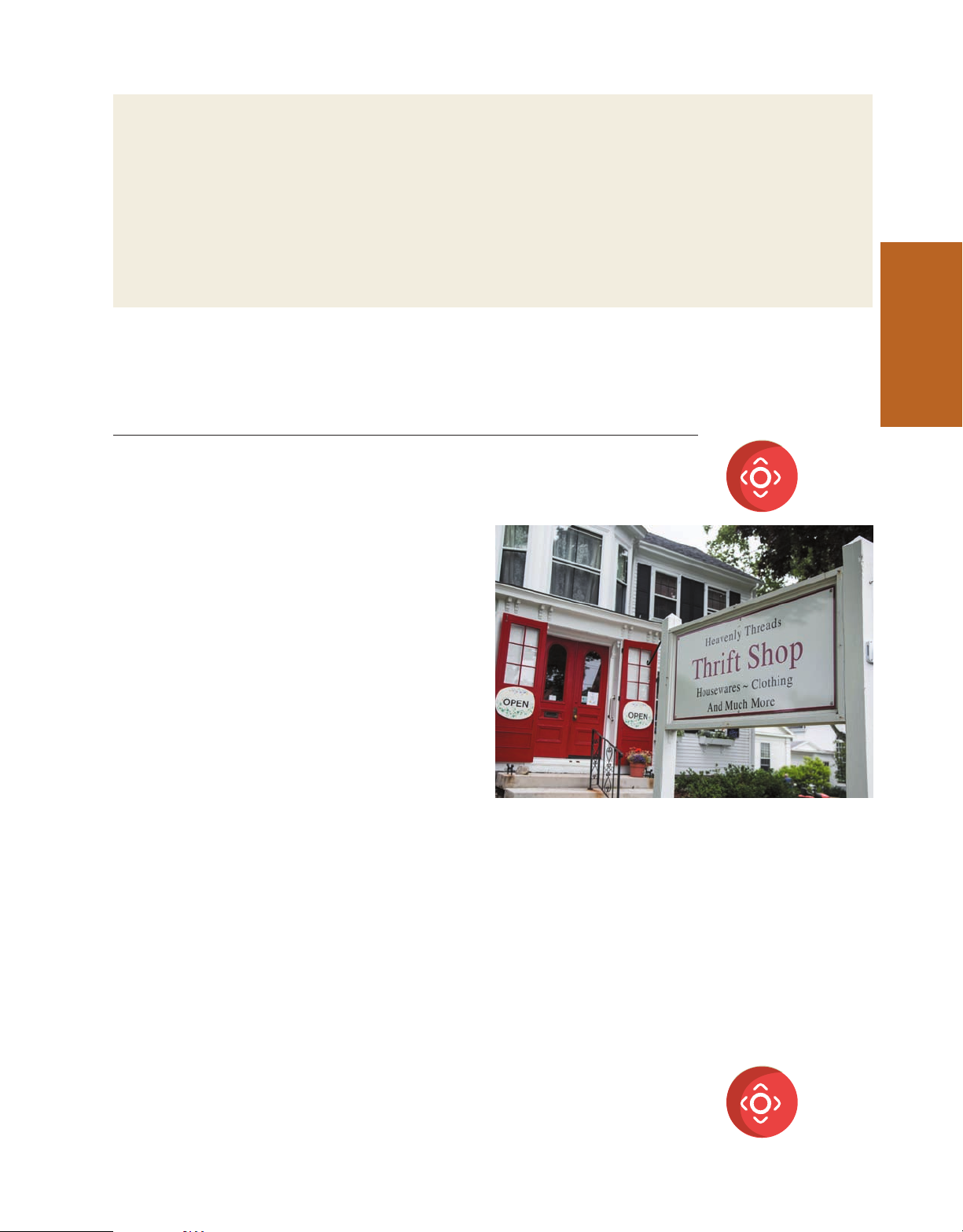
bership in the Junior League dropped 30 percent
from 2000 to 2018. The organization has closed doz-
ens of its thrift stores across the country, and lead-
ers are searching for ways to adapt to shifts in how
people spend their time. “When we all started these
stores, most of our members were not working,” said
Samantha Hatem, president of the Junior League of
Raleigh, North Carolina. Now, with declining mem- k.com oc st
bership and about 85 percent of Junior League mem- ter
bers nationwide working outside the home, the thrift es/Shut
store model of fund-raising “doesn’t work anymore.”28 fizk
3-2A ENVIRONMENTAL UNCERTAINTY
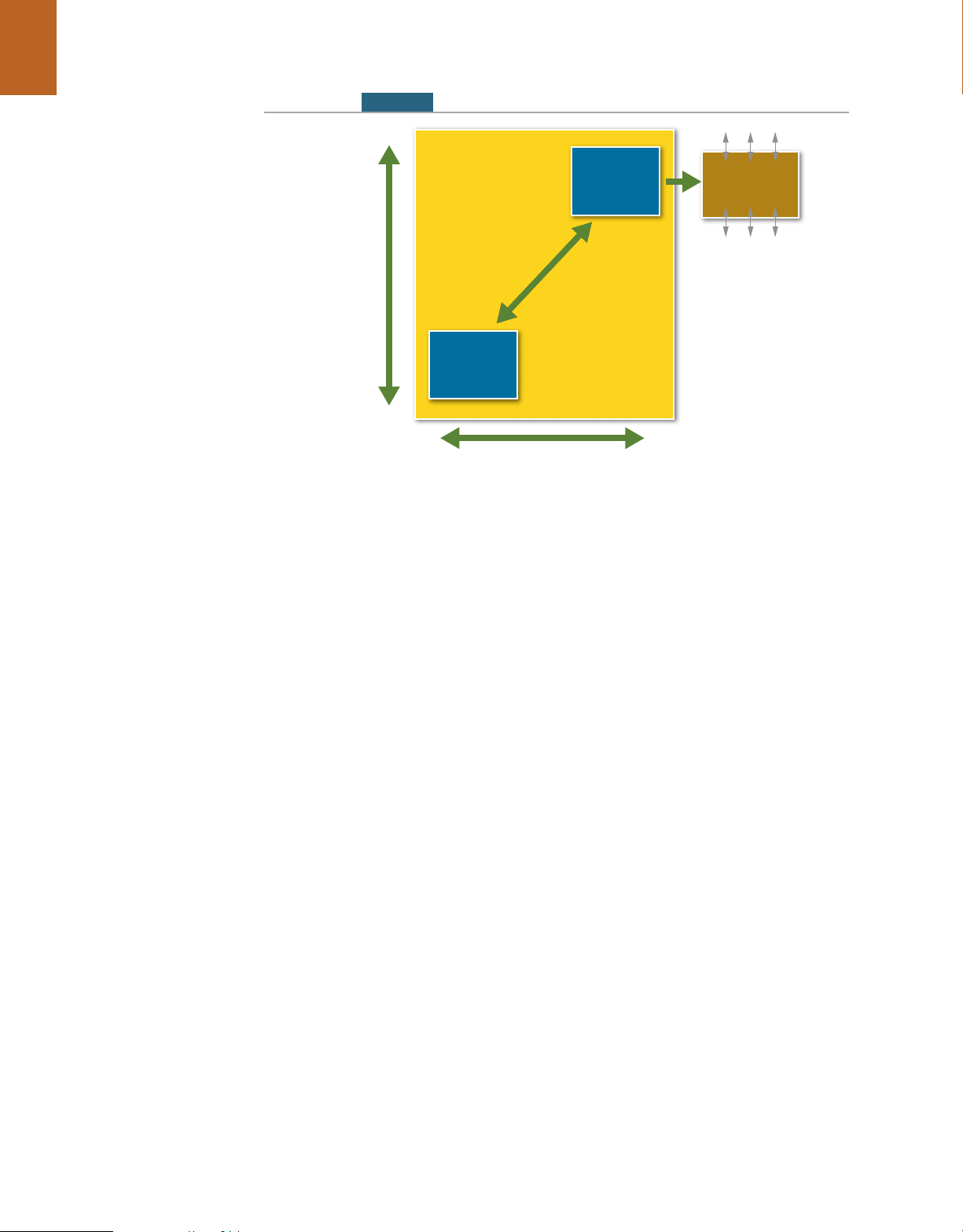
Uncertainty means that managers do not have sufficient information about environmen-
tal factors to understand and predict environmental needs and changes.29 As indicated in
Exhibit 3.4, environmental characteristics that influence uncertainty include the number
of factors that affect the organization and the extent to which those factors change. Manag-
ers at a large multinational like Costco must deal with thousands of factors in the external
environment that create uncertainty.
When external factors change rapidly, the organization experiences high uncertainty.
For example, traditional media companies are experiencing tremendous uncertainty as
both consumer behavior and competition change with dizzying speed. Cable networks
and providers are suffering as viewers cancel their cable subscriptions or never sign up to
start with. Viewers can now access streaming services, including original programming,
from companies such as Netflix, Amazon Prime Video, Hulu, and Disney+ for a monthly SNAPSHOT
fee that costs much less than a bundled cable bill. Disney+, the new kid on the streaming
services block, racked up 28.6 million subscribers in less than three months in 2020 and
Copyright 2022 Cengage Learning. All Rights Reserved. May not be copied, scanned, or duplicated, in whole or in part. Due to electronic rights, some third party content may be suppressed from the eBook and/or eChapter(s).
Editorial review has deemed that any suppressed content does not materially affect the overall learning experience. Cengage Learning reserves the right to remove additional content at any time if subsequent rights restrictions require it. 86
PART 2 THE ENVIRONMENT OF MANAGEMENT
E X H I B I T 3.4 The External Environment and uncertainty High High Adapt to Uncertainty Environment Rate of Change in Factors in Environment Low Uncertainty Low Low High Number of Factors in
Organization Environment
emerged as a key competitor for Netflix. These new services create huge uncertainty
for traditional cable TV companies. Bert Salke, the head of Fox 21 Television Studios,
recently said, “Netflix is public enemy No. 1.” By the end of 2018, Netflix offered about
1,000 original television shows and movies and had more than 130 million subscribers
for its streaming service. The company has been hiring executives away from companies
such as 21st Century Fox and NBCUniversal Television and luring away top production and acting talent.30
When an organization deals with only a few external factors and these factors are rela-
tively stable, such as those affecting soft-drink bottlers or food processors, managers experi-
ence low uncertainty and can devote less attention to external issues.
3-2B ADAPTING TO THE ENVIRONMENT
Environmental changes may evolve unexpectedly, such as shifting customer tastes for digital
games or social media sites, or they may occur violently, such as the devastating earthquake
and tsunami in Japan that disrupted the supply of parts to auto manufacturers around the
world. The level of turbulence created by an environmental shift will determine the type
of response that managers must make for the organization to survive. Managers continu-
ously scan the business horizon for both subtle and dramatic environmental changes, also
called strategic issues, and identify those that require strategic responses. Strategic issues are
“events or forces either inside or outside an organization that are likely to alter its ability to
achieve its objectives.” As environmental turbulence increases, strategic issues emerge more
frequently.31 Managers use several strategies to adapt to these strategic issues, including
business intelligence applications and various attempts to influence the environment. Business Intelligence
Managers have learned the importance of not only being aware of what’s going on inside the
organization, but also getting a handle on what’s happening in the external environment.
Boundary spanning links are used to coordinate the organization’s activities with key ele-
ments in the external environment.32 One area of boundary spanning is the use of business
Copyright 2022 Cengage Learning. All Rights Reserved. May not be copied, scanned, or duplicated, in whole or in part. Due to electronic rights, some third party content may be suppressed from the eBook and/or eChapter(s).
Editorial review has deemed that any suppressed content does not materially affect the overall learning experience. Cengage Learning reserves the right to remove additional content at any time if subsequent rights restrictions require it.
CHAPTER 3 THE ENVIRONMENT AND CORpORATE CulTuRE 87
intelligence, which means managers scan the environment using various sources to gather
information and spot patterns or trends that might be important. Four sources of business
intelligence for managers are33:
1. Personal internal. Managers gather information by talking with colleagues and sub-
ordinates within the organization about what is going on in departments and about
issues they see with customers, suppliers, or competitors.
2. Personal external. Managers develop positive relationships with individuals working at
competing firms, suppliers, and customer organizations in an effort to gain informa- tion from these sources. 2
3. Organizational internal. Although many managers prefer to get their information from
personal sources, they also scan internal reports and documents for useful data.
4. Organizational external. With this approach, managers keep up with news reports,
industry reports, and research databases.
One newer element of external scanning is the use of social media analytics. Social
media analytics refers to gathering data from social media platforms such as Instagram, ENVIRONMENT
Facebook, Weibo, Tumblr, Pinterest, Twitter, and LinkedIn, and analyzing those data to
help managers address specific problems or to evaluate corporate impact or popularity.34
Social media analytics enables managers to obtain information about both customers and
competitors. For example, Marriott International has a team of employees who analyze
Twitter feeds, Instagram photos, and Facebook posts in real time to keep up with trends, SNAPSHOT
engage the hotel chain’s clients in social conversations, and provide better service. Com-
panies can also use real-time social media analytics to monitor prices and promotions
of competitors, track new product announcements, and keep up with news alerts and
headlines. Some restaurants, for instance, keep track of competitors’ daily discount deals
and develop their own comparable promotional offers.35
Social media analytics can also be carried out at a more thoughtful pace as part of the
segment of business intelligence known as big data analytics. As described in Chapter 2, big
data analytics refers to searching and examining massive, complex sets of data to uncover
hidden patterns and correlations and make better decisions.36 Big data analytics is becom-
ing a driving force in many organizations.37 One of the best-known examples of the use
of data analytics comes from the sports world. The popular book Moneyball: The Art of
Winning an Unfair Game, later made into a movie starring Brad Pitt, tells the story of how
the Oakland Athletics general manager Billy Beane built a winning Major League Base-
ball team by analyzing previously ignored player statistics.38 Today, most sports teams use
sophisticated data analytics programs to analyze player statistics. Similarly, businesses use
big data analytics to gain insights that can improve performance. PASSUR Aerospace, for
instance, provides decision support technologies for the aviation industry, such as those SNAPSHOT
geared toward helping airlines eliminate gaps between estimated and actual flight arrival
times. PASSUR collects a wide range of multidimensional data and can analyze patterns
spanning more than a decade to understand what happens under specific conditions.
Enabling airlines to know when planes are going to land and plan accordingly can save
several million dollars a year. More than 60 percent of U.S. domestic commercial flights
are managed with the company’s predictive analytics.39
Influence the Environment
Boundary spanning is an increasingly important task in organizations because environ-
mental shifts happen quickly in today’s fast-paced business world. Boundary spanning also
includes activities that represent the organization’s interests to influence elements of the
external environment.40 Companies such as Amazon, General Electric (GE), Facebook,
and Lockheed Martin spend millions of dollars each year on political lobbying to influence
government officials to take actions that will positively affect their business performance.
Copyright 2022 Cengage Learning. All Rights Reserved. May not be copied, scanned, or duplicated, in whole or in part. Due to electronic rights, some third party content may be suppressed from the eBook and/or eChapter(s).
Editorial review has deemed that any suppressed content does not materially affect the overall learning experience. Cengage Learning reserves the right to remove additional content at any time if subsequent rights restrictions require it. 88
PART 2 THE ENVIRONMENT OF MANAGEMENT
In 2019, for example, Amazon spent nearly $17 million on lobbying. Amazon’s political
lobbyists span the boundary between the organization and the government, a critical aspect of the external environment.41
Another company that invests heavily in lobbying is Boeing. In an ironic twist, SNAPSHOT
Boeing scored one of its biggest lobbying wins—a law that weakened the Federal Avia-
tion Administration’s role in approving the design of new planes—just weeks before two
Boeing 737 MAX jets crashed within five months, killing everyone on board. All 737
MAX aircraft were grounded for a year to find and correct defects. Boeing lobbyists had
argued that streamlining certification would enable American aerospace companies to
develop planes more efficiently and be more competitive with overseas rivals. The 737
MAX crisis caused Boeing to lose its title as the world’s largest planemaker in early 2019
to European rival Airbus.42 Remember This
• When external factors change rapidly, the organization
Weibo, and Twitter and analyzing the data to help experiences high uncertainty.
managers address corporate impact or popularity.
• Strategic issues are events and forces that alter
• Marriott International and many other companies
an organization’s ability to achieve its goals. As
have designated teams that use real-time social media
environmental turbulence increases, strategic issues
analytics to gain information about both customer and emerge more frequently.
competitor views of their brands.
• Boundary spanning links to and coordinates the
• Big data analytics uses powerful digital technology to
organization with key elements in the external
search and examine massive, complex sets of data to environment.
uncover hidden patterns and correlations so managers
• Social media analytics refers to gathering data from can make better decisions.
social media platforms such as Instagram, Facebook, 3-3 The Internal Environment: Corporate Culture
The internal environment within which managers work includes corporate culture, produc-
tion technology, organization structure, and physical facilities. Of these elements, corporate
culture represents an extremely important factor for gaining and maintaining a competitive
advantage. The internal culture must fit the needs of the external environment and company
strategy. When a good fit occurs, highly committed employees create a high-performance
organization that is tough to beat.43 3-3A WHAT IS CULTURE?
Most people don’t think about culture; it’s just “how we do things around here” or “the
way things are here.” However, managers have to approach the question of culture more
thoughtfully—it’s part of their job. Culture guides how people within the organization
interact with one another and how the organization interacts with the external environ-
ment; thus culture plays a significant role in organizational success. Organizational culture
has been defined and studied in many and varied ways. For the purposes of this chapter, we
Copyright 2022 Cengage Learning. All Rights Reserved. May not be copied, scanned, or duplicated, in whole or in part. Due to electronic rights, some third party content may be suppressed from the eBook and/or eChapter(s).
Editorial review has deemed that any suppressed content does not materially affect the overall learning experience. Cengage Learning reserves the right to remove additional content at any time if subsequent rights restrictions require it.
CHAPTER 3 THE ENVIRONMENT AND CORpORATE CulTuRE 89
define culture as the set of key values, beliefs, understandings, and norms shared by mem-
bers of an organization.44 The concept of culture helps managers understand the hidden,
complex aspects of organizational life. Culture is a pattern of shared values and assumptions
about how things are done within the organization. This pattern is learned by members as
they cope with external and internal problems, and is taught to new members as the correct
way to perceive, think, and feel. 2 Concept Connection
Every organization has a unique corpo-
rate culture, which can be understood ty Images
partly by observing visible artifacts, such
as office layout and decor, employee dress and alVision/Get
demographics, and how people within the orga- ENVIRONMENT
nization behave toward one another. What are
some ideas about the culture you might discern roductions/Digit from this photo? erhaus P Hint
Culture can be analyzed at two levels, as illustrated in Exhibit 3.5.45 At the surface level
are visible artifacts, which include things such as manner of dress, patterns of behavior,
physical symbols, organizational ceremonies, and office layout. In other words, visible arti-
facts are all the things one can see, hear, and observe by watching members of the organiza-
tion. At a deeper, less obvious level are values and beliefs, which are not observable but can
be discerned from how people explain and justify what they do. Members of the organiza-
tion hold some values at a conscious level. These values can be interpreted from the stories,
language, and symbols that organization members use to represent them.
Some values become so deeply embedded in a culture that members are no longer con-
sciously aware of them. These basic, underlying assumptions and beliefs are the essence of
E X H I B I T 3.5 levels of Corporate Culture Culture that can Visible be seen at the 1. Artifacts, such as dress, surface level office layout, symbols, slogans, ceremonies Invisible
2. Expressed values, such as “The Deeper values
Penney Idea,” “The HP Way” and shared 3. Underlying assumptions and understandings
deep beliefs, such as “people held by here care about one another organization like a family” members
Copyright 2022 Cengage Learning. All Rights Reserved. May not be copied, scanned, or duplicated, in whole or in part. Due to electronic rights, some third party content may be suppressed from the eBook and/or eChapter(s).
Editorial review has deemed that any suppressed content does not materially affect the overall learning experience. Cengage Learning reserves the right to remove additional content at any time if subsequent rights restrictions require it. 90
PART 2 THE ENVIRONMENT OF MANAGEMENT
culture and subconsciously guide behavior and decisions. In some organizations, a basic
assumption might be that people are essentially lazy and will shirk their duties whenever
possible; thus, employees are closely supervised and given little freedom, and colleagues are
frequently suspicious of one another. More enlightened organizations operate on the basic
assumption that people want to do a good job; in these organizations, employees are given
more freedom and responsibility and colleagues trust one another and work cooperatively.
At Inditex SA’s Zara, for example, clothing designers and other employees work in teams SNAPSHOT
to design and approve products, shipping fresh styles to stores twice a week. There are
no formal meetings. People collaborate in an open workspace, with designers and com-
mercial staff sitting side-by-side, and no one is “in charge.” Everyone has a say in making
decisions. In one case, Zara was able to get a new coat from the design workshop in
Spain to sales racks in Manhattan in just 25 days. Zara’s culture is an important piece
of a business model that has helped Inditex thrive while most global clothing retailers are struggling.46
Zara doesn’t give employees free rein, but the company’s management practices are in
line with the trend toward bossless organizations, which we discussed in Chapter 1. The
“Manager’s Shoptalk” feature in this chapter further explores the bossless trend and some
of the values that exist in bossless organizations. M A N A G E R ’ S Shoptalk The Bossless Workplace
The organizational hierarchy with formal bosses has the reluctant manager appointee, said that he would
worked well in the past and continues to exist in most
rather write code and make things. Disdain for manage-
companies. However, some leaders realized that all
ment is commonplace at many newer companies with
the bosses were actually slowing down productivity.
Then a few leaders recognized that this kind of organi-
young employees who need to be creative. “We want
zational structure was actually creating a bottleneck and
people who are doing the work, not managing the work,”
stifling employee creativity, thus prompting experiments
said Zimdars. Employees at Basecamp are free to overrule with the bossless workplace.
the boss if they feel strongly about green-lighting a cre-
What are the key success factors of a bossless ative project. company?
• Recruit and hire employees who can adapt to a bossless
• Reduce hierarchies starting from the top down. At W. L.
culture. After Menlo Innovations was founded in 2001, the
Gore and Associates, there are no organizational charts
company quickly became one of Inc.’s 500 fastest-growing
and leaders aren’t appointed; leaders at Gore emerge as
privately held firms in the United States. Menlo’s bossless
people pursue ideas and persuade others to join them.
hiring process is called “extreme interviewing,” and it bears
No one has a title except CEO Jason Field, who worked
a striking resemblance to speed-dating. Applicants—
as a large-animal veterinarian before he joined Gore’s
sometimes as many as five for each open position—are
medical device team. Field lets anyone take the lead, and
brought into the offices for a series of rapid-fire inter-
associates make most decisions, as has been the case at
views with a range of current employees. The emphasis
Gore since the company was founded in 1958. “You can’t
is on “kindergarten skills”: geniality, curiosity, generosity.
fake this stuff,” Field says. “If you say you want to empower
Technical proficiency is less important than a candidate’s
people to make decisions, you can’t revert to top-down
“ability to make [his or her] partner look good.” (Sample
decision making if things get tough.”
interview question: “What is the most challenging bug
• Develop a bossless environment that “fits” the organiza-
that you helped someone else fix?”)
tion. Basecamp, a Chicago software firm, got its start in
• Expect bumps in the road with a flat organizational
1999 and appointed a manager in 2013. Jason Zimdars,
structure. Retaining highly motivated workers is vital to
C O N T I N U E D
Copyright 2022 Cengage Learning. All Rights Reserved. May not be copied, scanned, or duplicated, in whole or in part. Due to electronic rights, some third party content may be suppressed from the eBook and/or eChapter(s).
Editorial review has deemed that any suppressed content does not materially affect the overall learning experience. Cengage Learning reserves the right to remove additional content at any time if subsequent rights restrictions require it.
CHAPTER 3 THE ENVIRONMENT AND CORpORATE CulTuRE 91
making a boss-free system work. Most employees take
(August 6, 2013), http://online.wsj.com/article/SB10001424127
anywhere from six months to a year to adapt, and some
887323420604578652051466314748.html (accessed August 6,
2013); Frank Martela, “What Makes Self-Managing Organizations
leave for more traditional settings. One study found that
Novel? Comparing How Weberian Bureaucracy, Mintzberg’s
when teams of factory workers learned to “encourage and
Adhocracy, and Self-Organizing Solve Six Fundamental
problems of Organizing,” Journal of Organization Design 8,
support each other. . . . They collectively perform the role
no. 23 (2019), doi:10.1186/s41469-019-0062-9 (accessed of a good manager.”
January 29, 2020); Ranjay Gulati, “Structure That’s Not Stifling,”
Harvard Business Review (May–June 2018): 68–79; and Michael
Sources: Deirdre Van Dyk, “So Much More Than Gore-Tex,” Inc., May
Y. lee and Amy C. Edmondson, “Self-Managing Organizations:
2019, 26; Matthew Shaer, “The Boss Stops Here,” New York Magazine
Exploring the limits of less-Hierarchical Organizing,” Research in 2
(June 24–July 1, 2013): 26–34; Rachel Emma Silverman, “Some Tech
Organizational Behavior 37 (2017): 35–58.
Firms Ask: Who Needs Managers?” The Wall Street Journal Online 3-3B TOXIC CULTURES
Although strong corporate cultures are important to organizations, they can sometimes pro- ENVIRONMENT
mote or support negative values and behaviors. A toxic culture exists when persistent nega-
tive sentiments and infighting cause stress, unhappiness, and lowered productivity among
subgroups of employees. Sometimes toxicity reveals itself in an emergent “bro” culture in
which young males’ values related to sports, partying, and sex become unhealthy or allow
misogynistic behavior toward female employees. One current issue is when toxic male values
lead to sexual harassment and misconduct. When articles published in The New York Times
and The New Yorker revealed that Hollywood producer Harvey Weinstein had allegedly
engaged in sexual misconduct for decades, millions of women came forward sharing their
personal career stories online using the hashtag #MeToo. The MeToo furor sparked many
companies to begin looking more closely at their handling of misconduct. For example,
CBS fired a long-time CBS This Morning host, Charlie Rose, immediately after reports
surfaced that a number of women had accused him of making crude sexual advances. The SNAPSHOT
entire culture at CBS came under attack following accusations of sexual misconduct by
more than two dozen women against the then-CEO, who also lost his job.47
Companies in other industries have also been affected by toxic culture–related issues.
After female employees at Nike circulated a survey to protest inappropriate behavior,
pay disparity, and gender imbalance in the top executive ranks, the company fired several
senior managers. Nike CEO Mark Parker pledged to improve the workplace culture.
McDonald’s fired its CEO after rumors of inappropriate and unwanted flirting with
female employees and the CEO’s acknowledgment of a consensual relationship with a
staff member. Google’s famously egalitarian culture likewise came under attack follow-
ing a report that the company paid millions in exit packages and protected three senior
managers after they were accused of sexual misconduct. Employees expressed their dis-
satisfaction with the company’s decision by staging a walkout at Google offices around the world.48 Remember This
• Organizational culture is the set of key values, beliefs,
are values and beliefs, which can be discerned from how
understandings, and norms shared by members of an
people explain and justify what they do. organization.
• A toxic culture exists when persistent negative
• Culture can be analyzed at two levels. At the surface level
sentiments and infighting cause stress, unhappiness,
are visible artifacts, such as patterns of behavior, physical
and lowered productivity among subgroups of
symbols, and office layout. At a deeper, less obvious level employees.
C O N T I N U E D
Copyright 2022 Cengage Learning. All Rights Reserved. May not be copied, scanned, or duplicated, in whole or in part. Due to electronic rights, some third party content may be suppressed from the eBook and/or eChapter(s).
Editorial review has deemed that any suppressed content does not materially affect the overall learning experience. Cengage Learning reserves the right to remove additional content at any time if subsequent rights restrictions require it. 92
PART 2 THE ENVIRONMENT OF MANAGEMENT
• One current issue with corporate culture is the abuses that
• The cultures at CBS, Google, Nike, McDonald’s, and other
occur when toxic male values lead to sexual harassment
companies have been criticized for incidents in which they and misconduct.
mishandled sexual misconduct allegations.
3-4 Interpreting/Shaping Culture
A healthy organization culture can be observed through its managers’ behavior and
expressed values. An organization’s fundamental values are also demonstrated through its
symbols, stories, heroes, slogans, and ceremonies. At the same time, these aspects can be
used or changed by managers to shape and influence culture.49 3-4A SYMBOLS
A symbol is an object, act, or event that conveys meaning to others. Symbols can be consid-
ered a rich, nonverbal language that vibrantly conveys the organization’s important values
concerning how people relate to one another and interact with the environment.50
Even small, mundane things can be highly symbolic. When Suzanne Sitherwood SNAPSHOT
became CEO of public utility holding company Laclede Group Inc., one of her first acts
was to move into a small office and turn her sprawling corner office into a conference
room with a round table where she held meetings and encouraged others to meet. To
spur collaboration among managers who had been accustomed to working behind closed
doors, she kept her office door open. These actions “sent the message that we were going
to have an open, transparent, interactive culture,” Sitherwood said.51 3-4B STORIES
A story is a narrative based on true events that is repeated frequently and shared among
organizational employees. Stories paint pictures that help symbolize the firm’s vision and
values and help employees personalize and absorb them.52 At Huawei, the giant Chinese SNAPSHOT
telecommunications and consumer electronics company that has rapidly expanded
around the world, company stories celebrate heroes such as the employees who worked
to keep telecommunication services running despite a terrorist attack in Mumbai and
those who battled freezing cold, low oxygen levels, and sleeplessness to provide mobile
phone service to climbers on Mount Everest. These stories reinforce the company’s key
values of tenacity, drive, determination, and aggressiveness.53 3-4C HEROES
A hero is a figure who exemplifies the deeds, character, and attributes of a strong culture.
Heroes are role models for employees to follow. Heroes with strong legacies may continue to
influence a culture even after they are gone. For example, Steve Jobs has continued to influ-
ence the culture at Apple in the years since his death in 2011. Jobs exemplified the creativity,
innovation, risk taking, and boundary-breaking thinking that made the company famous.54
When his health began to fail, Apple’s board began considering replacements who could SNAPSHOT
sustain the fertile culture that Jobs created. They chose Tim Cook, who long had served
as second-in-command. Cook is nurturing a culture that reflects the values and behaviors
of Apple’s hero, Steve Jobs. “Apple has a culture of excellence that is, I think, so unique
and so special. I’m not going to witness or permit the change of it,” he said.55
Copyright 2022 Cengage Learning. All Rights Reserved. May not be copied, scanned, or duplicated, in whole or in part. Due to electronic rights, some third party content may be suppressed from the eBook and/or eChapter(s).
Editorial review has deemed that any suppressed content does not materially affect the overall learning experience. Cengage Learning reserves the right to remove additional content at any time if subsequent rights restrictions require it.
CHAPTER 3 THE ENVIRONMENT AND CORpORATE CulTuRE 93 Concept Connection
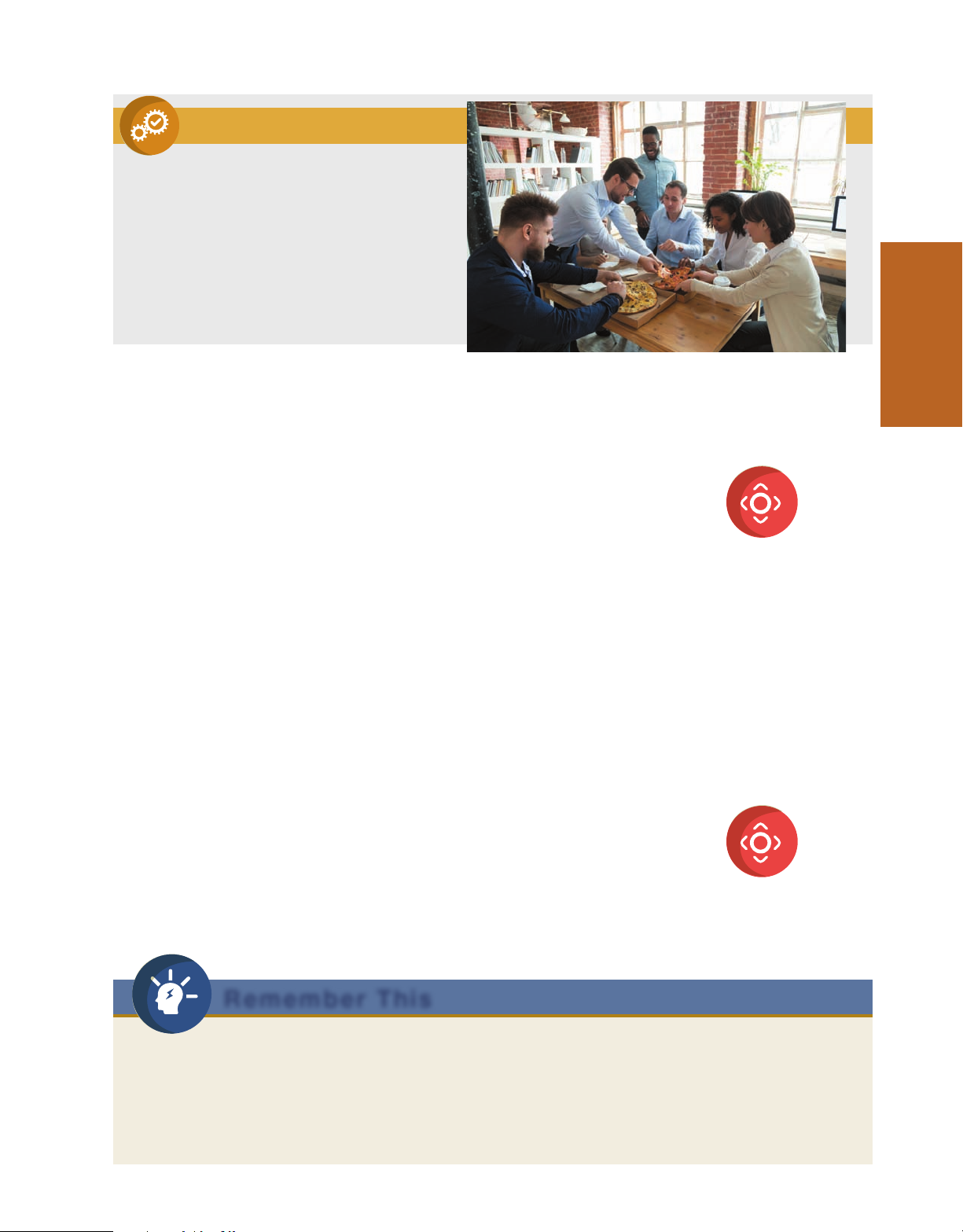
A popular concept at Amazon is the “two pizza
rule,” which says that every meeting should be o
small enough that participants can be fed with two
large pizzas. Two pizzas serve as a symbol that k Phot oc
small teams and small team meetings work better y St
and faster and are more creative than large ones. 2
This symbol is important because it expresses the ranklin/Alam
efficiency, creativity, and fast moving aspects of k F
Amazon’s corporate culture. Chuc 3-4D SLOGANS ENVIRONMENT
A slogan is a phrase or sentence that succinctly expresses a key corporate value, such as
LEGO’s “Only the best is good enough” or Walmart’s “Save Money, Live Better.” Many
companies use slogans or sayings to convey special meaning to employees The Ritz-Carlton
hotel chain adopted the slogan “Ladies and gentlemen taking care of ladies and gentle- SNAPSHOT
men” to demonstrate its cultural commitment to take care of both employees and custom-
ers. “We’re in the service business, and service comes only from people. Our promise is to
take care of them, and provide a happy place for them to work,” said Mark DeCocinis,
the Ritz-Carlton’s regional vice president, Asia Pacific. DeCocinis previously served as
general manager of the Portman Ritz-Carlton Hotel in Shanghai, which has consistently
been recognized by industry organizations since 2001 as “Best Employer in Asia.”56
Cultural values can also be discerned in written public statements, such as corporate mis-
sion statements or other formal statements that express the core values of the organization. 3-4E CEREMONIES
A ceremony is a planned activity at a special event that is conducted for the benefit of an
audience. Managers hold ceremonies to provide dramatic examples of company values. Cer-
emonies are special occasions that reinforce valued accomplishments, create a bond among
people by allowing them to share an important event, and anoint and celebrate heroes.57
In a ceremony to mark its twentieth anniversary, Southwest Airlines rolled out a specialty
plane called the “Lone Star One,” which had the Texas state flag painted on it to signify SNAPSHOT
the company’s start in Texas. Later, when the National Basketball Association (NBA)
chose Southwest Airlines as the league’s official airline, Southwest launched another
specialty plane, the “Slam Dunk One,” colored blue and orange with a large basketball
painted on the nose of the plane. Today, about a dozen specialty planes celebrate signifi-
cant milestones in Southwest’s history and demonstrate key cultural values.58 Remember This
• Organizational culture is the set of key values, beliefs,
• A story is a narrative based on true events and is repeated
understandings, and norms shared by members of an
frequently and shared among organizational employees. organization.
• A hero is a figure who exemplifies the deeds, character,
• A symbol is an object, act, or event that conveys
and attributes of a strong culture. meaning to others.
C O N T I N U E D
Copyright 2022 Cengage Learning. All Rights Reserved. May not be copied, scanned, or duplicated, in whole or in part. Due to electronic rights, some third party content may be suppressed from the eBook and/or eChapter(s).
Editorial review has deemed that any suppressed content does not materially affect the overall learning experience. Cengage Learning reserves the right to remove additional content at any time if subsequent rights restrictions require it.
Tài liệu liên quan:
-
Đề cương môn Quản trị học | Học viện Báo chí và Tuyên truyền
31 16 -
Sách bài học Chapter 9: Managerial Decision Making môn Quản trị học | Học viên Báo chí và Tuyên truyền
47 24 -
Bài giảng Chương 3: Môi trường và Văn hoá tổ chức môn Quản trị học | Học viện Báo chí và Tuyên truyền
47 24 -
Vận dụng lý thuyết về các phong cách quản trị vào phân tích phong cách quản trị của Abraham Lincoln | Tiểu luận Quản trị học
128 64