Semi-parabolic plus semi-inverse squared quantum well: the acousto-magneto-electric field in the presence of electromagnetic waves
Semi-parabolic plus semi-inverse squared quantum well: the acousto-magneto-electric field in the presence of electromagnetic waves. Tài liệu được sưu tầm giúp bạn tham khảo, ôn tập và đạt kết quả cao. Mời bạn đọc đón xem.
Môn: Tài liệu Tổng hợp 3.6 K tài liệu
Trường: Tài liệu khác 3.9 K tài liệu
Tác giả:







Preview text:
Journal of the Korean Physical Society Online ISSN 1976-8524
https://doi.org/10.1007/s40042-025-01389-4 Print ISSN 0374-4884
RESEARCH - CONDENSED MATTER PHYSICS
Semi‑parabolic plus semi‑inverse squared quantum well:
the acousto‑magneto‑electric field in the presence of electromagnetic waves
Nguyen Thu Huong1 · Nguyen Quang Bau2 · Nguyen Quyet Thang2 · Pham Duc Chinh2 · Nguyen Dinh Nam2 · Anh‑Tuan Tran2
Received: 10 February 2025 / Revised: 30 March 2025 / Accepted: 7 May 2025
© The Korean Physical Society 2025 Abstract
Using the quantum kinetic equation method for electrons in the semi-parabolic plus semi-inverse squared quantum well
(SPPSISQW) structure in the presence of external electromagnetic waves, we derived novel analytical expressions for the
acousto-magneto-electric (AME) field. In addition, numerical results were conducted to investigate the dependence of the
AME field on various parameters, including the frequency of external electromagnetic waves, acoustic wave frequency 𝜔 , q
temperature, magnetic field. Notably, the resonance peak position of the AME field remains unaffected by temperature but
shifts significantly with electromagnetic wave frequency and magnetic field. The high-frequency electromagnetic wave
significantly enhance the AME field, introducing new resonant peaks and modulating the field’s amplitude and position.
As the frequency of EMW Ω increases, the resonance peaks shift to higher magnetic field values. The study identifies the
cyclotron resonance phenomenon, where the AME field increases sharply at specific magnetic field strengths. This resonance
shifts with changes in the electromagnetic wave frequency, indicating a complex interplay between electrons, phonons, and
external fields. These findings contribute to perfecting quantum theory and enrich our understanding of the unique properties
of SPPSISQW structure, especial y highlighting significant differences from conventional bulk semiconductors and other
low-dimensional semiconductor structures such as quantum wires and superlattices. Furthermore, the influence of external
electromagnetic waves introduces nonlinear effects and distinctive results compared to scenarios without electromagnetic
waves, as demonstrated by the results presented in this study.
Keywords Semi-parabolic plus semi-inverse squared quantum well · Quantum kinetic equation · Acoustomagnetoelectric
field · Electromagnetic wave · Low-dimensional systems 1 Introduction
acoustic waves influence the physical properties of low-
dimensional semiconductor systems, such as the acousto-
These nanoscale crystal structures such as superlattices, magneto-electric effect (AME).
quantum wells, quantum wires, and quantum dots have
When an acoustic wave propagates through a conduc-
gained significant research interest due to their unique prop-
tor, the transfer of energy and momentum from the acoustic
erties and importance in modern science and technology. wave to conduction electrons generates what is known as
In particular, researchers have focused extensively on how
the acousto-electric effect [1–5], In the presence of a mag-
netic field, however, acoustic waves can induce the AME
effect, which produces an AME current in a closed circuit or * Nguyen Quang Bau nguyenquangbau54@gmail.com;
an AME field in an open circuit. Fundamentally, this effect nguyenquangbau@hus.edu.vn
arises due to the presence of intrinsic currents within differ- 1
ent energy groups of charge carriers, while the total current
Faculty of Basic Science, Air Defence-Air Force Academy,
in the sample remains zero. Physically, the AME effect can
Kim Son, Son Tay, Hanoi, Vietnam 2
be regarded as an analog of the Hall effect, where the acous-
Department of Theoretical Physics, Faculty of Physics, VNU
tic wave replaces the role of the electric field in generating
University of Science, Vietnam National University, Thanh
Xuan, Hanoi. Address: No 334 Nguyen Trai, Hanoi, Vietnam transverse carrier dynamics. 1 3 VolVo.:(0123456789) l.:(0123456789) N. T. Huong et al.
From a theoretical perspective, the AME effect has been
2 The AME field in a SPPSISQW
examined through both classical and quantum frameworks
[6–8]. Classical approaches, such as solving the Boltzmann
2.1 The wave function and the discrete energy
equation, treat acoustic waves as an external force. How-
spectrum of the electron in the SPPSISQW
ever, these methods are limited to high-temperature and low-
magnetic-field regions. In this paper, by using the quantum
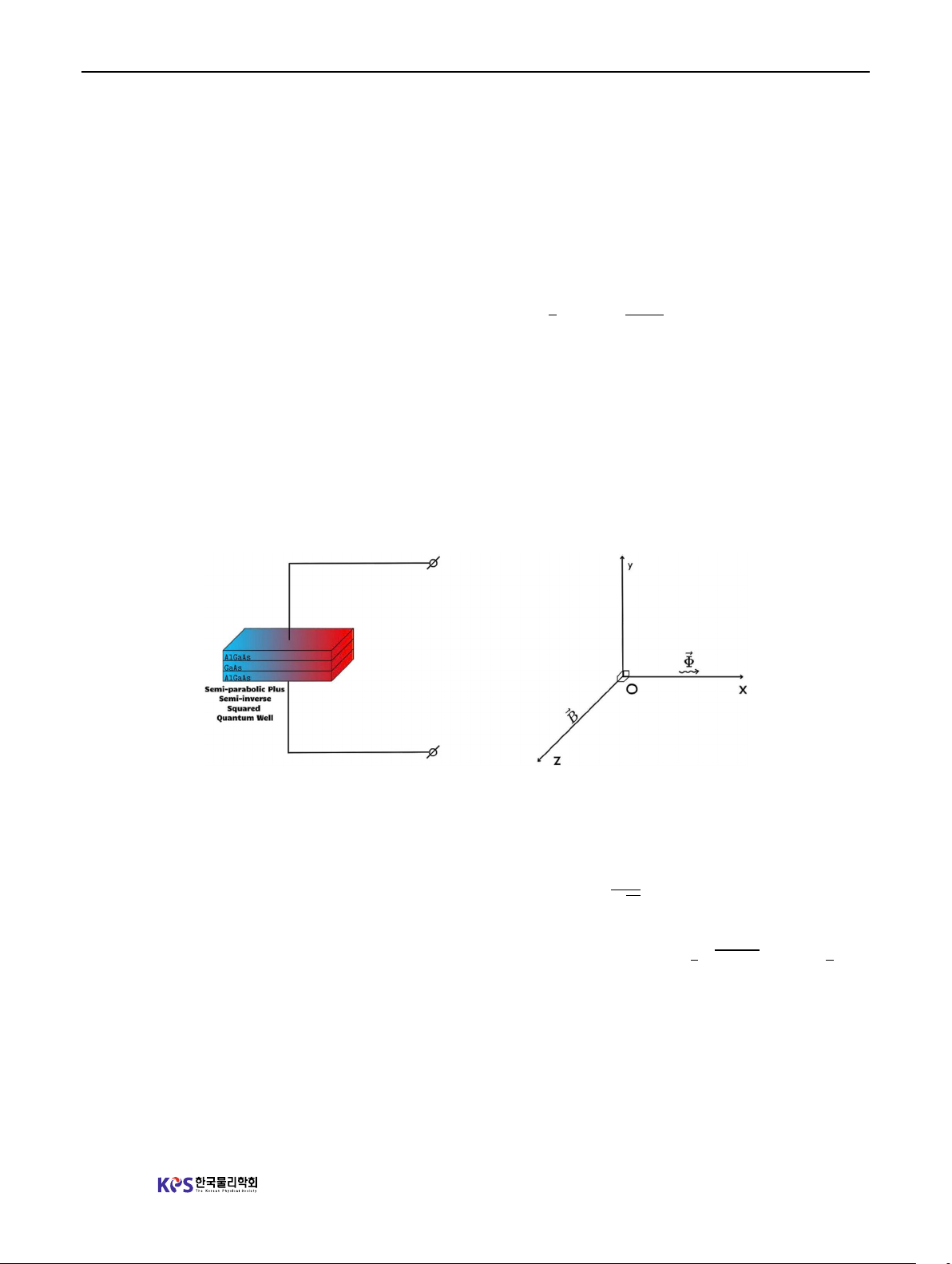
We consider a SPPSISQW structure, where the electron
kinetic equation method to investigate the influence of elec-
moves freely in the x–y plane and is confined along the
tromagnetic waves on the AME effect in the Semi-parabolic
z-axis by a confined potential of the form [13]:
Plus Semi-inverse Squared Quantum Well (SPPSISQW)
structure. The quantum kinetic equation method is provides ⎧ ∞, z ≤ 0
accurate results across the entire temperature range, from ⎪ 2 U(z) = ⎨ 1 � 𝛽 2 2 z (1)
low to high temperatures. This method, widely recognized ⎪ m 𝜔 z + , z > 0 2 e z 2 2
for its accuracy in studying low-dimensional semiconductor ⎩ m z e
systems under various conditions, yields entirely new results In this expression, m
with significant scientific implications [9, 10].
e is the effective mass of the electron,
ħ represents the reduced Planck constant, and β
In the SPPSISQW structure, carrier motion is confined z and ωz are
characteristic parameters related to the potential well and the
to specific dimensions. These systems exhibit quantum confinement frequency, respectively.
mechanical behavior, where wavefunctions and energy
We consider a SPPSISQW specimen subjected to an
spectra undergo significant transformations. As a result, external magnetic field. The external magnetic field is
the AME effect in the SPPSISQW structure differs both parallel to the confinement axis Oz: ⃗B = (0,0,B) and the
acoustic wave with intensity ⃗Φ propagates along the Ox axis.
By solving the Schrödinger equation for electrons, we
qualitatively and quantitatively from those of traditional obtain the wave function and the corresponding energy, bulk semiconductors. which are written as [13]:
Although the AME effect has been extensively studied in
bulk semiconductors and low-dimensional systems such as 1 � �
Ψ(r) = �N, n, p = exp(ip y) x − x (z) y √ y 𝜙N 0 𝜙n (2)
quantum wires, superlattices, and quantum wells [11, 12], Ly
the theory of the AME field under electromagnetic wave
(EMW) influence in the SPPSISQW structure remains unex- � � � � 1 √ 1
plored. Notably, high-amplitude electromagnetic waves can 𝜀 = + = 2n + 1 + 1 + 4 + N + n,N 𝜀n 𝜀N ℏ𝜔z 𝛽 ℏ𝜔 2 z 2 c
induce nonlinear effects. Particularly at high frequencies, (3)
the presence of electromagnetic waves significantly alters
The Eqs. (2) and (3) represent the wavefunction and
electron–phonon scattering processes, affecting scattering energy spectrum of an electron confined within a semi-
probabilities and high-frequency effects. These effects are
parabolic plus semi-inverse squared quantum well (SPP-
distinctly different from scenarios without EMW influence SISQW) structure.
and represent a novel aspect of this paper. 1 3 Vol.:(0123456789)
Semi‑parabolic plus semi‑inverse squared quantum well: the acousto‑magneto‑electric field…
Here, N = 0, 1, 2, … is Landau indices, ( ) ] ω = e.B is 1∕2[ ( ) −1∕2 c �ω3 m v2 1 + σ2 σ 1 + σ2 e .c ⃗ q
cyclotron, mₑ denotes the effective electron mass, l l l t L is the C = iΛ + − 2 y ⃗ q q 2ρS 2σ σ 2σ width in the y direction. l t t ( We ) hav ( e:) (5) z2
𝜙 (z) = A z2s exp − z2 L𝛼 , n n ( ) ( ) 2 2 2 1∕2 1∕2 𝛼 n 𝛼 z z � √ � √ where, v2 v2 σ = 1 − s , s 𝜎 = 1 − is surface area, v with l t s = 1 1 + 1 + 4β , α = ℏ
. L𝛼(x) is the asso- v2 v2 l t 4 z z m ω n e z√
is the external acoustic wave velocity propagating in the ( )
ciated Laguerre polynomial and A = 2n! ( ) is
semiconductor material of the SPPSISQW structure, n v v l t
a1+4sΓ 2s+n+ 1 z 2
is the velocity of the longitudinal (transverse) bulk acoustic
the wave function normalization coefficient with Γ(x) is
wave, 𝜌 is the semiconductor mass density, S is the cross- the Gamma function. ( ) sectional area. 𝜙
x − x is the normalized harmonic oscillator function U
is the matrix element of the operator N 0 n,n′ and has the form: ( ) ( )1∕2 U = exp iqy − 2 𝜆 z ; = q2 − ∕v2 is the damping l 𝜆l 𝜔 � �� � � q l � � 2 � �
factor of the potential in the displacement field. The damp- 1 x − x0 x − x0 𝜙 x − x = �N = exp H N 0 √ n
ing coefficient 𝜆 describes the attenuation of the elec- 2nN! πl l2 l l B B B
tron–acoustic phonon interaction potential in the semicon- ( ) [ ( )] With
ductor medium. In this work, we consider only bulk
H (x) = (−1)N exp x2 dN exp −x2 is the N-th n dxN √ order Hermite polynomial,
longitudinal acoustic waves propagating through the
x = −l2 p in which l cℏ 0 B y B = eB
medium. Using operator properties and wave functions to being the magnetic length. obtain matrix elements. ( ) ( )
2.2 An analytic expression for the AME field
(−1)n+n� exp −𝜆 L − 1
(−1)n−n� exp − L − 1 l 𝜆l in the SPPSISQW U − n,n� = 2 2
𝜆 L + (n+n�)2𝜋
L + (n−n�)2𝜋 l 𝜆l 𝜆lL 𝜆lL
When the EMW is applied to the system, the EMW is mod- (6)
eled by a time-dependent electric field with the electric field I
is the electronic form factor: n,n′
vector E = (0,E sin(Ωt),0) (where E and Ω are the ampli- 0 0 ( ) ( )
tude and frequency, respectively), the Hamiltonian of the | I = I q = | (z)
n,n� ⃗ q n,n� z 𝛿 𝜙 𝛿 ⃗
k,⃗k+⃗ q n� (z) ⃗
k,⃗k+⃗ q (7) |eiqzz|||𝜙n
electron–phonon system in SPPSISQW can be expressed in
the second quantization representation as follows: And ∑ ( ) e N! [ ]2 H = | 2 𝜀 − ⃗ A(t) a+ a N,n ��⃗ py N,n, |J =
e−uuN�−N LN�−N (u)
N,N� (u)| | N (8) �⃗ p �c
N,n, �⃗ p y y N�!
N,n, �⃗ py ∑ ∑ ∑ ∑ ( ) + �𝜔 b+b + C U a b exp −i𝜔 t ⃗ k ⃗ ⃗ q n,n� a+ ⃗ q ⃗ q ⃗ k k
N�,n�, �⃗ p +
N,n,��⃗ P y ⃗ q y ⃗ k
N,N� n,n� ⃗ q ∑ ∑ ∑ ( ) + C I a b − b+ ⃗
k n,n� JN,N� a+ N.n, ⃗ N�,n�, �⃗ p k �⃗ p +⃗k y −⃗k
N,N� n,n� y ⃗ k (4) In which, a+ and a
(b+ and b ) are the creation ⃗ n,,N, n,,N, �⃗ p k �⃗ p y ⃗ y k
and annihilation operators of electron (phonon). The vector
potential of laser radiation as an EMW A(t) = c E cos (Ωt) . Ω 0
n and n′ are the band indices of states | n, N, ��⃗ p ⟩ and | y
n�, N�, ��⃗
p + ⃗k ⟩, respectively. is the electron energy spec- y 𝜀N,n trum; ��⃗
p , ⃗k are the wave vectors of electrons and phonons, y √ respectively. C = Λ �k is the electron-internal pho- ⃗ k ⋅ 2ρvsv0
non interaction factor, Λ is the deformation potential con-
stant. C is the electron-external phonon (acoustic wave) ⃗ q interaction factor:
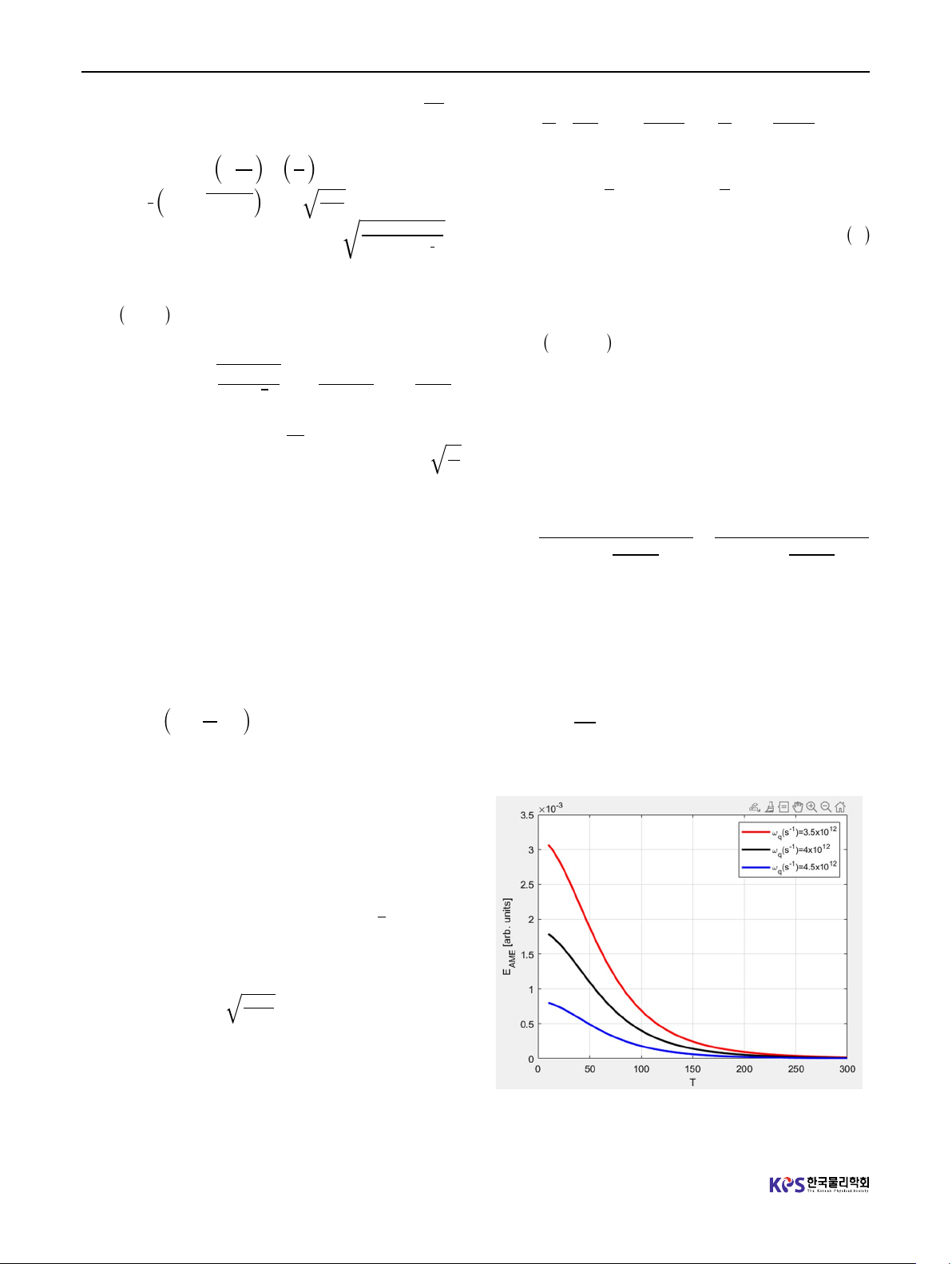
Fig. 1 The dependence of the AME on temperature with different
values of 𝜔 .q 1 3 Vol.:(0123456789) N. T. Huong et al.
where, Ln−n�(x) is associated with Laguerre polynomials.
The acoustic wave will be considered as a packet of n
The quantum kinetic equation of the average number of coherent phonons with the delta-like distribution function ( ) electrons
N = KBT and N = (2𝜋)3 ⃗ k −
in the wave vector ⃗k k q 𝜙𝛿 ⃗ q ℏ𝜔k 𝜔qvs f = a+ a
space, K is the Boltzmann constant, 𝜙 is the acoustic wave N,n,k
N,n,k N,n,k B t ( ) ( )
intensity, 𝜔 is the frequency of the external acoustic wave, 𝜕f [ ] q N,n,p 𝜕a+ a y
N,n,k N,n,kt (9) i
m is the effective mass of the electron, f is an unknown ℏ = iℏ = a+ a , H N,n,p
N,n,k N,n,k y 𝜕t 𝜕t t
distribution function perturbed due to the external field. ( )
Substituting into and realizing operator algebraic calcula-
Multiply both sides of (10) by e ⃗p𝛿 𝜀 − 𝜀 and m
N�,n�, �⃗ py tions, we obtained:
carry out the summation over n and p, we have the equation
for the partial current density J (the current caused by elec- 𝜕f (t) N,n,py
trons which have energy of 𝜀). 𝜕t ∑ ∑ ∑ [ ] 𝜋 | |2 ⃗ = − | | | 2 2 |I || ||J || j(𝜀) �⃗ 2
|C⃗k| n,n� N,N� + 𝜔 h,⃗j( = ��⃗ Q( c 𝜀) 𝜀) + �⃗ S(𝜀) (11)
N,N� n.n� 𝜏 (𝜀) ⃗ k +∞ ∑ ( ) ( ) [ ] e �⃗ E�⃗ k e �⃗ E�⃗ k J J
The expression �⃗h,⃗j(𝜀) represents the vector (cross) prod- s mΩ2 l mΩ2 s,l=−∞ [ ]
uct between the unit vector �⃗h , which is directed along the
exp(−i(s − l)Ωt) × N { f − f k N,n,
magnetic field, and the energy-dependent current density �⃗ py
N�,n�, �⃗ py+⃗k ( ) [ ]
vector ⃗j(𝜀). 𝛿 𝜀 − 𝜀
− ℏ𝜔 − lℏΩ + f − f N�,n�, N,n, k N,n, �⃗ py+⃗k �⃗ py �⃗ py
N�,n�, �⃗ py+⃗k ( ) [ ] With: 𝛿 𝜀 − 𝜀
+ ℏ𝜔 − lℏΩ − f − f ∑ ( ) N�,n�, N,n, k N,n, p �⃗ p �⃗ p �⃗ p y +⃗ k y
N�,n�, �⃗ py−⃗k y ( ) [ ] z ⃗ j(𝜀) = e f 𝛿 𝜀 − 𝜀 m N,n,py
N�,n�,py (12) 𝛿 𝜀 − 𝜀
− ℏ𝜔 − lℏΩ − f − f N,n,
N�,n�,p �⃗ py N�,n�, k N,n, z �⃗ py+⃗k
N�,n�, �⃗ py−⃗k �⃗ py ( ) 𝛿 𝜀 − 𝜀
+ ℏ𝜔 − lℏΩ } ( )
N,n, �⃗ py N�,n�, k �⃗ py+⃗k ( ) ∑ p 𝜕f ( ) N,n,p ∑ ∑ ∑ +∞ ∑ y y ��⃗
Q(𝜀) = −e2 �⃗ E, 𝛿
𝜀 − 𝜀N�,n�,py (13) 𝜋 | |2 e �⃗ E�⃗ q − | | | 2 |U || J m 𝜕py 2 |C⃗q| n,n� s mΩ2
N�,n�,py
N,N� n.n� s,l=−∞ ⃗ q ( ) [ ] e �⃗ E Solving ��⃗
Q(𝜀) and �⃗S(𝜀) we obtained: �⃗ q J
exp(−i(s − l)Ωt) × N { f − f l mΩ2 q
N,n, �⃗ py
N�,n�, �⃗ py+⃗q ∑ ( ) ( ) e2 𝜕f ��⃗ Q(𝜀) = 𝜀 − A E N,n 𝜕𝜀 (14) 𝛿 𝜀 − 𝜀
+ ℏ𝜔 − ℏ𝜔 − lℏΩ − 2𝜋m
N�,n�, �⃗ py+⃗q
N,n, �⃗ py k q N,n [ ] ( ) f − f 𝛿 𝜀 − 𝜀
− ℏ𝜔 + ℏ𝜔 − lℏΩ } �⃗ N�,n�,
S(𝜀) = �⃗ S + �⃗ S . With: �⃗ py−⃗q
N,n, �⃗ py
N�,n�, �⃗ py−⃗q
N,n, �⃗ py k q 1 2 (10) {( ) eΛ2L ∑ ∑ ( ) ∑ [ ( ) ( ) ( ) ( )] y KB T 2 2 𝜕f
e2E2k2𝜋 ���⃗ S = | | | | k2 × 1 − −Δn,n� − + −Δn,n� + − Δn,n� − − Δn,n� + 1 |I | |J | 𝜀 − A 𝛿 ℏ𝜔 𝛿 ℏ𝜔 𝛿 ℏ𝜔 𝛿 ℏ𝜔 4v 2 n,n� N,N� N,n N,N� k N,N� k N,N� k N,N� k 𝜕𝜀 8m2Ω4
0 ℏ 𝜔k m𝜌vs N,N� n,n� k ( )[ ( ) ( ) ( ) ( )] ( )
e2E2k2𝜋
e2E2k2𝜋 + 𝛿
−Δn,n� − ℏ𝜔 − ℏΩ + 𝛿 −Δn,n� + ℏ𝜔 − ℏΩ − 𝛿 Δn,n� − ℏ𝜔 − ℏΩ − 𝛿 Δn,n� + ℏ𝜔 − ℏΩ + 16m2Ω4 N,N� k N,N� k N,N� k N,N� k 16m2Ω4 [ ( ) ( ) ( ) ( )]} 𝛿
−Δn,n� − ℏ𝜔 + ℏΩ + 𝛿 −Δn,n� + ℏ𝜔 + ℏΩ − 𝛿 Δn,n� − ℏ𝜔 + ℏΩ − 𝛿 Δn,n� + ℏ𝜔 + ℏΩ N,N� k N,N� k N,N� k N,N� k (15) 1 3 Vol.:(0123456789)
Semi‑parabolic plus semi‑inverse squared quantum well: the acousto‑magneto‑electric field… e(2 2
𝜋 )3Λ2v4𝜔 L ∑ ∑ ) l q y | |2( 𝜕f ���⃗ S = | | 2 𝜙 𝜀 − A 4 |Un,n� N,N� | N,n �2 v 𝜕𝜀 s𝜌FSm
N,N� n,n� ∑ {( )[ ( ) ( )]
e2E2q2𝜋 q 1 − 𝛿
Δn,n� − �𝜔 + �𝜔
− 𝛿 Δn,n� + �𝜔 − �𝜔 8m2Ω4 N,N� k q N,N� k q q (16) ( )[ ( ) ( )] ( )
e2E2q2𝜋
e2E2q2𝜋 + 𝛿
Δn,n� − �𝜔 + �𝜔 − �Ω − 𝛿 Δn,n� + �𝜔 − �𝜔 − �Ω + 16m2Ω4 N,N� k q N,N� k q 16m2Ω4 [ ( ) ( )]} 𝛿
Δn,n� − �𝜔 + �𝜔 + �Ω − 𝛿 Δn,n� + �𝜔 − �𝜔 + �Ω N,N� k q N,N� k q ( ) ( ) Here, ∞ l ( ) Δn,n� = 2 𝜏 (𝜀) 𝜕f ℏ𝜔
n� − n + ℏ𝜔 N� − N ; T is the N,N� z c a = ∫ d l
𝜀 − AN,n 𝜀 (24) temperature.
0 1 + 𝜔2𝜏 2(𝜀) 𝜕𝜀 c � √ � 1 + 4 � � 𝛽 1 1 ∞ l ∞ l A = 2n + 1 + + N + ; = 𝜏 (𝜀) 𝜕f 𝜏 (𝜀) 𝜕f N,n ℏ𝜔z ℏ𝜔 𝛽 2 c 2 z K T b = ∫
S �d𝜀;c = ∫ S �d𝜀 B l 1 l 2
0 1 + 𝜔2𝜏 2(𝜀) 𝜕𝜀
0 1 + 𝜔2𝜏 2(𝜀) 𝜕𝜀 (17) c c (25)
From the above equations, we finally obtain the expres-
Calculations are performed under the assumption of a
sion for the total current density:
homogeneous system, with the Fermi–Dirac distribution {[ ]
function independent of the wave vector. 𝜏 (𝜀) ⃗ j = ⃗
Q(𝜀) + ⃗ S(𝜀) With v = 𝜀F 1 + 2 2 𝜔 𝜏 (𝜀) K c ([ ] [ ]) B T − 𝜕f 𝜔𝜏 (𝜀) ⃗ h, ⃗
Q(𝜀) + ⃗ h, ⃗ S(𝜀) (18) ⇒
= −e−(x−v) ( ) } 𝜕x + 2 2 𝜔 𝜏 (𝜀) ⃗
Q(𝜀) + ⃗
S(𝜀), ⃗ h ⃗ h c In this case, we obtain: ( ) ∞ x 𝜕f ⃗ j = F (x) = ∫ dx 𝜎 E + + 1,2 ij j 𝜂ij 𝛽ij 𝜙j (19) 2 2
0 1 + 𝜔 𝜏 x2 𝜕x 0 0 With: ∞ ( ) = x ∫ − −(x−v) e dx 2 2 0 1 + 𝜔 𝜏 x2 0 0 e2 { } 2 𝜀F [ ( ) ( ) (26) 𝜎 = a − a h + a h h ij 1𝛿ij 𝜔c 2𝜀ijk k 𝜔c 3 i j (20) 2𝜋 1 1 1 = K T e B ci cos { } 2 𝜔2 𝜏 𝜔 𝜏 𝜔 𝜏 0 c 0 c 0 2 c ( ) ( )] 𝜂 = b − b h + b h h ij 1𝛿ij 𝜔c 2𝜀ijk k 𝜔c 3 i j (21) 1 1 +si sin { } 𝜔 𝜏 𝜔 𝜏 c 0 c 0 2 𝛽 = c − c h + c h h ij 1𝛿ij 𝜔c 2𝜀ijk k 𝜔c 3 i j (22) Here:
𝜎 is the electrical conductivity tensor, is the internal ij 𝜂ij ∞ ∑
acoustoelectric conductivity tensor, 𝜋
(−1)k+1x2k−1
𝛽 is the external acou- ij si(x) = − + (27)
stoelectric conductivity tensor; 2
(2k − 1)(2k − 1)!
𝜏 (𝜀) denotes the relaxation k=1
time of charge carriers, which depends on the carrier energy ( )𝜈
according to the following expression: 𝜀 ∞ ∑
𝜏 (𝜀) = 𝜏 ; 0 KBT
ci(x) = − ln(x) + (−1)k x2k (28)
and 𝜏 is the momentum relaxation time at thermal energy 2k(2k)! 0 k=1
K T , and ν is a scattering-dependent exponent. BHere:
Then, we obtain the expression of the AME field: 1 3 Vol.:(0123456789) N. T. Huong et al.
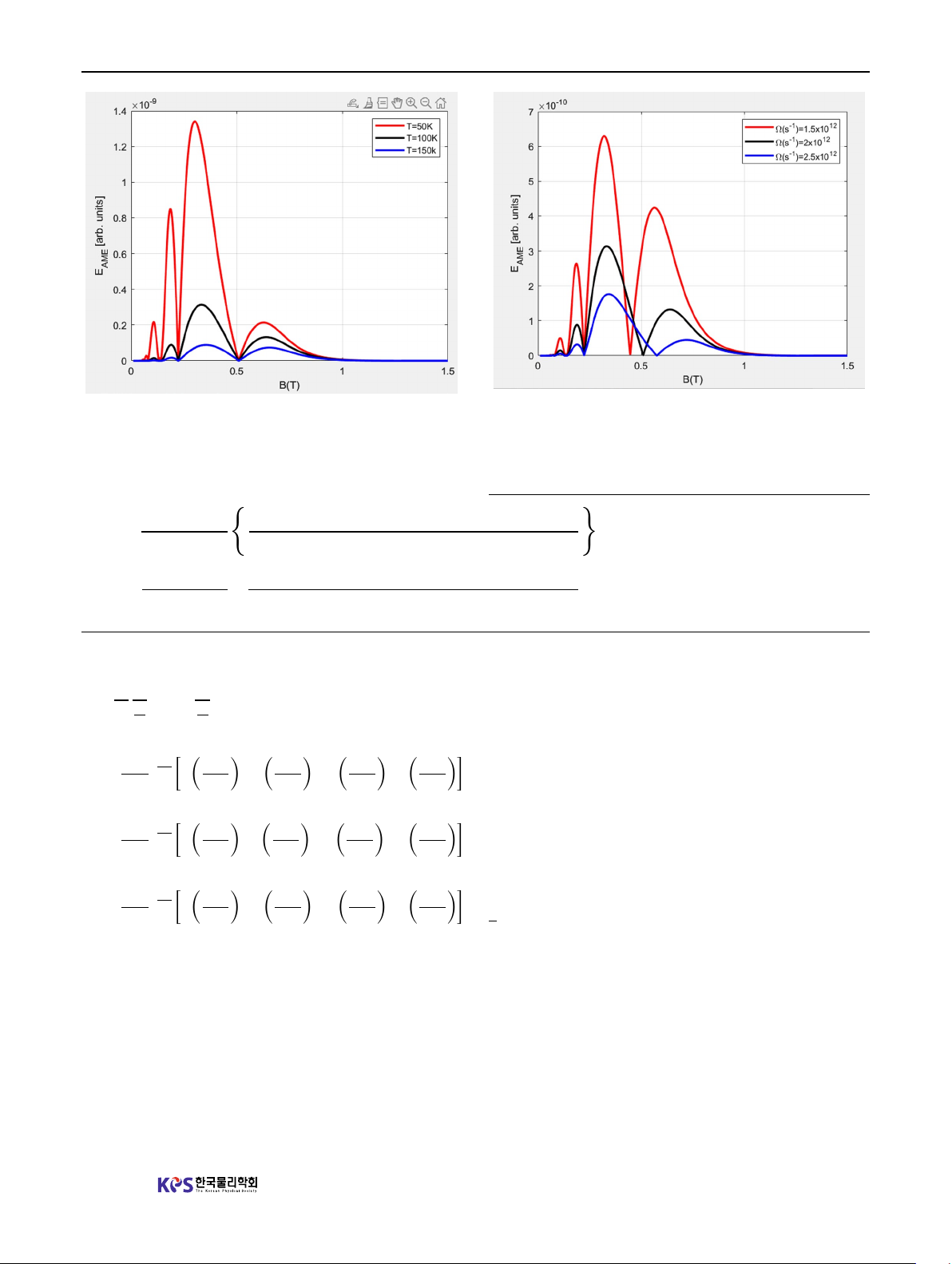
Fig. 2 The dependence of AME on the magnetic field B with differ-
Fig. 3 The dependence of AME on the magnetic field B with differ- ent values of T ent values of Ω { } 2𝜋𝜙𝜔 K T S� F F − S� F F + S� F F − S� F F 2,2 2,2 2,2 2,2 1,2 3,2 1,2 3,2 E = c𝜏0 B 2 1 2 1 AME [ ] [ ] e2 2 2 K TF − A F + 2w2 K TF − A F B 2,2 N,n 1,2 𝜏0 c B 3,2 N,n 2,2 { } (29) 2𝜋𝜙𝜔 A S� F F − S� F F + S� F F − S� F F c𝜏0 N,n 1,2 2,2 1,2 2,2 1,2 2,2 2,2 1,2 + 1 2 1 2 [ ] [ ] e2 2 2 K TF − A F + 2w2 K TF − A F B 2,2 N,n 1,2 𝜏0 c B 3,2 N,n 2,2 with
framework for understanding and predicting the AME field under varying conditions. S 1 S 1� = 1 ;S � = 2 2 𝜙 𝜕f 𝜕f (30) 𝜕𝜀 𝜕𝜀
3 Numerical results and discussion [ ( ) ( ) ( ) ( )] 1 𝜀F 1 1 1 1 F = e K ci cos + si sin 1,2 B T
In order to clarify the mechanism for the AME field in 2 𝜔2 𝜏 𝜔 𝜔 𝜔 𝜔 c 0 c𝜏0 c𝜏0 c𝜏0 c𝜏0 (31)
a SPPSISQW, in this section, we numerically evalu- [ ( ) ( ) ( ) ( )]
ate, plot, and discuss the expression of the AME 1 𝜀F 1 1 1 1 F = e
field for the quantum well of AlAs/GaAs/AlAs with K ci sin − si cos 2,2 B T 3 𝜔3 𝜏 𝜔 𝜔 𝜔 𝜔 c 0 c𝜏0 c𝜏0 c𝜏0 c𝜏0
the parameters: 𝜌 = 5300kg.m−3, m = 0.067 m , m (32) e e
being the mass of the free electron, v = 8 × 10²m∕s , [ ( ) ( ) ( ) ( )] S −1 𝜀F 1 1 1 1 𝜏
= 10−12 s , n = 1023m−3 , = 5370m∕s , 0 D
𝜙 = 104 Wm−2 , cs F = e K ci cos + si sin 3,2 B T 4 e = 1.60219.10–19, 𝜔4 𝜏 𝜔 𝜔 𝜔 𝜔
L = 80 nm, Lx = Ly = 100 nm and only c 0 c𝜏0 c𝜏0 c𝜏0 c𝜏0 (33)
consider the transitions: N = 0, N′ = 1, n = 0, n′ = 1 (the
lowest and the first-excited levels) [14].
𝜏 is the momentum relaxation time, is the Fermi energy. 0 𝜀F
Equation (29) is the AME field in a SPPSISQW under
Figure 1 illustrates the temperature dependence of the
the influence of electromagnetic waves. The expression is AME field at different values of acoustic wave frequency
a function of key parameters, including the acoustic wave ( 𝜔 ). Physically, the AME field is strongly dependent on q
frequency, EMW frequency, temperature, magnetic field, the phonon density, which increases with temperature. As
and structural confinement parameters. The form of the the temperature rises, the number of phonons in the system
equation reflects the nonlinear interactions introduced by increases, enhancing the electron–phonon scattering prob-
the EMW and the quantized nature of electron energy in the ability, and the AME field.
SPPSISQW. This analytical result provides a comprehensive
At lower acoustic wave frequencies, the variation in
AME with temperature is more gradual. This suggests that 1 3 Vol.:(0123456789)
Semi‑parabolic plus semi‑inverse squared quantum well: the acousto‑magneto‑electric field…
split, increasing the probability of electron–phonon scattering.
This results in a significant increase in the AME field as the magnetic field rises.
The cyclotron resonance phenomenon is evident in this
graph, where the increasing magnetic field leads to a rapid
rise in the AME field. Landau level splitting not only affects
the electron density of states but also adjusts phonon scattering
rates, creating resonants in the AME field. At lower magnetic
field values, the AME variation is relatively minor, indicating
weak interactions between electrons at lower energy levels.
Higher magnetic fields result in stronger Landau level split-
ting, increasing electron–phonon interactions and enhancing
the AME field in a nonlinear manner.
As noted, the resonance peak position remains unchanged
with varying temperature T because the laws of conserva-
tion of energy and momentum do not include temperature
as a parameter. This highlights the dominance of other fixed
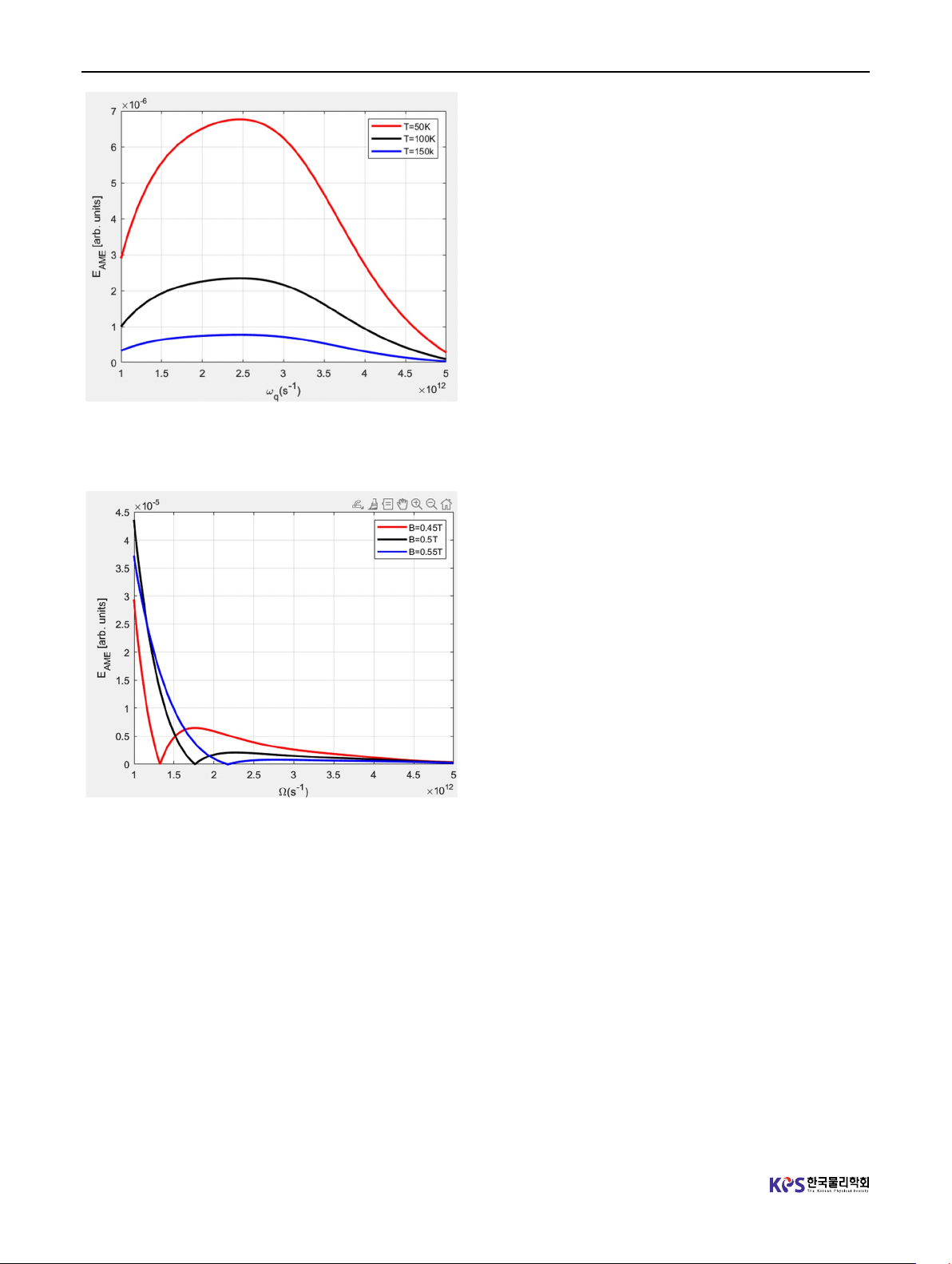
Fig. 4 The dependence of the AME on the frequency of the external
parameters, such as the acoustic wave frequency and magnetic
acoustic wave at different temperatures T
field, in governing the electron–phonon interaction process.
The stability of the resonance position further demonstrates
that the AME effect can be utilized as a reliable analytical tool
for studying quantum interactions across various temperature
ranges without being influenced by thermal fluctuations.
Figure 3 illustrates the AME field exhibits a sharp increase
at low magnetic field values, followed by a gradual decrease
and stabilization. This behavior reflects the cyclotron reso-
nance effect. At higher magnetic field values, the AME field
decreases, suggesting that the system reaches saturation, where
electron–phonon interactions have reached their limit.
Similar to the earlier figures, the AME field demonstrates a
strong nonlinear dependence on the magnetic field. However, a
major difference is the influence of external EMW frequencies,
where higher EMW frequencies reduce the peak value of the
AME field and modify the amplitude of the resonants. As the
EMW frequency increases, the peak value of the AME field
decreases, but resonants in the field remain evident. This sug-
gests that higher EMW frequencies reduce the system’s reso-
Fig. 5 The dependence of AME on the EMW frequency with differ-
nance, although resonants persist due to the complex interplay ent values of B
between electrons and the magnetic field. Compared to cases
without EMW or with lower EMW frequencies, the presence
at low acoustic frequencies, phonon energy is insufficient
of high EMW frequencies decreases the AME field’s sensitiv-
to induce strong scattering, leading to a slower increase
ity to the magnetic field, highlighting the regulatory role of
in the AME field. However, at higher frequencies, pho-
electromagnetic waves in the system.
nons carry more energy, generating stronger scattering
The rightward shift of the resonance peak position with
interactions and resulting in a more pronounced nonlin-
increasing EMW frequency Ω can be fully explained by the
ear increase in the AME field as temperature rises. Higher
conservation laws of energy and momentum. As Ω increases,
acoustic wave frequencies lead to a more sensitive AME
the energy of interacting electrons also increases, requiring
response to temperature changes, demonstrating the piv-
the resonance conditions to adjust accordingly to satisfy the
otal role of phonons in energy transfer and interaction pro-
updated energy and momentum relations. Importantly, this cesses in the system.
shift exhibits nonlinear behavior with respect to Ω. This indi-
Figure 2 shows the dependence of the AME field on mag-
cates that, in addition to the EMW frequency, other system
netic field strength (B). Physically, as the magnetic field parameters, such as the electromagnetic field amplitude and
increases, the Landau levels of electrons become more sharply
magnetic field, significantly influence the resonance shift. 1 3 Vol.:(0123456789) N. T. Huong et al.
Furthermore, at higher Ω, the amplitude of the resonance in this figure underscores the role of various system param-
peak tends to decrease. This phenomenon may result from the
eters (e.g., temperature, magnetic field) in modulating the
saturation of electron–phonon interactions due to intensified AME effect. The complex interplay among these parameters scattering effects.
leads to unique characteristics that are prominent in low-
Figure 4 illustrates the AME field’s dependence on acous-
dimensional quantum structures like SPPSISQW.
tic wave frequency at various temperatures. Physically, the
acoustic wave frequency plays a critical role in modulating the
electron–phonon scattering process. As the acoustic wave fre- 4 Conclusions
quency increases, the number of available phonons for electron
interactions also rises, enhancing electron–phonon scattering
This study presents groundbreaking and highly significant
and consequently increasing the AME field.
results that have not been previously calculated for the Semi-
When the acoustic wave frequency reaches a critical point,
parabolic Plus Semi-inverse Squared Quantum well (SPP-
the AME field peaks before declining. This can be attributed
SISQW) structure. These findings represent a substantial
to the resonance between phonons and the electron energy advancement compared to both our prior work and exist-
levels in the system [15], where scattering processes reach ing studies on the Acousto-magneto-electric (AME) effect
their maximum efficiency before saturation occurs. Acoustic
in low-dimensional semiconductor systems. Through both
wave frequency significantly influences the AME field, with
theoretical and numerical calculations, this paper delivers
a resonance peak existing due to phonon-electron interaction
the following key and novel insights:
efficiency at specific frequencies.
The Semi-parabolic Plus Semi-inverse Squared Quan-
Figure 5 shows the dependence of the AME field on tum well (SPPSISQW) structure exhibits much stronger
external EMWEMW frequency at different magnetic field.
nonlinear variations in the AME field compared to bulk
Physically, the presence of an external EMW induces strong
semiconductors and other structures like superlattices and
interactions between the electrons and the wave field, alter-
quantum wires. This is due to the influence of the asym-
ing their energy distribution. This increases the probability
metric confinement potential, which alters the electron dis-
of electron–phonon scattering and consequently enhances tribution and electron–phonon interactions [16], leading to the AME field.
a significantly stronger AME effect. The layered structure
At higher EMW frequencies, the resonance between the
of the SPPSISQW, with electrons confined in lower quan-
electromagnetic field and the electrons in the Landau lev-
tum states, and the variation in amplitude across acoustic
els creates strong resonants in the AME field. This reflects
and electromagnetic frequencies, leads to more pronounced
the dramatic transition of the system under the influence of
resonants in the AME field compared to bulk semiconduc-
the external electromagnetic field. The presence of external tor structures.
EMW not only increases the AME field but also introduces
One of the major contributions of this study is the analy-
resonants, highlighting the critical role of electromagnetic sis of the impact of external electromagnetic waves (EMW)
waves in modulating electron and phonon dynamics in quan-
on the AME field. The results show that “with the presence tum systems.
of EMW” [17], the AME field significantly increases com-
The resonance peak shift observed in Fig. 5 reflects the
pared to the case without EMW. Specifically, the interac-
intricate relationship between the electromagnetic wave fre-
tion between electrons and the EMW increases the resonant
quency Ω and the energy associated with electron–phonon
frequency of the AME field, leading to notable changes
interactions. As Ω increases, the resonance peak shifts to in both the structure and the magnitude of the field. “At
higher frequencies, indicating that the additional energy high EMW frequencies”, the AME field not only increases
from the electromagnetic wave modifies the resonance con-
but also exhibits stronger resonance, a phenomenon not
ditions. The resonance condition is strongly affected by the
observed without EMW. This highlights the role of electro-
electromagnetic wave amplitude. At higher amplitudes, elec-
magnetic waves in altering electron–phonon dynamics and
tron–phonon interactions are modulated, leading to signifi-
opens new research avenues into the effects of EMW on the
cant changes in the position and amplitude of the resonance
Semi-parabolic Plus Semi-inverse Squared Quantum Well peak. (SPPSISQW) structure.
A noteworthy phenomenon occurs when Ω reaches a
Compared to previous studies on the AME effect in
critical value, at which the system exhibits saturation and superlattices and two-dimensional semiconductor systems
the strength of the interactions diminishes. This suggests the
[18], this research marks the first time the influence of
existence of a threshold electromagnetic wave frequency for
electromagnetic waves on AME field has been calculated
optimizing the AME effect. The nonlinear behavior evident
for the SPPSISQW structure, revealing a significantly 1 3 Vol.:(0123456789)
Semi‑parabolic plus semi‑inverse squared quantum well: the acousto‑magneto‑electric field…
more complex dependency of the AME field on system Declarations
parameters. These findings underscore the crucial role of
the unique combination of confinement phonons and elec-
Conflict of interest The authors declare no competing interests.
tromagnetic fields in the SPPSISQW system, resulting in
stronger AME resonants and peak values under specific
conditions. In contrast to bulk semiconductor systems, References
where the AME effect is primarily influenced by changes
in phonon energy, the AME effect in the SPPSISQW is 1. S.V. Biryukov, Y. V. Gulyaev, V.V. Krylov, V.P. Plesskij, Surface
also profoundly shaped by the intricate interaction pro-
Acoust. Waves Inhomogeneous Media (1991)
cesses between electrons and electromagnetic waves, dis-
2. J.M. Shilton, D.R. Mace, V.I. Talyanskii, Y. Galperin, M.Y. Sim-
mons, M. Pepper, D.A. Ritchie, On the acoustoelectric current in
tinguishing this material from other semiconductor struc-
a one-dimensional channel. J. Phys. Condens. Mat er 8(24), L337
tures such as quantum wells, quantum wires, and bulk (1996) materials.
3. O. Entin-Wohlman, Y. Levinson, Y.M. Galperin, Acoustoelectric
The AME effect in SPPSISQW exhibits high stability
effect in a finite-length ballistic quantum channel. Phys. Rev. B
Conden. Matter 62(11), 7283–7288 (2000)
with temperature. This is demonstrated by the invariance
4. N.Q. Bau, N. Van Hieu, N.V. Nhan, Calculations of the acous-
of the resonance position with temperature. Electromag-
toelectric current in a quantum well by using a quantum kinetic
netic wave frequency Ω is a crucial tuning parameter. The
equation. J. Korean Phys. Soc. 61(12), 2026–2031 (2012)
shift in resonance peak position with Ω reflects the influ-
5. N.Q. Bau, N. Van Hieu, The quantum acoustoelectric current in
a doped superlattice GaAs:Si/GaAs:Be. Superlatt. Microstruct.
ence of electromagnetic wave energy on the resonance
63(2013), 121–130 (2013)
conditions. This phenomenon underscores the nonlinear 6. T. Yamada, Acoustomagnetoelectric effect in bismuth. J. Phys.
relationships among system parameters. Resonance con-
Soc. Jpn. 20(8), 1424–1437 (1965)
ditions and amplitudes are strongly affected by electro-
7. M. Kogami, S. Tanaka, Acoustomagnetoelectric and acoustoelec-
tric effects in N-INSB at low temperatures. J. Phys. Soc. Jpn.
magnetic waves: Fig. 5 shows the strong dependence of 30(3), 775–784 (1971)
the AME effect on both the amplitude and frequency of 8. E.M. Epshtein, G.M. Shmelev, G.I. Tsurkan, Photoinduced pro-
electromagnetic waves. The nonlinear variations and the
cesses in semiconductors. Shti ntsa, Kishinev (1987) (in Russian)
reduction in resonance amplitude at higher frequencies 9. S. Y. Mensah, F. K. A. Allotey, S. K. Adjepong, Acoustomagne-
toelectric effect in a superlattice. J. Phys. Conden. Matter. 1235
suggest critical thresholds for optimizing the system’s (1996) behavior.
10. N. Q. Bau, N. V. Nhan, N. V. Nghia, The dependence of the acous-
The findings emphasize the importance of using the quan-
tomagnetoelectric current on the parameters of a cylindrical quan-
tum kinetic equation to address complex problems in the
tum wire with an infinite potential in the presence of an external
magnetic field. In: PIERS Proceedings, vol. 14521456 (2011)
Semi-parabolic Plus Semi-inverse Squared Quantum well
11. N.Q. Bau, N. Van Hieu, N.V. Nhan, The quantum acoustomag-
(SPPSISQW) structure while opening up many potential
netoelectric field in a quantum well with a parabolic potential.
applications. In particular, this research lays the foundation
Superlatt. Microstruct. 52(5), 921–930 (2012)
for developing electronic devices and sensors based on the
12. N.V. Nhan, N. Van Nghia, N. Van Hieu, The dependence of a
quantum acoustoelectric current on some qualities in a cylindri-
AME effect in environments with strong electromagnetic
cal quantum wire with an infinite potential GaAs/GaAsAl. Mater. fields.
Transact. 56(09), 1408–1411 (2015)
13. C. T. V. Ba, N. Q. Bau, T. A. Tuan, T. T. Dien, Theoretical study
Acknowledgements This study was fnancially supported by Vietnam
of onlinear absorption of a strong electromagnetic wave in infi-
National University, VNU Strong Research Group, named Method of
nite semi-parabolic Plus Semi-inverse Squared Quantum Wells by
Quantum Field Theory, and Application of Theoretical Research to
using quantum kinetic equation. Phys. B Conden. Matter. (2023)
Physical Phenomena in Quantum Environment (leader by Prof. Dr.
14. N.Q. Thang, N. Van Nghia, N.Q. Bau, The influence of electro-
Nguyen Quang Bau) (Grant number: VNU.SRG-N94/QD-DHQGHN).
magnetic wave on the acoustomagnetoelectric effect in a quantum
well with infinite potential. Key Eng. Mater. 789, 6–13 (2018).
Author contribution N.T.H. and N.Q.B. wrote the main manuscript (ISSN: 1662–9795)
text. N.Q.T., P.D.C., and N.D.N. carried out the analytical calculations.
15. N. Vu Nhan, N. Van Nghia, N.Q. Thang, N.Q. Bau, Interaction of
A.-T.T. performed the numerical calculations and prepared the figures.
external acoustic waves-confined electrons-internalphonons in a
All authors reviewed the manuscript.
cylindrical quantum wire with an infinite potential in the presence
of an external magnetic field. Key Eng. Mater. 783, 62–72 (2018).
Funding The funding has been received from Đại học Quốc gia Hà (ISSN: 1662-9795)
Nội with Grant nos. VNU.SRG-N94/QD-DHQGHN, VNU.SRG-N94/
16. N.Q. Bau, N. Van Nghia, The influence of an external magnetic
QD-DHQGHN, VNU.SRG-N94/QD-DHQGHN, VNU.SRG-N94/QD-
field on the acoustomagnetoelectric field in a rectangular quantum DHQGHN, VNU.SRG-N94/QD-DHQGHN.
wire with an infinite potential by using a quantum kinetic equa-
tion. Int. J. Phys. Math. Sci. World Acad. Sci. Eng. Technol. 10(3),
Data availability No datasets were generated or analyzed during the 83–89 (2016) current study.
17. “N. T. Huong, N. Q. Thang, N. Van Nghia, N. Quang Bau, Rec-
tangular quantum wire with an infinite potential GaAs/AlGaAs: 1 3 Vol.:(0123456789) N. T. Huong et al.
quantum theory of acoustomagnetoelectric effect in the presence
Springer Nature or its licensor (e.g. a society or other partner) holds
of electromagnetic wave, J. Phys. Conf. Ser. 1932–012010 (2021)
exclusive rights to this article under a publishing agreement with the
18. “N. Van Nghia, N. Q. Thang, N. Q. Bau, Influence of confined
author(s) or other rightsholder(s); author self-archiving of the accepted
acoustic phonons on the acousto-electric field in doped semicon-
manuscript version of this article is solely governed by the terms of
ductor superlattices. J. Phys. Conf. Ser. 2744–012005 (2024)
such publishing agreement and applicable law.
Publisher's Note Springer Nature remains neutral with regard to
jurisdictional claims in published maps and institutional affiliations. 1 3 Vol.:(0123456789)
Document Outline
- Semi-parabolic plus semi-inverse squared quantum well: the acousto-magneto-electric field in the presence of electromagnetic waves
- Abstract
- 1 Introduction
- 2 The AME field in a SPPSISQW
- 2.1 The wave function and the discrete energy spectrum of the electron in the SPPSISQW
- 2.2 An analytic expression for the AME field in the SPPSISQW
- 3 Numerical results and discussion
- 4 Conclusions
- Acknowledgements
- References
Tài liệu liên quan:
-

Ung dung game hoa trong cac chien dich MKT
27 14 -

Bao cao Chi so TMDT Viet Nam 2025
30 15 -
Thông tư quy định về việc phân quyền, phân cấp và phân định thẩm quyền quản lý nhà nước về giáo dục cho chính quyền địa phương
32 16 -
Nghị quyết về phát huy các giá trị di sản văn hóa gắn với phát triên du lịch bền vững tỉnh Khánh Hòa đến năm 2025, định hướng đến năm 2030
34 17 -
Quyết định phê duyệt Chiến lược phát triển du lịch Việt Nam đến năm 2030
21 11