Smart Traffic Management Using IoT: Final Year B.Tech Project Report | Iot và ứng dụng | Học viện Công nghệ Bưu chính Viễn thông
Whenever we have used materials (data, theoretical analysis, figures, and text) from other sources, we have given due credit to them by citing them in the text of the thesis and giving their details in the references. Further, we have taken permission from the copyright owners of the sources. Tài liệu được sưu tầm và soạn thảo dưới dạng file PDF để gửi tới các bạn cùng tham khảo, ôn tập đầy đủ kiến thức, chuẩn bị cho các buổi học thật tốt. Mời bạn đọc đón xem!
Môn: IoT và ứng dụng 143 tài liệu
Trường: Học viện Công Nghệ Bưu Chính Viễn Thông 1.8 K tài liệu
Tác giả:



Preview text:
SMART TRAFFIC MANAGEMENT SYSTEM USING INTERNET OF THINGS (IoT)
Final Year Project report submitted to
Central Institute of Technology, Kokrajhar
in partial fulfilment for the award of the degree of Bachelor of Technology in
Computer Science and Engineering by
Harshajit Singha, Kaustav Kumar Nath, Bigrai Basumatary, Jyotirmoy Swargiary
(GAU-C-15/056, GAU-C-15/068, GAU-C-15/089, GAU-C-15/076) Under the supervision of Mr.Prasanta Baruah
Computer Science and Engineering
Central Institute of Technology, Kokrajhar 8th Semester, 2019 May 14, 2019 DECLARATION We certify that
(a) The work contained in this report has been done by us under the guidance of our supervisor.
(b) The work has not been submitted to any other Institute for any degree or diploma.
(c) We have conformed to the norms and guidelines given in the Ethical Code of Conduct of the Institute.
(d) Whenever we have used materials (data, theoretical analysis, figures, and text)
from other sources, we have given due credit to them by citing them in the text
of the thesis and giving their details in the references. Further, we have taken
permission from the copyright owners of the sources, whenever necessary. Date: May 14, 2019
Harshajit Singha, Kaustav Kumar Nath, Bigrai Basumatary, Jyotirmoy Swargiary
GAU-C-15/056, GAU-C-15/068, GAU-C-15/089, GAU-C-15/076 Place: Kokrajhar i Abstract
Name of the student: Harshajit Singha, Kaustav Kumar Nath, Bigrai
Basumatary, Jyotirmoy Swargiary
Roll No: GAU-C-15/056, GAU-C-15/068, GAU-C-15/089, GAU-C-15/076
Degree for which submitted: Bachelor of Technology
Department: Computer Science and Engineering
Thesis title: SMART TRAFFIC MANAGEMENT SYSTEM USING INTERNET OF THINGS (IoT)
Thesis supervisor: Mr.Prasanta Baruah
Month and year of thesis submission: May 14, 2019
Over the years, there has been a sudden increase in the number of vehicles on the
road. Traffic congestion is a growing problem everyone faces in their daily life.
Manual control of traffic by traffic police has not proved to be efficient. Also the
predefined set time for the signal at all circumstances (low and high traffic density)
has not solved this problem. A model to effectively solve the above mentioned
problems by using Internet of Things (IoT) is proposed. We use cloud for internet
based computing, where different services such as server, storage and application are
delivered for traffic management. A network of sensors is used to track the number
of vehicles and the traffic congestion at the intersections on a road and rerouting
will be done on the basis of the traffic density on the lanes of a road.
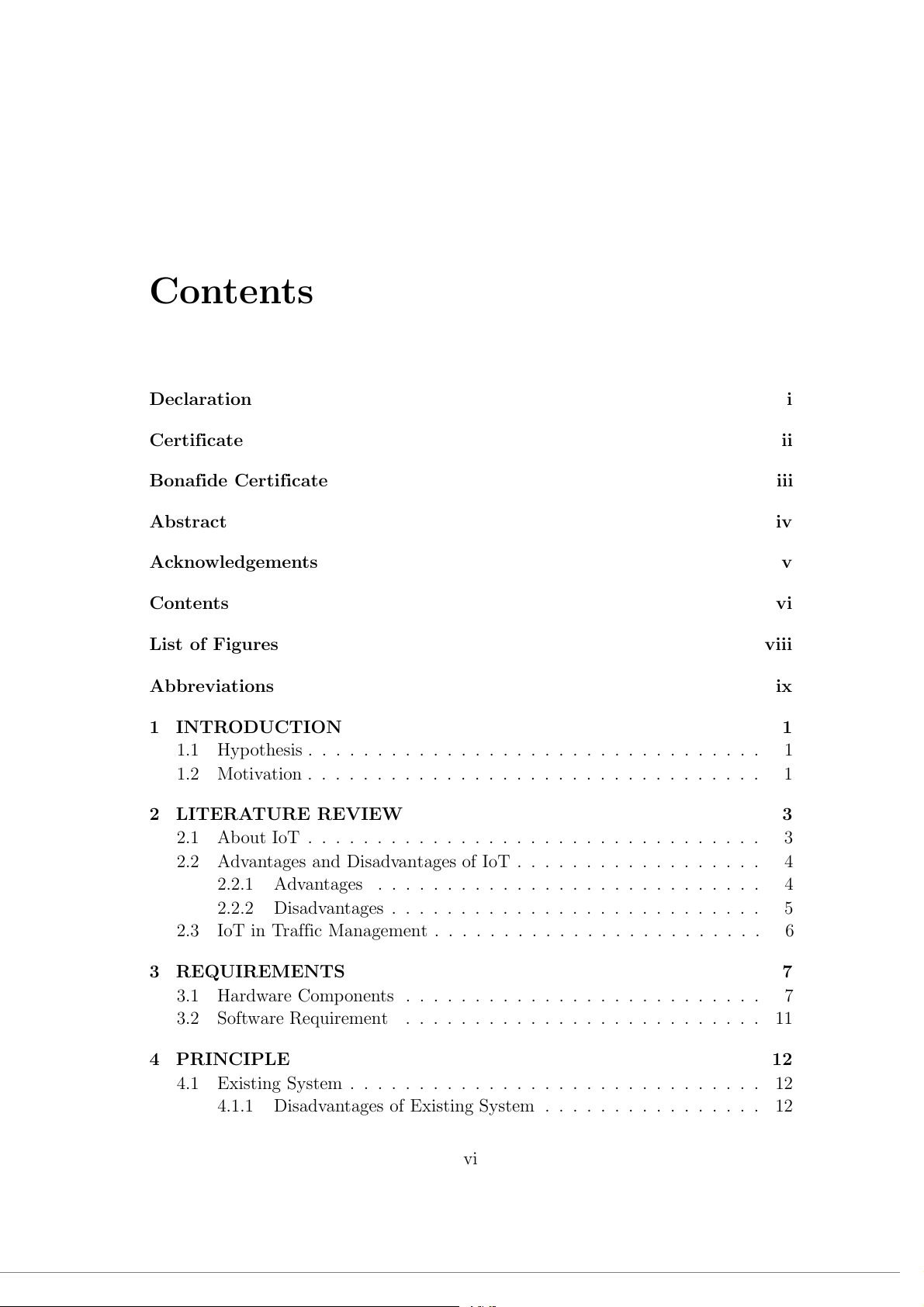
Keywords: IoT, Sensors, Microcontroller. iv Contents Declaration i Certificate ii Bonafide Certificate iii Abstract iv Acknowledgements v Contents vi List of Figures viii Abbreviations ix 1 INTRODUCTION 1 1.1
Hypothesis . . . . . . . . . . . . . . . . . . . . . . . . . . . . . . . . . 1 1.2
Motivation . . . . . . . . . . . . . . . . . . . . . . . . . . . . . . . . . 1 2 LITERATURE REVIEW 3 2.1
About IoT . . . . . . . . . . . . . . . . . . . . . . . . . . . . . . . . . 3 2.2
Advantages and Disadvantages of IoT . . . . . . . . . . . . . . . . . . 4 2.2.1
Advantages . . . . . . . . . . . . . . . . . . . . . . . . . . . . 4 2.2.2
Disadvantages . . . . . . . . . . . . . . . . . . . . . . . . . . . 5 2.3
IoT in Traffic Management . . . . . . . . . . . . . . . . . . . . . . . . 6 3 REQUIREMENTS 7 3.1
Hardware Components . . . . . . . . . . . . . . . . . . . . . . . . . . 7 3.2
Software Requirement . . . . . . . . . . . . . . . . . . . . . . . . . . 11 4 PRINCIPLE 12 4.1
Existing System . . . . . . . . . . . . . . . . . . . . . . . . . . . . . . 12 4.1.1
Disadvantages of Existing System . . . . . . . . . . . . . . . . 12 vi Contents vii 4.2
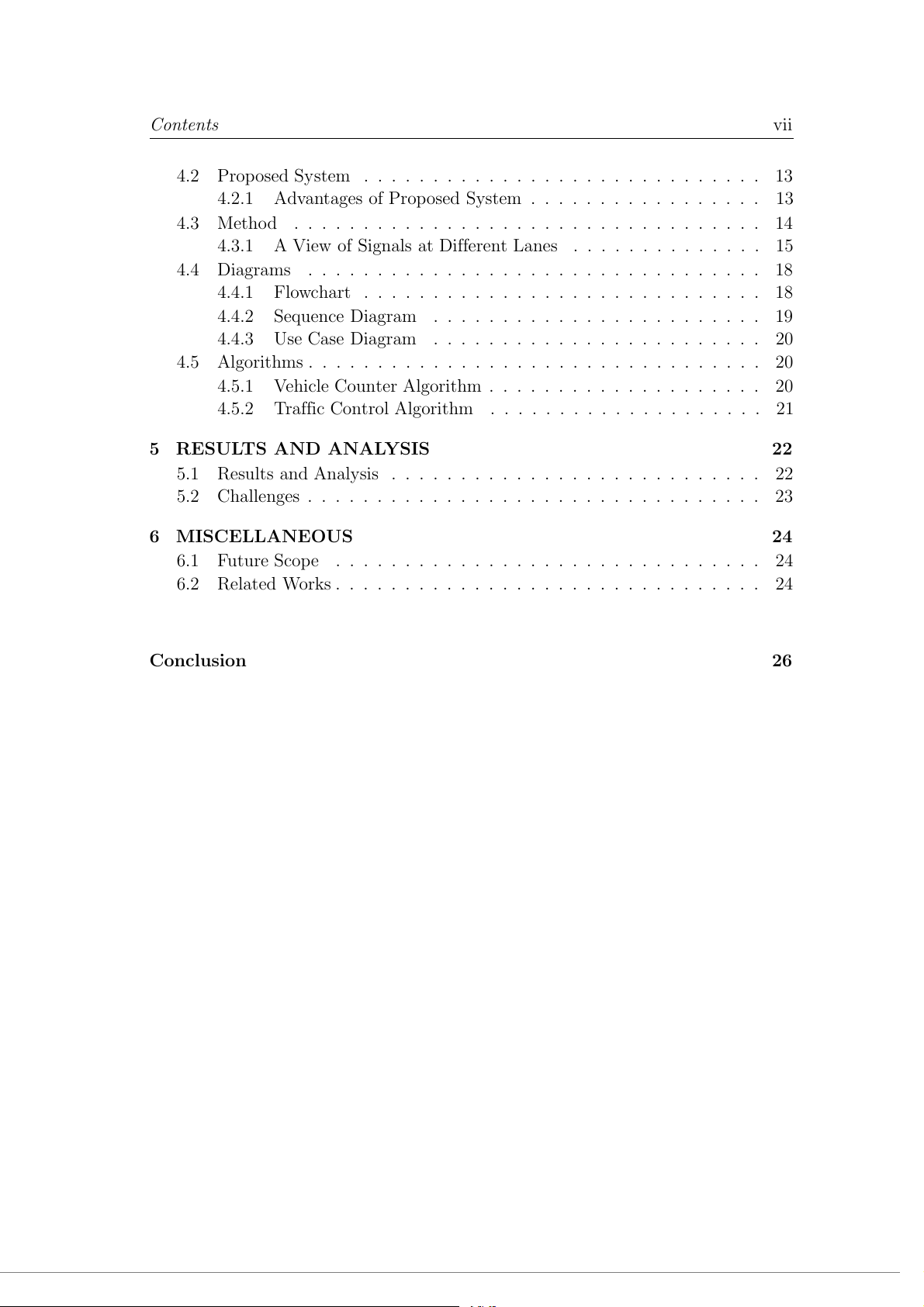
Proposed System . . . . . . . . . . . . . . . . . . . . . . . . . . . . . 13 4.2.1
Advantages of Proposed System . . . . . . . . . . . . . . . . . 13 4.3
Method . . . . . . . . . . . . . . . . . . . . . . . . . . . . . . . . . . 14 4.3.1
A View of Signals at Different Lanes . . . . . . . . . . . . . . 15 4.4
Diagrams . . . . . . . . . . . . . . . . . . . . . . . . . . . . . . . . . 18 4.4.1
Flowchart . . . . . . . . . . . . . . . . . . . . . . . . . . . . . 18 4.4.2
Sequence Diagram . . . . . . . . . . . . . . . . . . . . . . . . 19 4.4.3
Use Case Diagram . . . . . . . . . . . . . . . . . . . . . . . . 20 4.5
Algorithms . . . . . . . . . . . . . . . . . . . . . . . . . . . . . . . . . 20 4.5.1
Vehicle Counter Algorithm . . . . . . . . . . . . . . . . . . . . 20 4.5.2
Traffic Control Algorithm . . . . . . . . . . . . . . . . . . . . 21 5 RESULTS AND ANALYSIS 22 5.1
Results and Analysis . . . . . . . . . . . . . . . . . . . . . . . . . . . 22 5.2
Challenges . . . . . . . . . . . . . . . . . . . . . . . . . . . . . . . . . 23 6 MISCELLANEOUS 24 6.1
Future Scope . . . . . . . . . . . . . . . . . . . . . . . . . . . . . . . 24 6.2
Related Works . . . . . . . . . . . . . . . . . . . . . . . . . . . . . . . 24 Conclusion 26 List of Figures 3.1
Arduino Mega 2560. . . . . . . . . . . . . . . . . . . . . . . . . . . . 8 3.2
Arduino Uno. . . . . . . . . . . . . . . . . . . . . . . . . . . . . . . . 9 3.3
LED for Traffic Lights. . . . . . . . . . . . . . . . . . . . . . . . . . . 9 3.4
IR Sensors. . . . . . . . . . . . . . . . . . . . . . . . . . . . . . . . . 10 3.5 Jumper Wires.
. . . . . . . . . . . . . . . . . . . . . . . . . . . . . . 10 4.1
Control of previous Intersection . . . . . . . . . . . . . . . . . . . . . 15 4.2
Signal at Lane 1 . . . . . . . . . . . . . . . . . . . . . . . . . . . . . . 16 4.3
Signal at Lane 2 . . . . . . . . . . . . . . . . . . . . . . . . . . . . . . 16 4.4
Signal at Lane 3 . . . . . . . . . . . . . . . . . . . . . . . . . . . . . . 17 4.5
Flowchart. . . . . . . . . . . . . . . . . . . . . . . . . . . . . . . . . . 18 4.6
Sequence Diagram. . . . . . . . . . . . . . . . . . . . . . . . . . . . . 19 4.7
Use Case Diagram. . . . . . . . . . . . . . . . . . . . . . . . . . . . . 20 5.1
Model of the Project. . . . . . . . . . . . . . . . . . . . . . . . . . . . 23 viii Abbreviations IoT Internet of Things IR Infra Red LED Light Emitting Diode WiFi Wireless Fidelity WSN Wireless Sensor Network NFC Near Field Communication ITS
Intelligent Transportation System ix Chapter 1 INTRODUCTION 1.1 Hypothesis
A smart traffic management system utilizing sensor data, communication and auto-
mated algorithms is to be developed to keep traffic flowing more smoothly. The aim
is to optimally control the duration of green or red light for a specific traffic light
at an intersection. The traffic signals should not flash the same stretch of green or
red all the time, but should depend on the number of cars present. When traffic
is heavy in one direction, the green lights should stay on longer; less traffic should
mean the red lights should be on for longer time interval. This solution is expected
to eliminate inefficiencies at intersections and minimize the cost of commuting and pollution. 1.2 Motivation
In 2014, 54% of the total global population was urban residents. The prediction was
a growth of nearly 2% each year until 2020 leading to more pressure on the trans-
portation system of cities. Additionally, the high cost of accommodation in business
districts lead to urban employees living far away from their place of work/education
and therefore having to commute back and forth between their place of residence
and their place of work. More vehicles moving need to be accommodated over a 1 Chapter 1: Introduction 2
fixed number of roads and transportation infrastructure. Often, when dealing with
increased traffic, the reaction is just widen the lanes or increase the road levels.
However, cities should be making their streets run smarter instead of just making
them bigger or building more roads. This leads to the proposed system which will
use a micro controller and sensors for tracking the number of vehicles leading to
time based monitoring of the system.(Babu, 2016)(Zantout, 2017) Chapter 2 LITERATURE REVIEW 2.1 About IoT
The Internet of Things (IoT), also sometimes referred to as the Internet of Ev-
erything (IoE), consists of all the web-enabled devices that collect, send and act
on data they acquire from their surrounding environments using embedded sen-
sors,processors and communication hardware. These devices, often called ”con-
nected” or ”smart” devices, can sometimes talk to other related devices, a process
called machine-to-machine(M2M) communication, and act on the information they
get from one another. Humans can interact with the gadgets to set them up, give
them instructions or access the data, but the devices do most of the work on their
own without human intervention. Their existence has been made possible by all the
tiny mobile components that are available these days, as well as the always-online
nature of our home and business networks. Connected devices also generate massive
amounts of Internet traffic, including loads of data that can be used to make the
devices useful, but can also be mined for other purposes. All this new data, and
the Internet-accessible nature of the devices, raises both privacy and security con-
cerns. But this technology allows for a level of real-time information that we have
never had before. We can monitor our homes and families remotely to keep them
safe. Businesses can improve processes to increase productivity and reduce material
waste and unforeseen downtime. Sensors in city infrastructure can help reduce road
congestion and warn us when infrastructure is in danger of crumbling. Gadgets 3 Chapter 2: Literature Review 4
out in the open can monitor for changing environmental conditions and warn us of impending disasters. 2.2
Advantages and Disadvantages of IoT 2.2.1 Advantages
Communication: IoT encourages the communication between devices, also fa-
mously known as Machine-to-Machine (M2M) communication. Because of this, the
physical devices are able to stay connected and hence the total transparency is
available with lesser inefficiencies and greater quality.
Automation and Control: Due to physical objects getting connected and con-
trolled digitally and centrally with wireless infrastructure, there is a large amount of
automation and control in the workings. Without human intervention, the machines
are able to communicate with each other leading to faster and timely output.
Information: It is obvious that having more information helps making better de-
cisions. Whether it is mundane decisions as needing to know what to buy at the
grocery store or if your company has enough widgets and supplies, knowledge is
power and more knowledge is better.
Monitor: The second most obvious advantage of IoT is monitoring. Knowing
the exact quantity of supplies or the air quality in your home, can further provide
more information that could not have previously been collected easily. For instance,
knowing that you are low on milk or printer ink could save you another trip to the
store in the near future. Furthermore, monitoring the expiration of products can and will improve safety.
Time: As hinted in the previous examples, the amount of time saved because of
IoT could be quite large. And in today’s modern life, we all could use more time.
Money: The biggest advantage of IoT is saving money. If the price of the tagging
and monitoring equipment is less than the amount of money saved, then the Internet
of Things will be very widely adopted. IoT fundamentally proves to be very helpful Chapter 2: Literature Review 5
to people in their daily routines by making the appliances communicate to each other
in an effective manner thereby saving and conserving energy and cost. Allowing the
data to be communicated and shared between devices and then translating it into
our required way, it makes our systems efficient.
Efficient and Saves Time: The machine-to-machine interaction provides better
efficiency, hence; accurate results can be obtained fast. This results in saving valu-
able time. Instead of repeating the same tasks every day, it enables people to do other creative jobs.
Better Quality of Life: All the applications of this technology culminate in in-
creased comfort, convenience, and better management, thereby improving the qual- ity of life. 2.2.2 Disadvantages
Compatibility: Currently, there is no international standard of compatibility for
the tagging and monitoring equipment. I believe this disadvantage is the most easy
to overcome. The manufacturing companies of these equipment just need to agree to
a standard, such as Bluetooth, USB, etc. This is nothing new or innovative needed.
Complexity: As with all complex systems, there are more opportunities of failure.
With the Internet of Things, failures could sky rocket. For instance, let’s say that
both you and your spouse each get a message saying that your milk has expired,
and both of you stop at a store on your way home, and you both purchase milk.
As a result, you and your spouse have purchased twice the amount that you both
need. Or maybe a bug in the software ends up automatically ordering a new ink
cartridge for your printer each and every hour for a few days, or at least after each
power failure, when you only need a single replacement.
Privacy/Security: With all of this IoT data being transmitted, the risk of los-
ing privacy increases. For instance, how well encrypted will the data be kept and
transmitted with? Do you want your neighbors or employers to know what medica-
tions that you are taking or your financial situation? Safety: As all the household
appliances, industrial machinery, public sector services like water supply and trans-
port, and many other devices all are connected to the Internet, a lot of information Chapter 2: Literature Review 6
is available on it. This information is prone to attack by hackers. It would be
very disastrous if private and confidential information is accessed by unauthorized intruders.
Lesser Employment of Manpower: The unskilled workers and helpers may
end up losing their jobs in the effect of automation of daily activities. This can
lead to unemployment issues in the society. This is a problem with the advent of
any technology and can be overcome with education. With daily activities getting
automated, naturally, there will be fewer requirements of human resources, primarily,
workers and less educated staff. This may create Unemployment issue in the society. 2.3 IoT in Traffic Management
Traffic management is one of the biggest infrastructure hurdles faced by developing
countries today. Developed countries and smart cities are already using IoT and
to their advantage to minimize issues related to traffic. The culture of the car has
been cultivated speedily among people in all types of nations. In most cities, it is
common for people to prefer riding their own vehicles no matter how good or bad
the public transportation is or considering how much time and money is it going to
take for them to reach their destination. Chapter 3 REQUIREMENTS 3.1 Hardware Components
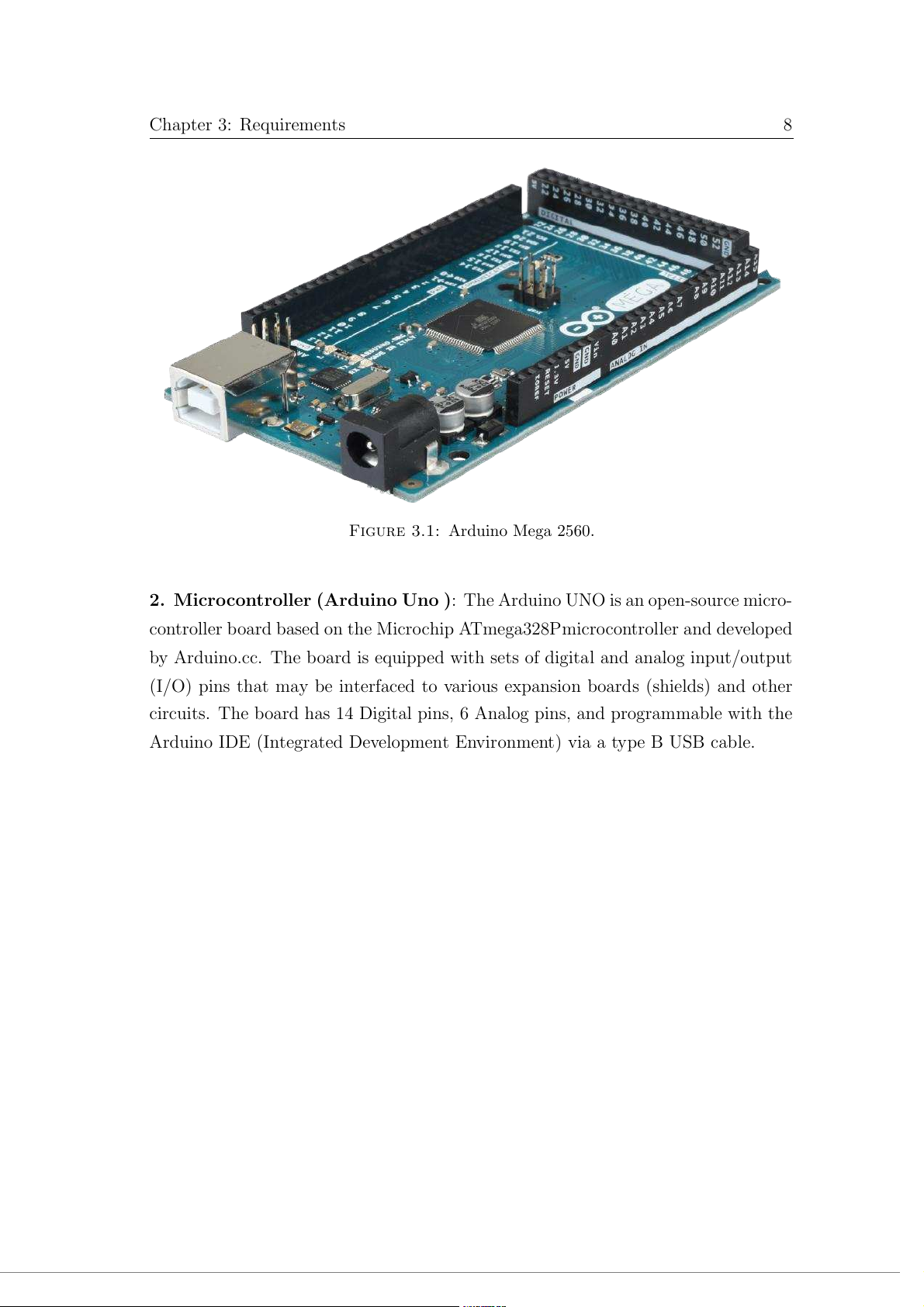
1. Microcontroller (Arduino Mega 2560): The Arduino Mega 2560 is a micro-
controller board based on the Atmega 2560. It has 54 digital input/output pins (of
which 15 can be used as PWM outputs), 16 analog inputs, 4 UARTs (hardware serial
ports), a 16 MHz crystal oscillator, a USB connection, a power jack, an ICSP header,
and a reset button. It contains everything needed to support the microcontroller;
simply connect it to a computer with a USB cable or power it with a AC-to-DC
adapter or battery to get started. The Mega 2560 board is compatible with most
shields designed for the Uno and the former boards Duemilanove or Diecimila. 7 Chapter 3: Requirements 8 Figure 3.1: Arduino Mega 2560.
2. Microcontroller (Arduino Uno ): The Arduino UNO is an open-source micro-
controller board based on the Microchip ATmega328Pmicrocontroller and developed
by Arduino.cc. The board is equipped with sets of digital and analog input/output
(I/O) pins that may be interfaced to various expansion boards (shields) and other
circuits. The board has 14 Digital pins, 6 Analog pins, and programmable with the
Arduino IDE (Integrated Development Environment) via a type B USB cable. Chapter 3: Requirements 9 Figure 3.2: Arduino Uno.
3. LEDs: LEDs are used for the purpose of signaling according to the traffic condition.
Figure 3.3: LED for Traffic Lights.
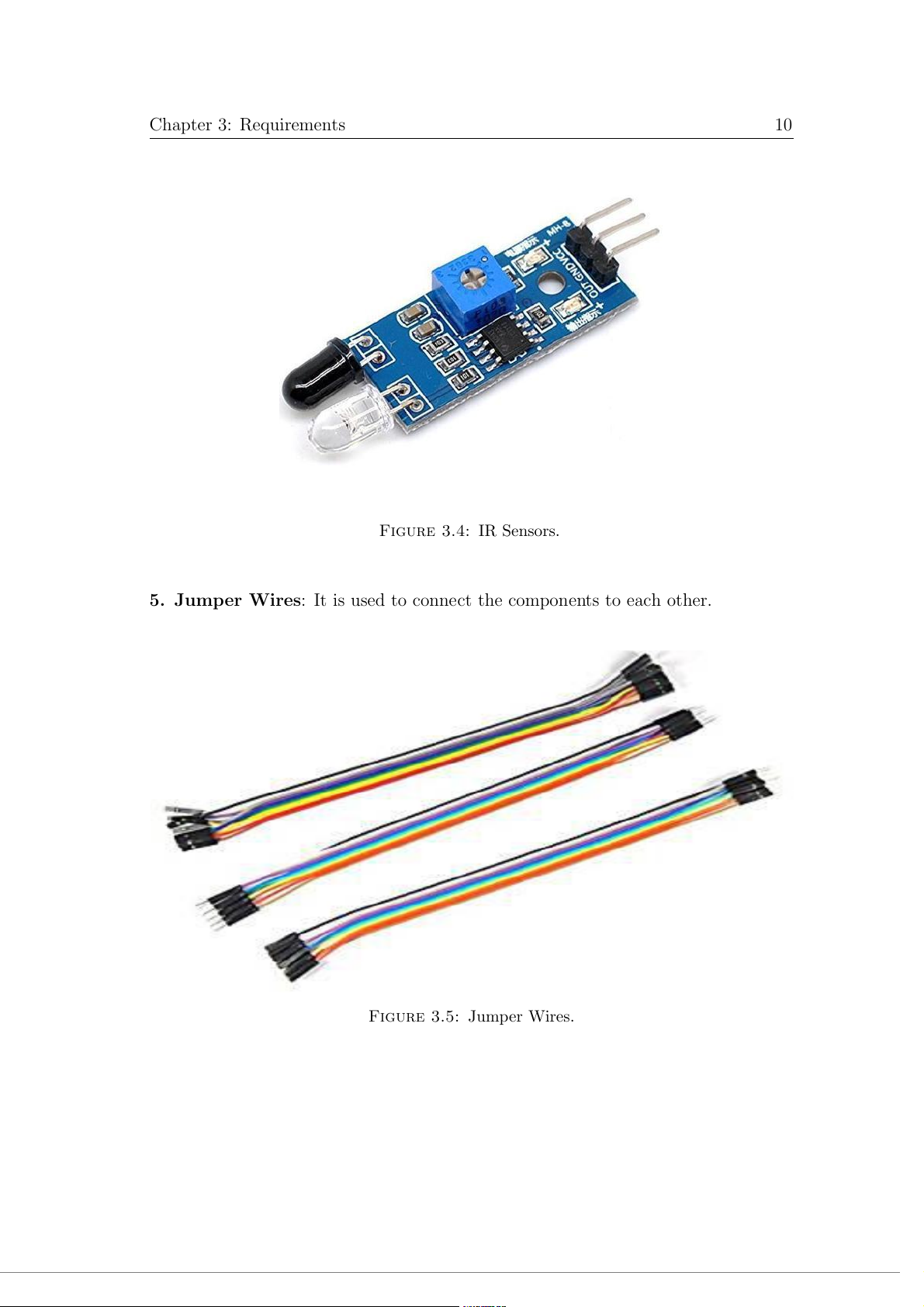
4. IR Sensor: IR Sensor is used to count the vehicles on the road. Chapter 3: Requirements 10 Figure 3.4: IR Sensors.
5. Jumper Wires: It is used to connect the components to each other. Figure 3.5: Jumper Wires.
Tài liệu liên quan:
-
Tóm tắt lý thuyết môn IoT và ứng dụng | Học viện Công Nghệ Bưu Chính Viễn Thông
22 11 -

Accelerated Corner-Detector Algorithms: GPU Implementations and Results | Iot và ứng dụng | Học viện Công nghệ Bưu chính Viễn thông
46 23 -
Đề xuất Dự án IoT: Thiết bị phát hiện chạm cho xe máy | Iot và ứng dụng | Học viện Công nghệ Bưu chính Viễn thông
35 18 -
Phân Tích và Giải Pháp FastAPI | Iot và ứng dụng | Học viện Công nghệ Bưu chính Viễn thông
30 15 -
Tăng cường pháp chế xã hội chủ nghĩa trong quản lý nhà nước | Iot và ứng dụng | Học viện Công nghệ Bưu chính Viễn thông
25 13