Special economic zones in India: A tool for economic development Barkha Jamwal Assistant Professor, College of Vocational Studies, University of Delhi, Delhi, India
Special economic zones in India: A tool for economic development Barkha Jamwal Assistant Professor, College of Vocational Studies, University of Delhi, Delhi, India
Môn: Tài liệu Tổng hợp 3.6 K tài liệu
Trường: Tài liệu khác 3.9 K tài liệu
Tác giả:




Preview text:
International Journal of Advanced Education and Research
International Journal of Advanced Education and Research
ISSN: 2455-5746, Impact Factor: RJIF 5.34 www.alleducationjournal.com
Volume 2; Issue 4; July 2017; Page No. 12-15
Special economic zones in India: A tool for economic development Barkha Jamwal
Assistant Professor, College of Vocational Studies, University of Delhi, Delhi, India Abstract
The Special Economic Zones (SEZs) are considered to be the drivers of growth for an economy. It is considered a tool for growth,
development, rising exports and employment generation. It is an instrument that attracts Foreign Direct Investment (FDI) into the
economy. The role of policy makers is considered to be the most important to make sure that all these objectives of SEZs are
achieved. The government has provided various incentives in the form of single window clearance mechanism to reduce the
bureaucratic delays, tax concessions, providing land at cheaper rates, duty free import of materials, 100% FDI via automatic route
except for some items, exemption from Minimum Alternate Tax, the benefit of external commercial borrowings up to a certain
limit etc. There is a need to develop sustainably so that the future of the economy is not endangered.
Keywords: SEZs, FDI, single window clearance, minimum alternate tax, external commercial borrowings, sustainable development
A comprehensive draft SEZ Bill was prepared after detailed
Objective of the study
discussions with the stakeholders which focused on stable SEZ
The paper aims to study the history, role of Special Economic
policy regime thereby generating more economic activity and
Zones in India and how it attracts Foreign Direct Investment.
employment in the economy. Around 800 suggestions and
The paper also throws a light on the SEZ policy followed by
recommendations were received on SEZ draft rules and after
China and what we can learn from them. The SEZs and
extensive consultations, the SEZ Act, 2005 along with SEZ
Sustainable Development is also discussed at the end of this
Rules came into effect on February, 2006 which provided paper.
simplification of procedures and single window clearances on
state and central government related matters. Research Methodology
The main goals of the SEZ Act are:
The secondary data from various journals, newspaper articles a.
Generating additional economic activity
and government sites is taken for the research purpose. b.
Promoting exports of goods and services; c.
Promoting investment from domestic and foreign sources;
Introduction and history d.
Creating employment opportunities;
Special Economic Zones (SEZs) are the localities that offer e.
Developing infrastructure facilities. (sezindia.nic.in)
incentives in the form of lower tax, cheaper land etc. to their
resident businesses. India’s SEZs are relatively new; still these
The SEZs are specially designed duty free areas considered to
now form a very important part of manufacturing and sourcing
be a deemed foreign territory (within India) for the purpose of
destination. If we look back into the history of SEZs in India
operations, trade, duty and tariff. These zones have their own
then it can be seen that till 2000, India did not have any SEZs
infrastructure, support services, are self-contained and are
but instead had export processing zones (EPZs) in number.
governed by economic laws that are different from country’s
EPZs are quite similar to SEZs but they still failed to attract the
general economic laws that facilitate trade, employment and
firms to India. With Asia’s first Export Processing Zone (EPZ) investment.
in Kandla in 1965, India was first to recognize the
The SEZ area can be divided into Processing and Non
effectiveness of the EPZ model in development of the nation Processing Areas:
and promoting exports. But soon the Special Economic Zones
The Processing Area is the one in which core business
(SEZs) policy was announced in April 2000 to overcome the
activities of SEZs takes place. At least 50% of the SEZ
flaws related to absence of world class infrastructure, rigid and area must be processing area.
multiple rules & regulations, and an unstable fiscal regime
Non Processing Area is where the support infrastructure is
focusing on attracting higher foreign investments into India.
created which mainly caters to the needs of the employees
The government’s SEZs policy in April 2000 was based on the working in SEZ.
Chinese structure of SEZs which is already a success. They
Developer/Co-developer is the one who establishes the
were built and designed to stimulate the domestic and foreign
entire SEZ. There can be more than one Co-developer(s).
investment, boost India’s exports and create new employment
Generally, the infrastructure in the non-processing area is
and investment opportunities. The SEZ Act 2005 in India developed by them.
further converted its EPZs to SEZs and amended the country’s
Entrepreneur is the one who sets up the units in SEZ.
foreign investment policy. (india-briefing.com, 2014) [15] (www.mondaq.com) 12
International Journal of Advanced Education and Research
Currently India has one of the largest numbers of SEZs in the
Banking/Insurance/External Commercial Borrowings:
world. As of May 2015, 437 SEZs have been approved under
The Off-shore Banking Units (OBUs) can be set up in
SEZ Act. During the same period there were 348 notified and
SEZs. These OBUs are allowed 100% Income Tax
202 operational SEZs. There is a direct impact of setting up of
exemption on profit for 3 years and 50 % exemption for
SEZs on employment and exports. As per Statistics provided
the next two years. There is flexibility to keep 100% of
by Export Promotion Council for EOUs and SEZs as of 31st
export proceeds in EEFC (Exchange Earners' Foreign
March 2015 the SEZs have attracted investments worth Rs.
Currency) accounts and there is freedom to make overseas
3,387.94 billion and have generated direct employment for
investment from such account. There is exemption from
more than 1.44 million people. Also in the year 2014-15,
interest rate surcharge on import finance. Also, SEZ units
exports worth Rs4637.7 billion were made from SEZs. The
are allowed to write-off unrealised export bills.
SEZ in India may be set up by the public, private, joint sector
Environment: SEZs are permitted to operate as non-
or by state government. Within these zones, units may be set
polluting industries in IT and in facilities like golf courses,
up for manufacturing goods, providing services, and/or other
hotels and non-polluting service industries in the Coastal
activities related to trading, repairing, processing, assembling, Regulation Zone area
making of gold/silver, platinum jewellery etc. the SEZ policy
Central Sales Tax and Service Tax: There is exemption
also allows 100% FDI in most of the manufacturing activities.
from Central Sales tax for the sales made from Domestic
(Mukherjee, Pal, Deb, Ray, & Goyal)
Tariff Area to SEZ units. Also, there is exemption from
Currently the SEZs are operating throughout India in the states
Service tax to SEZ units. (sezindia.nic.in)
of Chandigarh, Haryana, Rajasthan, Karnataka, Gujarat,
Kerala, Orissa, Tamil Nadu, Maharashtra, West Bengal, Uttar Do SEZs Attract FDI? Pradesh etc.
Some of the countries like China, India and Brazil could attract
higher FDI, whereas other developing countries could not do
Names of the few SEZs set up by the Central Government
so. India, along with China has been among the top 10 in the of India are:
list of FDI recipients in the last 20 years and the quantum of
Falta Special Economic Zone, Falta (West Bengal)
FDI inflows into India has increased manifold in the post
SEEPZ Special Economic Zone, Mumbai
reform period. Studies have shown that FDI inflows are
Visakhapatnam Special Economic Zone, Vishakhapatnam
concentrated in few states on India i.e. Maharashtra, Delhi, (AP)
Karnataka, Tamil Nadu, Andhra Pradesh and Tamil Nadu
Noida Special Economic Zone, Noida (UP)
which have contributed 70% of total FDI inflows during 2008-
MEPZ Special Economic Zone, Chennai (TN)
09 to 2011-12. Among these Maharashtra and Delhi together
Kandla Special Economic Zone, Kandla (Gujarat)
contributed more than 50% of FDI inflows. It has been noticed
Cochin Special Economic Zone, Cochin (Kerala)
that infrastructure plays an important role in attracting FDI and (investindia.gov.in)
this is the reason why most of the SEZs in India are located in
cities or areas where the facilities like airport connectivity,
Incentives and facilities offered to the SEZs
well connected roads, seaport are available. The countries have
Customs and Excise: SEZ units may import or procure
facilitated power supply, rebate on profits, tax holidays, land
from the domestic sources, at a duty free rate, all their
availability at concessional rates in order to attract FDI. It
requirements of spares, raw materials, consumables,
cannot be said that the states having high socio-economic
packing materials, capital goods, office equipment, etc. for
index, human development index or good life expectancy ratio
implementation of their project in the Zone without any
will surely attract higher FDI as is the case with Kerala. The
licence or specific approval. They can use duty free
states like Odisha in India have high FDI inflows even though
import/domestic procurement of goods for setting up of
its HDI, Socio-economic index is not that high. This is because
SEZ units. Also Domestic sales by SEZ units will now be
of the proactive reforms initiated by some of the states that
exempt from Special Additional Duty.
such states and areas attract higher FDI as compared to others.
Income tax: There is 100% Income Tax exemption on
As per studies conducted by researchers it has been validated
export income of SEZ units under section 10AA of the
that SEZ policy has a direct impact on FDI inflows in a state.
Income Tax Act for the first five years, 50% exemption
Besides SEZ policy formulation, other factors that influence
for the next five years and 50% of the ploughed back
FDI inflows are urbanization, access to seaport, road
export profit for the next five years. Also there is
infrastructure. It was seen that highway density had a negative
exemption from Minimum Alternate Tax under section
impact on FDI inflows may be because even a simple road
115 JB of the IT Act. The SEZ units can avail benefit of
which is not a highway can be termed as a good infrastructure
External Commercial Borrowing for up to USD 500
that facilitates trade. (Chakraborty, Gundimeda, & Kathuria,
million in a year without any maturity restriction. There is 2017) [1]
Exemption from dividend distribution tax for the SEZ
developers under Section 115O of the Income Tax Act.
SEZs and their role in economic development
Initially the SEZs were formed to boost the development and
Foreign Direct Investment: 100% FDI is allowed under
growth of the manufacturing sector but with time and rapid
automatic route in manufacturing sector in SEZ except
changes in business environment the emphasis shifted to
items related to arms and ammunition, atomic substances,
service sector. The two most important reasons for setting up
explosives, narcotics and hazardous chemicals, cigars and
SEZs are to (1) promote trade and competitiveness and (2) to
tobacco substitutes, distillation and making of alcoholic
attract FDI, technology and global best practices. Often, SEZs drinks and cigarettes. 13
International Journal of Advanced Education and Research
act as experiment grounds for the application of the new
significant economic activity in these areas. Whereas approx.
policies before they are applied at national level. The SEZs can
80% of the total FDI inflows are from SEZs and similar free
even attain benefits due to clustering and can achieve
trade zones in China, no other country has encountered such a
economies of scale and efficiency. Some of the benefits can
tremendous rise and growth due to SEZs. Hence the diverse,
even spill over to the industries in Domestic Tariff Areas
mixed and vast experience of countries regarding the SEZs
through their inter-linkages. The domestic economy even
performance shows that SEZs do not guarantee the benefits in
benefits from direct and indirect employment that is created
the country where it has been formed. These need to be
due to business activities taking place in these SEZs.
supported with the right policies, laws and regulations, ease of
The evidence shows that SEZs play a more important role in
doing business, transparent and easy to follow policies which
developing economies like India and China. SEZs have not
need to be amended from time to time to suit the economic
been a universal success model. Few countries like China, has
conditions of the country. Also there need to be effective
encountered the majority of employment and exports that are
linkage between the SEZ and rest of the economy to get the
generated by SEZs. Many countries like Africa have witnessed
maximum benefit out of establishment of SEZs. (Mukherjee,
the failure of SEZs as these have failed to generate any Pal, Deb, Ray, & Goyal).
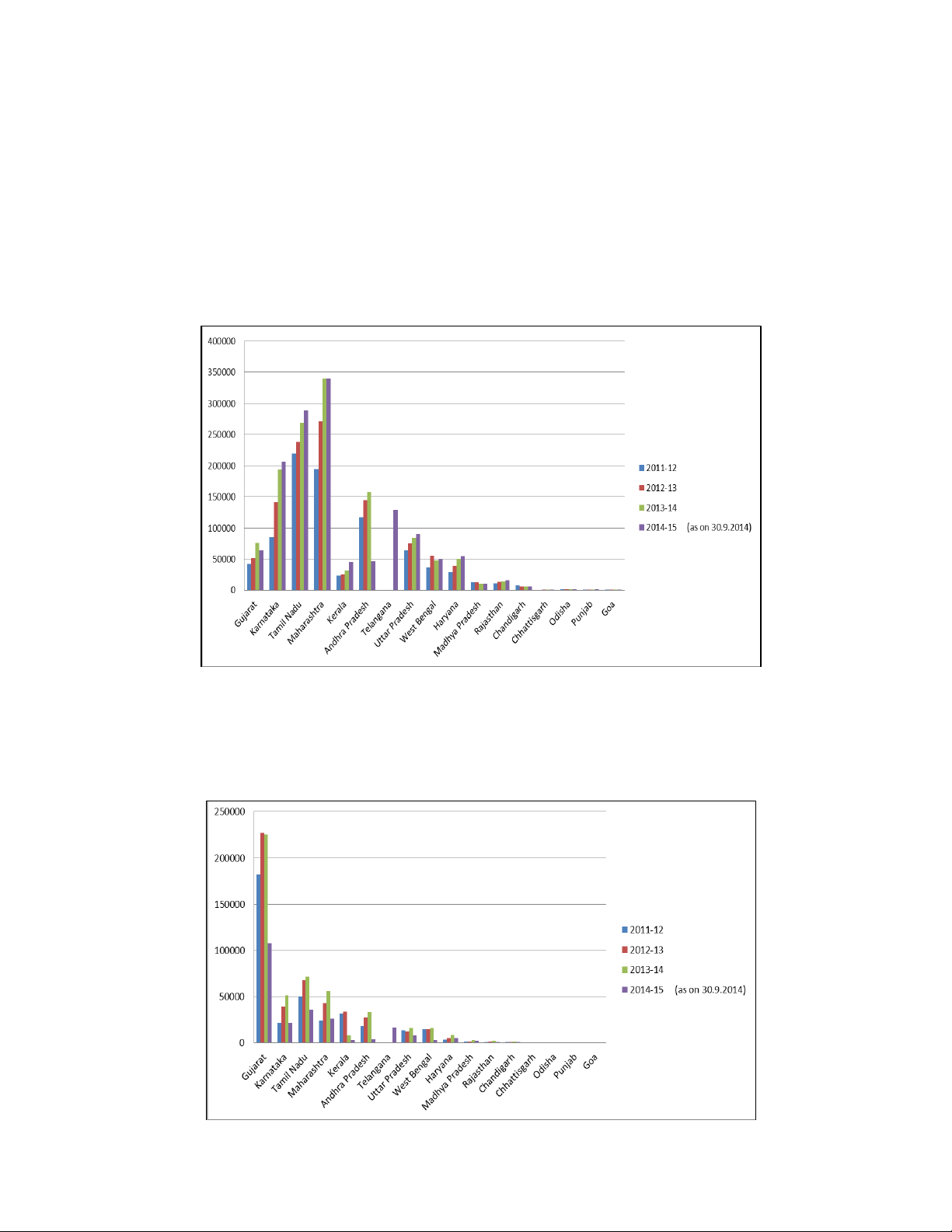
Fig 1: States/Uts-wise details of contribution to Employment from SEZs during 2011-15
The above figure shows that States like Maharashtra and Tamil
Maharashtra employed 340,061 persons which is 25% of the
Nadu have been contributing the most to employment
total number of persons employed from the units in SEZs.
generation from SEZs. Out of total number of employed (pib.nic.in)
persons in 2014-2015 (as on 30-9-2014) i.e. 1,350,071,
(pib.nic.in) Figures in rupees crore.
Fig 1: States/Uts-wise details of contribution of Exports from SEZs during 2011-15 14
International Journal of Advanced Education and Research
Over the years it can be seen that Gujarat has been contributing
policy makers and top officials of SEZs must provide an
the most to the exports from SEZs.
enabling environment to the businesses so that they can
operate and carry on their business activities easily and
What Can Be Learnt From China
smoothly. There must be a single window clearance
The first ever SEZ was established in China in 1980 in
mechanism to be followed to improve the quality of
Shenzhen. Since then SEZs have been contributing to rising
bureaucracy and to eliminate unnecessary administrative
exports and have been the main driver of growth of the
barriers that cause delays and hinder growth. Strengthening of
economy. The main motive of introducing SEZs in China was
infrastructure including roads, airports, water supply,
that SEZs served as an experiment ground for market based
electricity etc. which attracts the foreign firms to invest in
policies and reforms for implementing them with land, labour
India should also be the priority. The human resource must
and tax policies. Also China’s SEZ policy is linked with
from time to time be given adequate training to make sure they
macroeconomic policy of nation whose primary objective is to
are ready to handle complex situations in the business.
attract FDI in a closed economy and to inject seed money for
Efficient competitive environment for domestic firms should
modernization. This enabled China to test the success of these
be provided to compete with foreign players. (Karimi,
laws and policies which then could be implemented in the
Sofiyabadi, Niroumand, & Karimi, 2013) [2]
whole country if found successful. India did not use SEZs to
test reforms or to liberalize the FDI regime which if successful Reference
could be applied to rest of the country.
1. Chakraborty T, Gundimeda H, Kathuria V. Have the
Special Economic Zones Succeeded in Attracting FDI?—
SEZs and Sustainable Development
Analysis for India. Theoretical Economics Letters, 2017,
The aim of sustainable development is to make sure that 623-642.
growth of economy takes place without causing any adverse
2. Karimi A, Sofiyabadi J, Niroumand P, Karimi M. Ranking
impact on the environment. SEZ policy can help an economy
the Factors to Attract Foreign Direct Investment in Special
to achieve the growth objective in short run but in long run
Economic Zones. European Journal of Scientific
even the units in SEZs will be profitable if they grow keeping Research. 2013.
in mind the adverse impact of its effluents on the environment. 3. India-briefing.com. (2014, Oct). Retrieved from
Since nowadays government is focusing on reducing its deficit
http://www.india-briefing.com/news/guide-indias-special-
by increasing the quantum of exports and wants to increase the economic-zones-9162.html/
standard of living of people by generating employment 4. Investindia.gov.in. (n.d.). Retrieved from
opportunities, it is providing incentives and facilities to
http://www.investindia.gov.in/sezs-sector/
companies who set up their operations in SEZs. The policy
5. (n.d.). Special economic Zones in India: Status, Issues and
makers need to keep in mind the long term impact of such
Potential. In A. Mukherjee, P. Pal, S. Deb, S. Ray, & T.
development and hence frame the policies accordingly. The M. Goyal. Springer.
Centre and State governments also aims to develop the rural 6. pib.nic.in. (n.d.). Retrieved from
areas by providing adequate infrastructure to these areas and
http://pib.nic.in/newsite/PrintRelease.aspx?relid=112106
then setting up SEZs there. With this the standard of living of 7. sezindia.nic.in. (n.d.). Retrieved from
such rural area improves as there are now employment
http://sezindia.nic.in/about-introduction.asp
opportunities available for the local people to get into. The 8. www.mondaq.com. (n.d.). Retrieved from
government should also encourage development of Micro,
http://www.mondaq.com/india/x/303448/Inward+Foreign
Small and Medium Enterprises in Special Economic Zones as
+Investment/Special+Economic+Zones+Reinforcing+Inve
a testing ground which if successful can be transformed into a stors+Interest large business. Conclusion and Suggestions
SEZs have been contributing to Nation in terms of rising
exports and employment from this sector. It’s even
contributing to regions in terms of income generation and
promotion of ancillary industrial activities and is boosting up
the technology transfer and development of entrepreneurship
locally. It is even expected that SEZs will further activate a
substantial flow of domestic and foreign investments into India
leading to more employment opportunities and generating
additional economic activities. Also, since SEZs help in
development of regions as a whole hence it is expected that
SEZs might attract migrant rural population and boost the demand for commercial and housing real estate.
(investindia.gov.in) The most important factors that help in
attracting FDI in SEZs are the FDI policies of the nation, the
macro-economic policies, market, infrastructure, resources in
the economy, the role of private sector, and the policies formed
by the state on trade and industry. On the basis of all these
factors some of the suggestions that can be made are: the 15
Tài liệu liên quan:
-

Ung dung game hoa trong cac chien dich MKT
23 12 -
Bao cao Chi so TMDT Viet Nam 2025
26 13 -
Thông tư quy định về việc phân quyền, phân cấp và phân định thẩm quyền quản lý nhà nước về giáo dục cho chính quyền địa phương
30 15 -
Nghị quyết về phát huy các giá trị di sản văn hóa gắn với phát triên du lịch bền vững tỉnh Khánh Hòa đến năm 2025, định hướng đến năm 2030
26 13 -

Quyết định phê duyệt Chiến lược phát triển du lịch Việt Nam đến năm 2030
16 8