Tài liệu ôn tập học phần Tiếng anh cơ bản
Tài liệu ôn tập học phần Tiếng anh cơ bản của trường đại học Tài chính - Marketing giúp sinh viên củng cố, ôn tập kiến thức và đạt kết quả cao trong bài thi kết thúc học phần. Mời bạn đón đón xem!
Môn: Tiếng anh cơ bản 181 tài liệu
Trường: Trường Đại học Tài Chính - Marketing 1 K tài liệu
Tác giả:




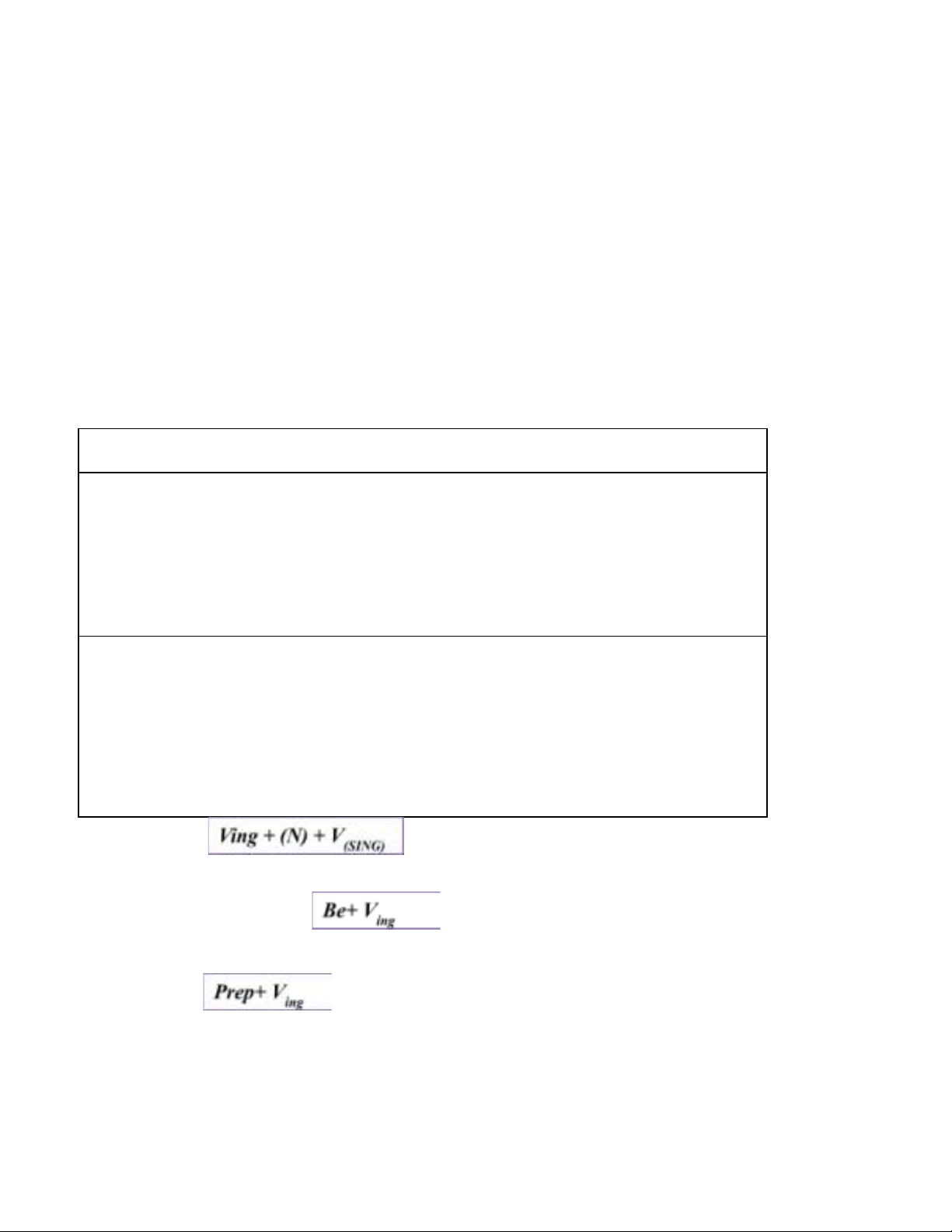






Preview text:
lOMoARc PSD|36126207 BÀI 1 Noun BÀI 2 Adjective BÀI 3 Listening part 1 BÀI 4 Verb + adv BÀI 5
Listening part 1 (cont) BÀI 6
Pronouns- translating method BÀI 7
S-V agreement, forms of verbs BÀI 8 Listening part 2 BÀI 9 Tenses BÀI 10
Relative clauses and Reduce relative clauses BÀI 11 Listening part 3 BÀI 12
Conditional sentences – Passive voice BÀI 13
Conjunction and reposition BÀI 14 Listening part 4 BÀI 15 Comparison BÀI 16 Part 7 reading BÀI 1 DANH TỪ (NOUNS)
I. VỊ TRÍ CỦA DANH TỪ (THE POSITIONS OF NOUNS)
Danh từ thường theo sau FORMS EXAMPLES
Mạo từ (article) : a, an, the An apple , a pen, the teacher,…
Đại từ chỉ ịnh (demonstrative
This girl, those books, that guy, these pronoun): this, that, these, those lOMoARc PSD|36126207
Từ chỉ số lượng (qualifier) : some, any,
Many chairs, any kinds of food, much
a lot, lots of, many, much, (a) little, water,… (a)few, a variety of …
Con số (number): two, twelve 2 computers, 5 little boys
Tính từ sở hữu (possessive adjective) : My boyfriend, her car,…
my, your, his, her, their, our, its , Mary’s, ….
Tính từ (adjective) Beautiful girls, a delicious meal,…
Giới từ The book of Hana, for the reasons
II. CHỨC NĂNG CỦA DANH TỪ (THE FUNCTIONS OF NOUNS) FORMS EXAMPLES
Danh từ có thể làm chủ ngữ (subject) Musician plays the piano. Peter is a student of USSH.
Danh từ có thể làm tân ngữ trực He bought a book. tiếp (direct object)
Danh từ có thể làm tân ngữ gián Tom gave Mary flowers.
tiếp (indirect Object)
Danh từ có thể làm tân ngữ (object) I will speak to rector about it
Danh từ có thể làm bổ ngữ cho danh từ A school girl, a contract agreement, customer service
Danh từ có thể làm bổ ngữ tân ngữ (object
Board of directors elected her father
complement) khi ứng sau một số ộng từ president.
như: make, elect, call, consider, appoint, name, declare, recognize…
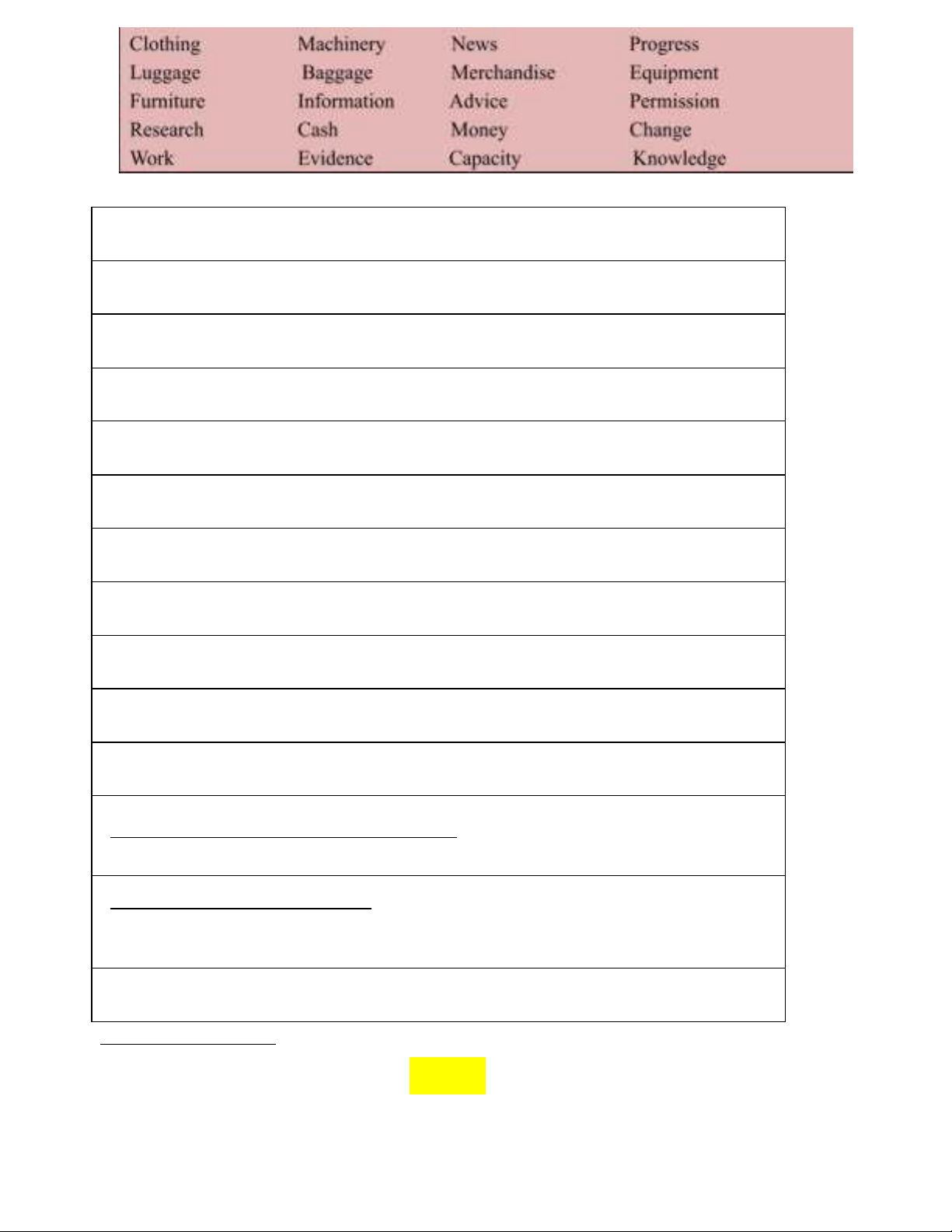
NOTE: Những danh từ không ếm ược thường ra trong TOEIC Uncountable nouns commonly used in TOEIC
Downloaded by D??ng Lê (ttungduong1217@gmail.com) lOMoARc PSD|36126207
III. NHỮNG HẬU TỐ PHỔ BIẾN TẠO NÊN DANH TỪ (FORMS OF NOUNS)
-tion / -ation Population, presentation , prevention
-ment Entertainment, employment -ence Existence, difference -ance Importance, finance
-er/or Teacher, employer, editor -ant Consultant, assistant
-ee Employee, trainee, examinee
-age Usage, advantage, courage
-ship Relationship, friendship, ownership
-ism Heroism, Marxism, capitalism
-ity / -ty University, possibility, ability, beauty
-ness Carelessness, happiness, willingness -cy Emergency, privacy, accuracy
-ry Bravery, robbery, dictionary -dom -freedom, kingdom, fandom -hood
Likelihood, childhood, neighborhood -ing Swimming, building -al Approval, renewal BÀI 2
TÍNH TỪ (ADJECTIVES)
I. VỊ TRÍ VÀ CHỨC NĂNG CỦA TÍNH TỪ (THE POSITIONS AND THE
FUNCTIONS OF ADJECTIVES)
a. Tính từ thường i sau những ộng từ nối (linking verbs) lOMoARc PSD|36126207 FORMS EXAMPLES
To be : am , is, are, was, were, be, been The company’s profit was attractive enough to attract potential investor
Become, get The sky becomes dark when it is about to rain
Động từ chỉ giác quan (stative verbs):
You look exhausted after a long day of
Look, sound, taste, smell, feel, seem, find working. It sounds great.
Stay, remain, keep Keep calm and repair for the upcoming test.
b. Đứng trước bổ nghĩa cho danh từ:
Ex: We are seeking……………people to participate in those outdoor activities
A. creative B. create C. creatively D. creation
c. Ngay sau những ại từ bất ịnh (indefinite pronoun): somewhere, anything, everyone, nothing,…
Ex: We need to think of something special in order to attract customer.
d. Đứng sau Adv (Adv bổ nghĩa cho Adj)
Ex: She’s a very interesting girl.
“-Ving” và “Vpp” Ving (ADJ) Vpp (ADJ) Existing Disappoint Remain Damaged Promisin in g in g Confirmed g Breaking Interesti Qualified Demandi Mounting ng Limited ng Frustrati Demonstrate n g Customize -able Capable employee -ible Eligible participants lOMoARc PSD|36126207 Written d d detailed Finished
II. NHỮNG HẬU TỐ PHỔ BIẾN TẠO NÊN TÍNH TỪ (FORMS OF ADJECTIVES) lOMoARc PSD|36126207 -less Hopeless project -ful Successful candidate -ent Current position -ous Various benefits -ial Potential customers -ory Compulsory registration -ive Competitive price -ed Detailed information -ing Interesting film -ly Timely manner -ate Moderate -ish Selfish person
III. TÍNH TỪ CHỈ SỐ LƯỢNG (ADJECTIVES OF QUANTITY)
Theo sau là N ếm ược One Two, three… Each + singular noun Both Every A few + plural noun Few Several Many Theo sau là N không A little/ little ếm ược Much
A great deal/ a large amount of Not any/ no A lot of / lots of +
Theo sau là Noun countable/uncountable noun Plenty of Some/ any lOMoARc PSD|36126207
TÍNH TỪ DẠNG V-ING VÀ V-3/ED
● ĐỐI VỚI ĐỘNG TỪ CHỈ CẢM XÚC
V-ing: diễn tả tác nhân, tính chất
V3/ed: diễn tả cảm xúc người nhận hành ộng
The bored students went to sleep during the boring lecture. The child
saw a frightening movie. => The frightened child began to cry. Exciting – excited: interesting – interested: Amazing – amazed : Embarrassing – embarrassed: Worrying – worried: Exhausting – exhausted: Shocking – shocked: Confusing – confused: Satisfying – satisfied:
Disappointing – disappointed: Frightening – frightened Terrifying – Terrified Fascinating- Fascinated
● ĐỐI VỚI NHỮNG ĐỘNG TỪ KHÁC
V-ing: diễn tả hành ộng ang diễn ra hoặc mục ích
The crying baby woke Mr.Binion.
The blooming flowers in the meadow created a rainbow of colors.
A sleeping bag is necessary for our next camp.
V3/ed: diễn tả hành ộng bị tác ộng
Frozen food is often easier to prepare than fresh food. (The food had been frozen)
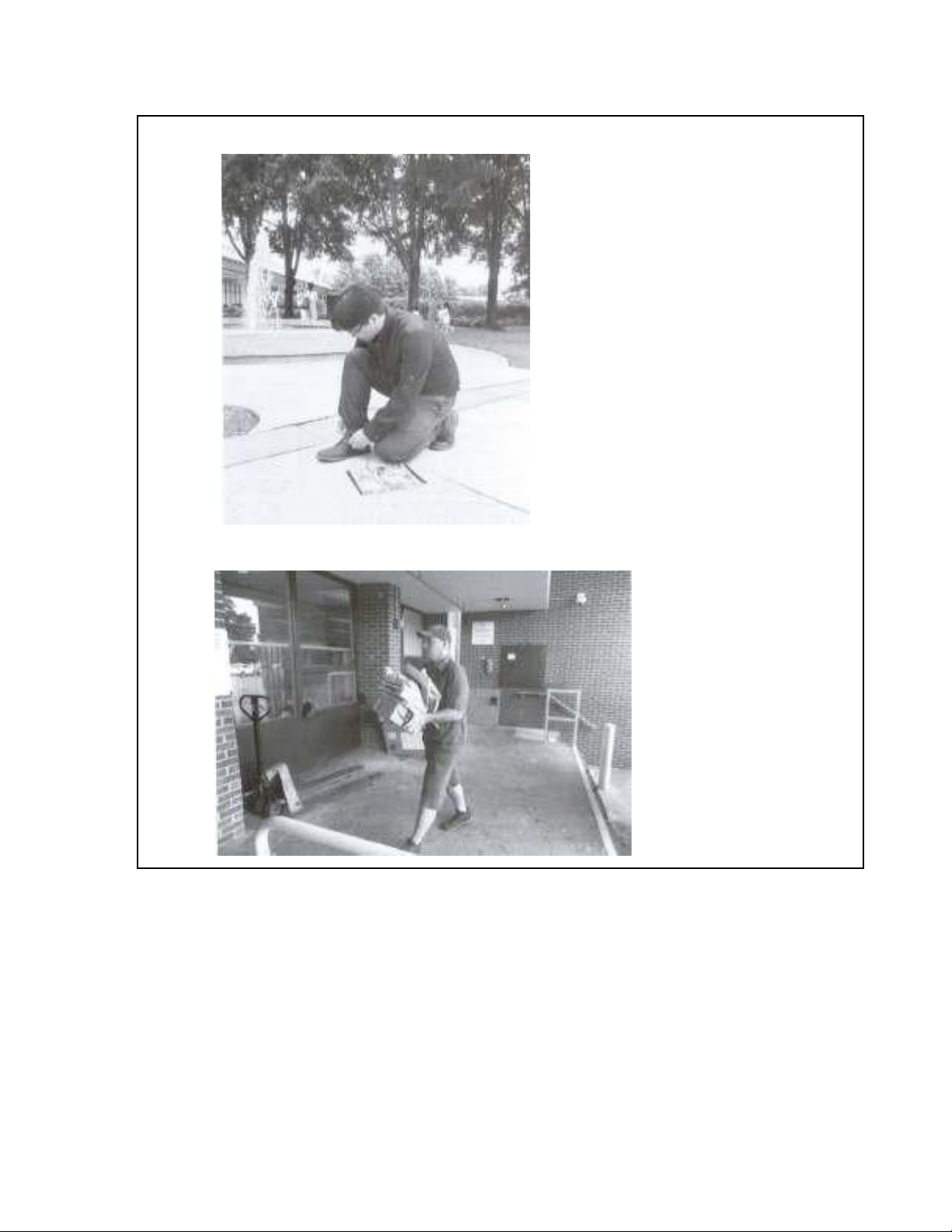
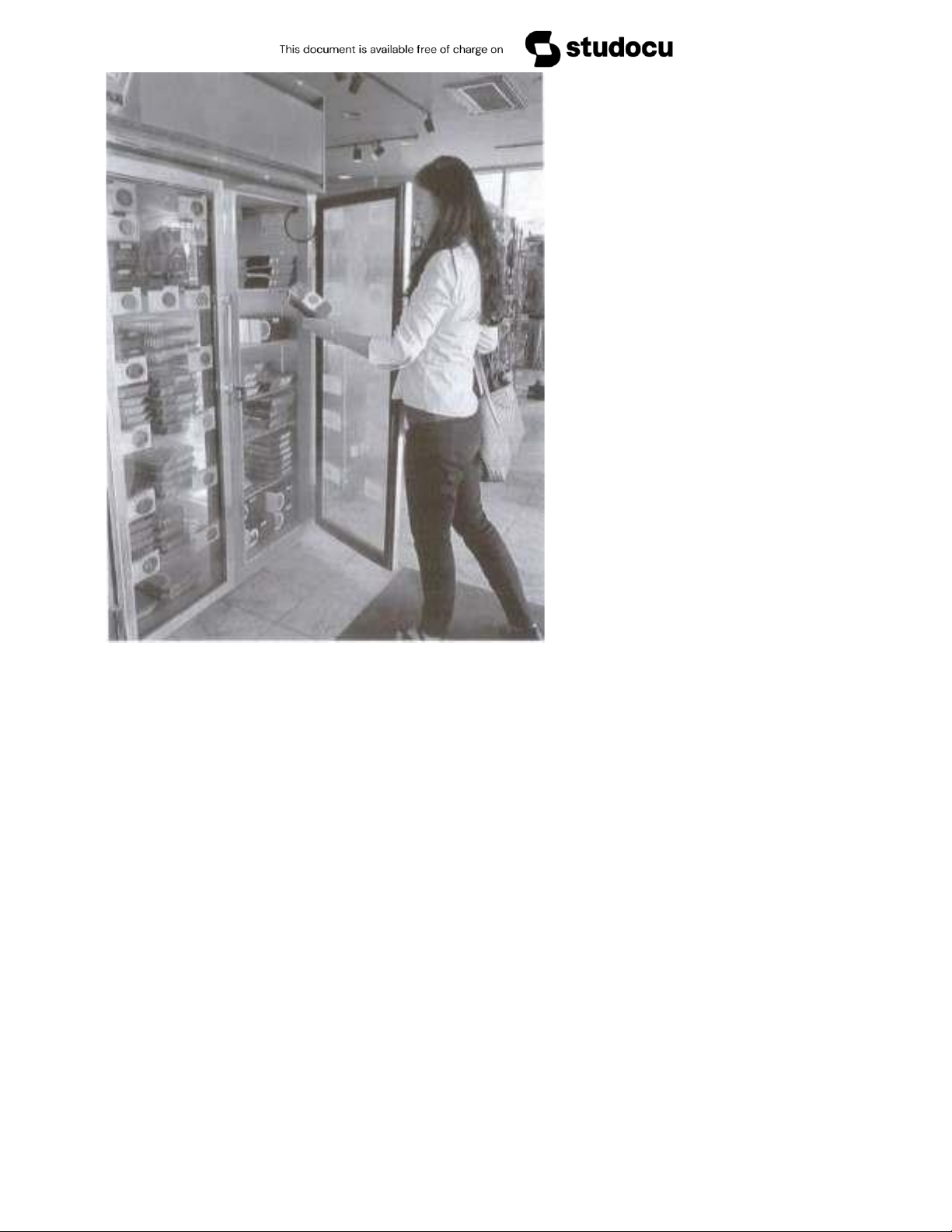
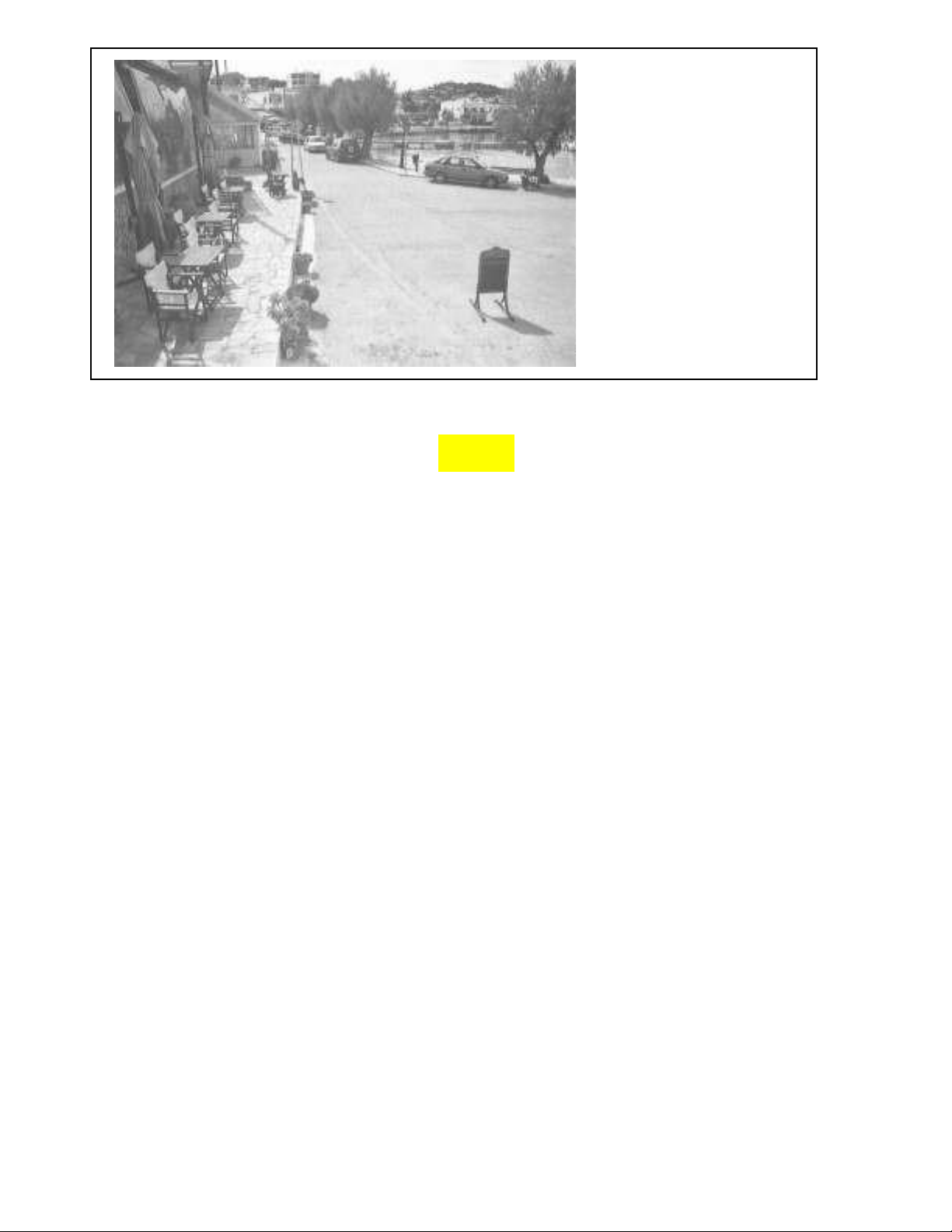
The imprisoned men were unhappy with their living conditions. (The men had been imprisoned) BÀI 3 LISTENING PART 1 lOMoARc PSD|36126207 TRANH CÓ NGƯỜI S + be + Ving 1. 2. 3. S + have/has + V3/ed lOMoARc PSD|36126207
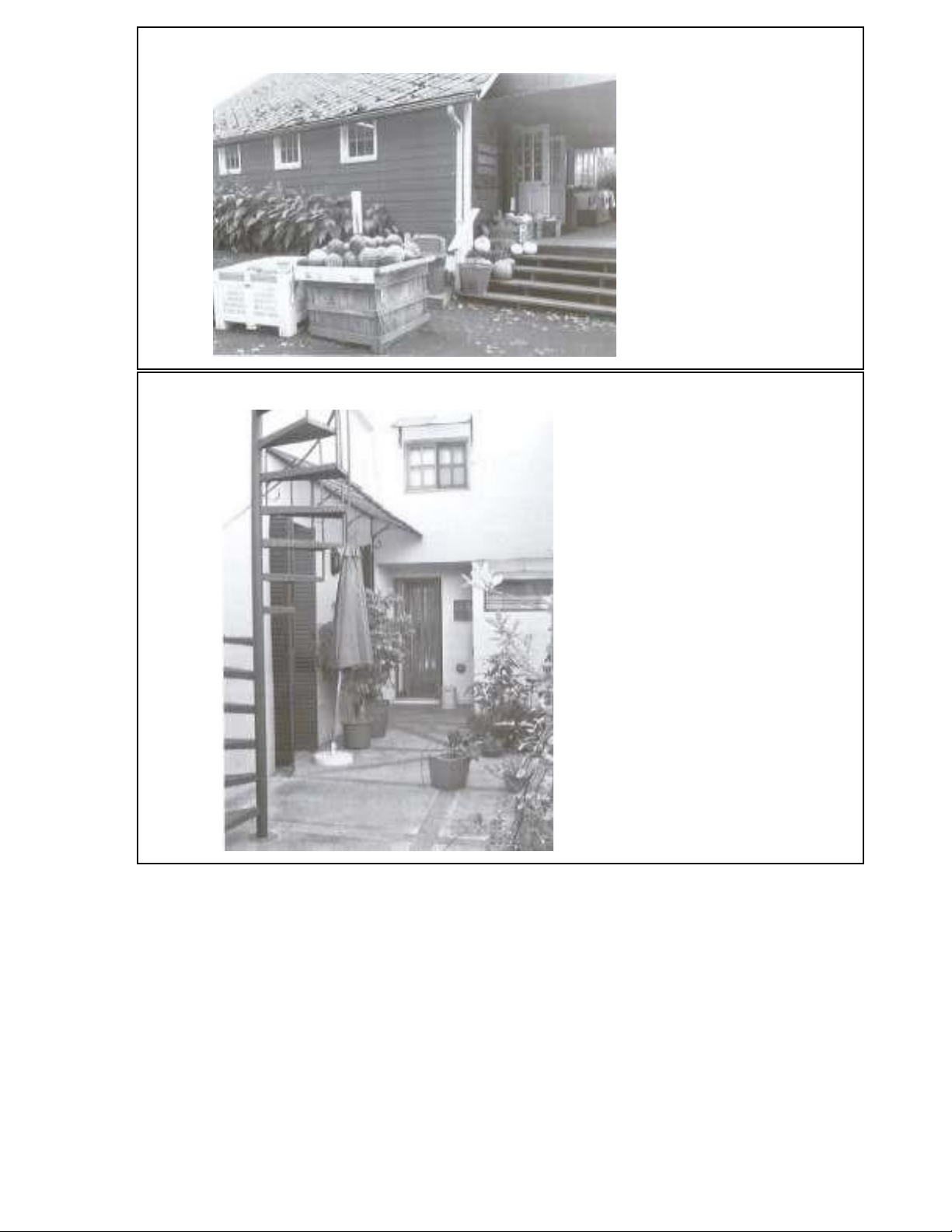
TRANH KHÔNG CÓ NGƯỜI Cấu trúc bị ộng S + is/am/are + V3/ed S + have/has + V3/ed 1. lOMoARc PSD|36126207 2. 3. Cấu trúc there be lOMoARc PSD|36126207 There is/are + N(s/es) BÀI 4 ĐỘNG TỪ (VERBS)
I. VỊ TRÍ VÀ CHỨC NĂNG CỦA ĐỘNG TỪ (THE POSITIONS AND THE lOMoARc PSD|36126207 FUNCTIONS OF VERBS) ● CÁCH 1
NỘI ĐỘNG TỪ (INTRANSITIVE VERBS)
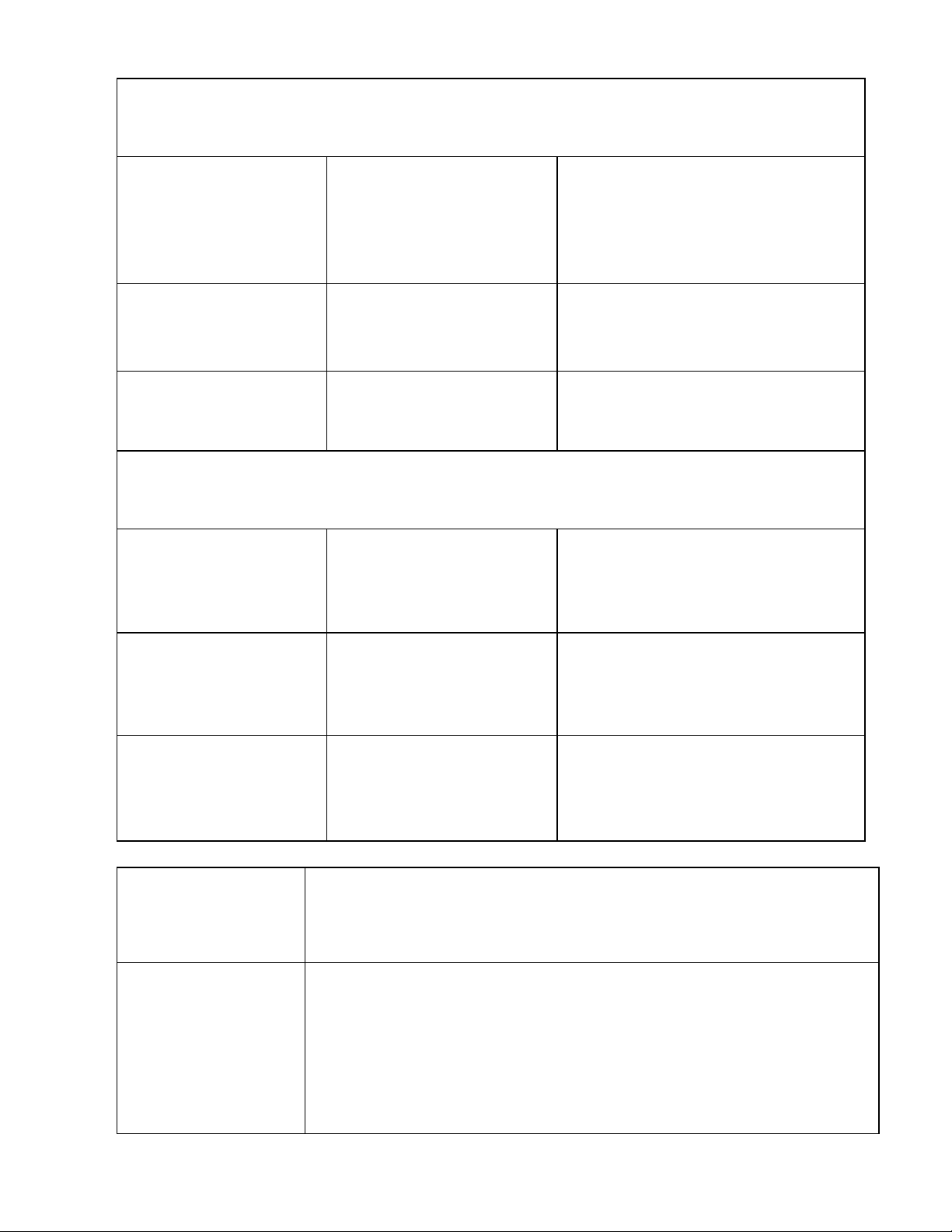
Động từ không có tân ngữ trực tiếp kèm theo S + V + prep + N I participate in the Participate in Apply for party. She has Response to Talk about applied for several Listen to Speak to jobs. S + V + adv Brian worked hard on the project. S + V + adj She becomes angry Linking verbs whenever she is hungry.
NGOẠI ĐỘNG TỪ (TRANSITIVE VERBS)
Động từ có tân ngữ trực tiếp kèm theo S + V + O The managers are discussing the terms of the contract. S + V + Odirect + I give my Give Bring Offer Send Oindirect girlfriend a Grant Lend Award present birthday present. S + V + O + Ocomplement People call me Lucy. Let Help Elect His speech made his Call Consider Appoint Name audience encourage. Declare Recognize CÁCH 2 Động từ thường
Động từ chỉ hành ộng chính của câu I wash my face twice a day. Main Verbs The sky is blue. Tom has an apple.
Động từ tobe I am singing a song. am/is/are I am a student. was/were be/been lOMoARc PSD|36126207
Động từ ặc biệt
Trợ ộng từ (auxiliary verbs) Special She has been HN once. Verbs
Thêm vào các câu phủ ịnh, nghi vấn, Have you been to VN
tạo thành cấu trúc thì. before? Has /have Do you like coffee? Do/does/did He doesn’t play guitar.
Động từ khiếm khuyết (modal Would rather/ had better
verbs) Will/would
Can you wait a moment, please? Shall/ should
You should take it easy. You had May/might better do it yourself. Can/could Ought to/ must/ have to
I. NHỮNG HẬU TỐ PHỔ BIẾN TẠO NÊN ĐỘNG TỪ (FORMS OF VERBS) -Ize/ ise
Naturalize, industrialize, organize, socialize -en
Lengthen, shorten, weaken, sharpen -ify Classify, identify, unify -ate
Communicate, applicate, educate, compensate, TRẠNG TỪ (ADVERB)
I. VỊ TRÍ CỦA TRẠNG TỪ (THE POSITIONS OF ADVERBS) FUNCTIONS POSITIONS EXAMPLES Bổ nghĩa cho
Đứng trước tính từ tính từ He is very kind S + be + adv + adj A very kind man adv + adj + noun lOMoARc PSD|36126207 Bổ nghĩa cho
Đứng trước hoặc sau ộng từ chính ộng từ chính It will probably rain S + adv + verb* This project was finished S + verb* + adverb finally Bổ nghĩa cho câu
Đứng ầu câu và thường ngăn cách Unfortunately, our company
bởi dấu phẩy. didn’t get the contractor for Adv, clause some reason.
Bổ nghĩa cho một trạng từ khác understandably.
Adv + adv This book is written easily
II. CÁC LOẠI TRẠNG TỪ (TYPES OF ADVERBS) Chỉ cách thức Chỉ mức ộ (Manner) Chỉ tần suất Nghi vấn (Grade) (Frequency) (Questions) fast, normally, too, absolutely easily, badly…
always, hardly, when, where, why,
completely, entirely,
never, frequently, how, certainly, greatly, exactly,
occasionally, perhaps, maybe, extremely, perfectly,
often, rarely, surely, of course, …
slightly, quite, very, seldom, usually rather sometimes…. lOMoARc PSD|36126207 I can sing very I absolutely agree well John is always on When are you going to with him. time. take it? Chỉ số lượng Chỉ nơi chốn Chỉ thời gian (Place) here, there, (Quantity) overthere, (Time) away, everywhere, Liên hệ somewhere…
yesterday, tomorrow, (Relation) once, twice, 3 where, when, why
last Monday, next times, the third year… time… Please put it here. I’m going to see my Peter has won the I remember the day cousin next Monday. prize twice. when I met her.
III. MỘT VÀI TRẠNG TỪ ĐẶC BIỆT (CONFUSABLE ADVERBS)
Without “-ly” With “-ly”
Late ( trễ) Lately ( gần ây)
Hard ( chăm chỉ) Hardly ( hiếm khi)
High ( cao) Highly ( very)
Near ( gần) Nearly ( gần như, hầu như)
Trạng từ có nghĩa khác nhau khi không có và hậu tố -ly lOMoARc PSD|36126207 BÀI 5 LISTENING PART 1(cont) BÀI 6 ĐẠI TỪ (PRONOUNS)
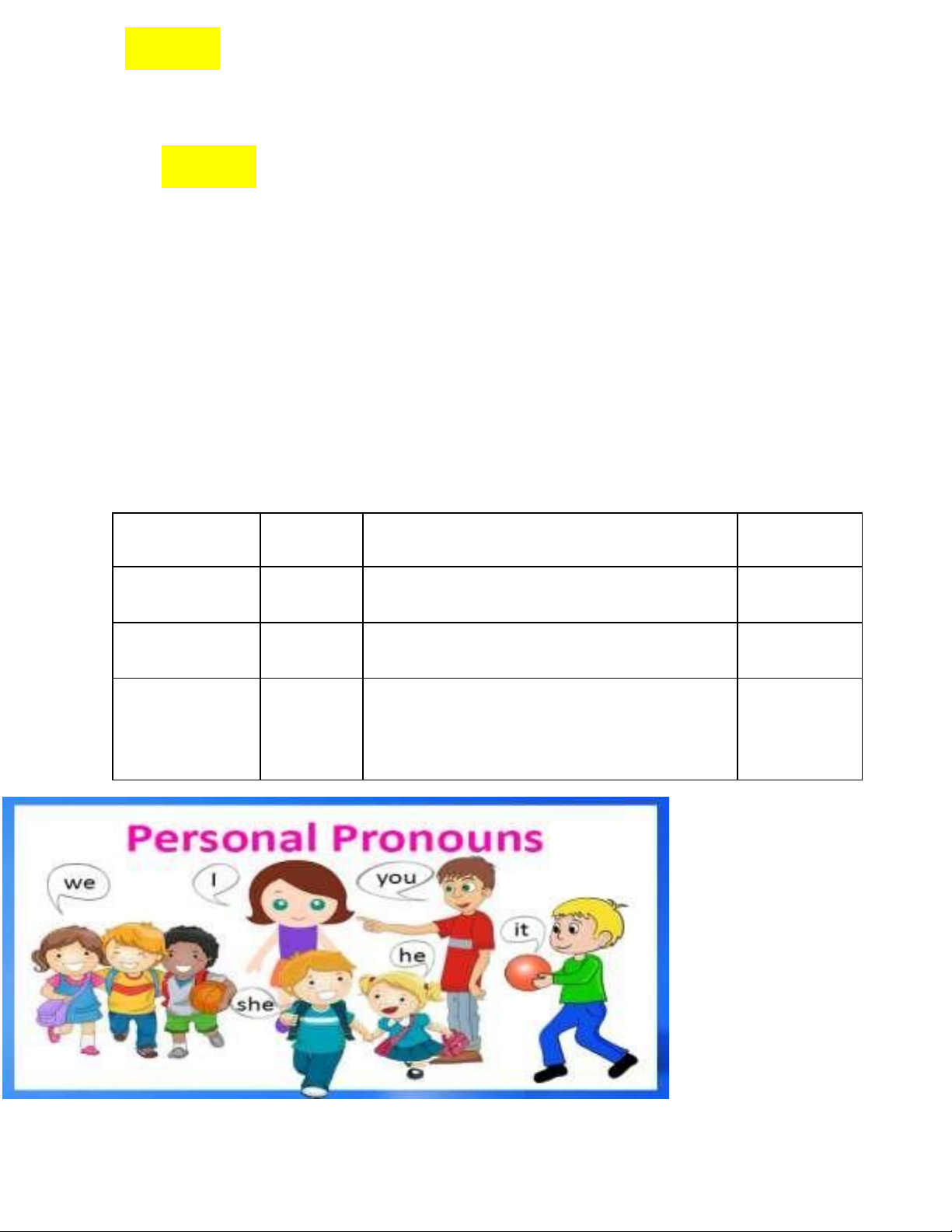
ĐẠI TỪ XÁC ĐỊNH (DEFINITE PRONOUNS) 1. Bảng tổng
hợp những ại từ xác ịnh (The chart of definite pronouns) Đại từ tân
Tính từ sở Đại từ sở Đại từ phản Đại từ chủ ngữ hữu hữu thân ngữ st person 1 I me My mine Myself 2nd person You you Your yours Yourself 3rd person (m) He him His his Himself 3rd person (fm) She her Her hers Herself 3rd person (t) it Its (not used) us Our ours It Itself 1st person (pl) We Ourselves lOMoARc PSD|36126207 2nd person (pl) You you Your yours Yourselves 3rd person (pl) They them Their theirs Themselves Examples …will go.
Bella saw…. That’s ... car. The car is…. Bella do it by…..
2. Vị trí và chức năng của ại từ xác ịnh (Positions and functions of
definite pronouns) MEANING EXAMPLES
Đại từ chủ ngữ (Subject pronoun) Đại từ tân ngữ
Tính từ sở hữu (object pronoun) (possessive adjective)
Đại từ sở hữu (possessive pronoun) Làm chủ ngữ trong Đứng trước ộng từ
Làm tân ngữ trong c Đứng sau ộng từ h giới từ
Đứng trước danh từ
Đại từ phản thân (reflexivechủ từ và tân ngữ cùng chỉ problems himself.
pronoun) về 1 chủ thể. Thường i
She herself answered the Dùng ể nhấn mạnh một sau “by”
phone. Note: by oneself = chủ thể, hành ộng. Khi He can deal with the alone = on my own lOMoARc PSD|36126207
ĐẠI TỪ CHỈ ĐỊNH (DEMONSTRATIVE
Làm một chủ ngữ hoặc PRONOUNS) My child h tân ngữ. has not. NEAR FAR Đại từ sở h Singular Plural She is Examples goin Nhấn mạn This That “own”: These Those She did it o
ĐẠI TỪ BẤT ĐỊNH (INDEFINITE PRONOUNS)
1. Đại từ bất ịnh số ít (Singular indefinite pronouns) Pronoun Meaning Examples s Another
thêm một người / vật nữa● I like this cake. I'll buy another. This tastes good. That is beautiful. These are wonderful Those were awful days memories.
Note: Chỉ that và thos
về 1 thông tin ã nói tr The summer of the cou of our country. The ideas of the compa those of our company. Anything
bất kỳ thứ gì● If you need anything, just feel free to ask. ● Anything is fine. Everybody Everyone
mọi người● Is everyone clear?
● We will go when everybody comes here. lOMoARc PSD|36126207 Everything
mọi thứ ● Everything was ready for the show. Nobody no one
không ai cả● Nobody cares about her failure. ● No one answers the phone. Nothing
không gì cả ● Nothing can change my love for you.
someoneai ó● Listen! Someone is coming. Somebody/
● Somebody will come to pick you up.
Something thứ gì ó ● You dropped something in the train. BÀI 7
I. CÁC DẠNG THỨC CỦA ĐỘNG TỪ (FORMS OF VERBS)
BARE –INFINITY : VBARE ● Form TENSE ACTIVE PASSIVE Simple V1 Be + Vpp
You must not violate the rule. It should be cleaned. Continu ou s Be + Ving be being + Vpp
Hanna might be playing outside.
The report should be being done by John.
1. Make/let /help/ have
Eg: I’d better let her go lOMoARc PSD|36126207
Eg: My brother helps me repair my car.
2. Động từ khiếm khuyết (Model Verbs)
Eg: So you think you can dance
Eg: I had better stay at home with my younger sister.
3. Đưa lời chỉ dẫn
Eg: Stand up, please
Eg: Turn left at the crossroads on Green avenue.
4. Sau ộng từ chỉ giác quan: See, hear, listen to, smell, feel, notice, watch, look at, notice Eg:
I saw her throw away the documents. GERUND: V-ING ● Form TENSE ACTIVE PASSIVE Simple Ving Being V3/ed Mary enjoys cooking John avoided being recognized by wearing black glasses.
Perfect Having V3/ed Having been V3/ed The boy denied having broken Peter admitted having been
the window. bitten by the dog.
1. Làm chủ từ
Eg: Smoking is harmful for your health.
2. Bổ ngữ cho ộng từ Tobe
Eg: My favorite sport is swimming
3. Sau giới từ
Eg: My father is interested in watching news.
4. Sau các ộng từ Anticipate: Give up: từ bỏ Keep: giữ lOMoARc PSD|36126207 Deny: từ chối tham gia Postpone: trì hoãn Keep on: tiếp tục Encourage: khuyến Avoid: tránh Begin: Quit: bỏ Spend/ waste: khích Mention: ề cập bắt ầu Risk: nguy hiểm dành/bỏ ra thời gian, Recommend: giới tiền Complete: Start: bắt ầu Stop: hoàn thành
thiệu Suggest: ề nghịGo + môn thể thao kết thúc Try: cố gắng Delay: trì hoãn Urge: thúc giục Go + sở thích Admit: chấp nhận Continue: tiếp tục Finish: kết See: thấy thúc
Consider: cân nhắc Practice: thực hành
CÁC ĐỘNG TỪ CHỈ
THÀNH NGỮ GIỚI TỪ + TO + VING
CẢM XÚC, CẢM GIÁC
Appreciate: ánh giá Can't stand: chịu ựng(hard) time +ving ối Be opposed to: cao Forget: quên Get used to / to get chống lại Lead to: dẫn Dislike: không thích Enjoy: thích Hate:
Imagine: tưởng tượng accustomed to +v-ing ến : trở nên quen với gì. ghét Recall: nhắc Be commited to: cam Like: thích Tolerate: cho phép kết To be likely to do st: Love: yêu
It's no use/ good: vô có khả năng sẽ làm gì Be dedicated to: cống Mind: quan tâm Look forward to: hiến
Prefer: thích Regret: ích Be worth: xứng mong chờ Be devoted to: tận hối tiếc áng Contribute to: óng tâm Have difficulty góp Object to: chống /trouble/ a good lOMoARc PSD|36126207 Miss: nhớ Can't help: ko thể không Remember: Be/get used to: quen với nhớ When it comes to: nói
về Can’t bear/ Can’t stand: vấn ề gì
không thể chịu ựng ược NOTE:
See/hear/smell/feel/notice/watch + O + V-ing: khi người nói chỉ chứng kiến 1 phần của hành ộng.
Downloaded by D??ng Lê (ttungduong1217@gmail.com)
Eg: I see him passing my house every day.
Eg: She smelt something burning and saw smoke rising.
See/hear/smell/feel/notice/watch + O + V: người nói chứng kiến toàn bộ hành ộng.
Eg: We saw him leave the house. TO – INFINITY: TO-V ● Form TENSE ACTIVE PASSIVE Simple To-V To be + Vpp
They decided to stay for 2 weeks
This house needs to be repaired Continu To be Ving ou s Tim seems to be working in factory now. Perfect To have + Vpp To have been + Vpp The postman seems to have
This cake seems to have been made by
delivered the letters yesterday. Perfect Jim’s mother. continous To have been + Ving lOMoARc PSD|36126207
Paul seems to have been writing something at night.
1. Chỉ mục ích
Eg: We need a lot of money to build a new
2. Sau tính từ
Eg: it’s very nice to meet you
3. Sau những ại từ bất ịnh
Eg: Because we had nothing to do, we came home soon.
4. Dùng trong cấu trúc ặc biệt
a. It takes Sb time + to-V
Eg: It takes us 2 hours to go to HCM city
b. It be + adj+ of + Sb+ to-V
Eg: It’s very kind of you to help me overcome difficulties in life.
Eg: It was very bad of you to treat him unfairly.
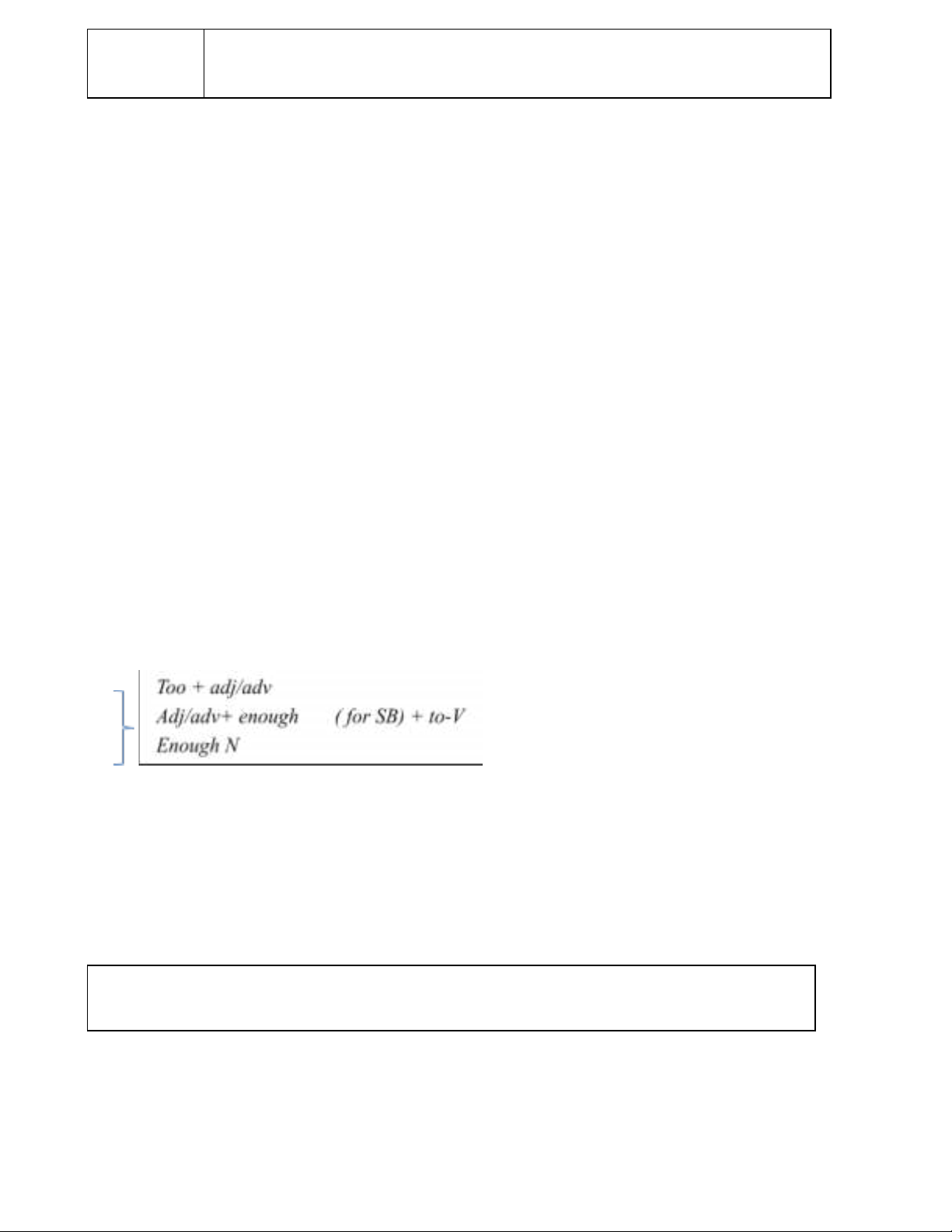
c. Trong các cấu trúc : quá / ủ ….. ể….. (làm gì)
Eg: The water is too hot (for her) to swim.
Eg: He didn’t have enough money to buy a new car. 5. Sau WH
Eg: We didn’t know where to go, what to do, and how to deal with this urgent situation.
6. Sau các ộng từ
S + V + TO-V S + V + O + TO-V lOMoARc PSD|36126207
appear, ask, begin, decide, expect, hesitate, advise, ask, be, command, encourage,
intend, like, manage, pretend, consent, help, forbid, help, leave, permit,
propose, want, seem, swear, try, wish, agree, recommend, remind, tell, allow, cause,
arrange, attempt, beg, care, determine, fail, force, hate, instruct, invite, like, need,
happen, hope, learn, love, mean, offer, order, persuade, request, teach,
prepare, promise, refuse, would like, …
Downloaded by D??ng Lê (ttungduong1217@gmail.com)trouble, warn,…
The government decided to stop investing
He discovered how to open it. I
money in the project. Two men failed to
found out where to buy fruit cheaply.
return from the expedition. The remnants
She couldn't think what to say I refused to leave.
showed her which button to press. MEANING EXAMPLES
Stop V-ing: dừng làm gì (dừng hẳn)
I’m too tired. I stop working for a moment.
Stop to V: dừng lại ể làm việc gì He stopped to eat.
Remember/forget/regret to V: nhớ/quên/tiếc sẽ
Please remember to return the book
phải làm gì (ở hiện tại – tương lai) tomorrow.
Remember/forget/regret V-ing: nhớ/quên/tiếc
I remember putting my hat somewhere
ã làm gì (ở quá khứ) in this room.
Try to V: cố gắng làm gì I will try to help you.
Try V-ing: thử làm gì
I try eating the cake he makes.
Like V-ing: thích làm gì vì nó thú vị, làm I like watching TV. ể thường thức.
I want to have this job. I like to learn
Like to do: làm việc ó vì nó là tốt và cần English. lOMoARc PSD|36126207 thiết
Prefer V-ing to V-ing
I prefer driving to traveling by train.
Prefer + to V + rather than (V)
I prefer to drive rather than travel by
train. Cùng có nghĩa: thích cái gì hơn cái gì
Mean to V: Có ý ịnh làm gì.
He doesn’t mean to prevent you
from Mean V-ing: Có nghĩa là gì. doing that.
This sign means not going into.
Need to V: cần làm gì I need to go to school today.
Need V-ing: cần ược làm gì (= need to be Your hair needs cutting. done)
Used to V: ã từng/thường làm gì trong quá khứ
I used to get up early when I was young.
Be/Get used to V-ing: quen với việc gì (ở hiện
I’m used to getting up early. tại)
Advise/allow/permit/recommend + to-V:
He advised me to apply at once.
khuyên/cho phép/ ề nghị ai làm gì. He advised applying at once.
Advise/allow/permit/recommend + Ving:
khuyên/cho phép, ề nghị làm gì.
Advise/allow/permit/recommend + Vo: He advised you apply at once
khuyên/cho phép, ề nghị ai làm gì.
II. SỰ HÒA HỢP GIỮA CHỦ TỪ - ĐỘNG TỪ
(SUBJECT – VERB AGREEMENT) lOMoARc PSD|36126207
Eg: My mother is a famous actress.
Eg: Children are playing soccer.
Eg: Peter and John are friends Eg: Bacon and egg is my favorite dish.
ĐỘNG TỪ SỐ ÍT - SINGULAR VERB
Dùng ộng từ số ít khi chủ ngữ thuộc những trường hợp sau
1. Sau Neither / Either
Eg: Neither of us is capable of doing this task.Downloaded by D??ng Lê (ttungduong1217@gmail.com)
2. Đơn vị o lường (units of measurement): thời gian, nơi chốn, cân nặng, chiều cao Eg:
Two hours is enough for us to finish the project.
3. Tên môn học (Subjects), bênh (diseases), môn thể thao (sport)
Môn học (Subjects): politics, mathematics, statistics, economics, phonetics, physics,..
Môn thể thao (sport): gymnastics, dominoes,…
4. Danh từ không ếm ược (Uncountable nouns)
Furniture, equipment, machinery, information, knowledge, money, advice, progress, homework,
housework, merchandise, goods, luggage, traffic, news
5. Đại từ (Pronoun)
Every, someone, anybody, nobody, everything, something, etc.
Eg: each of you should give the presentation. BASIC RULE
Nobody likes listening to Rock songs in our class.
6. Tên riêng (Title) Eg: “The three pigs” is my favorite book. 7. Gerund
(chủ từ dạng V-ing) Eg: Standing in the cold water is a good idea.
ĐỘNG TỪ SỐ NHIỀU – PLURAL VERB
Dùng ộng từ số ít khi chủ ngữ thuộc những trường hợp sau 1. Both lOMoARc PSD|36126207
Eg: Both Nam and Nga are good students. 2.
Most of, a lot of, some of, no + Nplu
Eg: Most students here come from European countries. 3.
Danh từ dạng cặp ôi (Pairs nouns): trousers, shorts, scissors, jeans, glasses,
spectacles, shoes, tweezers, sneakers,…
NHỮNG TRƯỜNG HỢP ĐẶC BIỆT SUBJECT VERB EXAMPLES The number of + Vsing Nplu A number of +
The number of days in a year is 365. Nplu Vplu
A number of students are attending a meeting. Either S1 or S2 Phụ thuộc Neither S1 nor S2
Either you and she has to clean the floor. Not only S1 but also S2 vào S2 S1, together with/ along The students, along with Peter, as well as his friends
with/ accompanied by/ as their teacher have taken
wants to travel around the well as + S2 part in the campaign. world. Phụ thuộc vào S1
Phân số (fractions) Phụ thuộc vào N
All of, none of, some of Phụ thuộc vào N
Three quarters of the earth is water.
None of the garbage was picked up. Only
a half of students at this school are None of the sentences were punctuated. qualified for the course. sau table. Here are your Here + V There + V
There is a book on the tickets. Phụ thuộc vào N theo Đại từ quan hệ Phụ thuộc (relative pronouns)
Bella is an author who writes a grammar book. vào N
Jack is one of the men who passed the first round successfully. lOMoARc PSD|36126207 BÀI 8 LISTENING PART 2 BÀI 9 TENSES
CÁC THÌ TRONG TIẾNG ANH
THÌ HIỆN TẠI ĐƠN 1. CÔNG THỨC (FORM)
ĐỐI VỚI ĐỘNG TỪ THƯỜNG ĐỐI VỚI ĐỘNG TỪ TOBE
2. CÁCH SỬ DỤNG (USAGE) USAGE EXAMPLES
a) Diễn tả một chân lý , một sự thật hiển The sun rise in the East. nhiên Tom comes from England.
b) Diễn tả 1 thói quen , một hành ộng xảy ra Mary often goes to school by
thường xuyên ở hiện tại. bicycle. I get up early every morning.
c) Diễn tả năng lực của con người He plays badminton very well lOMoARc PSD|36126207 d) Đưa ra lời chỉ dẫn
Walk down the street and turn left at the crossroads
e) Trong câu sau những từ: when, after,
I’ll call back as soon as I return home
while, till, until, before, as soon as
f) Mục ích hiện tại I come here to study English
3. DẤU HIỆU NHẬN BIẾT (TIME EXPRESSIONS
THÌ HIỆN TẠI TIẾP DIỄN CÔNG THỨC (FORM)
1. CÁCH SỬ DỤNG (USAGE) USAGE EXAMPLES
a) Một hành ộng ang diễn ra ở thời iểm What are you doing at the hiện tại
moment? I’m writing a letter.
b) Sau câu ề nghị, mệnh lệnh
Be quiet! Your mother is sleeping.
c) Một hành ộng ã ược lên kế hoạch thực What are you doing tonight?
hiện trong 1 tương lai gần
I’m going to the cinema with my father.
d) Một hành ộng nhất thời s: today, this
She’s teaching English in this semester. week, this month, these days
e) Một hành ộng lặp i lặp lại thường gây
He’s always borrowing our books for many phiền toái months. lOMoARc PSD|36126207
2. DẤU HIỆU NHẬN BIẾT (TIME EXPRESSIONS)
3. LƯU Ý : MỘT SỐ NHỮNG ĐỘNG TỪ KHÔNG DÙNG Ở THÌ HIỆN TẠI TIẾP DIỄN a.
Động từ chỉ giác quan: hear, see, smell, taste
b. Động từ chỉ tình cảm, cảm xúc: love, hate, like, dislike, want, wish
c. Động từ chỉ trạng thái, liên hệ, sở hữu: look, seem, appear, own, belong to, ne
THÌ HIỆN TẠI HOÀN THÀNH 1. CÔNG THỨC (FORM)
2. CÁCH SỬ DỤNG (USAGE) USAGE EXAMPLES
Have you had breakfast? – No, I haven’t
a) Một hành ộng trong quá khứ không rõ thời iểm
Peter has lived in HCM city since
b) Một hành ộng bắt ầu trong quá khứ 1998 / for 20 years
và còn kéo dài ến hiện tại Signals: since / for
I have visited Uncle Ho mausoleum
c) Dùng trong cách nói: ai ó ã làm ược bao 3 times.
nhiêu cái gì/bao nhiêu lần cho ến bây giờ
d) Một hành ộng diễn ra trong khoảng I’ve written 10 letters this morning thời gian chưa kết thúc
e) Hành ộng vừa mới hoàn thành We’ve just finished our project lOMoARc PSD|36126207
3. DẤU HIỆU NHẬN BIẾT (TIME EXPRESSIONS
THÌ HIỆN TẠI HOÀN THÀNH TIẾP DIỄN 1. CÔNG THỨC (FORM)
2. CÁCH SỬ DỤNG (USAGE) USAGE EXAMPLES
a) Hành ộng bắt ầu trong quá khứ và kéo dài
He has been writing for 2 hours.
LIÊN TỤC ến hiện tại và còn tiếp diễn ến TƯƠNG LAI
b) Nhấn mạnh ộ dài của thời gian và hành ộng He has been waiting for her for 2 hours.
c) Đưa ra kết luận về nguyên nhân dựa vào kết
Her eyes are red, she has been crying, right? quả ở hiện tại lOMoARc PSD|36126207
3. DẤU HIỆU NHẬN BIẾT (TIME EXPRESSIONS) THÌ QUÁ KHỨ ĐƠN 1. CÔNG THỨC (FORM)
ĐỐI VỚI ĐỘNG TỪ THƯỜNG ĐỐI VỚI ĐỘNG TỪ TOBE 2.
CÁCH SỬ DỤNG (USAGE) USAGE EXAMPLES
a) Sự việc/ hành ộng ã xảy ra và kết thúc
I lived in LA in 1998. Now, I’m living in Vietnam.
trong quá khứ tại 1 thời iểm trong quá khứ
b) Thói quen trong quá khứ I
loved playing table tennis when I was achild. c) Signal: used to I used to study Japanese.
d) Câu iều kiện loại 2 If I were you, I would buy that T-shirt
e) Một hành ộng cắt ngang một hành ộng
When I arrived, he was reading his favorite novel.
khác ang diễn ra ( trong quá khứ) f) Signal: when lOMoARc PSD|36126207
3. DẤU HIỆU NHẬN BIẾT (TIME EXPRESSIONS)
THÌ QUÁ KHỨ TIẾP DIỄN
1 . CÔNG THỨC (FORM )
2. CÁCH SỬ DỤNG (USAGE) USAGE EXAMPLES
a) Hành ộng ang diễn ra tại 1 thời iểm CỤ
What were you doing yesterday at 9PM? THỂ trong quá khứ
b) Hành ộng ang diễn ra thì bị 1 hành ộng
I was surfing Facebook when the khác cắt ngang. phone rang.
c) Hai hành ộng song song cùng xảy ra trong
While I was playing guitar, my father was quá khứ. watching TV
d) Một hành ộng gây phiền toái trong quá My ex was always calling me in the past khứ e)
Signals: always, constantly, many times
f) Đưa lời ề nghị lịch sự I was wondering if you could lend me 200$ lOMoARc PSD|36126207
3. DẤU HIỆU NHẬN BIẾT (TIME EXPRESSIONS)
THÌ QUÁ KHỨ HOÀN THÀNH CÔNG THỨC (FORM)
1. CÁCH SỬ DỤNG (USAGE) USAGE EXAMPLES
By last year, I had passed the
a) Hành ộng diễn ra TRƯỚC 1 thời iểm CỤ TOEIC exam. THỂ trong quá khứ
Signals: by, before, after, just
b) Một hành ộng diễn ra trước một hành ộng
After I had finished my exam, I went khác trong quá khứ out with my friends.
c) Trong câu tường thuật.
They told that they had fixed the computer
Signals: asked told, said, wondered, explained, thought d) Câu iều kiện loại 3
If you had sent you my report, I
could have contacted the client to arrange the meeting.
e) Diễn tả sự hối tiếc về sự việc ã sảy ra I wish I had brought my camera. lOMoARc PSD|36126207
2. DẤU HIỆU NHẬN BIẾT (TIME EXPRESSIONS)
THÌ QUÁ KHỨ HOÀN THÀNH TIẾP DIỄN 1. CÔNG THỨC (FORM)
2. CÁCH SỬ DỤNG (USAGE) USAGE EXAMPLES
a) Nhấn mạnh khoảng thời gian của 1 hành
I had been waiting for her for 3
ộng ã ang xảy ra trong quá khứ và kết hours before she came.
thúc trước 1 hành ộng khác xảy ra và
cũng kết thúc trong quá khứ
b) Diễn ạt một hành ộng ang xảy ra trước một
I had been thinking about that before you mentioned it. hành ộng trong quá khứ
(nhấn mạng tính tiếp diễn)
3. DẤU HIỆU NHẬN BIẾT (TIME EXPRESSIONS)
Sam gained weight because he had
Diễn ạt hành ộng là nguyên nhâncủa một been overeating.
iều gì ó trong quá khứ. lOMoARc PSD|36126207 USAGE EXAMPLES lOMoARc PSD|36126207 THÌ TƯƠNG LAI ĐƠN
1 . CÔNG THỨC (FORM )
2 . CÁCH SỬ DỤNG (USAGE ) USAGE EXAMPLES
a) Diễn tả một hành ộng xảy ra trong tương
Tomorrow, my friends and I will go to lai. the museum.
b) Diễn tả một dự oán không có căn cứ.
I think he will come to the party.
c) Khi muốn yêu cầu, ề nghị.
Will you please bring me a cellphone?
3 . DẤU HIỆU NHẬN BIẾT (TIME EXPRESSIONS )
THÌ TƯƠNG LAI TIẾP DIỄN 1. CÔNG THỨC (FORM) lOMoARc PSD|36126207
2. CÁCH SỬ DỤNG (USAGE)
a) Diễn tả một hành ộng ang diễn ra tại một
At this time tomorrow I will be going shopping in Singapore.
thời iểm xác ịnh trong tương lai. (nhấn mạnh)
b) Diễn tả một hành ộng ang xảy ra thì một
When you come tomorrow, they will be playing tennis.
hành ộng, sự việc khác xen vào trong tương lai.
c) Hành ộng sẽ diễn ra và kéo dài liên tục My parents are going to London, so I’ll be suốt một
khoảng thời gian ở tương lai.
staying with my grandma for the next 2 weeks.
d) Hành ộng sẽ xảy ta như một phần trong kế
The party will be starting at ten o’clock.
hoạch hoặc một phần trong thời gian biểu
3. DẤU HIỆU NHẬN BIẾT (TIME EXPRESSIONS)
THÌ TƯƠNG LAI HOÀN THÀNH 1. CÔNG THỨC (FORM) USAGE EXAMPLES
a) Dùng ể diễn tả một hành ộng hay sự
will have finished my homeworkbefore
việc hoàn thành trước một thời iểm trong 11 o’clock this evening. tương lai.
When you come back, I will have typed
b) Diễn tả một hành ộng hay sự việc hoàn
this email, I will have made the meal
thành trước một hành ộng hay sự việc
ready before the time you come trong tương lai. tomorrow. lOMoARc PSD|36126207
2. CÁCH SỬ DỤNG (USAGE)
3. DẤU HIỆU NHẬN BIẾT (TIME EXPRESSIONS)
THÌ TƯƠNG LAI HOÀN THÀNH TIẾP DIỄN 1. CÔNG THỨC (FORM)
2. CÁCH SỬ DỤNG (USAGE) USAGE EXAMPLES
a) Diễn tả một sự việc, hành ộng diễn ra
I will have been working in a company
trong quá khứ tiếp diễn liên tục ến tương lai
for 10 year by the end of next year.
với thời gian nhất ịnh. (nhấn mạnh)
I will have been studying English for
10 year by the end of next month
b) Dùng ể nhấn mạnh tính liên tục của
When I get my degree, I will have been
hành ộng so với một hành ộng khác trong
studying at Cambridge for four years. tương lai
Will they have been talking for half an
hour by the time her husband comes back?
3. DẤU HIỆU NHẬN BIẾT (TIME EXPRESSIONS)
SỰ BẤT HOÀ HỢP GIỮA CHỦ TỪ VÀ ĐỘNG TỪ
Trong mệnh ề trạng ngữ về thời gian hoặc iều kiện, THÌ HIỆN TẠI ĐƠN (không phải thì
tương lai) sẽ ược dùng ể diễn tả tương lai. lOMoARc PSD|36126207 When As soon as Before + S + V By the time After As long as
VD: He will finish the project by the time she arrives. As long as he
complies with the rules, the organization will support him. BÀI 10
RELATIVE CLAUSES AND REDUCED RELATIVE CLAUSES
MỆNH ĐỀ QUAN HỆ VÀ GIẢN LƯỢC MỆNH ĐỀ QUAN HỆ
I. MỆNH ĐỀ QUAN HỆ
Danh từ Chủ từ Túc từ Sở hữu Người (people) Who / that Whom / that Whose Vật (things) Which / that Which / that Of which / whose
1. ĐẠI TỪ QUAN HỆ lOMoARc PSD|36126207
WHO: ại từ quan hệ chỉ
.. N (person) + WHO + V + O ▪ The man who is
người, ứng sau danh từ chỉ standing over there
người ể làm chủ ngữ
(subject) hoặc tân ngữ is
(object) cho ộng từ ứng Mr. Pike. sau nó. ▪ That is the girl who I told you about.
WHOM: ại từ quan hệ chỉ người, ứng sau my aunt.
danh từ chỉ người ể làm tân ngữ (object) ▪ The boy whom we are cho ộng từ ứng sau nó. looking for is Tom
..N (person) + WHOM + S + V ▪ The woman
whom you talked to yesterday is ...N (thing) + WHICH + V + ▪ This is the book which I
WHICH: ại từ quan hệ chỉ like best.
vật, ứng sau danh từ chỉ vật O ...N (thing) + WHICH + S ▪ The hat which is red
ể làm chủ ngữ (Subject) is mine.
hoặc tân ngữ(object) cho + V ộng từ ứng sau nó.
LƯU Ý: Có thể dùng
Sentence, WHICH + V + O ▪ She can’t come to which thay cho cả my birthday
mệnh ề ứng trước. party, which makes me sad.
WHOSE: ại từ quan hệ ..N (person, thing) + WHOSE chỉ sở hữu. ▪ The boy whose + N Whose luôn i kèm với + V + .. bicycle you borrowed một danh từ. yesterday is Tom. ▪ John found a cat whose leg was broken
THAT: That là ại từ quan hệ chỉ cả người ▪ The woman that/
who lẫn vật. Sau that không có dấu phẩy lived here before us is N
(thing, person) that …… ▪ My father is the a novelist. person that/ who(m) I admire most. lOMoARc PSD|36126207
WHEN: trạng quan hệ .N (time) + WHEN + S + V chỉ thời gian, ▪ May Day is the day When ược dùng thay when (on which)
cho at/on/ in which, then people
WHEN = ON / IN / AT + hold a meeting. WHICH ▪ That was the time when (at which) he managed the company.
WHERE: trạng từ quan hệ WHERE = ON/IN/AT + where (in chỉ nơi chốn,
which) I was born? ▪ Hanoi is
Where ược dùng thay cho WHICH
the place where I like to at/ in/ to which, there. come.
.N (place) + WHERE + S + V▪ Do you know the country the reason why (for which)
you are so sad. WHY: trạng từ quan hệ chỉ lý do, thường ứng sau the reason. ▪ He told me the reason
Why ược dùng thay cho for which. why he had been absent
..N (reason) + WHY + S + V ▪ Please tell me from class the day before.
2. TRẠNG TỪ QUAN HỆ LƯU Ý:
Các cụm từ chỉ số lượng some of, both of, all of, neither of, many of, none of … có thể ược
dùng trước whom, which và whose.
Các ại từ bất ịnh: Someone, anybody, nothing, anything, something, no one, …có thể ược dùng trước that
What = the thing(s) that /which ……… (thay thế cùng lúc cho S và O) Vd: That is what she likes
How = The way(s) that/which ……..(thay thế cùng lúc cho S và O)
Vd: Can you explain how it works
II. GIẢN LƯỢC MỆNH ĐỀ QUAN HỆ 1. Mệnh
ề quan hệ có chứa ộng từ V-ing (mệnh ề quan hệ ở dạng chủ ộng) Có thể bỏ
ại từ quan hệ và trợ ộng từ/ ộng từ to be. lOMoARc PSD|36126207
The man who is standing there is handsome The man standing there is handsome.
The president made a speech for the famous man who visited him. The president made a
speech for the famous man visiting him.
2. Mệnh ề quan hệ có chứa ộng từ quá khứ phân từ 2 (mệnh ề quan hệ ở dạng bịộng)
Có thể bỏ ại từ quan hệ và trợ ộng từ/ ộng từ tobe
The book which is written by Mr.A is interesting The book written by Mr.A is interesting
3. Mệnh ề quan hệ chứa ộng từ nguyên thể
Danh từ mà mệnh ề quan hệ bổ nghĩa cho có các từ sau ây ứng trước: first, last, only,
second… có thể bỏ ại từ quan hệ, trợ ộng từ/to be, và ộng từ ược chuyển thành dạng nguyên thể
He is the only man who can solve this problem He is the only man to solve this problem.
4. Mệnh ề quan hệ chứa giới từ
Có thể loại bỏ ại từ quan hệ và to be trước một ngữ giới từ (một giới từ mở ầu kết hợp với các danh từ theo sau).
The beaker that is on the counter contains a solution. The beaker on the counter contains a solution.
5. Mệnh ề quan hệ có chứa ”to be” và tính từ.
Ta có thể bỏ i ại từ quan hệ và ”to be”
The woman, who is very clever and beautiful is my aunt. => The woman, clever and beautiful is my aunt. BÀI 11
LISTENING PART 3: SHORT CONVERSATIONS BÀI 12
CÂU ĐIỀU KIỆN (CONDITIONAL SENTENCES)
I.CÂU ĐIỀU KIỆN LOẠI 1
Diễn tả iều kiện có thể xảy ra ở hiện tại hoặc tương lai.
If you come into my garden, my dog will bite you.
If it is sunny, I will go fishing. lOMoARc PSD|36126207
II.CÂU ĐIỀU KIỆN LOẠI II
Câu iều kiện không có thực ở hiện tại.
Điều kiện không thể xảy ra ở hiện tại hoặc tương lai, iều kiện chỉ là một giả thiết, một
ước muốn trái ngược với thực trạng hiện tại.
If I were a bird, I would be very happy.
If I had a million USD, I would buy that car.
III.CÂU ĐIỀU KIỆN LOẠI III
Câu iều kiện không có thực trong quá khứ.
Điều kiện không thể xảy ra trong quá khứ, chỉ mang tính ước muốn trong quá khứ, một
giả thiết trái ngược với thực trạng ở quá khứ.
If he had come to see me yesterday, I would have taken him to the movies. If I hadn’t
been absent yesterday, I would have met him.
IV.ĐẢO NGỮ CỦA CÂU ĐIỀU KIỆN
Đảo ngữ câu iều kiện loại 1: Should + S + Vo, S + Will +Vo
If he has free time, he’ll play tennis. => Should he have free time, he’ll play tennis
Đảo ngữ câu iều kiện loại 2: Were + S + to + Vo, S + Would + Vo
If I learnt Russian, I would read a Russian book. => Were I to learn Russian, I would read a Russian book
Đảo ngữ câu iều kiện loại 3: Had + S + V3/Ved, S + Would have + V3/Ved
If he had trained hard, he would have won the match. => Had he trained hard, he would have won the match. NOTE: If not = Unless.
Unless we start at once, we will be late. = If we don’t start at once we will be late.
Unless you study hard, you won’t pass the exams. = If you don’t study hard, you won’t pass the exams.
CÂU BỊ ĐỘNG (PASSIVE VOICE)
Điều kiện ể có thể chuyển câu chủ ộng sang bị ộng:
Thứ 1: Câu chủ ộng phải xác lập có ược tân ngữ. (object) lOMoARc PSD|36126207
Thứ 2: Câu chủ ộng phải có Ngoại ộng từ. (transitive verbs) Active Passive
Simple present (thì hiện tại ơn) Do Is done
Present continuous (thì hiện tại tiếp diễn) is/are doing is/are being done
Simple Past (thì quá khứ ơn) Did was/were done
Past continuous (thì quá khứ tiếp diễn) was/were doing was/were being done
Present Perfect (thì hiện tại hoàn thành) has/have done has/have been done
Past perfect (thì quá khứ hoàn thành) had done had been done
Simple future (thì tương lai ơn) will do will be done
Future perfect (thì tương lai hoàn thành) will have done will have been done is/are going lOMoARc PSD|36126207
to (thì tương lai gần) is/are going to do is/are going to be done Can/could Might Can/could do might do Can/could be done might be Must must do done must be done Have to LƯU Ý: have to do have to be done 1.
Ta dùng ộng từ nguyên thể trong thể bị ộng: TO BE + PAST PARTICIPLE ể chỉ
mộtý ịnh hay sự bắt buộc hoặc sự không thể ược. This exercise is to be done.
This matter is to be discussed soon. 2.
Một số trường hợp dùng giới từ khác thay vì dùng by
Be disappointed/ be frightened / be surprised At
Be engaged / be interested / be involved In
Be composed / be made / be tired Of Be dedicated / be married To
Be bored / be crowded / be filled / be pleased / With be satisfied
The executive were satisfied by with the presentation.
Our team is composed by of the best employees in our company.
The old closet needs painting. = the old closet needs to be painted
Ms. Fischer deserves promoting. = Ms. Fischer deserves to be promoted
BÀI 13: PREPOSITIONS AND CONJUNCTIONS lOMoARc PSD|36126207
I. Giới từ (PREPOSITIONS)
GIỚI TỪ CHỈ THỜI GIAN (PREPOSITIONS OF TIME) At Thời gian cụ thể at 3pm
Bữa ăn at dinner Tuổi at age 21
Mốc thời gian tại 1 buổi tiệc at the end, at the beginning/end, at the same
Theo cụm khác time, at first, at all time, at least lOMoARc PSD|36126207 On Thứ trong tuần In on Wednesday
Buổi ặt biệt trong ngày on Friday night
Ngày trong tháng on December 4th
Theo cụm khác on the rise, on sale, on business/vacation/leave
Tháng in November
Mùa in the summer Năm Ago in 1992
Khoảng thời gian in the same year After
mốc/khoảng thời gian trong tương lai in an hour
(trong vòng) in writing, in detail, in person, in
Theo cụm khác particular/general
Mốc thời gian trong quá khứ 2 years ago
Sau một mốc/ sự kiện after the game; after the surgery Before
Trước một mốc/ sự kiện before leaving; before breakfast; before 2004 During
Khoảng thời gian/sự kiện trong quá during the night; during war
khứ hoặc tương lai (trong vòng/suốt)
Downloaded by D??ng Lê (ttungduong1217@gmail.com) For
Khoảng thời gian trong quá khứ for 2 years Past
Trong cách nói giờ ten past six (6:10) Since
Mốc thời gian since 1980; since the accident Throughout
Sự kiện xảy ra xuyên suốt throughout the year; throughout the ordeal lOMoARc PSD|36126207 To
Trong cách nói giờ ten to six (5:50) : 5 giờ km 10
From …. To: từ …. ến from 1pm to 3pm Until
Cho ến khi until the end; until sunrise
GIỚI TỪ CHỈ NƠI CHỐN (PREPOSITIONS OF PLACE) On
Hướng/phía on the left
Trên sàn/tường on the floor, on the wall
Trên phương tiện giao thông on a bus
Trên phương tiện truyền thông on the air; on TV, on youtube About
Xung quanh một nơi cụ thể about town Ước lượng
about five feet tall
Liên quan ến ai/ iều gì about my father’s business Above
ở trên (không chạm) above the door After
Cao cấp hơn ai above me in rank
Theo sau ai/ iều gì chasing after the robbers
Đằng sau the corner after the big house Against
Dựa vào => lean on against the door Along
Dọc theo along the hallway; along the river lOMoARc PSD|36126207 Among
ở giữa (3 chủ thể trở lên) among friends
among the masses
among other things Around
Xung quanh khu vực/ người drive around the block
Xung quanh thời gian around 3 o’clock Behind
Đằng sau behind the car; behind her smile Below
Bên dưới below the stairs; below expectations From
Từ ….. / Bắt nguồn từ…. a flower from the garden Into
Vào trong …. (phòng, nhà) go into the kitchen/house Onto
Chuyển ộng lên trên cái gì jump onto the table Over
Bao bọc cái gì put a jacket over your shirt
Hơn (bao nhiêu năm) over 16 years of age
Vượt qua ( iều gì) climb over the wall Through
Xuyên qua drive through the tunnel Towards
Về phía go 5 steps towards the house
GIỚI TỪ QUAN TRỌNG KHÁC (OTHER IMPORTANT PREPOSITIONS) About Về (chủ ề)
we were talking about you By Bởi ai
a book by Mark Twain
Tăng lên / giảm xuống bao
prices have risen by 10
nhiêu Bằng (phương tiện giao
percent by car, by bus thông) From
Từ ai (ai cho/ ưa iều gì)
a present from Jane In Bước vào (xe/nhà) get in the car Of Thuộc
a page of the book Off Thoát/ tắt
get off the train lOMoARc PSD|36126207 On Bằng chân/ cưỡi ngựa
on foot, on horseback Out of Rời khỏi ( âu)
get out of the taxi II. LIÊN TỪ (CONJUNCTIONS)
1. CORRDINATING CONJUNTIONS (LIÊN TỪ ĐẲNG LẬP) -
Luôn luôn ứng giữa 2 từ hoặc 2 mệnh ề mà nó liên kết. Khi một liên từ ẳng lập nối các mệnh ề
ộc lập thì luôn có dấu phẩy ứng trước liên từ. -
Tuy nhiên, nếu các mệnh ề ộc lập ngắn và tương tự nhau thì dấu phẩy không thực sự cần thiết.
LƯU Ý : So và For chỉ nối mệnh ề, chúng không nối từ hoặc cụm từ
FOR (bởi vì: chỉ nguyên nhân) He will surely succeed, for (because) he works hard.
And (và: chỉ sự thêm vào) She is a good and loyal wife.
I like banana, apple, and lemon.
Nor (cũng không) He is neither boy nor girl.
But (nhưng: chỉ sự trái ngược) He is intelligent but very lazy.
Or (hoặc: chỉ sự trái ngươc) We have to work hard, or we will fail the exam.
Yet (nhưng: chỉ sự trái ngược) She wants to see the play, yet he prefers to watch soccer on television
So (vì vậy: chỉ kết quả) I wanted to clear my thoughts, so I went for a walk.
2. CORRELATIVE CONJUNCTIONS (LIÊN TỪ TƯƠNG QUAN) - Chúng thường ược sử dụng
theo cặp ể liên kết các cụm từ hoặc mệnh ề có chức năng tương ương nhau về mặt ngữ pháp. Whether A or B I
Both A and B (cả A và B) They learn both English and French. can't make
Not only A but also B (không những A up
I like playing not only tennis but also football. my còn B) mind = A as well as B
Either A or B (hoặc là A hay B) Next year, Tony will either start classes at HCM
university or work as a waiter at a coffee shop. Neither A nor B
He drinks neither wine nor beer. (không A cũng không B) whether to buy some new (liệu A hay B)
summer clothes now or wait until the prices go lOMoARc PSD|36126207 down.
3. SUBORDINATING CONJUNCTION (LIÊN TỪ CHÍNH PHỤ)
- Thường ứng ầu mệnh ề phụ thuộc. Liên từ phụ thuộc nối mệnh ề phụ với mệnh ề chính .
- Nối kết các nhóm từ, cụm từ hoặc mệnh ề có chức năng khác nhau - mệnh ề phụ với mệnhề chính trong câu.
3.1. Thời gian (TIME) After
A man shoud take a little rest, after he has played tenis. Before
He talks as if he were very wise. As
He came her, as the clock struck seven. As soon as
We will get married as soon as we finish university. Since
She has been very weak, since she was taken sick. As long as
You can use my car as long as you drive carefully. When
When we came, she was taking a bath While
He slept while she cooked supper.
NOTE: không dùng thì tương lai sau liên từ chỉ thời gian => dùng thì hiện tại thay thế.
3.2. Nơi chốn (PLACE) ✔Where
I like to live in a country where there is plenty of flowers. ✔Wherever
Her mother follows her wherever she goes
3.3. Cách thức (MANNER) ✔ As (như ) Do as i told you to do.
✔ As if (như là, như thế)
She talks as if she knew everything about him.
3.4. So sánh (COMPARISION) ✔ As
She is as tall as her brother.
This laptop is as expensive as that one. ✔ Than
This laptop is more expensive than that one.
3.5. Lí do (REASON) ✔ As (khi,ngay khi)
As it rained very hard, they stopped they games. lOMoARc PSD|36126207 ✔ Because
He could not pass the test because he didn’t learn hard. ✔ Since
I must go since he has telephoned three times
NOTE: Giới từ có nghĩa là bởi vì: because of, due to, owing to, on account of + Nphrase (prep + cụm N)
3.6. Mục ích (PURPOSE) ✔ That
He work hard that he may succeed in life. ✔ So that
I went very early so that i could catch the last bus. ✔ In order that
I learn english in order to study in usa .
3.7. Điều kiện (CONDITION) ✔ If (nếu như)
I will phone her if i have her phone number. ✔ Unless (if not)
Unless he work hard, he will not pass the exam. ✔ Provided that
I’ll go back to work tomorrow provided that i’m feeling better
✔ In case (trong trường hợp)
In case he steals your motor he will be in prison.
3.8. Sự tương phản, trái ngược (CONTRAST)
✔ Although, though, even though (mặc dù)
Though/Even though /Although it rained hard, we went out with her.
✔ Even if (mặc dù, thậm chí)
Even if my watch is right, i will be too late.
✔ Not with standing that (tuy, dù) The bad weather notwithstanding, the event was a great success. BÀI14 LISTENINGPART4
CẤU TRÚC SO SÁNH (COMPARISON) SO SÁNH BẰNG
My house is the same height as his. Tom is as old as Mary = Tom is the same age as Mary.
Is the film as interesting as you expected? lOMoARc PSD|36126207 SO SÁNH KHÔNG BẰNG
She is not as/so charming as her mother was.
This dress is less expensive than that one = This dress isn’t as/so expensive as that one.
The city center was less crowded than usual = The city center wasn’t as crowded as usual.
ĐỐI VỚI TÍNH TỪ VÀ TRẠNG TỪ NGẮN
ĐỐI VỚI TÍNH TỪ VÀ TRẠNG TỪ DÀI China is bigger than India
Gold is more valuable than silver.
Ngoc Trinh is more beautiful than Tung Son. We study harder than him
ĐỐI VỚI TÍNH TỪ VÀ TRẠNG TỪ NGẮN
ĐỐI VỚI TÍNH TỪ VÀ TRẠNG TỪ DÀI
Russia is the biggest country in the world.
Platinum is the most valuable metal.
QUY TẮC SO SÁNH CHO ADJ NGẮN Thêm er/est Tính từ So sánh So sánh nhất hơn lOMoARc PSD|36126207
Tính từ kết thúc bởi 1 phụ âm hoăc e Old Older The oldest Nice Nicer The nicest
Tính từ kết thúc vởi 1 nguyên âm + 1 phụ âm Big Bigger The biggest
Tính từ kết thúc bởi y Happy Happier The happiest
MỘT SỐ TÍNH TỪ TRẠNG TỪ NGẮN BẤT QUY TẮC Tính từ
So sánh hơn So sánh nhất Good, Well Better The best Bad, Badly Worse The worst Far
Farther/further The farthest/ the furthest Much/ many More The most
LƯU Ý: Khi nói gấp bao nhiêu lần, ta dùng cấu trúc twice as … as, three time as … as, Their
house is about three times as big as ours.
Petrol is twice as expensive as it was a few years ago.
Tài liệu liên quan:
-

Active Skills for Reading Student Book 3, Third Edition | Trường Đại học Tài Chính - Marketing
20 10 -
Tài liệu ôn tập Tiếng Anh. Speaking-Writing
43 22 -
English File Pre-Intermediate (EF) Lesson 1A Answer Keys
92 46 -
Hướng Dẫn Sử Dụng MyEnglishLab: Tạo Tài Khoản & Tham Gia Lớp Học
85 43 -
Từ vựng ôn tập học phần Tiếng anh cơ bản
372 186