Tổng hợp chuỗi giá trị của Intel | Môn Quản trị chuỗi cung ứng quốc tế - Đại học Kinh Tế Quốc Dân
Intel Corporation is an American multinational corporation and technology company headquartered in Santa Clara, California. Intel designs, manufactures, and sells computer components and related products for business and consumer markets. It is considered one of the world's largest semiconductor chip manufacturers by revenue until 2016. Tài liệu được sưu tầm gồm 34 trang, giúp bạn ôn tập tốt hơn. Mời các bạn đón xem.
Môn: Quản trị chuỗi cung ứng quốc tế 80 tài liệu
Trường: Trường Đại học Kinh Tế Quốc Dân 8.2 K tài liệu
Tác giả:












Preview text:
lOMoAR cPSD| 58950985 A. Intel overview 1. History
Intel Corporation is an American multinational corporation and technology company
headquartered in Santa Clara, California. Intel designs, manufactures, and sells computer
components and related products for business and consumer markets. It is considered one of
the world's largest semiconductor chip manufacturers by revenue until 2016.
In 1968, Gordon Moore suggested to Bob Noyce that semiconductor memory, an emerging
technology, might form the basis of a new company. Shortly after, on July 18, 1968, the two
men incorporated a venture that would later be called Intel. Almost immediately, Andy Grove
joined them, and the three men together formed the leadership of the company that has
produced technological innovations that have created new industries. 2. Products
Intel provides processors to major computer system makers, including Lenovo, HP, Dell and
Apple. The company is best known for CPUs based on its x86 architecture, which was created
in the 1980s and has been continuously modified, revised and modernized. Intel also offers
graphics processing units (GPUs), networking accelerators, programmable processors, AI
accelerators, and communications and security products. In addition to processors, the
company produces various components such as motherboard chipsets, network interface
controllers, integrated circuits, flash memory, graphics chips, embedded processors, and other
technology related to communications and computing. Its business divisions encompass the
computer client segment, data center operations, IoT ecosystem, programmable solutions, non-
volatile memory solutions, and more. Intel also invests heavily in R&D to strengthen its
competitive position and accelerate its growth in the era of artificial intelligence (AI) and smart computing.
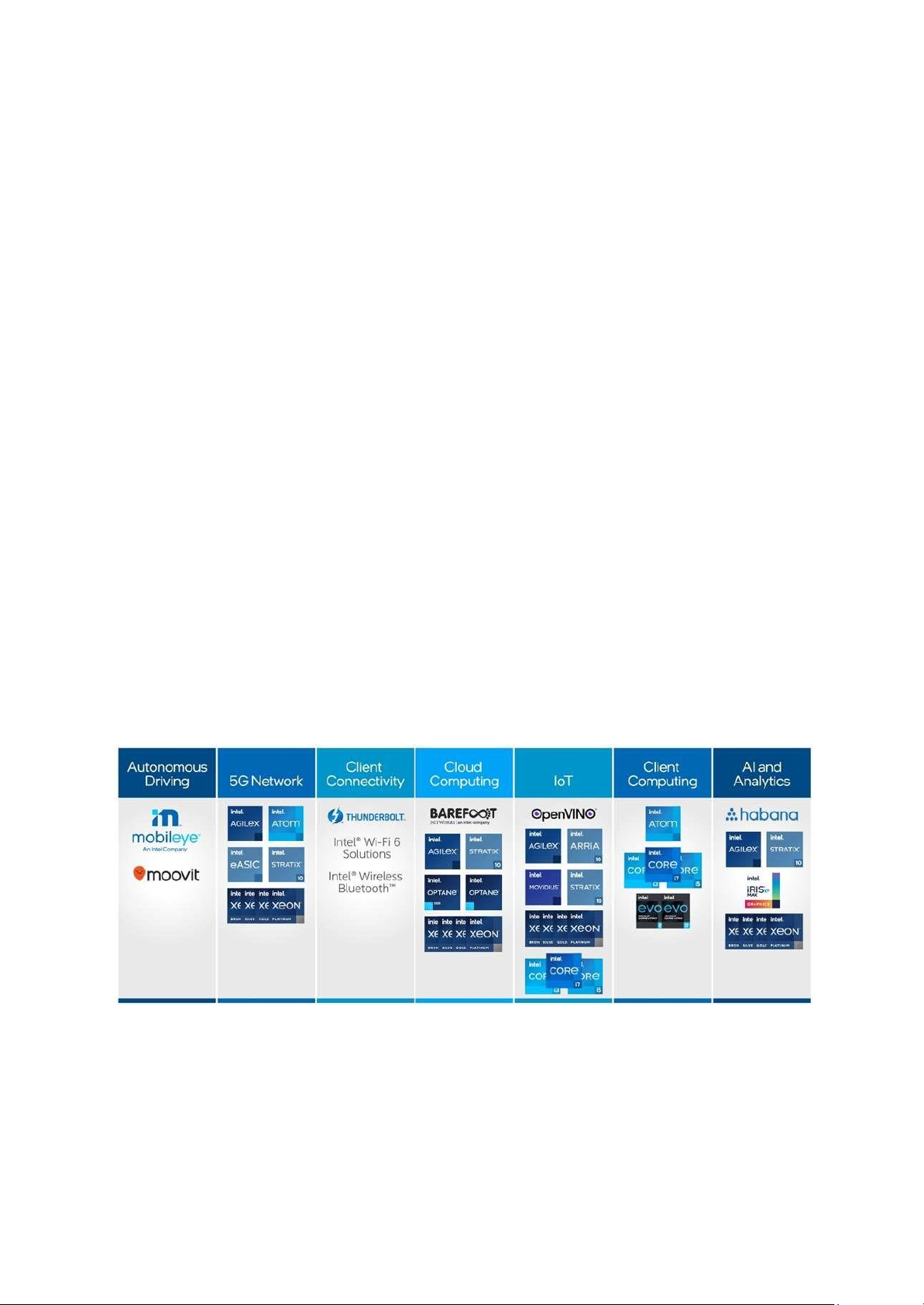
Intel has broadly classified its business as:
● Data-Centric – It includes memory and storage products, programmable
semiconductors, products for machine learning-based sensing, data analysis, and
mapping. It also includes platforms and related products for cloud service and
communication service providers.
● PC-Centric – It includes a platform designed for end-users and targets the commercial,
gaming, and graphics market segment. lOMoAR cPSD| 58950985 Product Target Customer Segment Market Segment Consumers and Client Computing Intel Core OEMs, Enterprises Group Consumer Computing, Processors (i3, i5, OEMs, Gaming, i7, i9) Enterprise PCs Intel Xeon Data Centers,
Data Center and Data Centers, Cloud Processors Enterprises, Telecom AI Infrastructure, AI, Enterprise Intel Atom & Mobile Devices, IoT Network and Consumer PCs, Pentium Processors Devices Edge Embedded Devices, IoT Data Center and Intel Optane Data Centers, AI Data Storage, Memory and Enterprises, AI Enterprise, Cloud, Storage Companies HPC Mobileye Mobileye (EyeQ Automotive OEMs, Automotive, SoCs, ADAS Tier-1 Suppliers, Tech Autonomous Vehicles, Solutions) Firms ADAS
Intel Core Processors are by far the most significant contributor to Intel's overall revenue,
primarily driven by the consumer market. While Intel Xeon Processors continue to be a
dominant force in the data center and AI markets, they are essential for cloud providers and
enterprises. In the IoT and mobile sectors with Intel Atom Processors, has a major focus on
embedded systems. Intel Optane & AI Accelerators serve the data center and AI
infrastructure markets. Intel is making significant investments in this area, particularly in
memory solutions and accelerators for AI workloads. lOMoAR cPSD| 58950985 3. Market share
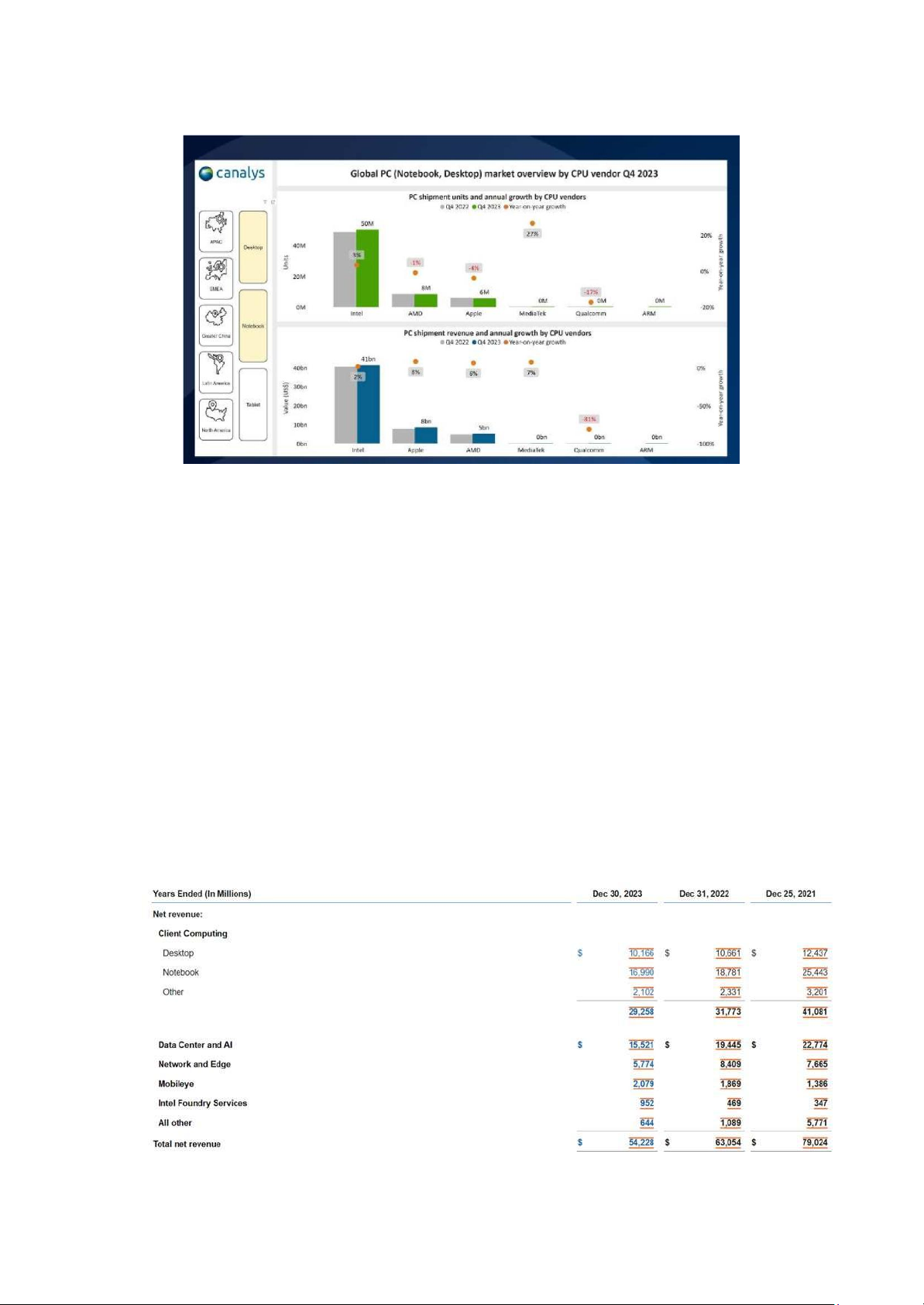
In Q4 2023, Intel Corporation maintained its leading position in PC (excluding tablets)
processor shipments, with a market share of 78%, showing a stable performance; AMD with
13% of the market share and 9% of the market, which it is assumed belongs to Apple, Qualcomm, Arm, and MediaTek.
With Desktop PC, Mobile, Client revenue share, AMD lost 1% of market share to Intel in
desktop PCs in the second quarter of 2024 and now controls 23%, leaving 77% to Intel at 50
million CPUs globally in 2023.
With Server revenue, Intel now controls 24.1% of the data center CPU market with its EPYC
CPUs. When compared to the second quarter of 2024, AMD's gained even more, as the
company grabbed 5.6% from Intel. Moreover, Intel earned $3.0 billion selling 75.9% of data
center CPUs (units), $0.2 billion more than AMD with $2.8 billion earned by selling 24.1% of server CPUs (units).
However, with the Add-in-board (AIB) market, Intel recently registered at zero percent. Since
Intel introduced its first dedicated AIB – or graphics card – via the Arc Alchemist
microarchitecture in March 2022, the company has seemingly failed to capture meaningful
market share from either Nvidia or AMD. 4. Revenue lOMoAR cPSD| 58950985
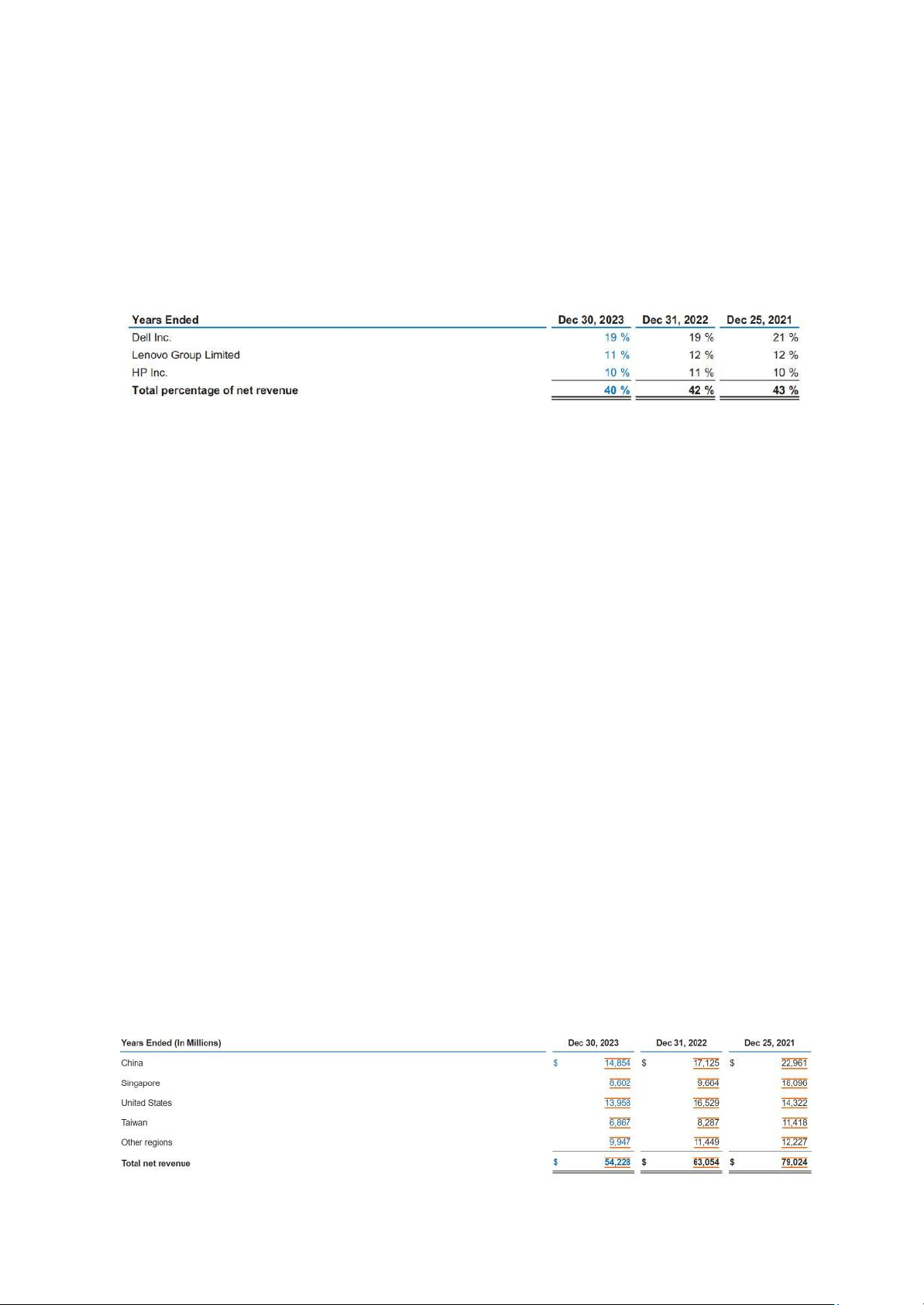
In 2023, Intel annual revenue was $54.2 billion, down $8.8 billion, or 14%, from 2022. CCG
revenue decreased 8% due to lower notebook and desktop volume from lower demand across
market segments, partially offset by increased volume in the second half of the year as customer
inventory levels normalized compared to higher levels in the first half.
As of 2023, 40% of Intel’s net revenue came from three main customers: Dell, Lenovo Group,
and HP. In 2020, a key long-term partnership for the company came to an end when Apple Inc.
announced that its Macs would no longer use Intel processors.
Compared to their revenue in 2020, 2023 was $24 billion lower, yet the company's workforce
is 10% larger today. To reduce its head count, Intel plans to roll out a retirement offering for
eligible employees and offer an application for voluntary departures.
4.1. Core Revenue: PC-Centric Business
The Client Computing Group (CCG), Intel’s core revenue generator, represents 54% of
Intel’s total revenue in 2023, which amounts to approximately $29.3 billion. This segment
includes products like Intel Core processors (i3, i5, i7, i9), Intel Atom processors, and other consumer-related devices.
4.2. Non-Core Revenue: Data-Centric Businesses
Intel’s Data-Centric Businesses encompass several key areas: Data Center Group (DCAI),
Network and Edge (NEX), Mobileye, and Intel Foundry Services (IFS). Collectively, these
contribute 46% of Intel’s total revenue (~ $24.9 billion).
DCAI takes up about 28% of total revenue (~$15.2 billion). Moreover, its revenue decreased
by 20%, primarily due to lower server volume in the data center market. This was a result of a
softening demand for CPUs from data centers, which impacted Intel’s ability to maintain growth in this area.
NEX contributes about 10% of total revenue (~$5.4 billion). However, customers are reducing
purchases to adjust to lower demand and inventory levels which can affect this field.
Mobileye contributes 4% of total revenue (~$2.17 billion), and has a less significant decline relative to other segments. lOMoAR cPSD| 58950985
China is the major market for Intel as it contributes ~27% to the total revenue. It is also the
largest importer of semiconductors globally. And it is highly dependent on US companies for
semiconductors because of a huge demand by PC and Over Equipment Manufacturer (OEM).
Singapore, the US, and Taiwan are other primary markets for Intel. These are the major markets
for smart computing and devices and hence have a high demand for semiconductors.
B. Intel’s Global business strategy I. Business strategy
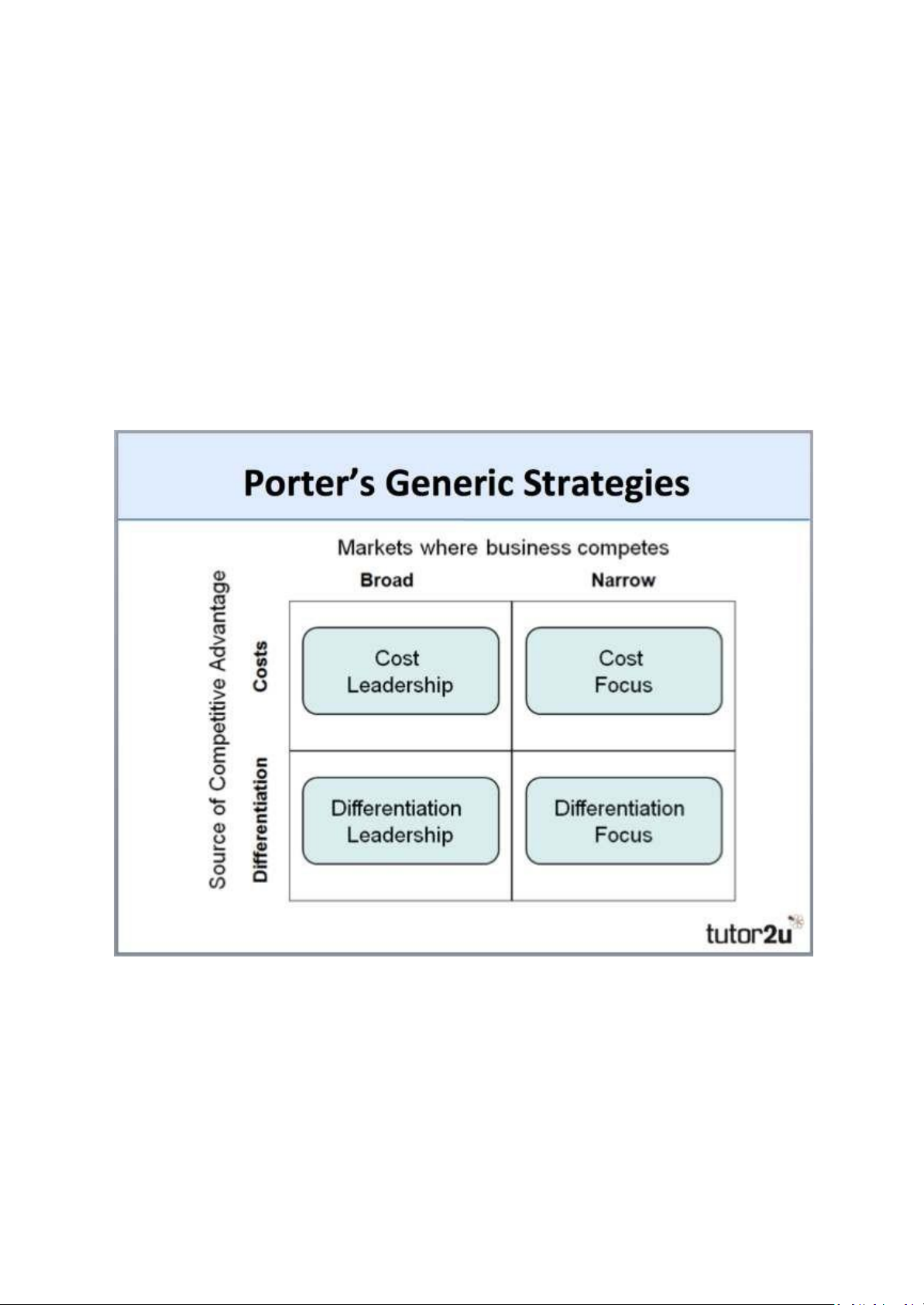
Intel Corporation’s generic competitive strategy is di
erentiation leadership. In Porter’s model,
this generic strategy builds competitive advantage based on product quality or features, customer
service, and brand image management. In Intel’s case, di erentiation is applied through product
quality and features. For example, the company invests in rapid innovation to produce cutting-edge
microprocessors and related technological products. The advanced features of these products ensure
leadership in the global market, helping fulfill Intel’s mission statement and vision statement. The implementation of the di
erentiation generic strategy helps Intel maintain its competitive
advantage despite strong competitors like AMD. lOMoAR cPSD| 58950985 Di
erentiation requires key strategic objectives that make Intel an industry leader. One of these
strategic objectives is to rapidly innovate to develop new or enhanced products that competitors
cannot easily match. For example, developing faster and more energy-e cient processors for mobile
products can strengthen Intel’s industry position, especially with regard to the mobile device market. In relation, based on the di
erentiation generic strategy, another strategic objective is to increase
the company’s competitive advantage and aggressiveness in the mobile device market. This objective
is based on the fact that Intel is a minor player in the mobile device market. (Rowland, 2018). II. Intensive growth strategy
1. ProductDevelopment(Primary)
Intel Corporation keeps product development as its primary intensive growth strategy. In the Anso
Matrix, product development supports business growth through new products that increase revenues.
For example, Intel’s operations management supports business growth and global market dominance
through the e ective development and introduction of new processors. This intensive growth
strategy makes the company’s new products attractive and profitable, thereby ensuring business
growth. Product development and Intel’s di erentiation generic strategy both support
competitive advantage based on product quality and features. A strategic objective based on product
development is to grow the company through rapid innovation. A related strategic objective based on
this intensive growth strategy is to increase Intel’s R&D investment for new product development.
2. MarketPenetration(Secondary)
The market penetration intensive growth strategy involves selling more products to current customers.
Intel implements market penetration as a secondary intensive strategy through business partnerships
and aggressive deals that favor growth and a strong market presence. For example, the company has
special agreements with computer developers and manufacturers to use Intel microprocessors in their
products, as in the case of Microsoft’s Surface devices. The generic competitive strategy of di
erentiation pushes the company to develop competitive advantages based on advanced features and
high quality in product development. Such features and quality support the e ective
implementation of market penetration as an intensive strategy for the company’s growth in the
semiconductor and microprocessor market. A strategic objective based on market penetration is to
grow the business through aggressive marketing strategies and corresponding tactics in Intel’s marketing mix or 4Ps.
3. MarketDevelopment(Supporting)
Market development is an intensive growth strategy that serves a supporting role in Intel Corporation’s
progress. In implementing this intensive strategy, growth is achieved by entering new markets or
market segments, or by creating new markets for novel products. In this case, Intel applies market
development when it creates entirely new product lines. For example, the introduction of new mobile
chips developed the company’s presence in the mobile device market. The generic strategy of di
erentiation creates a competitive advantage that increases Intel’s potential success in new markets or
market segments when implementing market development as an intensive growth strategy. A strategic
objective based on this intensive strategy is to grow Intel through novel products to enter new markets,
such as the market for smart home systems. lOMoAR cPSD| 58950985
4. Diversification(Supporting)
Intel uses diversification as a supporting intensive growth strategy. This intensive strategy facilitates
the company’s growth through new business. For example, the 2016 acquisition of the German
company, Ascending Technologies, which develops unmanned aerial vehicles, contributed to the
diversification of Intel’s business. The generic competitive strategy of di erentiation, when applied
within the context of diversification, ensures the company’s competitive advantage through products
that attract target customers. A strategic objective based on diversification as an intensive strategy is
to grow Intel’s business through more acquisitions in other industries. III. Sustainable strategy
The Intel portfolio of hardware solutions for industry, built for demanding environments, is making it
faster and easier to develop and deploy intelligence at the edge in the pursuit of sustainability. These
solutions are powering gains in e
ciency, reducing carbon footprints, and helping businesses
cut waste in their operations and supply chains.
Intel’s global network of innovators o
ers a wide variety of intelligent edge and industrial solutions
on the Intel Solutions Marketplace. Intel also provides powerful software tools to speed the
development of sustainable factory solutions. Intel Edge Insights for Industrial and the Intel
Distribution of OpenVINO toolkit are helping bring AI, machine vision, and other smart factory
technologies to a broader range of businesses. Their RISE 2030 strategy and goals raise the bar for
commitment to corporate responsibility and ambitions to overcome global challenges. By 2030, their
goal is to achieve net positive water use, 100 percent renewable power, zero total waste to landfill,
and additional absolute carbon emissions reductions.
C. Intel’s global supply chain I. Sourcing 1. Raw Material Sourcing
Intel is one of the world's leading semiconductor manufacturers, and raw materials are
a critical component of the company's supply chain. Over 90% of Intel's raw materials
used for the production of microprocessors and electronic components primarily consist
of copper, silicon, tantalum, tin, tungsten, and gold. Intel is committed to sourcing
materials responsibly and sustainably. The company has established strict standards for
supplier selection, prioritizing partners that meet ethical and environmental criteria.
Intel has developed a global sourcing strategy that emphasizes responsible sourcing,
transparency, and collaboration across industries.
To manage the environmental and ethical impacts of its supply chain, Intel collaborates
with the Responsible Minerals Initiative (RMI), ensuring that 98% of its smelters are
certified as conflict-free. Intel also participates in programs like the Conflict-Free
Smelter Program to ensure that all materials used do not contribute to conflicts in
mining regions. With approximately 70% of raw materials traced, Intel not only
enhances product quality but also contributes to the sustainable development of the global electronics industry. lOMoAR cPSD| 58950985
This effort aligns with Intel's commitment to traceability, aiming to track raw materials
from the mine through the smelting process, which helps Intel meet regulatory and
ethical standards in sourcing minerals from conflict-free sources. Additionally, To
ensure a stable and high-quality supply, Intel collaborates with numerous suppliers
worldwide, including major companies like Mitsubishi Materials and KGHM Polska
Miedź, which specialize in copper and precious metals because they provide high-purity
materials and advanced equipment essential for Intel’s precise manufacturing
requirements. High-quality silicon wafers, for instance, ensure fewer defects in chips,
which is crucial for Intel’s high-performance standards. Raw material prices often
fluctuate with the market, but Intel has invested in long-term contracts with suppliers to mitigate price risks.
2. Supplier Selection & Evaluation
More than 9,000 tier 11 suppliers in 89 countries provide direct materials for our
production processes, intellectual property, tools and machines for our factories,
logistics and packaging services, software, office materials, and travel services for Intel.
We also rely on others to manufacture, assemble, and test some of our components and products.
According to statistics in 2023, the largest supplier is Taiwan accounting for
Approximately 60% of Intel's semiconductor manufacturing is handled by TSMC
(Taiwan Semiconductor Manufacturing Company), which is the largest foundry
globally, followed by South Korea with Samsung is another significant supplier,
contributing around 12.4% of the semiconductor market. The third supplier is the
United States: Companies like GlobalFoundries and Intel's own manufacturing facilities
also play a crucial role, with GlobalFoundries accounting for about 6% of the
market.And then is China with SMIC (Semiconductor Manufacturing International
Corporation) is a notable supplier from China, contributing roughly 5% to the global semiconductor supply.
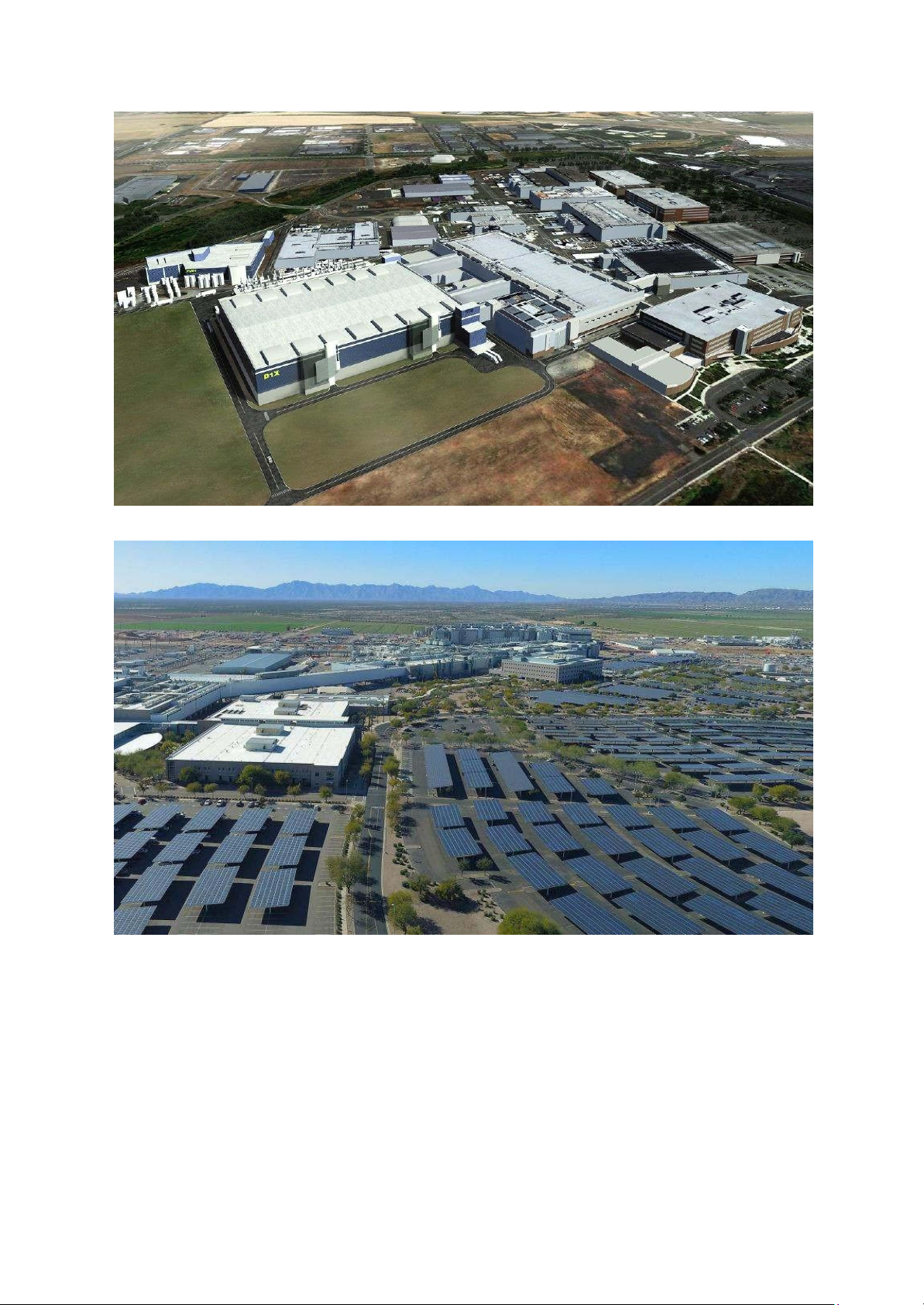
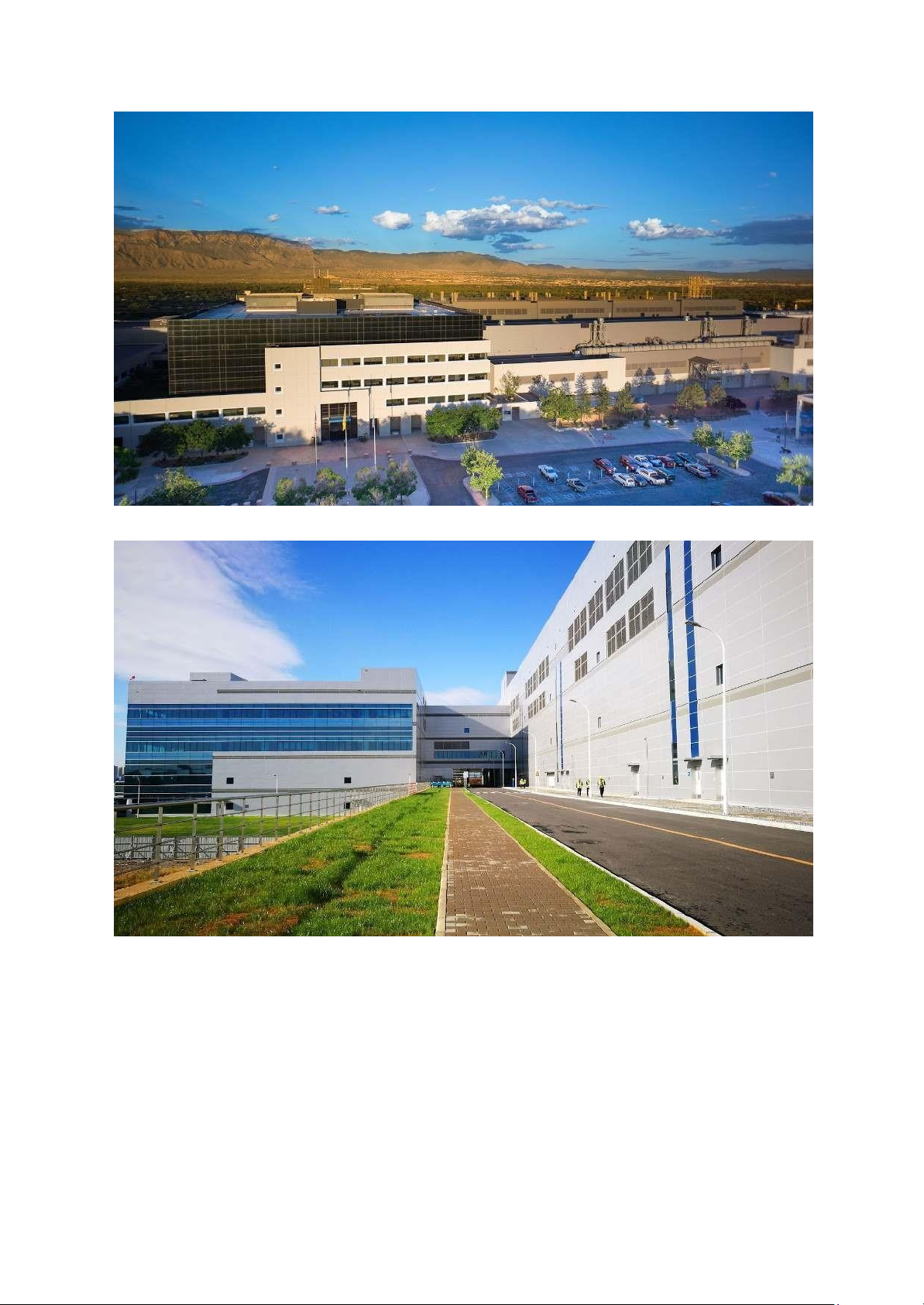
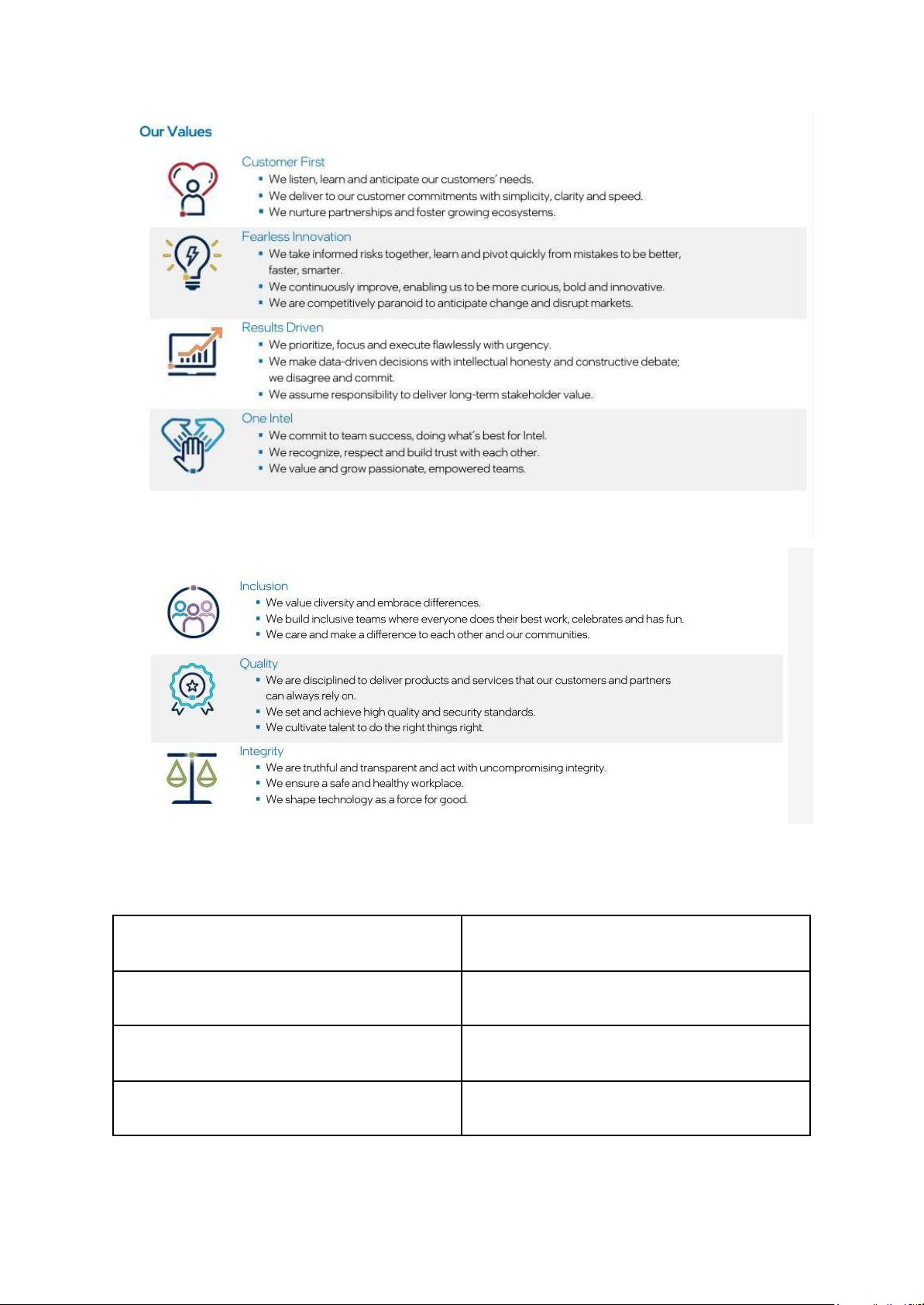
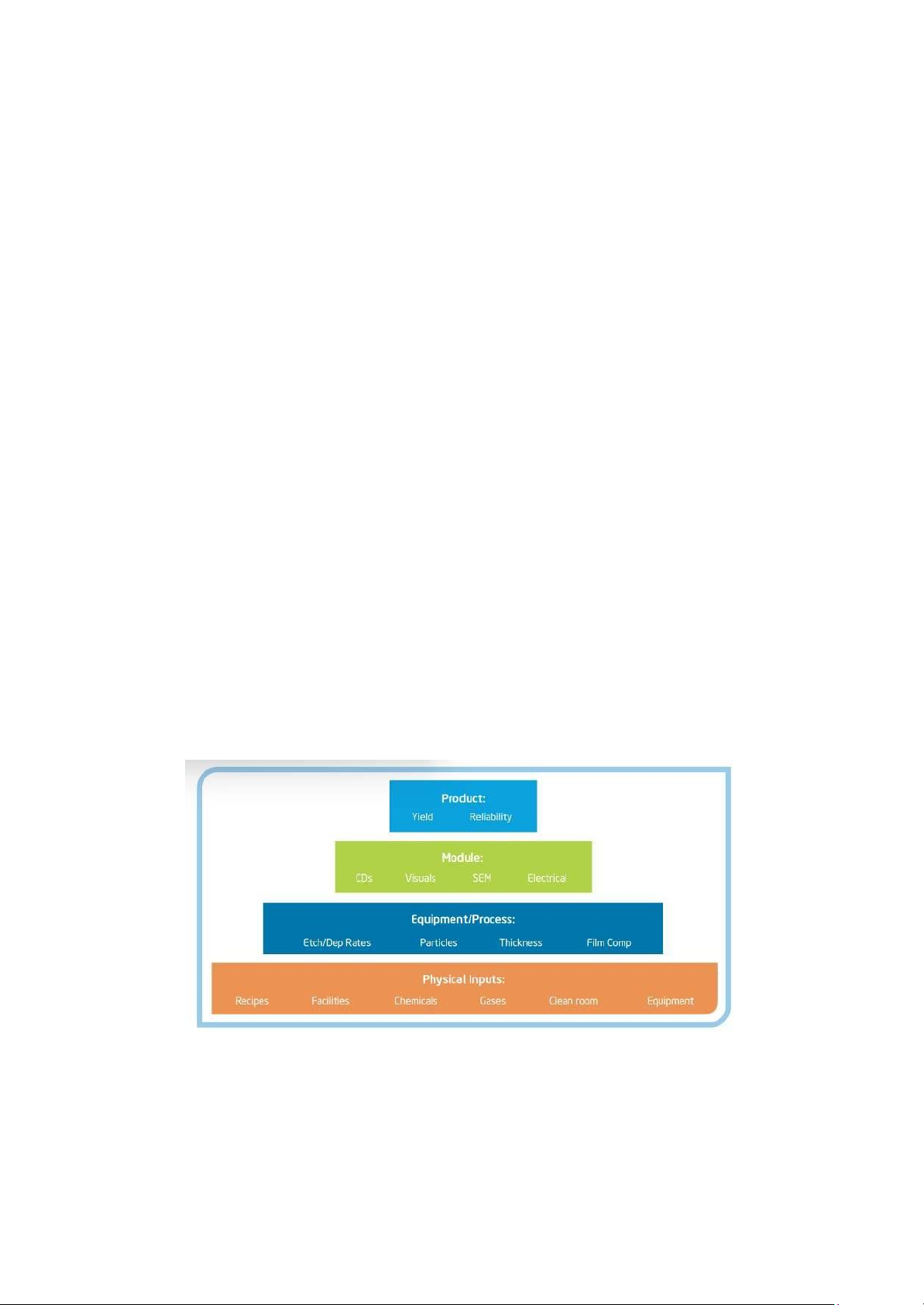
Intel operates 10 manufacturing sites worldwide, which include both wafer fabrication
facilities and assembly/test plants lOMoAR cPSD| 58950985 Intel in Oregon, US Intel Arizona, US lOMoAR cPSD| 58950985 Intel New Mexico, US Intel Dalian , China lOMoAR cPSD| 58950985
Intel Ho Chi Minh, Vietnam
Many suppliers are strategically located near Intel's fabrication plants, particularly in
the U.S. and Asia. This proximity reduces transportation costs and lead times for
components. Besides, countries like Taiwan and South Korea have invested heavily in
their semiconductor ecosystems, creating a robust infrastructure that supports all stages
of semiconductor production, from design to fabrication and testing. And suppliers such
as China offer competitive labor costs, which help Intel manage its production expenses
while maintaining quality standards.
Criteria for Evaluating Potential Suppliers
Furthermore, Intel considers many characteristics and business principles in evaluating
potential suppliers. Suppliers who have been successful at Intel can be assured that they
have met some of the most stringent requirements in the industry. Successful sourcing
at Intel is not achieved solely on the basis of securing competitive bids. Intel is not
looking for the lowest prices, but for the best value on a total cost basis. Intel strives to
work with suppliers who are not only capable of, but also motivated to share Intel's
standards for total quality and continuous improvement. Companies under
consideration as potential suppliers are evaluated in a process using the following criteria: ● Total Quality
To achieve excellence and customer satisfaction worldwide, our focus must be on
continuous improvement within the processes and services on which we rely. Intel and
its suppliers must strive to examine and improve all of the systems by which our
businesses are run. Our suppliers are an integral part of our overall quality process,
working together toward improvement we can build better products right from the start.
To improve product cost and performance, Intel and its suppliers must consider all
factors, which combined make up the true value of the materials, equipment and
services being procured. Joint efforts to identify value and maximize results are the
basis for intelligent buying decisions and will ensure higher quality at lower total cost. ● Collaboration lOMoAR cPSD| 58950985
Intel’s success in achieving Total Quality depends on viewing suppliers as a valuable
extension of our own business. Our goal in purchasing is to build long-term business
relationships with a select group of suppliers who share our total quality vision by
consistently delivering the highest quality products and services. Ultimately, this focus
means selecting fewer, higher quality suppliers. ● Availability
Suppliers must be responsive to the rapid changes in design and manufacturing
strategies. Reducing the time it takes to deliver materials and services to our
manufacturing facilities helps to bring Intel products to market sooner and to reduce
inventory exposure for both Intel and our suppliers. The speed of technological changes
drives our need for reduced cycle times, shorter lead-times, 100% defect-free materials, and on-time delivery.
Intel's rapid growth has come principally from the technical innovations that have
opened new markets and from the efforts of our employees. Some of the philosophies
that have driven Intel have evolved into a distinct result-driven culture guided by our Corporate Values. lOMoAR cPSD| 58950985
In short, Intel is not looking for the lowest prices, but for the best value across multiple
factors. Companies under consideration as potential suppliers are evaluated in a process using the following criteria: ● Quality ● Sustainability ● Technology ● Financial Stability ● Productivity
● Delivery Predictability/Reliability ● Process Control ● Service lOMoAR cPSD| 58950985 ● World-wide Cost ● Diversity Competitiveness ● Environmental, Social & ● Management Philosophy Governance ● Innovation/New Ideas ● Training Programs
Intel expects to establish long-term relationships with capable suppliers and work
closely with them over time to achieve high levels of quality and productivity. This
process involves communicating intentions and expectations clearly, defining measures
of success, obtaining regular feedback, and implementing corrective action plans to improve performance.
3. Supplier Relationship Management.
Diversity and Inclusion Commitment: Intel has set clear goals to enhance diversity within its
supply chain, including doubling its spending with suppliers from the current $1 billion to $2 billion by 2030.
2030 Goal Program: Intel has rolled out this program in 26 countries and territories, focusing
on partnering with suppliers who are women of color, minority-owned businesses, and Black-
owned businesses in the United States.
Geographic Expansion: Intel is not only diversifying its supplier base geographically but also
emphasizing equitable development across different groups, creating opportunities for
underrepresented communities globally.
Government Partnerships: Intel is also collaborating with governments to drive the
development of more sustainable and efficient supply chains.
Intel collaborates with approximately 19,000 suppliers across the globe, forming a
diverse network essential for its operations in the semiconductor industry. The
average duration of partnerships with these suppliers is significant, often exceeding
10 years, which underscores Intel's commitment to fostering long-term relationships.
Intel emphasizes strong collaboration and mutual growth within its supply chain
ecosystem. The company employs a robust Supplier Relationship Management (SRM)
framework that integrates advanced technologies, such as data analytics and artificial
intelligence, to continuously evaluate supplier performance and ensure adherence to quality standards.
To facilitate effective management of supplier relationships, Intel operates multiple
regional offices worldwide, enabling localized support and oversight. This lOMoAR cPSD| 58950985
decentralized approach allows Intel to quickly adapt to regional market demands
while ensuring compliance with corporate sustainability and social responsibility goals. II. Operations management
Production and operation - Production scheduling:
Intel's real-time offering consists of a comprehensive set of optimizations throughout the
complete platform stack from Intel silicon to the application layer. These optimizations are
designed to make Intel platforms with real-time support achieve high determinism in the
presence of best-effort workloads running on the same system. Edge real-time offerings from
Intel support new solutions that deliver both high compute and real-time performance by:
+ Prioritizing real-time workloads access to cache, memory, and networking: When
specific real-time workloads must be completed within a set deadline to avoid critical
system failure, the ability to prioritize some workloads over others is crucial. Some, but
not all, real-time systems have this capability for workload or task prioritization. +
Minimizing disruption from other workloads: Through technologies like Intel® Time
Coordinated Computing (Intel® TCC), real-time tasks are isolated from less critical
processes. This ensures that high-priority applications are not disrupted by background
operations, crucial for maintaining performance in systems like real-time analytics and financial trading platforms.
+ Optimizing performance for both real-time and non-real-time workloads: Intel’s
solutions dynamically balance computational resources between real-time and non-
real-time workloads, using technologies like Intel® Resource Director Technology
(Intel® RDT) to monitor and manage cache, memory bandwidth, and CPU utilization.
+ Supporting availability in both native and virtualized environments: Intel supports real-
time performance in both traditional native environments and virtualized setups
through technologies like Intel® Virtualization Technology (Intel® VT). This flexibility
allows enterprises to deploy real-time solutions across cloud, on-premises, and edge
environments without sacrificing performance.
* Contribution to implement Intel’s global business strategy:
Intel's production scheduling plays a crucial role in supporting its global business strategy by
enhancing precision, predictability, and prioritization in operations.
+ More precise timing: Real-time systems are designed to perform tasks that must be
executed within precise cycle deadlines (down to microseconds).
+ Higher predictability and reliability: Because real-time systems process data in defined,
predictable time frames, execution of tasks or workloads is practically guaranteed, thus
improving the reliability of critical systems for business.
+ Prioritization of real-time workloads: When specific real-time workloads must be
completed within the set deadline to avoid critical system failure, the ability to prioritize
some workloads over others is paramount. Some, but not all, real-time systems have
this capability for workload or task prioritization.
- Manufacturing process: lOMoAR cPSD| 58950985
Intel’s manufacturing organization follows a Copy Exactly (CE!) philosophy. Copy Exactly!
enables delivery of product from multiple production sites, which operate as a virtual factory
that performs consistently and independently of the manufacturing source site. The Copy
Exactly! Methodology focuses on matching the manufacturing site to the development site.
Matching occurs at all levels for physical inputs and statistical y matched responses (outputs).
This process enables continuous matching over time by using coordinated changes, audits,
process control systems, and joint Fab management structures.
Firstly, the physical inputs have to be matched. These are the energies and materials supplied
to the process chambers: for example, gas flows, temperatures, pressures, RF power, and so
forth. These might be supplied to the equipment by external sources or be generated within
the equipment itself. Everything about the equipment and its installation must be an exact
copy down to the diameters of piping and the number of bends, board revisions, software, etc.
The settings for these parameters and anything that might affect them are copied. Standards
are generated to allow measurement and comparison, and the values are measured and matched.
Early in the transfer, Process Technology Development (Process TD) selects process and
product parameters for statistical control and documents detailed control plans. Process TD
continues working with the factory location to achieve process control and yield targets in high
volume manufacturing. Throughout the transfer, factory personnel are responsible for quality
and statistical control of all key parameters.
Once matched, changes are coordinated through joint engineering teams. Intel performs cross
site audits of equipment configuration and in-line process and equipment monitor results using
a common process control system. Fabs execute high-level tactical and strategic changes
under the auspices of the joint engineering and strategic management structure. As each
factory begins to build a new technology, it starts at the same yield and improves at the same rate as the other factories.
Formal statistical tests are used at each level. If the match passes these tests, then we
proceed to the next level and so on. If the match does not pass the tests, the root cause must
be found and eliminated. If it can’t be found, troubleshooting occurs to find out which of the
previous level inputs is responsible because, despite best efforts, something may have been
overlooked. It is vitally important to avoid the temptation to make a compensating adjustment. lOMoAR cPSD| 58950985
Due to the complexities involved, an adjustment may result in an interacting parameter,
possibly something not measured, being mismatched.
Intel applies the Copy EXACTLY! model to ensure uniformity and consistency across its global
manufacturing facilities. This methodology involves replicating every aspect of the production
process, from equipment to procedures, across all Intel fabs.
A change control system: Most factories have some kind of approval process for making
changes to a production process, either in the form of a sign-off list or a formal change control
committee. Generally, there is some kind of record of the data showing the benefits of the
change. Intel’s R&D line continues to make improvements to finish off the technology
development and, in many cases, may also run some level of samples and production output.
With Intel's Copy EXACTLY! methodology, change control is started before technology
transfer, and all changes are implemented directly into both the R&D and production lines
within one week, or according to an approved schedule. The pace of R&D work is not allowed
to slow, so careful planning is required to ensure the new line is ready to accept the changes
in real time. Any engineer from the manufacturing line at Intel who has a good idea for
improvement is encouraged to pursue it. The only difference from the traditional approach is
that the idea must be implemented simultaneously at all Intel sites. The change control board
at Intel is responsible for the smooth operation of the system, which includes ensuring that the
additional requirements do not slow down the rate of improvement.
Equipment difference form: In Intel's Copy EXACTLY! system, each first piece of equipment
in the new factory or on the new process flow in the existing factory is treated as a change,
subject to change control. Audits are conducted, and an Equipment Difference Form is
prepared from each. This form documents the actual difference, what risks it might pose, and
the corrective action plan. This is formally reviewed by Intel's management.
Supplier education: Equipment and materials suppliers are constantly improving their products
in response to demands from the semiconductor industry for improvement. These changes
are stil desirable; however, with Intel's Copy EXACTLY! system, they are first introduced into
the R&D line and from there transferred to production. The suppliers are a vital part of Intel's
technology transfer and need to be thoroughly educated on the new concept and systems.
Audits: An audit is a formal procedure whereby engineers from Intel's R&D and production
audit both lines. These audits are required and scheduled as part of Intel's technology transfer
and are ongoing for a period thereafter. A report is written for each audit, detailing plans to
correct all differences found.
Joint specifications: Since the equipment, process recipes, and procedures are all the same
at Intel, there is no reason why the documents provided for training and manufacturing
operations cannot be the same. These are not copies; they are the same documents, either paper or electronic.
* Contribution to implement Intel’s global business strategy:
Intel's "Copy EXACTLY!" model supports the company’s global business strategy by ensuring
uniformity in design, materials, and quality control across all production sites, which enhances
global efficiency and product availability. This consistency builds customer trust through the
reliable delivery of high-quality products and minimizes re-engineering costs. By standardizing lOMoAR cPSD| 58950985
processes, the model streamlines production, strengthens supply chain reliability, and ensures
that all suppliers adhere to the same rigorous standards, reinforcing Intel’s competitive position worldwide. - Production line: + Converting Raw Materials:
Semiconductor manufacturing at Intel evolves every few years and, as predicted by Moore’s
Law, delivers ever-more functionality and performance, improved energy efficiency and lower
cost per transistor with each generation. With wafer fabrication sites and assembly/test
manufacturing locations worldwide, Intel’s manufacturing facilities operate with exceptional
flexibility on a global network.
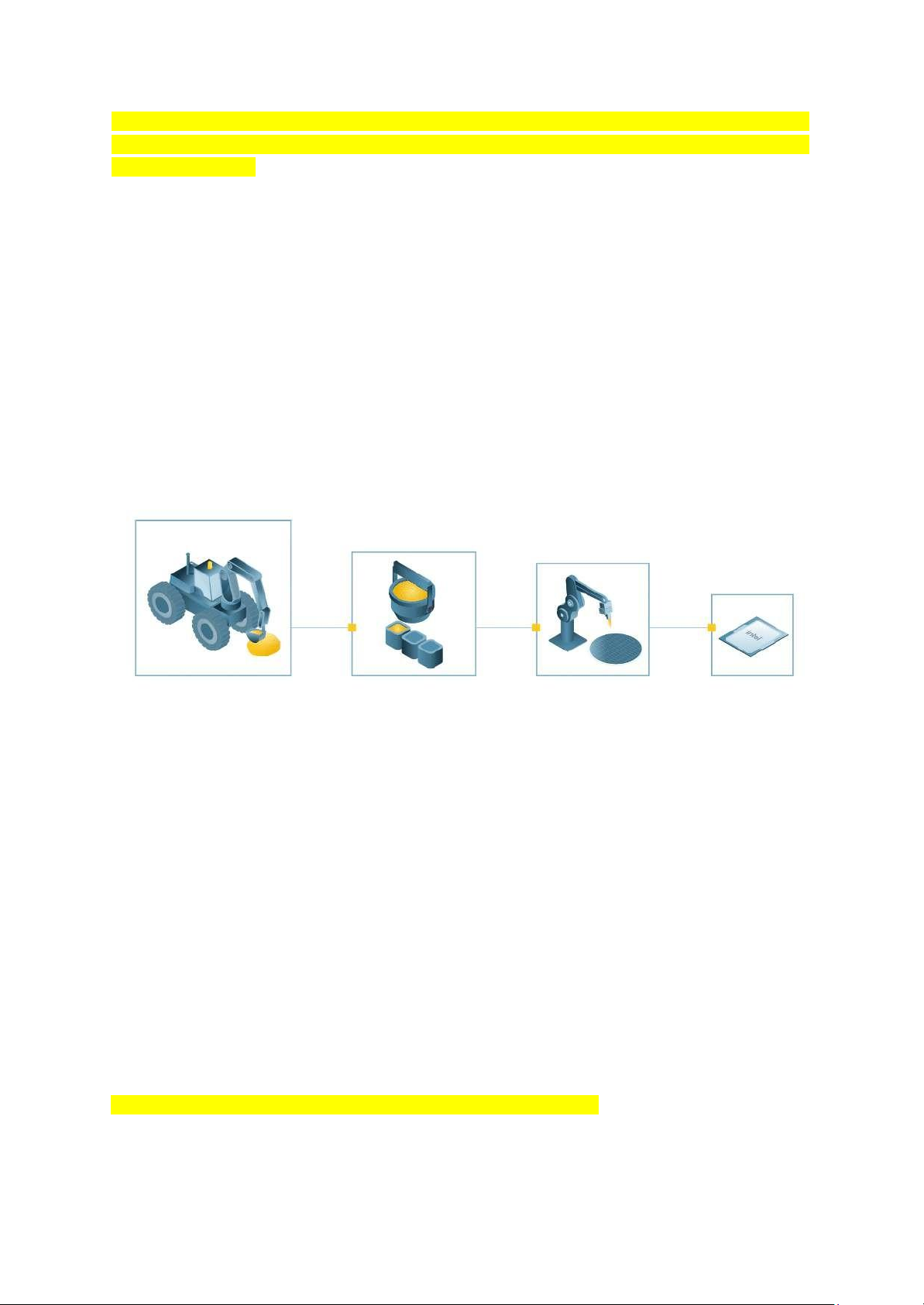
By taking sand and heating it with magnesium powder, a manufacturer converts that raw
material into silicon. This process creates the key ingredient found in every computer
processor. If we didn’t convert raw materials into more complex goods, we wouldn’t have the
electronics, appliances, transportation and other things that make life today more efficient, safe and productive. + Assembly Line
By breaking down the steps and putting them in a pre-defined order, an assembly line allows
companies to create parts that can be used interchangeably and allows a finished product to
be made faster. This is most common in mass production, where unskil ed workers can be
trained to perform a single specific task rather than build an entire product themselves, which reduces labor costs.
The skil s required to operate machines and develop manufacturing processes have drastical y
changed over time. Many low-skil manufacturing jobs have shifted from developed to
developing countries, where labor tends to be less expensive. High-end products that require
precision and skil ed manufacturing are typically produced in developed economies.
Computers and precision electronic equipment allow companies to pioneer high-tech
manufacturing methods. Products made using these methods require more specialized labor
and higher capital investment, typically leading to a higher price tag.
* Contribution to implement Intel’s global business strategy: lOMoAR cPSD| 58950985
Intel’s production line plays a pivotal role in implementing the company’s global business
strategy by converting raw materials into high-value semiconductor products and optimizing
production through assembly line efficiencies.
Intel’s semiconductor manufacturing is continuously refined with each new generation,
aligning with Moore’s Law to enhance functionality, performance, and energy efficiency while
reducing costs. This capacity to transform basic materials (such as silicon from sand) into
sophisticated chips enables Intel to produce the advanced processors required by the tech
industry, supporting its leadership in innovation and global market presence.
Intel’s structured assembly line approach enables efficient mass production with
interchangeable parts, reducing labor costs and supporting Intel’s cost-effective production
goals. This system’s emphasis on high-tech precision, supported by skil ed labor and cutting-
edge machinery, allows Intel to maintain the high quality and reliability expected of its products.
In summary, Intel’s production line enables the company to deliver on its global business
strategy by maintaining a stronghold in innovation, ensuring efficient and flexible global
production, and supporting high-quality manufacturing standards. This approach enables Intel
to meet the demands of a competitive and technologically advanced global market.
- Production technology:
Manufacturing and industrial business operations are being transformed through the
convergence of information technology (IT) and operational technology (OT) systems onto
shared, intelligent, industrial-optimized compute platforms. This consolidation creates a
responsive, interconnected system that eliminates data silos and provides access to deeper
insights—powered by edge computing—and more flexibility and control. + AI in Manufacturing:
IIoT devices and connected factories generate immense amounts of data. AI and high-
performance computing (HPC) make it possible to quickly and effectively process and analyze
everything, resulting in improved efficiency and productivity. For example, connected factory
data can generate near-real-time production insights that help enhance your organization’s
decision-making. In structural and product design, AI approaches can help engineers define
the problem and estimate the resources required to solve it. Physics-based AI enables
engineers to project a solution design from a knowledge base of solutions.
Because the manufacturing market encompasses a wide range of operations, solutions
designed for AI workloads in this sector must accommodate varying requirements for
performance, power, size, form factor, and cost. + Real-Time Computing:
In Industrial Automation, certain real-time tasks must be completed within strict deadlines to
prevent critical system failures. This necessitates systems executing these tasks operating
within predictable and specific time limits, ensuring they can perform operations and respond
to events promptly. The ongoing Industrial transformation involves supporting real-time tasks
alongside best-effort workloads on the same system by implementing workload or task
prioritization for time-sensitive applications. lOMoAR cPSD| 58950985
In addition to real-time operation, the network traffic within the manufacturing environment
needs to meet latency requirements. Providing support for Industry standards such as IEEE
802 TSN specification to support time-sensitive applications enables ultra-reliable and low-
latency communication and provides an open ecosystem for device inter-operability.
Intel® Time Coordinated Computing (TCC) provides platform optimizations to better support
real-time workloads running alongside best-effort workloads. Intel TCC is comprised of silicon
and software optimizations that include support for IEEE TSN that reduces latencies and
improves clock synchronization to better support real-time workloads. + Virtualization:
Virtualization Technology is a key enabler of Workload Consolidation, which involves creating
distinct, isolated environments, each with its own operating system, on a single, robust
platform. This approach replaces multiple purpose-built hardware machines with a smaller set
of general-purpose computing platforms, reducing the overall hardware infrastructure.
Organizations can optimize their operations and reduce costs by maximizing the utilization of
existing resources. In the manufacturing and Industrial Automation sectors, Virtualization
solutions must support the consolidation of both real-time and non-real-time workloads. + Functional Safety:
As human-machine interactions become increasingly integral to manufacturing, the
importance of Functional Safety has also grown. Functional safety requires implementing
automated protection systems capable of detecting and mitigating malfunctions in machine
systems, such as robots, to ensure human safety. Adhering to international standards like IEC
61508 (for industrial applications) and ISO 13849 (for robotic controllers) accelerates the
development of safety-critical applications.
* Contribution to implement Intel’s global business strategy:
Intel’s production technology plays a crucial role in executing its global business strategy by
integrating IT and OT, employing AI, supporting real-time computing, using virtualization, and
prioritizing functional safety. The convergence of IT and OT onto shared platforms enables
Intel to eliminate data silos, enhance flexibility, and provide real-time insights across its global
operations. This interconnected system supports Intel’s goal of operational efficiency and
strengthens its ability to meet diverse production needs in a dynamic, global market.
Intel leverages AI and high-performance computing to process large volumes of data from
connected factories, generating insights that improve decision-making and productivity. Real-
time computing technologies, like Intel® Time Coordinated Computing (TCC), support precise,
time-sensitive tasks essential for critical manufacturing processes. Additionally, Intel’s
virtualization technology enables workload consolidation, maximizing resource use and
reducing infrastructure costs. These technological advancements support Intel’s commitment
to operational efficiency, cost-effectiveness, and reliable product delivery.
Intel’s adherence to international functional safety standards, such as IEC 61508 and ISO
13849, is vital for safe human-machine interactions, particularly in automated and robotics-
driven environments. This focus on safety and reliability underpins Intel’s reputation as a
trusted leader in high-tech manufacturing. Together, these technologies align Intel’s production
Tài liệu liên quan:
-

Tài Liệu Học Tập Quản Trị Chuỗi Cung Ứng - GIÁO TRÌNH GQC1
7 4 -

Bài giảng Nghiên cứu doanh nghiệp Nike trong Phân tích chuỗi cung ứng | Trường Đại học Kinh Tế Quốc Dân
19 10 -
Bài Thuyết Trình Ngành Dệt May Trung Quốc - LOGT26CD
28 14 -
Đề cương ôn tập Quản trị chuỗi cung ứng
33 17 -

Phân tích Mô hình Kinh doanh và Quản lý Chuỗi cung ứng của Samsung | Môn Quản trị chuỗi cung ứng quốc tế - Đại học Kinh Tế Quốc Dân
65 33