Violence Against Children To C - Tài liệu tham khảo | Đại học Hoa Sen
Violence Against Children To C - Tài liệu tham khảo | Đại học Hoa Sen và thông tin bổ ích giúp sinh viên tham khảo, ôn luyện và phục vụ nhu cầu học tập của mình cụ thể là có định hướng, ôn tập, nắm vững kiến thức môn học và làm bài tốt trong những bài kiểm tra, bài tiểu luận, bài tập kết thúc học phần, từ đó học tập tốt và có kết quả
Môn: Social Phsycology (PSYC 241) 53 tài liệu
Trường: Trường Đại học Hoa Sen 5.3 K tài liệu
Tác giả:

















Preview text:
Preventing and Responding to Violence Against Children and Adolescents Theory of Change 2017
Preventing and Responding to Violence
Against Children and Adolescents Theory of Change Published by UNICEF Child Protection Section Programme Division 3 United Nations Plaza New York, NY 10017
Email: childprotection@unicef.org www.unicef.org
© United Nations Children’s Fund (UNICEF) October 2017
Permission is required to reproduce any part of this
publication. For more information on usage rights,
please contact nyhqdoc.permit@unicef.org
Cover photo: © UNICEF/UN028929/Esiebo
Design and layout by Roberto C. Rossi Rob.C.Rossi@gmail.com Acknowledgements
This document was produced by the UNICEF Child Protection Section. It was prepared by Sarah Bott (primary
author), an independent consultant, and Anna Azaryeva Valente, UNICEF Child Protection Specialist. Theresa
Kilbane, UNICEF Senior Adviser on Child Protection, provided technical advice, guidance and review.
The document was enriched by contributions from many individuals and teams from all UNICEF regional
offices, a number of country offices and headquarters, as well as external partners. Among those contributing
were staff from the Programme Division (Child Protection, Education, Health, Social Inclusion and Policy, Early
Childhood Development, Adolescent Development and Participation, Gender and Development, Disability, and
Communication for Development sections); Division of Data, Research and Policy (Data and Analytics section),
Division of Communication; and Office of Research.
Special thanks to all individuals and teams who contributed, including: Mercy Agbai, Gbemisola Akinboyo,
Patty Alleman, Jean Francois Basse, Jose Bergua, Stephen Blight, Amandine Inna Renee Bollinger, Sujata Bordoloi,
Anjan Bose, Katlin Brasic, Pia Britto, Andrew Brooks, Anna Burlyaeva, Claudia Cappa, Isabella Castrogiovanni,
Benoit d'Ansembourg, Clarice Da Silva e Paula, Judith Diers, Lely Djuhari, Joanne Dunn, Eri Dwivedi, Nora
Fyles, Leisa Gibson, Peter Gross, Kendra J. Gregson, Jonna Karlsson, Charlotte Lapsansky, Sena Lee, Jean-
Claude Legrand, Anthony MacDonald, Anju Malhotra, Changu Mannathoko, Hani Mansourian, Mendy Marsh,
Mary Catherine Maternowska, Kerida McDonald, Cecile Modvar, Rafael Obregon, Tomoo Okubo, Roger Pearson,
Luwei Pearson, Eric Ribaira, Eduardo Garcia Rolland, Lieve Sabbe, Clara Sommarin, David Stewart, Ramatou Toure,
Denise Ulwor, Catharine Way, Cornelius Williams, Alexandra Yuster and Jérôme Pfaffmann Zambruni.
We also sincerely thank UNICEF Mexico and UNICEF Egypt for undertaking dedicated crosssectoral workshops to test and adapt the package. Contents
I. Introduction ....................................................................................................................................................................................................................................................................... 1
Purpose ...................................................................................................................................................................................................................1
Background and rationale ...........................................................................................................................................................................1
How this theory of change builds on previous work ................................................................................................................3
Definitions of violence against girls and boys ............................................................................................................................... 6
Magnitude and consequences of violence against children and adolescents .......................................................8
Risk factors and drivers of violence ................................................................................................................................................. 10
Girls and boys in vulnerable situations ...................................................................................................................................11
Drivers and risk factors at higher levels of the ecological framework ................................................................11
Consequences of violence .......................................................................................................................................................................12
2. Proposed Theory of Change ................................................................................................................................................................................................................ 13
Cross-cutting principles and assumptions ...................................................................................................................................13
Levels of intervention: The socio-ecological model ........................................................................................................14
Conceptual frameworks and schematic of the theory of change ..................................................................................15
Narrative summary of the theory of change .............................................................................................................................. 20
Vision and impact/goal statements ........................................................................................................................................... 20
Overall structure of the outcomes and outputs ................................................................................................................ 20
Cross-cutting outcomes: Macro-level structural factors and contexts ............................................................ 21
National, evidence-based, coordinated multisectoral action .................................................................................. 22
Legal and policy frameworks ......................................................................................................................................................... 25
Systems and institutions: Prevention and reporting mechanisms
and response services across all sectors .............................................................................................................................. 29
Sector-specific outcomes, outputs and strategies ......................................................................................................... 32
Society/communities ........................................................................................................................................................................... 36
Households and families ................................................................................................................................................................... 38
Mothers, fathers and other caregivers ..................................................................................................................................... 40
Girls, boys and adolescents ............................................................................................................................................................. 41
ANNEX A. Theories of change and results frameworks that informed this document ...................................44
ANNEX B. Risk and protective factors associated with violence against girls and boys,
including adolescents ......................................................................................................................................................... 46
ANNEX C. Summary of priority strategies for action ............................................................................................................. 48
ENDNOTES ............................................................................................................................................................................................................. 50 iv
Preventing and Responding to Violence Against Children and Adolescents: Theory of Change LIST OF FIGURES
Figure 1 Selected forms of violence according to the most likely age of occurrence ............................................9
Figure 2 Socio-ecological model for understanding violence against children and adolescents ...............15
Figure 3 Steps in strengthening and implementing legal and policy frameworks ................................................ 28 LIST OF BOXES
Box 1 Key recommendations from the 2015 evaluation of UNICEF’s work on
violence against children ................................................................................................................................................................... 1
Box 2 Select global and regional evidence reviews about how to prevent
and respond to violence against children .............................................................................................................................. 4
Box 3 Definitions of key forms of violence against children and adolescents ............................................................ 6
Box 4 Selected UNICEF publications on violence against girls and boys ....................................................................... 8
Box 5 Selected SDG indicators related to violence against children and adolescents .......................................... 9
Box 6 The complex link between poverty and violence .......................................................................................................... 39 LIST OF TABLES
Table 1 Selected examples of SDG targets focused on ending violence or harmful
practices against girls and boys, including adolescents .......................................................................................... 2
Preventing and Responding to Violence Against Children and Adolescents: Theory of Change v © UNICEF/UN032/PIROZZI I. Introduction PURPOSE BOX 1
This document presents an overarching, multisectoral
theory of change to guide UNICEF’s work on prevent- Key recommendations from the
ing and responding to violence against girls, boys and
2015 evaluation of UNICEF’s work on
adolescents. The purpose is to provide a strategic violence against children
vision that describes pathways of change, proposes a
package of evidence-based strategies and articulates
1. Make violence against children an organization-
a chain of results, both to prevent violence and to
wide, multisectoral priority and agree on
improve the lives of child and adolescent victims when
an overarching theory of change and core violence occurs.
indicators for measuring violence prevention and response actions.
This theory of change gives particular at ention to
2. Launch a multisectoral road map to reduce
forms of violence against children measured by the
violence against children and translate it into
Sustainable Development Goal (SDG) indicators, includ- regional road maps.
ing violent discipline (physical punishment and verbal
3. Strengthen context-specific advocacy and
aggression) and sexual violence, reflecting UNICEF’s
resource mobilization, based on evidence.
commitment to make measurable progress in those
4. Accelerate the roll-out of the systems
domains.1 However, it is designed to be broad enough
strengthening approach to preventing and
to address all forms of physical, sexual and emotional/
responding to violence against children.
psychological violence against girls and boys – including
in settings affected by armed conflict and other emer-
5. Renew the focus on preventing violence
including through addressing social norms.
gencies. The proposed results, strategies and indicators
in this theory of change focus on changes at the country
6. Improve the focus on gender and equity
level, which may be particularly relevant for UNICEF approaches.
country office staff. However, indicators may be aggre-
7. Institutionalize child protection systems
gated to monitor results at regional and global levels.
mapping and strategically plan for follow-up research and data initiatives. BACKGROUND AND RATIONALE
8. Develop a web-based knowledge networking platform.
The right of all girls and boys to protection from all
forms of violence has been enshrined in international
human rights treaties, including the Convention on the
Preventing and responding to violence has long been Rights of the Child (CRC):
an important part of UNICEF’s work, particularly in
the areas of research, advocacy, child protection and
Article 19. States Parties shall take all appropriate
education. Nonetheless, a 2015 independent evalua-
legislative, administrative, social and educational
tion noted fragmentation in UNICEF’s work on vio-
measures to protect the child from all forms of
lence (see Box 1). That evaluation recommended that
physical or mental violence, injury or abuse, neglect
UNICEF develop an overarching theory of change for
or negligent treatment, maltreatment or exploitation,
preventing and responding to violence against children, including sexual abuse…
including attention to strategies, results and indicators.2
Preventing and Responding to Violence Against Children and Adolescents: Theory of Change 1 I. Introduction
The rationale for an overarching approach to violence is
poverty, health, education, inequality and sustainable
supported by evidence that girls and boys often experi-
communities. Several SDG targets mention violence
ence multiple types of violence, sometimes referred to
against girls and/or boys specifically (see Table 1), and
as ‘polyvictimization’.3 It also responds to evidence that
UNICEF has made a commitment to help countries
research, policies and programmes that focus on one
achieve measurable progress in these areas.
form of violence in isolation may overlook important
links to and risks and consequences of other forms of
• To capitalize on this new opening to address
violence during childhood and across the lifespan.4
violence, a Global Partnership to End Violence
against Children (www.end-violence.org) was
A re-examination of UNICEF’s work on preventing and
launched in 2016. The Global Partnership aims
responding to violence against girls, boys and adoles-
to facilitate collaboration among governments,
cents may be particularly important at this moment in
UN agencies, civil society groups, philanthropic time, given the following:
foundations, academia and girls and boys •
themselves. As a founding member, UNICEF has an
United Nations (UN) Member States have signalled
opportunity and a responsibility to consider how to
a renewed political commitment to address violence
contribute to this new platform.
against girls and boys by agreeing to support the
SDGs, including their targets and indicators. Many
• In 2016, UNICEF collaborated with the World Health
SDGs and their targets address drivers and risk
Organization (WHO) and other international partners
factors associated with violence, including those
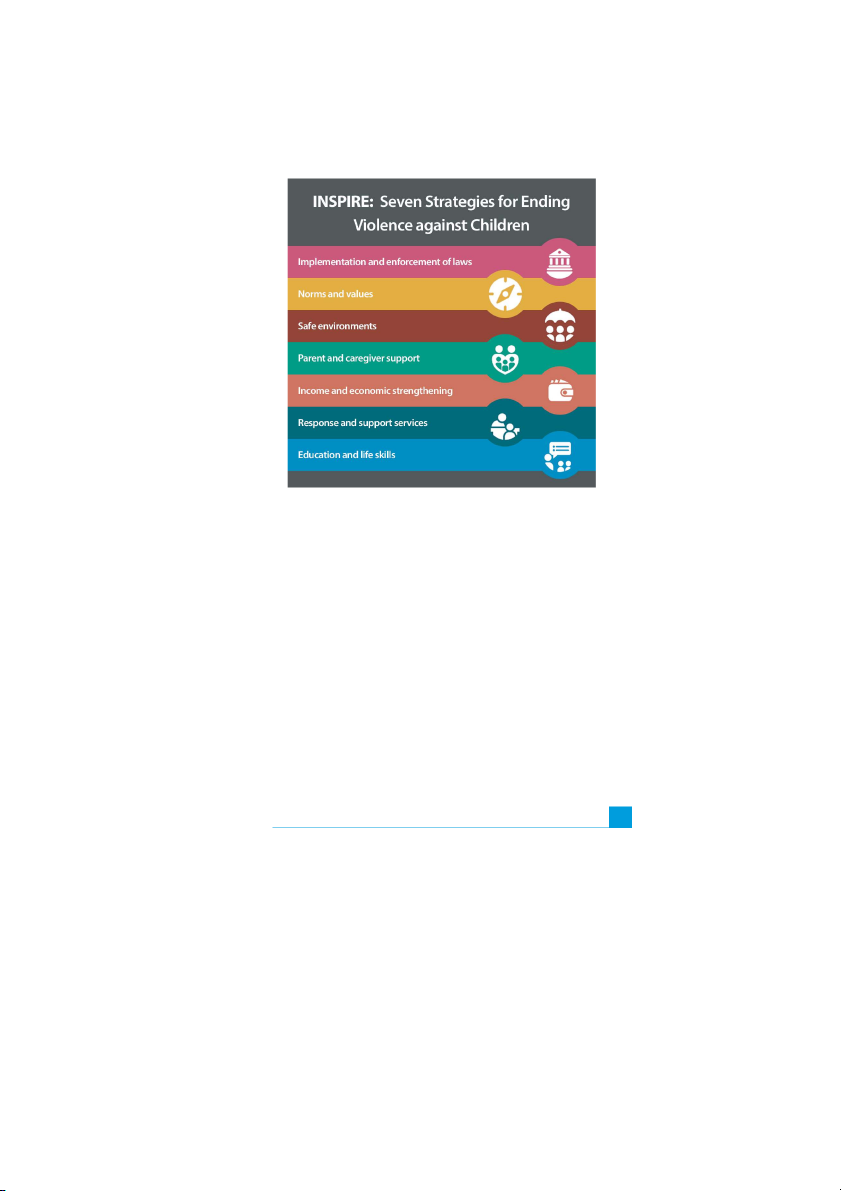
to develop a technical package titled ‘INSPIRE:
focused on promoting peaceful and inclusive
Seven strategies to end violence against children’,5
societies (Goal 16), as well as those related to
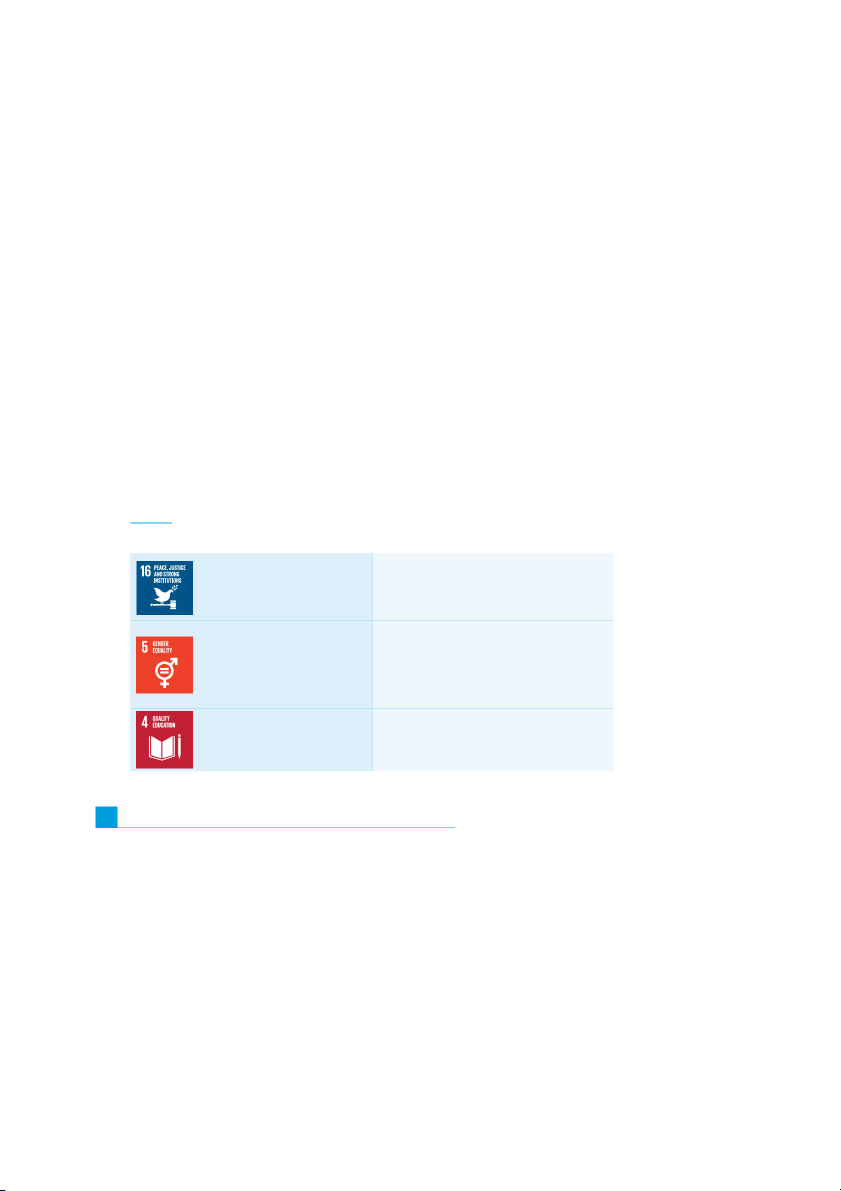
based on global evidence about effective or at least TABLE 1
Selected examples of SDG targets focused on ending violence or harmful practices against girls and boys, including adolescents.
Goal 16. Promote peaceful and inclusive
Target 16.1 Significantly reduce all forms of violence
societies for sustainable development,
and related death rates everywhere.
provide access to justice for all and build
effective, accountable and inclusive
Target 16.2 End abuse, exploitation, trafficking and all institutions at all levels.
forms of violence against and torture of children.
Target 5.2 Eliminate all forms of violence against all
women and girls in the public and private spheres,
Goal 5. Achieve gender equality and
including trafficking and sexual and other types of empower all women and girls. exploitation.
Target 5.3 Eliminate all harmful practices, such as child,
early and forced marriage and female genital mutilation.
Target 4.A Build and upgrade education facilities that
Goal 4. Ensure inclusive and equitable
are child, disability and gender sensitive and provide
quality education and promote lifelong
safe, non-violent, inclusive and effective learning
learning opportunities for all. environments for all. 2
Preventing and Responding to Violence Against Children and Adolescents: Theory of Change I. Introduction
In 2016, UNICEF collaborated with the
World Health Organization (WHO) and other
international partners to develop a technical
package titled ‘INSPIRE: Seven strategies to end violence against children
promising strategies for preventing and responding
against girls, boys and adolescents. These include
to violence against girls and boys. This collaboration
UNICEF’s past strategic plans and results frame-
provides an opportunity for UNICEF to review their
works for specific types or dimensions of violence,
work on violence in light of global evidence and the
such as sexual abuse and exploitation of children, work of partner agencies.
gender-based violence in emergencies, sexual and •
gender-based violence in education, child marriage,
UNICEF is developing a new Strategic Plan for 2018-
children’s access to justice, peacebuilding and female
2021. This effort provides an opportunity to review
genital mutilation/cutting (FGM/C) (see Annex A).
and strengthen results, indicators and strategies
relevant to violence against girls and boys at global,
Given the broad scope of this theory of change, it pro- regional and country levels.
vides a concise overview rather than a comprehensive
review of evidence about how to prevent and respond
to violence against girls and boys. However, it benefits HOW THIS THEORY OF CHANGE
from many recent international efforts to synthesize BUILDS ON PREVIOUS WORK
what is known about approaches that are effective or
at least promising, including reviews by UNICEF, part-
This document builds on many previous theories of
ner agencies, governments and academic researchers
change and results frameworks related to violence (see Box 2).
Preventing and Responding to Violence Against Children and Adolescents: Theory of Change 3 I. Introduction BOX 2
Select global and regional evidence reviews about how to prevent and respond to violence against children
Violence against children generally
UNICEF, Toward a World Free from Violence: Global Survey on Violence against Children. UNICEF and the
Office of the Special Representative of the Secretary-General on Violence against Children, New York, 2013.
http://srsg.violenceagainstchildren.org/publications
UNICEF, Ending Violence against Children: Six Strategies for Action. UNICEF, New York, 2014.
www.unicef.org/publications/index_74866.html
UNICEF, Child Protection from Violence, Exploitation and Abuse: Thematic Report. UNICEF, New York, 2013.
www.unicef.org/publicpartnerships/files/Child_Protection_from_Violence_Exploitation_and_Abuse_2013_ Thematic_Report.pdf
WHO, INSPIRE: Seven Strategies for Ending Violence against Children. World Health Organization, CDC,
Global Partnership to End Violence Against Children, PAHO, PEPFAR, Together for Girls, UNICEF, UNODC,
USAID, World Bank, Geneva, 2016. www.who.int/violence_injury_prevention/media/news/2016/12_07/en/ Child maltreatment
Knerr, Wendy, Frances Gardner and Lucie Cluver, Parenting and the Prevention of Child Maltreatment in
Low- and Middle-Income Countries: A Systematic Review of Interventions and a Discussion of Prevention
of the Risks of Future Violent Behaviour among Boys. Sexual Violence Research Initiative, Medical Research
Council and the Oak Foundation, Pretoria, 2011. www.svri.org/parenting.pdf
Knerr, Wendy, Frances Gardner and Lucie Cluver, ‘Improving Positive Parenting Skills and Reducing Harsh
and Abusive Parenting in Low- and Middle-Income Countries: A Systematic Review’, Prevention Science,
vol. 14, no. 4, 2013, pp. 352-363.
Mikton, Chris and Alexander Butchart, ‘Child Maltreatment Prevention: A Systematic Review of Reviews’,
Bulletin of the World Health Organization, vol. 87, no. 5, 2009, pp. 353-361.
Skeen, S. and M. Tomlinson, ‘A Public Health Approach to Preventing Child Abuse in Low- and Middle-
Income Countries: A Call for Action’, International Journal of Psychology, vol. 48, no. 2, 2013, pp. 108-116.
Violence and neglect in early childhood
Landers, Cassie, Preventing and Responding to Violence, Abuse, and Neglect in Early Childhood: A Technical
Background Document. Child Protection Section, UNICEF, New York, 2013. www.unicef.org/protection/files/
Report_on_preventing_and_responding_to_violence_in_early_childhood_2013_Cassie_Landers.pdf
UNICEF, Compendium of Promising Practices to Ensure that Children under the Age of Three Grow up in a
Safe and Supportive Family Environment. UNICEF Regional Office for Central and Eastern Europe and the
Commonwealth of Independent States, Geneva, 2015. www.unicef.org/ceecis/UNICEF_Compendium_of_ promising_practices_Web.pdf 4
Preventing and Responding to Violence Against Children and Adolescents: Theory of Change
Tài liệu liên quan:
-
Development and validation of a brief sc - Tài liệu tham khảo | Đại học Hoa Sen
283 142 -
Adverse Childhood Experiences (ACE) Study - Tài liệu tham khảo | Đại học Hoa Sen
359 180 -
Relationship Between Emotional Neglect of Parents and Children’s Internalizing, Externalizing Behavior Problems and Academic Achievement
75 38 -
Adverse ChildhoodExperiences (ACEs) - Tài liệu tham khảo | Đại học Hoa Sen
345 173 -
Ctq to aces preprint 20221107 - Tài liệu tham khảo | Đại học Hoa Sen
259 130