Amazon E-Logistics: Advanced Tech & Solutions Analysis Report | Logistics | Trường Đại học Kinh tế, Đại học Quốc gia Hà Nội
By applying technologies in the outbound logistics process, Amazon has been operating effectively by taking advantage of the economies of scale as a big global corporation. When applying advanced technologies, Amazon sometimes faces serious problems affecting the company’s outbound logistics. Tài liệu được sưu tầm và soạn thảo dưới dạng file PDF để gửi tới các bạn cùng tham khảo, ôn tập đầy đủ kiến thức, chuẩn bị cho các buổi học thật tốt. Mời bạn đọc đón xem!
Môn: Logistics 61 tài liệu
Trường: Trường Đại học Kinh tế, Đại học Quốc gia Hà Nội 491 tài liệu
Tác giả:






Preview text:
TABLE OF CONTENTS
LIST OF FIGURES......................................................................................................2
EXECUTIVE................................................................................................................. 3
CHAPTER 1. INTRODUCTION....................................................................................4
CHAPTER 2. THEORETICAL BACKGROUND..........................................................5 2.1.
Outbound logistics............................................................................................5 2.1.1.
Definition....................................................................................................5 2.1.2.
Outbound logistics processes......................................................................5 2.2.
Technologies related.........................................................................................6 2.2.1.
Warehouse Management System (WMS)........................................................6 2.2.2.
Big data and internet of things.......................................................................6 2.2.3.
Cloud computing............................................................................................7 2.2.4.
Fleet management system...............................................................................8 2.2.5.
Artificial intelligence and machine learning...................................................9
CHAPTER 3. CURRENT SITUATION AT AMAZON...............................................11 3.1.
Overview of Amazon.......................................................................................11 3.1.1.
Introduction...............................................................................................11 3.1.2.
Mission......................................................................................................11 3.1.3.
Vision........................................................................................................11 3.1.4.
Values........................................................................................................11 3.1.5.
Amazon products and services..................................................................12 3.2.
Technologies applied in Amazon’s outbound logistics..................................12 3.2.1.
Order processing.......................................................................................12 3.2.2.
Fulfillment................................................................................................. 14 3.2.3.
Shipping....................................................................................................18 3.2.4.
Last-mile delivery......................................................................................20
CHAPTER 4. SUGGESTIONS FOR SOLUTIONS.....................................................25
CHAPTER 5. CONCLUSION......................................................................................28
REFERENCES............................................................................................................ 29 1 LIST OF FIGURES
Figure 1: Outbound Logistics Processes..........................................................................5
Figure 2: Amazon's pods...............................................................................................14
Figure 3: Barcode system in the Fulfillment center.......................................................15
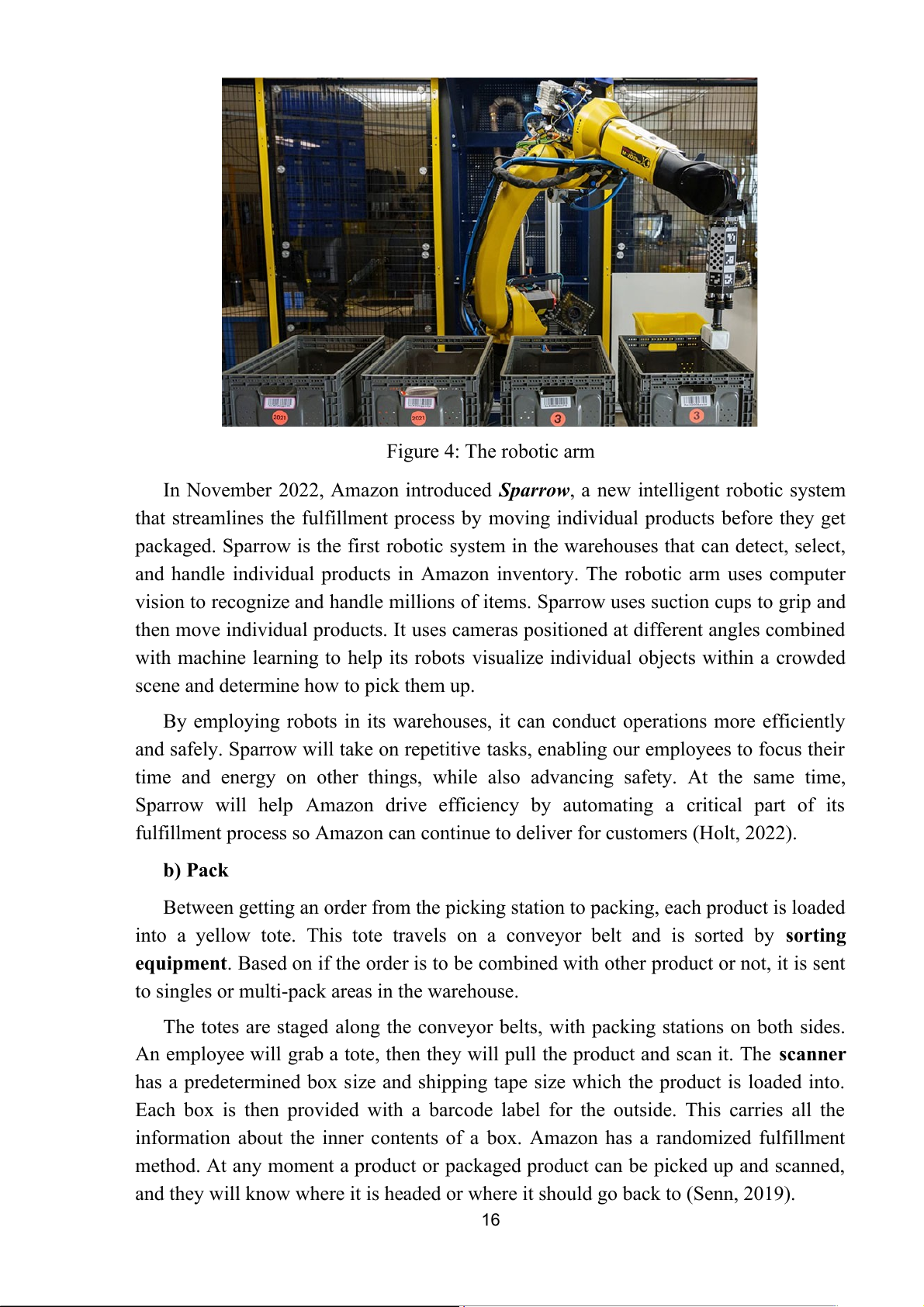
Figure 4: The robotic arm..............................................................................................16
Figure 5: Amazon's conveyor belt.................................................................................17
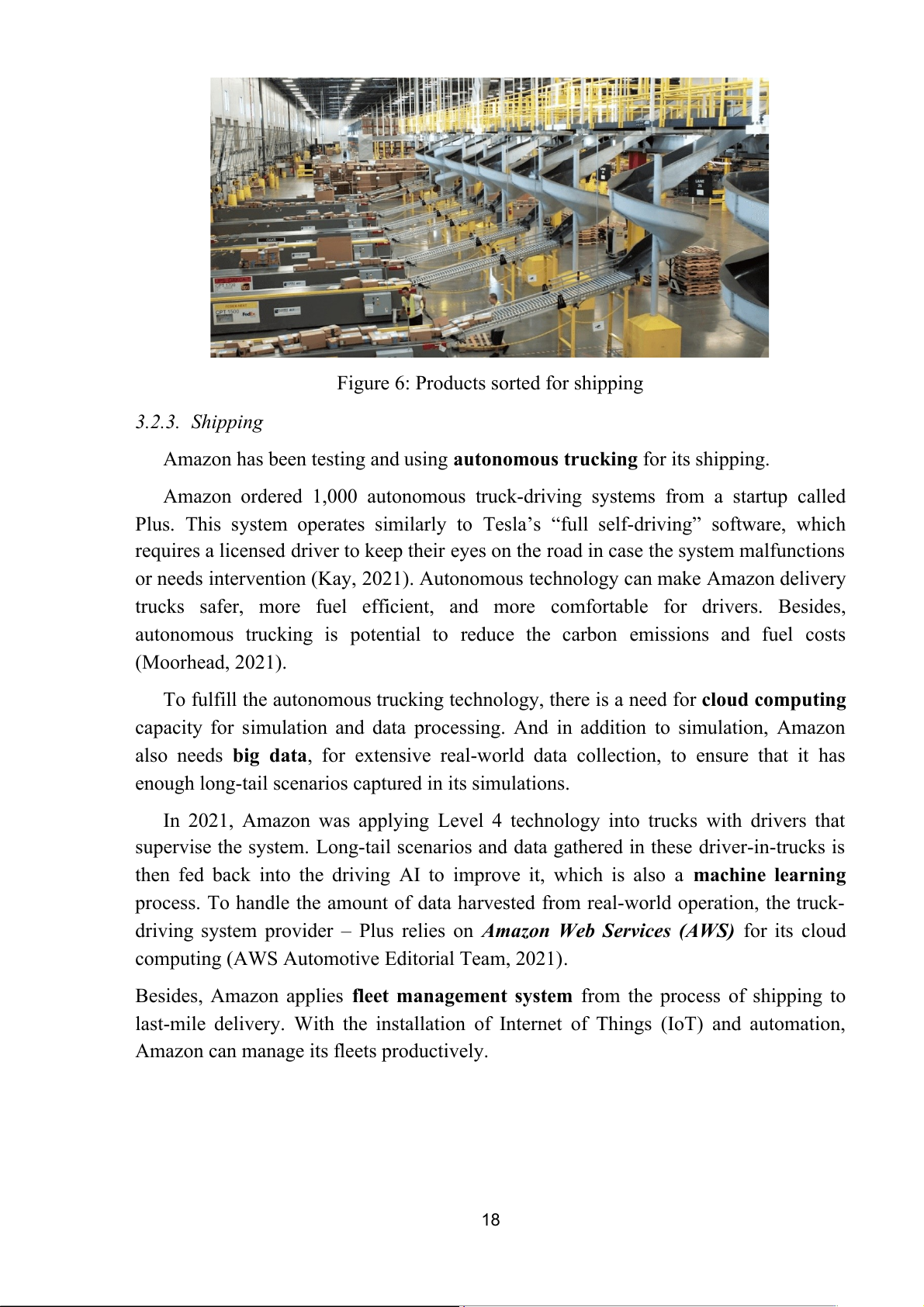
Figure 6: Products sorted for shipping...........................................................................18
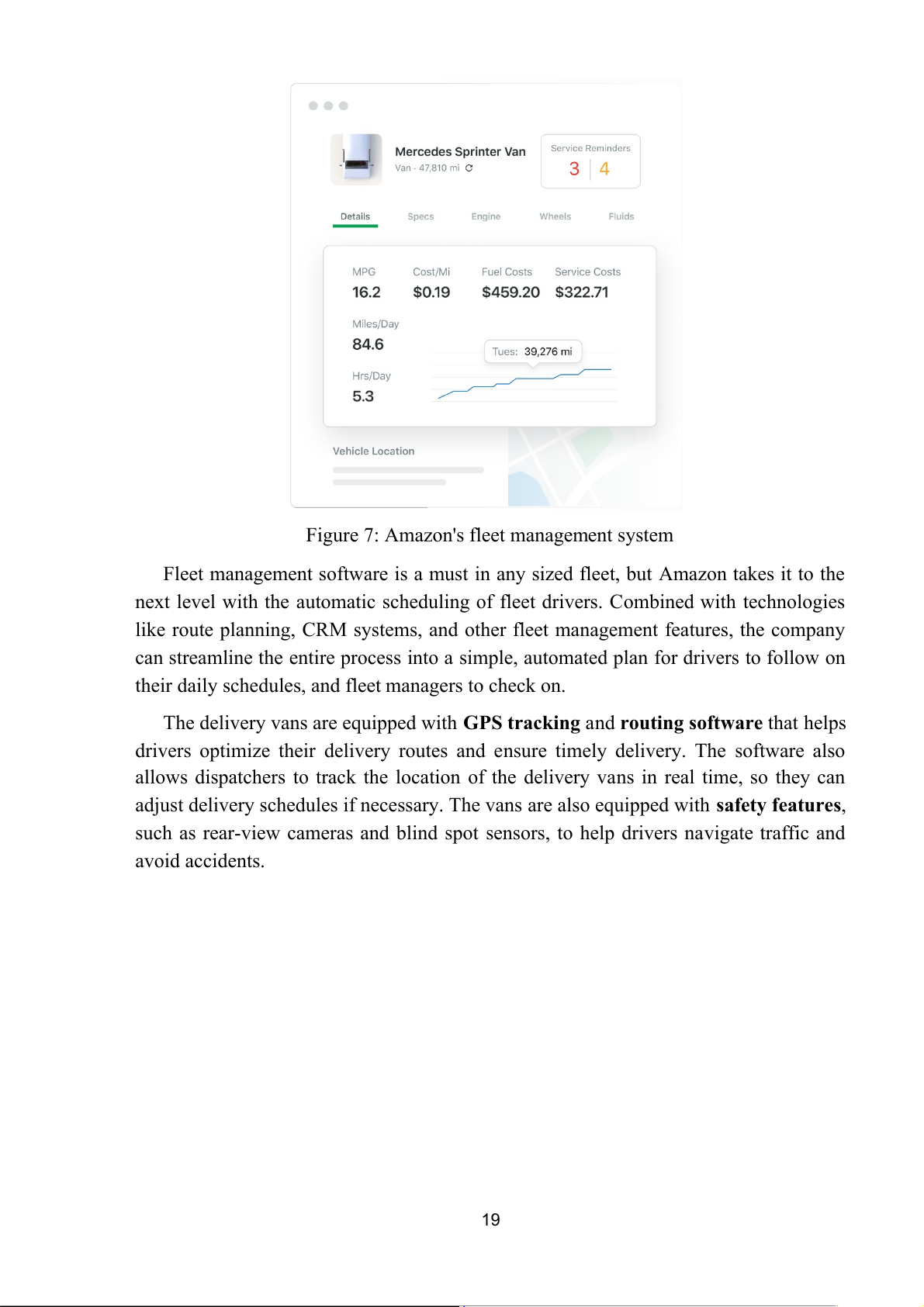
Figure 7: Amazon's fleet management system..............................................................19
Figure 8: Amazon's delivery van...................................................................................20
Figure 9: Amazon Scout................................................................................................ 21
Figure 10: Amazon Prime Air's delivery drone.............................................................22
Figure 11: Amazon Key app for in-car delivery service................................................22
Figure 12: Amazon's in-car delivery service.................................................................23
Figure 13: Amazon Locker............................................................................................ 24
Figure 14: Alibaba's autonomous delivery robots Xiaomanlv.......................................26 2 EXECUTIVE
By applying technologies in the outbound logistics process, Amazon has been
operating effectively by taking advantage of the economies of scale as a big global
corporation. When applying advanced technologies, Amazon sometimes faces serious
problems affecting the company’s outbound logistics.
The paper discusses the background of the company, the advanced technologies
used by Amazon, and giving suggestions for further improvement. The purpose of the
paper is to have a clear view about why Amazon is so successful with their outbound
logistics. Therefore, we will see if we can apply any of their technology into Vietnam’s outbound logistics.
About the methods, we analyze the technologies used in Amazon based on the
course, research papers, and internet sources. Then, we do research about the company
and how they apply these technologies in order processing, fulfillment, shipping, and
last-mile delivery. Advanced technologies used in each stage of Amazon’s outbound
logistics have some advantages and disadvantages. Most importantly, the technologies
help their logistics work more smoothly, efficiently, and faster than humans.
However, through our research, the technologies used also have malfunctions
sometimes, which leads to some accidents and waste of money. Thus, we give some
suggestions for improving the technologies’ performance.
Throughout the research, we find that the technologies used in Amazon are highly
advanced. However, it is still hard to conclude that they can be applied in Vietnam
since we have different delivery systems, cultures and living conditions. 3 CHAPTER 1. INTRODUCTION
Amazon has such a well-performed outbound logistics. When applying a range of
advanced technologies, the company has had outstanding success in maintaining
smooth and efficient logistics.
So, what should be discovered in Amazon’s outbound logistics? Firstly, we will
give a theoretical background about the outbound logistics and some related
technologies such as warehouse management system, big data, internet of things, etc.
Secondly, we will give a coherent analysis on the current situation of Amazon. In this
part, we will analyze different technologies applied to its outbound logistics. Therefore,
through the analysis, we recommend some solutions for improving the company’s situation. 4
CHAPTER 2. THEORETICAL BACKGROUND 2.1.
Outbound logistics 2.1.1. Definition
Outbound logistics is the process of storing, transporting, and delivering goods to
the end customers. In other words, it is about how a business moves finished inventory
out of their supply chain – and fulfills customers’ orders. The steps include order
processing, product picking and packing, shipping, delivery, and customer service
related to delivery (Jenkins, Guide to Inbound and Outbound Logistics: Processes,
Differences and How to Optimize, 2020).
2.1.2. Outbound logistics processes
1) Order processing: order processing is
the workflow that ensures customer orders are
properly prepared and delivered to the right
place. Every order is sent through a business’s
order management system. Then, depending
on the scale of a business’s operations, orders
can be passed to a distribution center or
warehouse where pickers, sorters and packers
work in sync toward order fulfillment, or it can
be done by a single person or small group
(Jenkins, What Is Order Processing? 5 Steps & 10 Tips to Improve, 2021).
2) Fulfillment: Fulfillment is the process
of ensuring that all the necessary steps are
taken in order to deliver the goods to the
customer. This includes packing, labeling, and
arranging for a carrier to deliver the goods. It
also involves providing customer service,
tracking orders, and managing returns (Shopify Staff, 2022).
3) Shipping: The order is dispatched to
distribution centers or partner logistic services
from the warehouse. The outbound logistics
personnel ensure that the shipment is properly
labeled and documented for tracking purposes (Locad, n.d.).
4) Last-mile delivery: In a product’s
journey, it is moved to the customer’s doorstep 5
Figure 1: Outbound Logistics Processes
– the final step of this process, known as the “last mile of delivery”. Last mile delivery
is the most expensive and time-consuming part of the shipping process (Dolan, 2023). 2.2.
Technologies related
2.2.1. Warehouse Management System (WMS)
A warehouse management system (WMS) is a software solution that offers visibility
into a business’ entire inventory and manages supply chain fulfillment operations from
the distribution center to the store shelf. WMS solutions additionally enable companies
to maximize their labor, space utilization and equipment investments by coordinating
and optimizing resource usage and material flows. Specifically, WMSs are designed to
support the needs of an entire global supply chain, including distribution,
manufacturing, asset-intensive, and service businesses.
With the progress in IT capabilities, WMSs started to be developed and early
systems were used to keep track of the receipts versus releases, and the balance
constituted the available on-hand inventory.
With the progress in mobile hardware technology, further enhancements were
introduced into the warehouse such as barcode scanning with handheld devices and the
introduction of material handling automation inside facilities. Barcode readers work by
using a beam of light to read the black and white pattern printed on the adhesive tag. In
today’s environment, the systems deployed inside the facilities have to be seamlessly
customizable and configurable to support the execution of the processes.
On the other hand, RFID (or Radio-Frequency Identification) leverages radio waves
to transmit data from RFID chips to the readers. While barcode scanners require a line
of sight to scan each code individually, RFID scanners can read multiple codes at once.
Items in supply chain and retail stores are tagged with RFID tag, which allows
instantaneous non-line-of-sight (NLOS) bulk readouts as well as real-time inventory
counts. RFID is deployed in logistics and retail field, and it is described as middleware
solutions to complement functionality of common WMS or retail systems.
In addition, since goods still need to be transported in a cost-efficient manner, a
WMS can be complemented with transportation management systems (TMSs), which
optimize the shipment planning, execution, and transportation, considering the required
service levels in order to deliver a shipment from the facility to the consumption point.
2.2.2. Big data and internet of things
The Internet of Things (IoT) describes the network of physical objects – “things” –
that are embedded with RFID tags sensors, software, actuators, mobile phones, and
other technologies for the purpose of connecting and exchanging data with other
devices and systems over the internet. The increasing volume and detail of information
generated by organizations, social media and the IoT has led to an explosion in the
amount of data captured, and the concept of big data emerged. 6
Big data refers to datasets whose size is beyond the ability of typical database
software tools to capture, store, manage and analyze. Big data has four key attributes as
defined by IBM (Zikopoulos, deRoos, Bienko, Buglio, & Andrews, 2015): Volume: scale of data;
Velocity: analysis of streaming data, velocity as the rate at which data arrives at
the enterprise and the time that it takes the enterprise to process and understand that data;
Variety: different forms of data: structured and unstructured;
Veracity: uncertainty of data, refers to the quality or trustworthiness of the data.
Big data analytics describes the process of uncovering trends, patterns, and
correlations in large amounts of raw data to help make data-informed decisions. These
processes use familiar statistical analysis techniques—like clustering and regression—
and apply them to more extensive datasets with the help of newer tools (Tableau, n.d.).
In the case of Amazon, it has been using The Apache Hadoop software library,
which is a framework that allows the distributed processing of large data sets across
clusters of computers to use simple programming models. It is designed to scale up
from single servers to thousands of machines, each offering local computation and
storage. Rather than rely on hardware to deliver high availability, the library itself is
designed to detect and handle failures at the application layer, so delivering a highly
available service on top of a cluster of computers, each of which may be prone to
failures (Apache Hadoop, n.d.). 2.2.3. Cloud computing
Cloud computing refers to a model of computing in which firms and individuals
obtain computing power and software and install it on their own computers It can be
classified into three types: public cloud, private cloud, and hybrid cloud (Armbrust, et
al., 2010, pp. 50-58). Cloud computing is on-demand access, via the internet, to
computing resources – applications, servers (physical servers and virtual servers), data
storage, development tools, networking capabilities, and more – hosted at a remote data
center managed by a cloud services provider (CSP). The CSP makes these resources
available for a monthly subscription fee or bills them according to usage. Cloud
computing helps do the following: lower IT costs, improve agility and time-to-value,
scale more easily and cost-effectively.
Amazon Web Services (AWS) is Amazon’s cloud computing model. AWS has
significantly more services and more features than any other cloud provider – from
infrastructure technologies like compute, storage, and databases – to emerging
technologies, such as machine learning and artificial intelligence, data lakes and
analytics, and Internet of Things. This makes it faster, easier, and more cost effective to
move existing applications to the cloud and build nearly anything that can be imagined. 7
AWS also has the deepest functionality within those services. For example, AWS offers
the widest variety of databases that are purpose-built for different types of applications
so users can choose the right tool for the job to get the best cost and performance
(Amazon, Cloud computing with AWS, n.d.).
2.2.4. Fleet management system
The fleet management system (FMS) interface provides a read-only standard
interface providing some common metrics, and also acts as a firewall, protecting the
internal CAN from injection of data from unknown ECUs. Its purpose is to maintain an
accurate and up-to-date overview of vehicle diagnostics, geolocation, and identifying
risky or unsafe driver behaviors while simultaneously reducing manager workload.
With data stored on a cloud-based platform and easily accessible in real time from
multiple locations, fleet management has never been more straightforward (lytx, n.d.).
Some examples of specific fleet metrics that can be tracked, monitored, and
managed using fleet management software include: Vehicle speed Brake switch Total fuel used Engine speed Axle weight Tachograph information
Engine coolant temperature (Wikipedia, n.d.).
Going into some of the metrics in more detail:
A tachograph is a recording device fitted to a vehicle, which automatically records
the vehicle speed and distance as well as the ‘mode’ the driver is currently in.
Tachographs offer two types of data, both of which are available from the K-Line and CAN: Live data: - odometer - speed - driver(s) numbers and names - driving mode
- information on compliance with regulations for driving (DDS). Historical data:
- driving history for past two months on driver’s card
- history for several years within tachograph
- speed data for last 24 hours of driving, to one-second accuracy.
Global positioning system (GPS) is to track the location of an entity or object
remotely. The technology can pinpoint longitude, latitude, ground speed, and course 8
direction of the target. The GPS is a "constellation" of 24 well-spaced satellites that
orbit the Earth and make it possible for people with ground receivers to pinpoint their
geographic location. The location accuracy is anywhere from 100 to 10 meters for most equipment.
Latitude and longitude, together with complete CAN and tachograph data then may
provide much more data such as:
Recording arrival and departure from known locations (defined by polygenic geofences)
Monitoring the route taken by the vehicle and altering when deviating from given route
Recording infringement to speed on the current road
Analyzing fuel usage against other metrics
Advising on expected arrival times of vehicle to its destination and alerting when predicted to be late.
When evaluating GPS systems, it is vital to ensure it gives those features required to
make the system an asset for the customer.
2.2.5. Artificial intelligence and machine learning
Machine learning is a branch of artificial intelligence (AI) and computer science
which focuses on the use of data and algorithms to imitate the way that humans learn,
gradually improving its accuracy (IBM, n.d.).
Machine learning is an important component of the growing field of data science.
Through the use of statistical methods, algorithms are trained to make classifications or
predictions, and to uncover key insights in data mining projects. These insights
subsequently drive decision making within applications and businesses, ideally
impacting key growth metrics. As big data continues to expand and grow, the market
demand for data scientists will increase. They will be required to help identify the most
relevant business questions and the data to answer them.
This technology has been applied to several tasks of Amazon, including autonomous
trucking. The term autonomous trucks is applied to trucks that will be controlled from
other sources such as satellites and advanced GPS (Global Positioning Systems),
models currently on the road already provide a semi-autonomous mode of operation, in
which the unmanned system and/or a human operator conduct a mission, have various
levels of human-robot interaction. In the fully autonomous mode of operation, the
unmanned system is expected to accomplish its mission, within a defined scope,
without human intervention. In the teleoperation mode of operation, the human
operator, using video feedback and/or other sensory feedback, either directly controls
the actuators or assigns incremental goals, waypoints in mobility situations, on a
continuous basis, from off the vehicle and via a tethered or radio linked control device. 9
And, finally, in the remote-control mode of operation, the human operator, without
benefit of video or other sensory feedback, directly controls the actuators of the
unmanned system on a continuous basis, from a location off the vehicle and via a
tethered radio linked control device using visual line-of-sight cues (Madhavan, Elena,
& James, 2006, pp. 324, 325). 10
CHAPTER 3. CURRENT SITUATION AT AMAZON 3.1.
Overview of Amazon 3.1.1. Introduction
Amazon (Amazon.com) is the world's largest online retailer and a prominent cloud
service provider. Headquartered in Seattle, Amazon has individual websites, software
development centers, customer service centers, data centers and fulfillment centers around the world.
Originally started as an online bookselling company, Amazon has morphed into an
internet-based business enterprise that is largely focused on providing e-commerce,
cloud computing, digital streaming and artificial intelligence (AI) services.
Following an Amazon-to-buyer sales approach, the company offers a monumental
product range and inventory, enabling consumers to buy just about anything, including
clothing, beauty supplies, gourmet food, jewelry, books, movies, electronics, pet
supplies, furniture, toys, garden supplies and household goods (Yasar, 2022). 3.1.2. Mission
Amazon is guided by four principles: customer obsession rather than competitor
focus, passion for invention, commitment to operational excellence, and long-term
thinking (Amazon, Who We Are, n.d.). Its mission is “to serve consumers through
online and physical stores and focus on selection, price, and convenience” (Björklund, 2014). 3.1.3. Vision
Amazon states its vision as: “Our vision is to be Earth's most customer-centric
company, where customers can find and discover anything they might want to buy
online, and endeavours to offer its customers the lowest possible prices” (Amazon,
Amazon Mission, Vision & Values, n.d.). 3.1.4. Values
Amazon has ten values as follows: Customer Obsession Ownership Invent and Simplify Learn and Be Curious Hire the Best The Highest Standards Think Big Bias for Action Earn Trust 11
Deliver Results (Amazon, Amazon Mission, Vision & Values, n.d.).
3.1.5. Amazon products and services
Amazon offers an ever-expanding portfolio of services and products. Following is a
list of its noteworthy offerings. 1) Retail
Amazon Marketplace. Amazon's e-commerce platform enables third-party retailers
to showcase and sell their products alongside Amazon items. 2) Amazon Fresh
Amazon's grocery pickup and delivery service is currently available in nearly two
dozen U.S. cities and a few international locations. A grocery order can be placed
through the Amazon Fresh website or the Amazon mobile app. Customers can either
get their groceries delivered or visit the store for pickup. 3) Amazon Vine
Launched in 2007, Amazon Vine helps manufacturers and publishers get reviews
for their products to help shoppers make informed purchases. 4) Woot
Acquired by Amazon in 2010, Woot offers limited time offers and special deals that
rotate daily. This shop features refurbished items, as well as new items that are low in
stock. Prime members get free shipping. 5) Zappos
Amazon bought Zappos in 2009. This online retailer of shoes and clothing carries a
wide range of brands, including Nike, Sperry, Adidas and Uggs. 6) Merch by Amazon
This on-demand T-shirt printing service enables sellers to create and upload their T-
shirt designs for free and earn royalties on each sale. Amazon does the rest -- from
printing the T-shirts to delivering them to customers. 7) Amazon Handmade
This platform enables artisans to sell handcrafted products to customers around the world (Yasar, 2022). 3.2.
Technologies applied in Amazon’s outbound logistics
In this part, the technologies that are used by Amazon are going to be described as
the process of outbound logistics – order processing, fulfillment, shipping, and last-mile delivery. 3.2.1. Order processing 12
As soon as the customers press the “Buy now” button, it comes to Amazon’s
outbound logistics. The information about the orders will come to Amazon’s system
and the robots will inform the workers about which items are ordered and where they
are located (Amazon Tours, 2021).
a) Routing orders into optimal warehouse
When a customer places an order on Amazon's website, the order is processed by
Amazon's software system, which identifies the item, the quantity, and the delivery
address. This information is then transmitted to the Amazon fulfillment center where the item is stored.
Once the order is received by the fulfillment center, it is processed by Amazon's
proprietary Warehouse Management System (WMS) which tracks inventory levels
and manages the movement of products throughout the facility. The company's back-
end systems use a complex algorithm to determine the most appropriate warehouse or
fulfillment center to fulfill the order. The algorithm takes into account a variety of
factors, including product availability, proximity to the customer, delivery speed,
workload, cost, etc. (Data4Amazon, n.d.)
In the context of order processing, big data analytics is used to analyze customer
behavior, inventory levels, and shipping patterns in real-time to optimize the routing of
orders and reduce shipping times. The technology can also be used to track the
performance of different warehouses and fulfillment centers and identify areas where
improvements can be made. For its big data analytics, for example, Amazon uses
Apache Hadoop - an open-source software framework for storing and processing large
datasets across clusters of commodity hardware. Amazon offers Hadoop as a managed
service called Amazon EMR (Elastic MapReduce), which makes it easy to process
large amounts of data using Hadoop without having to manage the underlying
infrastructure (AWS, Apache Hadoop on Amazon EMR, n.d.).
Amazon's backend systems rely heavily on cloud computing to process and store
data, as well as to run applications that support order routing and fulfillment. Amazon
Web Services (AWS), the company's cloud computing platform, provides the scalable
infrastructure needed to handle large volumes of orders and data (AWS, Amazon Web Services, n.d.).
Moreover, Amazon uses collaborative filtering, which is a machine learning
algorithm, and GPS tracking to
route the orders optimally. Collaborative filtering may
be used to analyze the order history of customers who have ordered similar products
and route the order to the appropriate warehouse or fulfillment center based on the
historical patterns of those orders. For example, if a customer has a previous order of
the same product, the system will automatically choose the same warehouse for this
order. In another words, collaborative filtering works by analyzing data on past 13
customer behavior and identifying patterns and trends. The algorithm uses this data to
build a model of the customer's preferences and interests, which can be used to predict
future behavior and make recommendations or routing decisions (Hardesty, 2019).
b) Receiving orders at the warehouse
When the orders are well received in the warehouses, they will be processed by
some robots. Amazon's robots are connected to the internet and use Internet of Things
(IoT) sensors to communicate with the WMS and other systems. This allows them to
receive real-time instructions on which items are placed (Amazon Tours, 2021).
This is the end of the order processing step. Now, the orders are going to the
fulfillment centers with different technologies used. 3.2.2. Fulfillment
Amazon uses RFID and barcode technology to track the movement of products
throughout its warehouses and fulfillment centers. This technology allows the back-end
systems to locate and retrieve products quickly and accurately, which is essential for
efficient order routing and fulfillment.
The process in the fulfillment center (FC) includes pick, pack, and SLAM (scan,
label, apply, and manifest) respectively as discussed in the following: a) Pick
Amazon has been using robots for the picking process. From the moment product
comes into the warehouse, everything is moved on either floor robots, conveyor belts,
or elevators. In the first stage, the product is loaded into the pods, which are carried on
top of a robot. Since items are stored randomly, the item may be stored in more than
one pod. An algorithm in the Cloud calculates the most efficient combination of picker,
pod, and drive unit to process each customer order. Figure 2: Amazon's pods 14
The way that Amazon keeps track of all the robots is as follows: The FC floor is a
grid system, and each square has a unique QR code. As the drive unit moves, the robot
uses a camera sensor underneath it to constantly scan and update its new location in the
cloud. A sensor is a device that detects and responds to its physical environment. This
combination of real-time sensing and cloud processing allows the drive units to work
together to clear paths for each other and fulfill orders as efficiently as possible (Amazon News, 2022).
Figure 3: Barcode system in the Fulfillment center
Another technology that is applied in this step is computer vision, which is a
critical component of Amazon's picking system in its outbound logistics operations.
In Amazon's picking system, computer vision is used to enable the robots to locate
and pick the correct items from their storage locations. The robots are equipped with
cameras and sensors that capture images of the items stored in the warehouse.
Computer vision algorithms then analyze these images to identify the location of the
item, its orientation, and any other relevant details quickly and accurately. Amazon’s
robotic arm is an example, it is used for identifying individual products. It can be seen
that Amazon is using computer vision to automate its logistics operation with robotics. 15 Figure 4: The robotic arm
In November 2022, Amazon introduced Sparrow, a new intelligent robotic system
that streamlines the fulfillment process by moving individual products before they get
packaged. Sparrow is the first robotic system in the warehouses that can detect, select,
and handle individual products in Amazon inventory. The robotic arm uses computer
vision to recognize and handle millions of items. Sparrow uses suction cups to grip and
then move individual products. It uses cameras positioned at different angles combined
with machine learning to help its robots visualize individual objects within a crowded
scene and determine how to pick them up.
By employing robots in its warehouses, it can conduct operations more efficiently
and safely. Sparrow will take on repetitive tasks, enabling our employees to focus their
time and energy on other things, while also advancing safety. At the same time,
Sparrow will help Amazon drive efficiency by automating a critical part of its
fulfillment process so Amazon can continue to deliver for customers (Holt, 2022). b) Pack
Between getting an order from the picking station to packing, each product is loaded
into a yellow tote. This tote travels on a conveyor belt and is sorted by sorting
equipment. Based on if the order is to be combined with other product or not, it is sent
to singles or multi-pack areas in the warehouse.
The totes are staged along the conveyor belts, with packing stations on both sides.
An employee will grab a tote, then they will pull the product and scan it. The scanner
has a predetermined box size and shipping tape size which the product is loaded into.
Each box is then provided with a barcode label for the outside. This carries all the
information about the inner contents of a box. Amazon has a randomized fulfillment
method. At any moment a product or packaged product can be picked up and scanned,
and they will know where it is headed or where it should go back to (Senn, 2019). 16 .
Figure 5: Amazon's conveyor belt
To practice efficiency when choosing a box to ship an item, they need to pick the
smallest box possible while also protecting the items. When an item arrives at Amazon
to be sold, the staff record many facts about it: Its height, width, and weight. These
facts are stored in a database. When an item is ordered, the cloud pulls the item’s
dimensions and weight for the database and automatically calculates (using an
algorithm) which box will be the best. Using a database to estimate package size helps
Amazon stay more efficient with shipping.
c) SLAM (scan, label, apply and manifest)
Once the items are packed, they are sent down to SLAM for quality control.
At the SLAM station, the customer address label is applied, and a sensor weighs the
box to make sure everything is correct. The system uses the database to compare the
actual package weight with the expected package weight to see if the two weights
match. If they do not match, the box is pulled off, inspected, and corrected by an
associate. If they match, it heads onto shipping.
The sorter uses an algorithm to assign the packages to the truck that will provide the
fastest delivery route. After being sorted, parcels are scanned and sent to the correct
pallet or ATS cart, and then scanned to send onto the trucks for shipping (Senn, 2019). 17
Figure 6: Products sorted for shipping 3.2.3. Shipping
Amazon has been testing and using autonomous trucking for its shipping.
Amazon ordered 1,000 autonomous truck-driving systems from a startup called
Plus. This system operates similarly to Tesla’s “full self-driving” software, which
requires a licensed driver to keep their eyes on the road in case the system malfunctions
or needs intervention (Kay, 2021). Autonomous technology can make Amazon delivery
trucks safer, more fuel efficient, and more comfortable for drivers. Besides,
autonomous trucking is potential to reduce the carbon emissions and fuel costs (Moorhead, 2021).
To fulfill the autonomous trucking technology, there is a need for cloud computing
capacity for simulation and data processing. And in addition to simulation, Amazon
also needs big data, for extensive real-world data collection, to ensure that it has
enough long-tail scenarios captured in its simulations.
In 2021, Amazon was applying Level 4 technology into trucks with drivers that
supervise the system. Long-tail scenarios and data gathered in these driver-in-trucks is
then fed back into the driving AI to improve it, which is also a machine learning
process. To handle the amount of data harvested from real-world operation, the truck-
driving system provider – Plus relies on Amazon Web Services (AWS) for its cloud
computing (AWS Automotive Editorial Team, 2021).
Besides, Amazon applies fleet management system from the process of shipping to
last-mile delivery. With the installation of Internet of Things (IoT) and automation,
Amazon can manage its fleets productively. 18
Figure 7: Amazon's fleet management system
Fleet management software is a must in any sized fleet, but Amazon takes it to the
next level with the automatic scheduling of fleet drivers. Combined with technologies
like route planning, CRM systems, and other fleet management features, the company
can streamline the entire process into a simple, automated plan for drivers to follow on
their daily schedules, and fleet managers to check on.
The delivery vans are equipped with GPS tracking and that routing software helps
drivers optimize their delivery routes and ensure timely delivery. The software also
allows dispatchers to track the location of the delivery vans in real time, so they can
adjust delivery schedules if necessary. The vans are also equipped with safety features,
such as rear-view cameras and blind spot sensors, to help drivers navigate traffic and avoid accidents. 19
Tài liệu liên quan:
-
Giáo trình logistic về quản trị logistics
7 4 -

Chương 3 Đóng gói và vân chuyển - Mối quan hệ giữa đóng gói và vận chuyển trong logistics môn Logistics | Trường Đại học Kinh tế, Đại học Quốc gia Hà Nội
31 16 -
Yếu Tố: Các Quy Định Mà Tổ Chức Tuân Thủ môn logistics | Trường Đại học Kinh tế, Đại học Quốc gia Hà Nội
27 14 -
Mối liên hệ giữa Logistics và Vận tải đa phương thức môn Logistics | Trường Đại học Kinh tế, Đại học Quốc gia Hà Nội
38 19 -
E-Business & E-Commerce: Managing eCustomer Relationships | Logistics | Trường Đại học Kinh tế, Đại học Quốc gia Hà Nội
38 19