Amphotericin B Nephrotoxicity môn Hóa Dược| Trường Đại học Y Dược, Đại học Quốc gia Hà Nội
The use of amphotericin B limited by dose-dependentnephrotoxicity. Elevated creatinine associated with amphotericin B is not only a marker for renal dysfunction, but is also linked to an increase in hospital costs and a substantial risk for the use of haemodialysis and a higher mortality rate. Tài liệu giúp bạn tham khảo, ôn tập và đạt kết quả cao. Mời đọc đón xem!
Môn: Hóa Dược (BLA2021) 59 tài liệu
Trường: Trường Đại học Y Dược, Đại học Quốc gia Hà Nội 269 tài liệu
Tác giả:










Preview text:
23:12, 08/01/2026
Amphotericin B Nephrotoxicity: JAC 49 Suppl S1, 37 – A Review - Studocu JAC
Journal of Antimicrobial Chemotherapy (2002) , 49 Suppl. S1, 37–41 Amphotericin B nephrotoxicity Gilbert Deray*
Nephrology Department, Pitié-Salpêtrière Hospital, Boulevard de l’Hôpital, Paris 750013, France
The use of amphotericin B limited by dose-dependent nephrotoxicity. Elevated creatinine
associated with amphotericin B is not only a marker for renal dysfunction, but is also linked
to an increase in hospital costs and a substantial risk for the use of haemodialysis and a
higher mortality rate. Therefore, amphotericin B nephrotoxicity is not a benign complication
and its prevention is essential. Several manipulations have been proposed to minimize
amphotericin B-induced nephrotoxicity. Mannitol and frusemide administration are reported
to be protective based on anecdotal observational reports. Small prospective and
randomized trials do not suggest a protective effect. Three new formulations have been
developed in attempts to improve both efficacy and tolerability: amphotericin B in a lipid
complex (ABLC; Abelcet); amphotericin B colloidal dispersion; and liposomal amphotericin B
(AmBisome). Three prospective randomized studies have clearly shown that AmBisome
is less nephrotoxic than amphotericin B. In a double-blind randomized trial significantly
fewer patients receiving AmBisome had nephrotoxic effects. This significant reduction in
azotaemia was also observed among subgroups of patients receiving concomitant therapy
with nephrotoxic agents. Moreover, there were fewer patients with hypokalaemia in the group
receiving AmBi- some. A recent multicentre double-blind study has shown that AmBisome (3
or 5 mg/kg/day) has a better safety profile than Abelcet (5 mg/kg). Patients in both AmBisome
treatment groups experienced less chills/rigors, less nephrotoxicity based on a doubling of
serum creatinine, and fewer toxic reactions resulting in discontinuation of therapy. In
conclusion, amphotericin B nephrotoxicity is observed frequently. It clearly increases patient
mortality. Nephrotoxicity must be recognized early, based on tubular abnormalities and a
mild increase in serum creatinine. Its prevention relies on the detection and suppression of
risk factors and the use of AmBisome. Introduction
Incidence and severity of amphotericin B nephrotoxicity
Therapeutic regimens have advanced at an increasingly
frenetic pace in recent years, and there are very few
The incidence of amphotericin B nephrotoxicity is very
areas in which the first effective treatment is still the
high and there is reason to be cautious. Acute renal
treatment of choice. Quinine is one example,
failure is common. Several papers report rates of acute
amphotericin B another. If this drug were not effective
renal failure for patients on amphotericin B between
against so many fungal pathogens, it would have been 49% and 65%.
In the study by Wingard et al., >50% abandoned many years ago. Amphotericin B remains the 1–4 1
of patients had a significant increase in serum creatinine
most effective drug in treating systemic fungal infections.
compared with baseline. Specifically, serum creatinine
Nevertheless, it can produce a wide variety of acute and
doubled in 53% of patients and 29% had a serum
chronic side effects, the most important of which is
creatinine of >250 mmol/L, representing a decrease in nephrotoxicity.
renal function of at least 70%. Furthermore, 15% of all
There are three reasons why we must be aware of this
patients in the study required dialysis. Amphotericin B
complication: (i) incidence; (ii) severity; and (iii) clinical
nephrotoxicity is frequent and severe. consequences.
*Tel: +33-1-42-17-72-29; Fax: +33-1-42-17-72-32; E-mail: gilbert.deray@psl.ap-hop-paris.fr 37
© 2002 The British Society for Antimicrobial Chemotherapy 23:12, 08/01/2026
Amphotericin B Nephrotoxicity: JAC 49 Suppl S1, 37 – A Review - Studocu G. Deray
In addition, this study looked retrospectively at the
clin- ical significance of amphotericin B nephrotoxicity: the
known, but we do not know the toxicity. There are five
rate of nephrotoxicity, dialysis and fatality; factors
prospective trials comparing renal toxicity of amphotericin
associated with fatality were analysed using multivariate
B in either glucose or Intralipid 6–10 (Table 1). In three of
Cox’s pro- portional hazards analysis. The use of other
these, there was less nephrotoxicity, but the remaining
nephrotoxic therapies and dialysis were significantly
(in the more critical patients) found no efficacy in
associated with mortality. When a patient requires
mixing amphotericin B and Intralipid in lowering the
dialysis, he/she has a three-fold increase in the risk of
renal toxic- ity. Therefore the beneficial effect is
mortality. The mortality rate of patients not dialysed as
unknown. Further- more, problems associated with the
compared with patients that were dialysed, was 76% mixture include: lower antimycotic activity;
versus 57% (P = 0.039). Thus, every effort must be
thrombocytopenia; hepatic function abnormalities; made to prevent renal failure.
cholestasis; and pulmonary toxicity. Intra- lipid mixed
Amphotericin B nephrotoxicity is frequent and severe,
with amphotericin B cannot be recommended.
and clearly associated with the risk of death; therefore,
we must understand the pathophysiology of this Other pharmacological agents
complication and if possible, prevent amphotericin B nephrotoxicity.
Diuretics have been used for the last 50 years for preven-
tion of drug-induced nephrotoxicity.
Mannitol decreases renal medullary PO 2 and renal
Pathophysiology of amphotericin B
medullary blood flow. There are no experimental data to nephrotoxicity
support the use of mannitol in the prevention of ampho-
tericin B-induced nephrotoxicity. Only one randomized
The pathophysiology of nephrotoxicity involves vaso-
clinical trial has looked at the effect of mannitol on ampho-
constriction and direct interaction with epithelial cell mem-
tericin B nephrotoxicity. 11 Eleven patients were random-
branes. These alterations are responsible for the decrease
ized to receive amphotericin B in either 5% glucose
in glomerular filtration rate (GFR) and tubular dysfunc-
alone (control), or 5% glucose with 1 g/kg mannitol. The
tion. It has been known for some years that amphotericin
study found that mannitol did not prevent either
B, when given in animal models, will decrease renal blood
functional or histological manifestations of amphotericin
flow. This can happen as quickly as 45 min after infusion
B toxicity. Creatinine clearance was depressed in both
of amphotericin B. The same effect has been reported in
groups and all but one patient needed potassium
humans. In five patients who received amphotericin B,
supplementation. I do not recommend the use of
renal blood flow and GFR (based on inulin clearance) were
diuretics in an attempt to reduce amphotericin B-induced
assessed before, during and up to 6 months after cessation nephrotoxicity.
of treatment. 5 Mean renal blood flow decrease was 55%
during drug administration. In four patients studied 4– Infusion rates
6 months later, inulin clearance was only 85% of the initial
control value. Thus, amphotericin B induced marked
Can the nephrotoxic effects of amphotericin B be
vasoconstriction without normalization of renal function
reduced by altering infusion rates? One prospective
occurring after the drug was stopped. To summarize the
study by Ellis et al.12 concluded that infusion rates did not
mechanisms of toxicity to the kidneys, amphotericin B
modify ampho- tericin B toxicity. However, in patients
forms pores in membranes that cause tubular dysfunction.
with renal insuf- ficiency, rapid infusion may be
Amphotericin B is also responsible for severe vasocon-
responsible for severe hyperkalaemia and potentially
striction that will decrease renal blood flow and GFR and
fatal arrhythmia. 5,13 In patients with renal insufficiency,
ultimately cause ischaemic injury. Together these two
amphotericin B must be infused at a low rate.
mechanisms induce acute renal dysfunction.
Risk factors of amphotericin B nephrotoxicity
Prevention of amphotericin B nephrotoxicity
Potential risk factors that could affect the nephrotoxicity of
amphotericin B include: the patient’s average daily ampho-
Can amphotericin B nephrotoxicity be prevented? There
tericin B dose; dehydration; cumulative dose; abnormal
are three possible ways: (i) Intralipid, or other pharmaco-
baseline renal function; concomitant nephrotoxic drugs
logical agents; (ii) infusion rate; and (iii) early detection
(e.g. cyclosporin); and patient’s risk category. 1
of risk factors and renal toxicity and the use of new
Regarding risk category, the study by Wingard et al. formula- tions.
examined the rate of nephrotoxicity and haemodialysis
in four separate patient groups (Table 2). The rate of
nephro- toxicity in both allogeneic and autologous bone Intralipid
marrow transplant (BMT) patients was much higher than
When Intralipid and amphotericin B are mixed, the effect
in solid organ transplant patients. Therefore, BMT
is similar to ‘French mayonnaise’. The main ingredients are
patients should be considered at very high risk of 38 23:12, 08/01/2026
Amphotericin B Nephrotoxicity: JAC 49 Suppl S1, 37 – A Review - Studocu Amphotericin B nephrotoxicity
acquiring nephrotoxicity from amphotericin B. To assist in the prevention of ampho- 39 23:12, 08/01/2026
Amphotericin B Nephrotoxicity: JAC 49 Suppl S1, 37 – A Review - Studocu G. Deray
Table 1. Prospective trials evaluating ability of Intralipid to reduce renal toxicity of amphotericin B Publication Patient population Reduced nephrotoxicity Moreau et al. (1992) 6 haematology patients yes Caillot et al. (1994) 7 haematology patients yes Sorkine et al. (1996) 8 ICU critically ill patients yes Schoffshi et al. (1998)9 neutropenic patients no Nucci et al. (1999)10 oncology patients no ICU, intensive care unit.
Table 2. Nephrotoxicity and renal failure in different patient groups Nephrotoxicity Patient group (2× creatinine) (%) Dialysis required (%) Allogeneic BMT 61 20 Autologous BMT 80 19 Solid organ transplantation 35 18 Non-transplantation 54 7 From Wingard et al. 1
tericin B nephrotoxicity, it is essential to identify and
amphotericin B nephrotoxicity. A 25% rise in serum
monitor the risk factors listed above. The early detection of
creat- inine should be considered as evidence of drug
renal toxicity can be accomplished by looking for toxicity.
clinical evidence of amphotericin B nephrotoxicity, such
as tub- ular dysfunction and renal insufficiency.
Amphotericin B will induce the following alterations in
a high percentage of patients: hypokalaemia, 25–75% of
Lipid formulations of amphotericin B
patients; hypo- magnesaemia, 30–75% of patients; renal
There are three lipid formulations of amphotericin B that
tubular acidosis, 50–100% of patients; and polyuria, 50–
are commercially available: AmBisome (Gilead Sciences),
100% of patients. Importantly, these abnormalities will
a true liposome structure; Abelcet [amphotericin B lipid
occur before renal insufficiency and are dose dependent.
complex (ABLC), Wyeth], with a ribbon-like structure;
The other feature of amphotericin B nephrotoxicity is
and Amphocil/Amphotec [amphotericin B colloid dis-
azotaemia. Azotaemia is characterized by an increase in
persion (ABCD), Sequus Pharmaceuticals], composed of
serum creatinine and is preceded by tubular dysfunction.
disc-like structures. Are these formulations less nephro-
Azotaemia is considered reversible upon the
toxic? If the answer is yes, which one is best?
discontinua- tion of drug but may be irreversible with
Data from six different randomized clinical trials com-
large cumulative doses of amphotericin B (>4 g).
paring renal toxicity of the various amphotericin B lipid
Assessment of renal func- tion with inulin clearance shows
formulations with conventional amphotericin B, or, in
a significant reduction in GFR in many patients.
one case, with each other, are available. White et al.2
Azotaemia is often underestimated by serum creatinine
performed a randomized, double-blind clinical trial of
assessment. A 25% rise in serum creatinine level may
ABCD versus amphotericin B in the empirical treatment
appear small, but actually represents a substantial fall in
of fever and neutropenia in >200 patients. Treatment was
GFR—perhaps as much as a 50% reduc- tion. This is either ABCD
because of the exponential rise in serum creat- inine level
4 mg/kg/day or amphotericin B 0.8 mg/kg/day. Renal
with declining renal function. In addition, overall renal
toxicity was defined as a doubling of serum creatinine,
function and muscle mass decline in parallel with
an absolute serum creatinine increase of 100 mmol/L or a
advancing age or severe disease. Therefore, older and
50% decrease in creatinine clearance. In all evaluable
very sick patients with a normal serum creatinine have a
patients, the incidence of ABCD nephrotoxicity was c. 40% GFR of only c. 30%
of that of a young healthy adult. There-
in com- parison with 60% with amphotericin B. Thus, in this
fore, patients in these categories are at higher risk for
study, ABCD was significantly less nephrotoxic than 40 23:12, 08/01/2026
Amphotericin B Nephrotoxicity: JAC 49 Suppl S1, 37 – A Review - Studocu Amphotericin B nephrotoxicity ampho- tericin B. 41 23:12, 08/01/2026
Amphotericin B Nephrotoxicity: JAC 49 Suppl S1, 37 – A Review - Studocu G. Deray
For Abelcet there is only one full publication by Sharkey
et al.14 which looked at the effects of Abelcet compared
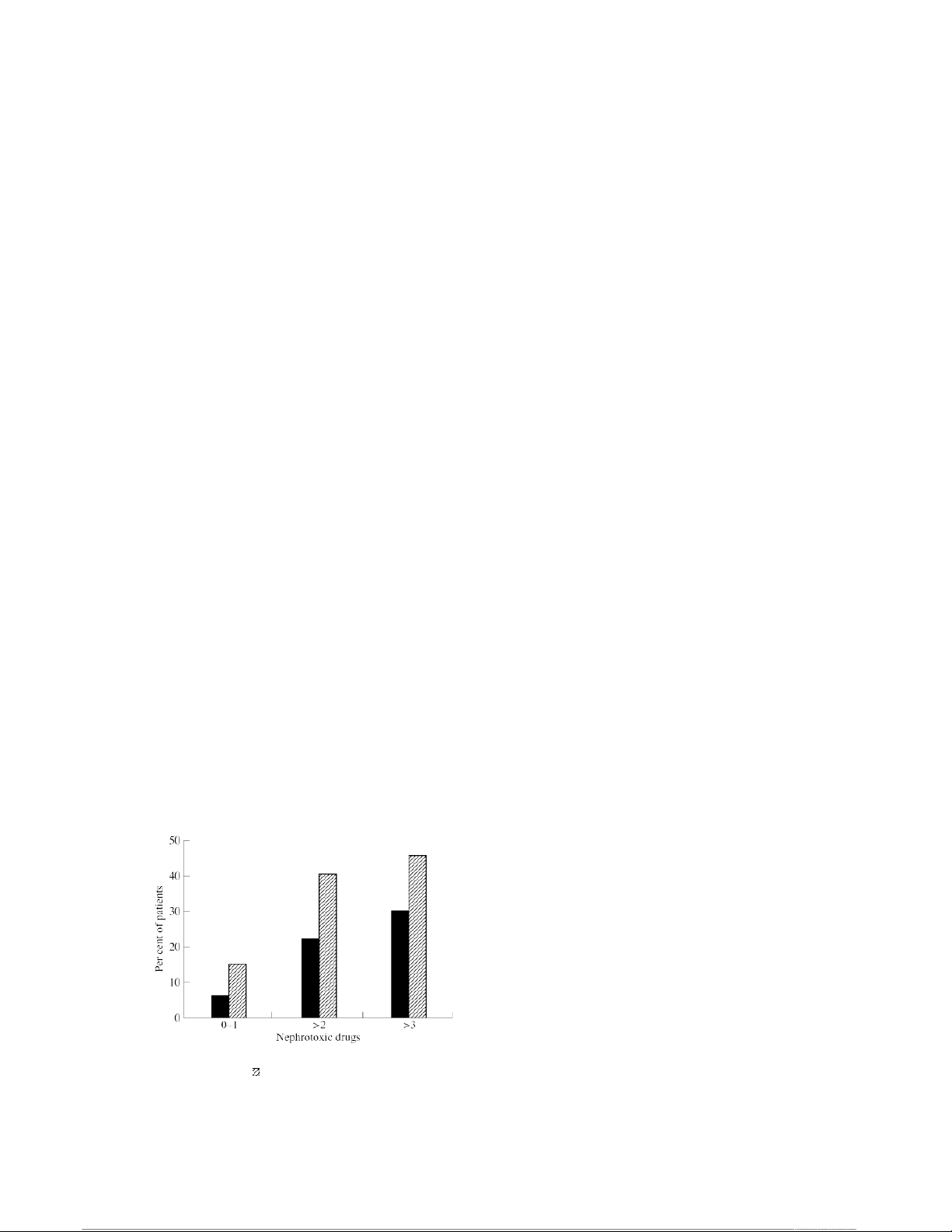
receiving at least two or three other nephrotoxic drugs.
with amphotericin B for patients with cryptococcal menin-
As shown in the Figure, AmBisome was significantly
gitis. Treatments included amphotericin B, given at l mg/
less nephrotoxic than amphotericin B, regardless of the
kg/day, and Abelcet given to separate cohorts at 1.2 mg/
number of concomitant nephrotoxic drugs being
kg/day, 2.5 mg/kg/day, and 5 mg/kg/day. At the highest
administered to these patients.
dose of Abelcet, the 6 week mean increase in serum
Another interesting point from this paper is hypo-
creatinine was 49 mmol/L compared with an increase of
kalaemia. In this study, hypokalaemia was defined as a
80 mmol/L for the amphotericin B group. 8 This difference
serum potassium level ≤2.5 mmol/L. This represents a very
was statistically significantly. However, the percentage of
low serum level, with a risk of potentially fatal
patients with a two-fold increase in serum creatinine level
arrhythmia. Once more, AmBisome treatment was less
was virtually identical for these two groups (50% and 53%
toxic to the kidneys, with only 6.7% hypokalaemia
for Abelcet and amphotericin B, respectively). The authors
compared with 11.6% for amphotericin B (P = 0.02).
also pointed out that potassium and magnesium levels were
AmBisome is an encouraging development, at least for a
decreased in 24% of patients in both of these groups. There nephrologist.
are no randomized studies to suggest that Abelcet is less
Wingard et al. 17 performed a randomized double-blind
nephrotoxic than amphotericin B.
trial evaluating the safety of AmBisome compared with
There are three comparative studies showing that Am-
Abelcet as empirical treatment in 250 patients with un-
Bisome is less nephrotoxic. 4,15,16 The study by Walsh et al. 4
resolved fever and neutropenia. AmBisome was given at
was a randomized double-blind study of >600 patients that
3 and 5 mg/kg/day, and Abelcet was given at 5
compared liposomal amphotericin B (AmBisome) with
mg/kg/day. In patients who had at least a doubling in
conventional amphotericin B for empirical treatment in
serum creatinine, the rate of nephrotoxicity for Abelcet
patients with persistent fever and neutropenia. The treat- was >40%, whereas
for both AmBisome groups, it was
ments compared were amphotericin B given at 0.6 mg/
<15%. The incidence of Abelcet nephrotoxicity is
kg/day and AmBisome given at 3 mg/kg/day. From an
comparable to that associated with conventional
efficacy viewpoint, both treatments had identical success
amphotericin B. AmBisome is clearly a less nephrotoxic
rates, although there were significantly fewer proven break- drug than Abelcet.
through fungal infections in patients receiving AmBisome.
The safety results showed that patients in the AmBisome
treatment group had remarkably lower incidence of renal
Indications for use of amphotericin B lipid
insufficiency. The percentage of patients with a doubling in formulations
serum creatinine while being treated with amphotericin B
was nearly double that of patients being treated with
Conventional amphotericin B should not be used if a
AmBisome (33.7% and 18.7% for amphotericin B and
patient has at least one of the following factors: renal insuf-
AmBisome, respectively). What is even more interesting is
ficiency, hypokalaemia and/or hypomagnesaemia, tubular
the analysis of nephrotoxicity in patients who, in addition
acidosis or polyuria. In these situations, AmBisome is indi-
to receiving amphotericin B or AmBisome, were also
cated. If there are no risk factors, routine use of AmBisome
is determined by resource availibilty. If one cannot
afford AmBisome routinely, as is the case at the author’s
hospital, then start with amphotericin B. If there is at least
a 25% increase of serum creatinine, stop the drug. If
there is any kind of tubular abnormality, stop the drug.
In these situa- tions, begin treatment with AmBisome. If
there are no renal abnormalities, amphotericin B may be continued. Conclusions
Amphotericin B nephrotoxicity remains a frequent and
severe impediment in the treatment of disseminated
fungal infections. Amphotericin B-induced renal failure
is not a benign complication. The recognition of risk
Figure. Comparative nephrotoxicity of AmBisome (■) and amphotericin B (
) in patients taking concomitant
factors and early intervention are much more effective
nephrotoxic drugs (percentage of patients with at least a
than treating established acute renal failure in preventing doubling in serum creatinine).
mortality. The risk of death increases with relatively
small increments in serum creatinine level. Any increase
in serum creatinine level while a patient is on 42 23:12, 08/01/2026
Amphotericin B Nephrotoxicity: JAC 49 Suppl S1, 37 – A Review - Studocu Amphotericin B nephrotoxicity
amphotericin B should be regarded as important, and
should trigger review and pos- sible intervention. The
prevention of these serious com- 43 23:12, 08/01/2026
Amphotericin B Nephrotoxicity: JAC 49 Suppl S1, 37 – A Review - Studocu G. Deray
plications is straightforward if detection and suppression of
risk are used in clinical practice.
9. Schoffski, P., Freund, M., Wunder, R., Petersen, D., Kohne, C.
I recommend the use of true liposomal formulations of
H., Hecker, H. et al. (1998). Safety and toxicity of amphotericin B in
glucose 5% or intralipid 20% in neutropenic patients with pneumonia
amphotericin B AmBisome as first-line therapy in high-risk
or fever of unknown origin: randomised study. British Medical patients and patients with amphotericin B Journal 317, 379–84. nephrotoxicity.
10. Nucci, M., Loureiro, M., Silveira, F., Casali, A. R., Bouzas, L.
F., Velasco, E. et al. (1999). Comparison of the toxicity of References
amphotericin B in 5% dextrose with that of amphotericin B in fat
emulsion in a randomized trial with cancer patients. Antimicrobial
1. Wingard, J. R., Kubilis, P., Lee, L., Yee, G., White, M., Walshe,
Agents and Chemotherapy 43, 445–8.
L. et al. (1999). Clinical significance of nephrotoxicity in patients
11. Bullock, W. E., Luke, R. G., Nuttall, C. E. & Bhathena, D.
treated with amphotericin B for suspected or proven aspergillosis.
(1976). Can mannitol reduce amphotericin B nephrotoxicity?
Clinical Infectious Diseases 29, 1402–7.
Double-blind study and description of a new vascular lesion in
2. White, M. H., Bowden, R. A., Sandler, E. S., Graham, M. L.,
kidneys. Antimicro- bial Agents and Chemotherapy 10, 555–63.
Noskin, G. A., Wingard, J. R. et al. (1998). Randomized, double-
12. Ellis, M. E., al-Hokail, A. A., Clink, H. M., Padmos, M. A.,
blind clinical trial of amphotericin B colloidal dispersion vs. ampho-
Ernst, P., Spence, D. G. et al. (1992). Double-blind randomized
tericin B in the empirical treatment of fever and neutropenia.
study of the effect of infusion rates on toxicity of amphotericin B.
Clinical Infectious Diseases 27, 296–302.
Antimicrobial Agents and Chemotherapy 36, 172–9.
3. Luke, R. G. & Boyle, J. A. (1998). Renal effects of amphotericin
B lipid complex. American Journal of Kidney Diseases , 780–5. 31
13. Craven, P. C. & Gremillion, D. H. (1985). Risk factors of ven-
tricular fibrillation during rapid amphotericin B infusion.
4. Walsh, T. J., Finberg, R. W., Arndt, C., Hiemenz, J., Schwartz,
Antimicrobial Agents and Chemotherapy 27, 868–71.
C., Bodensteiner, D. et al. (1999). Liposomal amphotericin B for
empir- ical therapy in patients with persistent fever and
14. Sharkey, P. K., Graybill, J. R., Johnson, E. S., Hausrath, S.
neutropenia. New England Journal of Medicine , 764–71. 340
G., Pollard, R. B., Kolokathis, A. et al. (1996). Amphotericin B lipid
com- plex compared with amphotericin B in the treatment of
5. Bell, N. H., Andriole, V. T., Sabesin, S. M. & Utz, J. P. (1962).
cryptococcal meningitis in patients with AIDS. Clinical Infectious
On the nephrotoxicity of amphotericin B in man. American Journal Diseases 22, 315–21. of Medicine 33, 64–9.
15. Prentice, H. G., Hann, I. M., Hebrecht, R., Aoun, M., Kvaloy,
6. Moreau, P., Milpied, N., Fayette, N., Ramee, J. F. & Harousseau,
S., Catovsky, D. et al. (1997). A randomized comparison of
J. L. (1992). Reduced renal toxicity and improved clinical tolerance
liposomal versus conventional amphotericin B for the treatment of
of amphotericin B mixed with intralipid compared with conventional
pyrexia of unknown origin in neutropenic patients. British Journal of
amphotericin B in neutropenic patients. Journal of Antimicrobial Haemato- logy 98, 711–8. Chemotherapy 30, 535–41.
7. Caillot, D., Reny, G., Solary, E., Casasnovas, O., Chavanet, P.,
16. Leenders, A. C., Daenen, S., Jansen, R. L., Hop, W. C.,
Bonnotte, B. et al. (1994). A controlled trial of the tolerance of
Lowen- berg, B., Wijermans, P. W. et al. (1998). Liposomal
amphotericin B compared with amphotericin B deoxycholate in the
amphotericin B infused in dextrose or in Intralipid in patients with
haematological malignancies. Journal of Antimicrobial Chemo-
treatment of documented and suspected neutropenia-associated therapy 33, 603–13.
invasive fungal infections. British Journal of Haematology , 103 205–12.
8. Sorkine, P., Nagar, H., Weinbroum, A., Setton, A., Israitel, E.,
Scarlatt, A. et al. (1996). Administration of amphotericin B in
17. Wingard, J. R., White, M. H., Anaissie, E. J., Rafalli, J. T.,
lipid emulsion decreases nephrotoxicity: results of a prospective,
Goodman, J. L. & Arrieta, A. C. (2000). A randomized double-blind
randomized, controlled study in critically ill patients. Critical Care
comparative trial evaluating the safety of liposomal amphotericin B Medicine 24, 1311–5.
versus amphotericin B lipid complex in the empirical treatment of
febrile neutropenia. Clinical Infectious Diseases , 1 31 155–63. 44 23:12, 08/01/2026
Amphotericin B Nephrotoxicity: JAC 49 Suppl S1, 37 – A Review - Studocu Amphotericin B nephrotoxicity 45 23:12, 08/01/2026
Amphotericin B Nephrotoxicity: JAC 49 Suppl S1, 37 – A Review - Studocu
Tài liệu liên quan:
-

Tóm tắt lý thuyết môn Hoá sinh đại cương | Trường Đại học Y Dược, Đại học Quốc gia Hà Nội
37 19 -
Amphetamine - Hóa Dược và Tác Động Tâm Thần Học môn Hóa Dược| Trường Đại học Y Dược, Đại học Quốc gia Hà Nội
25 13 -
Trắc nghiệm có đáp án Phân loại và tác dụng của các vitamin: Nguồn gốc và cách sử dụ môn Hóa Dược| Trường Đại học Y Dược, Đại học Quốc gia Hà Nội
27 14 -
Đề Cương Hóa Dược: Tác dụng Thuốc Trên Hệ TKTW môn Hóa Dược| Trường Đại học Y Dược, Đại học Quốc gia Hà Nội
33 17