Analysis of a Management Issue at Vinamilk môn Principles of Management | Trường Đại học Quốc tế, Đại học Quốc gia Thành phố Hồ Chí Minh
Vision: Become one of the leading dairy companies in the world, while bringing value to the community and society. Tài liệu giúp bạn tham khảo, ôn tập và đạt kết quả cao. Mời đọc đón xem!
Môn: Principles of Management 314 tài liệu
Trường: Trường Đại học Quốc tế, Đại học Quốc gia Thành phố Hồ Chí Minh 2 K tài liệu
Tác giả:




Preview text:
Analysis of a Management Issue at Vinamilk Slide 1: Title Slide 1.
Title: Management Analysis of Vinamilk 2. Student name 3. Group
Slide 2: Company overview
1. Name: Vietnam Dairy Products Joint Stock Company (Vinamilk) 2. Logo: 3. Historical establish: 1976
4. Type: Public Joint Stock Company
5. Mạin Products: Dairy products, including milk, yogurt, cheese, and other milk- based products
6. Target customer Primarily families, children, and health-conscious consumers
7. Market: Domestic and international markets Slide 3:
1. Vision: Become one of the leading dairy companies in the world, while
bringing value to the community and society
2. Mission: Vinamilk is committed to providing the community with top quality
nutrition and quality through its respect, love and high responsibility to human life and society.
3. Philosophy: Vinamilk wishes to become a favorite product in every region and
territory. Therefore, we believe that quality and creativity are Vinamilk's
companions. Vinamilk views customers as the center and is committed to meeting all customer needs.
4. Cultural: responsibility, results, creativity, collaboration, integrity and excellence.
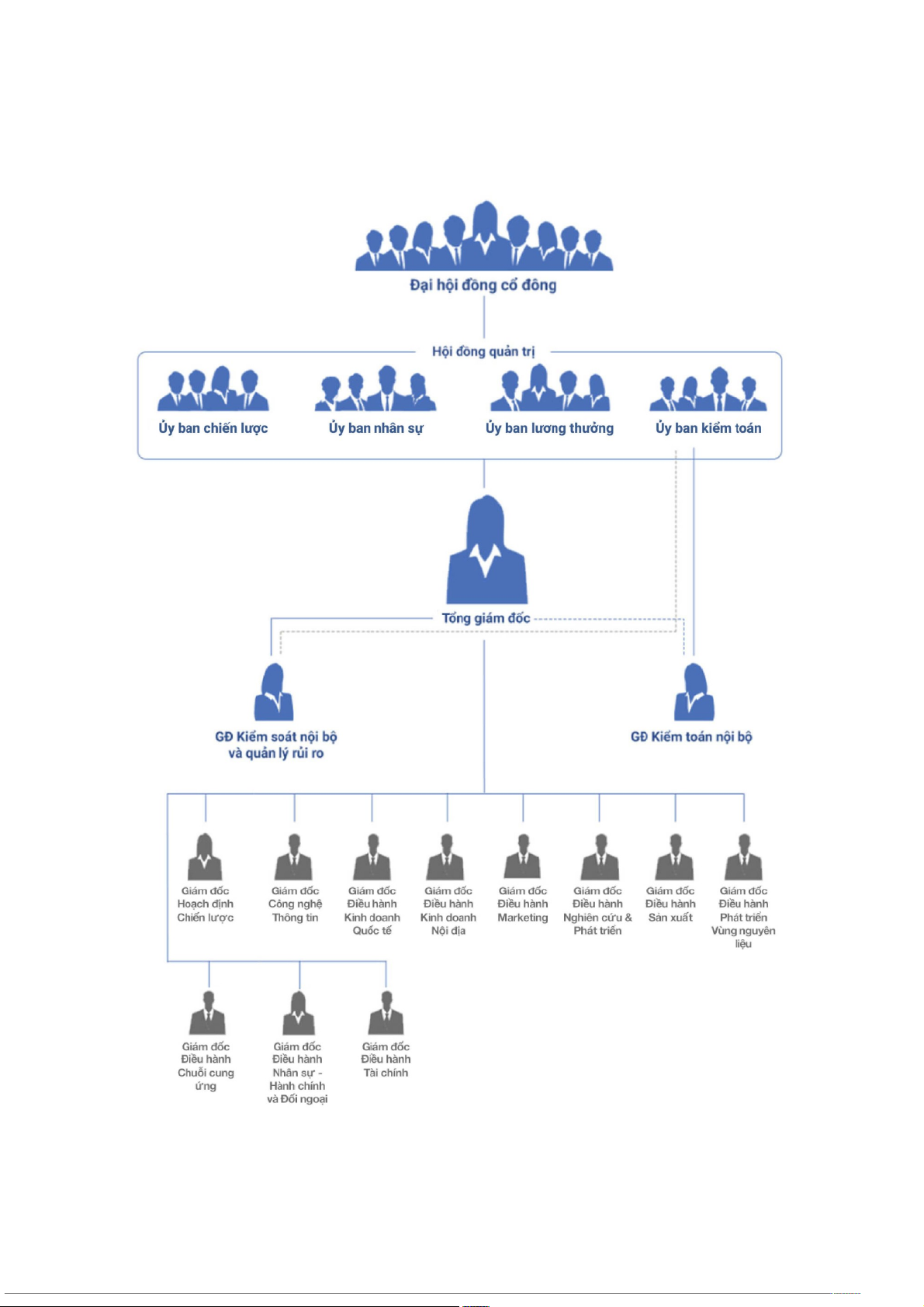
Slide 4: Organization structure Slide 5: Management issue:
1.Management style and work motivation (Theory X and Theory Y) ●Theory Y:
A. Current status: Vinamilk applies Theory Y, encouraging autonomy, creativity
and intrinsic motivation of employees.
B. Potential problem: Some employees may not be able to take advantage of this
autonomy, leading to gaps in motivation and performance across departments. ●Theory X:
A. Current status: In production and quality control stages, Vinamilk can apply
Theory X with strict supervision and strict inspection procedures.
B. Potential problem: Theory X management can create stress and pressure for
employees, affecting morale and performance.
Slide 6: 2.Training and developing ( Theory Y)
A. Current Status: Vinamilk invests in employee training and development programs.
B. Potential problem: Training programs may be uneven or not tailored enough
to the specific needs of some departments, leading to some employees not
taking advantage of development opportunities.
Slide 7: Welfare and incentives (Theory Y)
A. Current status: The company has attractive welfare policies and incentive programs.
B. Potential problem: Some employees may feel that benefits and incentives
policies are not fair enough or do not reflect the true level of their contributions.
Slide 8: Control and discipline (Theory X)
A. Current status: Vinamilk applies strict monitoring measures in production and quality control processes.
B. Potential problem: Theory X management in some stages can create pressure
and stress for employees, affecting morale and work performance. Slide 9: Solution
Improve management style and work motivation Explain:
1. Assess the need for autonomy: Conduct a survey and evaluate the need for
autonomy of employees in each department to adjust the appropriate level of authorization.
2. Enhance support support: Create support and mentoring programs for
employees to help them develop automation and problem-solving skills.
3. Leadership development: Training middle and senior managers on flexible
leadership style, knowing how to effectively encourage and support employees.
Slide 10: Enhance training and development programs Solution:
1. Training needs analysis: Perform periodic training needs analysis to identify
specific skills and knowledge needed by departments.
2. Individually oriented training: Build flexible training programs that can be
customized to employees' individual needs and goals.
3. Mentor Programs: Create mentor programs where experienced employees
can guide and support new employees or those who need to develop their skills.
Slide 11: Improved wellbeing and motivation Solution:
1. Fair evaluation: Build a fair and transparent evaluation system to ensure
welfare and reward policies reflect the true level of employee contribution.
2. Flexible benefits: Offer flexible benefits packages, allowing employees to
choose benefits that suit their individual needs.
3. Feedback and improvements: Collect regular feedback from employees on
benefits and incentives policies, then adjust and improve based on this feedback.
Tài liệu liên quan:
-
CHAP 1: Introduction to Management Concepts and Functions môn Principles of Management | Trường Đại học Quốc tế, Đại học Quốc gia Thành phố Hồ Chí Minh
19 10 -
Guidelines for group’s assignments: Analysing management issues of a FDI company based inVietnam môn Principles of Management | Trường Đại học Quốc tế, Đại học Quốc gia Thành phố Hồ Chí Minh
17 9 -
Financial Planning to Achieve 300m VND Goal in 3 Years môn Principles of Management | Trường Đại học Quốc tế, Đại học Quốc gia Thành phố Hồ Chí Minh
17 9 -
A Case Study in Fast Fashion Success môn Principles of Management | Trường Đại học Quốc tế, Đại học Quốc gia Thành phố Hồ Chí Minh
15 8 -
Chap 16 Hierarchy of Needs Theory and Applications môn Principles of Management | Trường Đại học Quốc tế, Đại học Quốc gia Thành phố Hồ Chí Minh
17 9