Bài giảng Chapter 5: Designing marketing programs to build brand equity môn Quản lý chiến lược | Trường Đại học Bách khoa - Đại học Quốc gia Thành phố Hồ Chí Minh
Bài giảng Chapter 5: Designing marketing programs to build brand equity môn Quản lý chiến lược | Trường Đại học Bách khoa - Đại học Quốc gia Thành phố Hồ Chí Minh. Tài liệu được sưu tầm giúp bạn tham khảo, ôn tập và đạt kết quả cao. Mời bạn đọc đón xem.
Môn: Quản lý chiến lược 3 tài liệu
Trường: Trường Đại học Bách khoa - Đại học Quốc gia Thành phố Hồ Chí Minh 721 tài liệu
Tác giả:

















Preview text:
CHAPTER 5: DESIGNING MARKETING PROGRAMS TO BUILD BRAND EQUITY
Copyright © 2013 Pearson Education Learning Objectives
Identify some of the new perspectives and developments in marketing
Describe how marketers enhance product experience
Explain the rationale for value pricing
List some of the direct and indirect channel options
Summarize the reasons for the growth in private labels
Copyright © 2013 Pearson Education New Perspectives on Marketing
As firms are dealing with enormous shifts in
their external marketing environments:
The marketing strategies and tactics have changed dramatically
Copyright © 2013 Pearson Education New Approaches Embraced by Marketers
Rapid technological developments
Greater customer empowerment
Fragmentation of traditional media
Growth of interactive and mobile marketing options
Channel transformation and disintermediation
Increased competition and industry convergence
Globalization and growth of developing markets
Heightened environmental, community, and social concerns Severe economic recession
Copyright © 2013 Pearson Education
Figure 5.1 - The New Capabilities of the New Economy
Copyright © 2013 Pearson Education Integrating Marketing Personalizing Marketing Reconciling the Different Marketing Approaches
Copyright © 2013 Pearson Education Personalizing Marketing Experiential Marketing Relationship Marketing
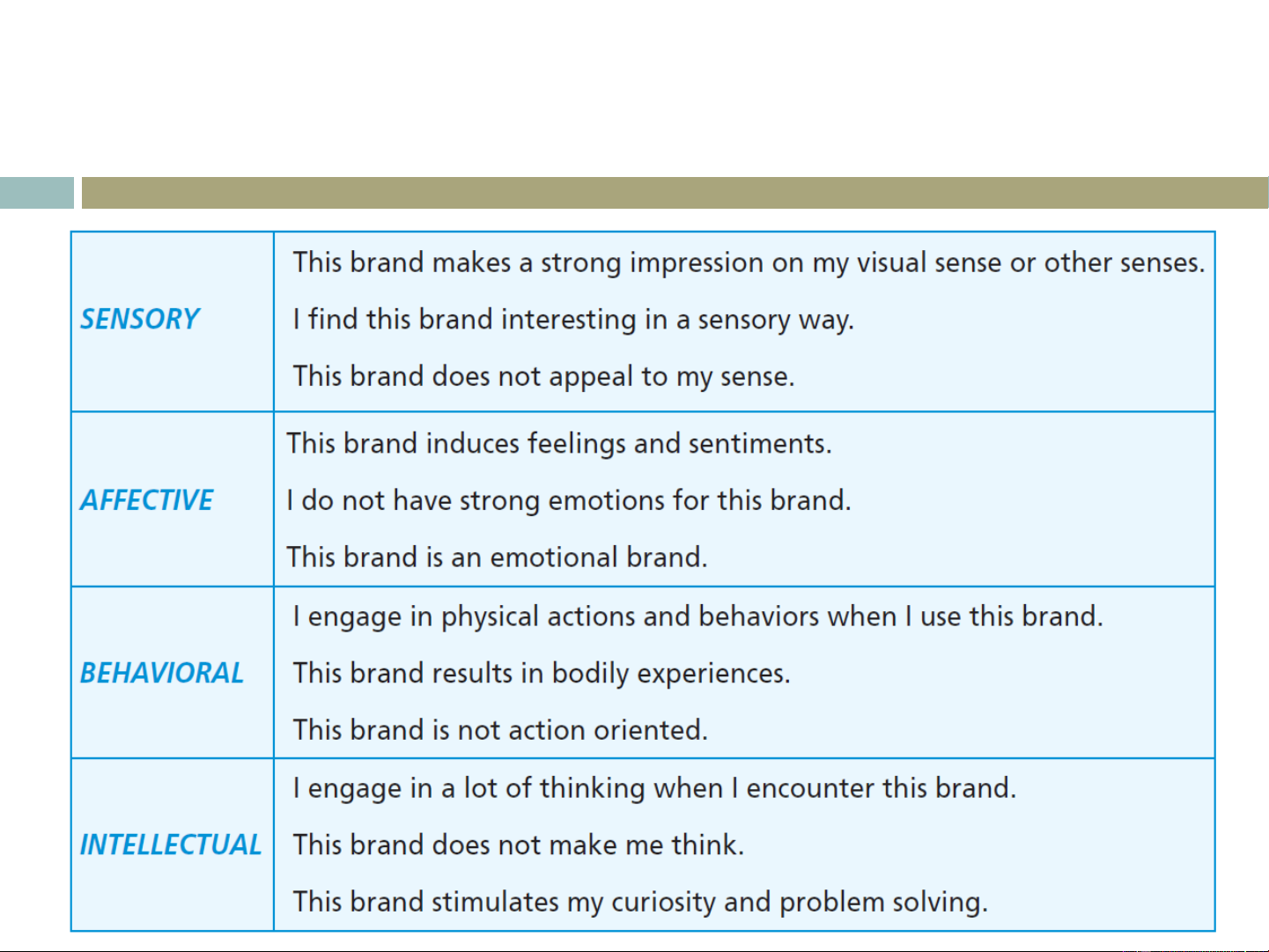
Copyright © 2013 Pearson Education Figure 5.2 - Brand Experience Scale
Copyright © 2013 Pearson Education Relationship Marketing Mass Customization One-to-One Marketing Permission Marketing
Copyright © 2013 Pearson Education
Reconciling the Different Marketing Approaches
Mass customization and one-to-one and permission marketing are:
Potentially effective means of getting consumers
more actively engaged with a brand
According to customer-based brand equity (CBBE) model:
Different approaches emphasize different aspects of brand equity
Copyright © 2013 Pearson Education
Reconciling the Different Marketing Approaches
The four approaches can build stronger consumer–brand bonds
Firms must still devise product, pricing, and
distribution strategies as part of their marketing programs
Copyright © 2013 Pearson Education To Sum Up..
Implication of the new approaches:
The traditional “marketing mix” concept and the
notion of the “4 Ps” of marketing may not fully
describe modern marketing programs
Firms must still devise product, pricing, and
distribution strategies as part of their marketing programs
Copyright © 2013 Pearson Education Product Strategy Perceived Quality Aftermarketing
Copyright © 2013 Pearson Education Aftermarketing User Manuals Customer Service Programs Loyalty Programs
Copyright © 2013 Pearson Education To Sum Up..
The product is at the heart of brand equity
Product strategy entails choosing:
Tangible and intangible benefits the product will embody
Marketing activities that consumers desire and
the marketing program can deliver
Copyright © 2013 Pearson Education Pricing Strategy Consumer Price Perceptions Setting Prices to Build Brand Equity
Copyright © 2013 Pearson Education Setting Prices to Build Brand Equity Value Pricing Price Segmentatio n Everyday Low Pricing
Copyright © 2013 Pearson Education
Figure 5.3 - Price Tiers in the Ice Cream Market
Copyright © 2013 Pearson Education Channel Strategy Channel Design Indirect Channels Direct Channels Online Strategies
Copyright © 2013 Pearson Education
Figure 5.5 - Services Provided by Channel Members
Copyright © 2013 Pearson Education
Tài liệu liên quan:
-

Bài giảng Chapter 4: Choosing brand elements to build brand equity môn Quản lý chiến lược | Trường Đại học Bách khoa - Đại học Quốc gia Thành phố Hồ Chí Minh
21 11 -
Bài tập cá nhân : Phân tích chiến lược của Samsung trong lĩnh vực sản xuất Smartphone | Bài tập cá nhân môn Quản lý chiến lược | Đại học Bách khoa Thành phố Hồ Chí Minh
244 122