Chapter 6: Consumers Producers eficiency market môn Microeconomics | Trường Đại học Quốc tế, Đại học Quốc gia Thành phố Hồ Chí Minh
Chapter 6: Consumers Producers eficiency market môn Microeconomics | Trường Đại học Quốc tế, Đại học Quốc gia Thành phố Hồ Chí Minh. Tài liệu giúp bạn tham khảo, ôn tập và đạt kết quả cao. Mời đọc đón xem!
Môn: Microeconomics 6 tài liệu
Trường: Trường Đại học Quốc tế, Đại học Quốc gia Thành phố Hồ Chí Minh 1.1 K tài liệu
Tác giả:






Preview text:
MICROECONOMICS Chapter 6:
Consumers Producers eficiency market Lecture: Dr.Majo Geogre ABOUT ME Dr. Majo George Email: Majog@uef.edu.vn Mobile/Zalo: +84 912 09 4454 ABOUT ME My experiences My qualifications
PhD in Business Administration
2025 - present: Dean Faculty of Economics
Manonmaniam Sundaranar University, 2017
University of Economics and Finance (UEF), Ho Chi Minh City MBA
2010 - 2025: Senior Lecturer, Coordinator Bihar University, 1995 RMIT University Vietnam,
Department of Business Innovation BSc. Mathematics
Mahatma Gandhi University, 1993
Extensive experience in executive education for
multinational corporations
Certificate in Tertiary Teaching and Learning
Heineken, Big C, De Heus and government agencies. RMIT Australia, 2012 LEARNING OUTCOMES
Understand the concept: Consumer surplus / producer surplus
Understand the supply curve, demand curve
Know when the market is effective
Understand the meaning of a given policy CONSUMER SURPLUS (CS) Definition
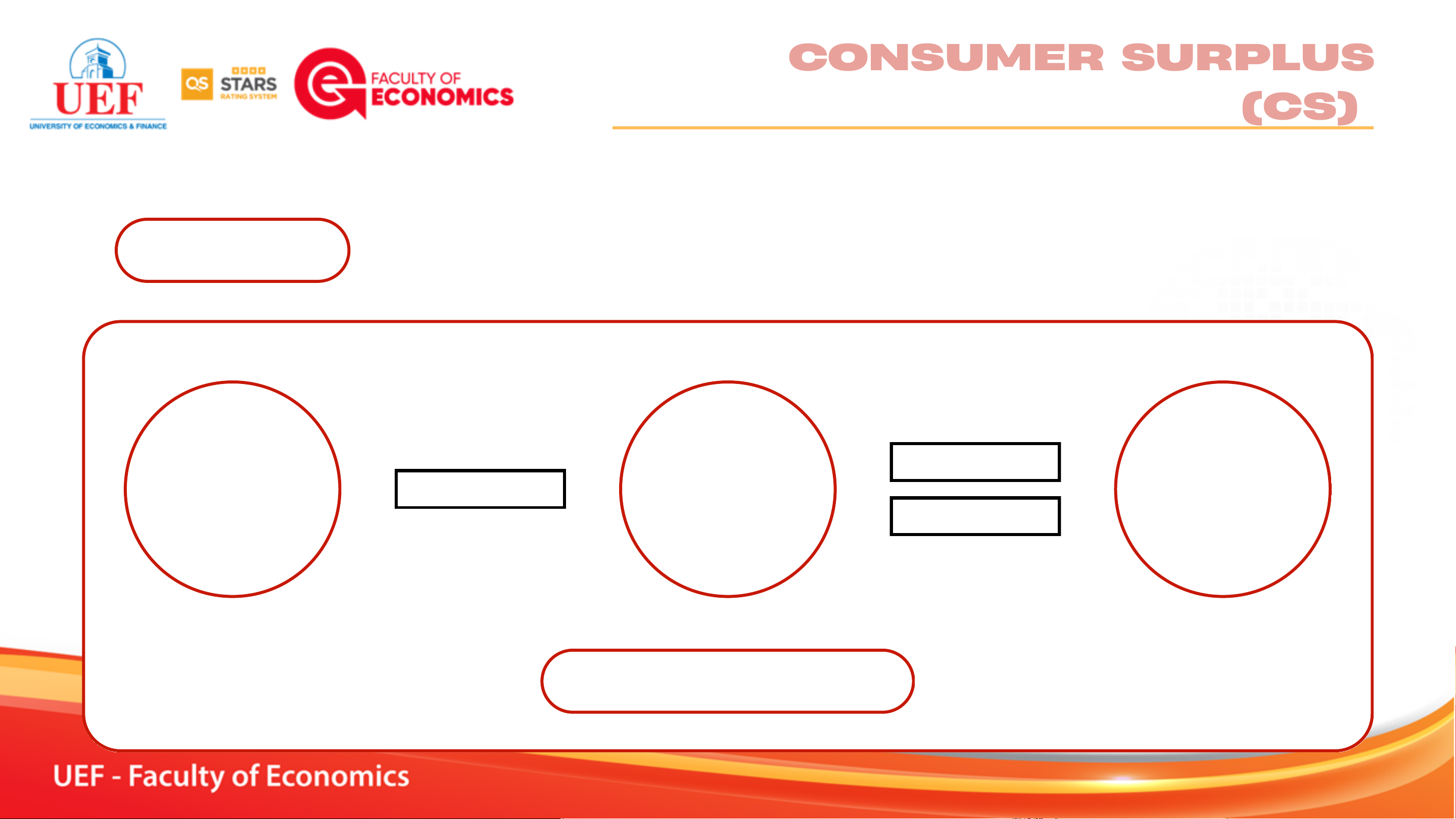
A buyer’s wil ingness to pay (value to buyers) minus the amount the buyer actual y pays. 7,000 VND/BOTTLE 5,000 VND/BOTTLE 2,000 VND/BOTTLE Wil ingness Amount paid CONSUMER to pay by buyers Surplus (WTP) (Pmarket) (CS) CS = WTP – Pmk CONSUMER SURPLUS (CS) Demonstrate
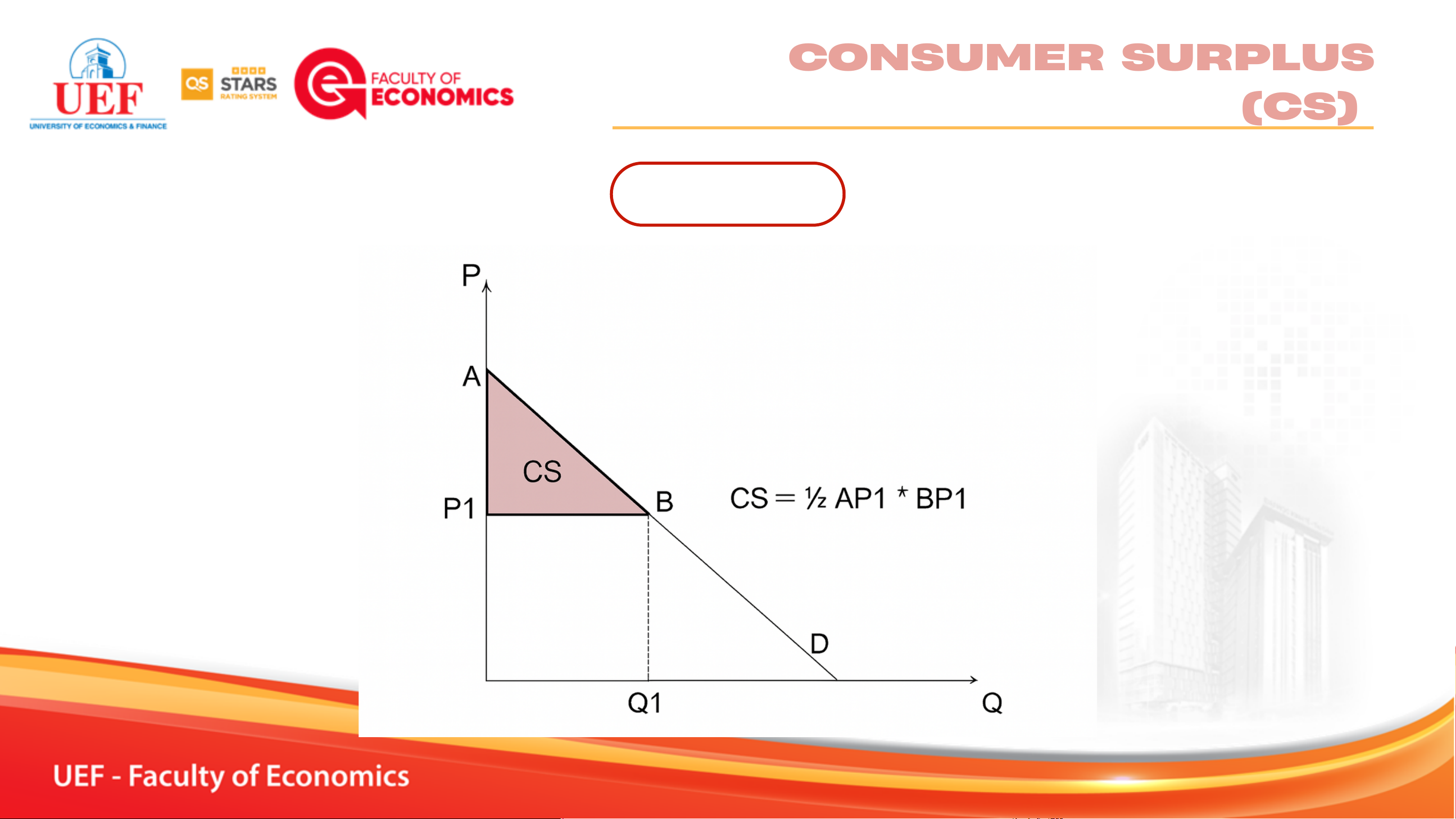
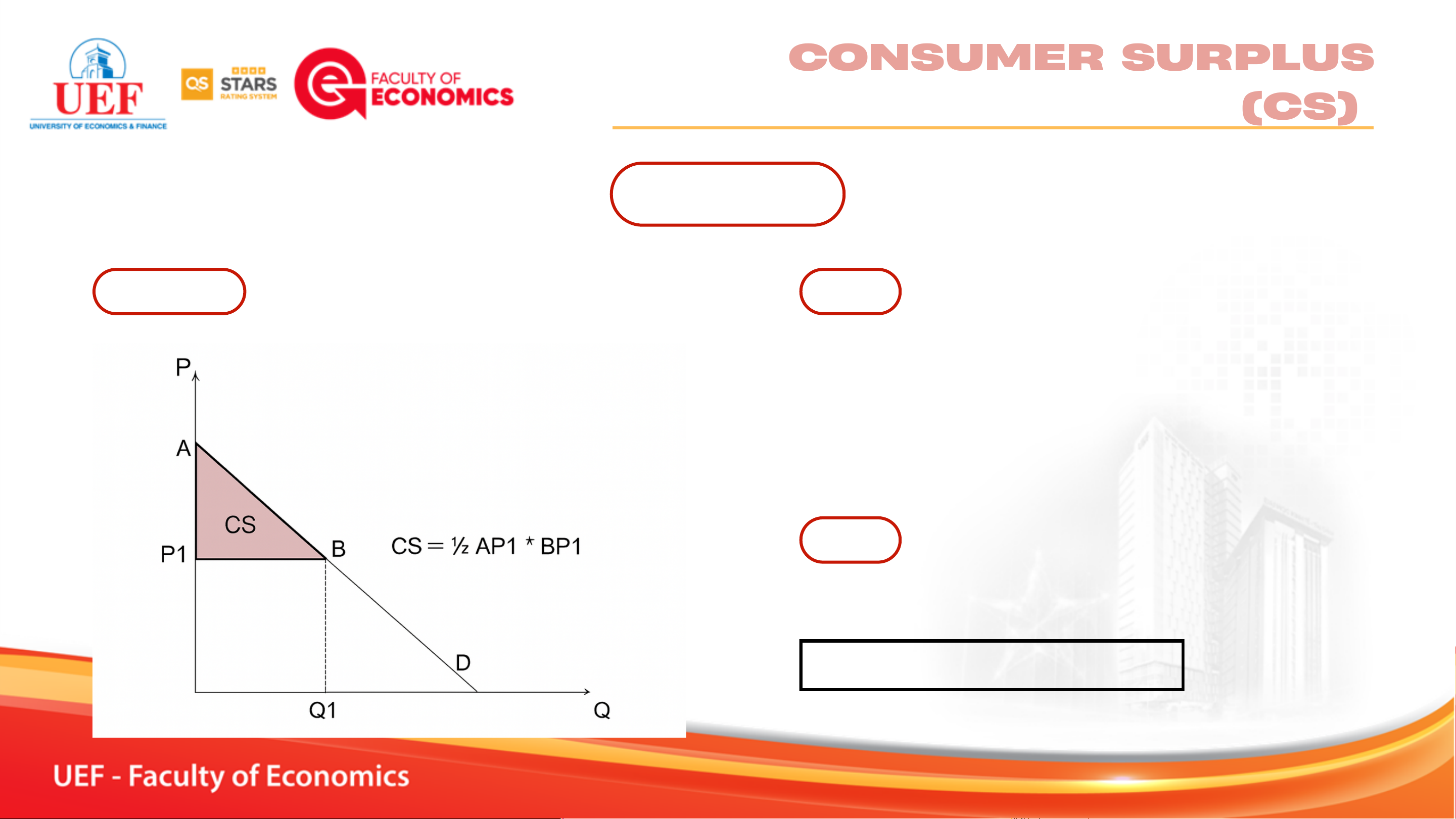
CS is the area under the D line and on the P1 line, going from 0 to Q1 CONSUMER SURPLUS (CS) Demonstrate (D): Qd =150 - 50P Application AP1 = OA – OP1 = OA – P1 Find CS at P1 = 1.2 ($/gal on)
OA is the price at which D curve cuts the OP axis at A and there = 0 <=> 150 – 50P =0 => P= OA = 150/50 = 3 => AP1 = 3 – 1.2= 1.8 BP1
Is the quantity demanded at P1 = 1.2 P1 = 1.2 => Q1= 90 CS = ½ *1.8 * 89 = 81 PRODUCER SURPLUS (PS) Definition
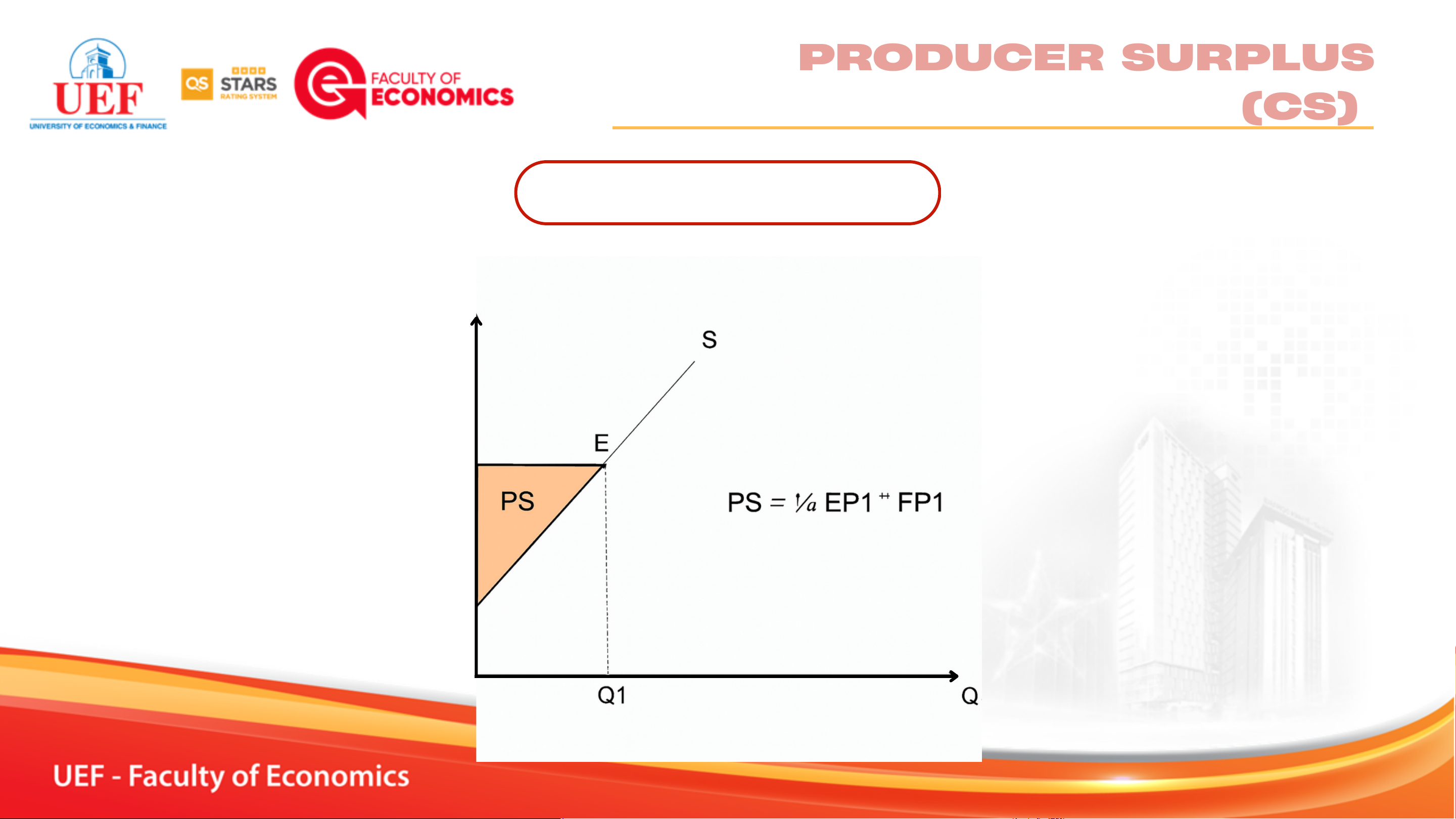
The amount a sel er is paid for a good minus the sel er’s cost (Wil ingness To Sel ) 5,000 VND/BOTTLE 3,000 VND/BOTTLE 2,000 VND/BOTTLE Amount PRODUCER received by Cost to sel ers SURPLUS sel ers (Pmk) (WTS) (PS) PS = Pmk - WTS PRODUCER SURPLUS (CS) Demonstrate on diagram
CS is the area on the S line and below the P1 line, going from 0 to Q1 EFFICIENCY OF MARKETS Total Surplus = TS
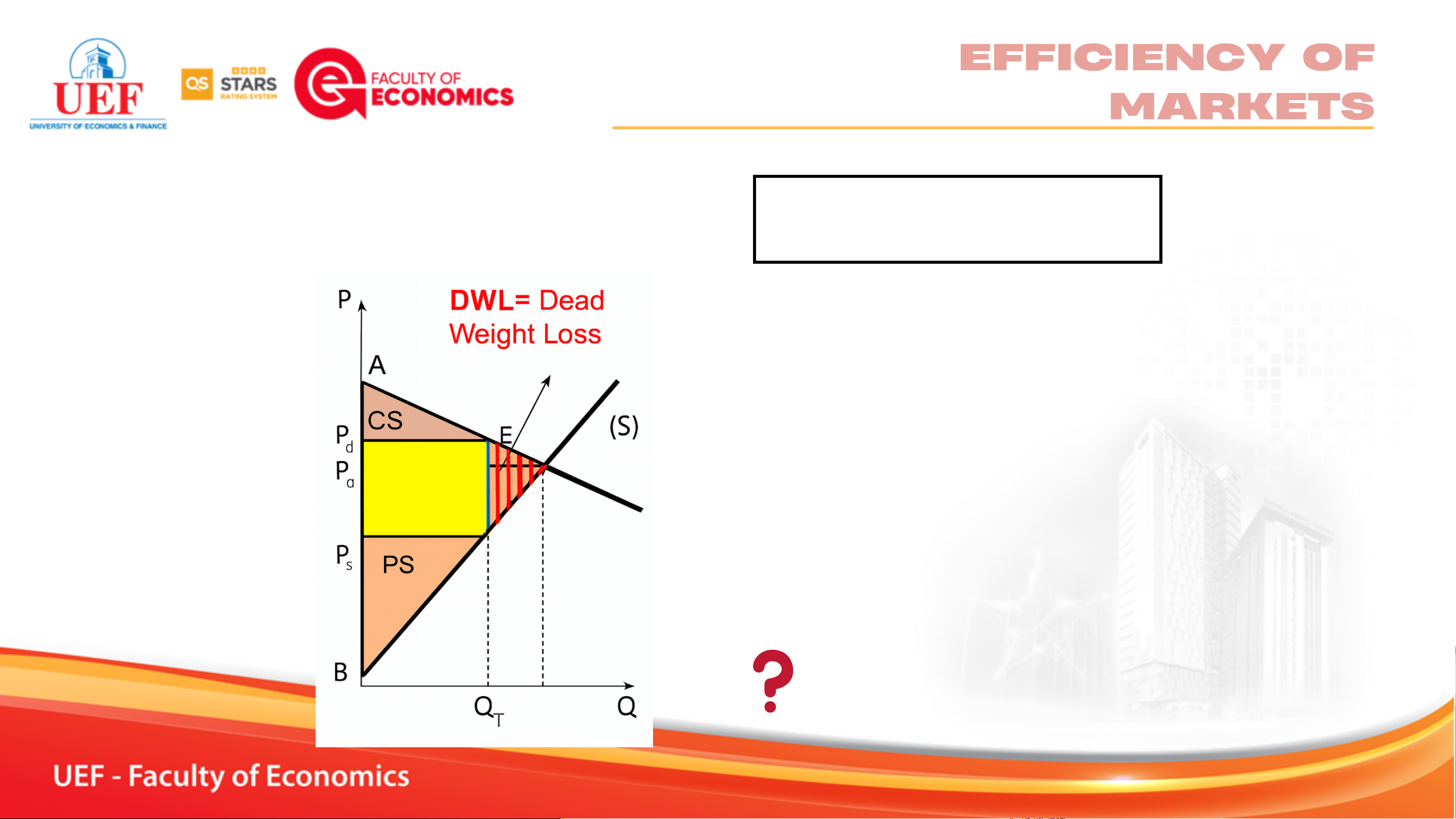
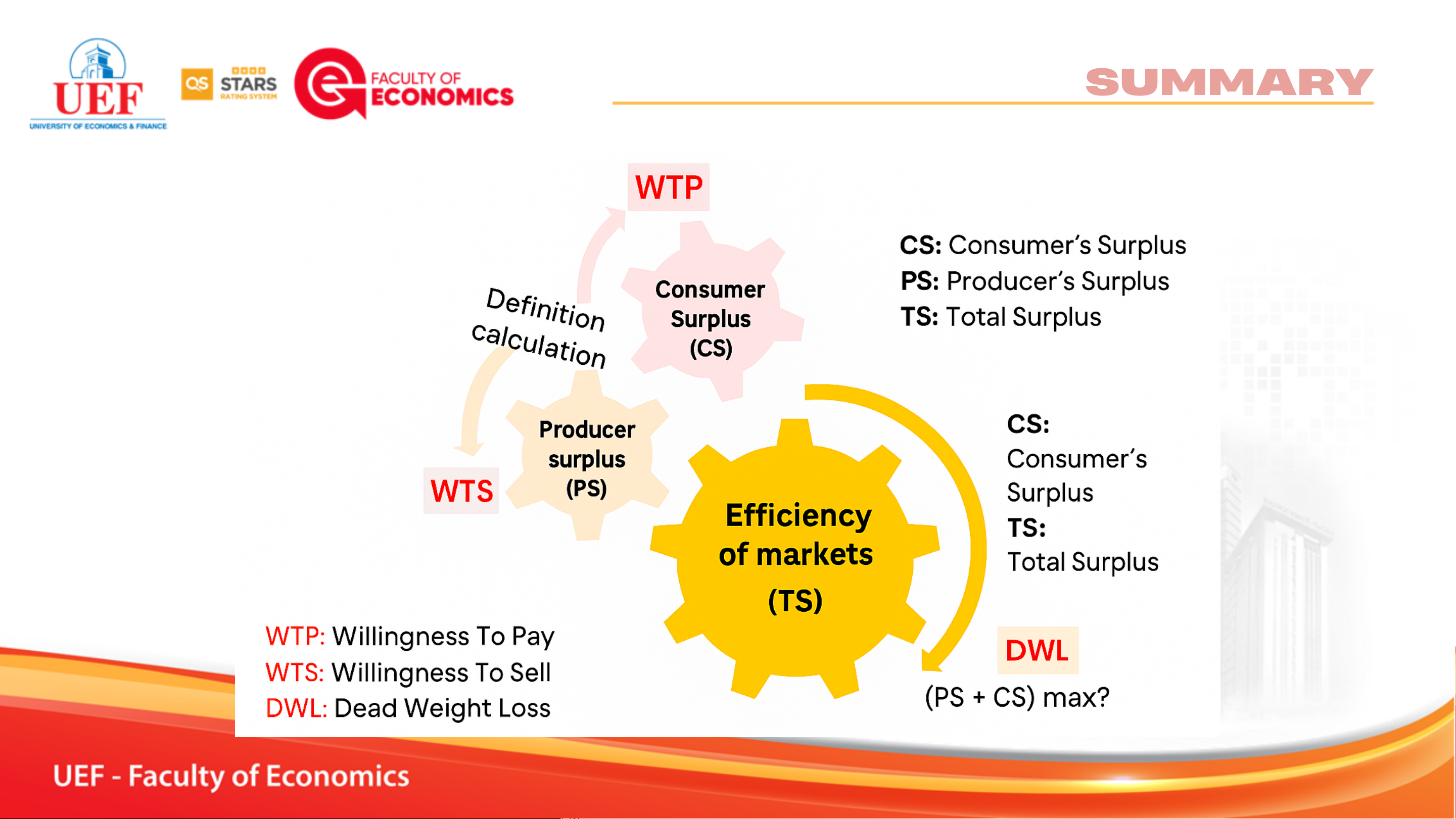
Efficiency of markets ⬄ TS max TS = CS + PS = WTP – WTS Before tax: CS = AEP0 PS = BEP0 After tax: CS = Tax revenue: PS = Who receive DWL? When is (PS + CS) max? EFFICIENCY OF MARKETS
3 significant characteristics of Efficient Market
Free markets produce the quantity of goods that maximizes the sum of consumer and producer surplus
Free markets al ocate the supply of goods to the buyers who value them most highly,
as measured by their wil ingness to pay
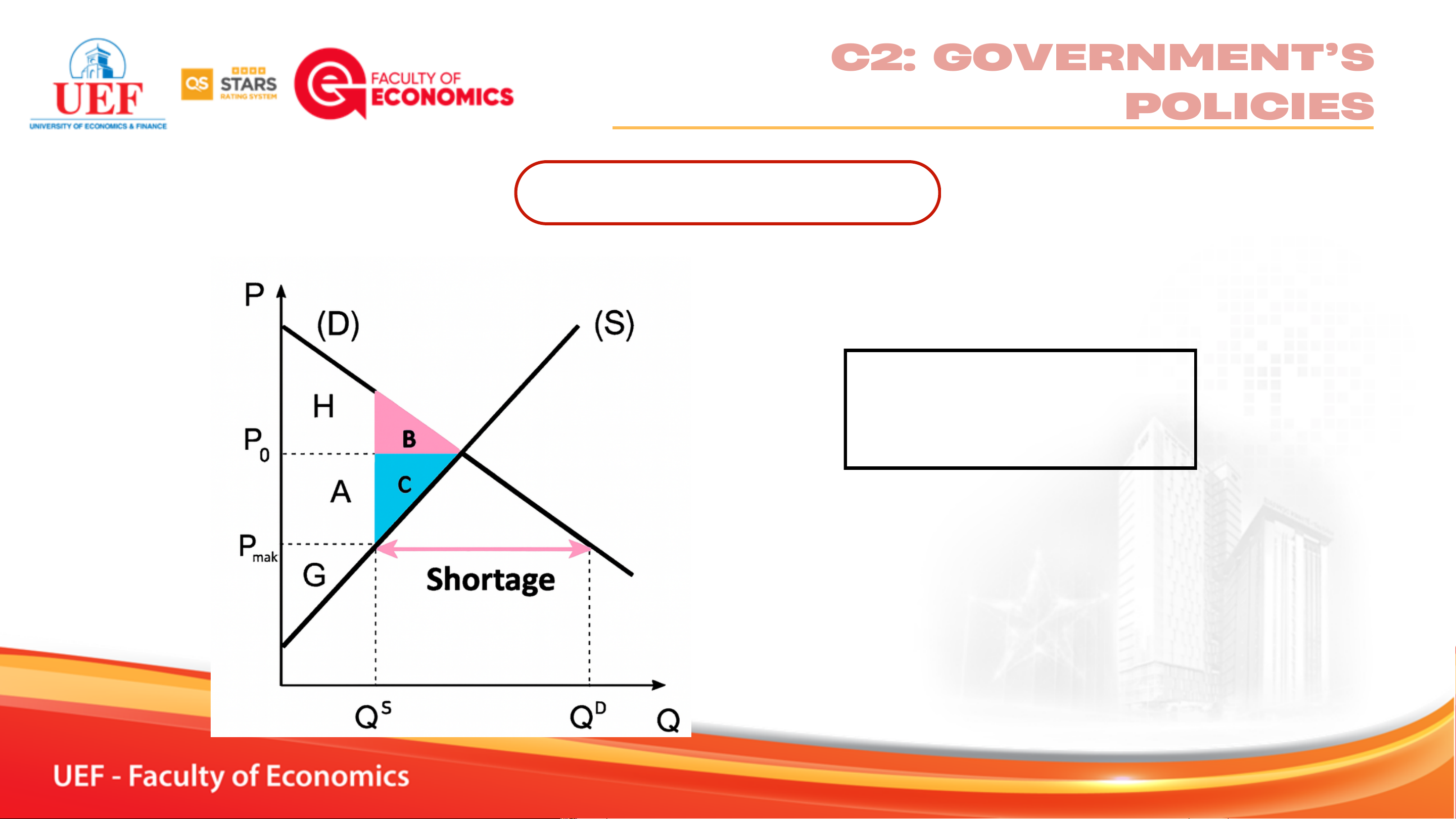
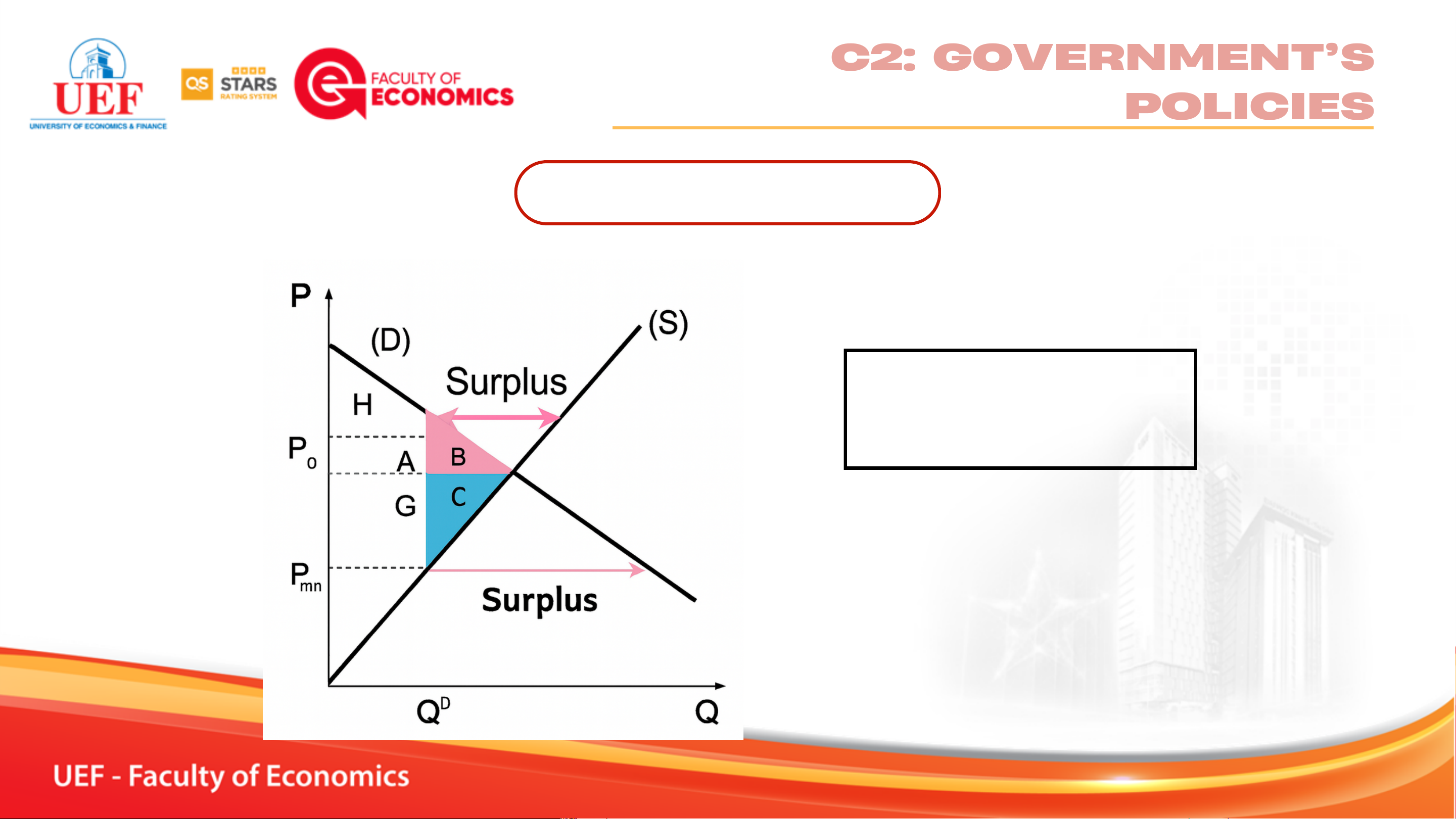
Free markets al ocate the demand for goods to the sel ers who can produce them at least cost C2: GOVERNMENT’S POLICIES Pmax = Price Ceiling ∆CS = A – B ∆PS = – A – C
DWL = ∆CS + ∆PS = – B – C C2: GOVERNMENT’S POLICIES Pmin = Price floor ∆CS = – A – B ∆PS = A – C
DWL = ∆CS + ∆PS = – B – C SUMMARY REFERENCES
Lê, NT 2015, Bộ giáo trình Kinh Tế Học Vi Mô, UEF.
N. Gregory Mankiw, Nguyên lý kinh tế học, NXB Thống Kê, 2003.
N. Gregory Mankiw, Principles of Microeconomics, Fifth Edit., South-Western Cengage Learning, 2009 Thank you! Lecture: Dr.Majo Geogre
Tài liệu liên quan:
-
Chapter 33 Solutions and Applications Analysis | Môn Microeconomics - Trường Đại học Quốc tế, Đại học Quốc gia Thành phố Hồ Chí Minh
95 48 -
Standard oil – Monopoly | Bài tiểu luận học phần Nhập môn Microeconomic | Trường Đại học Quốc tế, Đại học Quốc gia Thành phố Hồ Chí Minh
307 154 -
Monopoly in the United States & the United States policies | Bài tiểu luận học phần Nhập môn Microeconomics | Trường Đại học Quốc tế, Đại học Quốc gia Thành phố Hồ Chí Minh
280 140 -
Báo cáo bài tập học phần Nhập môn Microeconomics | Trường Đại học Quốc tế, Đại học Quốc gia Thành phố Hồ Chí Minh
299 150