The cell division and cell death môn Sinh học tế bào | Đại học Bách Khoa Hà Nội
The cell division and cell death môn Sinh học tế bào | Đại học Bách Khoa Hà Nội
Môn: Sinh học tế bào 19 tài liệu
Trường: Đại học Bách Khoa Hà Nội 5.8 K tài liệu
Tác giả:










Preview text:
The cell division and cell death Sinh học tế bào TS. Nguyễn Thụy Vy Sinh học tế bào – CNSH 1 Cell Theory
• Cells are the fundamental unit of life
• All organisms are made of cells
• Cells come from other cells Sinh học tế bào – CNSH 2
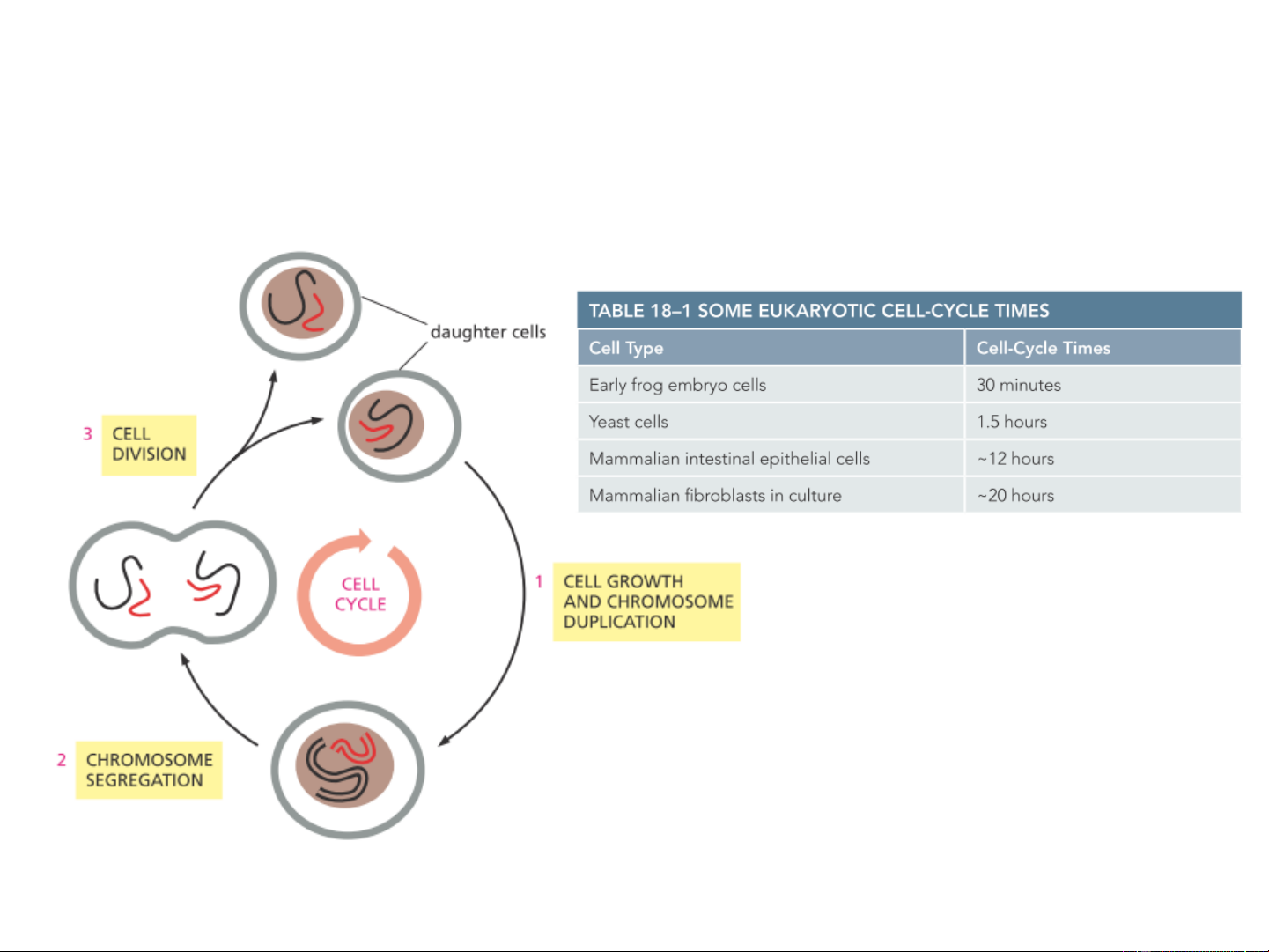
Overview of the cell cycle Sinh học tế bào – CNSH 3
The cell cycle: cells duplicate their contents and divide Sinh học tế bào – CNSH 4
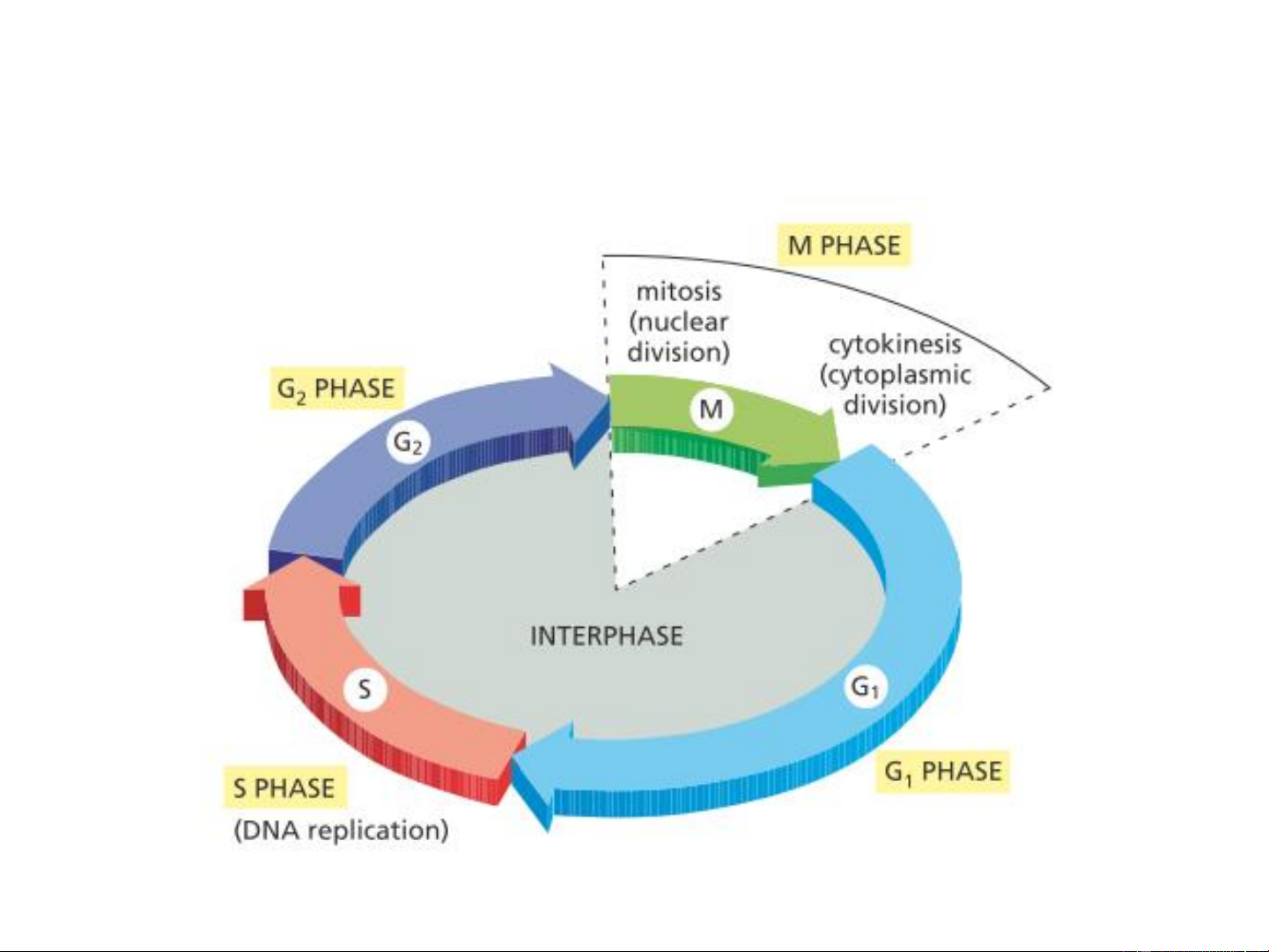
The cell cycle may be divided into 4 phases Sinh học tế bào – CNSH 5
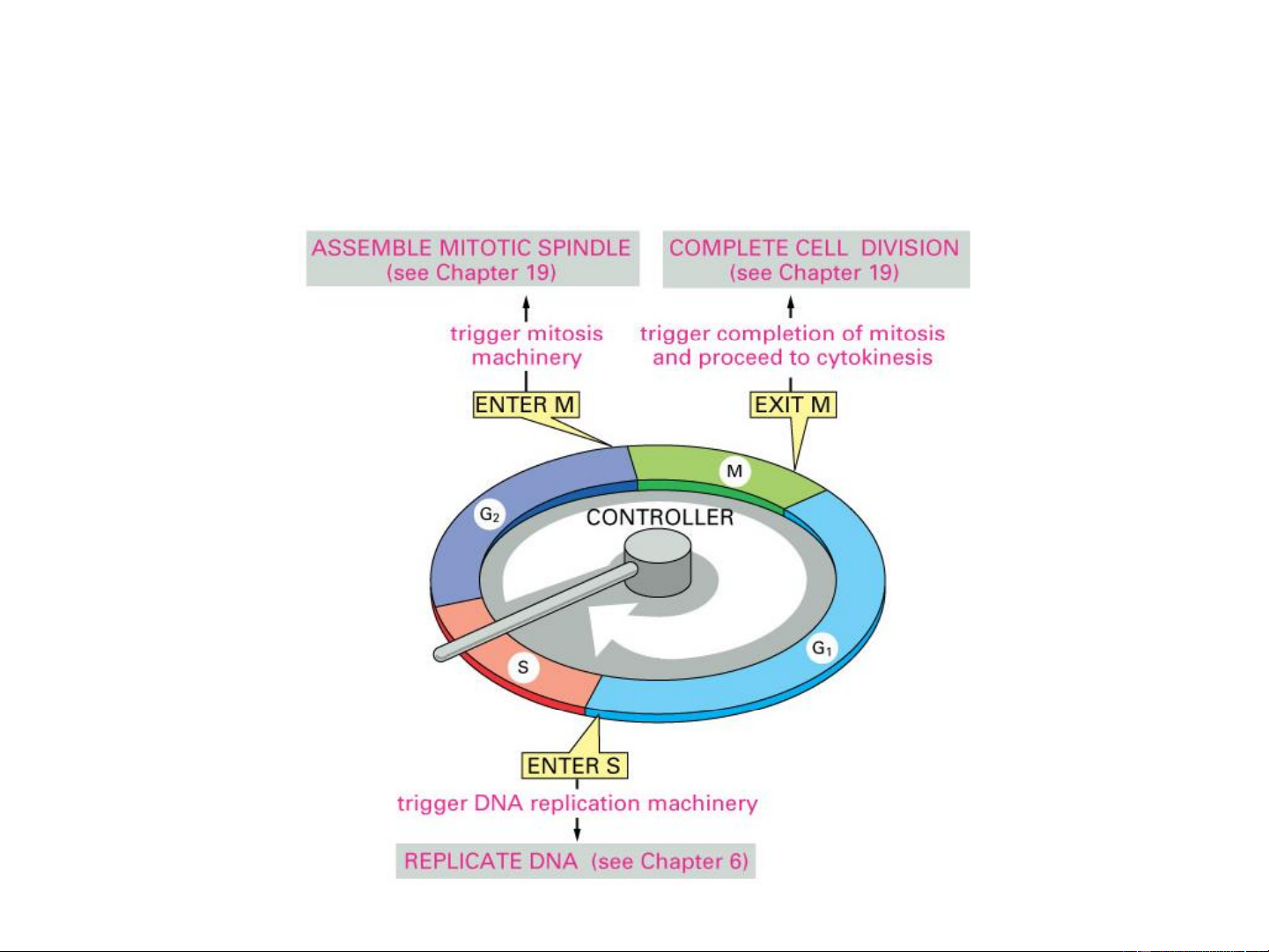
The cell cycle triggers essential
processes (DNA replication, mitosis) Sinh học tế bào – CNSH 6
Progression of the cell cycle is regulated
by feedback from intracellular events
• Cell-cycle control is similar in all eukaryotes • The proteins of the cell- cycle control system have been so well conserved over the course of evolution Research on yeast human Sinh học tế bào – CNSH 7
The cell-cycle control system Sinh học tế bào – CNSH 8
Cyclin-dependent protein kinases drive
progression through the cell cycle
• The protein kinases at the core of the cell-
cycle control system are present in
proliferating cells throughout the cell cycle.
• They are activated, however, only at
appropriate times in the cycle, after which they are quickly inactivated.
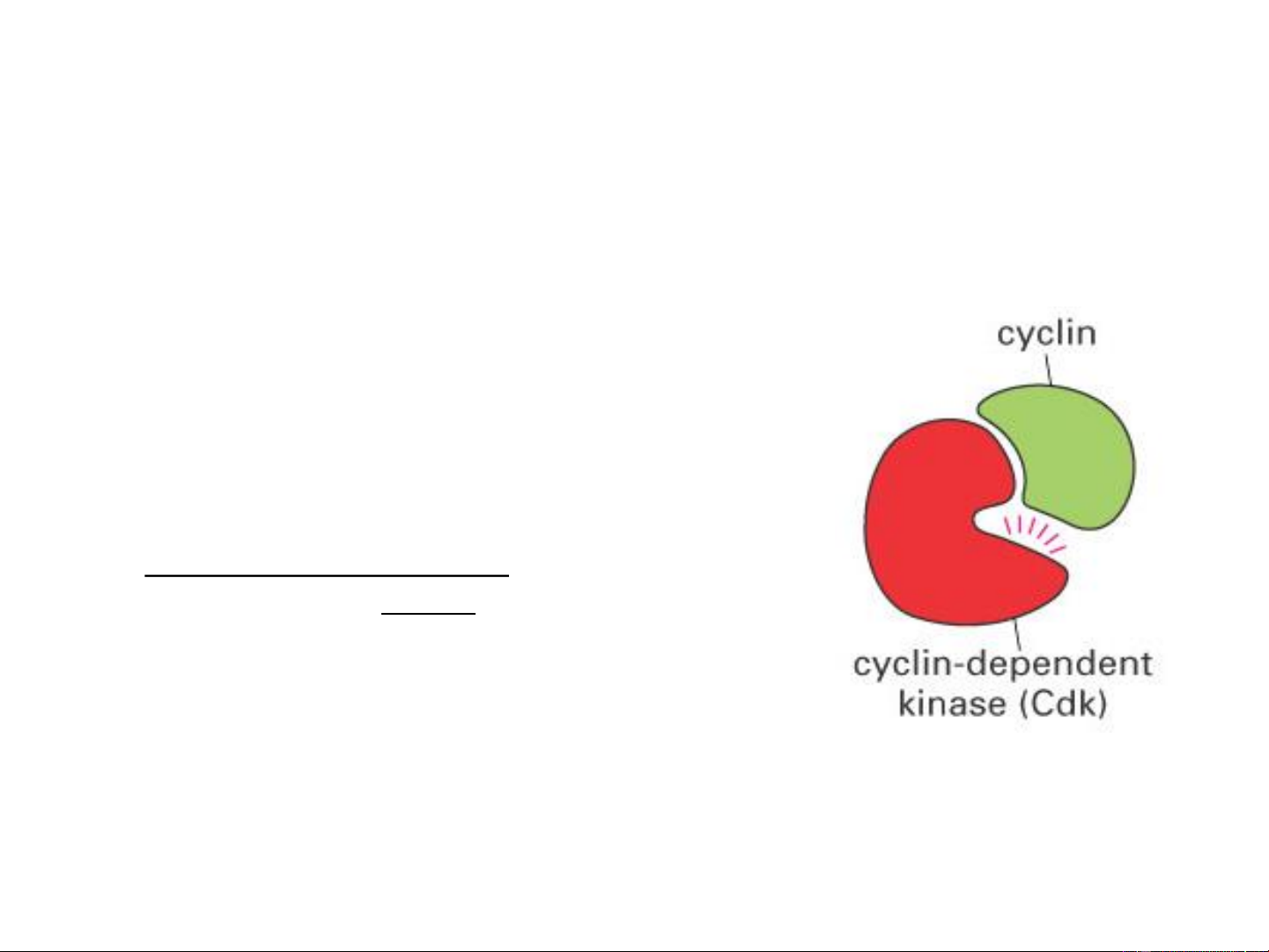
• Cyclin-dependent kinases (Cdks) are inactive unless bound to cyclins
• Active complex phosphorylates downstream targets
• Cyclin helps to direct Cdks to the target proteins Sinh học tế bào – CNSH 9
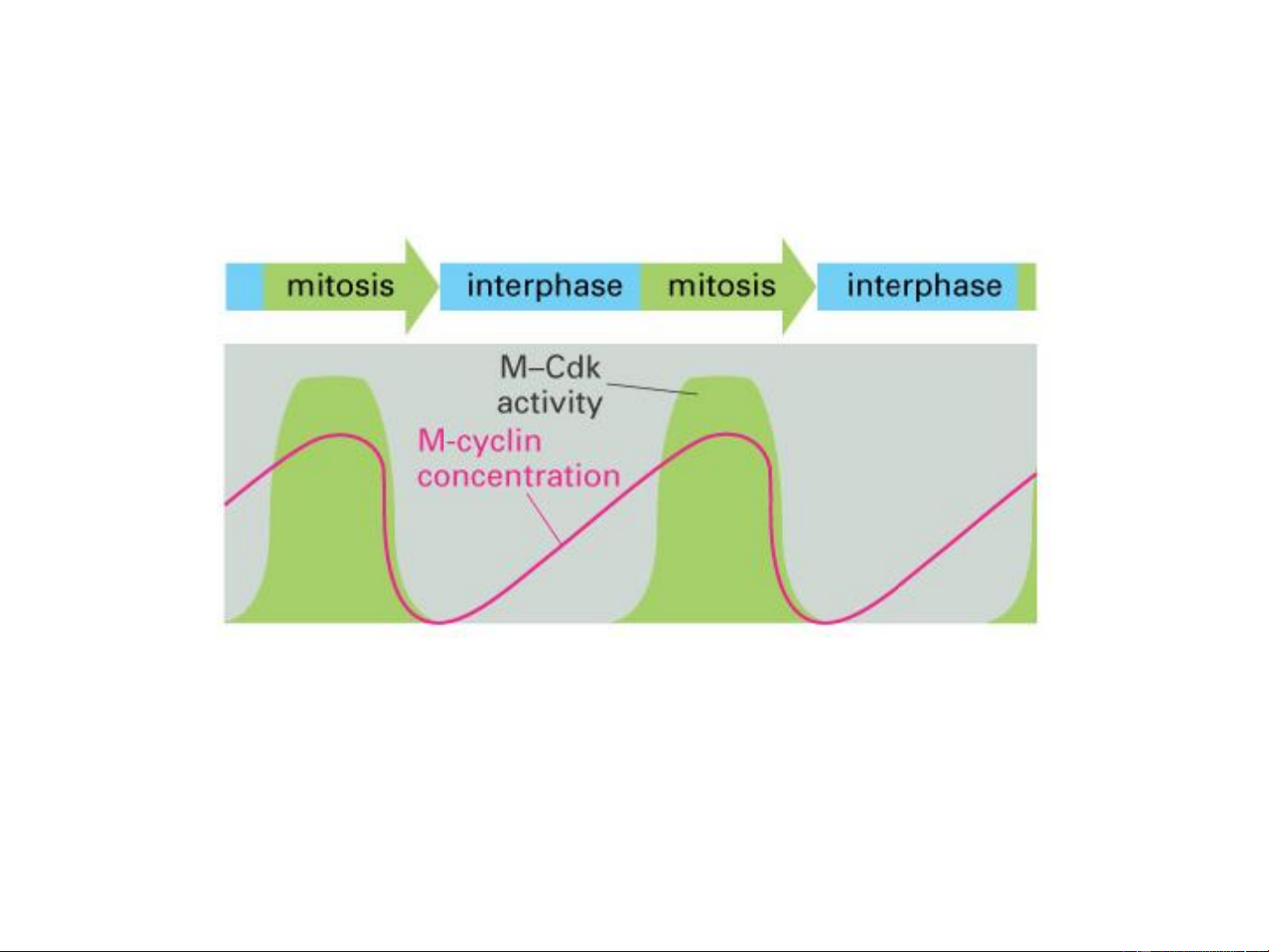
Cellular levels of (mitotic) M-cyclin
rises and falls during the cell cycle
• M-cyclin levels are low during interphase but gradually
increases to a peak level during mitosis
• M-cdk activity is, likewise, low in interphase but increases in mitosis Sinh học tế bào – CNSH 10
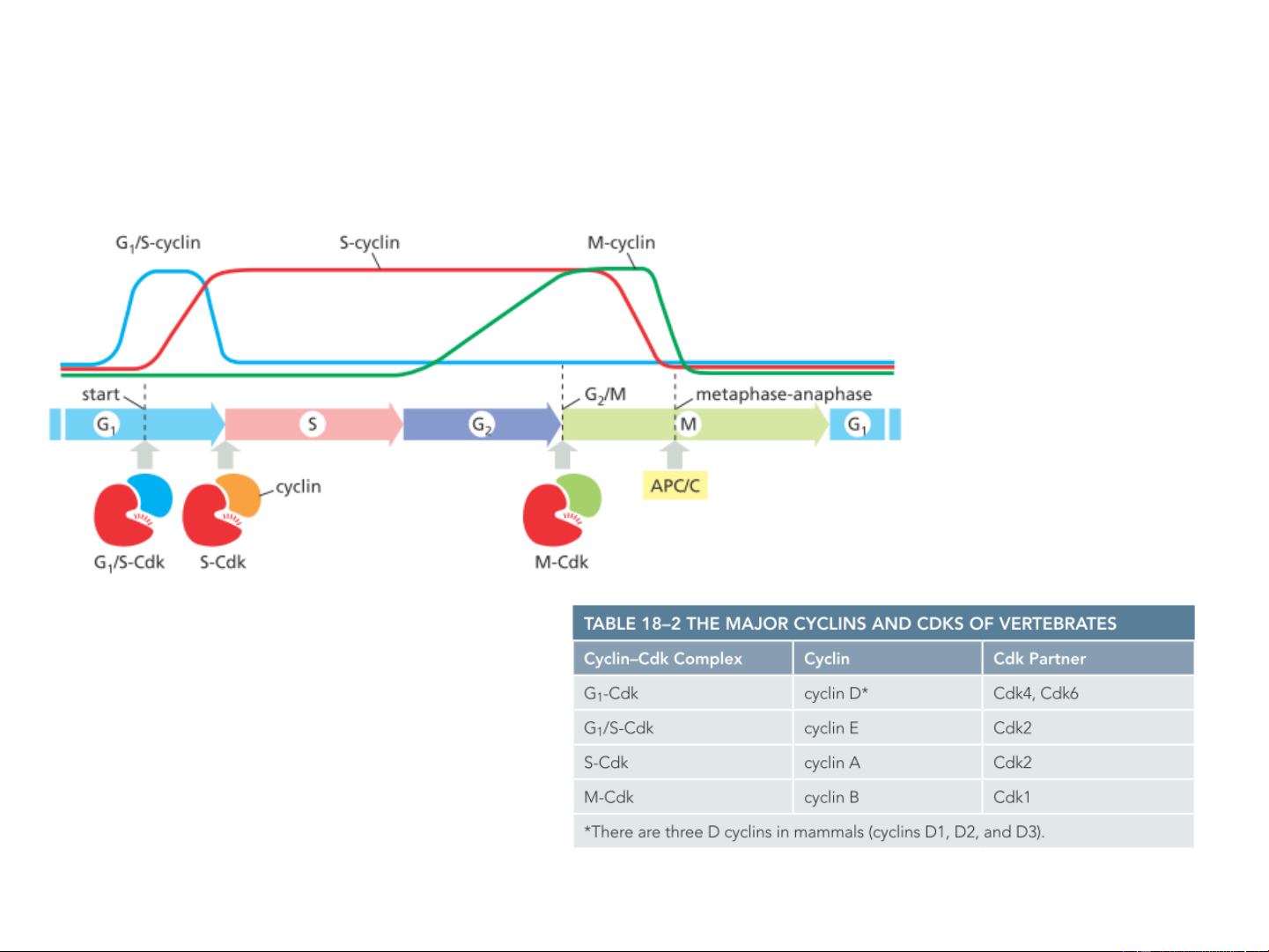
Different cyclin–cdk complexes trigger
different steps in the cell cycle Sinh học tế bào – CNSH 11
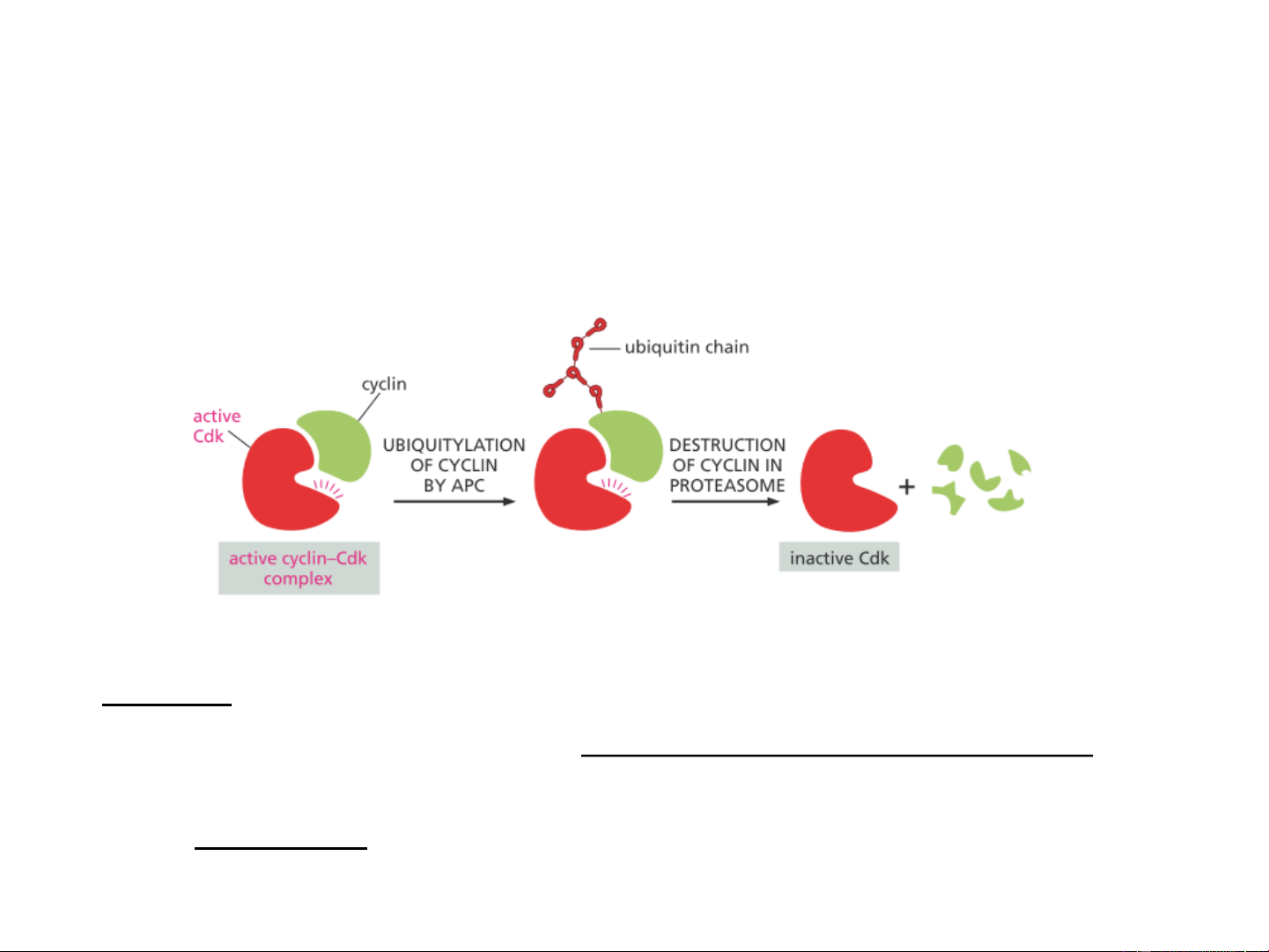
The abundance of cyclins (and the
activity of Cdks) is regulated by protein degradation
• M-cyclin becomes covalently modified by addition of multiple copies of
ubiquitin at the end of mitosis
• Ubiqutination is mediated by the anaphase promoting complex (APC)
• Ubiquitination marks cyclins for destruction by large proteolytic machines called proteasome Sinh học tế bào – CNSH 12 Cdks are also regulated by cycles of phosphorylation and dephosphorylation
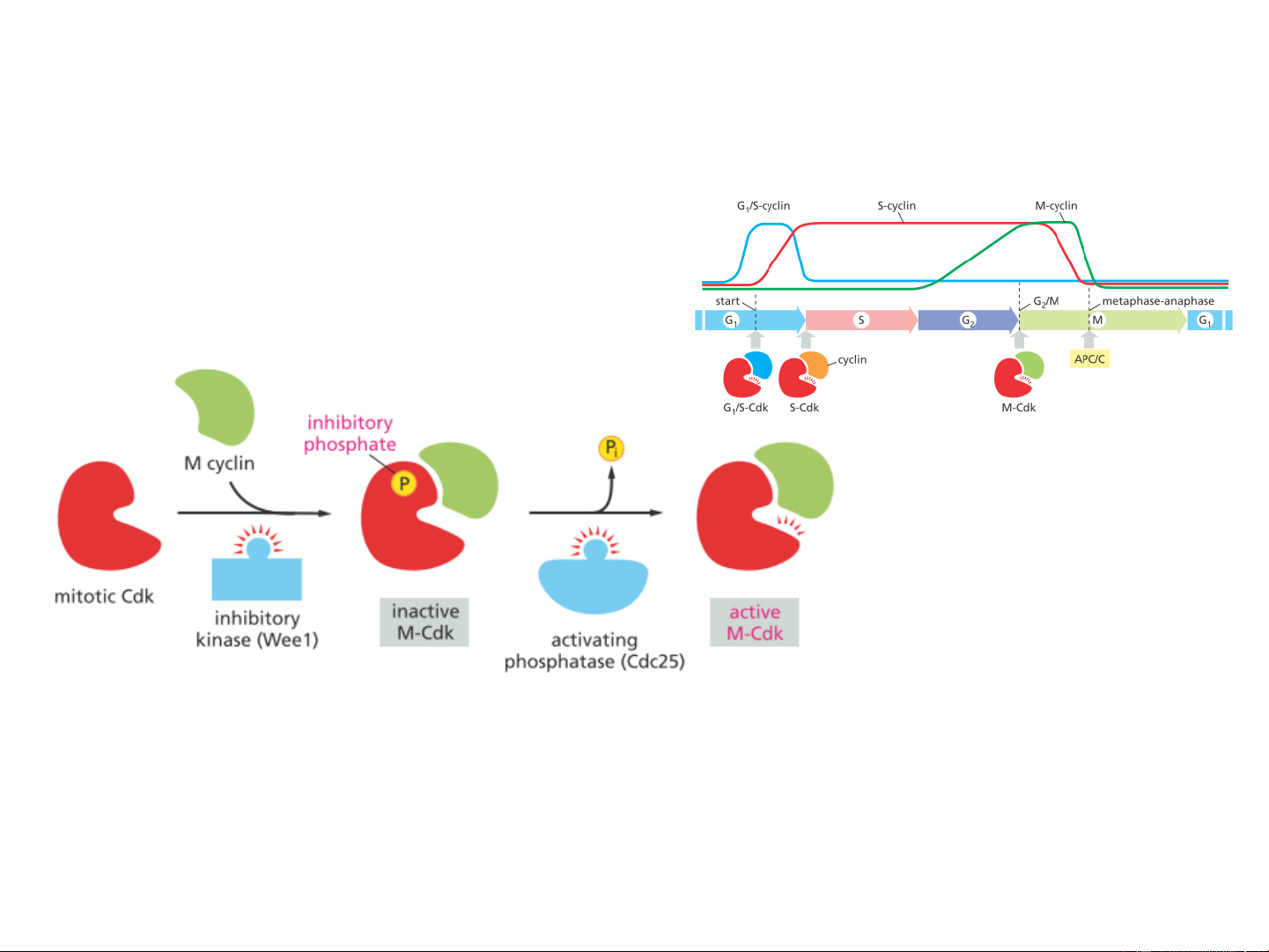
• As soon as the M cyclin–cdk complex is formed, it is phosphorylated at
two adjacent sites by an inhibitory protein kinase called Wee1.
• This modification keeps M-cdk in an inactive state until these phosphates
are removed by an activating protein phosphatase called cdc25. Sinh học tế bào – CNSH 13
Cdk activates itself indirectly via a positive feedback loop Sinh học tế bào – CNSH 14
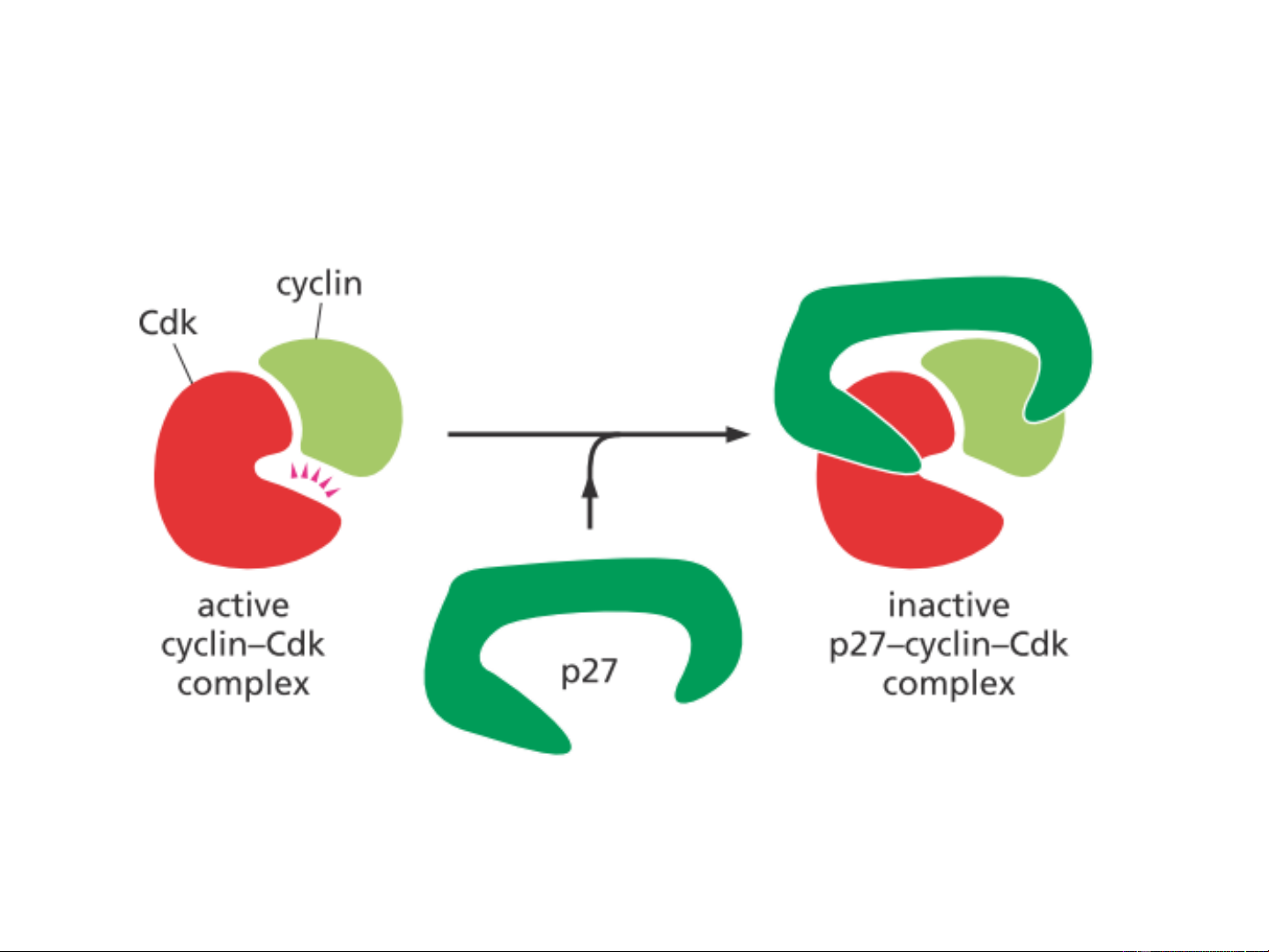
The inhibition of a cyclin–Cdk complex by a CKI Sinh học tế bào – CNSH 15
Checkpoints ensure the cell cycle proceeds without errors Sinh học tế bào – CNSH 16 Mitogens stimulate cell proliferation is by inhibiting the Rb protein Sinh học tế bào – CNSH 17 Checkpoint: DNA damage arrests the cell cycle in G1 Sinh học tế bào – CNSH 18
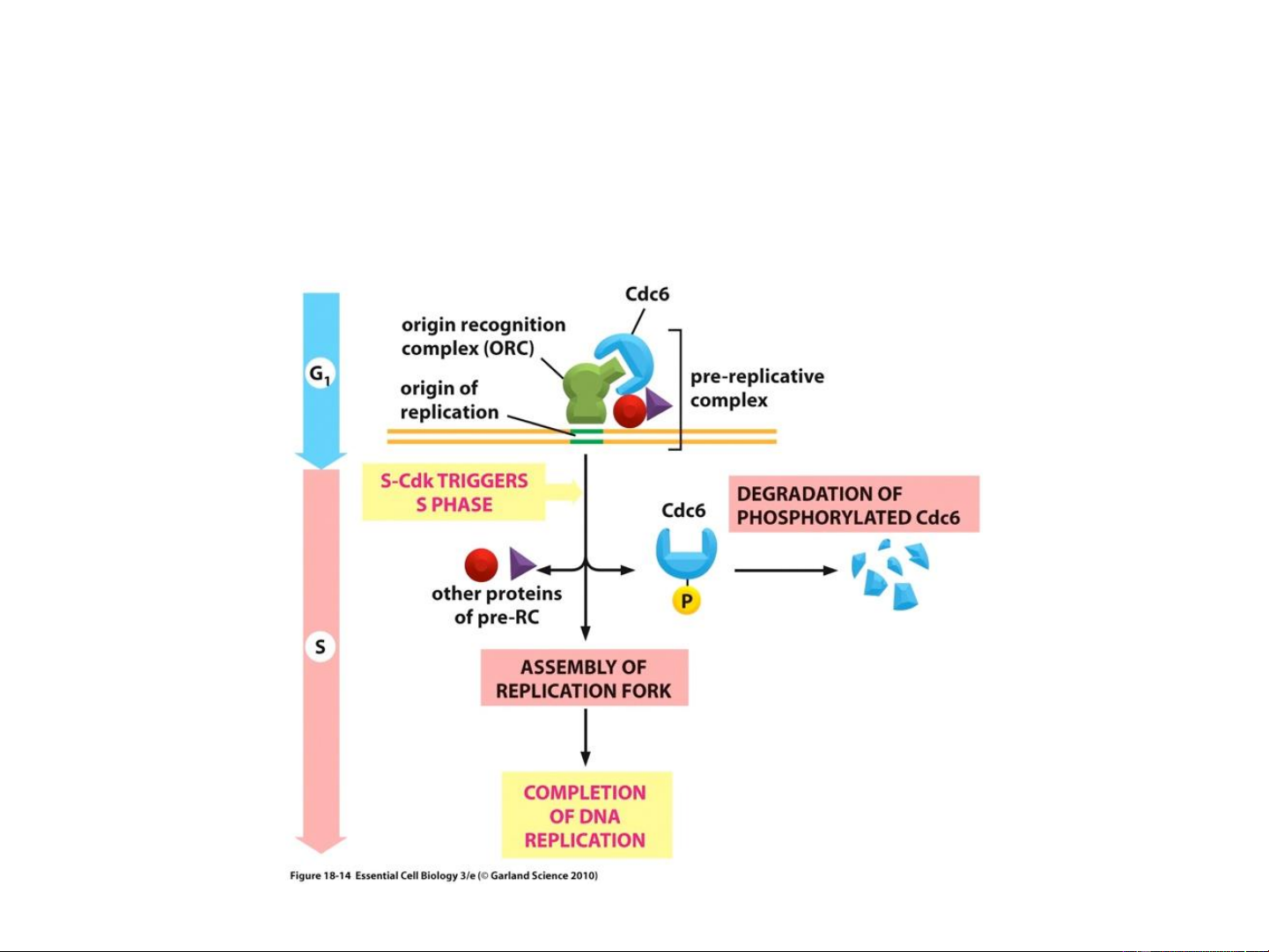
S-Cdk triggers DNA replication - its
destruction ensures this happens once per cell cycle Sinh học tế bào – CNSH 19 Checkpoint: spindle assembly
• Mitosis must not complete unless all the
chromosomes are attached to the mitotic spindle
• Mitotic checkpoint delays metaphase to
anaphase transition until all chromosomes are attached
• Prolonged activation of the checkpoint -->cell death
• Mechanism of many anti-cancer drugs Sinh học tế bào – CNSH 20
Tài liệu liên quan:
-
bài giảng giải tích 1 trường bác khoa
18 9 -
N Ahmad - Clinical and etiological profile of unprovoked thrombosis in young patients admitted at a
17 9 -

Bài giảng về Sự sinh sản của tế bào Eukaryote môn Sinh học tế bào | Đại học Bách Khoa Hà Nội
38 19 -
Bài giảng Tổng quan về tế bào môn Sinh học tế bào | Đại học Bách Khoa Hà Nội
42 21