Chap 2 - Understanding External and Internal Environments môn Principle of Management | Trường Đại học Quốc tế, Đại học Quốc gia Thành phố Hồ Chí Minh
External environment: everything outside an organization’s boundaries that might affect it. Tài liệu giúp bạn tham khảo, ôn tập và đạt kết quả cao. Mời đọc đón xem!
Môn: Principles of Management 314 tài liệu
Trường: Trường Đại học Quốc tế, Đại học Quốc gia Thành phố Hồ Chí Minh 2 K tài liệu
Tác giả:




Preview text:
Chap 2
1, The Organization’s Environments
- External environment: everything outside an organization’s boundaries that might affect it
+ General environment: The set of broad dimensions and forces in an
organization’s surroundings that determines its overall context
+ Task environment: Specific organizations or groups that affect the organization
- Internal environment: The conditions and forces within an organization
a, The General Environment
- Economic dimension: the overall health and vitality of the economic system in
which the organization operates
+ Includes: economic growth, inflation, interest rates, and unemployment.
- Technological dimension: methods available for converting resources into products or services.
+ CAD/CAM technologies, Web-based technologies in all areas of business
- Political–legal dimension: government regulation of business and the
relationship between business and government. + Free market economy
+ Political stability of international & local govts
+ Pro-or anti-business sentiment in govt influences business activity.
Includes antitrust issues, taxes, regulation + Affects ability to compete b, The Task Environment
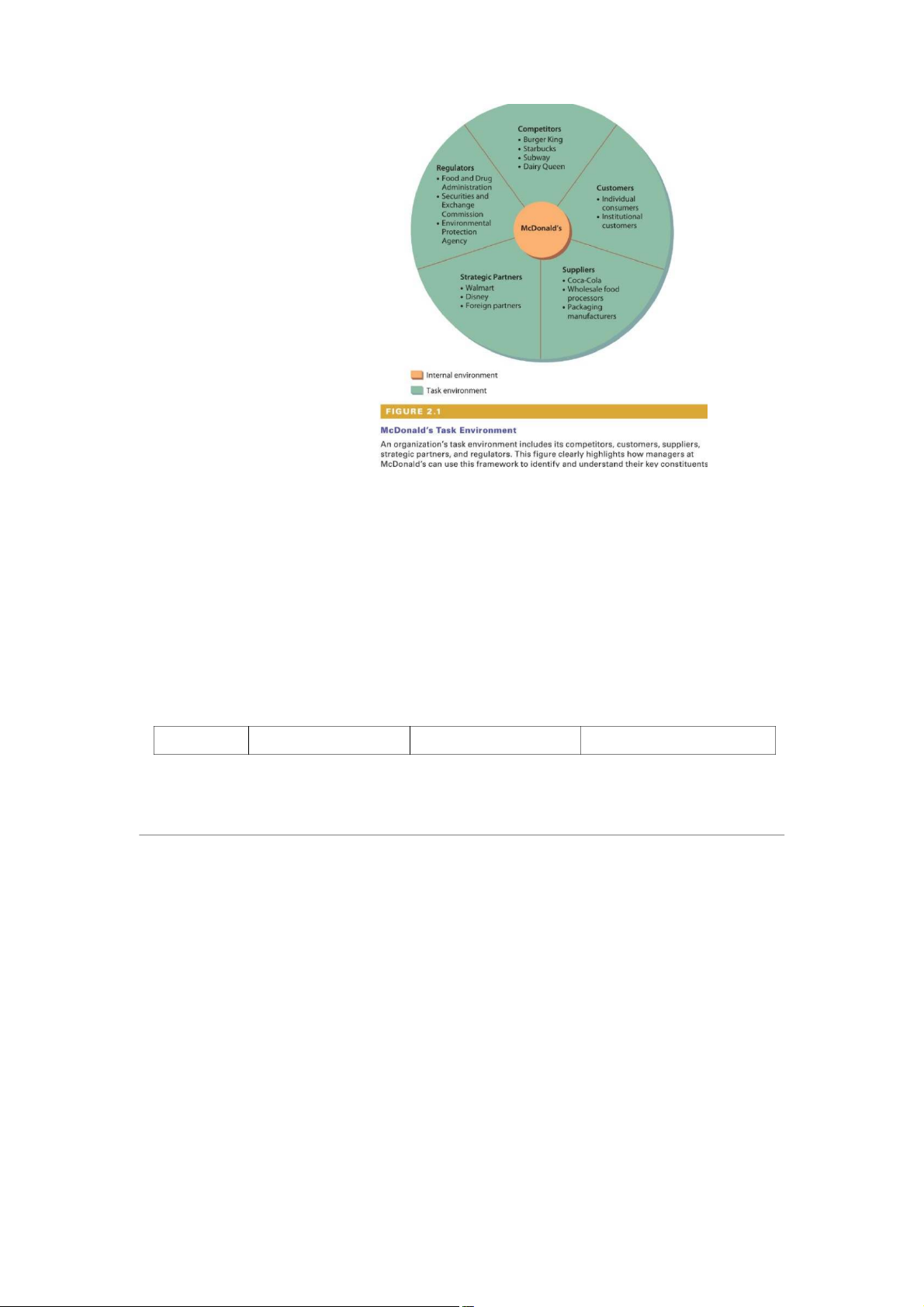
- Competitor: an organization that competes wth other organizations for resources
- Customer: whoever pays money to acquire an organization’s product/services
- Supplier: an organization that provides resources for other organizations.
- Regulator: a body that has the potential to control, legislate, or otherwise influence an organization’s policies and practices. + Regulatory agencies: are created by the government to regulate business activities. Ex: Vệ sinh An toàn Thực Phẩm + Interest groups: a group organized by its members to attempt to influence organizations
- Strategic partner: (also
calles strategic allies) An
organization working together wth one/more other organizations in a joint venture/similar arrangement.
c, The Internal Environment
- Owner: whoever can calm property rights to an organization
- Board of directors: governing body that is elected by a corporation’s
stockholders and charged wth overseeing the general management of the firm to
ensure that it is being rung in a way that best serves the stockholders’ interests - Employees
- Physical work environment: includes the actual physical environment and the work that pp do. Point General Task Internal
Where Outside the organization Outside the organization Inside the organization Effect Indirect effect Direct effect Direct effect
Meaning Big forces around the Groups that deal directly People and resources inside organization wth the organization the organization Main parts Economy Competitors Owners Technology Customers Board of directors Political and legal Suppliers Employees system Regulators Workplace Strategic partners
Control level No control Limited control High control
Role Sets the general situation Affects daily business and Affects on how the competition organization works
Example Inflation increases Competitor lower prices Company culture New technology appears Supplier raises costs HR policies
Tài liệu liên quan:
-
CHAP 1: Introduction to Management Concepts and Functions môn Principles of Management | Trường Đại học Quốc tế, Đại học Quốc gia Thành phố Hồ Chí Minh
1 1 -
Guidelines for group’s assignments: Analysing management issues of a FDI company based inVietnam môn Principles of Management | Trường Đại học Quốc tế, Đại học Quốc gia Thành phố Hồ Chí Minh
1 1 -
Financial Planning to Achieve 300m VND Goal in 3 Years môn Principles of Management | Trường Đại học Quốc tế, Đại học Quốc gia Thành phố Hồ Chí Minh
1 1 -
A Case Study in Fast Fashion Success môn Principles of Management | Trường Đại học Quốc tế, Đại học Quốc gia Thành phố Hồ Chí Minh
1 1 -
Chap 16 Hierarchy of Needs Theory and Applications môn Principles of Management | Trường Đại học Quốc tế, Đại học Quốc gia Thành phố Hồ Chí Minh
1 1