Chap 3: Managing Ethics & Diversity in Organizations môn Principles of Management | Trường Đại học Quốc tế, Đại học Quốc gia Thành phố Hồ Chí Minh
Illustrate how ethics help managers determine the right way to behave when dealing with different stakeholder groups. Tài liệu giúp bạn tham khảo, ôn tập và đạt kết quả cao. Mời đọc đón xem!
Môn: Principles of Management 314 tài liệu
Trường: Trường Đại học Quốc tế, Đại học Quốc gia Thành phố Hồ Chí Minh 2 K tài liệu
Tác giả:


















Preview text:
CHAPTER MANAGING ETHI AND DIVERSI
Education. All rights reserved. Authorized only for instructor use in the classroom. No reproduction or further distribution permitted without the prior written consent of McGraw-Hill Ed Learning Objectives (1 of 2)
3-1. Illustrate how ethics help managers
determine the right way to behave when
dealing with different stakeholder groups.
3-2. Explain why managers should behave
ethically and strive to create ethical organizational cultures.
3-3. Appreciate the increasing diversity of the
workforce and of the organizational environment. Education. Learning Objectives (2 of 2)
3-4. Grasp the central role that managers play in
the effective management of diversity.
3-5. Understand why the effective management
of diversity is both an ethical and a business imperative.
3-6. Understand the two major forms of sexual
harassment and how they can be eliminated. Education. The Nature of Ethics (1 of 2) thical Dilemma
A type of quandary in which people have to decide
they should act in a way that might help another
person or group even though doing so might go
against their own self-interest Education. The Nature of Ethics (2 of 2) thics
The inner-guiding moral principles, values, and
beliefs that people use to analyze or interpret a
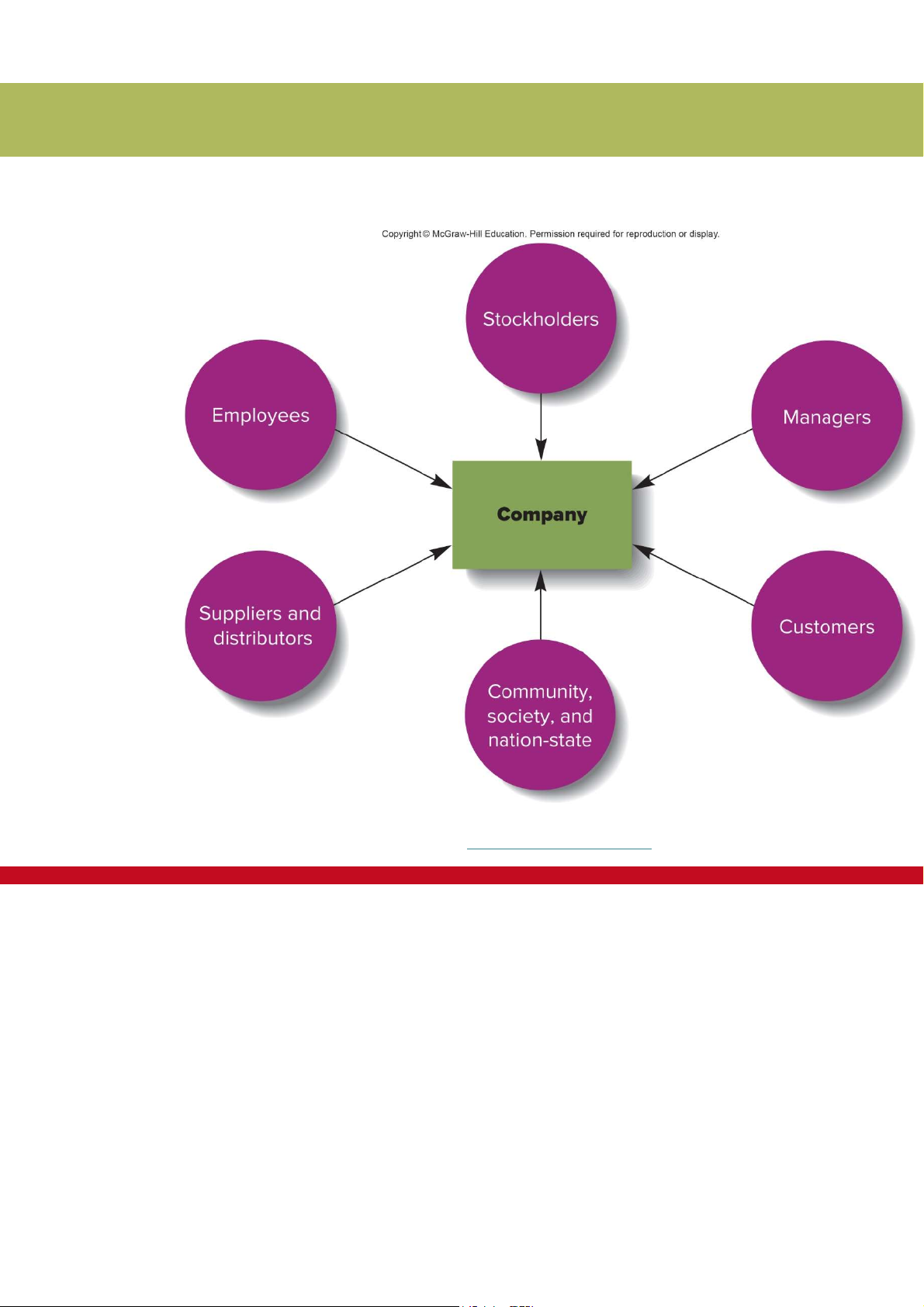
situation and then decide what is the “right” or appropriate way to behave Education. Stakeholders and Ethics takeholders
The people and groups that supply a company with
its productive resources and so have a claim on and a stake in the company Education. Types of Company Stakeholders igure 3.1
Jump to Appendix 1 long description. Education. Stockholders
tockholders want to ensure that managers are
behaving ethically and not risking investors’
apital by engaging in actions that could hurt he company’s reputation.
They want to maximize their return on nvestment. Education. Managers
Managers are responsible for using a company’s
inancial capital and human resources to
ncrease its performance and thus its stock price.
They have the right to expect a good return or
eward by investing their human capital to
mprove a company’s performance.
requently managers juggle multiple interests. Education. Topics for Discussion (1 of 5)
When are ethics and ethical standards especially
mportant in organizations? [LO 3-1] Education. Employees
Companies can act ethically toward employees
by creating an occupational structure that fairly
nd equitably rewards employees for their ontributions. Education. Suppliers and Distributors
uppliers expect to be paid fairly and promptly or their inputs.
Distributors expect to receive quality products t agreed-upon prices. Education. Customers
Customers are the most critical stakeholder.
Company must work to increase efficiency and
ffectiveness in order to create loyal customers nd attract new ones. Education. Community, Society, and Nation Community
Physical locations in which companies are located •towns or cities or social milieus, •ethnic neighborhoods
Community provides a company with the
physical and social infrastructure that allows it o operate. Education. Four Ethical Rules igure 3.2
Jump to Appendix 2 long description. Education. Practical Decision Model
. Does my decision fall within the acceptable
standards that apply in business today?
. Am I willing to see the decision
communicated to all people and groups affected by it?
. Would the people with whom I have a
significant personal relationship approve of the decision? Education.
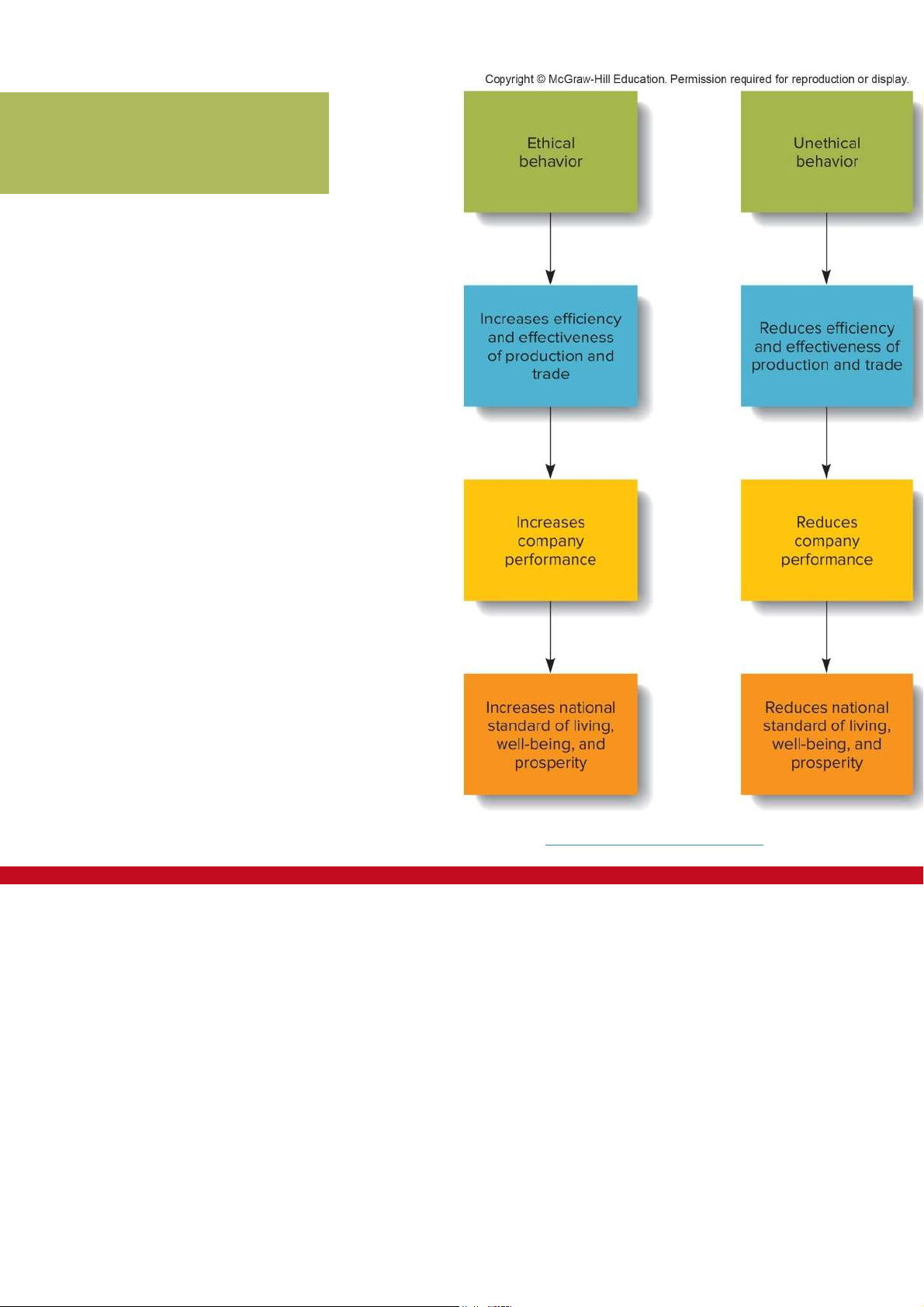
y Should Managers Behave Ethically?(1
The relentless pursuit of self-interest can lead to
collective disaster when one or more people
tart to profit from being unethical because this
ncourages other people to act in the same way Education. ome Effects of hical/Unethical Behavior gure 3.3
Jump to Appendix 3 for the long description. Education.
y Should Managers Behave Ethically? (2 Trust
Willingness of one person or group to have faith or
confidence in another person’s goodwill, even though this puts them at risk Reputation
Esteem or high repute that individuals or
organizations gain when they behave ethically Education.
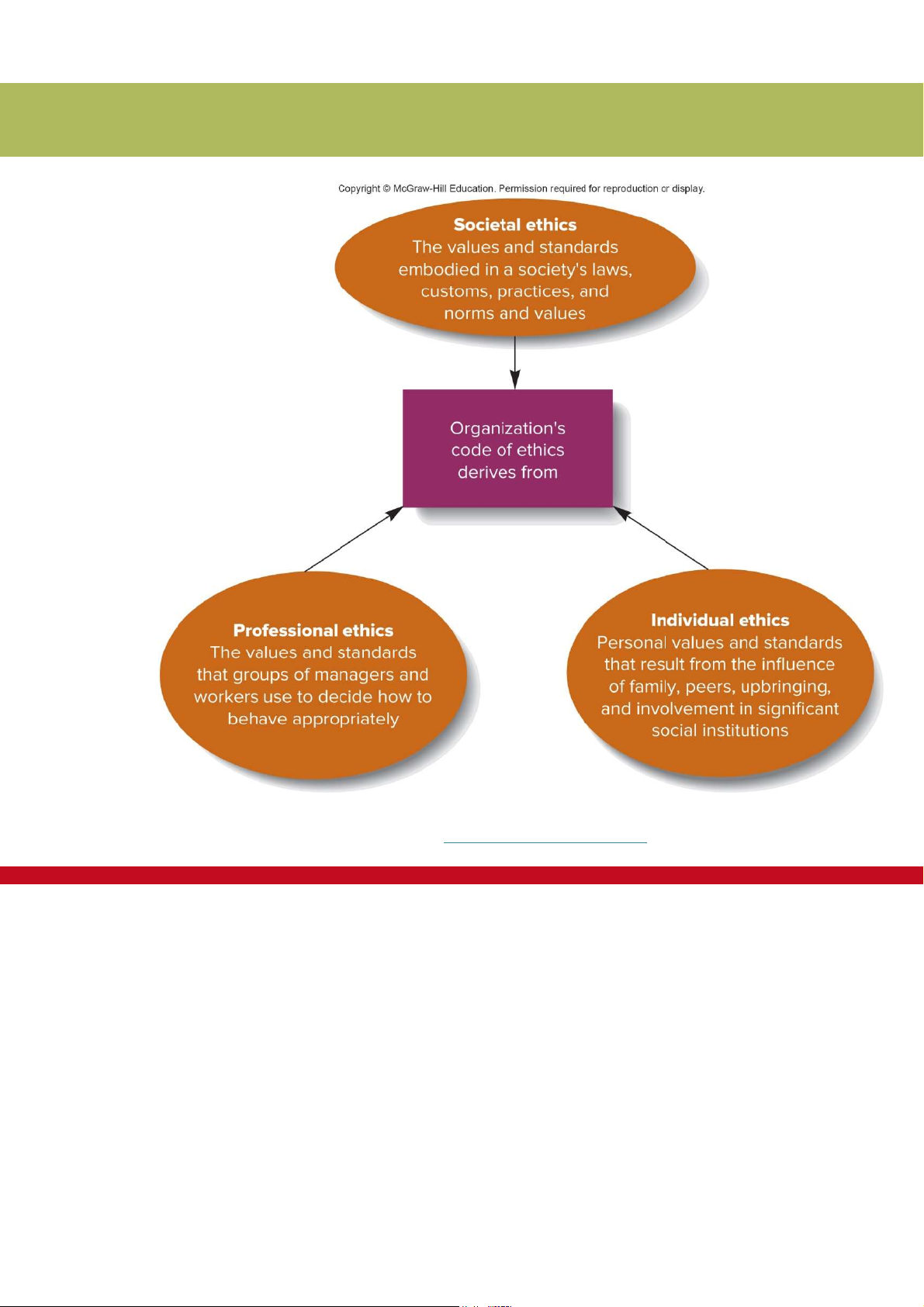
ources of an Organization’s Code of Ethi igure 3.4
Jump to Appendix 4 for long description. Education.
Tài liệu liên quan:
-
CHAP 1: Introduction to Management Concepts and Functions môn Principles of Management | Trường Đại học Quốc tế, Đại học Quốc gia Thành phố Hồ Chí Minh
19 10 -
Guidelines for group’s assignments: Analysing management issues of a FDI company based inVietnam môn Principles of Management | Trường Đại học Quốc tế, Đại học Quốc gia Thành phố Hồ Chí Minh
17 9 -
Financial Planning to Achieve 300m VND Goal in 3 Years môn Principles of Management | Trường Đại học Quốc tế, Đại học Quốc gia Thành phố Hồ Chí Minh
17 9 -
A Case Study in Fast Fashion Success môn Principles of Management | Trường Đại học Quốc tế, Đại học Quốc gia Thành phố Hồ Chí Minh
16 8 -
Chap 16 Hierarchy of Needs Theory and Applications môn Principles of Management | Trường Đại học Quốc tế, Đại học Quốc gia Thành phố Hồ Chí Minh
17 9