Chap 9 - Summary Lecture on Control Process and Tools môn Principles of Management | Trường Đại học Quốc tế, Đại học Quốc gia Thành phố Hồ Chí Minh
Project: complex one-time event with unique components and an objective that must be met within a set time. Tài liệu giúp bạn tham khảo, ôn tập và đạt kết quả cao. Mời đọc đón xem!
Môn: Principles of Management 314 tài liệu
Trường: Trường Đại học Quốc tế, Đại học Quốc gia Thành phố Hồ Chí Minh 2 K tài liệu
Tác giả:



Preview text:
Chap 9:Step 1 — establishing objectives and standards The control process:
–Controlling begins with planning, when performance objectives and standards for measuring them are set.
–Once these key results are identified, standards can be set to measure accomplishments. –Output standards
•Measure performance results in terms of quantity, quality, cost, or time. –Input standards
•Measure effort in terms of amount of work expended in task performance.
•Step 2 — measuring actual performance
–Performance measurements in the control process must be accurate enough to spot
significant differences between what is really taking place and what was originally planned.
–Without measurement, effective control is not possible.
–With measurement tied to key results, what gets measured happens.
•Step 3 — comparing results with objectives and standards
–Need for Action = Desired Performance - Actual Performance –Comparison methods: •Historical comparison •Relative comparison •Engineering comparison
•Step 4 — taking corrective action
–Taking action when a discrepancy exists between desired and actual performance –Management by exception
•Giving attention to situations showing the greatest need for action •Types of exceptions
•Problem situation: actual performance is less than desired. It must be
understood so that corrective action can restore performance to the desired level.
•Opportunity situation: actual performance is higher than desired. It
must be understood with the goal of continuing or increasing the high
level of accomplishment in the future.
Control Tools and Techniques
•Project: complex one-time event with unique components and an objective that must be met within a set time. •Project Management
–Overall planning, supervision, and control of projects
–Ensure that a project is well planned and completed according to plan (on time, within
budget, and consistent with objectives).
•Gantt chart – graphic display of scheduled tasks required to complete a project
•CPM/PERT – combination of the critical path method and program evaluation and review technique
•PERT is a tool to help determine how much time it’ll take to complete a project.
Develop an accurate schedule.
•A PERT chart, which maps three time estimates:
–Optimistic time: the least amount of time expected for a task to be done.
–Pessimistic time: the maximum amount of time it’ll take to complete a task.
–The most likely time: the reasonable amount of time to complete the task as long as
there are no delays, bottlenecks. •Inventory control
–Ensures that inventory is only big enough to meet immediate needs –Economic order quantity:
•Automatically orders a fixed number of items every time an inventory level falls to a predetermined point.
•The order sizes are mathematically calculated to minimize inventory costs.
–Just-in-time scheduling (JIT):
•Scheduling materials to arrive at a workstation or facility just in time for use.
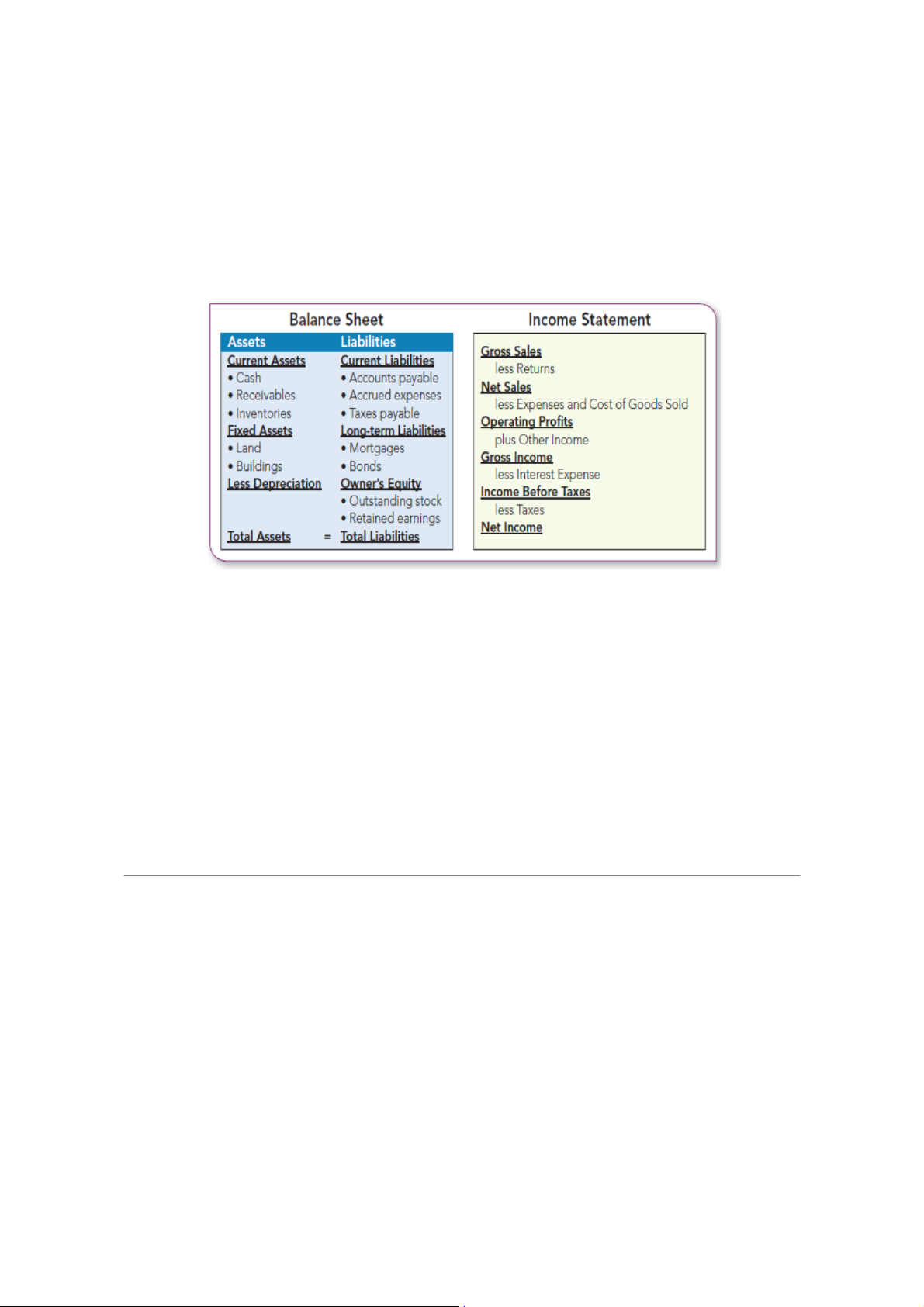
•Do not have to pay storage costs, no unwanted inventory. Financial control
Tài liệu liên quan:
-
CHAP 1: Introduction to Management Concepts and Functions môn Principles of Management | Trường Đại học Quốc tế, Đại học Quốc gia Thành phố Hồ Chí Minh
14 7 -
Guidelines for group’s assignments: Analysing management issues of a FDI company based inVietnam môn Principles of Management | Trường Đại học Quốc tế, Đại học Quốc gia Thành phố Hồ Chí Minh
14 7 -
Financial Planning to Achieve 300m VND Goal in 3 Years môn Principles of Management | Trường Đại học Quốc tế, Đại học Quốc gia Thành phố Hồ Chí Minh
12 6 -
A Case Study in Fast Fashion Success môn Principles of Management | Trường Đại học Quốc tế, Đại học Quốc gia Thành phố Hồ Chí Minh
15 8 -
Chap 16 Hierarchy of Needs Theory and Applications môn Principles of Management | Trường Đại học Quốc tế, Đại học Quốc gia Thành phố Hồ Chí Minh
15 8