Bài giảng Families of materials, properties applications and selection criteria môn Nghiên cứu khoa học | Trường Đại học Sư phạm - Đại học Huế
Bài giảng Families of materials, properties applications and selection criteria môn Nghiên cứu khoa học | Trường Đại học Sư phạm - Đại học Huế. Tài liệu được sưu tầm giúp bạn tham khảo, ôn tập và đạt kết quả cao. Mời bạn đọc đón xem.
Môn: Nghiên cứu khoa học (SPH) 5 tài liệu
Trường: Trường Đại học Sư phạm - Đại học Huế 95 tài liệu
Tác giả:






Preview text:
Topic 1: Introduction. Families of materials and applications Universidad
MATERIALS SCIENCE AND ENGINEERING Carlos III de Madrid www.uc3m.es
TOPIC 1.1. FAMILIES OF MATERIALS, PROPERTIES
APPLICATIONS AND SELECTION CRITERIA.
• Historic evolution of Materials Science and Engineering
• The Science and Engineering of Materials • Materials Classification
• General properties of Materials
• Going from Structure to Materials Properties • Materials Selection
Dpt. Materials Sci. and Eng. and Chem. Eng. UC3M
Sophia A. Tsipas / Dania Olmos 1
Topic 1: Introduction. Families of materials and applications
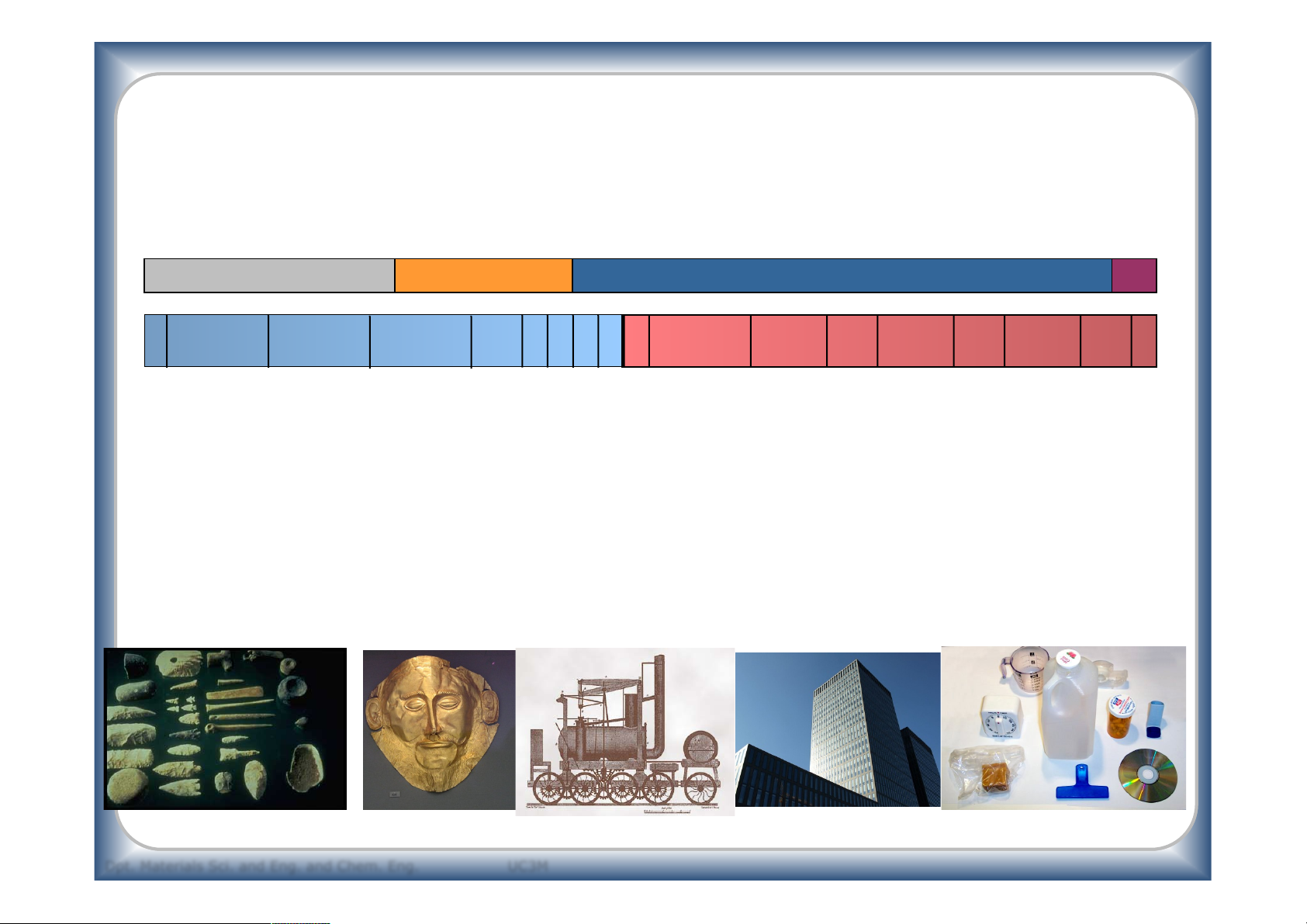
HISTORIC EVOLUTION OF MATERIALS Stone age Bronze age Iron age BC AD 0 500 9000 7000 5000 3000 2000 1500 1000 100 500 800 1000 1300 1500 1800 1900 2000 -Sn) Iron bones Paper Sn, ...) olution ys, wood, u, Ag, Cu, e (Cu Porcelain ev Polymers Blown glass ed stone, skins, ynthetic Fibers ansparent glass, bronz S Surface processing Magnetic Supports work Metals (A Neolithic, cla Industrial R Silk, tr Aluminium (Mét. Hall) Paleolithic: wood, stone,
Dpt. Materials Sci. and Eng. and Chem. Eng. UC3M
Sophia A. Tsipas / Dania Olmos 2
Topic 1: Introduction. Families of materials and applications
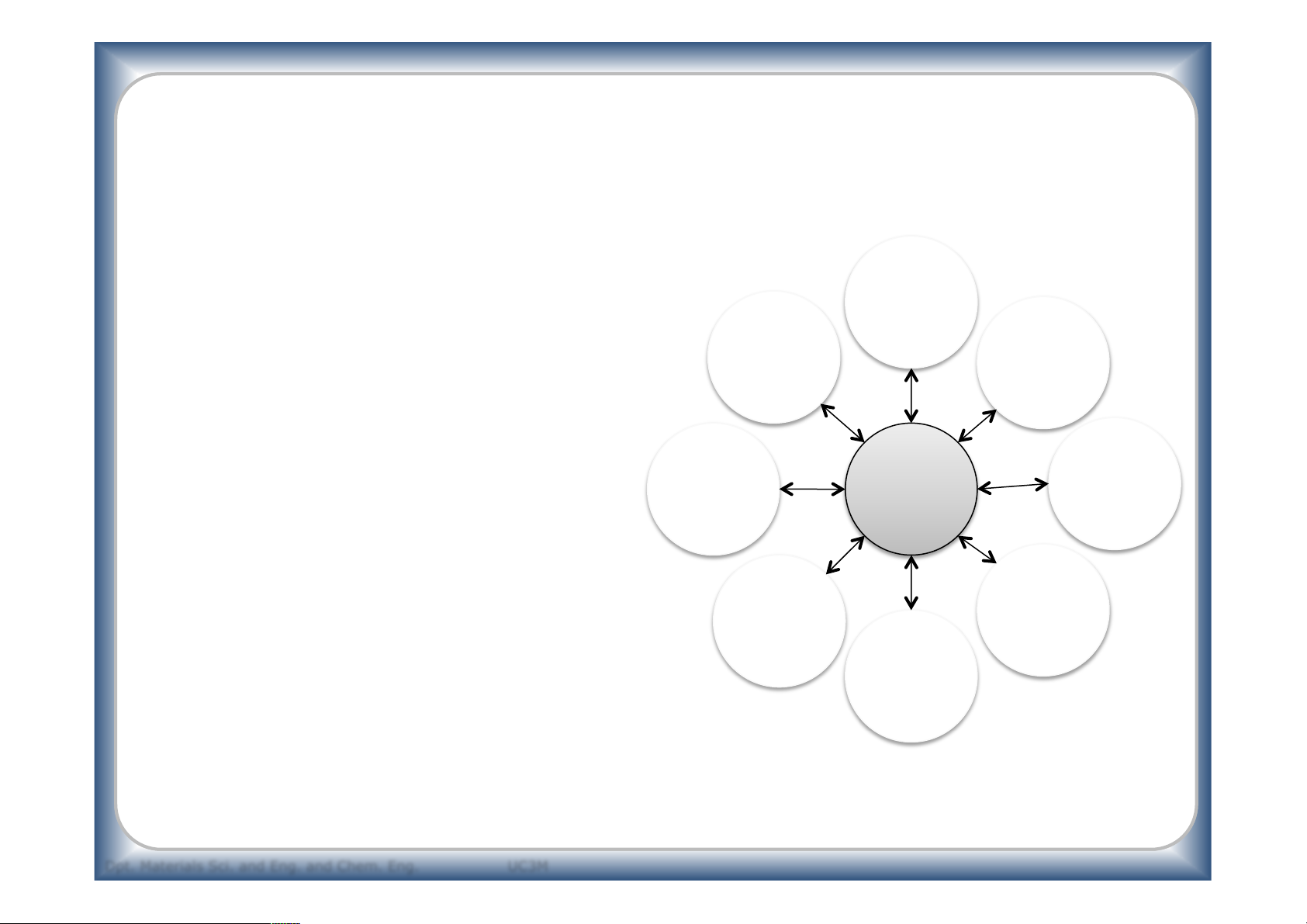
MATERIALS SCIENCE AND ENGINEERING
Materials Science: basic knowledge about the internal structure,
properties and processing of materials.
Materials Engineering: fundamental knowledge applied to
materials in order to transform them into useful products required by the society. Applications Structure Properties Processing
Dpt. Materials Sci. and Eng. and Chem. Eng. UC3M
Sophia A. Tsipas / Dania Olmos 3
Topic 1: Introduction. Families of materials and applications
CLASSIFICATION OF MATERIALS Material Composition Structure Properties Metals Metals Crystalline ↑σe, ↑σt, ↑R Polymers Chains of organic Semi crystalline molecules or amorphous ↓σe,↓σt, ↓ρ Ceramics Metals + no metals Crystalline or ↑hardness, amorphous ↑brittleness
Composite materials: system or combination of materials that
results from the union (not chemical, insoluble between them) of two
or more components, creating a new material with specific properties
and characteristics, with properties different from the constituent materials .
Dpt. Materials Sci. and Eng. and Chem. Eng. UC3M
Sophia A. Tsipas / Dania Olmos 4
Topic 1: Introduction. Families of materials and applications
CLASSIFICATION OF MATERIALS
Functional classification : Aerospace Composites, Al-alloys, Smart superalloys, Aerospace materials Ti-alloys Electronic Materials PZT, Ni-Ti Si, GaAs, shape- Biomedical memory Ge, BaTiO3, alloys, PZT, Cu, Polymer gels YBa2Cu3O7-x Electronic Materials Biomedical Structural
Energy Technology and Environment Hydroxyapatite, Steels, Classification Titanium Al-alloys, of functional alloys, shape- Concrete memory Magnetic Materials materials Fiberglass alloys, hydrogels Wood
Optical and Photonic Materials Energy, Technology Optical “Smart” Materials and materials Environment GaAs, SiO2, UO Glasses, YAG, 2, Ni-Cd, Structural Materials ZrO Al 2, 2O3 Amorphous Magnetic Si:H materials Fe, Fe-Si, MnZn ferrites, Co-Pt-Ta-Cr
Dpt. Materials Sci. and Eng. and Chem. Eng. UC3M
Sophia A. Tsipas / Dania Olmos 5
Topic 1: Introduction. Families of materials and applications
GENERAL PROPERTIES OF MATERIALS
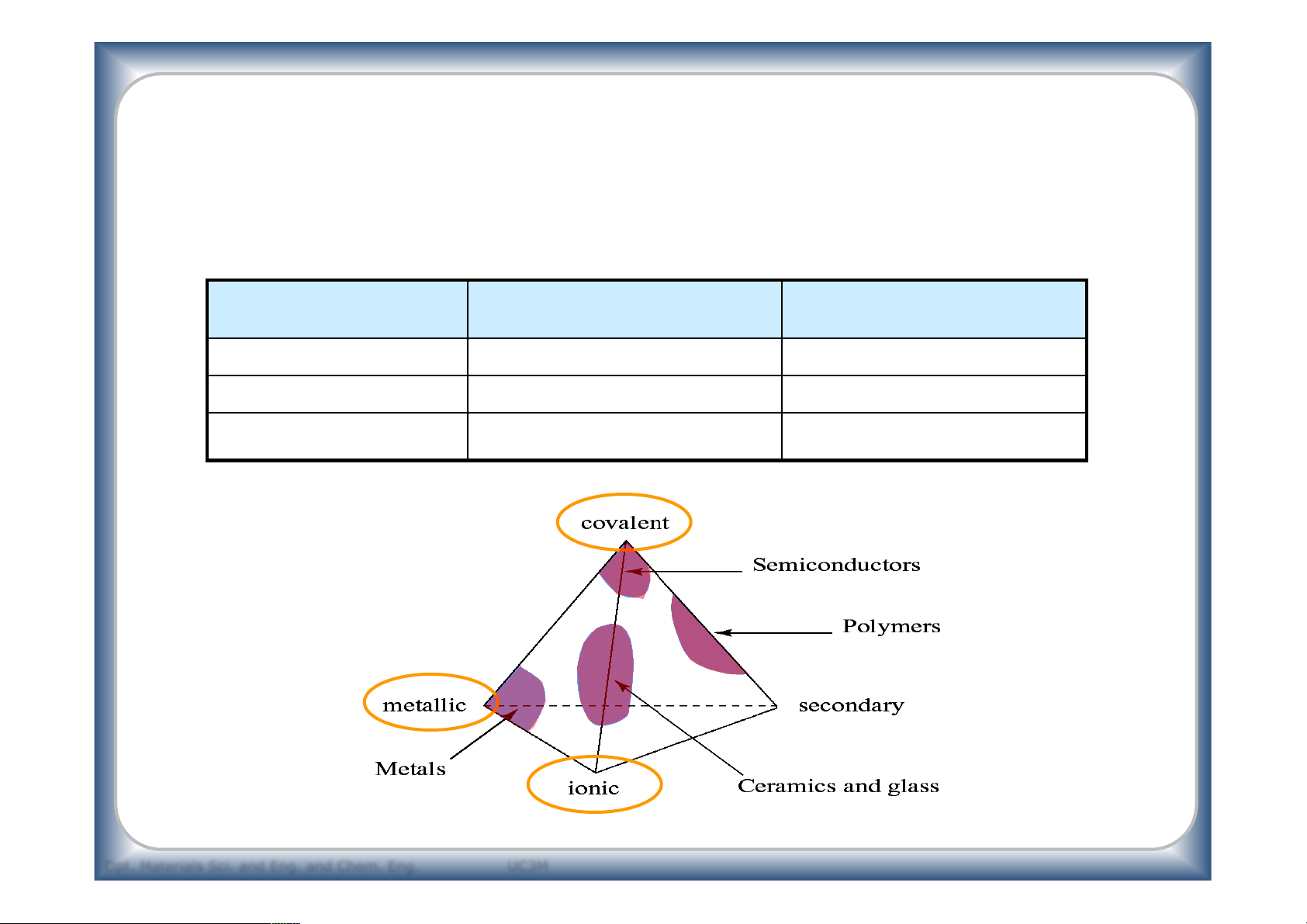
Nature of bonding ↔ properties ↔ type of materials Type of material Character of bonding Examples Metal Metallic Fe, steels Ceramic and glasses Ionic/ covalent Silica (SiO2) Polymers Covalent and secondary Polyethylene –(CH2)-
Dpt. Materials Sci. and Eng. and Chem. Eng. UC3M
Sophia A. Tsipas / Dania Olmos 6
Topic 1: Introduction. Families of materials and applications
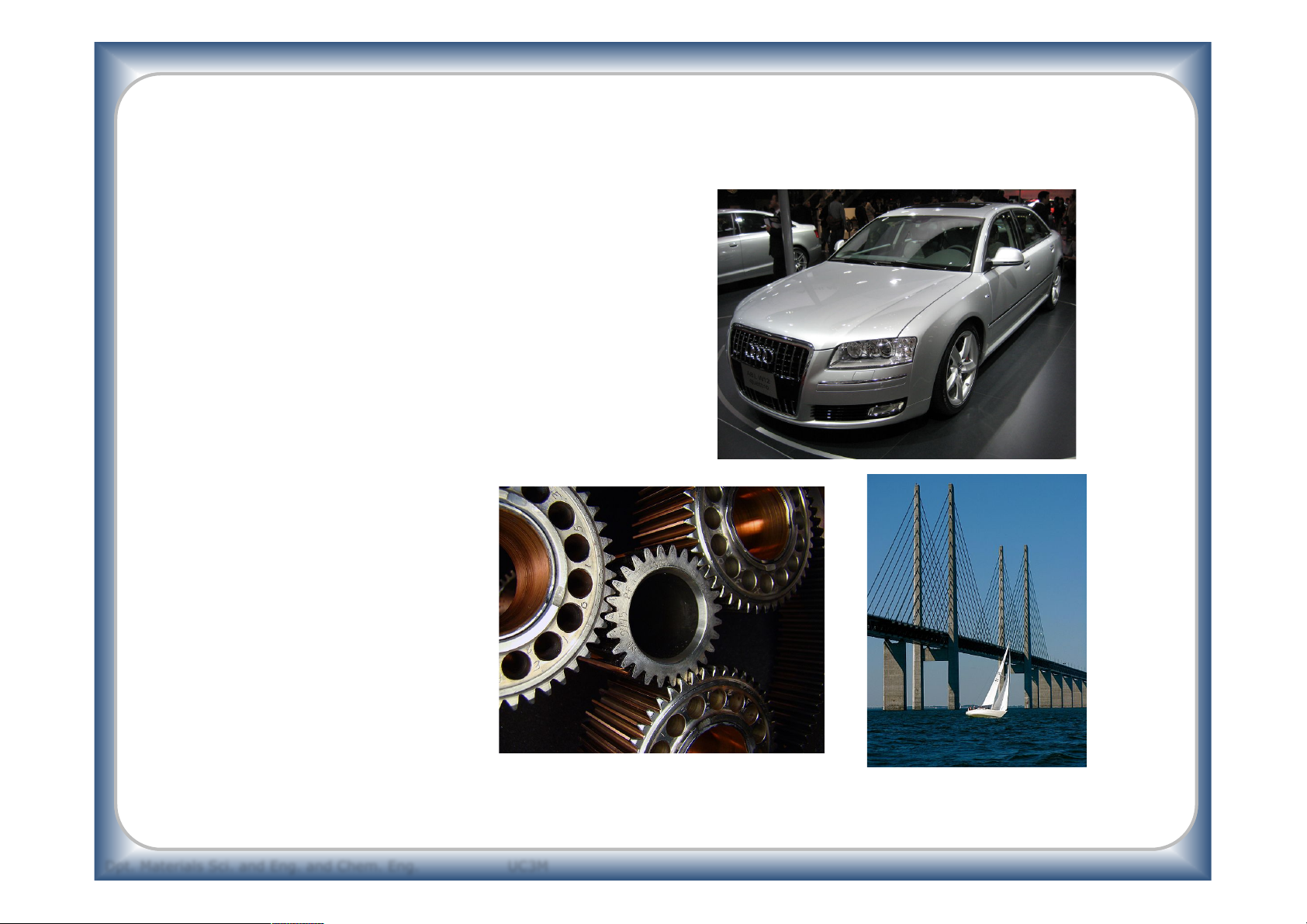
GENERAL PROPERTIES OF MATERIALS Metals and Metallic alloys - Characteristic shine
- Electrical and thermal conductivity - Workability - Ductility
http://commons.wikimedia.org/wiki/
http://commons.wikimedia.org/wiki/
File:Reduction_Gear.jpg File:Under_the_bridge_- _Oresund_Bridge.jpg
Dpt. Materials Sci. and Eng. and Chem. Eng. UC3M
Sophia A. Tsipas / Dania Olmos 7
Topic 1: Introduction. Families of materials and applications
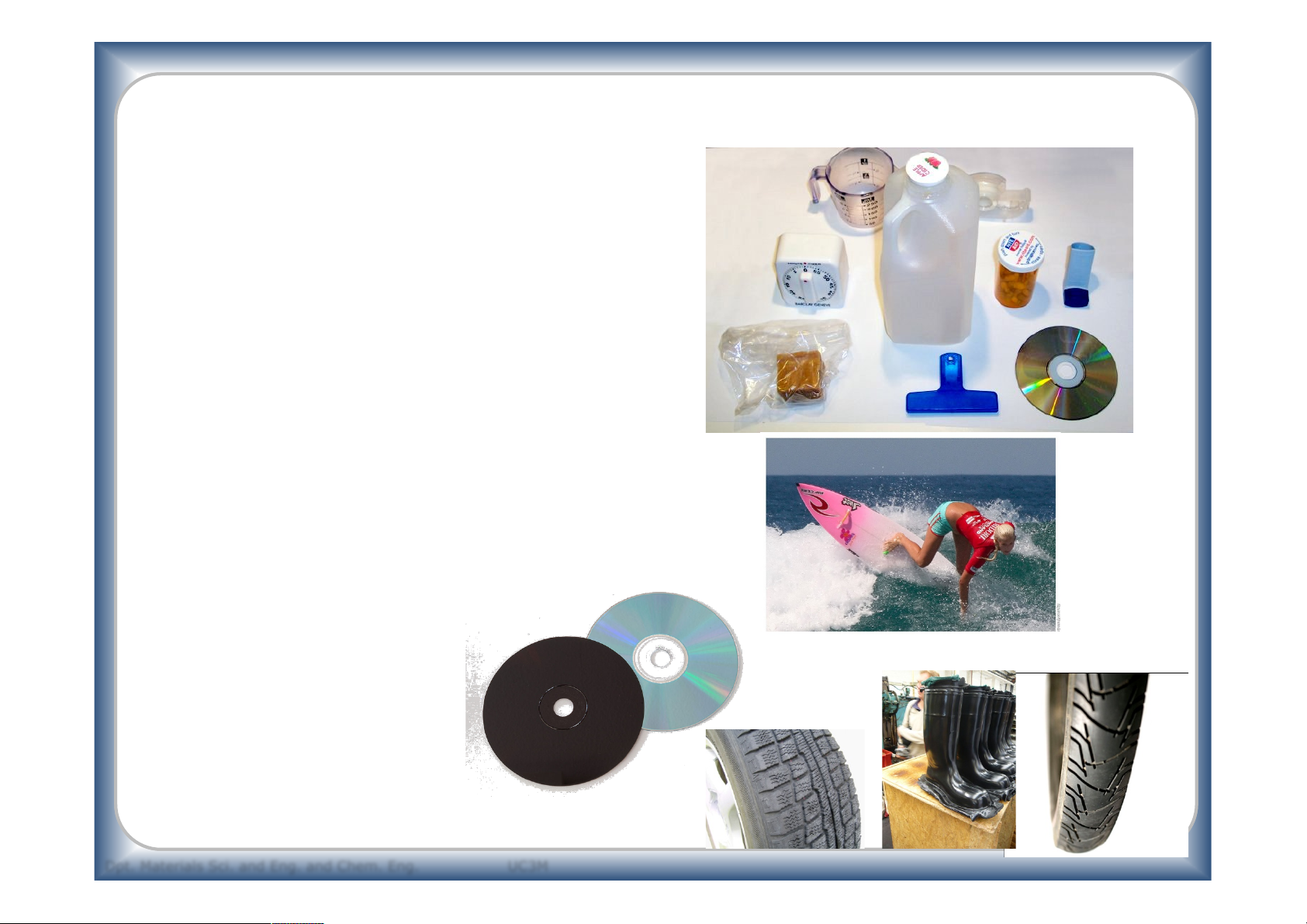
GENERAL PROPERTIES OF MATERIALS Polymers
- Principally based on chains of carbon
atoms joined by covalent bonds. - Thermoplastics - Thermostable - Elastomers
- Thermal and electric insulators - Good specific properties - Low working temperature
Dpt. Materials Sci. and Eng. and Chem. Eng. UC3M
Sophia A. Tsipas / Dania Olmos 8
Topic 1: Introduction. Families of materials and applications
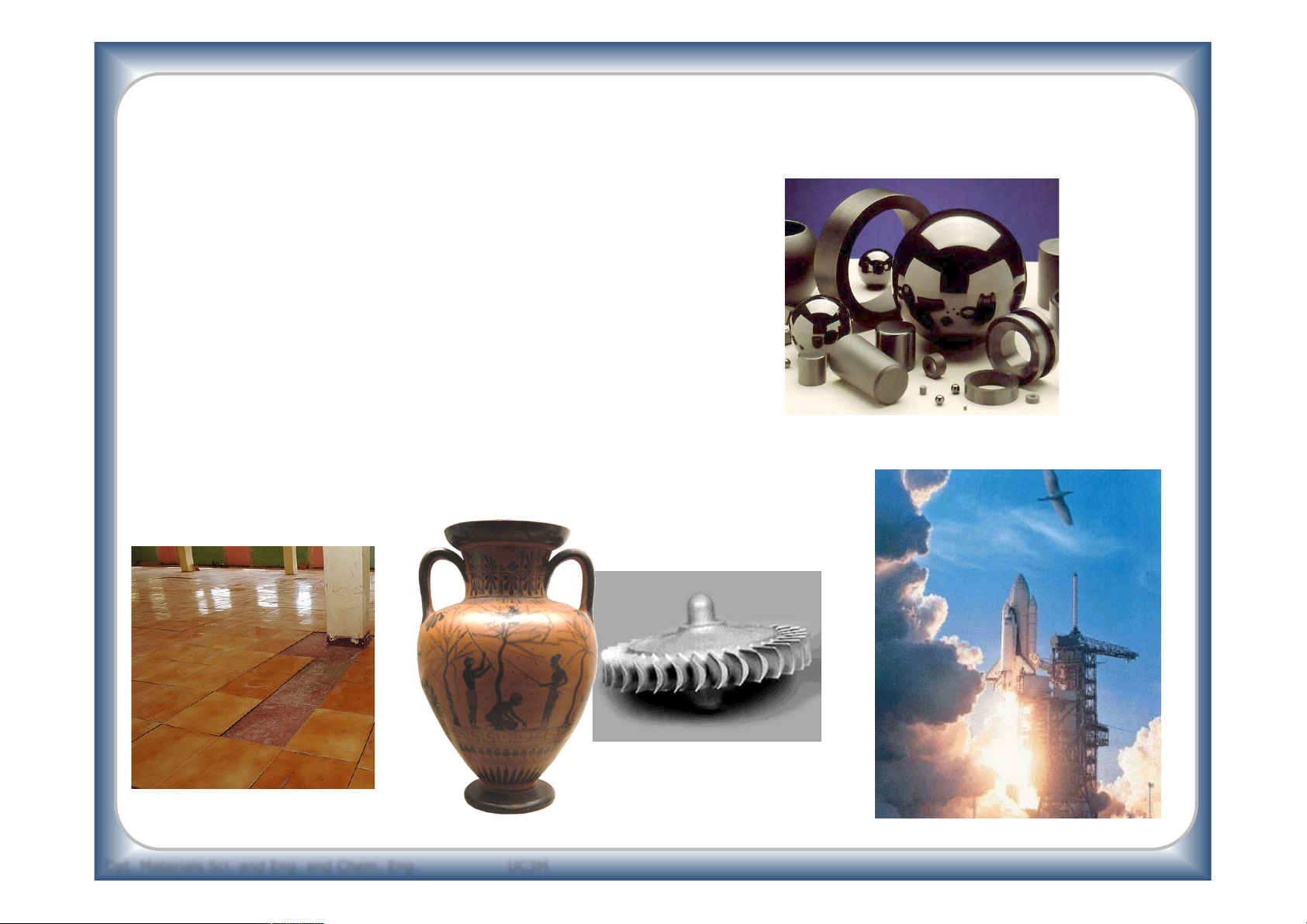
GENERAL PROPERTIES OF MATERIALS Ceramics - High hardness - Brittleness
- Electric and thermal insulators - Workability
- Good thermal and chemical stability.
http://perso.wanadoo.es/chyryes/glosario/cer_fun.htm
Dpt. Materials Sci. and Eng. and Chem. Eng. UC3M
Sophia A. Tsipas / Dania Olmos 9
Topic 1: Introduction. Families of materials and applications
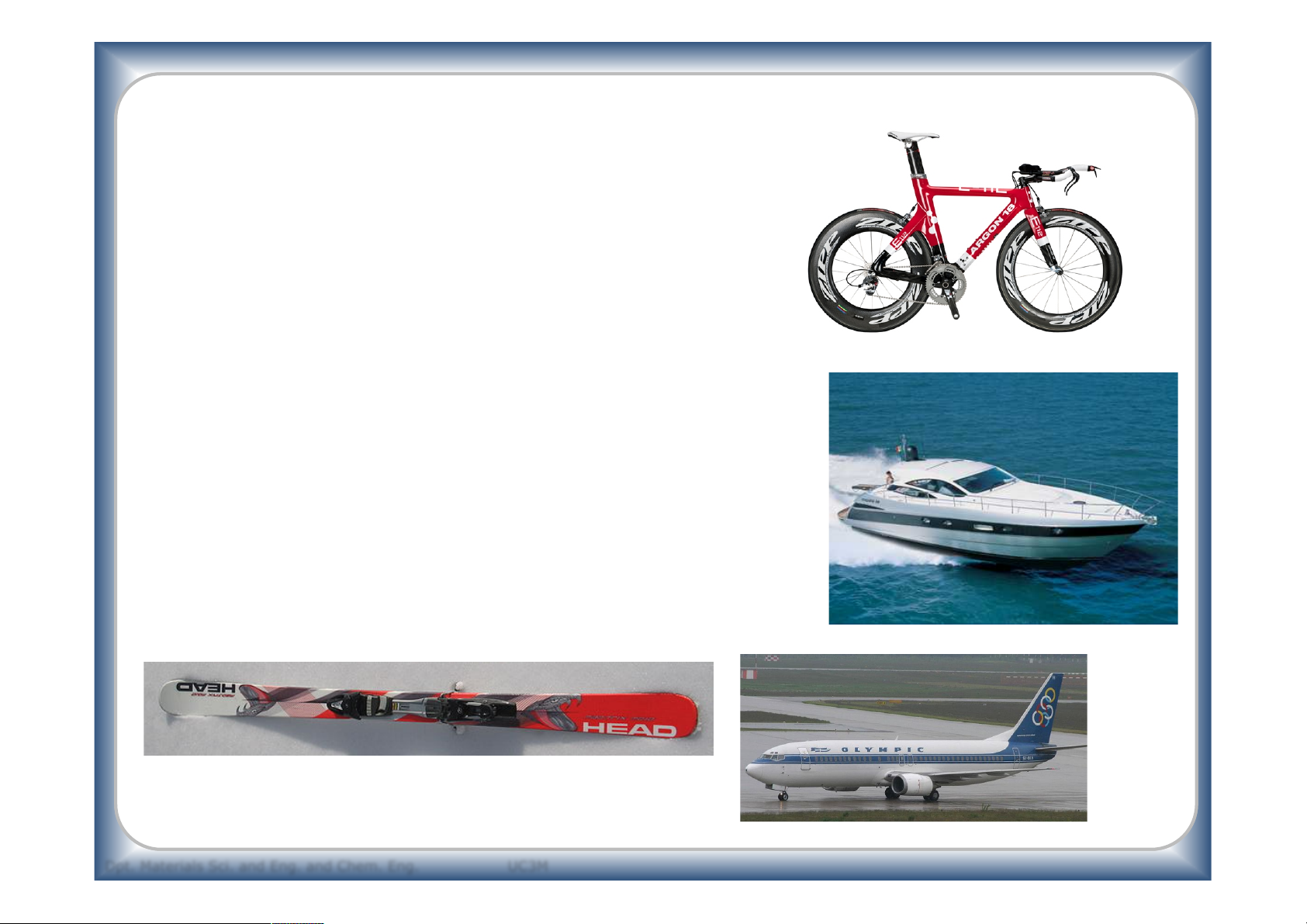
GENERAL PROPERTIES OF MATERIALS Composite Materials - Great range of properties
- Depend on the constituent materials
- General classification as a function of the matrix and the reinforcement - Ceramic matrix - Metallic matrix - Polymeric matrix
Dpt. Materials Sci. and Eng. and Chem. Eng. UC3M
Sophia A. Tsipas / Dania Olmos 10
Topic 1: Introduction. Families of materials and applications
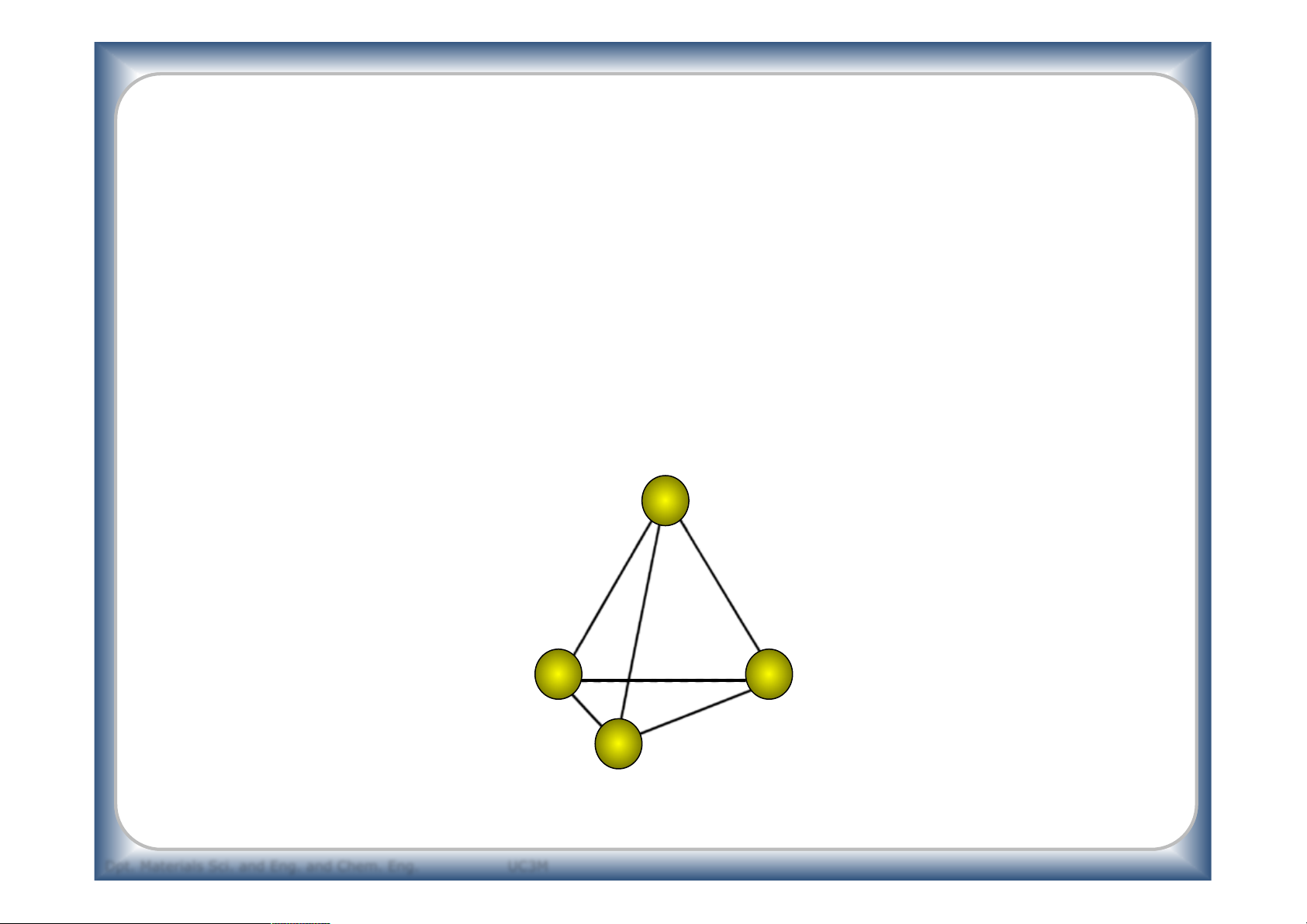
FROM STRUCTURE TO PROPERTIES Structure:
• Distribution of e- affects the electric , magnetic, thermal , optical
behaviour, and the corrosion resistance.
• Bonding determines the type of material
• The positioning of atoms in space ⇒ crystalline structure ⇒
influences mechanical properties Properties • Mechanical (R , ductility, R ...) mecánica impacto
• Physico-chemical ( Corrosion resistance, electrical, magnetic, optical…) Processing • Moulding process
• Plastic deformation process • Joining process
• Mechanical working process
Dpt. Materials Sci. and Eng. and Chem. Eng. UC3M
Sophia A. Tsipas / Dania Olmos 11
Topic 1: Introduction. Families of materials and applications
FROM STRUCTURE TO PROPERTIES
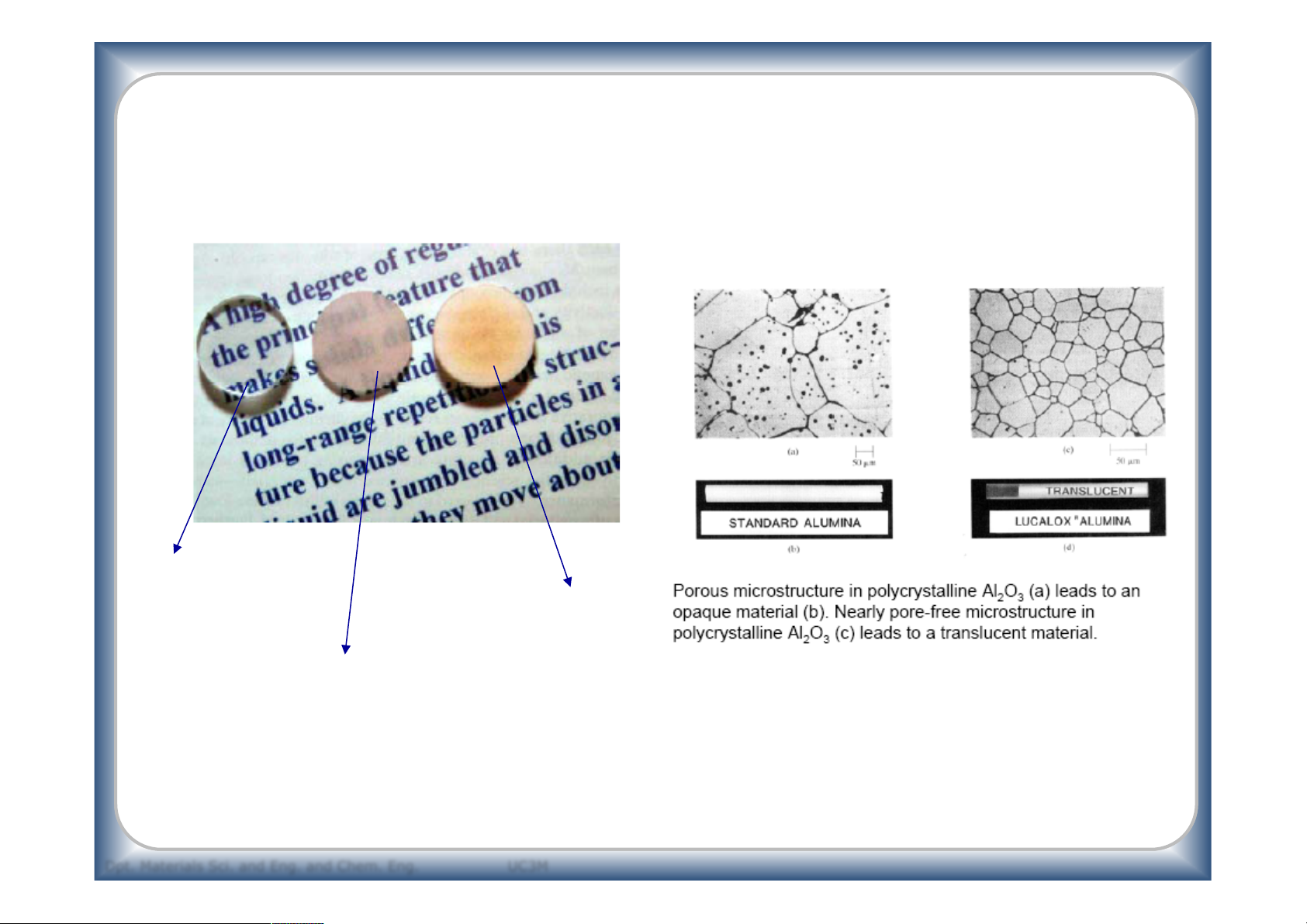
Structure, Properties and Processing Transparent Single crystal Opaque without defects Polycrystalline Grain boundaries + pores Translucent Polycrystalline Grain boundaries
William D. Callister Materials Science
J.F. Shackelford, Introduction to Materials Science and
and Engineering: An Introduction, John Wiley & Sons
Engineering for Engineers; Prentice Hall.
Dpt. Materials Sci. and Eng. and Chem. Eng. UC3M
Sophia A. Tsipas / Dania Olmos 12
Topic 1: Introduction. Families of materials and applications
FROM STRUCTURE TO PROPERTIES
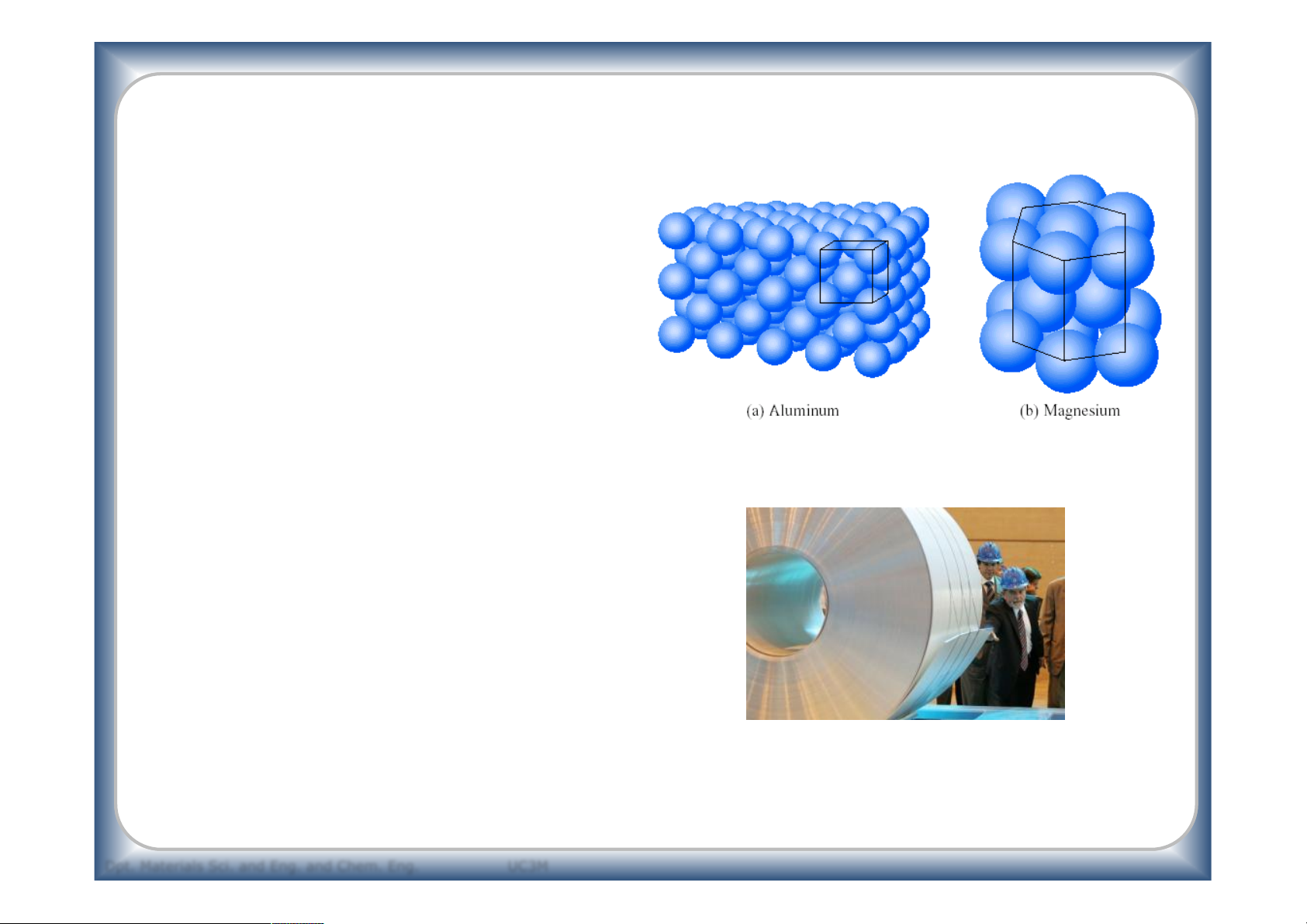
Structure, Properties and Processing Atomic Scale Al alloys: ductile
Mg alloys: relatively brittle
J.F. Shackelford, Introduction to Materials Science and •
Engineering for Engineers; Prentice Hall.
planes and directions of high atomic density
• easily deformed mechanically • Ductility
http://commons.wikimedia.org/wiki/File:149405.jpeg
Al: 12 planes and directions major capacity for de deformation Mg: 3 planes and directions
Dpt. Materials Sci. and Eng. and Chem. Eng. UC3M
Sophia A. Tsipas / Dania Olmos 13
Topic 1: Introduction. Families of materials and applications
FROM STRUCTURE TO PROPERTIES Example of Properties application Metals and alloys Automotive motors Castable, absorber of Foundry products vibrations Ceramics and glasses Windows Optically transparent, SiO thermal insulators 2-Na2O-CaO Polymers Easily processed in thin Packaging and bags layers , flexible and Polyethylene hermetic Semiconductors Transistors and Silicon intergraded circuits Unique electrical properties Composite Materials Cutting and forming Elevated hardness and relatively good impact WC-Co tools resistance
Dpt. Materials Sci. and Eng. and Chem. Eng. UC3M
Sophia A. Tsipas / Dania Olmos 14
Topic 1: Introduction. Families of materials and applications SELECTION OF MATERIALS
• Practical examples. Preliminary considerations
Which material is appropriate? Within a predetermined group, which is the best?
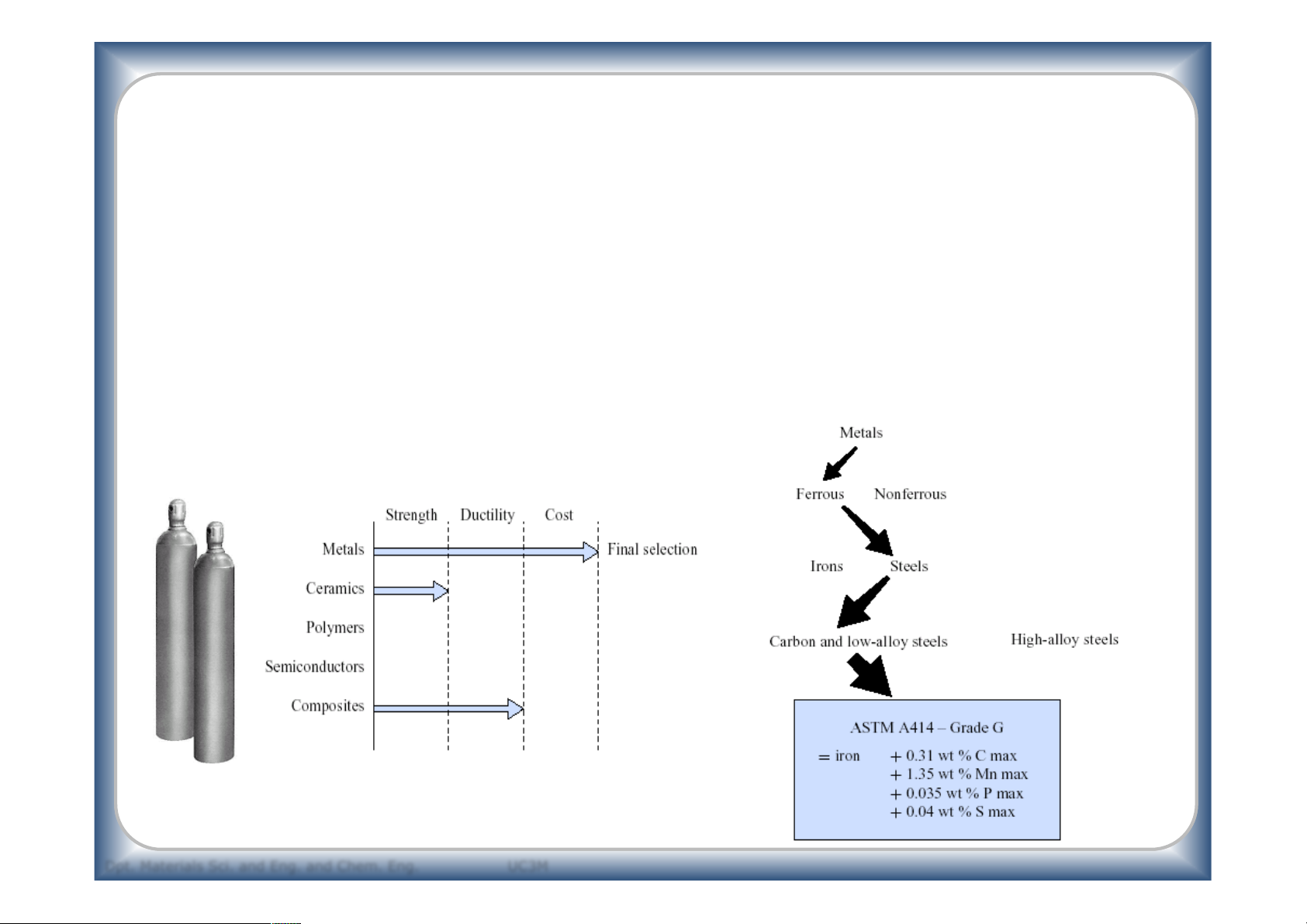
Steps for materials selection: gas cylinder
Evaluate requirements for storing gases at ↑ P (14 MPa)
Eliminate materials that do not satisfy the limiting characteristics: (R and strength ): mehanical polymers and ceramics
Choose the one with the lowest cost: metals
J.F. Shackelford, Introduction to Materials Science and Engineering
for Engineers; Prentice Hall
Dpt. Materials Sci. and Eng. and Chem. Eng. UC3M
Sophia A. Tsipas / Dania Olmos 15
Topic 1: Introduction. Families of materials and applications SELECTION OF MATERIALS
• Practical examples. Preliminary considerations
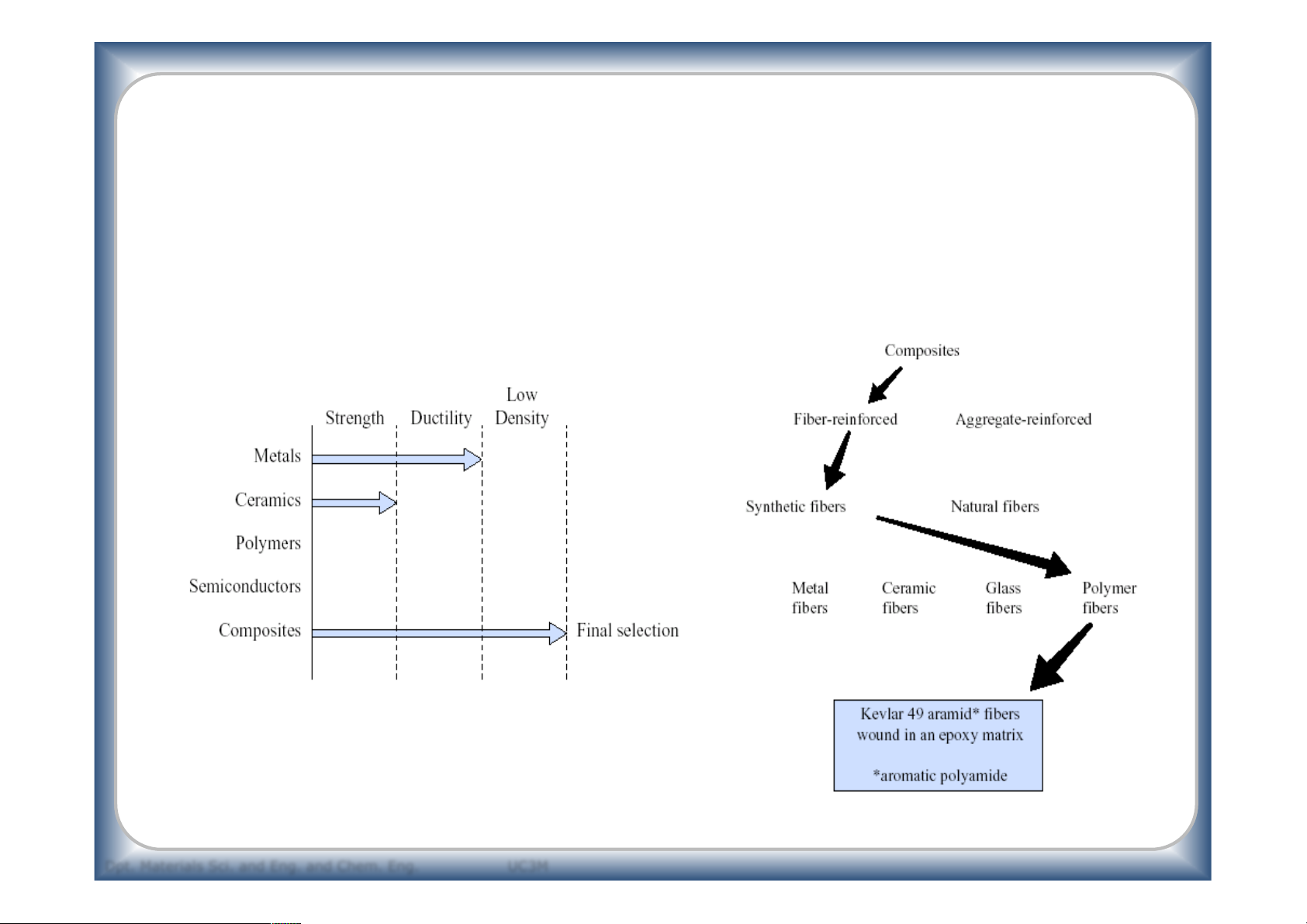
Steps for materials selection: Spaceship
Evaluate requirements for a pressure container of a spaceship
J.F. Shackelford, Introduction to Materials Science and Engineering
for Engineers; Prentice Hall
Dpt. Materials Sci. and Eng. and Chem. Eng. UC3M
Sophia A. Tsipas / Dania Olmos 16
Topic 1: Introduction. Families of materials and applications SELECTION OF MATERIALS
• Practical examples.
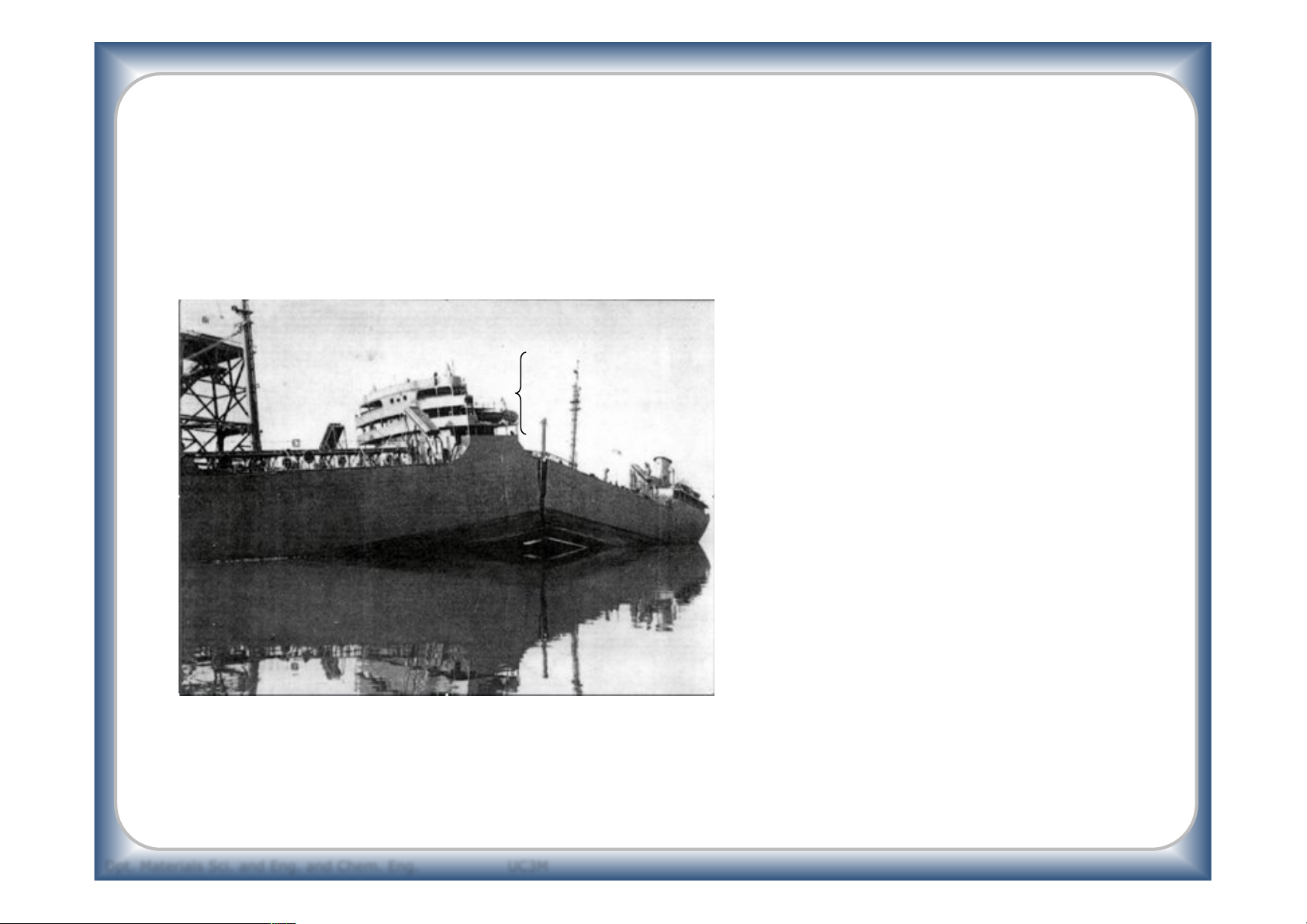
Causes of materials failures :
Selection and/or inadequate design
Improper use during service
Transport ship of the II World War . Brittle fracture of the
steel hull due to low temperatures.
Dpt. Materials Sci. and Eng. and Chem. Eng. UC3M
Sophia A. Tsipas / Dania Olmos 17
Topic 1: Introduction. Families of materials and applications
EVOLUTION AND SUBSTITUTION
M.F. Ashby, Materials Selection in Mechanical Design, Butterworth-Heinemann
http://ocw.mit.edu/OcwWeb/Materials-Science-and-Engineering/3-080Fall-2005/CourseHome/
Dpt. Materials Sci. and Eng. and Chem. Eng. UC3M
Sophia A. Tsipas / Dania Olmos 18
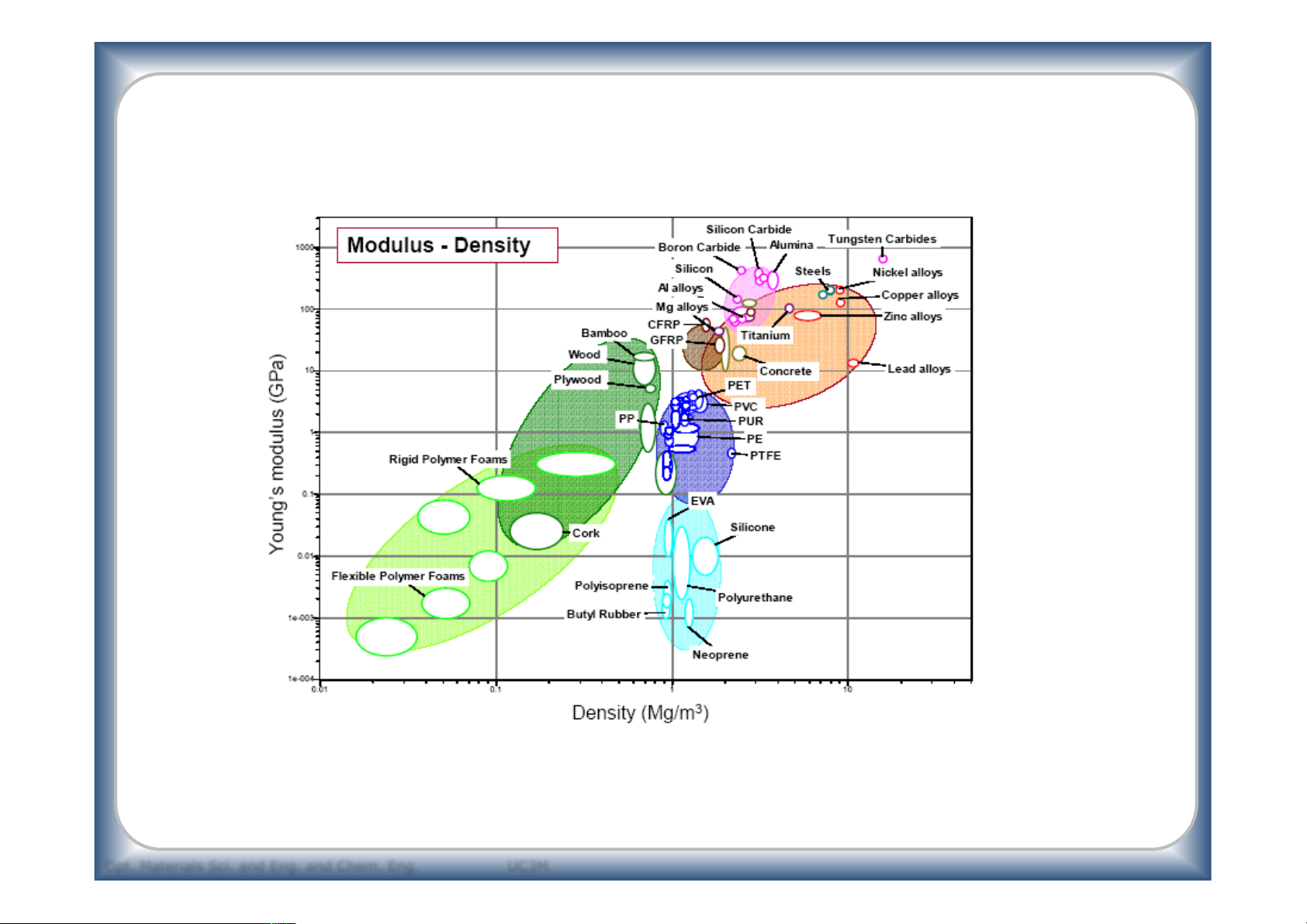
Topic 1: Introduction. Families of materials and applications SELECTION OF MATERIALS • Property Diagrams
M.F. Ashby, Materials Selection in Mechanical Design, Butterworth-Heinemann
Dpt. Materials Sci. and Eng. and Chem. Eng. UC3M
Sophia A. Tsipas / Dania Olmos 19
Tài liệu liên quan:
-

A Better Medicine Cabinet - Tài liệu Nghiên cứu khoa học | Trường Đại học Sư phạm - Đại học Huế
9 5 -

Sách Niêm giám thống kê Việt Nam 2022 môn Nghiên cứu khoa học | Trường Đại học Sư phạm - Đại học Huế
99 50 -
Báo cáo Nghiên cứu khoa học: Đánh giá quá trình học nhằm nâng cao kỹ năng nói của người học tiếng anh | Trường Đại học Sư phạm - Đại học Huế
27 14 -
Một đề cương nghiên cứu khoa học mẫu | Đại học Sư Phạm Huế
417 209