Chapter 1 Introducing management môn Principles of Management | Trường Đại học Quốc tế, Đại học Quốc gia Thành phố Hồ Chí Minh
The worldwide interdependence of resource flows, product markets, and business competition that characterize our economy. Tài liệu giúp bạn tham khảo, ôn tập và đạt kết quả cao. Mời đọc đón xem!
Môn: Principles of Management 314 tài liệu
Trường: Trường Đại học Quốc tế, Đại học Quốc gia Thành phố Hồ Chí Minh 2 K tài liệu
Tác giả:


Preview text:
CHAPTER 1: INTRODUCING MANAGEMENT Talent
- People and their talents are the ultimate foundations of organizational performance
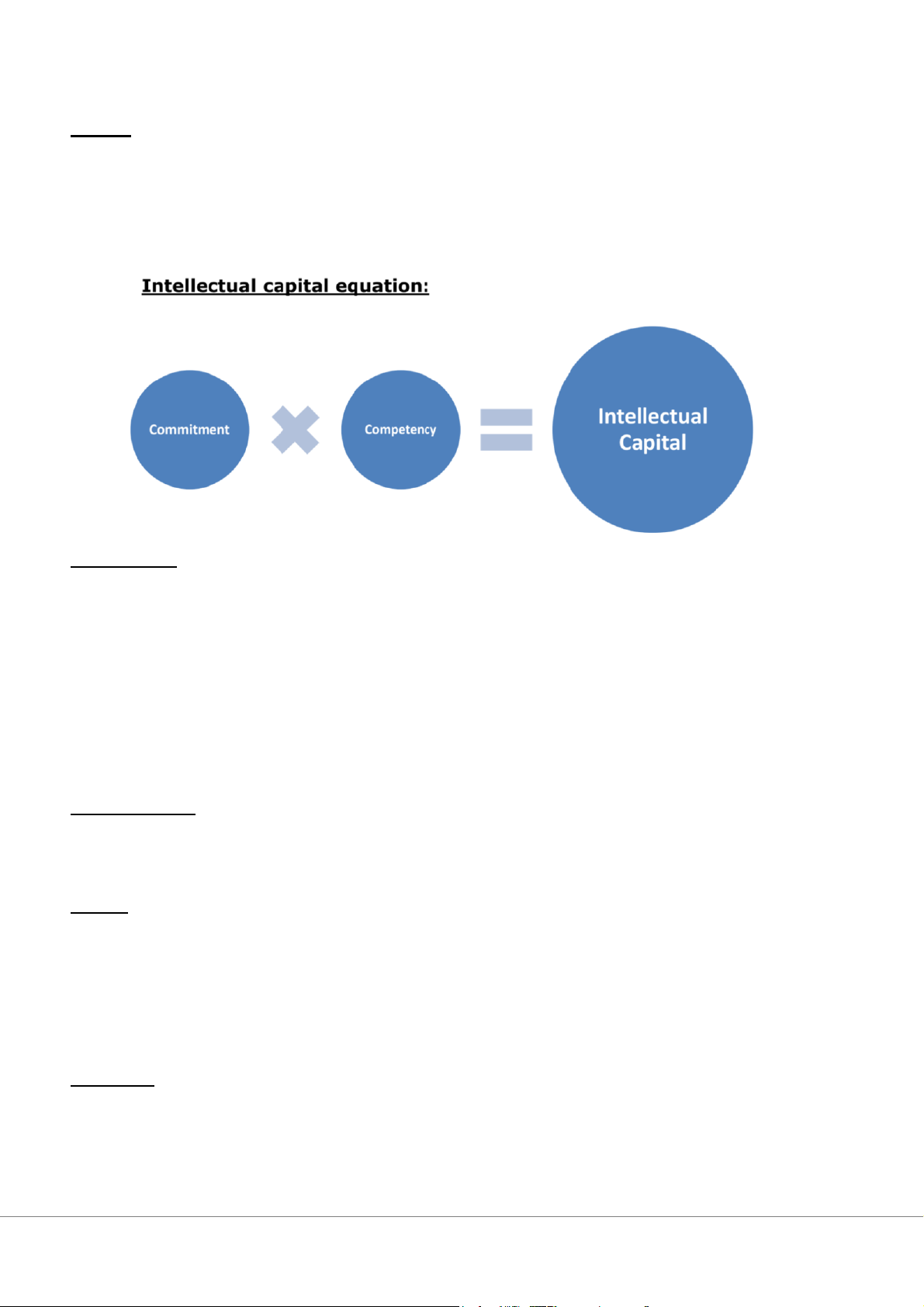
- Intellectual capital is the collective brainpower or shared knowledge of a workforce
that can be used to create value
- A knowledge worker’s mind is a critical asset to employers and adds to the intellectual capital of an organization Technology
- Tech IQ is a person’s ability to use technology to stay informed:
• Checking inventory, making a sales transaction, ordering supplies • Telecommuting • Virtual teams
• Effective use of online resources o Databases o Job searches o Recruiting o Social Media Globalization
- The worldwide interdependence of resource flows, product markets, and business
competition that characterize our economy
- Job migration occurs when firms shift jobs from one country to another Ethics
- Code of moral principles that set standards of conduct of what is “good” and “right” in one’s behavior
Ethical expectations for modern businesses:
- Integrity and ethical leadership at all levels - Social responsibility - Sustainability Diversity
- Workforce diversity reflects differences with respect to gender, age, race, ethnicity,
religion, sexual orientation, and able-bodiedness
- A diverse and multicultural workforce both challenges and offers opportunities to employers
How diversity bias can occur in the workplace: - Prejudice - Discrimination - Glass ceiling effect Careers
- Organizations consist of three types of workers, sometimes referred to as a shamrock organization: o Permanent full time workers
o Freelance or contract workers o Temporary part-time workers - Free-agent economy
People change jobs more often, and many work on independent contracts - Self-management
Ability to understands oneself, exercise initiative, accept responsibility, and learn from experience Organization
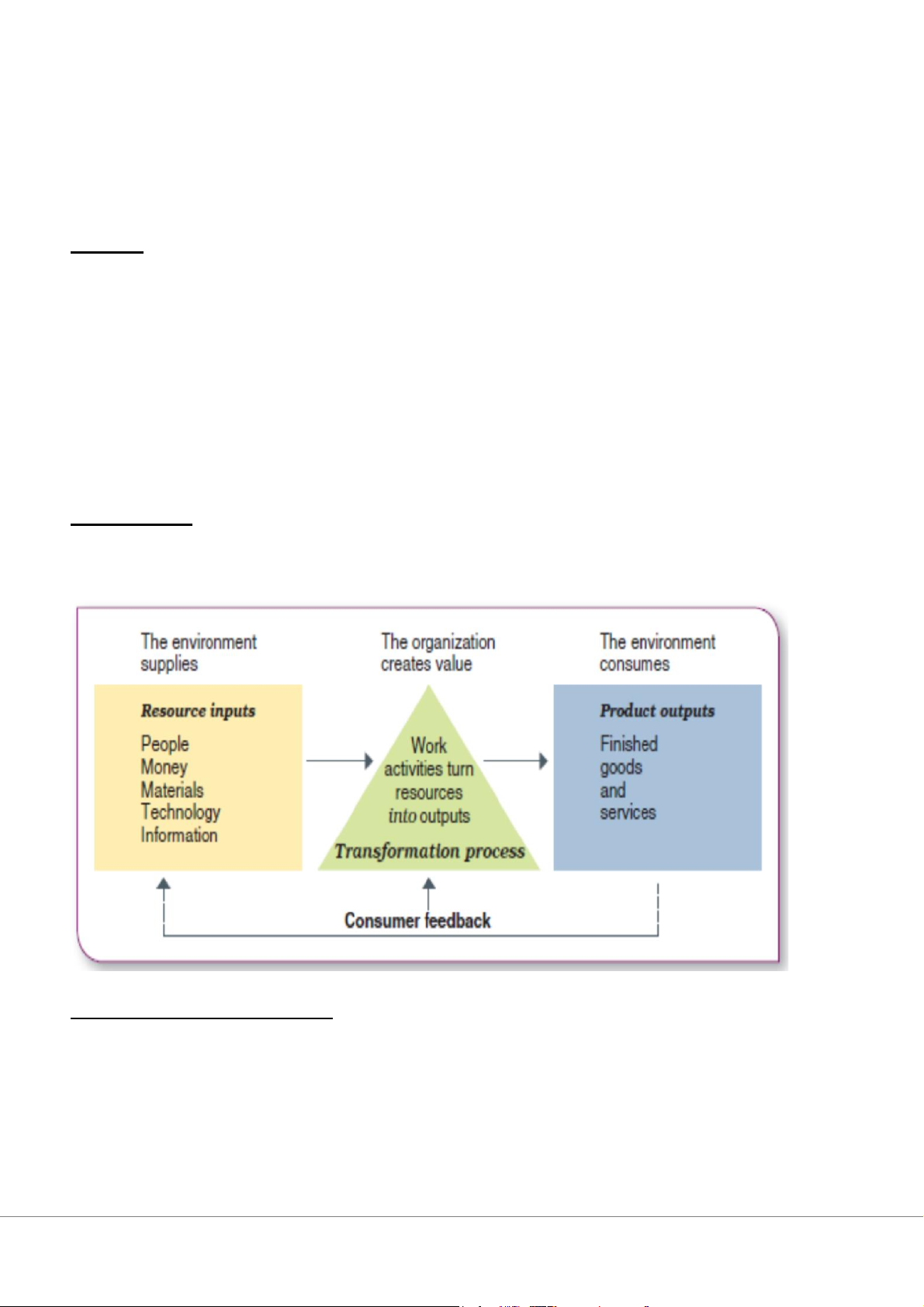
- A collection of people working together to achieve a common purpose
- Organizations provide useful goods and/or services that return value to society and satisfy customer needs
Figure 1.1 Organizations as open systems interact with their environment Organizational performance
- “Value creation” is a very important notion for organizations
- Value is created when an organization’s operations adds value to the original cost of resource inputs - When value creation occurs: • Businesses earn a profit
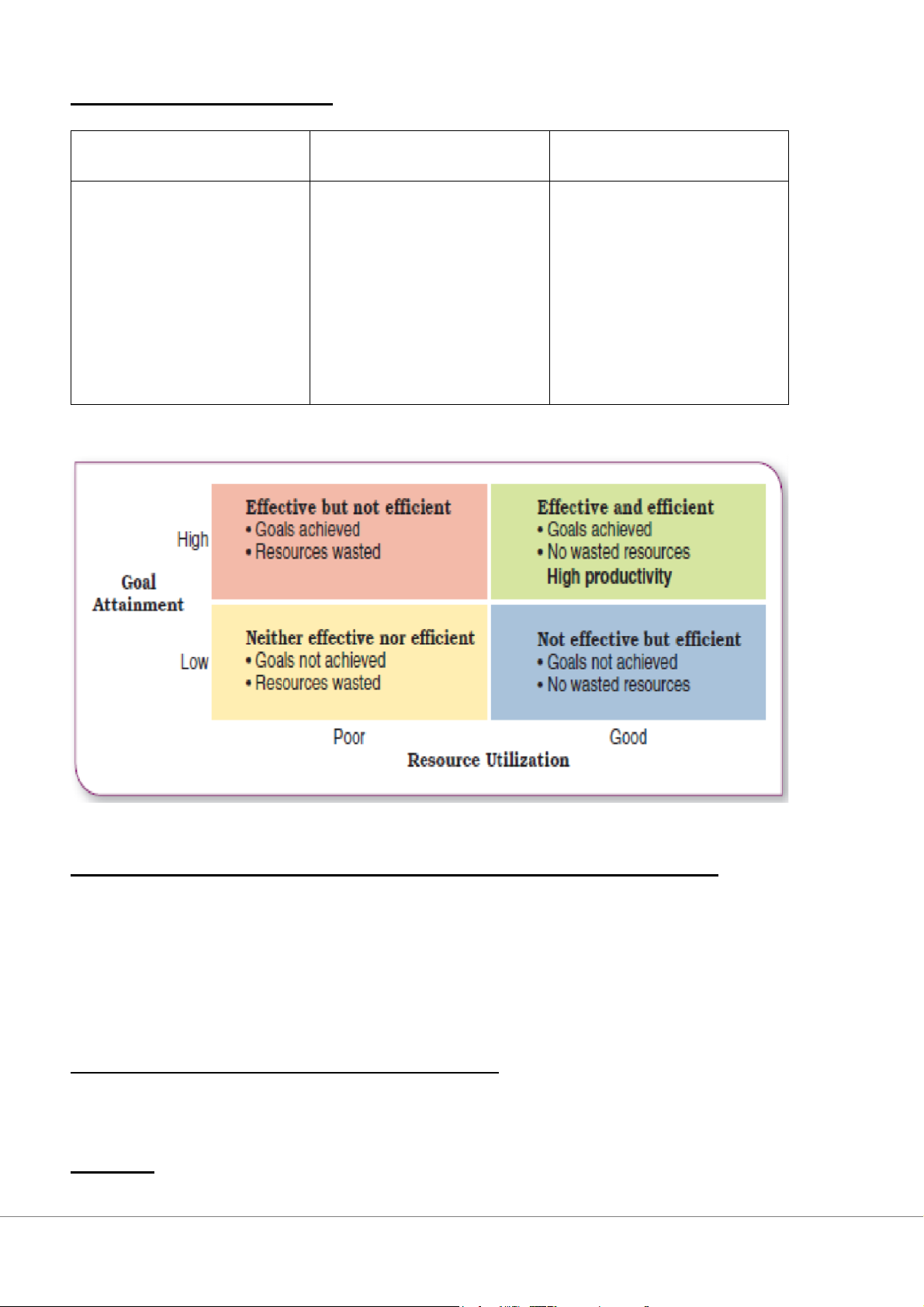
• Nonprofit organizations add wealth to society Organizational performance Productivity Performance Performance efficiency effectiveness An overall An output An input measure of the measure of task measure of the quantity and or goal resource costs quality of work accomplishment associated with performance goal with resource accomplishment utilization taken into account
Figure 1.2 Productivity and the dimensions of organizational
Workplace changes that provide a context for studying management ...
- Focus on valuing human capital
- Demise of “command-and-control” - Emphasis on teamwork - Preeminence of technology - Importance of networking - New workforce expectations
- Priorities on sustainability
Importance of human resources and managers
- People are not ‘costs to be controlled ’
- High performing organizations treat people as valuable strategic assets
- Managers must ensure that people are treated as strategic assets Manager
- Directly supports, activates and is responsible for the work of others
- The people who managers help are the ones whose tasks represent the real work of t organization Levels of management
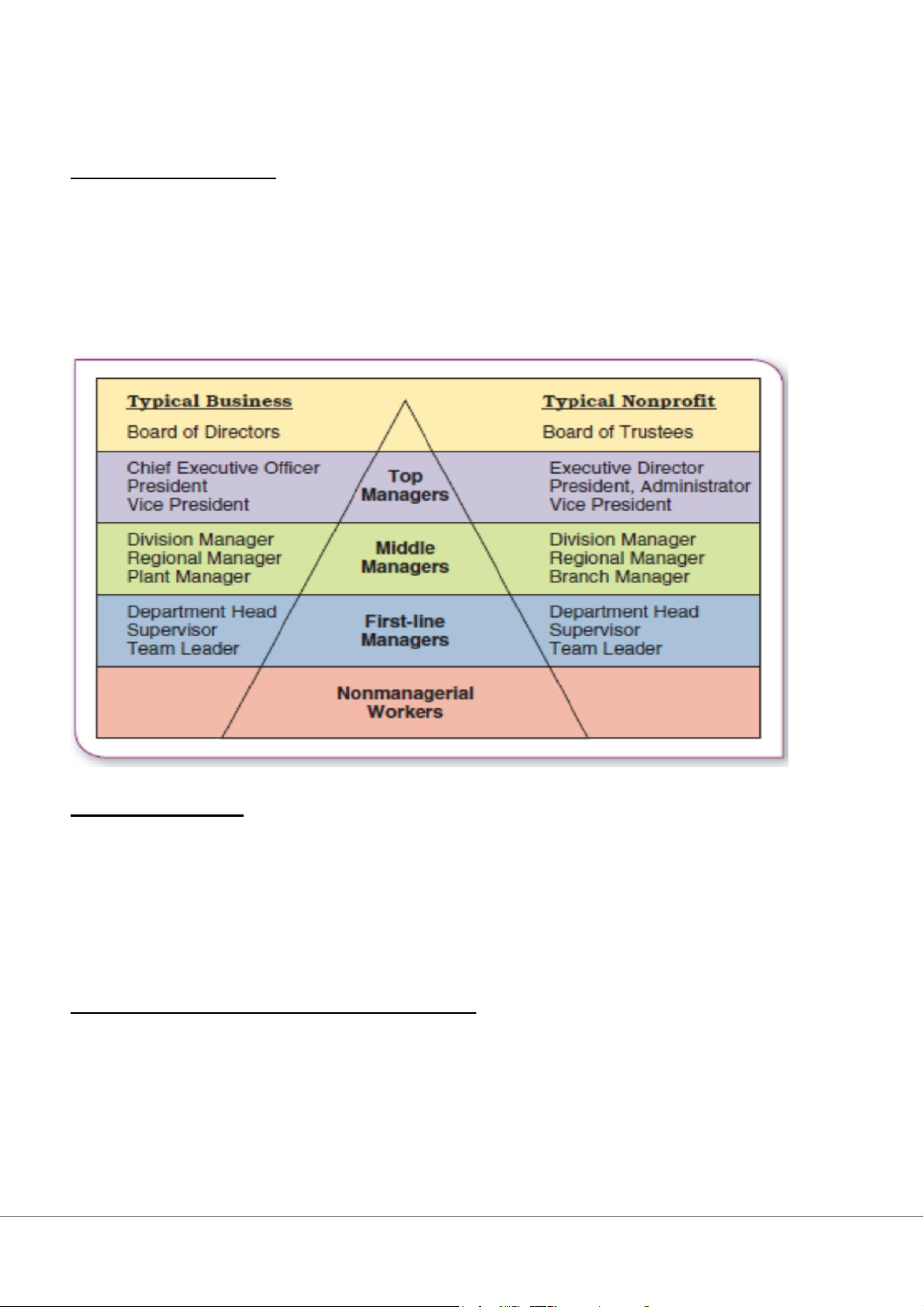
- Board of directors make sure the organization is run right
- Top managers are responsible for performance of an organization as a whole or for on of its major parts
- Middle managers oversee large departments or divisions
- Team leaders supervise non-managerial workers
Management levels in a typical business and non-profit organizations Types of managers
- Line managers are responsible for work activities that directly affect organization’s outputs
- Staff managers use technical expertise to advise and support the efforts of line worker
- Functional managers are responsible for a single area of activity
- General managers are responsible for more complex units that include many functiona areas
- Administrators work in public and nonprofit organizations
Managerial performance and accountability
- Accountability is the requirement to show performance results to a supervisor
- Effective managers help others achieve high performance and satisfaction at work Corporate Governance
- Board of directors hold top management responsible for organizational performance • Financial performance • Ethical performance • Sustainability Quality of work life (QWL)
- An indicator of the overall quality of human experiences in the workplace QWL indicators: - Fair pay - Safe working conditions
- Opportunities to learn and use new skills
- Room to grow and progress in a career
- Protection of individual rights
- Pride in work itself and in the organization
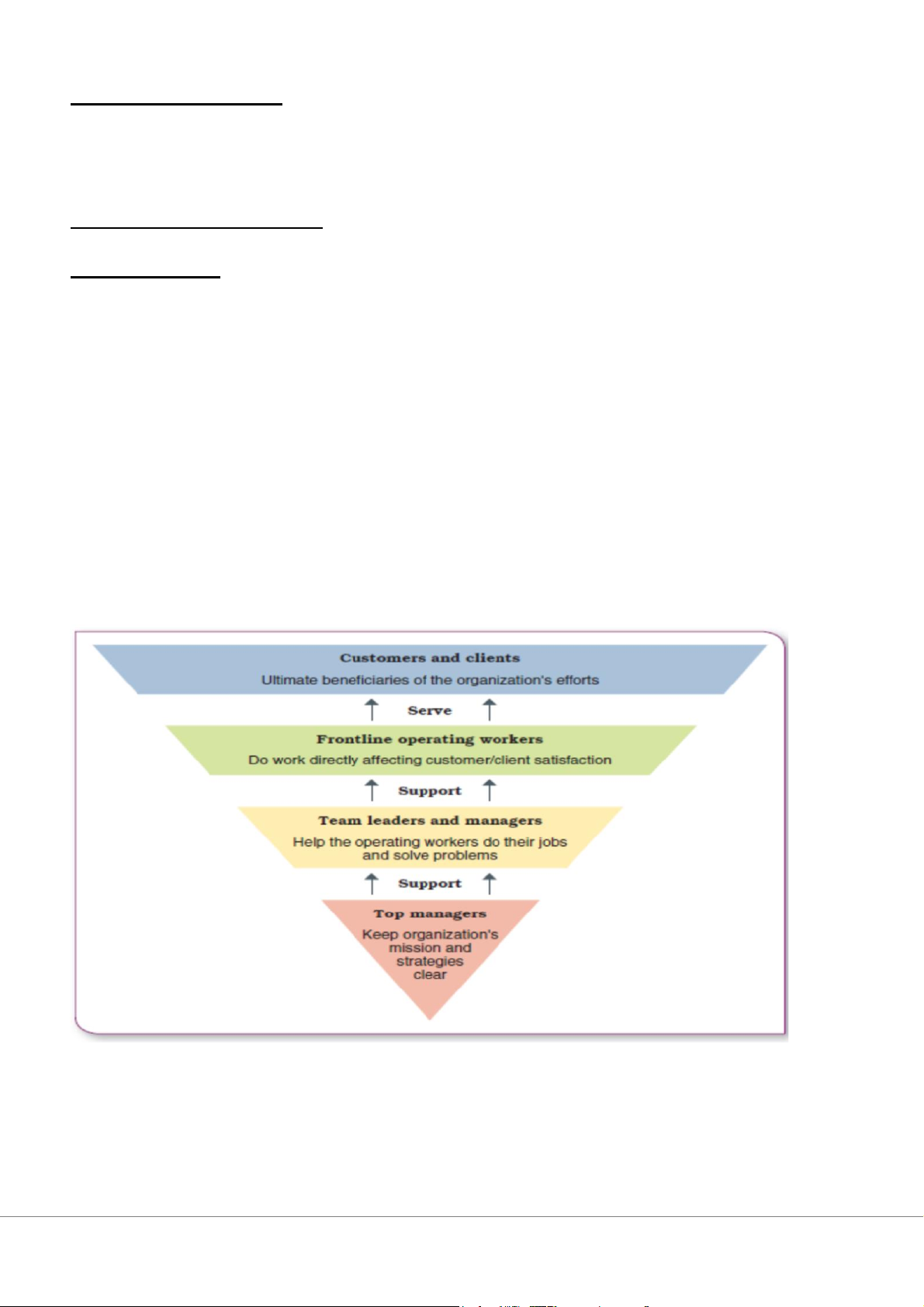
The organization as an upside-down pyramid
- Each individual is a value-added worker
- A manager’s job is to support workers’ efforts
- The best managers are known for helping and supporting
- Customers at the top served by workers who are supported by managers
The organization viewed as an upside-down pyramid
- Managers achieve high performance for their organizations by best utilizing its human and material resources
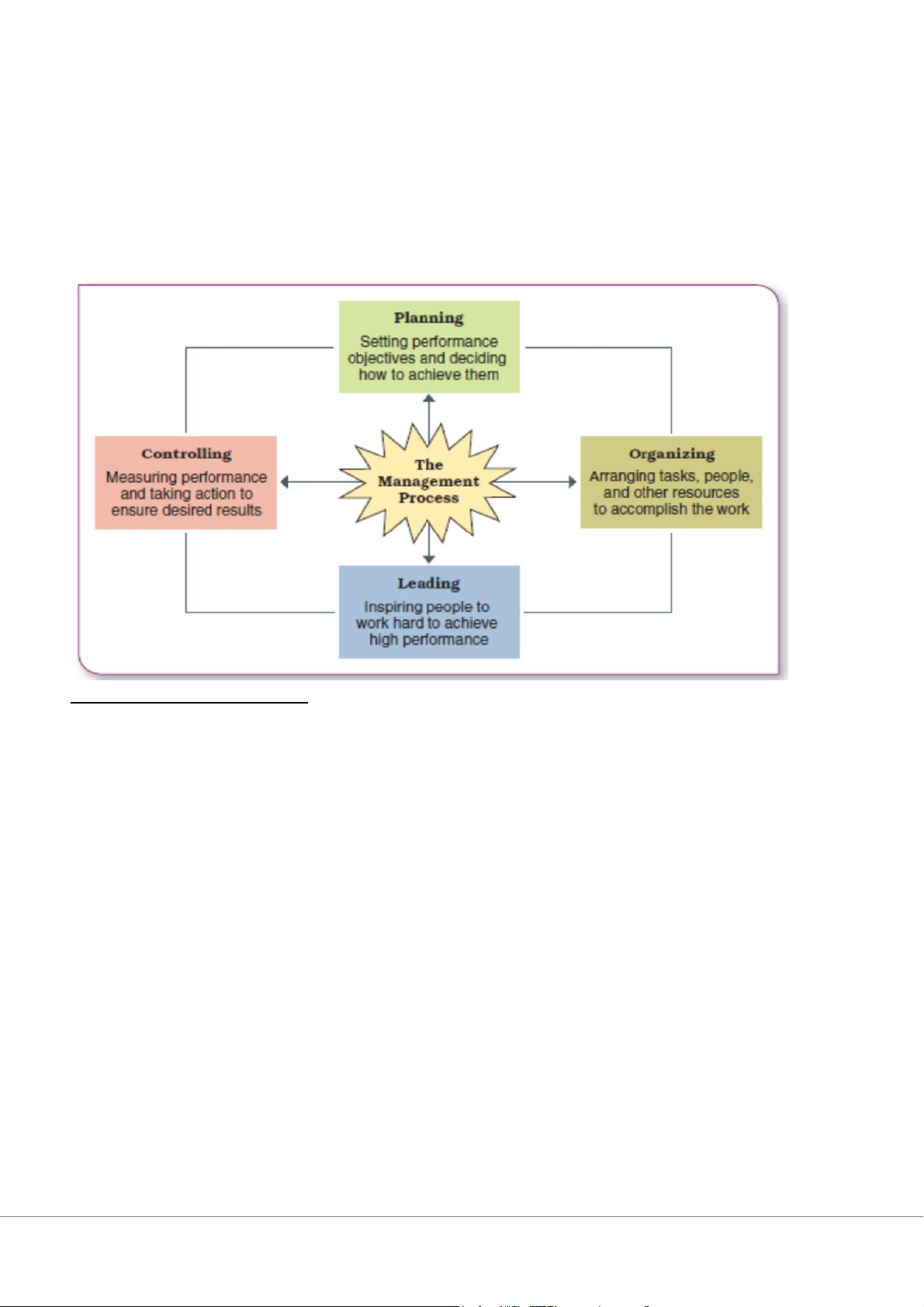
- Management is the process of planning, organizing, leading, and controlling the use o
resources to accomplish performance goals
- All managers are responsible for the four functions
- The functions are carried on continually FOUR functions of management Functions of management - Planning
The process of setting objectives and determining what actions should be taken to accomplish them - Organizing
The process of assigning tasks, allocating resources, and coordinating work activities - Leading
The process of arousing people’s enthusiasm to work hard and direct their efforts to achieve goals - Controlling
The process of measuring work performance and taking action to ensure desired results
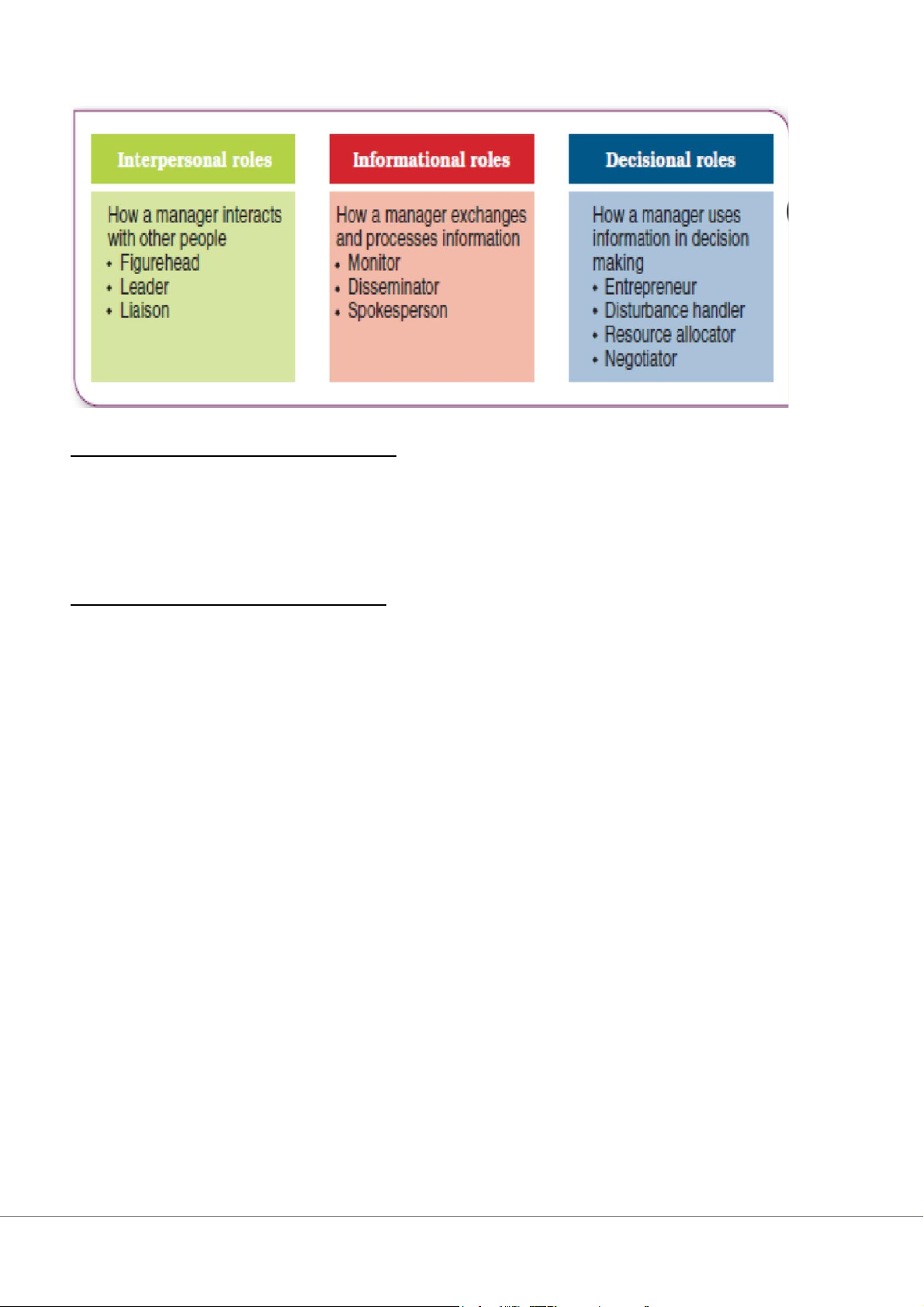
Mintzberg’s 10 Managerial Roles
Characteristics of managerial work - long hours - intense pace - fragmented and varied tasks - many communication media
- filled with interpersonal relationships
Managerial agendas and networks - Agenda setting
Develops action priorities for accomplishing goals and plans - Networking
Process of creating positive relationships with people who can help advance agendas - Social capital
Capacity to get things done with help - Learning
The change in a behavior that results from experience - Lifelong learning
The process of continuously learning from daily experiences and opportunities
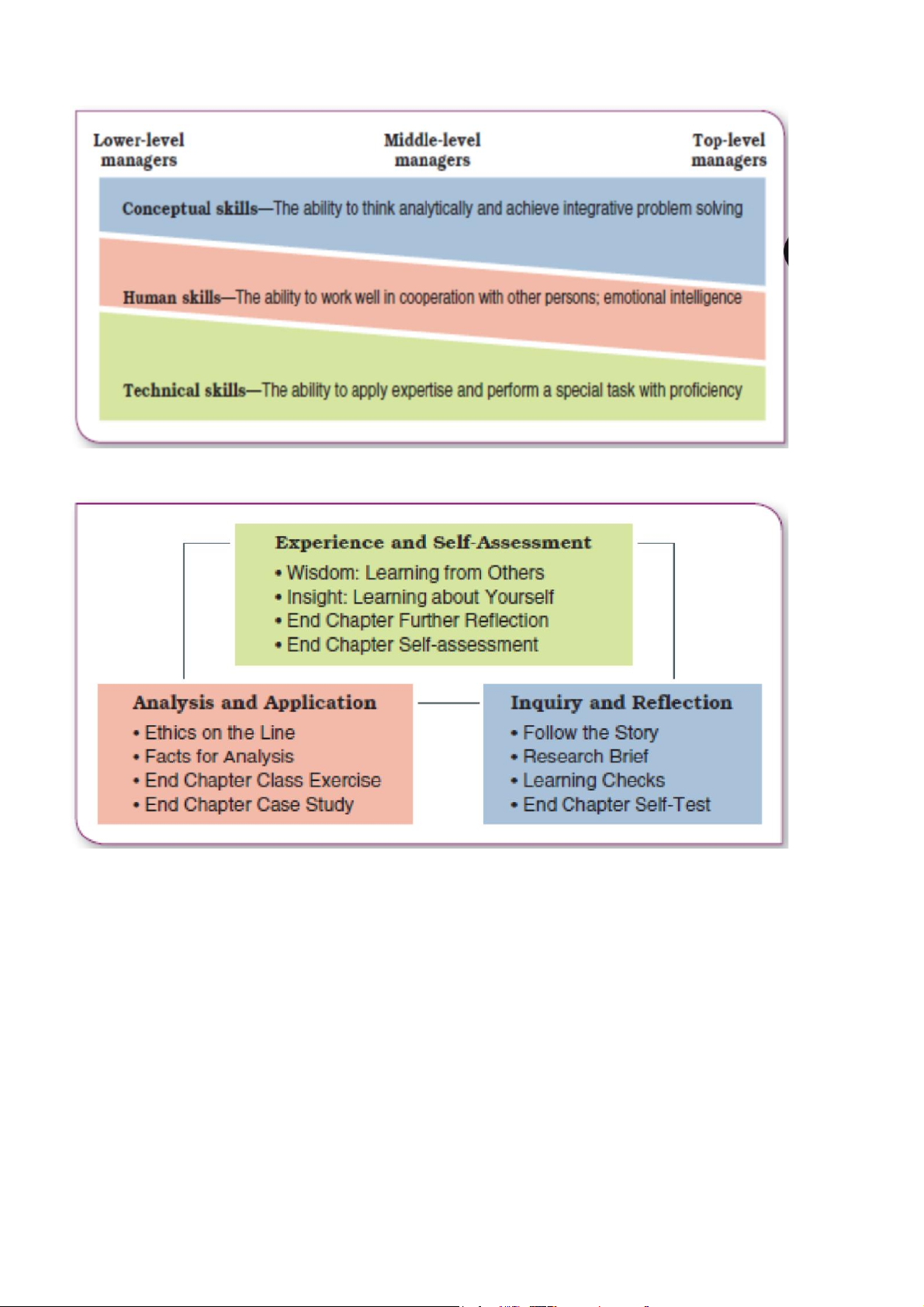
Katz’s Essential Managerial Skills
Learning model for developing managerial skills and competencies
Tài liệu liên quan:
-
CHAP 1: Introduction to Management Concepts and Functions môn Principles of Management | Trường Đại học Quốc tế, Đại học Quốc gia Thành phố Hồ Chí Minh
19 10 -
Guidelines for group’s assignments: Analysing management issues of a FDI company based inVietnam môn Principles of Management | Trường Đại học Quốc tế, Đại học Quốc gia Thành phố Hồ Chí Minh
17 9 -
Financial Planning to Achieve 300m VND Goal in 3 Years môn Principles of Management | Trường Đại học Quốc tế, Đại học Quốc gia Thành phố Hồ Chí Minh
17 9 -

A Case Study in Fast Fashion Success môn Principles of Management | Trường Đại học Quốc tế, Đại học Quốc gia Thành phố Hồ Chí Minh
16 8 -
Chap 16 Hierarchy of Needs Theory and Applications môn Principles of Management | Trường Đại học Quốc tế, Đại học Quốc gia Thành phố Hồ Chí Minh
17 9