Chapter 15: Individual Behavior and the Role of Ambition in the Workplace môn Principle of Management | Trường Đại học Quốc tế, Đại học Quốc gia Thành phố Hồ Chí Minh
Nussbaum’s story, they can tend toward low performance, poor customer service, absenteeism, and even antisocial behavior. But when they work in supportive settings, positive behavior sets—higher performance, less with- drawal and dysfunctio. Tài liệu giúp bạn tham khảo, ôn tập và đạt kết quả cao. Mời đọc đón xem!
Môn: Principles of Management 314 tài liệu
Trường: Trường Đại học Quốc tế, Đại học Quốc gia Thành phố Hồ Chí Minh 2 K tài liệu
Tác giả:















Preview text:
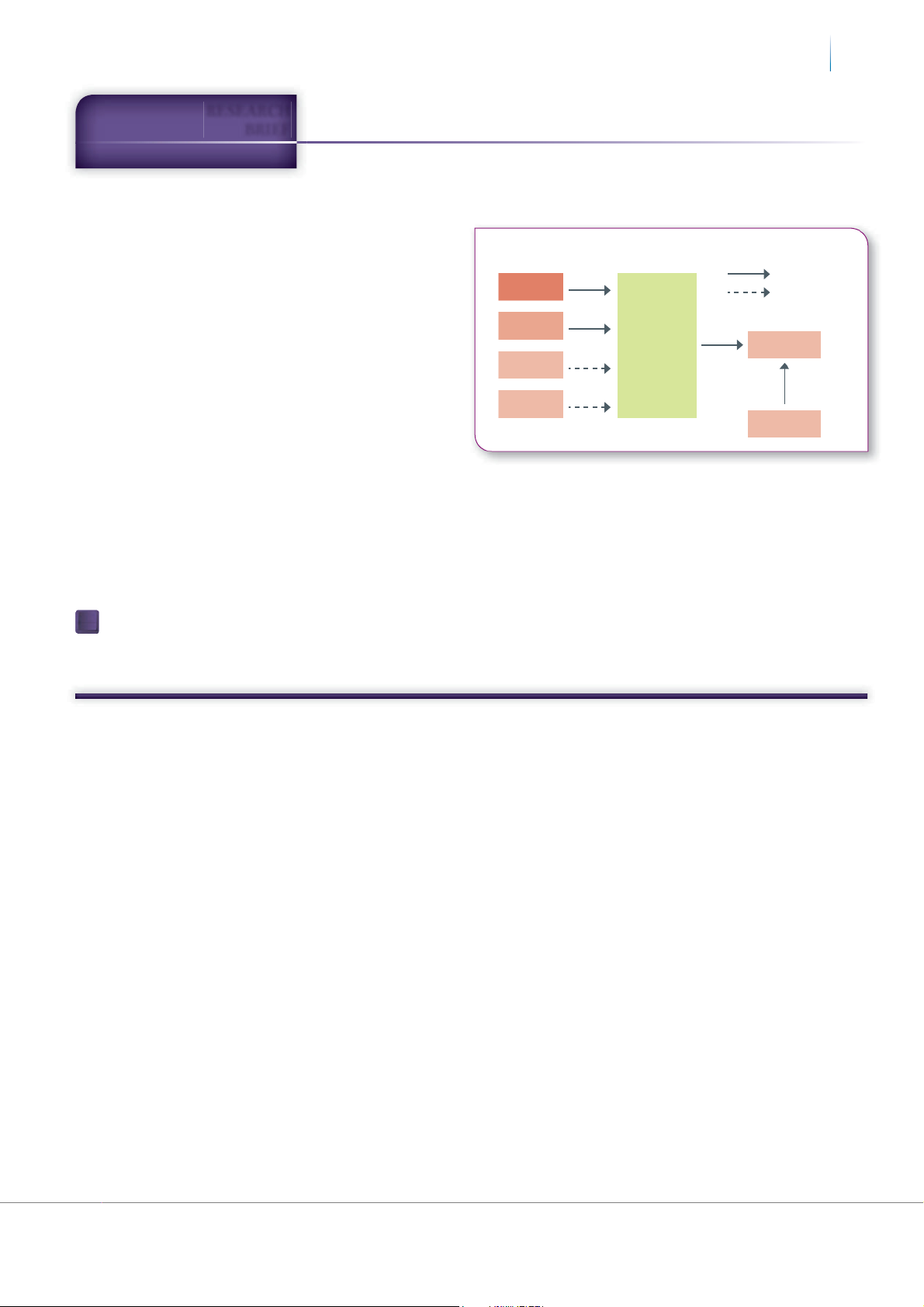
Behavior > AMBITION Insight Learning
When it comes to understanding
the fi rst obstacles appeared. Ambi-
people at work, one of the big diff er-
tion in this sense is something to be About Yourself
ences is often ambition, the desire to
admired and developed both in others
achieve or to accomplish something. and in ourselves.
It shows up in personality as a sense of
But there’s also a potential downside
competitiveness and the urge to be the
to ambition. Charan says people Personal Traits best at something.2
blinded by ambition can end up Associated with
Scholar and consultant Ram Charan sacrifi cing substance for superfi ci- People Who Perform
cal s ambition a “personal diff erentiator” ality and even sacrifi cing right for
that separates “people who perform
wrong. Overly ambitious people • Ambition—to achieve
from those who don’t.”3 It was a driving may overstate their accomplish- • Drive—to solve
force in Sara Blakely’s success story at
ments to themselves and others. • Tenacity—to persevere
Spanx. Less ambitious persons could
Th ey may try to do too much and • Confi dence—to act
have gotten the same idea, but failed to end up accomplishing too little. • Openness—to experience
pursue it as a business venture. Or they And, ambitious people who lack • Realism—to accept
might have tried to make a business
integrity can also get trapped by • Learning—to grow • Integrity—to fulfi l
out of it, but ended up quitting when corruption and misbehavior.4
BUILD SKILLS AND COMPETENCIES AT END OF CHAPTER YOURSELF BETTER
■ Engage in Further Refl ection on Your Ambition
■ Take the Self-Assessment—Internal/External Control
■ Prepare for the Team Exercise—Job Satisfaction Preferences
■ Solve the Career Situations in Individual Behavior
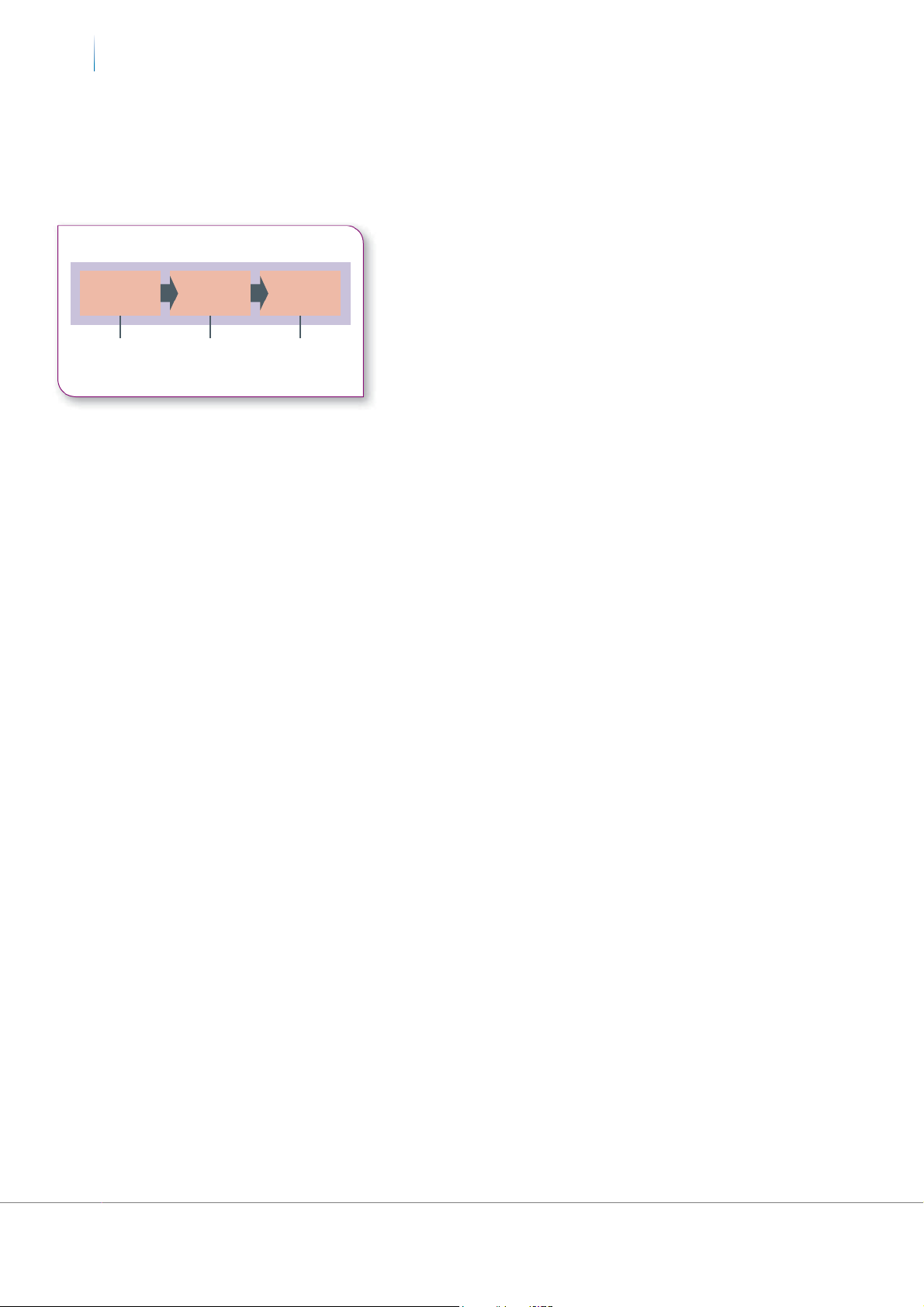
■ Analyze the Case Study—“Panera: Growing a Company with Personality” D L A E S A H R B N O IN A G RD Individual Behavior 15 TAKEAWAY 1 TAKEAWAY 2 TAKEAWAY 3 TAKEAWAY 4 Perception Personality Attitudes Emotions, Moods, • Perception and • Big fi ve personality • What is an attitude? and Stress psychological contracts dimensions
• What is job satisfaction? • Emotions • Perception and
• Myers-Briggs personality • Job satisfaction and its • Moods attribution type indicator outcomes • Stress • Perception tendencies • Personal conception and and distortions emotional adjustment • Sources of stress • Perception and traits impression management LEARNING CHECK 1 LEARNING CHECK 2 LEARNING CHECK 3 LEARNING CHECK 4 What is it liên quan giữa 3 cái
In his books, Leadership Is an Art and Leadership Jazz, Max DePree, former
chairperson of furniture maker Herman Mil er, Inc., talks about a millwright
who worked for his father. When the man died, DePree’s father, wishing to
express his sympathy to the family, went to their home. Th ere he listened
as the widow read some beautiful poems which, to his father’s surprise, the
mil wright had written. DePree says that he and his father often wondered,
“Was the man a poet who did mil wright’s work, or a mil wright who wrote
poetry?” He summarizes the lesson this way: “It is fundamental that leaders
endorse a concept of persons.”5
Contrast that story with this one. Some years ago, Karen Nussbaum found-
ed an organization cal ed 9 to 5 devoted to improving women’s salaries and
promotion opportunities in the workplace. She started it after leaving her
job as a secretary at Harvard University. Describing what
she calls “the incident that put her over the edge,” Nuss- Individual Behavior Sets
baum says: “One day I was sitting at my desk at lunchtime,
when most of the professors were out. A student walked s —task perfor-
mance, customer service, productivity
into the off i ce and looked me dead in the eye and said, ‘Isn’t
anyone here?’”6 Nussbaum founded 9 to 5 to support her —absenteeism, turnover, job disengagement
commitment to “remake the system so that it does not pro- duce these individuals.” —helping, volun- teering, job engagement
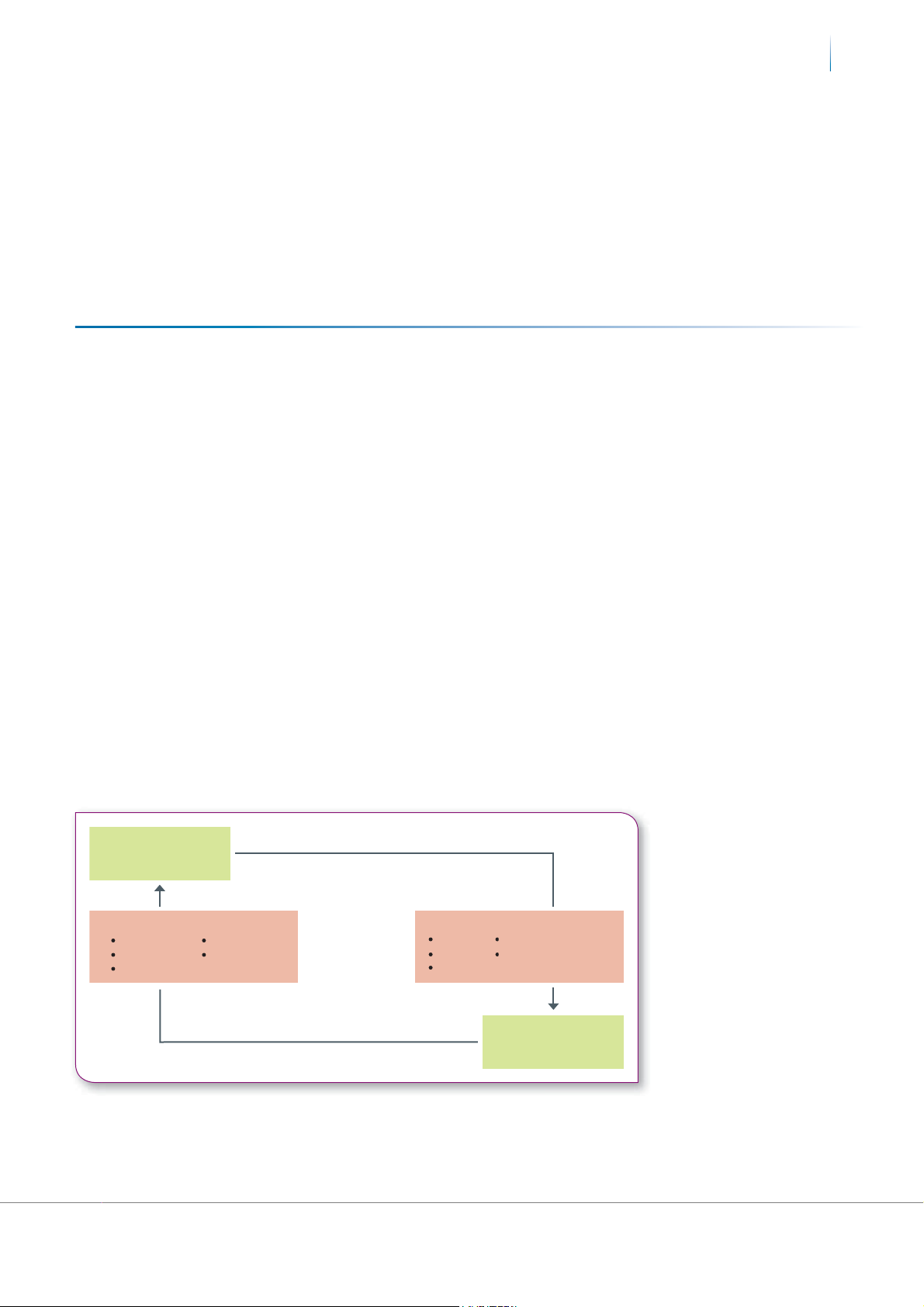
Such things as perceptions, personalities, attitudes, emo- —antisocial
tions, and moods infl uence individual behavior—the good
behavior, intentional wrongdoing
and the bad. When people work without respect, as in 378 Perception 379
Nussbaum’s story, they can tend toward low performance, poor customer
service, absenteeism, and even antisocial behavior. But when they work in
supportive settings, positive behavior sets—higher performance, less with-
drawal and dysfunction, and helpful citizenship—are more likely. As Max
DePree says: “We need to give each other space so that we may both give
and receive such beautiful things as ideas, openness, dignity, joy, healing, and inclusion.”7 Perception
Perception is a major infl uence on individual behavior. It is the process through
Perception is the process through
which people receive and interpret information from the environment. It aff ects the which people receive, organize, and interpret information from the
impressions we form about ourselves, other people, and daily life experiences. And environment.
importantly, we behave according to these perceptions.8 Perception acts as a screen
or fi lter through which information passes before we respond to it. Because percep-
tions are infl uenced by such things as cultural background, values, and other per-
sonal and situational circumstances, people can and do perceive the same people,
things, or situations diff erently.
Perception and Psychological Contracts
One way in which perception infl uences individual behavior is through the psycho- A psychological contract is the set
logical contract, or what the individual expects in the employment relationship.
of individual expectations about the 9 employment relationship.
Figure 15.1 shows that a healthy psychological contract off ers a balance between
individual contributions made to the organization and inducements received. Con-
tributions are work activities, such as eff ort, time, creativity, and loyalty. Induce-
ments are what the organization gives to the individual in exchange for these con-
tributions. Th ey include pay, fringe benefi ts, training and opportunities for personal
growth and advancement, and job security. Offers Contributions Individual
Serving needs of the individual
Serving needs of the organization Pay Opportunity Effort Loyalty Training Respect Time Commitment Benefits • Security Creativity Organization Offers Inducements
FIGURE 15.1 Components in the psychological contract. 380 INDIVIDUA BL E HAVIOR
Th e ideal psychological contract is one in which the exchange of values is per-
ceived as fair. Problems are likely to occur when the psychological contract is per-
ceived as unbalanced or broken. Individuals who sense they are getting less from
the organization than they are giving, for example, might try to compensate through
lower performance, withdrawal, and poor citizenship. Perception and Attribution
Attribution is the process of explaining
Perception also infl uences individual behavior through attribution, the process of events.
developing explanations for events. What happens when you perceive that some-
one else in a job or student group isn’t performing up to expectations? How do you
explain it? And given your explanation, how do you react?
Attribution theory describes how people try to explain the behavior of them-
Fundamental attribution error over-
selves and other people, while often making errors in the process.10 Fundamen-
estimates internal factors and underes-
tal attribution error occurs when someone’s performance problems are blamed
timates external factors as infl uences on someone’s behavior.
more on internal failures of the individual than external factors relating to the
environment. In the case of poor-quality work, for example, a team leader might
blame a person’s lack of job skil s or laziness—an unwillingness to work hard
enough. In response, the leader may try to resolve the problem through training,
reward or punishment, or even replacement. Because fundamental attribution
error neglects possible external explana- Fundamental They are I am Self-Serving
tions for the poor-quality work, such as Attribution Error performing performing Bias
unrealistic time pressures or bad technol-
“It’s their fault.” poorly poorly
“It’s not my fault.”
ogy, opportunities to improve these factors easily get missed.
Attribution theory also recognizes ten-
Self-serving bias explains personal
dencies toward self-serving bias. Th is happens when individuals blame personal
success by internal causes and personal
failures or problems on external causes while attributing successes to internal failures by external causes.
causes. You can recognize it as the “It’s not my fault!” error when something is
wrong and as the “It was me, I did it!” error when things go right. Th ink of this the
next time you blame your instructor for a poor course grade or are quick to claim
credit for a team project that received a high grade. Self-serving bias creates a false
sense of confi dence. It causes us to overlook opportunities for personal change and development.
Smal Firm Helps People Take Pride in Being Th emselves
Th e individual counts at Root Learning, a small management consulting fi rm in
Sylvania, Ohio, ranked by the Wal Street Journal as one of America’s Top Small
Workplaces. Individual diff erences are a source of pride. Caricature drawings of
each employee are prominently hung in the lobby. Th e goal is to celebrate diversity
and uniqueness while highlighting each person’s special interests and talents. CEO
Jim Haudan sees this as a way of making sure that everyone is viewed as a whole
person. “If we pigeon-hole or just identify any of our people as a ‘proofer’ or an ‘ana-
lyst,’ it grossly limits what they’re capable of,” he says. Courtesy Root Learning Perception 381 Recommended Reading
Women Count: A Guide to Changing the World
(Purdue University Press, 2010) by Susan Bulkeley Butler
Author Susan Bulkeley Butler says women need to think big, take action, assert
their leadership value, and help one another. She speaks from experience as the
fi rst female partner at Accenture. If some rebalancing of work and home lives is
necessary, employers should work with women to redefi ne the roles to achieve a
better fi t. Supportive human resource policies can only pay off . Women have real
leadership advantages when it comes to things like communication, compassion,
listening, and even keeping egos in check. Th e world needs the qualities they have
to off er. “Women count,” says Butler. Th ey “have the numbers, the education, the
track record, and the characteristics to change the world.” Her fi nal appeal is to Cove S r de usa sign by A n Bulkele nna y B C utl hr er i astian. R nd Pur epr due oduc Uni ed c versi our t t y P e r m s s e y of n
and women alike: “It’s time to join the new movement. Let’s get going.”
Perception Tendencies and Distortions
A variety of perceptual tendencies and distortions also infl uence the way we com-
municate with and behave toward one another. Th ey include the use of stereotypes,
halo eff ects, selective perception, and projection. And importantly, they can each
cause us to lose sight of important individual diff erences. Stereotypes
A stereotype occurs when someone is identifi ed with a group or category, and then A stereotype occurs when attributes
oversimplifi ed attributes associated with the group or category are used to describe commonly associated with a group are assigned to an individual.
the individual. We al make use of stereotypes, and they are not always negative or
il -intended. But those based on such things as gender, age, and race can, and unfor- tunately do, bias perceptions.
Although employment barriers caused by gender stereotypes are fal ing, for ex-
ample, they can stil cause even everyday behavior to be misconstrued. Scene: A man
is talking with coworkers—stereotyped interpretation: he’s discussing a new project.
Scene: A woman is talking with coworkers—stereotyped interpretation: she’s gossip-
ing.11 And, only a smal portion of U.S. managers sent on international assignments
are women. Why? A Catalyst study of women in global business blames gender ste-
reotypes that place women at a disadvantage to men for these jobs. Th e perception
seems to be that women lack the abilities or wil ingness for working abroad.12 Halo Effects
A halo eff ect occurs when one attribute is used to develop an overal impression of
A halo eff ect occurs when one attribute
a person or situation. When meeting someone new, for example, the halo eff ect may
is used to develop an overal impression of a person or situation.
cause one trait, such as a pleasant smile, to trigger overal positive perceptions. A
unique hairstyle or manner of dressing, by contrast, may trigger negative perceptions.
Halo eff ect errors often show up in performance evaluations. One factor, such as a per-
son’s punctuality or pleasant personality, may become the “halo” for a positive overal
performance assessment even though a ful set of facts would show it is not deserved. 382 INDIVIDUA BL E HAVIOR Selective Perception
Selective perception is the tendency to Selective perception is the tendency to single out for attention those aspects of
defi ne problems from one’s own point
a situation or person that reinforce one’s existing beliefs, values, or needs.13 Infor- of view.
mation that makes us uncomfortable is screened out; comfortable information is
al owed in. What this often means in organizations is that people from diff erent
departments or functions—such as marketing and manufacturing—see things from
their own points of view and fail to recognize other points of view. One way to re-
duce this tendency and avoid the negative impact of selective perception is to be
sure to gather and be open to inputs and opinions from many people. Projection
Projection is the assignment of per-
Projection involves the assignment of personal attributes to other individuals. A clas-
sonal attributes to other individuals.
sic projection error is to assume that other people share our needs, desires, and values.
Suppose that you enjoy a lot of responsibility and chal enge in your work. Suppose, FOLLOW
> “YOU CAN DECIDE YOU’RE GOING TO BE HAPPY TODAY . . . THE LITTLE THINGS THE STORY IN LIFE ARE THE BIG THINGS”
Little Things Are Big Things at Life Is Good
company devoted to humor and humility. John says: “It’s
important that we’re saying ‘Life is good,’ not ‘Life is great’
or ‘Life is perfect’; there’s a big difference. . . . Don’t deter-
mine that you’re going to be happy when you get the new
car or the big promotion or meet that special person. You
can decide that you’re going to be happy today.” Accord-
ing to Bert: “The little things in life are the big things.” And
that’s the message of the Life Is Good brand.
So how did the two brothers turn a belief in happiness
into a successful fi rm? Well, they didn’t start with business
degrees or experience. They paved the road for prosperity
with good instincts, creativity, and positive views on life.
And they stuck to their values while learning about busi-
ness as their fi rm grew. They still live the brand while en-
Erick Jacobs/The New York Times/Redux Pictures
joying leisure pursuits like kayaking and ultimate Frisbee.
They also support philanthropies like Camp Sunshine for I
children with serious illnesses and Playmakers for trauma-
magine! Yes, you can! Go for it! Life is good . We’ll make tized children.
that: Life is really good! These thoughts can turn dreams
into realities. They’re also part and parcel of a multimillion-
dollar company that really is named Life is Good. YOUR TAKE?
It all began with two brothers—Bert and John Jacobs—
making t-shirts for street sales. Picture a card-table set up
Bert and John Jacobs built a successful company with a
at a Boston street fair and two young brothers setting out
smile and feel-good approach to life. Just how far can pos-
48 t-shirts printed with a smiling face—Jake—and the words itive thinking carry them? Does there come a point where
“Life is good.” Then picture the cart empty, with all shirts
business need for good old-fashioned management kicks
sold for $10 apiece, and two brothers happily realizing they
in? How about us? Is there more to be gained by looking
might—just might—have a viable business idea.
for positives than negatives in our everyday experiences
From that modest beginning, Bert—Chief Executive
and relationships? And when it comes to our lives— your
Optimist—and John—Chief Creative Optimist—built a
life—who’s in charge of the “good” factor? Personality 383
too, that you are the newly appointed manager for a team whose jobs you consider
dul and routine. You might move quickly to give team members more responsibilities
and chal enge. But this may not be a good decision. Instead of designing jobs to best
fi t members’ needs, you have designed the jobs to fi t your needs. Th e fact is that some
people might be quite satisfi ed doing jobs that seem overly routine to you. Projection
errors can be control ed through self-awareness and a wil ingness to communicate and
empathize with other persons. To do this you must try to see things through their eyes.
Perception and Impression Management
Richard Branson, CEO of the Virgin Group, is one of the richest and most famous
executives in the world. He’s also known for informality and being a casual dresser.
One of his early successes was launching Virgin Airlines as a competitor of British
Airways (BA). Th e former head of BA, Lord King, said: “If Richard Branson had worn
a shirt and tie instead of a goatee and jumper, I would not have underestimated
him.”14 Th is shows how much impressions can count—both positive and negative.
Scholars discuss impression management as the systematic attempt to infl u-
Impression management is the ence how others perceive us.
systematic attempt to infl uence how
15 It’s real y a matter of routine in everyday life. We others perceive us.
dress, talk, act, and surround ourselves with things that convey a desirable image to
other persons. When wel done, impression management can help us to advance in
jobs and careers, form relationships with people we admire, and even create path-
ways to group memberships. And some of its basic tactics are worth remembering.
Dress in ways that convey positive appeal—for example, know when to “dress up”
and when to “dress down.” Use words to fl atter other people in ways that generate
positive feelings toward you. Make eye contact and smile when engaged in conver-
sations so as to create a personal bond. Display a high level of energy that is sugges-
tive of lots of work commitment and initiative.16 LEARNING CHECK 1
TAKEAWAY QUESTION 1 How do perceptions infl uence individual behavior?
Be sure you can • defi ne perception
• explain the benefi ts of a healthy psychological contract • explain
fundamental attribution error and self-serving bias
• defi ne stereotype, halo ef ect, selective perception, and
projection and il ustrate how each can adversely affect work behavior
• explain impression management Personality
How often do you complain about someone’s “bad personality” or tel a friend how
much you like someone because of their “nice personality”? Wel , the same holds true at
work. Perhaps you have been part of conversations like these: “I can’t give him that job;
with a personality like that there’s no way he can work with customers.” “Put Erika on
the project—her personality is perfect for the intensity that we expect from the team.”
We use the term personality in management to describe the profi le of enduring Personality is the profi le of charac-
characteristics that makes each of us unique. No one can doubt that a person’s per- teristics making a person unique from others.
sonality can have consequences for how she or he behaves and how that behavior
is regarded by others. Th e implications extend to our relationships with everyone
from family to friends to coworkers. 384 INDIVIDUA BL E HAVIOR
Big Five Personality Dimensions
Although there are many personality traits, some of the best known are on a short
list of fi ve that are especial y signifi cant in the workplace. Known as the Big Five,17 these personality traits are:
Extraversion is being outgoing,
1. Extraversion—the degree to which someone is outgoing, sociable, and asser- sociable, and assertive.
tive. An extravert is comfortable and confi dent in interpersonal relationships;
an introvert is more withdrawn and reserved.
Agreeableness is being good-natured,
2. Agreeableness—the degree to which someone is good-natured, cooperative, cooperative, and trusting.
and trusting. An agreeable person gets along wel with others; a disagreeable
person is a source of confl ict and discomfort for others.
Conscientiousness is being respon-
3. Conscientiousness—the degree to which someone is responsible, dependable,
sible, dependable, and careful.
and careful. A conscientious person focuses on what can be accomplished
and meets commitments; a person who lacks conscientiousness is careless,
often trying to do too much and failing, or doing little.
Emotional stability is being relaxed,
4. Emotional stability—the degree to which someone is relaxed, secure, and secure, and unworried.
unworried. A person who is emotional y stable is calm and confi dent; a per-
son lacking in emotional stability is anxious, nervous, and tense.
Openness to experience is being
5. Openness to experience—the degree to which someone is curious, open to
curious, receptive to new ideas, and
new ideas, and imaginative. An open person is broad-minded, receptive to new imaginative.
things, and comfortable with change; a person who lacks openness is narrow-
minded, has few interests, and is resistant to change. ETHICS ON THE LINE
> IF YOU WANT THE JOB, TAKE THE PERSONALITY TEST
Is Personality Testing in Your Future?
Thank you again for your interest in XYZ Corp. I look forward
to meeting you during the next step in our recruiting process. Sincerely, [signed] Human Resource Director
Getting a letter like this is great news. It’s a nice confi rmation
of your hard work and performance in col ege. You obviously
made a good fi rst impression. But have you thought about this
“personality test” thing? What do you know about them and
how they are used for employment screening? Some people
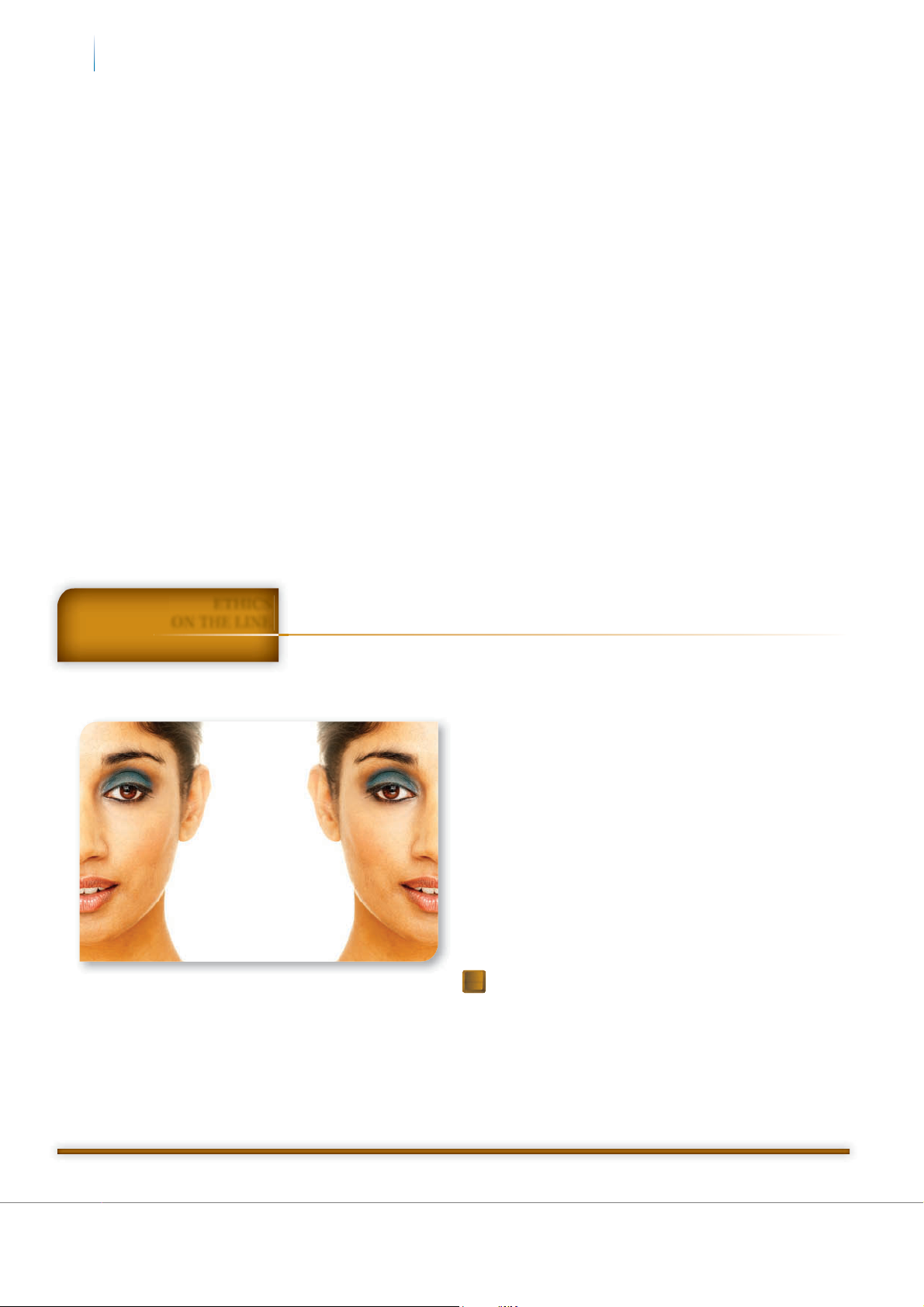
might even consider their use an invasion of privacy. © Rob Wilkinson/Alamy Limited ETHICS QUESTIONS
Dear I[ yaoum rv nearym pel egaoseesd hteo irenv]i:te you to a second round of What are the ethical issues associated with the use of personal-
screening interviews with XYZ Corporation. Your on-campus
ity testing? What responsibilities does an employer have if they
session with our representative went very wel , and we would
are being used? Should they be required to have data showing
like to consider you further for a ful -time position. Please con-
that personality tests actual y predict key areas of employee
tact me to arrange a visit date. We will need a ful day. The
performance on the job? Just when is personality testing inap-
schedule wil include several meetings with executives and your propriate and an invasion of privacy? How should all this be
potential team members, as wel as a round of personality tests. handled by a job candidate as in the case just presented? Personality 385
A considerable body of literature links the personality dimensions of the Big Five
model with individual behavior at work and in life overal . For example, conscien-
tiousness is a good predictor of job performance for most occupations. Extraver-
sion is often associated with success in management and sales.18 Indications are
that extraverts tend to be happier than introverts in their lives overal , that con-
scientious people tend to be less risky, and that those more open to experience are more creative.19
You can easily spot the Big Five personality traits in people with whom you work,
study, and socialize. But don’t forget that they also apply to you. Others form im-
pressions of your personality, and respond to it, just as you do with theirs. Manag-
ers often use personality judgments when making job assignments, building teams,
and otherwise engaging in the daily social give-and-take of work. Myers-Briggs Type Indicator
Th e Myers-Briggs Type Indicator is another popular approach to personality assess-
ment. It “types” personalities based on a questionnaire that probes into how people
act or feel in various situations. Cal ed the MBTI for short, it was developed by Kath-
erine Briggs and her daughter Isabel Briggs-Myers from foundations set forth in the
work of psychologist Carl Jung.20
Jung’s model of personality differences included three main distinctions. First
is how people differ in the ways they relate with others—by extraversion or in-
troversion, as just discussed. Second is how they differ in the ways they gather
information—by sensation (emphasizing details, facts, and routine) or by intu-
ition (looking for the “big picture” and being wil ing to deal with various possi-
bilities). Third is how they differ in ways of evaluating information—by thinking
(using reason and analysis) or by feeling (responding to the feelings and desires
of others). Briggs and Briggs-Myers used all three of Jung’s personality dimen-
sions in developing the MBTI. But they also added a fourth dimension that de-
scribes how people differ in the ways they relate to the outside world— judging
or perceiving. The four MBTI dimensions are:
• Extraverted vs. introverted (E or I)—social interaction: whether a person tends
toward being outgoing and sociable or shy and quiet.
• Sensing vs. intuitive (S or I)—gathering data: whether a person Sample Myers-Briggs Types
tends to focus on details or on the big picture in dealing with problems.
• ESTJ (extraverted, sensing, thinking,
• Th inking vs. feeling (T or F)—decision making: whether a person
judging)—decisive, logical, and quick
tends to rely on logic or emotions in dealing with problems.
to dig in; common among managers.
• Judging vs. perceiving (J or P)—work style: whether a person pre-
• ENTJ (extraverted, intuitive, thinking,
fers order and control or acts with fl exibility and spontaneity.
judging)—analytical, strategic, quick to
Sixteen possible MBTI personality types result from combi-
take charge; common for leaders.
nations of four dimensions just described.21 A sample of Myers-
• ISJF (introverted, sensing, judging, feel-
Briggs types often found in work settings is shown in the box.
ing)—conscientious, considerate, and
Such neat and understandable personality classifi cations have
helpful; common among team players.
made the Myers-Briggs Type Indicator popular in management.22
Employers and trainers like it because people can be taught both
• INTJ (introverted, intuitive, thinking,
judging)—insightful, free thinking,
to understand their own personality types, for example as an
determined; common for visionaries.
ESTJ or ISJF, and to learn how to work better with people having diff erent ones. 386 INDIVIDUA BL E HAVIOR
Personal Conception and Emotional Conscientiousness Adjustment Traits Emotional Agreeableness stability
In addition to the Big Five dimensions and the Myers-Briggs
Type Indicator, psychologists have long studied many other Extraversion Openness
personality traits. As shown in Figure 15.2, some with special Individual Personality
relevance to people at work include the personal conception Locus of Variations Self-monitoring
traits of locus of control, authoritarianism, Machiavellianism, control
and self-monitoring, as wel as the emotional adjustment trait
of Type A orientation.23 In general, you can think of a personal Authoritarianism Machiavellianism
conception trait as describing how people by personality tend Type A orientation
to relate with the environment, while an emotional adjustment = Big Five
trait describes how they are inclined toward handling stress and uncomfortable situations.
FIGURE 15.2 Commonp ersonal-
ity dimensions that infl uence human Locus of Control behavior at work.
Scholars have a strong interest in locus of control, recognizing that some people
Locus of control is the extent to
believe they are in control of their destinies, while others believe that what happens
which one believes that what happens is within one’s control.
to them is beyond their control.24 “Internals” are more self-confi dent and accept
responsibility for their own actions. “Externals” are more prone to blame others and
outside forces for what happens to them. Research suggests that internals tend to
be more satisfi ed and less alienated from their work. Authoritarianism
Authoritarianism is the degree to
Authoritarianism is the degree to which a person defers to authority and accepts
which a person tends to defer to
status diff erences.25 Someone with an authoritarian personality tends to act rigidly authority.
and be control-oriented when in a leadership capacity. Th is same person is likely to
act subservient and comply with rules when in a fol ower capacity. Th e tendency of
people with authoritarian personalities to obey can cause problems if they fol ow
orders to the point of acting unethical y or even il egal y. Machiavel ianism
In his 16th-century book, Th e Prince, Niccolo Machiavelli gained lasting fame
for giving his prince advice on how to use power to achieve personal goals.26 Th e
Does Success Come from Hard Work, Good Luck, or a Bit of Both?
A survey of LinkedIn members in 15 countries reports that 84% believe that luck infl u-
ences their careers—for good and bad. But they also say that luck is something we cre-
ate for ourselves, with good luck coming mostly to those who have a strong work ethic.
In addition to work ethic, other things believed to drive good luck include communi-
cation skills, networking, being fl exible, and acting on opportunities when they arise.
Japanese survey respondents considered themselves most lucky in their careers while Burazin/Masterfi le
Americans—with 49% feeling career luck—ranked in the middle. Attitudes 387
personality trait of Machiavellianism describes the extent to which someone is
Machiavellianism describes the extent
emotionally detached and manipulative in using power.
to which someone is emotional y 27 A person with a “high- detached and manipulative.
Mach” personality is viewed as exploitative and unconcerned about others, often
acting with the assumption that the end justifi es the means. A person with a “low-
Mach” personality, by contrast, would be deferential in al owing others to exert power over him or her. Self-Monitoring
Self-monitoring refl ects the degree to which someone is able to adjust and modify Self-monitoring is the degree to which
behavior in response to the immediate situation and to external factors.
someone is able to adjust behavior in 28 A person response to external factors.
high in self-monitoring tends to be a learner, comfortable with feedback, and both
wil ing and able to change. Because high self-monitors are fl exible in changing be-
havior from one situation to the next, it may be hard to get a clear reading on where
they stand. A person low in self-monitoring, by contrast, is predictable and tends to
act consistently regardless of circumstances. Type A Personality
A Type A personality is high in achievement orientation, impatience, and perfec-
A Type A personality is a person
tionism. One of the important tendencies of Type A persons is to bring stress on
oriented toward extreme achievement, impatience, and perfectionism.
themselves, even in situations others may fi nd relatively stress free. You can spot
Type A personality tendencies in yourself and others through the fol owing patterns of behavior.29
• Always moving, walking, and eating rapidly.
• Acting impatient, hurrying others, put off by waiting.
• Doing, or trying to do, several things at once.
• Feeling guilty when relaxing.
• Hurrying or interrupting the speech of others. LEARNING CHECK 2
TAKEAWAY QUESTION 2 What should we know about personalities in the workplace?
Be sure you can • list the Big Five personality traits and give work-related examples of each • list and explain the
four dimensions used to assess personality in the MBTI
• list fi ve personal conception and emotional adjustment
personality traits and give work-related examples for each Attitudes
When Chal is M. Lowe was executive vice president at Ryder System, she was one
of only two African American women among the fi ve highest-paid executives in
over 400 U.S. companies.30 She rose to the top after a 25-year career that included
several changes of employers and lots of stressors—working-mother guilt, a failed
marriage, gender bias on the job, and an MBA degree earned part-time. Th rough it
al , she once said: “I’ve never let being scared stop me from doing something. Just
because you haven’t done it before doesn’t mean you shouldn’t try.” Th at, simply put,
is what we would cal a “can-do” attitude! 388 INDIVIDUA BL E HAVIOR What Is an Attitude?
An attitude is a predisposition to act in
Attitudes are predispositions to act in a certain way toward people and things in our a certain way.
environment.31 To ful y understand them, it helps to recognize the three components
shown in the smal box. First, the cognitive component refl ects a belief or an opinion.
You might believe, for example, that your management course is very interesting.
Second, the af ective or emotional component of an attitude refl ects a
Components of Individual Attitudes
specifi c feeling. For example, you might feel very good about being a
management major. Th ird, the behavioral component of an attitude re- Cognition Beha A vi ff o e r ct
fl ects an intention to behave in a manner consistent with the belief and
feeling. Using the same example again, you might say to yourself: “I am
going to work hard and try to get an A in al my management courses.” “This job isn’t “I really “I’m going to
Th e intentions refl ected in an attitude may or may not be confi rmed challenging; work is don’t like my ask for a better important to me.” job.” job, or quit.”
in actual behavior. Despite having a positive attitude and al good in-
tentions in your management courses, for example, the demands of
family, friends, or leisure activities might use up time you would other-
wise devote to studying. You end up not working hard enough to get an A, and fail
to live up to your original intentions.
Cognitive dissonance is discomfort
Th e psychological concept of cognitive dissonance describes the discomfort felt
felt when attitude and behavior are
when one’s attitude and behavior are inconsistent.32 For most people, dissonance is inconsistent.
very uncomfortable and results in changing the attitude to fi t the behavior (“Oh, I
real y don’t like management that much anyway”), changing future behavior to fi t
the attitude (dropping out of intramural sports to get extra study time), or rational-
izing to force the two to be compatible (“Management is an okay major, but being a
manager also requires the experience I’m gaining in my extracurricular activities”). What Is Job Satisfaction?
People hold attitudes about many things at work—bosses, each other, tasks, poli-
Job satisfaction is the degree to which
cies, goals, and more. One of the most discussed work attitudes is job satisfaction,
an individual feels positive or negative
the degree to which an individual feels positive or negative about various aspects about a job.
of work.33 Th e fol owing are among the job satisfaction facets most commonly dis- cussed and measured:
• Work itself—Does the job off er responsibility, interest, chal enge?
• Quality of supervision—Are task help and social support available?
• Coworkers—How much harmony, respect, friendliness exists?
• Opportunities—Are there avenues for promotion, learning, growth?
• Pay—Is compensation, actual and perceived, fair and substantial?
• Work conditions—Do conditions off er comfort, safety, support?
• Security—Is the job and employment secure? Job Satisfaction Trends
If you watch or read the news, you’l regularly fi nd reports on job satisfaction. You’l
also fi nd lots of job satisfaction studies in the academic literature. Th e results don’t
always agree, but they do show that job satisfaction tends to be higher in smal fi rms
and lower in large ones, that it tends to run together with overal life satisfaction,
and that the general trend has been down for several years.34 Attitudes 389 RESEARCH BRIEF
Business Students More Satisfi ed with Their Lives Perform Better
Wonddenetr,i”n gJ oifs “eap hh aCp. pRyo sdteu, deMnart nise a L.h iAgrht-hpaeurdf-orDmayi,n gC hsrtius-- Life satisfaction influences on academic performance
tine H. Mooney, Janet P. Near, Timothy T. Baldwin, William Significant Leisure
H. Bommer, and Robert S. Rubin hypothesized that students’ satisfaction Not significant
satisfaction with their life and student domains would, along
with cognitive abilities, have a positive infl uence on aca- Family satisfaction Life demic performance. Academic satisfaction performance
A sample of 673 business students completed satisfac- University satisfaction
tion and IQ questionnaires, and their academic performance
was measured by self-reported GPAs and performance on a Housing satisfaction
3-hour simulation exercise. The fi ndings confi rmed the ex- Wonderlic
pected relationships between students’ leisure and family IQ
satisfaction and overall life satisfaction. Also confi rmed were
links between both life satisfaction and IQ scores, and self-
reported GPA and simulation performance. Expected rela-
tionships between students’ university and housing satisfac-
you would predict student academic performance, not limit-
tion and overall life satisfaction proved not to be signifi cant.
ing yourself to directions used in this study. If it is true that
Rode et al. point out that “it is time to more fully acknowl- students’ academic performance is infl uenced by overall life
edge that college students also live ‘integrated lives’ and
satisfaction, what does this mean to an instructor or to a col-
are heavily infl uenced by the milieu that surrounds them.” lege administrator? YOU BE THE RESEARCHER
Reference: Joseph C. Rode, Marne L. Arthaud-Day, Christine H. Mooney, Janet P.
Does your everyday experience as a student support these
Near, Timothy T. Baldwin, William H. Bommer, and Robert S. Rubin, “Life Satisfac-
tion and Student Performance,” Academy of Management Learning & Education,
results or contradict them? Build a model that describes how vol. 4 (2005), pp. 421–33.
Conference Board surveys identify a slide in reported job satisfaction. In 1987 about
61% of workers said they were satisfi ed. By 2008 that dropped to 49% and by 2010, af-
ter the eff ects of the recession were in ful force, it dropped further to 45%. Younger
workers under 25 were the least happy, with 64% reporting dissatisfaction. Among
other fi ndings, only 51% of al workers surveyed said their jobs were interesting, 56%
liked their co-workers, and 51% were satisfi ed with their bosses. Th ese data say “some-
thing troubling about work in America,” according to a Conference Board analyst.35
Job Satisfaction and Its Outcomes
An eff ective manager helps others achieve both high performance and job satisfaction.
Surely you can accept that job satisfaction is an important goal on quality-of-work-life
grounds alone; people deserve to have satisfying work experiences. But, is job satisfac-
tion important in other than a “feel-good” sense? Here is what we know.
Job Satisfaction and Withdrawal Behaviors
A strong relationship exists between job satisfaction and the withdrawal behaviors Withdrawal behaviors occur as tem-
of temporary absenteeism and actual job turnover. With regard to absenteeism, porary absenteeism and actual job turnover.
workers who are more satisfi ed with their jobs are absent less often than those 390 INDIVIDUA BL E HAVIOR
who are dissatisfi ed. With regard to turnover, satisfi ed workers are more likely to
stay and dissatisfi ed workers are more likely to quit their jobs.36
Both fi ndings are important. Absenteeism and turnover are costly in terms of
the recruitment and training needed to replace workers, as wel as in the produc-
tivity lost while new workers are learning how to perform up to expectations.37 In
fact, one study found that changing retention rates up or down results in magnifi ed
changes to corporate earnings. It also warns about the negative impact on corpo-
rate performance of declining employee loyalty and high turnover.38
Job Satisfaction and Employee Engagement
A survey of 55,000 American workers by the Gal up organization suggests that busi-
Employee engagement is a strong
ness profi ts rise with higher levels of employee engagement—a strong sense of
positive feeling about one’s job and
belonging or connection with one’s job and employer.39 It shows up as being wil ing the organization.
to help others, always trying to do something extra to improve performance, and
feeling and speaking positively about the organization. Th ings that counted most
toward employee engagement among workers in the Gal up research were believing
they had the opportunity to do their best every day, believing their opinions count,
believing fel ow workers are committed to quality, and believing there is a direct
connection between their work and the company’s mission.40
Employee engagement also links with two other attitudes that infl uence indi-
Job involvement is the extent to which
vidual behavior at work. Job involvement is the extent to which an individual feels
an individual feels dedicated to a job.
dedicated to a job. Someone with high job involvement psychological y identifi es
with her or his job, and, for example, would be expected to work beyond expec-
Organizational commitment is
tations to complete a special project. Organizational commitment refl ects the
the loyalty an individual feels toward
degree of loyalty an individual feels toward the organization. Individuals with a high the organization.
organizational commitment identify strongly with the organization and take pride
in considering themselves a member. Researchers fi nd that strong emotional com-
mitments to the organization—based on values and interests of others, are as much FACTS
> ONLY 30% OF YOUNG ADULTS CONSIDER THEIR FO F R ANALYSIS
PRESENT JOBS AS PART OF A REAL CAREER
Tough Times Shown in Employment Trends for Younger Workers O YOUR THOUGHTS? n ago m i ong re y s o e u a n r gc h a o d n ul tjso (b a s g a e tsi s1fa 8 ct – io 3 n 4) a s n h d o e wsm t p h leo y d m iff e i cn utl ties
they face in dealing with hard economic times.
Do these data seem consistent with your work experiences
and those of your friends and family? Are people with jobs
• 30% consider their present jobs a real career.
going to be “satisfi ed” just because they’re employed and
• 49% took jobs they didn’t like in order to pay their bills.
earning a paycheck? Or, does uncertainty in the economy
• 24% have taken unpaid jobs to get experience on their
change the relationship between what we want from work resumes.
and what we expect in return? What can a concerned em-
• 46% believe they have the education and skills needed to
ployer do to create conditions for high job satisfaction given do well. these data?
• 35% went back to school because of the recession.
• 20% put off marriage and 22% put off having a baby.
• 24% moved back in with parents to save money. Attitudes 391
as four times more powerful in positively infl uencing performance than are rational
commitments—based primarily on pay and self-interests.41
Job Satisfaction and Organizational Citizenship
Have you ever wondered about those people who are always wil ing to “go beyond
the cal of duty” or “go the extra mile” in their work?42 Such behaviors represent
organizational citizenship and are also linked with job satisfaction.43 A person
Organizational citizenship is a will-
who is a good organizational citizen does things that, although not required, help
ingness to “go beyond the call of duty”
or “go the extra mile” in one’s work.
advance the performance of the organization. Examples are a service worker who
goes to extraordinary lengths to take care of a customer, a team member who is
always wil ing to take on extra tasks, or an employee who always volunteers to stay
late at no pay just to make sure a key job gets done right.
Job Satisfaction and Job Performance
Th e job satisfaction and job performance relationship is
somewhat complicated.44 Th ree plausible arguments are de-
Arguments in the Job Satisfaction picted in the smal fi gure. and Performance Relationship
Th ere is probably a modest link between job satisfaction
"The happy worker is a productive worker."
and performance.45 But, keep the stress on the word modest
Satisfaction ————— Performance
in the last sentence. We shouldn’t rush to conclude that mak-
"The productive worker is a happy worker."
ing people happy is a surefi re way to improve their job per-
Performance ————— Satisfaction
formance. Th e reality is that some people wil like their jobs,
"Performance followed by rewards creates satisfaction;
satisfaction influences future performance."
be very satisfi ed, and stil wil not perform very wel . Th at’s
Performance ——Rewards—— Satisfaction
just part of the complexity regarding individual diff erences.
When you think of this, remember a sign that once hung in
a tavern near a Ford plant in Michigan: “I spend 40 hours a
week here, am I supposed to work too?”
Th ere is also a link between performance and job satisfaction. High-performing
workers are likely to feel satisfi ed. Here again, caution is cal ed for; not everyone is
likely to fi t the model. Some people may get their jobs done and meet high perfor-
mance expectations while stil not feeling satisfi ed. Given that job satisfaction is
a good predictor of absenteeism and turnover, managers might be wel advised to
worry about losing highly productive but unhappy workers unless changes are made
to increase their job satisfaction.
Final y, job satisfaction and job performance most likely infl uence one another.
But the relationship is also most likely to hold under certain “conditions,” particu-
larly those related to rewards. We know that job performance fol owed by rewards
that are valued and perceived as fair tends to create job satisfaction. Th is experi-
enced satisfaction is likely to increase motivation to work hard and achieve high performance in the future. LEARNING CHECK 3
TAKEAWAY QUESTION 3 How do attitudes infl uence individual behavior?
Be sure you can • defi ne attitude and list the three components of an attitude
• defi ne job satisfaction and list its components
• explain the potential consequences of high and low job satisfaction • defi ne employee
engagement, job involvement, organizational commitment, and organizational citizenship • explain three
arguments in the job satisfaction and performance relationship 392 INDIVIDUA BL E HAVIOR Emotions, Moods, and Stress
Situation: Hewlett-Packard’s former CEO, Mark V. Hurd, faced an unusual corporate
scandal. Information leaks by members of HP’s board of directors had been uncov-
ered and the board chairman had resigned. When trying to explain this to the press,
Hurd cal ed the actions “very disturbing” and said that “I could have and I should
have” read an internal report that he had been given on the matter. Th e Wal Street
Journal described him as speaking with “his voice shaking.”46
Looking in from the outside, we might say that Hurd was emotional and angry
that this incident was causing public humiliation for him and the company. He
ended up in a bad mood because of it. And, the whole episode was very stressful. Emotions
Emotional intelligence is an ability
Emotional intelligence is an important human skill for managers and an es-
to understand emotions and manage
sential leadership capability. Daniel Goleman defines “EI” as an ability to un- relationships eff ectively.
derstand emotions in ourselves and in others, and to use this understanding
to manage relationships effectively.47 His point is that we perform best when
Emotions are strong feelings directed
we are good at recognizing and dealing with emotions. Simply put, we should toward someone or something.
avoid letting our emotions “get the better of us.’ We should also
show restraint when the emotions of others are getting the bet- Understanding Emotions ter of them.”48
An emotion is a strong feeling directed toward someone or
“I was really mad when Prof. Nitpicker
something. For example, you might feel positive emotion or elation criticized my presentation.”
when an instructor congratulates you on a fi ne class presentation;
you might feel negative emotion or anger when an instructor criti-
• Linked with a specifi c cause
cizes you in front of the class. In both cases the object of your emo-
• Tends to be brief or episodic
tion is the instructor, but the impact of the instructor’s behavior
• Specifi c effect on attitude, behavior
on your feelings is quite diff erent. How you respond to the aroused
emotions is likely to diff er as wel —perhaps breaking into a wide • Might turn into a mood
smile with the compliment, or making a nasty side comment after the criticism. Moods
Moods are generalized positive and
Whereas emotions tend to be short term and clearly targeted, moods are more gen-
negative feelings or states of mind.
eralized positive and negative feelings or states of mind that may persist for some
time.49 Everyone seems to have occasional moods, and we each know the ful range
of possibilities they represent. How often do you wake up in the morning and feel
excited, refreshed, and just happy, or wake up feeling low, depressed, and general y
unhappy? What are the consequences of these diff erent moods for your behavior
with friends and family, and at work or school?
Positive and negative emotions can be “contagious,” causing others to display
Mood contagion is the spil over
similarly positive and negative moods. Researchers cal this mood contagion, and
of one’s positive or negative moods
it can easily extend to one’s fol owers, coworkers, and teammates, as well as family onto others.
and friends.50 When a leader’s mood contagion is positive, fol owers display more
positive moods, report being more attracted to their leaders, and rate their leaders more highly.51 Emotions, Moods, and Stress 393
With regard to CEO moods, a BusinessWeek article claims it pays to be likable. Understanding Moods
52 If a CEO goes to a meeting in a good mood and
gets described as “cheerful,” “charming,” “humorous,” “friendly,”
and “candid,” she or he may be viewed as on the upswing. But if
“I just feel lousy today and don’t have
the CEO is in a bad mood and comes away perceived as “prickly,”
any energy. I’ve been down all week.”
“impatient,” “remote,” “tough,” “acrimonious,” or even “ruthless,” • Hard to identify cause
she or he may be seen as on the downhill slope. Some CEOs are
• Tends to linger, be long-lasting
even hiring executive coaches to help them manage emotions
and moods so that they will come across as more personable and
• General effect on attitude, behavior
friendly in their relationships with others.
• Can be “negative” or “positive” Stress
Closely aligned with a person’s emotions and moods is stress, a state of tension
Stress is a state of tension caused by
caused by extraordinary demands, constraints, or opportunities.
extraordinary demands, constraints, 53 It’s a life force or opportunities.
to be reckoned with. In one survey of col ege graduates, for example, 31% reported
working over 50 hours per week, 60% rushed meals and 34% ate lunches “on the
run,” and 47% of those under 35 and 28% of those over 35 had feelings of job burn-
out.54 A study by the Society for Human Resources Management found that 70%
of those surveyed worked over and above scheduled hours, including putting in
extra time on the weekends; over 50% said that the pressure to do the extra work was “self-imposed.”55 Sources of Stress
Stressors are the things that cause stress. Whether they come from work or non-
A stressor is anything that causes stress.
work situations, or from personality, stressors can infl uence our attitudes, emotions
and moods, behavior, job performance, and even health.56 Having the Type A per-
sonality discussed earlier is an example of a personal stressor. Stressful life situa-
tions include such things as family events (e.g., the birth of a new child), economics
(e.g., a sudden loss of extra income), and personal aff airs (e.g., a preoccupation with
a bad relationship). Importantly, stressors from one space—work or nonwork—can
spil over to aff ect the other.
Work factors have an obvious potential to create job stress. Some 34% of
workers in one survey said that their jobs were so stressful they were thinking of
quitting.57 We experience stress from long hours of work, excessive e-mails, un-
realistic work deadlines, diff i cult bosses or coworkers, unwelcome or unfamiliar
work, and unrelenting change. It is also associated with excessively high or low
task demands, role confl icts or ambiguities, poor interpersonal relations, and
career progress that is too slow or too fast.
One common work-related stress syndrome is set up to fail—where the per-
formance expectations are impossible or the support is totally inadequate to the
task. Another is mistaken identity—where the individual ends up in a job that
doesn’t at all match talents, or that he or she simply doesn’t like.58
Constructive and Destructive Stress
Constructive stress acts in a posi-
Constructive stress, sometimes cal ed eustress, is personal y energizing and
tive way to increase eff ort, stimulate
creativity, and encourage diligence in
performance-enhancing.59 It encourages increased eff ort, stimulates creativity, and one’s work. 394 INDIVIDUA BL E HAVIOR Tension Must Be Fine Tuned
When the tension on a violin string is just right, a talented artist can create a beau-
tiful sound. But if the string is too loose the sound is weak, and if it’s too tight the
sound is shrill and the string can snap. Stress is a lot like that. It sometimes adds a
creative high-performance edge to what we are doing. But other times there’s too
little or too much tension on the system. With too little tension we can get lazy
and underperform. With too much tension we may also underperform even though
working too many hours, eating too many lunches “on the run,” missing too many
family and leisure activities . . . and ending up with feelings of burnout.
enhances diligence, while stil not overwhelming the individual and causing nega-
tive outcomes. Individuals with a Type A personality, for example, are likely to work Stockbyte/Getty Images
long hours and to be less satisfi ed with poor performance. Chal enging task de-
mands move them toward ever-higher levels of task accomplishment. Even non-
work stressors such as new family responsibilities may cause them to work harder
in anticipation of greater fi nancial rewards.
Achieving the right balance of stress for each person and situation is diff i cult.
Destructive stress impairs the perfor-
Destructive stress, or distress, is dysfunctional. It occurs when intense or long- mance of an individual.
term stress overloads and breaks down a person’s physical and mental systems. Th is
Job burnout is physical and mental
can lead to job burnout—a form of physical and mental exhaustion that can be exhaustion from work stress. personally incapacitating.
Figure 15.3 shows how productivity suff ers when people with exhaustion and
burnout react through turnover, absenteeism, errors, accidents, dissatisfaction,
Workplace rage is aggressive behavior
and reduced performance. An extreme by-product of destructive stress is work-
toward coworkers or the work setting.
place rage—aggressive behavior toward coworkers and the work setting in gen-
eral. Lost tempers are common examples; the unfortunate extremes are trag-
edies that result in physical harm to others.60
Medical research is concerned that too much stress causes poor health.
Stress becomes destructive to health when it reduces resistance to disease and
increases the likelihood of physical and/or mental illness. Other possible stress-
related health problems include hypertension, ulcers, substance abuse, overeat-
ing, depression, and muscle aches, among others.61
FIGURE 15.3 Potentialn egative
consequences of a destructive job stress–burnout cycle. Exhaustion and Possible Effects Burnout • Lower performance Intense • Lack of energy • Lower satisfaction or Long-term • Emotional distress • Workplace rage Stress • Bad attitude • Personal problems • Poor self-esteem • Poor health Emotions, Moods, and Stress 395 Stress Management
The best stress management strategy is to prevent it from reaching excessive
levels in the first place. A top priority for individuals and employers alike is
personal wellness. Individually this means taking personal responsibility for
Personal wellness is the pursuit of
your physical and mental health through a disciplined approach to such things
one’s full potential through a personal health-promotion program.
as smoking, alcohol use, diet, exercise, and physical fitness. As an employer this
means setting up wellness programs and assistance plans to help employees
follow through with wellness commitments to healthy living.
Stress can also be managed by taking actions to cope with and, hopeful y, mini-
mize the impact of personal and nonwork stressors. Family diff i culties may be re-
lieved by a change in work schedule, or the anxiety they cause may be reduced by
an understanding supervisor. Work stress can sometimes be dealt with by role clari-
fi cation through frank and open communication between bosses and coworkers.
Jobs can sometimes be redesigned to eliminate poor fi ts between individual abilities and job demands.
Some employers are trying to curb tendencies to “work too much” as a way of
helping people “do better work.” Th e consulting fi rm KPMG, for example, uses a
wel ness scorecard to track and counsel workers who skip vacations and work ex-
cessive overtime. Harvard scholar Leslie Perlow says the goal is to avoid “a feeling of
having no time truly free from work, no control over work and no opportunity to ask
questions to clarify foggy priorities.”62 LEARNING CHECK 4
TAKEAWAY QUESTION 4 What are the dynamics of emotions, moods, and stress?
Be sure you can • defi ne emotion, mood, and stress • explain how emotions and moods infl uence behavior
• identify the common stressors found in work and in personal life • differentiate constructive and destructive
stress • defi ne job burnout and workplace rage
• discuss personal wel ness as a stress management strategy 396 INDIVIDUA BL E HAVIOR MANAGEMENT LEARNING REVIEW LEARNING CHECK SUMMARY
TAKEAWAY QUESTION 1 How do perceptions TAKEAWAY QUESTION 3 How do attitudes
infl uence individual behavior?
infl uence individual behavior?
• Perception acts as a fi lter through which people receive • An attitude is a predisposition to respond in a certain
and process information from the environment. way to people and things.
• Because people perceive things differently, a situation
• Cognitive dissonance occurs when a person’s attitude
may be interpreted and responded to differently by and behavior are inconsistent. different people.
• Job satisfaction is an important work attitude that re-
• A healthy psychological contract occurs with per-
fl ects a person’s evaluation of the job, coworkers, and
ceived balance between work contributions, such as
other aspects of the work setting.
time and effort, and inducements received, such as
• Job satisfaction infl uences work attendance and pay and respect.
turnover, and is related to other attitudes, such as job
• Fundamental attribution error occurs when we blame
involvement and organizational commitment.
others for performance problems while excluding pos-
• Three possible explanations for the job satisfaction
sible external causes; self-serving bias occurs when we
and performance relationship are: satisfaction causes
take personal credit for successes and blame failures
performance, performance causes satisfaction, and on external factors.
rewards cause both performance and satisfaction.
• Stereotypes, projection, halo effects, and selective
For Discussion What should a manager do with
perception can distort perceptions and result in errors
someone who has high job satisfaction but is a low
as people relate with one another. performer?
For Discussion Are there times when self-serving bias is actually helpful?
TAKEAWAY QUESTION 4 What are the
dynamics of emotions, moods, and stress?
TAKEAWAY QUESTION 2 What should we
• Emotions are strong feelings that are directed at some-
know about personalities in the workplace?
one or something; they infl uence behavior, often with
• Personality is a set of traits and characteristics that
intensity and for short periods of time.
cause people to behave in unique ways.
• Moods are generalized positive or negative states
• The personality factors in the Big Five model are extra-
of mind that can be persistent infl uences on one’s
version, agreeableness, conscientiousness, emotional behavior.
stability, and openness to experience.
• Stress is a state of tension experienced by individuals
• The Myers-Briggs Type Indicator profi les personalities
facing extraordinary demands, constraints, or
in respect to tendencies toward extraversion-introver- opportunities.
sion, sensing-intuitive, thinking-feeling, and judging-
• Stress can be destructive or constructive; a moderate perceiving.
level of stress typically has a positive impact on
• Additional personality dimensions of work signifi cance performance.
include the personal conception traits of locus of con-
• Stressors are found in a variety of personal, work, and
trol, authoritarianism, Machiavellianism, and behavioral nonwork situations.
self-monitoring, as well as the emotional adjustment
• Stress can be managed through both prevention and trait of Type A orientation.
coping strategies, including a commitment to personal
For Discussion What dimension would you add wellness.
to make the “Big Five” the “Big Six” personality
For Discussion Is a Type A personality required for model? managerial success?
Tài liệu liên quan:
-
CHAP 1: Introduction to Management Concepts and Functions môn Principles of Management | Trường Đại học Quốc tế, Đại học Quốc gia Thành phố Hồ Chí Minh
1 1 -
Guidelines for group’s assignments: Analysing management issues of a FDI company based inVietnam môn Principles of Management | Trường Đại học Quốc tế, Đại học Quốc gia Thành phố Hồ Chí Minh
1 1 -
Financial Planning to Achieve 300m VND Goal in 3 Years môn Principles of Management | Trường Đại học Quốc tế, Đại học Quốc gia Thành phố Hồ Chí Minh
1 1 -
A Case Study in Fast Fashion Success môn Principles of Management | Trường Đại học Quốc tế, Đại học Quốc gia Thành phố Hồ Chí Minh
1 1 -
Chap 16 Hierarchy of Needs Theory and Applications môn Principles of Management | Trường Đại học Quốc tế, Đại học Quốc gia Thành phố Hồ Chí Minh
1 1