Chapter 5 Rasing fund
Chapter 5 Rasing fund.Tài liệu tổng hợp được sưu tàm. Mời các bạn tham khảo
Môn: Tài chính doanh nghiệp (Corporate finance) 5 tài liệu
Trường: Trường Đại học Kinh tế, Đại học Quốc gia Hà Nội 491 tài liệu
Tác giả:





Preview text:
Chapter 5. RAISING CAPITAL
Module: Specialized Corporate Finance Outlines 1. Roles of capital 2. Sources of funding Chapter 5. Raising capital
3. Decision to go public - Initial public offerings
4. Seasoned equity offerings Outlines 1. Roles of capital 2. Sources of funding Chapter 5. Raising capital
3. Decision to go public initial public offerings
4. Seasoned equity offerings 1. Roles of capital
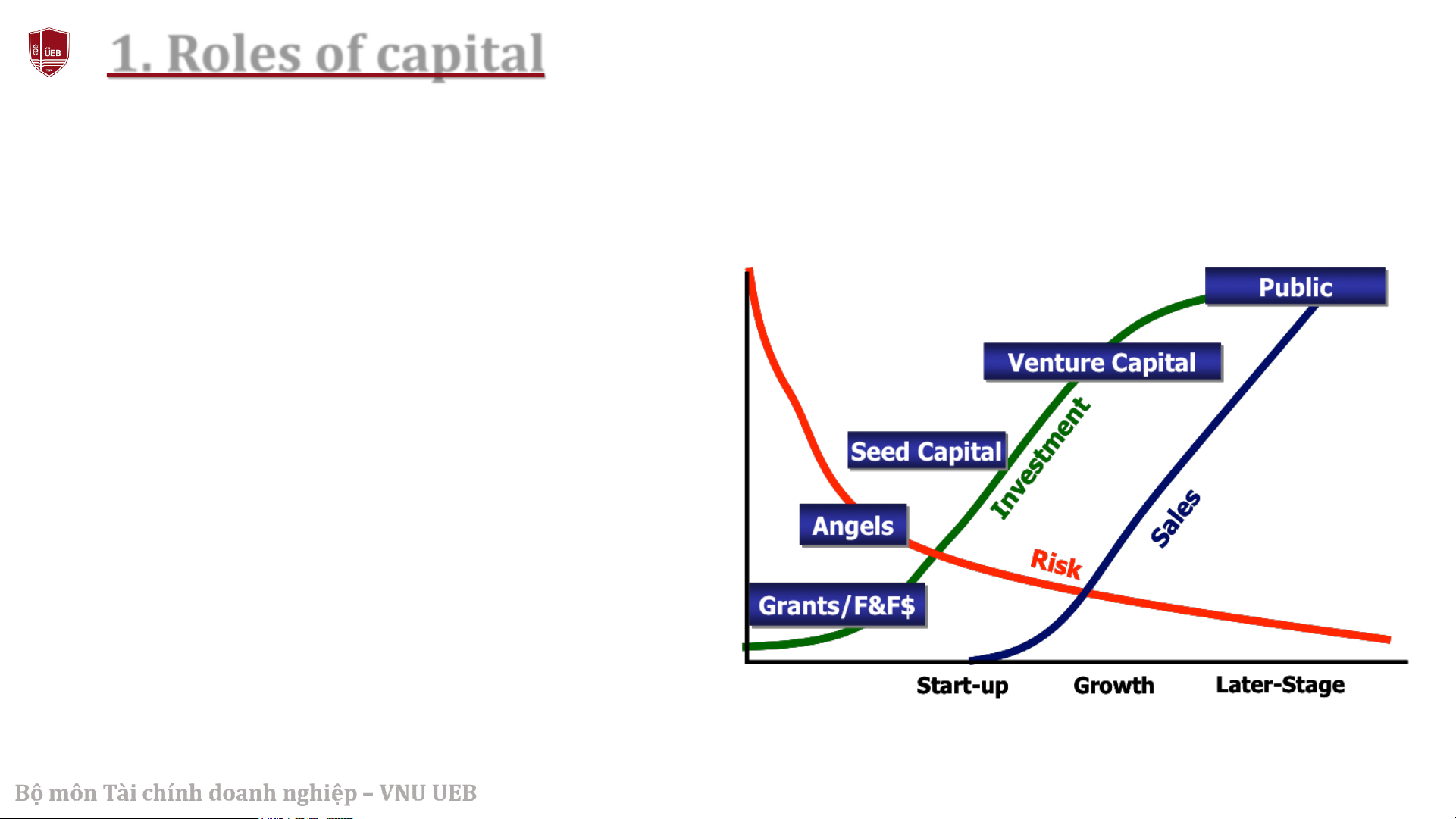
• All firms must, at varying times, obtain
capital. To do so, a firm must either borrow
the money (debt financing), sell a portion of
the firm (equity financing), or both.
• Corresponding to each development stage,
the decision will be made regarding the type
of investor suitable for the enterprise. • 2 main stages:
► Initial stage (early-stage financing)
► Public issuance stage (Public) 4 Outlines 1. Roles of capital 2. Sources of funding Chapter 5. Raising capital
3. Decision to go public initial public offerings
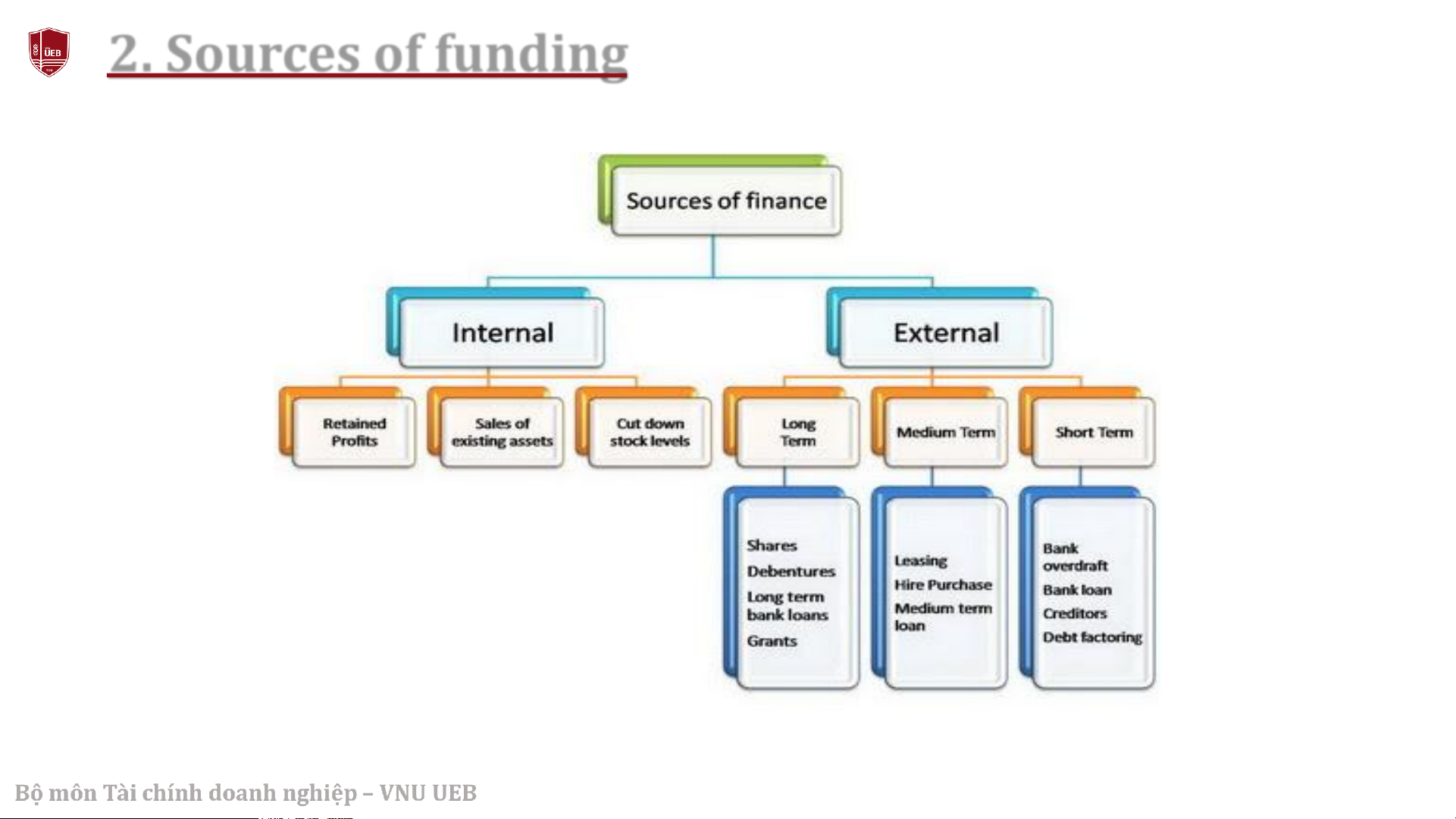
4. Seasoned equity offerings 2. Sources of funding 2. Sources of funding Internal sources Retained profit/earning
• The profit that has been generated in previous years and not distributed to owners is
reinvested back into the business
• This is a cheap source of finance, as it does not involve borrowing and associated interest and arrangement fees
• The opportunity cost of investing the money back into the business is that shareholders do not
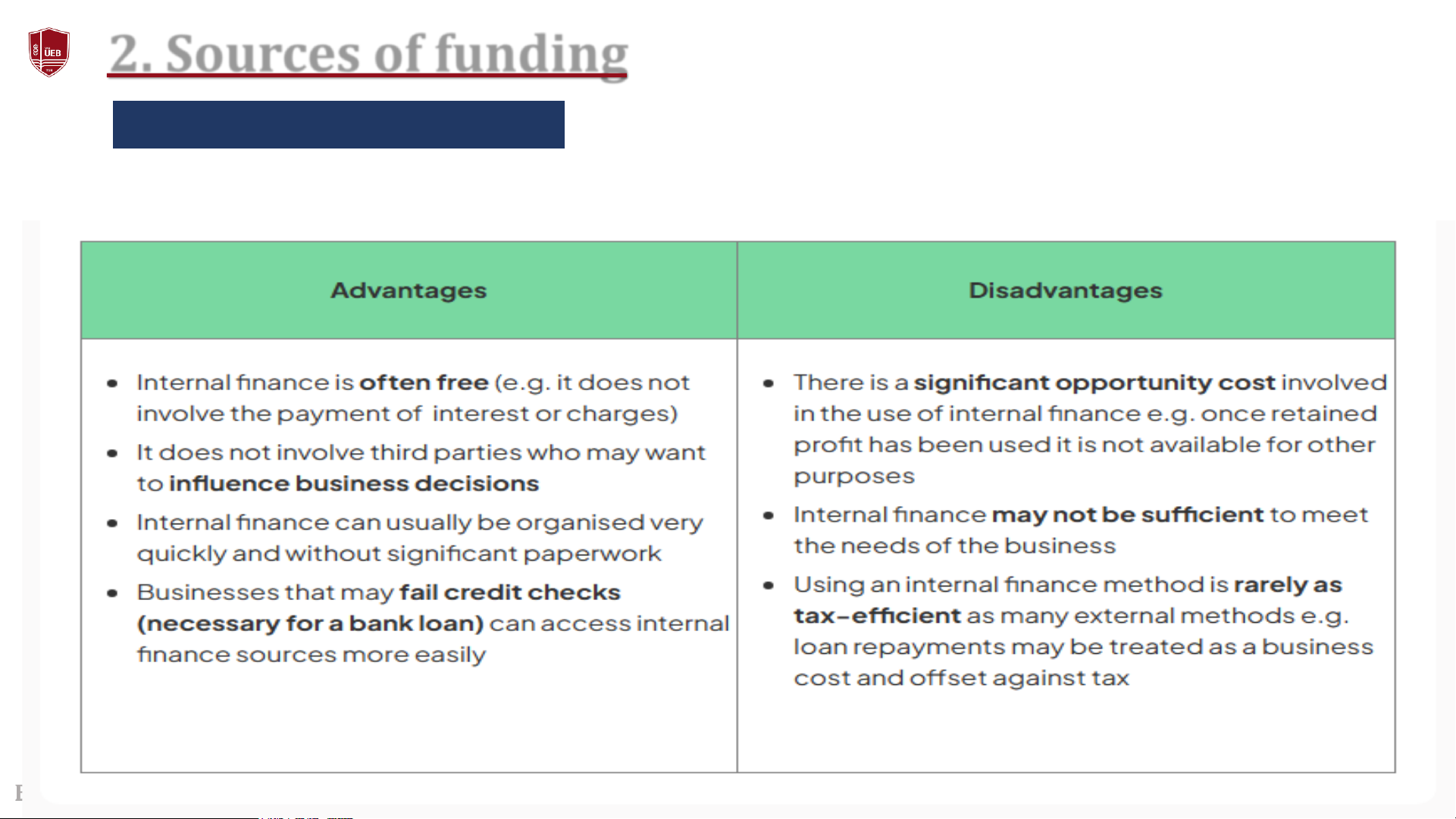
receive extra profit for their investment 2. Sources of funding Internal sources
The Benefits & Drawbacks of Using Internal Finance 2. Sources of funding External sources Equity Financing Debt Financing Alternative Sources
Issue Shares (IPO/SEO): Raise
Bank Loans: Flexible but require
Leasing: Finance assets without
capital by selling ownership to
collateral and regular repayments. heavy upfront investment. public or existing investors.
Private Placement: Direct share
Corporate Bonds: Raise large funds Government Grants/Subsidies:
sale to strategic investors, faster
from multiple investors with fixed
Non-repayable funding for specific and less regulated. interest. projects.
Venture Capital / Angel Investors:
Strategic Alliances / Joint
Syndicated Loans: Multiple banks
Provide capital, expertise, and
Ventures: Share resources and
jointly fund large-scale projects. networks. capital with partners.
Preference Shares / Convertible
Bonds: Equity-linked securities
Mezzanine Financing: High-risk
Crowdfunding: Online fundraising
offering dividends or conversion
debt with equity-like features. from many small investors. rights. 2. Sources of funding External sources Advantages Disadvantages
Provides access to large amounts of capital for
May increase financial risk due to repayment expansion and investment.
obligations (debt) or loss of ownership (equity).
Helps companies pursue growth opportunities faster
Cost of financing can be high (interest payments,
than relying on internal funds.
dividend commitments, issuance costs).
Can diversify funding sources, reducing dependence
Dilution of control and decision-making when issuing on internal cash flows. new shares.
Improves credibility and visibility (e.g., IPO or bond
Strict compliance, disclosure, and regulatory issuance). requirements.
Attracts strategic investors who bring expertise and
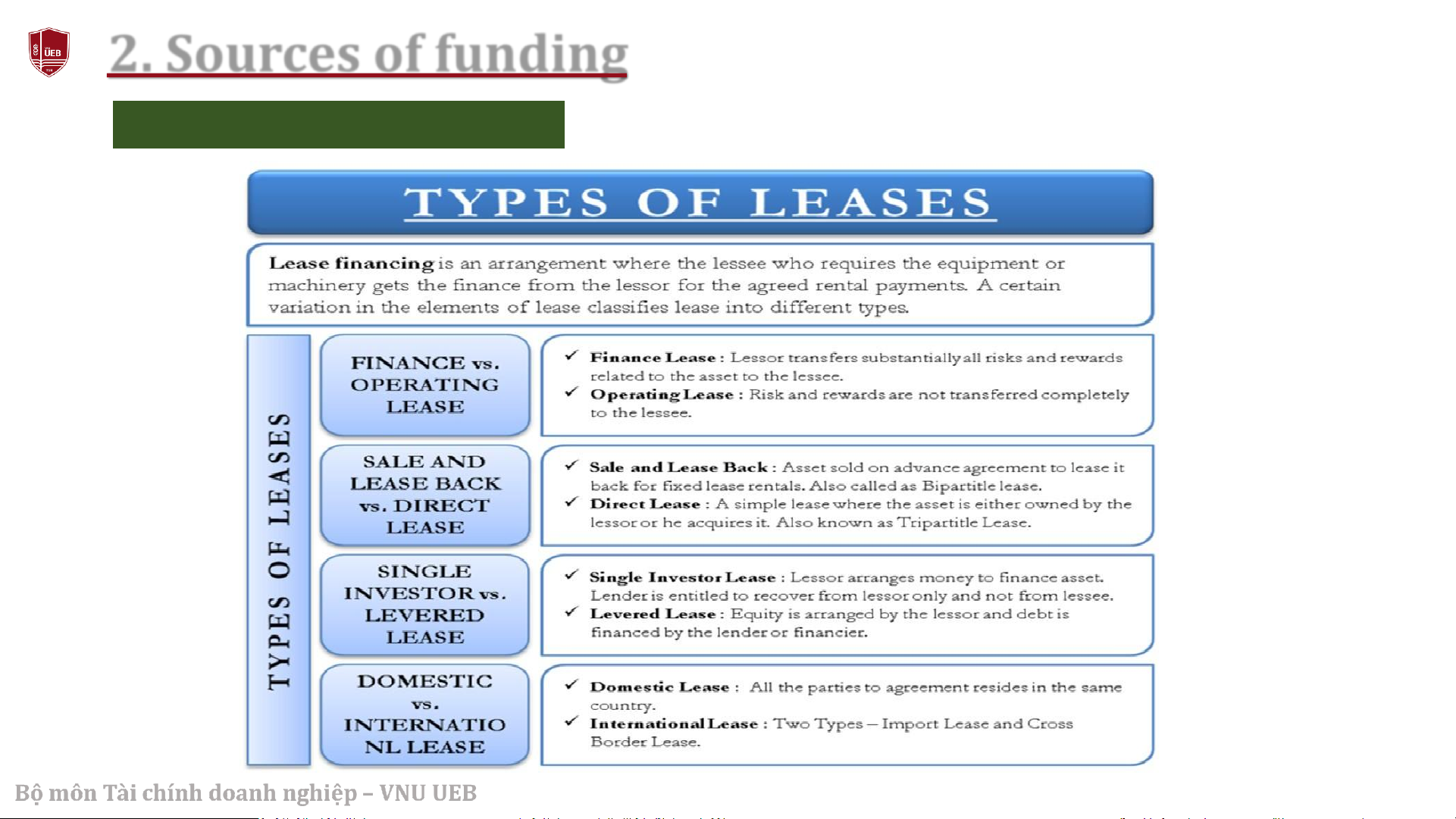
Potential pressure from external stakeholders (banks, networks. investors, regulators). 2. Sources of funding External sources Financial lease/ capital lease 1. Roles of capital
Early Stages and Venture Capital Investment Early stage Stage 4: Exit (or Stage 3: Growth Bridge Funding) Funding Rounds Stage 2: Seed Capital Stage 1: Pre-seed Capital Investors: Investors: Venture Angel Investors Venture Capitalists. Capitalists. Investors: Individuals, Family, Friends, and Relatives 12 1. Sources of funding Angel Investors
▪ Individual Investors who buy equity in small private firms
▪ Finding angels is typically difficult. Venture capital •
Venture capital is equity provided by individuals or organizations, such as investment funds, to
startups in their early stages that have highly competitive potential and rapid growth. ➢
Venture capital funds are particularly interested in investment opportunities with exceptionally
high growth potential, capable of yielding financial returns and an exit within the required
timeframe (typically 3-7 years). ➢
They focus on high-risk, innovative industries such as information technology, pharmaceuticals, media, etc. ➢
A unique aspect of venture capital is that, in addition to providing funds, investors also use their
experience, knowledge, and long-standing networks to support enterprise management teams. 13 Outlines 1. Roles of capital 2. Sources of funding Chapter 5. Raising capital
3. Decision to go public initial public offerings
4. Seasoned equity offerings
3. Decision to go public initial public offerings
Steps in Issuing Securities to the Public
Step 1: Board & Shareholder Approval • Board approves issuance.
• Shareholder vote if new shares must be authorized.
Step 2: Registration with SEC
• File registration statement.
• Exceptions: short-term loans (<9 months) & small issues (<$5M, Reg A).
Step 3: SEC Review & Waiting Period
• SEC reviews filing (20-day waiting period).
• Distribute preliminary prospectus (“red herring”).
• Price set near the end of review period.
Step 4: Offers During Waiting Period
• Only oral offers allowed (no sales).
Step 5: Effective Date & Sale
• Registration becomes effective.
• Price finalized, securities sold.
• Final prospectus delivered with securities/confirmation.
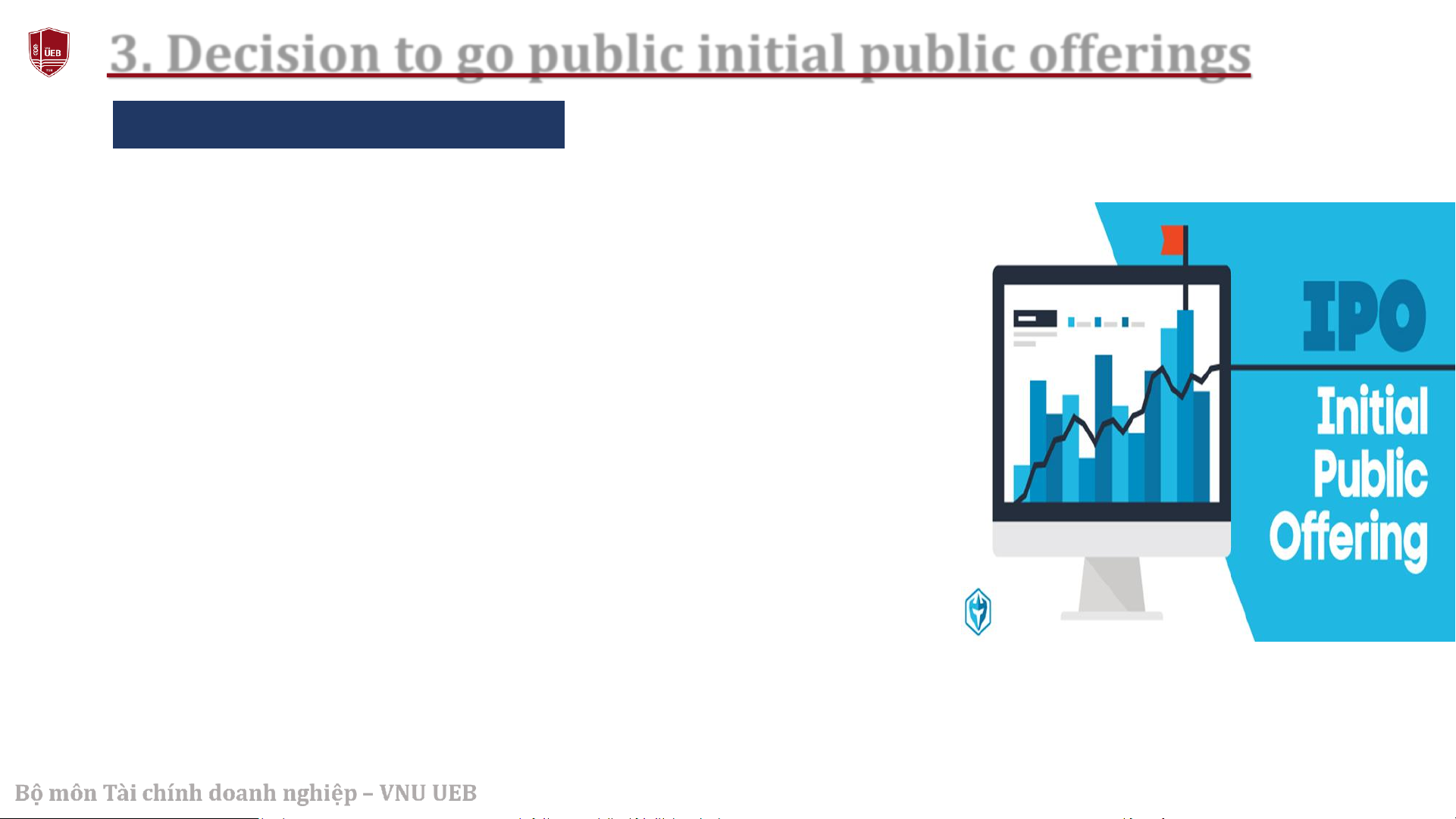
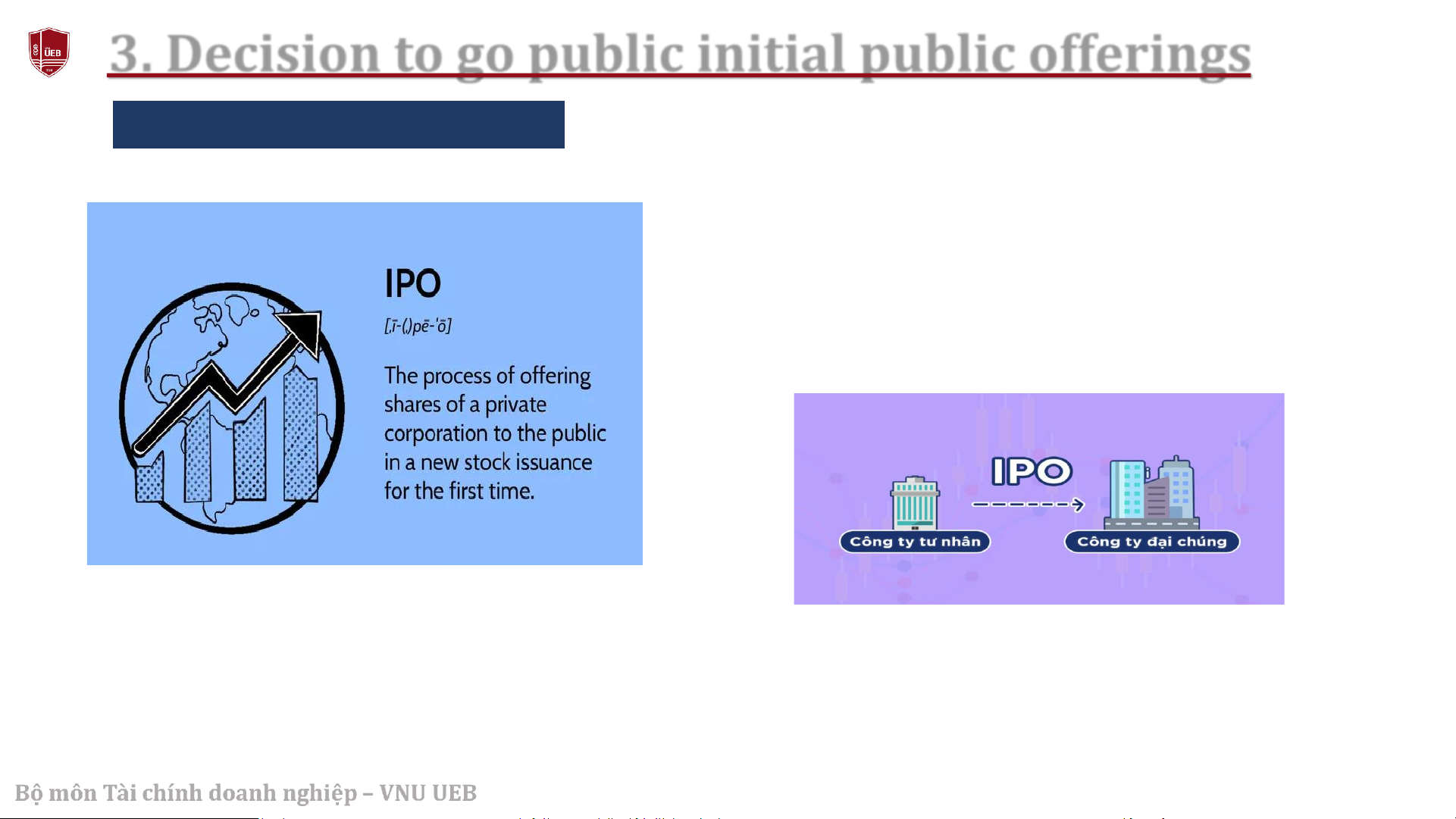
3. Decision to go public initial public offerings Definition Types of offerings
▪ Primary Offerings: New shares available in a public offering that raise new capital - IPO
▪ Secondary Offerings: Shares sold by existing shareholders in an equity offering
3. Decision to go public initial public offerings IPO
Public company: owning more than 100 shareholders
Note: Only businesses that have never been
listed on a stock exchange will be considered for the IPO market.
3. Decision to go public initial public offerings IPO
Advantages and Disadvantages of IPOs
Advantages of Going Public:
Disadvantages of Going Public
▪ Can raise additional funds in the
▪ Significant legal, accounting, and
future through secondary offerings
marketing costs arise, many of which are ongoing
▪ Attracts and retains better
management and skilled employees
▪ Increased time, effort, and attention through liquid stock equity
required of management for reporting participation (e.g., ESOPs)
▪ There is a loss of control and stronger ▪ IPOs can give a company a agency problems
lower cost of capital for both equity and debt
3. Decision to go public initial public offerings IPO
How an Initial Public Offering (IPO) Works:
IPO shares of a company are priced through
Before an IPO, a company is underwriting due diligence. considered private:.
• a relatively small number of shareholders GO PUBLIC
including early investors like the founders,
family, and friends along with professional
investors such as venture capitalists or angel
the previously owned private share ownership converts to public ownership, investors.
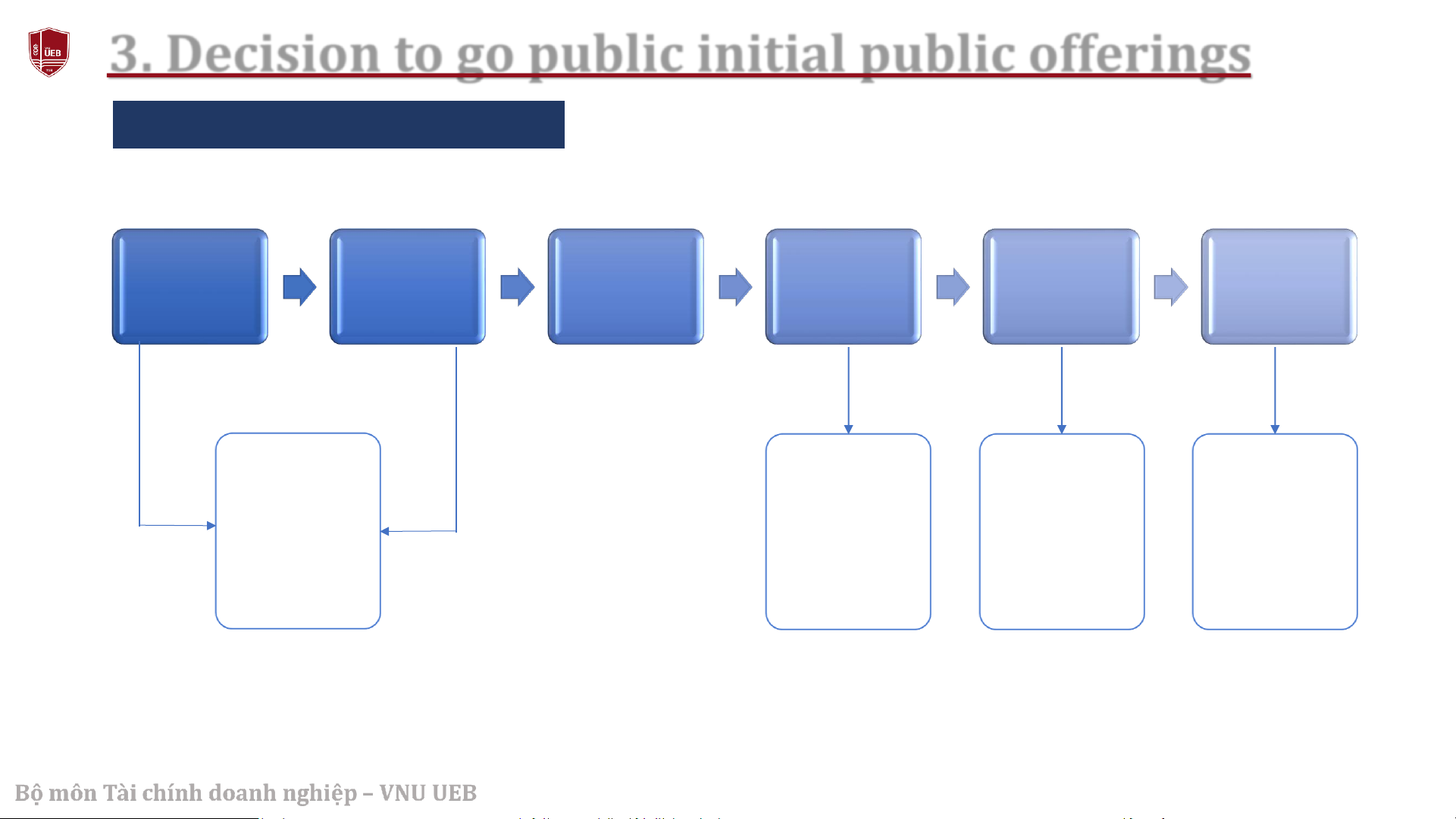
3. Decision to go public initial public offerings IPO Process of Going Public Consider Choose an Prepare the The The pricing The going public underwriter prospectus roadshow meeting consequence Market and Company Investment investment The market has all the banker gains banker are takes over power powers in control
Tài liệu liên quan:
-

Tài chính trong mua bán và sáp nhập doanh nghiệp.
28 14 -
Tài chính trong mua bán và sáp nhập doanh nghiệp. Chương 4_Thẩm định
27 14 -
Phát triển hoạt động môi giới tại công ty cổ phần chứng khoán Tân Việt | Luận văn Thạc sĩ Tài chính ngân hàng
232 116 -

Đề thi giữa kì học phần Tài chính doanh nghiệp
538 269