Control as a Managerial Function Notes môn Principles of Management | Trường Đại học Quốc tế, Đại học Quốc gia Thành phố Hồ Chí Minh
Establish Standards – Define measurable goals (e.g., sales targets, production levels). Tài liệu giúp bạn tham khảo, ôn tập và đạt kết quả cao. Mời đọc đón xem!
Môn: Principles of Management 314 tài liệu
Trường: Trường Đại học Quốc tế, Đại học Quốc gia Thành phố Hồ Chí Minh 2 K tài liệu
Tác giả:











Preview text:
CHAPTER 9 NOTES
Control as a Managerial Function
Control is one of the key managerial functions (along with planning,
organizing, leading, and stafÏng) that ensures organizational goals
are achieved efÏciently. It involves monitoring performance,
comparing it with set standards, and taking corrective action when necessary. 1. What is Controlling?
Controlling is the process of measuring performance against
objectives, identifying deviations, and implementing corrective
measures to ensure that organizational goals are met.
Why Are Controls Needed in Business?
- Ensure goal achievement– Aligns performance with objectives.
- Improve efÏciency – Identifies and reduces waste.
- Maintain quality – Ensures products/services meet standards.
- Adapt to changes– Helps businesses respond to internal/external shifts.
- Motivate employees – Clear expectations and feedback improve performance.
2. Steps in the Control Process
1. Establish Standards – Define measurable goals (e.g., sales targets, production levels).
2. Measure Performance – Collect data on actual performance (e.g.,
sales reports, quality checks).
3. Compare Performance with Standards – Identify variances (e.g., missed targets, defects).
4. Take Corrective Action – Adjust processes, retrain staff, or revise goals if needed. Types of Control
- Feedforward Control (Preventive)– Anticipates problems before
they occur (e.g., hiring skilled workers). Involves anticipating
trouble, rather than waiting for a poor outcome and reacting
afterward. It is about prevention or intervention. An example of
proactive control is when an engineer performs tests on the
braking system of a prototype vehicle before the vehicle design is moved on to be mass produced.
Proactive control looks forward to problems that could reasonably
occur and devises methods to prevent the problems. It cannot
control unforeseen and unlikely incidents, such as “acts of God.”
- Concurrent Control (Real-time) – Monitors ongoing activities (e.g.,
supervisor overseeing production). With concurrent control,
monitoring takes place during the process or activity. Concurrent
control may be based on standards, rules, codes, and policies.
One example of concurrent control is fleet tracking. Fleet tracking by
GPS allows managers to monitor company vehicles. Managers can
determine when vehicles reach their destinations and the speed in
which they move between destinations. Managers are able to plan
more efÏcient routes and alert drivers to change routes to avoid
heavy trafÏc. It also discourages employees from running personal errands during work hours.
In another example, Keen Media tries to reduce employee inefÏciency
by monitoring Internet activity. In accordance with company
policy, employees keep a digital record of their activities during
the workday. IT staff can also access employee computers to
determine how much time is being spent on the Internet to
conduct personal business and “surf the Web.”
- Feedback Control (Post-action) – Evaluates results after
completion (e.g., financial audits). Feedback occurs after an
activity or process is completed. It is reactive. For example,
feedback control would involve evaluating a team’s progress by
comparing the production standard to the actual production
output. If the standard or goal is met, production continues. If not,
adjustments can be made to the process or to the standard.
An example of feedback control is when a sales goal is set, the sales
team works to reach that goal for three months, and at the end of
the three-month period, managers review the results and
determine whether the sales goal was achieved. As part of the
process, managers may also implement changes if the goal is not
achieved. Three months after the changes are implemented,
managers will review the new results to see whether the goal was achieved.
The disadvantage of feedback control is that modifications can be
made only after a process has already been completed or an
action has taken place. A situation may have ended before
managers are aware of any issues. Therefore, feedback control is
more suited for processes, behaviors, or events that are repeated
over time, rather than those that are not repeated.
3. Ways Managers Can Control an Organization
- Financial Controls – Budgets, financial statements, ratio analysis.
- Operational Controls – Quality control, inventory management.
- Behavioral Controls – Supervision, performance appraisals, company culture.
- Strategic Controls – Balanced scorecard, benchmarking.
4. Levels of Control & Six Key Areas to Control
In management, there are varying levels of control: strategic (highest
level), operational (mid-level), and tactical (low level). Imagine the
president of a company decides to build a new company
headquarters. He enlists the help of the company’s ofÏcers to
decide on the location, style of architecture, size, etc. (strategic
control). The project manager helps develop the project schedule
and budget (operational control). The general contractor directs
workers, orders materials and equipment for delivery, and
establishes rules to ensure site safety (tactical control).
Control can be objective or normative. Objective control involves
elements of the company that can be objectively measured, such
as call volume, profitability, and inventory efÏciency. Normative
control means employees learn the values and beliefs of a
company and know what’s right from observing other employees. Levels of Control:
1. Strategic Control – Top management oversees long-term goals.
Managers want to know if the company is headed in the right
direction and if current company trends and changes are keeping
them on that right path. To answer this question requires the
implementation of strategic control. Strategic control involves
monitoring a strategy as it is being implemented, evaluating
deviations, and making necessary adjustments.
Implementing a strategy often involves a series of activities that
occur over a period. Managers can effectively monitor the
progress of a strategy at various milestones, or intervals, during
the period. During this time, managers may be provided
information that helps them determine whether the overall
strategy is unfolding as planned.
Strategic control also involves monitoring internal and external
events. Multiple sources of information are needed to monitor
events. These sources include conversations with customers,
articles in trade magazines and journals, activity at trade
conferences, and observations of your own or another company’s
operations. For example, Toyota gives tours of its plants and
shares the “Toyota Way” even with competitors.
2. Tactical Control– Middle managers ensure departmental efÏciency.
A tactic is a method that meets a specific objective of an overall plan.
Tactical control emphasizes the current operations of an
organization. Managers determine what the various parts of the
organization must do for the organization to be successful in the
near future (one year or less).
For example, a marketing strategy for a wholesale bakery might be
an e-commerce solution for targeted customers, such as
restaurants. Tactical control may involve regularly meeting with
the marketing team to review results and would involve creating
the steps needed to complete agreed-upon processes. Tactics for
the bakery strategy may include the following:
building a list of local restaurants, hotels, and grocery stores
outlining how the bakery website can be used to receive orders
personally visiting local executive chefs for follow-up
monitoring the response to determine whether the sales target is met
Strategic control always comes first, followed by operations, and then
tactics. For example, a strategy to be environmentally responsible
could lead to an operations decision to seek Leadership in Energy
and Environmental Design (LEED) certification. This is a program
that awards points toward certification for initiatives in energy
efÏciency, such as installing timed thermostats, using occupant
sensors to control lighting use, and using green cleaning products.
The tactical decision is deciding which energy-efÏcient equipment
to purchase. At each level, controls ask if the decisions serve the
purpose: actual energy savings, the LEED certification, and acting
responsibly for the environment.
3. Operational Control– Supervisors monitor daily tasks.
Operational control involves control over intermediate-term
operations and processes but not business strategies. Operational
control systems ensure that activities are consistent with
established plans. Mid-level management uses operational
controls for intermediate-term decisions, typically over one to two
years. When performance does not meet standards, managers
enforce corrective actions, which may include training, discipline, motivation, or termination.
Unlike strategic control, operational control focuses more on internal
sources of information and affects smaller units or aspects of the
organization, such as production levels or the choice of
equipment. Errors in operational control might mean failing to
complete projects on time. For example, if salespeople are not
trained on time, sales revenue may fall. 4. Top-Down Controls
Top-down controls are also known as bureaucratic controls. Top-down
control means the use of rules, regulations, and formal authority to guide
performance. It includes things such as budgets, statistical reports, and
performance appraisals to regulate behavior and results. Top-down control
is the most common process, where senior executives make decisions and
establish policies and procedures that implement the decisions. Lower-
level managers may make recommendations for their departments, but
they follow the lead of senior managers. Advantages
With top-down control, employees can spend their time performing their
job duties instead of discussing the direction of the company and offering
input into the development of new policies. Senior executives save time
by not explaining why some ideas are used and not others. Heavily
regulated businesses may find this approach to be most beneficial. Disadvantages
The top-down approach has its drawbacks. The lower levels of a company
are in touch with customers and recognize new trends or new competition
earlier than senior management. A heavy-handed top-down approach may
discourage employees from sharing information or ideas up the chain of command.
5, Objective and Normative Control
Objective control is based on facts that can be measured and
tested. Rather than create a rule that may be ambiguous, objective
controls measure observable behavior or output. As an example of a
behavioral control, let’s say that a store wants employees to be friendly to
customers. It could make that a rule as stated, but it may not be clear
what that means and is not measurable. To make that goal into an
objective control, it might specify, “Smile and greet anyone within 10 feet. Answer customer questions.”
Output control is another form of objective control. Some
companies, such as Yahoo, have relaxed rules about work hours and focus
on output. Because programmers’ output can be measured, this has
worked well, whether an employee works the traditional 9 a.m. to 5 p.m.
or starts at noon and works until 8 p.m.
Normative controls govern behavior through accepted patterns of action
rather than written policies and procedures. Normative control uses values
and beliefs called norms, which are established standards. For example,
within a team, informal rules make team members aware of their
responsibilities. The ways in which team members interact are developed
over time. Team members come to an informal agreement as to how
responsibilities will be divided, often based on the perceived strengths of
each team member. These unwritten rules are normative controls and can powerfully influence behavior.
Normative control reflects the organization’s culture, the shared
values among the members of the organization. Every organization has
norms of behavior that workers need to learn. One company may expect
employees to take the initiative to solve problems. Another may require a
manager’s approval before employees discuss changes outside the
department. Some topics may be off-base, while others are freely
discussed. Companies will have a mix of controls—top-down, objective, and normative.
Six Key Areas Managers Should Control:
1. Quality – Product/service standards. 2. Cost – Budget adherence.
3. Time – Deadlines and schedules.
4. Safety – Workplace conditions.
5. Employee Performance– Productivity and behavior.
6. Customer Satisfaction – Feedback and service levels.
5. How Each Management Level is Involved in Control & Planning
- Top Management – Sets long-term goals (strategic planning) and monitors overall performance.
- Middle Management – Implements departmental plans (tactical control).
- First-line Management – Ensures daily tasks meet standards (operational control).
6. Total Quality Management (TQM) Process
TQM is a continuous improvement approach focusing on customer
satisfaction, employee involvement, and process optimization.
Total Quality Management (TQM)Mis a structured, customer-
focused approach to long-term business success through
continuous improvement in products, services, and processes. It
involves all employees in quality enhancement and emphasizes:
Customer satisfactionM(internal & external customers)
Employee involvement & empowerment
Process optimization & waste reduction
Data-driven decision-making
Continuous improvement (Kaizen)
TQM originated from quality pioneers likeMW. Edwards Deming,
Joseph Juran, and Kaoru Ishikawa, and is widely used in
manufacturing, healthcare, and service industries.
Deming’s 4-Step Management System (PDCA Cycle)
1. Plan – Identify improvement areas.
Plan (Identify & Analyze)
Define the problem or improvement opportunityM(e.g., high defect rates, slow delivery).
Set measurable objectivesM(e.g., reduce defects by 20% in 3 months).
Analyze root causesM(use tools like Fishbone Diagram, 5 Whys).
Develop an action planM(assign responsibilities, set timelines).
2. Do – Implement changes. Do (Implement Changes)
Execute the plan on a small scaleM(pilot testing to minimize risk).
Train employeesMon new procedures.
Document the processMfor consistency.
3. Check– Measure results.
Check (Evaluate Results)
Measure outcomesM(compare before & after data).
Identify deviationsMfrom expected results.
Use statistical toolsM(control charts, Pareto analysis).
4. Act – Standardize or adjust.
Act (Standardize or Adjust)
If successful → StandardizeMthe new process across the organization.
If unsuccessful → Repeat PDCAMwith adjustments.
Document lessons learnedMfor future improvements. Why is TQM Important?
- Enhances product/service quality. - Reduces waste and costs.
- Boosts customer satisfaction.
- Encourages employee engagement.
7. Keys to Successful Controls & Barriers to Effective Measurement Keys to Success:
- Clear, measurable standards. - Timely feedback. - Employee involvement. - Flexibility to adapt. Barriers: - Resistance to change. - Poor communication. - Unrealistic standards.
- Overemphasis on short-term results. 8. Contemporary Control Issues
- Remote Work Monitoring– Balancing productivity & privacy.
- Cybersecurity Risks – Protecting data.
- AI & Automation – Managing machine-led processes.
- Ethical Controls – Ensuring compliance & corporate responsibility.
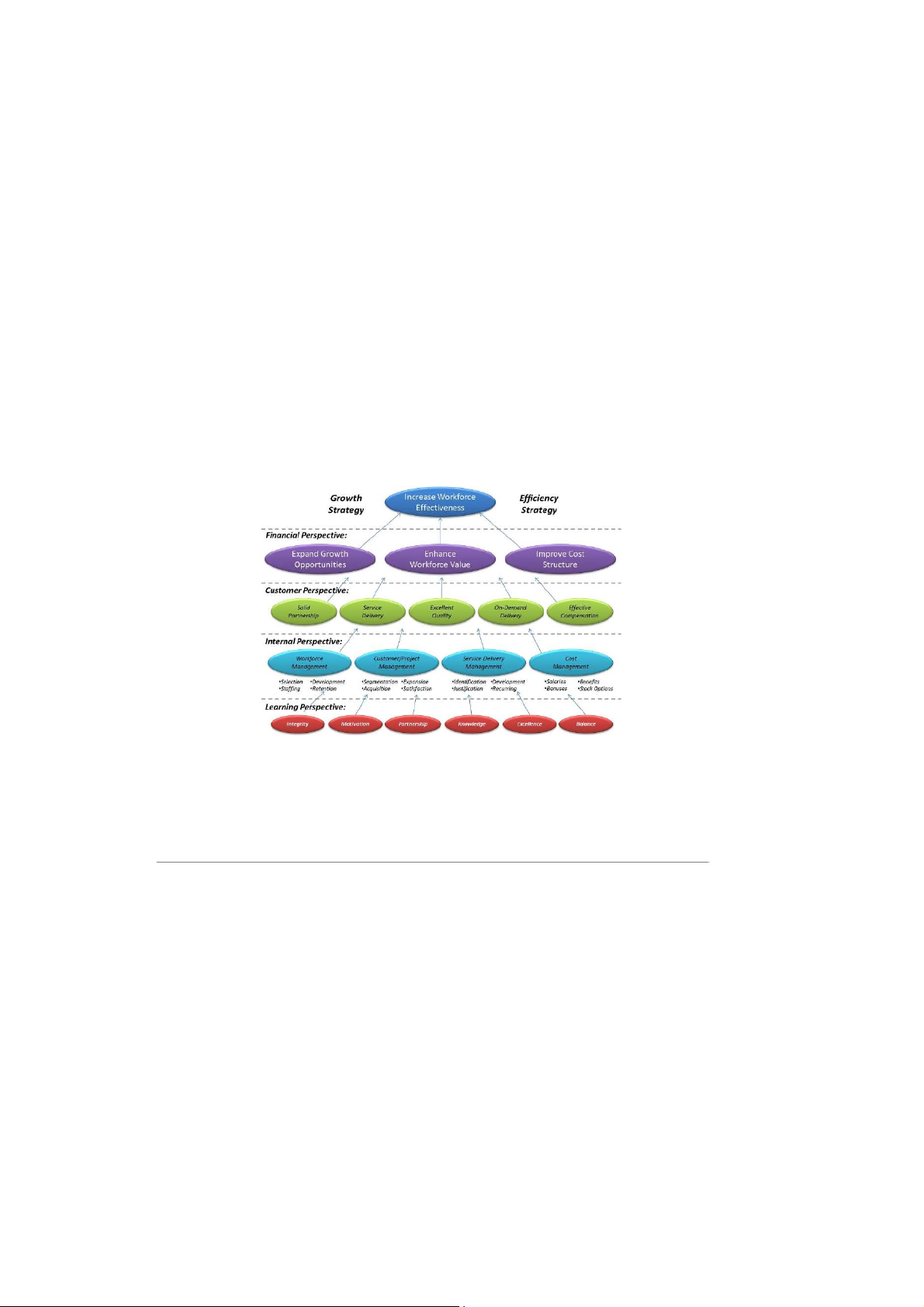
9. Balanced Scorecard & Strategy Maps
Explain the need for a balanced scorecard
Just as humans have different systems that interact to make up a person’s
overall health, organizations have many different components that
contribute to organizational health. Though we tend to focus on symptoms
to know whether we’re healthy or not, it’s a good idea to have regular
physical exams to make sure we’re not missing any health red flags. In the
case of an organization, this is where a balanced scorecard comes in. A
balanced scorecard is the health checklist, monitoring and measuring the health of the company.
Explain the use of financial and nonfinancial controls in business
Companies need both financial and nonfinancial controls to achieve goals,
remain competitive in industry, and be successful. Financial controls
include budgets and various financial ratios. These evaluate the
performance of an organization. One important nonfinancial control is quality management. Balanced Scorecard Approach
Measures performance across four perspectives:
1. Financial – Profitability, ROI. Shareholder value, revenue growth, cost efÏciency
2. Customer – Satisfaction, retention. Value proposition, market share, customer experience
3. Internal Processes – EfÏciency, quality. Value chain efÏciency, quality control, innovation
4. Learning & Growth – Employee skills, innovation. Human capital,
information systems, organizational culture Strategy Maps
Visual tools linking objectives across the balanced scorecard to show
cause-and effect relationships. How Managers Use These Tools
- Align daily operations with strategy.
- Track KPIs (Key Performance Indicators). - Improve decision-making.
10. Productivity – Definition & Improvement
What is Productivity? -> The ratio of outputs (goods/services) to inputs (labor, materials). How to Increase Productivity?
- Automation – Use technology for efÏciency. Eliminates repetitive
tasks, reduces errors, and frees up human potential for higher- value work.
Example:MA marketing team automates social media posting
(Hootsuite) and email campaigns (Mailchimp), saving 15 hours/week.
- Training – Enhance employee skills. Competent employees work
faster and solve problems independently.
MicrolearningM(short, focused training sessions)
Cross-trainingMto build versatile teams
Digital adoption platformsM(WalkMe) for software proficiency
Mentorship programsMpairing junior and senior staff
- Process Optimization – Lean management, Six Sigma. Eliminates
waste and reduces variation in outputs. Six Sigma
DMAIC framework:MDefine, Measure, Analyze, Improve, Control
Statistical process controlMcharts
Poka-yoke (error-proofing)Mmechanisms
- Employee Motivation – Incentives, recognition.
Performance-based bonusesM(tied to clear metrics)
Non-monetary recognitionM(Employee of the Month programs)
Career path developmentM(visible promotion tracks)
Flexible work arrangementsM(results-only work environment)
11. Internal and External Control:
1. Internal Control :Self-regulating mechanisms within the organization
Self-initiated and self-maintained
Focused on employee behavior and processes Preventive in nature
Cultivated through organizational culture -
Example: Employee self-discipline, Peer pressure among team
members, Departmental quality checks, Ethical guidelines and values
2. External Control: Imposed regulations and oversight from outside the organization.
Mandated by external entities Often compliance-driven
Reactive correction mechanisms Formal and structured
Examples: Government regulations (OSHA, FDA), Industry
standards (ISO certifications), Audit requirements, Shareholder demands Conclusion
Control is essential for organizational success, ensuring efÏciency,
quality, and goal attainment. Managers use various control
methods, from financial audits to TQM, while addressing modern
challenges like remote work and cybersecurity. Tools like the
balanced scorecard and PDCA cycle help maintain strategic
alignment and continuous improvement.
Tài liệu liên quan:
-
CHAP 1: Introduction to Management Concepts and Functions môn Principles of Management | Trường Đại học Quốc tế, Đại học Quốc gia Thành phố Hồ Chí Minh
16 8 -
Guidelines for group’s assignments: Analysing management issues of a FDI company based inVietnam môn Principles of Management | Trường Đại học Quốc tế, Đại học Quốc gia Thành phố Hồ Chí Minh
15 8 -
Financial Planning to Achieve 300m VND Goal in 3 Years môn Principles of Management | Trường Đại học Quốc tế, Đại học Quốc gia Thành phố Hồ Chí Minh
13 7 -
A Case Study in Fast Fashion Success môn Principles of Management | Trường Đại học Quốc tế, Đại học Quốc gia Thành phố Hồ Chí Minh
15 8 -
Chap 16 Hierarchy of Needs Theory and Applications môn Principles of Management | Trường Đại học Quốc tế, Đại học Quốc gia Thành phố Hồ Chí Minh
16 8