Digital Business: Understanding B2C, B2B, and C2C eCommerce | Logistics | Trường Đại học Kinh tế, Đại học Quốc gia Hà Nội
Tài liệu được sưu tầm và soạn thảo dưới dạng file PDF với mục đích hỗ trợ học tập và tham khảo. Nội dung tài liệu được trình bày rõ ràng, dễ tiếp cận, phù hợp cho việc ôn tập và củng cố kiến thức trong quá trình học đại học. Đây sẽ là nguồn tư liệu hữu ích giúp các bạn sinh viên chuẩn bị tốt hơn cho các buổi học, đồng thời mở rộng thêm hiểu biết về môn học. Hy vọng tài liệu này sẽ mang lại nhiều giá trị và hỗ trợ các bạn trong hành trình học tập. Mời bạn đọc cùng tham khảo!
Môn: Logistics 61 tài liệu
Trường: Trường Đại học Kinh tế, Đại học Quốc gia Hà Nội 491 tài liệu
Tác giả:

Preview text:
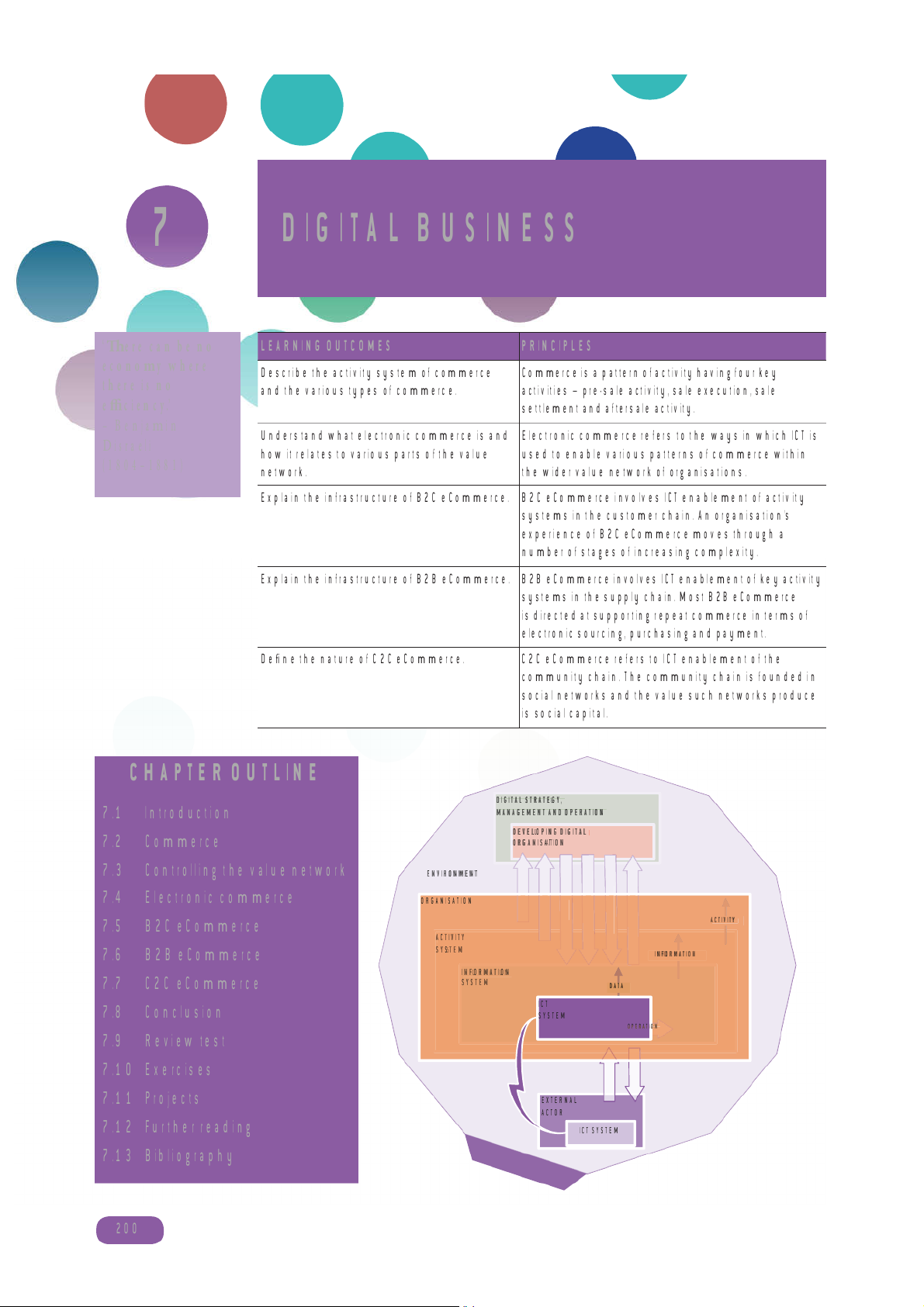
7 DIGITAL BUSINESS ‘ere can be no LEARNING OUTCOMES PRINCIPLES economy where
Describe the activity system of commerce
Commerce is a pattern of activity having four key there is no
and the various types of commerce.
activities – pre-sale activity, sale execution, sale eciency.’
settlement and aftersale activity. – Benjamin
Understand what electronic commerce is and Electronic commerce refers to the ways in which ICT is Disraeli
how it relates to various parts of the value
used to enable various patterns of commerce within (1804–1881) network.
the wider value network of organisations.
Explain the infrastructure of B2C eCommerce. B2C eCommerce involves ICT enablement of activity
systems in the customer chain. An organisation’s
experience of B2C eCommerce moves through a
number of stages of increasing complexity.
Explain the infrastructure of B2B eCommerce. B2B eCommerce involves ICT enablement of key activity
systems in the supply chain. Most B2B eCommerce
is directed at supporting repeat commerce in terms of
electronic sourcing, purchasing and payment.
Dene the nature of C2C eCommerce.
C2C eCommerce refers to ICT enablement of the
community chain. The community chain is founded in
social networks and the value such networks produce is social capital. CHAPTER OUTLINE DI D G I I G TAL ST STRATEGY, 7.1 Introduction MA M NAGE G M E E M N E T N T AN A D N D OPE P R E A R T A I T O I N DE D VELO O PI P N I G N G DIGIT I A T L A L 7.2 Commerce OR O GAN A I N SA IS T A ITO I N O
7.3 Controlling the value network EN E VIRONMENT N T TIO EP N SIS 7.4 Electronic commerce CEP N O NCN LYSIS N N LY TIO ATIO O ORGANISATION CO N CO CTIO ANA U ATIO ENT ESIG TRU D 7.5 B2C eCommerce NSNS LEM AC A T C IVITY P EVALU CO IM AC A T C I T V I I V T I Y T 7.6 B2B eCommerce SY S ST Y S E T M E IN I F N O F RM R A M T A I T O I N IN I F N O F RMATION 7.7 C2C eCommerce SY S S Y T S E T M E DA D T A A T 7.8 Conclusion ICT SYSTEM OP O E P R E A R T A I T O I N O 7.9 Review test 7.10 Exercises E E VALU VALU 7.11 Projects EXTERNAL ACTOR 7.12 Further reading ICT SYSTEM 7.13 Bibliography 200 Digital business 7.1 INTRODUCTION
e Harvard scholar Michael Davenport highlighted some years ago certain
contradictions evident in the ways in which we tend to approach ICT by making an
interesting analogy between ICT and plumbing. Imagine a world, he says, obsessed
with the technology of plumbing. Only two things are missing in this strange world.
e rst is an interest in the qualities of the material handled by this technology, namely
water. e second is an interest in the uses to which water is put: drinking, washing,
cleaning and so on. Substitute ICT for plumbing and data for water, and you get an
appreciation of the way in which technology, data/information and action are inevitably
intertwined in considerations of the worth of ICT. In other words, the value or the
worth of ICT cannot be divorced from the question of what it delivers: that is, data for
use in information systems. e worth of ICT is also directly related to the degree to
which ICT systems are used and the impact they have on organisations.
Chapters 7, 8 and 9 all cover dierent aspects of the contemporary phenomenon of
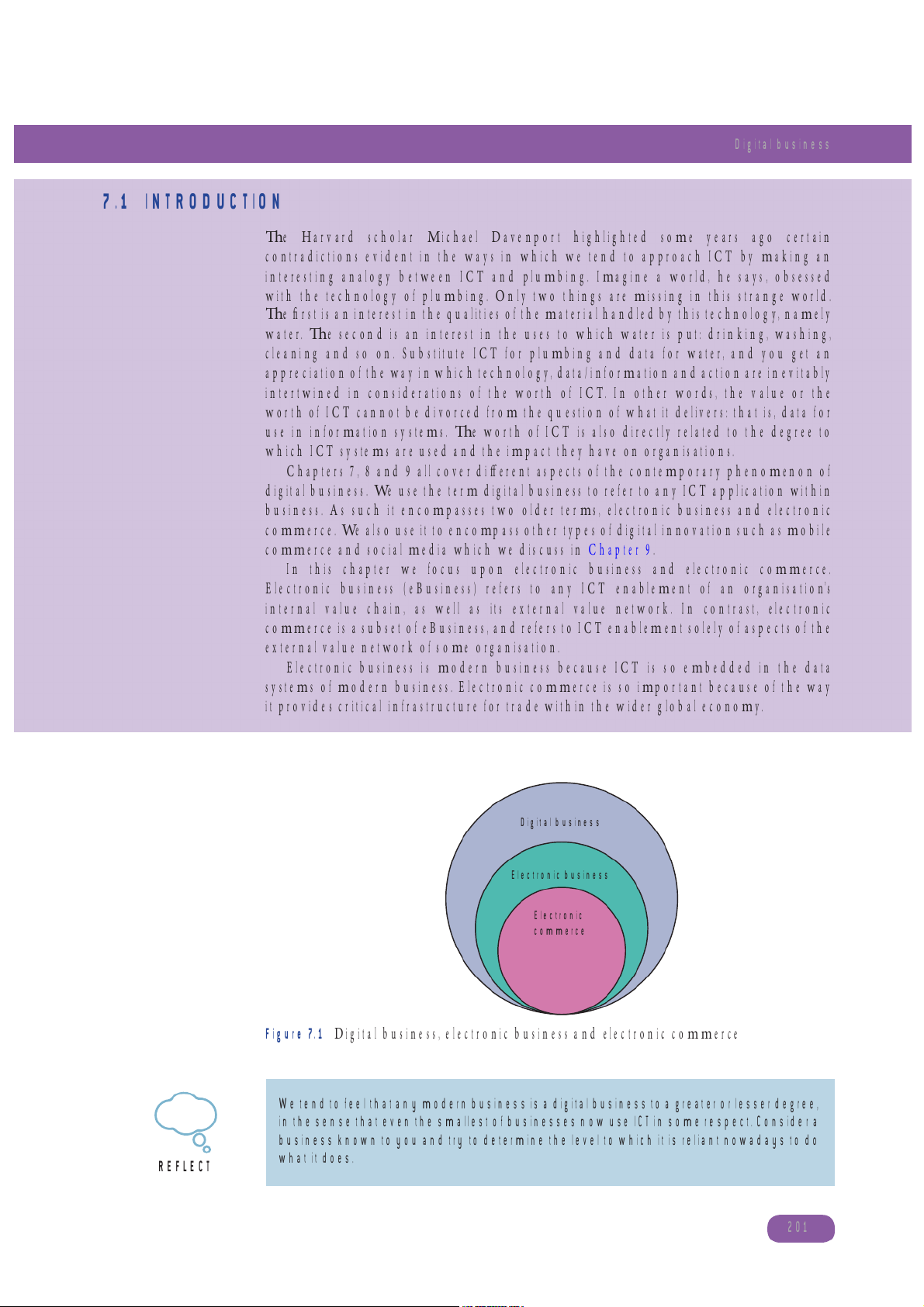
digital business. We use the term digital business to refer to any ICT application within
business. As such it encompasses two older terms, electronic business and electronic
commerce. We also use it to encompass other types of digital innovation such as mobile
commerce and social media which we discuss in Chapter9.
In this chapter we focus upon electronic business and electronic commerce.
Electronic business (eBusiness) refers to any ICT enablement of an organisation’s
internal value chain, as well as its external value network. In contrast, electronic
commerce is a subset of eBusiness, and refers to ICT enablement solely of aspects of the
external value network of some organisation.
Electronic business is modern business because ICT is so embedded in the data
systems of modern business. Electronic commerce is so important because of the way
it provides critical infrastructure for trade within the wider global economy. Digital business Electronic business Electronic commerce
Figure 7.1 Digital business, electronic business and electronic commerce
We tend to feel that any modern business is a digital business to a greater or lesser degree,
in the sense that even the smallest of businesses now use ICT in some respect. Consider a
business known to you and try to determine the level to which it is reliant nowadays to do what it does. REFLECT 201 Digital business 7.2 COMMERCE
In much recent hype about digital business the fact that ICT has done much to improve
the internal activity systems of business, and of public and voluntary sector organisations,
is frequently forgotten. Much work has been done, for example, in supporting the
internal value chain with enterprise ICT systems – a suite of ICT systems that share
data structures across the enterprise (see Section4.7.1). But over the last decade digital
innovation has particularly focused on enabling various activity systems of commerce in the wider value network.
7.2.1 Commerce as a pattern of activity
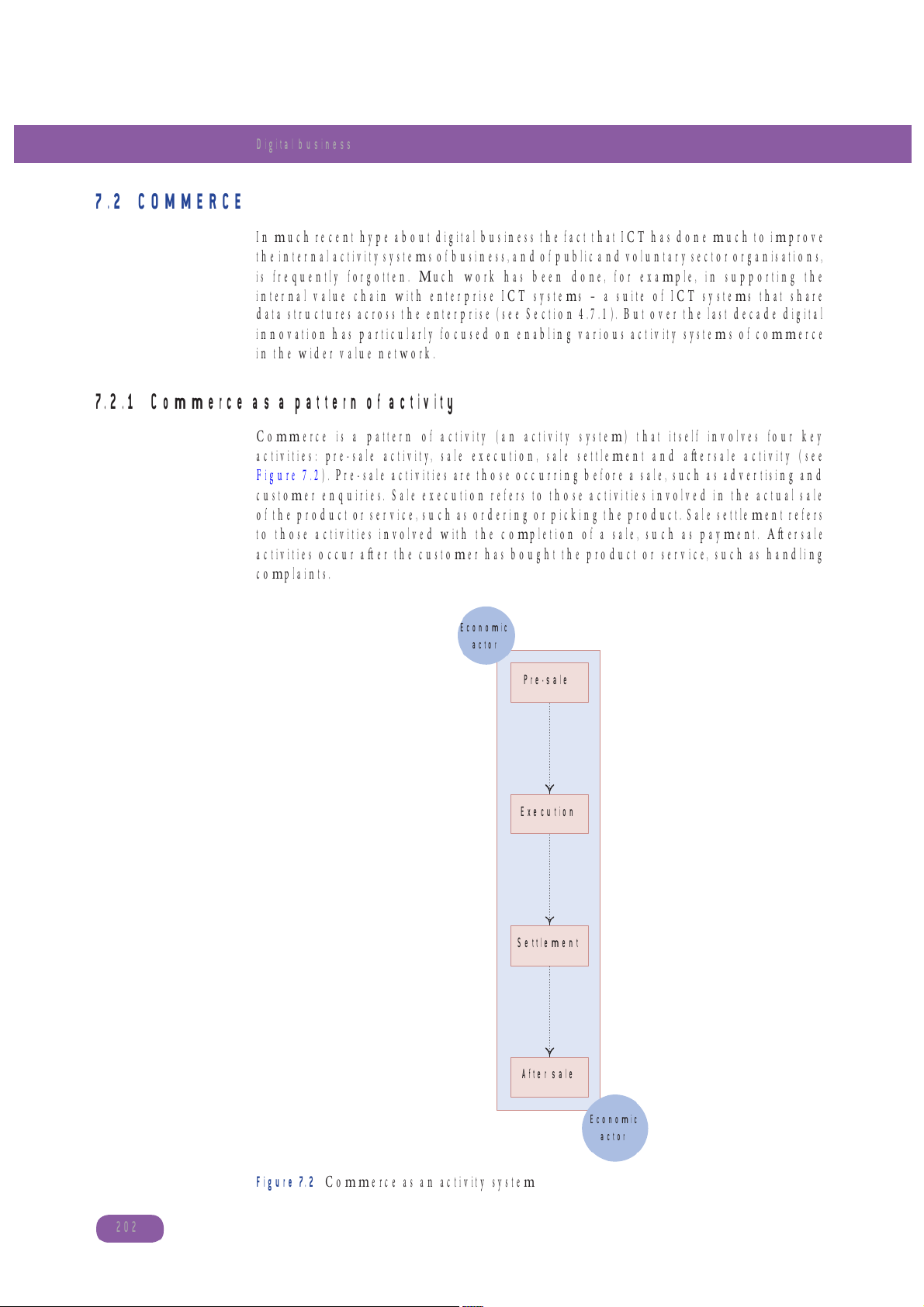
Commerce is a pattern of activity (an activity system) that itself involves four key
activities: pre-sale activity, sale execution, sale settlement and aersale activity (see
Figure7.2). Pre-sale activities are those occurring before a sale, such as advertising and
customer enquiries. Sale execution refers to those activities involved in the actual sale
of the product or service, such as ordering or picking the product. Sale settlement refers
to those activities involved with the completion of a sale, such as payment. Aersale
activities occur aer the customer has bought the product or service, such as handling complaints. Economic actor Pre-sale Execution Settlement After sale Economic actor
Figure 7.2 Commerce as an activity system 202 Digital business
Each part of the value network of an organisation – customer chain, supply chain,
partnership chain, community chain – will have one or more distinct patterns of commerce associated with it.
Consider book retail as an activity system undertaken by a company such as
Palgrave. Pre-sale activity includes the marketing of books through online and oine
catalogues. Sale execution involves the selection of a book by a customer and perhaps
placing an order for it. Sale settlement involves the customer paying for the book, while
aersale activity might include discounting further related books of interest to the customer. Cash commerce
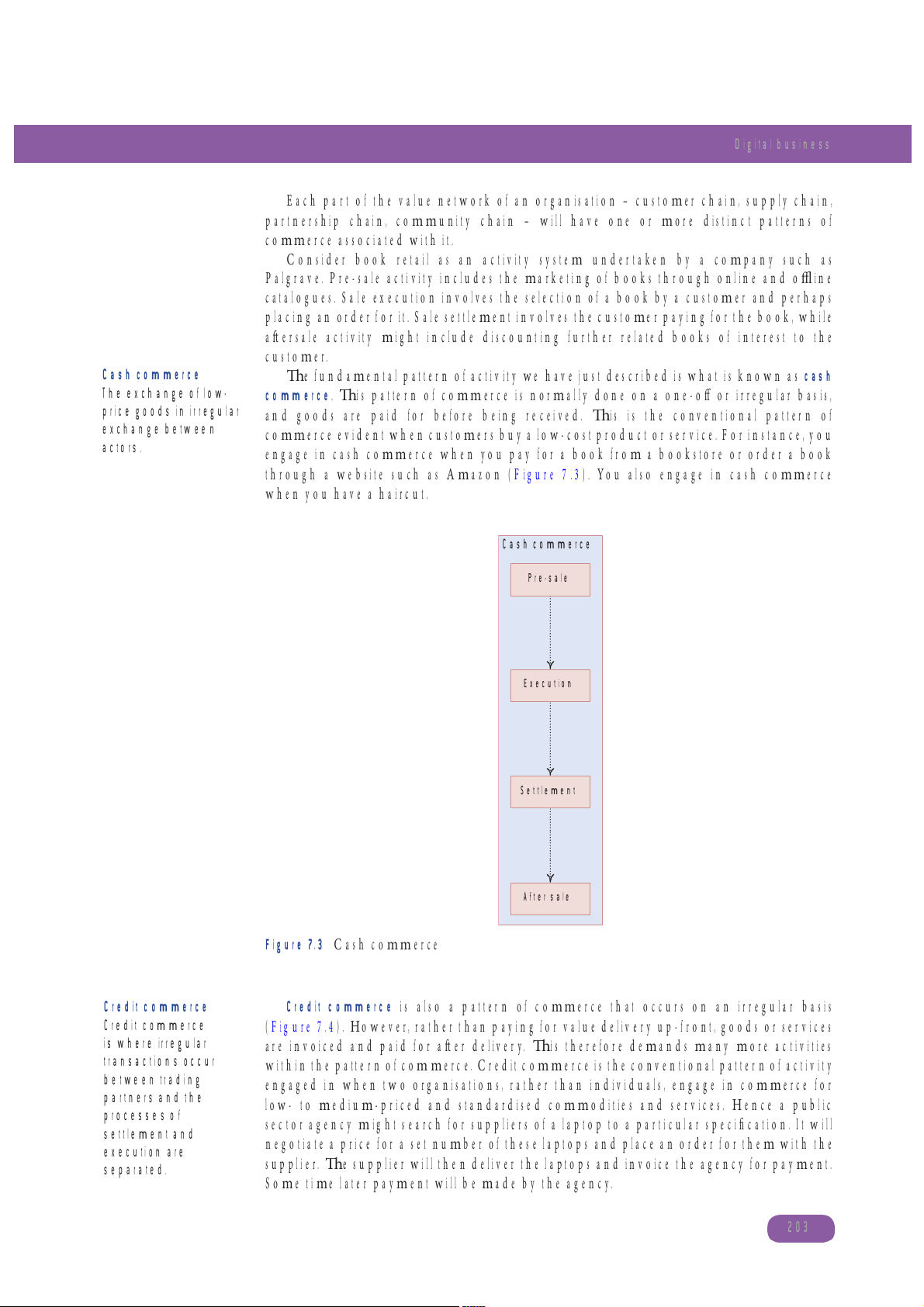
e fundamental pattern of activity we have just described is what is known as cash The exchange of low-
commerce. is pattern of commerce is normally done on a one-o or irregular basis, price goods in irregular
and goods are paid for before being received. is is the conventional pattern of exchange between
commerce evident when customers buy a low-cost product or service. For instance, you actors.
engage in cash commerce when you pay for a book from a bookstore or order a book
through a website such as Amazon (Figure7.3). You also engage in cash commerce when you have a haircut. Cash commerce Pre-sale Execution Settlement After sale Figure 7.3 Cash commerce Credit commerce
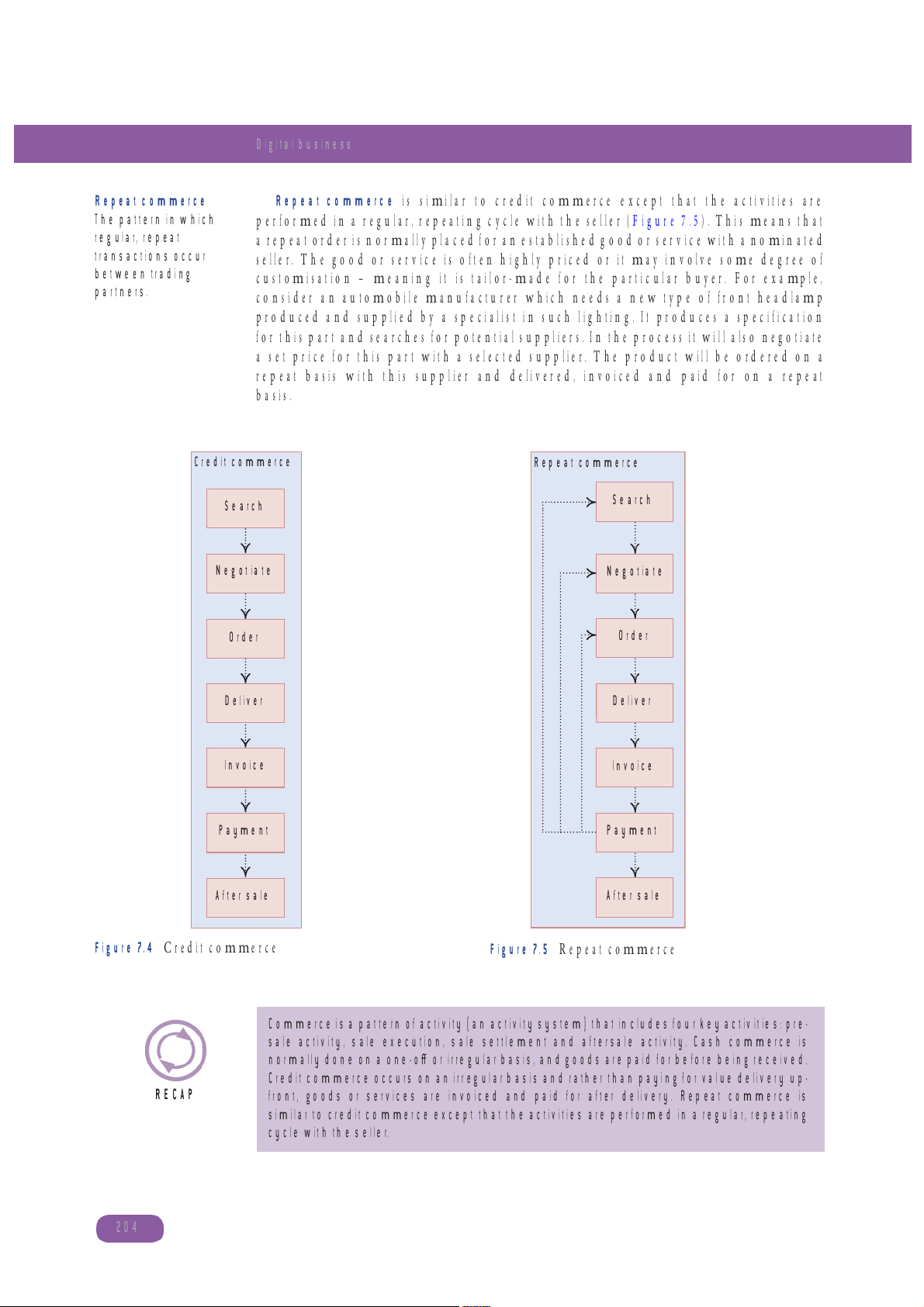
Credit commerce is also a pattern of commerce that occurs on an irregular basis Credit commerce
(Figure7.4). However, rather than paying for value delivery up-front, goods or services is where irregular
are invoiced and paid for aer delivery. is therefore demands many more activities transactions occur
within the pattern of commerce. Credit commerce is the conventional pattern of activity between trading
engaged in when two organisations, rather than individuals, engage in commerce for partners and the
low- to medium-priced and standardised commodities and services. Hence a public processes of
sector agency might search for suppliers of a laptop to a particular specication. It will settlement and
negotiate a price for a set number of these laptops and place an order for them with the execution are
supplier. e supplier will then deliver the laptops and invoice the agency for payment. separated.
Some time later payment will be made by the agency. 203 Digital business Repeat commerce
Repeat commerce is similar to credit commerce except that the activities are The pattern in which
performed in a regular, repeating cycle with the seller (Figure7.5). This means that regular, repeat
a repeat order is normally placed for an established good or service with a nominated transactions occur
seller. The good or service is often highly priced or it may involve some degree of between trading
customisation – meaning it is tailor-made for the particular buyer. For example, partners.
consider an automobile manufacturer which needs a new type of front headlamp
produced and supplied by a specialist in such lighting. It produces a specification
for this part and searches for potential suppliers. In the process it will also negotiate
a set price for this part with a selected supplier. The product will be ordered on a
repeat basis with this supplier and delivered, invoiced and paid for on a repeat basis. Credit commerce Repeat commerce Search Search Negotiate Negotiate Order Order Deliver Deliver Invoice Invoice Payment Payment After sale After sale Figure 7.4 Credit commerce Figure 7.5 Repeat commerce
Commerce is a pattern of activity (an activity system) that includes four key activities: pre-
sale activity, sale execution, sale settlement and aftersale activity. Cash commerce is
normally done on a one-o or irregular basis, and goods are paid for before being received.
Credit commerce occurs on an irregular basis and rather than paying for value delivery up- RECAP
front, goods or services are invoiced and paid for after delivery. Repeat commerce is
similar to credit commerce except that the activities are performed in a regular, repeating cycle with the seller. 204 Digital business
Commerce as a pattern of activity has been in existence for many thousands of years. The
rst reported evidence of commerce dates back to at least 3,000 BC and involved trade
between the ancient Sumerians and peoples in what is now modern-day Pakistan. DID YOU KNOW?
7.3 CONTROLLING THE VALUE NETWORK
As we have seen in Chapter2, every system has control to ensure its viability. As an
activity system, commerce performed with external actors is typically controlled in one
of two ways within the value network. Market
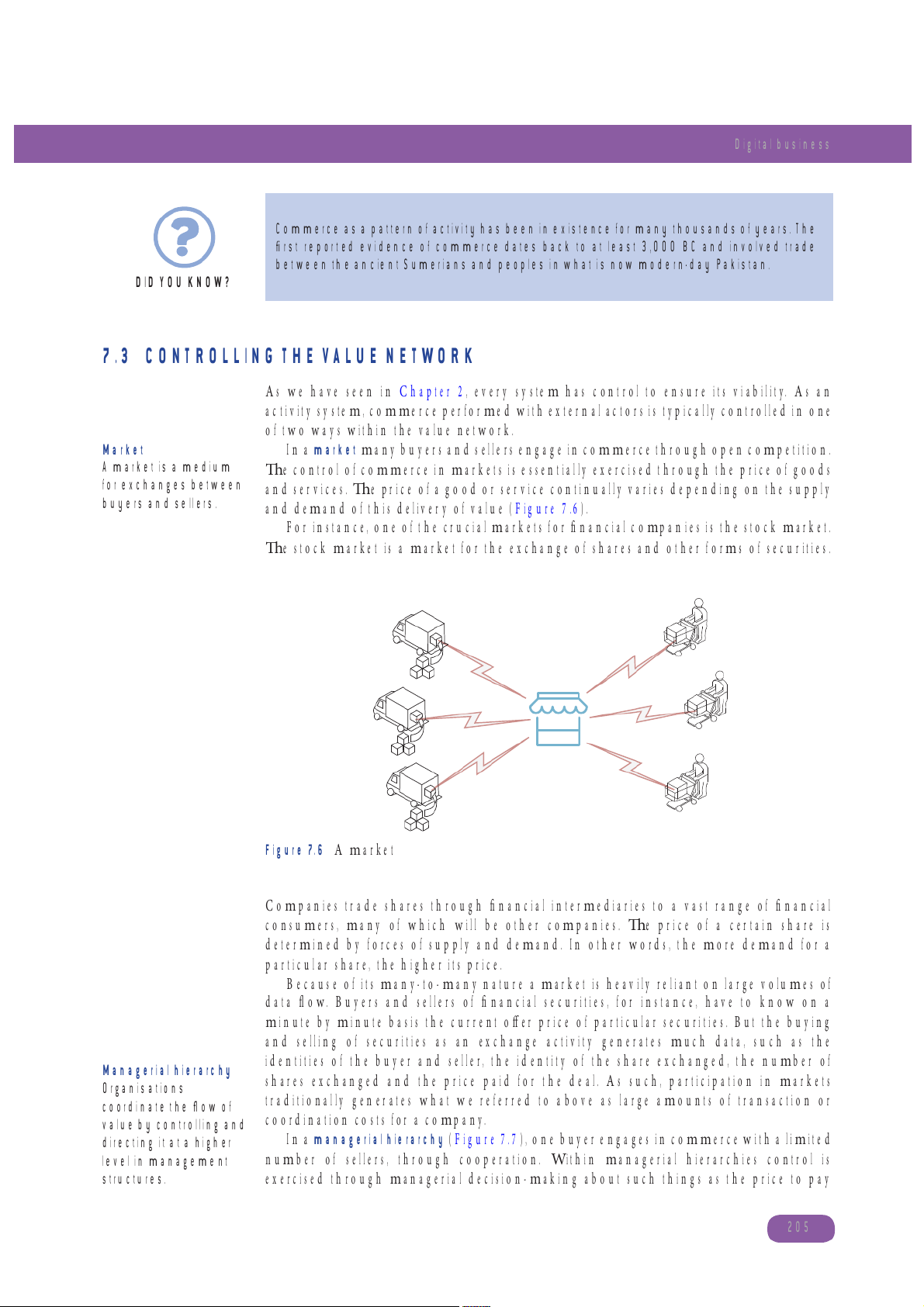
In a market many buyers and sellers engage in commerce through open competition. A market is a medium
e control of commerce in markets is essentially exercised through the price of goods for exchanges between
and services. e price of a good or service continually varies depending on the supply buyers and sel ers.
and demand of this delivery of value (Figure7.6).
For instance, one of the crucial markets for nancial companies is the stock market.
e stock market is a market for the exchange of shares and other forms of securities. Figure 7.6 A market
Companies trade shares through nancial intermediaries to a vast range of nancial
consumers, many of which will be other companies. e price of a certain share is
determined by forces of supply and demand. In other words, the more demand for a
particular share, the higher its price.
Because of its many-to-many nature a market is heavily reliant on large volumes of
data ow. Buyers and sellers of nancial securities, for instance, have to know on a
minute by minute basis the current oer price of particular securities. But the buying
and selling of securities as an exchange activity generates much data, such as the
identities of the buyer and seller, the identity of the share exchanged, the number of Managerial hierarchy
shares exchanged and the price paid for the deal. As such, participation in markets Organisations
traditionally generates what we referred to above as large amounts of transaction or coordinate the ow of
coordination costs for a company. value by controlling and directing it at a higher
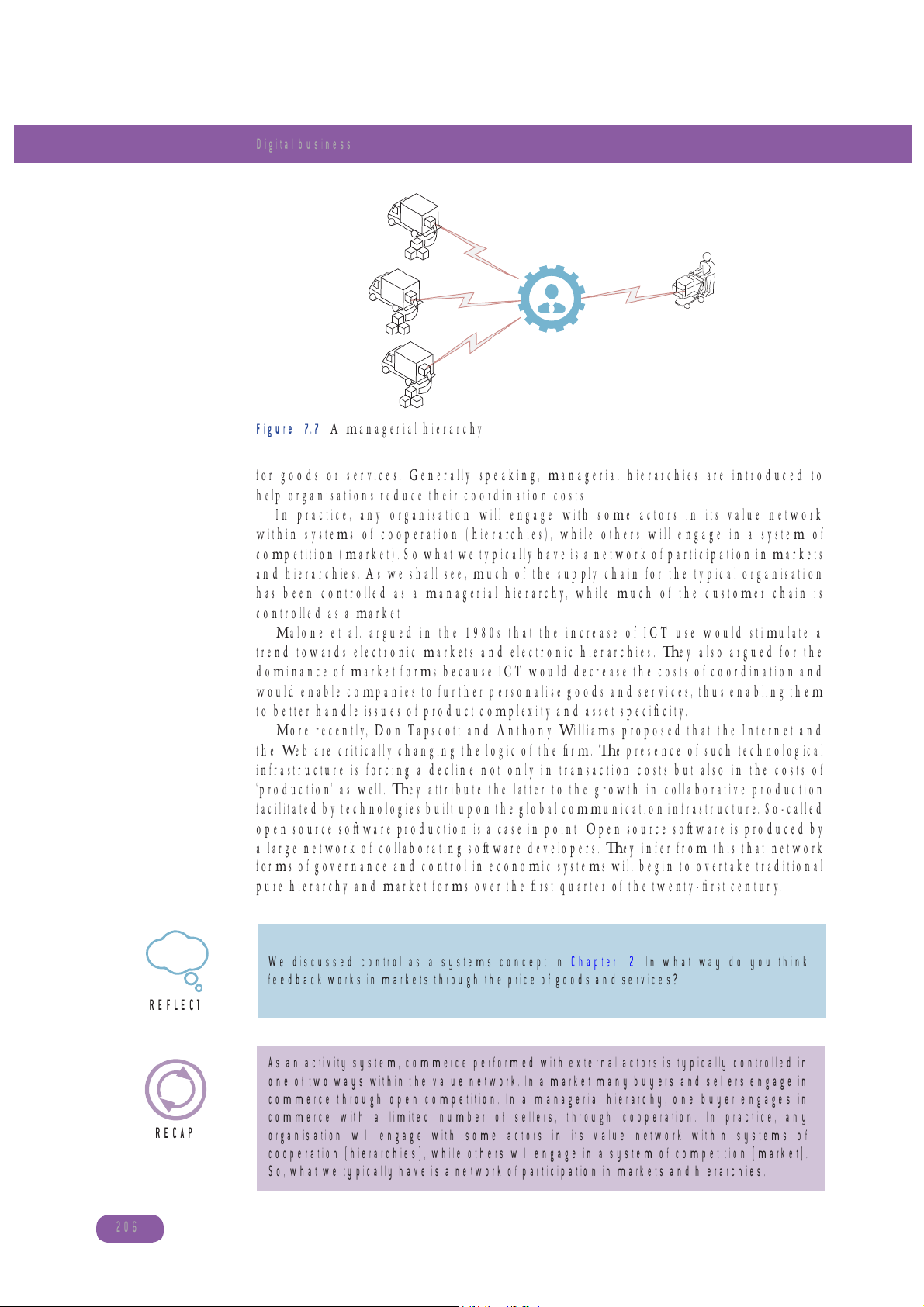
In a managerial hierarchy (Figure7.7), one buyer engages in commerce with a limited level in management
number of sellers, through cooperation. Within managerial hierarchies control is structures.
exercised through managerial decision-making about such things as the price to pay 205 Digital business
Figure7.7 A managerial hierarchy
for goods or services. Generally speaking, managerial hierarchies are introduced to
help organisations reduce their coordination costs.
In practice, any organisation will engage with some actors in its value network
within systems of cooperation (hierarchies), while others will engage in a system of
competition (market). So what we typically have is a network of participation in markets
and hierarchies. As we shall see, much of the supply chain for the typical organisation
has been controlled as a managerial hierarchy, while much of the customer chain is controlled as a market.
Malone etal. argued in the 1980s that the increase of ICT use would stimulate a
trend towards electronic markets and electronic hierarchies. ey also argued for the
dominance of market forms because ICT would decrease the costs of coordination and
would enable companies to further personalise goods and services, thus enabling them
to better handle issues of product complexity and asset specicity.
More recently, Don Tapscott and Anthony Williams proposed that the Internet and
the Web are critically changing the logic of the rm. e presence of such technological
infrastructure is forcing a decline not only in transaction costs but also in the costs of
‘production’ as well. ey attribute the latter to the growth in collaborative production
facilitated by technologies built upon the global communication infrastructure. So-called
open source soware production is a case in point. Open source soware is produced by
a large network of collaborating soware developers. ey infer from this that network
forms of governance and control in economic systems will begin to overtake traditional
pure hierarchy and market forms over the rst quarter of the twenty-rst century.
We discussed control as a systems concept in Chapter 2. In what way do you think
feedback works in markets through the price of goods and services? REFLECT
As an activity system, commerce performed with external actors is typically controlled in
one of two ways within the value network. In a market many buyers and sellers engage in
commerce through open competition. In a managerial hierarchy, one buyer engages in
commerce with a limited number of sellers, through cooperation. In practice, any RECAP
organisation will engage with some actors in its value network within systems of
cooperation (hierarchies), while others will engage in a system of competition (market).
So, what we typically have is a network of participation in markets and hierarchies. 206 Digital business 7.4 ELECTRONIC COMMERCE Electronic commerce
Electronic commerce refers to the ways in which ICT is used to enable various activity The conduct of
systems of commerce within the wider value network of organisations. We shall focus commerce using
upon three major types of electronic commerce. information technology
Business-to-customer (B2C) eCommerce refers to the ways in which ICT is used to such as that supporting
help enable the customer chain. Business-to-business (B2B) eCommerce tends to be the Internet.
used to refer to ICT enablement of the supply chain. Consumer-to-consumer (C2C)
refers to ICT enablement of the community chain.
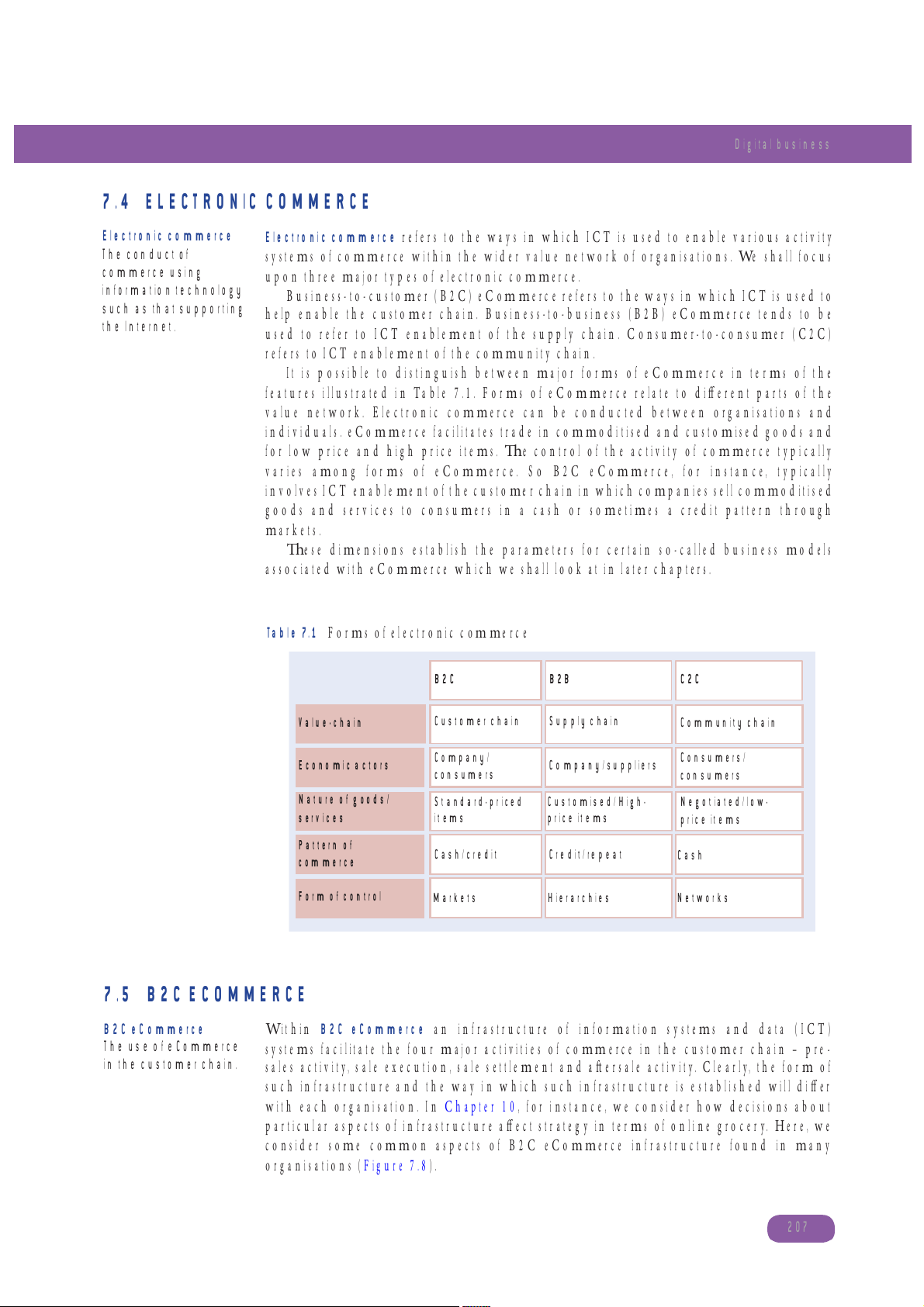
It is possible to distinguish between major forms of eCommerce in terms of the
features illustrated in Table7.1. Forms of eCommerce relate to dierent parts of the
value network. Electronic commerce can be conducted between organisations and
individuals. eCommerce facilitates trade in commoditised and customised goods and
for low price and high price items. e control of the activity of commerce typically
varies among forms of eCommerce. So B2C eCommerce, for instance, typically
involves ICT enablement of the customer chain in which companies sell commoditised
goods and services to consumers in a cash or sometimes a credit pattern through markets.
ese dimensions establish the parameters for certain so-called business models
associated with eCommerce which we shall look at in later chapters.
Table 7.1 Forms of electronic commerce B2C B2B C2C Value-chain Customer chain Supply chain Community chain Company/ Consumers/ Economic actors Company/suppliers consumers consumers Nature of goods/ Standard-priced Customised/High- Negotiated/low- services items price items price items Pattern of Cash/credit Credit/repeat commerce Cash Form of control Markets Hierarchies Networks 7.5 B2C ECOMMERCE B2C eCommerce
Within B2C eCommerce an infrastructure of information systems and data (ICT) The use of eCommerce
systems facilitate the four major activities of commerce in the customer chain – pre- in the customer chain.
sales activity, sale execution, sale settlement and aersale activity. Clearly, the form of
such infrastructure and the way in which such infrastructure is established will dier
with each organisation. In Chapter10, for instance, we consider how decisions about
particular aspects of infrastructure aect strategy in terms of online grocery. Here, we
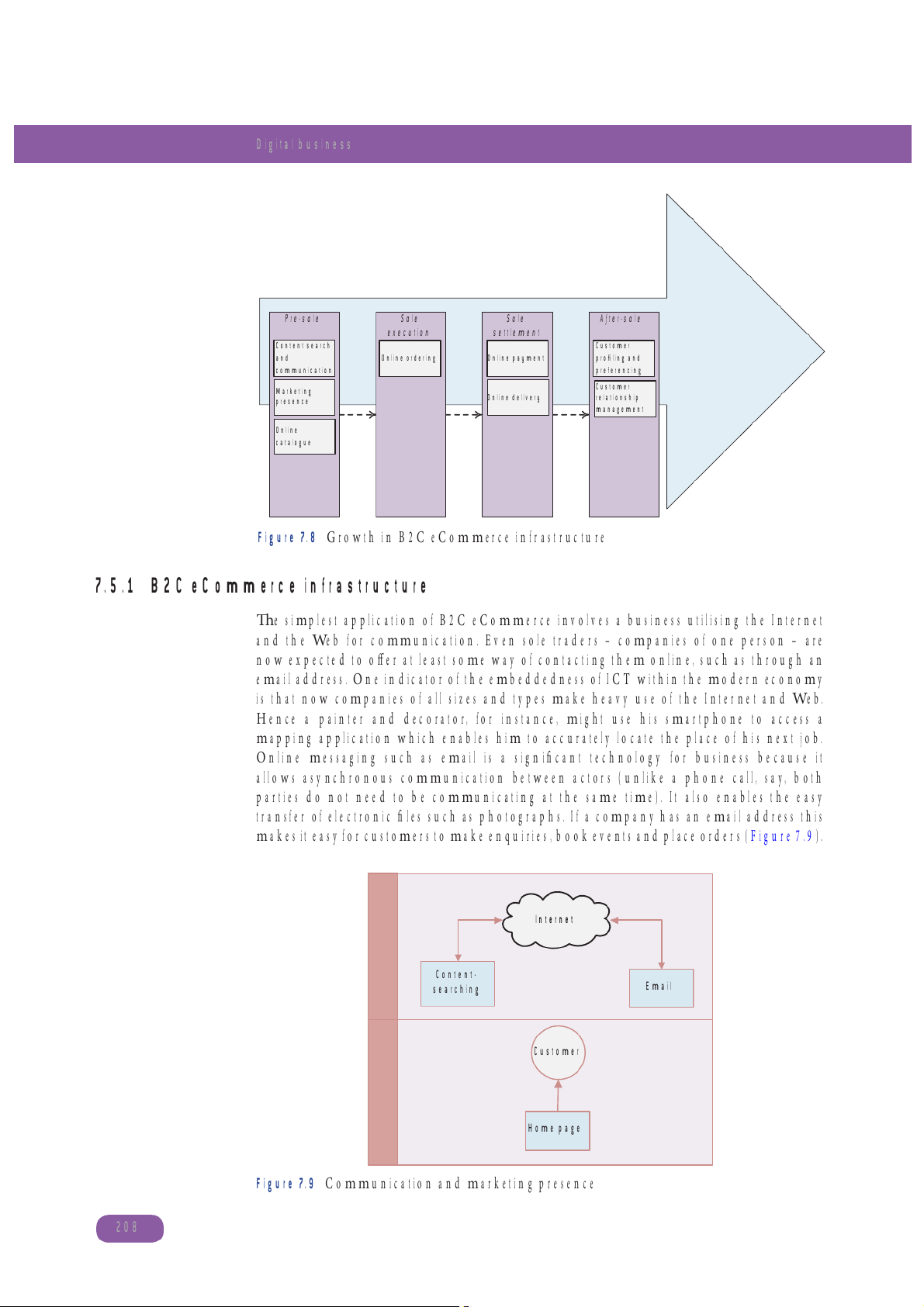
consider some common aspects of B2C eCommerce infrastructure found in many organisations (Figure7.8). 207 Digital business Pre-sale Sale Sale After-sale execution settlement Content search Customer and Online ordering Online payment proling and communication preferencing Marketing Customer presence Online delivery relationship management Online catalogue
Figure 7.8 Growth in B2C eCommerce infrastructure
7.5.1 B2C eCommerce infrastructure
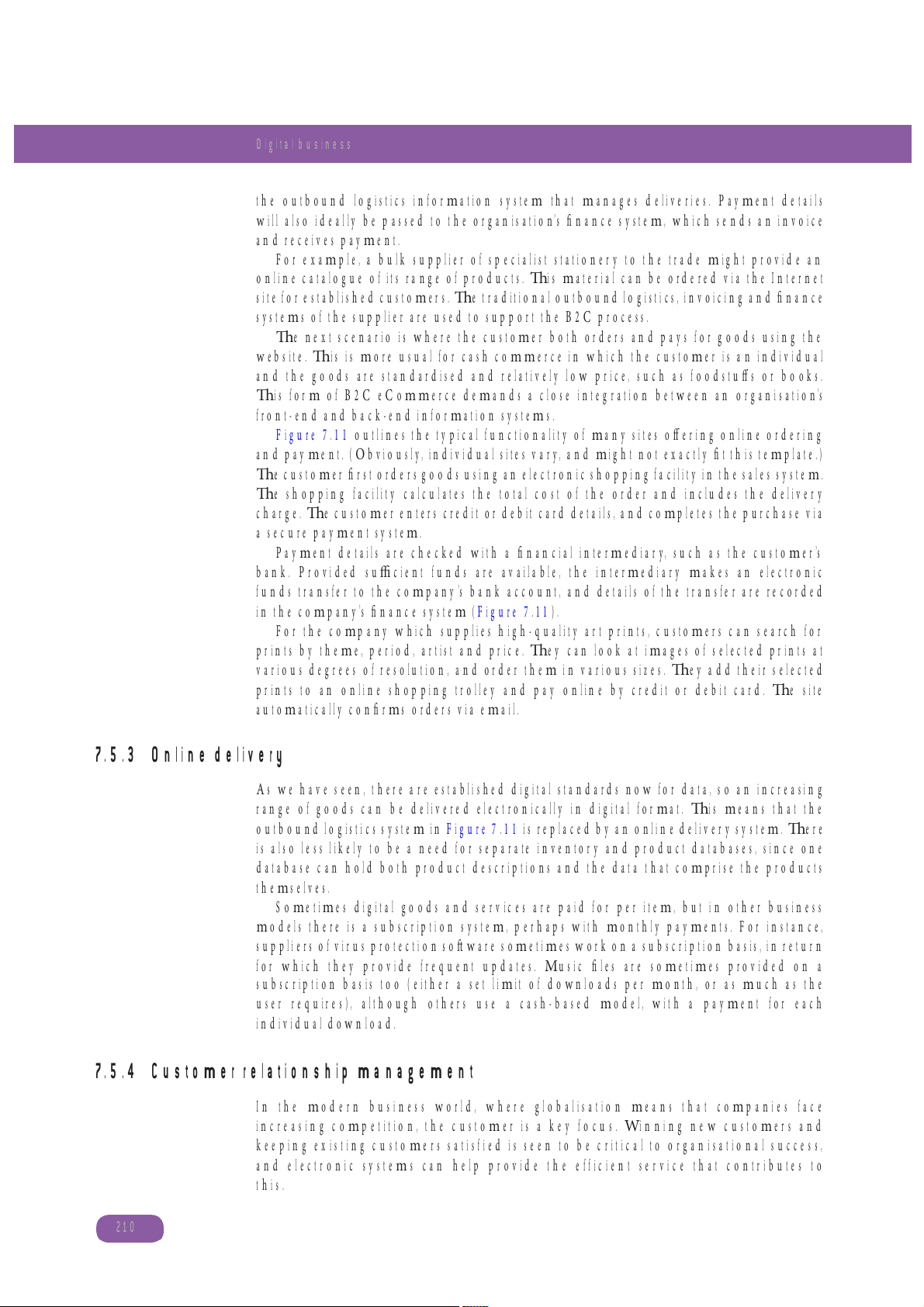
e simplest application of B2C eCommerce involves a business utilising the Internet
and the Web for communication. Even sole traders – companies of one person – are
now expected to oer at least some way of contacting them online, such as through an
email address. One indicator of the embeddedness of ICT within the modern economy
is that now companies of all sizes and types make heavy use of the Internet and Web.
Hence a painter and decorator, for instance, might use his smartphone to access a
mapping application which enables him to accurately locate the place of his next job.
Online messaging such as email is a signicant technology for business because it
allows asynchronous communication between actors (unlike a phone call, say, both
parties do not need to be communicating at the same time). It also enables the easy
transfer of electronic les such as photographs. If a company has an email address this
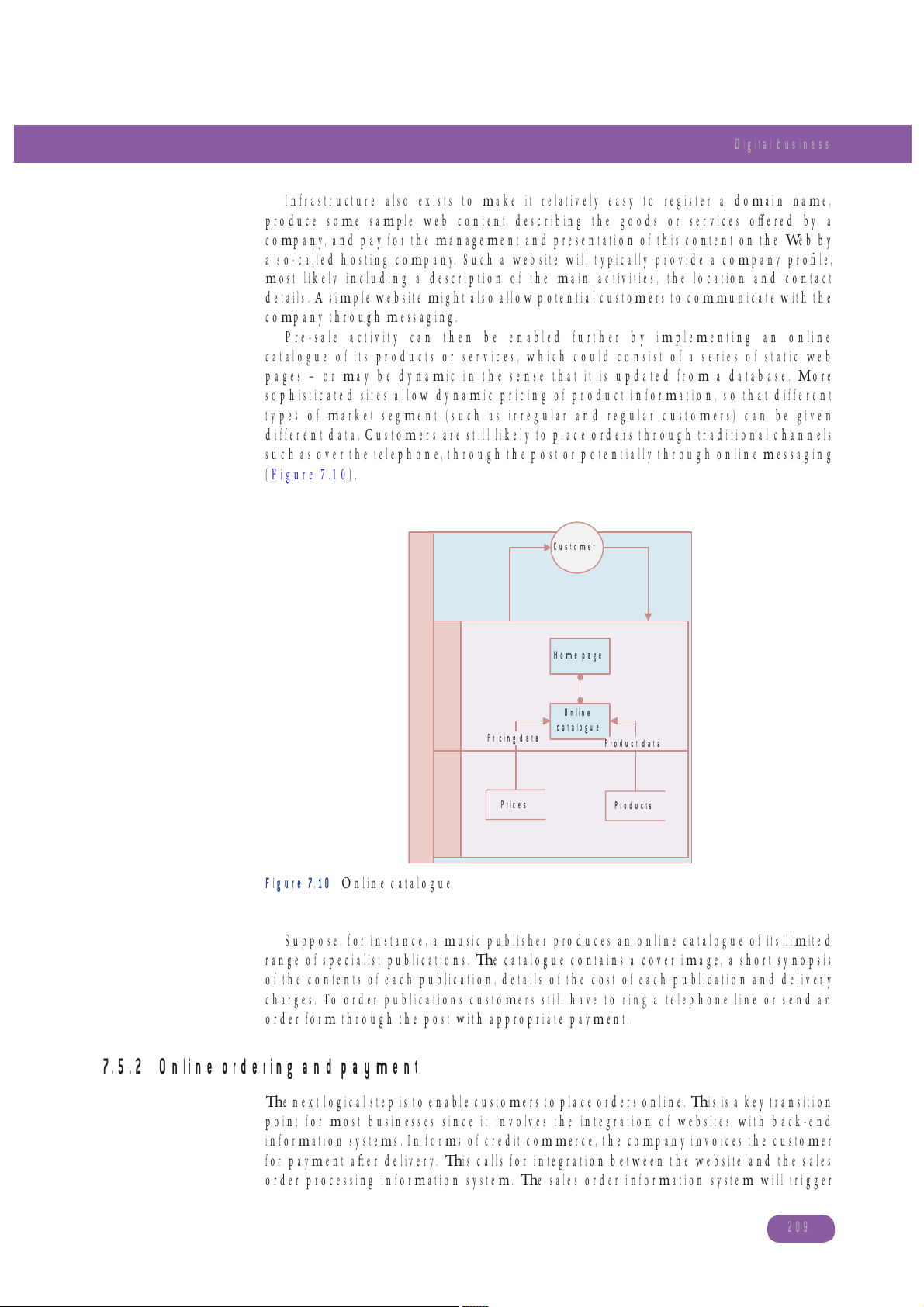
makes it easy for customers to make enquiries, book events and place orders (Figure7.9). Internet ication n mmu Content- Co searching Email ce Customer g presen arketin Home page M
Figure 7.9 Communication and marketing presence 208 Digital business
Infrastructure also exists to make it relatively easy to register a domain name,
produce some sample web content describing the goods or services oered by a
company, and pay for the management and presentation of this content on the Web by
a so-called hosting company. Such a website will typically provide a company prole,
most likely including a description of the main activities, the location and contact
details. A simple website might also allow potential customers to communicate with the company through messaging.
Pre-sale activity can then be enabled further by implementing an online
catalogue of its products or services, which could consist of a series of static web
pages – or may be dynamic in the sense that it is updated from a database. More
sophisticated sites allow dynamic pricing of product information, so that different
types of market segment (such as irregular and regular customers) can be given
different data. Customers are still likely to place orders through traditional channels
such as over the telephone, through the post or potentially through online messaging (Figure7.10). Customer Home page te si atalogue eb c W e Online lin n catalogue O Pricing data Product data ata d d Prices Products ack-en B Figure 7.10 Online catalogue
Suppose, for instance, a music publisher produces an online catalogue of its limited
range of specialist publications. e catalogue contains a cover image, a short synopsis
of the contents of each publication, details of the cost of each publication and delivery
charges. To order publications customers still have to ring a telephone line or send an
order form through the post with appropriate payment.
7.5.2 Online ordering and payment
e next logical step is to enable customers to place orders online. is is a key transition
point for most businesses since it involves the integration of websites with back-end
information systems. In forms of credit commerce, the company invoices the customer
for payment aer delivery. is calls for integration between the website and the sales
order processing information system. e sales order information system will trigger 209 Digital business
the outbound logistics information system that manages deliveries. Payment details
will also ideally be passed to the organisation’s nance system, which sends an invoice and receives payment.
For example, a bulk supplier of specialist stationery to the trade might provide an
online catalogue of its range of products. is material can be ordered via the Internet
site for established customers. e traditional outbound logistics, invoicing and nance
systems of the supplier are used to support the B2C process.
e next scenario is where the customer both orders and pays for goods using the
website. is is more usual for cash commerce in which the customer is an individual
and the goods are standardised and relatively low price, such as foodstus or books.
is form of B2C eCommerce demands a close integration between an organisation’s
front-end and back-end information systems.
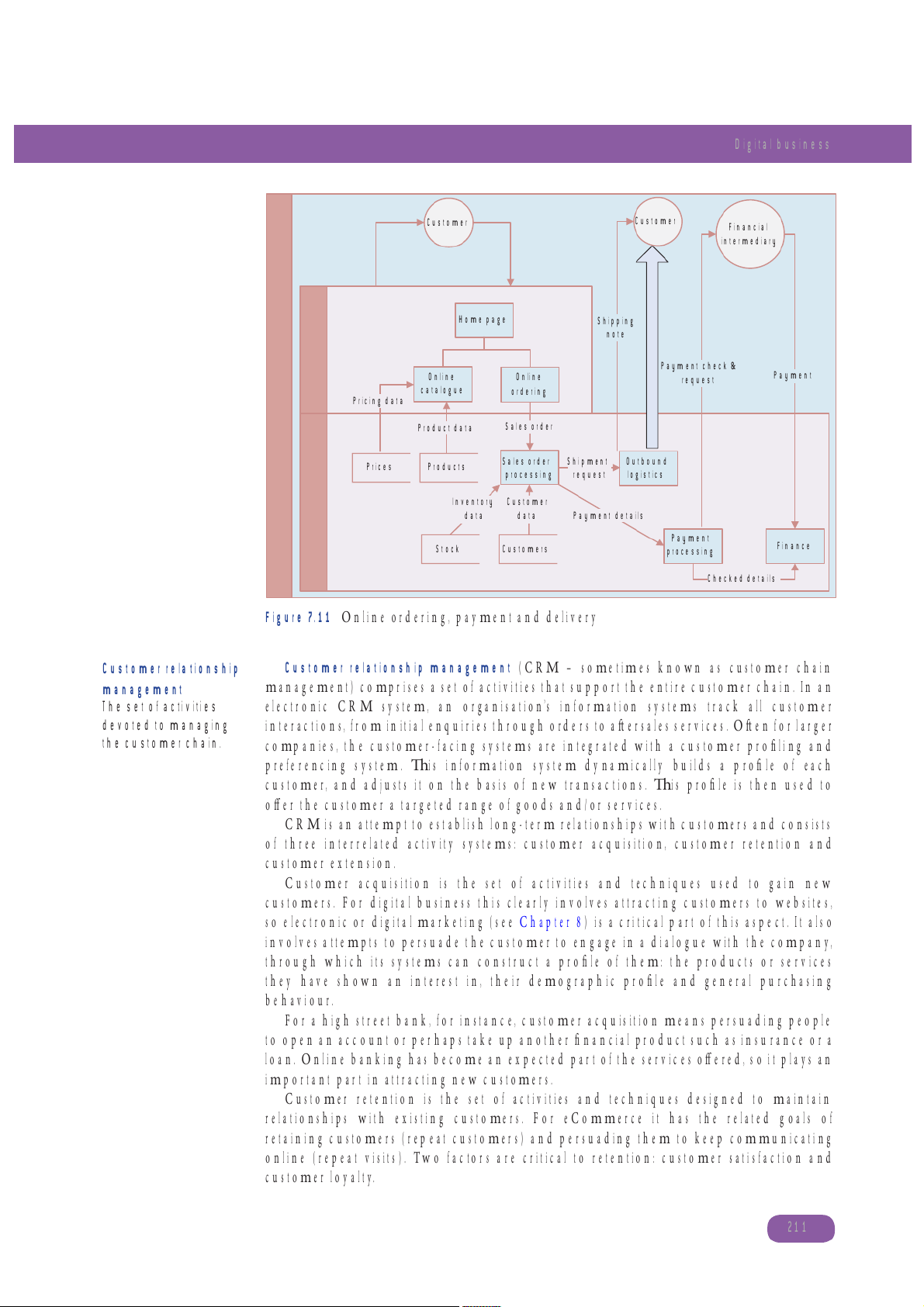
Figure7.11 outlines the typical functionality of many sites oering online ordering
and payment. (Obviously, individual sites vary, and might not exactly t this template.)
e customer rst orders goods using an electronic shopping facility in the sales system.
e shopping facility calculates the total cost of the order and includes the delivery
charge. e customer enters credit or debit card details, and completes the purchase via a secure payment system.
Payment details are checked with a nancial intermediary, such as the customer’s
bank. Provided sucient funds are available, the intermediary makes an electronic
funds transfer to the company’s bank account, and details of the transfer are recorded
in the company’s nance system (Figure7.11).
For the company which supplies high-quality art prints, customers can search for
prints by theme, period, artist and price. ey can look at images of selected prints at
various degrees of resolution, and order them in various sizes. ey add their selected
prints to an online shopping trolley and pay online by credit or debit card. e site
automatically conrms orders via email. 7.5.3 Online delivery
As we have seen, there are established digital standards now for data, so an increasing
range of goods can be delivered electronically in digital format. is means that the
outbound logistics system in Figure7.11 is replaced by an online delivery system. ere
is also less likely to be a need for separate inventory and product databases, since one
database can hold both product descriptions and the data that comprise the products themselves.
Sometimes digital goods and services are paid for per item, but in other business
models there is a subscription system, perhaps with monthly payments. For instance,
suppliers of virus protection soware sometimes work on a subscription basis, in return
for which they provide frequent updates. Music les are sometimes provided on a
subscription basis too (either a set limit of downloads per month, or as much as the
user requires), although others use a cash-based model, with a payment for each individual download.
7.5.4 Customer relationship management
In the modern business world, where globalisation means that companies face
increasing competition, the customer is a key focus. Winning new customers and
keeping existing customers satisfied is seen to be critical to organisational success,
and electronic systems can help provide the efficient service that contributes to this. 210 Digital business Customer Customer Financial intermediary Shipping note oods structure Home page ebsite G W Payment check & fra Online Online request Payment in catalogue ordering Pricing data erce m m Product data Sales order eCo 2C B Sales order Shipment Outbound Prices Products processing request logistics d ICT Inventory Customer data data Payment details ack-en B Payment Stock Customers Finance processing Checked details
Figure 7.11 Online ordering, payment and delivery Customer relationship
Customer relationship management (CRM – sometimes known as customer chain management
management) comprises a set of activities that support the entire customer chain. In an The set of activities
electronic CRM system, an organisation’s information systems track all customer devoted to managing
interactions, from initial enquiries through orders to aersales services. Oen for larger the customer chain.
companies, the customer-facing systems are integrated with a customer proling and
preferencing system. is information system dynamically builds a prole of each
customer, and adjusts it on the basis of new transactions. is prole is then used to
oer the customer a targeted range of goods and/or services.
CRM is an attempt to establish long-term relationships with customers and consists
of three interrelated activity systems: customer acquisition, customer retention and customer extension.
Customer acquisition is the set of activities and techniques used to gain new
customers. For digital business this clearly involves attracting customers to websites,
so electronic or digital marketing (see Chapter8) is a critical part of this aspect. It also
involves attempts to persuade the customer to engage in a dialogue with the company,
through which its systems can construct a prole of them: the products or services
they have shown an interest in, their demographic prole and general purchasing behaviour.
For a high street bank, for instance, customer acquisition means persuading people
to open an account or perhaps take up another nancial product such as insurance or a
loan. Online banking has become an expected part of the services oered, so it plays an
important part in attracting new customers.
Customer retention is the set of activities and techniques designed to maintain
relationships with existing customers. For eCommerce it has the related goals of
retaining customers (repeat customers) and persuading them to keep communicating
online (repeat visits). Two factors are critical to retention: customer satisfaction and customer loyalty. 211 Digital business
One technique used in customer retention is the personalisation of email
content. Customers receive alerts about products or services that their profile has
suggested they will find particularly interesting: a new album by a musician whose
previous work they have bought, for instance. These alerts may also offer discounts
or other added-value services in a bid to persuade customers to return to a B2C website.
For the bank, customer retention activities might include offering multichannel
access to accounts and aggregated products such as combined bank accounts,
insurance and mortgages. Because online transactions are cheaper for the company,
online customers may be provided with inducements to keep on using electronic
communications, such as higher interest on balances in savings accounts.
Customer extension activities and techniques encourage existing customers to
increase their level of involvement with a company. is is made easier in the online
environment as more targeted promotions can be oered to customers.
All these activities depend heavily on good data and how these are used to
communicate: knowing who the customers are, what they are purchasing, how satised
they are with the company and what future services and products they want. Hence
there has been an increasing emphasis on information systems to support the CRM process.
It might be argued that B2C eCommerce in general and CRM in particular are a
natural consequence of the increasing customer focus. As we have seen, Porter has
argued that the value delivered to the customer is the key feature of contemporary
business so it is not surprising to nd companies attempting to reorient their processes
and systems around customers, instead of around business events such as orders and sales.
Take for example an insurance company whose products include life insurance, car
insurance and home insurance. If this company structured its information systems
around policy types (as most such companies used to do), it would nd it hard to work
out which customers were purchasing more than one type of insurance. It would also
not be able to integrate its communications; if, for instance, a customer’s household
insurance was renewed the same day as their car insurance, they would get separate
communications about each one. With its systems restructured around customers, the
company can tell who its most valuable customers are, and which customers for one
type of policy have not as yet chosen the company for their other insurance needs. It
can then initiate schemes such as discount packages, aimed at retaining and extending its business.
Consider a university which organises its teaching data around courses and modules
rather than students. What problems do you think it might nd with this way of structuring its data? REFLECT 7.5.5 Omnichannel retailing
As we have seen, an access channel is a means for an organisation to deliver goods and/
or services to its customers (see Chapter5). Traditional access channels include voice
and face-to-face contact. ere are also a range of remote access channels, such as
telephone contact and more recently Internet access through devices such as the 212 Digital business
personal computer or the mobile access device such as the smartphone. Goods and
services can either be delivered directly by an organisation or indirectly using intermediaries (Chapter6).
Many organisations now oer multiple and oen tiered access to products and
services. Most large-scale private and public sector organisations oer at least three
tiers, each of which has dierent cost and availability implications. e rst tier is
remote direct access through a subset of the access devices discussed in Chapter 5.
e second tier is through a multichannel access centre. Here, contact centre sta
manage delivery through computer integrated telephony. e third tier involves direct
contact with employees through face-to-face communication or letter. is is illustrated in Figure7.12.
Retailing offers certain challenges in relation to multiple channels of access. Omnichannel retailing
Some have talked about the need for organisations to provide omnichannel retailing Retailing conducted
rather than merely retailing through multiple channels of access. This is an attempt through multiple
to provide integration of data such as pricing across all channels and locations of channels of access.
access – both online and offline. It is directed at certain changes in consumer
behaviour evident with the rise of online retail. Showrooming is the phenomenon
where customers examine products in an offline, outlet but then purchase the same
product often for a lower price online. Likewise, webrooming is the phenomenon
where customers research a product on the Web before selecting an offline store to purchase from. Direct contact Access Front-end ICT Employee Customer device Contact centre Communication Customer channel Access Access Employee Front-end ICT device device Remote access Communication Customer channel Front-end ICT Access device
Increasing human interaction and cost
Increasing convenience/availability Figure 7.12 Tiered access 213 Digital business
The concept of online shopping was pioneered by the British engineer Michael Aldrich in
1979 when he connected a domestic television via a telephone line to a multi-user
computer. However, true B2C eCommerce had to wait for the infrastructure of the Internet
and Web before it could fully emerge. The Internet was only really opened to general DID YOU KNOW?
access in 1991. Tim Berners-Lee pioneered the Web as a publicly available service on the Internet later that year.
7.5.6 Global or local eCommerce
We tend to think of eCommerce as a phenomenon dominated by global players in the
market, such as Amazon, which sell products through their websites in most parts of
the world. But many eCommerce companies exist around the world that focus on local
rather than global markets. Analysts estimate there to be approximately 3 million
eCommerce companies in the world, excluding those present in China. e United
States and Canada have an estimated 1.3 million eCommerce companies, so this means
that 1.7 million companies are based in and probably focus upon markets in their
respective parts of the world. As an example, at the time of writing, Australia is home
to companies such as Ozbargain, JB Hi-Fi, Oceworks, Harveynorman, Kogan,
Woolworths, EB games, Myer, e Iconic, e Good Guys, BigW, Coles, Catch, Dan
Murphy’s, Chemist Warehouse, Supercheap Auto, Booktopia, Ozsale, Appliances
Online, Dick Smith and Fishpond. Many of these companies are bricks-and-mortar
businesses such as Coles, or have converted from oine to online businesses such as
Dick Smith, but some have always been clicks-and-mortar businesses that have been
around for a substantial period within their marketplace, such as Fishpond. 7.5.7 Amazon and B2C eCommerce
Amazon.com is an American eCommerce company based in Seattle, Washington State.
The company was one of the rst major companies to sel goods over the Internet. It was
also one of the most prominent traded securities of the late 1990s dot-com ‘bubble’. When
this bubble burst, many claimed that Amazon’s business model was unsustainable. The CASE
company made its rst annual prot in 2003. Consequently, Amazon.com is probably the
most cited example of a company that has succeeded at B2C eCommerce. But
interestingly, Amazon sees itself as a technology company rst and an eCommerce company second.
Amazon.com was launched on the Web in June1995 by Je Bezos. Bezos obtained
the backing of venture capitalists in Silicon Valley to start the operation. He chose to name
his site after the world’s longest river because Amazon, according to Bezos, was set to
become the world’s largest bookstore. At the time of Amazon’s entry into the market it had
no signicant rivals – a rst entrant into this new market. Within one year the company
was recognised as the Web’s largest bookstore. Figure 7.13 provides a sensible estimate
of the growth in sales by Amazon from 1999 until 2018.
Although we tend to think of Amazon as one website, it has separate websites hosted
in Canada, the UK, Germany, France, Italy, China and Japan. Amazon earns more than two
thirds of its income in North America.
The company provides a number of levels of functionality through its website such as
search features, additional content and personalisation. The site also provides searchable
catalogues of books, CDs, DVDs, computer games etc. Customers can search for titles using
keyword, title, subject, author, artist, musical instrument, label, actor, director, publication date
or ISBN. In terms of added value, the company oers a vast range of additional content over
and above its products. For example, cover art, synopses, annotations, reviews by editorial 214 Digital business 158 136 105 74 48 5 10 25 1 2 15
1999 2001 2003 2005 2007 2009 2011 2013 2015 2017 2018
Amazon sales in billions of dollars
Figure 7.13 e growth in Amazon sales
sta and other customers and interviews by authors and artists. The website attempts to
personalise the customer experience by greeting customers by name, instant and
personalised recommendations, bestseller listings, personal notication services and purchase pattern ltering. CASE
Amazon’s service to customers relies on a close integration of its website to back-end continued…
information and activity systems. The company uses a streamlined ordering process
reliant on previous billing and shipment details captured from the customer. Amazon also
utilises secure server software that encrypts payment information throughout its
integrated fullment process. Most of the company’s products are available for shipping within 24 hours.
The primary value stream for Amazon is tangible products such as books and electronic
products. As an online retailer the major transformation of its value-creating system is
distribution and sales. It oers a vast range of such books for sale to customers and
delivers them direct to customers.
At the start, Bezos warned investors that they were unlikely to make a profit in the
first five years of operation. However, Amazon has engaged in an aggressive expansion
strategy since its inception. Over the last decade, it has attempted to broaden the
range of this value by offering a broader range of products including computer software,
video games, electronics, clothing, furniture, food and toys. It also provides added-
value services such as a personalised notification service. Many such products are
not supplied by Amazon itself but through its associate network – a form of P2P eCommerce.
B2C eCommerce involves ICT enablement of key activity systems in the customer chain.
Customer chain activities include product identication, catalogue search, product
comparison and purchase. An organisation’s experience of B2C eCommerce moves
through a number of stages of increasing complexity, including information seeking and RECAP
communication, marketing presence, online catalogue, online ordering, online payment
and customer relationship management. 215 Digital business 7.6 B2B ECOMMERCE B2B eCommerce
Up until quite recently it has always been argued that B2B eCommerce is even more The use of eCommerce
critical to business activity than B2C eCommerce, and that digital innovation in the area in the supply chain.
of business-to-business activity has potentially enormous value for organisations. B2B
eCommerce involves the use of ICT within the supply chain activity of organisations.
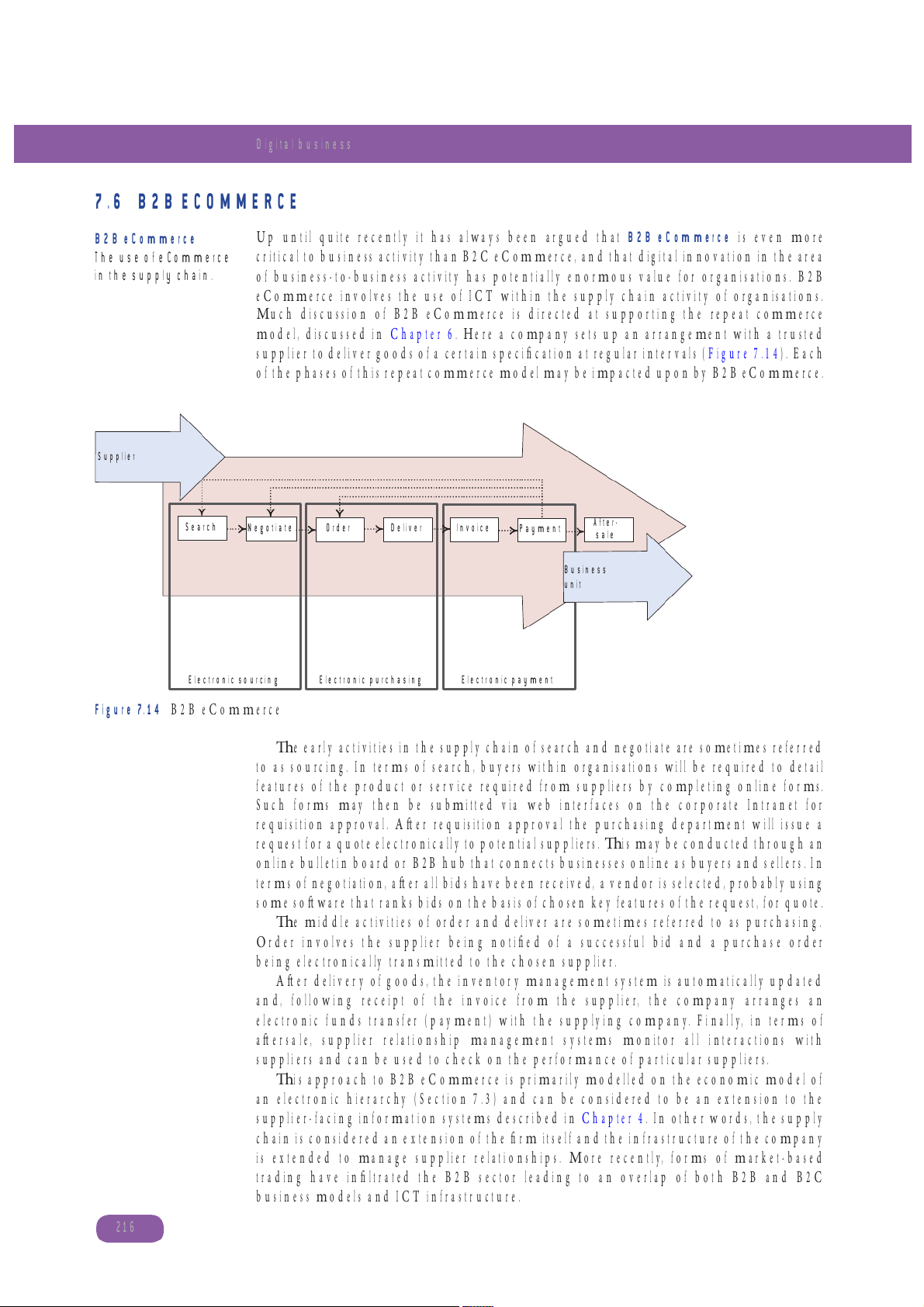
Much discussion of B2B eCommerce is directed at supporting the repeat commerce
model, discussed in Chapter6. Here a company sets up an arrangement with a trusted
supplier to deliver goods of a certain specication at regular intervals (Figure7.14). Each
of the phases of this repeat commerce model may be impacted upon by B2B eCommerce. Supplier Search Negotiate Order Deliver Invoice Payment After- sale Business unit Electronic sourcing Electronic purchasing Electronic payment Figure 7.14 B2B eCommerce
e early activities in the supply chain of search and negotiate are sometimes referred
to as sourcing. In terms of search, buyers within organisations will be required to detail
features of the product or service required from suppliers by completing online forms.
Such forms may then be submitted via web interfaces on the corporate Intranet for
requisition approval. Aer requisition approval the purchasing department will issue a
request for a quote electronically to potential suppliers. is may be conducted through an
online bulletin board or B2B hub that connects businesses online as buyers and sellers. In
terms of negotiation, aer all bids have been received, a vendor is selected, probably using
some soware that ranks bids on the basis of chosen key features of the request, for quote.
e middle activities of order and deliver are sometimes referred to as purchasing.
Order involves the supplier being notied of a successful bid and a purchase order
being electronically transmitted to the chosen supplier.
Aer delivery of goods, the inventory management system is automatically updated
and, following receipt of the invoice from the supplier, the company arranges an
electronic funds transfer (payment) with the supplying company. Finally, in terms of
aersale, supplier relationship management systems monitor all interactions with
suppliers and can be used to check on the performance of particular suppliers.
is approach to B2B eCommerce is primarily modelled on the economic model of
an electronic hierarchy (Section 7.3) and can be considered to be an extension to the
supplier-facing information systems described in Chapter4. In other words, the supply
chain is considered an extension of the rm itself and the infrastructure of the company
is extended to manage supplier relationships. More recently, forms of market-based
trading have inltrated the B2B sector leading to an overlap of both B2B and B2C
business models and ICT infrastructure. 216 Digital business
7.6.1 B2B eCommerce infrastructure
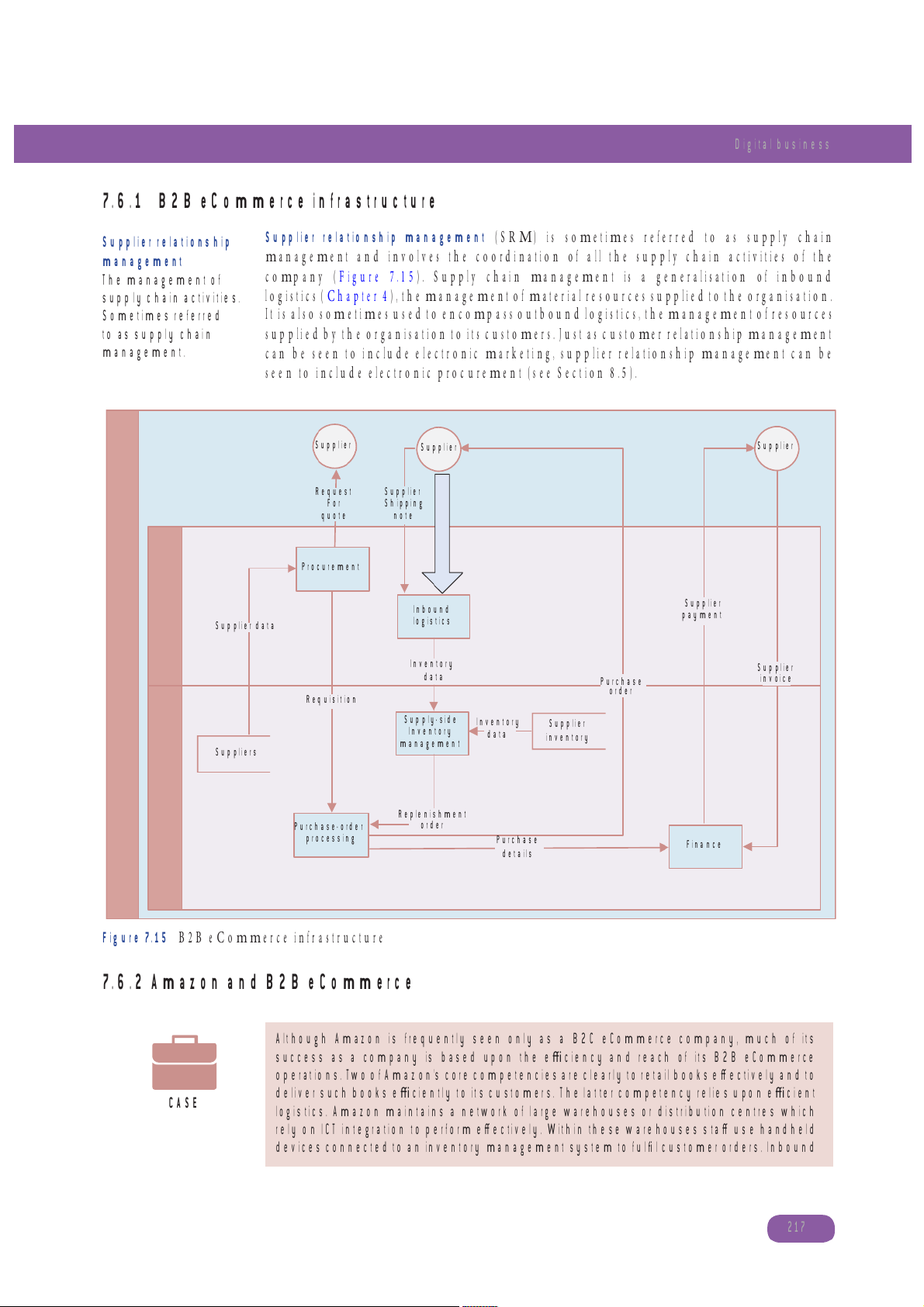
Supplier relationship management (SRM) is sometimes referred to as supply chain Supplier relationship
management and involves the coordination of all the supply chain activities of the management The management of
company (Figure 7.15). Supply chain management is a generalisation of inbound supply chain activities.
logistics (Chapter4), the management of material resources supplied to the organisation. Sometimes referred
It is also sometimes used to encompass outbound logistics, the management of resources to as supply chain
supplied by the organisation to its customers. Just as customer relationship management management.
can be seen to include electronic marketing, supplier relationship management can be
seen to include electronic procurement (see Section8.5). Supplier Supplier Supplier Request Supplier For Shipping quote note ods Go ip Procurement sh t n Supplier ageme Inbound n payment Supplier data logistics ma frastructure Supplier relation Inventory rce in Supplier data Purchase invoice order Requisition eComme Supply-side 2B Inventory Supplier B Inventory data inventory management Suppliers d ICT ack-en Replenishment B Purchase-order order processing Purchase Finance details
Figure 7.15 B2B eCommerce infrastructure 7.6.2 Amazon and B2B eCommerce
Although Amazon is frequently seen only as a B2C eCommerce company, much of its
success as a company is based upon the eciency and reach of its B2B eCommerce
operations. Two of Amazon’s core competencies are clearly to retail books eectively and to
deliver such books eciently to its customers. The latter competency relies upon ecient CASE
logistics. Amazon maintains a network of large warehouses or distribution centres which
rely on ICT integration to perform eectively. Within these warehouses sta use handheld
devices connected to an inventory management system to full customer orders. Inbound 217 Digital business
logistics involves the management of the purchasing of books and the distribution of
books to these distribution centres. The process of operations involves unpacking and
storing such shipments as wel as picking of books to full customer orders. Outbound CASE
logistics involves the distribution of books to the customer. continued…
B2B eCommerce focuses on ICT enablement of key processes in the supply chain. Most
B2B eCommerce is directed at supporting the repeat commerce model in terms of
electronic sourcing, purchasing and payment. RECAP 7.7 C2C ECOMMERCE
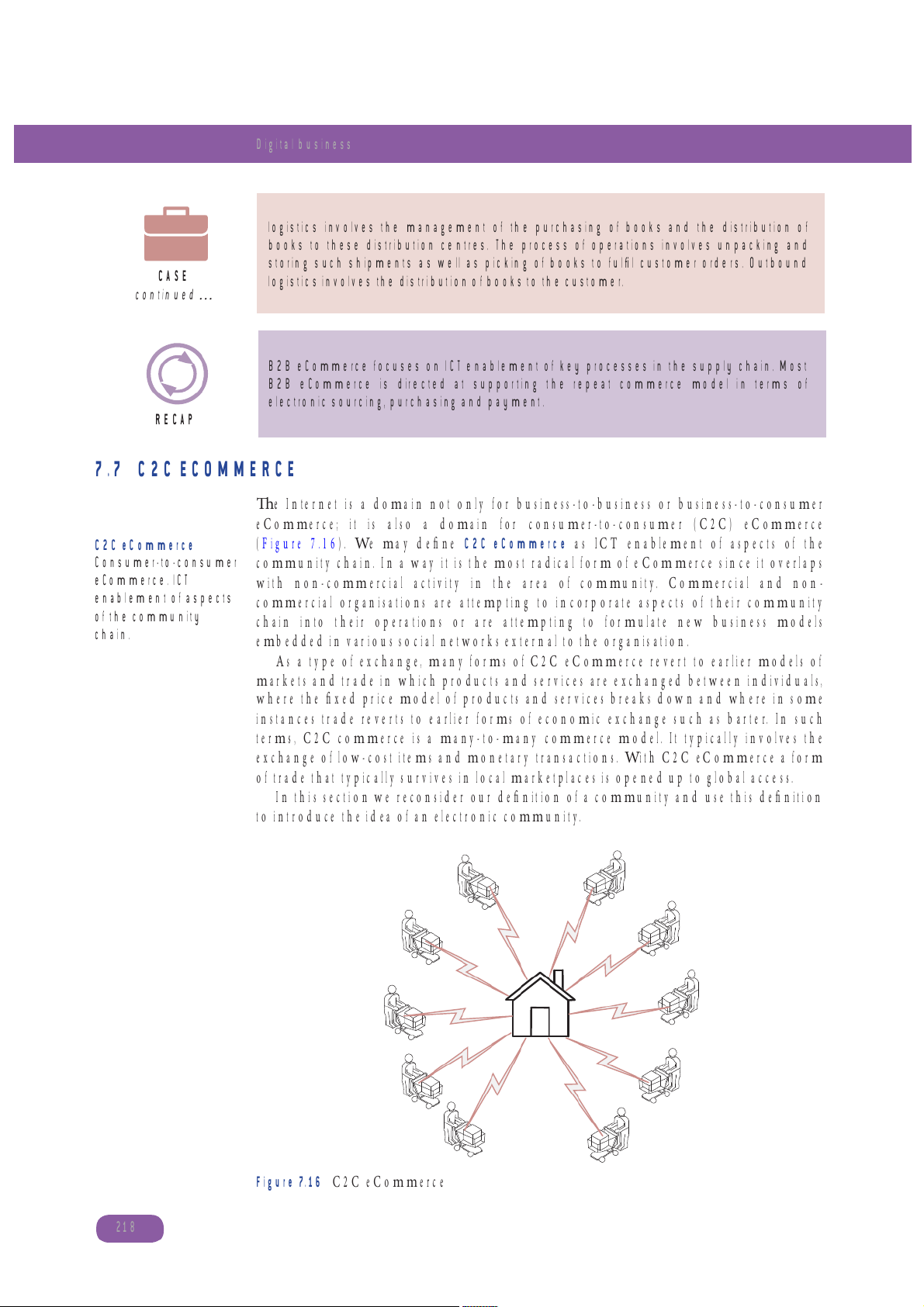
e Internet is a domain not only for business-to-business or business-to-consumer
eCommerce; it is also a domain for consumer-to-consumer (C2C) eCommerce C2C eCommerce
(Figure 7.16). We may dene C2C eCommerce as ICT enablement of aspects of the
Consumer-to-consumer community chain. In a way it is the most radical form of eCommerce since it overlaps eCommerce. ICT
with non-commercial activity in the area of community. Commercial and non- enablement of aspects
commercial organisations are attempting to incorporate aspects of their community of the community
chain into their operations or are attempting to formulate new business models chain.
embedded in various social networks external to the organisation.
As a type of exchange, many forms of C2C eCommerce revert to earlier models of
markets and trade in which products and services are exchanged between individuals,
where the xed price model of products and services breaks down and where in some
instances trade reverts to earlier forms of economic exchange such as barter. In such
terms, C2C commerce is a many-to-many commerce model. It typically involves the
exchange of low-cost items and monetary transactions. With C2C eCommerce a form
of trade that typically survives in local marketplaces is opened up to global access.
In this section we reconsider our denition of a community and use this denition
to introduce the idea of an electronic community. Figure 7.16 C2C eCommerce 218 Digital business 7.7.1 Electronic community
The two concepts of a social network and social capital as defined in Chapter4 help Electronic community
us understand some of the different forms of electronic community (eCommunity). A community
Onthe one hand, ICT is seen either as an enabler or disabler of traditional forms of supported through ICT.
community: an eNabled community. On the other hand, ICT is seen as offering
potential for newer forms of community based on communication networks: the
virtual community. Virtual communities may exist separate from the organisation
concerned or be built upon infrastructure provided by the organisation. The latter
is the concept of an adjunct community. It is to adjunct communities that many
businesses are turning to increase levels of value associated with their products and services.
An eNabled community is a traditional community enhanced with the use of ICT.
Community is normally established on the basis of frequent and prolonged interaction
between individuals, resident in a clearly dened geographical area. is form of
community chain addresses the rise of communication networks and considers whether
they are vehicles for recreating community and social capital in local areas. Some argue
that communication networks are a threat to existing forms of community; others that
they provide a new basis for enhancing social capital.
e Internet and the Web were initially established for free information exchange
between dispersed actors around the globe. Some have begun to consider such dispersed
networks or individuals and organisations as examples of electronic communities.
Insuch virtual communities, social networks are constructed through electronic rather
than face-to-face communication. Social networks based upon communication
infrastructure may not only be dispersed geographically, they may also have a much
more specic area of focus than traditional communities.
As a generalisation, public sector organisations have particularly been interested in
making connections between their activities and initiatives in the area of eNabled
community. Such forms of eCommunity are seen as oering the potential for the
stimulation of local economies, particularly in disadvantaged areas.
In contrast, private sector organisations have particularly been interested in
connecting to the second form of eCommunity, that of a virtual community. e idea is
that various forms of value produced by the community chain may support and
encourage commerce of various forms. It is only comparatively recently that the Internet
and Web have been used as vehicles for commerce and trade/business purposes. C2C
eCommerce mediates between pure forms of trade and pure forms of communication exchange. 7.7.2 Virtual communities Virtual community
It could be argued that one of the rst virtual communities was the community of A community
academics that started to use the Internet in the early 1970s to share data, exchange consisting of a
messages and collaborate together on various research programmes. As we have seen, network of actors on
Tim Berners-Lee originally produced the Web as a tool for networks of scientists to some communication
share documentation easily, and as such to build community. network.
In more recent times the idea of virtual communities has become inherently
associated with a range of websites collectively known as social networking sites.
Asocial networking site is a website that provides a number of facilities for constructing
and maintaining online relationships between members. Prominent examples of such
social networking sites are Facebook and LinkedIn. Globally, hundreds of millions of
people have become members of these sites. 219
Tài liệu liên quan:
-
Giáo trình logistic về quản trị logistics
7 4 -

Chương 3 Đóng gói và vân chuyển - Mối quan hệ giữa đóng gói và vận chuyển trong logistics môn Logistics | Trường Đại học Kinh tế, Đại học Quốc gia Hà Nội
31 16 -
Yếu Tố: Các Quy Định Mà Tổ Chức Tuân Thủ môn logistics | Trường Đại học Kinh tế, Đại học Quốc gia Hà Nội
27 14 -
Mối liên hệ giữa Logistics và Vận tải đa phương thức môn Logistics | Trường Đại học Kinh tế, Đại học Quốc gia Hà Nội
38 19 -
E-Business & E-Commerce: Managing eCustomer Relationships | Logistics | Trường Đại học Kinh tế, Đại học Quốc gia Hà Nội
38 19