Group assignment presentation 2 môn Kinh tế vi mô | Trường Đại học Kinh Tế Quốc Dân
What are the surplus and shortage of fridge at the price of $200 and$110? ·At price of $200: The Quantity Demanded for fridge is 500 units and the Quantity Supplied is 800 units . Tài liệu giúp bạn tham khảo, ôn tập và đạt kết quả cao. Mời đọc đón xem!
Môn: Kinh tế vi mô ( NEU ) 761 tài liệu
Trường: Trường Đại học Kinh Tế Quốc Dân 7.4 K tài liệu
Tác giả:






Preview text:
Group assignment presentation 2 Name: Vũ Linh Hương Class: E-BBA 14.1 Exercise 1.
Demand and supply of fridge are shown in the table below:
Price ($/unit) 100 120 140 160 180 200
Quantity Demanded (units) 1000 900 800 700 600 500
Quantity supplied (units) 300 400 500 600 700 800
1. What are the demand and supply equations, equilibrium price and
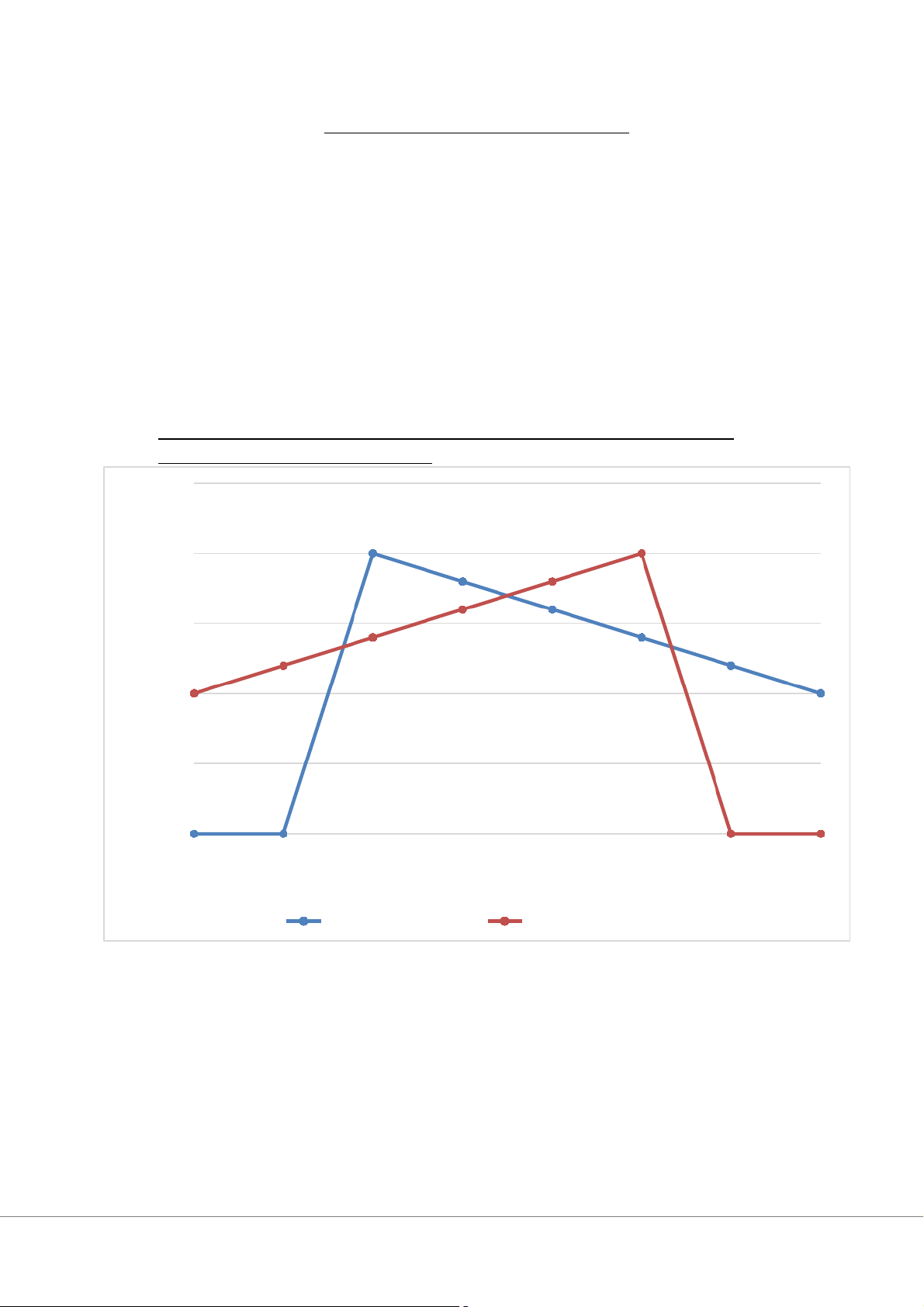
equilibrium quantity for fridge? 250 200 150 100 Price ($/unit) 50 0 300 400 500 600 700 800 900 1000 Quantity (units) Quantity Demanded (units) Quantity Supplied (units) Demand equation: Qd = f(P) P = a-bQd a (intercept) = 300 ∆P 1 b = = ∆Qd 5 1 P = 300 – Qd 5 Supply equation: Qs = f(P) P = c+dQs c (intercept) = 40 ∆P 1 d = = ∆Qs 5 1 P = 40 + Qs 5
Equilibrium price and equilibrium quantity occur when: 1 1
300 – Qd = 40 + Qs, Qd = Qs = QE 5 5 QE = 650 (units) PE = 170 ($/unit)
2. What are the surplus and shortage of fridge at the price of $200 and $110?
At price of $200: The Quantity Demanded for fridge is 500 units and the
Quantity Supplied is 800 units. It means there are 300 fridges in surplus.
At price of $100: The Quantity Demanded for fridge is 1000 units and the
Quantity Supplied is 300 units. It means there are 700 fridges in shortage
3. Suppose the supply of fridge is c ons
tant, what happened for demand for
fridge if price of electicity increase? Given that quantity demanded for
fridge change 300 units at each price level, what are new equilibrium price
and new equilibrium quantity for fridge? -
If price of electricity increase (the supply for fridge is constant), the demand
for fridge will be decrease because electricity is needed for the fridge to
work. If electricity prices increase, some people with low demand for fridge
won't decide to buy fridge anymore. This is a non-price factor. -
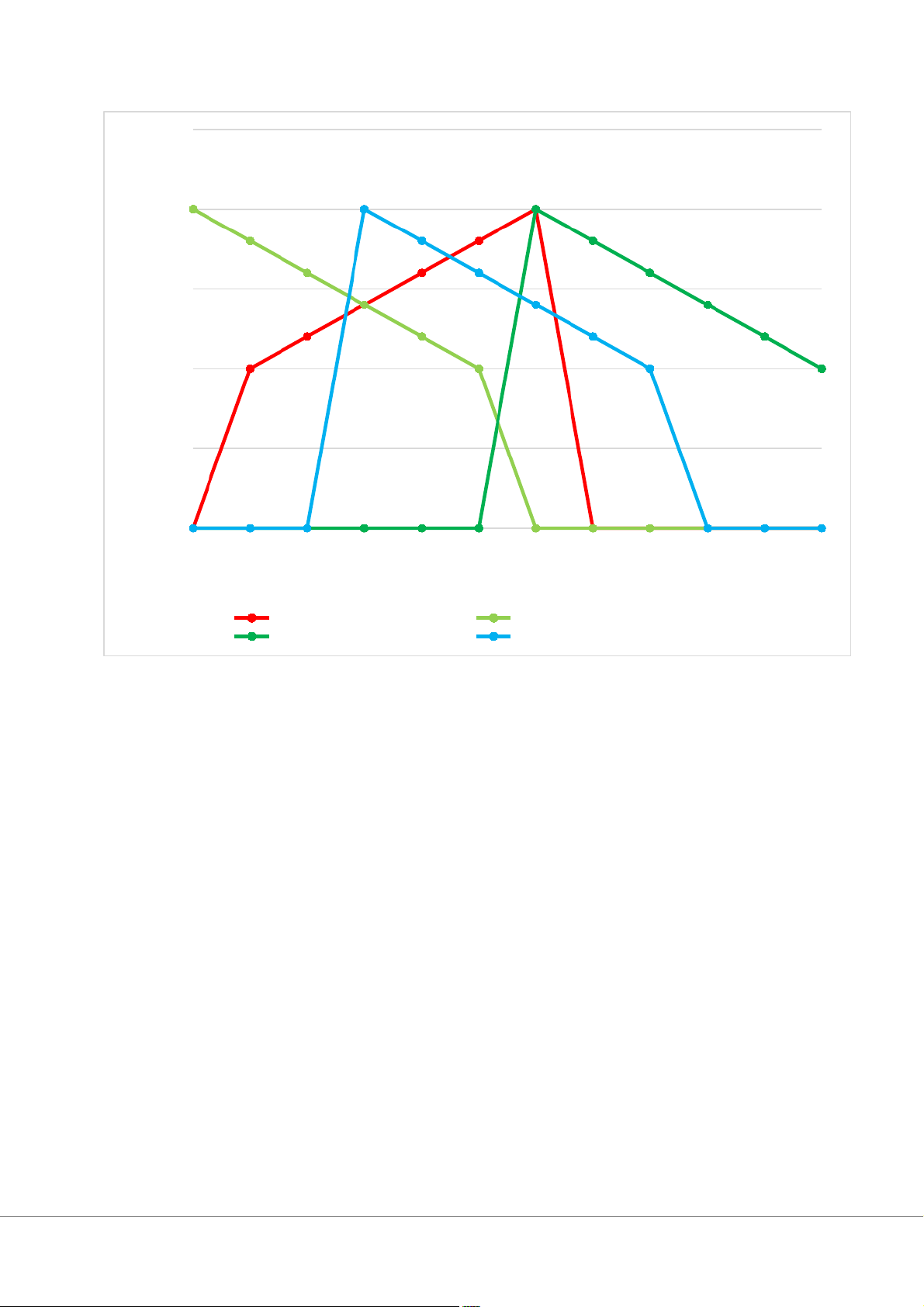
The quantity demanded for fridge change 300 units at each price level: 250 200 150 100 Price ($/unit) 50 0
200 300 400 500 600 700 800 900 1000 1100 1200 1300 Quantity (units) Quantity supplied
Quantity demanded minus 300 units
Quantity demanded plus 300 units Quantity demanded
If the quantity demanded for fridge decreases 300 units at each price level: Demand equation: Qd = f(P) P = a-bQd a (intercept) = 240 ∆P 1 b = = ∆Qd 5 1 P = 240 – Qd 5 Supply equation: Qs = f(P) P = c+dQs c (intercept) = 40 ∆P 1 d = = ∆Qs 5 1 P = 40 + Qs 5
Equilibrium price and equilibrium quantity occur when: 1 1
240 – Qd = 40 + Qs, Qd = Qs = QE 5 5 QE = 500 (units) PE = 140 ($/unit)
If the quantity demanded for fridge increases 300 units at each price level: Demand equation: Qd = f(P) P = a-bQd a (intercept) = 360 ∆P 1 b = = ∆Qd 5 1 P = 360 – Qd 5 Supply equation: Qs = f(P) P = c+dQs c (intercept) = 40 ∆P 1 d = = ∆Qs 5 1 P = 40 + Qs 5
Equilibrium price and equilibrium quantity occur when: 1 1
360 – Qd = 40 + Qs, Qd = Qs = QE 5 5 QE = 800 (units) PE = 200 ($/unit)
Lập pt không cần lập bảng mới P=300 – 0.2 Qd Qd= (300-P)/0,2 Qd’= (300-P)/0.2 - 300 P= 240 – 0.2Qd
4. Suppose goverment imposes a tax of $10 per one units of fridge sold, what
are new equilibrium price and new equilibrium quantity for fridge?
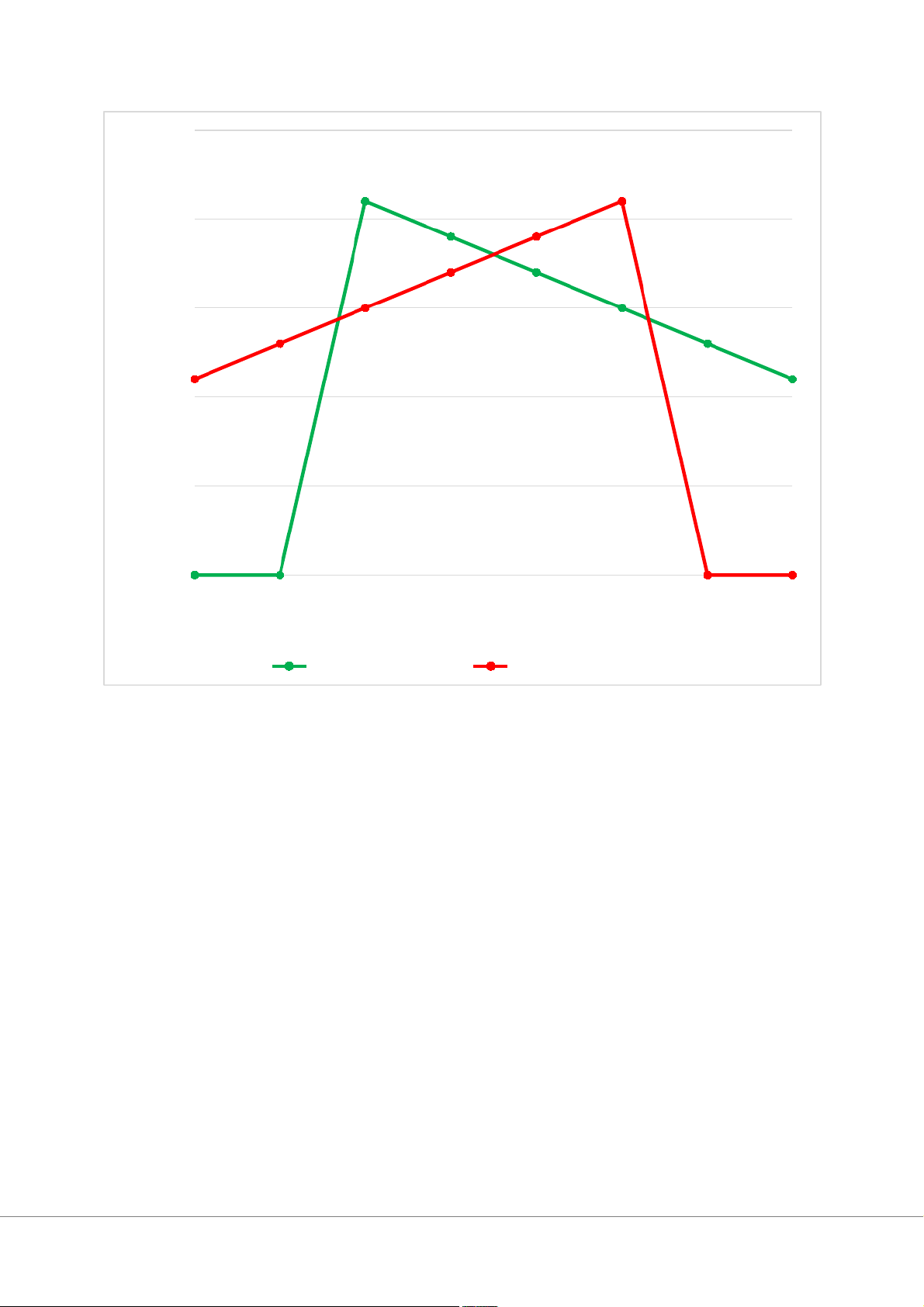
If goverment imposes a tax of $10 per one units of fridge sold: 250 200 150 100 Price ($/unit) 50 0 300 400 500 600 700 800 900 1000 Quantity (units) Quantity Demanded (units) Quantity Supplied (units) Demand equation: Qd = f(P) P = a-bQd a (intercept) = 310 ∆P 1 b = = ∆Qd 5 1 P = 310 – Qd 5 Supply equation: Qs = f(P) P = c+dQs c (intercept) = 50 ∆P 1 d = = ∆Qs 5 1 P = 50 + Qs 5
Equilibrium price and equilibrium quantity occur when: 1 1
310 – Qd = 50 + Qs, Qd = Qs = QE 5 5 QE = 650 (units) PE = 180 ($/unit)
5. Suppose goverment supports for the sellers the amount of $10 per one units
of fridge sold, what are new equilibrium price and new equilibrium quantity for fridge?
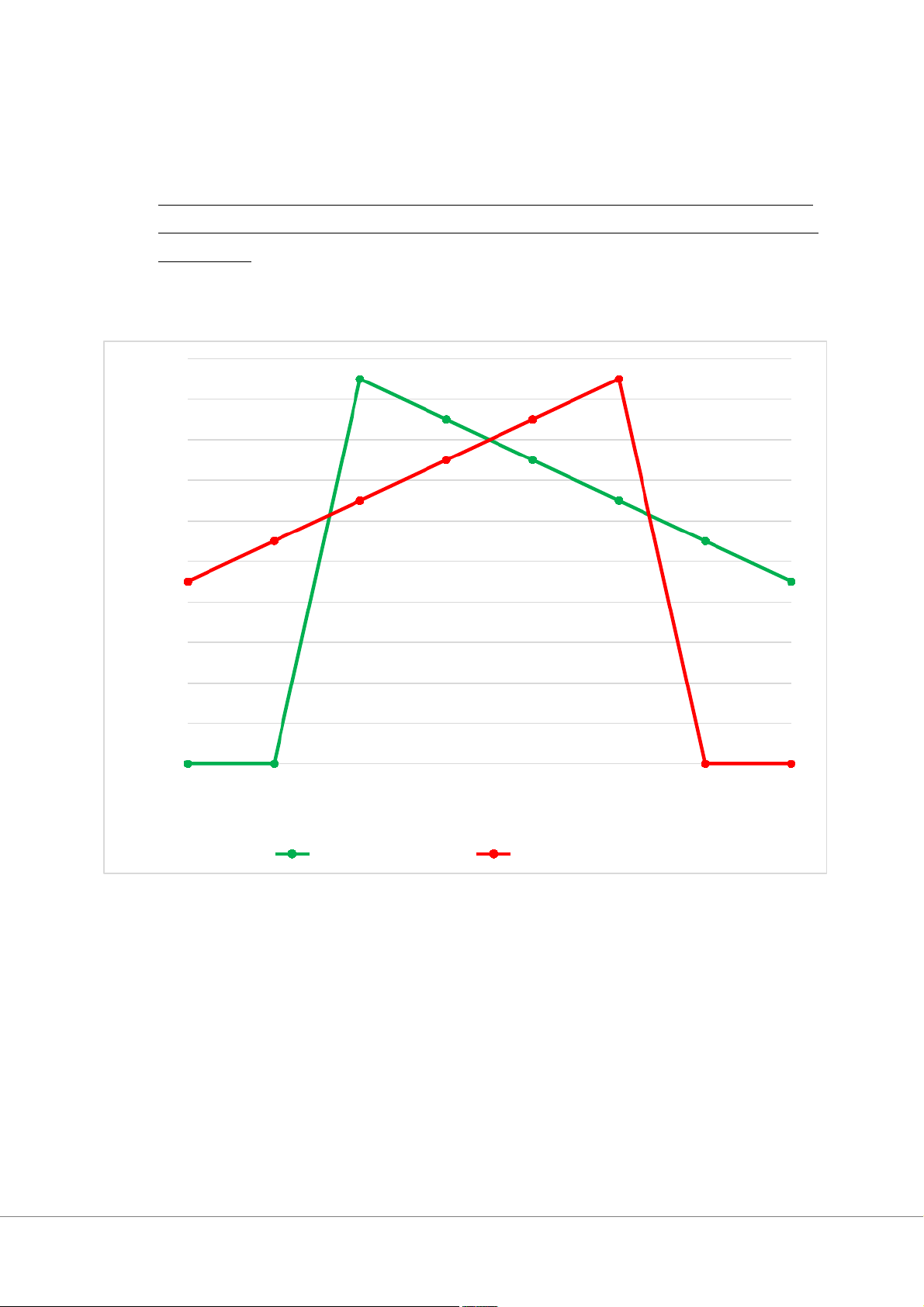
If goverment supports for the sellers the amount of $10 per one units of fridge sold: 200 180 160 140 120 100 80 Price ($/unit) 60 40 20 0 300 400 500 600 700 800 900 1000 Quantity (units) Quantity Demanded (units) Quantity Supplied (units) Demand equation: Qd = f(P) P = a-bQd a (intercept) = 290 ∆P 1 b = = ∆Qd 5 1 P = 290 – Qd 5 Supply equation: Qs = f(P) P = c+dQs c (intercept) = 30 ∆P 1 d = = ∆Qs 5 1 P = 30 + Qs 5
Equilibrium price and equilibrium quantity occur when: 1 1
290 – Qd = 30 + Qs, Qd = Qs = QE 5 5 QE = 650 (units) PE = 160 ($/unit) Exercise 2.
1. An increase in Vietnamese personal income tax rates
- Their demand of motorcycle will decrease because the customers have less
money than they used to. They must make a choice and only buy things they really need.
- Effect of the increase of Vietnamese income tax rates causes the shift of the
Demand curve to the left. In this case, the equilibrium price and quantity will be
shifted to the left side of the old equilibrium price and quantity.
2. An increase in the price of steel
- The supply of motor cycle will decrease because the price of input resources
rises. The manufacturers will reduce the amount of motor cycle production to stay their profit.
- Effect of the increase of price of steel cause the shift of the Supply curve to the
left. In this case, the equilibrium price and quantity will be shifted to the left side
of the old equilibrium price and quantity.
3. An improvement in technology in motor vehicle production at the same time
as a recession hits the Vietnamese economy
- An improvement in technology in motor vehicle production helps the supply of
motor vehicle production increase so the price will fall. While at the same time, a
recession hits the Vietnamese economy make the demand fall and the price will
drop even further. Effect of this double event cause the shift of the S curve and the
shift of the D curve to the left. In this case, the equilibrium price and quantity will
be shifted to the right side of the old equilibrium price and quantity.
HOWEVER, in other cases there might be different trends, based on the actual
data. This means there is also 2 other case scenarios:
- Lower equilibrium price, higher quantity: When Qs increase more than Qd
- Lower equilibrium price, same quantity: When Qs and Qd increase/decrease at the same rate.
Tài liệu liên quan:
-

Sách Bài Tập Vi Mô - Hướng Dẫn và Lời Giải Chi Tiết
11 6 -

Nguyên lý chiến lược kinh doanh - Bài giảng môn Kinh tế vi mô | Trường Đại học Kinh Tế Quốc Dân
12 6 -

Chương 7 các kỹ thuật lựa chọn chiến lược - Bài giảng môn Kinh tế vi mô | Trường Đại học Kinh Tế Quốc Dân
12 6 -
Tổng hợp câu hỏi trắc nghiệm theo chương ôn tập môn Kinh tế vi mô | Trường Đại học Kinh Tế Quốc Dân
17 9 -
Lý thuyết ngang giá sức mua môn Kinh tế vi mô | Trường Đại học Kinh Tế Quốc Dân
11 6