Individual Assignment on Demand Elasticity & Luxury Tax môn Kinh tế vi mô | Trường Đại học Kinh Tế Quốc Dân
As part of an overall package to reduce the US Budget deficit,Congress adopted a 10% 'luxury tax" on such big-ticket items as pleasure boats. Tài liệu giúp bạn tham khảo, ôn tập và đạt kết quả cao. Mời đọc đón xem!
Môn: Kinh tế vi mô ( NEU ) 761 tài liệu
Trường: Trường Đại học Kinh Tế Quốc Dân 7.4 K tài liệu
Tác giả:




Preview text:
INDIVIDUAL ASSIGNMENT
NAME: LE THI NGOC MAI STUDENT CODE: 11224036 CLASS: E-BBA 14.1
The Surprising Elasticity of Demand for Luxuries
As part of an overall package to reduce the US Budget deficit, Congress adopted a 10%
'luxury tax" on such big-ticket items as pleasure boats, private airplanes, high-priced
cars, and jewelry... Such luxury taxes are often popular because most people do not have
to pay them. All taxes are painful to someone, but surely a tax that weighs only on rich
people who are buying frivolous luxuries is one of the more socially painless ways to raise money.
However, the discussion of elasticity and inelasticity in this chapter should make you
suspicious of a key assumption underlying this tax. The assumption was that the
demand for these luxury goods was quite inelastic. We can think of the luxury tax as
increasing producers’ total cost in bringing goods to market, so the supply curve
effectively shifts up. Thus, when the industry supply curve shifted up in response to the
new luxury tax, the equilibrium quantity would change little while the equilibrium price
would rise much, as the rich simply paid the extra cost.
If the demand for these luxury goods was reasonably elastic, however, then the upward
shift in the supply curve would lead to a much smaller rise in equilibrium price and a
larger fall in equilibrium quantity. As it happened, the sale of pleasure boats fell by
nearly 90% in South Florida, as prospective buyers bought boats in the Bahamas to
avoid paying the tax. The sale of high-priced cars like Mercedes and Lexus also fell
substantially when their customers moved to buy substitution products.
This unexpected elasticity of demand carried two bits of bad news for the economy.
First, rather than falling on the wealthy as had been hoped, the burden of the new luxury
tax ended up falling on the workers and retailers who manufacture and sell these luxury
items, many of whom are middle class at best. Second, the luxury tax raised far less
money than had been expected. The Congressional Budget Office had forecast that the
tax would raise about $1.5 billion over five years. But in the first year, it raised only
about $ 20 million. Once the costs of setting up and enforcing the new tax were
considered, it probably lost money for the Government in its first year. Discussion Questions
1. How can you use the theory of "Supply, Demand- and elasticity " to explain the case (by using graphs)?
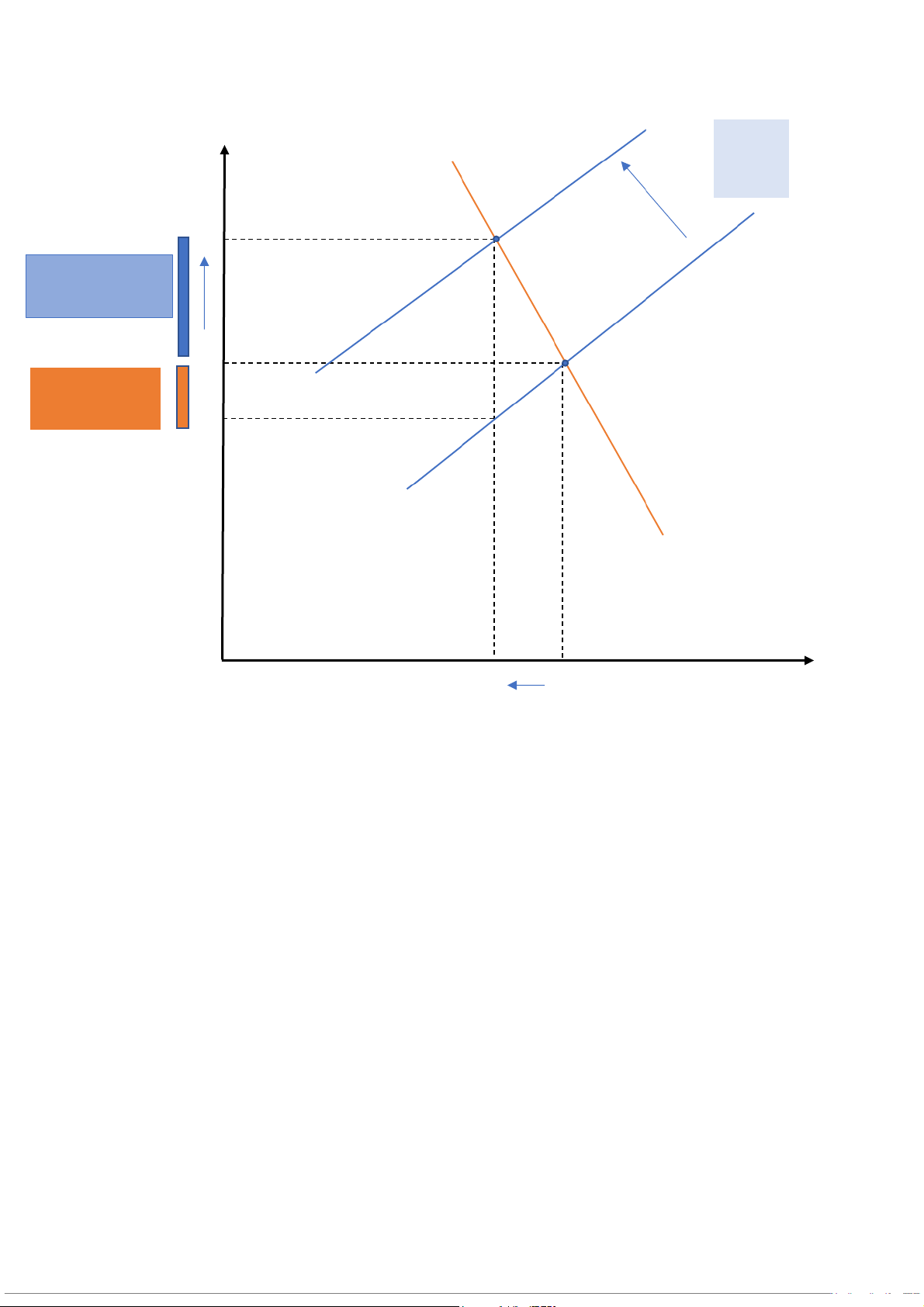
In the first case, the assumption was that the demand for these luxury goods was quite inelastic. S1 Tax P 10 % a S P1 Customer’s tax incidence b PE Producer’s tax P2 D Q1 QE Q
The gap between a and b in the demand curve is the 10% tax
As mentioned in the case study, the supply curve shifts up because of the “luxury tax”.
But as the demand was quite inelastic, the demand curve was quite steep, so when the
supply curve shifts up, the equilibrium price will increase significantly. Meanwhile, the
equilibrium quantity just falls a little.
The customer’s tax incidence is much higher than the producer’s tax incidence.
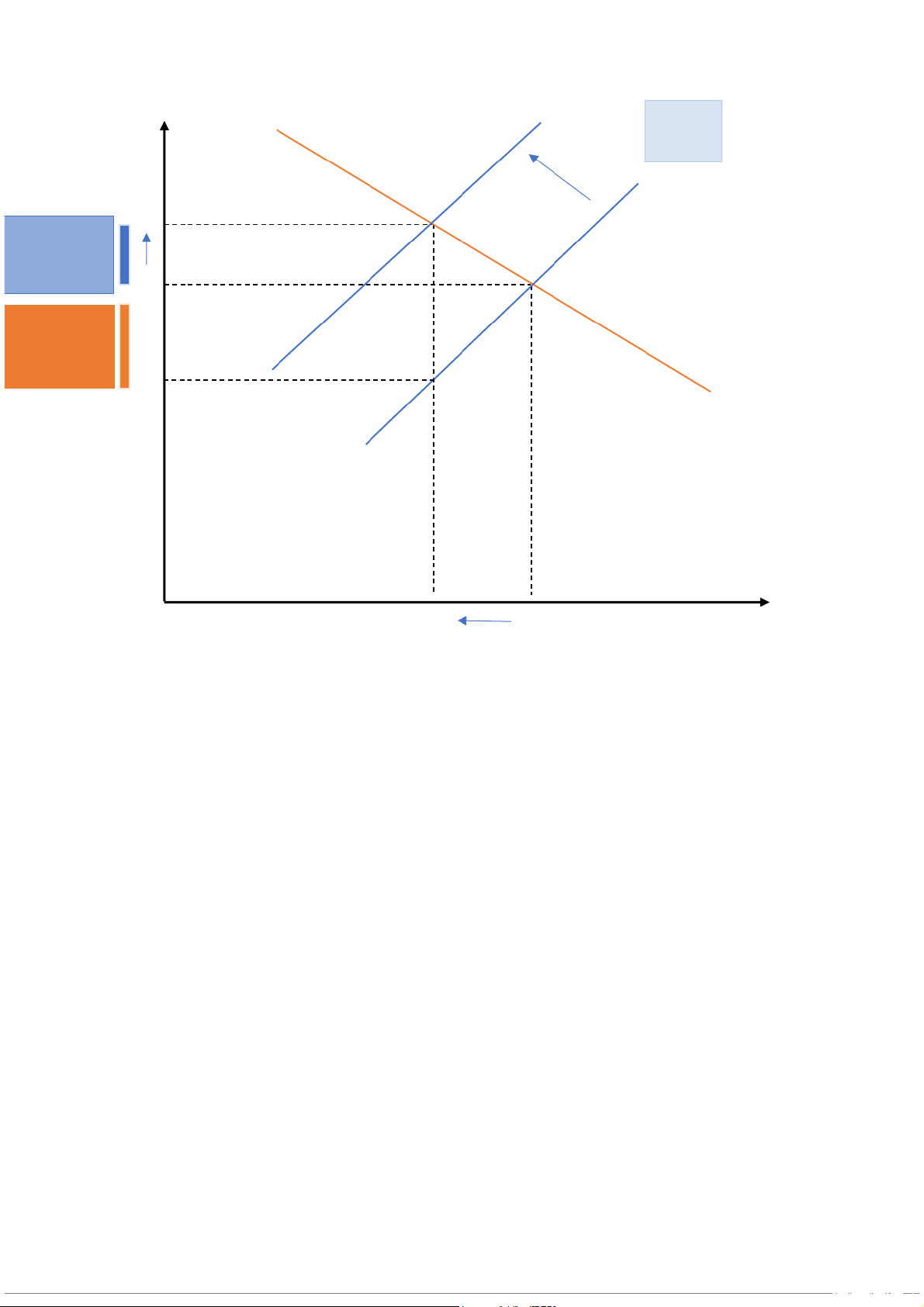
In the second case, the assumption was that the demand for luxury goods was reasonably elastic.
The gap between a and b in the demand curve is the 10% tax
The demand was elastic, so the demand curve was quite flat. Therefore, as the supply
curve shifts up, there is a large fall in quantity and a small rise in price.
The customer’s tax incidence is smaller than the producer’s tax incidence Tax P S’ 10% S b Customer’s P tax incidence a Pe Producer’s tax incidence D P2 Q1 Qe Q
The buyer responded very dramatically when there is a change in price as they must pay
most of the tax and the big loose in quantity. Therefore, they moved to buy substitute
products to avoid paying taxes. Because of that, the burden of tax ended up falling on
the workers and retailers, which are producers and sellers.
The purpose of the tax to aim at the rich has failed.
2. What is the implication for the Government in the tax policy?
Luxury tax can be seen as a good idea to use the money of the rich. However, the lack
of assumption of the elasticity of demand leads to this tax being aimed at the wrong
subject, making the government’s tax policy not appropriate.
This 10% luxury tax is quite high, as these products already had high value. This alone
can lead to a decrease in supply quantity as mentioned above, making this kind of policy
harmful to the entire economy. Also, workers and retailers may take all of the tax in a
bad scenario, which makes its purpose fail.
There are some solutions to improve this situation:
- Put a lower tax or put a 10% tax in the experiment state to see and analyze the
situation to decide the next move
- Have additional measures to avoid the negative effects of tax:
+ Set an import limit on certain luxury goods, which could help both buyers and sellers
+ Not selling goods below the floor price or above the ceiling price
+ Raise the import duty to prevent customers from buying alternative goods with lower/ no taxes.
Tài liệu liên quan:
-

Sách Bài Tập Vi Mô - Hướng Dẫn và Lời Giải Chi Tiết
11 6 -

Nguyên lý chiến lược kinh doanh - Bài giảng môn Kinh tế vi mô | Trường Đại học Kinh Tế Quốc Dân
11 6 -

Chương 7 các kỹ thuật lựa chọn chiến lược - Bài giảng môn Kinh tế vi mô | Trường Đại học Kinh Tế Quốc Dân
12 6 -

Tổng hợp câu hỏi trắc nghiệm theo chương ôn tập môn Kinh tế vi mô | Trường Đại học Kinh Tế Quốc Dân
17 9 -
Lý thuyết ngang giá sức mua môn Kinh tế vi mô | Trường Đại học Kinh Tế Quốc Dân
10 5