Lecture 7: Keys and Functional Dependencies môn Principle of Management | Trường Đại học Quốc tế, Đại học Quốc gia Thành phố Hồ Chí Minh
A functional dependency (FD) on a relation Ris a statement of the form X®Y, where Xand Yare sets of attributes in a relation R. Tài liệu giúp bạn tham khảo, ôn tập và đạt kết quả cao. Mời đọc đón xem!
Môn: Principles of Management 314 tài liệu
Trường: Trường Đại học Quốc tế, Đại học Quốc gia Thành phố Hồ Chí Minh 2 K tài liệu
Tác giả:




















Preview text:
International University, VNU-HCMC
School of Computer Science and Engineering Lecture 7: Keys and Functional Dependencies
Instructor: Nguyen Thi Thuy Loan
nttloan@hcmiu.edu.vn nthithuylo , an@gmail.com https://nttloan.wordpress.com/
International University, VNU-HCMC Acknowledgement
•The following slides have been created based on
Database system concepts book, 7th Edition.
•And other slides are references from Dr. Sudeepa Roy, Duke University.
Assoc. Prof. Nguyen Thi Thuy Loan, PhD 2
International University, VNU-HCMC Relational Model: review
•ER –Relational Translation
Assoc. Prof. Nguyen Thi Thuy Loan, PhD 3
International University, VNU-HCMC To d a y ’s topics •Functional Dependencies •Keys/ Super keys •Attribute closure •Minimal cover
Assoc. Prof. Nguyen Thi Thuy Loan, PhD 4
International University, VNU-HCMC Motivation uid uname gid
•Why is UserGroup (uid,uname,gid) a bad 142 Bart dps design? 123 Milhouse gov oIt has redundancyuser name is 857 Lisa abc 857 Lisa gov
recorded multiple times, once for each 456 Ralph abc group that a user belongs to 456 Ralph gov
üLeads to update, insertion, deletion … … … anomalies
•Wouldn’t it be nice to have a systematic a ro
pp ach to detecting and removing redundancyin designs?
oDependencies,decompositions, and normal
Assoc. Prof. Nguyen Thi Thuy Loan, PhD forms 5
International University, VNU-HCMC
Definition of Functional dependency
•A functional dependency (FD) on a relation Ris a
statement of the form X®Y, where Xand Yare sets of attributes in a relation R.
• “If two tuples of R agree on X, then they must also agree Y”.
•We write this FD formally as
X®Y and say that X functionally determine Y
Assoc. Prof. Nguyen Thi Thuy Loan, PhD 6
International University, VNU-HCMC
Definition of Functional dependency
•DF tells us about any two tuples t and u in the relation R.
If two tuples u and t have the same value in the left side
then they also have the same value in their right side.
•It’s common for the right side of an FD to be a single attribute.
• A1, A2, …, An®B1, B2, …,Bmis equivalent to the set of FD’s • A1, A2, …, An®B1 • A1, A2, …, An®B2 •… Assoc. Prof. Nguyen • A Thi Thuy Loan, PhD 1, A2, …, An®Bm 7
International University, VNU-HCMC
CS3200 –Database Design···Spring 2018···Derbinsky Functional Dependency (FD) In a relation r a
, set of attributes Yis functionally
dependent upon another set of attributes X (X®Y)
iff…for all pairs of tuples t1 and t2 in r… if t1[X]=t [X]… 2
it MUST be the case that t1[Y]=t [Y] 2
Assoc. Prof. Nguyen Thi Thuy Loan, PhD 8
International University, VNU-HCMC An example A B C D a1 b1 c1 d1 a1 b1 c1 d2 a2 b2 c2 d1 a2 b2 c2 d2
What FDs hold in the current state of this relation? A®D; A,B®C; B,C ®D
Assoc. Prof. Nguyen Thi Thuy Loan, PhD 9
International University, VNU-HCMC
CS3200 –Database Design···Spring 2018···Derbinsky FD Example (1) StudentID Year Class Instructor t1 1Sophomore COMP355 Wu t2 2Sophomore COMP285 Wu t3 3Junior COMP355 Wu t4 3Junior COMP285 Wu t5 2Sophomore COMP355 Russo t6 4Sophomore COMP355 Russo
What FDs hold in the current state of this relation? StudentID®Year
Assoc. Prof. Nguyen Thi Thuy Loan, PhD
{StudentID,Class}®{Instructor} 10
International University, VNU-HCMC
CS3200 –Database Design···Spring 2018···Derbinsky FD Example (2)
StudentID Year Class Instructor t1 1Sophomore COMP355 Wu t2 2Sophomore COMP285 Wu t3 3Junior COMP355 Wu t4 3Junior COMP285 Wu t5 2Sophomore COMP355 Russo t6 4Sophomore COMP355 Russo {StudentID}®{Year}
•Every student is classified as either a
{StudentID,Class}®{Instructor}
Freshman, Sophomore, Junior, or Senior. Key(s): {StudentID,Class}
•Students can take only a single
Assoc. Prof. Nguyen Thi Thuy Loan, PhD
section of a class, taught by a single instructor. 11
International University, VNU-HCMC
CS3200 –Database Design···Spring 2018···Derbinsky FD Example (3)
StudentID Year Class Instructor t1 1Sophomore COMP355 Wu t2 2Sophomore COMP285 Wu t3 3Junior COMP355 Wu t4 3Junior COMP285 Wu t5 2Sophomore COMP355 Russo t6 4Sophomore COMP355 Russo {StudentID} ↛{Instructor} {Class} ↛{Year} {StudentID} ↛{Class} {Class} ↛{StudentID} {Year} ↛{StudentID} {Class} ↛{Instructor} {Year} ↛{Instructor} {Instructor} ↛{Class} Assoc. Prof. Nguyen
{Year} ↛ Thi Thuy Loan, PhD {Class} {Instructor} ↛{Year} {Instructor} ↛{StudentID} 12
International University, VNU-HCMC FD Example (4)
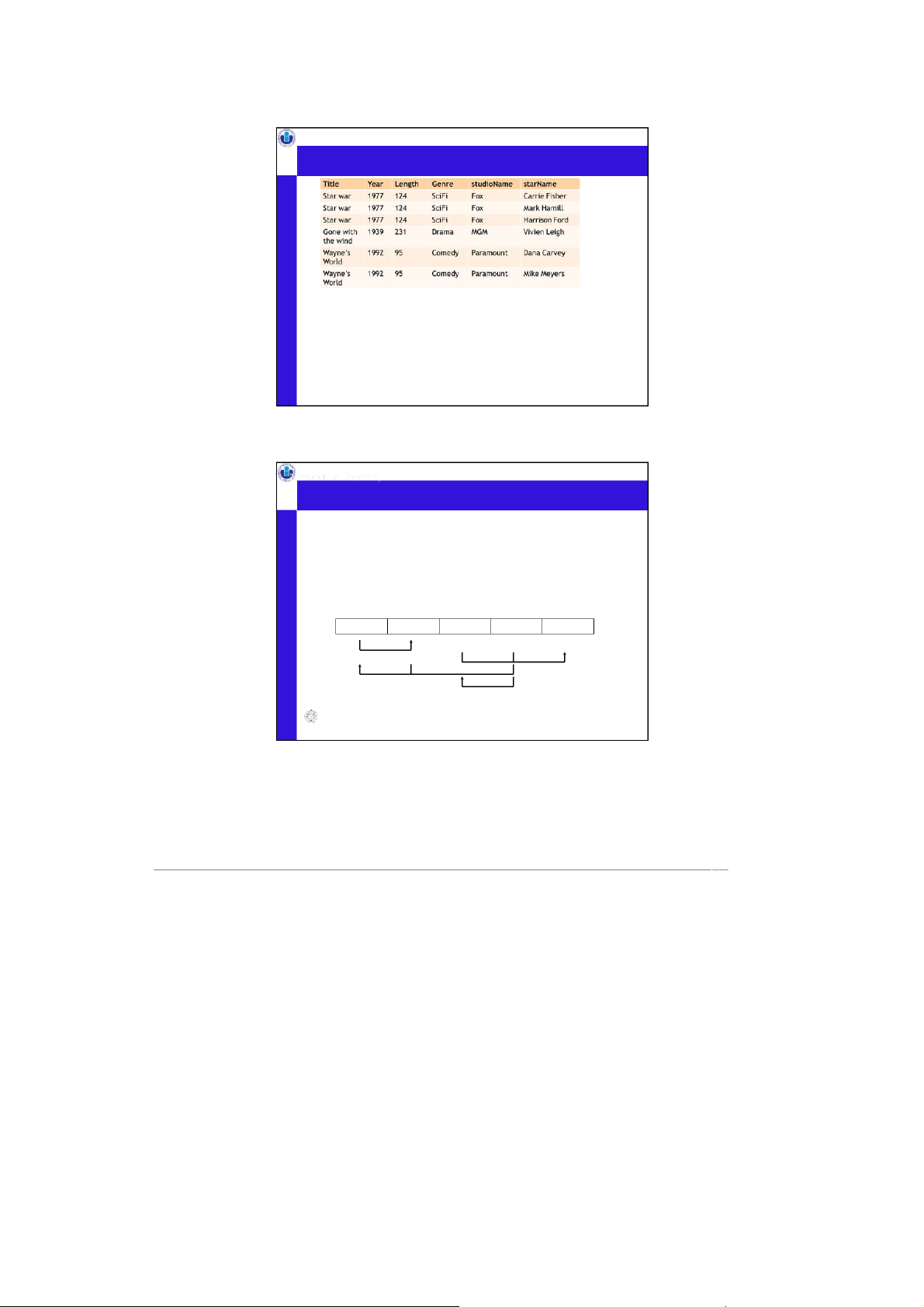
•Example an instance of the relation Movies1 Title Year Length Genre studioName starName Star war 1977 124 SciFi Fox Carrie Fisher Star war 1977 124 SciFi Fox Mark Hamill Star war 1977 124 SciFi Fox Harrison Ford Gone with 1939 231 Drama MGM Vivien Leigh the wind Wayne’s 1992 95 Comedy Paramount Dana Carvey World Wayne’s 1992 95 Comedy Paramount Mike Meyers World The relation
Assoc. Prof. Nguyen Thi Thuy Loan, PhD
•Movies1 (title, year, length, genre, studioName, starName) 13
International University, VNU-HCMC FD Example (4)
•The Movies1 is not good design because it holds
information of three different relations: Movies, Studio, and StarsIn.
Assoc. Prof. Nguyen Thi Thuy Loan, PhD 14
International University, VNU-HCMC FD Example (4)
•We claim that the following FD holds in this schema
Title, year ®length, genre, studioName (right)
•On the other hand, we observe that the stament:
Title, year ®StarName (wrong, not FD)
Assoc. Prof. Nguyen Thi Thuy Loan, PhD
Ex: Title, year, length ®genre, StudioName, StarName 15
International University, VNU-HCMC
CS3200 –Database Design···Spring 2018···Derbinsky FD. Exercise
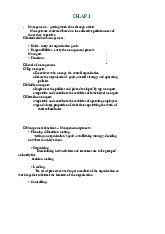
Consider the following visual depiction of the
functional dependencies of a relational schema.
1. List all FDs in algebraic notation
2. Identify all key(s) of this relation A B C D E
Assoc. Prof. Nguyen Thi Thuy Loan, PhD 16
International University, VNU-HCMC
CS3200 –Database Design···Spring 2018···Derbinsky Answer Functional Dependencies Keys A ® B DA CD ® E DB B D® A D ® C A B C D E
Assoc. Prof. Nguyen Thi Thuy Loan, PhD 17
International University, VNU-HCMC Keys of Relations
We say a set of one more attributes Kis a key for a relation R if:
•Those attributes functionally determine all other
attributes of the relation. That is, it’s impossible for two
distinct tuples of R to agree on all K.
•No proper subset of Kfunctionally determine all other
attributes of R, i.e., a key must be minimal.
When a key consists of a single attribute A, we often say
that A (rather than {A}) is a key.
Assoc. Prof. Nguyen Thi Thuy Loan, PhD 18
International University, VNU-HCMC Keys of Relations A set of attributes i
𝐾 s a key for a relation 𝑅if
•𝐾→all (other) attributes of 𝑅
•That is,𝐾is a “super key”
•No proper subset of 𝐾satisfies the above condition •That is,𝐾is minimal
Assoc. Prof. Nguyen Thi Thuy Loan, PhD 19
International University, VNU-HCMC Keys of Relations
Ex: Attributes {title, year, starName} form a key for the relation Movies1.
•Suppose two tuples agree on title these three
attributes: title, year, and starName. Because they agree
on title and year, they must agree on other attributes
Assoc. Prof. Nguyen Thi Thuy Loan, PhD length, genre, and studioName. 20
International University, VNU-HCMC Keys of Relations
•Argue that no proper subset of {title, year, starName}
functionally determines all other attributes. Why title
and year do not determine starName, because many
movies have more than one star. Thus {title, year} is not
a key, similar to {year, starName}, and {title, starName}
Assoc. Prof. Nguyen Thi Thuy Loan, PhD 21
International University, VNU-HCMC Keys of Relations
•Sometimes a relation has more than one key. If so,
it’s common to designate one of the keys as the primary key (PK).
•In commercial database systems, the choice of PK
can influence some implementation issues such as
how the relation is stored on disk. However, the
theory of FD’s give no special role to PK.
Assoc. Prof. Nguyen Thi Thuy Loan, PhD 22
International University, VNU-HCMC Determining all keys
•Source attributes (𝑆𝐴): Those that are appearing only in
the left side of the functional dependency (FD), or the
ones that are not part of any FDs.
•Intermediate attributes (𝐼𝐴): Those that are the ones
appearing on both sides of the FDs.
•Target attributes (𝑇𝐴): Those that are only appearing on the right side of the FDs.
Assoc. Prof. Nguyen Thi Thuy Loan, PhD 23
International University, VNU-HCMC
Algorithm: Determining all keys
Step 1: Determine source attributes (SA), Intermediate attributes (IA). Step 2: If IA = Æthen K = SA is the only key. Return K;
Step 3: Determine all subsets of IA.
Step 4: Determine the super keys Sifrom ∀𝑋!⊂𝐼𝐴.
IF 𝑆𝐴 ∪ 𝑋! "= 𝑅"THEN 𝑆!=𝑆𝐴 ∪ 𝑋!
Assoc. Prof. Nguyen Thi Thuy Loan, PhD
Step 5: Return all minimal 𝑆!. 24
International University, VNU-HCMC Examples: Determining all keys
1. Consider a relation with schema R(A,B,C) and FD’s F ={AB ®C, C ®A} What are all the keys of R?
2. Consider a relation with schema R(A,B,C,D,E,G)
and FD’s F ={E ®C, A ®D, AB ®E, DG ®B} What are all the keys of R?
Assoc. Prof. Nguyen Thi Thuy Loan, PhD 25
International University, VNU-HCMC Super keys
•A set of attributes that contains a key is called a
super key, short form “superset of a key”. Thus, every key is a super key.
•Every super key satisfies the first condition of a key:
it functionally determines all other attributes of the
relation. It does not need to satisfy minimality.
Assoc. Prof. Nguyen Thi Thuy Loan, PhD 26
International University, VNU-HCMC Super keys
•Ex: In the relation above, there are many super keys. Not only is the key
•{title, year, starName}: a key
•{title, year, starName, length}
•{title, year, starName, studioName}
Assoc. Prof. Nguyen Thi Thuy Loan, PhD are super keys 27
International University, VNU-HCMC Exercise
•Suppose R is a relation with attributes A1, A , ..A 2 . n As
a function of n, tell how many super keys R has, if: 1. The only key is A1 2. The only keys are A1and A2
3. The only keys are {A1, A2} and {A , 3 A4}
4. The only keys are {A1, A2} and {A , 1 A3}
Assoc. Prof. Nguyen Thi Thuy Loan, PhD 28
International University, VNU-HCMC Reasoning with FD’s
Given a relation 𝑅and a set of FD’s ℱ
•Does another FD follow from ℱ?
•Are some of the FD’s in ℱredundant (i.e., they follow from the others)? •Is 𝐾akey of 𝑅?
•What are all the keys of 𝑅?
Assoc. Prof. Nguyen Thi Thuy Loan, PhD 29
International University, VNU-HCMC Rules of ℱD’s •Armstrong’s axioms •Reflexivity: If 𝑌 ⊆ , 𝑋 then 𝑋→𝑌
•Augmentation: If 𝑋→𝑌, then 𝑋𝑍 →𝑌𝑍 for any 𝑍
•Transitivity: If 𝑋→𝑌and 𝑌→𝑍, then 𝑋→𝑍 •Rules derived from axioms
• Splitting: If 𝑋→𝑌𝑍, then 𝑋→𝑌and 𝑋→𝑍
• Combining: If 𝑋→𝑌and 𝑋→𝑍, then 𝑋→𝑌𝑍
ℱUsing these rules, you can prove or disprove an FD given aset of ℱDs
Assoc. Prof. Nguyen Thi Thuy Loan, PhD 30
International University, VNU-HCMC Example •The set of FD’s: Title, year ®length Title, year ®genre Title, year ®studioName is equivalent to the singe FD
Title, year ®length, genre, studioName
Assoc. Prof. Nguyen Thi Thuy Loan, PhD 31
International University, VNU-HCMC Example
•Consider one of the FD’s such as: Title, year ®length
If we try to split the left side into Title, year ®length Year ®length
Then we get false FD’s. That is, title does not
functionally determine length, since there can be
Assoc. Prof. Nguyen Thi Thuy Loan, PhD
several movies with the same title. 32
International University, VNU-HCMC
Trivial Functional Dependencies
•They are the FD’s X®Ysuch that YÍX.
That is, a trivial FD has a right side that is a subset of its left side. •For example:
Title, year ®title or title ®title, are trivial FD’s
Assoc. Prof. Nguyen Thi Thuy Loan, PhD 33
International University, VNU-HCMC Equivalence rules
•Given FD X®Yis equivalent to X®Z
where the Z is a subset of Y, that are not belong to X, such that Z ÌY. For example:
Title, year ®title, genre; equivalent to Title, year ®genre
Assoc. Prof. Nguyen Thi Thuy Loan, PhD 34
International University, VNU-HCMC Attribute closure
• Given 𝑅, a set of FD’sℱthat hold in 𝑅, and a set of attributes Xin 𝑅:
•The closure of X (denote X+) with respect to ℱis the
set of all attributes {𝐴1,𝐴2, …} functionally
determined by X (that is, X →𝐴1𝐴2…)
Assoc. Prof. Nguyen Thi Thuy Loan, PhD 35
International University, VNU-HCMC Algorithm: Attribute closure
• Input: A set of attributes Xand set of FD’s of ℱ •Output: The closure X+ 1. Start with closure = X
2. If Z ®Y is in ℱand Z is already in the closure, then also add Y to the closure
3. Repeat until no new attributes can be added.
Assoc. Prof. Nguyen Thi Thuy Loan, PhD 36
International University, VNU-HCMC Algorithm: Attribute closure Input: R, ℱ, X ÍR+ Output: X+ Step 1: Set X+= X Step 2: temp = X+ "f Z®YÎℱ if(ZÍX+) X+= X+ÈY ℱ= ℱ– f Step 3: if (X+=Temp) “X+is a result” stop else Return step 2
Assoc. Prof. Nguyen Thi Thuy Loan, PhD 37
International University, VNU-HCMC Examples
•Let us consider a relation R(A,B,C,D,E,G) and FD’s
ℱ={AB ®C, BC ®AD, D ®E, CG ®B} . What is {A,B}+? •X ={A,B}
•Next, X = {A,B,C} based on AB ®C
•X = {A,B,C,D} based on BC ®D
•X = {A,B,C,D,E} based on D ®E and no more changes to X are possible. •Thus, {A,B}+= {A,B,C,D,E}
Assoc. Prof. Nguyen Thi Thuy Loan, PhD 38
International University, VNU-HCMC Example
•Let us consider a relation R(A,B,C,D,E,G) and FD’s
ℱ= {AB ®C, BC ®AD, D ®E, CG ®B} .
Suppose we wish to test whether AB ®D follows from these FD’s.
•We computer {A,B}+= {A,B,C,D,E}. Since D is a member
of the closure, we conclude that AB ®D does follow.
•However, D ®A does not follow.
Assoc. Prof. Nguyen Thi Thuy Loan, PhD 39
International University, VNU-HCMC Exercises
1. Let us consider a relation R(A,B,C,D,E,G) and FD’s
ℱ%={AB ®D, AC ®BD, D ®G, CG ®A} . What is {A,C}+, {B,D}+?
2. Let us consider a relation R(A,B,C,D,E,G) and FD’s
ℱ%={AB ®C, BC ®D, D ®EG, BE ®C}
Suppose we wish to test whether AB ®EG follows from these FD’s.
Assoc. Prof. Nguyen Thi Thuy Loan, PhD 40
Tài liệu liên quan:
-
CHAP 1: Introduction to Management Concepts and Functions môn Principles of Management | Trường Đại học Quốc tế, Đại học Quốc gia Thành phố Hồ Chí Minh
9 5 -
Guidelines for group’s assignments: Analysing management issues of a FDI company based inVietnam môn Principles of Management | Trường Đại học Quốc tế, Đại học Quốc gia Thành phố Hồ Chí Minh
10 5 -

Financial Planning to Achieve 300m VND Goal in 3 Years môn Principles of Management | Trường Đại học Quốc tế, Đại học Quốc gia Thành phố Hồ Chí Minh
10 5 -

A Case Study in Fast Fashion Success môn Principles of Management | Trường Đại học Quốc tế, Đại học Quốc gia Thành phố Hồ Chí Minh
9 5 -
Chap 16 Hierarchy of Needs Theory and Applications môn Principles of Management | Trường Đại học Quốc tế, Đại học Quốc gia Thành phố Hồ Chí Minh
10 5