Mid-Term For Construction (Sample) môn Tiếng Anh chuyên nghành | Trường Đại học Y khoa Phạm Ngọc Thạch
Mid-Term For Construction (Sample) môn Tiếng Anh chuyên nghành | Trường Đại học Y khoa Phạm Ngọc Thạch. Tài liệu giúp bạn tham khảo, ôn tập và đạt kết quả cao. Mời đọc đón xem!
Môn: Tiếng anh chuyên nghành (TACN) 14 tài liệu
Trường: Trường Đại học Y khoa Phạm Ngọc Thạch 186 tài liệu
Tác giả:



Preview text:
UTC-HCMC CAMPUS
MID-TERM FOR CONSTRUCTION (SAMPLE) ENGLISH DEPARTMENT
Thời gian: 60 phút +15phút nghe (đề đóng)
PART I: GRAMMAR AND VOCABULARY
Task 1: Choose the best letter A, B, C or D to complete each sentence.
1. The portable mixer______ has a small drum with rotates also has wheels and uses electricity. A. whose B. which C. who D. whom
2. The programs _____ HVAC, carpentry, residential electrician, welding and masonry take
three or four years to complete. A. who are B. that are C. whose is D. that is
3. The weight of the structure _________ over the soil. A. will be distributed B. can distribute C. will distribute D. have distributed
4. The material engineers are always ______ in making advanced pre-stressed concrete. A. interesting B. interested C. interest D. to be interested
5. Solid wall insulation is used _____ thermal insulation . A. provide B. for provide C. for providing D. to provide
6. We design, produce and install high quality steel staircases, gates and railings ____ to your specification. A. make B. making C. made D. to make
7. ________ a project involves a number of vital stages: sketch design, design development and work drawing.. A. design B. designing C. to design D. to designing
8. We offer a wide range of __________, including gravel and sand. A. construction aggregates B. constructional aggregates C. aggregate construction D. aggregates construction
9. These are the final drawn instructions which the builder ____ on site to convey design
ideas into a real building, and care _____ to ensure accurate dimensions.. A. will use/ must take B. will use/ must be taken
C. will be used/ must be taken D. will be used/ must take
10. Wall ties are _______ hold the inner and outer walls together. A. used for B. used as C. used to D. used in
Task 2: Match a word or a phrase with the right definition. 11. The industrial
A. is a specialist and normally has a qualification from a vocational sector
school or other training institute. 12.A tradesperson
B. are used to form walls which act as the space-dividers and
sometimes can be structural support. 13.Sheet materials
C. deals with big projects like factories and power plants. 14.The operator
D. Use different controls to raise and lower the boom, rotate the
cab, extend and retract the boom. 15.A chute man
E. extends or retracts the boom or moves it from left to right or up and down. 16.Cement
F. are people who prepare drawings, specifications, construction 1
cost to implement the projects. 17.Designers
G. is a binder which is set and hardened independently and can
bind the other materials together. 18.Terminals
H. pours the concrete down the chute or uses a pump to get the
concrete to difficult locations. 19.Crane operators
I. are locations where passengers and freight can be transferred
from one vehicle or mode to another. 20.Pre-stressed
J. is a solid stratum of rock which is an excellent bearing surface of concrete the foundation systems.
K. is kind of concrete which wire mesh or steel bar embedded to increase its tensile strength
L. the resistance of material to breaking under compression
PART II. READING COMPREHENSION
Task 1: Read the passage and decide if the following statements are true (T) or False (F)
Sustainable building practices are fundamentally shifting the priorities in modern civil
engineering. Rather than focusing solely on cost and speed, contemporary design now
integrates life-cycle analysis, which assesses a structure's total environmental impact from
raw material extraction to demolition. This shift prioritizes the use of locally sourced materials
to reduce transportation emissions and specifies materials with low embodied energy, such as
recycled aggregates or bamboo, over traditional high-energy options like virgin steel and
cement. Furthermore, the operational efficiency of the building is paramount. Advanced HVAC
(Heating, Ventilation, and Air Conditioning) systems and high-performance insulation are now
mandatory to minimize the structure’s live load energy consumption. Engineers must
meticulously calculate the thermal bridging effect—the transfer of heat across a material—to
ensure optimal insulation performance. Although these sustainable approaches may incur
higher initial capital costs, the long-term benefit is realized through significantly reduced
operating expenses and a minimal ecological footprint, aligning with global climate goals.
21. The contemporary trend in civil engineering disregards cost and speed in favor of environmental impact.
22. Life-cycle analysis primarily focuses on a structure's impact from its opening day until its final demolition.
23. Using locally sourced materials helps decrease transportation-related carbon emissions.
24. High-performance insulation and HVAC systems are required to reduce the initial cost of a building.
25. Thermal bridging refers to the deliberate process of transferring heat out of the building.
Task 2. Fill in the gaps in the passage with the words taken from the box. harvester mass-produced produce portable electric-powered Heavy equipment animal power steam diesel Internal combustion Mechanical
Until the 19th century and into the early 20th century 26________ were drawn under
human or 27_____ power. With the advent of 28____ steam-powered engines the drawn
machine precursors were reconfigured with the new engines, such as the combine 29______.
The design of a core tractor evolved around the new 30_____ power source into a new
machine core traction engine, that can be configured as the steam tractor and the steamroller.
During the 20th century, 31_________ became the major power source of heavy 2
equipment. Kerosene and ethanol engines were used, but today 32______ engines are
dominant. 33______ transmission was in many cases replaced by hydraulic machinery. The
early 20th century also saw new 34______machines such as the forklift. Caterpillar Inc. is a
present-day brand from these days, starting out as the Holt Manufacturing Company. The first
35______heavy machine was the Fordson tractor in 1917. PART III. WRITING
Task 1: Rewrite these sentences as indicated so that there is no change in meaning
36. They must follow precise safety procedures to avoid accidents and ill health on the site.
Precise ………………..………………………………………………………………………
37. A bridge is a structure. It provides passage over a gap or physical obstacle.
A bridge…………………………………………………………………………
38. The first stone-paved roads, which were created in the Middle East, appeared in 10000 BC.
The first stone-paved roads……………………………………………………………
39. Because the building is very tall, deep foundations are recommended for stability.
Because of………………………………………………………………………….
40. Although steel is excellent in tension, it is susceptible to corrosion and requires protective coatings.
Despite…………………………………………………………………………………………….
Task 2 : Write a paragraph of about 80 – 100 words to describe and compare the
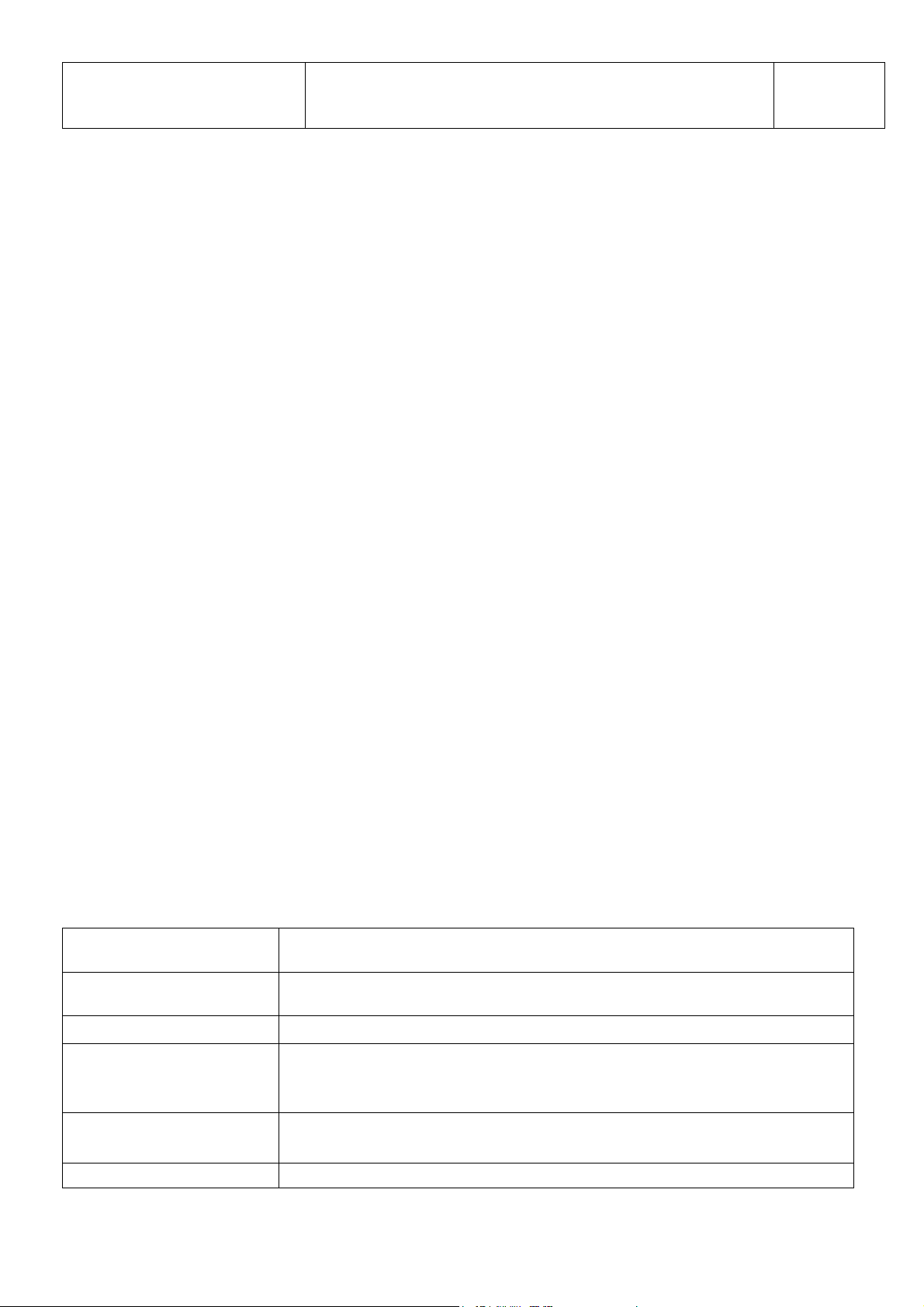
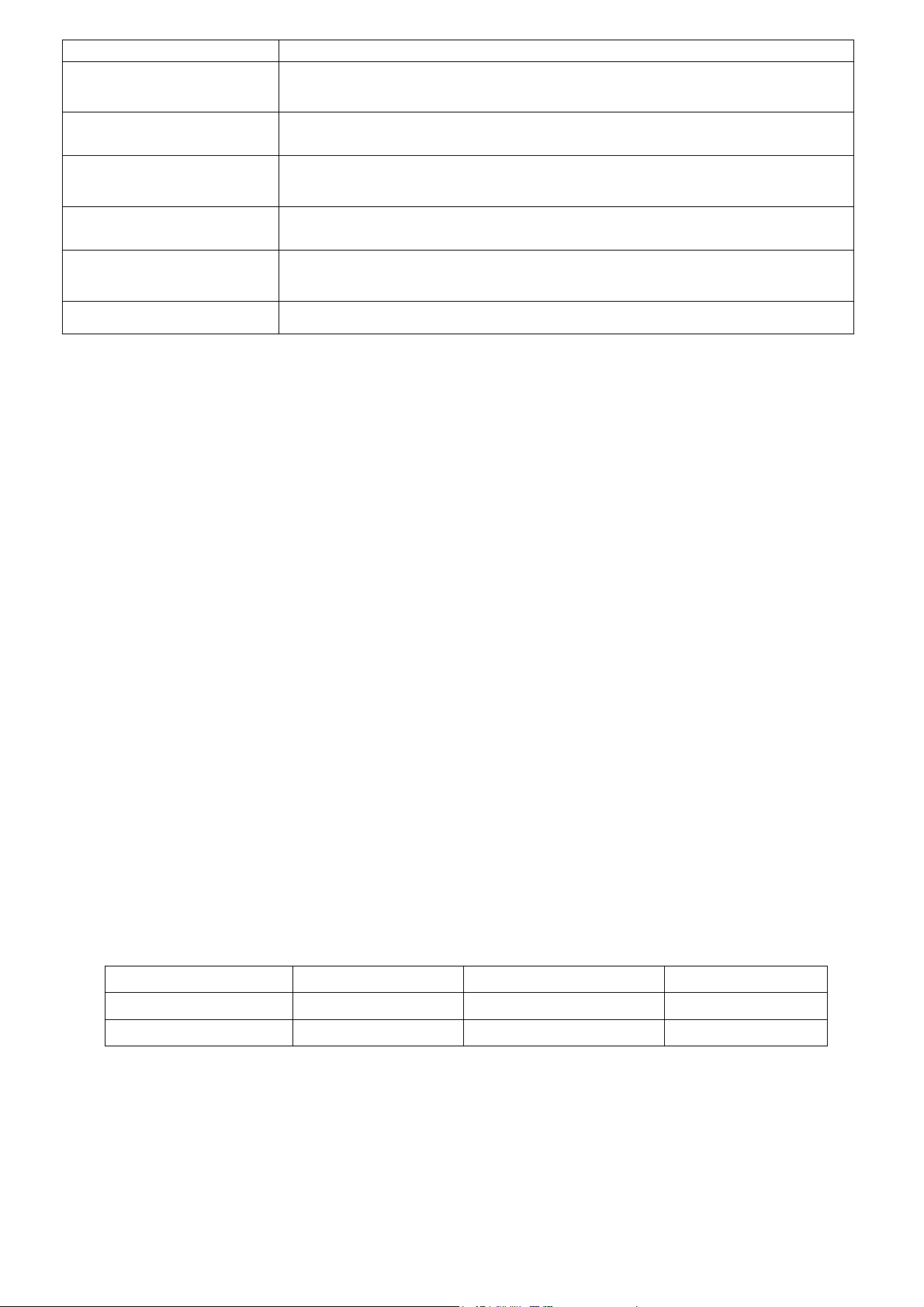
characteristics and primary functions of Plain Concrete and Reinforced Concrete. Comparison Plain Concrete
Reinforced Concrete Feature
Key Characteristic
Strong in compression, weak in Strong in both compression tension. and tension. Material
Cement, aggregate, sand, and Plain concrete with added Composition water. steel bars, fibers, or wire mesh. Primary Function
Used primarily for structures Used for structures subject to
subject only to compressive both compression and
loads (e.g., footings, small tension/bending (e.g., beams, foundations). slabs, columns). Failure Mode
Susceptible to cracking and Steel elements carry tensile failure under tensile forces. forces, preventing sudden cracking and catastrophic 3 failure. 4
Tài liệu liên quan:
-
PRE-TEST môn Tiếng Anh chuyên nghành | Trường Đại học Y khoa Phạm Ngọc Thạch
34 17 -
Các chuyên đề môn Tiếng Anh chuyên nghành | Trường Đại học Y khoa Phạm Ngọc Thạch
27 14 -
Medical English Quiz | Đại học Y khoa Phạm Ngọc Thạch
127 64 -
Midterm Test: Medical English | Đại học Y khoa Phạm Ngọc Thạch
104 52