Motivational Theories in Management môn Principle of Management | Trường Đại học Quốc tế, Đại học Quốc gia Thành phố Hồ Chí Minh
Motivational Theories in Management môn Principle of Management | Trường Đại học Quốc tế, Đại học Quốc gia Thành phố Hồ Chí Minh. Tài liệu giúp bạn tham khảo, ôn tập và đạt kết quả cao. Mời đọc đón xem!
Môn: Principles of Management 314 tài liệu
Trường: Trường Đại học Quốc tế, Đại học Quốc gia Thành phố Hồ Chí Minh 2 K tài liệu
Tác giả:





Preview text:
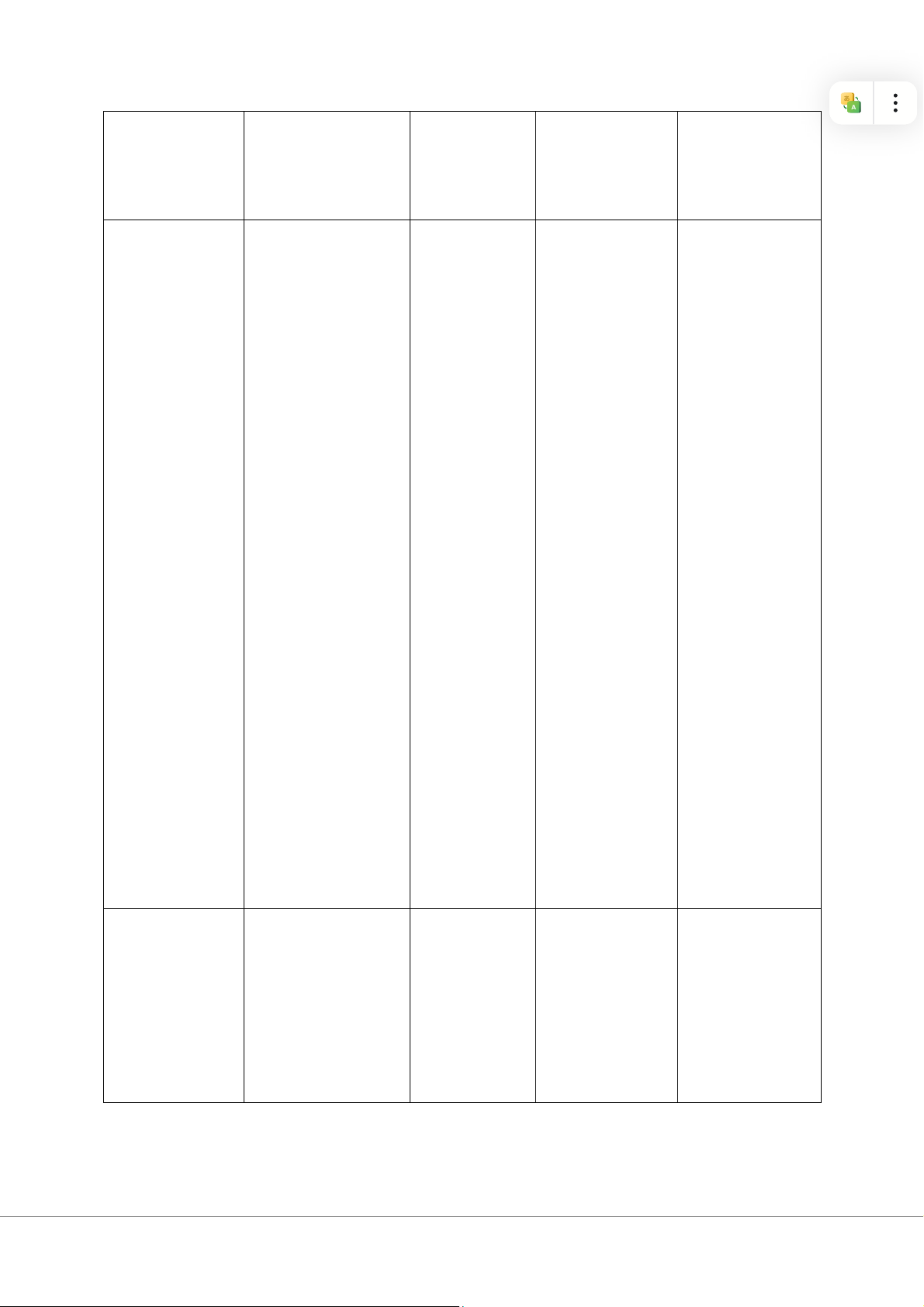
Assumptions / Context What the Employee Beliefs manager behaviour
does (A – changes (B causes) – effects) Maslow’s - Employees are Ms. Trang - Provides - Staff show Hierarchy motivated by a supervises stable up more of Needs hierarchy of a café minimum regularly needs, from where staff monthly because basic needs to feel income and financial higher stressed fair shift stability psychological due to distribution reduces and self- unstable (physiologica stress. fulfillment income, l & safety). - Team needs. lack of - Organizes bonding - Once a lower- teamwork, short after- sessions level need is and no shift increase met, higher- opportuniti gatherings cooperation level needs es for every during busy become growth weekend hours. stronger (social). - Awards motivators. - Creates a boost “Best Service confidence Attitude” and motivate award employees to (esteem). treat - Allows customers passionate better. baristas to - Baristas design new involved in seasonal creating new drink recipes drinks show (self- more actualization) initiative and . creativity during work. 2. - Employees Mr. Khánh - Improves - Employees Alderfer’s can pursue manages a break-room feel ERG Theory multiple needs warehouse facilities and physically (Existence at the same team that provides more – time. feels bottled water comfortable Relatednes - If higher-level discourage during hot and show s – Growth) needs (growth) d because shifts fewer are blocked, career (Existence). complaints. employees may advanceme - Sets up - Team focus back on nt is slow. weekly team discussions lower-level discussions reduce small needs to improve conflicts, (existence, communicati making relatedness). on operations (Relatedness smoother. ). - Job- - Lets shadowing interested opportunities employees reignite shadow motivation, supervisors making to develop employees leadership more skills proactive and (Growth). reducing frustration from slow promotion cycles. 3. - Employees Ms. Thảo - Gives the - The McClelland’ differ in leads a achievement achievement- s Acquired dominant customer -focused driven Needs needs: service employee employee Theory + nAch = center with challenging solves cases achievement staff who cases and faster and + nPow = perform target-based exceeds power differently bonuses targets + nAff = depending (achievemen consistently. afÏliation on their t). - The power- - Matching personalitie - Assigns the driven tasks to the s. power- employee dominant need focused becomes increases employee to more motivation and mentor new confident performance. trainees and and lead weekly organized, briefings improving (power). team - Pairs the discipline. afÏliation- - The focused afÏliation- employee to driven handle employee customer maintains satisfaction warm calls and communicati follow-ups on with (afÏliation). customers, boosting satisfaction ratings. 4. - Hygiene Mr. Quân - Updates - Complaints Herzberg’s factors prevent manages a design about Two-Factor dissatisfaction small software and equipment Theory but do not graphic clarifies and workflow (Hygiene create true design workload decrease Factors & motivation. team that policies to immediately. Motivators) - Motivators recently reduce - Designers (achievement, complained complaints become recognition, about (hygiene). more responsibility) outdated - Assigns engaged and generate higher software designers to enthusiastic satisfaction and and different due to varied better repetitive types of assignments. performance. tasks. creative - Recognition projects and boosts pride, highlights leading to outstanding more designs in innovative monthly and higher- meetings quality (motivators). design work. - Lets senior - utonomy designers strengthens propose new commitment design and guidelines for encourages upcoming designers to campaigns, contribute giving them new ideas. autonomy.
Tài liệu liên quan:
-
CHAP 1: Introduction to Management Concepts and Functions môn Principles of Management | Trường Đại học Quốc tế, Đại học Quốc gia Thành phố Hồ Chí Minh
1 1 -
Guidelines for group’s assignments: Analysing management issues of a FDI company based inVietnam môn Principles of Management | Trường Đại học Quốc tế, Đại học Quốc gia Thành phố Hồ Chí Minh
1 1 -
Financial Planning to Achieve 300m VND Goal in 3 Years môn Principles of Management | Trường Đại học Quốc tế, Đại học Quốc gia Thành phố Hồ Chí Minh
1 1 -
A Case Study in Fast Fashion Success môn Principles of Management | Trường Đại học Quốc tế, Đại học Quốc gia Thành phố Hồ Chí Minh
1 1 -
Chap 16 Hierarchy of Needs Theory and Applications môn Principles of Management | Trường Đại học Quốc tế, Đại học Quốc gia Thành phố Hồ Chí Minh
1 1