Tài liệu kinh tế vi mô. Parkin - Micro Economic
Tài liệu kinh tế vi mô. Parkin - Micro Economic. Tài liệu sưu tầm được tổng hợp. Mời các bạn tham khảo
Môn: Kinh tế vi mô ( NEU ) 761 tài liệu
Trường: Trường Đại học Kinh Tế Quốc Dân 7.3 K tài liệu
Tác giả:




















Preview text:
MyEconLab Provides the Power of Practice
Optimize your study time with MyEconLab, the online assessment
and tutorial system. When you take a sample test online,
MyEconLab gives you targeted feedback and a personalized
Study Plan to identify the topics you need to review.
STUDY PLAN PROBLEMS AND APPLICATIONS
You can work Problems 1 to 17 in MyEconLab Chapter 3 Study Plan and get instant feedback.
Markets and Prices (Study Plan 3.1)
how do you expect the following would change:
1. William Gregg owned a mill in South Carolina.
a. The demand for beef? Explain your answer.
In December 1862, he placed a notice in the
b. The demand for rice? Explain your answer.
Edgehill Advertiser announcing his willingness
5. In January 2010, the price of gasoline was
to exchange cloth for food and other items.
Study Plan The Study Plan
$2.70 a gallon. By spring 2010, the price had Here is an extract:
increased to $3.00 a gallon. Assume that there consists of practice problems
1 yard of cloth for 1 pound of bacon
were no changes in average income, popula-
taken directly from the end-of-
2 yards of cloth for 1 pound of butter
tion, or any other influence on buying plans.
chapter Study Plan Problems and 4 yards of cloth for 1 pound of wool
Explain how the rise in the price of gasoline
8 yards of cloth for 1 bushel of salt would affect Applications in the textbook. a. The demand for gasoline.
a. What is the relative price of butter in terms of wool?
b. The quantity of gasoline demanded.
b. If the money price of bacon was 20¢ a pound, Supply (Study Plan 3.3)
what do you predict was the money price of
6. In 2008, the price of corn increased by 35 per- butter?
Unlimited Practice As you work each
exercise, instant feedback helps you
understand and apply the concepts. Many
Study Plan exercises contain algorithmically
generated values to ensure that you get as much practice as you need. Learning Resources Registering for
Study Plan problems link to learning resources
If your book came packaged with a MyEconLab
that further reinforce concepts you need to
Access code, go to www.myeconlab.com to master.
register and log in. You will need a Course ID
• Step-by-step Guided Solutions help you
from your instructor to enroll in their course.
break down a problem much the same way
If your book did not come packaged with a
as an instructor would do during office
MyEconLab Access code, visit MyEconLab
hours. Guided Solutions are available for
to purchase access at any time. select problems.
• Links to the eText promote reading of the text
when you need to revisit a concept or explanation.
• Animated graphs, with audio narration,
appeal to a variety of learning styles.
• A graphing tool enables you to build and
manipulate graphs to better understand how
concepts, numbers, and graphs connect. MICROECONOMICS TENTH EDITION
This page intentionally left blank MICROECONOMICS TENTH EDITION MICHAEL PARKIN University of Western Ontario Editorial Director Sally Yagan Editor in Chief Donna Battista
Senior Acquisitions Editor Adrienne D’Ambrosio Development Editor Deepa Chungi Managing Editor Nancy Fenton Assistant Editor Jill Kolongowski Photo Researcher Angel Chavez Production Coordinator Alison Eusden Director of Media Susan Schoenberg Senior Media Producer Melissa Honig Director of Marketing Patrice Jones
Executive Marketing Manager Lori DeShazo
Rights and Permissions Advisor Jill Dougan
Senior Manufacturing Buyer Carol Melville Senior Media Buyer Ginny Michaud Copyeditor Catherine Baum
Art Director and Cover Designer Jonathan Boylan Technical Illustrator Richard Parkin
Text Design, Project Management and Page Make-up
Integra Software Services, Inc.
Cover Image: Medioimages/PhotoDisc/Getty Images
Photo credits appear on page C-1, which constitutes a continuation of the copyright page.
Copyright © 2012, 2010, 2008, 2005, 2003 Pearson Education, Inc. All rights reserved. No part of this publica-
tion may be reproduced, stored in a retrieval system, or transmitted, in any form or by any means, electronic,
mechanical, photocopying, recording, or otherwise, without the prior written permission of the publisher. Printed
in the United States of America. For information on obtaining permission for use of material in this work, please
submit a written request to Pearson Education, Inc., Rights and Contracts Department, 501 Boylston Street, Suite
900, Boston, MA 02116, fax your request to 617-671-3447, or e-mail at http://www.pearsoned.com/legal/- permissions.htm.
Library of Congress Cataloging-in-Publication Data Parkin, Michael, 1939–
Microeconomics/Michael Parkin. — 10th ed. p. cm. Includes index.
ISBN 978-0-13-139425-4 (alk. paper) 1. Microeconomics. I. Title. HB171.5.P313 2010 330—dc22 2010045760
1 2 3 4 5 6 7 8 10—CRK—14 13 12 11 10 ISBN 10: 0-13-139425-8 ISBN 13: 978-0-13-139425-4 TO ROBIN
This page intentionally left blank ABOUT THE AUTHOR
Michael Parkin is Professor Emeritus in the Department of Economics at
the University of Western Ontario, Canada. Professor Parkin has held faculty
appointments at Brown University, the University of Manchester, the University of
Essex, and Bond University. He is a past president of the Canadian Economics
Association and has served on the editorial boards of the American Economic
Review and the Journal of Monetary Economics and as managing editor of the
Canadian Journal of Economics. Professor Parkin’s research on macroeconomics,
monetary economics, and international economics has resulted in over 160
publications in journals and edited volumes, including the American Economic
Review, the Journal of Political Economy, the Review of Economic Studies, the
Journal of Monetary Economics, and the Journal of Money, Credit and Banking.
He became most visible to the public with his work on inflation that discredited the
use of wage and price controls. Michael Parkin also spearheaded the movement
toward European monetary union. Professor Parkin is an experienced and
dedicated teacher of introductory economics. vii
This page intentionally left blank BRIEF CONTENTS PART ONE PART FIVE INTRODUCTION 1
MARKET FAILURE AND GOVERNMENT 371 CHAPTER 1 What Is Economics? 1 CHAPTER 16
Public Choices and Public Goods 371 CHAPTER 2 The Economic Problem 29 CHAPTER 17
Economics of the Environment 393 PART TWO PART SIX HOW MARKETS WORK 55
FACTOR MARKETS, INEQUALITY, CHAPTER 3 Demand and Supply 55 AND UNCERTAINTY 417 CHAPTER 4 Elasticity 83 CHAPTER 18
Markets for Factors of Production 417 CHAPTER 5 Efficiency and Equity 105 CHAPTER 19 Economic Inequality 441 CHAPTER
6 Government Actions in Markets 127 CHAPTER 20
Uncertainty and Information 465 CHAPTER 7 Global Markets in Action 151 PART THREE
HOUSEHOLDS’ CHOICES 179 CHAPTER 8 Utility and Demand 179 CHAPTER
9 Possibilities, Preferences, and Choices 203 PART FOUR FIRMS AND MARKETS 227 CHAPTER 10 Organizing Production 227 CHAPTER 11 Output and Costs 251 CHAPTER 12 Perfect Competition 273 CHAPTER 13 Monopoly 299 CHAPTER 14 Monopolistic Competition 323 CHAPTER 15 Oligopoly 341 ix
This page intentionally left blank
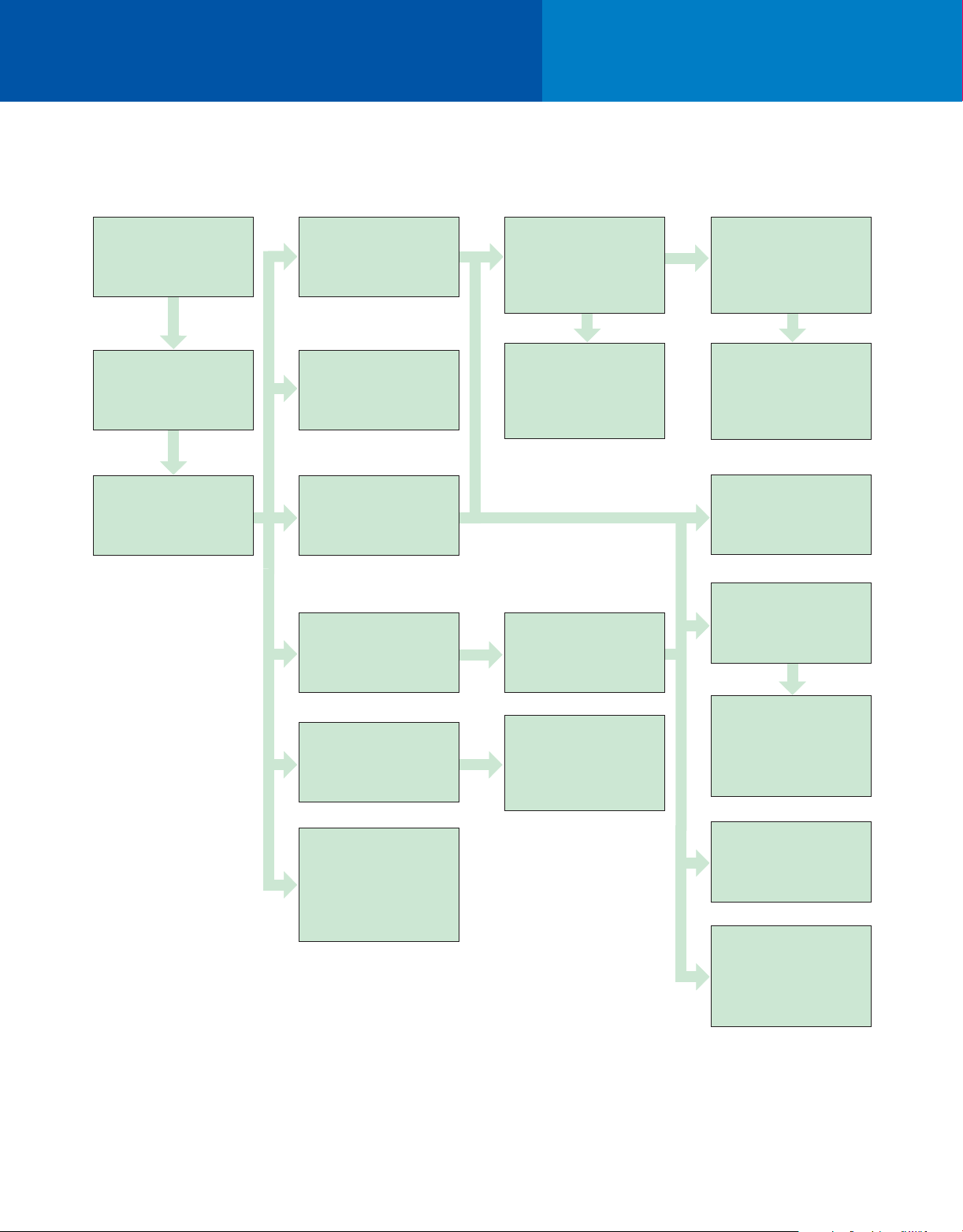
ALTERNATIVE PATHWAYS THROUGH THE CHAPTERS Micro Flexibility Chapter 1 Chapter 5 Chapter 6 Chapter 16 What is Economics Efficiency and Equity Government Actions Public Choices in Markets and Public Goods Chapter 2 Chapter 19 Chapter 7 Chapter 17 The Economic Problem Economic Inequality Global Markets Economics of the in Action Environment Chapter 3 Chapter 4 Chapter 12 Demand and Supply Elasticity Perfect Competition Chapter 13 Chapter 10 Chapter 11 Monopoly Organizing Production Output and Costs Chapter 14 Chapter 8 Chapter 20 Monopolistic Competition Utility and Demand Uncertainty and Information Chapter 9 Chapter 15 Possibilities, Oligopoly Preferences, and Choices Chapter 18 Markets for Factors of Production Start here ... … then jump to
… and jump to any of these after any of these …
doing the pre-requisites indicated xi
This page intentionally left blank TABLE OF CONTENTS
APPENDIX Graphs in Economics 13 PART ONE INTRODUCTION 1 Graphing Data 13 Scatter Diagrams 14
CHAPTER 1 ◆ WHAT IS ECONOMICS? 1
Graphs Used in Economic Models 16
Variables That Move in the Same Direction 16 Definition of Economics 2
Variables That Move in Opposite Directions 17 Two Big Economic Questions 3
Variables That Have a Maximum or a What, How, and For Whom? 3 Minimum 18
Can the Pursuit of Self-Interest Promote the Variables That Are Unrelated 19 Social Interest? 5 The Slope of a Relationship 20 The Economic Way of Thinking 8 The Slope of a Straight Line 20 A Choice Is a Tradeoff 8 The Slope of a Curved Line 21 Making a Rational Choice 8
Graphing Relationships Among More Than Benefit: What You Gain 8 Two Variables 22
Cost: What You Must Give Up 8 Ceteris Paribus 22
How Much? Choosing at the Margin 9 When Other Things Change 23 Choices Respond to Incentives 9 MATHEMATICAL NOTE
Economics as Social Science and Equations of Straight Lines 24 Policy Tool 10 Economist as Social Scientist 10 Economist as Policy Adviser 10
Summary (Key Points and Key Terms), Study Plan
Problems and Applications, and Additional Problems
and Applications appear at the end of each chapter. xiii xiv Contents
CHAPTER 2 ◆ THE ECONOMIC PROBLEM 29 PART TWO
Production Possibilities and Opportunity HOW MARKETS WORK 55 Cost 30
Production Possibilities Frontier 30
CHAPTER 3 ◆ DEMAND AND SUPPLY 55 Production Efficiency 31 Markets and Prices 56 Tradeoff Along the PPF 31 Opportunity Cost 31 Demand 57 Using Resources Efficiently 33 The Law of Demand 57
Demand Curve and Demand Schedule 57
The PPF and Marginal Cost 33 A Change in Demand 58
Preferences and Marginal Benefit 34
A Change in the Quantity Demanded Versus a Allocative Efficiency 35 Change in Demand 60 Economic Growth 36 Supply 62 The Cost of Economic Growth 36 The Law of Supply 62 A Nation’s Economic Growth 37
Supply Curve and Supply Schedule 62 Gains from Trade 38 A Change in Supply 63
Comparative Advantage and Absolute
A Change in the Quantity Supplied Versus a Advantage 38 Change in Supply 64 Achieving the Gains from Trade 39 Market Equilibrium 66 Economic Coordination 41 Price as a Regulator 66 Firms 41 Price Adjustments 67 Markets 42
Predicting Changes in Price and Quantity 68 Property Rights 42 An Increase in Demand 68 Money 42 A Decrease in Demand 68 Circular Flows Through Markets 42 An Increase in Supply 70 Coordinating Decisions 42 A Decrease in Supply 70 READING BETWEEN THE LINES
All the Possible Changes in Demand and
The Rising Opportunity Cost of Food 44 Supply 72 PART ONE WRAP-UP ◆ READING BETWEEN THE LINES
Demand and Supply: The Price of Coffee 74
Understanding the Scope of Economics Your Economic Revolution 51 MATHEMATICAL NOTE
Demand, Supply, and Equilibrium 76 Talking with Jagdish Bhagwati 52 Contents xv
CHAPTER 4 ◆ ELASTICITY 83
CHAPTER 5 ◆ EFFICIENCY AND EQUITY 105 Price Elasticity of Demand 84
Resource Allocation Methods 106
Calculating Price Elasticity of Demand 85 Market Price 106 Inelastic and Elastic Demand 86 Command 106
Elasticity Along a Linear Demand Curve 87 Majority Rule 106 Total Revenue and Elasticity 88 Contest 106
Your Expenditure and Your Elasticity 89 First-Come, First-Served 106
The Factors That Influence the Elasticity of Lottery 107 Demand 89 Personal Characteristics 107 More Elasticities of Demand Force 107 91 Cross Elasticity of Demand 91 Benefit, Cost, and Surplus 108 Income Elasticity of Demand 92
Demand, Willingness to Pay, and Value 108 Elasticity of Supply
Individual Demand and Market Demand 108 94 Consumer Surplus 109
Calculating the Elasticity of Supply 94 Supply and Marginal Cost 109
The Factors That Influence the Elasticity of
Supply, Cost, and Minimum Supply-Price 110 Supply 95
Individual Supply and Market Supply 110 READING BETWEEN THE LINES Producer Surplus 111
The Elasticities of Demand and Supply for
Is the Competitive Market Efficient? 112 Tomatoes 98
Efficiency of Competitive Equilibrium 112 Market Failure 113 Sources of Market Failure 114 Alternatives to the Market 115
Is the Competitive Market Fair? 116
It’s Not Fair If the Result Isn’t Fair 116
It’s Not Fair If the Rules Aren’t Fair 118
Case Study: A Water Shortage in a Natural Disaster 118 READING BETWEEN THE LINES
Is the Global Market for Roses Efficient? 120 xvi Contents
CHAPTER 6 ◆ GOVERNMENT ACTIONS IN
CHAPTER 7 ◆ GLOBAL MARKETS IN ACTION MARKETS 127 151
A Housing Market With a Rent Ceiling 128 How Global Markets Work 152 A Housing Shortage 128 International Trade Today 152 Increased Search Activity 128
What Drives International Trade? 152 A Black Market 128
Why the United States Imports T-Shirts 153 Inefficiency of a Rent Ceiling 129
Why the United States Exports Airplanes 154 Are Rent Ceilings Fair? 130
Winners, Losers, and the Net Gain from
A Labor Market With a Minimum Wage 131 Trade 155
Minimum Wage Brings Unemployment 131 Gains and Losses from Imports 155 Inefficiency of a Minimum Wage 131 Gains and Losses from Exports 156 Is the Minimum Wage Fair? 132 Gains for All 156 Taxes 133
International Trade Restrictions 157 Tax Incidence 133 Tariffs 157 A Tax on Sellers 133 Import Quotas 160 A Tax on Buyers 134 Other Import Barriers 162
Equivalence of Tax on Buyers and Sellers 134 Export Subsidies 162
Tax Incidence and Elasticity of Demand 135
The Case Against Protection 163
Tax Incidence and Elasticity of Supply 136 The Infant-Industry Argument 163 Taxes and Efficiency 137 The Dumping Argument 163 Taxes and Fairness 138 Saves Jobs 164
Production Quotas and Subsidies 139
Allows Us to Compete with Cheap Foreign Production Quotas 139 Labor 164 Subsidies 140
Penalizes Lax Environmental Standards 164 Markets for Illegal Goods
Prevents Rich Countries from Exploiting 142 Developing Countries 165 A Free Market for a Drug 142 Offshore Outsourcing 165 A Market for an Illegal Drug 142 Avoiding Trade Wars 166 Legalizing and Taxing Drugs 143
Why Is International Trade Restricted? 166 READING BETWEEN THE LINES Compensating Losers 167
Government Actions in Labor Markets 144 READING BETWEEN THE LINES A Tarriff on Tires 168 PART TWO WRAP-UP ◆ Understanding How Markets Work The Amazing Market 175 Talking with Susan Athey 176 Contents xvii PART THREE
CHAPTER 9 ◆ POSSIBILITIES, PREFERENCES,
HOUSEHOLDS’ CHOICES 179 AND CHOICES 203 Consumption Possibilities 204
CHAPTER 8 ◆ UTILITY AND DEMAND 179 Budget Equation 205 Consumption Choices 180
Preferences and Indifference Curves 207 Consumption Possibilities 180 Marginal Rate of Substitution 208 Preferences 181 Degree of Substitutability 209 Utility-Maximizing Choice 183
Predicting Consumer Choices 210 A Spreadsheet Solution 183 Best Affordable Choice 210 Choosing at the Margin 184 A Change in Price 211 The Power of Marginal Analysis 186 A Change in Income 213 Revealing Preferences 186
Substitution Effect and Income Effect 214
Predictions of Marginal Utility Theory 187 READING BETWEEN THE LINES A Fall in the Price of a Movie 187 Paper Books Versus e-Books 216 A Rise in the Price of Soda 189 A Rise in Income PART THREE WRAP-UP ◆ 190 The Paradox of Value 191
Understanding Households’ Choices Temperature: An Analogy 192 Making the Most of Life 223
New Ways of Explaining Consumer Talking with Choices 194 Steven D. Levitt 224 Behavioral Economics 194 Neuroeconomics 195 Controversy 195 READING BETWEEN THE LINES
A Paradox of Value: Paramedics and Hockey Players 196 xviii Contents PART FOUR
CHAPTER 11 ◆ OUTPUT AND COSTS 251 FIRMS AND MARKETS 227 Decision Time Frames 252 The Short Run 252
CHAPTER 10 ◆ ORGANIZING The Long Run 252 PRODUCTION 227
Short-Run Technology Constraint 253
The Firm and Its Economic Problem Product Schedules 253 228 Product Curves 253 The Firm’s Goal 228 Total Product Curve 254 Accounting Profit 228 Marginal Product Curve 254 Economic Accounting 228 Average Product Curve 256
A Firm’s Opportunity Cost of Production 228 Economic Accounting: A Summary 229 Short-Run Cost 257 Decisions 229 Total Cost 257 The Firm’s Constraints 230 Marginal Cost 258
Technological and Economic Efficiency Average Cost 258 231 Marginal Cost and Average Cost 258 Technological Efficiency 231
Why the Average Total Cost Curve Is Economic Efficiency 231 U-Shaped 258
Information and Organization 233 Cost Curves and Product Curves 260 Command Systems 233 Shifts in the Cost Curves 260 Incentive Systems 233 Long-Run Cost 262 Mixing the Systems 233 The Production Function 262 The Principal-Agent Problem 234
Short-Run Cost and Long-Run Cost 262
Coping with the Principal-Agent Problem 234
The Long-Run Average Cost Curve 264 Types of Business Organization 234
Economies and Diseconomies of Scale 264
Pros and Cons of Different Types of Firms 235
Markets and the Competitive Environment READING BETWEEN THE LINES 237
Cutting the Cost of Producing Electricity 266 Measures of Concentration 238
Limitations of a Concentration Measure 240
Produce or Outsource? Firms and Markets 242 Firm Coordination 242 Market Coordination 242 Why Firms? 242 READING BETWEEN THE LINES
Battling for Markets in Internet Advertising 244
Tài liệu liên quan:
-

Sách Bài Tập Vi Mô - Hướng Dẫn và Lời Giải Chi Tiết
10 5 -

Nguyên lý chiến lược kinh doanh - Bài giảng môn Kinh tế vi mô | Trường Đại học Kinh Tế Quốc Dân
11 6 -

Chương 7 các kỹ thuật lựa chọn chiến lược - Bài giảng môn Kinh tế vi mô | Trường Đại học Kinh Tế Quốc Dân
12 6 -
Tổng hợp câu hỏi trắc nghiệm theo chương ôn tập môn Kinh tế vi mô | Trường Đại học Kinh Tế Quốc Dân
17 9 -
Lý thuyết ngang giá sức mua môn Kinh tế vi mô | Trường Đại học Kinh Tế Quốc Dân
10 5