The Basics of Organizational Design and Job Specialization môn Principle of Management | Trường Đại học Quốc tế, Đại học Quốc gia Thành phố Hồ Chí Minh
Job Specialization: Dividing overall organizational tasks into smaller, specific jobs so each employee focuses on one part. Tài liệu giúp bạn tham khảo, ôn tập và đạt kết quả cao. Mời đọc đón xem!
Môn: Principles of Management 314 tài liệu
Trường: Trường Đại học Quốc tế, Đại học Quốc gia Thành phố Hồ Chí Minh 2 K tài liệu
Tác giả:













Preview text:
6-1 THE BASIC ELEMENTS OF ORGANIZING
1. Job Specialization: Dividing overall organizational tasks into smaller, specific jobs
so each employee focuses on one part.
EX: Amazon workers specialize in tasks like receiving, packing, or shipping to
ensure efficiency in order fulfillment. Advantages:
+ Workers will become proficient at their task because it is small and simple.
+ Transfer time between tasks decreases.
+ The more narrowly defined the job is, the easier it is to develop specialized
equipment to assist with the job.
+ Training costs should be relatively low Disadvantages:
+ Workers can become bored and dissatisfied. This can lead to a lower quality of work.
+ The anticipated benefits of specialization do not always occur.
+ Overspecialization can occur
=> organizations use job rotation, job enlargement, and job enrichment
a. Job rotation: Employees move between tasks
EX: At LG Electronics India, close to half of the 2,800 employees have switched
functions within the organization at least twice in a five-year span
b. Job enlargement: Increasing the number of tasks that employees perform.
EX: Before, a Waiter only takes orders. After enlargement: the Waiter also helps
with preparing drinks and setting tables during slow hours.
c. Job enrichment: attempts to increase both the number of tasks a worker does and
the control the worker has over the job
EX: Supervisors only handled cashiers and stock checks, they’re now responsible
for team scheduling, training, and local promotions.
2. a. Work teams: Work is assigned to a team and the team members have control over each worker’s duties
Ex: the work team assigns specific tasks to members, monitors and controls its own
performance, and has autonomy over work scheduling.
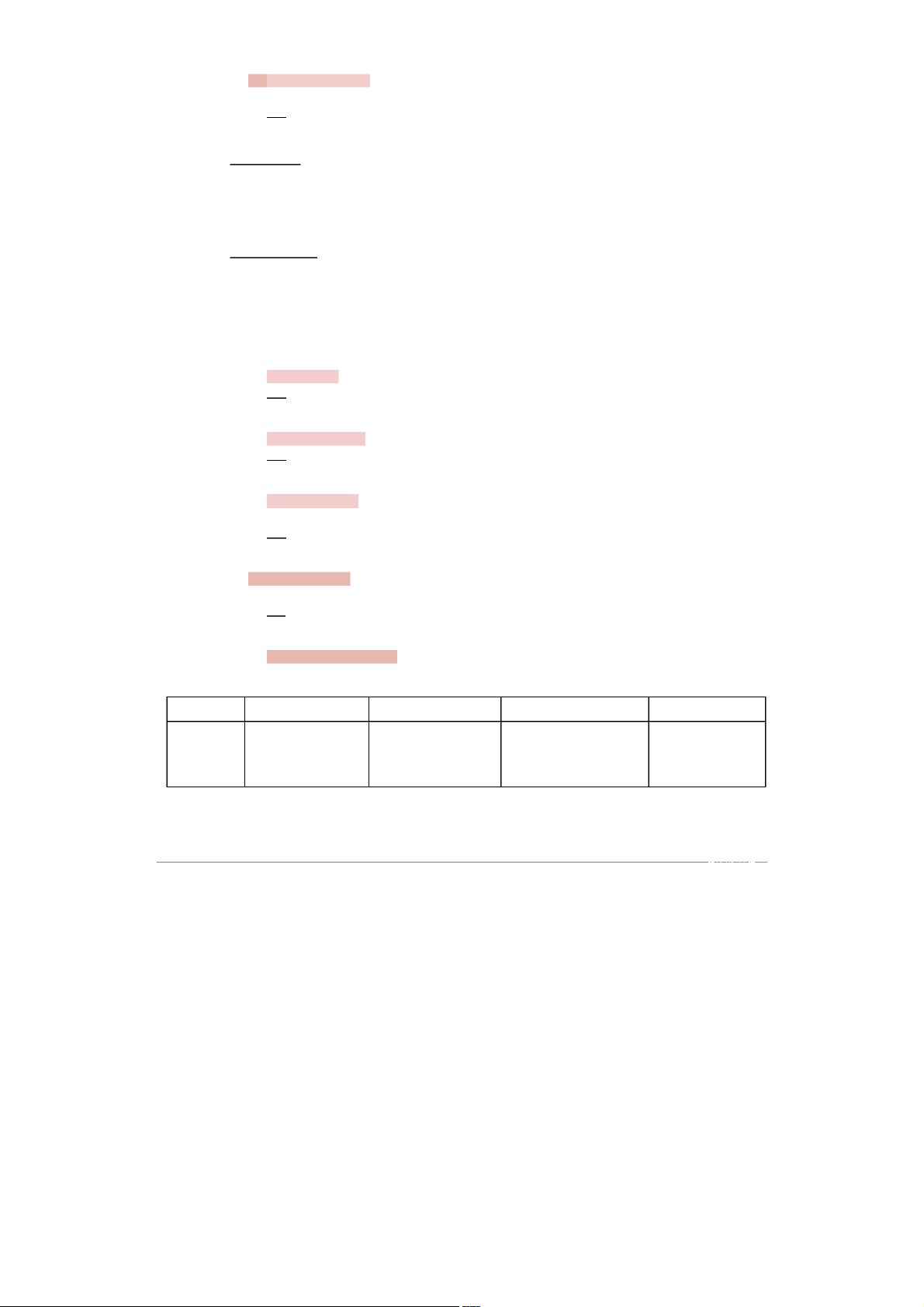
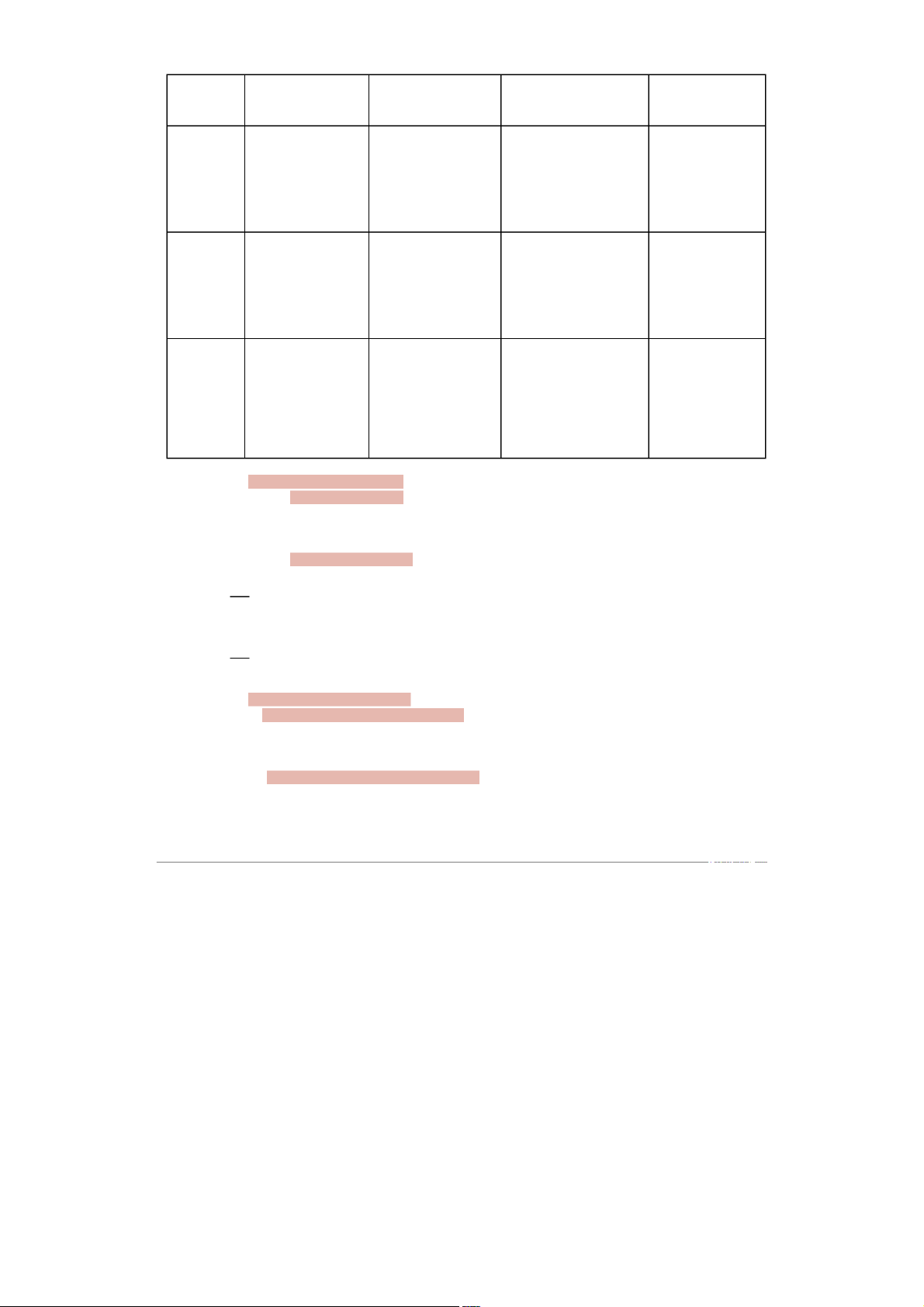
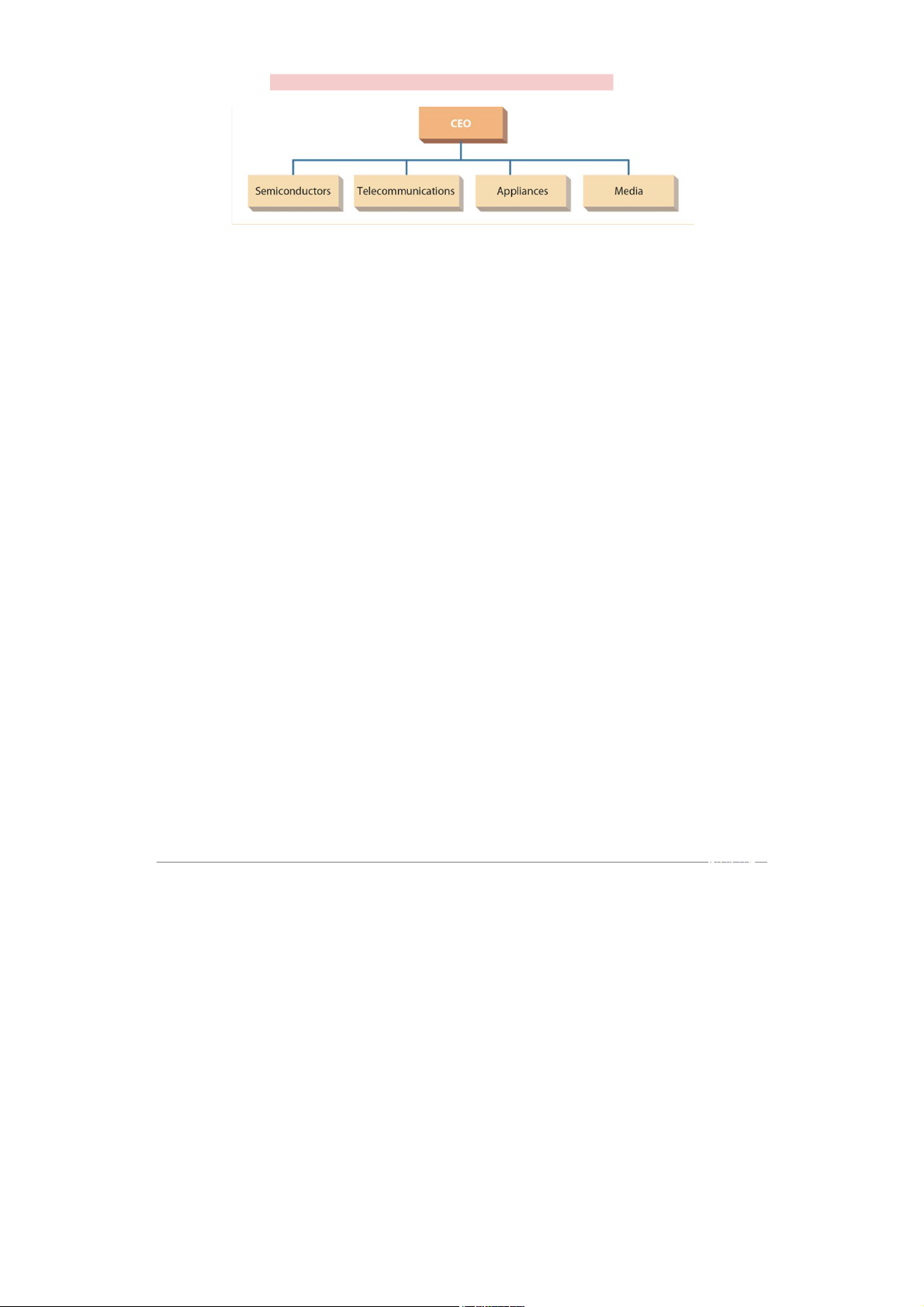
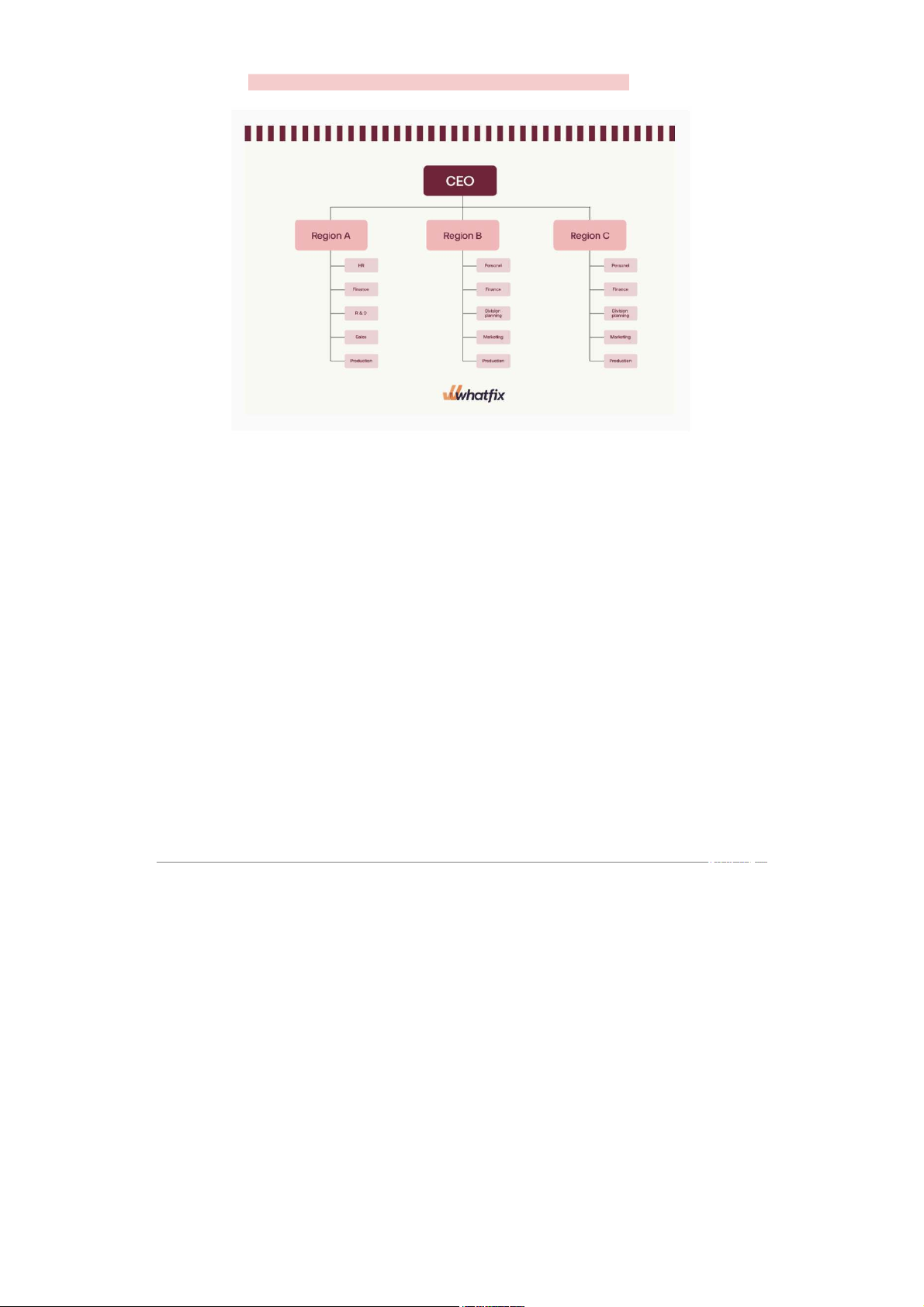
b. Departmentalization: The process of grouping jobs according to some logical arrangement TYPE Definition ADVANTAGES DISADVANTAGES EXAMPLE Functional Grouping based on - Expertise and - Poor communication Most universities similar skills or efficiency across functional areas and government functions
- Work within functional - accountability and agencies use areas performance functional - In-depth become increasingly departmentalization specialization difficult to monitor. like Finance, HR, IT, Marketing. Product Grouping based on - Faster - Costly duplication of Apple divides by product lines decision-making and functions product line: iPhone, clear accountability - Limited view of Mac, iPad and Apple - Closer to customers organization goals Watch, each with its own R&D, marketing, and operations teams. Customer
Grouping by customer Better focus on - High administrative Commercial banks type customer needs costs often organize - Requires more around customer coordination segments: personal banking, small business, and corporate banking. Location
Grouping by region or - Better customer - Duplication of functions Coca-Cola divides territory service across regions. operations into - Focus on local regional divisions markets North America, Europe, Asia-Pacific to adapt marketing and logistics to local tastes 3. Reporting Relationships
a. Chain of command: A clear line of authority
+ Unity of command: Each employee has only one direct supervisor
+ Scalar principle: A clear and unbroken line of authority from the lowest to the highest position
b. Span of management: number of people who report to a particular manager
+ Tall organization: Many levels → tight control but slower communication
EX: the U.S. Army represents a tall structure, where authority flows through multiple ranks
to maintain control and discipline.
+ Flat organization: Fewer levels → faster decisions but heavier manager workload
EX: Spotify Teams, called ‘squads’, they work like mini start-ups no heavy hierarchy, high
autonomy, and shared responsibility which makes the company flexible and fast-moving in the tech industry 4. Delegation and Authority:
a. Steps in the Delegation Process: + Assign responsibility + Grant authority + Create accountability
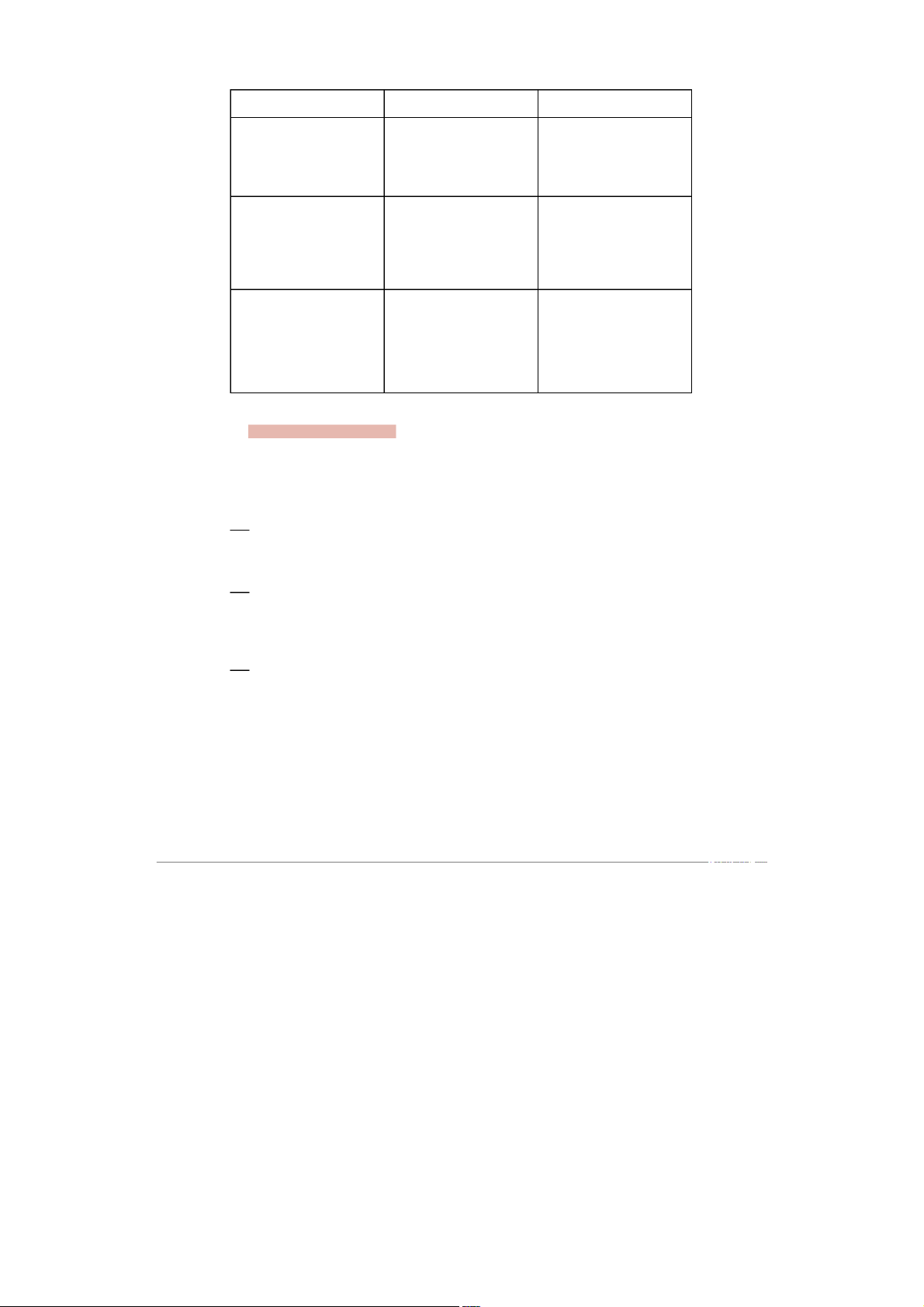
b. Centralization vs. Decentralization: Definition Centralization Decentralization Centralization is the Power held at the top Power shared with lower process of systematically levels retaining power and authority in the hands of higher-level managers. Decentralization is the Suitable for stable Suitable for dynamic process of systematically environments environments delegating power and authority throughout the organization to middle and lower-level managers A multinational food Starbucks Vietnam sells company launches the Phin-style coffee and same advertising green tea lattes that fit EXAMPLE campaign in all local tastes countries, ignoring local culture or trends 5. Coordinating Activities -
Coordination is the process of linking the activities of the various departments in the organization - 3 levels of interdependence:
+ Pooled interdependence: Units work independently, combine results at the end.
EX: Each Starbucks store serves local customers, but their combined revenue and service
quality determine the company’s overall success.
+ Sequential interdependence: The output of one unit becomes the input for another
EX: An example of a vehicle manufacturer, the first person on the line might add a part to
the engine, which then follows a sequential assembly order through ten more assemblers before completion.
+ Reciprocal interdependence: Exists when activities flow both ways between units
EX: A professional hockey team, where players constantly adjust their positions and
passes based on what their teammates are doing on the ice. 6-2 THE BUREAUCRATIC MODEL OF ORGANIZATION DESIGN. 6-2 THE BUREAUCRATIC MODEL OF ORGANIZATION DESIGN.
1. Definition: The bureaucratic model is a classic form of organization design developed by
Max Weber, a German sociologist. It describes a structured and rule-based organization
designed to ensure efficiency, consistency, and fairness.
2. Main Characteristic Of The Bureaucratic Model -
Division of Labor – Work is divided into specialized jobs; each person has a clearly
defined task. Ex: In a hospital, doctors focus on diagnosis and treatment, nurses
handle patient care, and accountants manage billing. Each role is clearly defined. -
Hierarchy of Authority – A clear chain of command; every employee knows who
their supervisor is. Ex: In Vietcombank, the chain of command is: Department Head
→ Team Leader → Staff. All loan approvals must go through the proper hierarchy. -
Formal Rules and Procedures – Decisions and behaviors are guided by written
policies and rules. Ex: When applying for a construction permit, all applicants must
follow the official process and submit the required forms; no step can be skipped. -
Impersonality – Decisions are made based on rules, not personal preferences or
relationships. Ex: In civil service recruitment, candidates are evaluated based on test
scores and qualifications — not on personal connections. -
Employment Based on Merit – Hiring and promotion are based on ability and
qualifications, not favoritism. Ex: At a public university, lecturers must meet research
and teaching requirements to be promoted to Associate Professor or Professor. 3. Advantages
- Efficiency and Productivity: Specialization and clear procedures improve accuracy and speed.
- Fairness and Transparency: Everyone is evaluated by the same criteria, preventing favoritism.
- Stability and Control: Standardized procedures ensure consistent and predictable operations. 4. Disadvantages
- Lack of Creativity: Employees follow rules strictly and avoid innovation out of fear of mistakes.
- Impersonal Communication: The impersonal nature of rules can create emotional distance between people.
- Low Motivation: When work is routine and recognition is limited, employees may lose motivation. 5. Example
McDonald’s is one of the clearest examples of a bureaucratic organization in the modern
business world. The company operates through a highly structured system that focuses on
efficiency, control, and consistency across all its global branches.
At McDonald’s, the division of labor is very specific. Each employee is trained to perform one
particular task — for example, taking orders, frying fries, assembling burgers, or preparing
drinks. This specialization allows every process to run smoothly and ensures that food is
served quickly and consistently.
The company also follows a strict hierarchy of authority. From crew members to shift leaders,
store managers, regional managers, and finally to the headquarters, each level has clear
responsibilities and must report to the level above. This chain of command helps maintain
order and accountability within the system.
Every action at McDonald’s is guided by formal rules and procedures. There are detailed
Standard Operating Procedures (SOPs) for cooking, cleaning, customer service, and timing.
These rules make sure that a Big Mac in Vietnam tastes the same as one in the United
States, reinforcing brand consistency around the world.
McDonald’s also practices impersonality in management. Decisions and evaluations are
based on data and performance — such as speed, accuracy, and customer satisfaction —
rather than on personal relationships.
Finally, the company uses a merit-based system for promotion. Employees who perform well
and complete training programs, such as those offered by Hamburger University, can move up to managerial positions.
In essence, McDonald’s functions like a well-organized machine, where structure, discipline,
and standardization are the keys to its global success. 6-3 SITUATIONAL INFLUENCES ON ORGANIZATION DESIGN 6-3 SITUATIONAL INFLUENCES ON ORGANIZATION DESIGN
1. Definition: This approach says that there is no single best way to design an organization.
The best structure depends on the situation — factors like environment, technology, size,
and strategy all influence design. This is often called the contingency approach. 2. Main Situational Factors
- Environment: A stable environment suits a bureaucratic structure, while a dynamic
environment needs a flexible structure. Ex: McDonald’s operates in a stable fast-food
environment, so it uses strict rules and standardized procedures. In contrast, Google faces
rapid technological change, so it uses a flexible and decentralized structure to adapt quickly.
- Technology: Routine technology supports structured systems, while nonroutine
technology needs flexibility. Ex: A car factory like Toyota uses repetitive assembly-line
technology and follows a clear chain of command. Meanwhile, a company like Pixar, which
creates animated films, uses nonroutine creative processes and encourages open
communication and collaboration.
- Size: Small firms need simple structures; large firms require more hierarchy and
specialization. Ex: A small local coffee shop can be managed directly by its owner. But a
global brand like Starbucks needs multiple management levels — from local store managers
to regional and corporate executives — to coordinate thousands of stores.
- Strategy: A cost-efficiency strategy fits a bureaucratic model, while an innovation strategy
fits an organic one. Ex: Walmart focuses on low prices and cost efficiency, so it uses a
bureaucratic design with tight control and standard procedures. Apple, focused on
innovation, uses a flexible, team-based structure that encourages creativity and quick responses to market trends. 6.4 BASIC FORMS OF ORGANIZATION DESIGN
6.4 BASIC FORMS OF ORGANIZATION DESIGN Overview:
Organizational design defines how work is structured and coordinated to achieve efficiency
and strategic alignment. Each design form balances control, flexibility, and specialization
differently. The following examples illustrate how leading corporations implement these structures in practice.
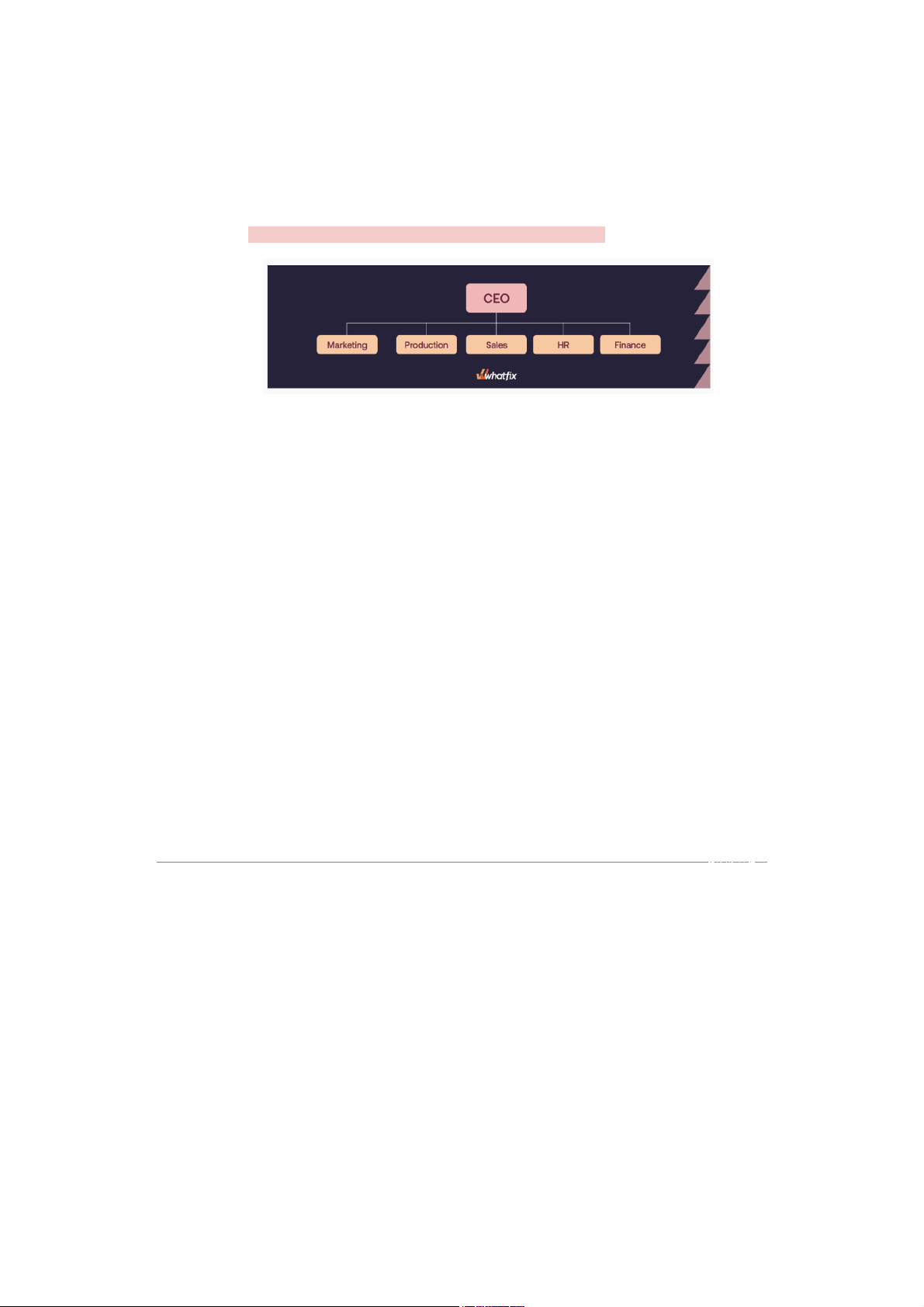
1. Functional (U-Form) Design — Microsoft Corporation Definition:
The functional design divides an organization into departments based on specialized business
functions such as marketing, finance, human resources, and R&D. This enhances efficiency
through specialization and centralized control. Real-life Connection:
Microsoft employs a U-form structure with over 220,000 employees organized into key
functional areas including Engineering, Marketing, Finance, and HR. Under CEO Satya
Nadella, cross-department collaboration has been strengthened through the “One Microsoft” culture. In , Microsoft generated 2023
USD 211 billion in revenue, demonstrating how this
structure drives consistency, innovation, and performance. Analysis:
The U-Form allows for deep functional expertise and unified decision-making. However, it
requires cultural integration to prevent departmental silos. Insight:
“Microsoft’s U-Form structure highlights that efficiency stems not only from
specialization but also from a shared culture that unites diverse expertise — as
seen in the ‘One Microsoft’ initiative.”
(Adapted from Griffin, 2021; Microsoft Annual Report, 2023)
2. Conglomerate (H-Form) Design — Berkshire Hathaway Definition:
The H-Form, or holding company structure, groups multiple unrelated businesses under a
central corporate parent. Each subsidiary operates independently but benefits from financial
oversight and resource allocation from the parent firm. Real-life Connection:
Berkshire Hathaway, led by Warren Buffett, manages more than 60 autonomous
subsidiaries including GEICO (insurance), BNSF (railroads), Dairy Queen (food), and
Duracell (batteries). Buffett focuses on capital allocation and long-term investment
strategy, enabling each unit to operate independently while maintaining financial discipline. In , the company earned 2023
USD 364 billion in revenue, showing how diversification mitigates risk. Analysis:
The H-Form structure balances independence and oversight, ideal for firms managing unrelated industries. Insight:
“Berkshire’s H-Form model illustrates that strategic autonomy, supported by
trust-based leadership, drives sustainable multi-industry success.”
(Based on Griffin, 2021; Forbes, 2023; Berkshire Hathaway Shareholder Letter, 2023)
3. Divisional (M-Form) Design — The Walt Disney Company Definition:
The M-Form divides an organization into semi-autonomous divisions based on products,
markets, or regions. Each division is responsible for its own profits and strategies, aligned
under a shared corporate mission. Real-life Connection:
The Walt Disney Company operates through three major divisions: Disney
Entertainment, Parks, Experiences & Products, and ESPN. In 2023, Disney
Entertainment generated 64% of the company’s total USD 45 billion revenue. Each
division has its own management and creative teams but aligns with Disney’s overarching
philosophy of innovation and storytelling. Analysis:
This structure enables creative focus and accountability, allowing divisions to innovate while maintaining brand cohesion. Insight:
“Disney’s M-Form shows how strategic diversification can turn organizational
complexity into synergy and brand coherence.”
(Adapted from Griffin, 2021; The Walt Disney Company Annual Report, 2023)
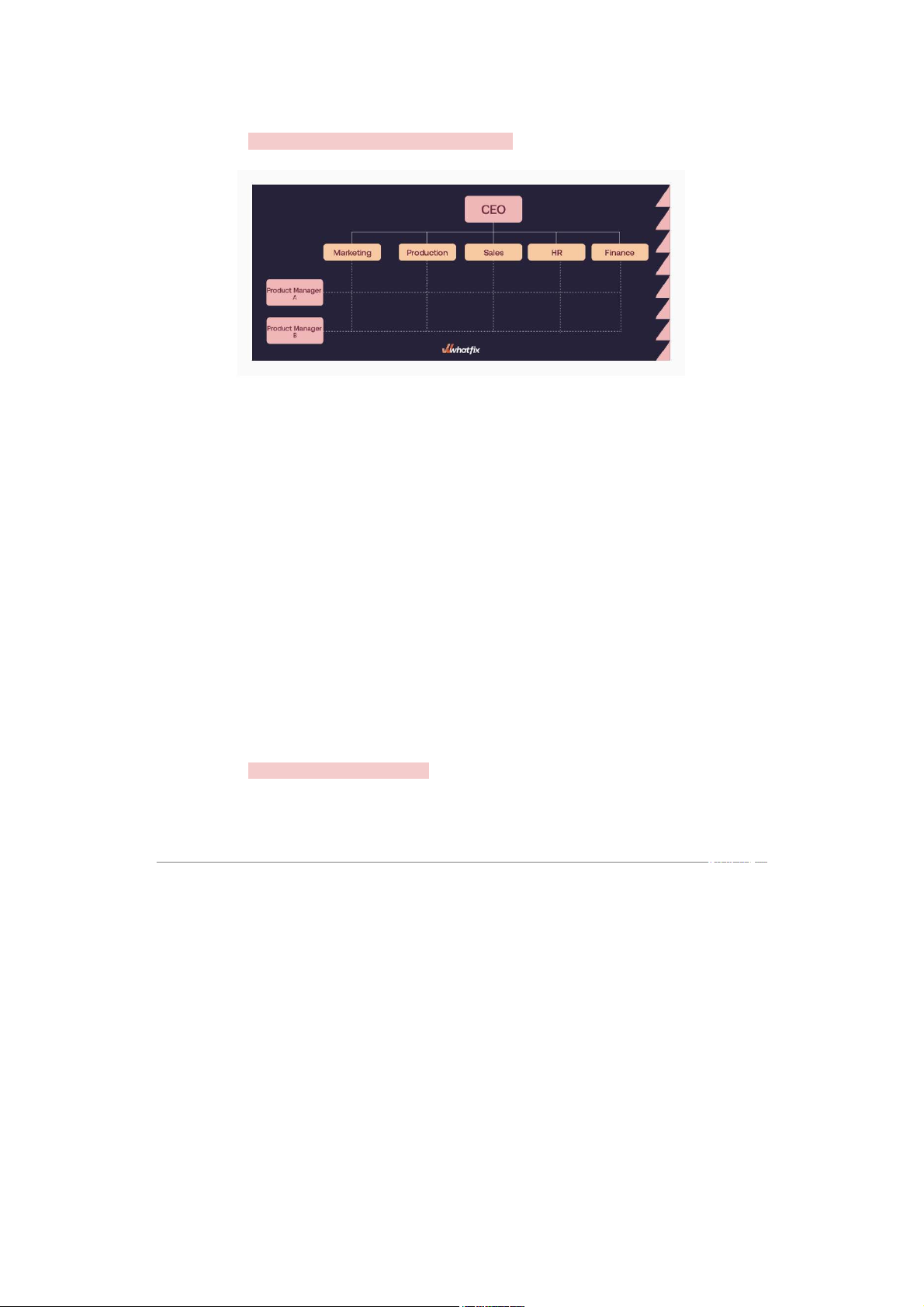
4. Matrix Design — Ford Motor Company Definition:
The matrix structure integrates both functional and project-based lines of authority.
Employees report to two managers — one functional and one project manager — enabling
coordination across expertise areas. Real-life Connection:
Ford Motor Company uses a matrix design for projects like the Ford Mustang.
Cross-functional teams of engineers, designers, and marketers report both to their
departmental heads and the project manager. According to Harvard Business Review (2019),
this structure reduced development time by
, fostering faster innovation and 20% coordination. Analysis:
While efficient for innovation, the matrix structure requires clear communication to manage
overlapping authority effectively. Insight:
“Ford’s matrix design demonstrates that dual authority, when properly managed,
becomes a catalyst for innovation and speed.”
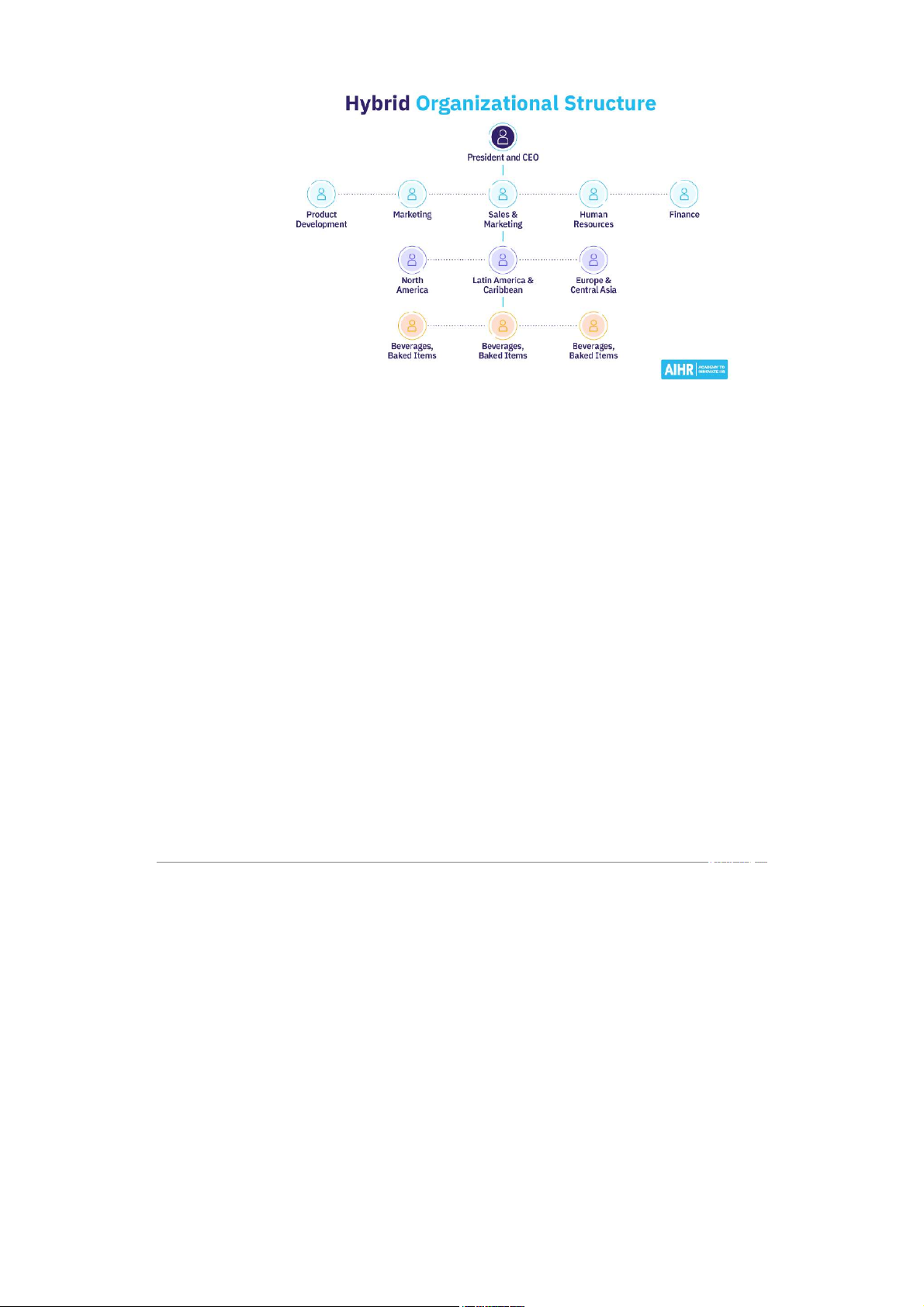
(Based on Griffin, 2021; Harvard Business Review, 2019) 5. Hybrid Design — Amazon Definition:
A hybrid design combines multiple organizational forms (functional, divisional, matrix) to
achieve flexibility, efficiency, and scalability. Real-life Connection:
Amazon integrates centralized functional departments (HR, Finance, Logistics) with
semi-autonomous divisions like AWS, Prime Video, and Amazon Retail. In 2023, AWS
contributed 67% of Amazon’s operating profit, while representing only 17% of revenue —
highlighting the efficiency of mixed structural control. Analysis:
The hybrid structure enables Amazon to maintain centralized efficiency while empowering innovation across divisions. Insight:
“Amazon’s hybrid structure proves that the most effective design is adaptive —
aligning organizational complexity with strategic scale.”
(Adapted from Griffin, 2021; Amazon Annual Report, 2023)
Advantages and Disadvantages of Basic Organization Designs Design Type Advantages Disadvantages Functional
High specialization and efficiency; Departmental silos; slower (U-Form) Clear authority structure. decision-making. Conglomerate
Diversifies risk; Strong subsidiary
Hard to integrate culture; Duplication (H-Form) autonomy. of resources. Divisional
Market focus; Clear accountability.
Overlap between divisions; High (M-Form) coordination costs. Matrix
Encourages collaboration; Resource Role confusion; Power conflicts. sharing. Hybrid
Combines efficiency and agility.
Complexity in management; Requires strong leadership. 6.5 EMERGING ISSUES IN ORGANIZATION DESIGN
6.5 EMERGING ISSUES IN ORGANIZATION DESIGN Overview:
Modern organizations are adapting new structures to manage complexity, technology, and
global change. Team-based, virtual, and learning-oriented designs represent these evolving forms.
1. Team Organization — Spotify Definition:
Team-based design emphasizes self-managed, cross-functional teams focused on collaboration and innovation. Real-life Connection:
Spotify operates through 500+ “Squads” (8–10 people each), grouped into Tribes. This
agile model allows weekly feature releases and rapid market response. Analysis:
Spotify’s model demonstrates how empowerment accelerates innovation and adaptability. Insight:
“Spotify’s agile squads show that autonomy fuels innovation.”
2. Virtual Organization — Nike Definition:
A virtual organization uses technology and partnerships instead of asset ownership, coordinating global networks. Real-life Connection:
Nike outsources 95% of production to
in Asia, focusing on design and 140+ factories
marketing. Advanced digital systems ensure efficiency and global consistency. Analysis:
Nike’s virtual model shows how coordination and collaboration can outperform ownership. Insight:
“In the digital age, coordination matters more than control.”
3. Learning Organization — Google (Alphabet Inc.) Definition:
A learning organization promotes continuous learning, knowledge sharing, and
experimentation at all levels. Real-life Connection:
Google fosters a “learning by doing” culture with:
● 20% Rule for employee innovation
● Google University and re:Work training programs
● Data-driven experimentation
Over 70% of Google’s products (like Gmail, AdSense) originated from employee initiatives. Analysis:
Learning transforms mistakes into innovation — a foundation for Google’s enduring success. Insight:
“Google turns failure into fuel — every experiment becomes progress.”
Tài liệu liên quan:
-
CHAP 1: Introduction to Management Concepts and Functions môn Principles of Management | Trường Đại học Quốc tế, Đại học Quốc gia Thành phố Hồ Chí Minh
6 3 -
Guidelines for group’s assignments: Analysing management issues of a FDI company based inVietnam môn Principles of Management | Trường Đại học Quốc tế, Đại học Quốc gia Thành phố Hồ Chí Minh
6 3 -
Financial Planning to Achieve 300m VND Goal in 3 Years môn Principles of Management | Trường Đại học Quốc tế, Đại học Quốc gia Thành phố Hồ Chí Minh
6 3 -
A Case Study in Fast Fashion Success môn Principles of Management | Trường Đại học Quốc tế, Đại học Quốc gia Thành phố Hồ Chí Minh
6 3 -
Chap 16 Hierarchy of Needs Theory and Applications môn Principles of Management | Trường Đại học Quốc tế, Đại học Quốc gia Thành phố Hồ Chí Minh
7 4