Three Laws of Professional Communication: Insights and Applications | Thực tập cơ bản | Trường Đại học Bách Khoa Hà Nội
Fantasy stories, whether magi tales, science fiction, or others, are often strikingly inconsistent:wizards .Tài liệu giúp bạn tham khảo, ôn tập và đạt kết quả cao. Mời đọc đón xem!
Môn: Thực tập cơ bản 332 tài liệu
Trường: Đại học Bách Khoa Hà Nội 5.7 K tài liệu
Tác giả:




Preview text:
IEEE TRANSACTIONS ON PROFESSIONAL COMMUNICATION, VOL. 45, NO. 4, DECEMBER 2002 291
The Three Laws of Professional Communication
Interface Index Terms—Asimov, audience, laws, noise, principles, redundancy, robots, signal. —Feature by F
constituents to explain complex JEAN-LUC DOUMONT, antasy stories, whether magic
tales, science fiction, or others, phenomena is, of course, at SENIOR MEMBER, IEEE
are often strikingly inconsistent: the heart of science: physical wizards, aliens, and other chemists have established
marvelous or monstrous creatures three laws of thermodynamics
seem to be endowed with largely
(Fig. 2); physicists are looking
Manuscript received May 9, 2002; for elementary particles and revised July 23, 2002. ad hoc powers. Even celebrated The author is with
epics such as Lord of the Rings, for fundamental interactions JL Consulting,
best selling novels such as Harry
between these particles, etc. The B-1950 Kraainem, Belgium
scientific slant in Asimov’s literary (email: JL@JLConsulting.be).
Potter, or famous television serials contribution should come as no
IEEE DOI 10.1109/TPC.2002.805164
such as Star Trek leave the critical
reader or viewer with an uneasy
surprise: Asimov was an Associate Isaac Asimov,
sense of illogic: “Well, if he has the
Professor of Biochemistry at the The Complete Robot.
power to do that, why didn’t he University of Boston School of
London, U.K.: HarperCollins, 1983. use it in this other case?”
Medicine before retiring to full-time
authorship. In turn, the number of
laws, three, is no surprise either: One science-fiction author,
however, stands out for the logic of the shaping of knowledge into axioms and principles is but a
his narrative and, especially, the
consistency of his robot stories.
construction of the mind, and a
set of three simply communicates Isaac Asimov’s robots indeed
have “positronic brains” that are well [2].
governed entirely by three “laws of
The search for fundamental laws,
robotics” (Fig. 1). These three laws unfortunately, has seldom, if
are enough to explain the behavior ever, been applied to professional
of any robot at any time in any of communication. Most how-to
Asimov’s novels or short stories.
books on the subject seem content
Far from restricting the possible
with long lists of phenomenological
plots, they are the building blocks
principles. Useful as each of these
of rich, complex, varied scenarios.
might be, a long list of them will
always be hard to assimilate, at The search for simple,
least without some perception of fundamental, “atomic”
a simpler underlying logic. Even
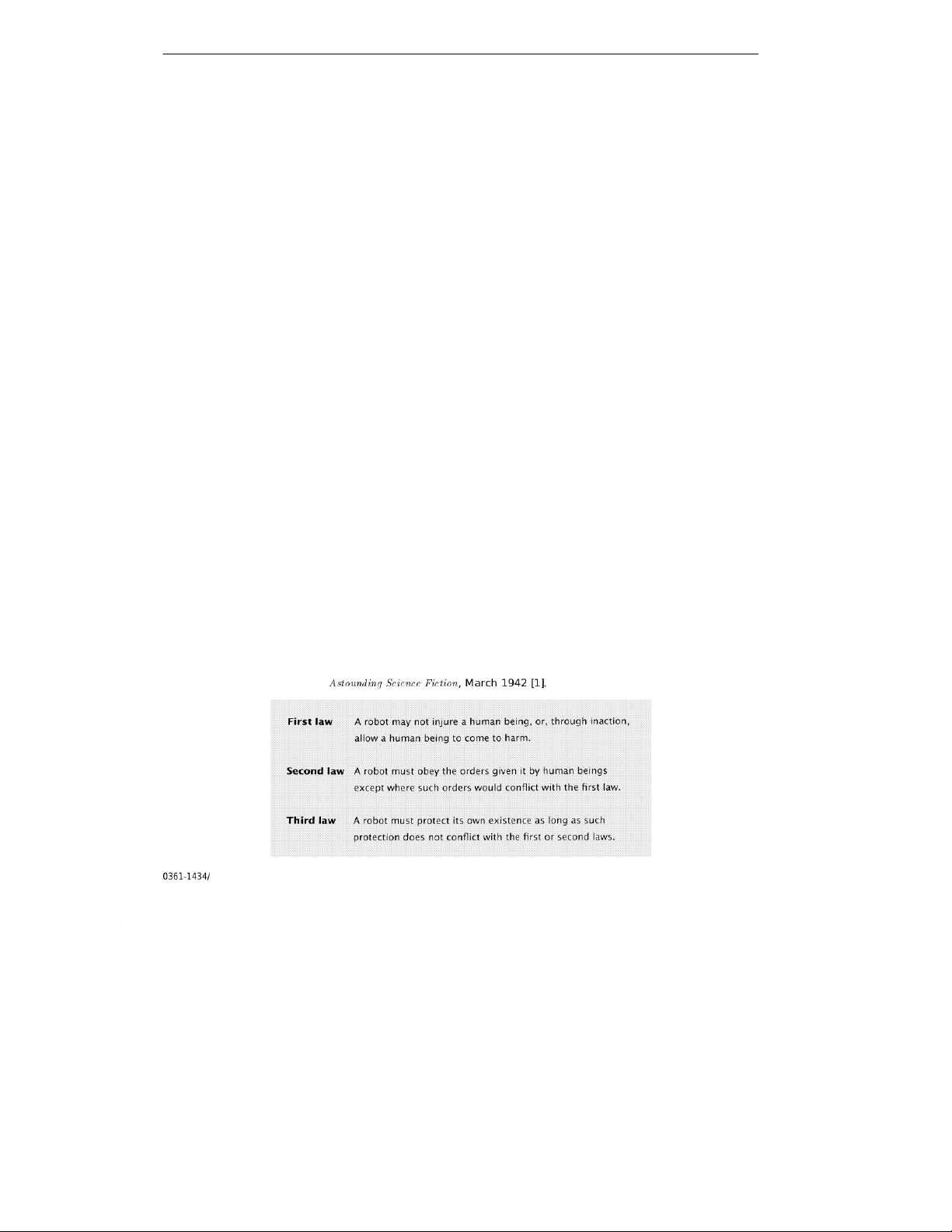
Fig. 1. Isaac Asimov’s famous “three laws of robotics” appeared explicitly for the first time in his short story
“Runaround,” first published in Astounding Science Fiction , March 1942 [1].
0361-1434/02$17.00 © 2002 IEEE 292
IEEE TRANSACTIONS ON PROFESSIONAL COMMUNICATION, VOL. 45, NO. 4, DECEMBER 2002
acclaimed guides such as Strunk
written document. It also suggests Effective communication can
and White’s Elements of Style [3] that we get our audience to thus be seen as an instance of
offer no less than 11 rules of usage understand something. While optimization under constraints
and 11 principles of composition,
understanding is usually central
(Fig. 3). We try to maximize, not
globally numbered from 1 to 22.
to communication, it is but one
what we write, say, or draw, but Such a succession of 22 items component of the process. To how much our audience gets out
not otherwise structured into a ensure understanding, we first
of our documents, presentations,
hierarchy is hard to comprehend
need to get our audience to pay and graphs, in quantity or in and hard to remember.
attention to our content. In turn,
quality—all this with a specific the audience’s understanding purpose in mind and under
This article, then, proposes three is usually but a means to an
specific constraints. Because of
fundamental “laws of professional end: we may want our audience these constraints, we cannot
communication,” on the model of to remember the content, to be
be perfect. We can, however, be
Asimov’s three laws of robotics. It
convinced of it, or, ultimately, to optimal.
motivates them on the basis of a
act or at least to be able to act on
simple premise, illustrates them the basis of it.
The notion of optimization under
with examples of oral, written, and
constraints applies, of course, graphical communication, and Similarly, a message can be to any professional activity. discusses their precedence and seen as differing from raw In a sense, its application to
their subordination to a zeroth law. information in that it presents professional communication is
intelligent added value, that is,
already self-evident. Even so, it is GETTING MESSAGES ACROSS something to understand about
the premise on the basis of which the information. A message
the three laws can be established
Communicating professionals and
interprets the information for a and motivated.
professional communicators alike
specific audience and for a specific
rather readily agree that effective
purpose. It conveys the “so what,” FIRST LAW:
communication is about “getting when the information merely ADAPT TO YOUR AUDIENCE
messages across.” This robust
conveys the “what.” It thus differs
starting point nevertheless leaves from information the way that
A straightforward embodiment of
us in need of two definitions: what
conclusions differ from results in
the idea of getting messages across
does “getting across” mean and,
a research paper. As an example,
is a Shannon-like communication
especially, what is a “message”?
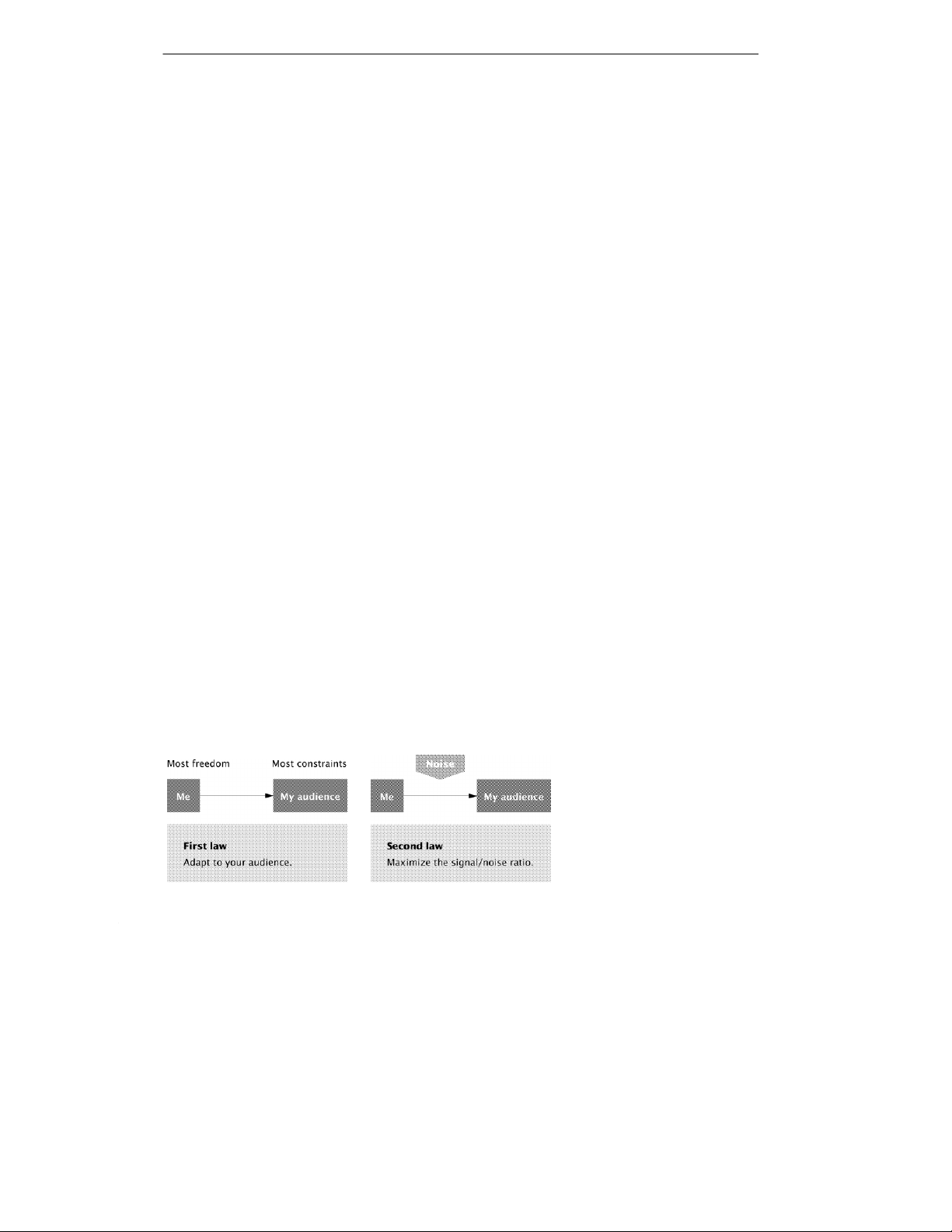
the statement “our sales dropped model (Fig. 4), displaying me,
by 15%” is information, perhaps my audience, and the channel
The expression “getting across” the result of a bookkeeping
(or possibly the coding) between
necessarily implies an audience,
consolidation exercise; it conveys
the two. The model, clearly, is
an “other person”—a statement no message. By contrast, the
simplistic; for example, it suggests
of the obvious that we too easily
conclusion “we should advertise one-way communication, with forget when this audience is
more” is a message: it clarifies no feedback from my audience
out of sight, as when we draft a what a sales drop of 15% means to me. Yet it satisfactorily
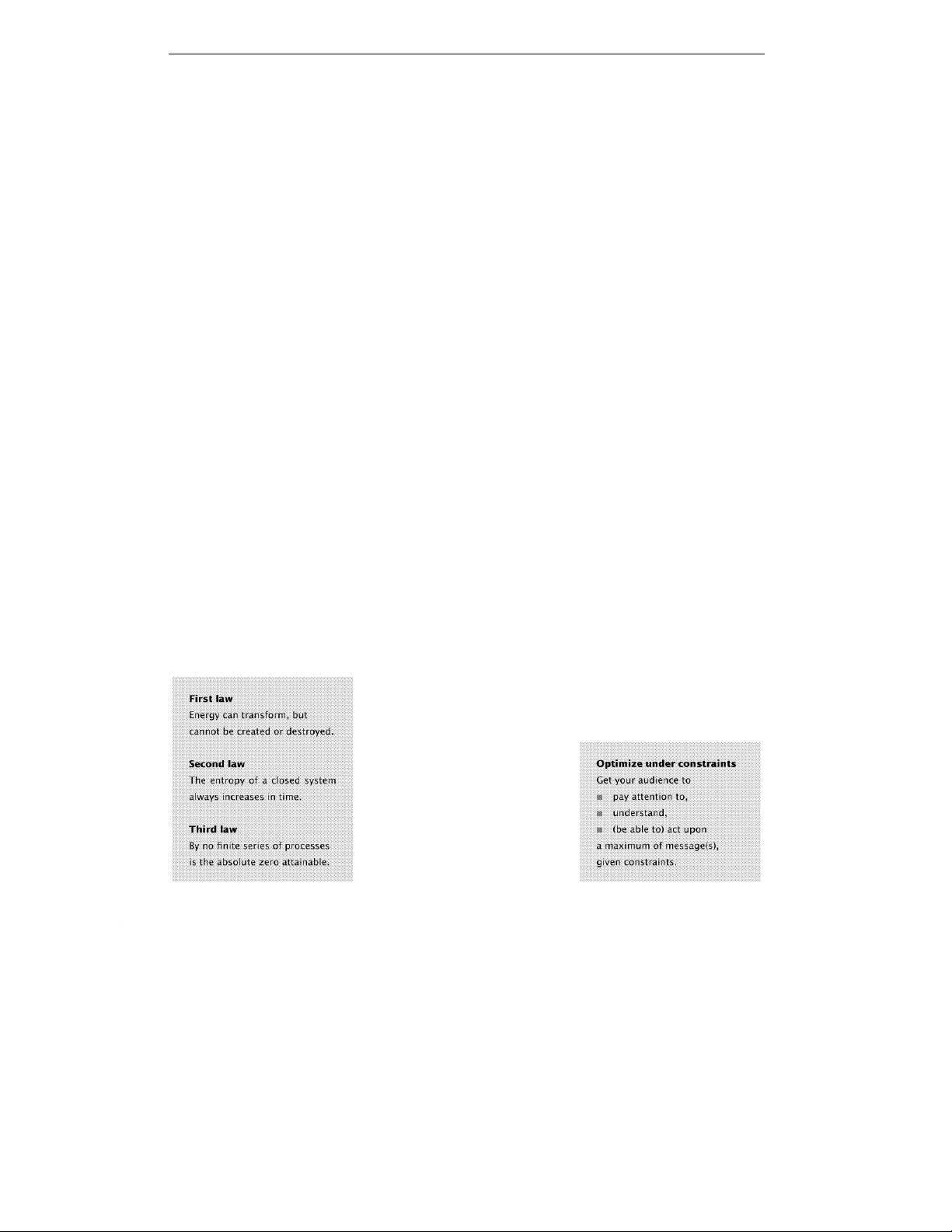
for the marketing department. For describes at least part of the Fig. 2. The three laws of
a different audience or purpose, communication process. In
thermodynamics can be expressed the same information can lead synchronous processes, such as
in many different ways; here is a to a different (if compatible)
public speaking, it matches formal simple one.
message, for example “we should
improve our product” to the design engineers. Fig. 3. The three laws of professional communication
Getting a simple message across
can be established on the basis of a
simple premise: optimization under
is hardly a challenge. Difficulties constraints.
begin when the messages to convey
are either numerous (quantity) or
complex (quality), especially when the situation moreover carries
numerous or severe constraints. Among such constraints are space (a 150-word limit on an
abstract), time (a 15-minute limit on an oral presentation), and
audience (background, motivation, language, culture, etc.).
IEEE TRANSACTIONS ON PROFESSIONAL COMMUNICATION, VOL. 45, NO. 4, DECEMBER 2002 293
presentations, when the speaker
not understand what I said, merely documents, it can come from the speaks and the audience does
repeating is unlikely to help: I text (inconsistent paragraphs, not interrupt. In asynchronous
must rephrase. As the saying goes, complicated sentences, faulty processes, such as written or
if I always do what I always did, I
spelling), from the page layout graphical communication, it
will always get what I always got.
(unclear structure, inconsistent describes the designing and typography, unusual fonts), or
drafting (or drawing) part, before
The first law may seem instinctive.
from the illustrations (too many any audience feedback. With Spontaneously, for example,
details on a schematics, too many
all its limitations, it still allows we do not address children
rules in a table, too many tick
one to derive useful principles the way we address adults: we marks on a graph). that engineers, among other
adapt. Yet failures to adapt are
professionals, can easily relate to. amazingly frequent: teachers
Noise can be a major impediment who stick to what they had to communication. In oral The first law of professional rehearsed—no matter whether presentations, numerous filler communication, ADAPT TO YOUR
students pay attention, no matter
words such as “um,” “er,” “you
AUDIENCE, is one of empowerment:
whether students understand, no
know,” “I mean,” or “like” can it states that I should take
matter whether students develop
take the audience’s attention
responsibility for the success of my skills—are simply not adapting to
entirely away from the messages:
acts of communication. Indeed, to their audience.
as students, many of us tallied our
optimize under constraints, I must
professors’ filler words rather than
identify what is and what is not SECOND LAW:MAXIMIZE THE
listening to the content of their
under my control, and, of course, SIGNAL-TO-NOISE RATIO
lectures. In written documents, concentrate on what is. As a
language mistakes can be just as
consequence, if I want to optimize
The model used so far (Fig. 4) is
distracting. Those of us who value
the communication, I am the one
ideal: it suggests that information
correct language may quickly find
who should adapt, simply because sent from one side reaches the themselves on the lookout for adapting to my audience is an
other side intact. In practice,
the next mistake rather than for
action under my control whereas
however, information falls victim the next message. In graphical
their adapting to me is not. Taken
to interferences, perturbations, communication (visual aids,
to an extreme, this first principle
atmospherics—in a word, noise
page layouts, graphs), noise can
implies that, if the audience does (Fig. 5).
shift the attention from content
not get the message, it is my fault to technology: when we start
(or, more positively, my problem), Noise is more than unwanted
wondering what software produced
not theirs. Perhaps more simply, if sound: It is anything that can the graph rather than what
I am the one who wants something distract the audience. In oral
experiment produced the data, we
from my audience (our premise),
presentations, it can come from
are probably missing the point.
then I should be the one making the room (audience members
the effort and not the other way coming in late or chatting
Noise can be fought in two ways: around. among themselves, a noisy air
It can be filtered out, or it can be
conditioner, mobile phones going
compensated for with an increased Adapting to my audience also off), from the visual support signal. If outside noise comes suggests that, if one strategy
(irrelevant clip art, dazzling colors, through an open window, I can does not work, I should try
hard-to-read fonts), or from the
filter it out by closing the window. another—again, an apparently speakers themselves (verbal
If residual noise comes through the
obvious statement that we so easily hesitations, a constantly fast rate,
closed window, I can speak louder.
lose sight of. If the audience did
meaningless gestures). In written
The ratio between signal and noise
indeed matters more than either Fig. 4. If I want to optimize
Fig. 5. To prevent losses, I must
signal or noise alone: up to a point,
what my audience gets out of the
filter out the noise and increase the communication, I must adapt to
we easily tolerate a continuous signal. them. background noise, and tend to
notice it only when it disappears,
so that the signal-to-noise ratio suddenly increases. The second law of professional communication, MAXIMIZE THE SIGNAL-TO-NOISE RATIO, is one
of contrast: it recognizes that, in communication, nothing is neutral. Audience members see 294
IEEE TRANSACTIONS ON PROFESSIONAL COMMUNICATION, VOL. 45, NO. 4, DECEMBER 2002
and hear everything, so everything
is suboptimal: if we are going to
identified, complement each other
matters: whatever does not help
“say” something several times, we for faster recognition.
us (signal) hinders us (noise), if
might as well say it in different
only by diluting the message. The
ways. Phrases such as “advance What constitutes a different
second law is thus close to Tufte’s
reservations” and “oval in shape”
channel or coding is partly a view well-known recommendation to are ineffectively redundant.
of the mind. Even though they are
maximize the data–ink ratio in
both verbal codings on the same graphs [4]. Opportunities for effective
paper medium, the text and the set redundancy abound. An oral
of headings of a document can be Clearly, the most satisfying
presentation can usefully include
viewed as independent channels,
approach to contrast is to reduce
a preview, to outline the upcoming
used for different purposes. When
or eliminate noise: breaking the
structure, and a review, to recap
looking for a specific part of the silence in a whisper is more
the main points before concluding. document, we indeed flip through
pleasant than covering the noise Moreover, messages can be
the pages and read the headings in a shout. Recognizing that both stated by the speaker and but not the text. When we have
nothing is neutral, we should thus
illustrated on slides. A written decided to read a document
question the relevance of anything
document can similarly include an
linearly, we read the text and skip
we plan to include: gestures in abstract or executive summary,
the headings, as evidenced by the an oral presentation, words in
telling the whole story again, yet
fact that proofreaders typically a written document, lines in a
with a different point of view or
overlook blatant typos in headings.
graphical display. To improve a
level of detail. It can also reveal
The situation is perhaps clearer
text or a graph, we may be better its structure through the page
still for incoming electronic mail:
advised to suppress, not add. By
layout, the set of headings, and
we often decide to read the body
removing every unnecessary drop
the preview paragraphs. A graph
text on the basis of the sender’s
of ink, we ensure that the audience can convey the same information
name, without reading the subject
pays attention to nothing but the through both shape, color, and
line; later, we may decide to file message. label, as in a stop sign [2].
or delete on the basis of subject
(and sender), without reading the T Effective redundancy works body again. Redundancy between HIRD LAW: U through both compensation and subject and body is therefore SE EFFECTIVE REDUNDANCY
collaboration. First, each channel essential. The second law is a prevention or coding gives the audience principle. It assumes that we a chance to get the message. Whereas redundancy is a
can anticipate noise and either Colorblind motorists may not
deliberate choice, the multiplicity
eliminate it or make the message
identify the color of a stop sign as of channels or codings is not. strong enough to withstand it.
red, but they can read the label Whether they want it or not,
Sometimes, however, noise cannot
“STOP.” If the sign is covered with speakers physically facing an
be predicted, and losses ensue.
snow or mud so the label is hidden, audience communicate through If an open window slams shut
motorists can still recognize it by what they say (the verbal
because of a gust of wind, audience shape. By offering several chances, component), how they say it (the
members may not hear what I say
effective redundancy helps not only vocal component), and everything
at the time; moreover, they may not compensate for the effects of noise, that they let the audience see about
listen to what I say immediately but also address inhomogeneous
themselves (the visual component).
afterwards, for their attention is
audiences. Second, all channels or
If any of these components escapes
elsewhere: for example, they might
codings work together in synergy:
their control, it can carry noise or,
try to recall if they have left any
color, shape, and label, when all
worse, convey messages that work window open at home.
against their intent—an instance
Fig. 6. To compensate for losses, I of cognitive dissonance. The third law of professional
must be redundant, within or across communication, USE EFFECTIVE channels. R ZEROTH LAW: EDUNDANCY, compensates for
the losses resulting from noise. HAVE A PURPOSE In a sense, it recognizes that The preceding three laws of
“saying things once” is usually
professional communication, like
not enough. “Saying” things
Asimov’s three laws of robotics, several times, moreover, can have an order or precedence. suggest both repetition within
Strictly speaking, the second law one channel and duplication should state to maximize the across channels (Fig. 6). Mere
signal-to-noise ratio, except where
repetition or duplication, however,
the resulting levels would conflict
IEEE TRANSACTIONS ON PROFESSIONAL COMMUNICATION, VOL. 45, NO. 4, DECEMBER 2002 295
with the first law. For example,
Applying all three laws requires
and volume of the voice “to keep a car radio playing pleasantly the motivation to optimize the
the audience interested.” I find loud on the freeway may seem communication, and there can
this motivation unconvincing, as
unbearably loud at a stop sign,
be no motivation without a clear I do not want my audiences to when the noise level is much purpose. be interested in my voice, but
lower. The signal-to-noise ratio is in my messages. The three laws
now so high that it is no longer would recommend to vary the
adapted. In a sense, it introduces CONCLUSION
tone, rate, and volume of the voice,
a new form of noise (saturation),
too (so they carry a signal), but
so perhaps the explicit reference The three (or four) laws of
according to content (for effective
to the first law is unnecessary. professional communication
redundancy)—stressing important
Similarly, the third law should
successfully underpin any of my
parts or slowing down for complex
state to use effective redundancy, training programs on speaking, ones. Same advice, different
as long as such redundancy does writing, or graphing. Because motivation.
not conflict with the first or second of their immediate analogy with
law. As a counterexample, a slide electronic transmissions, they
displaying text conflicts with what
obviously appeal to participants The three laws have served me the speaker is saying, for the with a technical background.
well for many years, and I cannot audience can only process one
Interestingly, they seem to work but hope that they serve you
stream of text at a time: it is noise equally well with nontechnical
well, too. Still, I do not doubt
for those who want to listen (or,
audiences. I believe the reason for
that professional communication
conversely, the speaker is noise for this success is that they constitute can be usefully approached by
those who want to read). Of course, a simple, objective, logical basis:
alternate sets of laws, the same such redundancy would clearly
I have not met anyone so far who way that a given mathematical
be ineffective, so, here again, an
disagreed with them. By contrast, I object can be described equally
explicit reference to higher order
know many (including myself) who
accurately in different coordinate laws seems superfluous.
resist recommendations presented
systems. Effective laws, no doubt,
as dogmatic, such as “write short
have characteristics in common:
sentences” (why?), even when such they are simple; they are few; they
advice is claimed to be supported Interestingly, most systems of are self-sufficient. by empirical research.
laws, such as the laws of robotics or the laws of thermodynamics,
eventually add a “zeroth law,” The three laws, fortunately, ACKNOWLEDGMENT
capturing a principle so obvious are rarely at odds with The author would like to thank
that it had long been overlooked
mainstream advice on professional Alan Manning for encouraging
(Fig. 7). The premise to our laws of communication. Often, though,
him to write this article, following professional communication can
they motivate the advice differently. a presentation he gave at
be turned into a zeroth law, too: As an example, I often hear the International Professional define your purpose or, almost public-speaking consultants Communication Conference in equivalently, have messages.
recommend to vary the tone, rate, Santa Fe, NM, in October 2001.
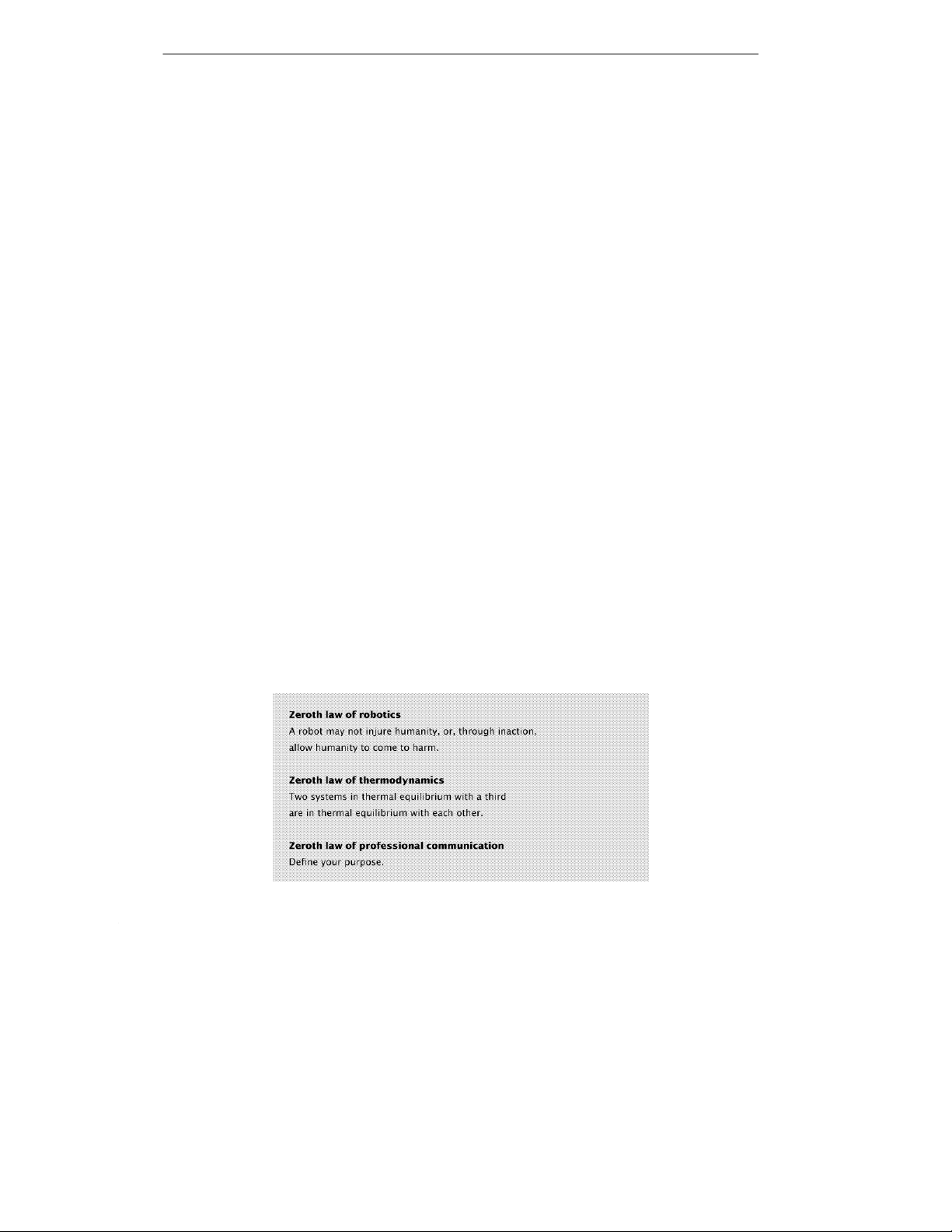
Fig. 7. Systems of laws often evolve a “zeroth law,” capturing an obvious or implicit premise. 296
IEEE TRANSACTIONS ON PROFESSIONAL COMMUNICATION, VOL. 45, NO. 4, DECEMBER 2002 REFERENCES
[1] I. Asimov, The Complete Robot. London, U.K.: HarperCollins, 1983.
[2] J.-L. Doumont, “Magical numbers: The seven-plus-or-minus-two
myth,” IEEE Trans. Prof. Commun., vol. 45, no. 2, pp. 123–127, 2002.
[3] W. Strunk Jr. and E. B. White, The Elements of Style, 3rd ed. New York: MacMillan, 1979.
[4] E. R. Tufte, The Visual Display of Quantitative Information. Cheshire, CT: Graphics, 1983.
Jean-luc Doumont (S’90–M’93–SM’00) teaches and provides advice on professional
speaking, writing, and graphing. He also trains trainers and facilitates any process
that requires structuring and effective communication. For over 15 years, he
has helped audiences of all ages, backgrounds, and nationalities structure their
thoughts and construct their communication. He graduated as an engineer from
the Université Catholique de Louvain and obtained a Ph.D. in applied physics from Stanford University.
Tài liệu liên quan:
-

Bài giảng Tọa đàm Kỹ năng thực tập hiệu quả môn Thực tập cơ bản | Đại học Bách Khoa Hà Nội
10 5 -
Báo cáo Thực Tập Cơ Bản: Linh Kiện và IC Trong Mạch Điện | Thực tập cơ bản | Trường Đại học Bách khoa Hà Nội
47 24 -

Báo cáo Thực Tập Cơ Bản: Thiết Kế Mạch Điện Tử | Thực tập cơ bản | Trường Đại học Bách khoa Hà Nội
44 22 -
Báo cáo về Chủ nghĩa Xã hội Khoa học và Vai trò của C. Mác - Ph. Ăngghen | Thực tập cơ bản | Trường Đại học Bách khoa Hà Nội
44 22 -
Báo cáo Thực Tập Cơ Bản: Thiết Kế Mạch Đếm Thuận 0-9 Bằng Altium | Thực tập cơ bản | Trường Đại học Bách khoa Hà Nội
44 22