Bài giảng Cell signaling môn Sinh học tế bào | Đại học Bách Khoa Hà Nội
Bài giảng Cell signaling môn Sinh học tế bào | Đại học Bách Khoa Hà Nội. Tài liệu được sưu tầm giúp bạn tham khảo, ôn tập và đạt kết quả cao. Mời bạn đọc đón xem.
Môn: Sinh học tế bào 19 tài liệu
Trường: Đại học Bách Khoa Hà Nội 5.8 K tài liệu
Tác giả:






Preview text:
Cell Signaling Tran Thi Thuy Linh, PhD. Content
• GENERAL PRINCIPLES OF CELL SIGNALING • G-PROTEIN-COUPLED
• ION-CHANNEL-COUPLED RECEPTORS
• ENZYME-COUPLED RECEPTORS ÔN TẬP
Thụ thể acetylcholine tại khớp nối thần kinh cơ
được phân loại là gì?
A. Kênh cation cổng acetylcholine
B. Kênh Na+ cổng điện thế
C. Kênh Ca2+ cổng điện thế
D. Kênh anion cổng acetylcholine
GENERAL PRINCIPLES OF CELL SIGNALING
Signal transduction of cell signaling Signal transduction
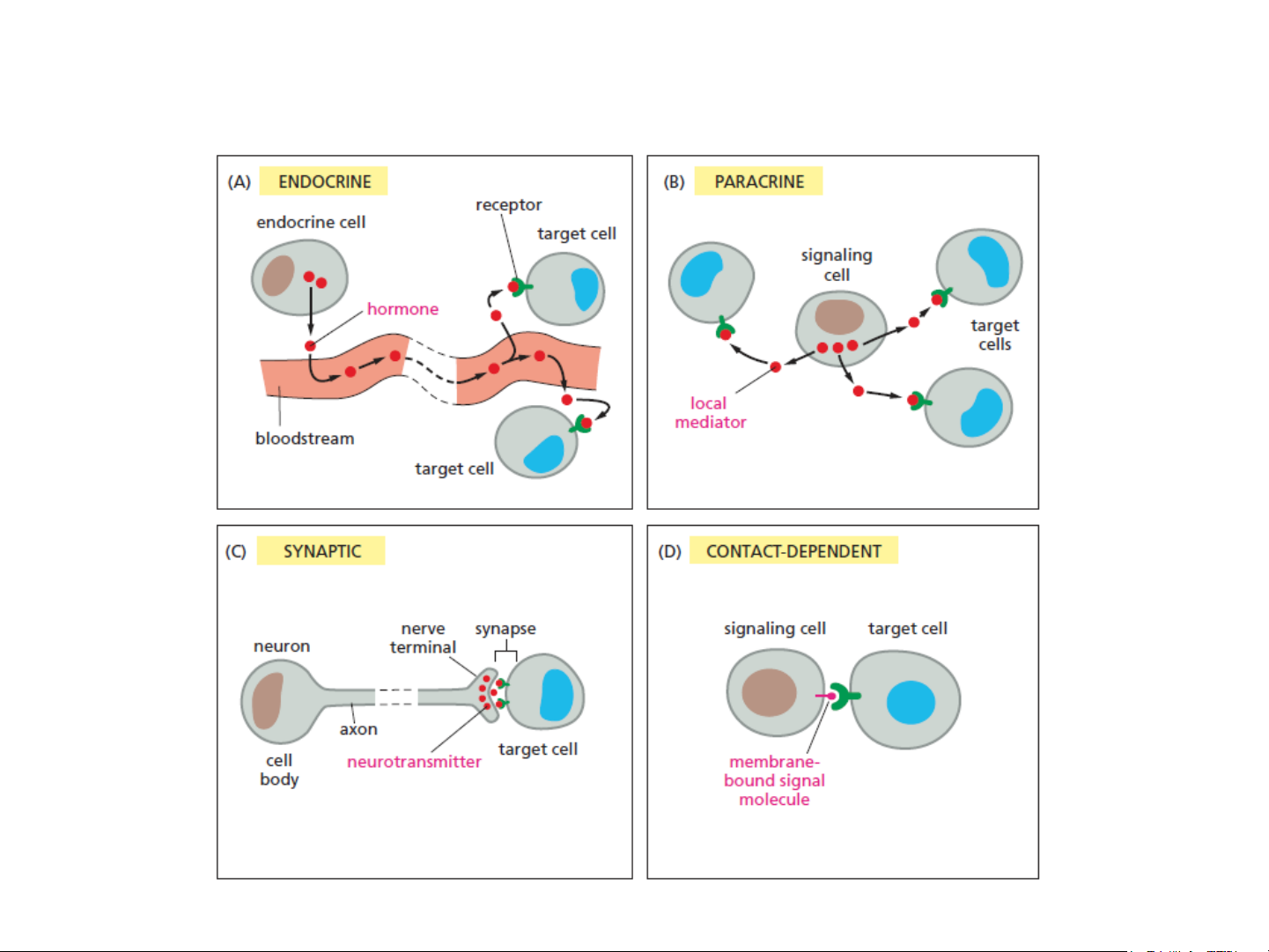
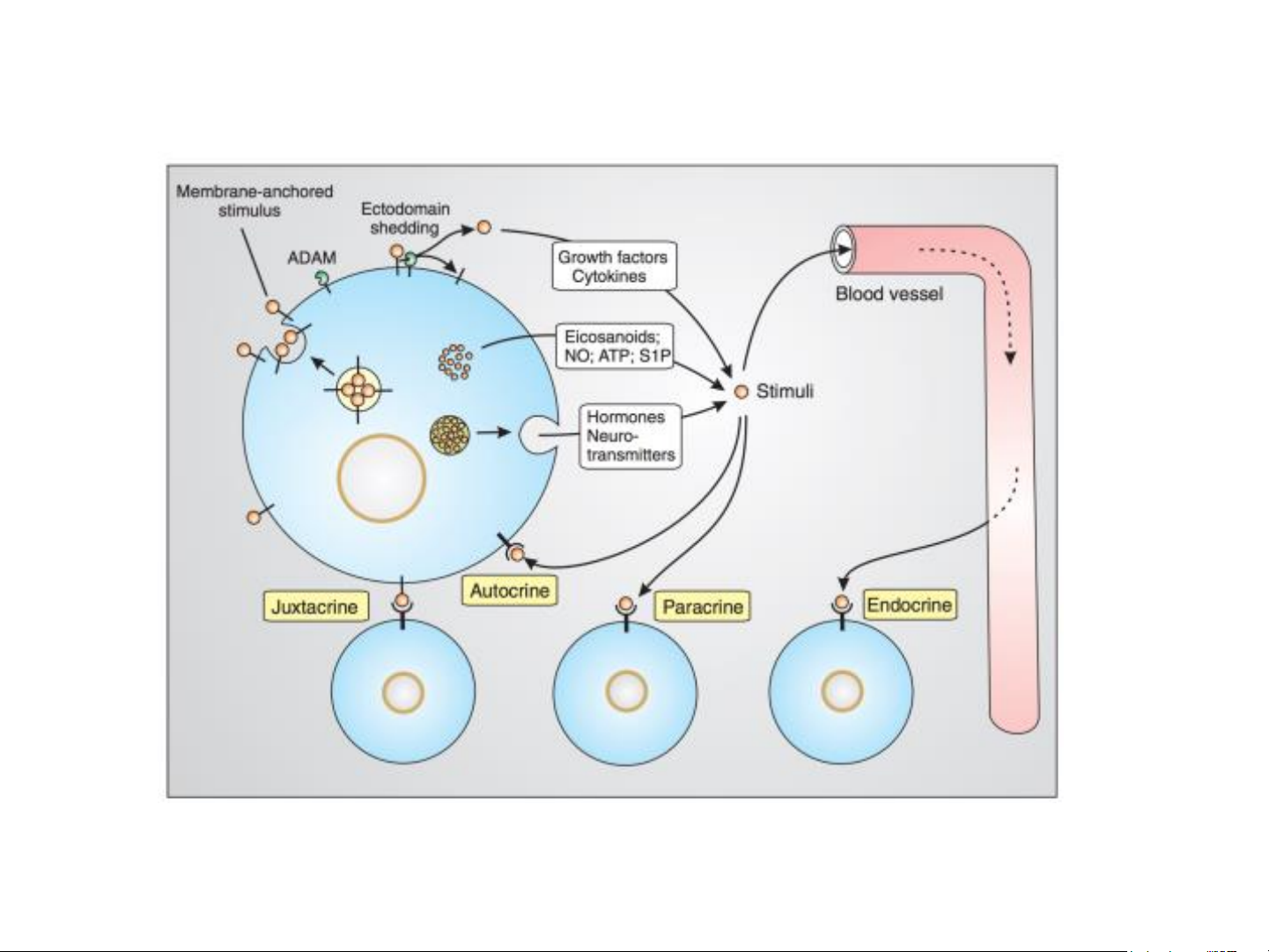
Signals can act over a long or short range
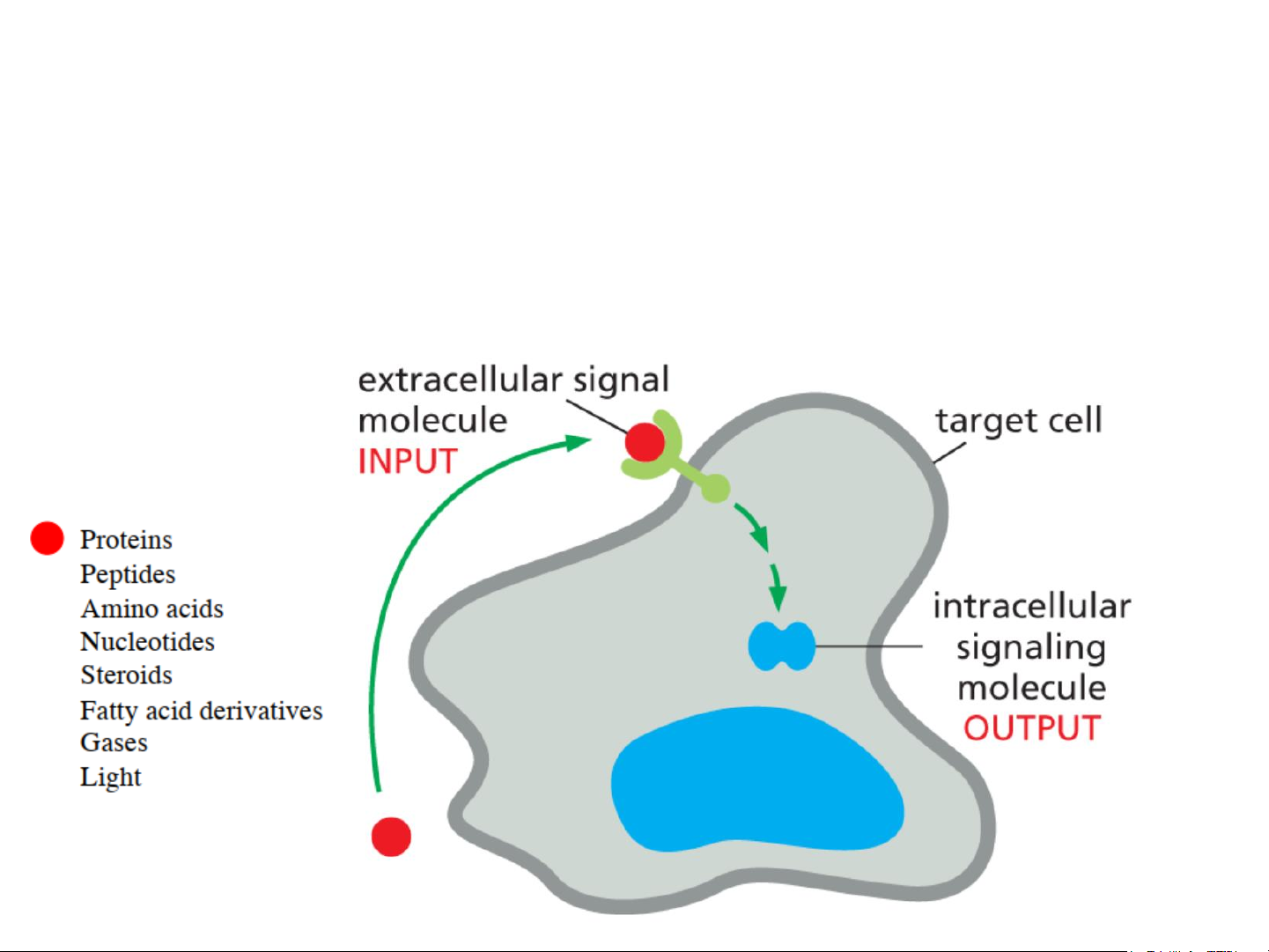
The signal molecules can be proteins, peptides, amino acids, nucleotides, steroids, fatty acid derivatives, or even dissolved gases
Signals can act over a long or short range
Animal cells use extracellular signal molecules to communicate with one another in various ways.
A cell’s response to a signal can be fast or slow
GENERAL PRINCIPLES OF CELL SIGNALING
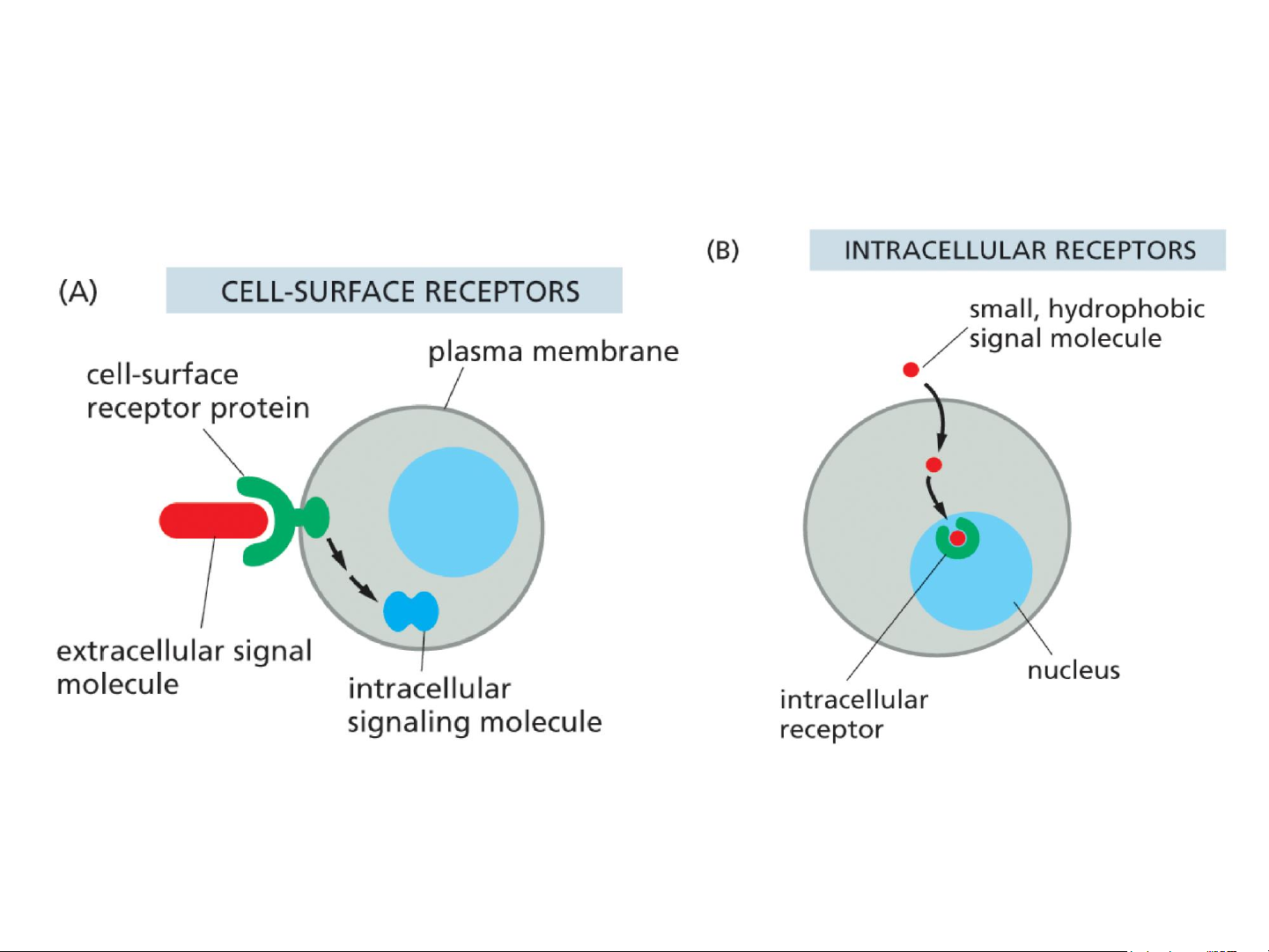
Extracellular signal molecules can be divided into two major classes:
• Molecules that are too large or too hydrophilic to cross
the plasma membrane of the target cell. These signal
molecules rely on receptors on the surface of the target
cell to relay their message across the plasma membrane.
Example: adrenaline, acetylcholine, prolactin…
• Molecules that are small enough or hydrophobic
enough to pass through the plasma membrane and into
the cytosol of the target cell, where they bind to
intracellular receptor proteins. Example: thyroxine, cortisol, estradiol…
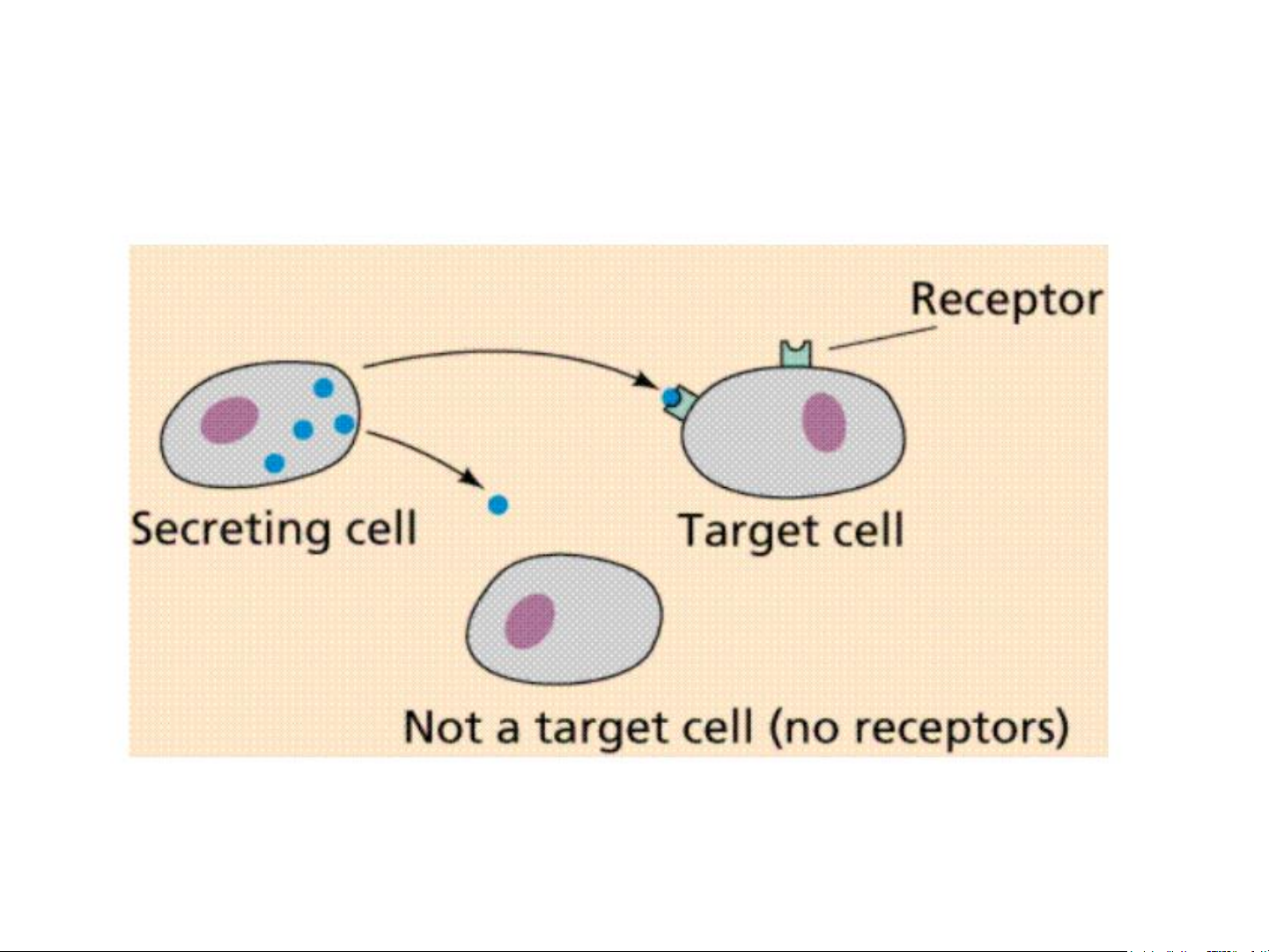
Extracellular signals act through specific
receptors to change cell behavior
The signal molecules can be proteins, peptides, amino acids, nucleotides, steroids, fatty acid derivatives, or even dissolved gases
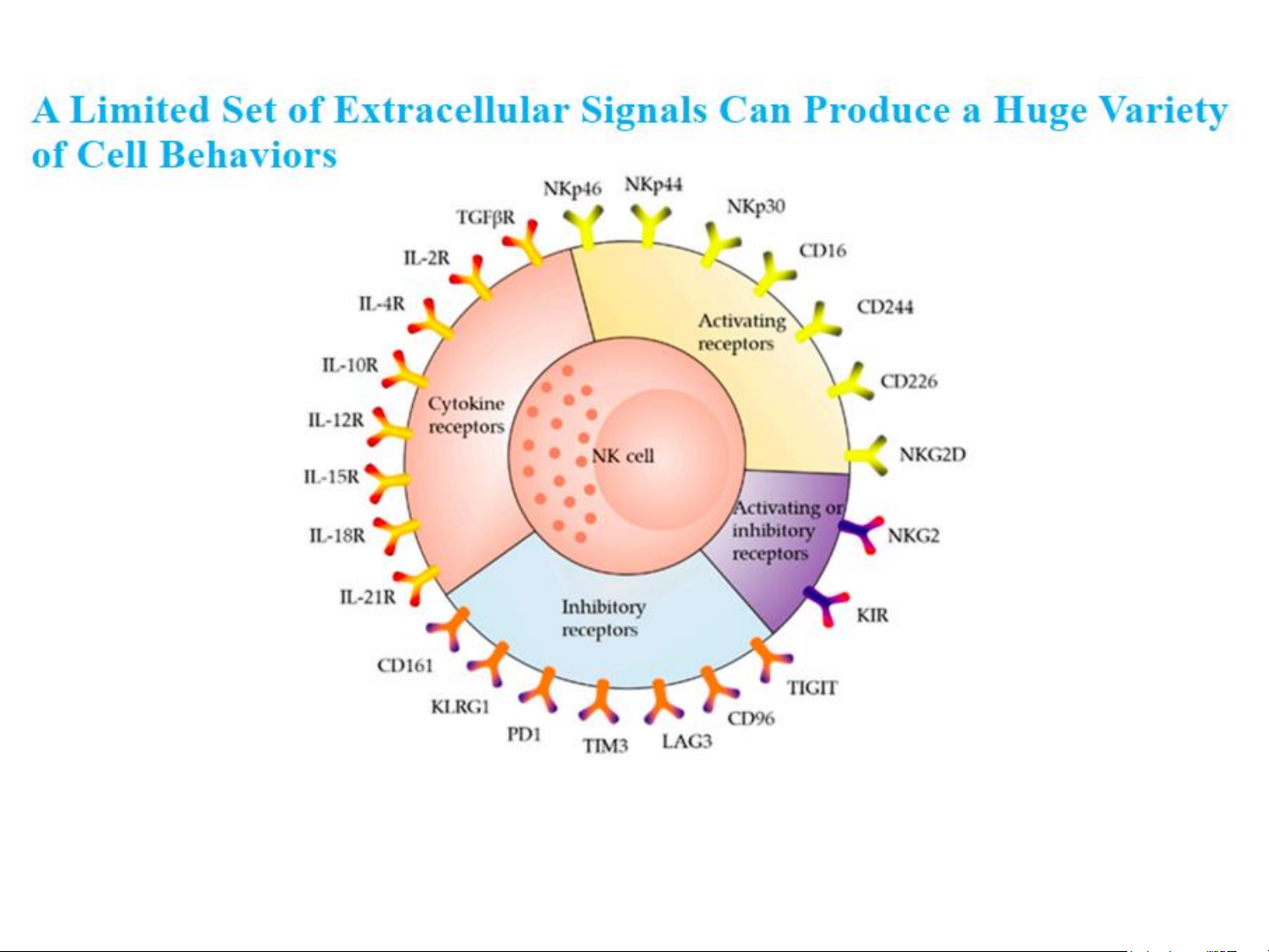
Major receptors expressed on the surface of natural killer (NK) cells
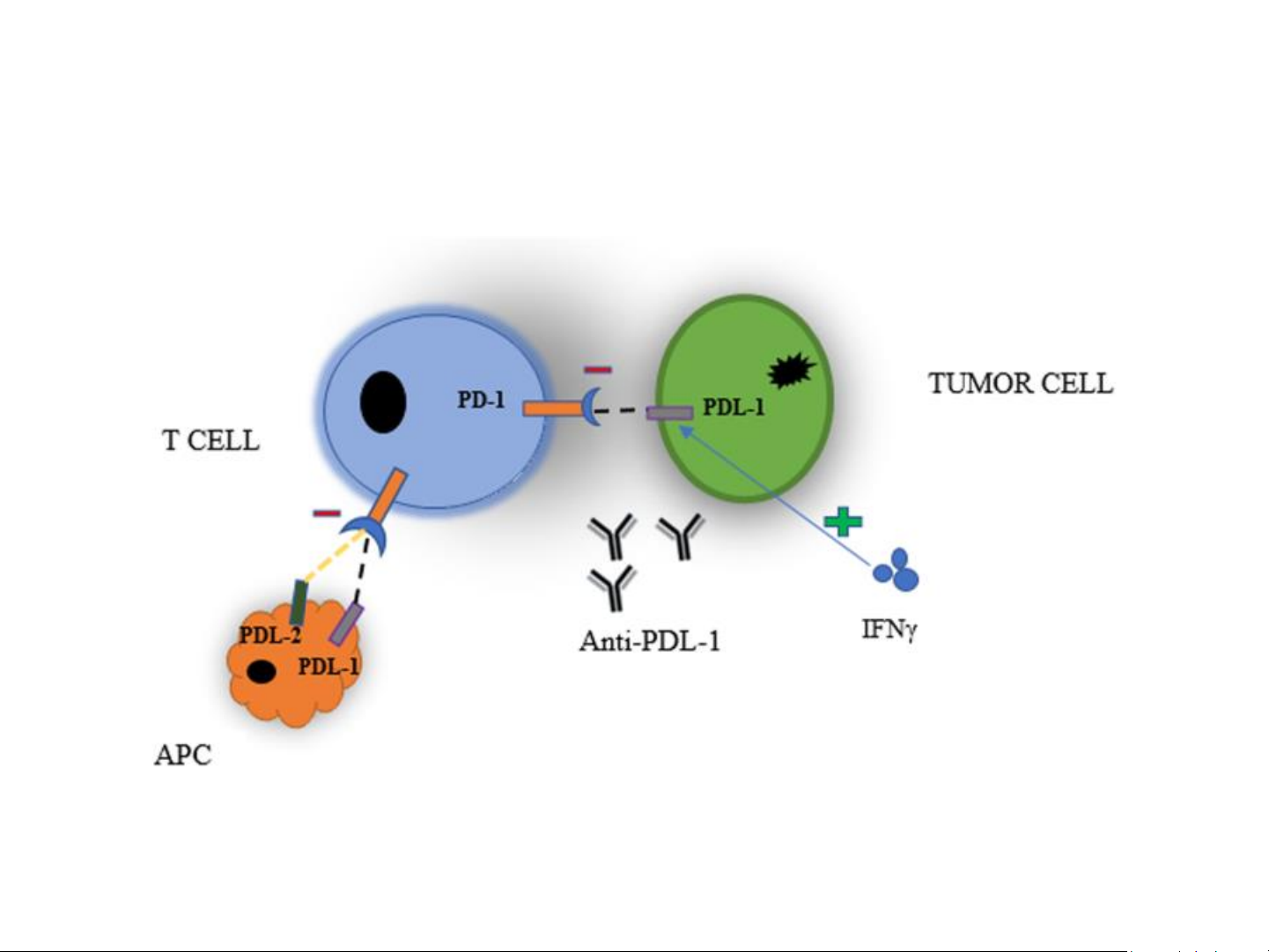
doi.org/10.3390/ijms2002031 Keytruda- Pembrolizumab
Akinleye, A., Rasool, Z. Immune checkpoint inhibitors of PD-L1 as cancer therapeutics. J
Hematol Oncol 12, 92 (2019). https://doi.org/10.1186/s13045-019-0779-5
A Limited Set of Extracellular Signals Can Produce a
Huge Variety of Cell Behaviors Extracellular signal molecules can change the
behavior of a target cell in a large variety of ways: altering its shape, movement, metabolism, gene expression, or some combination of these.
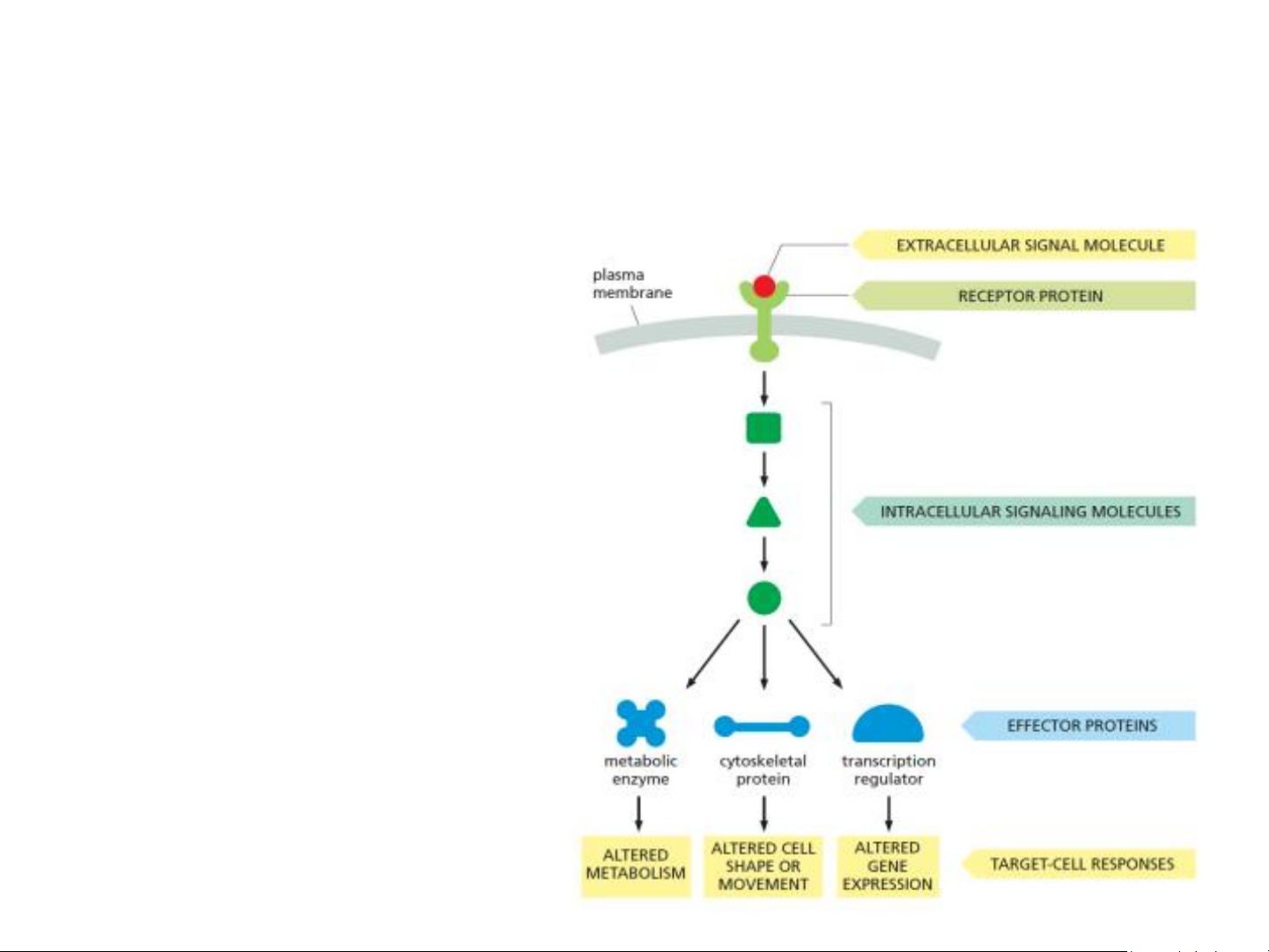
Cell-surface receptors relay extracellular signals
via intracellular signaling pathways
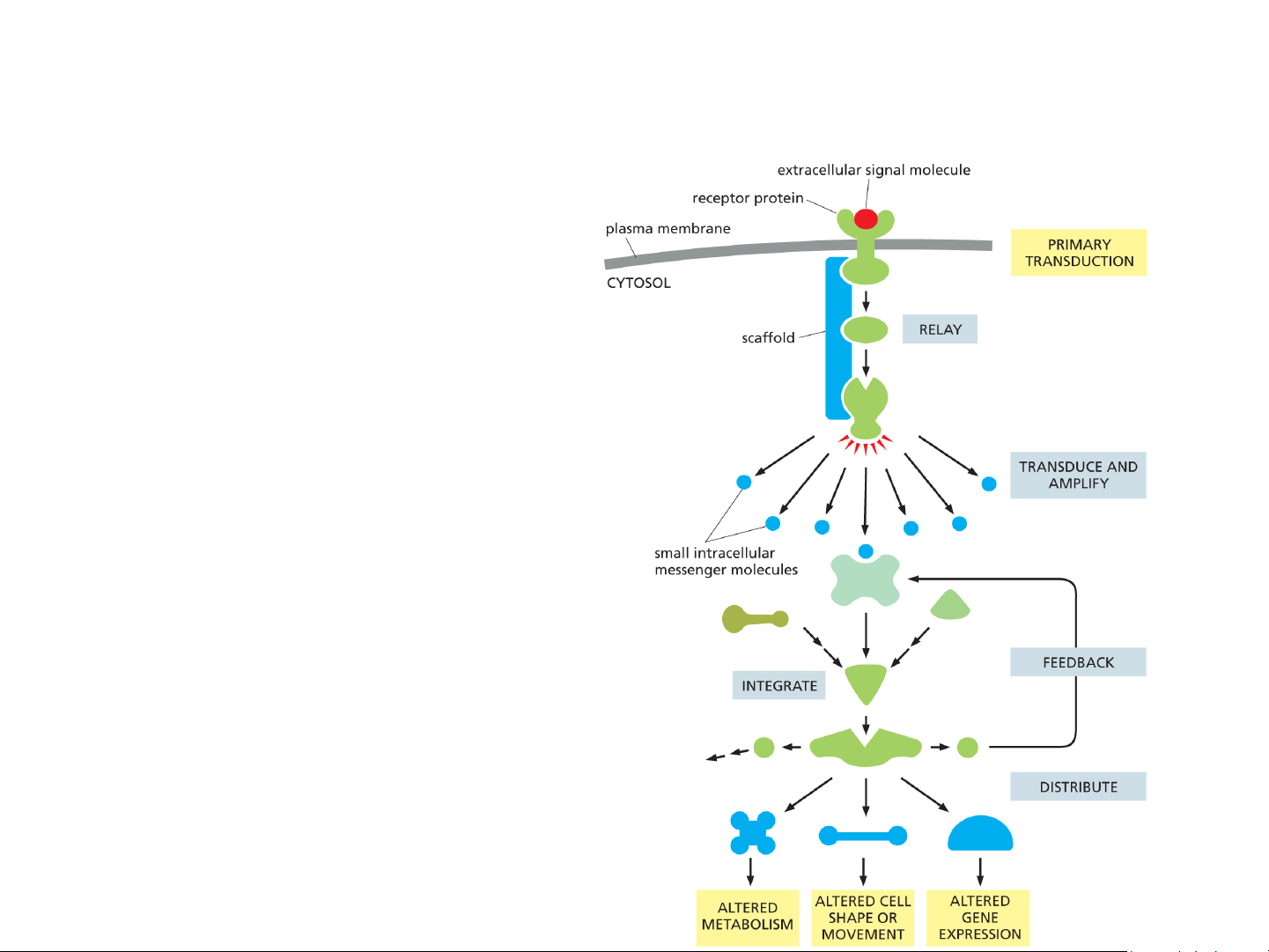
• Relay the signal onward and thereby help spread it through the cell • Amplify the signal received, making it stronger
• Integrate signal before relaying a signal onward
• Distribute the signal to more than one effector protein
• Feedback regulating the activity of components upstream
Cell-surface receptors relay extracellular signals
via intracellular signaling pathways
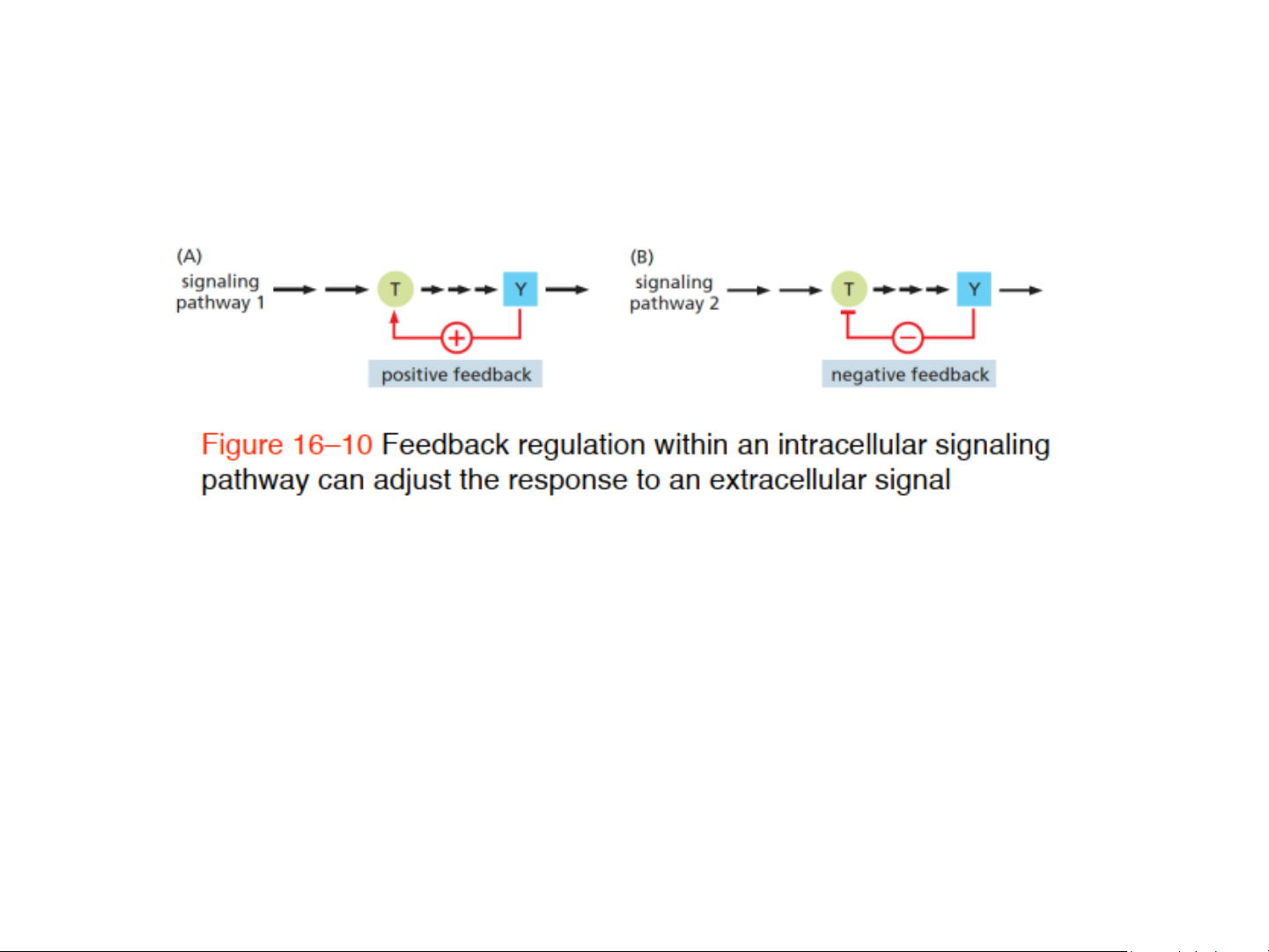
Feedback regulation can occur anywhere in the
signaling pathway and can either boost or weaken the response to the signal.
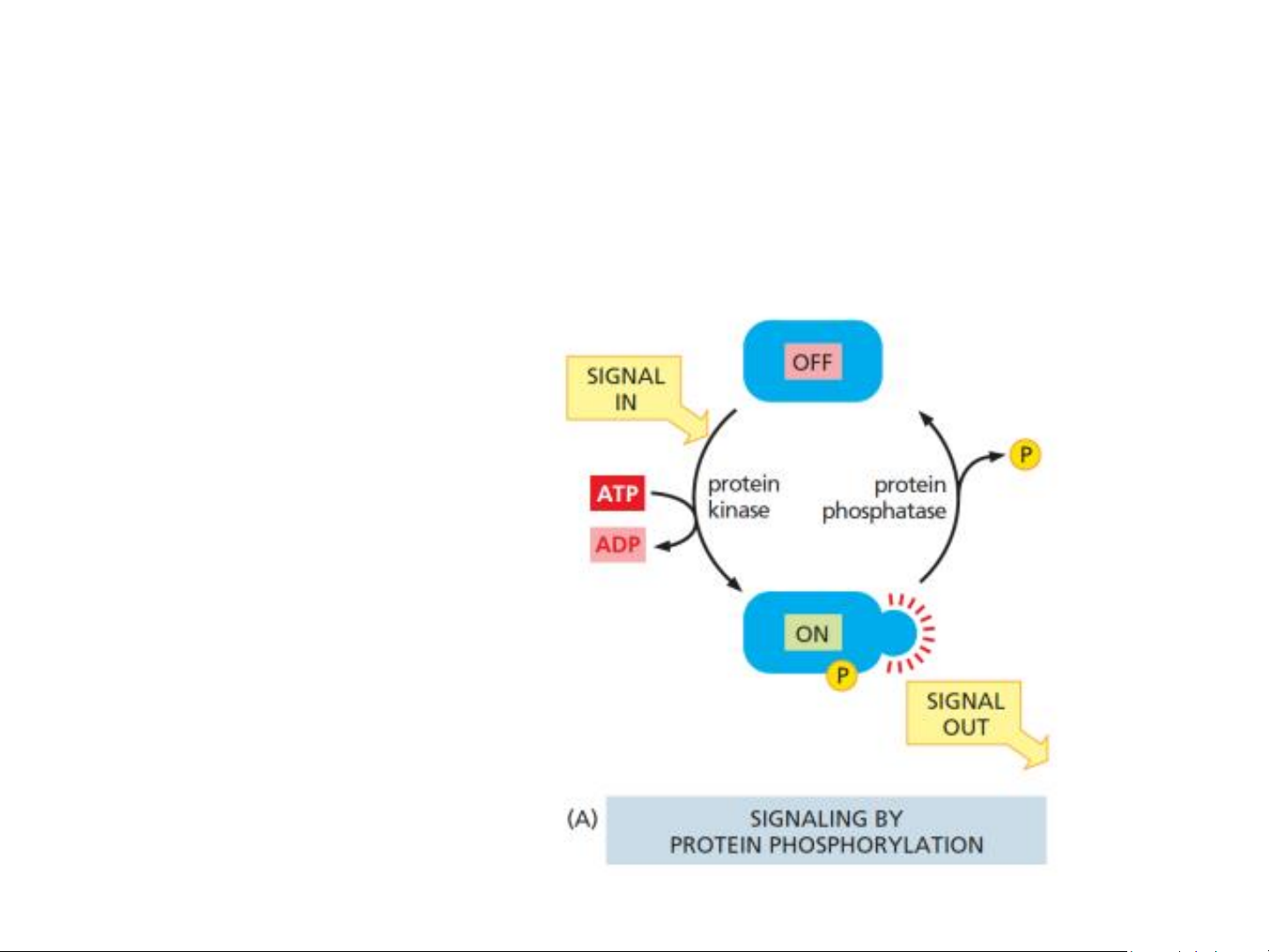
Some Intracellular Signaling Proteins Act as Molecular Switches
Proteins that are activated or inactivated by phosphorylation
Some Intracellular Signaling Proteins Act as Molecular Switches
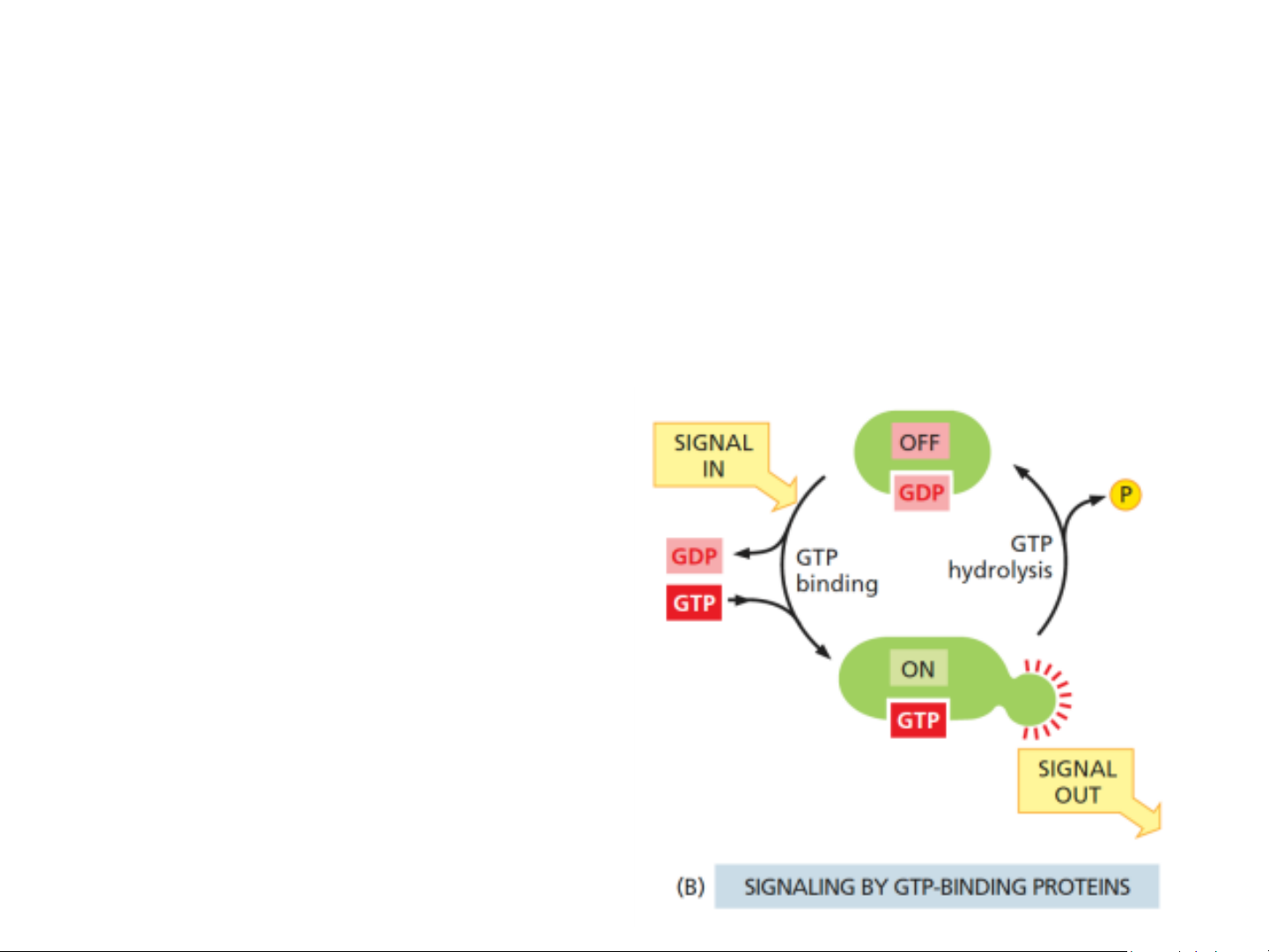
Proteins involved in intracellular signaling pathways are GTP-binding proteins.
These transition between an active and an inactive state depending on
whether they have GTP or GDP bound to them, respectively .
Extracellular signals act through specific
receptors to change cell behavior
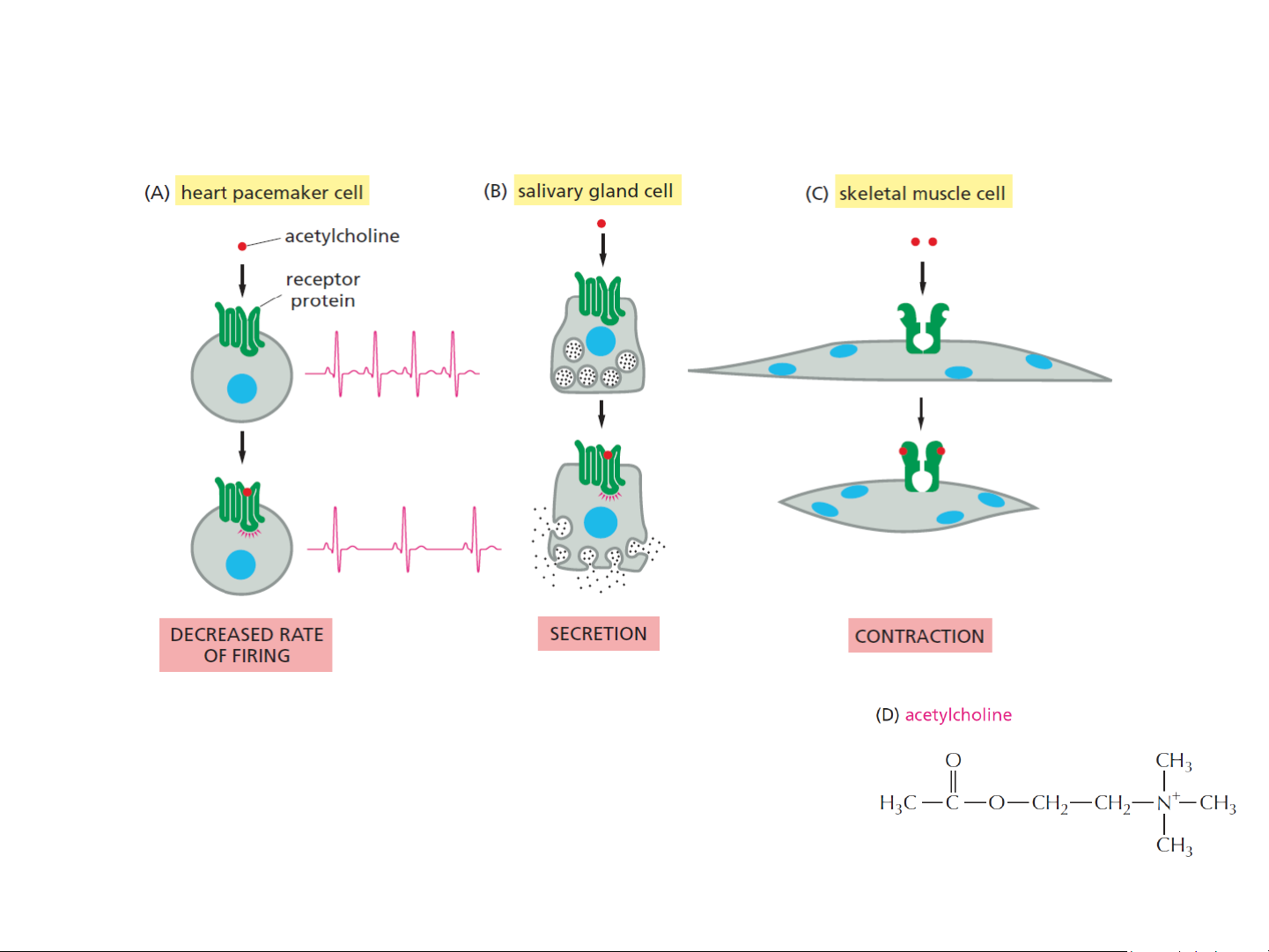
Different types of cells respond to the same signal in different
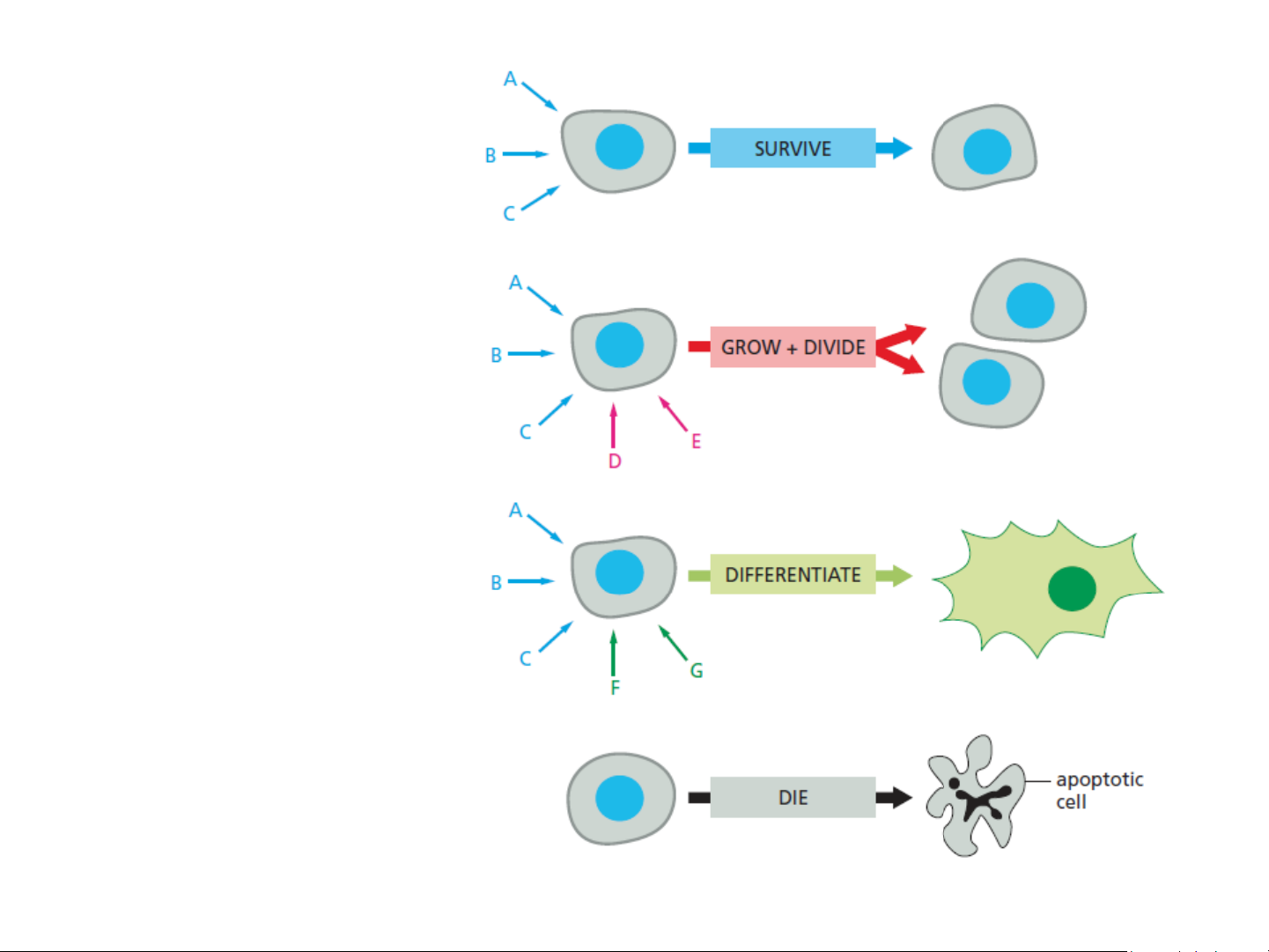
ways: receptor + intracellular effector protein An animal cell depends on multiple extracellular signals
In the absence of any signals, most
animal cells are programmed to kill themselves
Tài liệu liên quan:
-
bài giảng giải tích 1 trường bác khoa
18 9 -
N Ahmad - Clinical and etiological profile of unprovoked thrombosis in young patients admitted at a
17 9 -
Bài giảng về Sự sinh sản của tế bào Eukaryote môn Sinh học tế bào | Đại học Bách Khoa Hà Nội
38 19 -
The cell division and cell death môn Sinh học tế bào | Đại học Bách Khoa Hà Nội
49 25 -
Bài giảng Tổng quan về tế bào môn Sinh học tế bào | Đại học Bách Khoa Hà Nội
41 21