Bài giảng Chapter 6: Proteins and their synthesis môn Sinh học phân tử | Đại học Huế
Bài giảng Chapter 6: Proteins and their synthesis môn Sinh học phân tử | Đại học Huế. Tài liệu được sưu tầm giúp bạn tham khảo, ôn tập và đạt kết quả cao. Mời bạn đọc đón xem.
Môn: Sinh học phân tử ( DHS) 9 tài liệu
Trường: Đại học Huế 411 tài liệu
Tác giả:









Preview text:
MOLECULAR BIOLOGY Chapter 6 PROTEINS AND THEIR SYNTHESIS Le Huyen Ai Thuy, Prof. PhD.
Lao Duc Thuan, Assoc. Prof. PhD. Truong Kim Phuong, PhD.
*Corresponding: thuan.ld@ou.edu.vn
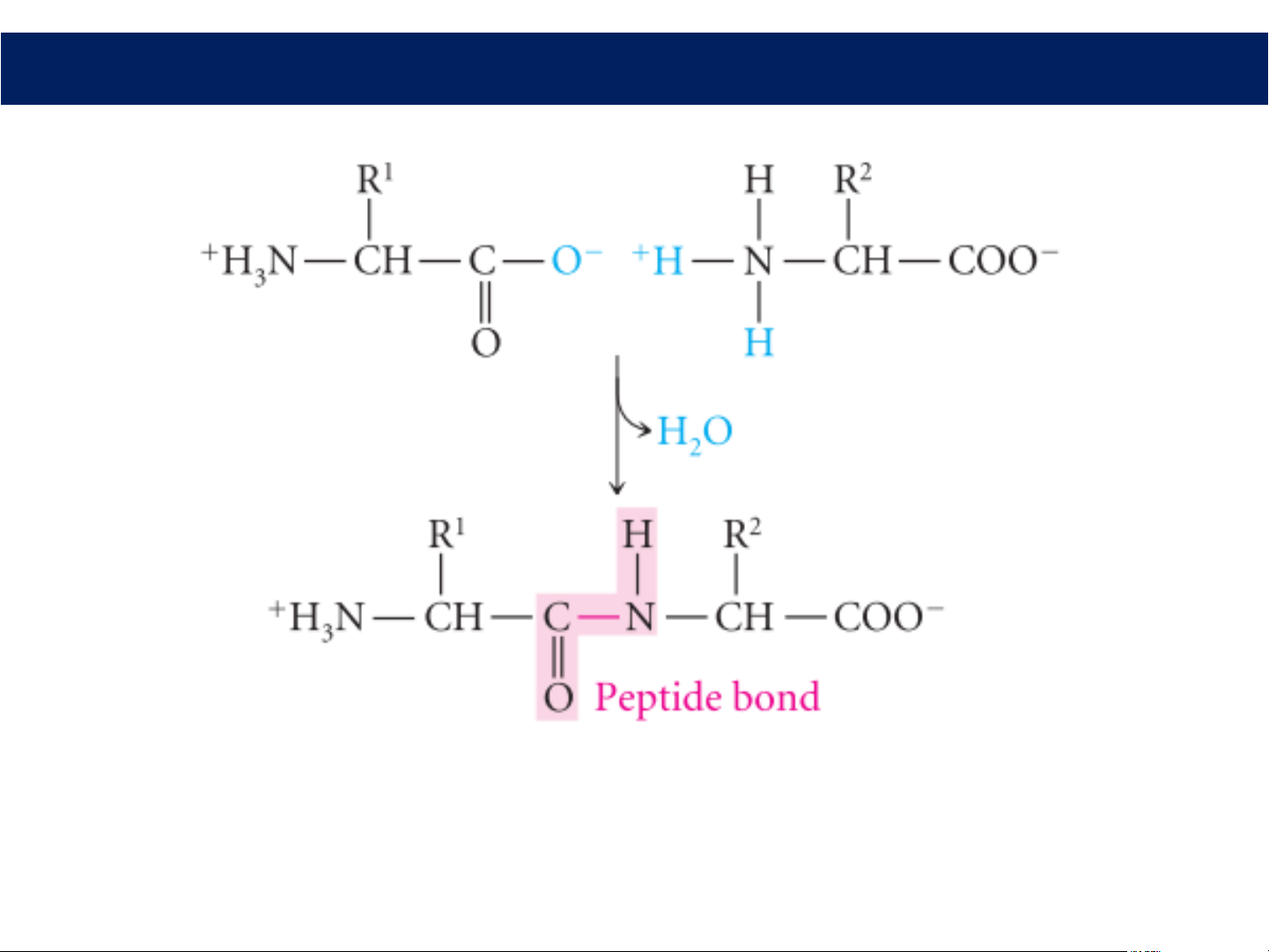
Overview: Protein structure
Amino acids are joined together by peptide bonds
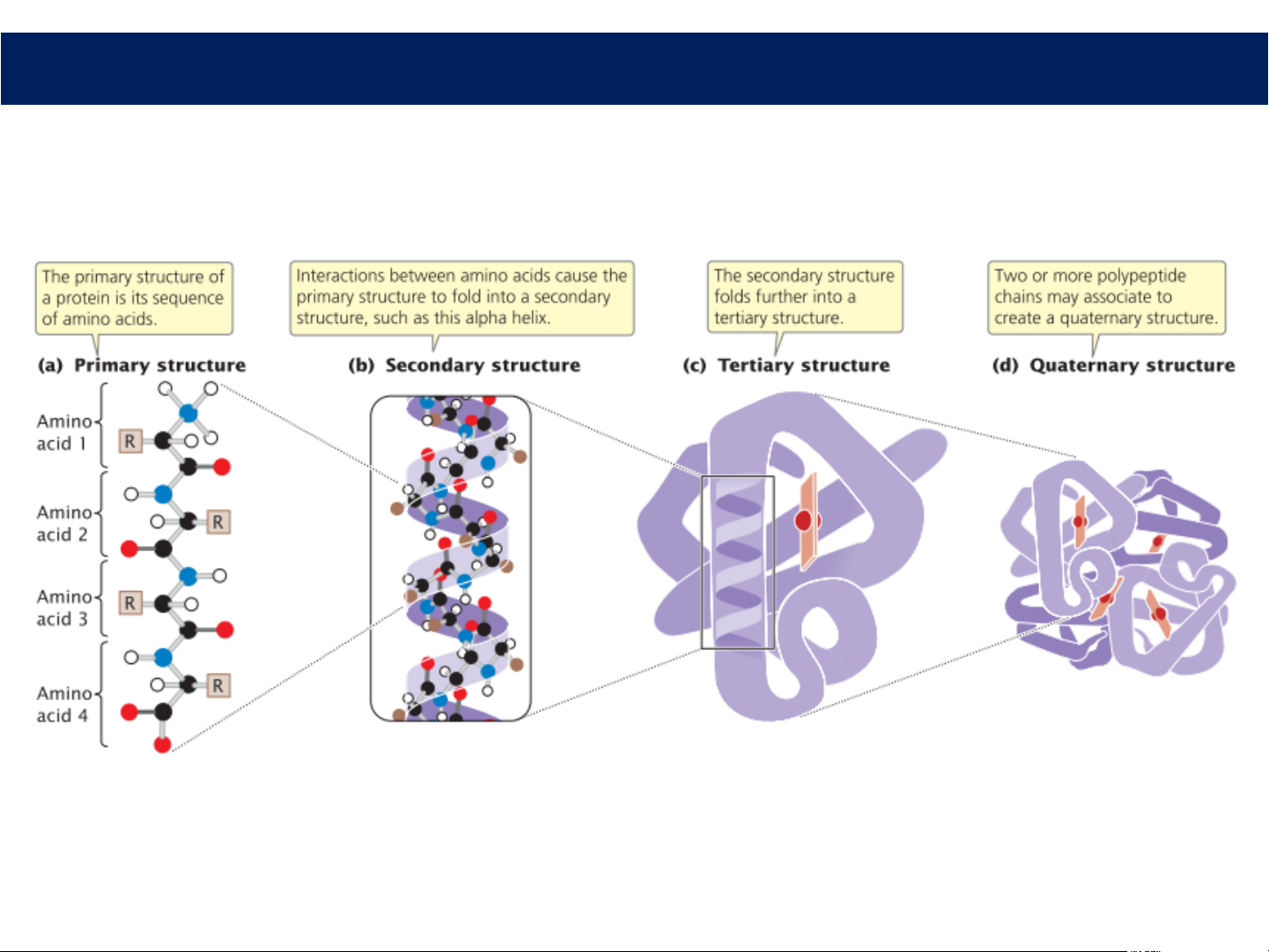
Overview: Protein structure (Cont.)
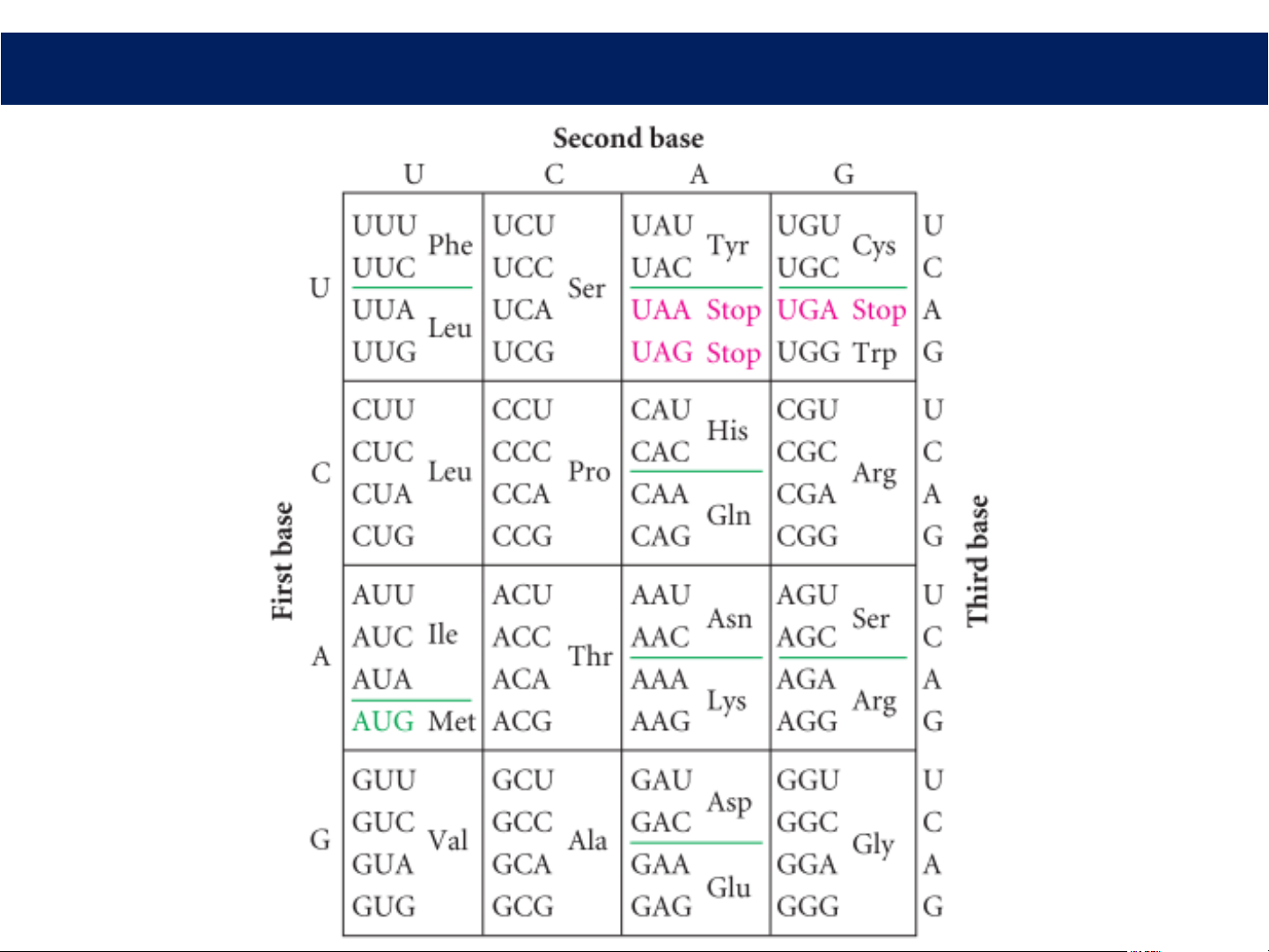
Levels of protein structural organization The genetic code
Characteristics of genetic code:
- Triplet code: three-letter words are used to encode an amino acid.
- Degenerate code: more than one codon could code for the same amino acid.
- Universal code: almost all organisms use the same code.
- Non-overlapping code: reads as a series of three
letters without spaces, punctuation of overlap.
The genetic code (Cont.)
Some exceptions to the universal genetic code
Known deviations from the universal Genetic code
Alterations in the Standard Genetic code in Mitochondria
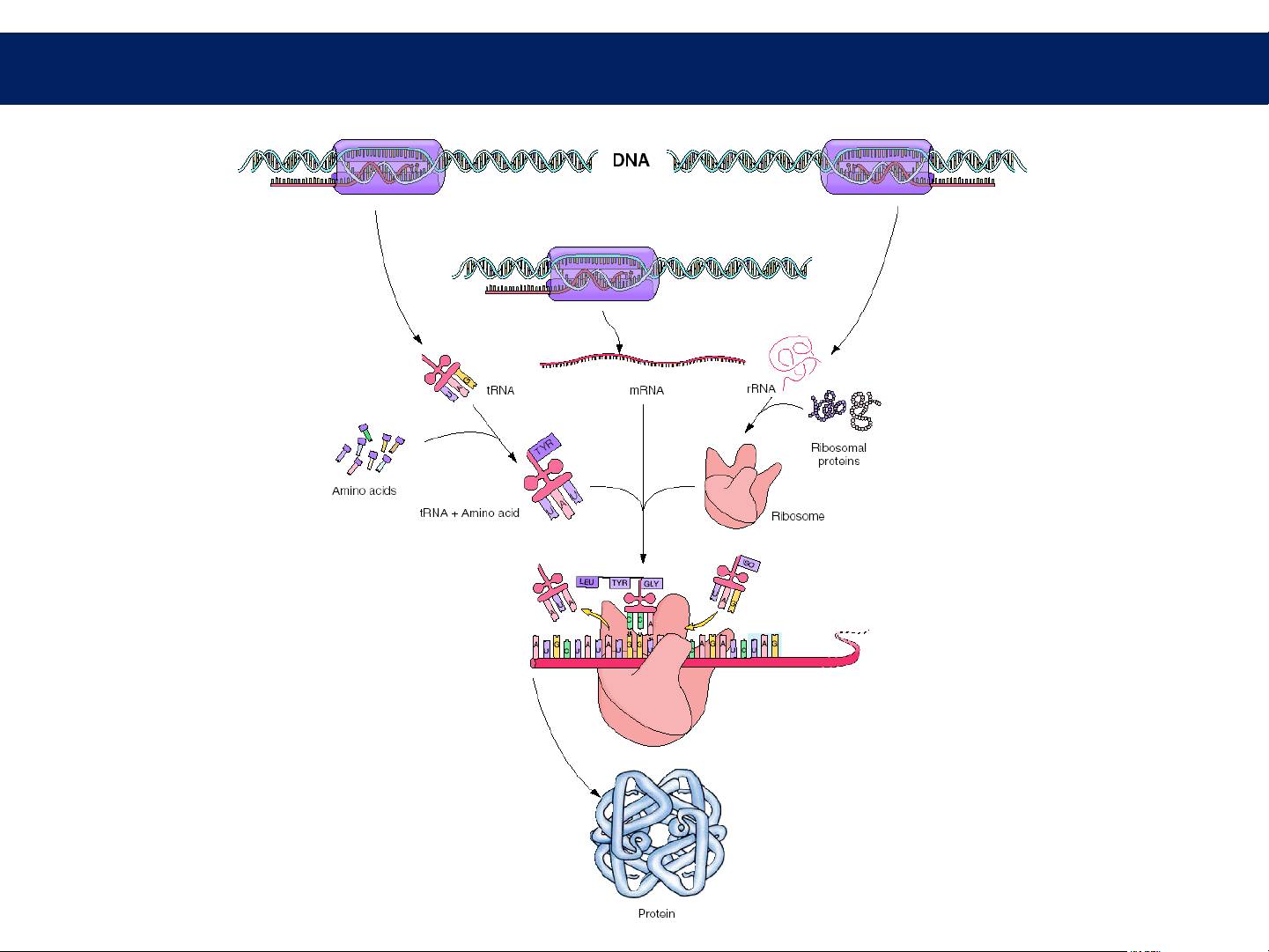
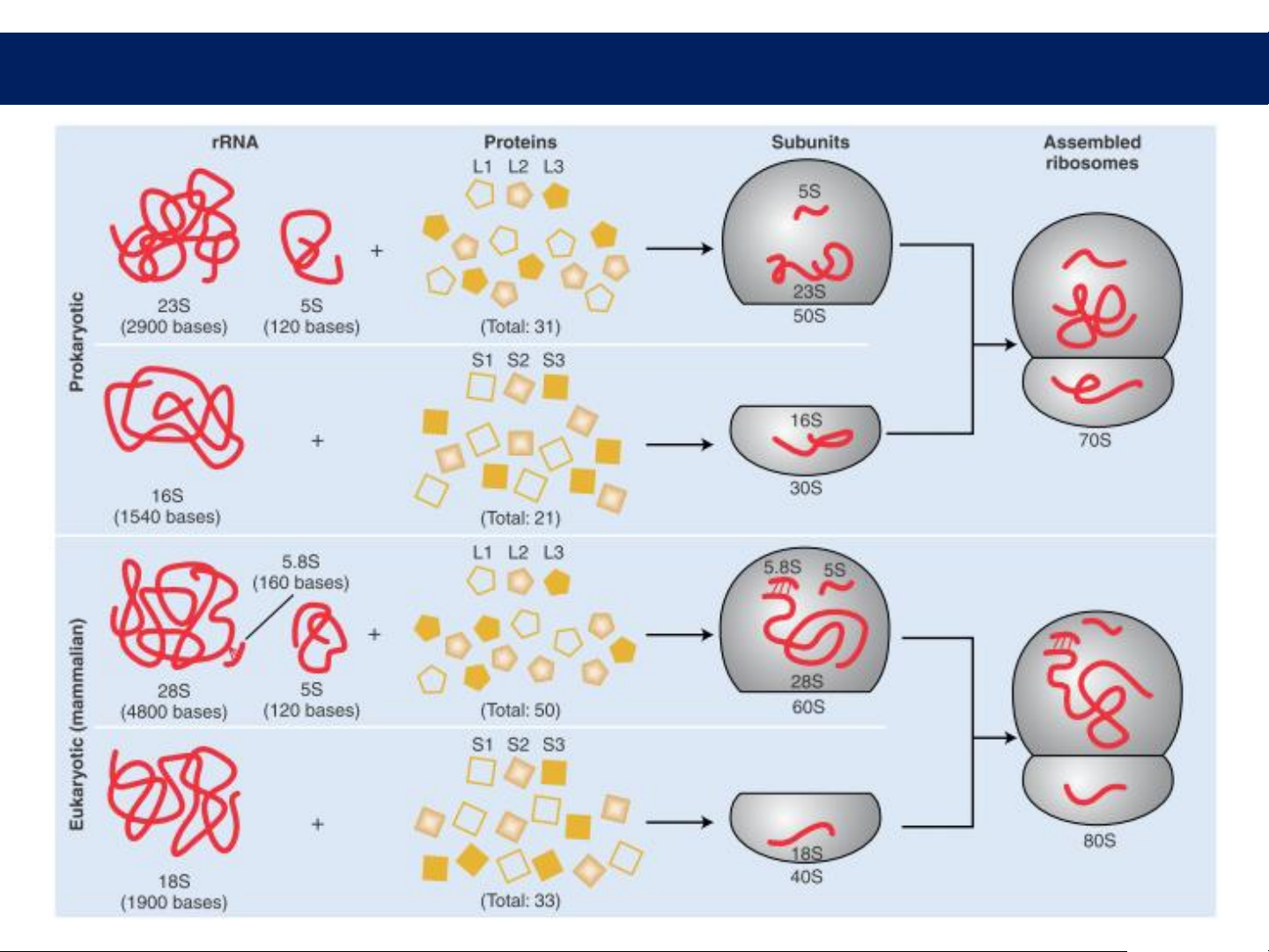
Translation: from RNA to protein tRNA Ribosome Amino acid mRNA Protein
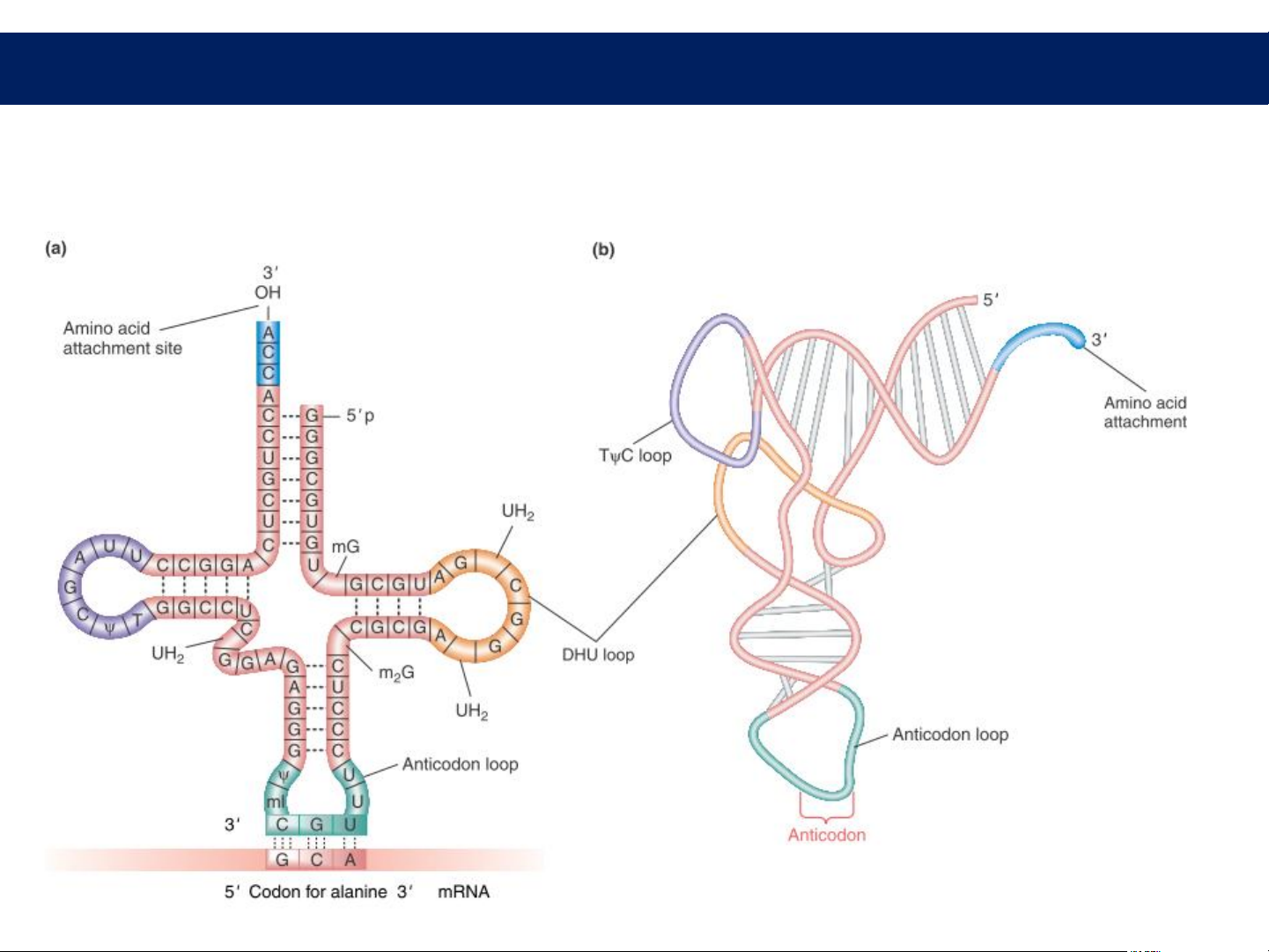
Transfer RNAs (tRNAs): the adapter The structure of tRNA
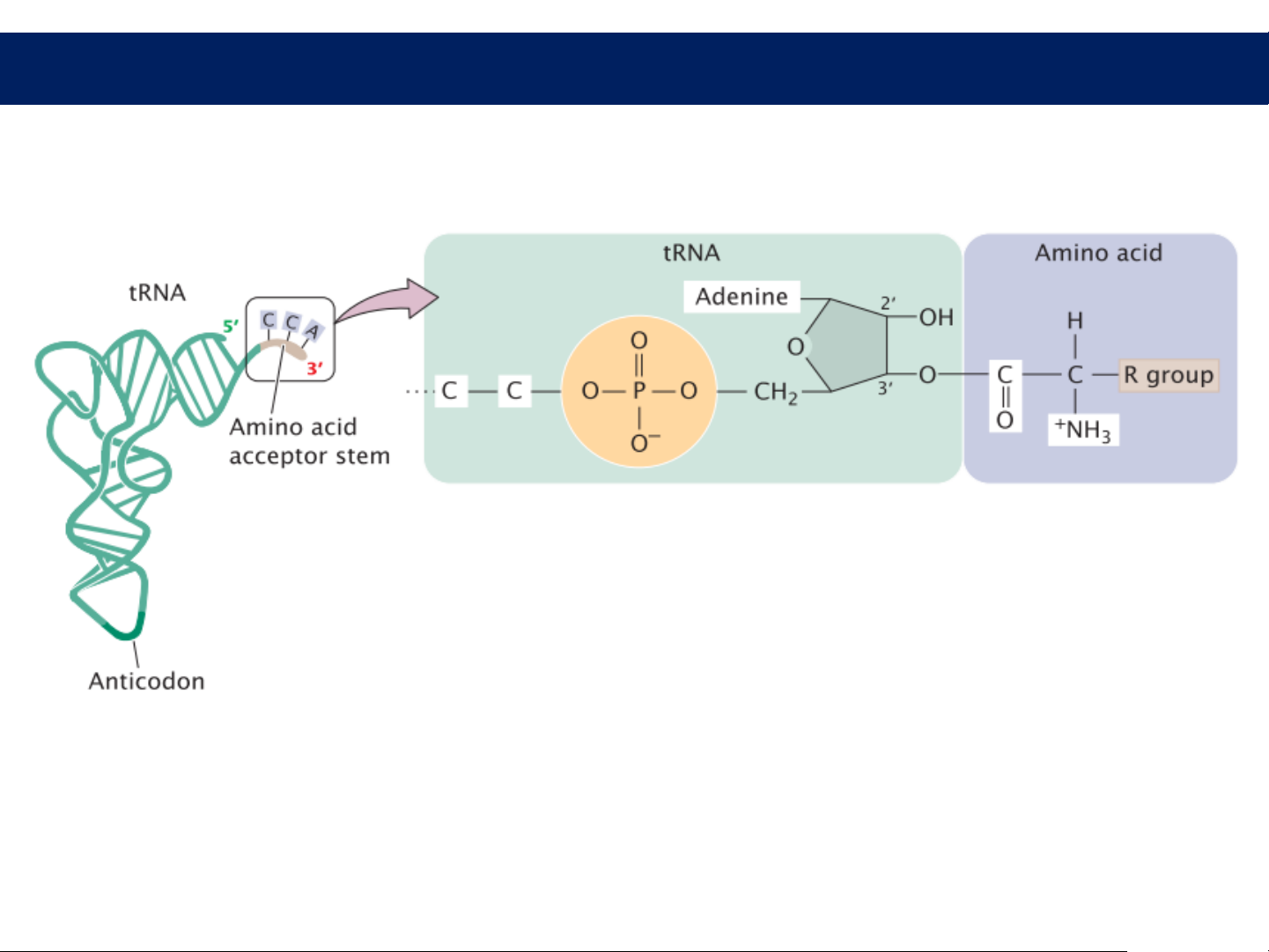
The binding of amino acids to tRNA
An amino acid attaches to the 3′ end of a tRNA.
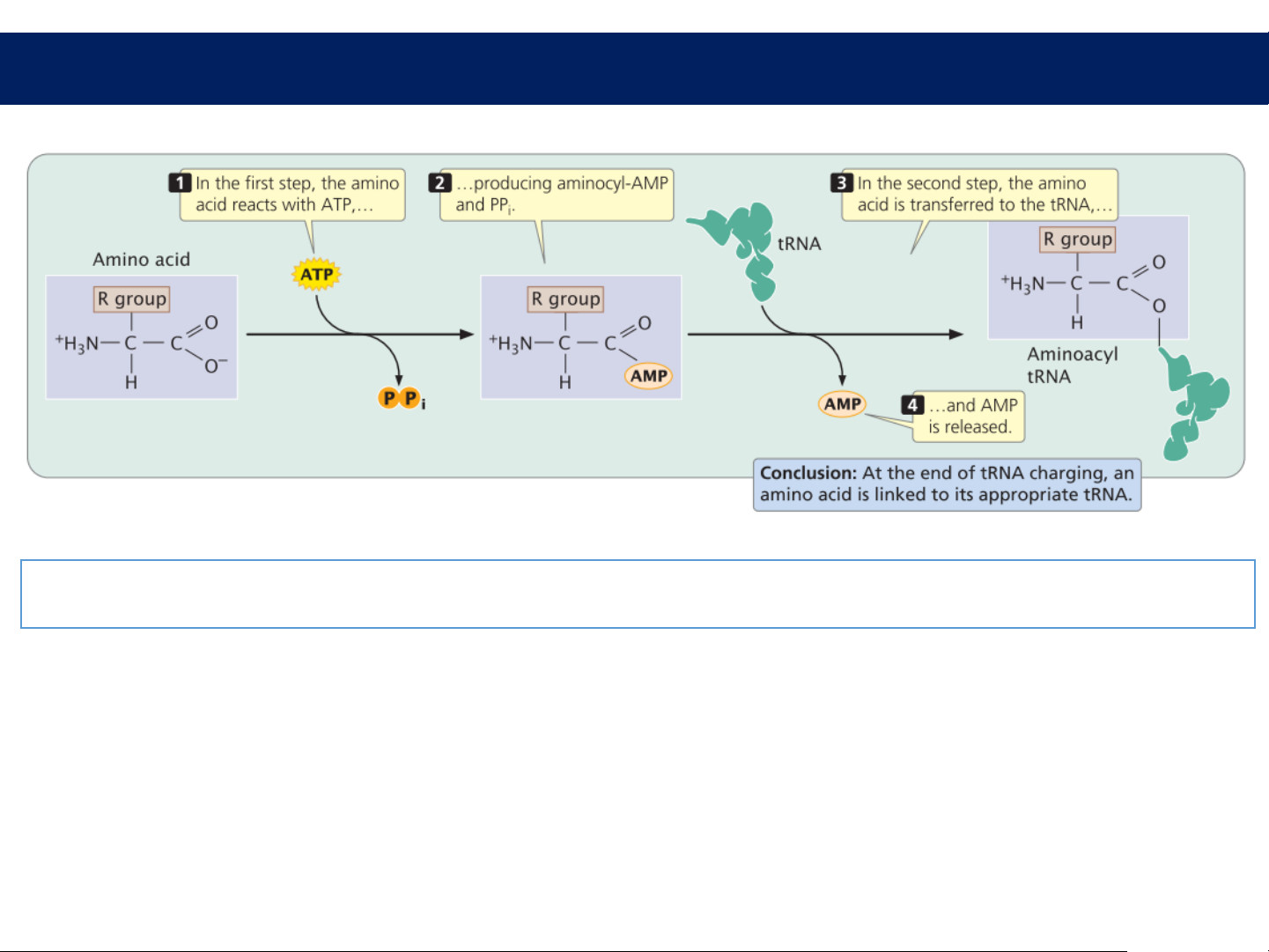
The key to specificity between an amino
acid and its tRNA is a set of enzymes called
aminoacyl-tRNA synthetases.
The binding of amino acids to tRNA (Cont.)
amino acid + tRNA + ATP → aminoacyl-tRNA + AMP + PPi
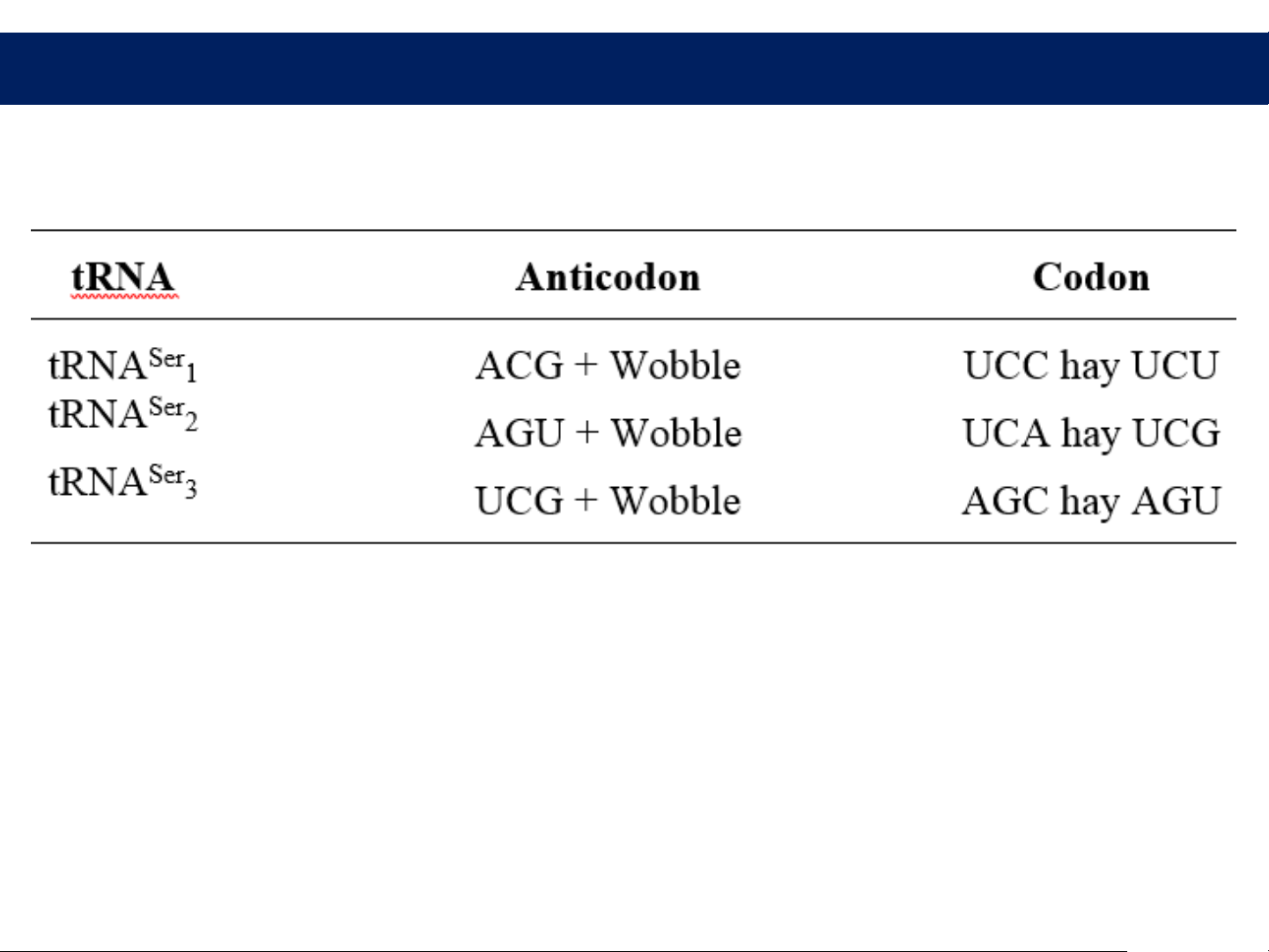
Wooble anticodons: the degeneracy
Wooble anticodons: the degeneracy (Cont.)
tRNA for Serine (Ser1, Ser2, Ser3) Ribosome Translation process
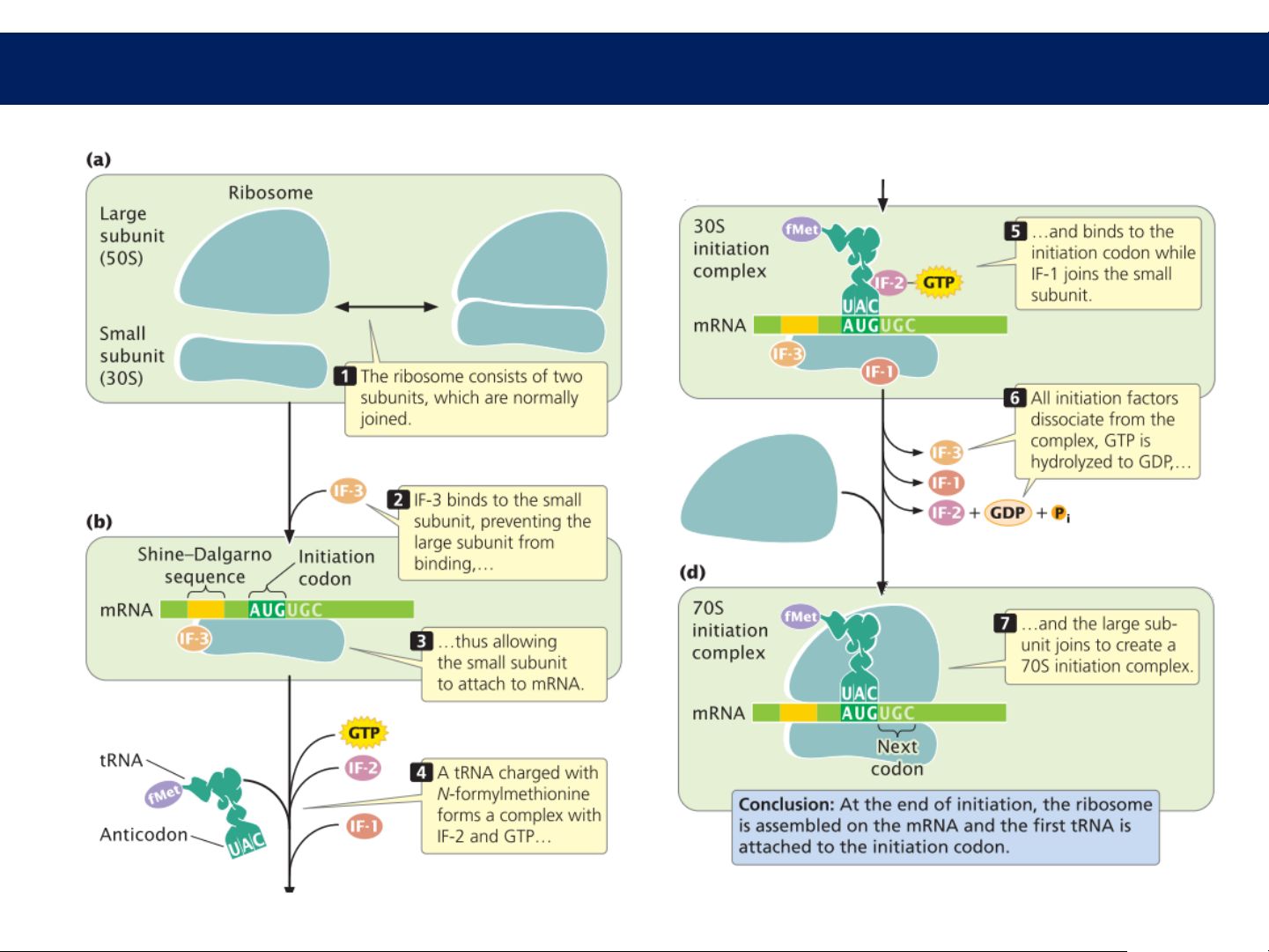
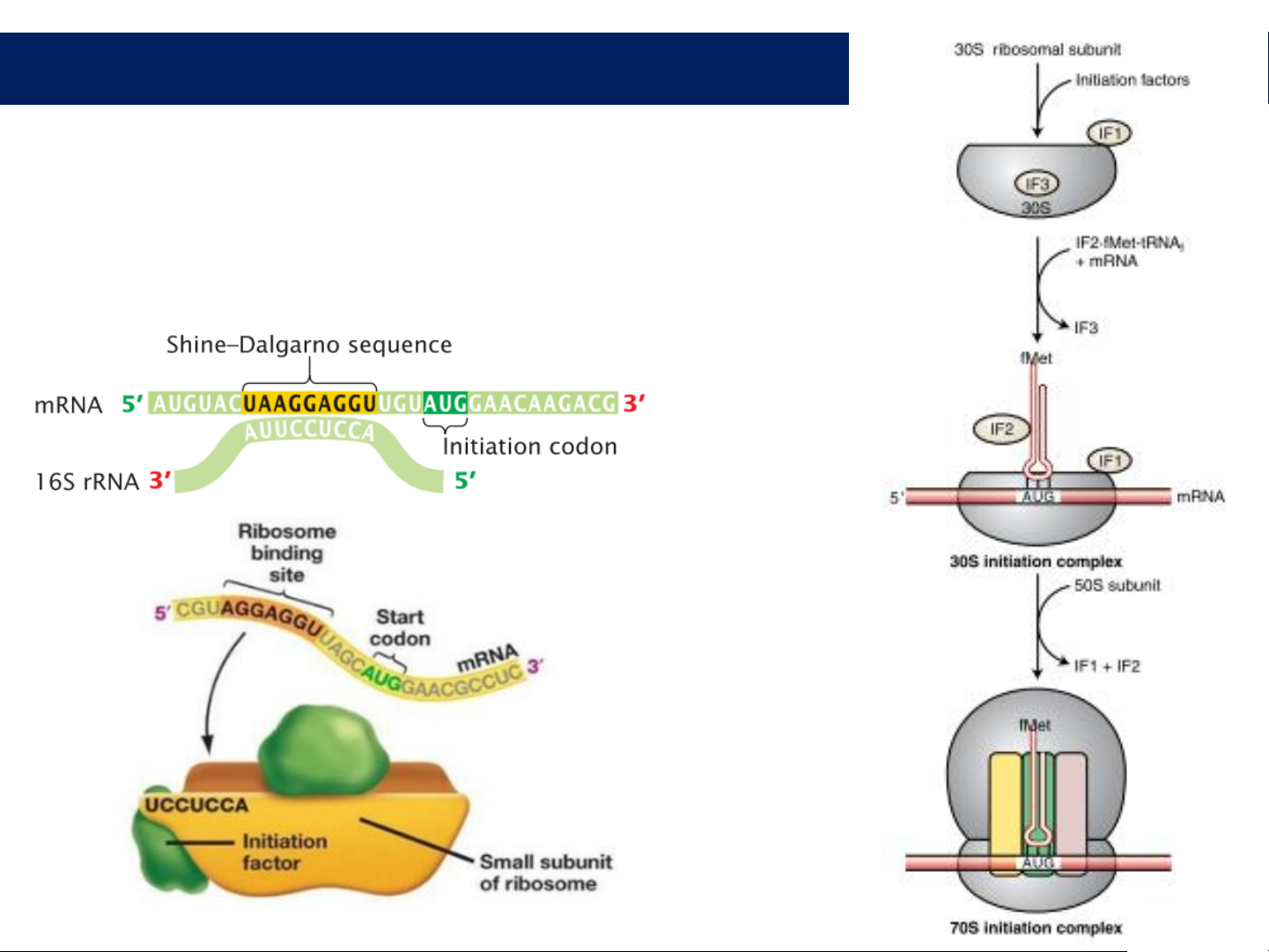
Translation process: Initiation
Shine-Dalgarno sequence in mRNA is
required for the attachment of the small subunit of the ribosome.
Translation process: Elongation
A ribosome has three sites that can be occupied by
tRNAs; the aminoacyl, or A, site, the peptidyl, or P,
site, and the exit, or E, site.
The initiator tRNA immediately occupies the P site (the
only site to which the fMet-tRNAfMet is capable of
binding), but all other tRNAs first enter the A site.
Translation process: Elongation (Cont.)
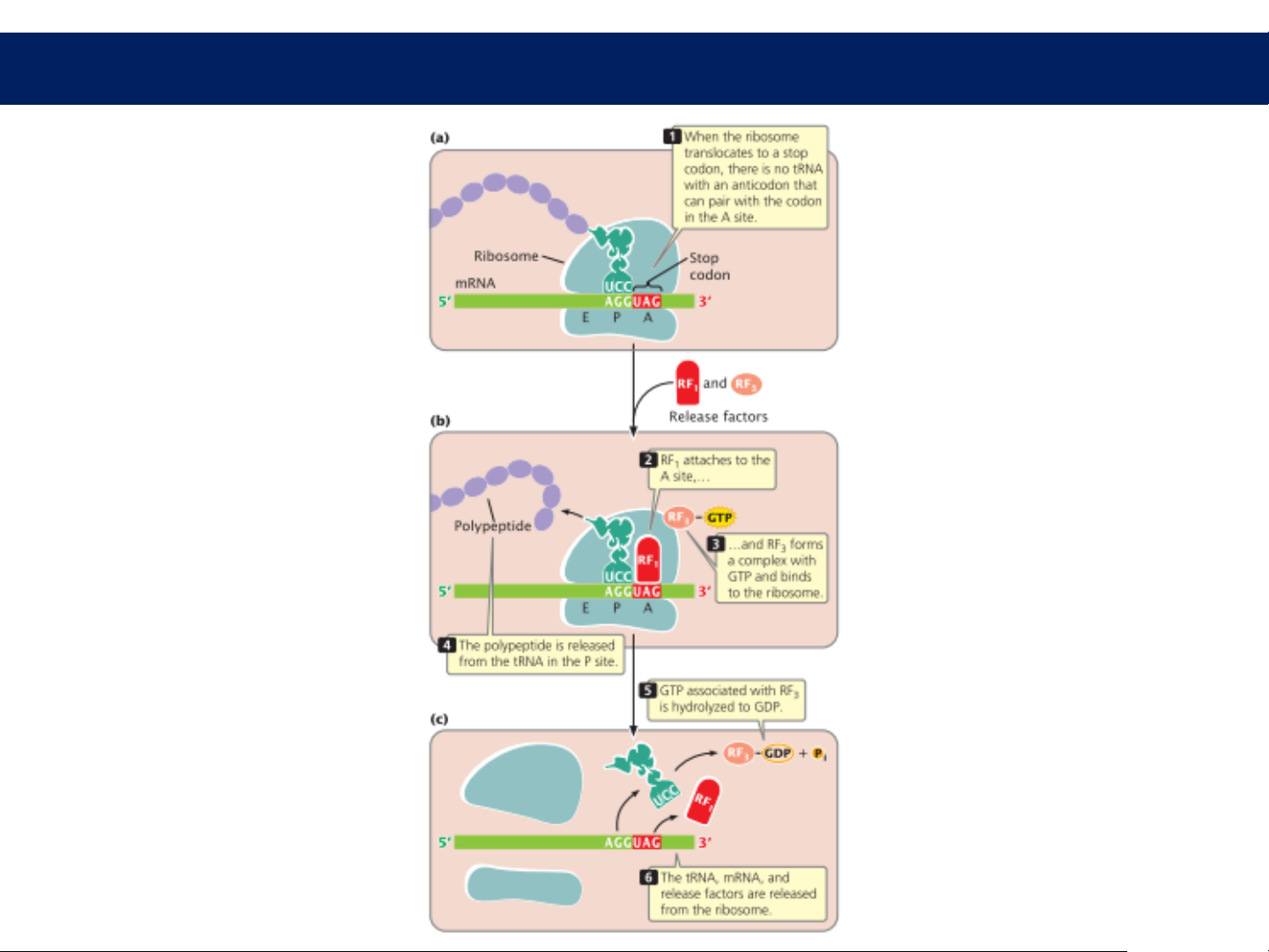
Translation process: Terminator Take home exercises Exercises 1
In elongation, the creation of peptide bonds between amino acids is catalyzed by: a. rRNA.
b. protein in the small subunit.
c. protein in the large subunit. d. tRNA. Exercises 2
What primarily determines the secondary and tertiary structures of a protein?