TRƯỜNG ĐẠI HỌC THƯƠNG MẠI
VIỆN KINH DOANH QUỐC TẾ VÀ LOGISTICS
BỘ MÔN KINH TẾ QUỐC TẾ
BÀI TẬP LỚN
HỌC PHẦN: International Investment
MÃ LỚP HỌC PHẦN: 251_FECO2631_01
GVGD: Nguyễn Thị Thanh
MÃ ĐỀ/TÊN ĐỀ TÀI: CÂU 8
SBD Họ và tên Mã số SV LHC Ký
nộp
Điểm BTL Điểm
kết
luận
Ghi
chú
Chấm
1
Chấm
2
39
Nguyễn
Thị
Phương
Thảo
23D131043 K59EE1 Thảo
Hà Nội, ngày 23 tháng 12 năm2025
Cán bộ chấm 1
(Ký và ghi rõ họ tên)
Cán bộ chấm 2
(Ký và ghi rõ họ tên)
HỌC KỲ I NĂM HỌC 2025-2026

TABLE OF CONTENTS
INTRODUCTION.......................................................................................................5
CHAPTER 1. THEORETICAL FRAMEWORK OF CROSS-BORDER
MERGERS AND ACQUISITIONS............................................................................6
!
"#$%&
'()$($!&
*$+
**$+
",--$.
/$0$%1.
"%23!#$%4
"$1%!4
" $1%#$%4
""%$*%%'2('3
CHAPTER 2. PRACTICE OF CROSS-BORDER MERGERS AND
ACQUISITIONS IN VIETNAM...............................................................................13
5((6%!"
%$%6%71$"
8%*91'%#3()/
"1:%3#$!$3(:%;
/%6%
<(:$(!(6%
*('%%3(#$%
1$5=*(=82>3
"*8%-?1=1=@%-=
'(A
/-1-==%&
;1%%&
*2*3(@(-#$%6%
&

"%23!#$%(6%5 &
"%'%$%)2)&
" %'%8:52+
""%'%0==09-
+
"/%(*2(2+
/*-$!6%.
/0$$3(*!'.
/ (!:% 4
/"(7!$
;%)!0%%3('($
;:)%0,B!
; 25*(%$) /
;"C9*(6% ;
;/()!) ;
;;%(%30%'(
$ ;
CHAPTER 3. OVERALL ASSESSMENT AND POLICY
RECOMMENDATIONS...........................................................................................26
"0$%!$6%?)$A
"%%()$:$
" %%()$6%
""%%(6%%
" 1%(!$?>$A &
" 8D%* &
" 8,)!09@%- &
" "1'(6 &
" /1%$) +
" ;-16% +
""*((D$!6% +
""*(*-( +
"" *6% .
"""*:$ .
CONCLUSION..........................................................................................................30
REFERENCES...........................................................................................................31
(EFGG$GG(%2($%($
%G"

(EFGG$$G$2G(%"
(EFGG333$2%$G((G2(("
(EFGG333%$G(%GG(% 4 /
((%(% %G"
(EFGG$%3$G2G& +44G$($%
%%"

TABLE OF FIGURES
Figure 2.1. Total Value and Number of M&A Transactions in Vietnam, 2022–
Early 2025...................................................................................................................13
Figure 2.2. Vietnam’s M&A Market in 2024............................................................14
Figure 2.3. Vietnam’s GDP within ASEAN-6...........................................................15
Figure 2.4. Loan growth and profit growth of FE Credit.......................................20
Figure 2.5: FE Credit’s Revenue during the Period 2020–2025.............................23
Figure 2.6: FE Credit’s Profit by Quarter in 2025..................................................24

INTRODUCTION
In the context of deepening globalization and international economic integration,
cross-border mergers and acquisitions (M&A) have become one of the most important
forms of foreign direct investment (FDI), reflecting multinational enterprises’
strategies for market expansion and operational restructuring. For developing
economies such as Vietnam, M&A is not only a channel for attracting foreign capital
but also a means of acquiring technology, improving management capacity, and
promoting corporate restructuring.
In practice, instead of choosing greenfield investment, many foreign investors prefer
M&A as a faster and more efficient route to market entry. The theoretical literature on
the motives for cross-border M&A indicates that firms often undertake M&A to gain
market access, seek strategic assets, enhance operational efficiency, and overcome
legal and institutional barriers in host countries. Vietnam, with its large market size,
long-term growth potential, and certain sectors that impose constraints on new
investment, represents a typical destination for strategically oriented M&A
transactions.
Based on this theoretical and practical foundation, this essay focuses on analyzing why
foreign investors choose M&A as a mode of entry into the Vietnamese market rather
than greenfield investment, drawing on the theoretical framework of cross-border
M&A motives. On that basis, the paper selects and examines a representative case: the
acquisition by Sumitomo Mitsui Banking Corporation (SMBC) of a 49% stake in FE
Credit, one of Vietnam’s leading consumer finance companies, in order to assess the
extent to which the post-M&A outcomes align with the initial theoretical motivations.

CHAPTER 1. THEORETICAL FRAMEWORK OF CROSS-BORDER
MERGERS AND ACQUISITIONS
1.1. Concepts and Classification of International Market Entry Modes
1.1.1. Cross-Border Mergers and Acquisitions
An acquisition refers to a transaction in which one company obtains ownership and
control, in whole or in part, of another company or business entity.
A merger is the combination of two or more companies into an existing company or to
form a new company.
Mergers and acquisitions (M&A) are a form of investment in which an investor
acquires all or a sufficiently large portion of the assets of an existing business entity
with the objective of gaining control over that company, or absorbs another business
entity through a merger, or when two companies agree to combine to form a new
company.
Cross-border mergers and acquisitions (cross-border M&A) refer to M&A activities (a
form of foreign direct investment – FDI) conducted between parties from at least two
different countries. Fundamentally, the difference between M&A in general and cross-
border M&A lies in the presence of a foreign element or the cross-border movement of
capital.
1.1.2. Classification of M&A
M&A can be classified based on the following three typical criteria:
Classification by the production and business chain
Classification by the method of financing
Classification by the willingness of the parties involved
M&A by the Production and Business Chain
Horizontal M&A: This refers to M&A transactions between companies operating in
the same industry or between competitors with similar production processes and
markets.
Vertical M&A: This is a form of M&A between companies operating at different
stages within the same production chain for a final product. There are two types of
vertical integration: Backward integration, which involves a linkage between suppliers
and manufacturers; Forward integration, which involves a linkage between
manufacturers and distributors.
Conglomerate M&A: This refers to mergers or acquisitions between companies
operating in different industries. The objective of such transactions is to diversify
business activities, and they often attract companies with substantial cash reserves.

M&A by Method of Financing
Asset acquisition transactions involve the purchase and sale of assets of the target
company.
According to Article 105 of the 2015 Civil Code of Vietnam, assets include objects,
money, valuable papers, and property rights. Assets may be classified as immovable or
movable property and may be existing assets or assets formed in the future. In M&A
transactions, the assets acquired may be tangible (such as physical facilities,
equipment, machinery, etc.) or intangible (including brands, reputation, human
resources, supply sources, and others).
Share or capital contribution acquisition transactions involve the transfer of ownership
of shares or capital contributions in the target company from the existing shareholders
to the acquiring party. This type of transaction aims at taking over the target company
as a separate legal entity, rather than acquiring its business operations. The acquirer
purchases shares in the target company to obtain ownership and control. This is a
transaction between the share purchaser and the shareholders of the target company.
All assets remain under the ownership of the company; only the ownership structure of
the company changes.
M&A by the Willingness of the Parties
UNCTAD (2011) classifies M&A based on the nature of the transaction and the
willingness of the parties involved into two types: friendly M&A and hostile M&A.
Friendly M&A refers to mergers and acquisitions in which the management of the
target company agrees with and supports the transaction. Such deals typically arise
from the mutual interests of both the acquiring and target companies.
Hostile M&A, also known as non-cooperative M&A, refers to transactions in which
the management of the target company does not consent to the acquisition and
employs measures to resist the takeover by the acquiring company. Hostile M&A often
involves transactions where the takeover or merger causes losses to the target company
or its management.
1.1.3. Greenfield Investment
Greenfield investment refers to a form of foreign investment in which a foreign
investor contributes capital to establish a new production or business facility in the
host country. This form of investment is often highly valued by host countries because
it has the potential to increase capital inflows, create employment, and generate added
value for the economy.
1.2. Theoretical Perspectives on the Motives for Cross-Border M&A
Cross-border mergers and acquisitions (cross-border M&A) are one of the most
important forms of foreign direct investment (FDI), reflecting firms’ strategies for

international expansion. Unlike greenfield investment, M&A enables firms to gain
rapid access to markets, assets, and existing resources in the host country.
Research in international economics and strategic management identifies four main
groups of motives driving cross-border M&A: market-seeking, strategic asset-seeking,
efficiency and risk reduction, and the desire to overcome legal and institutional
barriers.
1.2.1. Market-Seeking Motives
Market-seeking is the most common motive in cross-border M&A, particularly in
developing countries. Under this motive, foreign firms undertake M&A to expand or
strengthen their presence in host-country markets characterized by large populations,
rapidly increasing purchasing power, or strong long-term growth potential.
First, M&A allows firms to enter markets quickly. Instead of building operations from
scratch through greenfield investment, foreign firms can acquire an established local
company and immediately gain access to existing customers, suppliers, and
distribution channels.
Second, through M&A, foreign firms can expand market share and enhance
competitiveness. Acquiring competitors or firms with strong market positions helps
reduce competitive pressure while enabling rapid penetration of the target market.
Third, market-seeking motives are also linked to the protection of export markets.
When exports face trade barriers such as tariffs, quotas, or technical standards, firms
tend to shift toward direct investment through M&A in order to maintain and expand
their market presence.
In the context of Vietnam, with its large population, growing middle class, and rapid
urbanization, market-seeking motives play a central role in foreign investors’ M&A
activities, particularly in consumer goods, retail, beverages, and financial services.
1.2.2. Strategic Asset-Seeking Motives
Strategic asset-seeking motives arise from foreign firms’ need to enhance their long-
term competitiveness. Under this motive, M&A is used as a tool to gain access to
strategic tangible and intangible assets that are difficult to develop internally in the
short term.
Such strategic assets typically include:
Strong domestic brands
Distribution networks and customer relationships
Technology, managerial know-how, and market data
Human resources with deep knowledge of the local market

Access to land, business locations, and industry-specific licenses
M&A enables foreign firms to internalize these assets by acquiring ownership or
control of the target company, rather than accessing them indirectly through
contractual arrangements.
In emerging markets such as Vietnam, many strategic assets are highly localized,
difficult to replicate, and not easily tradable. As a result, M&A becomes the most
effective pathway to acquire such assets.
Strategic asset-seeking motives are particularly evident in M&A transactions in sectors
such as banking, technology, modern retail, and energy, where licenses, customer data,
and market knowledge carry exceptional strategic value.
1.2.3. Efficiency and Risk Reduction Motives
Another important motive driving cross-border M&A is the optimization of
operational efficiency and the reduction of investment risk. Compared with greenfield
investment, M&A helps foreign firms significantly lower both costs and risks during
market entry.
In terms of costs, M&A allows firms to avoid substantial initial setup expenses, such
as constructing facilities, recruiting staff, establishing supply chains, and developing
management systems. Moreover, acquiring existing firms enables investors to exploit
existing scale, thereby reducing average production and distribution costs.
Regarding risk, M&A reduces information asymmetry and operational risk, as the
target firm is already familiar with the local legal environment, business culture, and
consumer behavior. This is particularly important in markets characterized by high
uncertainty or underdeveloped institutional frameworks.
In addition, M&A facilitates geographic risk diversification by enabling firms to
expand operations across multiple countries, thereby reducing dependence on any
single market.
In practice, many investors choose M&A in Vietnam as a way to mitigate market entry
risks, especially in capital-intensive industries or sectors with long investment cycles.
1.2.4. Motives to Overcome Legal and Institutional Barriers
Motives related to overcoming legal and institutional barriers reflect the reality that in
many countries, including Vietnam, greenfield investment by foreign investors is
subject to strict regulations concerning market entry conditions, ownership limits,
business licenses, and administrative procedures.
In this context, M&A serves as an indirect yet effective route for foreign firms to enter
the market. By acquiring equity stakes or control in domestic firms that already
possess the necessary licenses and legal status, foreign investors can significantly
reduce compliance costs and administrative processing time.

Furthermore, domestic firms often maintain established relationships with regulators,
partners, and the business community, which helps foreign investors adapt more
effectively to the host country’s institutional environment.
This motive is particularly prominent in sectors such as:
Banking and finance
Conditional retail sectors
Energy and infrastructure
Telecommunications and technology
In Vietnam, where certain industries continue to impose market access restrictions on
foreign investors, M&A plays a strategic role as a legitimate and effective instrument
for overcoming institutional barriers.
1.3. Comparison between M&A and Greenfield Investment in Market Entry
1.3.1. Advantages and Limitations of M&A
Advantages
M&A enables foreign firms to enter the market rapidly by taking over an existing
company that is already operating in the host country. Through M&A, investors can
leverage established brands, market share, customer bases, distribution networks, and
existing human resources, thereby significantly shortening the market entry period
compared with greenfield investment. In addition, M&A helps reduce information
asymmetry and institutional risk, as the target firm is already familiar with the local
legal environment, business culture, and consumer practices. In the context of many
countries imposing restrictions on greenfield investment by foreign investors, M&A is
widely regarded as an effective pathway to overcome legal and institutional barriers.
Limitations
M&A also involves significant risks. The cost of acquiring a target company is often
high, especially when the target has a strong market position. Moreover, post-M&A
integration frequently encounters difficulties due to differences in corporate culture,
management styles, and operational systems, which may reduce the expected
efficiency gains of the transaction. Foreign firms may also face risks related to hidden
liabilities, legal disputes, or a lack of financial transparency in the acquired company.
1.3.2. Advantages and Limitations of Greenfield Investment
Advantages
Greenfield investment allows foreign firms to exercise full control over business
operations, including strategy, governance structures, and corporate culture. This mode
of entry enables firms to build integrated production and business facilities, adopt
advanced technologies, and implement standardized management practices consistent

with their global strategies. Furthermore, greenfield investment typically avoids risks
associated with inheriting existing problems of local firms, while also contributing to
job creation and increased productive capacity in the host economy.
Limitations
Greenfield investment requires substantial capital, long implementation periods, and
high initial costs. Firms must build physical infrastructure from scratch, recruit
personnel, develop markets, and establish distribution networks, which leads to higher
market entry risks. In addition, foreign investors often face significant challenges in
obtaining licenses, accessing land, and complying with legal regulations, particularly
in markets with complex or underdeveloped institutional frameworks.

1.3.3. Comparative Summary Table of the Two Entry Modes
Criteria Cross-Border M&A Greenfield Investment
Nature of the mode
Acquisition or merger with an
existing firm in the host country
Establishment of an entirely
new firm or production facility
Primary objective
Rapid market entry, market
penetration, and access to
strategic assets
Building long-term production
capacity and exercising full
control
Speed of market
entry
Very fast (immediately after
transaction completion)
Slow (2–5 years to reach stable
operations)
Initial costs
High, concentrated in the
acquisition price
High, but spread across multiple
stages
Market risk
Lower (the firm already has
revenue and market share)
Higher (no existing customers
or brand presence)
Operational risk
Higher (cultural conflicts and
post-M&A integration
challenges)
Lower (operations aligned with
parent company standards)
Ability to overcome
legal barriers
Strong (target firm already holds
licenses and land-use rights)
Limited (requires new
approvals; lengthy procedures)
Impact on
competition
Reduces the number of
competitors and increases
market concentration
Does not reduce the number of
existing firms
Job creation Limited Significant
Industry suitability
Retail, beverages, banking,
services
Manufacturing, technology,
electronics

CHAPTER 2. PRACTICE OF CROSS-BORDER MERGERS AND
ACQUISITIONS IN VIETNAM
2.1. Context and Characteristics of the Vietnamese Market for Cross-Border
M&A
2.1.1. Macroeconomic Environment and Vietnam’s Level of International
Integration
According to Dealogic data, the total value of announced global M&A transactions as
of September 25, 2024 reached USD 846.8 billion, representing a 14% increase
compared to the same period of the previous year. Notably, M&A transaction value in
the Asia Pacific region increased by 54% year on year, reaching USD 273 billion,
driven by several large-scale deals.
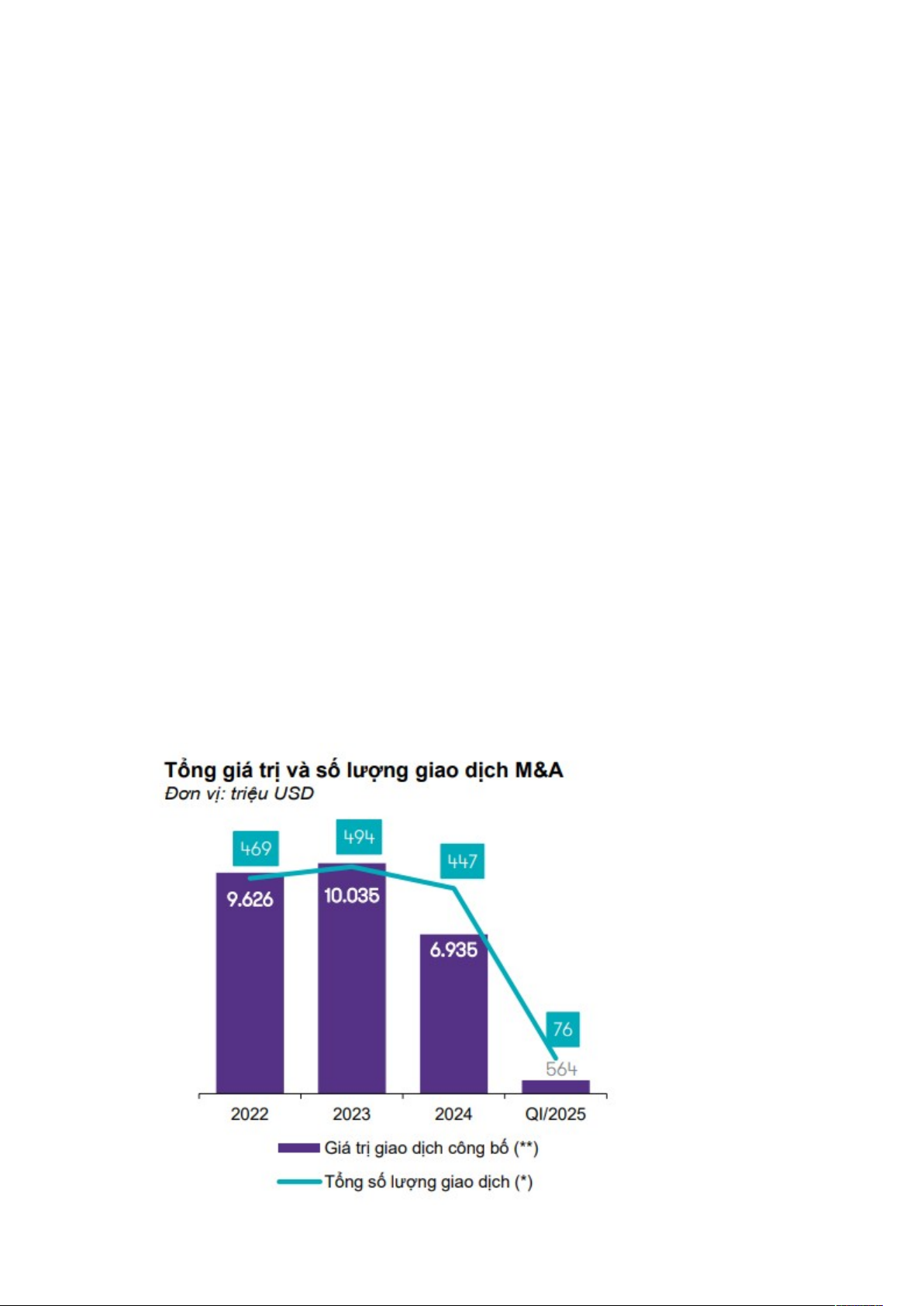
In 2024, Vietnam’s M&A market recorded 447 transactions with a total disclosed value
of approximately USD 6.93 billion. Industry, finance, and real estate were the sectors
with the largest number of high-value transactions. The industrial sector stood out with
five deals exceeding USD 100 million, while the finance and real estate sectors
recorded four and three transactions of similar scale, respectively. The average deal
value was USD 56.3 million, and the largest transaction reached USD 982 million.
Notably, 88% of total transaction value came from the real estate, consumer staples,
and industrial sectors.
Figure 2.1. Total Value and Number of M&A Transactions in Vietnam, 2022–Early
2025

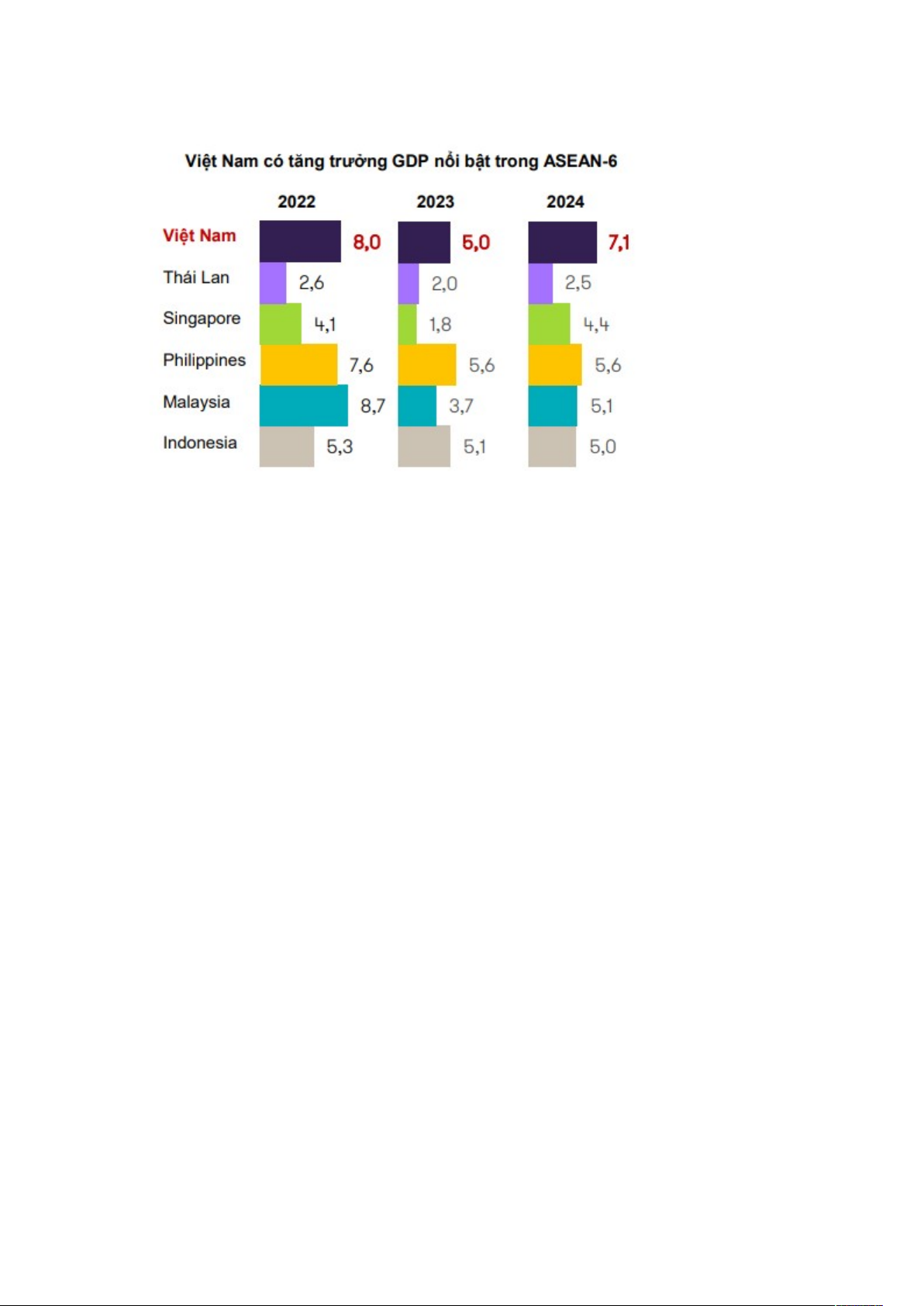
Vietnam is widely regarded as one of the most dynamic developing economies in the
Asia Pacific region, with relatively high and stable long-term GDP growth. The
macroeconomic environment has generally remained stable, inflation has been kept
under control, and the economic structure has been gradually shifting toward
industrialization and service orientation.
Vietnam’s accession to the World Trade Organization (WTO) and the signing of
several new-generation free trade agreements (FTAs), such as the CPTPP, EVFTA, and
RCEP, have significantly contributed to improving the investment climate, enhancing
transparency, and expanding market access opportunities for foreign investors.
2.1.2. Domestic Market Size and Long-Term Growth Potential
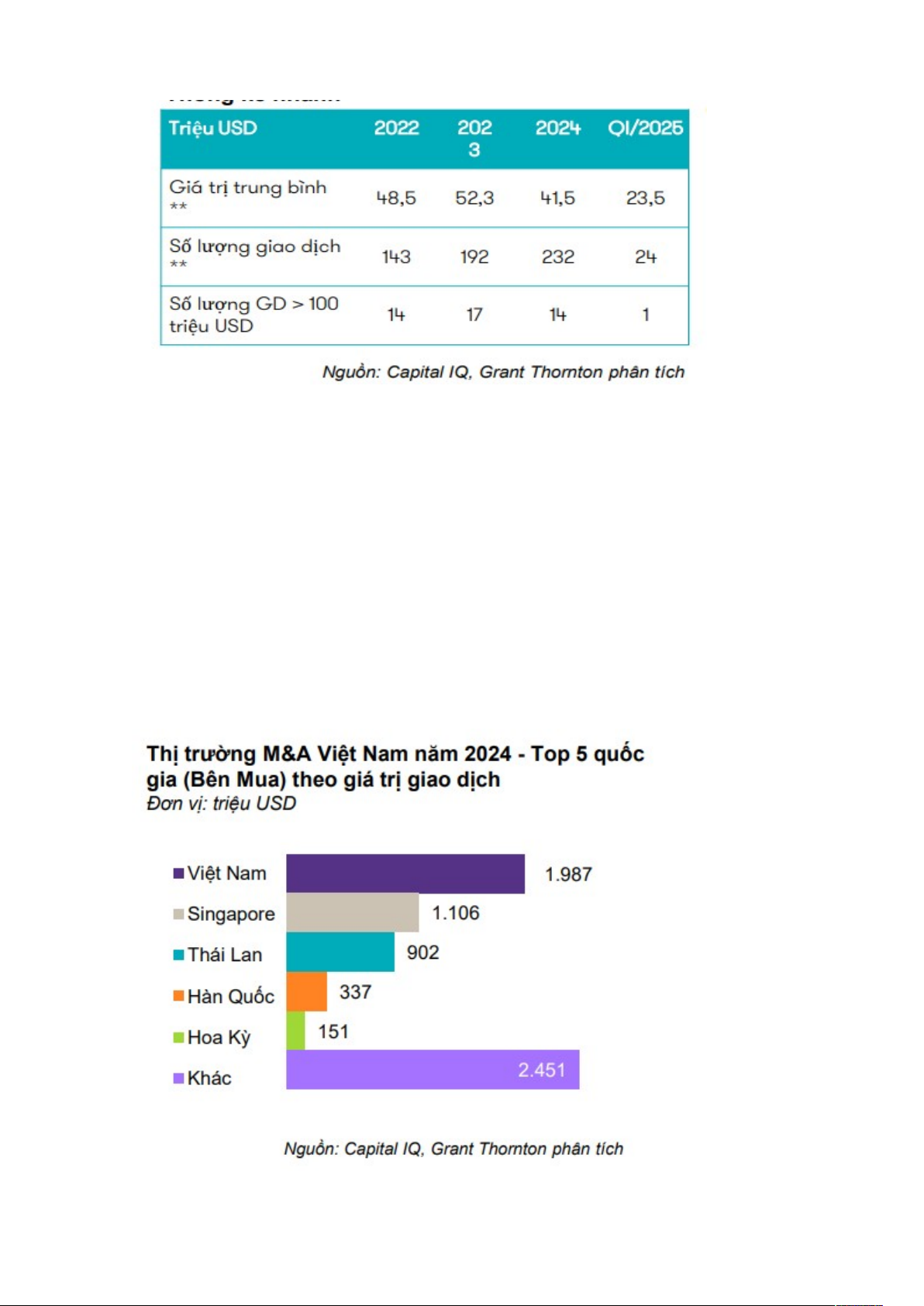
Figure 2.2. Vietnam’s M&A Market in 2024

Figure 2.3. Vietnam’s GDP within ASEAN-6
In 2024, domestic investors participated actively in Vietnam’s M&A market, with the
disclosed transaction value of this group accounting for 29% of the total market value.
This represents a significant increase compared to 16% in 2023 and 20% in 2022,
reflecting growing confidence and the strengthened capacity of domestic enterprises to
execute large-scale transactions.
In contrast, the total transaction value from foreign investors recorded a substantial
decline in 2024, falling from USD 8,917 million in the previous year to USD 4,947
million, equivalent to a 45% decrease. This downturn was mainly attributable to
volatile macroeconomic conditions, geopolitical instability, and subdued global growth
in the post Covid-19 period.
These developments nevertheless highlight Vietnam’s large domestic market size, with
a population exceeding 100 million, a young demographic structure, and a rapidly
expanding middle class. Continuous improvements in per capita income have strongly
stimulated consumer demand, particularly in sectors such as retail, food and beverages,
banking and finance, and services.
2.1.3. Legal Framework Governing M&A Activities with Foreign Elements
The Ministry of Finance is currently developing the Project on the Development of the
Foreign-Invested Economic Sector and the Project on Attracting a New Generation of
Foreign Direct Investment, which set out orientations toward more open, attractive,
and competitive institutional and policy frameworks.
In parallel with efforts to amend key laws including the Land Law, Planning Law,
Investment Law, and tax-related laws such as the Law on Personal Income Tax and the
Law on Tax Administration featuring provisions on investment incentives and the
simplification of procedures, Vietnam’s investment and business environment is

expected to continue improving. These reforms are anticipated to play an important
role in attracting high-quality investment inflows into Vietnam, while also fostering
the development of the domestic private sector.
However, the legal system still exhibits certain limitations, including complex
administrative procedures, overlapping regulations among different laws, and foreign
ownership restrictions in some sensitive sectors. These characteristics make M&A a
suitable option, enabling foreign investors to access the market through firms that
already possess the necessary licenses and established legal status.
2.1.4. Industry Competition and Market Concentration in Vietnam
Many economic sectors in Vietnam are characterized by high levels of competition
alongside a certain degree of market concentration, particularly in industries such as
beverages, modern retail, banking, and energy. In these sectors, large domestic firms
often hold significant market shares and possess hard-to-replicate advantages,
including strong brands, extensive distribution networks, and established relationships
with local partners.
As a result, rather than undertaking greenfield investment and engaging in direct
competition from the outset, foreign investors tend to favor M&A as a means of
rapidly securing market positions and mitigating competitive risks during the initial
stage of market entry.
2.2. Analysis of Why Foreign Investors Choose M&A to Enter the Vietnamese
Market
2.2.1. Shortening Market Entry Time Compared with Greenfield Investment
Compared with greenfield investment, M&A enables foreign investors to significantly
shorten the time required to enter the Vietnamese market. By acquiring or merging
with a domestic firm, investors can quickly commence business operations without
having to undergo the lengthy process of constructing facilities, obtaining licenses, and
developing the market from scratch. This factor is particularly important in industries
characterized by intense competition and rapid change.
2.2.2. Leveraging Existing Brands, Market Share, and Distribution Networks
One of the greatest advantages of M&A is the ability to immediately leverage the
target company’s existing intangible assets, including brands, market share, and
distribution networks. In Vietnam, many domestic brands have built strong consumer
trust, which foreign firms would find difficult to achieve within a short period if they
opted for greenfield investment.
2.2.3. Access to Strategic Domestic Resources (Land, Licenses, Human Resources,
and Technology)
Through M&A, foreign investors can gain access to strategic, locally embedded
resources such as land use rights, business licenses, human resources with in-depth
knowledge of the local market, and technologies adapted to domestic conditions.

These resources are often difficult or time-consuming to obtain through greenfield
investment, especially given the complexity of regulations governing land access and
licensing procedures.
2.2.4. Reducing Legal Risks, Institutional Barriers, and Compliance Costs
Domestic firms are generally familiar with Vietnam’s legal system, administrative
procedures, and business practices. Acquiring such firms helps foreign investors
reduce legal risks, avoid compliance errors, and save the costs associated with
adapting to a new institutional environment. This constitutes a key motivation for
prioritizing M&A over greenfield investment.
2.2.5. Increasing Control and Limiting Industry Competition
M&A allows foreign investors to rapidly increase control over target firms and
indirectly reduce the number of competitors in the market. In highly concentrated
industries, this strategy helps firms consolidate their positions, expand market share,
and strengthen long-term competitiveness.
2.2.6. Suitability for Sectors with High Restrictions on Greenfield Investment in
Vietnam
Finally, M&A is particularly suitable for sectors in Vietnam where greenfield
investment by foreign investors faces significant restrictions, such as banking, modern
retail, energy, and certain conditional service industries. In these sectors, M&A is often
the most feasible pathway for foreign investors to enter the market in a lawful and
effective manner.
2.3. Comparison between M&A and Greenfield Investment in the Vietnamese
Context
2.3.1. Comparison in Terms of Investment Costs and Payback Period
In terms of initial investment costs, M&A typically requires a substantial amount of
capital to acquire equity stakes or the entire domestic firm, particularly in industries
with strong brands and large market shares. For example, ThaiBev’s acquisition of
Sabeco in 2017 was valued at approximately USD 4.8 billion, reflecting the high
valuation of a leading company in Vietnam’s beer and beverage industry. Although the
upfront cost of M&A is high, it allows investors to significantly shorten the payback
period, as the target firm already generates revenue, holds market share, and maintains
stable cash flows.
By contrast, greenfield investment usually spreads investment costs over multiple
phases, including the construction of facilities, procurement of machinery, recruitment,
and training of personnel. While total investment capital may be very large in the long
run, the initial financial pressure is often lower than that of M&A. However, the
payback period for greenfield investment tends to be longer, as firms require many
years to achieve optimal production scale and market penetration. Samsung’s case in
Vietnam with total investment exceeding USD 20 billion since 2008 illustrates that

greenfield investment can deliver long-term returns but requires patience and long-
term strategic commitment.
2.3.2. Comparison in Terms of Degree of Control and Managerial Flexibility
With respect to control, greenfield investment allows foreign firms to exercise near
complete control over operations, including strategy, technology, and corporate
culture. This enables investors to implement a unified management model aligned with
global standards, minimize internal conflicts, and enhance operational efficiency. For
this reason, greenfield investment is often preferred in manufacturing, high technology,
or export-oriented industries.
In contrast, M&A provides a high but not absolute level of control, especially in cases
where investors acquire a controlling stake rather than full ownership. Foreign firms
must often balance new strategic directions with existing governance structures,
resulting in lower managerial flexibility in the short term. Nevertheless, in the medium
to long term, if post M&A restructuring is carried out effectively, M&A can still enable
investors to achieve relatively strong strategic control.
2.3.3. Comparison in Terms of Operational, Cultural, and Organizational
Integration Risks
One of the greatest risks of M&A in Vietnam lies in post-merger integration, including
differences in corporate culture, management styles, and operational systems. Many
M&A transactions face challenges in aligning strategies and personnel, thereby
reducing the expected efficiency gains. In addition, foreign investors may encounter
latent risks related to the target firm’s financial conditions, legal issues, or outstanding
liabilities.
In contrast, greenfield investment involves fewer organizational integration risks, as
the enterprise is built from the ground up according to the parent company’s standards.
However, this mode entails higher market and institutional risks, including slow
adaptation to the local business environment, difficulties in land access and licensing
procedures, and exposure to policy changes. Therefore, greenfield investment is more
suitable for investors with substantial international experience and strong risk
management capabilities.
2.3.4. Assessment of the Suitability of Each Mode by Industry
In the Vietnamese context, M&A is particularly well suited to consumer, service, and
financial sectors, where brands, distribution networks, and business licenses play a
decisive role. Industries such as beverages, modern retail, banking, and insurance often
face significant restrictions on greenfield investment, making M&A the most effective
market entry route for foreign investors.
Conversely, greenfield investment is more appropriate for manufacturing, high-
technology, and export-oriented industries, where competitive advantages stem from
scale, technology, and production costs. Greenfield projects by Samsung, LG, and Intel


in Vietnam demonstrate how this mode has positioned Vietnam as a key link in global
supply chains, while also generating long term value creation and employment.
2.4. Analysis of Selected Representative Cross-Border M&A Cases in Vietnam
2.4.1. Overview of the Selected M&A Transactions
On October 28, SMBC Consumer Finance Co., Ltd. (SMBCCF), a member of the
Sumitomo Mitsui Financial Group (SMBC), announced the completion of its
acquisition of a 49% equity stake in VPBank Finance Company Limited (VPB FC, FE
Credit) from Vietnam Prosperity Joint Stock Commercial Bank (VPBank), and the
company was subsequently renamed VPBank SMBC Finance Company Limited.
Previously, on April 28, 2021, VPBank and SMBCCF had signed the capital transfer
agreement. The total maximum investment value amounted to USD 1.4 billion,
marking the largest investment ever made by a Japanese bank in a Vietnamese
financial institution.
Following October 28, 2021, the ownership structure of FE Credit consisted of 49%
held by SMBCCF, 50% by VPBank, and 1% by other shareholders.
Through this investment, the SMBC Group aims to cooperate with FE Credit to further
develop Vietnam’s financial sector by leveraging the expertise and know-how
accumulated by SMBCCF over many years in consumer finance in Japan and other
Asian countries. At the same time, SMBC seeks to accelerate its growth strategy in
Asia by applying advanced digital transformation practices derived from FE Credit.
SMBC Consumer Finance (SMBCCF), a wholly owned subsidiary of Sumitomo
Mitsui Financial Group (SMFG), served as the acquiring entity in this transaction.
SMBC Group is one of Japan’s three largest financial and banking groups, with total
assets exceeding USD 2.1 trillion as of December 31, 2020, and is also the leading
consumer finance company in Japan, operating more than 900 branches nationwide.
FE Credit is currently the largest consumer finance company in Vietnam, holding
approximately 50% market share equivalent to the combined share of all other
consumer finance companies. The company operates around 20,000 service
introduction points nationwide and employs more than 13,000 staff. To date, FE Credit
has served nearly 11 million Vietnamese consumers through unsecured lending
products and services.
In 2020, FE Credit recorded operating income of over VND 18.2 trillion, of which
more than VND 17.2 trillion came from net interest income. Pre-tax profit exceeded
VND 3.7 trillion. By year-end, the company’s total assets surpassed VND 73.3 trillion,
with outstanding customer loans of over VND 66 trillion.
FE Credit successfully capitalized on the early-stage boom of Vietnam’s consumer
finance market and maintained its leading position during the 2015–2020 period.
Bấm Tải xuống để xem toàn bộ.