Bài thuyết trình thống kê ứng dụng
bảng thuyết trình hoàn chỉnh thú vị
Môn: Xác suất thống kê (XSTK19) 39 tài liệu
Trường: Trường Đại học Mở Thành phố Hồ Chí Minh 704 tài liệu
Tác giả:

Preview text:
Statistic for economics and finance Instructor: Pham Ha Forecasting with Time Series Analysis Chapter 5 5-1 Learning Objectives
LO5-1 Identify and describe time series patterns.
LO5-2 Compute forecasting using simple moving averages.
LO5-3 Compute and interpret the Mean Absolute Deviation.
LO5-4 Compute forecasts using exponential smoothing.
LO5-5 Compute a forecasting model using regression analysis.
LO5-6 Apply the Durban-Watson statistic to test for autocorrelation.
LO5-7 Compute seasonal indexes and use the indexes to
make seasonally adjusted forecasts. 5-2 Components of a Time Series
A time series is a collection of data over a period of time
The trend is the long-run direction of the time series
TREND PATTERN The change of a variable over time.
The seasonal variation is a pattern that tends to repeat
itself from year to year for most businesses
SEASONALITY Patterns of highs and lows in a time series within a
calendar year. These patterns tend to repeat each year. 5-3
Components of a Time Series Continued
The cyclical component is the fluctuation above and
below the long-term trend line over a longer time period
CYCLES A pattern of highs and lows occurring over periods of many years.
The irregular variation is divided into episodic and residual components
IRREGULAR COMPONENT The random variation in a time series. 5-4 Secular Trend Examples
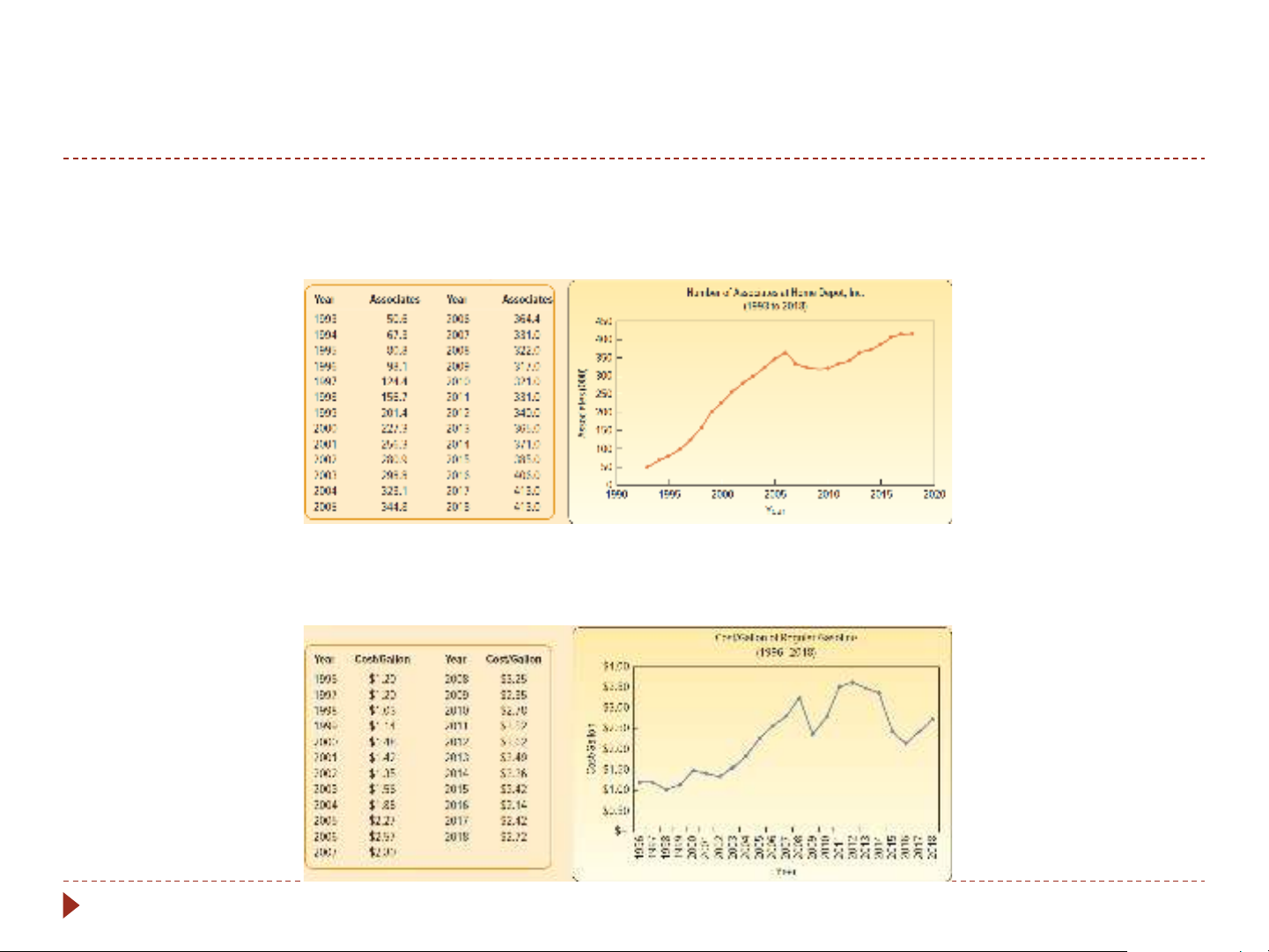
A graph of the secular trend of the number of Home Depot
associates shows how the number has increased over time
The average price of gasoline increased from 2005 to 2013 and since then has declined 5-5 Seasonality Example
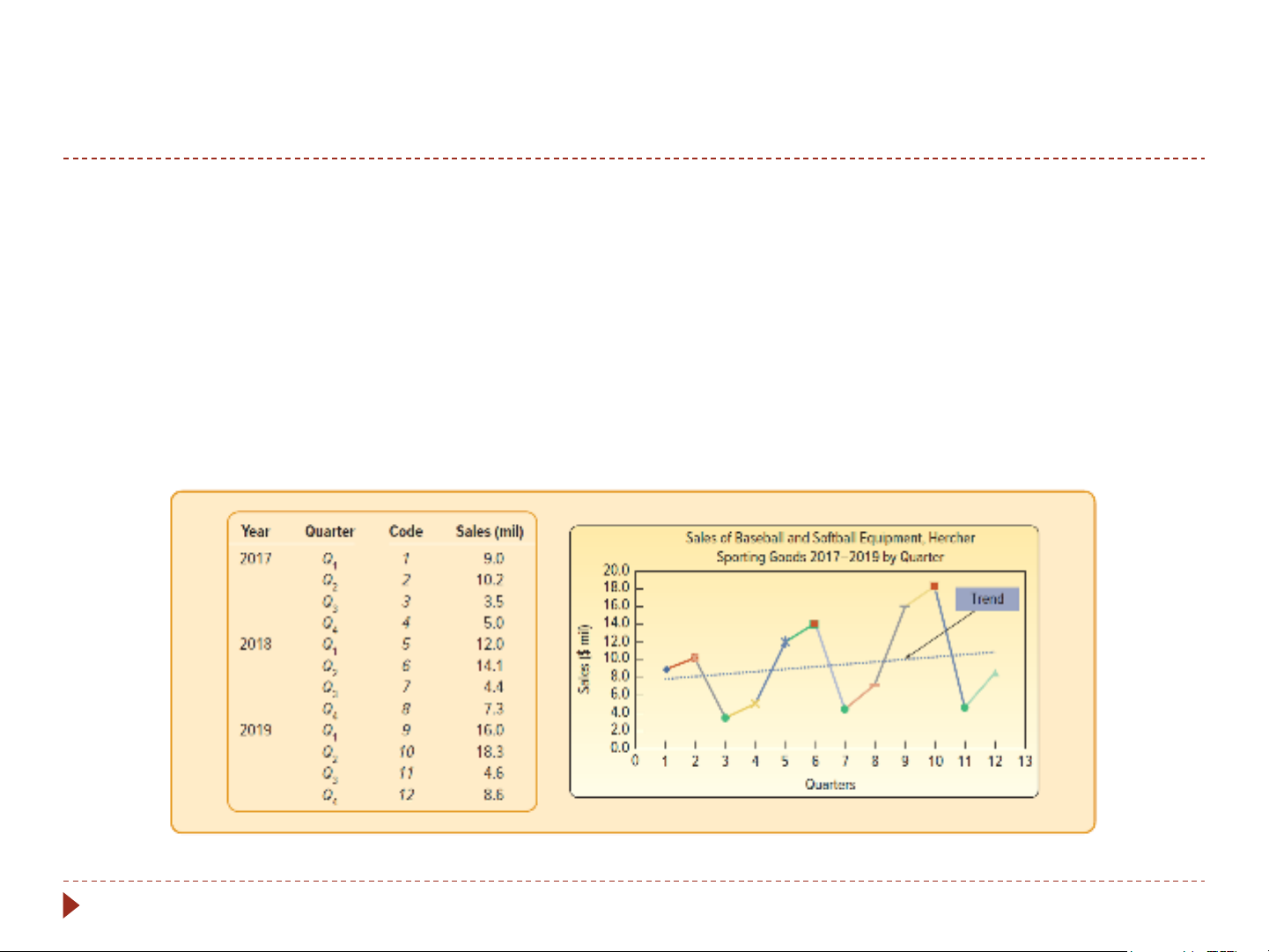
Almost all businesses tend to have recurring seasonal patterns
Men’s and women’s apparel have high sales right before
Christmas and low sales in January
Sporting good stores will have seasonal fluctuations 5-6 Cyclical Variation Example
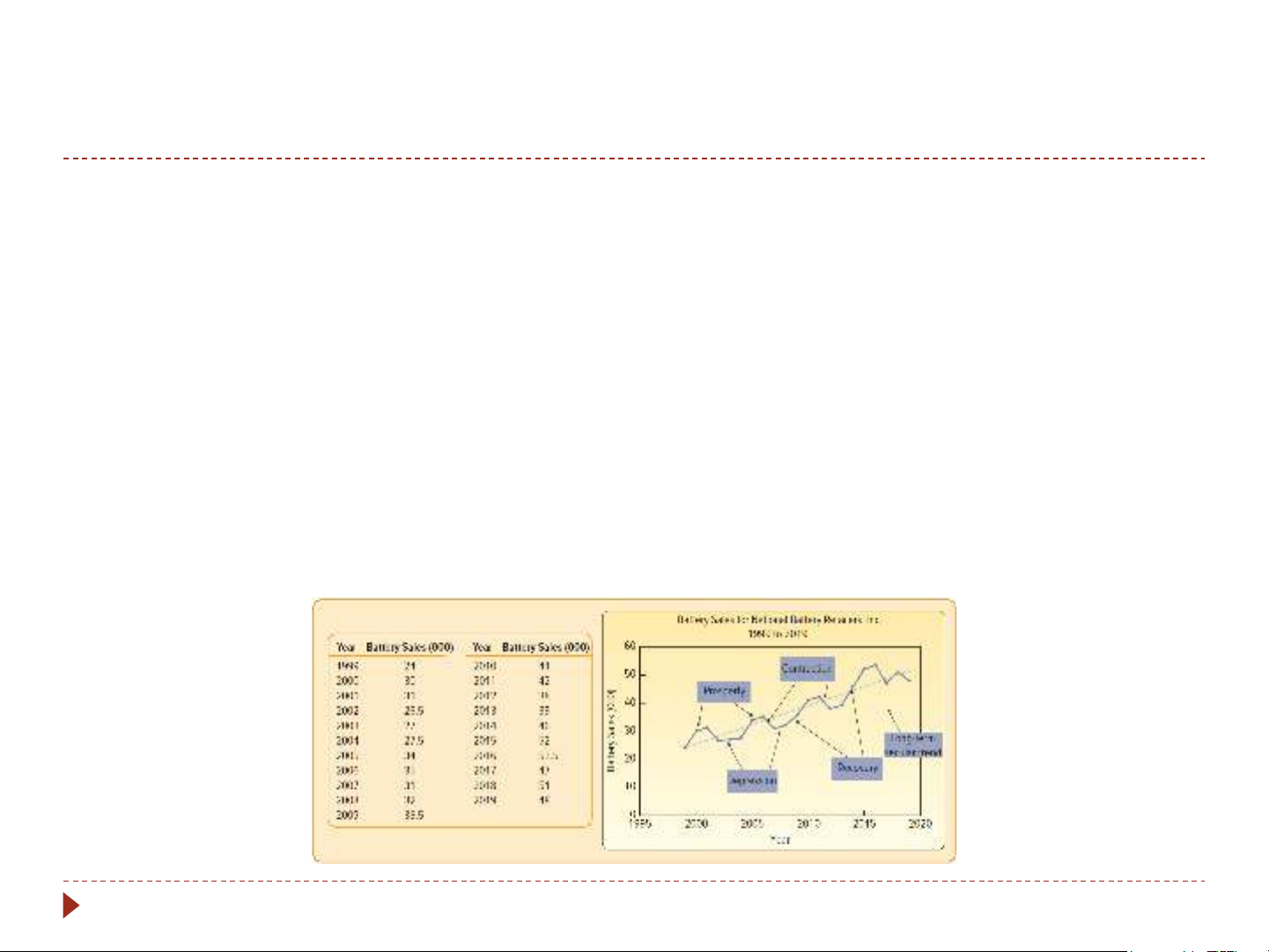
A typical business cycle consists of a period of prosperity
followed by periods of recession, depression, and then recovery
In periods of recession, employment, production, the
DJIA, and other business and economic series are below the long-term trend lines
In times of prosperity, they are above the long-term trend lines 5-7 Moving Averages
A moving average is used to smooth the trend in a time series
It is the basic method used in measuring seasonal fluctuation
To apply a moving average, the data needs to follow a
fairly linear trend and have a rhythmic pattern of fluctuations
This is accomplished by “moving” the mean values through the time series 5-8 Moving Average Example
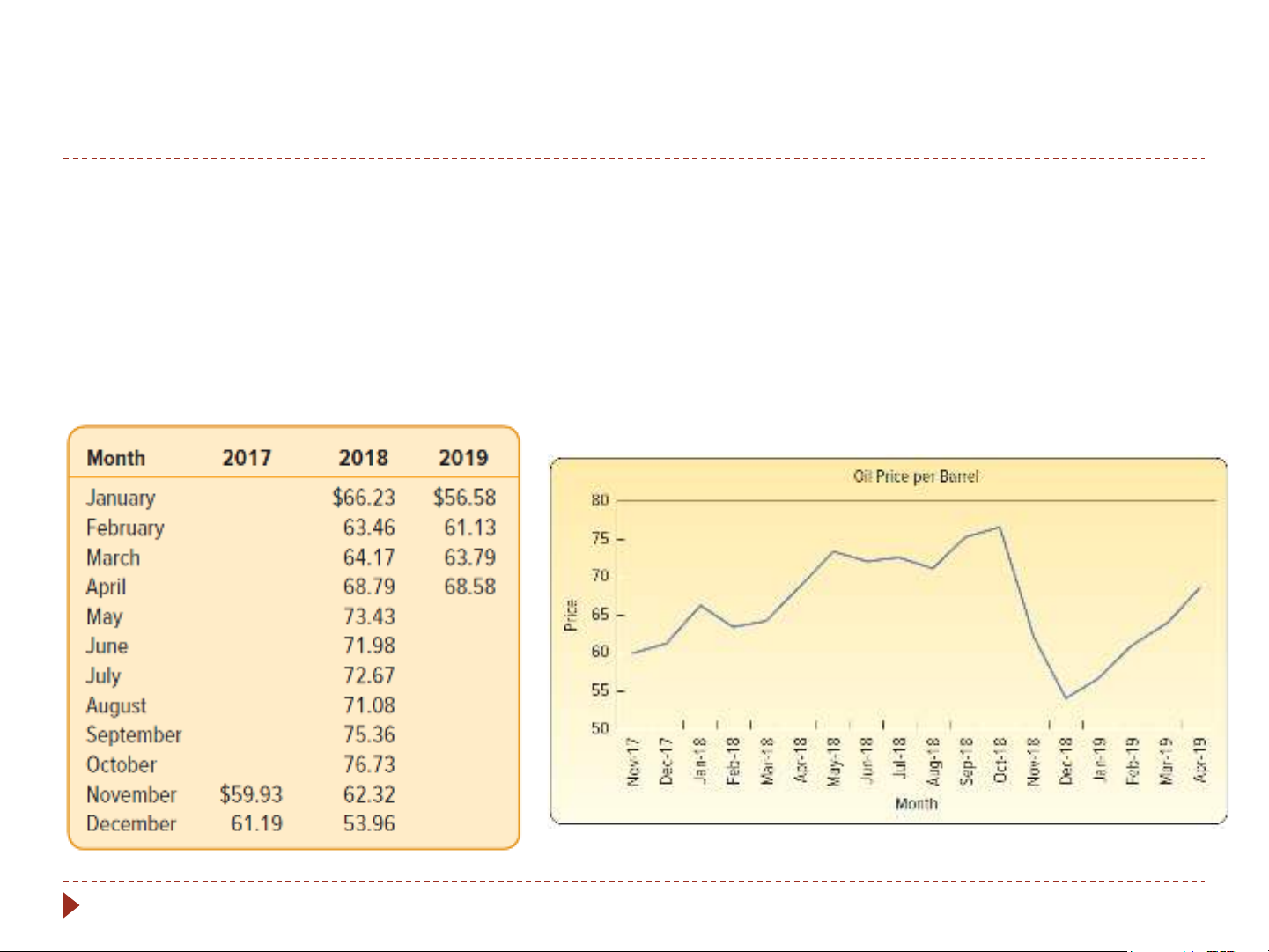
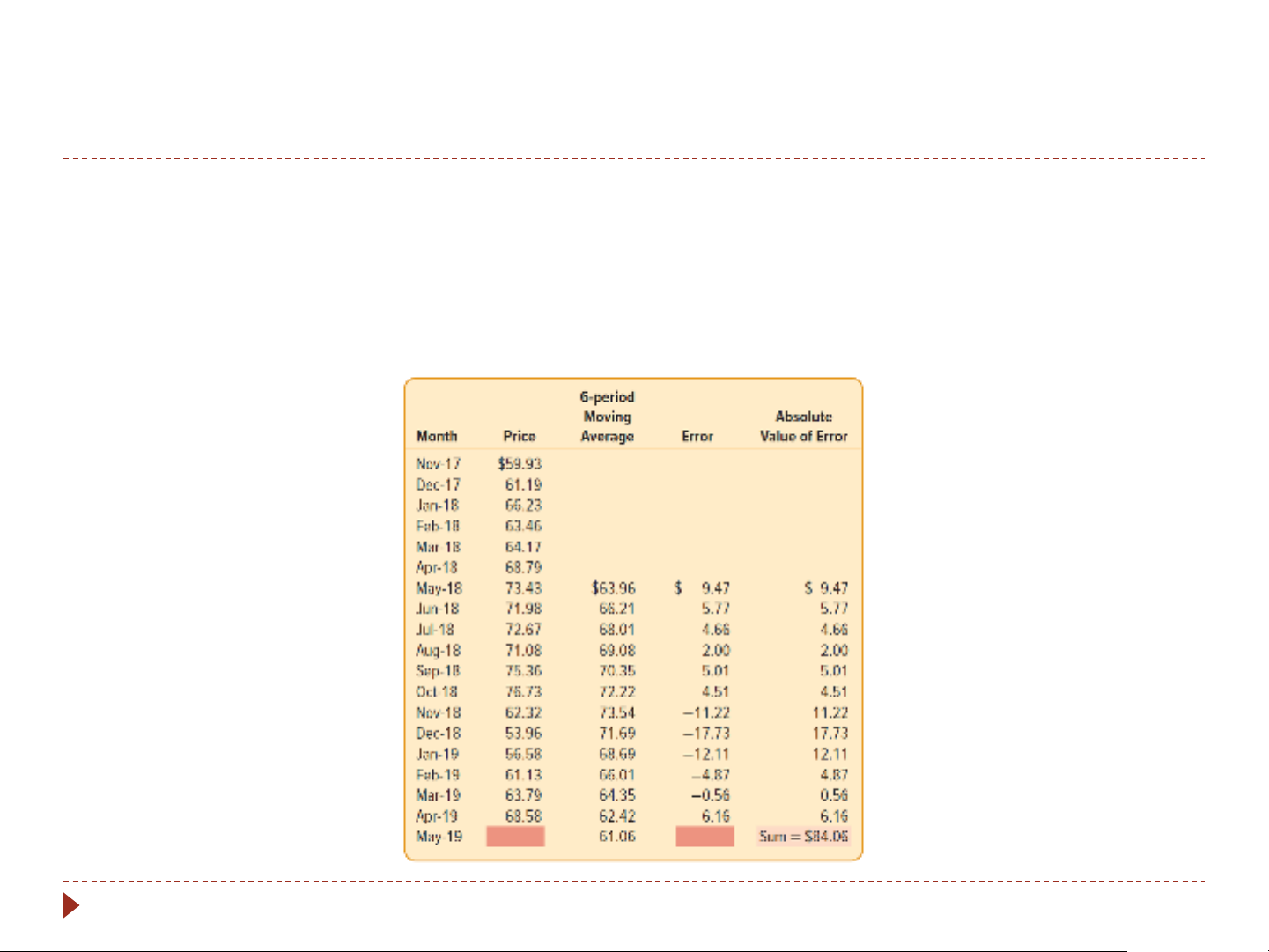
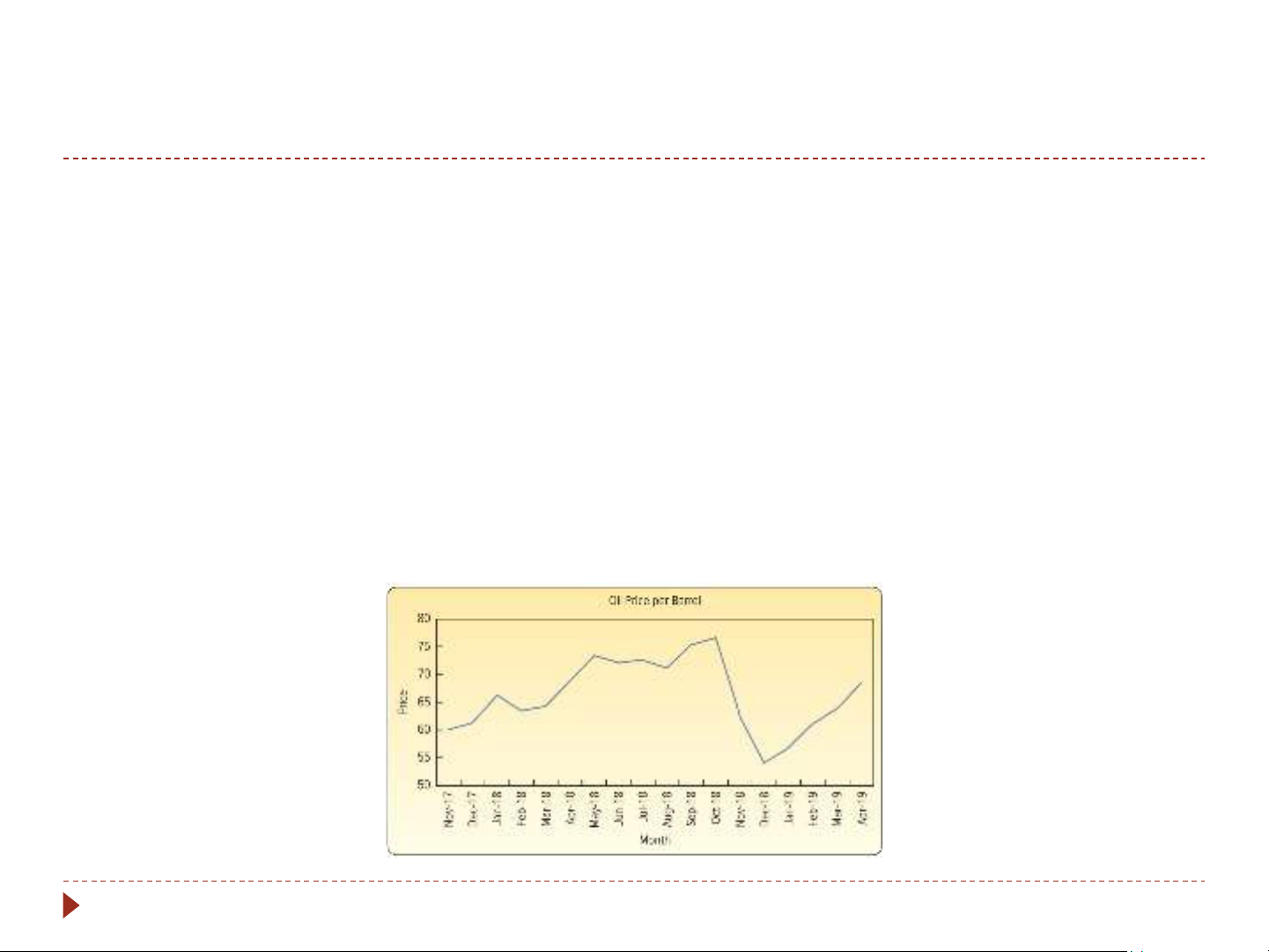
Shown is a time series of the monthly market price for a
barrel of oil over 18 months. Use a three-period and a six-
period simple moving average to forecast the oil price for May 2019. 5-9
3- and 6- Period Moving Average Example
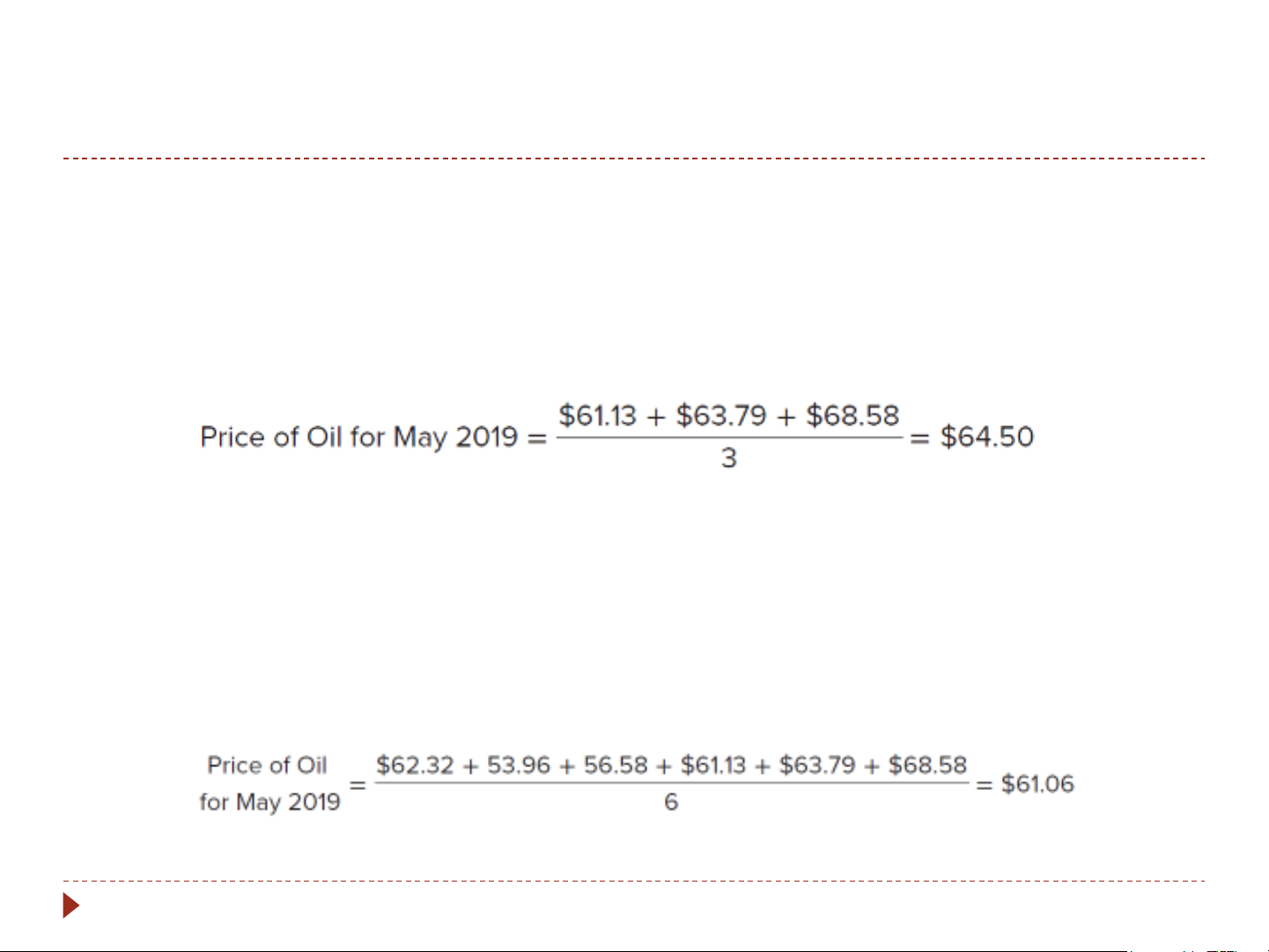
Using a three-period simple moving average, the forecast for
May 2019 would be the average of the prices from the most
recent 3 months: February, March, and April of 2019. The
forecast is computed as follows:
Using a six-period simple moving average, the forecast for May
2019 would be the average of the prices from the most recent
6 months: November, December, January, February, March, and
April of 2019. The forecast is computed as follows: 5-10 Forecasting Error
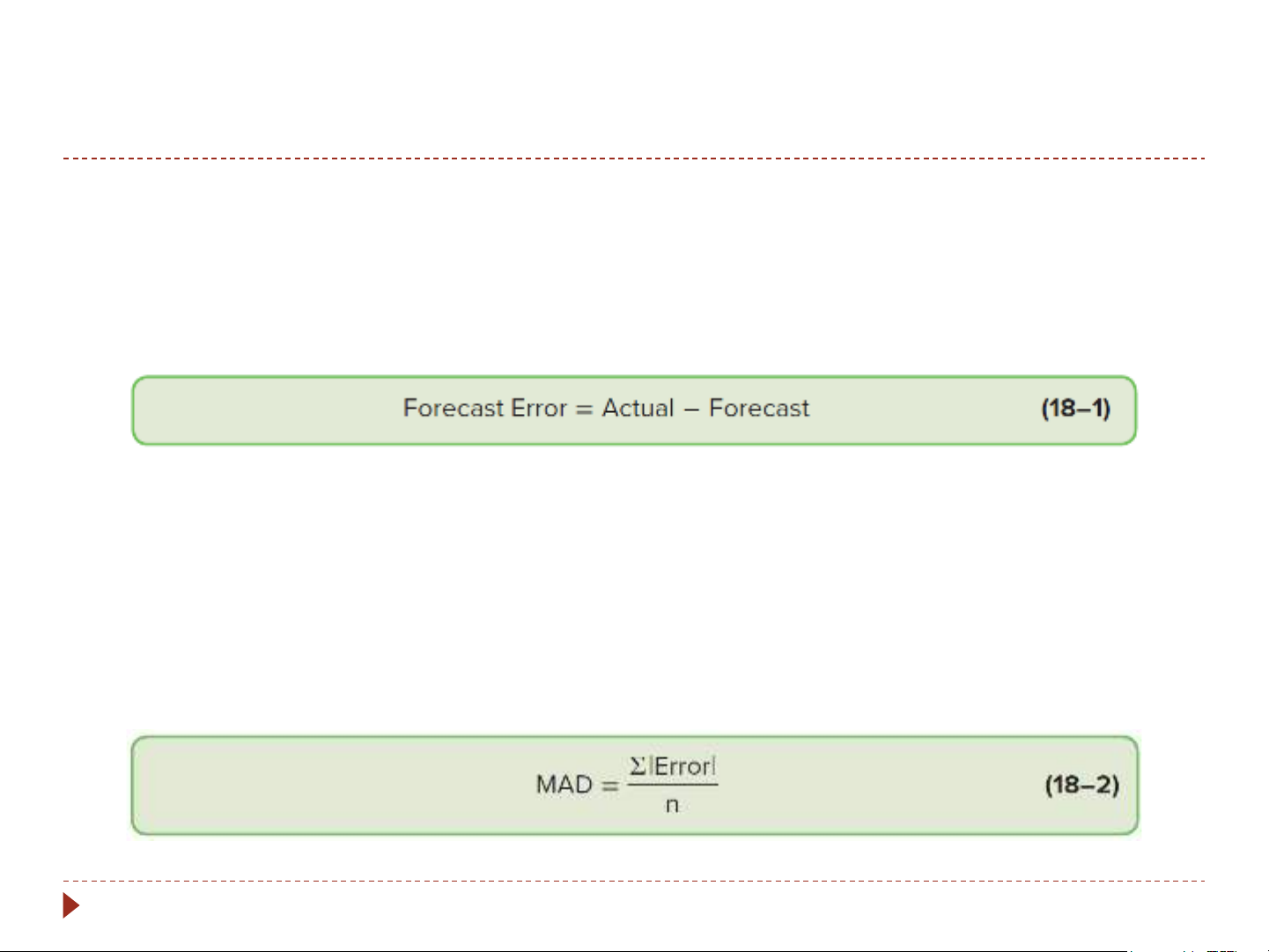
Any estimate or forecast is likely to be imprecise. The
error, or lack of precision, is the difference between the
actual observation and the forecast.
This difference is called a deviation of the forecast from the actual value.
The mean of the absolute errors is called the mean absolute deviation (MAD). 5-11
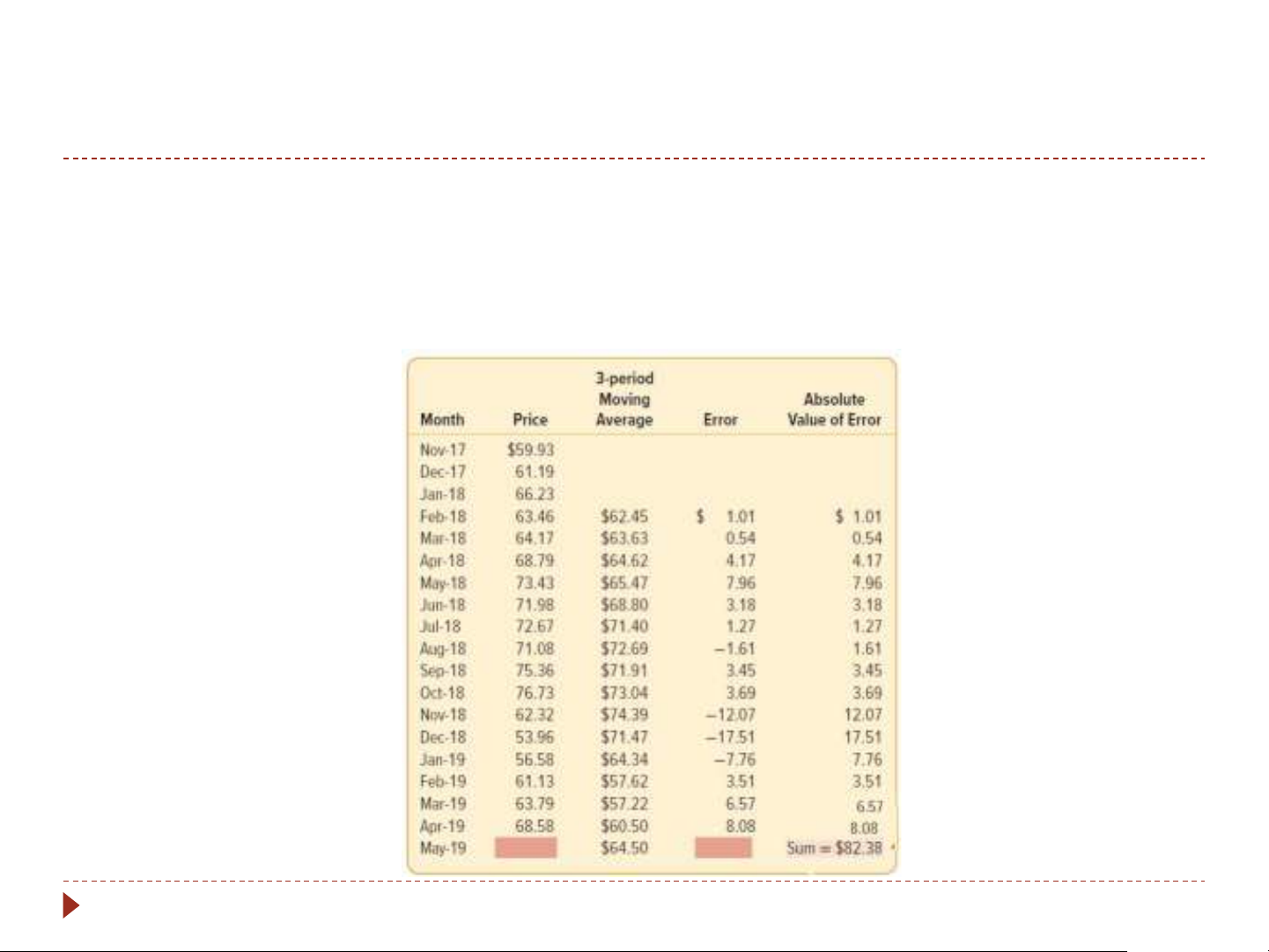
3-Period Moving Average Including Error
We report that the forecast for May 2019 is $64.50 with a MAD of $5.49.
Using a three-period simple moving average, we can expect the forecasted
May 2019 oil price to be between $59.01 (found by $64.50 − $5.49) and
$69.99 (found by $64.50 + $5.49). 5-12
6-Period Moving Average Including Error
Using a 6-month moving average model, the MAD or the average variability
of forecast error is $7.01. Recalling that the 6-month moving average
forecast for May 2019 is $61.06, we can expect the forecasted May 2019 oil
price to be between $54.05 (found by $61.06 − $7.01) and $68.07 (found by $61.06 + $7.01). 5-13
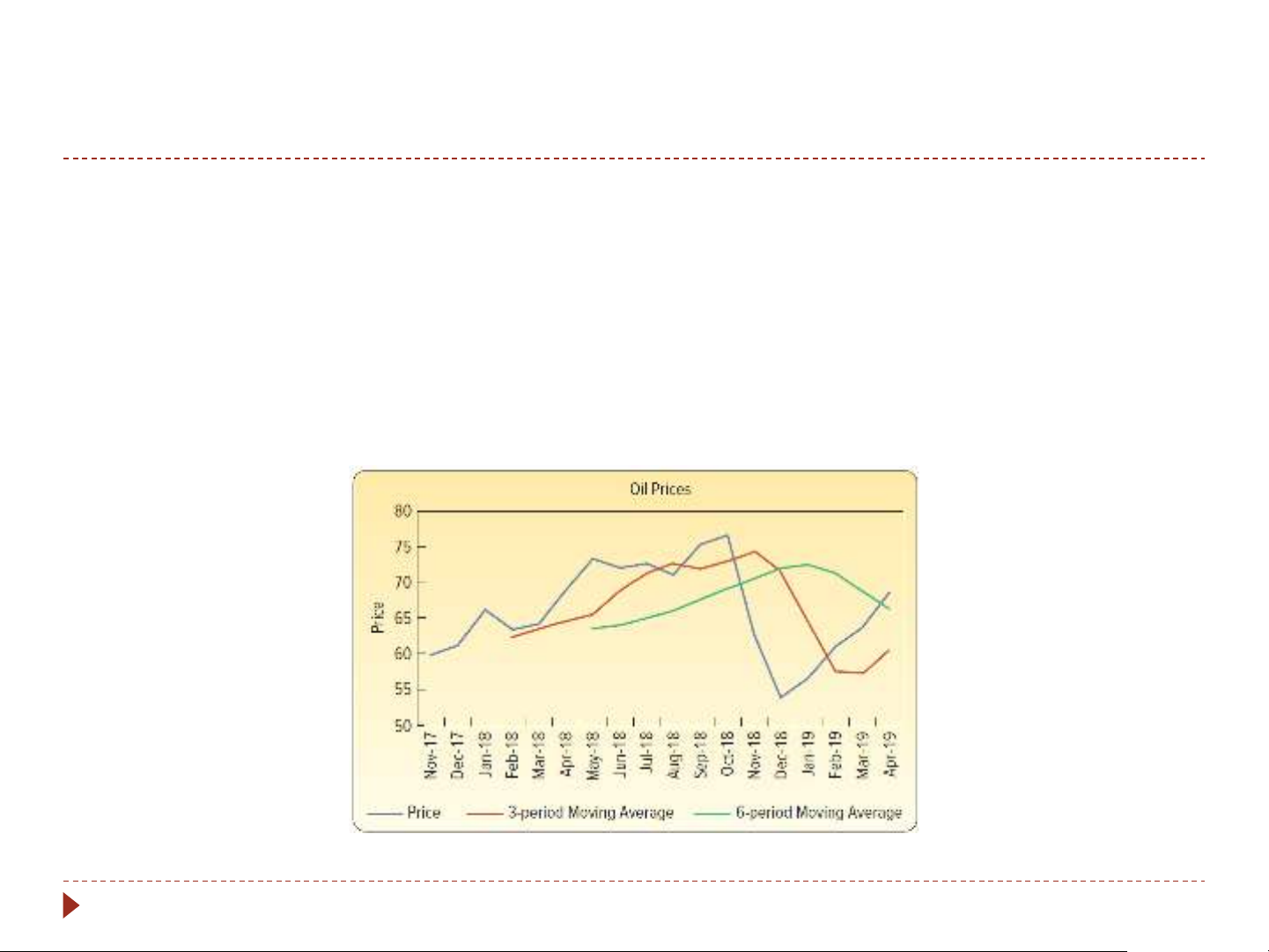
Simple Moving Average Comparison
An outcome of using more periods in a simple moving average
is its effect on the variation of the forecasts.
The variation in the forecasts is related to the number of
observations in a simple moving average. More periods will
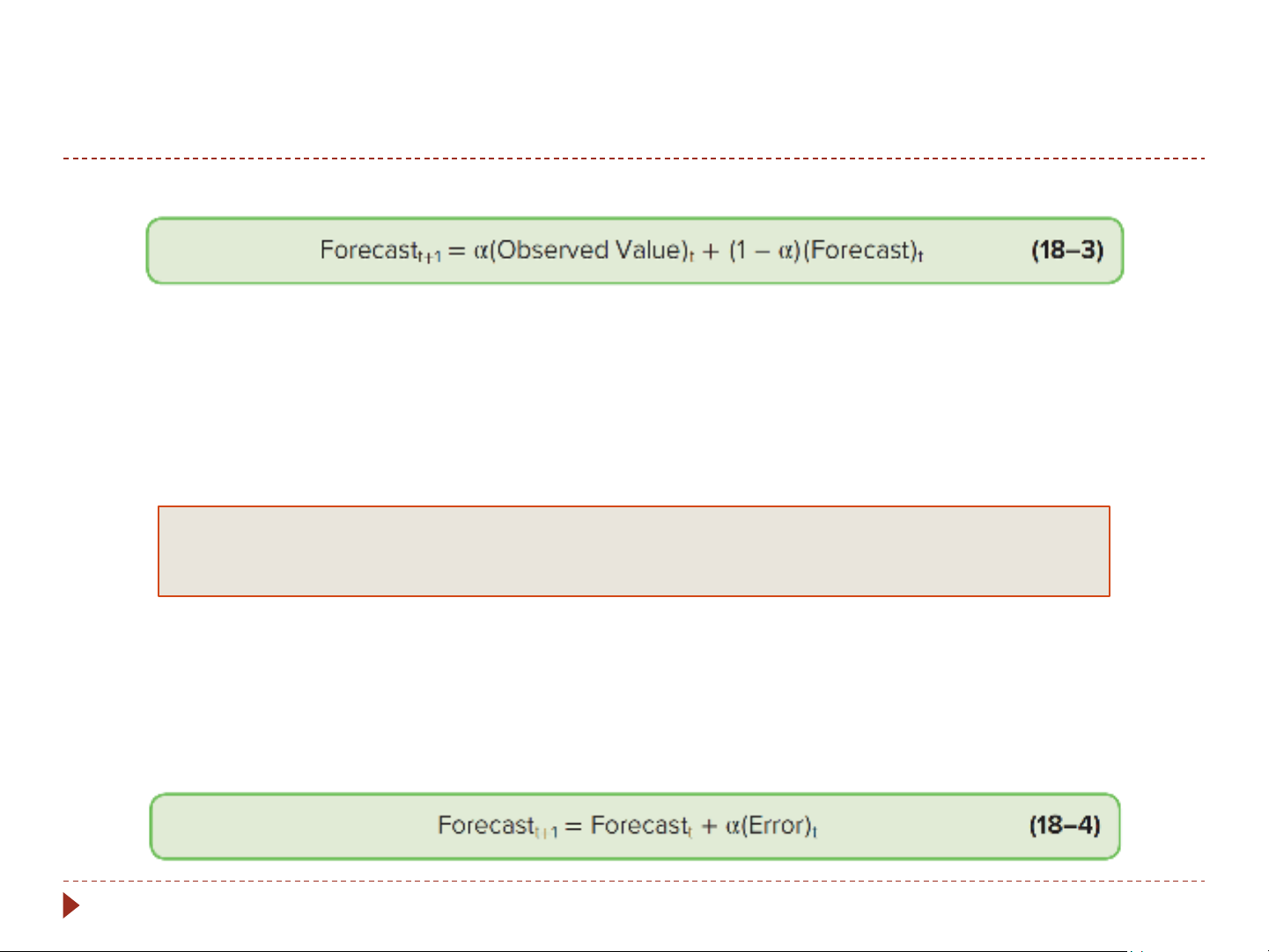
reduce the variation in the forecasts. 5-14 Simple Exponential Smoothing t = time period t+1 = next time period
Alpha (α) = smoothing constant
SMOOTHING CONSTANT A value applied in exponential smoothing
to determine the weights assigned to past observations.
Smoothing constant is between 0 and 1
Selecting a smoothing constant value near 1 means that recent
data will receive more weight than older data. 5-15
Simple Exponential Smoothing Example
Using simple exponential smoothing with a smoothing
constant of 0.1, the exponential smoothing equation would be: Forecast = Forecast + 0.1(error) t+1 t t
The forecast for January 2018 is: Forecast = Forecast + 0.1(error) January December December Forecast
= $59.93 + 0.1($1.26) = $60.0560 January Forecast Error
= $66.23 − $60.06 = $6.1740 January 5-16
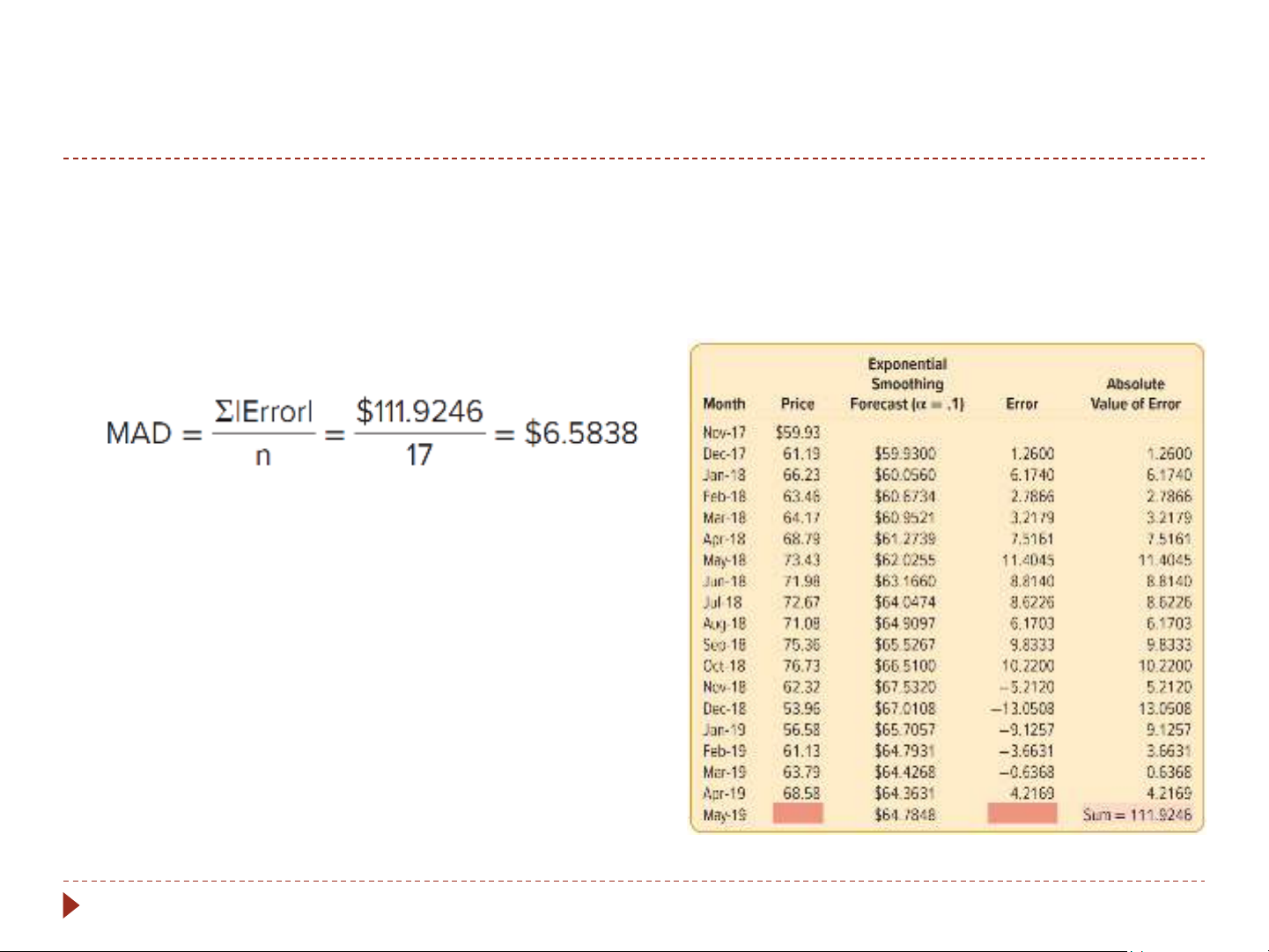
Simple Exponential Smoothing Example Continued
The smoothing formula is applied through the time series
data until the last possible forecast for May 2019 is made. MAD is then computed: 5-17
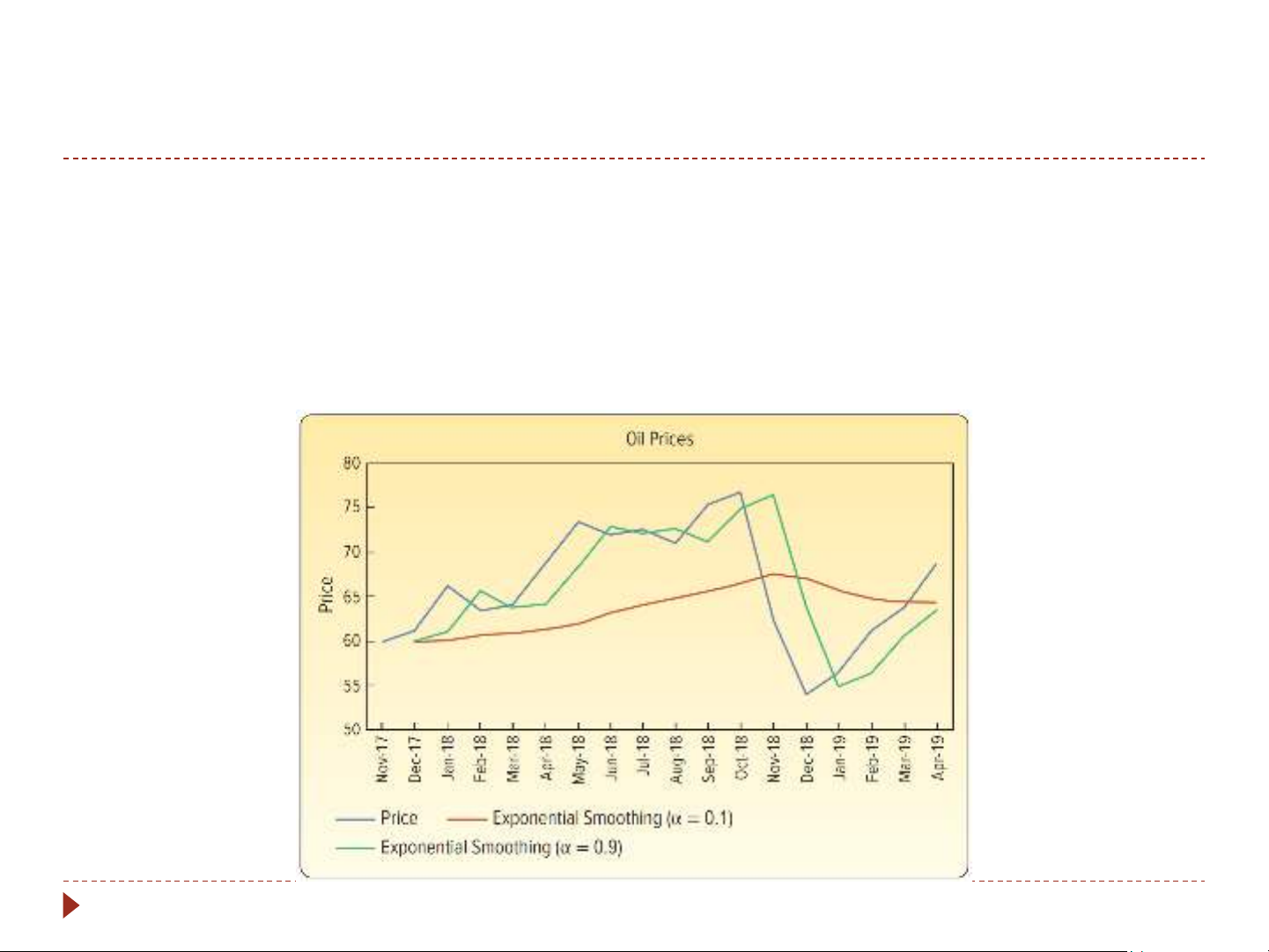
Simple Exponential Smoothing Example Concluded
The forecast with the high alpha value, the green line graph, is
very responsive to the most recent oil price.
The forecast with the low alpha value, the red line graph, is
much smoother and follows the average of oil prices over time. 5-18
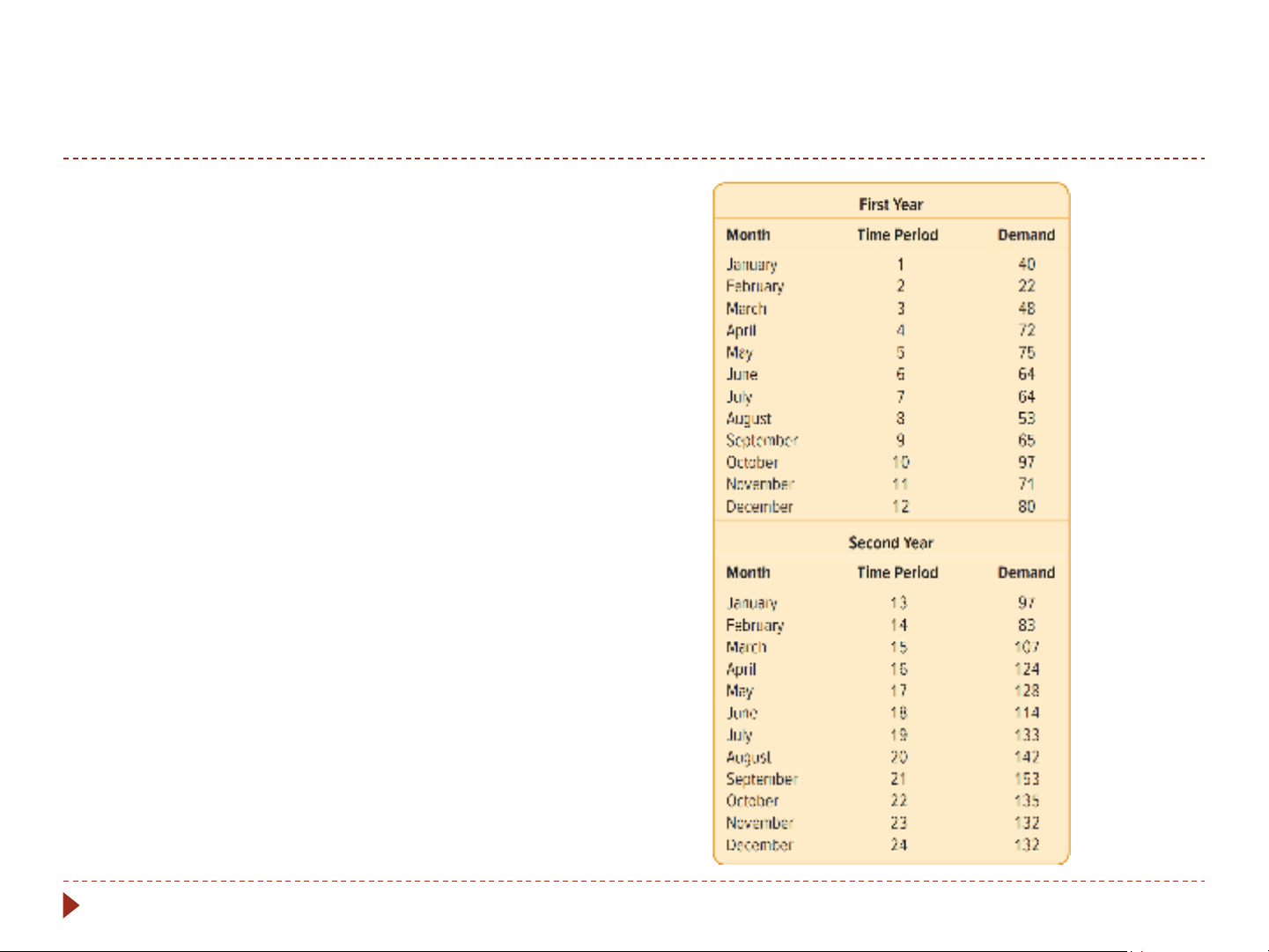
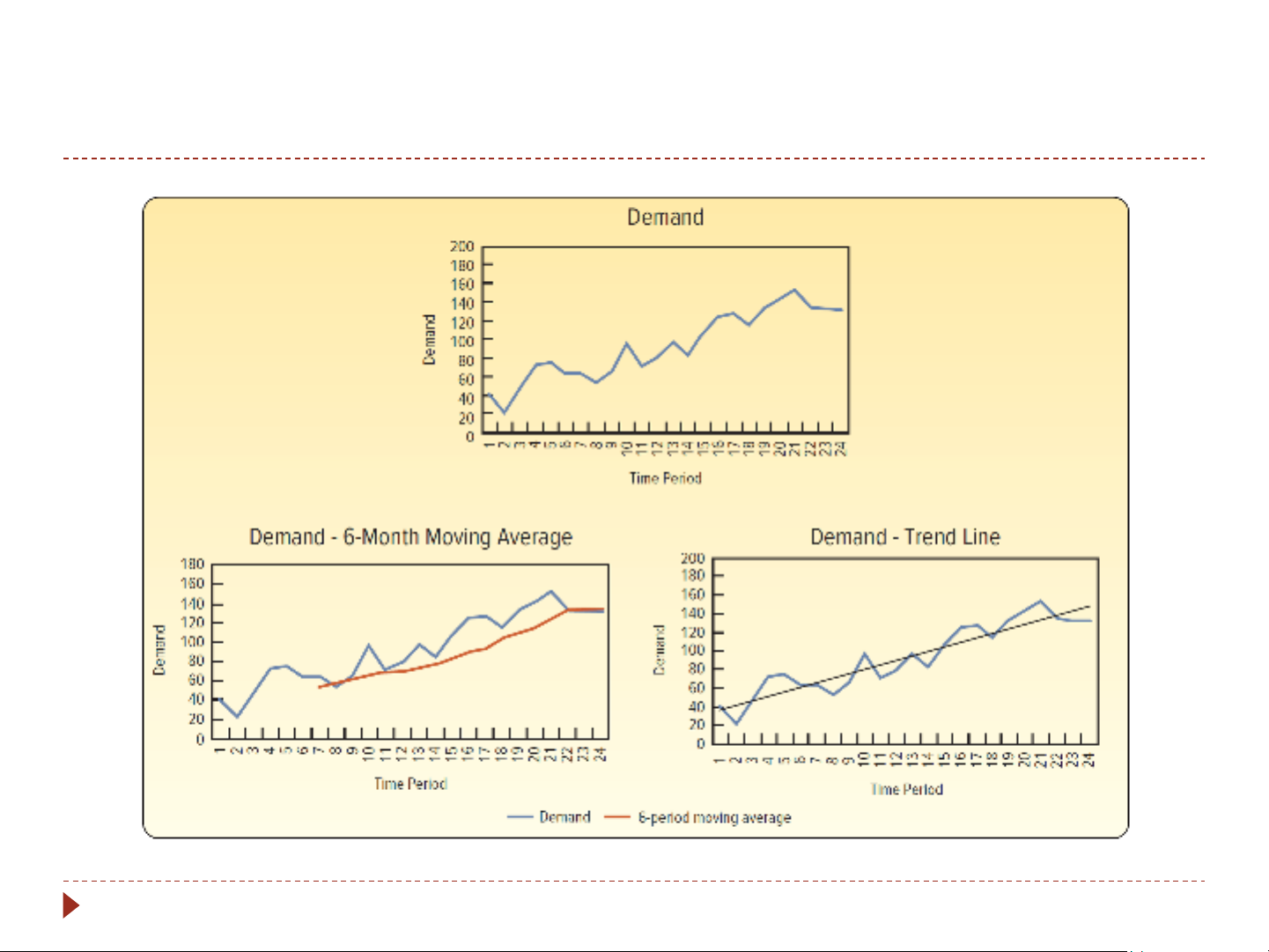
Time Series with a Trend: Regression Analysis If the trend is linear, regression analysis is used to fit a linear trend model to the time series. This time series is two years of monthly demand data. Each observation is labeled with the month. 5-19 Regression Analysis Example 5-20
Tài liệu liên quan:
-
Thống kê các ưng dụng của kinh tế
14 7 -

Vấn đề tôn giáo trong thời kì quá độ lên chủ nghĩa xã hội - Xác suất thống kê | Đại học Mở Thành phố Hồ Chí Minh
266 133 -

Đề cương Thống kê ứng dụng - Xác suất thống kê | Đại học Mở Thành phố Hồ Chí Minh
779 390 -

Phân tích Báo cáo tài chính - Xác suất thống kê | Đại học Mở Thành phố Hồ Chí Minh
418 209