Bản thuyết trình về Giá Trần - Chương 4: Phân Tích và Giải Pháp môn Kinh tế vi mô | Trường Đại học Kinh Tế Quốc Dân
Price ceiling: a legal maximum on the price at which a good can besold.-Non-binding price ceiling: A Price ceiling set above the equilibrium price has no effect on the market outcome . Tài liệu giúp bạn tham khảo, ôn tập và đạt kết quả cao. Mời đọc đón xem!
Môn: Kinh tế vi mô ( NEU ) 762 tài liệu
Trường: Trường Đại học Kinh Tế Quốc Dân 7.5 K tài liệu
Tác giả:




Preview text:
DEFINITION:
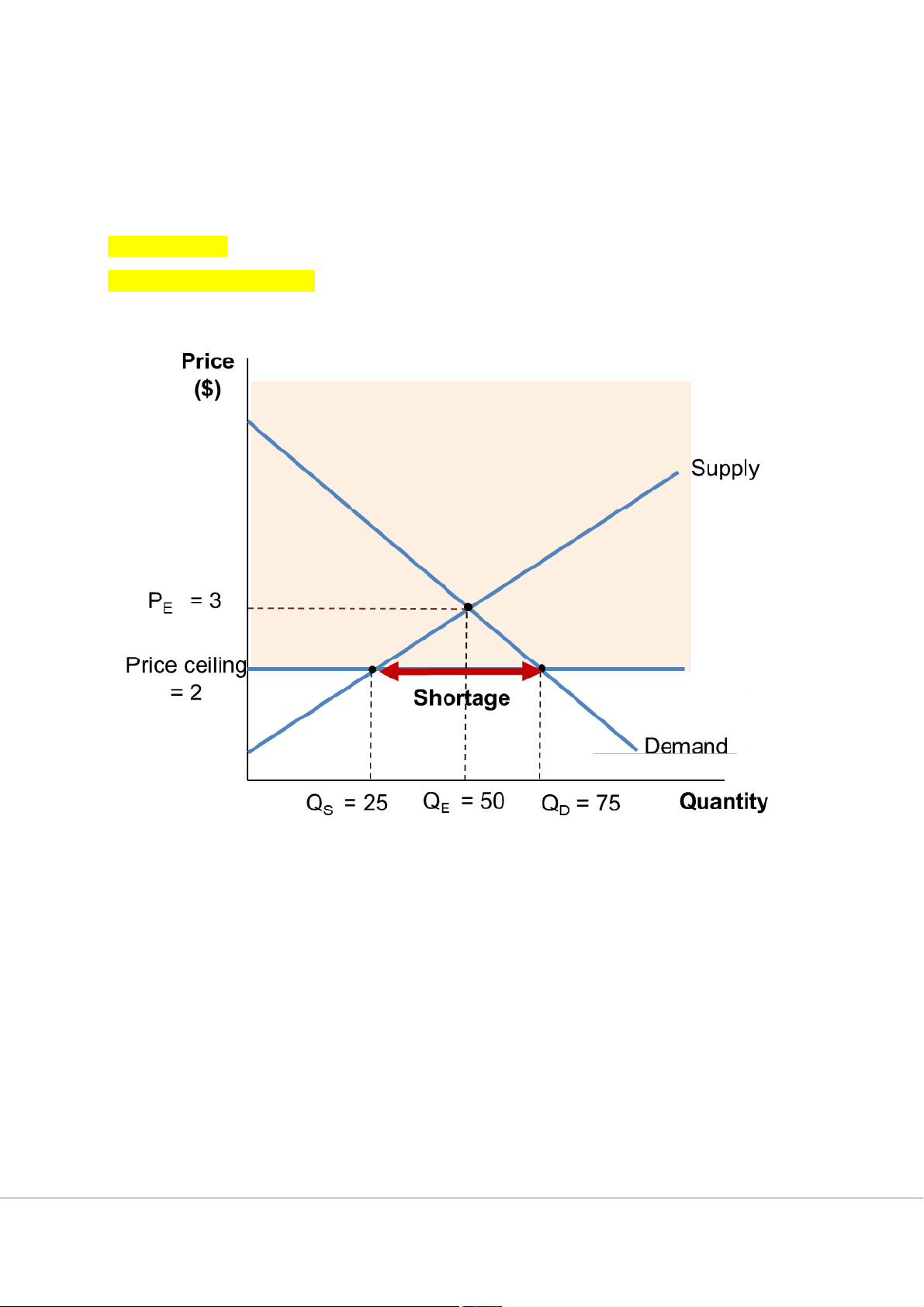
Price ceiling: a legal maximum on the price at which a good can be sold.
-Non-binding price ceiling: A Price ceiling set above the equilibrium price has no effect on the market outcome. THIẾU ĐỒ THỊ THÊM VÍ DỤ PHÂN TÍCH
-Binding price ceiling: A price ceiling set below the equilibrium price causes a shortage. TARGETS:
1. Keeps prices affordable
In the short term, price ceilings keep goods and services affordable for consumers. They prevent
sellers from taking unfair advantage and charging exorbitant prices. If a temporary shortage is
causing inflation, ceilings can keep prices within an affordable range for consumers until supply increases. 2. Stimulates demand
When prices are kept to an acceptable level, it encourages consumers to spend as they take
advantage of lower prices. This is a positive sign for the overall economy.
3. Prevents price gouging
Price gouging occurs when sellers take unfair advantage of consumers. This can happen during
an emergency or disaster situation if a seller significantly increases the prices for essential goods
or services. Price ceilings prevent sellers from raising prices to unreasonable levels and allow
consumer access to necessary products. EFFECTS:
1. Can cause supply shortages
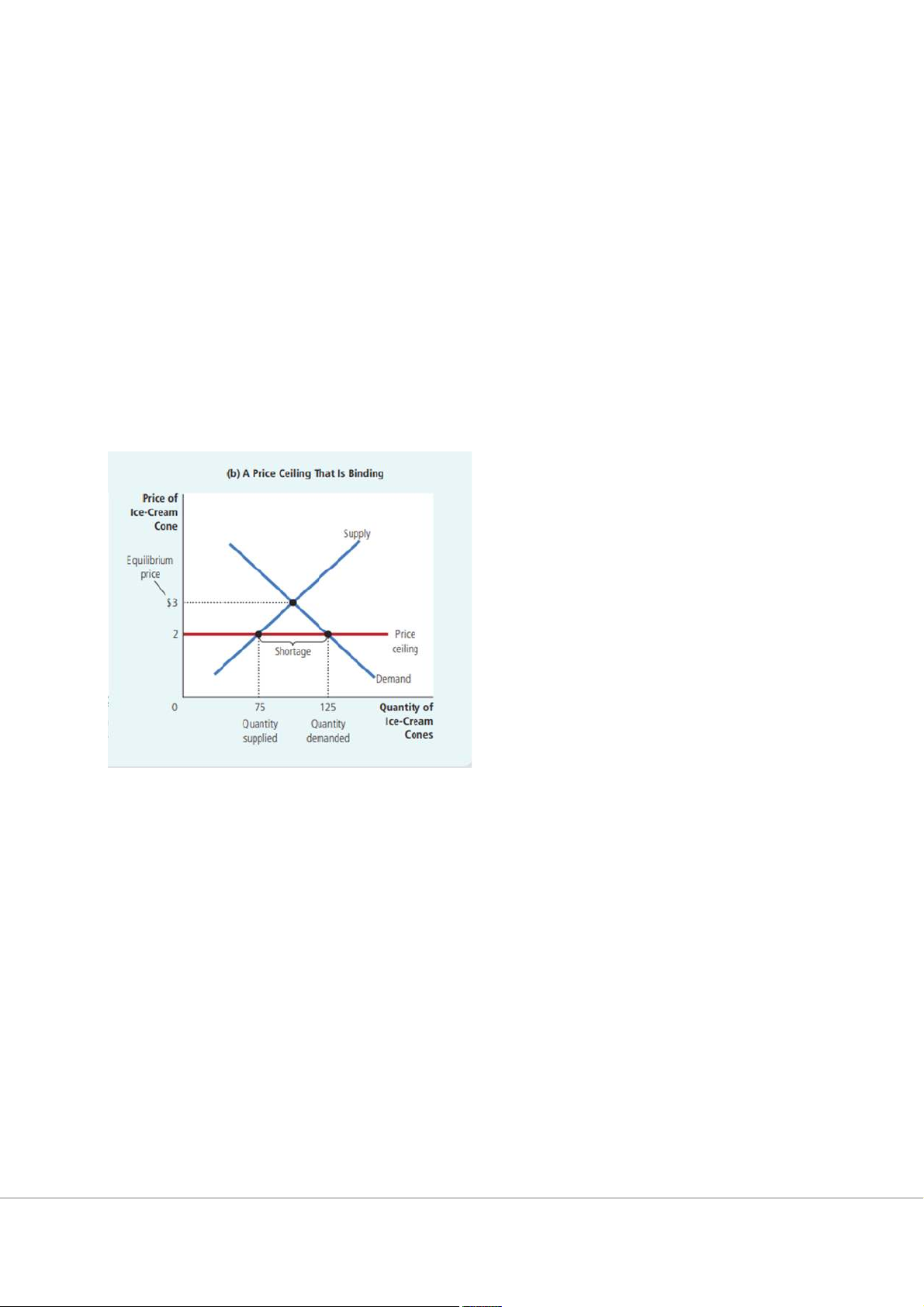
The government imposes a price ceiling of $2. Because the price ceiling is below the equilibrium
price of $3, the market price equals $2. At this price, 125 cones are demanded and only 75 are
supplied, so there is a shortage of 50 cones.
2. Induce loss of product/service quality
If lower prices don’t result in a shortage, it may be because businesses are cutting costs so they
can make a profit at the lower price point. Cutting costs can mean cheaper materials, unreliable
products, or poor quality. If the sausage vendor cuts corners, he may buy inferior-quality meat.
These cost-cutting measures will affect the taste and quality of his sausages, and they will no
longer be as desirable to the public.
3. Rise of a black market
When price ceilings create excess demand, consumers want products but cannot purchase them.
If legal suppliers can’t meet the demand, consumers may buy the products they want at a higher
price than the price ceiling allows from illegal sellers. Take football tickets as a example, this
means consumers can still get them, but only if they are willing to pay an inflated price. SOLUTIONS:
1. Price your products effectively
Governments typically calculate price ceilings that attempt to match the supply and demand
curve for the product or service in question at an economic equilibrium point. In other words,
they try to impose control within the boundaries of what the natural market will bear.
2. Tighten accreditation system
Businesses are cutting costs cheaper materials, unreliable products, or poor quality so they can
make a profit at the lower price point
The government organizes inspections to ensure the quality of the goods is up to standards
Tài liệu liên quan:
-
TOPIC: COSMETICS môn Kinh tế vi mô | Trường Đại học Kinh tế Quốc dân
2 1 -

Sách Bài Tập Vi Mô - Hướng Dẫn và Lời Giải Chi Tiết
11 6 -

Nguyên lý chiến lược kinh doanh - Bài giảng môn Kinh tế vi mô | Trường Đại học Kinh Tế Quốc Dân
12 6 -

Chương 7 các kỹ thuật lựa chọn chiến lược - Bài giảng môn Kinh tế vi mô | Trường Đại học Kinh Tế Quốc Dân
13 7 -
Tổng hợp câu hỏi trắc nghiệm theo chương ôn tập môn Kinh tế vi mô | Trường Đại học Kinh Tế Quốc Dân
17 9