Chap 11. Organizational Structures and Designs môn Principle of Management | Trường Đại học Quốc tế, Đại học Quốc gia Thành phố Hồ Chí Minh
Organizing is the process by which we assign tasks to people in our organization or our team and allow the resources to them so that they can complete the goal of the organization. Tài liệu giúp bạn tham khảo, ôn tập và đạt kết quả cao. Mời đọc đón xem!
Môn: Principles of Management 187 tài liệu
Trường: Trường Đại học Quốc tế, Đại học Quốc gia Thành phố Hồ Chí Minh 1.5 K tài liệu
Tác giả:







Preview text:
Chap 11. Organizational Structures and Designs 1.
Organizing as a management function
- Organizing is the process by which we assign tasks to people in our organization or our
team and allow the resources to them so that they can complete the goal of the
organization (resources are about time, money, equipment, tool, human resources-many
kinds of resources) And as a manager, we need to coordinate the activities. - Organization structure: + Formal structure
An organization chart is a diagram describing the responding relationships and the
formal arrangement of work positions within an organization. It includes: oThe division of work
How they divide the function, the work in the organization. oSuper relationships
Who should report to whom, who is the manager, and who is subordinate?
Ex: the one at the bottom should report to the one who is at the higher level. oCommunicate channels
Supervisory relationships tell us the communication channels, there are too many channels from up and down oMajor subunits
We know how many departments, divisions, or offices are in an organization. oLevels of management
Ex: Chairman, G.M (general manager), and then other kinds of managers + Informal structure
The set of unofficial relationships between organization members
We know who talks and interacts with whom, regardless of their formal titles and relationships.
No organization can be fully understood without gaining insight into the informal
structures as well as the formal ones.
Social network analysis (a tool)-identifies informal structures and social
relationships in the organization.
Potential advantages of informal structures:
oHelping people accomplish their work
oOvercoming limits of formal structure
oGaining access to interpersonal networks oInformal learning.
+ Traditional organization structures Departmentalization
oGroups people with jobs into work units of formal teams.
oThese formal teams are linked to create 3 major types of traditional
organizational structures: functional structure, divisional structure, matrix structure 2. TR
ADITIONAL ORGANIZATION STRUCTURES -Functional Structures
+ People with similar skills and performing similar tasks are grouped into formal work units
This kind of organization organizes the task or groups people by function
Ex: Marketing department, human resource department,... is kind of functional structure
+ Members work in their functional areas of expertise
Ex: People who are in the chart of marketing will work in the division that called the marketing department + Are not limited to business
+ Work well for small organizations producing few products or services
+ Potential advantages of functional structures Economics of scale
We can minimize the number of staff because we group people who are experts in
one specific field area in the same department-we can reduce the number of people
and therefore, we can reduce the labor cost.
Task assignments consistent with expertise and training
They are trained about that subject, they are trained about that business area, they are the expert.
High-quality technical problem-solving
Ex: People who work in marketing, they have trained on that already, so they have high-
quality technical problem solving regarding the issues they face
In-depth training and skill development
Clear career path within functions
Ex: In marketing, if you graduate from IU and you are interested in working in
marketing, the entry job you will be marketing officer, then, a few years later, you
accumulate experience, you understand more about the world, you will be promoted and
become supervisor, then you will be promoted to manager and become supervisor, then
you will be promoted to manager, vice president, and president,...
+ Potential disadvantages of functional structures:
Difficulties in pinpointing responsibilities
Functional chimneys problem
Sense of cooperation and common purpose break down
The narrow view of performance objectives
The most common problem with functional structure is that b/c we work in only
one department, we may misunderstand the job of other people in a different
department, usually, it comes with communication problems because of the misunderstanding.
Ex: If you work in the human resource department, you tend to appreciate, to value your
job more than another job, so you bear thinking, a mindset as you are the most important
one and you ignore the importance of other functions. -Divisional structures
With divisional structure, the organization will assign and decide the work based
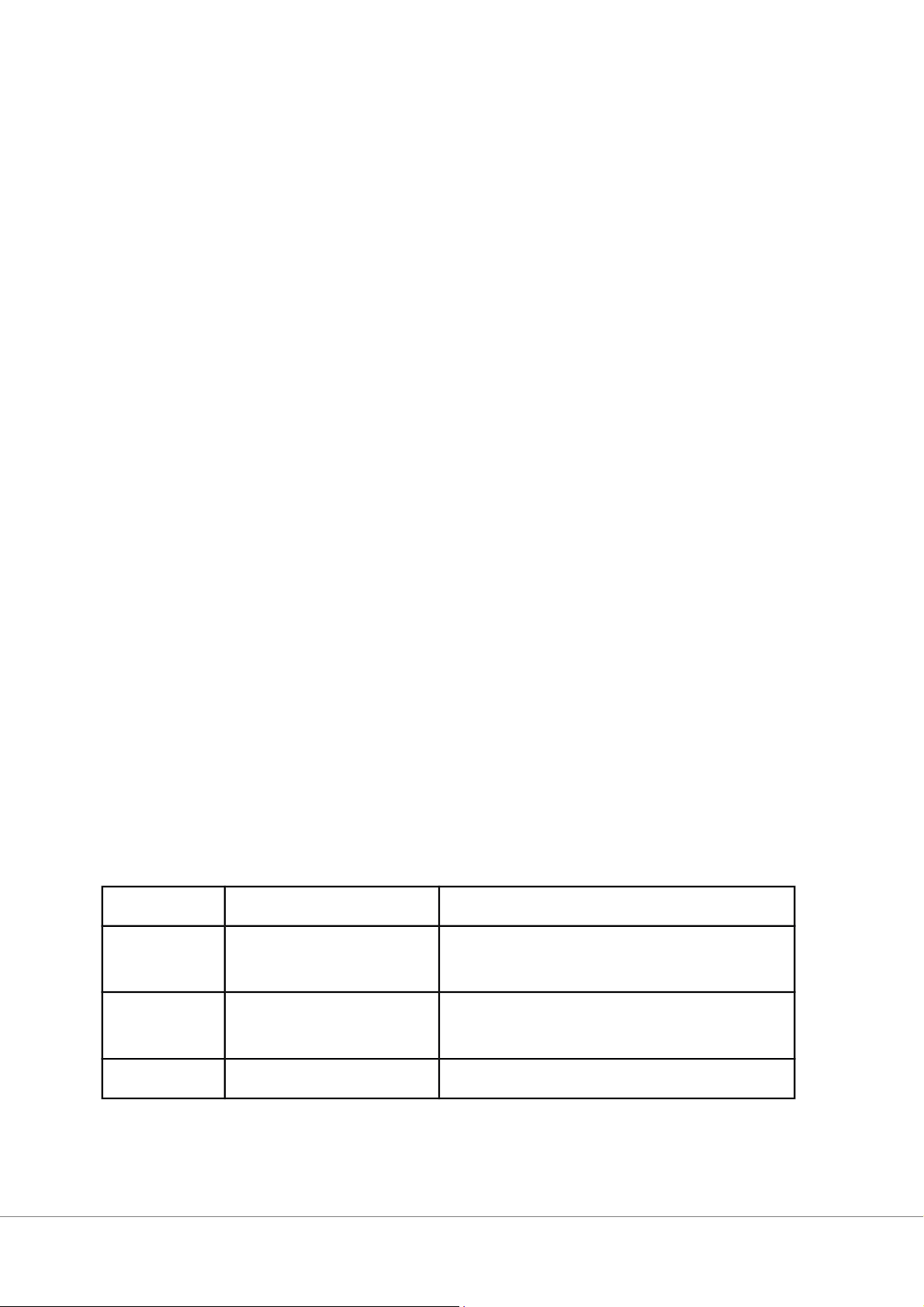
on the product line, geography, customer segment, or process. Type Focus Example Product Good or service
General Manager, Grocery products, produced Drugs, and toiletries
Geographical Location of activity
President, Asian division, European division Customer Customer or client
Agency Administrator, Problem youth, serviced Senior citizens Process Activities part of the
Catalog sales manager, product same process purchasing, order fulfillment
Ex: Unilever, they have much product, a brand so they assign people who work for the
product line in the same division.
The division will be in the chart of the whole process of the product from
production from marketing, sales,...
+ Group together people who work on the same product or process, serve similar
customers, and/or are allocated in the same area or geographical region
+ Common in complex organizations
+Avoid problems associated with functional structures -Matix structures:
+ Combines functional and divisional structrures to gain advantages of both and minimize disadvantages of each
+ Used in: manufacturing, service industry, professional fields, non-profit sector, multi-national corporations
+ Potential advantages of matrix structures:
Better cooperation across functions Improved dicision making
Increased flexibility in restructuring Better customer service
Better performance accountability
Improved strategic management
+ Potential disadvantages of matrix structures:
Two-boss system is susceptible to power struggles
Two-boss system can create task confusion and conflict in work priorities
Team meetings are time consuming
Team may develop “groupitis”
Increased costs due to adding team leaders to structure
3. Horizontal organization structures - Team structures:
+ Extensively use permanent and temporary teams to solve problems, complete
special projects, and accomplish day-to-day tasks
+ Often use cross-functional teams composed of members from different functional departments
+ Project teams are convened for a specific task or project and disbanded once completed
Team structure is usually seen in project, when organization develop a new project,
they acquire individual among different departments or divisions
+ Potential advantages of team structures:
Eliminates difficulties with communication and dicision making
Eliminates barriers between operating departments Improved morale
Greater sense of involvement and identification
Increased enthusiasm for work
Improved quality and speed of decision making
+ Potential disadvantages of team structures:
Conflicting loyalties among members
Excessive time spent in meetings
Effective use of time depends on quality of interpersonal relations, group dynamics, and team management -Network structures:
+ Use information technologies to link with networks of outside suppliers and service contractors
+ Own only core components and use strategic alliances or outsourcing to provide other components
Network structure is a kind of structures that use information technology to
connect everyone together. It bases on the application of network, of technology
+ Potential advantages of network structures:
Firms can operate with fewer full-time employees and less complex internal systems
Reduced overhead costs and increased operating efficiency
Permits operations across great distances
+ Potential disadvantages of network structures:
Control and coordination problems may arise from network complexity
Potential loss of control over oursourced activities
Potential lack of loyalty among infrequently used contractors
Excessively aggressive outsourcing can be dangerous -Boundaryless structures
+ Eliminate internal boundaries among subsystems and external boundaries with the external environment
+ A combination of team and network structures, with the addition of “temporariness”
Tài liệu liên quan:
-
Leadership Styles Preferred by Generation Z môn Principle of Management | Trường Đại học Quốc tế, Đại học Quốc gia Thành phố Hồ Chí Minh
3 2 -

Chapter 7 Blowing the Whistl môn Principle of Management | Trường Đại học Quốc tế, Đại học Quốc gia Thành phố Hồ Chí Minh
3 2 -
Chapter 11 - Organizational Structures and Their Impacts on Leadership môn Principle of Management | Trường Đại học Quốc tế, Đại học Quốc gia Thành phố Hồ Chí Minh
3 2 -
Lecture 2: Relational Model and Algebra môn Principle of Management | Trường Đại học Quốc tế, Đại học Quốc gia Thành phố Hồ Chí Minh
3 2 -
Lecture 6: ER –Relational Translation môn Principle of Management | Trường Đại học Quốc tế, Đại học Quốc gia Thành phố Hồ Chí Minh
3 2