CHAP 5 - Elastic Demand & Price Elasticity Analysis môn Kinh tế vi mô | Trường Đại học Kinh Tế Quốc Dân
Price elasticity of demand measures how much the quantitydemanded responds to a change in price .Tài liệu giúp bạn tham khảo, ôn tập và đạt kết quả cao. Mời đọc đón xem!
Môn: Kinh tế vi mô ( NEU ) 762 tài liệu
Trường: Trường Đại học Kinh Tế Quốc Dân 7.6 K tài liệu
Tác giả:



Preview text:
I. ELASTIC DEMAND
1. The Price Elasticity of Demand and Its Determinants
Price elasticity of demand measures how much the quantity demanded responds to a change in price.
Be elastic if the quantity demanded responds substantially to changes in the price.
Be inelastic if the quantity demanded responds only slightly to changes in the price. Determinants:
Availability of Close Substitutes : Goods with close substitutes tend to have
more elastic demand because it is easier for consumers to switch from that good to others.
Price elasticity is higher when close substitutes are available
Necessities versus Luxuries Necessities tend to have inelastic demands,
whereas luxuries have elastic demands.
Price elasticity is higher for luxuries than for necessities.
Definition of the Market The elasticity of demand in any market depends on
how we draw the boundaries of the market. Narrowly defined markets tend to
have more elastic demand than broadly defined markets because it is easier to
find close substitutes for narrowly defined goods.
Price elasticity is higher for narrowly defined goods than for broadly defined ones.
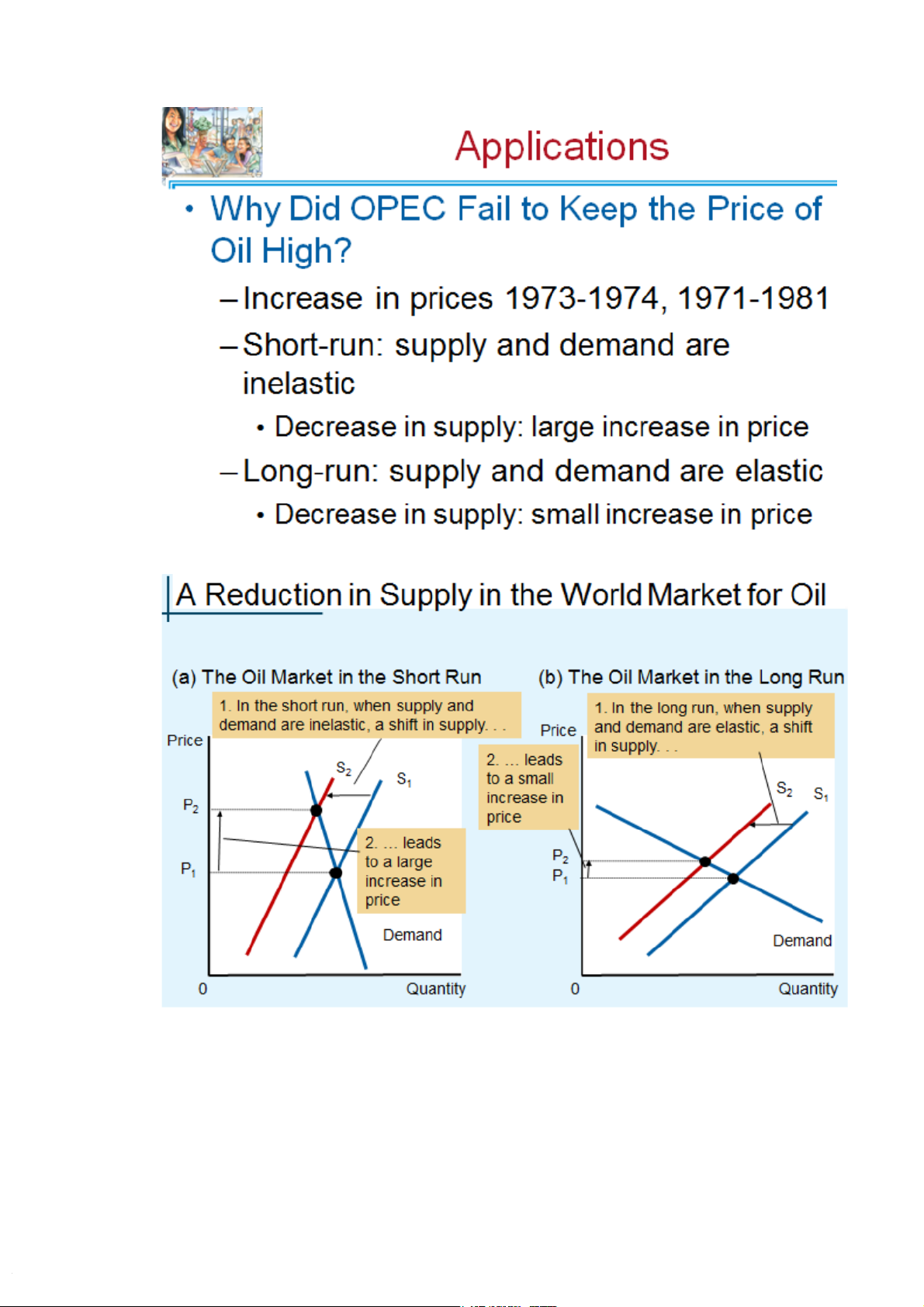
Time Horizon Goods tend to have more elastic demand over longer time
horizons. Ex: When the price of gasoline rises, the quantity of gasoline
demanded falls only slightly in the first few months. Over time, however, people
buy more fuel-efficient cars, switch to public transportation, and move closer to
where they work. Within several years, the quantity of gasoline demanded falls more substantially.
Price elasticity is higher in the long run
1. Computing the Price Elasticity of Demand
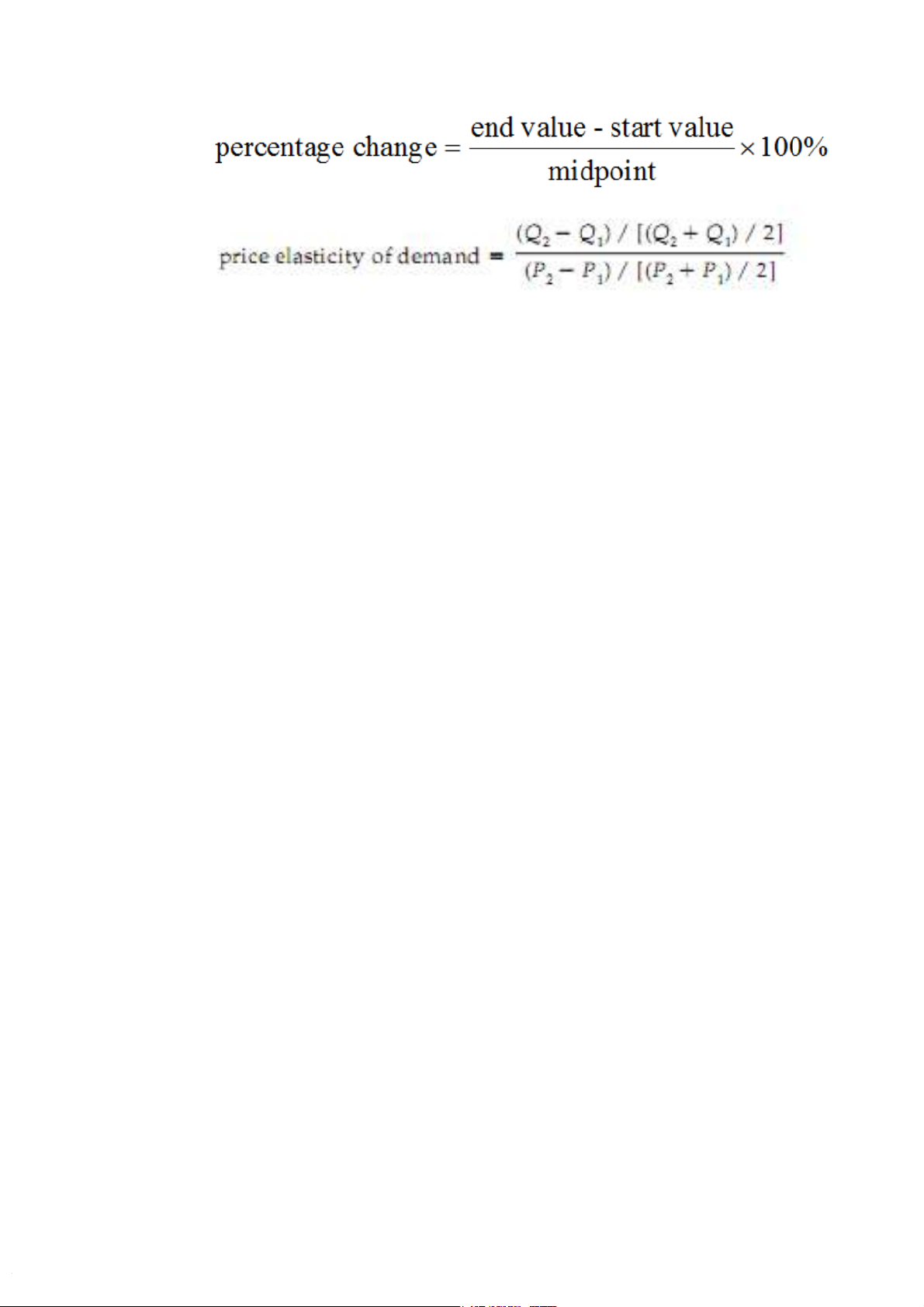
2. The Midpoint Method: A Better Way to Calculate Percentage Changes and Elasticities.
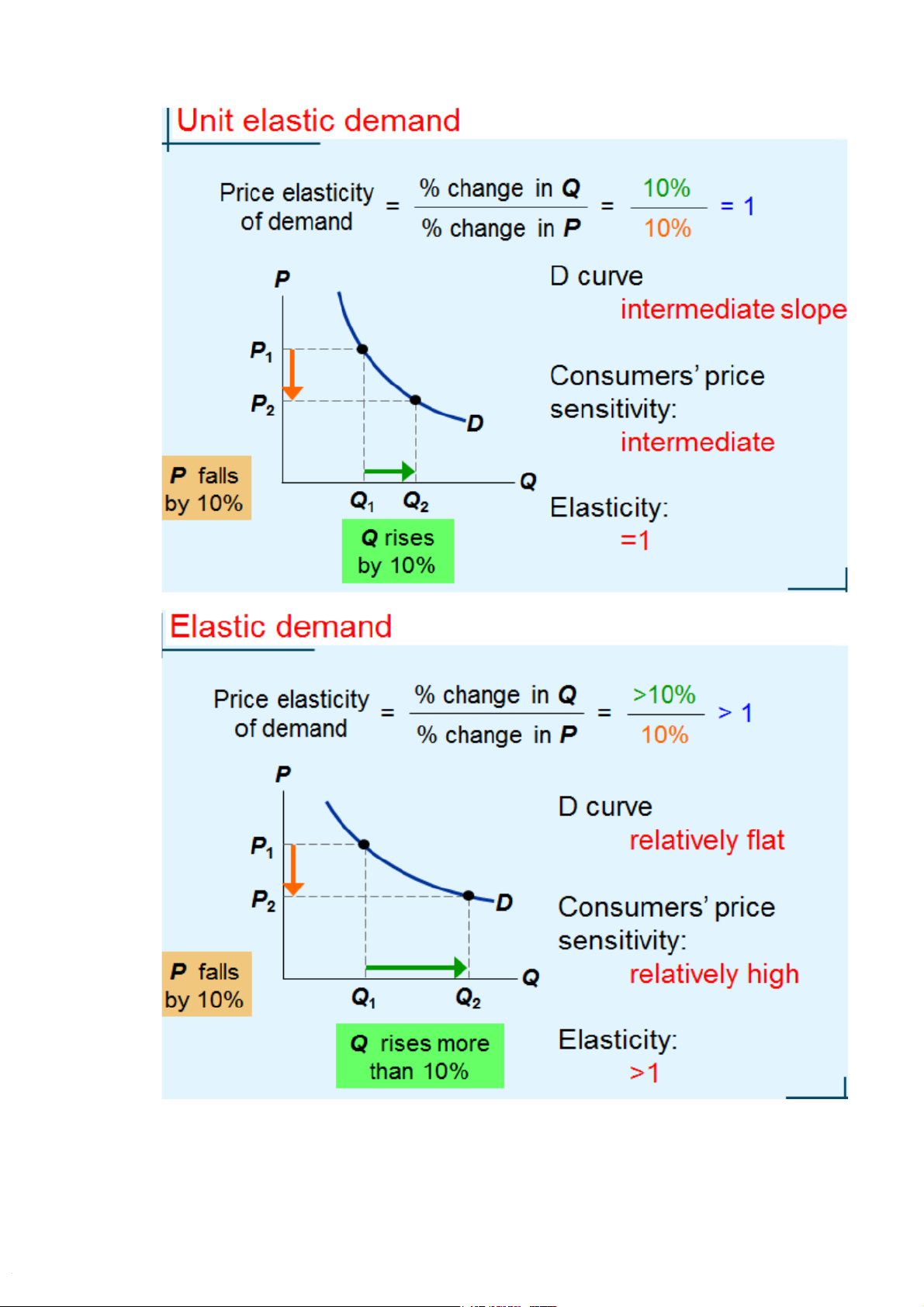
3. The Variety of Demand Curves a. Demand is elastic
i. Price elasticity of demand > 1 b. Demand is inelastic
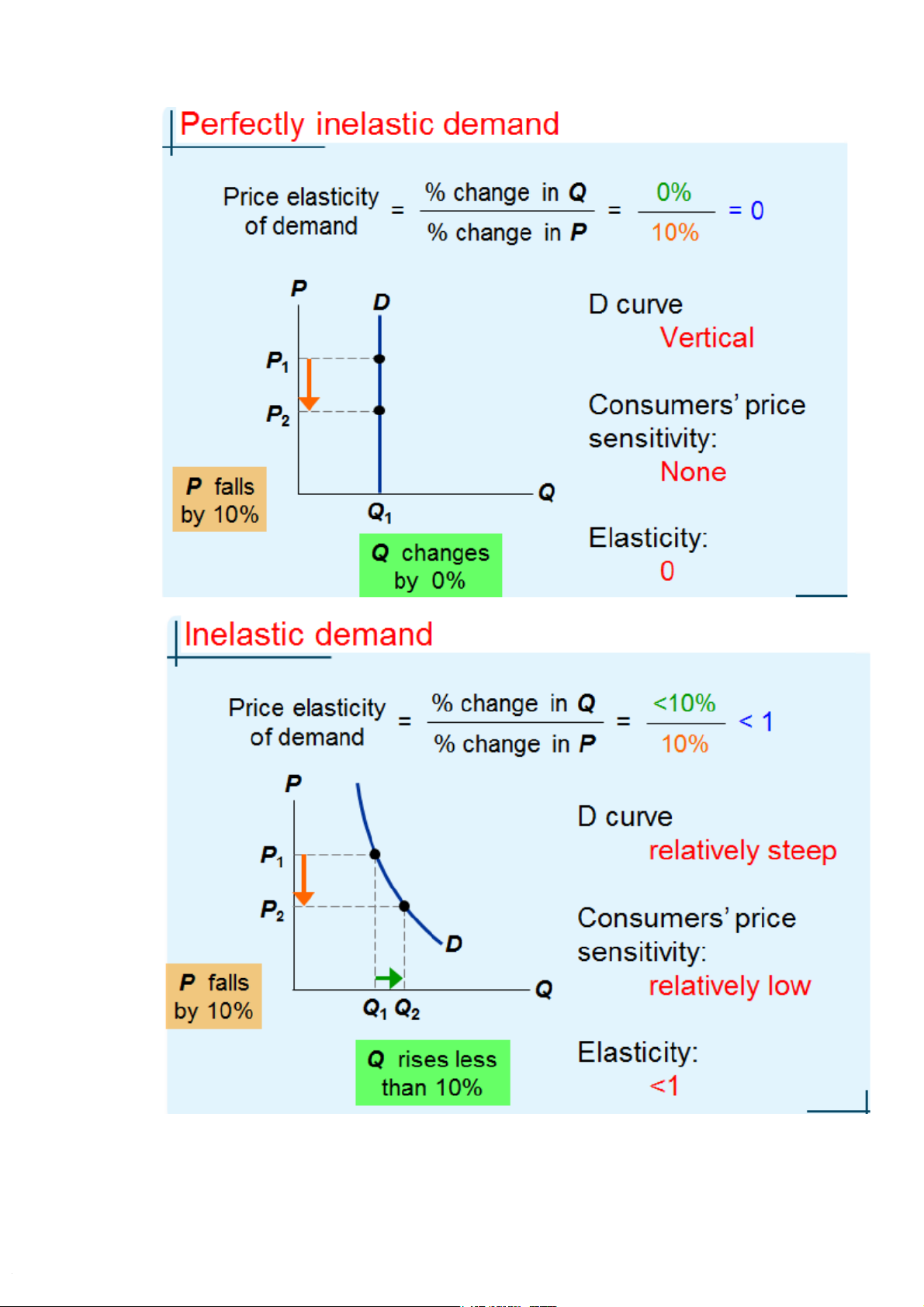
i. Price elasticity of demand < 1 c. Demand has unit elasticity
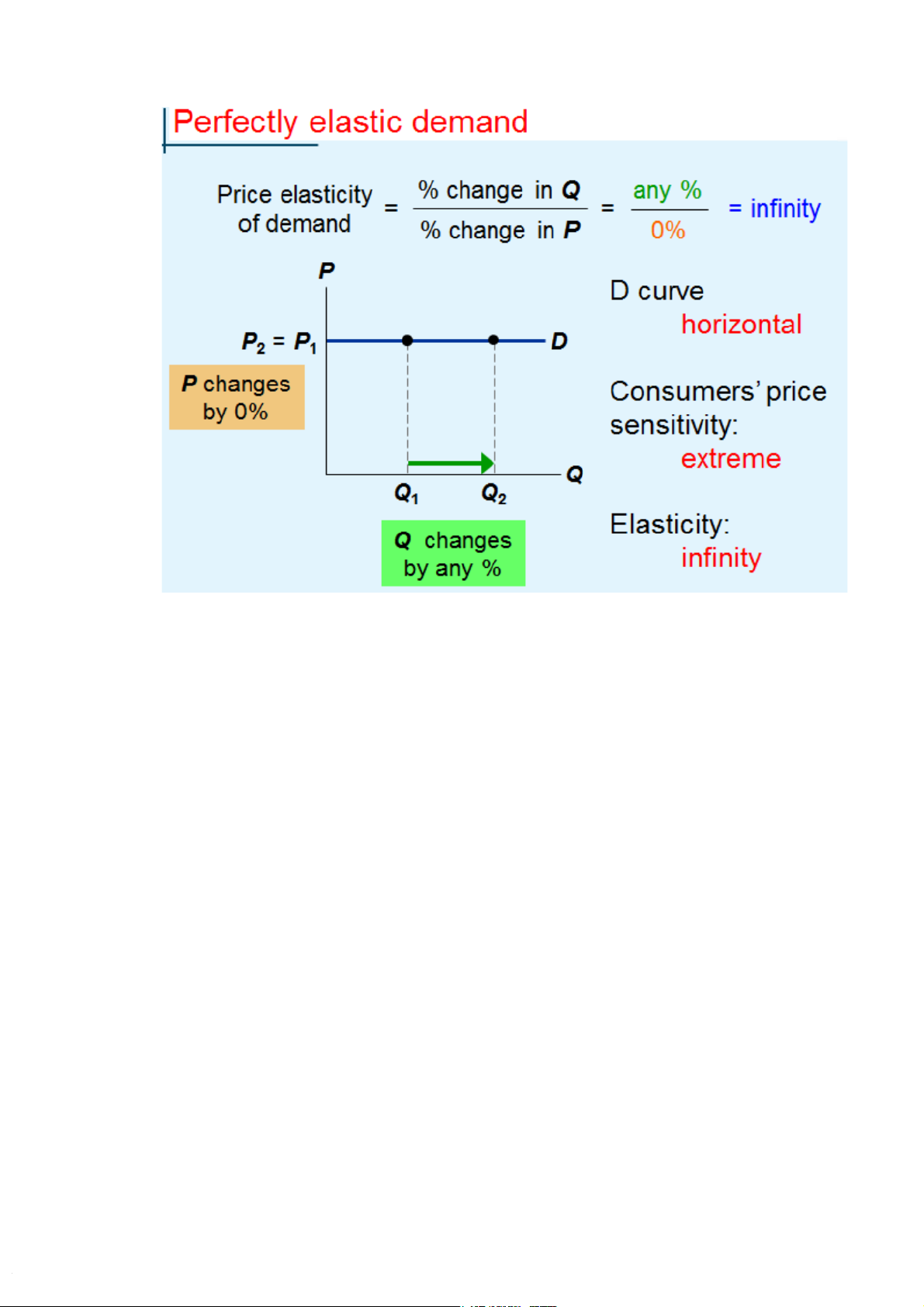
i. Price elasticity of demand = 1 NOTE: - Demand is perfectly inelastic Price elasticity of demand = 0 Demand curve is vertical - Demand is perfectly elastic
Price elasticity of demand = infinity Demand curve is horizontal
4. Total Revenue and the Price Elasticity of Demand
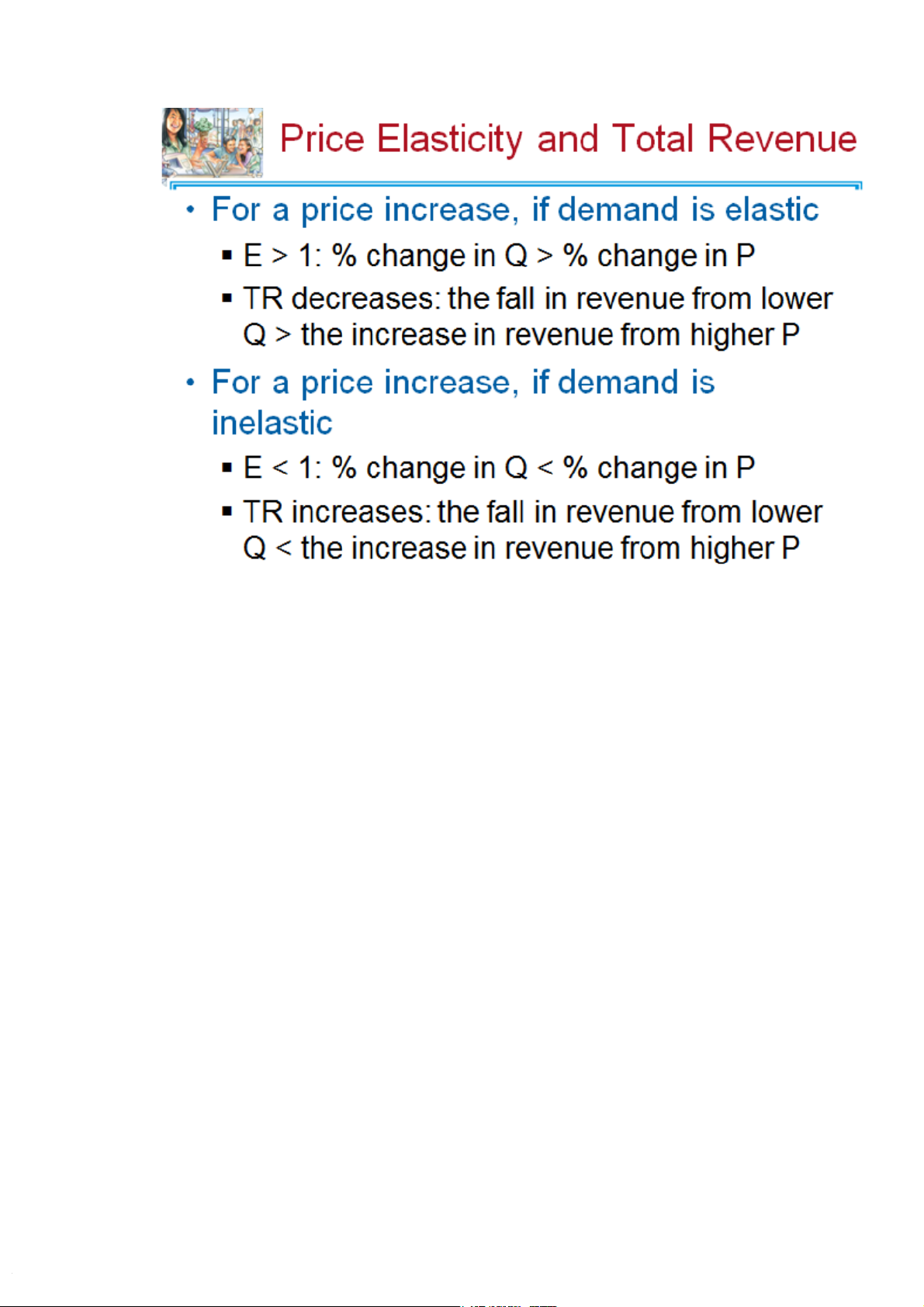
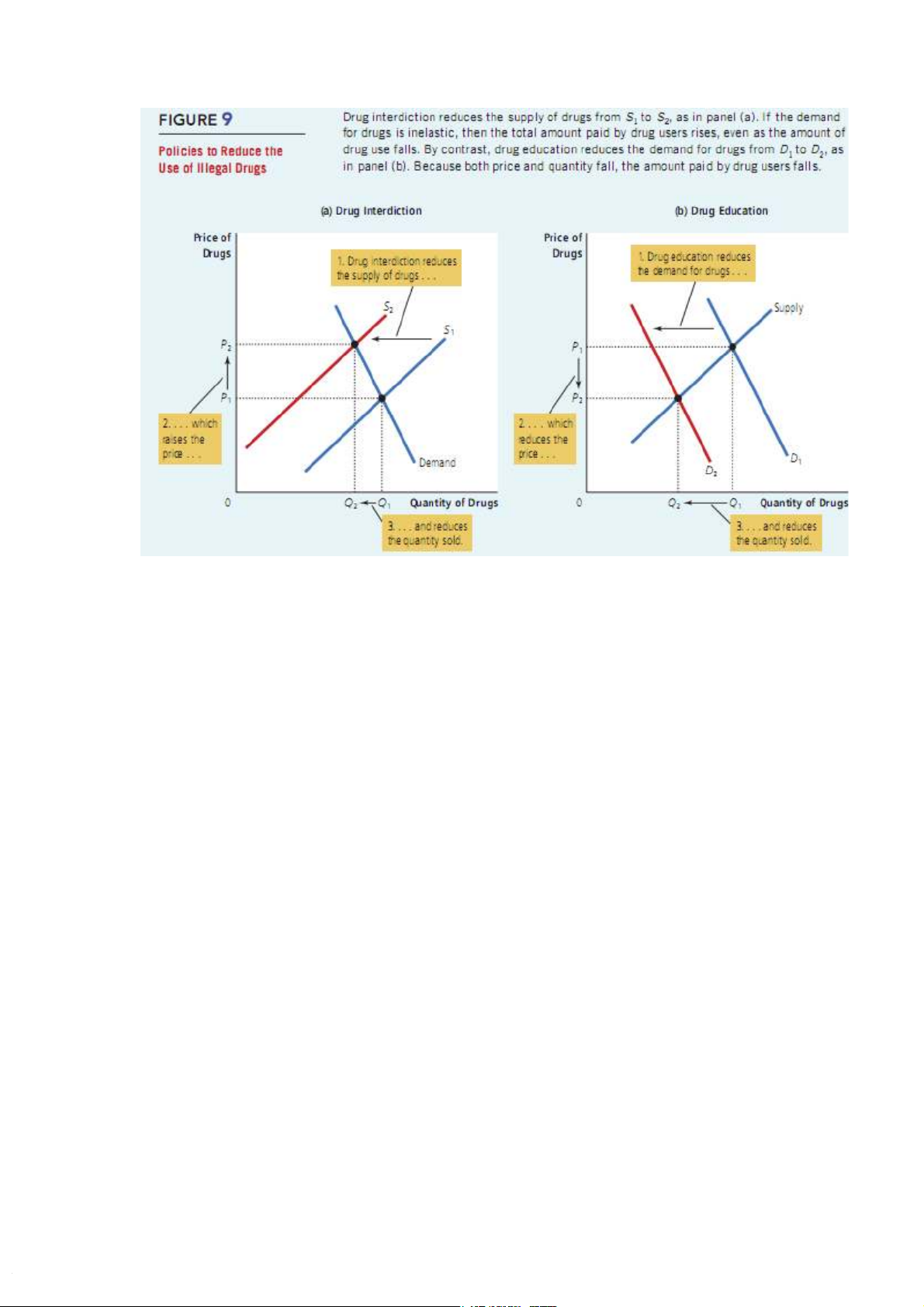
When demand is inelastic (a price elasticity less than 1), price and total revenue
move in the same direction: If the price increases, total revenue also increases.
When demand is elastic (a price elasticity greater than 1), price and total revenue
move in opposite directions: If the price increases, total revenue decreases.
If demand is unit elastic (a price elasticity exactly equal to 1), total revenue
remains constant when the price changes. 5. Other Demand Elasticities
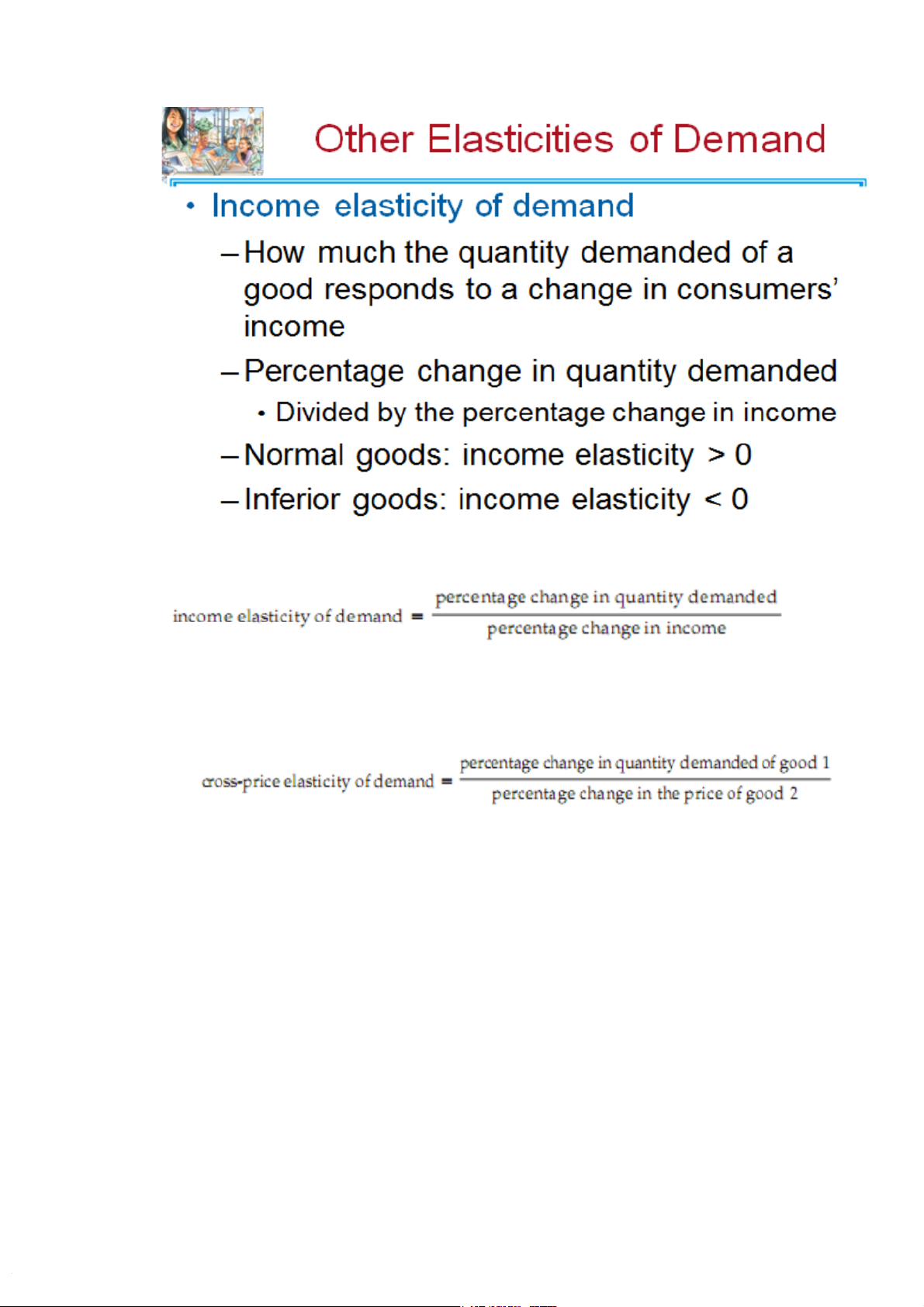
The Income Elasticity of Demand The income elasticity of demand measures how the
quantity demanded changes as consumer income changes.
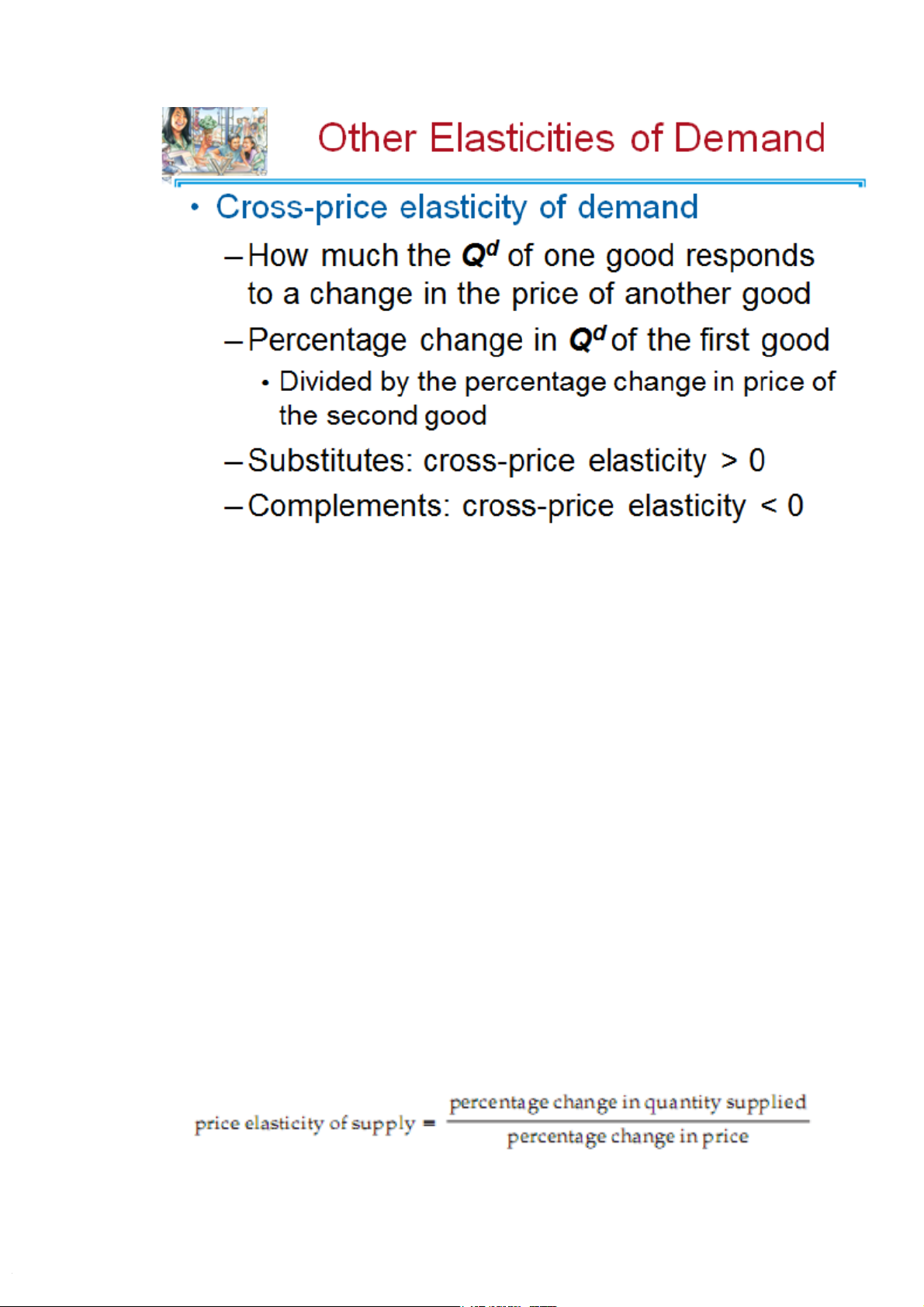
The Cross-Price Elasticity of Demand The cross-price elasticity of demand measures
how the quantity demanded of one good responds to a change in the price of another good. II. The Price Elasticity of Supply
1. The Price Elasticity of Supply and Its Determinants
The price elasticity of supply measures how much the quantity supplied responds to changes in the price.
Supply of a good is said to be elastic if the quantity supplied responds
substantially to changes in the price.
Supply is said to be inelastic if the quantity supplied responds only slightly to changes in the price. Determinants
The flexibility of sellers to change the amount of the good they produce.
The more easily sellers can change the quantity they produce
The time period being considered.
Price elasticity of supply is greater in the long run than in the short run
2. Computing the Price Elasticity of Supply
Tài liệu liên quan:
-
TOPIC: COSMETICS môn Kinh tế vi mô | Trường Đại học Kinh tế Quốc dân
5 3 -
Sách Bài Tập Vi Mô - Hướng Dẫn và Lời Giải Chi Tiết
11 6 -

Nguyên lý chiến lược kinh doanh - Bài giảng môn Kinh tế vi mô | Trường Đại học Kinh Tế Quốc Dân
13 7 -

Chương 7 các kỹ thuật lựa chọn chiến lược - Bài giảng môn Kinh tế vi mô | Trường Đại học Kinh Tế Quốc Dân
14 7 -
Tổng hợp câu hỏi trắc nghiệm theo chương ôn tập môn Kinh tế vi mô | Trường Đại học Kinh Tế Quốc Dân
18 9