Chapter 15 Summary: Individual Behavior in Management môn Principle of Management | Trường Đại học Quốc tế, Đại học Quốc gia Thành phố Hồ Chí Minh
Chapter 15 Summary: Individual Behavior in Management môn Principle of Management | Trường Đại học Quốc tế, Đại học Quốc gia Thành phố Hồ Chí Minh. Tài liệu giúp bạn tham khảo, ôn tập và đạt kết quả cao. Mời đọc đón xem!
Môn: Principles of Management 187 tài liệu
Trường: Trường Đại học Quốc tế, Đại học Quốc gia Thành phố Hồ Chí Minh 1.5 K tài liệu
Tác giả:







Preview text:
Planning Ahead — Chapter 15 Study Questions Chapter 15 Learning Dashboard JOHN R. SCHERMERHORN, JR. MANAGEMENT 12th Edition
1. How do perceptions influence individual 1. Perception behavior?
1. Perception and psychological contracts
2. What should we know about personalities in 2. Perception and attribution Individual the workplace?
3. Perception tendencies and distortions C h a p t e r 1 5
4. Perception and impression management Behavior
3. How do attitudes influence individual 2. Personality behavior?
4. What are the dynamics of emotions, moods,
1. Big five personality dimensions and stress?
2. Myers-Briggs personality type indicator
3. Personal conception and emotional adjustment traits 15-1
©2013 John Wiley & Sons, Inc. All rights reserved. 15-2
©2013 John Wiley & Sons, Inc. All rights reserved. 15-3
©2013 John Wiley & Sons, Inc. All rights reserved. Chapter 15 Learning Dashboard Takeaway 1: Perception Takeaway 1: Perception 3. Attitudes •Perception •Psychological contract 1. What is an attitude?
–The process through which people receive, –Person-job fit begins here 2. What is job satisfaction?
organize and interpret information from the
–A set of expectations held by an individual about
3. Job satisfaction and its outcomes environment
what will be given and received in the 4. Emotions, Moods, and Stress
–People can perceive the same things or situations employment relationship differently 1. Emotions
–An ideal work situation is one with a fair 2. Moods
–People behave on the basis of their perceptions psychological contract 3. Stress
•Balance of contributions and inducements 4. Sources of stress
©2013 John Wiley & Sons, Inc. All rights reserved. 15-4
©2013 John Wiley & Sons, Inc. All rights reserved. 15-5
©2013 John Wiley & Sons, Inc. All rights reserved. 15-6 1 Takeaway 1: Perception Takeaway 1: Perception
Figure 15.1 Components in the psychological contract •Perception and attribution •Perception and attribution –Attribution –Self-serving bias
•The process of developing explanations for events
•Occurs because individuals blame their
personal performance failures or problems on
–Fundamental attribution error
external factors and attribute their successes
•Occurs when observers blame another’s to internal factors
performance failures or problems on
internal factors rather than external factors
©2013 John Wiley & Sons, Inc. All rights reserved. 15-7
©2013 John Wiley & Sons, Inc. All rights reserved. 15-8
©2013 John Wiley & Sons, Inc. All rights reserved. 15-9 Takeaway 1: Perception Takeaway 1: Perception Takeaway 1: Perception
•Perceptual tendencies and distortions:
•Perceptual tendencies and distortions
•Perceptual tendencies and distortions: –Stereotypes –Selective perception –Halo effects
•The tendency to define problems from ones’ own
•Occur when attributes commonly associated
•Occur when one attribute is used to develop point of view
with a group are assigned to an individual
an overall impression of a person or situation –Projection –Racial and ethnic
•The assignment of personal attributes to other –Gender individuals –Ability –Age –Others?
©2013 John Wiley & Sons, Inc. All rights reserved. 15-10
©2013 John Wiley & Sons, Inc. All rights reserved. 15-11
©2013 John Wiley & Sons, Inc. All rights reserved. 15-12 2 Takeaway 1: Perception
Leaning Dashboard 2: Personality
Leaning Dashboard 2: Personality “
Perceptual tendencies and distortions:
Big Five” personality traits: –Extroversion –Impression management Personality
•Being outgoing, sociable, and assertive
•The systematic attempt to influence how
–The profile of characteristics that –Agreeableness others perceive us makes one person unique from
•Being good-natured, cooperative, and trusting –Conscientiousness
–dress to convey positive appeal others
•Being responsible, dependable, and careful
–flatter others to generate positive feelings –Emotional stability
–when conversing, make eye contact and smile
•Being relaxed, secure, and unworried
–display a high level of energy –Openness
•Being curious, receptive to new things, and open to change
©2013 John Wiley & Sons, Inc. All rights reserved. 15-13
©2013 John Wiley & Sons, Inc. All rights reserved. 15-14
©2013 John Wiley & Sons, Inc. All rights reserved. 15-15
Leaning Dashboard 2: Personality
Leaning Dashboard 2: Personality
Leaning Dashboard 2: Personality
Other personality traits that affect work behavior:
Other personality traits that affect work –Locus of control behavior:
Myers-Briggs Dimensions of Personality
•The extent to which one believes that what happens to –Self-monitoring
them is within one’s control
•The degree to which someone is able to adjust and Thinking/ –Authoritarianism
modify behavior in response to the external factors Extraversion/ Sensation/ Judging/ Introversion Intuition Feeling Perceiving
•The degree to which a person defers to authority and –Type A personality - how we relate - how we gather - how we - how we react to accepts status differences
•Orientation toward extreme achievement, impatience, to others information evaluate information the outside world –Machiavellianism and perfectionism
•The extent to which someone is emotionally detached
and manipulative in using power
©2013 John Wiley & Sons, Inc. All rights reserved. 15-16
©2013 John Wiley & Sons, Inc. All rights reserved. 15-17
©2013 John Wiley & Sons, Inc. All rights reserved. 15-18 3 Takeaway 3: Attitudes Takeaway 3: Attitudes
Figure 15.2 Common personality dimensions that
influence human behavior at work •Attitude
–A predisposition to act in a certain way toward people
and things in one’s environment •Components of attitudes: Common aspects of job satisfaction: –Cognitive component Job satisfaction • Work itself • The degree to which an • Quality of supervision
–Affective or emotional component
individual feels positively or • Coworkers negatively about various • Opportunities –Behavioral component aspects of work • Pay • Work conditions •Cognitive dissonance • Security
–The discomfort a person feels when attitudes and behavior are inconsistent
©2013 John Wiley & Sons, Inc. All rights reserved. 15-19
©2013 John Wiley & Sons, Inc. All rights reserved. 15-20
©2013 John Wiley & Sons, Inc. All rights reserved. 15-21 Takeaway 3: Attitudes Takeaway 3: Attitudes Takeaway 3: Attitudes
Satisfaction-related concepts having quality of work
Is there a relationship between job
•There is a strong and positive relationship life implications … satisfaction and performance?
between satisfaction and absenteeism and
–Are satisfied workers more productive? Employee engagement turnover
•Strong positive feeling about one’s job and the organization
–Are productive workers more satisfied? •Withdrawal behaviors Job involvement
–Do rewards for productivity create
•The extent to which an individual is dedicated to a job
satisfaction, influencing future performance? Organizational commitment
•Loyalty of an individual to the organization Organizational citizenship
•Willingness to do more than the minimum required
©2013 John Wiley & Sons, Inc. All rights reserved. 15-22
©2013 John Wiley & Sons, Inc. All rights reserved. 15-23
©2013 John Wiley & Sons, Inc. All rights reserved. 15-24 4 Takeaway 3: Attitudes
Takeaway 4: Emotions, Moods, and Stress
Takeaway 4: Emotions, Moods, and Stress •Emotions •Moods
–Strong feelings directed toward someone
–Generalized positive and negative or something feelings or states of mind •Emotional intelligence •Mood contagion
–Ability to understand emotions and
–Spillover of one’s positive or negative
manage relationships effectively moods onto others
©2013 John Wiley & Sons, Inc. All rights reserved. 15-25
©2013 John Wiley & Sons, Inc. All rights reserved. 15-26
©2013 John Wiley & Sons, Inc. All rights reserved. 15-27
Takeaway 4: Emotions, Moods, and Stress
Takeaway 4: Emotions, Moods, and Stress
Takeaway 4: Emotions, Moods, and Stress •Stress
Work factors as potential stressors:
Nonwork factors as potential stressors:
–A state of tension experienced by individuals facing –Includes: –Includes:
extraordinary demands, constraints, or
•Excessively high or low task demands •Family events opportunities
•Role conflicts or ambiguities •Economics •Stressors
•Poor interpersonal relationships •Personal affairs –Things that cause stress
•Too slow or too fast career progress
–“Spill-over” effect on the stress an
–Originate in work, personal, and nonwork situations
–Work-related stress syndromes:
individual experiences at work
–Have the potential to influence work attitudes, •Set up to fail
behavior, job performance, and health •Mistaken identity
©2013 John Wiley & Sons, Inc. All rights reserved. 15-28
©2013 John Wiley & Sons, Inc. All rights reserved. 15-29
©2013 John Wiley & Sons, Inc. All rights reserved. 15-30 5
Takeaway 4: Emotions, Moods, and Stress
Takeaway 4: Emotions, Moods, and Stress
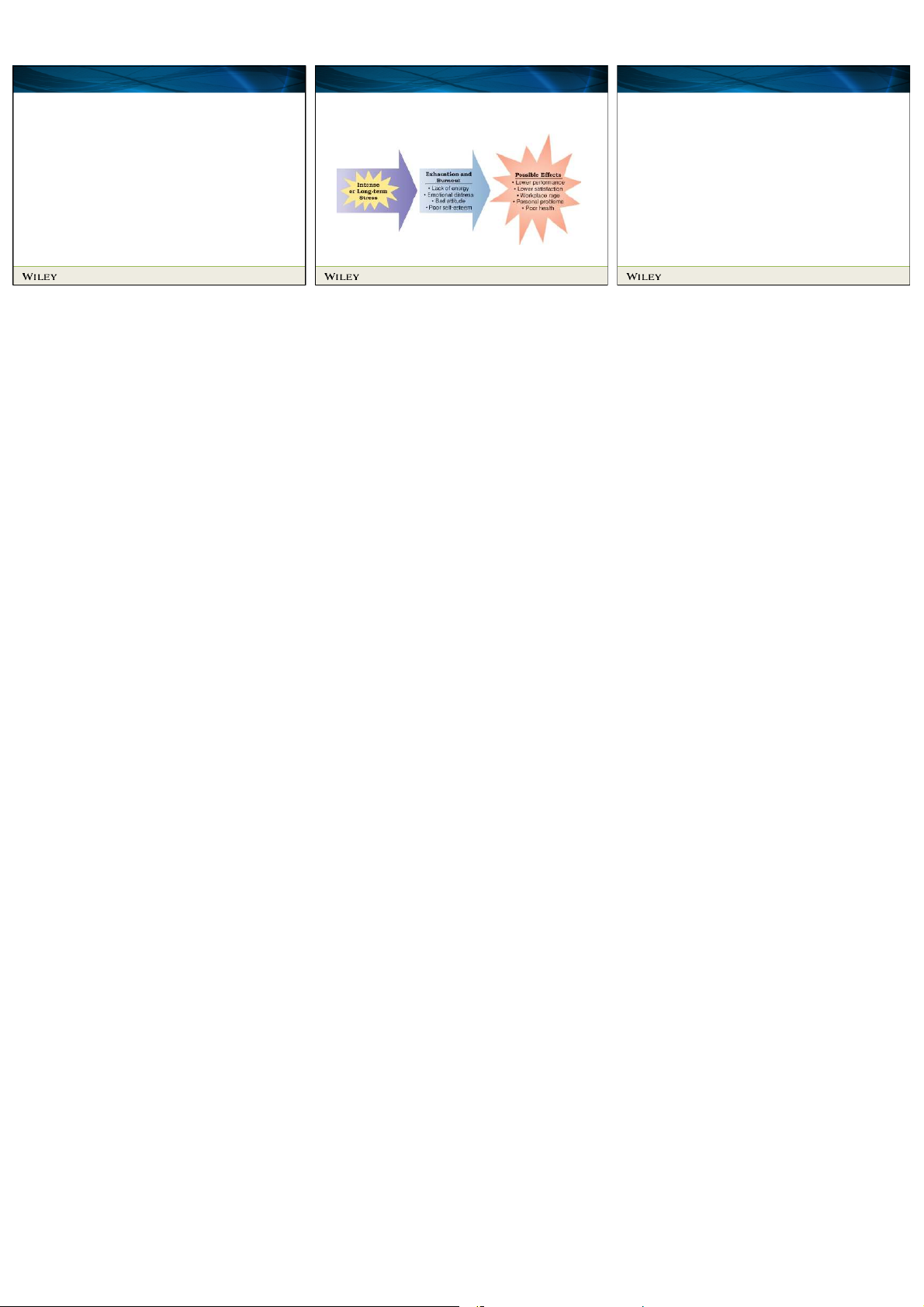
Figure 15.3 Potential negative consequences of a Consequences of stress:
destructive job stress-burnout cycle Personal wellness: –Constructive stress
–The pursuit of personal and mental
•Acts as a positive influence
potential though a personal health-
•Can be energizing and performance enhancing promotion program –Destructive stress
–A form of preventative stress •Impairs performance management
•Breaks down a person’s physical and mental
–Enables people to be better prepared to systems deal with stress
•Can lead to job burnout and/or workplace rage
©2013 John Wiley & Sons, Inc. All rights reserved. 15-31
©2013 John Wiley & Sons, Inc. All rights reserved. 15-32
©2013 John Wiley & Sons, Inc. All rights reserved. 15-33 6
Tài liệu liên quan:
-
Leadership Styles Preferred by Generation Z môn Principle of Management | Trường Đại học Quốc tế, Đại học Quốc gia Thành phố Hồ Chí Minh
3 2 -

Chapter 7 Blowing the Whistl môn Principle of Management | Trường Đại học Quốc tế, Đại học Quốc gia Thành phố Hồ Chí Minh
3 2 -
Chapter 11 - Organizational Structures and Their Impacts on Leadership môn Principle of Management | Trường Đại học Quốc tế, Đại học Quốc gia Thành phố Hồ Chí Minh
3 2 -
Lecture 2: Relational Model and Algebra môn Principle of Management | Trường Đại học Quốc tế, Đại học Quốc gia Thành phố Hồ Chí Minh
3 2 -
Lecture 6: ER –Relational Translation môn Principle of Management | Trường Đại học Quốc tế, Đại học Quốc gia Thành phố Hồ Chí Minh
3 2