Chapter Two Organization Strategy and Project Selection môn Principle of Management | Trường Đại học Quốc tế, Đại học Quốc gia Thành phố Hồ Chí Minh
How a project manager would respondto a suggestion to modify the design of a product or to delaysmay vary depending upon strategic concerns. Tài liệu giúp bạn tham khảo, ôn tập và đạt kết quả cao. Mời đọc đón xem!
Môn: Principles of Management 187 tài liệu
Trường: Trường Đại học Quốc tế, Đại học Quốc gia Thành phố Hồ Chí Minh 1.5 K tài liệu
Tác giả:






Preview text:
2/11/2025
Because learning changes everything.® Chapter Two Organization Strategy and Project Selection
© 2021 McGraw-Hill Education. All rights reserved. Authorized only for instructor use in the classroom.
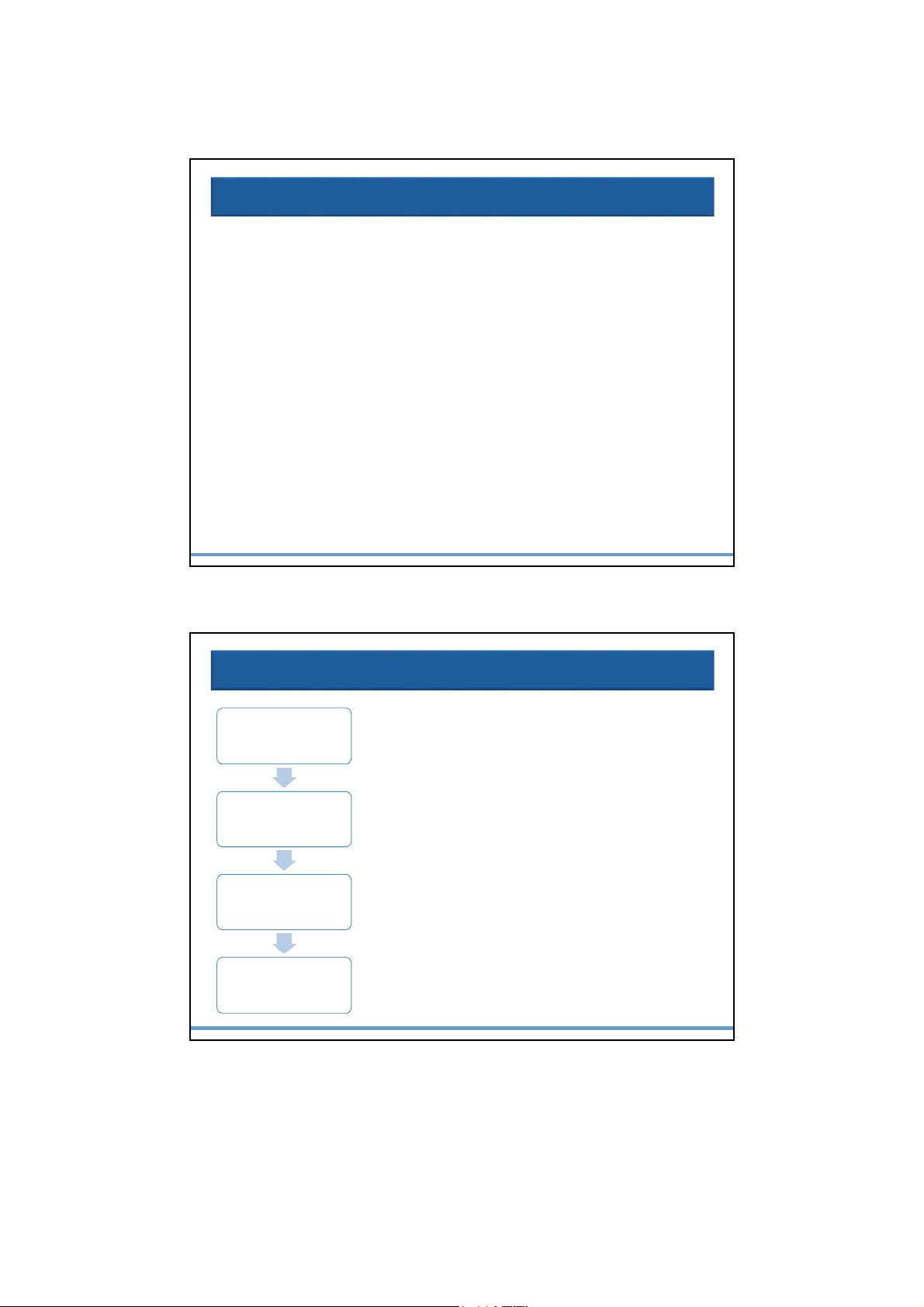
No reproduction or further distribution permitted without the prior written consent of McGraw-Hill Education. Where We Are Now
Quản lý dự án linh hoạt là
phương pháp tiếp cận lặp đi
lặp lại để quản lý các dự án
phát triển phần mềm, tập
trung vào việc phát hành liên tục và phản hồi © McGraw-Hill Education 2 1 2/11/2025 Chapter Outline 2.1
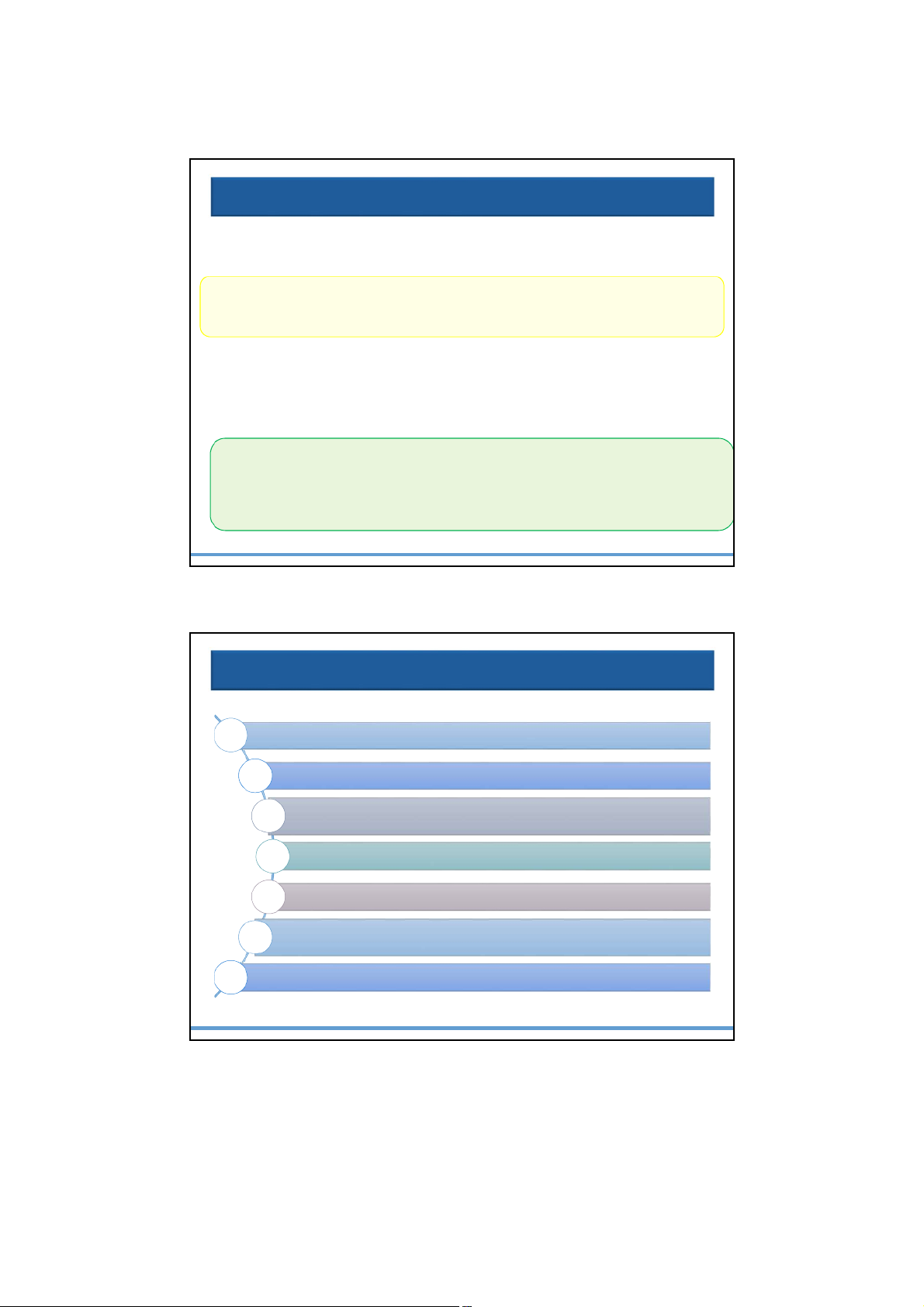
Why Project Managers Need to Understand Strategy 2.2
The Strategic Management Process: An Overview 2.3
The Need for a Project Priority System 2.4 Project Classification 2.5 Phase Gate Model 2.6 Selection Criteria 2.7 Applying a Selection Model 2.8 Managing the Portfolio System © McGraw-Hill Education 3
2.1 Why Project Managers Need to Understand Strategy
Two main reasons project managers need to understand their ssion and strategy:
1. So they can make appropriate decisions and adjustments.
• How a project manager would respond to a suggestion to
modify the design of a product or to delays may vary
depending upon strategic concerns.
2. So they can be effective project advocates:
• demonstrate to senior management how their project in order to receive their continued support.
• explain to stakeholders why certain project objectives and in order to us .
• explain why the project is important to motivate and
er the project team (Brown, Hyer and Ettenson, 2013). © McGraw-Hill Education 4 2 2/11/2025
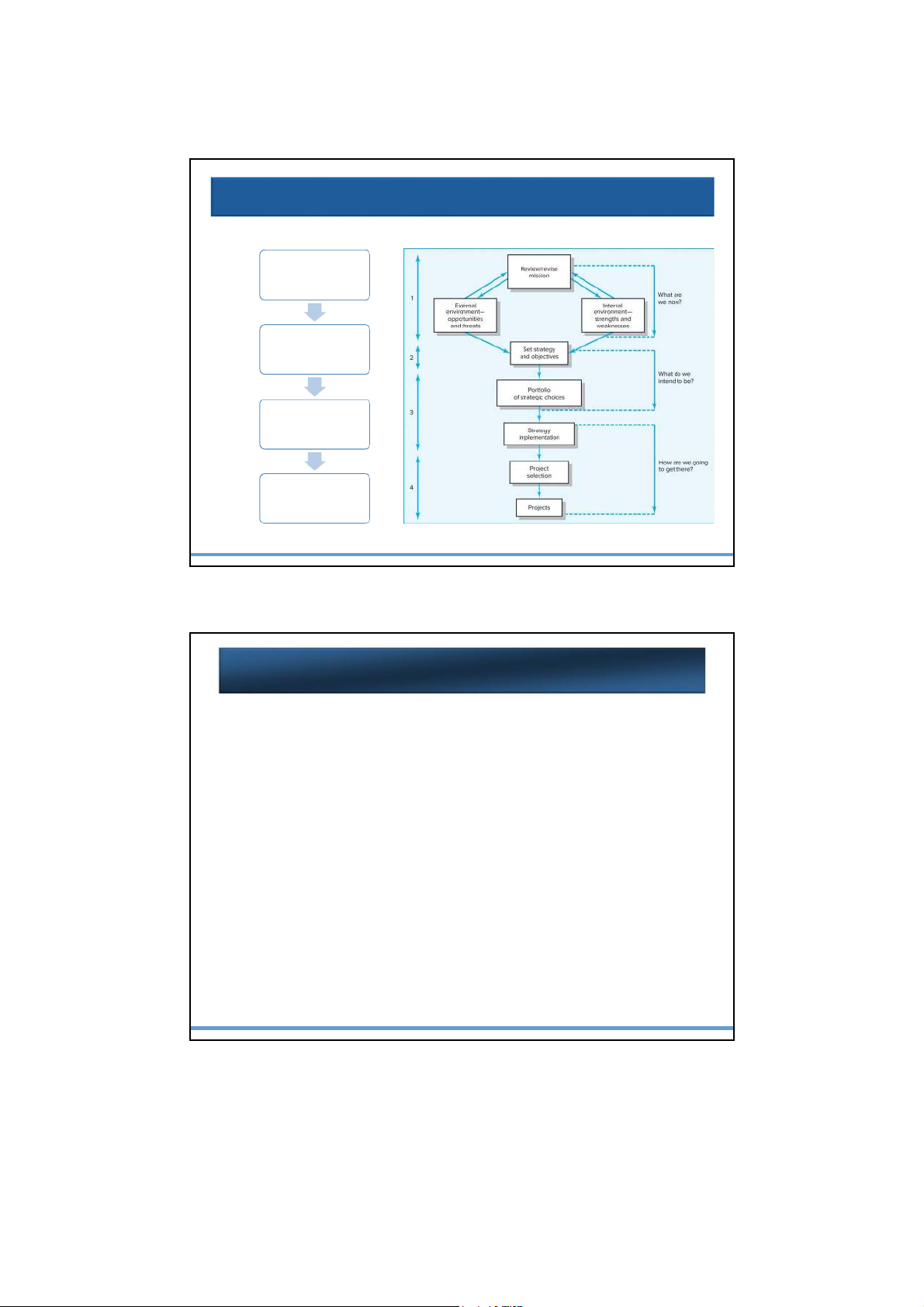
2.2 The Strategic Management Process: An Overview Strategic Management
The process of assessing “what we are” and deciding and implementing
“what we intend to be and how we are going to get there.” •
Is a continuous, iterative process aimed at developing an integrated
and coordinated long-term plan of action. •
Requires strong links among mission, goals, objectives, strategy, and implementation.
Two Major Dimensions of Strategic Management: 1.
Responds to changes in the external environment and allocates the
firm’s scare resources to improve its competitive position. 2.
Internal responses to new action programs aimed at enhancing the
competitive position of the firm.
- Improve customer satisfaction by enhancing product quality -> long term, abstract, and qualitative
Comparison -> provide a general direction
- Increase customer satisfaction scores by 15% within the next six months through implementing a © McGraw-Hill Education 5
quality assurance program -> specific, measurable actions=> break down the broader goals into concrete, actionable steps
Four Activities of the Strategic Management Process To become the leading
The mission identifies “what we want to become.” sustainable coffee brand, Review and define the organizational
Mission statements identify the scope of the bringing the authentic taste mission
organization in terms of its product and service. of V coffee to the world
Formulating strategy answers the question of what Expand export markets to Analyze and
needs to be done to reach objectives. Strategy Europe and the US. Build a formulate
formulation includes determining and evaluating strategies brand identity associated
alternatives that support the organization’s objectives with sustainability (fair
and selecting the best alternative. trade,....) Set objectives to
Objectives translate the organization strategy into 1. Capture 10% of the premium achieve strategies
roasted coffee market in Eu within
specific, concrete, measureable terms. Objectives 5 yrs
answer in detain where a firm is headed and when it is 2. Reduce CO2 emissions in the supply chain by 20% by 2030 going to get there.
3. Obtain "Fair trade coffee"" certi Implement for all products within 3 yrs strategies through
Implementation answers the question of how projects
strategies will be realized, given available resources.
- Project to build an organic-certified processing plant in Dak Lak © McGraw-Hill Education 6 - Project to.... - Project to.... 3 2/11/2025 Strategic Management Process Review and define the organizational mission Analyze and formulate strategies Set objectives to achieve strategies Implement strategies through projects © McGraw-Hill Education 7 FIGURE 2.1 Characteristics of Objectives
SSpecific Be specific in targeting an objective
MMeasurable Establish a measurable indicator(s) of progress
AAssignable Make the objective assignable to one person for completion
RRealistic State what can realistically be done with available resources
TTime related State when the objective can be achieved (duration) EXHIBIT 2.1 © McGraw-Hill Education 2–8 4 2/11/2025
2.3 The Need for a Project Priority System
Implementation of projects without a strong priority system linked to strategy create problems.
Problem 1: The Implementation Gap •
The implementation gap is the lack of understanding and consensus of
organization strategy among top and middle-level managers.
Problem 2: Organization Politics •
Project selection may be based not so much on facts and sound reasoning as on
the persuasiveness and power of people advocating projects.
something that people accept or •
The term sacred cow is often used to denote a project that a powerful, high-
ranking official is advocating.
believe to be good or necessary
without ever questioning their
Problem 3: Resource Conflicts and Multitasking belief •
A multi-project environment creates the problems of project interdependency and
the need to share resources. Resource sharing leads to multitasking—involves
starting and stopping work on one task to go and work on another project, then
returning to the work on the original task. © McGraw-Hill Education 9
Benefits of Project Portfolio Management
Builds discipline into project selection process.
Links project selection to strategic metrics.
Prioritizes Project proposals across a common set of criteria,
rather than on politics or emotion.
Allocates resources to Projects that align with strategic direction.
Balances risk across all projects.
Justifies killing Projects that do not support organization strategy.
Improves communication & supports agreement on Projects’ goals. © McGraw-Hill Education 10 EXHIBIT 2.2 5 2/11/2025 2.4 Project Classification
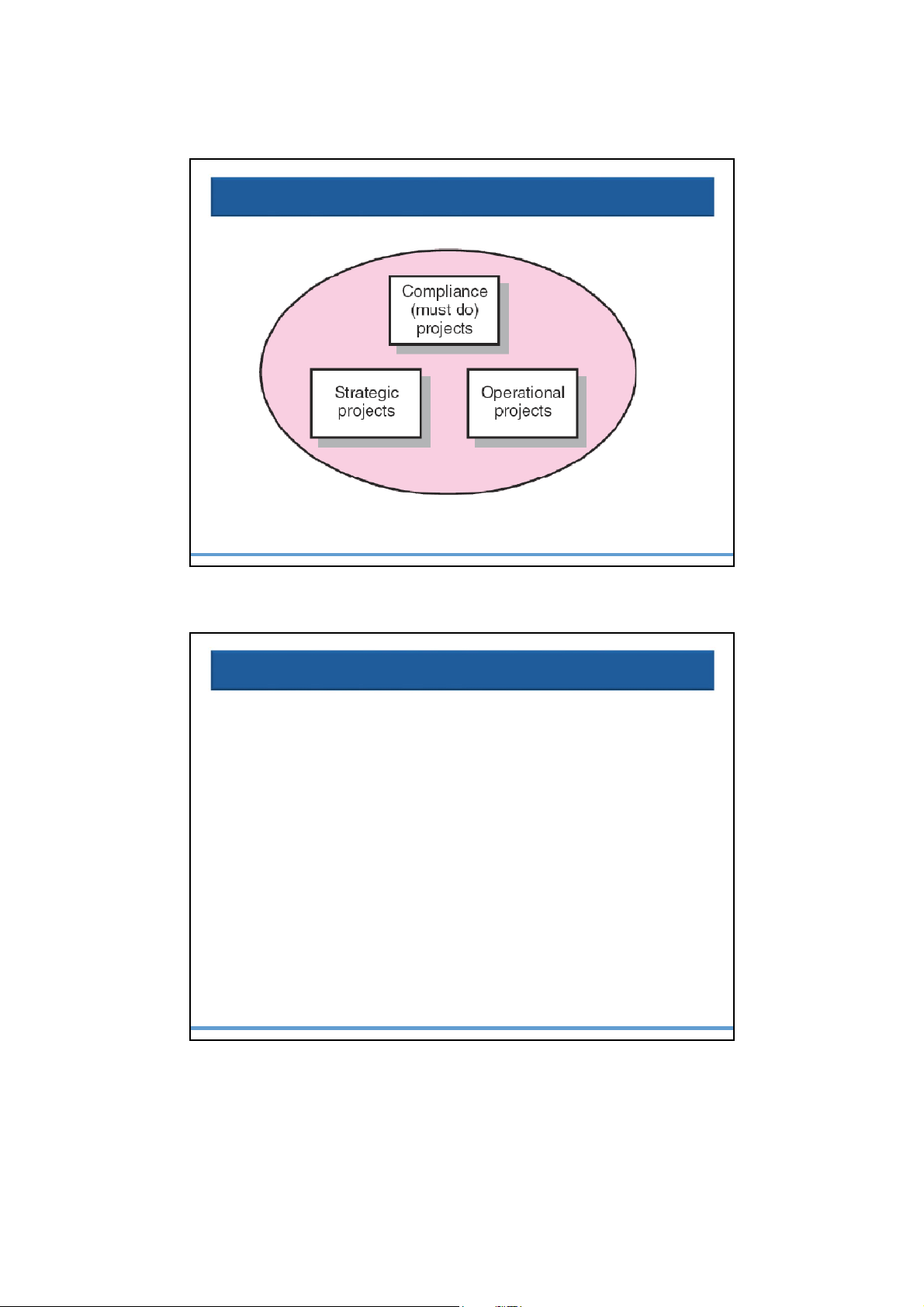
to meet regulatory conditions required to operate in a region
Compliance projects range from reporting statutory tax,
audit requirements, health and safety regulations, ... to support current operations
implementing a new inventory management
system, optimizing supply chain logistics, directly support the
streamlining customer service, or automating
organization’s long-run mission business processes implementing a new website,
building a new facility, or launching an advertising campaign
Discussion in group of 4-5 students: find examples for each type? (2 examples for each) © McGraw-Hill Education 11 FIGURE 2.2 2.5 Phase Gate Model Phase Gate Model •
Is a series of gates that a project must pass through in order to be completed. •
Its purpose is to ensure that the organization is investing time and
resources on worthwhile projects that contribute to its mission and strategy. •
Each gate is associated with a project phase and represents a decision point. •
A gate can lead to three possible outcomes: go (proceed), kill (cancel),
or recycle (revise and resubmit). © McGraw-Hill Education 12 6 2/11/2025 Phase Gate Process Diagram © McGraw-Hill Education 13 FIGURE 2.3 2.6 Selection Criteria Financial Criteria • Payback • Net present value (NPV) Nonfinancial Criteria • Projects of strategic importance to the firm
• Multi-Weighted Scoring Models © McGraw-Hill Education 14 7 2/11/2025 kh thi financial
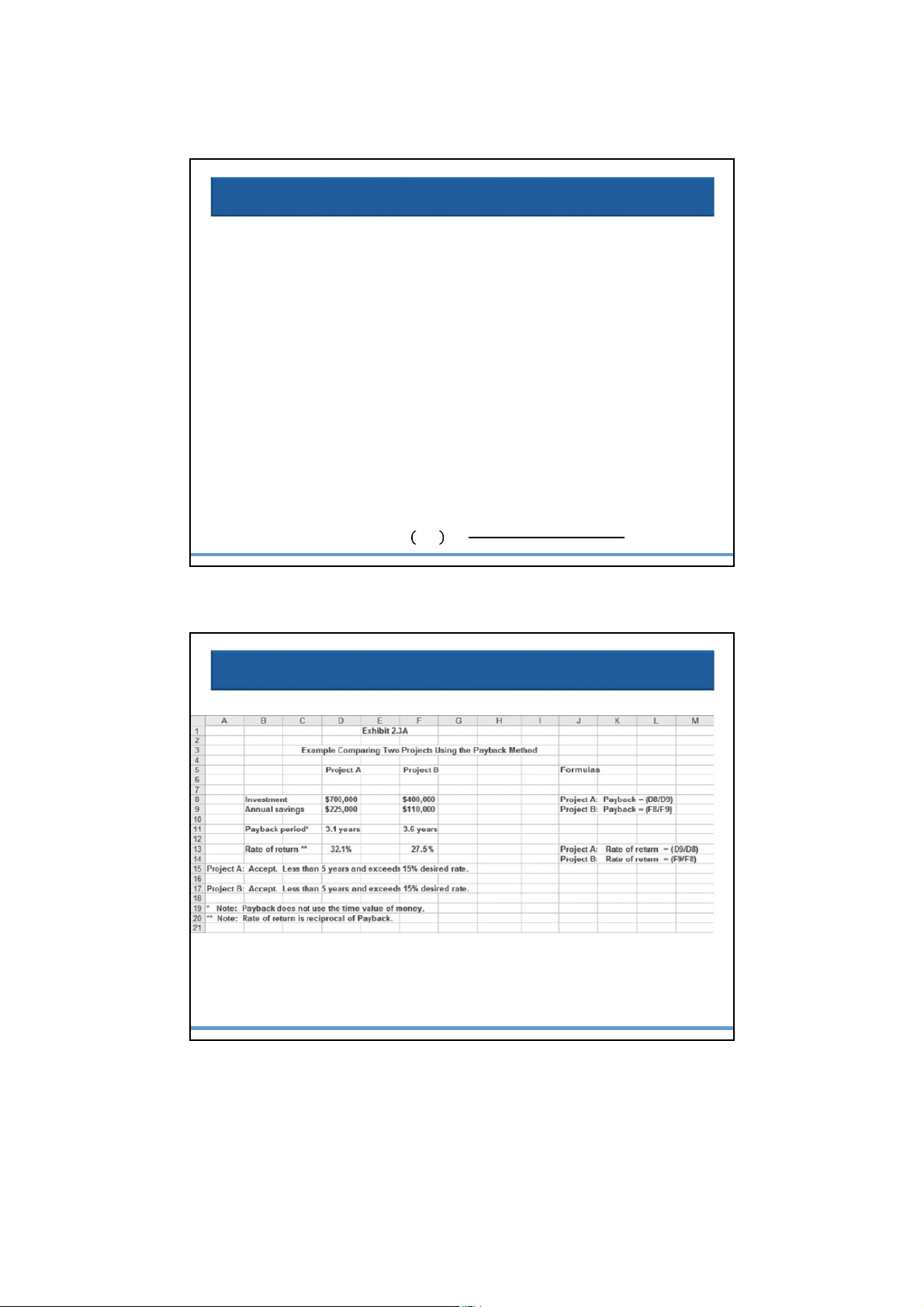
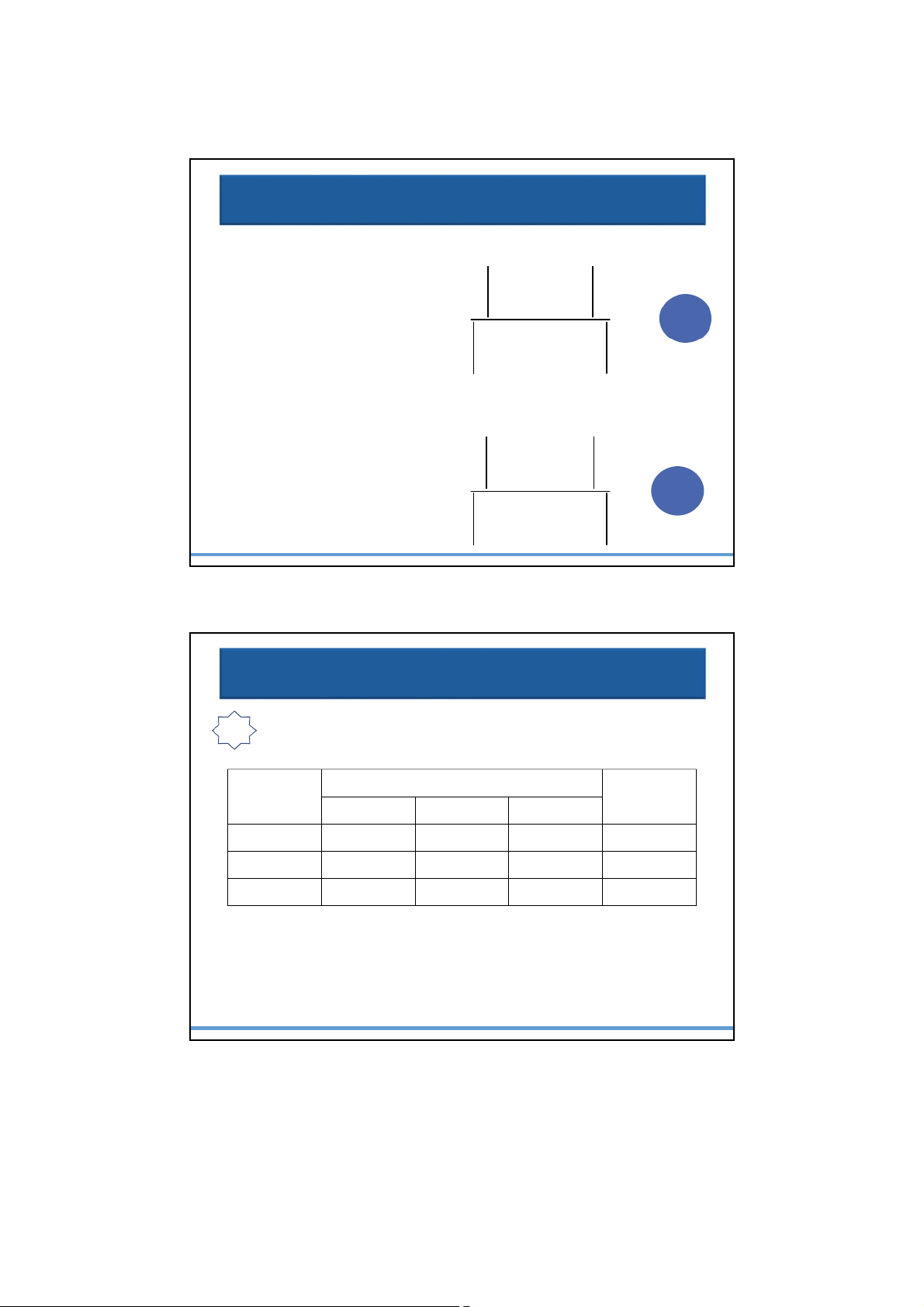
Financial Criteria: The Payback Model The Payback Model •
Measures the time the project will take to recover the project investment. • Desires shorter paybacks. •
Is the simplest and most widely used model. •
Emphasizes cash flows, a key factor in business.
Limitations of the Payback Method •
Ignores the time value of money. •
Assumes cash inflows for the investment period (and not beyond). •
Does not consider profitability. The Payback formula:
𝐸𝑠𝑡𝑖𝑚𝑎𝑡𝑒𝑑 𝑝𝑟𝑜𝑗𝑒𝑐𝑡 𝑐𝑜𝑠𝑡
𝑃𝑎𝑦𝑏𝑎𝑐𝑘 𝑝𝑒𝑟𝑖𝑜𝑑 𝑦𝑟𝑠 =
𝐴𝑛𝑛𝑢𝑎𝑙 𝑆𝑎𝑣𝑖𝑛𝑔𝑠 © McGraw-Hill Education 15
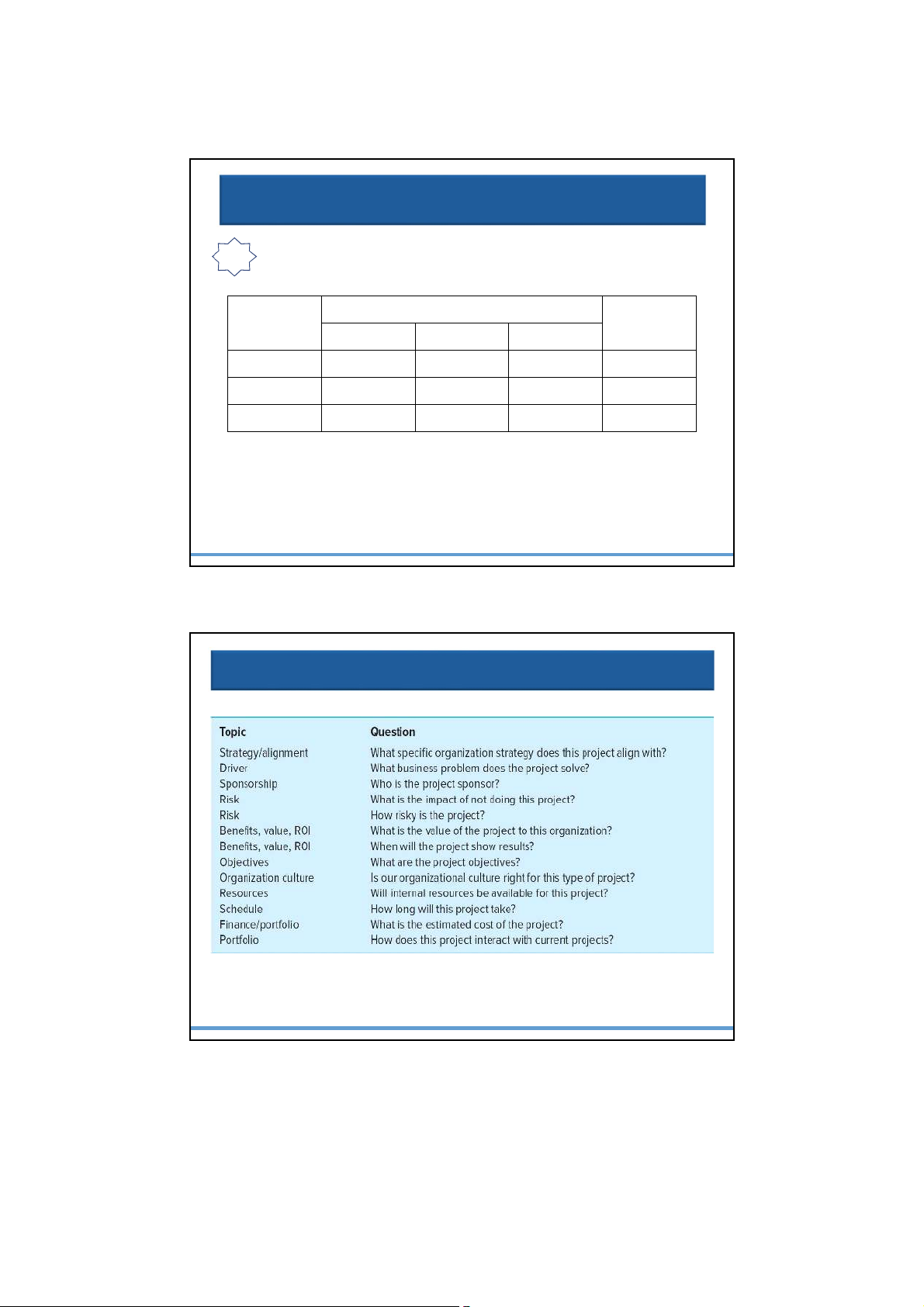
Example Comparing Two Projects Using Payback Method © McGraw-Hill Education 16 EXHIBIT 2.3A 8 2/11/2025
Financial Criteria: Net Present Value (NPV)
giá trị hiện tại ròng" của chuỗi thời gian các dòng tiền, cả vào và ra, được định nghĩa là
Net Present Value (NPV)tổng các giá trị hiện tại của các dòng tiền cụ thể của cùng một thực thể. •
Uses management’s minimum desired rate of return (discount rate) to
compute the present value of all net cash inflows. •
Prefers positive NPV to negative NPV. • Desires higher positive NPVs. •
Is more realistic because it considers the time value of money, cash flows, and profitability.
The NPV formula using Microsoft Excel is ỗ
𝑃𝑟𝑜𝑗𝑒𝑐𝑡 𝑁𝑃𝑉 = 𝐼 F: m i tháng thêm bao nhiê + 𝐹
k - có thể kí hiệu là i: rate, vd: 5%/year (1 + 𝑘) where
I0= Initial investment (since it is an outflow, the number will be negative)
Ft= Net cash inflow for period t k= Required rate of return
rate of return tính ngc lại so với payback n= Number of years © McGraw-Hill Education 17 Nonfinancial Criteria
Examples of strategic objectives are: •
To capture larger market share. •
To make it difficult for competitors to enter the market. •
To develop an enabler product, which by its introduction will increase
sales in more profitable products. •
To develop core technology that will be used in next-generation products. •
To reduce dependency on unreliable suppliers. •
To prevent government intervention and regulation. © McGraw-Hill Education 18 9 2/11/2025
Multi-criteria decision making process
IN MIDTERM -> CLARIFY THESE 6 MODELS
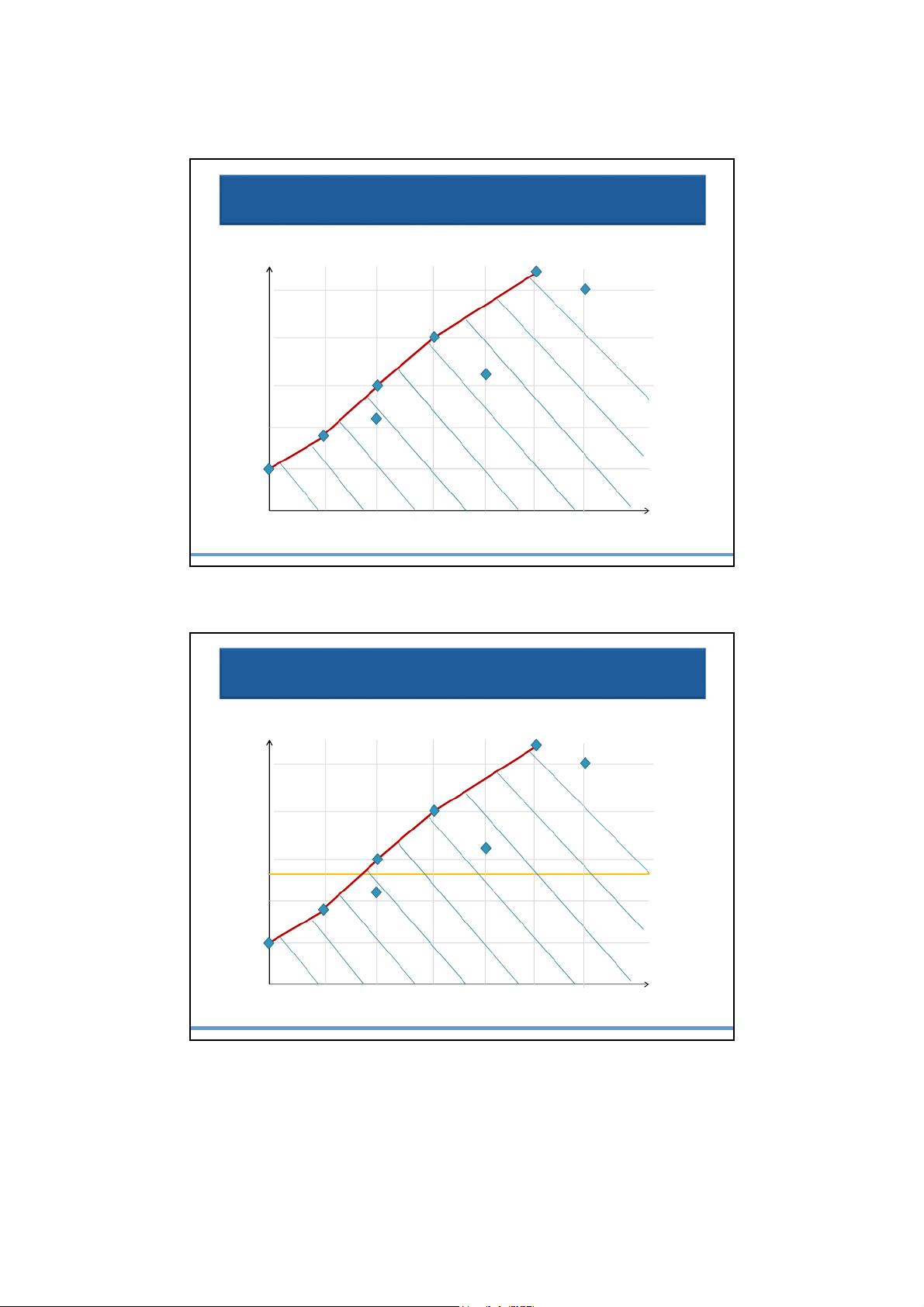
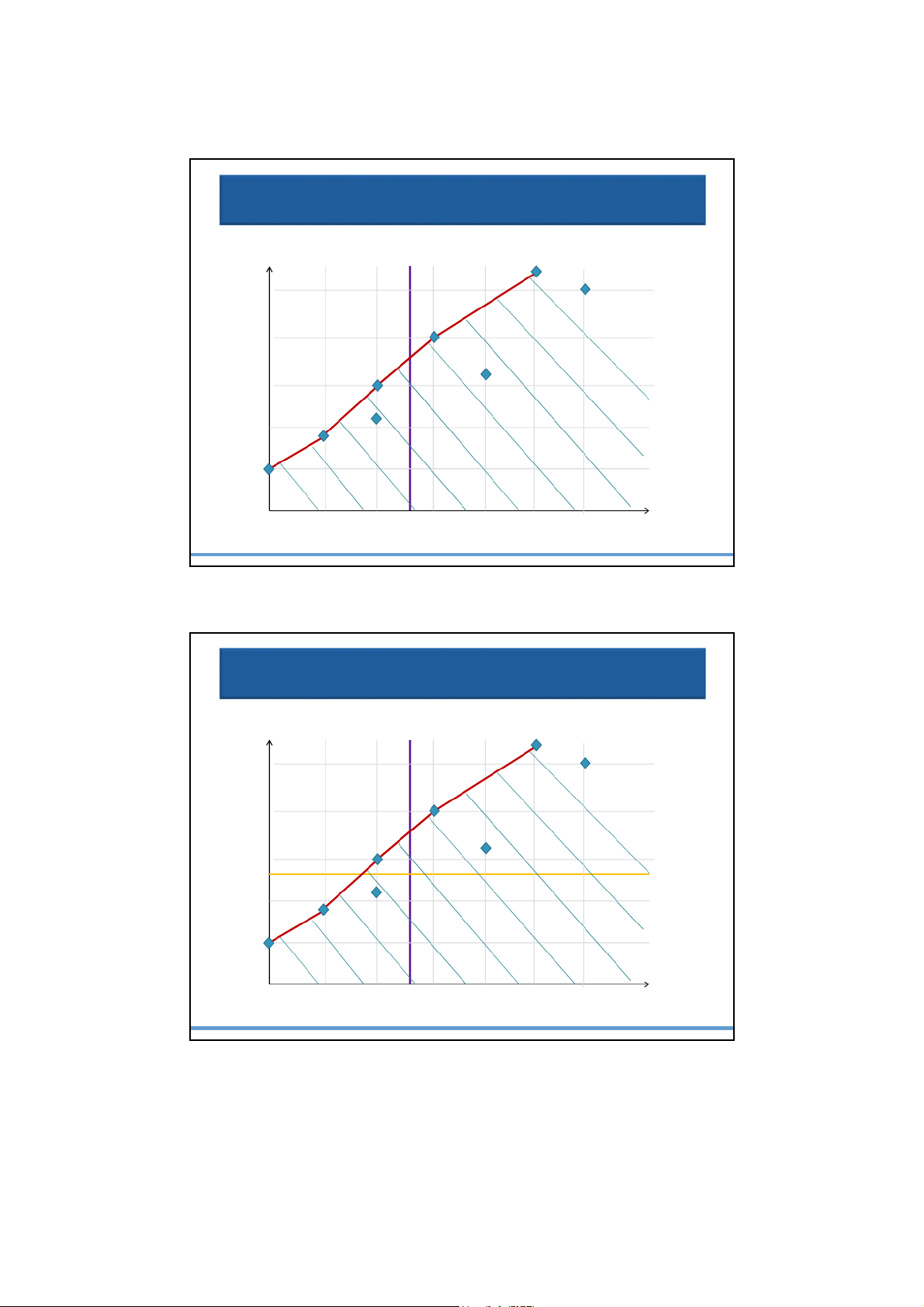
• Identify a group of projects which are not dominated • Polygon model • Electre model • Performance - Cost model
• Define the best project among non-dominated alternatives • Multi-weighted scoring model • Collective utility model • Compromise model © McGraw-Hill Education 2–19 Polygon Model B IS DOMINATED BY A Fast
C ONLY HAS 1 DIMENSION BETTER THAN A 3
An option is cal ed dominated if there is another option that is bet er in a least one dimension 2 1 A Price 0 Safe B C Comfort © McGraw-Hill Education 2–20 10 2/11/2025 Polygon Model ?
Define the dominated alternative Criteria Project A B C Max Z1100 70 0 Min Z275 25 0 Max Z320 40 100 © McGraw-Hill Education 2–21 Electre model
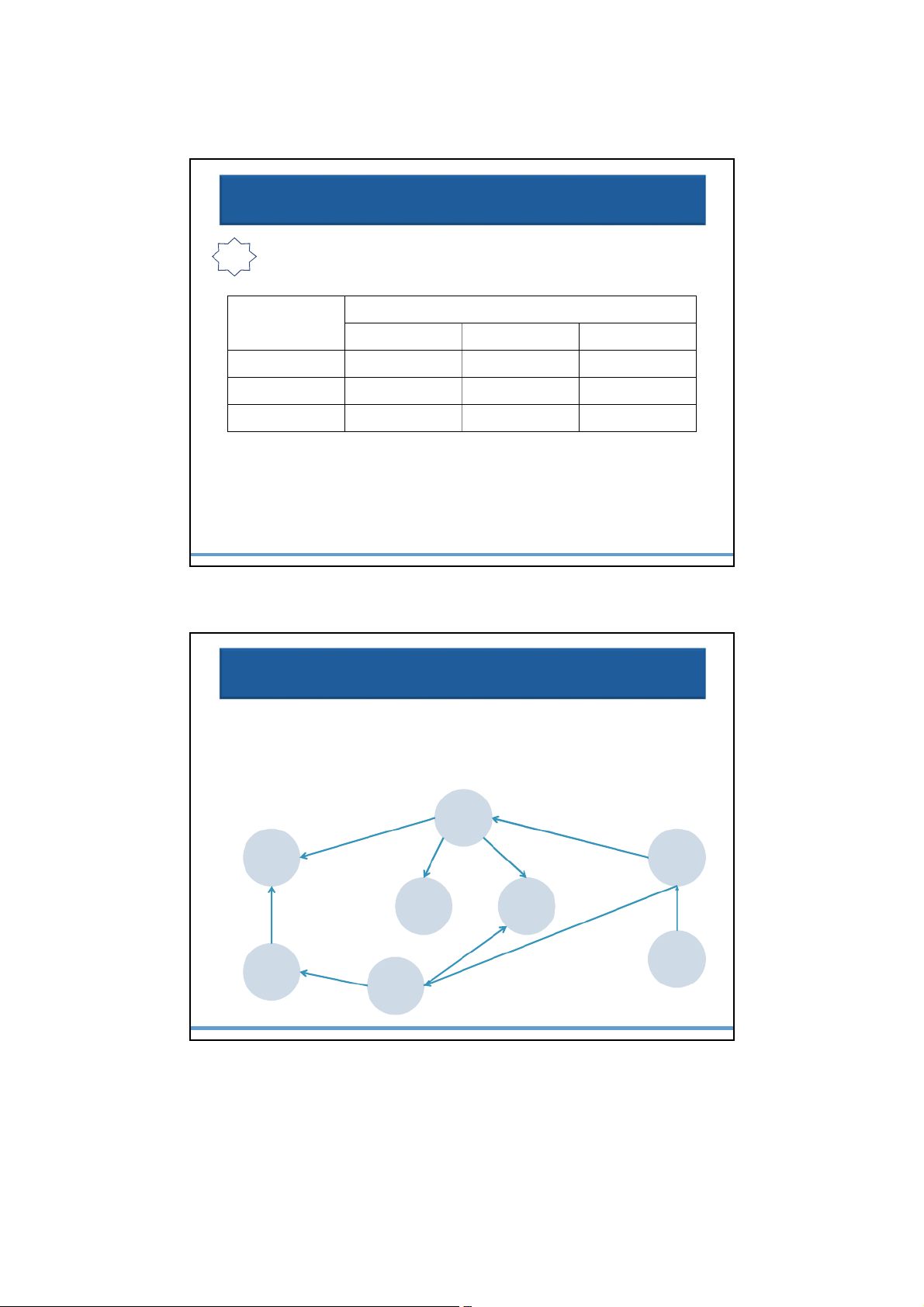
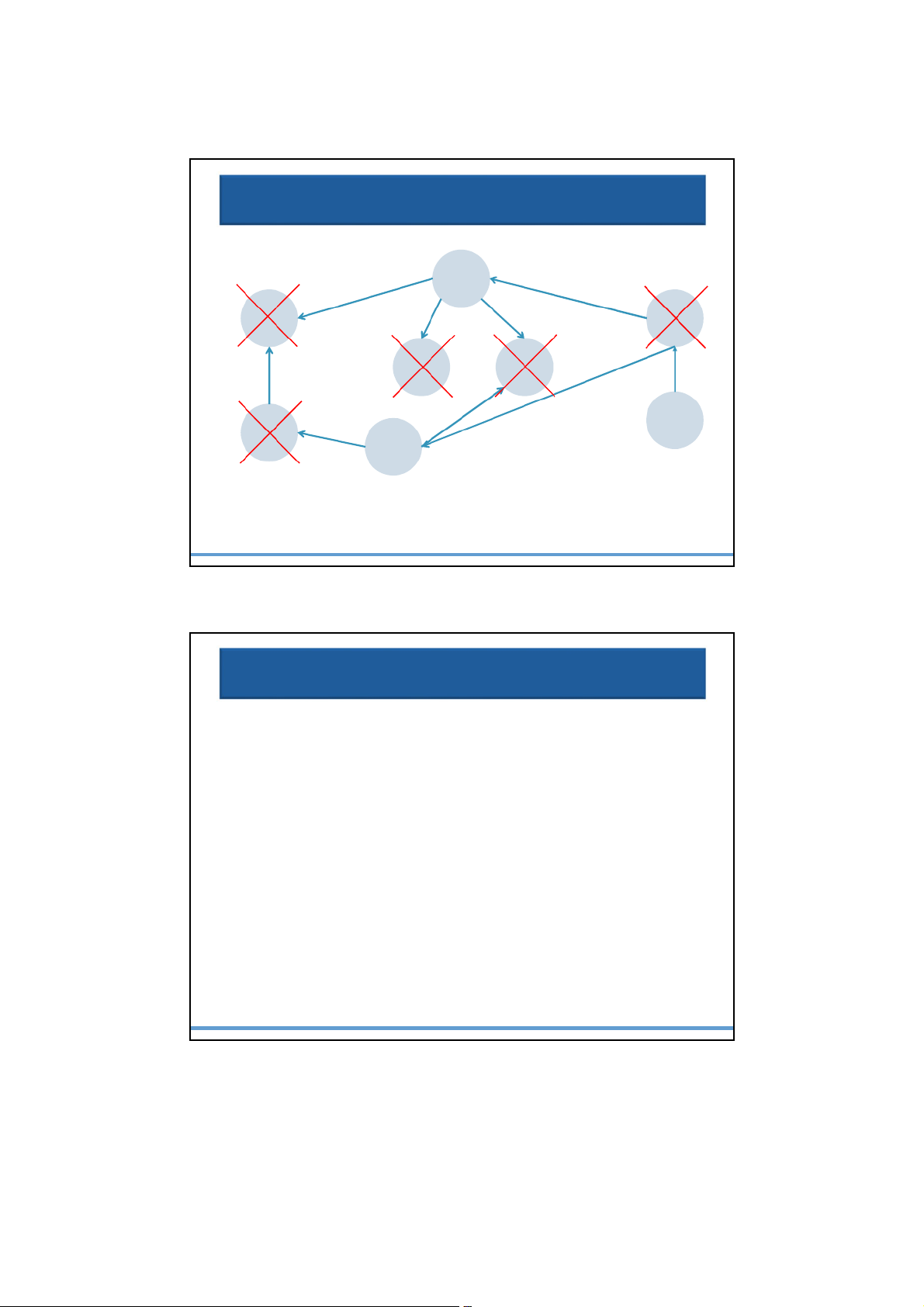
• Helps select “better” alternatives • No transitive property
• Identify the group of non-dominated alternatives: Kernel group 4 7 1 6 3 2 8 5 © McGraw-Hill Education 2–22 11 2/11/2025 Electre model better than 3 6 7 4 7 1 6 3 better than 1 2 8 5
see what doesn''t have the arrow pointing at to start better than 3 8 Kernel = {2,4,5} © McGraw-Hill Education 2–23 Performance - Cost model • Fixed output approach • Fixed input approach © McGraw-Hill Education 2–24 12 2/11/2025 Performance - Cost model Performance A6 Effective frontier A7 A4 A A5 3 F A1A2 Unacceptable region A0 Cost K K 0K1K2K3K4K5 K6 © McGraw-Hill Education 2–25 Performance - Cost model Performance A6 Effective frontier A7 Fixed output approach A4 A A5 3 F F is the requirement A1A2 Unacceptable region A0 Cost K K 0K1K2K3K4K5 K6 © McGraw-Hill Education 2–26 13 2/11/2025 Performance - Cost model Performance A6 Effective frontier A7 Fixed input approach A4 A A5 3 F A1A2 Unacceptable region A0 Cost K K 0K1K2K3K4K5 K6 © McGraw-Hill Education 2–27 Performance - Cost model Performance A4 and A6 are not accepted A6 Effective frontier A7 Fixed A4 Performance - Cost approach A A5 3 F A1A2 Unacceptable region A0 Cost K K 0K1K2K3K4K5 K6 © McGraw-Hill Education 2–28 14 2/11/2025 Multi-weighted scoring model
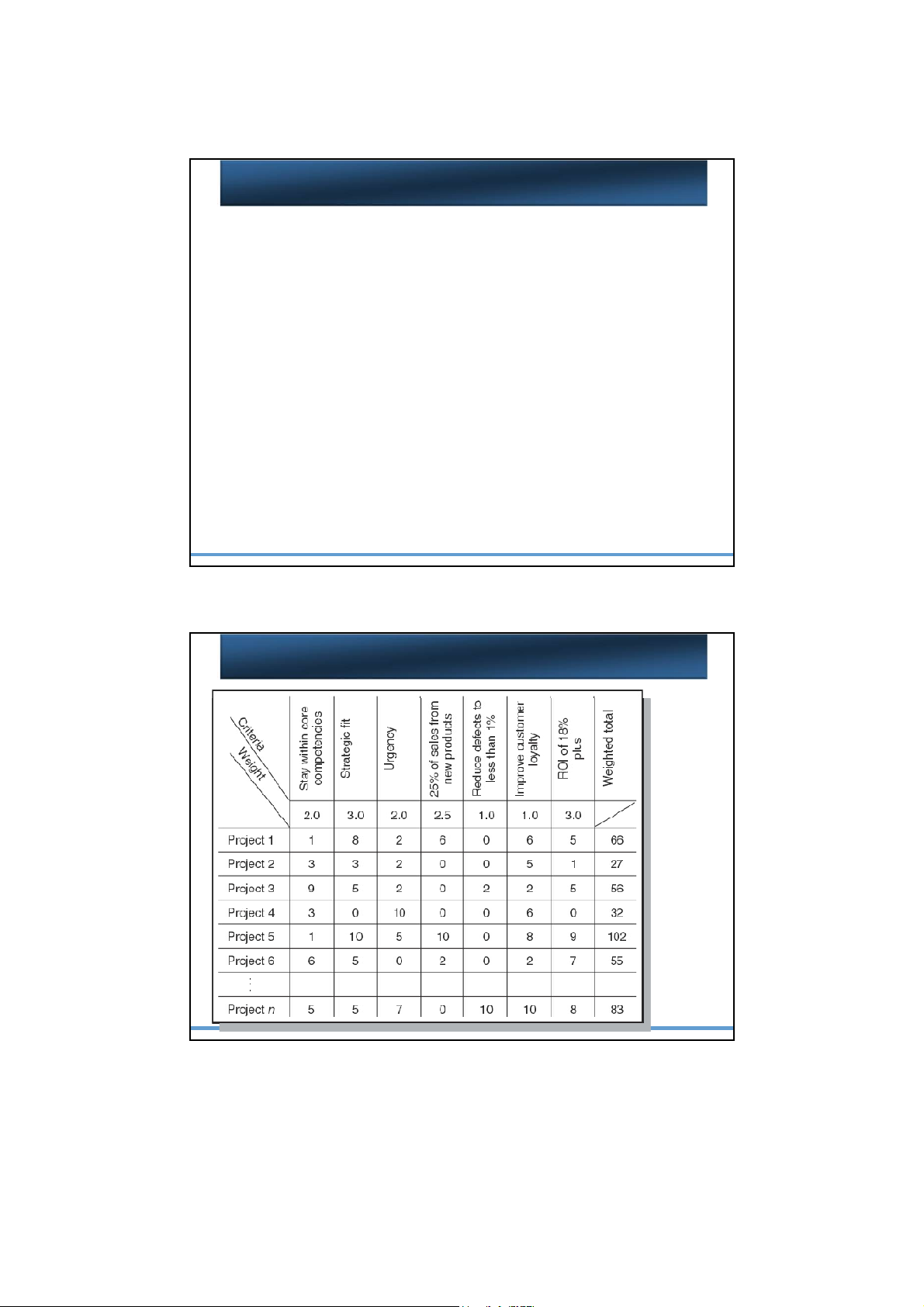
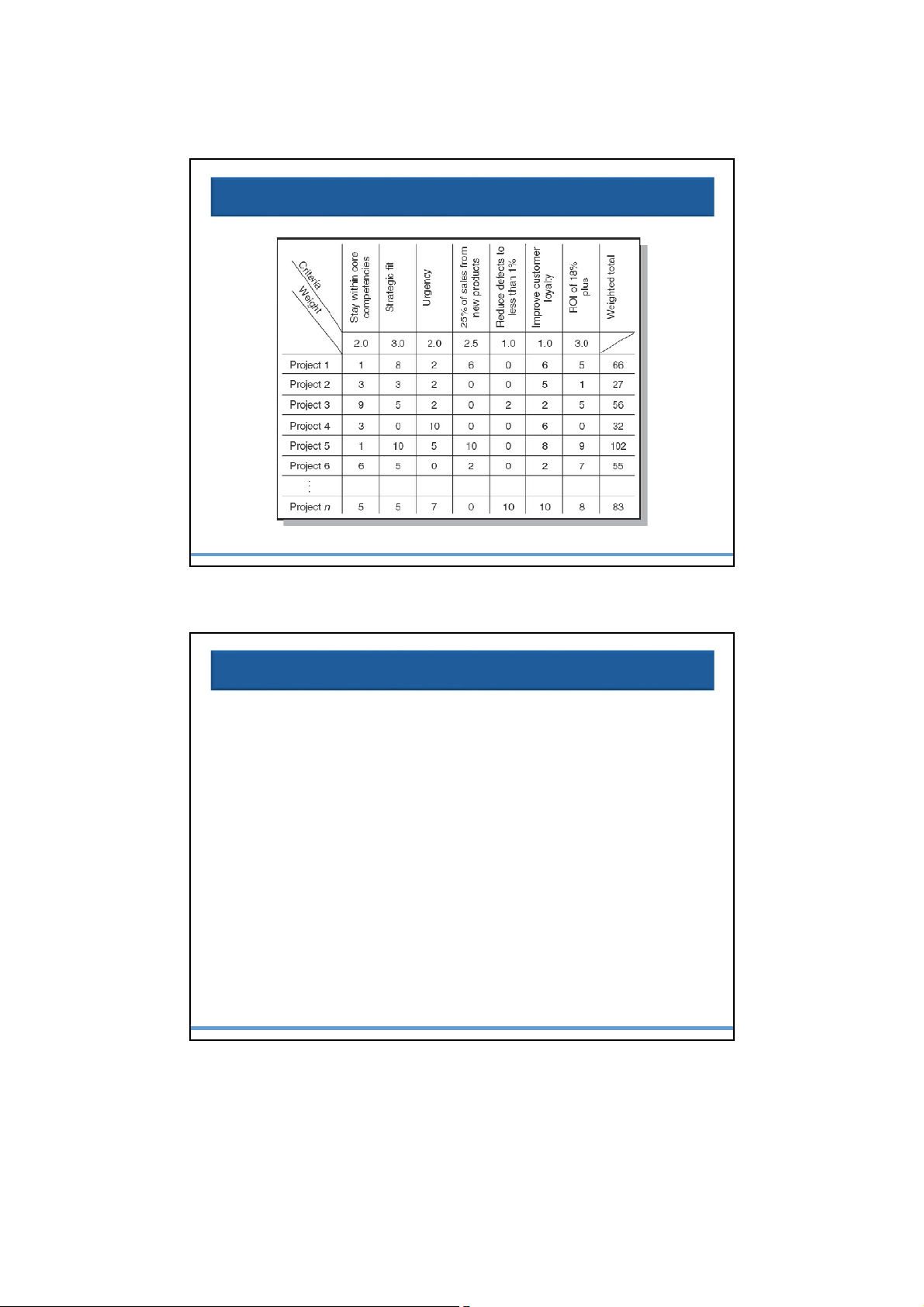
Use several weighted selection criteria to evaluate project proposals.
Include qualitative and/or quantitative criteria.
Allow for comparison with other potential projects. © McGraw-Hill Education 2–29 Multi-weighted scoring model FIGURE 2.3 © McGraw-Hill Education 2–30 15 2/11/2025 Collective utility model Weight Project i A1A2… Ai... Am αj Goal j α1Z1Z11 Z21 … Zi1 … Zm1 α2Z2Z12 Z22 … Zi2 … Zm2 … … … … … … … … αjZjZ1j Z2j … Zij … Zmj … … … … … … … … αnZnZ1n Z2n … Zin … Zmn CU CU1CU2… CUi… CUm 31 © McGraw-Hill Education 31 Collective utility model Transform Identify Determine Select the from Zij to weights for CUifor alternative Step 1 b Step 4 ij (ignore Step 2 each Step 3 each with max dimension) criterion alternative i CUi n MaxCU i x b j ij j 1 32 © McGraw-Hill Education 32 16 2/11/2025 Collective utility model Importance notes in Step 1: With maximize goal value: Z Z ij ij min i b 1 ij Z max Z ij ij min i i With minimize goal value: Z max Z ij ij i b ij 2 Z max Z ij ij min i i 33 © McGraw-Hill Education 33 Collective utility model ?
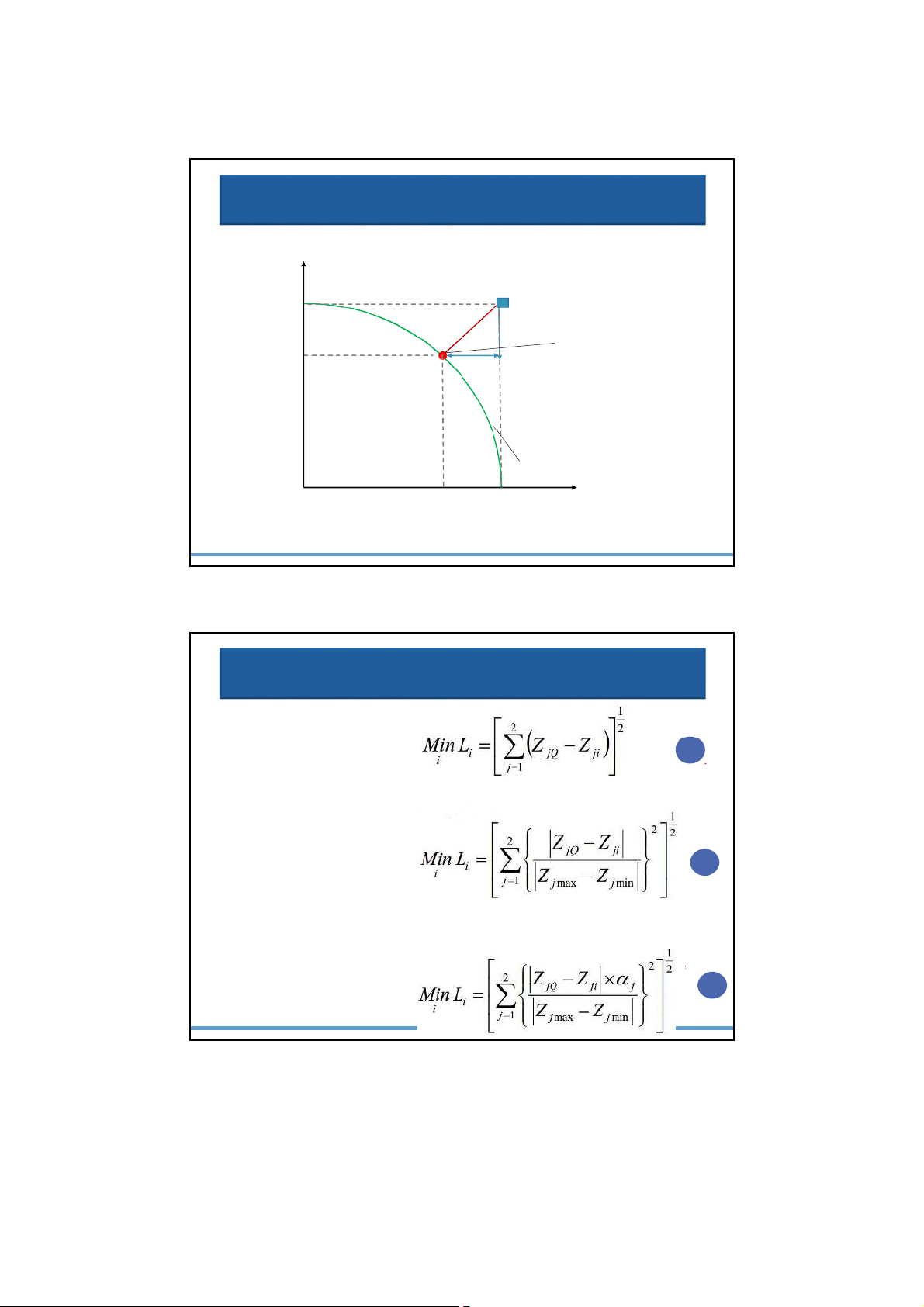
Prioritize the alternatives by applying collective utility model Criteria Project Weight A B C Max Z1100 70 0 0.3 Min Z275 25 0 0.4 Max Z320 40 100 0.3 © McGraw-Hill Education 2–34 Nguyen Thi Hoang Mai, 17 2/11/2025 Compromise Model Ideal target: Q(Z1Q,Z2Q) Z2Max Li Optimal solution Zi2 Zij Unworthy area Compromise curve Zi1 Z1Max © McGraw-Hill Education 2–35 Compromise Model • Euclide distance 2 1 • Standardization distance 2
• Standardization distance with weigting scores 3 © McGraw-Hill Education 2–36 18 2/11/2025 Compromise Model ?
Prioritize the alternatives by applying Compromise Model Criteria Project Weight A B C Max Z1100 70 0 0.3 Min Z275 25 0 0.4 Max Z320 40 100 0.3 © McGraw-Hill Education 2–37 Nguyen Thi Hoang Mai,
Checklist Models: Sample Selection Questions Used in Practice © McGraw-Hill Education 38 EXHIBIT 2.4 19 2/11/2025
Multi-Weighted Scoring Models: Project Screening Matrix © McGraw-Hill Education 39 FIGURE 2.4 2.7 Applying a Selection Model Project Classification •
Deciding how well a strategic / operations project fits the organization’s strategy. Selecting a Model •
Applying a weighted scoring model to bring projects to closer with the
organization’s strategic goals.
• Reduces the number of wasteful projects
• Helps identify proper goals for projects
• Helps everyone involved understand how & why a project is selected © McGraw-Hill Education 40 20
Tài liệu liên quan:
-
Leadership Styles Preferred by Generation Z môn Principle of Management | Trường Đại học Quốc tế, Đại học Quốc gia Thành phố Hồ Chí Minh
3 2 -

Chapter 7 Blowing the Whistl môn Principle of Management | Trường Đại học Quốc tế, Đại học Quốc gia Thành phố Hồ Chí Minh
3 2 -
Chapter 11 - Organizational Structures and Their Impacts on Leadership môn Principle of Management | Trường Đại học Quốc tế, Đại học Quốc gia Thành phố Hồ Chí Minh
3 2 -

Lecture 2: Relational Model and Algebra môn Principle of Management | Trường Đại học Quốc tế, Đại học Quốc gia Thành phố Hồ Chí Minh
3 2 -

Lecture 6: ER –Relational Translation môn Principle of Management | Trường Đại học Quốc tế, Đại học Quốc gia Thành phố Hồ Chí Minh
3 2