Digital marketing plan assignment for e-business course | Tài chính quốc tế | Trường Học Viện nông nghiệp Việt Nam
The objective of this assignment is for students to develop a comprehensive digital strategy or digital marketing plan for a hypothetical or real company. You need to apply theoretical concepts learned in the course to practical scenarios, demonstrating your understanding and ability to strategize in the digital space. Tài liệu được sưu tầm và soạn thảo dưới dạng file PDF để gửi tới các bạn cùng tham khảo, ôn tập đầy đủ kiến thức, chuẩn bị cho các buổi học thật tốt. Mời bạn đọc đón xem!
Môn: Tài chính quốc tế (hvnn) 130 tài liệu
Trường: Học viện Nông nghiệp Việt Nam 2.4 K tài liệu
Tác giả:

Preview text:
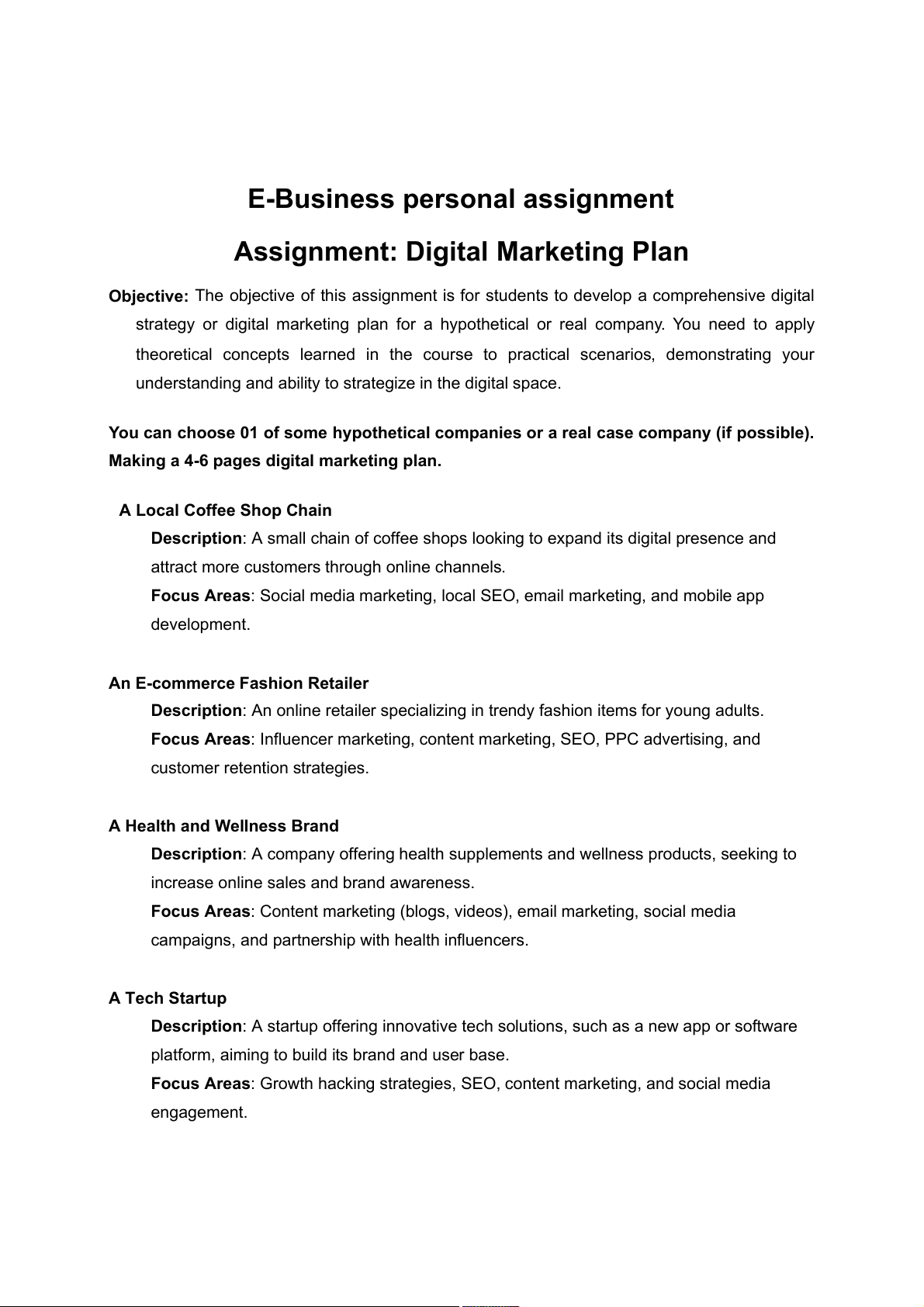
E-Business personal assignment
Assignment: Digital Marketing Plan
Objective: The objective of this assignment is for students to develop a comprehensive digital
strategy or digital marketing plan for a hypothetical or real company. You need to apply
theoretical concepts learned in the course to practical scenarios, demonstrating your
understanding and ability to strategize in the digital space.
You can choose 01 of some hypothetical companies or a real case company (if possible).
Making a 4-6 pages digital marketing plan. A Local Coffee Shop Chain
Description: A small chain of coffee shops looking to expand its digital presence and
attract more customers through online channels.
Focus Areas: Social media marketing, local SEO, email marketing, and mobile app development.
An E-commerce Fashion Retailer
Description: An online retailer specializing in trendy fashion items for young adults.
Focus Areas: Influencer marketing, content marketing, SEO, PPC advertising, and
customer retention strategies. A Health and Wellness Brand
Description: A company offering health supplements and wellness products, seeking to
increase online sales and brand awareness.
Focus Areas: Content marketing (blogs, videos), email marketing, social media
campaigns, and partnership with health influencers. A Tech Startup
Description: A startup offering innovative tech solutions, such as a new app or software
platform, aiming to build its brand and user base.
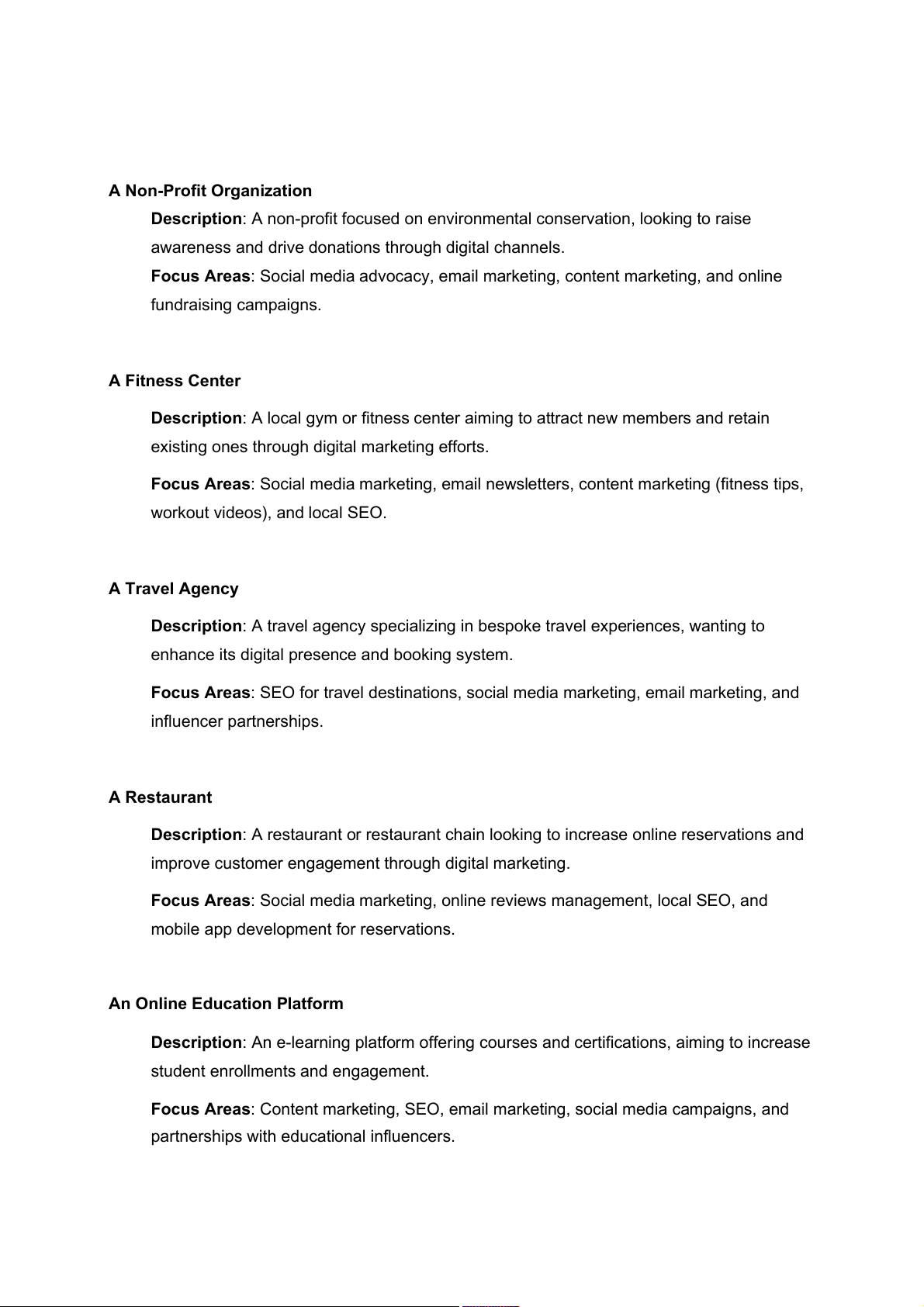
Focus Areas: Growth hacking strategies, SEO, content marketing, and social media engagement. A Non-Profit Organization
Description: A non-profit focused on environmental conservation, looking to raise
awareness and drive donations through digital channels.
Focus Areas: Social media advocacy, email marketing, content marketing, and online fundraising campaigns. A Fitness Center
Description: A local gym or fitness center aiming to attract new members and retain
existing ones through digital marketing efforts.
Focus Areas: Social media marketing, email newsletters, content marketing (fitness tips,
workout videos), and local SEO. A Travel Agency
Description: A travel agency specializing in bespoke travel experiences, wanting to
enhance its digital presence and booking system.
Focus Areas: SEO for travel destinations, social media marketing, email marketing, and influencer partnerships. A Restaurant
Description: A restaurant or restaurant chain looking to increase online reservations and
improve customer engagement through digital marketing.
Focus Areas: Social media marketing, online reviews management, local SEO, and
mobile app development for reservations. An Online Education Platform
Description: An e-learning platform offering courses and certifications, aiming to increase
student enrollments and engagement.
Focus Areas: Content marketing, SEO, email marketing, social media campaigns, and
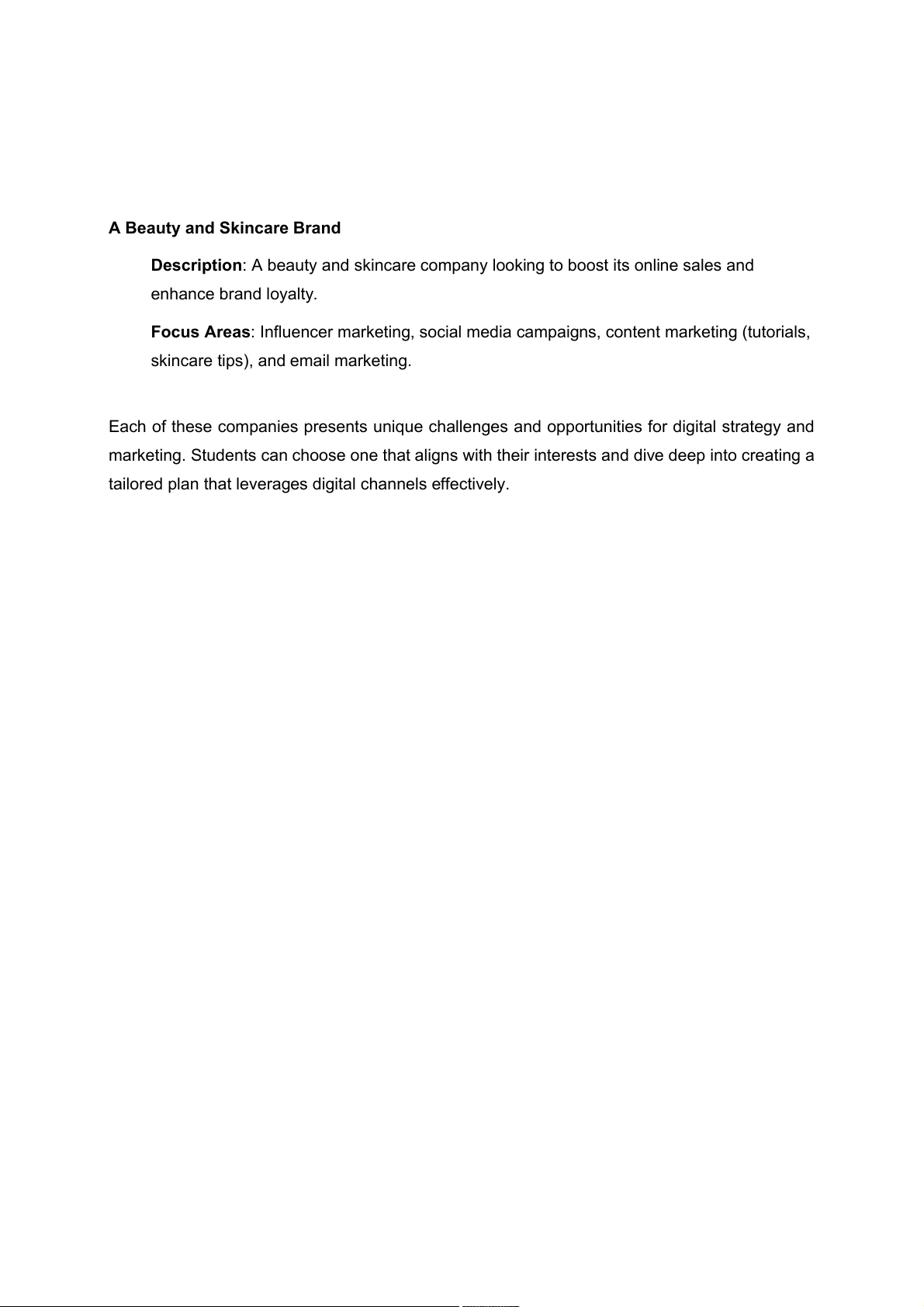
partnerships with educational influencers. A Beauty and Skincare Brand
Description: A beauty and skincare company looking to boost its online sales and enhance brand loyalty.
Focus Areas: Influencer marketing, social media campaigns, content marketing (tutorials,
skincare tips), and email marketing.
Each of these companies presents unique challenges and opportunities for digital strategy and
marketing. Students can choose one that aligns with their interests and dive deep into creating a
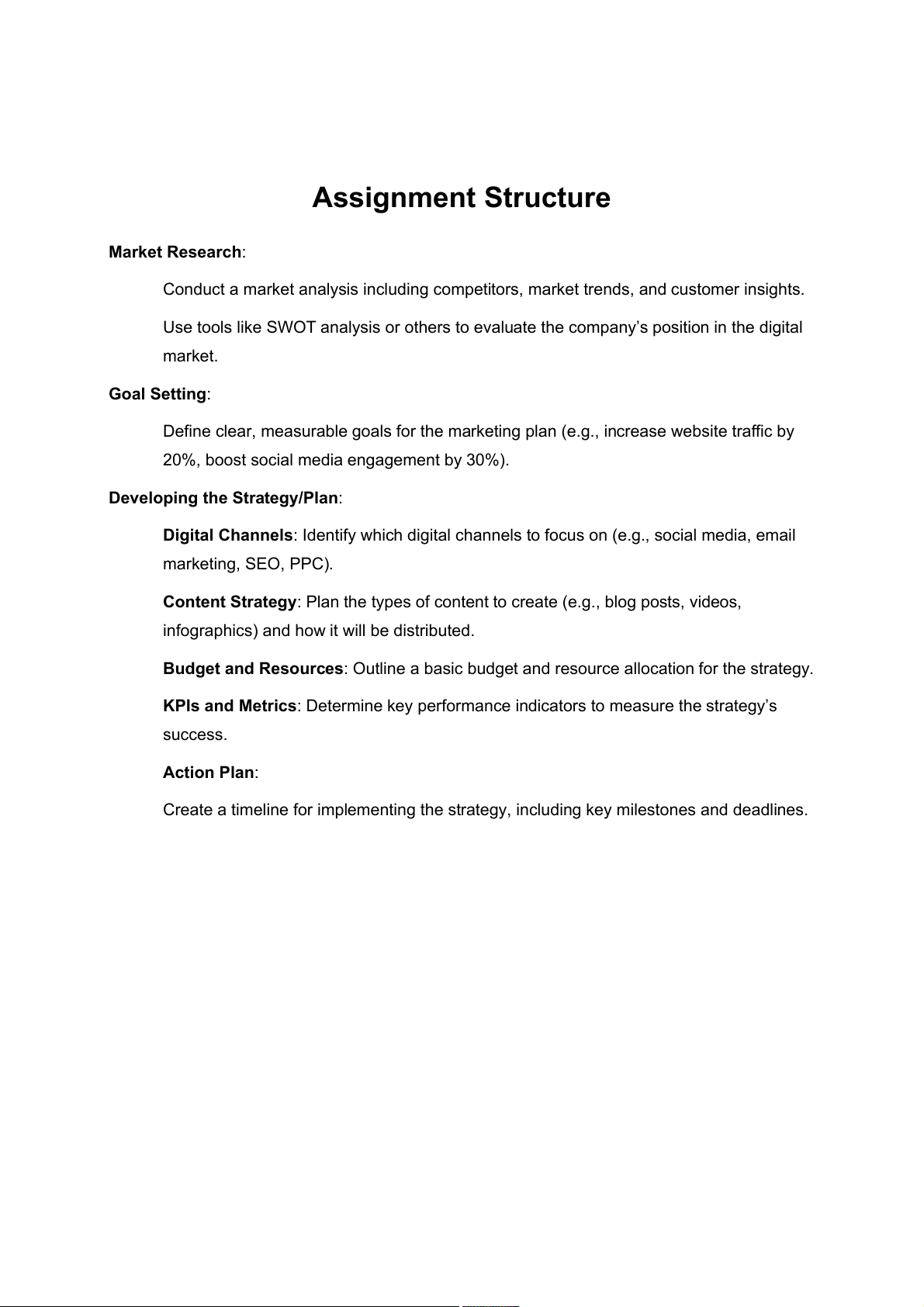
tailored plan that leverages digital channels effectively. Assignment Structure Market Research:
Conduct a market analysis including competitors, market trends, and customer insights.
Use tools like SWOT analysis or others to evaluate the company’s position in the digital market. Goal Setting:
Define clear, measurable goals for the marketing plan (e.g., increase website traffic by
20%, boost social media engagement by 30%). Developing the Strategy/Plan:
Digital Channels: Identify which digital channels to focus on (e.g., social media, email marketing, SEO, PPC).
Content Strategy: Plan the types of content to create (e.g., blog posts, videos,
infographics) and how it will be distributed.
Budget and Resources: Outline a basic budget and resource allocation for the strategy.
KPIs and Metrics: Determine key performance indicators to measure the strategy’s success. Action Plan:
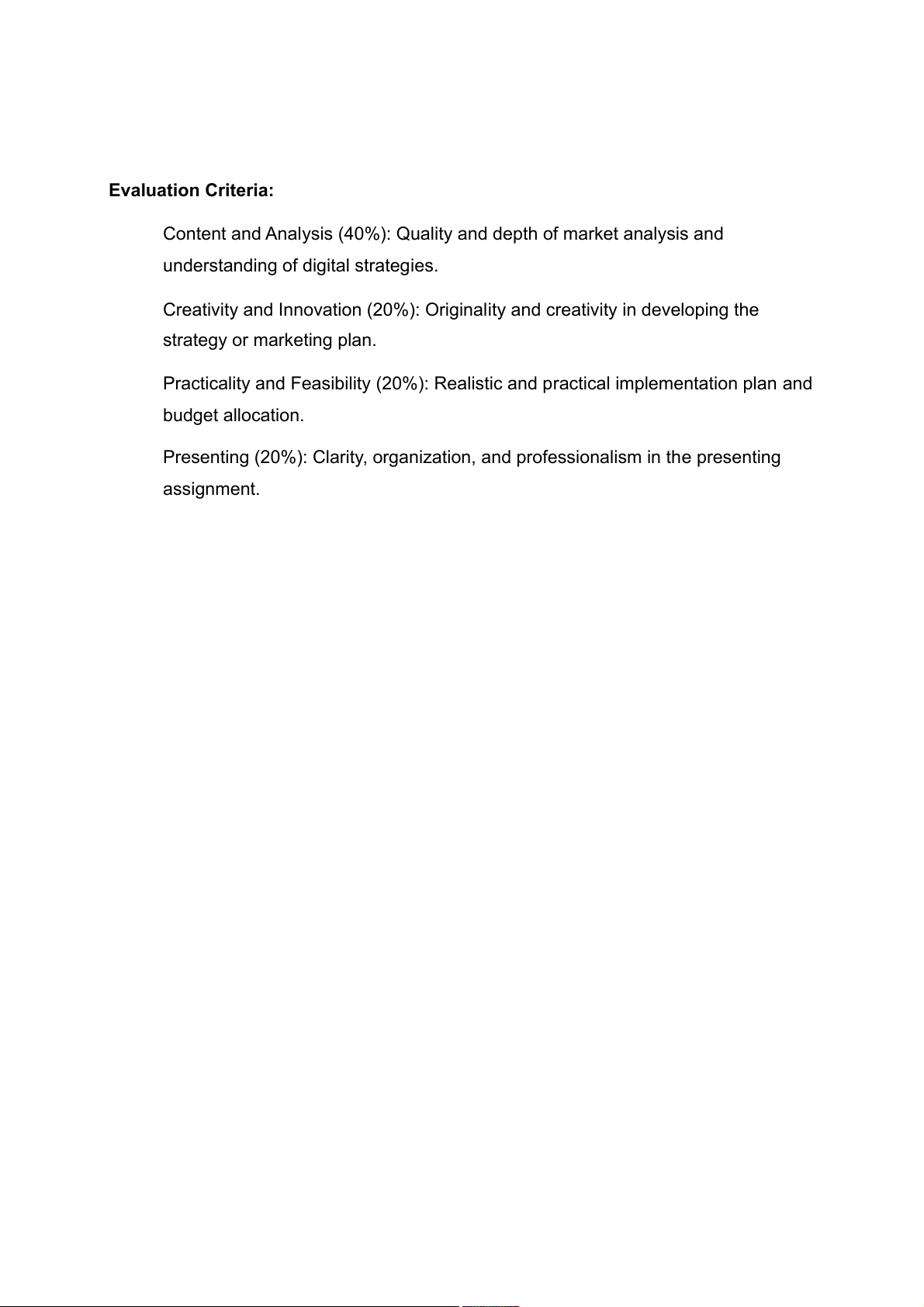
Create a timeline for implementing the strategy, including key milestones and deadlines. Evaluation Criteria:
Content and Analysis (40%): Quality and depth of market analysis and
understanding of digital strategies.
Creativity and Innovation (20%): Originality and creativity in developing the strategy or marketing plan.
Practicality and Feasibility (20%): Realistic and practical implementation plan and budget allocation.
Presenting (20%): Clarity, organization, and professionalism in the presenting assignment.
Tài liệu liên quan:
-

Hoạt động Tài chính của Doanh nghiệp Đa Quốc Gia (DN) - Chương 6 | Tài chính quốc tế | Trường Học Viện nông nghiệp Việt Nam
19 10 -

Hệ Thống Tiền Tệ Quốc Tế: Khái Niệm và Các Chế Độ Tỷ Giá | Tài chính quốc tế | Trường Học Viện nông nghiệp Việt Nam
24 12 -

Bài giảng Chương 1: Các Quan Hệ Cân Bằng Quốc Tế và LOP | Tài chính quốc tế | Trường Học Viện nông nghiệp Việt Nam
21 11 -
Cách Tính Lạm Phát và CPI: So Sánh Việt Nam và Mỹ | Tài chính quốc tế | Trường Học Viện nông nghiệp Việt Nam
23 12 -
Detailed Report and Analysis on Submission Trends | Tài chính quốc tế | Trường Học Viện nông nghiệp Việt Nam
23 12