Ex4 - Experimental Verification of Faraday's Law in EM Induction môn Vật lý đại cương 2 | Học viện Công Nghệ Bưu Chính Viễn Thông
The two voltage peak has opposite sign corresponding to thedirection of the magnetic field line’s rate and direction of change .Tài liệu giúp bạn tham khảo, ôn tập và đạt kết quả cao. Mời đọc đón xem!
Môn: Vật lý đại cương 2 298 tài liệu
Trường: Học viện Công Nghệ Bưu Chính Viễn Thông 1.7 K tài liệu
Tác giả:





Preview text:
Experimental Report 4
VERIFICATION OF FARADAY’S LAW OF ELETROMAGNETIC INDUCTION
Verification of the instructors Class: Group: 4 Name: Nguyễn Tuấn Minh Student ID: 20215733 I/Experiment Motivations
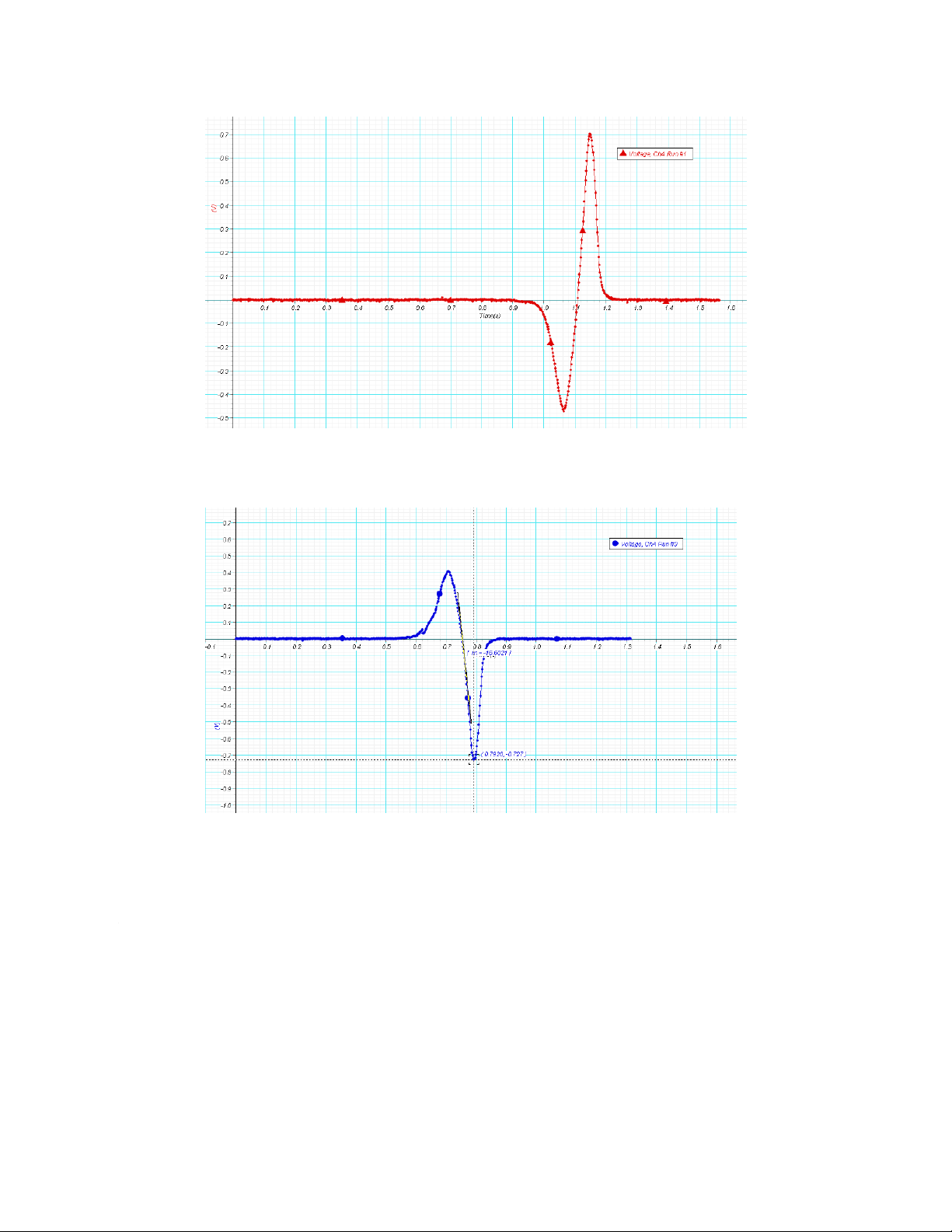
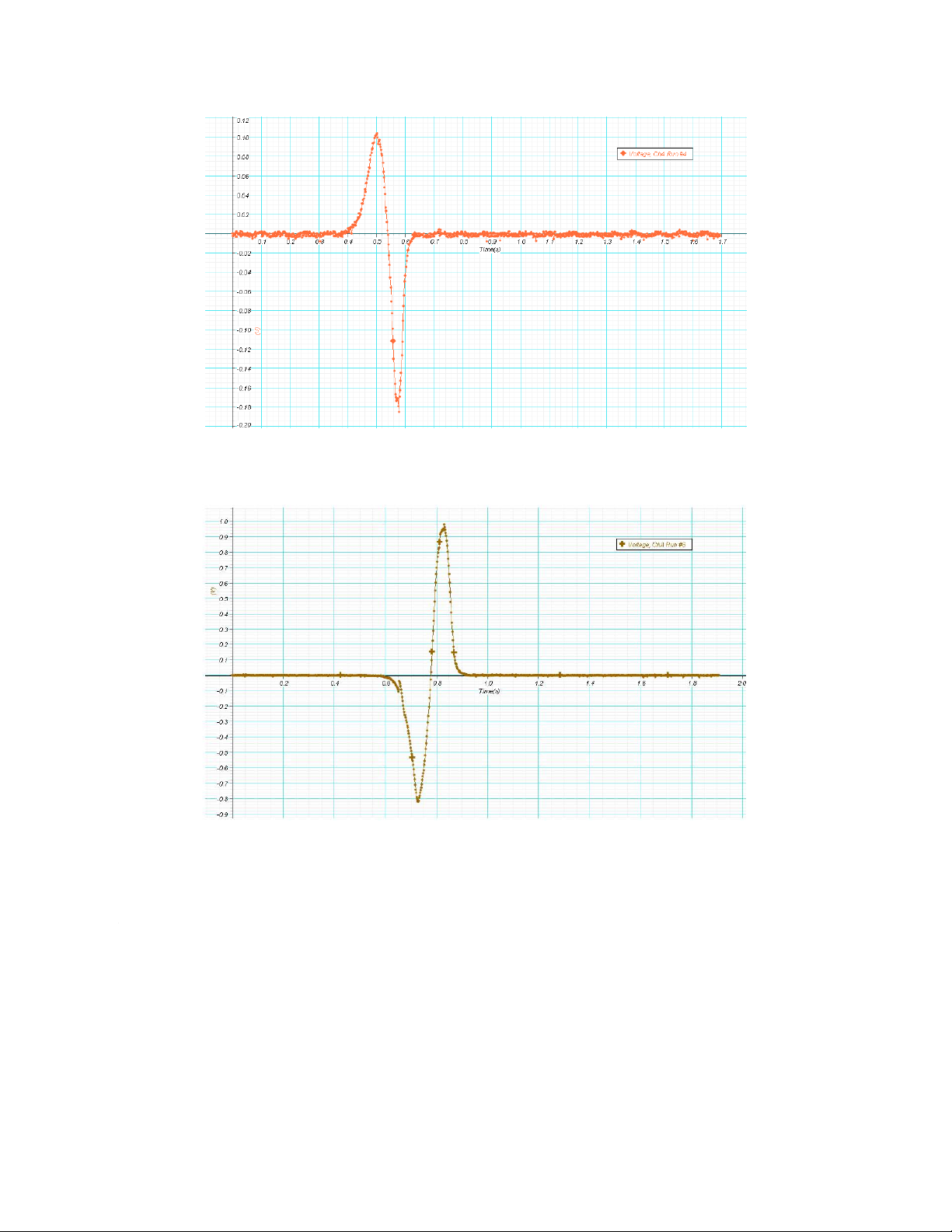
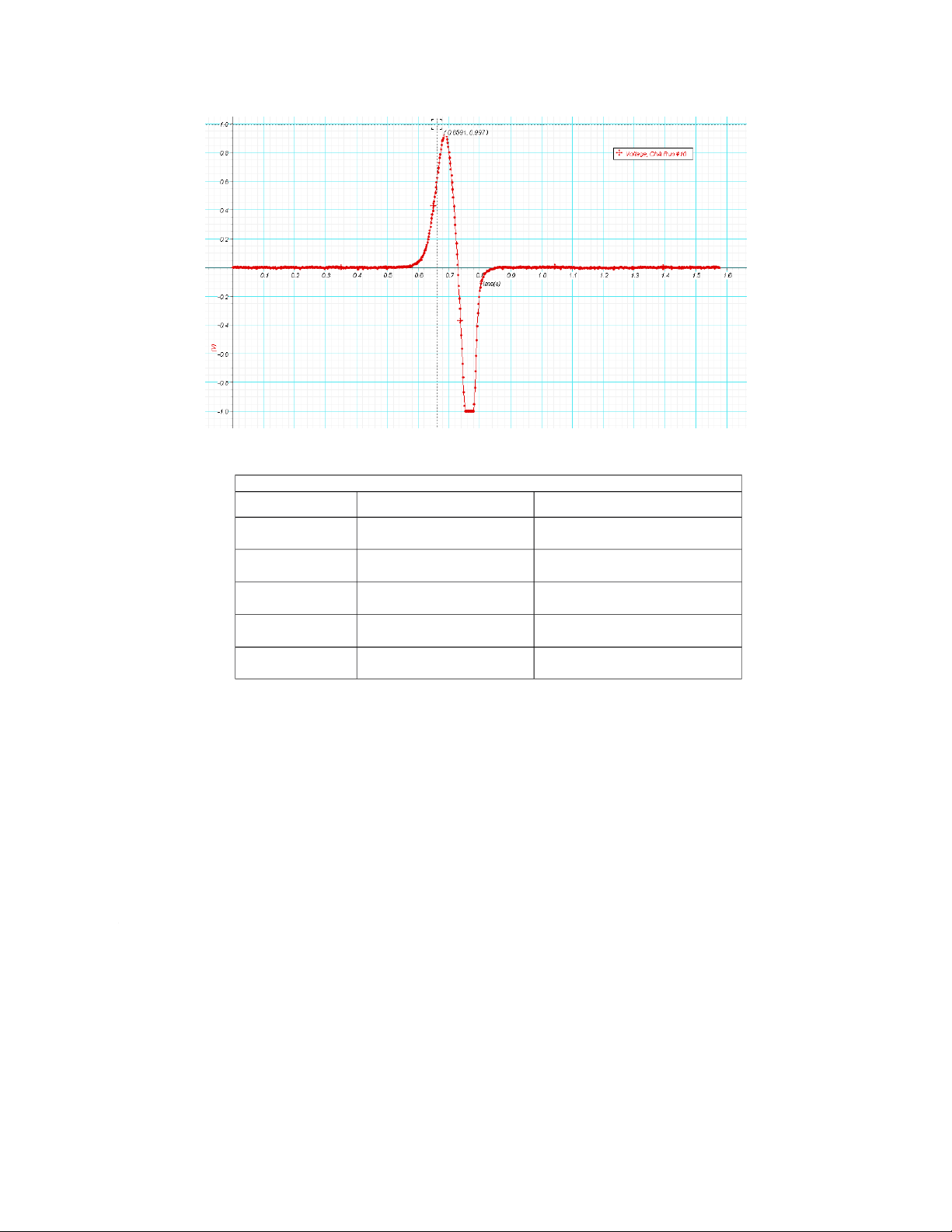
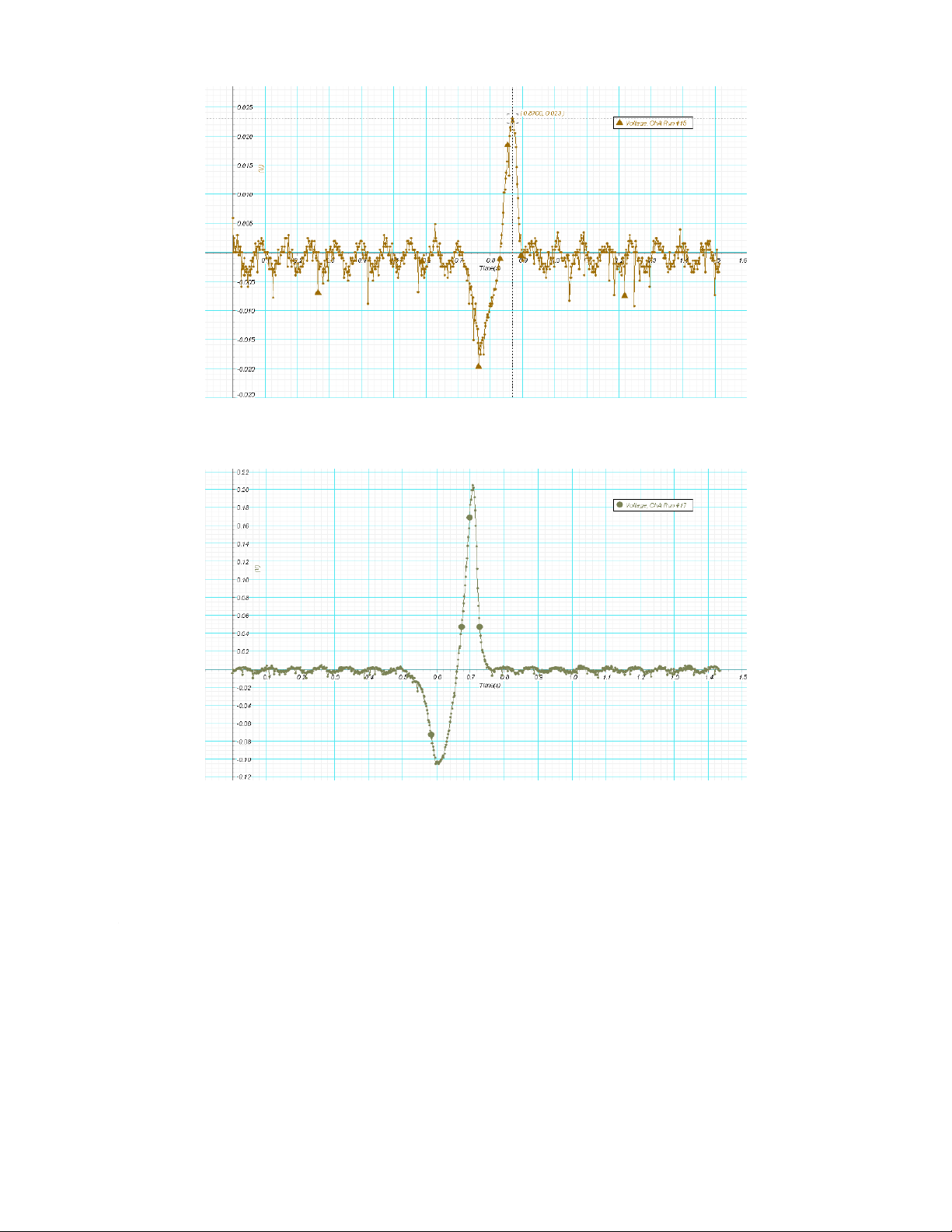
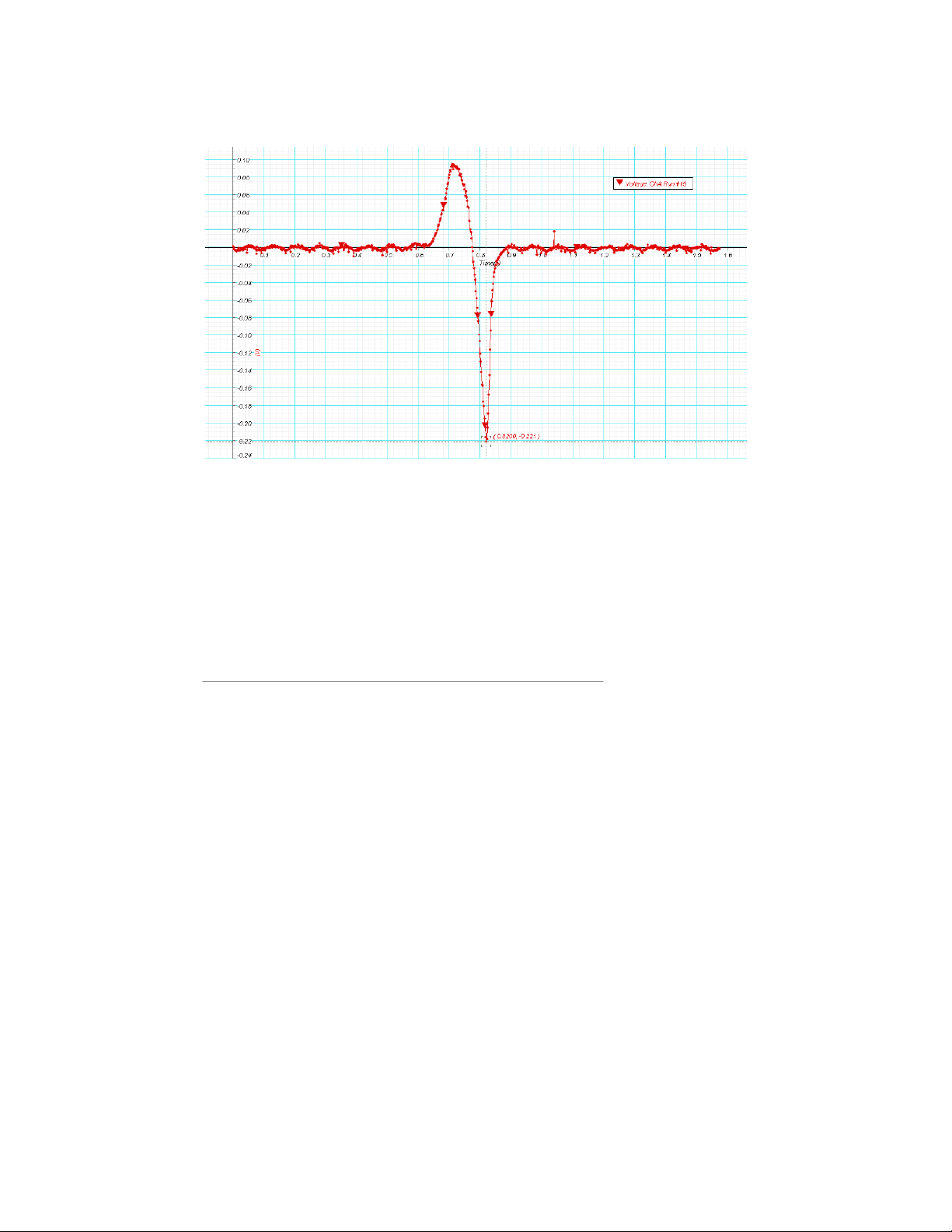
- Verify Faraday’s law of electromagnetic induction II/Experimental result 1)1200 turn coil R = 12 (Ω); L = 35 (mH) Pole Voltage Peak 1 Voltage Peak 2 North -0.472 0.696 South 0.406 -0.727 North-South 0.104 -0.185 North-North -0.819 0.980 South-South +0.929 -1.000 Graph North South North-South North-North South-South 2)150 turn coil R = 0.4 (Ω); L = 1 (mH) Pole Voltage Peak 1 Voltage Peak 2 North -0.063 0.112 South 0.062 -0.125 North-South -0.020 0.023 North-North -0.105 0.205 South-South 0.095 -0.221 Graph North South North- South North-North South-South III/Comment and Explanation
Faraday’s Law of Electromagnetic Induction:
A voltage is induced in a circuit whenever relative motion exists between a conductor and a
magnetic field and that the magnitude of this voltage is proportional to the rate of change of the flux So, we have:
+) Comparison between the first voltage peak and second voltage peak:
-The two voltage peak has opposite sign corresponding to the direction of the magnetic field
line’s rate and direction of change. According to Faraday’s Law, the induced electromotive
force acts in the direction that opposes the change in magnetic flux.
-Also, the magnitude of second voltage peak is greater than that of the first peak.This can be
explained by the motion of the magnet bar. When the magnet is released to fall through the
coil, its motion is free fall. Therefore, the velocity of the bottom pole when it falls through
the coil is larger than that of the top pole. This means the change in magnetic field increases
in time, and according to the Faraday’s Law above, this result in the greater magnitude of the second peak. +) The shape of the graph
-Both graphs are approximately symmetric about the point when (rate of change of the
magnetic field flux equals zero). This can be explained by Faraday’s law, which states
that the induced voltage through the wire induces a current that creates a magnetic flux in
the direction opposing the change in flux, and the fact that the magnetic field line going
in/out the north and the south pole of the magnet are exactly the same. +) Comparison between two coil
-The maximum voltage for the coil with more turns is higher than the one with fewer
turn, because the magnitude of voltage is proportional to the number of turns in the coil, as shown in the equation:
Tài liệu liên quan:
-
Bài tập Vật lý nguyên tử môn Vật lý đại cương 2 | Học viện Công Nghệ Bưu Chính Viễn Thông
11 6 -
Bài tập Vật lý nguyên tử môn Vật lý đại cương 2 | Học viện Công Nghệ Bưu Chính Viễn Thông
12 6 -

Tán xạ ánh sáng và Hiệu ứng Tyndall - Lý thuyết và Ứng dụng môn Vật lý đại cương 2 | Học viện Công Nghệ Bưu Chính Viễn Thông
20 10 -

Chương 23: Quang học lượng tử môn Vật lý đại cương 2 | Học viện Công Nghệ Bưu Chính Viễn Thông
18 9 -

Chương 24: Cơ Học Lượng Tử - Tính Sóng-Hạt và Phương Trình Schrödinger môn Vật lý đại cương 2 | Học viện Công Nghệ Bưu Chính Viễn Thông
19 10